To make a mark in 12th Hockey India Junior WomenNational Championship at Kakinada from today
The Junior Women’s Hockey players from across the nation have a golden opportunity to showcase their skills at the 12th Hockey India Junior Women National Championship, which began today (Mar. 25) at Kakinada in Andhra Pradesh.
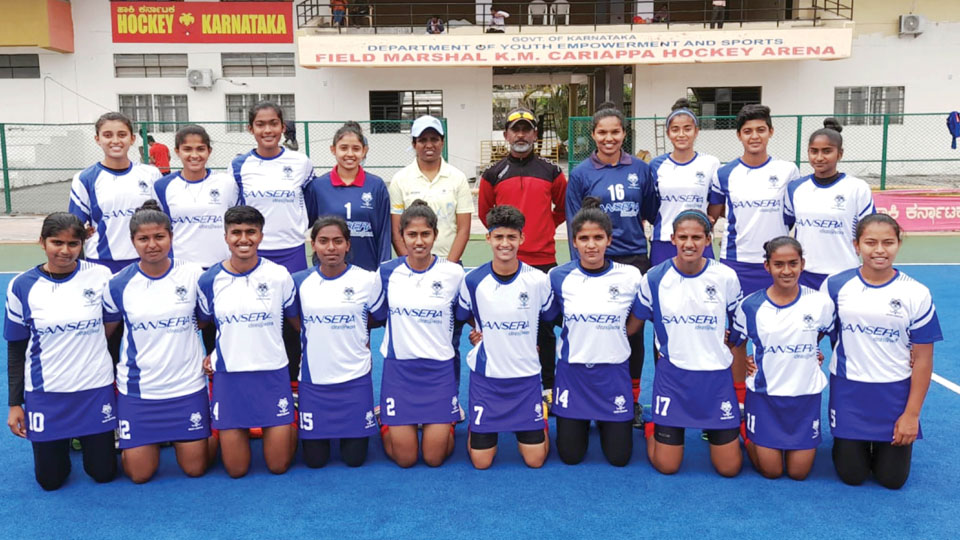
A total of 26 teams will vie for top honours in the competition including the Karnataka team that has 12 players from Kodagu. Kodagu district has contributed many hockey champions to the national and international events including the Olympics.
In the team are: P. Dechamma Ganapathy, B.J. Jeevitha, Seema Anandarao Pawar, B.M. Keerthana, H.S. Jahnavi, Taj Belliappa, S.B. Nisarga, H.B. Siddaganga, H.A. Apsara, K.J. Dilan, T.C. Suchitha and H. Mani. The girls from Kodagu form a formidable force in the 19-member team.
D.N. Tejaswini and C.M. Sahana of Hassan District, Kaveri R. Lenkannavar of Dharwad District, Tamil Nadu-based B. Deepika and Andhra Pradesh-based Vudumula Sowmya who are at present coaching at SAI (Sports Authority of India) Centre Madikeri and Kushee M. Jain from Bengaluru will also represent the Karnataka team.
Participating teams
The participating teams include Hockey Haryana, Goans Hockey and Hockey Madhya Pradesh in Group A, while Pool B features Hockey Jharkhand, Manipur Hockey and Assam Hockey. Pool C includes Hockey Maharashtra, Telangana Hockey and Le Puducherry Hockey, meanwhile, Hockey Chandigarh, Hockey Unit of Tamil Nadu and Hockey Uttarakhand have been slotted in Pool D.
Hockey Association of Odisha, Delhi Hockey and Kerala Hockey have been included in Pool E, while Pool F features Punjab, Chhattisgarh Hockey and Hockey Himachal. Pool G features Uttar Pradesh Hockey, Hockey Bihar, Hockey Rajasthan and Hockey Mizoram, while Hockey Andhra Pradesh, Hockey Karnataka, Hockey Bengal and Hockey Gujarat has been included in Pool H.
Matches from Mar.25
The Karnataka girls will play their first match against Gujarat on Mar. 25 and fight with Andhra Pradesh on Mar. 27 and with West Bengal on Mar. 29. The team will enter the quarter-finals if it wins against all three teams.
After six days of pool matches, the quarter-finals will be played on Mar.31, the semi-finals on Apr. 2 whereas the medal matches of the 12th Hockey India Junior Women National Championship 2022 are scheduled on Apr. 3.
The Karnataka team has brought laurels to the State in thFe matches held in New Delhi,
Assam, Haryana, Jharkhand and Kerala. As of now, there is no player from Kodagu in the Indian National Team either from Kodagu or Karnataka. The participation of 12 players from Kodagu in a single team has raised hopes of at least four or five of them making it to the National team.
Team well-prepared
The team has already been trained well in Bengaluru and the players are confident of making big in the championship. At Kakinada, all the teams have been acclimatising to the ground and weather conditions as the humidity is high. “Our preparations for the tournament are going great and our confidence is high as we are well-trained and we are sure of bringing laurels to Karnataka,” said Dechamma Ganapathy.
In the recently held India Camp in Bengaluru, Dechamma Ganapathy, Tejaswini, Sowmya, Sahana, Kushee, Deepika, Kaveri had participated. While Tejaswini was captain-cum-goal-keeper, Suchitha was the goal-keeper.
B.M. Komala is the team coach and Dharmendra is officiating as Manager.
source: http://www.starofmysore.com / Star of Mysore / Home> Sports / March 25th, 2022
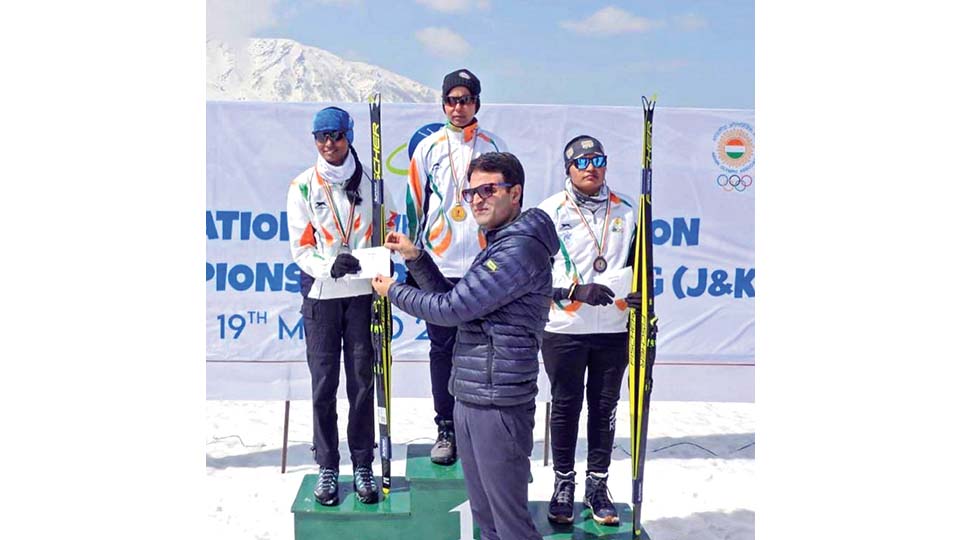
Bhavani is seen receiving the prize from one of the dignitaries during the presentation ceremony. (Biathlon is a combination of shooting and cross country skiing.)
Bhavani Thekkada Nanjunda from Kodagu district has won two silver medals in 10-km and 5-km race in the National Winter Biathlon Championships-2022 being held at Gulmarg, Jammu and Kashmir.
For the first time in the history, an athlete from South India has won a national medal in winter biathlon competition.
source: http://www.starofmysore.com / Star of Mysore / Home> Gallery> PhotoNews / March 22nd, 2022
Field Marshal K M Cariappa and General K S Thimayya, both from Kodagu, broke down several barriers for Indians in the army.
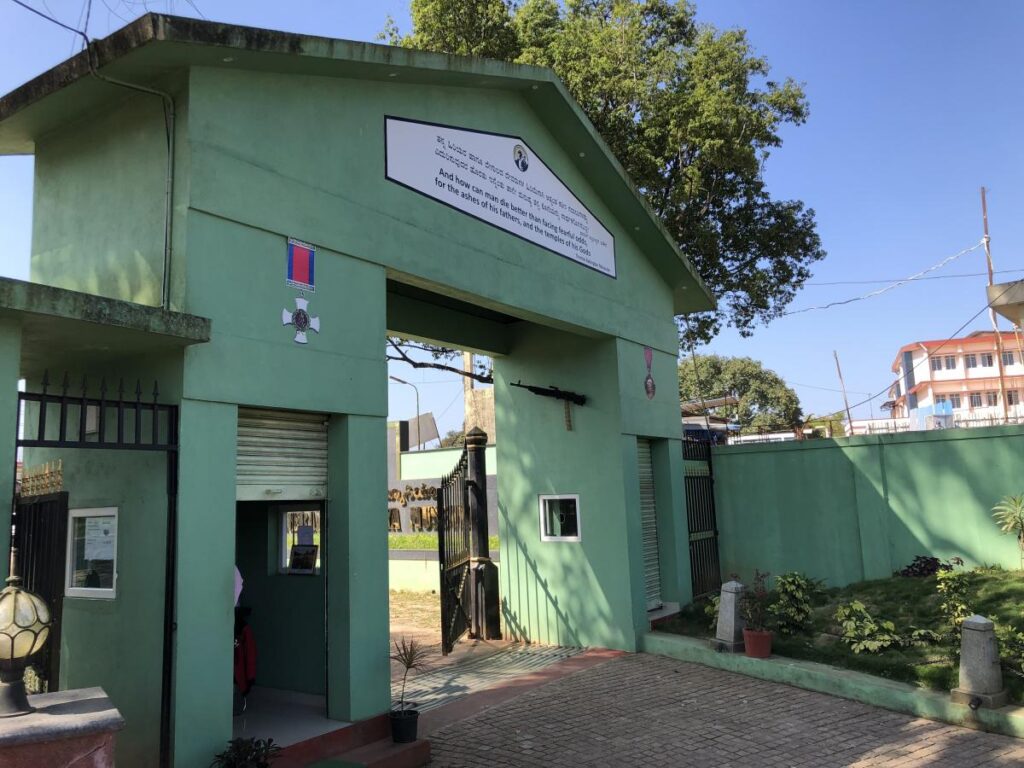
The entrance to the General Thimayya museum. Photos by author
The General Thimayya Memorial Museum commemorates the life of the Indian General and is meant to inspire the younger generation to join the armed forces.
The museum was originally called Sunnyside and was the family home of Gen Thimayya. But not many people know that it was his mother Cheppudira Cheethavva (aka Seethamma) who inherited the house from her father.
Thimayya’s two brothers went on to serve in the army as well. Thimayya himself had a four-decade-long career in the armed forces from 1921 to 1961. A distinguished combat officer, he saw action in the Second World War, then in the 1948 war against Pakistan and went on to serve as Army Chief from 1957 to 1961.
After his retirement, he was sent on a peacekeeping mission to Cyprus, where he passed away in 1964.
But his illustrious career in the armed forces could have turned out differently. At one point, as a young lieutenant, he wanted to quit the army and join the Indian freedom movement, but was dissuaded from doing so by the Motilal Nehru.
“Nothing will please the British more than your resignation. For 30 years we have fought for Army Indianisation. We are now winning the fight. If you give up, we shall have lost it,” Nehru told him. “We are going to win independence. Perhaps not this year or the next, but sooner than later the British will be driven out. When that happens, India will stand alone. We will have no one to protect us but ourselves. It is then that our survival will depend upon men like you.”
Nehru’s prescient words led Thimayya to stay on in the army. The rest is history, and is on display at Thimayya’s family home.
For some years, the Sunnyside House served as the RTO office in Madikeri. This was until the Field Marshal K M Cariappa and General Thimayya Forum, whose president Col (retired) Kandrathanda C Subbaiah and convener Major (retired) Biddanda Nanda Nanjappa renovated and converted it into a museum.
This museum is spread over 2.6 acres and located on G T Road in Mahadevpet in Madikeri, and was inaugurated in February 2021 by the President of India Ram Nath Kovind.
An old-style building, many rooms in the house have been dedicated to various members of Thimayya’s family. One room has been dedicated to General Thimayya’s wife Codanda Nina. Another room is dedicated to Thimayya’s brother Freddie, the painter, while a third has been dedicated to General Thimayya’s home regiment, the Kumaon.
One room also displays Kodava culture: there is a Kuppya Chele (traditional male costume) on display accompanied by a hand-wound, Pani-katt, white turban.
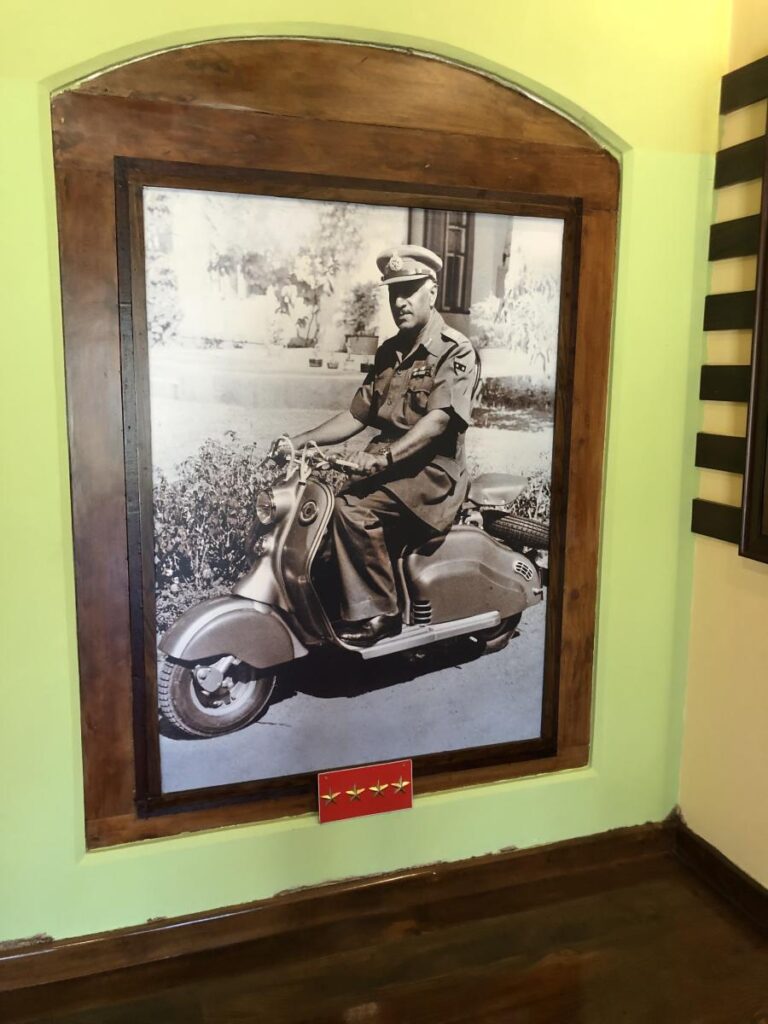
The house itself has several pictures from Thimayya’s life, along with a video film. There is a famous photo of the General riding a Lambretta scooter. There are also pictures of Thimayya during his wedding.
A photo of the General on his scooter at the museum. Photos by author
Besides this, a replica of his uniform and medals are on display.
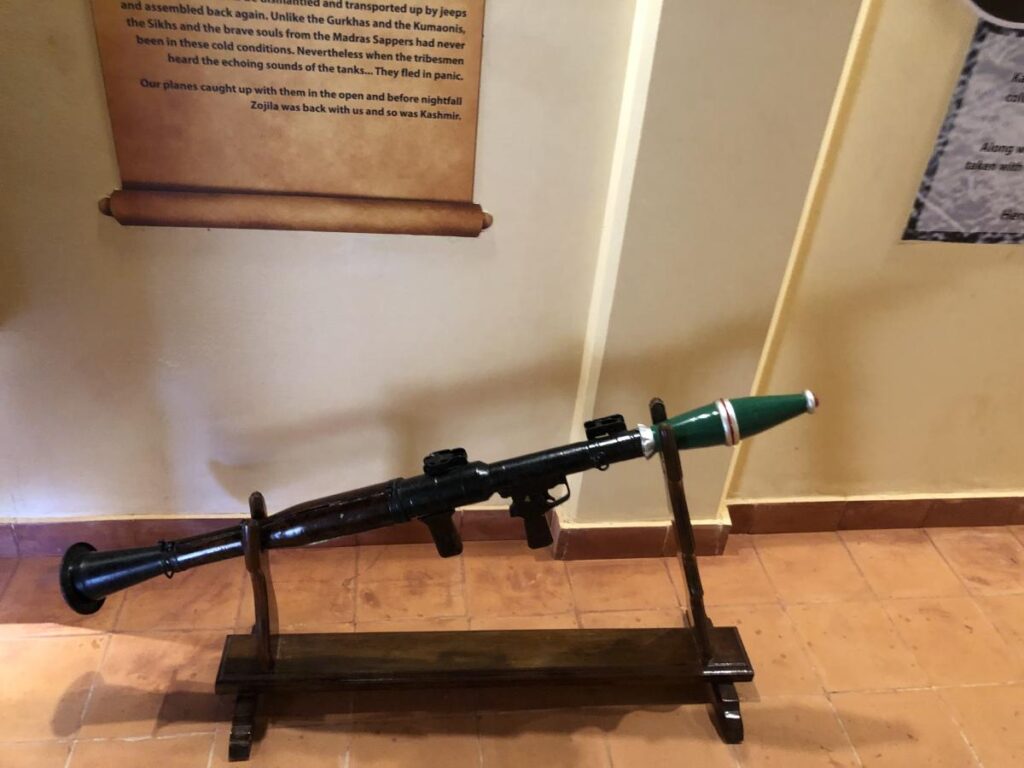
The museum also houses 24 weapons donated by General Bipin Rawat.
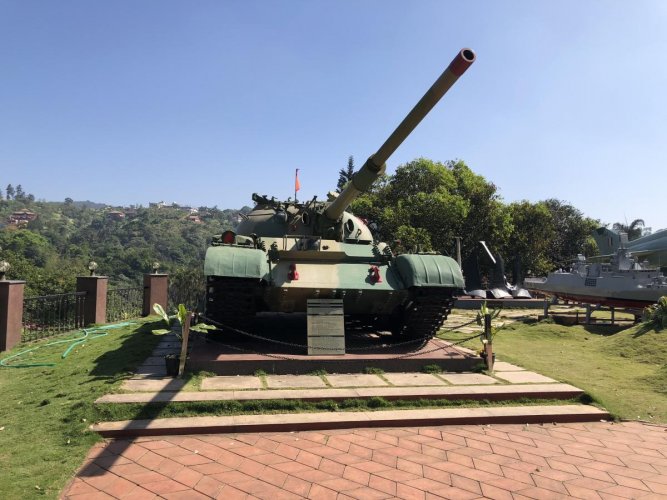
Outside the house, near the entrance, stands a battle tank called Himmath, donated by the Army training centre in Pune, a decommissioned MIG21 supersonic fighter jet and interceptor aircraft, a 24-feet INS Shivalik ship model, a Sindhughosh submarine and a Navy gun mount (anti-aircraft gun).
A rocket launcher is just one of the many weapons on display at the museum. Photos by author
Both the tank and the jet were used during the 1971 war.
source: http://www.deccanherald.com / Deccan Herald / Home> Spectrum / by Mookonda Kushapallpa / DHNS / March 19th, 2022
Federal officials say up to 23 million Americans may have developed long COVID health problems that last long after an initial infection.
Although research on long COVID is still in the early stages, there are already plenty of programs offering help.
Even simple things are big accomplishments for 71-year-old Rick Cannon, 18-months after he first got COVID-19.
“I remember being in the ER and then falling asleep. And that’s the last I remember till I woke up in middle November,” he said.
But it took another five months – until April 2021 – before Rick went home.
He was 121 pounds, couldn’t taste or smell, had stroke-like weakness on his left side, neuropathy and drop foot in both feet.
Dr. Mithra Maneyapanda of Bryn Mawr Rehab Hospital says every patient in the Post-COVID program is different – some with one symptom, some with many.
“Brain fog, trouble with memory, word-finding difficulties. They can also have physical symptoms, whether it’s difficulty with weakness, fatigue – some patients are still displaying shortness of breath and chest pains,” he said.
Others have mood issues. Because the causes are still unknown, the treatment focuses on each symptom.
“They might see physical therapy, occupational therapy, speech language pathologists, psychologists…,” said Dr. Maneyapanda.
Rick’s drop foot was surgically fixed, so his recovery is finally gaining speed.
“I can walk six or seven minutes without getting exhausted,” he said. “I can go up the steps, down the steps. I can get in the shower.”
Physical therapists say hard work by patients here and at home is paying off.
“I just had somebody the other day that said, ‘ have felt like myself for the past four days’,” said Julie Biely, P.T.
Each patient like Rick is also helping expand Bryn Mawr Rehab’s knowledge, and that will help future patients.
“Once the science catches up, we’ll have more targeted treatments to offer,” said Dr. Maneyapanda.
source: http://www.6abc.com / abc- Action News / by Tamala Edwards / March 17th, 2022
Veteran Indian drag-flicker and former Olympian V.R. Raghunath from Kodagu has been appointed as the Hockey India Selection Committee Member.
Raghunath is one in a long line of illustrious hockey players from Kodagu, one of the nurseries of Indian hockey in the country. He made his first foray into the national side with the 2003 Sub-Junior Asia Cup in Dhaka, which India won.
Raghunath made headlines for the first time when he was drafted into the national side at the 2006 World Cup. Raghunath is a good drag flicker and has scored many beautiful goals for India at the crucial moments.
He played almost all the senior events in 2007 and 2008 and went on to play for a decade more. He got Arjuna in 2016 and retired from international hockey after the Rio Olympics.
Harbinder Singh is the Chairman of the Selection Committee (men) while Syed Ali is the Chairman of the Selection Committee (women). Mohammad Riaz, Dr. Dilip Tirkey, Dr. R.P. Singh, Rajnish Mishra, Sardar Singh, Joydeep Kaur, Asunta Lakra and Surinder Kaur are other members.
source: http://www.starofmysore.com / Star of Mysore / Home> News / March 16th, 2022
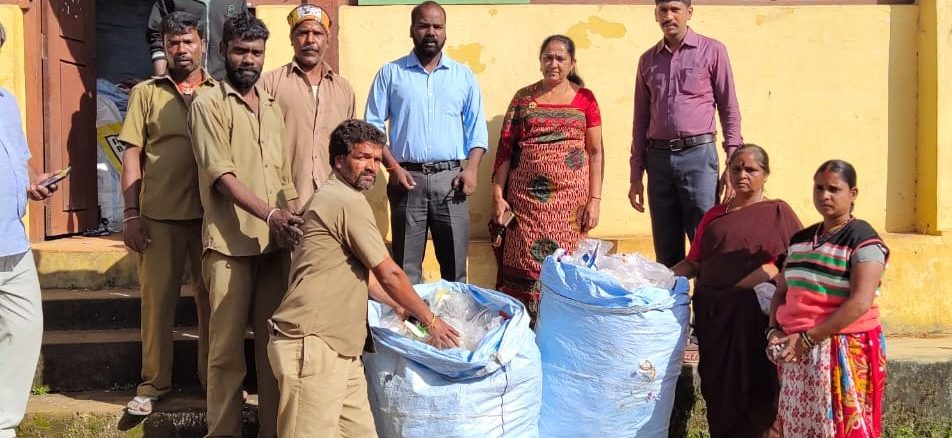
The Dry waste Collection Centre at Ponnampet Grama Panchayat, with collection from all the wards, became operational in January 2019. Pic courtesy: Clean Coorg Initiative
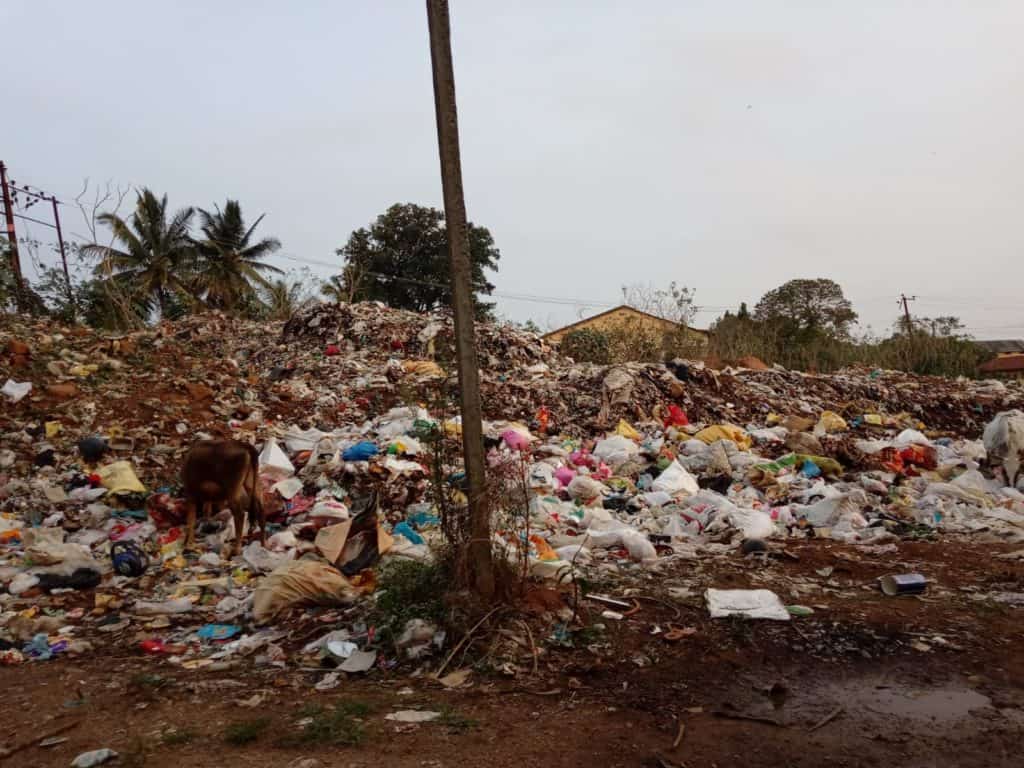
There is something about a hill vacation, travelling across narrow winding roads upwards, landscape dotted with lush green terrain, tantalising water streams, foggy foothills, chirping birds, the buzzing sounds of insects and clean air. But now, contrast this with unsightly scenes of rubbish by the roadside — styrofoam, plastic wrappers, bags and bottles, and more. The garbage keeps growing, competing with the hills, and becomes a monstrous man-made mountain in the midst of a landfill, laden with grotesque man-made objects that speak volumes about our use-and-throw culture and our complete lack of consideration for the environment.
Coorg, nestled in the Western Ghats, also known as the Scotland of India, and a popular tourist destination has, however, managed to make significant progress in fighting the waste menace. The town has demonstrated their commitment towards zero waste, with the closure of two landfills.
“Zero waste” is a concept that entails minimum or zero pollution to land, water and air due to solid waste management (SWM) practices and zero waste going to landfills. This initiative was a collaborative initiative by the volunteers of Clean Coorg Initiative, Hasiru Dala, the Gram Panchayat and the local government.
The 30-year old Ponnampet landfill as it stood in 2019. It would burn most of the time, the dump going down to nearly 40 feet./ Pic courtesy: Clean Coorg Initiative
How it all started
Alarmed that Coorg could soon degenerate into a dumping ground, in 2016, Prashanth Chinnappa, a local resident of Coorg brought several like-minded people together, to form ‘The Clean Coorg Initiative (CCI),’ a voluntary platform to promote a clean and healthy Coorg, with a core focus on promoting segregation of waste at source.
According to Pooja Uthappa, Volunteer at the Clean Coorg Initiative, “Waste is a relatively new phenomenon in this landscape. With rapid urbanisation, the quantum of garbage is also rapidly increasing. The other concern is around waste disposal practices. Dumping in one area or on the sides of the road and open air burning are common practices. Unfortunately some of the dumping areas are in the fringes of the forest areas, and the wild animals unknowingly consume them (the garbage dumped).”
Pooja also points out that Coorg residents depend primarily on groundwater; so when waste is dumped in open lands/ dumping grounds or landfills, it eventually contaminates water sources. But that’s not all. “Talakeveri, in Kodagu district, is considered the source of the river Cauvery and is an important lifeline for inhabitants in Karnataka and Tamil Nadu; incidents of indiscriminate garbage dumping adds to the problem downstream,” she says.
Pavan Aiyappa, Volunteer, CCI says, “We have a simple mission, which is to preserve the fragile ecology of Coorg for future generations, adopt sustainable initiatives, manage waste, promote responsible tourism, and preserve our natural resources”.
The group soon realised that clean up drives were a temporary solution, with no place for disposal of the litter collected, and that systemic changes were needed, along with on ground awareness. They started by undertaking a survey, observing practices, existing infrastructure and dumping spots. Savita Chengappa*, a volunteer from CCI, says, “We surveyed the entire stretch, till the Kerala border and we realised that we need somebody on the ground, who could go to the gram panchayat, create awareness and build capacities of the local team, using the Solid Waste Management (SWM) Rules 2016 framework. We also had to envision and plan the concept of stream-based processing of waste.”
The team also wanted to build on the success of Dry Waste Collection Centres (DWCCs) in Bengaluru, and wanted to understand the workings of the same in a rural set-up. Aparna, another active volunteer with CCI, says, “For us, all these were still theoretical and we needed to put these concepts into practice.”
Partnerships and initiatives
The group then decided to collaborate with the government and other organisations and approached Hasiru Dala, a social impact organisation working with waste pickers to assist with onground implementation and solutions.
Nalini Shekar, Co-founder Hasiru Dala, says, “Initially we were happy to support the group with necessary IEC and training, but soon realised that Coorg has a unique challenge, given its terrain. It has a large tourist footfall and considering the floating population, it is challenging to ensure that information and education programmes reach all of them. Secondly, while collection happens, there is no recycling industry in the area. Thirdly, there are limited workers in the solid waste management space, as most workers are employed in the coffee estates, agriculture and the tourism industry.” But given their expertise in dry waste management, it appeared that a system could indeed be put in place.
Pooja says, “Our first priority was capacity building for the municipal workers, the ASHA workers, the Self Help Groups (SHGs) and the officers, towards implementation of decentralised waste management. The training included the concepts of segregation of waste at source, the management of DWCCs, roles and responsibilities of officers, management of reject waste. For the general public, the sessions focussed on responsible disposal of waste through segregation at source.”
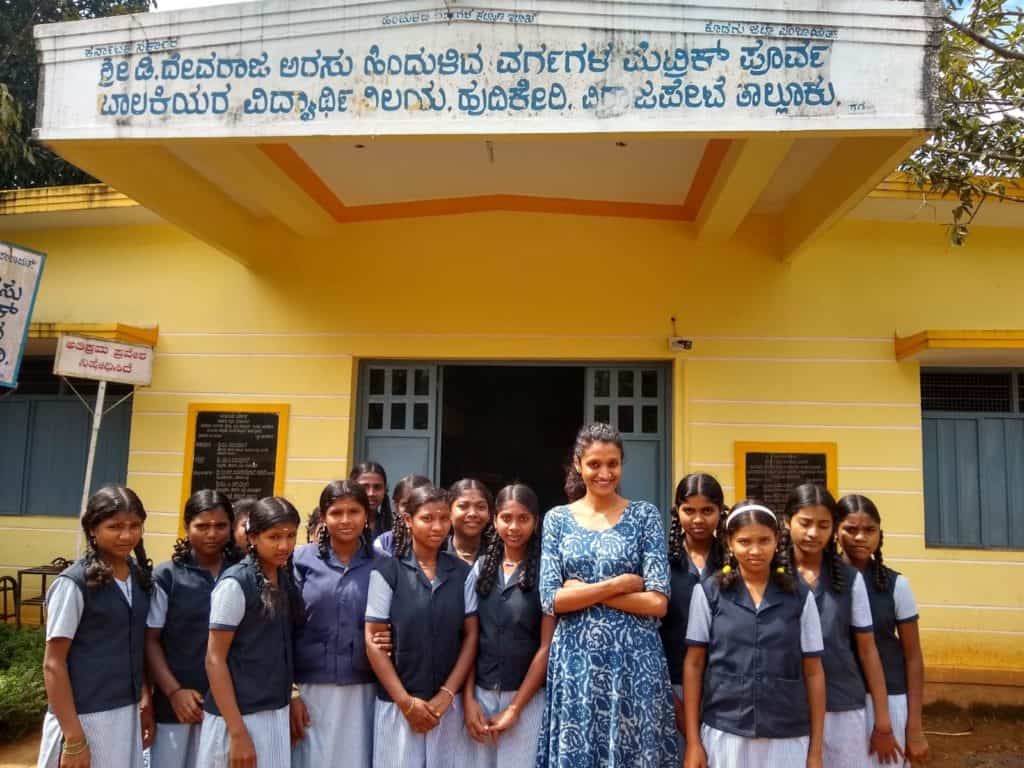
She shares that the group also conducted several outreach programmes like clean up drives, cycling awareness, sustainable menstruation and reached out to schools. CCI volunteers, in partnership with Wasteless Auroville, introduced a subject titled ‘Garbology’ as part of the school curriculum in Deviah memorial Preparatory School, Bittangala. Their outreach programme touched more than 800 government school children and teachers.**
CCI also hosted a Parivarthana Mela, to showcase sustainable lifestyle practices. This included composting workshops.
Awareness programmes were held in several schools in the region. Pic courtesy: Clean Coorg Initiative
Besides working on door-to-door awareness programmes, the team reached out to shopkeepers and explained the system of fines for non compliance. Pooja acknowledges the contribution of Kodava Koota from the United States of America, for supporting the outreach programmes.
Closing the landfills
The group then went on to streamline and simplify the waste collection process and a Dry Waste Collection Centre was set up. Puttaraju, Panchayat Development Officer ( PDO), Ponnampet who worked towards the closure of Ponnampet landfill shares, “After CCI and Hasiru Dala’s intervention, we felt the need for a decentralised set up and a DWCC. We zeroed in on the location and approached the Zilla Panchayat for permissions. They were very supportive and passed a resolution for the construction of the DWCC.”
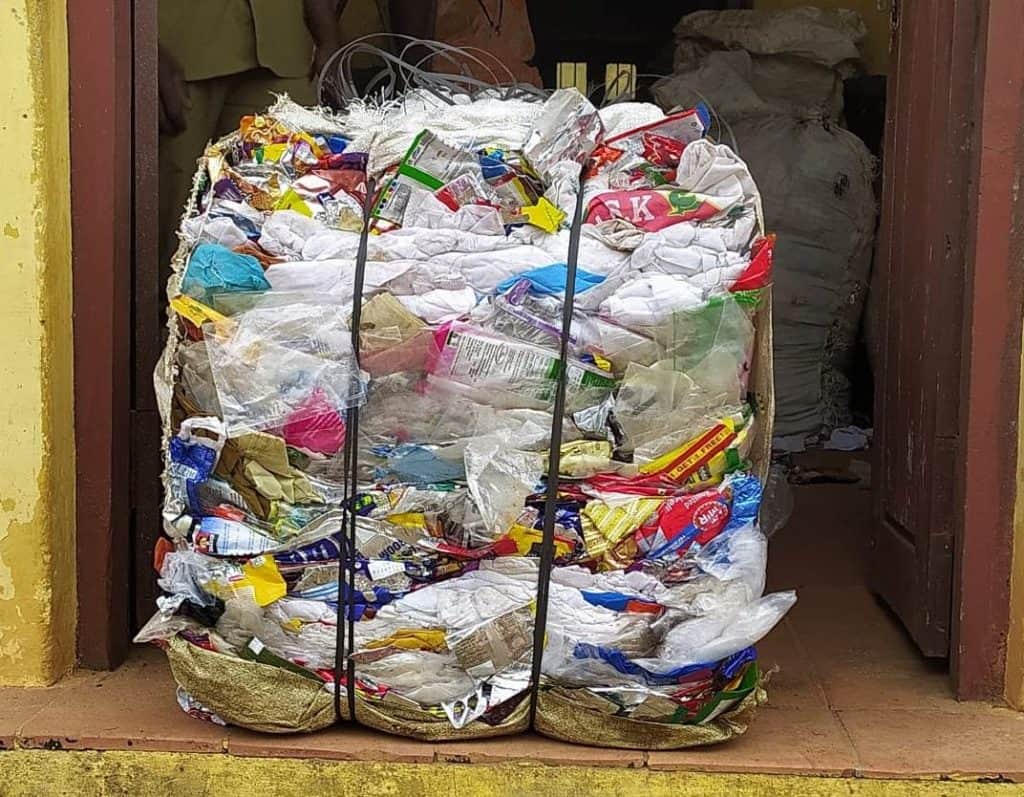
Hasiru Dala team also came up with a simple manual bailing system, which was then given to different GPs and this ensured that low value and multilayer waste could be sent for co-processing. Aparna, Volunteer CCI adds, “This process, then led to the natural question, do we really need dumping grounds or landfills?”
Aiyappa adds, “The rationale was much more than aesthetic beauty. We were also concerned about groundwater contamination and leachate from landfills, but also, given that the landfill was 30 years old and the waste was going about 30 feet down, we were also worried about landfill fires.”
The team then approached the GP, who in turn took to the implementation of the Karnataka Plastic Ban. The Panchayat passed a resolution on the plastic ban and introduced the “bring your own bag” concept, drawing in from the 2Bin1Bag concept and imposition of fines for littering, Aiyappa shares that thereafter, they went about methodically working with the GP to close the landfill in two areas, Ponnampet Taluk and Karmadu, Virajpete Taluk.
Hasiru Dala introduced Manual Baler to some of the Gram Panchayats in South Coorg, to pack the non-valuable materials through this and save money in transportation. Pic courtesy: Clean Coorg Initiative
Stiff penalties for violation
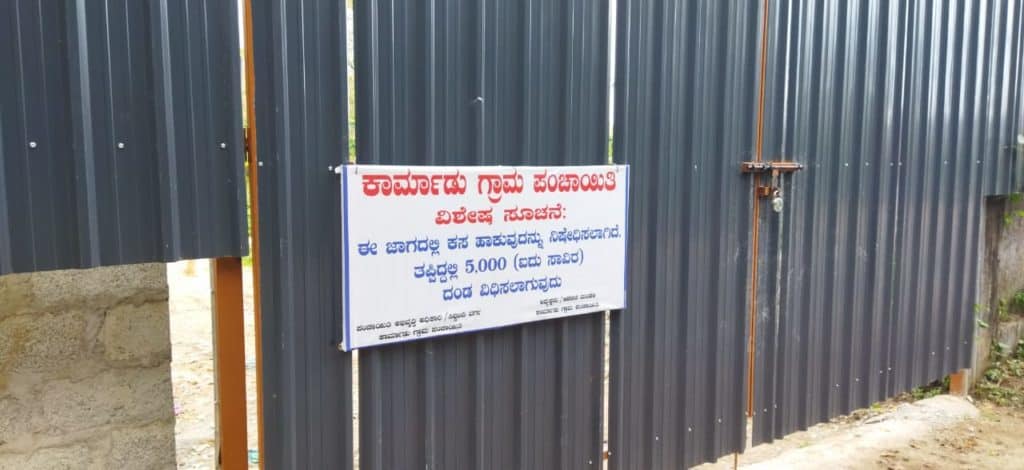
Niren Nannaiah, President, Karmadu Gram Panchayat, adds,“We had various meetings on the need for closure of the landfill. We have cordoned off the area with a metal sheet, installed CCTV cameras and put up a board notifying the penalty for dumping garbage in and around the place. We decided that it was futile to impose nominal fines of a hundred or couple of hundred rupees, so we fixed it at Rs 5000. We have penalised a few people. But that’s not all, we have also issued notifications on the need to use reusables or fibre cutlery at all events, especially marriages and functions.”
Nithin B S, PDO Karmadu, says the closure of the Karmadu landfill involved several stages: first sensitising people, then streamlining collection, seeking support of the elected representatives, passing resolutions and issuing the necessary notifications. But the most important was the imposition of fines.
The cordoned-off Karmadu landfill area. Pic courtesy: Clean Coorg Initiative.
We also made an announcement in the neighbouring gram panchayat that no dumping will be entertained, but they are free to drop segregated waste at our processing or dry waste centre. We spent about three lakh rupees in setting up the entire system, apart from separate investments in the installation of the CCTV camera,” said Nithin B S.
Finally an order was passed to close the landfill. The next question was, what do we do with the landfill site? The team then worked with the GP and proposed a design for a public park.
Mr. Suraj Ajiikutiria, SBM, Virajpet and Ponnampet Taluk, says, “ In order to actualise the vision of Swacch Bharat Abhiyan, we will need to close dumping sites in all 104 villages, plan for decentralised infrastructure and streamline collection just like we did in these Taluks.”
The most important takeaway from these experiences in Coorg is the need for a coming together of all stakeholders and a model that is both socially and environmentally inclusive, and which enables us to proudly proclaim, ‘landfills have no business.’
[The author wishes to acknowledge the contribution of Nirmala Shekar, Beula Anthony, Ramya K and Rohini Malur, for this article. ]
source: http://www.citizenmatters.in / Citizen Matters / Home> Waste Management / by Pinky Chandran / March 16th, 2022
After being deferred in January, the eighth edition of the Karnataka Bird Festival will be held in Madikeri from April 8-10, 2022.
Image used for representational purpose only. (Photo | Express)
Bengaluru :
After being deferred in January, the eighth edition of the Karnataka Bird Festival will be held in Madikeri from April 8-10, 2022.
The festival, organised by the Karnataka forest department and Karnataka Eco-Tourism Development Board, aims to draw attention of people to bird watching, spark interest among young wildlife enthusiasts, show people the bio-diversity of forests, and shift their focus from tiger-centric wildlife safari and tourism.
“Every year a different location, region, bio-diversity, and a different bird is focused upon to increase awareness and ensure better conservation measures.
This year, the mascot is Baza bird,” a forest department official said. Baza is a migratory bird from the eastern Himalayas, China and South East Asia. Forest officials of the region have reportedly sighted a couple of the birds now, in the onset of summer.
Kumar Pushkar, additional Principal Conservator of Forests and CEO of the Board told TNIE that the festival was postponed because of spike in Covid-19 cases. “We always wanted to host one is Kodagu because of its bio-diversity and the many species which can be sighted there. Baza was chosen because it is sighted in winters in this region.
There will be around six to seven different trails, which the deputy conservator of forest is finalising. The event will also cover Madikeri city, and will be inaugurated by forests minister Umesh V Katti,” he said. Experts from across the country will be brought to share their experience, knowledge.
source: http://www.newindianexpress.com / The New Indian Express / Home> States> Karnataka / by Bosky Khanna, Express News Service / March 14th, 2022
Students are hoping for rehabilitation in India or admission in similar universities in European countries like Poland as a special case for Indian students
Uncertainty looms large over the fate of students who safely returned to India from Ukraine as some of them feel that continuing medical education in the war-ravaged country would be tougher, challenging and unreliable and parents may refuse to send them back in the present circumstances.
In Mysuru, Kodagu and Chamarajnagar, several students have returned safely and a few more are on their way. What has been bothering the returnees is “what next”.
Though discussions are ongoing in various circles on whether to permit the affected students to continue their education in Indian colleges, a clear picture on their future may emerge once all safely return to the country with the Centre’s ‘Operation Ganga’ in the final stages of evacuation in Ukraine.
“I’m worried about my future. I don’t know whether my parents will send me back to Ukraine if the situation returns to normal though it appears to be highly uncertain with Russian militia advancing. I am keeping my fingers crossed. I have put in three years and I was about to be promoted to fourth year. I am hopeful something will emerge as India will work out a solution in students’ interests,” said Likith, who returned from Kharkiv.
Like Likith, his friends and classmates in Kodagu and Mysuru are hoping that the medical colleges or universities in Europe may also consider admitting the affected students from Ukraine since the education system is almost similar in many European countries. In solidarity with Ukraine, the European institutions, as a special case, may admit the students, after fulfilling the formalities. Poland, Hungary and Slovakia and other countries may consider admission, they hope.
“I and my friends and I have decided to wait and watch the developments. We cannot say what happens in the days ahead. We are hoping that our interests will be protected,” said Likith, a student of Kharkiv National Medical University, who spent a harrowing time with eight others in a bunker in Kharkiv after the Russian invasion.
Sharukh M.Y., who returned to his hometown in Virajpet taluk in Kodagu on Sunday, is hoping that the government of India will come up with a plan to address the returnees’ plight.
“I am hoping that my university in Ukraine will start online classes at the earliest. It has told us it will update us by March 15. With the war on, everything appears uncertain. I’m in the sixth semester. I would have been promoted to fourth year but the crisis forced us to vacate. I am open to all options,” said Shah Rukh, who is a student of V.N. Karazin Kharkiv National University in Kharkiv.
source: http://www.thehindu.com / The Hindu / Home> News> National >Karnataka / by Special Correspondent / Myusru – March 07th, 2022
Two from Kodagu are trapped in Sumy city; they face food, water shortage
Two students from Kodagu are among 440-plus Indian students stranded in Sumy in war-hit eastern Ukraine, which is close to the Russian border.
Even as many Karnataka students were managing to run off from the cities under siege and reaching borders in western Ukraine for airlift, some students are finding it tough to move out, delaying their evacuation and increasing the anxiety levels of their parents.
Arjun Vasanth, a fourth-year medical student, who is still in Sumy, Ukraine. | Photo Credit: SPECIAL ARRANGEMENT
The parents of Arjun Vasanth from Shanivarasanthe and Shreya Pradeep from Virajpet are extremely worried over their safety as their return is not happening though it’s been over a week since the Russian militia invaded Ukraine. Shortage of food and water has made the students’ life even more difficult. Going out to bring essentials is also dangerous amidst the shelling.
Arjun’s elder brother Raghavendra, who works in Mysuru, said his brother is now incommunicado with power outage in Sumy since last Thursday night. “He and others are facing serious difficulties and evacuation of these trapped students must be speeded up by engaging in talks with Russia since Sumy is close to the Russian border and they can be evacuated from the nearest airport in Russia,” a worried brother said.
Raghavendra said he spoke former Union Minister D.V. Sadananda Gowda, who was in New Delhi, and Manoj Rajan, Commissioner, Karnataka Disaster Management Authority, on the students’ plight in Sumy and sought their help for their airlift as going to western Ukraine amidst intense shelling and missile attacks was impossible for them. “How is it possible to travel 1,500 km with no proper transportation mode from Sumy to the Polish or Romanian borders,” he asked.
Shreya Pradeep is another student from Kodagu stranded in Sumy. His father Pradeep, who runs a shop at Betolli village in Virajpet, is making frantic calls to authorities for updates as he is disturbed over delay in evacuation.
“Good that our students are being evacuated but students stuck in other conflict zones also need to get help and support. These students have no food and water. They are in serious difficulty. Please help them get back home soon,” he pleaded.
Pradeep took an education loan to send Shreya, a first-year student in Sumy State University, to Ukraine.
“My daughter went to Ukraine as one of her seniors suggested that medical education is good there. She is today trapped in a war situation,” said Pradeep, who was told by Shreya that 438 Indian students are stranded in Sumy and all are together in a bunker.
“The Indian government must talk to Russian authorities as Sumy is close to Russia. The students could be moved to the Russian border for eventual airlift,” he suggested.
source: http://www.thehindu.com / The Hindu / Home> News> National> Karnataka / by Special Correspondent / Mysuru – March 04th, 2022
From an abandoned barren land to a green lush private sanctuary, author Pamela Malhotra recounts the transformation.
Bengaluru :
Pamela Malhotra’s From the Heart of Nature (`599, Penguin Random House) documents the story behind the creation of a private forest sanctuary in India. More than just the struggle, Malhotra also recounts how she connected with animals and trees both at a physical and spiritual level.
What was the turning point in your life?
My husband Anil and I shared that love of wildlife and that dream. This realisation initially came while living in the USA in the late 1970s and early 1980s, which is why we established our first small wildlife sanctuary on the Big Island of Hawaii in 1979. When we came to India in January of 1986, we were quite upset by the deforestation we saw, especially in the Himalayas. We had gone to Haridwar and fell in love with the Himalayas. So, we purchased land in the Uttarkashi region to help reforest that area.
How did you zero-in on Kodagu?
There were land ceiling laws in the state (then Uttar Pradesh – now Uttarakhand) that limited a family to owning just 12 acres of land. There was not enough land for establishing a forest wildlife sanctuary through reforestation. Also, we had visited Nagarhole National Park in Jan 1986, where the then-Wildlife Warden of the Park urged us to establish our forest wildlife sanctuary in his home district of Kodagu. As a result my husband Anil travelled throughout southern India to see what he could find, finally finding suitable land in Kodagu. Purchasing larger pieces of land was possible here if the land was deemed ‘plantation’ and the purchaser was an agriculturalist which my husband was.
What were the initial struggles that you faced?
Accessing the land. It was almost impossible to bring in any kind of building materials for our home in the beginning due to the poor roads. So, my husband put loads of rocks and other road material into these dirt roads to help give us drivable access which was also a big boon for the local people. Another major challenge was the legal maze encountered in the district since lands were divided into several different categories, often with different rules/laws applying to different categories in terms of purchase and ownership. Acceptance by the local people was also initially a challenge, although the older generation did understand the importance of maintaining forests and not killing off all the wildlife. The most distressing challenges have been illegal logging and poaching of wildlife.
The sanctuary is spread across 300 acres, what are the kinds of species that are found there?
Hundreds of species have made the sanctuary their full-time home and/or come visit frequently. A short list of species found here includes 100s of species of butterflies and birds including Great Indian Hornbills and Malabar Grey Hornbills, Bengal tiger, Asian leopard, Asian elephant, sloth bear, dhole (Indian wild dog), Gaur (Indian bison), species of deer (sambar, cheetal, muntjac/barking deer) etc. So diverse are the species found here that one Oxford scientist dubbed our sanctuary ‘Noah’s Ark’.
You first purchased the land for the sanctuary in 1992, to create a private sanctuary. How did you decide on writing a book?
I hope to sow the seeds of love of nature in the hearts and minds of all who read the book, and to create a sacred perspective when viewing and dealing with nature.
source: http://www.newindianexpress.com / The New Indian Express / Home> Cities> Bengaluru / by Monica Monalisa, Express News Service / March 02nd, 2022
WELCOME. If you like what you see "SUBSCRIBE via EMAIL" to receive FREE regular UPDATES.
Read More »