Mysuru-Kodagu MP Pratap Simha said that unlike many other top Army Officers who preferred to lead their retired life in major cities, Field Marshal K.M. Cariappa chose to lead his retired life in his native Kodagu amidst nature’s splendour and beauty.
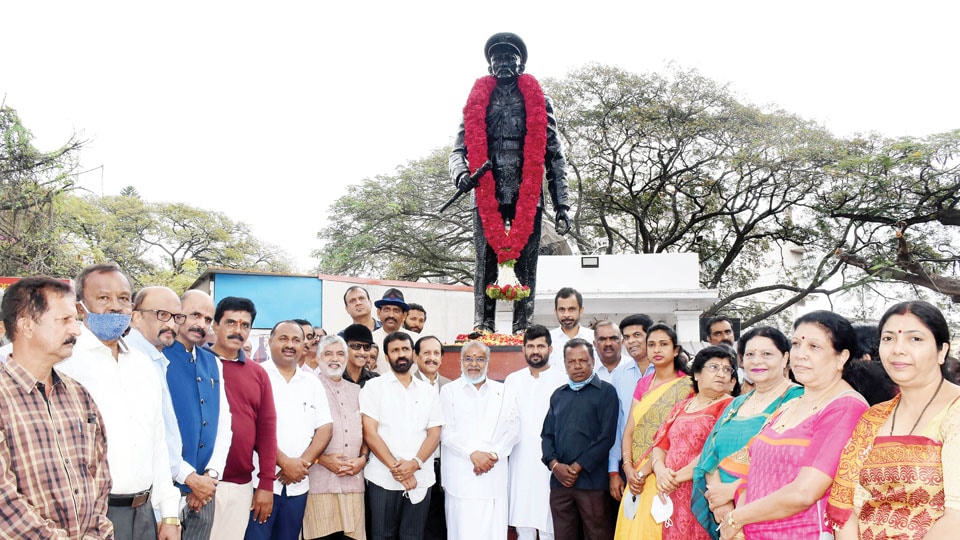
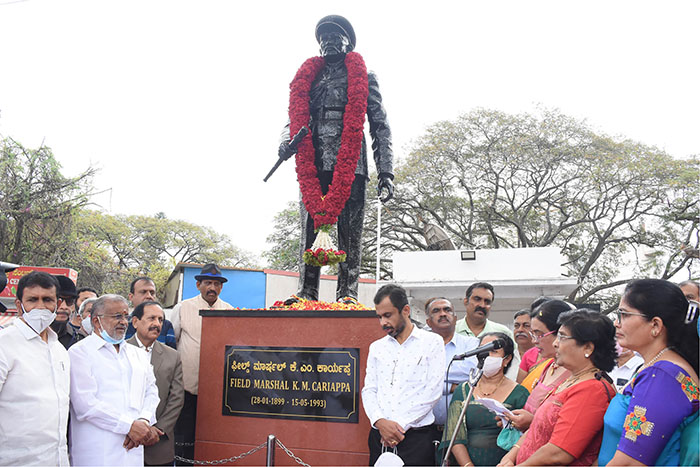
He was speaking at the 123rd birth anniversary celebrations of Field Marshal K.M. Cariappa, OBE, jointly organised by Kodava Samaja, Mysuru, Kodava Samaja Cultural and Sports Club, Mysuru and Field Marshal K.M. Cariappa Fans Club, at Field Marshal K.M. Cariappa Circle at the junction of JLB Road and Hunsur Road here this morning.
Pointing out that it was not easy for becoming the first Commander of the Indian Army post-Independence, Simha said that Field Marshal Cariappa, along with Gen. K.S. Thimayya should be credited for showing how a country’s borders can be secured by unitedly taking together all the soldiers.
Terming Field Marshal Cariappa as a true ‘Veeraputra’, he said that Cariappa was also a very able leader and brought many laurels for the country.
Chamundeshwari MLA G.T. Devegowda, in his address, said that today, the entire country is paying tributes to Field Marshal K.M. Cariappa. Recalling the contribution of Kodavas in defence sector, he said that it is the pride of the nation that Kodava is home to many war heroes.
Former Mayor H.N. Srikantaiah recalled how Metropole Circle was renamed as Field Marshal K.M. Cariappa Circle when he was the city Mayor in 1999 and the current Chamaraja MLA L. Nagendra a Corporator then.
Pointing out that as Mayor, he had put forward a proposal to the then Education Minister A.H. Vishwanath to rename the Circle as Field Marshal K.M. Cariappa Circle, to which Vishwanath readily agreed, he said that thereafter a resolution was passed at an MCC Council meeting to this effect, following which the Circle was officially named as Field Marshal K.M.Cariappa Circle. He further said that a statue of Cariappa was also proposed at the Circle when he was the Mayor.
To mark the occasion, the statue of the Field Marshal was garlanded and offered floral tributes by the dignitaries
Former Mayor M.J. Ravikumar, Corporators M.U. Subbaiah and Pramila Bharath, Rangayana Director Addanda C. Cariappa, Mysuru Kodava Samaja President Mechanda M. Shashi Ponnappa, Vice-President Malachira M. Ponnappa, Hon. Secretary Mukkatira B. Jeevan, Joint Secretary Appanderanda Tara Somaiah, Treasurer Machimada P. Nanaiah, Kodava Samaja Cultural and Sports Club President Kuttimada D. Muthappa, Secretary Mechanda S. Bopanna, Field Marshal K.M. Cariappa Fans Club President Nayakanda M. Thimmaiah, Shri Kaveri Kodagu Mahila Sangha President Ponjanda Lovely Appaiah, former Mysuru Kodava Samaja Presidents Mechanda M. Karumbaiah, Poyyettira S. Ganapathy and Ballyamanda M. Nanaiah, Philanthropists Kuttimada D. Cariappa and Pudiyokkada Praveen Chengappa and others were present.
Some facts
1. Field Marshal K.M. Cariappa took over as the First Army Chief on Jan. 15, 1949, so Army Day is celebrated on this day.
2. Field Marshal K.M. Cariappa relinquished his appointment on Jan. 14, 1953, so the Veterans Day is celebrated on this day.
3. City-based VeKare Ex-Servicemen Trust (VKET) President Mandetira N. Subramani had urged the District Administration in August 2006, to install a life-size bronze statue of the Field Marshal at Metropole Circle.
source:http://www.starofmysore.com / Star of Mysore / Home> News / January 28th, 2022
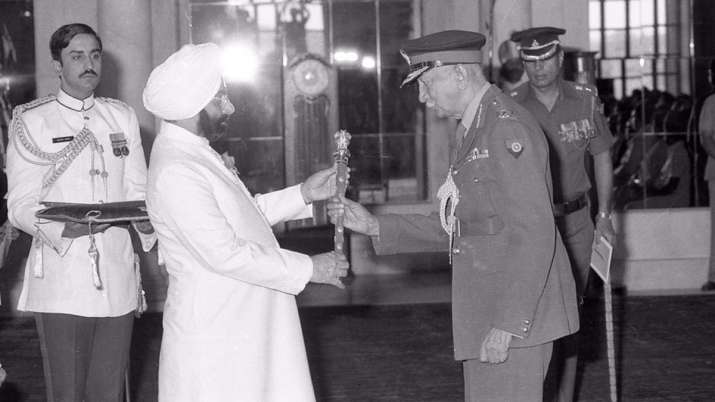
Field Marshal KM Cariappa is known as the man who took charge of the Indian Army from its last British Commander in Chief, General Sir Roy Bucher in 1949.
Image Source : TWITTER @RASHTRAPATIBHVN (FILE) /
HIGHLIGHTS
Cariappa was the first Indian Officer to be given command of a unit in 1942
He had led troops in the 1947 Indo-Pak war & successfully recaptured Zojila, Drass & Kargil
On January 15, 1949, Cariappa became the first Commander-in-Chief of the Indian Army
Army Day is celebrated on January 15 every year in recognition of Field Marshal KM Cariappa’s taking over as the first Commander-in-Chief of the Indian Army from Sir Francis Butcher, the last British Commander in 1949.
Who was KM Cariappa?
Field Marshal Sir Kodandera Kipper Madappa Cariappa is known as the man who took charge of the Indian Army from its last British Commander in Chief, General Sir Roy Bucher. Born on January 28, 1899, in Shanivarsanthe, Coorg Province (present day Kodagu district in Karnataka), Cariappa completed his education at Central High School at Madikeri and went on to study at the Presidency College in Madras. He was among the first Indians to be selected for military training.
Following his training in Indore, he joined the British Indian Army shortly after the end of World War I. Later, he was commissioned into the Carnatic Infantry. He became the first Indian Officer to be given command of a unit in 1942.
He had led his troops in World War II and the first Indo-Pak war of 1947. He successfully recaptured Zojila, Drass and Kargil and established a linkup with Leh.
He went on to receive many awards and accolades in his career spanning three decades. He received the prestigious order of the British Empire (OBE) for his role in Burma against the Japanese force during World War II.
Before taking over as the Commander-in-Chief of the Indian Army, Cariappa served as the commander of the Indian Army’s Eastern and Western Commands. He has also conferred the ‘Order of the Chief Commander of the Legion of Merit’ – the first-ever award of its kind given to an Indian General, by President Harry Truman (the 33rd President of the United States).
In 1947, he became the first Indian to be selected to undergo a training course at Imperial Defence College, Camberley, UK. On January 15, 1949, Cariappa became the first Commander-in-Chief of the Indian Army.
In 1983, he was given the title of Field Marshal (five stars). The only other person who has been conferred the title so far is Field Marshal Sam Manekshaw in 1973.
After retiring from the Indian Army, Field Marshal KM Cariappa served as High Commissioner to Australia and New Zealand till 1956. He died on May 5, 1993, at the age of 94.
source: http://www.indiatvnews.com / India TV / Home> English News> India / by India TV News Desk , New Delhi / January 15th, 2022
Established in April 2017, Thanal Ashram has provided shelter and been a home to many women, including a few who now live happily with their families.
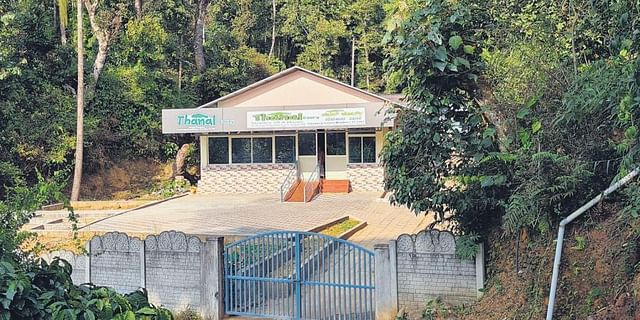
The Thanal Ashram in Madikeri district. (Photo| EPS)
Madikeri :
Solace to the distressed, neglected and the homeless – this resonates as a synonym of Thanal Ashram in Madikeri. Established in April 2017, Thanal Ashram has provided shelter and been a home to many women, including a few who now live happily with their families.
Located amid the chaos of bad roads and routine buzz of the normal world, Thanal is a symbol of tranquillity. Smiling faces and sweet greetings welcome one into the building, currently home to 24 women. Most of them are homeless, and a few others made the ashram their home, after being deserted by their families.
“A 96-year-old woman who was found on the road, was brought to Thanal. The first thing we do is give them a bath. The woman was unclean but refused to take a bath till she was fed. When we gave her food, she ate her fill. This is when I realised that we first need to cater to their hunger,” shared Shashikala BK, an employee of the ashram.
She narrated stories about many women who were, and are, being nurtured at Thanal. “An old woman, Parvathy, was brought to the ashram from the District Hospital in Madikeri. After she was admitted to hospital, no family member came to take her back. She had cancer and she passed on in a few months, after living at the ashram,” she said.
Parvathy was from the Kodava community. “In order to perform the final rites as per Parvathy’s religion, we contacted people from the Makkada Koota and Kodava Samaj. The members took Parvathy’s body for cremation, as per Kodava rituals,” explained Mohammed Musthafa, the head of Thanal in Madikeri.
“Parvathy had no family, but there were many people from the surrounding areas who attended her funeral and bid her goodbye,” recalls Shashikala.
The head office of Thanal is based in Kerala, and is founded by Dr Idris, who is also chairman of the charitable trust. In Madikeri, the trust is run by Daya Rehabilitation Trust, headed by Musthafa. “No one who has a family should stay homeless on the roads. While we shelter the homeless, we look forward to reuniting them with their families,” says Musthafa.
He narrated the stories of Muthulakshmi, Jalavathi and others who were reunited with their families after many years of separation. “Jalavathi is from Uttar Pradesh. She got lost on a train and somehow ended up in Madikeri. She couldn’t speak proper Hindi and didn’t know her address. Her son’s number was traced by Thanal and she was reunited with her family after two years,” says Musthafa.
Like Jalavathi, Muthulakshmi was found in a pitiable state near the Madikeri Bus Depot. Two of her toes had fallen off and her legs were rotting due to myiasis (infection caused by maggots). She was treated for her infection and mental illness.
“During the course of her treatment, she recalled the name of her village. There are many villages by that name and we visited several before we finally traced her village in Tamil Nadu. She was reunited with her family after seven years. No one must stay orphaned if they have a family and Thanal strongly believes in this,” said Mohammed.
However, a few women who have been abandoned by relatives, swear to spend their last days in the comfort provided by Thanal. This destitute home has sheltered over 80 women in the past three years and has united at least eight families.
In case of death, the rituals of the deceased’s community are followed during the last rites. “This is not a home for people from any particular caste or community. This is a home for humans,” shared Musthafa.
The ashram is run by the trust, and with support from the main branch of Thanal. However, it is in need of more funds and benefactors who recognise their social work. Reach out to Thanal Ashram on 9844558896.
Thanal Ashram
Established in Madikeri in April 2017 to provide a home to distressed and homeless women. It has since become a home to many.
source: http://www.newindianexpress.com / The New Indian Express / Home> Good News / by Prajna G R, Express News Service / January 23rd, 2022
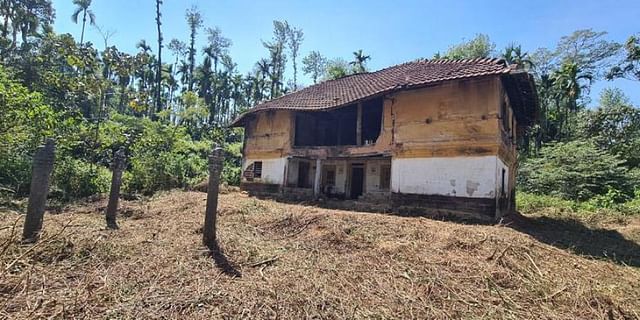
“This edifice is believed to be the house of Hombale Nayaka, a close aide of King Dodda Veera Rajendra who once ruled Kodagu kingdom,” said Nagesh Kaluru, a writer.
The outside view of the 18th century edifice near Murnad.
Madikeri :
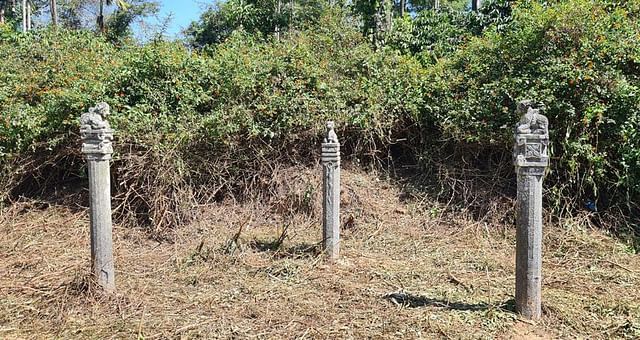
Three stone pillars with Nandi sculptures on them. This is what is first seen of an age-old edifice in Kathuru village limits in Murnad of Madikeri taluk. Over three centuries old, the building is now covered with scribbles carelessly left by people who did not know better. However, if revived, this edifice will narrate the iconic history of Kodagu and its renowned kings.
The Archaeological Department is currently involved in village surveys across Kodagu to identify and revive historical places. During one such survey in Murnad limits, the 18th-century edifice was located amidst the bountiful coffee estates in the area.
“During the village survey, we were told about this place by the locals,” explained Rekha, curator of Kodagu District Museum. The department with support from the NSS students of Murnad PU College and professor Harish Kiggal cleared the area of dense growing weed and the edifice glowed under the sun.
“This edifice is believed to be the house of Hombale Nayaka, a close aide of King Dodda Veera Rajendra who once ruled Kodagu kingdom,” said Nagesh Kaluru, a writer.
According to historical findings, Homabale Nayaka stayed here during the 18th century along with his family. A close aide of the royal family, he was one of the people who helped the king escape from Tipu Sultan’s prisons in 1788.
The historical edifice was under the care of the Kere Mane family settled in Kathuru. The family has an ancestral connection with Homable Nayaka and the building had been home to many other ancestors from the family.
However, the archeological department has now discovered the historical importance of the edifice. There is though no confirmation from the department about plans to revive it. Other historical monuments in the district including the Madikeri Fort and the Nalknad Palace are already awaiting funds for maintenance.
source: http://www.newindianexpress.com / The New Indian Express / Home> States> Karnataka / by Pragna GR, Express News Service / January 25th, 2022
Two inscriptions, previously assumed to be in mixed language, contain a unique character set
by Mookonda Nitin Kushalappa, Engineer, Historian, Author and Researcher
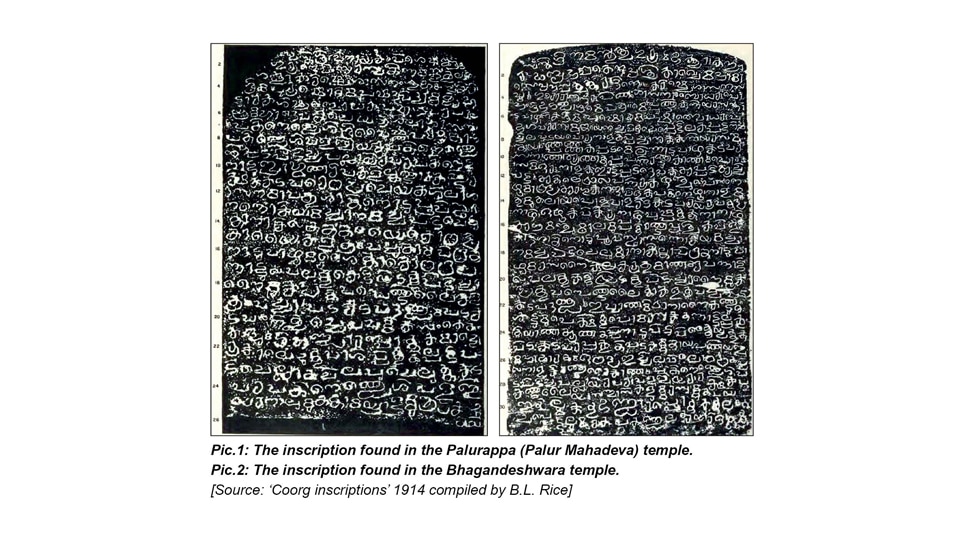
In his 1914 revised Coorg Inscriptions volume of the Epigraphy Carnatica book series, B.L. Rice has listed two peculiar 14th century inscriptions. These were deciphered for Rice by Narasimhachar and Krishna Shastri. Many have dismissed the inscriptions to be a mixture of scripts and languages. It beats logic for an inscription to use a mixture of languages rather than a single language itself.
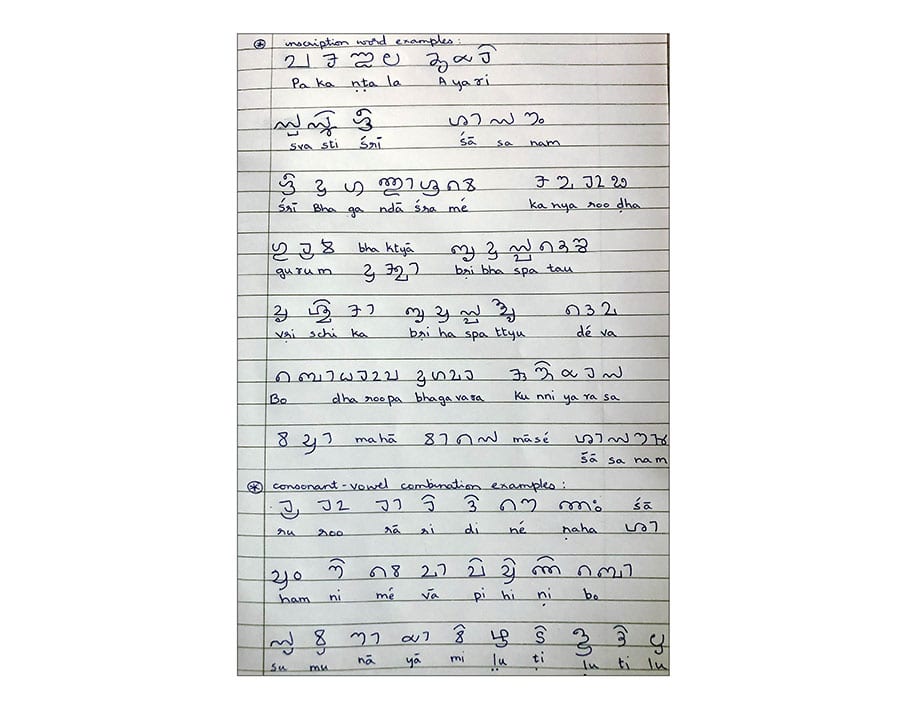
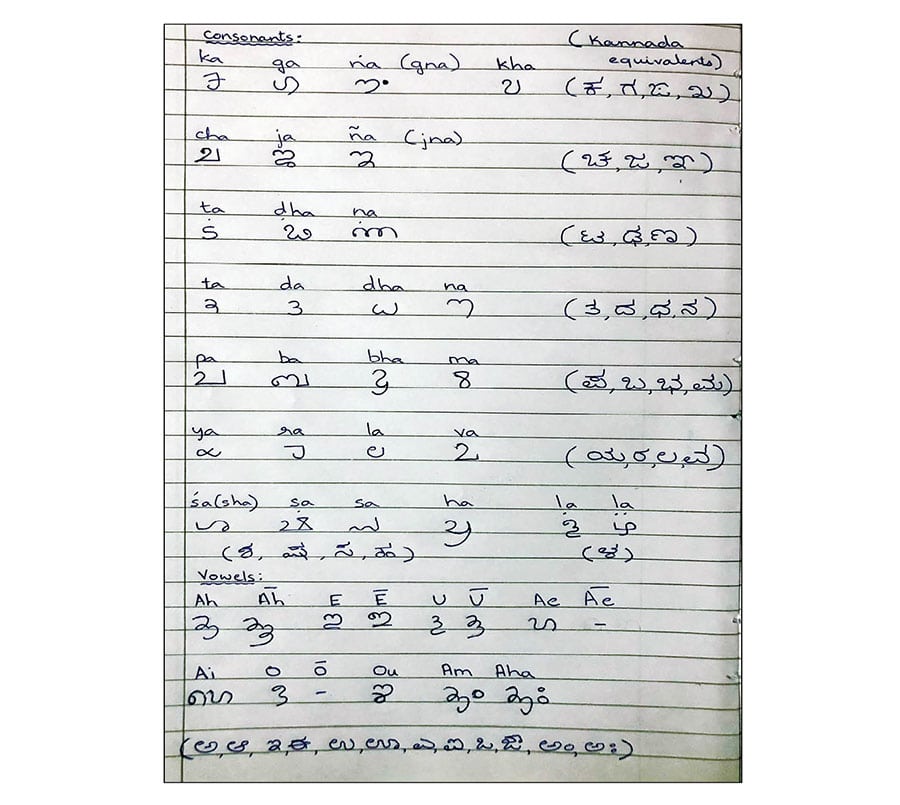
I have managed to separate the characters in the inscription and group them into an alphabet. The alphabet is midway between an intermediate transitional ‘Grantha’ script and the ‘Tulu-Tigalari’ script. It is related to the 14th century Tamil letters. Since the two inscriptions were found in two prominent temples of Kodagu, I would prefer to call the script ‘Thirke’, after the Kodava word for a temple. An online organisation called ‘Indian Roots Polyglots’ calls this “old Kodava script.”
Narasimhachar had noted in the ‘Coorg Inscriptions’ that the 14th century inscriptions’ “characters are a jumble of Grantha, Malayalam, Tamil and a few Vatteluttu. There is no doubt about portions being in Tamil, but other portions are in a language that is neither Malayalam nor Tulu but is related to them. I think the inscriptions are older than 1400 AD. Some of the characters appear to go back to the 11th century.”
Inscription word examples.
Tamil-Kodagu, Tamil-Malayalam
The Kodava language is the descendant of the Tamil-Kodagu branch of the Dravidian language family. Tamil-Kodagu is older than Tamil-Malayalam, the parent of the Malayalam language.
The ‘Brahmi’ script was used all over ancient India. Variants of it were used in South India. There were the ‘Kadamba’ and the ‘Pallava’ scripts, named after ruling dynasties of their ages. The Kadamba script gave rise to the Kannada and the Telugu scripts. The Pallava script gave rise to Tamil and Grantha. These in turn were related to the ‘Vatteluttu’ and the ‘Tulu-Tigalari’ scripts. The ‘Tulu-Tigalari’ script itself is a descendant of the ‘Grantha’ script.
However, neither is the ‘Thirke’ (or old Kodava) script itself modern ‘Tulu-Tigalari’ nor is the language used modern Kodava. The Kodava and the Tamil languages don’t have long consonants, unlike most other Indian languages. But the old Kodava script itself has a few long consonants. We can safely say that the language used is a lost language that was an ancestor of or at least related to the modern Kodava language.
Like in the ‘Tulu-Tigalari’ and other related scripts, some letters in this ‘Thirke’ (old Kodava) alphabet (such as ‘cha’, ‘pa’ and ‘va’) are like each other and may be mistaken for each other. ‘Ta’ and ‘da’ are interchangeable in this script, like in old Malayalam. Hence, ‘Nadu’ is sometimes called ‘Natu’ in the two inscriptions.
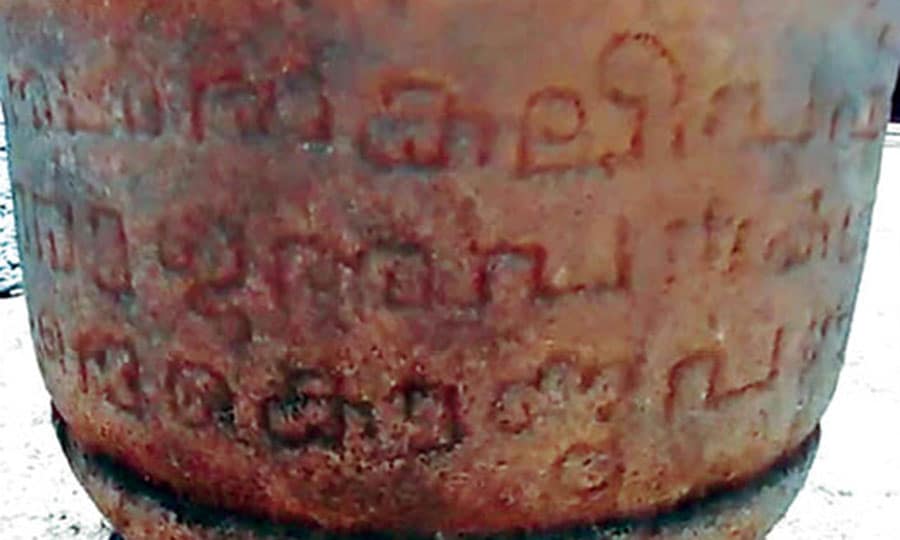
Inscription found in Vitla Palace Garden.
Evidence found at Vitla
Meanwhile, in the Palace Garden of the Heggade rulers of Vitla is a stone pot with an inscription. P. Gururaj Bhat had claimed that the script was Tulu and the language Kodava. The script used is not the same as the one used in the two 14th inscriptions of Kodagu. Recently, it has been found that the Vitla Palace inscription actually uses the Malayalam script and language.
The earliest inscriptions found in Kodagu date back to the 9th and 10th centuries and are in Kannada. An 888 AD stone inscription found in Biliyur village mentions a ‘Kadanga’, a defensive earthwork barricade against enemy soldiers and elephants unique to Kodagu and made by the Kodavas.
Thirke alphabet.
Eight householder families
The same inscription, along with a few later ones, mentions the ‘Entu Okkal’ or the eight householder families, who held some power in the region. An ‘Okkal’ is a land-owning agriculturist family. It corresponds to the Kodava word ‘Okka.’ These eight families could correspond to the eight ‘seeme thakkas’ (regional chieftain families) of Kodagu — eight hereditary chieftain families (Kallera, Bollera, Pardanda, Pandira, Mathanda, Buduvanda, Porera and Paruvanda).
The two 14th century inscriptions of Kodagu are dated around 1370-1371 AD. Both state that the king or overlord is ‘Bodharoopa Bhagavar’ who issued the two edicts. The Bhagamandala inscription mentions that the ruler of that ‘nad’ (region) is Melpundi Kunniyarasa. The name Kunniyarasa means ‘little ruler.’
The two inscriptions were found in the Bhagandeshwara Temple of Bhagamandala and the Mahalingeshwara Temple of Palur. Both temples are Shaiva temples. Both the inscriptions begin with the Sanskrit words ‘Svasti Sri’, which mean ‘Be it well’. This is similar in meaning to the term ‘Baalo’ with which most Kodava folk songs begin.
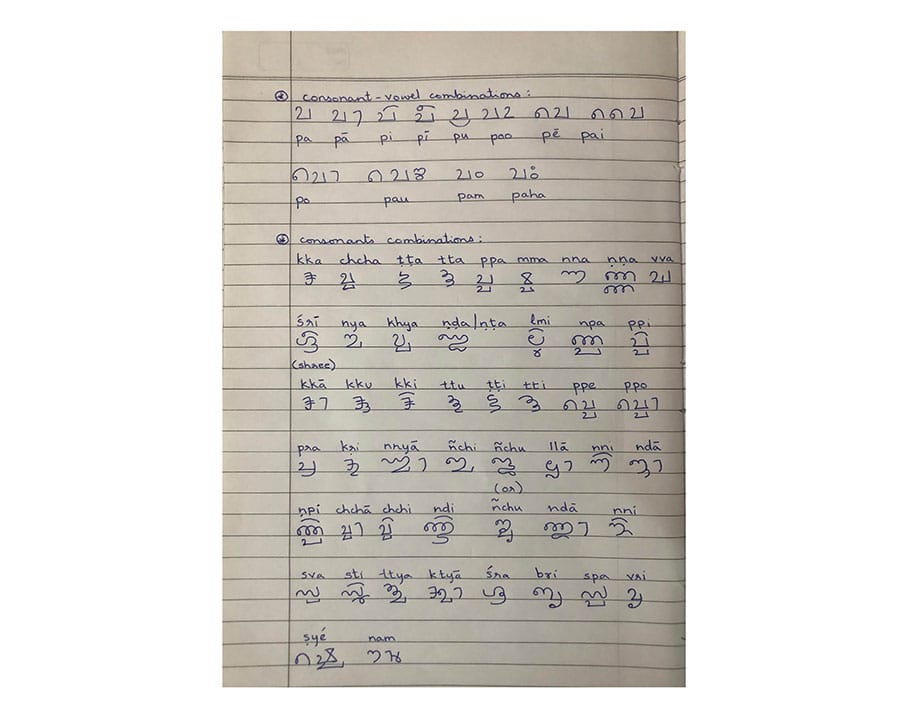
Combination syllables.
Edicts of Bhagamandala and Palur
The Bhagamandala edict goes as follows. On a Friday, when Jupiter was in Virgo, during the month of Scorpio, the Bhagamandala inscription is created. A penalty is stated for stopping the daily expenses. Even the ruler Kunniyarasa is not spared of this penalty. Curses are placed upon those who don’t pay for the daily expenses of the temple. Even if the king doesn’t punish one who doesn’t pay, he is to be cursed by the people. The ‘arm-bearing thousands’ (soldiers) of the 18 regions and merchants are to protect the temple. Blessings are pronounced upon the ascetics and the king. A mention of a copper plate and a treasury register (both of which went missing over the centuries) is also made.
The Palur edict begins with a prayer to Vinayaka (Ganesh) and Saraswathi.
‘Bodharoopa’ is mentioned to be the disciple of a particular guru and to have made the stone inscription to the Mahadeva (Shiva) of Palayur. A curse is pronounced upon those who don’t pay for the daily expenses. The edict is made for the Srivaishnava, the merchants, the arm-bearing thousands, and the Brahmans of the 18 regions who may see and maintain it. The merchants will read out loudly the daily expenses once a year and check the temple accounts. This edict is unsigned, unlike the Bhagamandala one.
Srivaishnava was a general South Indian term for people who rendered services to a temple, such as guarding it, being the torchbearer (like the Mukkati families in Kodagu), managing its festive activities (like the ‘deva thakka’ families in Kodagu), etc.
Palayur and Vaganda
Palur is called ‘Palayur’ while Bhagamandala is also called ‘Bhaganda Ashrama’ and ‘Vaganda’ in the two inscriptions. The Bhagamandala inscription has been signed as ‘Pakandala Ayari elattu’ (the writing of the Bhagandalaya Achari). ‘Pakandala’ and ‘Bhagandalaya’ are other names for Bhagamandala. The modern Kodava word for writing is ‘elt’, which could have arisen from the word ‘elattu.’
‘Achari’ is a name used by priests and members of the Vishwakarma community. People of the Vishwakarma community served as metal, stone and woodworkers such as carpenters, smiths and stonemasons. Usually, a carpenter or a foreman was called an Achari.
It is interesting to note that Kodagu has a community of Kodava speaking smiths called the ‘Airi.’ The word ‘Ayari’ seems to indicate that the word ‘Airi’ arose from the term ‘Achari.’ Hence, the title ‘Pakandala Ayari’ could simply mean, the ‘Airi from Bhagamandala.’
[mookonda.kushalappa@gmail.com]
source: http://www.starofmysore.com / Star of Mysore / Home> Feature Articles / January 24th, 2022
Kodagu is a small and beautiful mountain district of Karnataka and is well known in the world for coffee and its ‘brave warriors’, men and women, serving in all services.
New Delhi :
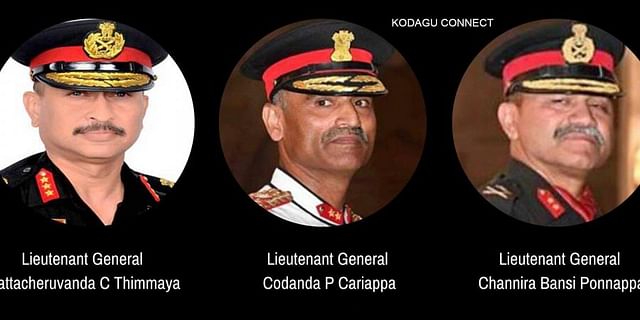
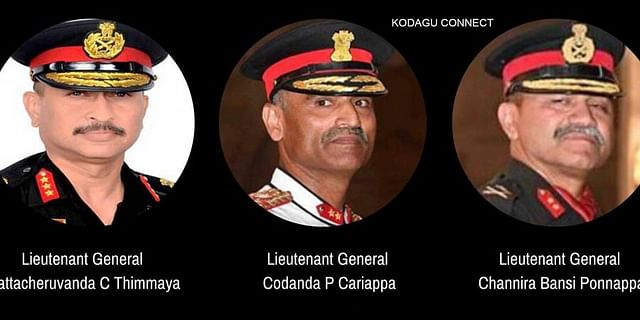
It was a proud moment for the people of Kodagu district when Lt Gen CP Cariappa took command of India’s elite 1 Strike Corps at Mathura on Friday. Lt Gen Cariappa became the Corp Commander and the District boasts of rare distinction of three Lieutenant Generals serving the army simultaneously.
Kodagu is a small and beautiful mountain district of Karnataka and is well known in the world for coffee and its “brave warriors”, men and women, serving in all services. Talking only of Indian Army there are 90 posts at the rank of Lieutenant General.
Lt Gen PC Thimmaya and Lt Gen CB Ponnappa are the other two generals. Lt Gen Thimmaya is the Army Commander at the Army Training Command and Lt Gen Ponnappa is the Chief of Staff at the Northern Army Command. All three officers are a product of the National Defence Academy, Khadakwasla and joined the army at different times. Lt Gen Ponappa is the junior-most who joined the Army in June 1985.
Lt Gen CP Cariappa was commissioned in June 1984 into the 4th Battalion of the Rajputana Rifles. He served in UN Peacekeeping Forces at Mozambique (Africa) and Iraq- Kuwait. Prior to taking over command of elite 1 Corps, he was the Military Secretary to the President of India at New Delhi. The officer on taking charge emphasized that his priority is ’fight against COVID-19 threat.’
________________________
Twitter
Kodagu Connect / @KodaguConnect
Kodava population: 1.25 lakh
Number of Kodava Lieutenant Generals in Indian Army at present: 3
____________________
At present Lt, Gen PC Thimmaya is the seniormost coorgi officer, who became Army Commander on 1 November 2018. He was the best cadet in pre-commission training at Indian Military Academy and was awarded the Sword of Honour. He got commissioned into 5th Battalion of the Mechanised Infantry in June 1981.
He commanded Army’s 10 Corps and was the Commandant, Army War College at Mhow before becoming Army Commander. Like the other two officers he also had UN Stint, was a Military Observer in UN Mission, Angola. He also was Defence Attache in the High Commission of India in Bangladesh. He assumed the command of Army Training Command in Nov 2018.
Lt Gen C Bansi Ponnappa is Chief of Staff of the prestigious Northern Command since Feb 2020. He was commissioned into 2 MAHAR Regiment in Jun 1985 and later commanded the same unit. The officer had two UN Tenures. He was in Somalia under UNOSOM-II and North Kivu Brigade of UN Peace Keeping Force in the Democratic Republic of Congo.
These officers follow in the footsteps of illustrious predecessors like Field Marshal K M Cariappa and General Kodendera Subayya Thimayya. Field Marshal Cariappa was first Indian Commissioned Officer, first Indian General and then first Commander-in-Chief of India.
A total of eleven officers from Kodagu have occupied top posts in the Army so far. This apart, Kodagu also boasts of having 20 Major Generals and four Air Marshals, which undoubtedly makes Kodagu, the Land of Generals.
Although, with time the numbers of people joining forces from the district have fallen, steps are being taken to regain it. The district has its own War Memorial with names of all martyred soldiers of Kodagu. A museum in the name of former Army Chief General Thimmaiah is also being constructed. The Kodava Legacy in the Army will continue.
source: http://www.newindianexpress.com / The New Indian Express / Home> Good News / by Mayank Singh, Express News Service / April 05th, 2020
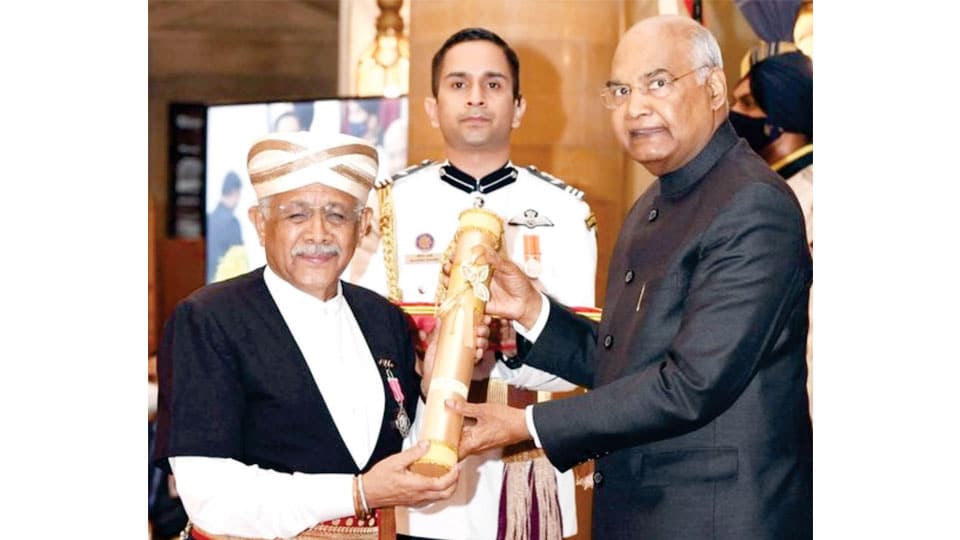
Olympian M.P. Ganesh, who captained the Indian hockey team and was honoured with the Padma Shri by President Ram Nath Kovind, is Coorg Person of the Year-2021.
Mollera Poovaiah Ganesh, hailing from Suntikoppa in Kodagu district, was selected ‘Coorg Person of the Year’ in a poll conducted by www.coorgtourisminfo.com, Kodagu’s first news portal, promoted by journalist and author P.T. Bopanna.
There may not be many such extraordinary instances of a person running away from home to join the Army ending up at the Rashtrapati Bhavan to receive the coveted Padma Shri. Ganesh was also conferred the Arjuna award in 1973.
Ganesh, born on July 8, 1946, was an achiever both on and off the field. Though he ran away from home without informing his parents to join the Army after writing his matriculation examination, Ganesh managed to complete his MA in English, diploma in sports coaching from the National Institute of Sports, Patiala and Ph.D in Physical Education.
Although Ganesh joined the Army to fulfil his childhood dream of becoming a football player, he failed to make it to the football team. Then he went for the hockey selection where he was successful. This goes to prove the adage that “hockey is in the blood of the Kodavas.”
Ganesh represented the Services (Defence Services) in the National Hockey Championships from 1966 to 1973.
After he found a place in the Indian hockey team in 1970, Ganesh played for India at the 1972 Olympic Games in Munich, finishing third. He was one of the coaches of the Indian team that won a gold medal at the 1980 Olympic Games in Moscow.
Ganesh, a right winger, twice represented the country in the Asian Games, first in 1970 in Bangkok and then in 1974 in Tehran. He was in the Indian team that won Bronze at the first World Cup in Barcelona in 1971 and captained the team that won Silver at the next World Cup in Amsterdam in 1973. He also played for World XI in 1972. Ganesh last played for India in 1974, as his career was cut short following a knee injury.
His most disappointing moment probably was during the finals of the World Cup in Amsterdam when India lost to Netherlands in the finals, after missing a penalty stroke.
Ganesh had a long reign as a sports administrator. He served as Director of Sports Authority of India (South) and in 2017 took charge as the High Performance Director and CEO of the National Hockey Academy in Delhi.
He is married to Keethiyanda Prema and their only son Ayyappa passed away when he was 20 years old due to a rare medical condition.
P. Shrividya Somanna, who helped Ganesh to put together his autobiography ‘Living The Dream: My Autobiography’ told this reporter that Ganesh’s wife Prema was instrumental in motivating him to pursue his higher education.
source: http://www.starofmysore.com / Star of Mysore / Home> News / January 01st, 2022
A couple got reunited after seven years in filmy style.
Mutthamma was suffering from psychological disorder. She was admitted into a hospital in Bengaluru in 2014. She was in the hospital for two months. However, one day she escaped from the hospital. From that day onwards, her husband Rajappa, son in laws Dorai and Nagaraj searched for her everywhere. At last, Rajappa filed a missing complaint on his wife in Bengaluru police station. They have given up hope of seeing Mutthamma again.
Meanwhile, Mutthamma was found near a hotel in Madikeri in 2017. Her left leg had turned to Gangrene and started decomposing. When the public informed the same to Tanal orphanage, they took her into their fold and saved her. The organization also gave treatment to her psychological disorder and leg. Her psychological health recovered a great deal.
After Mutthamma arrived from Kerala, she could recall the name and address of her home, husband etc. Tanal organization tried to find out her family. Mohammed, manager of Tanal in Kodagu had tried a lot to locate Mutthamma’s husband Rajappa. Later Kodagu district magistrate Subrahmanya was successful in tracing the address of Mutthamma’s husband in Tamil Nadu.
Rajappa, husband of Mutthamma was overwhelmed when he came to know that his wife is alive. He along with his sons in law rushed to Madikeri and got united with her. Now Mutthamma is back to her native place in Tamil Nadu healed completely. The role of Tanal organization and giving her back a normal life is highly appreciated.
source: http://www.daijiworld.com / Dajiworld.com / Home> Karnataka / by Daijiworld Media Network – Madikeri (MS) / December 28th, 2021
Cauvery College Gonikoppal to hand over required land.
Madikeri:
After the resounding success of Sunny Side, General Kodandera S. Thimayya Museum and War Memorial in Madikeri that once housed the residence of the celebrated General that is now attracting a steady stream of visitors, thanks to its brilliant collection of war relics and armaments in all the three battlefields — land, water and air — a new War Heroes Museum will come up at Gonikoppal in South Kodagu.
This Museum will be dedicated to all war heroes of Kodagu as it is the land of warriors where the district has contributed largely to the Indian Army. There is at least one person serving in the Army from every family in Kodagu and the tradition continues, though not many youngsters enter the Defence Services now. The proposed Museum will trace the military history of this tiny district and an attempt will be made to showcase the glorious past, inspiring the present and future generations. The Museum will come up at Cauvery College Gonikoppal where two bronze statues of Field Marshal Kodandera M. Cariappa and General K.S. Thimayya have already been installed and inaugurated in November 2018 by the then Chief of the Army Staff General Bipin Rawat who rose to be Chief of Defence Staff (now late). The management of Cauvery College has already agreed to hand over the required land.
A new trust in the name of War Heroes Memorial Trust has been established and Major (Retd.) Biddanda Nanda Nanjappa is its President and Convenor. He is also the Convenor of Field Marshal K.M Cariappa and General Thimayya Forum that played a critical role in establishing the Sunny Side Museum and War Memorial in Madikeri. Other patrons of the Trust are Maj.Gen (Retd.) Kuppanda P. Nanjappa, Lt. Gen. (retd.) Pattacheruvanda C. Thimmaiah and Field Marshal Cariappa and General Thimayya Forum President Col. (Retd.) Kandrathanda C. Subbaiah.
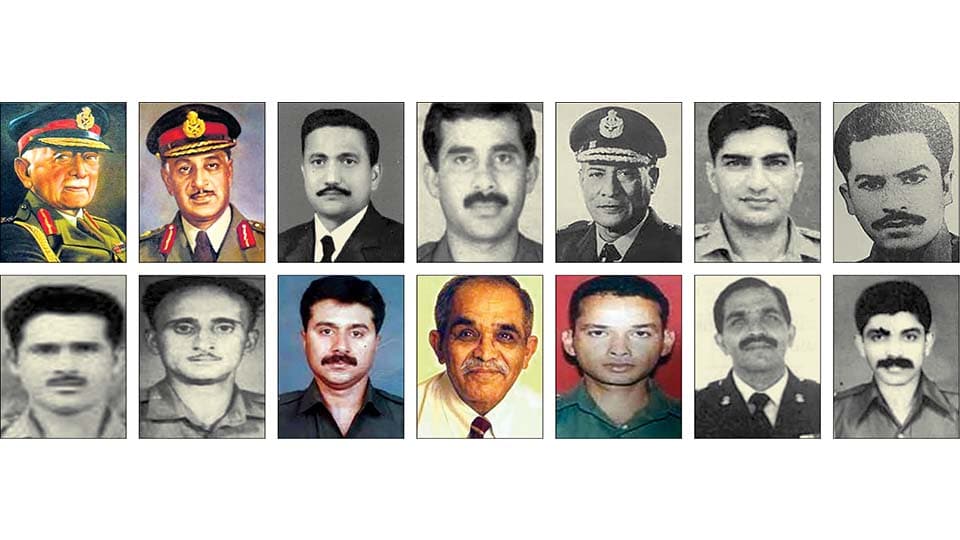
There are over 20 known war heroes from Kodagu who have dedicated themselves for the cause of the nation and there are many more unknown faces and only their names exist in records. Efforts will be made to have each and every war hero from Kodagu featured in this museum and initially, there will be 20 rooms, one each dedicated to every war hero. Each room will be dedicated to a particular regiment from which the war hero hails and the regiments would take the responsibility of filling up the room with defence paraphernalia that symbolise the distinctive character of the regiment where the war hero hailed from. The regiment will also supply photos, weapons and equipment used in the wars.
“Efforts will be made to secure details and memorials of each war hero irrespective of the rank and communities. The only criteria would be that the war hero must be from Kodagu. There are many war heroes who have been awarded Vir Chakra, Mahavir Chakra and Paramvir Chakra and the Museum intends to disseminate information on such heroes hailing from various regiments,” Forum Convener Major (Retd.) Biddanda Nanda Nanjappa told SOM.
“We are planning to construct the museum in the shape of a ‘Mundhu Mane’ (large ancestral house of Kodagu) and rooms will be dedicated to the war heroes,” he added.
The Trust aims to complete the museum by 2024 and will be constructed with the help of donors and also the Defence Services. In the past too, the Indian Army has contributed funds to set up the Sunny Side Museum and has pooled in money for the bronze statues installed at Cauvery College.
In fact, CDS late Bipin Rawat had wholeheartedly welcomed the War Hero Museum at Gonikoppal and had assured all help. He had opined that a vibrant museum with a wide range of military equipment and war machines would definitely inspire more and more youths to join the Defence Services.
Gen. Kodandera S. Thimayya (Distinguished Service Order)
Field Marshal Kodandera M. Cariappa (Order of the British Empire)
Air Marshal Cheppudira D. Subbaiah (Vir Chakra)
Subedar Nadikeriyanda N. Bheemaiah (Vir Chakra)
Squadron Leader Ajjamada B. Devaiah (Mahavir Chakra)
Lieutenant Colonel Anjaparavanda T. Ganapathy (Vir Chakra)
Major General Kuppanda P. Nanjappa (Vir Chakra)
Colonel Mandetira M. Ravi (Vir Chakra)
Flight Lieutenant Mandepanda A. Ganapathy (Vir Chakra)
Squadron Leader Ballachanda C. Karumbaiah (Vir Chakra)
Company Havildar Major Paradanda J. Thimmaiah (Shaurya Chakra)
Lieutenant Colonel Puttichanda S. Ganapathy (Mahavir Chakra)
Captain Chambanda M. Thimmaiah (Shaurya Chakra)
Major C.M. Ganesh (Shaurya Chakra)
Baleyada M. Cariappa (Vir Chakra)
Mangerira C. Muthanna (Shaurya Chakra)
Major B. Ranjan Chengappa (Shaurya Chakra)
Mahesh (Shaurya Chakra)
[NOTE: Names in the photos have not been mentioned as some of them have not been confirmed yet. But all the photos are of Kodagu war heroes]
Notes:
Reader:
Devayya Shyam says: December 28, 2021 at 10:14 am Lt. Col. C. N. Madiah CO 6th Kumaun ’62 Indo china war vet Only officer to attack the Chinese in that war POW You missed him out
source: http://www.starofmysore.com / Star of Mysore / Home> Feature Articles / December 26th, 2021
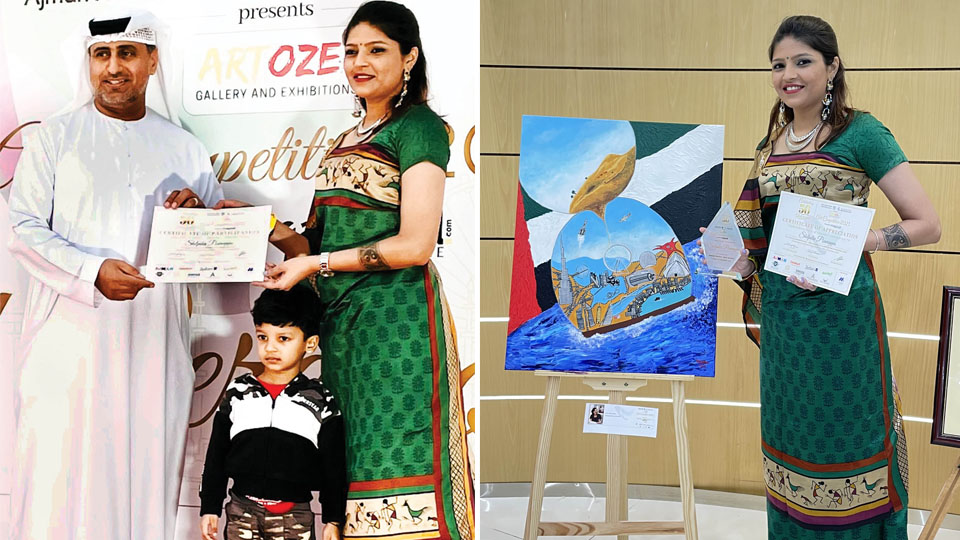
Chinnamada Shilpika Ponnappa, who has her roots in Kodagu, has bagged the ‘Special Mention — Best Ideation Award’ and a trophy for her painting with a theme ‘50 years of progressing UAE’ organised at Artoze Art Competition in Abu Dhabi as part of Celebrating 50 Glorious Years of UAE.
The competition was organised by Artoze Gallery, Magzoid Magazine in Ajman Free Zone, UAE. The competition was announced a couple of weeks ago at Ajman and all the artists had to first send in the image of the completed artwork by mid November. On Dec. 1, the original artwork had to be physically submitted.
All the paintings were kept in an exhibition in Marsa, Ajman, UAE from Dec. 2 to 6 and more than 60 artists had participated in the competition.
The exhibition received overwhelming response for over five days with viewers visiting the place to look at the hard work put in by artists from varied nationalities and culture and from different parts of the UAE.
The award ceremony was conducted on Dec. 7 and only nine Special Mention Awards were given, among which Shilpika won the Best Ideation Award.
The jury of three eminent artists awarded this particular award and applauded her for thinking out of the box, as well as being appreciated for being traditionally dressed and representing Kodava culture proudly.
Speaking to Star of Mysore from Abu Dhabi, Shilpika said that her painting hourglass represents time and sand which she depicted in the form of desert. “This sand, over the years, has turned into a kingdom with impressive, beautiful and artistic architectural concrete structures. Water being an important aspect of UAE, I have shown the hourglass sailing on it. The UAE flag in the background emphasises how vast and wide it has spread its wings,” she said.
Shilpika is an artist by passion and has been exploring the field since childhood and has created many artworks with acrylic on canvas. She graduated with a Bachelor of Fine Arts and specialised in Applied Arts (advertising – copywriting and content writing) from Chitrakala Parishath, Bengaluru. She is the daughter of Chemira C. Ponnappa and Beena and is married to Chinnamada Santhosh Subbaiah, GIS Lead Analyst in Abu Dhabi Govt. and son of Chinnamada Poovaiah and Poovamma, residents of Ponnampet in Kodagu. Shilpika is the mother of 3-year-old Niviksh Nanayya and the family lives in Abu Dhabi.
source: http://www.starofmysore.com / Star of Mysore / Home> News / December 11th, 2021
WELCOME. If you like what you see "SUBSCRIBE via EMAIL" to receive FREE regular UPDATES.
Read More »