Seven-time national champion Hemanth Mudappa of Mantra Racing broke his own record with a triumphant double gold in the ribbon events in the second round of the MMSC FMSCI Indian National Drag Racing Championship here on Sunday.
Touching a top speed of 230kmph, he extended his championship lead in the premier 4-stroke above-1051cc Class at the 303-metre Madras Motor Race Track.
The 31-year Coorgi lad, based in Bengaluru, did his magic once again as he dashed to a gold medal winning effort, beating his own national record in the 4-stroke 850 to 1050cc SuperSport Class set in 2019.
Hemanth also holds the national drag record in the top above-1051cc Class.
“I am so happy to set the national record in this category. Seven national titles won”t come by luck. We have put in hardwork and practised hard, testing and improving after every run,” said a delighted Hemanth.
Hemanth posted a stunning 7.914s to beat the national Drag record in this class despite being a fraction of a second slower reaction at the start to Hyderabad’s Mohd Riyaz, who did 8.058 seconds.
Sugan Prasad, also from Bengaluru, clocked 8.421s to take the bronze.
In the top class of 4-stroke above-1051cc Super Sport, riding a black Suzuki Hayabusa, Hemanth clocked 8.061sec.
In other classes, Bharath Raj (226-360cc), Madhan Kumar (upto 165cc) and Aiyaz Rem (361-550cc) won the gold.
PTI SSC SSC ATK
ATK
source: http://www.outlookindia.com / Outlook / Home / by PTI / October 03rd, 2021
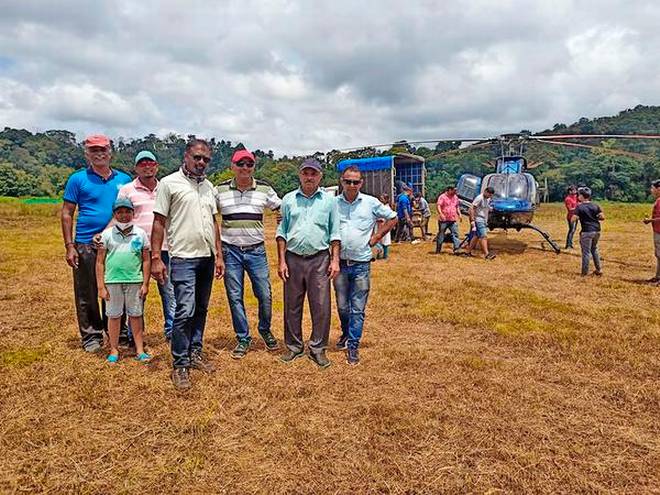
Locals gather to witness the heli-tourism initiative taking off, at Kakkabe in Kodagu. The chopper of a private operator that landed with three tourists can be seen in the backdrop.
A private operator flies in tourists from Bengaluru to a village resort close to Tadiandamol
Even as successive governments continue to dilly-dally over launching heli-tourism for high-end tourists despite umpteen promises, Kodagu has taken the first step towards giving a start to the initiative post-pandemic with local stakeholders taking the lead and kick starting the much-talked-about initiative.
A group of tourists from Bengaluru landed in a chopper at a village to explore Coorg’s splendour, staying in a resort located close to one of the highest points in Kodagu – Tadiandamol. These tourists, instead of taking the 6-hour drive to Madikeri from the IT Hub, chose to fly by a chopper owned and run by a private operator to reach the hill station.
In fact, Kodagu was also identified along with Mysuru for developing heli-ports by the Tourism Department which did not take off. However, an entrepreneur in the hospitality sector in Kodagu, Apparanda Sagar Ganapathy, who runs a resort at Kakkabe, coordinated with the chopper operator to ferry guests to his property where a helicopter landing facility was established recently at the resort to facilitate heli-tourism.
Mr. Ganapathy, who is also the president of Association for Rural Tourism (ART), says the potential of rural tourism remains unexplored as corporates and well-heeled tourists are keen to explore the life and lifestyles in villages. Heli-tourism can bring tourists who can afford chopper rides to the remotest corners of Kodagu to experience the coffee land’s unmatched beauty and the Coorg villages.
Villagers turned up in large numbers to witness the heli-tourism initiative. Kakkabe Panchayat president Kaliyanda Sampan and other locals were present to greet tourists.
Corporate executives can have their meetings amidst nature instead of in multi-storied structures. They can fly in by chopper, have a meeting, spend some valuable time and head back to their destinations. Infrastructure can help promote such kinds of tourism, the stakeholders believe.
The stakeholders in the hotel and hospitality sector in Kodagu, including ART and Kodagu Tourism Association, are also in the process of identifying infrastructure where choppers could land, bringing tourists, and promoting heli-tourism in a big way. Another resort is also in the process establishing the chopper landing space, foreseeing its potential, he said.
Kodagu has many luxury resorts, which, according to the stakeholders, are getting back their clients with the opening of tourism post-pandemic. But the mid-range resorts are lacking clientele with corporates, particularly those from the IT industry, are yet to return to their offices and continue to work from their homes.
“Before COVID-19, we used to get groups of 25-30 coming and staying in resorts during weekends or holidays. Such trips have stopped for one and half years due to the pandemic. Until the offices start working like before and schools and colleges function normally, tourism recovery may prolong,” Mr. Sagar said.
Unlike other places, Kodagu is predominantly covered by undulating hills with thick forest cover. There is a need to establish a safe environment for the landing and taking off of the choppers. “If we provide infrastructure like heli ports or helipads, more operators can show interest in bringing tourists by choppers, thus driving the tourist economy and helping revive the sector,” the travel operators said.
source: http://www.thehindu.com / The Hindu / Home> News> States> Karnataka / by Shankar Bennur / Mysuru – September 29th, 2021
Short films ‘Kodi Mova’ and ‘Nambike’, which won the first and second prizes in the short film competition, organised by Karnataka Kodava Sahitya Academy, were screened at Patrika Bhavan in Madikeri recently.
The programme was held under the aegis of the Kodagu Press Club.
The short film ‘Kodi Mova’ is directed and produced by Gopal Somaiah and ‘Nambike’ is directed and produced by Bollajira B Ayyappa.
Actor Roopesh Nanaiah said that even though the short films are made with less budget and are of less duration, their message can be equally strong as those of the mainstream films.
“Generally, people watch movies for entertainment. However, most of the movies that we watch are eventually forgotten. The movies that we remember forever have a good social message in them,” he said and stressed that the short films too, should propagate social messages.
He appreciated both the award-winning short films and said more focus should be given to the technical aspects.
Actor Neravanda Umesh felt that all the entries to the short film festival should have been screened.
The competition should be held every year so that the talents get opportunities, he said.
Kodagu Press Club president Ajjamada Ramesh Kuttappa was present.
source: http://www.deccanherald.com / Deccan Herald / Home> State> Mangaluru / by DHNS, Madikeri / September 29th, 2021
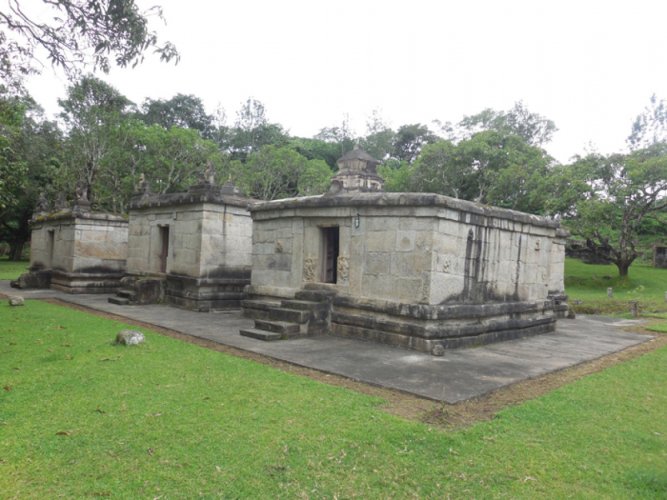
The three Jain Basadis at Mullur village near Shanivarasanthe.
Mullur village, which is known as the Jaina Kashi of Kodagu, with three Jain Basadis, lacks proper road connectivity and other basic amenities.
The village is situated just 6 km away from Shanivarasanthe. However, lacking the basic amenities, the beautiful surroundings of three Jain Basadis are losing their importance.
Even after three decades, there is a lack of road connectivity, drinking water facilities and toilets at the Basadi.
Owing to lack of connectivity, the three Basadis known for their architecture have remained out of the purview of the tourists.
Amid the mango groves in the village lies the Basadi, which has survived several centuries. Though the government has announced ‘Trivali Basadi’ as a tourist spot, it lacks basic amenities.
The Basadi of Parshwanatha, Chandranatha and Shanthinatha are made of stones. Over 20 inscriptions, Veeragallu and ‘Nishidhi Kallu’ situated behind the Basadi are also conserved. There is a Kalyani behind the Basadi as well.
It is believed that queen Pochakabbe, a follower of Jain seer Gunasena Pandita, had constructed these Basadis.
When Jeevijaya was the minister 33 years ago, the road leading to the Basadi had seen asphalting, said an elderly villager.
Over a period of time, the road has worn out and is now crying for the attention of authorities.
The villagers have urged the authorities to provide proper road connectivity to Jain Basadi, which in turn, will help in the growth of the economy in the village.
Though an action plan for Rs 2 crore was prepared for the development of the Basadi during the tenure of H D Kumaraswamy as chief minister, the proposal remained in cold storage during the tenure of B S Yediyurappa.
Even the Zilla Panchayat had prepared an action plan for Rs 1 crore for the development of roads, toilets and electricity connections. However, it failed to take off, over the years.
The Basadi comes under the archaeology department. The department has appointed a person named Nithin Kumar who is said to have no knowledge of Kannada to manage the Basadi. Another person named Lingaraju is engaged in cleaning the premises.
Though tourists visit the Basadi daily, owing to the poor condition of the road, the tourists have to walk to reach the spot.
The villagers said, “We have been submitting memorandums to elected representatives and officials to repair the road for the last several years. All our efforts have been in vain all these years.”
Government Higher Primary School, Mullur, teacher C S Sathish said, “There is a need to construct a fence around the Kalyani in the Basadi. A full-time supervisor should be appointed. Facilities should be arranged for the stay of the visitors near the Basadi. A beautiful garden should be laid in front of the Basadi.”
source: http://www.deccanherald.com / Deccan Herald / Home> State> Mangaluru / by DHNS, Shanivarasanthe / September 25th, 2021
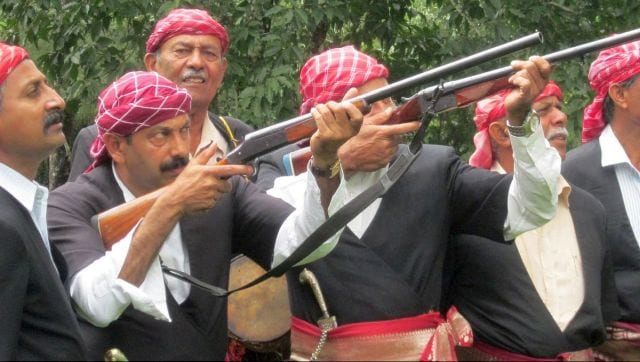
As per the exemption, continuing from the British-era rule, the people from the hill district of Kodagu can posses pistols, revolvers and double-barrelled shotguns without a licence.
The Kodavas are a small martial community in Kodagu (Coorg) district in Karnataka. Image Courtesy: @KodaguConnect/Twitter
The Karnataka High Court on Wednesday upheld the Arms Act exemption granted to every person of Coorg by race, and Jumma tenure landholders in Coorg (Kodagu district).
A division bench of acting Chief Justice Satish Chandra Sharma and Justice Sachin Shankar Magadum heard the matter which was first filed on 30 June by 41-year-old Captain Chethan YK (retired), also a resident of Kodagu, who sought to know why only one race was given this exemption.
The judges in the case said: “The Kodava community which is a marshal community is enjoying the benefit of exemption since pre-independence and Jumma tenure holders are enjoying the exemption since pre-independence period. They have rightly been granted exemption for a period of ten years, it is not the case they have been granted exemption indefinitely. Exemption granted is subject to certain terms and conditions. Therefore, the Constitutional validity of the notification is upheld in the petition.”
Take a look at who are the Kodavas and the story behind their right to bear arms without a licence.
Kodava people
They are a unique race of people who live in Kodagu (Coorg, as the British called it), the smallest district in Karnataka.
The history of Coorg and the Kodava people is one that is shrouded in a lot of mystery. There are a variety of theories as to the origin of the Kodava, including theories of them being either the indigenous inhabitants of their region, or of foreign origins prior to two thousand years ago.
As per the indigenous theory, the Kodava people were an ancient warlike tribe, who were indigenous inhabitants of Kodagu. This tribe learned and practiced agriculture in the area and over the centuries they got civilised and gained prosperity.
The foreign origin theory, which is more popular with the community itself, says they are descendants of the broad-headed (Brachycephalic) stock who entered into the Indus Valley during the Mohenjodaro period and later migrated down to Coorg.
However, the most popular theory among the Kodavas is that they are descendants of the Indo-Greek soldiers, who came into India with Alexander the Great.
Weapons in the Kodava culture
The Kodava community has a long history with guns, and historians say that their culture is intrinsically linked with firearms. There are festivals in which gunshots are fired in the air, and a gun salute is performed when a child is born or a person dies.
During the Kailpodh festival, celebrated each year on 3 September, all the weapons along with agricultural implements and vehicles are cleaned and decorated with flowers and worshipped.
The traditional sword and dagger also are a part of the Kodava attire, showcasing how intrinsically the arms are woven into their culture.
Exemptions from getting a gun licence
The British in recognition of their martial traditions granted the community a special privilege to own firearms without a licence in 1861.
One cultural reason for giving the exemption was that Kodava homes were far away from each other, in some cases could be as far as a kilometre.
“In older times when communication links were poor, a Kodava used to inform his neighbour by firing a single shot in the air about a newborn and two shots in case of any death in the family,” a prominent Kodava, who lives in Delhi, was quoted as saying to The Economic Times.
The exemption was then issued by the Union government in 1963 under the provisions of the Indian Arms Act, 1959.
The Centre had issued a notification exempting “every person of (the) Coorg race and every Jamma land tenure holder in Coorg” from the Indian Arms Act. There was no curb on the privilege even after Coorg, which was a separate state earlier, merged with Karnataka.
There are conditions, however, to the exemption. In a notification, the Ministry of Home Affairs, said, “The arms or ammunition carried or possessed by any person being from Kodagu by race and every Jamma tenure holder in Kodagu and herein exempted while residing or travelling outside the district of Kodagu shall not exceed one rifle with 100 rounds of ammunition for the same and one smooth bore breech or muzzle-loading gun with 500 cartridges or the equivalent in leaden shot and gunpowder.”
A home ministry official added that the exemption, valid till 2029, was given to the Kodavas as firearms were never misused in crimes or anti-national or anti-state activities.
According to reports, a proposal to do away with the privilege under the Arms Act was made in 1964 by the Centre. But the move was dropped, apparently, at the behest of Field Marshal K M Cariappa — the first Indian Commander-in-Chief of the Indian Army — and the then Union Minister C M Poonacha, who was also the former chief minister of Coorg state, before its merger with Karnataka.
‘Discriminatory’ exemption
In 2018, Captain Chethan (retired) filed a Writ Petition questioning the exemption granted by the Government of India to a certain class of people in the district in obtaining licence to possess firearms under Section 3 and 4 of the Indian Arms Act, 1959.
In his petition, Chethan, a resident of RT Nagar in Bengaluru, claimed that the continuation of the exemption, granted to some class of persons by the British Government in pre-Independent India in furtherance of their divide-and-rule policy, was unconstitutional, as it was based on irrational, fictitious and discriminatory grounds, such as race and ancestral land tenure.
The petitioner had claimed that the MHA did away with the scrutiny of persons before granting licence in respect of the people belonging to the ‘Coorg race’, adding that this itself is not only derogatory to the citizens of the entire nation other than the ‘Coorg race’, but also possess a threat to the life and liberty as the people exempted are permitted to hold arms and ammunition without any scrutiny of their antecedents or criminal records.
However, the petitioner’s concern was shot down by Additional Solicitor General M B Nargund appearing for the Union of India who said, “A kirpan is allowed to be used by the members of Sikh community and similarly, Gorkha community is permitted to use kukri.”
Senior Advocate Sajan Poovayya appearing for Respondents Kodagu Samaja Bangalore and Kodava Muslim Association also opposed the petition saying, “It is not like that if there are 100 people in a house they can have 200 firearms in the house, the quantity of arms and ammunition and the types of arms are all specified.”
Codava National Council president, Nandineravanda U Nachappa hailed the high court’s decision and speaking to Indianexpress.com said, “It is a historical judgment by the high court. Few people without any knowledge about the community had gone to court challenging exemption given to the Kodava community. We have received these rights under the customary law since Kodavas’ life revolves around the gun.”
source: http://www.firstpost.com / First Post / Home> India News / FP Staff / September 25th, 2021
The villagers were mostly agriculturists, but with their farmlands and estates buried under debris, their future appeared grim.
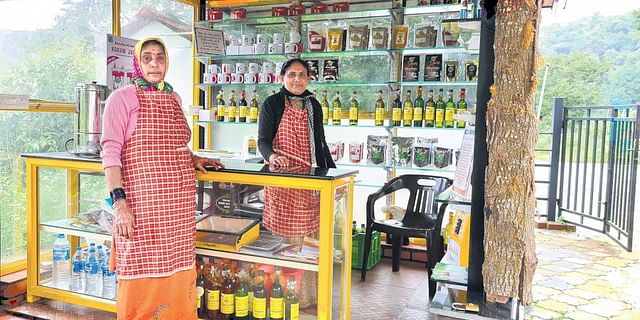
The Forest Cafe at Kaluru
Madikeri :
In August 2018, when the skies opened up with a vengeance, and flash floods and landslides left a trail of destruction, Kaluru was one of the worst-hit villages in Kodagu district. People lost their livestock, houses, farmlands and estates overnight.
“Over 200 families moved to relief centres in August and we returned to our village only in October. Estates, farmlands, cattle – everything was lost,” recalls Dechavva, who was left to pick up the pieces after the disaster.
The villagers were mostly agriculturists, but with their farmlands and estates buried under debris, their future appeared grim. If was the women who rose from the ruins to crossed all hurdles to turn around their lives. Their grit and determination earned them the title of ‘Kaluru women’. They are now entrepreneurs and sole breadwinners, thanks to Project Coorg, a rehabilitation initiative.
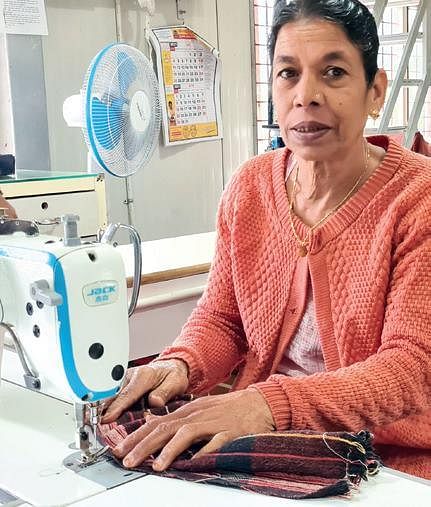
Narrating how they started getting back on their feet, Dechavva, who became a master tailor at the age of 65, says the village temple priest, Nagesh Kaluru, approached Bharatiya Vidya Bhavan, seeking support to rebuild the life of the villagers.
Dechavva, who learnt tailoring at the age of 65
Under Project Coorg, the trust started organising skill development programmes for the women of the village. They were also joined by a few affected women from Devasthuru village. Soon, tailoring and food processing training programmes took shape.
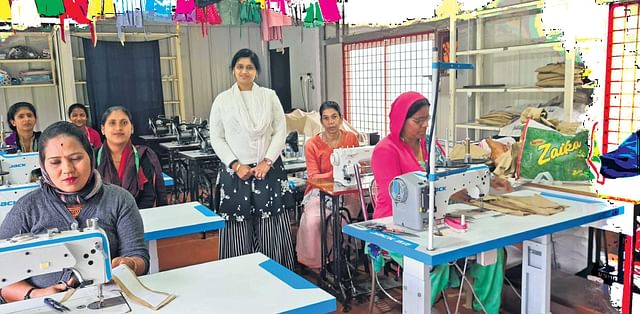
The tailoring unit was headed by Ashrafunissa. “I didn’t know much about Kaluru village till the disaster. I stay in Madikeri and my house also suffered severe damage due to landslides. During this time, I was approached by Balaji Kashyap – who heads Project Coorg. I was asked to train women in tailoring,” she says. A total of 30 women were trained for six months.
However, not all the women wanted to take up needle and thread. The older ones opted for food processing, and 30 women were trained in manufacturing masala, pickle, chocolates, chips, rice flour and other food items by Neena Shetty, award-winning chef from Udupi.
“We wanted to create a continuous revenue generating model for the women. We didn’t take the CSR approach as it is not suitable for the situation here. However, sponsors and partners came in to support the initiative after seeing our work,” says Kashyap of Project Coorg.
The women were also taught soft skills and other business know-how by Kashyap and the initiative launched ‘Yashaswi’ – a self-help group to empower the Kaluru women. The villagers’ struggle didn’t go unnoticed. Many sponsors came forward to support the group, and the land for the Yashaswi factory was donated by the Karera family of the village. The factory building was sponsored by the Kodava Koota of North America. With equipment donated by various companies, including Bosch India, the women of Kaluru soon became entrepreneurs.
“I only worked in farmlands all my life. I did not know how to even hold a needle. But our trainer, Ashrafunissa, taught me like I was a child and now I stitch bags for several companies; I continue to earn my own living,” adds Dechavva. Ashraf explains that the women get orders from various schools to stitch uniforms and other products. “Our business is expanding as we are getting orders from colleges outside Kodagu too,” she says. Many other women in the village now have the skill of working with factory jack machines installed at the unit.
Ashrafunissa (standing) and her team at Yashasvi Tailoring Unit | EXPRESS
Muthamma, an entrepreneur under the Yashaswi group, opted for training in food processing as her eyesight was not good enough for stitching. Along with other elder women, she grinds rice and flour, prepares various masala powders and tries her hand at chocolate making. “Apart from the regular salary, we are paid incentives when sales increase,” she said.
A rustic eatery, called Forest Cafe, was also set up next to the factory, and tourists often visit it. “We serve local delicacies and also sell food products which we make,” says Jamuna. The flood victims have now become an inspiration for many, and skill development training is being extended to many other women across the district. “Post the pandemic, the Project Coorg initiative has expanded from being a rehabilitation initiative to a women empowerment initiative,” says Balaji.
30 women trained in manufacturing masala, pickle, chocolates, chips, rice flour and other food items
source: http://www.newindianexpress.com / The New Indian Express / Home> Good News / by Prajna GR, Express News Service / September 26th, 2021
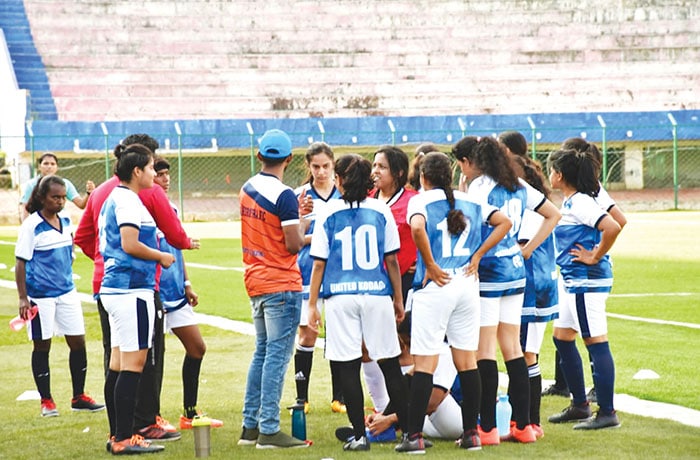
City girl, team-mates of Kodagu Football Club shine in prestigious ‘A Division’ League
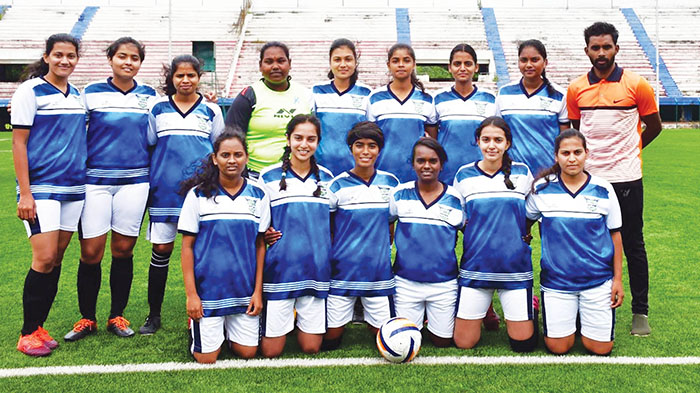
Kodagu, the land of coffee has a girl’s football club now and it has already made a mark in the on-going prestigious ‘A Division’ League matches being held in Bengaluru at Bangalore Football Stadium. In all, 17 teams are participating in the matches and prominent among them is United Kodagu Football Club, exclusively for girls.
This is the first girls’ Club registered with a Kodagu name in it and has been floated by H.H. Harish, a football player himself from Pollibetta in Kodagu. Harish is an All India Football Federation licence holder to coach future players.
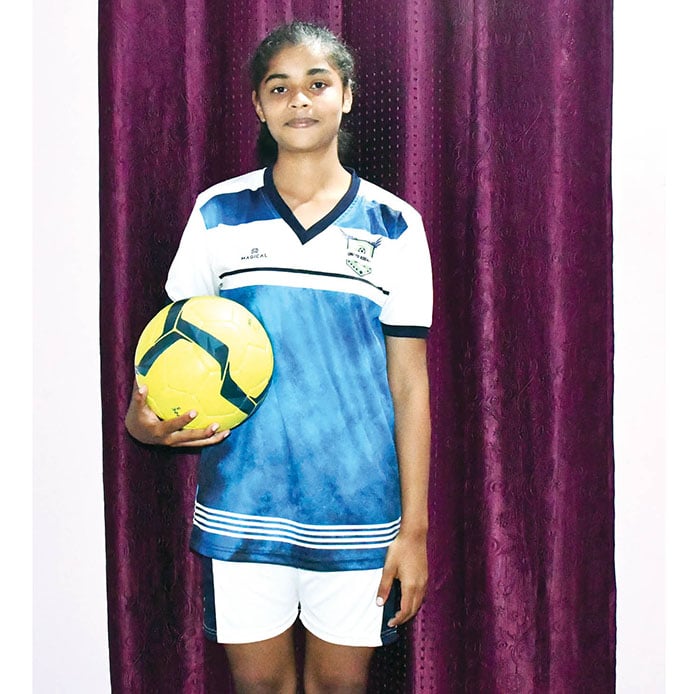
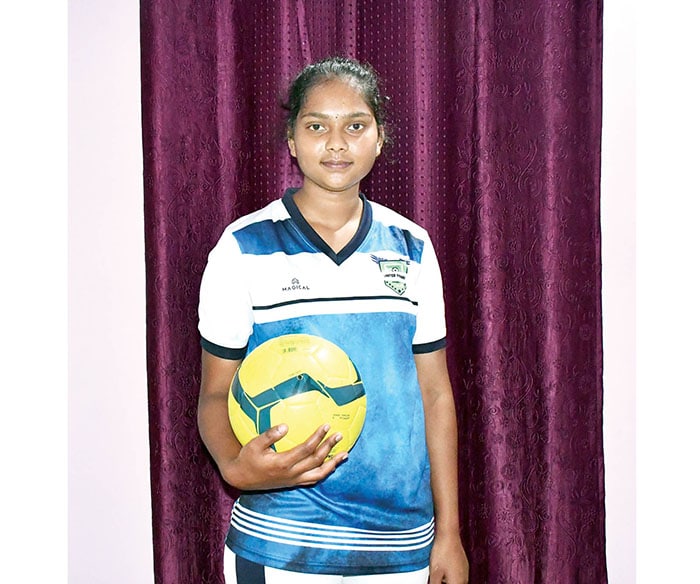
Among the players in the Club is 19-year-old C.V. Niharika from Saraswathipuram in Mysuru, presently studying in National Institute of Engineering (NIE) pursuing Mechanical Engineering second year. As of now, there are only two players from Kodagu — Nikhita from Somwarpet and Parimala from Pollibetta.
Nikhita from Somwarpet.
“There are at least 30 to 40 girl players from Kodagu who are interested and capable of playing in league matches. In the pandemic situation and due to examinations and other family commitments, they are not able to come to be a part of the Club in these league matches. I have registered with the United Kodagu Football Club so as to not miss out on the league matches. If the Club fares well, we will conduct a trial in Kodagu for the subsequent matches,” Harish told Star of Mysore.
Parimala from Pollibetta.
Interested but no opportunities
Lending a helping hand to Harish is Kodagu District Football Association. “The United Kodagu Football Club is taking care of the food and accommodation of the players and the team is poised to enter the semi-finals,” Harish said.
He is the Head Coach of the Bengaluru-based Nakshatra Football Academy and the other players have been handpicked from there, he said.
“Hockey takes priority in Kodagu but there are girls who are interested in football and so far they have not had any opportunities. We provide a platform for them and the ‘A Division’ was a good opportunity for them to learn and hone their skills from other State-level players,” Harish added, regretting the lukewarm response he got when he called for player participation. He hopes that more players will emerge from the coffee district.
Coach Harish in discussion with players.
Sharing her experience with SOM on playing for Kodagu FC, Niharika said that she was glad for the opportunity and grabbed it as soon as the opportunity landed on her lap. “I am the only Mysuru girl to be playing football at this level and I practice for at least three to four hours per day,” she said.
Niharika started playing football at a very young age and her class boys were her team-mates. “Football is the only game that attracted me and I felt I belonged to it and it was quite natural. Despite facing obstacles and discrimination initially as there is a wrong notion that only men play this game, my parents were very supportive. And here I am,” she said.
Notably, Niharika’s coach in the University of Mysore is Ramani, a woman who coaches all the senior boys. “She picked me up and took me under wings and it was a magical moment,” she added.
Niharika is the daughter of Dr. C.S. Vasanthakumar, a medical practitioner and C.P. Manjula, who was an Assistant Professor Economics, now a home-maker.
Team United Kodagu Football Club with Coach Harish.
Team makes it to Main League
In the ‘A Division’ League, The Kodagu FC could not make it to the finals in the qualifiers. The team played its last match on Sept. 20 and qualified for the Main League that will take place later.
source: http://www.starofmysore.com / Star of Mysore / Home> Feature Articles / September 23rd, 2021
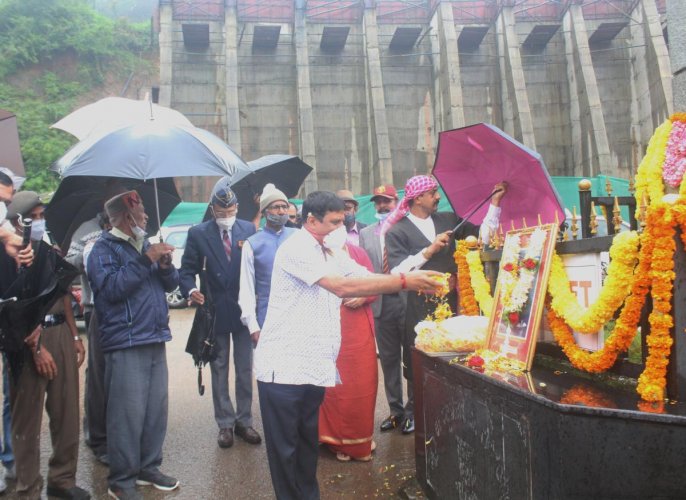
Madikeri MLA Appachu Ranjan pays floral tributes to a portrait of Squadron Leader Ajjamada Devaiah on the occasion of his 56th death anniversary, in Madikeri.
The 56th death anniversary of Squadron Leader Ajjamada Devaiah was observed by Kodava Makkada Koota, on Tuesday.
MLA Appachu Ranjan M P, MLC Shantheyanda Veena Achaiah and others paid floral tributes to a portrait of Ajjamada Devaiah at the old private bus stand.
Appachu Ranjan said that the youth from the district should join the army in large numbers and serve the nation.
MLC Shantheyanda Veena Achaiah said that it is the duty of every Indian citizen to remember the brave soldiers.
More soldiers should come from Kodagu, she added.
Retired Major Nanjappa said that the younger generation should remember the history.
Devaiah Memorial Trust president Ajjamada Katti Mandaiah said that Devaiah sacrificed his life in the Indo-Pak war. He was awarded the Mahavira Chakra.
Kodava Makkada Koota president Bollajira B Ayyappa, CMC commissioner Ramdas, honourary secretary Puttarira Karun Kalaiah, Field Marshal K M Cariappa and General Thimayya Forum president Colonel Kandratanda Subbaiah, convener Major Nanjappa and and Ajjamada family president Ajjamada Lava Kushalappa were present.
source: http://www.deccanherald.com / Deccan Herald / Home> State> Mangaluru / by DHNS, Madikeri / September 08th, 2021
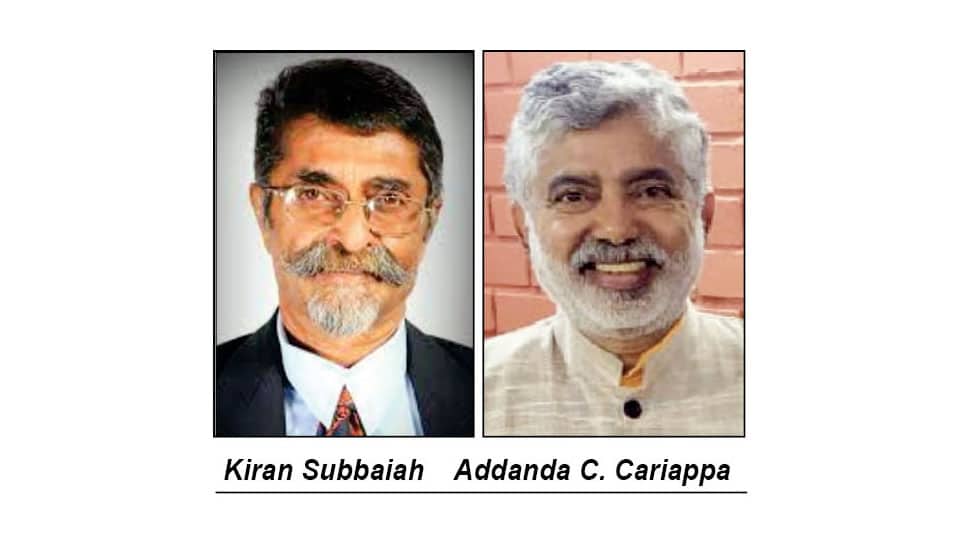
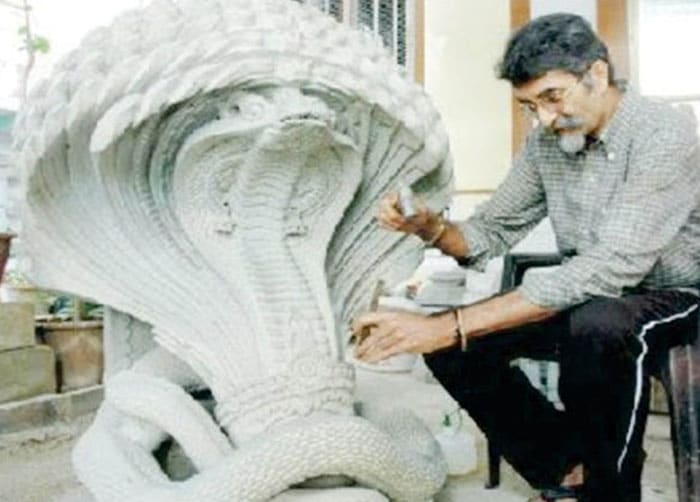
Sculptor Appaneravanda Kiran Subbaiah, Rangayana Director Addanda C. Cariappa among 12 achievers
Madikeri:
The annual awards and book awards conferred by Karnataka Kodava Sahitya Academy have been announced and 12 achievers will receive the honours this year.
Academy Chairperson Dr. Ammatanda Parvathi Appaiah said that the awards function will be held at Kodava Samaja in Makkandur on Sept. 12. The annual awards event could not be held last year due to the pandemic and the awards for both years will be presented on Sept. 12.
Madikeri MLA M.P. Appachu Ranjan will inaugurate the programme. Virajpet MLA K.G. Bopaiah, MLC M.P. Sunil Subramani, MLC Veena Achaiah and others will take part in the event.
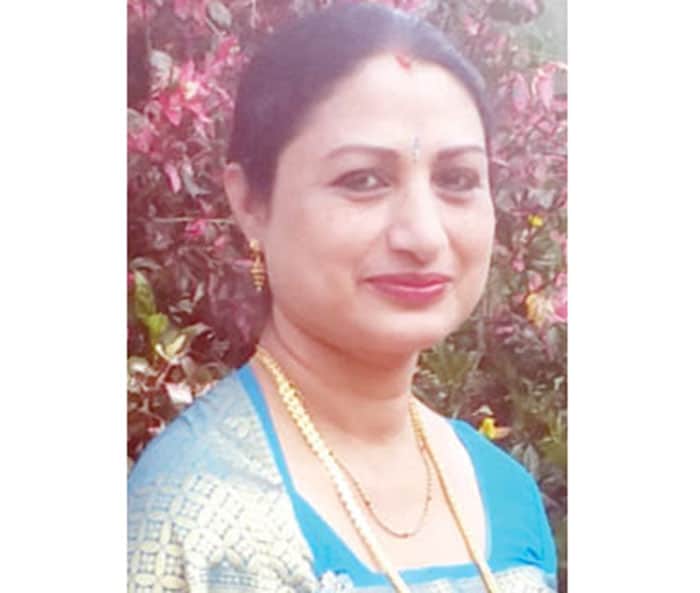
The honorary awardees for the present year are: Monnanda Shobha Subbaiah and Badakadammanda Kasturi Govinda Mayya (literature), late Kameyanda C. Ayyanna and Bottolanda Kali Achaiah (art), Kambiranda Cauvery Ponnappa (research) and Appaneravanda Kiran Subbaiah (sculpture).
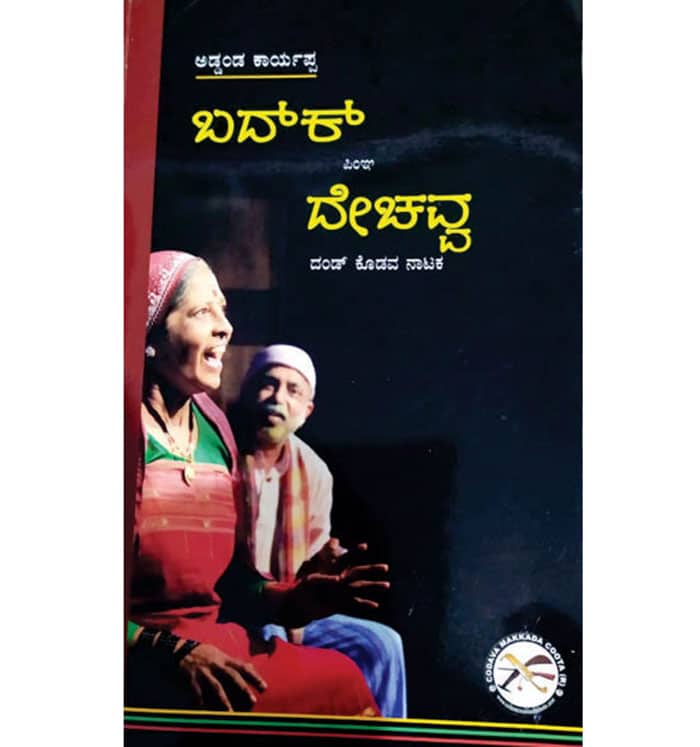
The annual book awards will be presented for ‘Pojang,’ a collection of poems by Bacharaniyanda P. Appanna and Ranu Appanna, ‘Mahavira Achunayaka’, a novel by Kadyamada Reeta Bopaiah, ‘Badk Pinja Dechavva,’ a play by Addanda C. Cariappa, ‘Nadapeda Asha,’ a novel by Nagesh Kaluru, ‘Nanga Daar Kodava’ by Maletira Seethamma Vivek and ‘Nataka Ranga’ by Uluvangada Cauvery Uday.
The honorary awards will comprise a cash prize of Rs. 50,000 each while the book awards comprise Rs. 25,000 each. Kodava thesaurus ‘Pala Pajel Kodava Takk’ will also be released on the occasion. There are 5,000 words and descriptions that have been given in Kannada, Hindi and English.
Multi-dimensional sculpting
Appaneravanda Kiran Subbaiah, known for his multi-dimensional sculpting — a specialised genre which seems to be a single statue but actually has several more angles to it — said that finally the Kodava Sahitya Academy has given him an award. “I thought I would not receive the Academy Award in my lifetime. I am glad that they have recognised my work at last,” he told Star of Mysore.
The sculptor regretted that many genuine achievers in the Kodava community have not got their due recognition though there are awards for other communities despite their achievements being minor.
Kiran’s sculpture is unique where each side is carved in such a way that the subject on one side does not interfere with the subjects on the other, yet the correlation is aesthetically brought out.
His house on New Sayyaji Rao Road near Bamboo Bazaar in Mysuru is a one-of-its-kind Sculpture Museum aptly named ‘Shilpaniketana.’
[Note: Star of Mysore had featured Kiran Subbaiah in its Weekend Star Supplement titled ‘Sculptures’ on Dec. 20, 2008]
Prescribed as textbook
Speaking to Star of Mysore on being chosen for the book award, Addanda C. Cariappa, who is the present Rangayana Mysuru Director, said he was happy that his literary work has been recognised by the Academy. “The play ‘Badk’ has seen more than 70 shows. Also the book ‘Badk Pinja Dechavva’ has been prescribed as a text book by the Kodava Sahitya Academy. The actual play and the book are different in the performance and literary aspects. While the play is purely performance-oriented, the book is a hardcore literary work,” he said and added that ‘Dechavva’ is another play in the book.
Six plays
Uluvangada Cauvery Uday said that her book ‘Nataka Ranga’ is a collection of six plays that is a combination of historic and social themes that give a message to the society. There are humorous plays too. “I used to perform in many plays at Sambhrama Ladies Club in T. Shettigeri, South Kodagu. These plays were written for many cultural events and now I have compiled the same into a book that has got the award,” she said.
source: http://www.starofmysore.com / Star of Mysore / Home> News / September 09th, 2021
The portal has documented the lineage of some families up to 14 generations since the 16th century.
Kishore Uthappa
Madikeri :
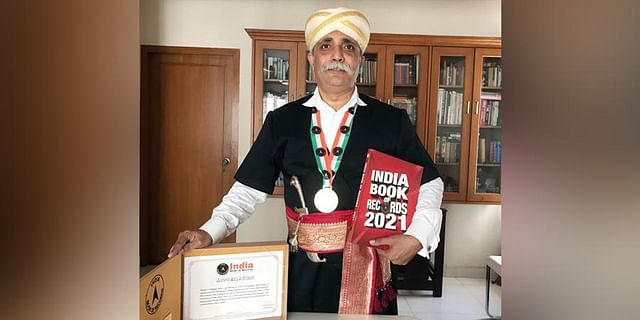
A Kodava clan portal, Kodagu Heritage Private Limited, has been named in the India Book of Records for the largest family tree linkage. Established by Kodagu native Kishore Uthappa, the portal was started nearly five years ago and has created family trees of nearly 16,000 Kodava individuals – the largest till date in the country.
“All Kodavas are related to each other and I wanted to create a larger single family of the clan. Collecting data from many elders of the clan and a few other individuals, I created the online portal that now has over 500 subscribers,” said Uthappa, who is now based in Bengaluru.
He added, “When any person from the clan meets for the first time, the first question posed to each other is ‘Which family (Kodava) are you from?’ We then try and connect relationships and end up finding out how each of us is related. This online portal helps derive that connection easily.”
The portal has documented the lineage of some families up to 14 generations since the 16th century. Any subscriber of the portal can enter the details of his/her family and find the relationship with other clan members. “One can even find how they are related to Field Marshal Cariappa or General Thimayya or any other known personality from the community. It helps find one’s relatives – irrespective of the generation one belongs to,” he shared.
Many youngsters from the community are joining the portal to study their lineage and it has currently documented the family tree of 15976 people. “We have documented at least one individual from the total 734 clans in the community,” he explained. The portal is still growing and aims to create the largest family tree with more than 5 lakh profiles in the near future.
source: http://www.newindianexpress.com / The New Indian Express / Home> Good News / by Prajna GR, Express News Service / August 26th, 2021
WELCOME. If you like what you see "SUBSCRIBE via EMAIL" to receive FREE regular UPDATES.
Read More »