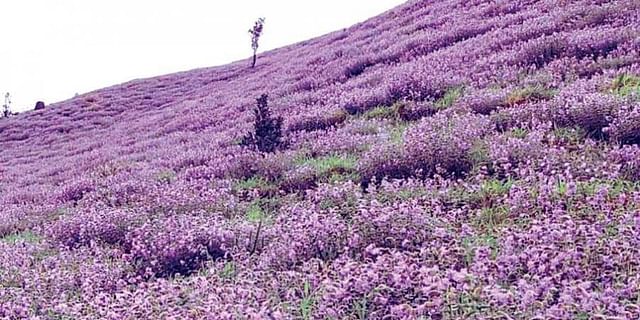
The mass blooming of the Neelakurinji flower (Strobilanthes kunthiana) in Kodagu district is giving the much-needed boost to the state’s tourism sector.
Neelakurunji flowers bloom at a hillock in Kodagu district | forest department
Bengaluru:
The mass blooming of Neelakurngi in Coorg has made it a rallying point for wildlife enthusiasts, botanists, photographers and tourists.
The blooming at the hillocks of Mandalpatti and Kote Betta in Kodagu, tourism has also taken up the north. Since the blooming has happened for the first time in a such a massive scale and is after 12 years, more so after tourism activities have opened up after the pandemic, every one are heading to India’s Scotland to see them.
The new entrant in the list to draw tourists is heli- tourism. As the state government and the tourism department are trying the revive the long pending heli- tourism, a firm in Bengaluru has undertaken a heli- ride to Kodagu and surrounding areas, giving an areal view of the blooming Neelakurunji flowers on the hillocks.
Govind Nair, Director, Thumby Aviation Private Limited said already one trip from Yelahanka air base to Coorg was done earlier this week. Now it is being offered as a part of the Nowhere trip to Coorg, a package tour, where a detour to Mandalapatti will be done.
Tourism packages and inineraries are being revamped on the go, depending upon the blooming and withering of the flowers. But since it is a once in 12 years sighting, many resorts are offering a visit to the region as a part of the package, to draw more crowds.
Trekking and flying has now taken the front seat to draw tourists. Even as the recent guidelines of the ministry of aviation states that drones are prohibited over national parks, wildlife sanctuaries and other eco- sensitive places, conservationists and foresters object to helicopters flyover over the region. They point not just is the area a fragile Western Ghats region, little is know the species in Kodagu and so all precaution should be exercised to safeguard them.
Botanists point that utmost care should be taken in the area as the flowering in this part of Western Ghats has not been recorded and documented. Karnataka as around 45 species of Kurunjis and in different altitudes different species have been recorded. Each species blooms at different intervals like once in six years, nine years, 11 or 12 years. So administration must ensure that tourism and footfall is limited to the region, so that they are well protected.
source: http://www.newindianexpress.com / The New Indian Express / Home> Cities> Bengaluru / by Bosky Khanna, Express News Service / August 27th, 2021
Even though the number of the Coorgies in the regiments is coming down, the regiment still holds on to the traditions of the community and takes pride the representing the decedents of river Cauvery on the battlefield.
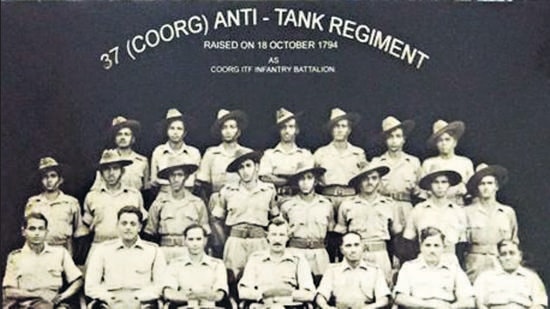
In 1946, it was converted to the 37 Coorg Anti-Tank Regiment Unit of the Royal Indian Artillery. It is now a part of the modern Indian regiment of artillery and wears the uniform of the artillery. (HT Photo)
The young officers’ the course is mandatory for all new lieutenants joining the Indian Army, but for a group of handpicked officers belonging to the 37 Coorg Regiment of the army’s artillery arm, the four-week course traditionally gets extended by two more weeks with a visit to Madikeri, a hilly town in Karnataka.
These young officers spend time in the hills learning about the origins of their regiment and the tales of legends like Field Marshal KM Cariappa and General KS Thimayya, who emerged from these very hills.
Even though contested in the modern age, the Indian army’s regiments are formed and named after the communities of the soldiers recruited into these units.
The martial race was a designation that was created by army officials in British India after the Indian Rebellion of 1857, in which they classified castes into two categories, with the ‘martial race’ being typically brave and well-built for fighting. Even now, the Indian Army designates its regiments as Sikh Light Infantry, Gorkha Rifles, Madras Regiment, Rajputana Rifles, and so on.
Even though not familiar within Karnataka, the Kodavas or the Coorgies is considered a marital race and have a regiment named after them – the 37 Coorg Regiment. This is the only regiment for the Kodavas.
The unit traces its origins back to 1794 when it was raised by the British to counter Tipu Sultan’s attack against the Kodava kingdom. Initially raised as infantry, the unit went on to fight against Tipu in the fourth Mysore war, where he was eventually killed.
Until 1901, the regiment was designated as the 11th Madras Infantry and in 1902, the regiment was reorganised, and the basis of recruitment changed from Tamil and Telugu to only Coorg soldiers. The restructured regiment was then renamed the 71st Coorg Rifles in 1903.
The new regiment was given dark green uniforms with scarlet facings. Red fezzes, which were an unusual item of uniform in the Indian Army, are reported to have been worn by the sepoys. Subsequently, described as an ‘in-out-of-the-run’ unit, they were disbanded in 1904 because of insufficient recruits.
In 1942, Coorgs were again recruited into the newly raised 1st Coorg Battalion. Like the 71st Coorg Rifles, the new battalion had a badge incorporating crossed Coorg knives. In 1946, it was converted to the 37 Coorg Anti-Tank Regiment Unit of the Royal Indian Artillery. It is now a part of the modern Indian regiment of artillery and wears the uniform of the artillery.
The regiment’s attachment to the land it represents is such that their war cry is “Cauvery.
Mata ki Jai” (Hail mother Cauvery) since river Cauvery is an integral part of the Kodava culture.
Subedar Major (Retd) KC Kalappa, a retired gunner from the regiment said that it was a matter of pride for the Kodava community to have a regiment in their name, but over the years, the number of recruits from the community is reducing. “In the early 1970s, the regiment had people only from the Kodava community and the community took pride in it. But over the years, the number of recruits is coming down and now the unit consists of soldiers from all four south Indian states,” said Kalappa.
Even though the regiment has recruited from all south Indian states, the regiment maintains the tradition of the Kodava community. For example, on the regiment’s raising day, the officers, and non-commissioned officers, regardless of their ethnicity, wear the traditional ‘Kupya Chale’,which consists of a traditional jacket and headgear. The officers wear Pichangatti (a traditional knife), and instead of handing baton, when a new commanding officer takes over, a Pichangatti is handed over as a sign of change in command.
“I’m a Punjabi but I was the commanding officer of the Coorg regiment for three years and whenever I visit Kodagu, I feel like a Coorgi because of the traditions of the regiment. The house of the commanding the officer is called a Mercara house, named after the Mercara town in the Coorg,” said Major General Sanjay Sharma (retd).
According to Maj Gen Sharma, the unit is so closely affiliated with the Kodagu community that it is a tradition for the unit to take part in the annual hockey tournament in Kodagu. “For the Kodavas, the annual hockey tournament is very important it is part of their culture. In this tournament, various families of Kodagu compete against each other. So, for the past few years, the regiment gives an award for the first goal scored in the tournament and it is a matter of pride for the people because the regiment named after their community is taking an interest,” he said.
Over the years, however, the composition of the unit has changed. According to Maj Gen Sharma, currently, the number of Kodavas is only about 15-20% in the unit, and three other south Indian states fill other vacancies. “Over the years, the number of recruits has come down. But all men of the regiment, whichever state they are from, celebrates all Kodava festivals and call themselves Coorgs with pride,” he said.
Describing the 37 Coorg Medium Regiment as a matter of ‘pride for Karnataka’, ex-Sergeant of the Indian Air Force Mandetira Subramani and the president of VeKare Ex-Servicemen’s Trust (VKET), has emphasised the need to post a few more willing young officers, junior commissioned officers (JCOs) and jawans from the community to the regiment and make it more meaningful. “We are trying to promote the heritage of the unit among the youngsters and trying to get more people to join the regiment and continue the legacy,” said Subramani.
Even though the number of the Coorgies in the regiments is coming down, the regiment still holds on to the traditions of the community and takes pride the representing the decedents of river Cauvery on the battlefield.
source: http://www.hindustantimes.com / Hindustan Times / Home> Explore> India News / by Arun Dev, Bengaluru / August 22nd, 2021
Joshna Chinappa sits 10th in the rankings and will next be seen in the British Open in Hull, England from August 16.
File Photo: Joshna Chinappa has entered the top-10 for the first time since 2016. – THE HINDU
India’s squash star Joshna Chinappahas returned to the top-10 of PSA world rankings following a pre-quarterfinal finish at the World Championships in Chicago.
Joshna had entered the top-10 for the first time since 2016.
The current rankings are dominated by Egypt with five of its players in the top-10, including world number one Nour El Sherbini. Joshna is 10th in the standings.
In men’s rankings, India’s Saurav Ghosal has dropped to 15 following a pre-quarterfinal finish in Chicago last month.
Joshna will next be seen in the British Open in Hull, England from August 16.
source: http://www.sportstar.thehindu.com / Sportstar / Home> Squash / by PTI / August 02nd, 2021
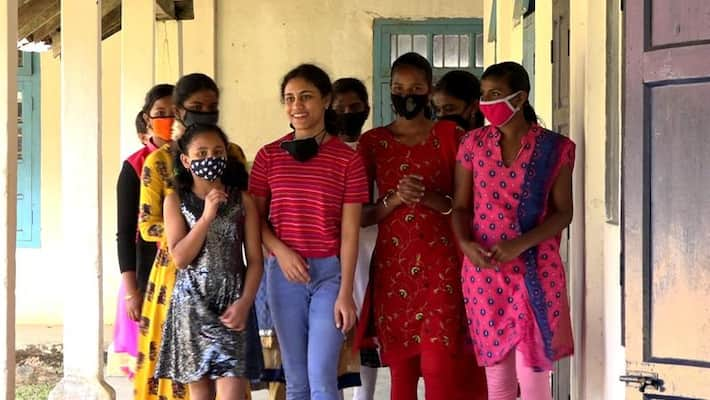
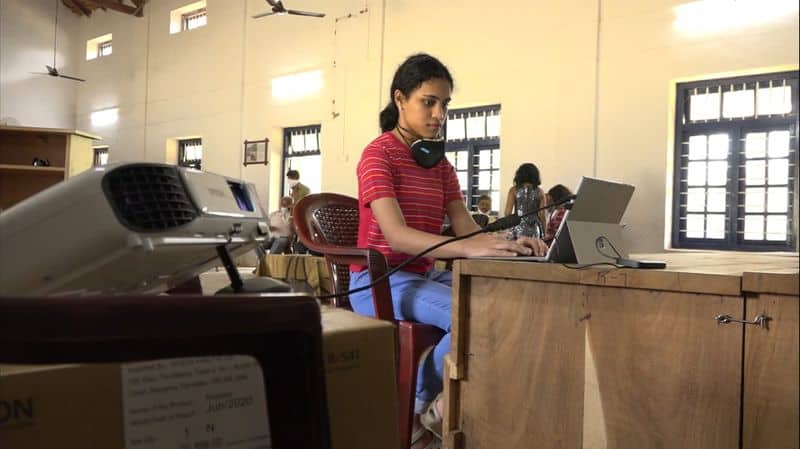
A Bengaluru based 14-year-old girl named Kaveri Poovanna, has raised funds to donate a laptop and a projector to a government school at her hometown in Kodagu. From saving Rs 5,000 from her very own birthday gift to raising funds up to Rs 2 lakhs, this young girl is inspiring many teenagers to make the world a better place.
Kodagu:
With the outbreak of COVID-19 across the world, everyday activities have been disturbed including education.
Most schools and colleges had turned to online classes over the last few months to maintain social distance and avoid the spread of COVID-19.
As schools and colleges started teaching online, not everyone had the access to online education due to lack of infrastructure such as laptops or desktops or internet facilities at home.
The same was the situation of many students at a government school in Ammathi, Kodagu. However, a 14-year-old girl from Bengaluru came to their rescue.
14-year-old Kaveri Poovanna who is studying in the 9th grade realised that not many children of her age had the privilege or access to laptops or mobile phones and this way they would lack education.
Kaveri came forward to raise funds to donate a laptop and a projector to the government school in Ammathi, which is also her mother’s hometown.
Speaking to Asianet Newsable the teenager said “I chose to do this after realising that children could not go to school at these times. Education is very important to me and we all need to realise that it is the only way to move forward. If there is anything you can do to help the society, you just need to do it. Even if it is hard, even if it will take up a lot of your time, at the end of the day it will make the world a better place”
Kaveri was the first donator in her own fundraiser. The 14-year-old had saved up to Rs 5,000, which she had received as a gift on her birthday from her family.
With just Rs 5,000 Kaveri’s fundraiser went up to Rs 1,90,000 after her friends, family and relatives pitched in more money.
Kaveri bought the laptop and projector for close to Rs 1,00,00, and donated the rest of the money in the form of a cheque to the government school.
From saving Rs 5,000 from her very own birthday gift to raising funds up to Rs 2 lakhs, this young girl is indeed inspiring many teenagers to make the world a better place.
source: http//www.newsable.asianetnews.com / AsiaNet Newsable / Home> English News> India News / by Yemen Syed / November 18th, 2020
Arathy Somaiah, Director of Swastha Center for Special Education and Rehabilitation speaks about their way of educating and training children with special needs in the rural areas of Coorg .
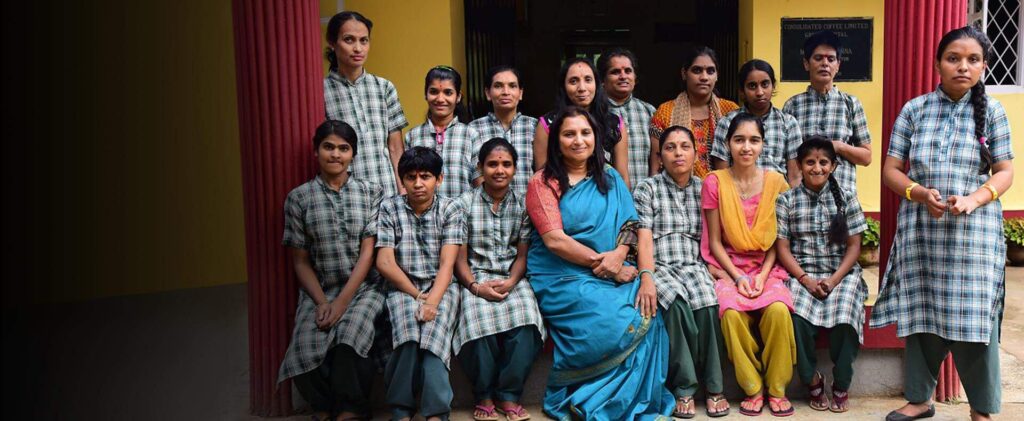
Arathy Somaiah, Director of the centre along with the students at Swastha Center for Special Education and Rehabilitation (Pictures: The Coorg Foundation)
A few years ago, when Rekha was diagnosed with cerebral palsy, her parents had no clue about how to deal with this condition or help their daughter. Living in rural Coorg, they were at a disadvantage as there were only a few organisations that could train children with special needs. But Swastha Center for Special Education and Rehabilitation came to Rekha’s rescue. They not only educated her but also trained her in soft skills and empowered her with a job at their own institution. Like Rekha, there are several other special needs children in Coorg who come to this centre for education and soft skills training.
Started in 2003, the Swastha Center for Special Education and Rehabilitation is a project by the Coorg Foundation. The Coorg Foundation is a non-profit organisation that works for the education, health and well-being of people living in Coorg. Arathy Somaiah, Director of the centre, says, “When a child with special needs is born in a rural area, the family doesn’t understand how to deal with these conditions or how to educate them. In such cases, our centre plays an important role. We take such children under our umbrella. Any child with special needs from the age group of 6 to 18 years stays with us, gets trained and is later placed in government offices, Panchayat development offices and even the hospitality sector.”
So, what exactly are these children trained in? Arathy explains, “At Swastha, we have an Individual Education Programme (IEP). This is a tailored programme for each individual because the disabilities or needs of children vary from each other. For instance, a child with locomotor disability has a good IQ level when compared to a child with mental disability. In such instances, we check if they are interested in regular academics and we have a special educator along with a teacher who can teach the regular syllabus. We also counsel their parents about the child’s interests, learning skills and showcase how well they can do. Currently, we have 115 children at our institution.”
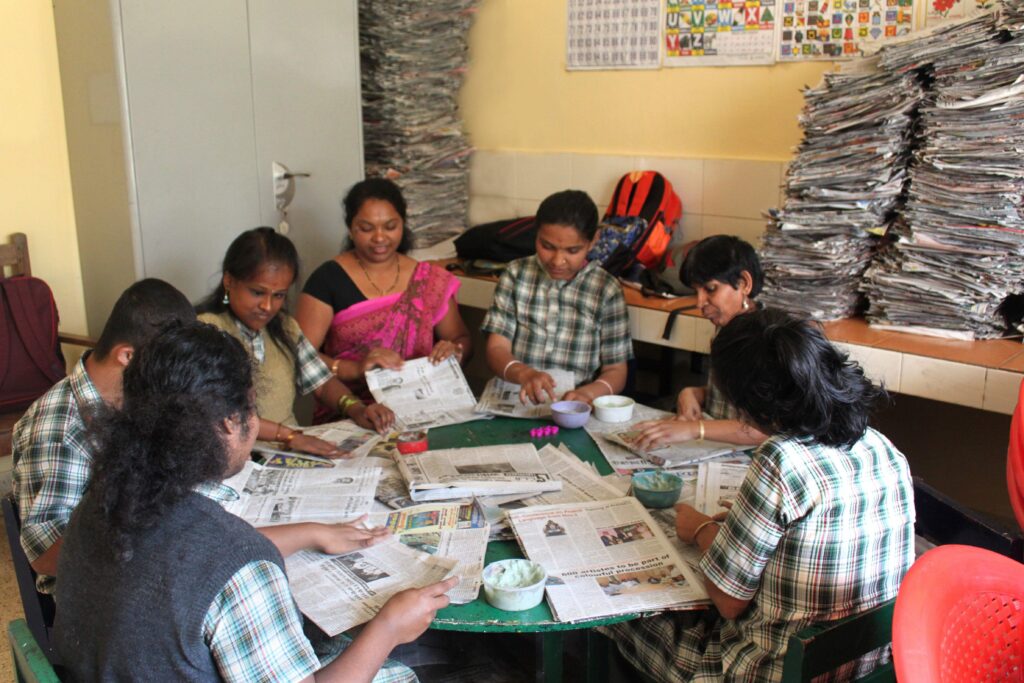
Swastha also provides vocational training for these children, says Arathy, “Our vocational programmes include tailoring, art and craft, book binding, nursery development and so on. These programmes are designed keeping the present market needs of customers in mind. All the products made by our students at the centre go to the market for sale. Be it the art and craft product or a stitched uniform, every product will match the competition. We take orders from factories and industries who love to use the quality products made by our children with patience.” What makes Swastha more unique is the fact that they pay the students for their efforts. “We ensure to incentivise our students for the products they make and sell in the market. Every student has their own bank account and we ensure to pay them for the work they do even during the training process. Once the training is completed, these children are placed in different companies. In case they want to start their own business, then we support them by providing them with the orders received at our centre. While skills, training and incentives help these children, we instill confidence in them to lead their lives at their own capability, ” explains Arathy.
So far, around 450 children have been trained at this centre. Out of this, at least 14 children have attempted and passed the SSLC exams. Currently, two children are preparing for the upcoming SSLC exams. “We had to send all the children back to their homes in April 2020 due to the pandemic. Since then, we have been conducting online classes. The main challenges, of course, are that some of these children have low internet connectivity or they lack smartphones. In such cases, we take the help of their neighbours who provide them with a phone for an hour of online classes. Besides this, we send them worksheets on WhatsApp. Once these kids solve the worksheets and send photographs, we convert them into PDFs and document them. Last September, we evaluated these worksheets and called children and their parents to show them their performance. We wanted to show the parents the seriousness of education for their children,” explains Arathy.
During the pandemic, the centre and the children trained in stitching clothes have been making masks. These masks are being sold to people and various factories who in turn provide them to their workers. Even now, the children are being incentivised for the masks that have been sold.
source: http://www.edexlive.com / Edex Live, The New Indian Express / Home> Special Education / by Rashmi Patil, Edex Live / June 30th, 2021
For the first time, India will have more than two sailors at the Tokyo Olympics, including Kodagu-born Kelappanda Chengappa Ganapathy and Nethra Kumanan, the first Indian woman sailor.
This is also for the first time India will be competing in more than one sailing event — Laser Radial, Laser Standard and 49er
While Nethra Kumanan will be in Laser Radial and Vishnu Saravanan in Laser Standard, K.C. Ganapathy and Varun Thakkar will be in 49er.
According to Varun and Ganapathy, sailing, unlike other sporting disciplines, does not have multiple events to win, like a freestyle swimmer can swim in 100 mts 500 mts and so on and likewise an athlete can run in 100 mrs 400 mrs etc.
It is noteworthy that only in 2021 sailors from India have qualified for the Olympics and will be participating as qualified sports persons, as till date all entries have been through wild card entries or quota slots. Asia has one slot in each sailing class and Japan being the host country.
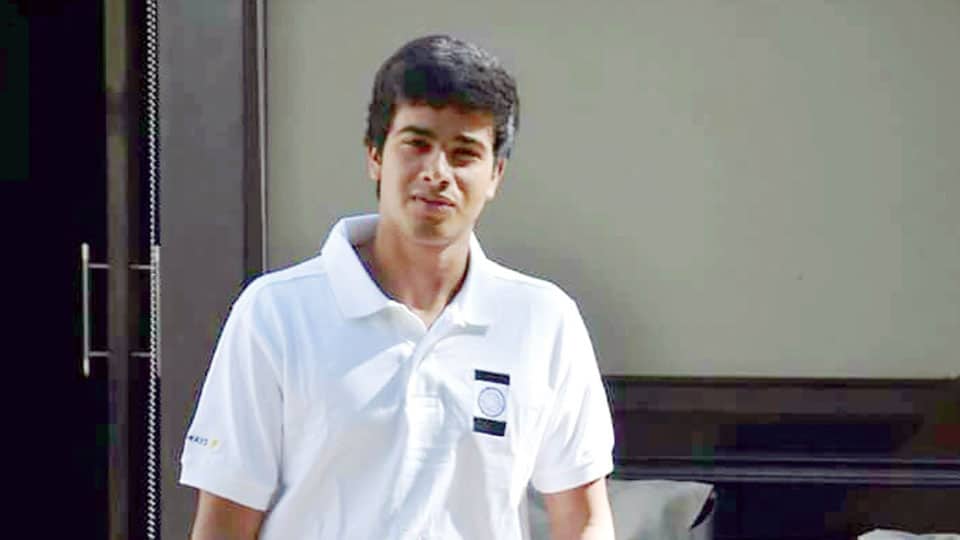
Ganapathy is the son of Kelappanda late Deepak Chengappa and Reshma Chengappa (from Allaranda family). His mother Reshma runs a furniture business in Chennai and the family is settled there. His grandparents are Kelappanda late Pratap and Padma Prathap. Padma resides at Kolthodu village near Hatur village in South Kodagu.
source: http://www.starofmysore.com / Star of Mysore / Home> Sports / July 22nd, 2021
Hockey India has announced the 16-member Indian women’s hockey squad for the upcoming Tokyo Olympics, which starts from July 23. After the 1980 and 2016 Olympics, the Women’s Team will be playing their third Olympics in Tokyo.
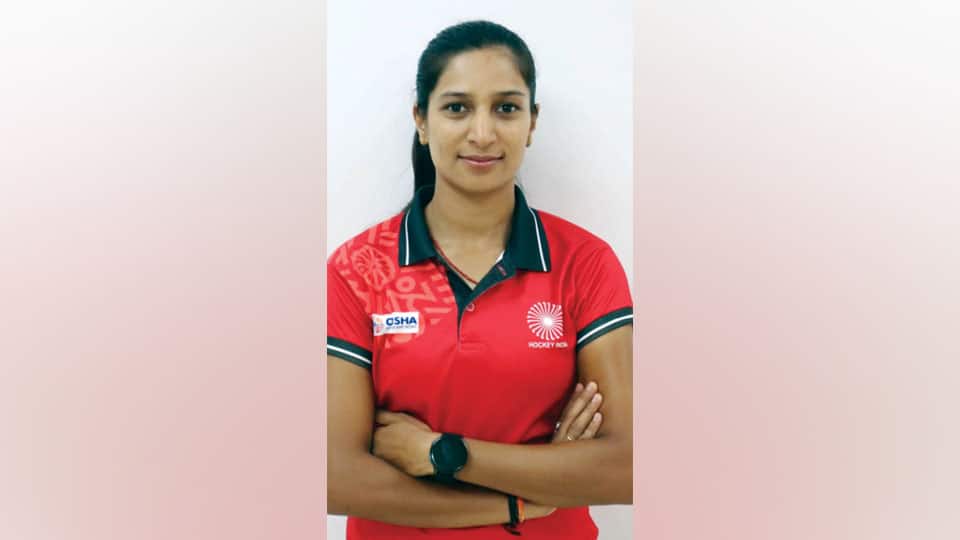
Ankitha Suresh, a Hockey Coach from Kodagu, who has made a mark in national and international-level hockey, has left for Tokyo Olympics along with the Indian Men’s and Women’s Hockey teams. She has been selected as Assistant National Coach by Hockey India for the Indian Senior Women’s Hockey Team.
She will be a part of the coach team comprising Graham Reid, Sjoerd Marijne, Shivendra Singh, Gregg Clark, Johanna Schopman and Piyush Dubey of both Men’s and Women’s teams. Along with the team, 19 players from each side including four alternative players and two reserve goalkeepers have also left India.
Scientific advisors for the teams are Robin Arkell and Wayne Lombard, masseur/masseuse are Arup Naskar, Radhika Chaudhari, physiotherapists are Kannan Bose and Nivedita Chopra and video analysts who have been selected are Ashok Kumar and A. Perumal.
Ankitha Suresh is the daughter of B.A. Suresh and B.S. Dharmavathi, residents of Madikeri. She is married to Honnampadi Suresh. Ankitha started her sports career as an athlete and had won medals in 3,000-mts and 5,000-mts running races in national levels. While studying in Junior College in Madikeri, she stumbled upon hockey and her passion for the sport grew after she joined SAI Hockey Hostel in Madikeri for training.
Ankitha also has the distinction of being the one among the five women from Karnataka who have been selected for the Level-3 coaching course offered by Hockey India as well as only Level-2 Technical Official to be selected from India and from Karnataka for the FédérationInternationale de Hockey (FIH) World Cup Women’s Hockey.
She has completed Hockey India Level-1, Level-2 and FIH Level-1 and 2 and also FIH Level-3 conducted by Hockey India and FIH Hockey Academy. A post-graduate diploma holder in e-Finance and Gym Instruction, she holds Masters in Commerce and has a Diploma in Sports Coaching (National Institute of Sports).
source: http://www.starofmysore.com / Star of Mysore / Home> Sports / July 18th, 2021
C.A. Kuttappa to lead a team of nine pugilists for post-COVID Olympics
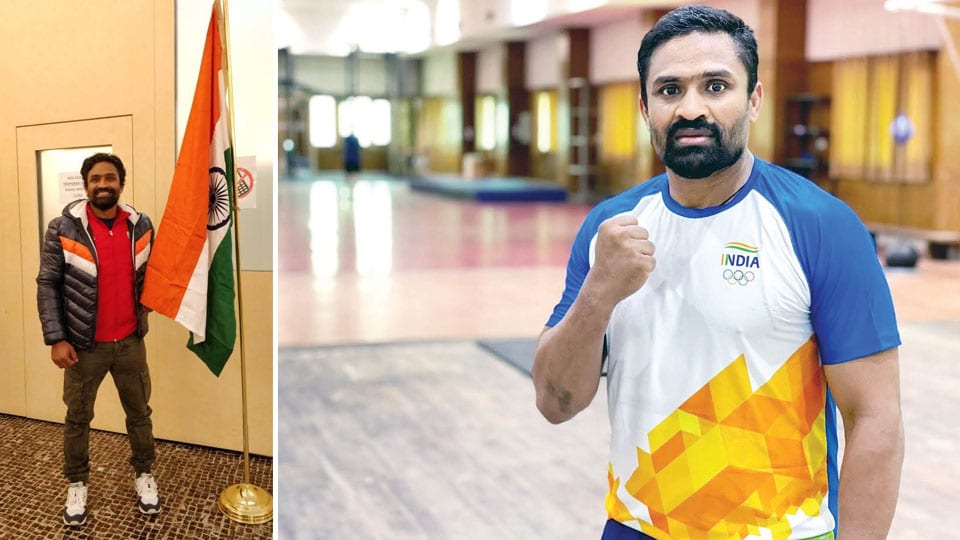
India’s Chief Men’s Boxing Coach Subedar Chenanda Achaiah Kuttappa will be the Head Boxing Coach for 32nd Olympic Games to be held in Tokyo, Japan, between July 23 to August 8.
A resident of Gokulam in Mysuru city, he was nominated for the Dronacharya Award-2018 in boxing. He took over as the Chief Coach for men’s boxing in India in 2018 and has played a significant role in the rise of Indian boxing as a force after the disappointment at the 2016 Rio de Janeiro Olympics and will travel to Tokyo alongside the nine qualified boxers for the world event.
The team will leave for Tokyo from their training base in Assisi on July 17. An unprecedented nine Indian pugilists have qualified for the Tokyo Olympics this time, including five men and four women. All of them are giving final touches to their games preparations in Assisi. The Games will open on July 23 with boxing competitions starting the next day. The men who have qualified are world number one and Asian Games champion Amit Panghal (52kg), Manish Kaushik (63kg), Vikas Krishan (69kg), Ashish Kumar (75kg) and Satish Kumar (+91kg).
The women’s squad comprises six-time world champion MC Mary Kom (51kg), Simranjit Kaur (60kg), Lovlina Borgohain (69kg) and Pooja Rani (75kg). India’s qualification performance in boxing this time was markedly better than the 2016 Rio Games where only three made the tournament-proper, none of them women.
The country did not win any boxing medals in the previous Games. India’s first boxing medal in the Olympics came in 2008 when Vijender Singh claimed the middleweight bronze, followed by Mary Kom’s medal in 2012.
Making India proud
Kuttappa is the second son of late Achaiah and Shanthi (Thamane – Katimada). He married Ashwini (Nancy), daughter of Palangiyanda Uthappa and Greshi Uthappa, residents of Mysuru. They are blessed with a daughter Yudhi, studying in sixth standard.
Kuttappa did his primary schooling at Mahaveer School, Mysuru till seventh standard and continued at Army School Bangalore to study up to 12th. He then joined the NIS Diploma in Sports Coaching in Boxing 2006-2007 and continued with AIBA Star 2 Coaching Course 2017, Rohtak (India), AIBA Star 3 Coaching Course 2019, South Korea and AIBA Cutman course 2017, Uzbekistan.
Kuttappa completed his BA from Bangalore Open University. He joined the Indian Army in 1996 and is presently working as Subedar and is the Head Boxing Coach, Elite Men National Boxing. Kuttappa has made India proud on numerous occasions. He started by winning bronze in the Sub Jr. YMCA Boxing championship in 1994.
He did not look back from then on. After winning nearly 30 matches in the international arena at the age of 30, he became the coach of the Indian boxing team. He has represented India as a coach at many international events including the Olympics.
source: http://www.starofmysore.com / Star of Mysore / Home> July 14th, 2021
With less than 30 days to go for Tokyo 2020, the Olympic fever is slowly gripping the entire sporting world. While the Indian athletes are leaving no stones unturned and carrying out high-octane practice sessions, it’s time for hockey fans to relive the memories from the triumphant Olympic campaigns in the past through Hockey India’s Flashback Series.
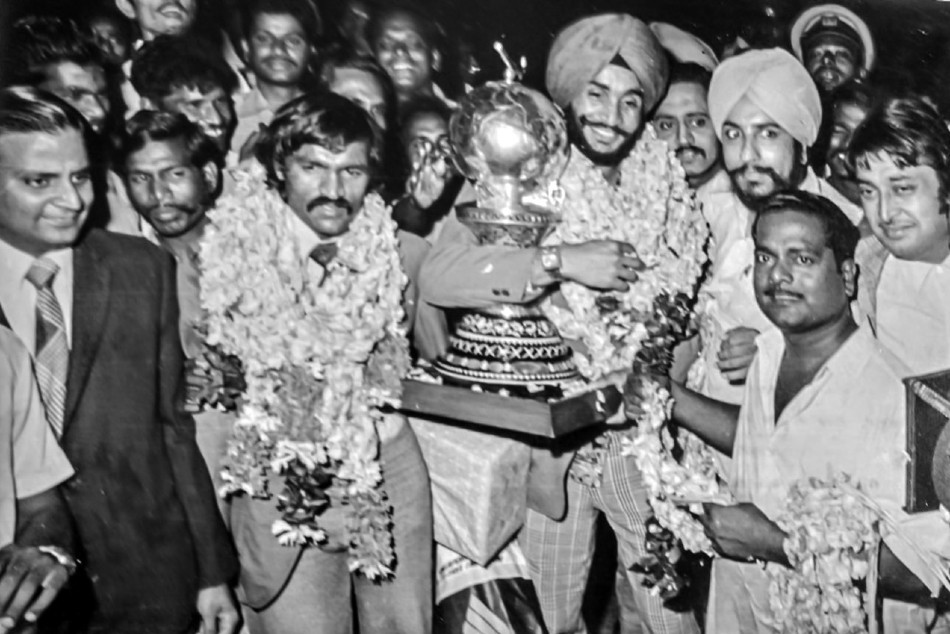
In this article of Hockey India’s Flashback Series, the fiery centre-forward BP Govinda went on a nostalgic trip, fondly talking of his hay days as an iconic figure with a distinctive headband. “Our Coach KD Singh Babu made me play as outside-left in the Bronze Medal match against the Netherlands,” recalled the stylish striker.
“All through the tournament in Munich, I had played as centre-forward, but our Coach insisted I change my position for this match, and it so happened that I scored the equaliser and then Mukhbain Singh scored the winning goal through a penalty corner which helped us win the match 2-1,” recalled Govinda, who was drawn to hockey from his school days in Somwarpet in Coorg.
Having won a Bronze Medal in 1968, India had fielded a young team in Munich which saw stalwarts like Michael Kindo, Ashok Kumar Dhyanchand and BP Govinda make their Olympic debut. But the campaign didn’t go as expected despite a good start against teams like the Netherlands (1-1 draw), Great Britain (5-0 win), Australia (3-1 win), Poland (2-2 draw) and Mexico (8-0 win). India had also beaten New Zealand 3-2 to make the cut for the semi-final.
“But we lost 0-2 in that match. I think we played particularly well in the second half. Almost the entire 35 minutes, we were in their D and we were attacking with all our might, but it was so disheartening that we couldn’t convert a single goal. All our shots would go near the goal mouth, and we would miss. It was as though we were jinxed,” explained Govinda, who is also part of Hockey India’s National Selection Committee.
The former India skipper who led the team to a Silver Medal at the 1978 Asian Games rued missing an opportunity to play for the World XI side at the Munich Games, but the match was called off due to the Palestinian terrorist attack on Israeli athletes. He said, “West Germany had beaten Pakistan in the Final to become the new Olympic Champions and the organisers had planned an exhibition match between World XI and the Olympic Champions. I was chosen from India to play for the World XI side but due to the Black September incident, they called off that match. Though there was no safety concern for us within the village, our contingent was quite close to where this incident happened.”
Another instance Govinda regrets to this day is the penalty stroke he missed against Pakistan in the 1973 World Cup in Amstelveen. “I had scored the only goal (in the 62nd minute) against Pakistan in the semis and that goal of mine took India to the Final against the Netherlands. I had become an instant hero back home but unfortunately; I couldn’t replicate that in the Final. Surjit Singh had scored two goals and the score was level at 2-2 when we earned a penalty stroke towards the dying minutes of the match.”
“Barring Harmik Singh, Ajitpal nobody was coming forward to take the penalty stroke. I told (teammate) MP Ganesh, no one is going so shall I go? I went voluntarily. Before taking the strike, I had decided I will hit the left corner of the goalkeeper but when I lifted my stick, it went underneath the grass, and the ball didn’t connect properly to the stick. My shot didn’t even reach the goalie. We lost the opportunity, and the match went into extra time, and we eventually lost,” recollected Govinda.
However, he fondly remembers from his playing days is his formative days when he played for Mohun Bagan. “That’s where it all began for me. In 1967-68, we won the first division and the Beighton Cup. I was very fortunate and lucky to have played with greats like Gurbux Singh and Vece Paes. I got my first call up for India in 1970,” he said.
Consistent India team stand great chance to finish on podium in Tokyo 2020
Speaking of the current Indian hockey team led by Manpreet Singh, Govinda said, “They have been playing consistently in the past two years, and they have shown a lot of promise. But my advice to them is to take it match-by-match and their first aim should be to make the Quarterfinals. I would say, once they have crossed that hurdle, it is anybody’s game in the Semis and Final.” “This team has been doing well under Graham and have shown that they are capable of beating big teams like Australia, Netherlands, Belgium and even the Olympic Champions Argentina. I have no doubt that they can perform well in Tokyo,” he added.
Source: HI Release
source: http://www.mykhel.com / My Khel / Home> English> Hockey> News / by Avinash Sharma / July 01st, 2021
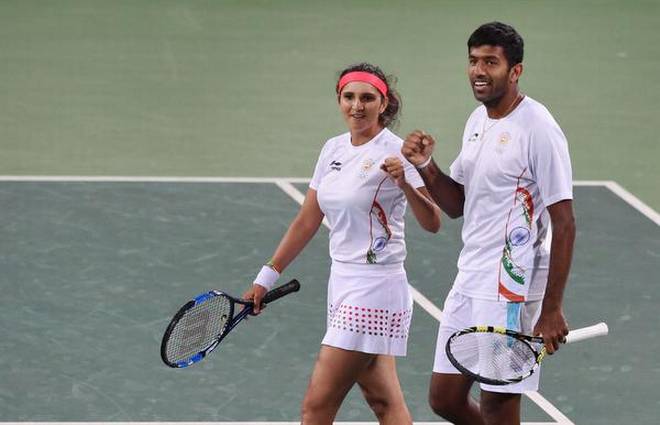
File photo of Sania Mirza and Rohan Bopanna. | Photo Credit: PTI
It was the first time in open era that two Indian teams competed against each other at a Grand Slam tournament.
The experienced pair of Rohan Bopanna and Sania Mirza defeated the brand new combination of Ramkaumar Ramanathan and Ankita Raina 6-2 7-6 (5) in the historic all-Indian mixed doubles first round match at the Wimbledon here on Friday.
It was the first time in open era that two Indian teams competed against each other at a Grand Slam tournament.
The contest finally brought a Grand Slam debut for Ramkumar, who has made 21 attempts to qualify for the singles main draw of a tennis major.
While the first set ended quickly in favour of the veterans, Ramkumar and Raina presented a good fight in the second set, which even they led for a brief period with a break of serve.
Bopanna was clearly the best player on the court with his powerful serve and solid ground strokes from the baseline as well as the ability to execute a superior net game.
On expected lines, Ramkumar served big while Raina gave her all after growing in confidence.
Mirza’s serve is still not at its best and would improve as she plays more matches.
Mirza has moved has also moved to women’s doubles second round with Bethanie Mattek-Sands while Raina and her American partner Lauren Davis lost in straight sets to the US pair of Asia Muhammad and Jessica Pegula on Thursday night.
The 14th seeds disposed off the challenge from the Raina-Davis pair 6-3 6-2 in 70 minutes.
Bopanna and Divij Sharan are already out, having lost their men’s doubles opening round match.
source: http://www.thehindu.com / The Hindu / Home> Sport> Tennis / by PTI / London, July 02nd, 2021
WELCOME. If you like what you see "SUBSCRIBE via EMAIL" to receive FREE regular UPDATES.
Read More »