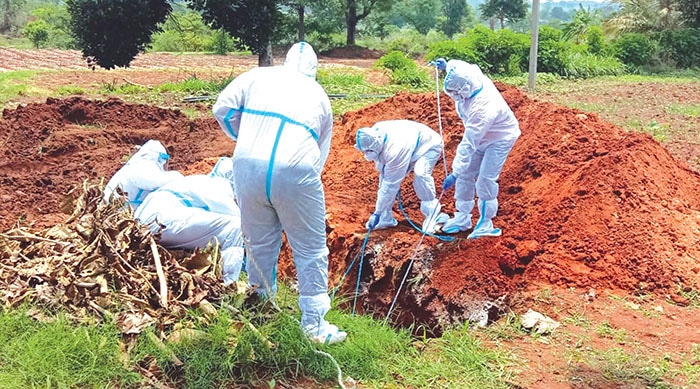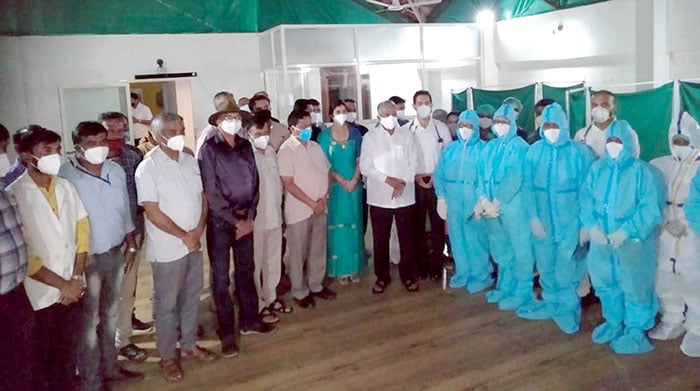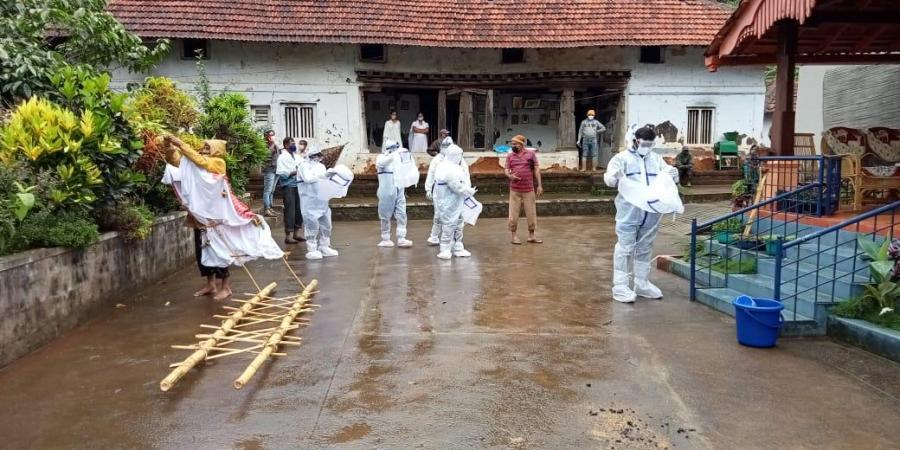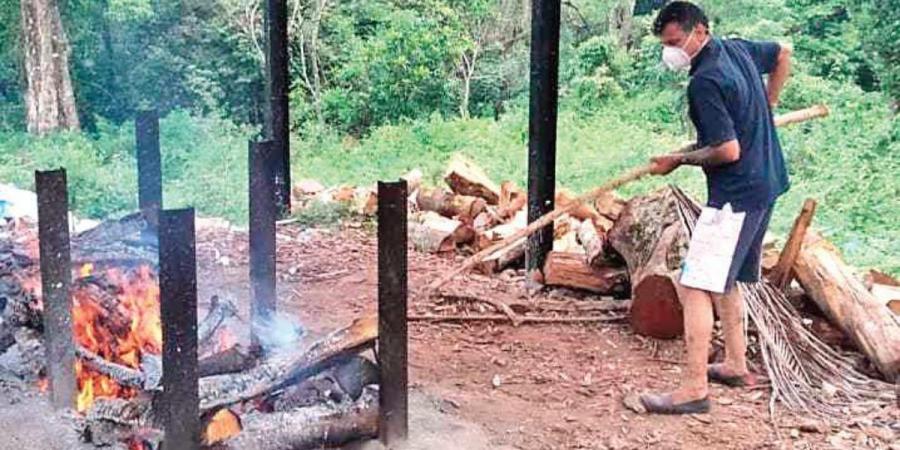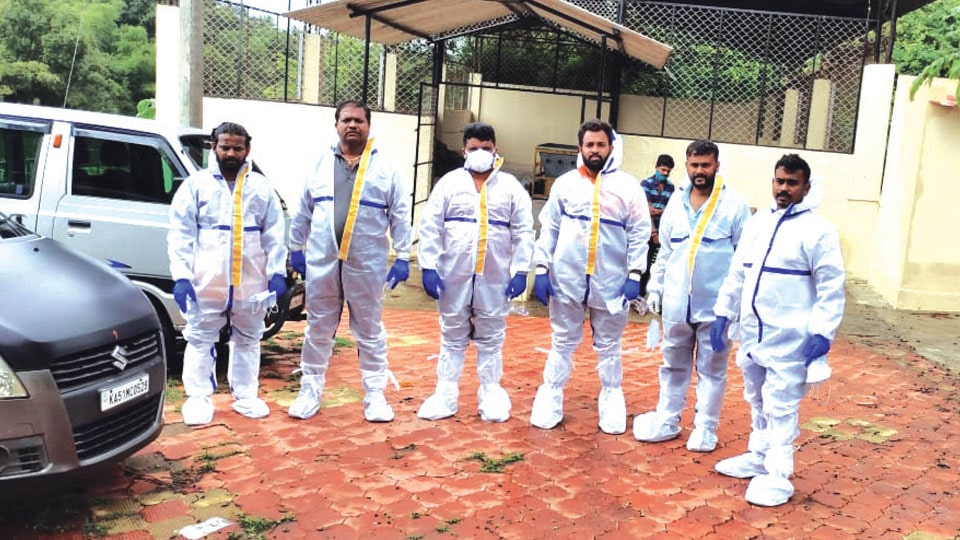
The group carried the dead body to the estate – nearly 0.5 km away – for cremation. “The path was slippery and we had to cross a farm to reach the spot,” said a member, a photojournalist.
Team Madhyama Spandana seen here in PPE kits for the last rites of a COVID victim in Kodagu. (Photo | Special Arrangement)
Madikeri :
Till recently, volunteers were the only ones risking their lives and undertaking the cremation of Covid victims in Kodagu. But on Sunday, with volunteers unavailable, a group of journalists took over and performed the last rites of a Covid victim.
The cremation took place after an 85-year-old resident of Balamuri village in Kodagu succumbed to Covid at his residence on Sunday. He had initially been hospitalised before being discharged a week later.
The family of the deceased, who had also tested positive for Covid, wished to carry out the cremation at an estate located half a kilometre from their residence. But as they were Covid positive, none of the villagers were willing to help them.
The son of the deceased man then reached out to a group of volunteers in Napoklu town, which is over 10 km from the village. The volunteers in turn requested the family to shift the dead body to the crematorium at Napoklu.
Helpless to do this as they had tested positive, the family turned to the Maadhyama Spandana group – a social service group started by a few journalists in the district to help the needy during the time of the pandemic.
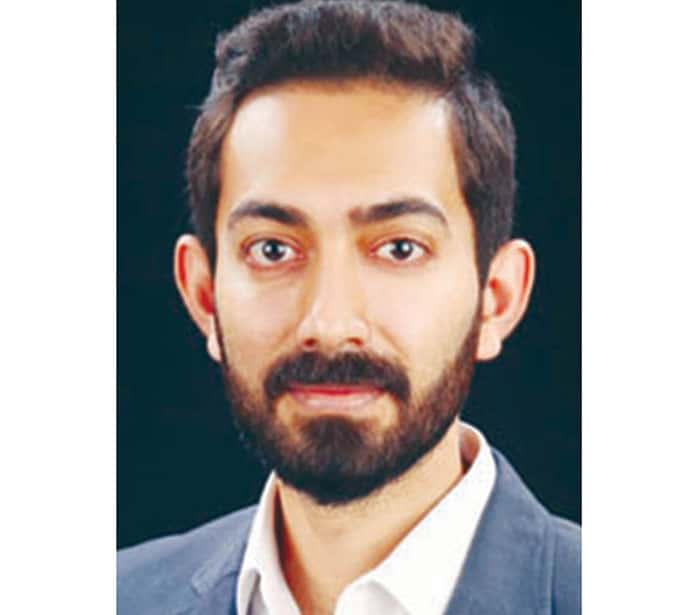
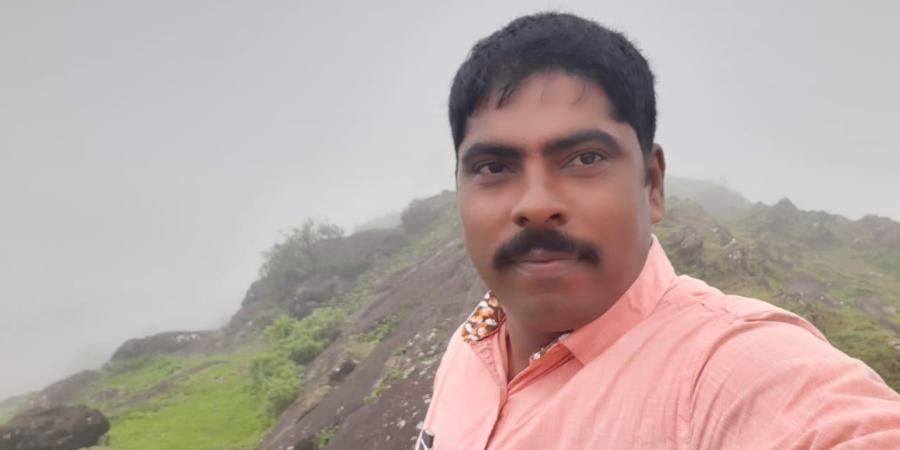
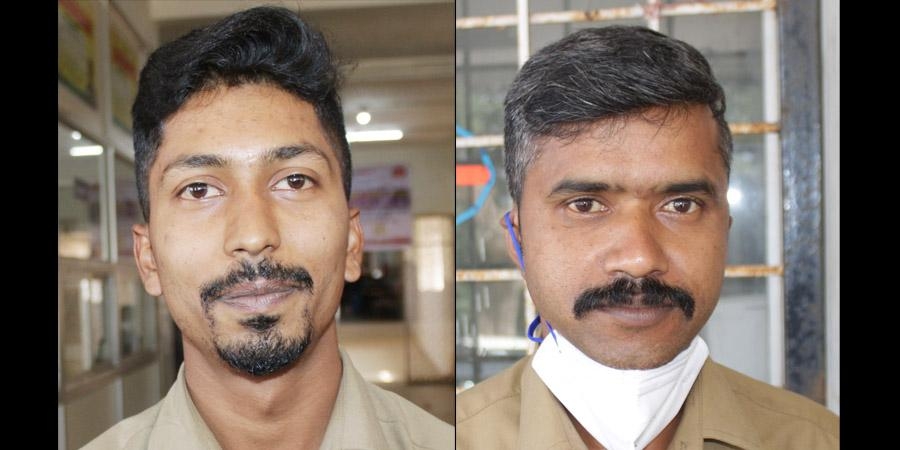
“Through the Maadhyama Spandana group, I received a call and we immediately swung into action to help the family,” shared Pappu Thimmaiah, a photojournalist. He, along with journalist Rejith Kumar roped in three other friends from outside the media group – Praveen, Aneesh and Sherin. All of the donned PPE kits and headed to help the distressed family.
“We wore PPE kits and left from Siddapura to reach the victim’s residence. The dead body of the victim was also unpacked and we packed it in a PPE kit,” Rejith explained.
The group then carried the dead body to the estate – nearly 0.5 km away. “The path was slippery and we had to cross a farm to reach the spot,” said Pappu.
They then lit the pyre after ensuring that the cremation was carried out following the proper rituals.
source: http://www.newindianexpress.com / The New Indian Express / Home> States> Karnataka / by Pragna G R, Express News Service / May 17th, 2021
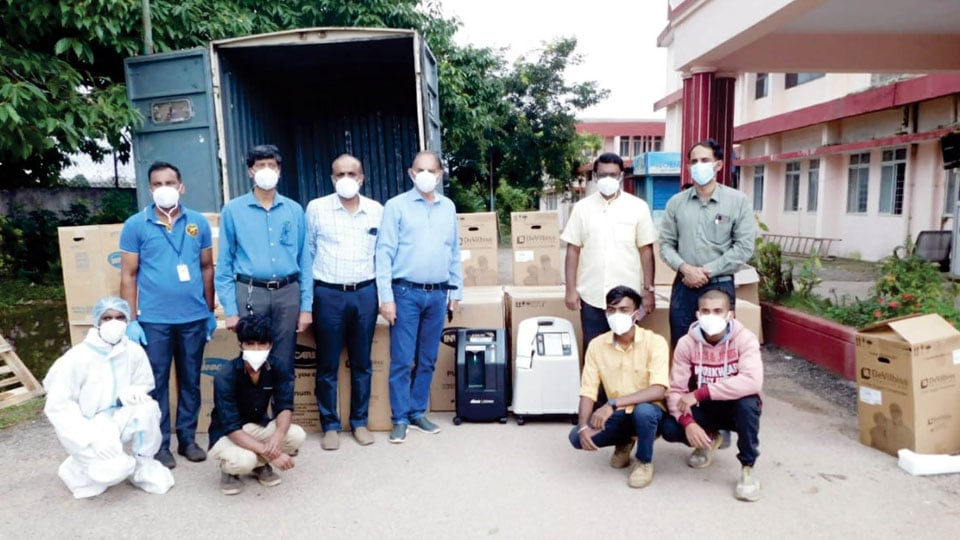
“The facility will have 15 beds with pipelined oxygen, five beds with oxygen concentrators and 10 beds with Bipap machines (a type of ventilator),” said Venkat Chekuri, joint secretary of Karuna Trust.
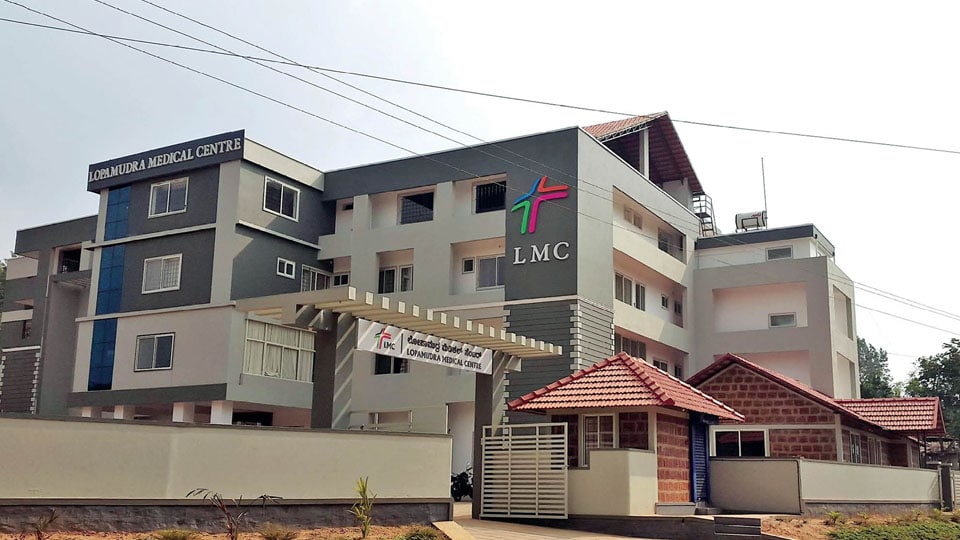
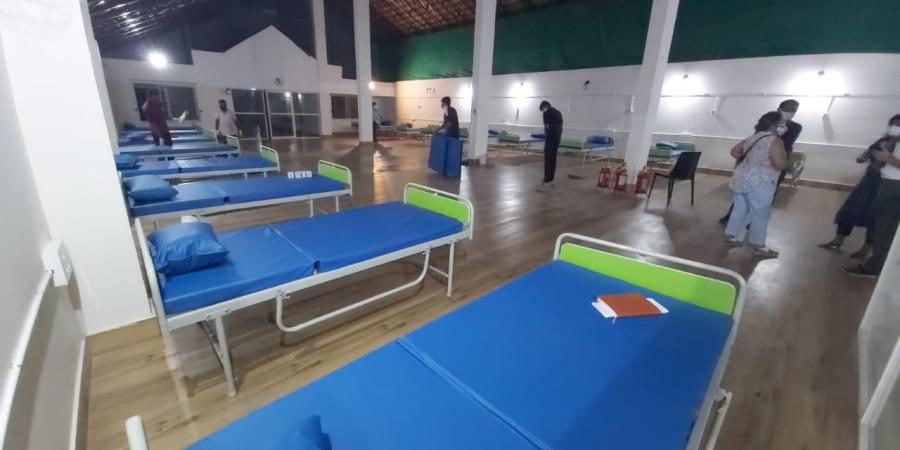
The COVID care centre in Kodagu (Photo | Special arrangement)
Madikeri :
A 30-bed Dedicated Covid Healthcare Centre (DCHC) will be inaugurated at a private hospital in Gonikoppal to provide improved treatment to COVID patients free of cost. The DCHC has been established following efforts by the Karuna Trust – a charitable trust that has enabled integrated rural development.
The facility will start functioning from May 15 at Lopamudra Private Hospital in Gonikoppal. “The facility will have 15 beds with pipelined oxygen, five beds with oxygen concentrators and 10 beds with Bipap machines (a type of ventilator),” explained Venkat Chekuri, joint secretary of Karuna Trust.
He explained that the facility has seen the light of day following efforts from Kodava Koota members in the US, Concerned Citizens of Coorg organization members and members of Kodava Samaj who have raised funds alongside Karuna Turst to establish the DCHC. The centre will have a pharmacy and lab facility and will be a high dependency unit.
“The centre will treat moderate COVID patients who will be referred by the district administration. The centre will provide free treatment to the patients alongside three meals a day and snacks. The administration of Kodagu alongside DC Charulata Somal has offered complete support and the ambulance facility to the centre is being provided by the district administration. The administration has also assured to provide hassle-free oxygen supply to the centre from Mysuru,” explained Venkat. He further added that a 200-litre oxygen unit will shortly be installed at the centre by the trust.
The trust will bear the rent charges for the place provided at the private hospital and will have doctors and nurses appointed by the trust itself. “Dr Sudarshan, the founding member of the trust, is guiding the entire project. Also, Dr Gautham Subbaiah, assistant professor at the University of Florida – who has treated over 1000 COVID patients in the US – will guide local doctors in treating the patients. Experts from the University of Florida will review the ground work at the centre,” added Venkat.
source: http://www.newindianexpress.com / The New Indian Express / Home> States> Karnataka / by Prajna GR, Express News Service / May 14th, 2021
Kodagu was among the first districts to report COVID cases and had sought the help of volunteers, especially for the cremation and burial of COVID victims.
Madikeri :
“When we started this service a year ago, we did not know it would become so severe. We are stressed and emotionally drained. But we cannot abandon it now,” said a volunteer from the Vishwa Hindu Parishad, which is involved in conducting the last rites of COVID victims in Kodagu.
It was among the first districts to report COVID cases and had sought the help of volunteers, especially for the cremation and burial of COVID victims. Over 100 volunteers came forward from Popular Front of India, Vishwa Hindu Parishad, Bajrang Dal and Seva Bharathi.
While the district rarely reported COVID deaths last year, it is seeing an average of six deaths per day over the last one month, the highest being 16 on a single day. The designated crematorium for COVID victims in Madikeri is equipped to raise only three pyres at a time.
“We can arrange two pyres on the cemented structure and the third on the temporary setup that has been arranged with the increase in COVID deaths. When there are more than three deaths, we have to wait for nearly three to four hours for all the three bodies to burn completely. We then collect the ashes and hand them over to relatives,” a volunteer said.
“We dispose of our PPE kits, sanitise ourselves and then go back to the Madikeri COVID Hospital to collect the remaining bodies. We repeat the same process. When there are more deaths, most of our day is spent at the crematorium,” they added.
Volunteers of VHP and Bajrang Dal have conducted the last rites of 101 victims, and they do selfless service as they don’t accept any monetary donations. “But I request the district administration to provide us with health insurance. If anything happens to us tomorrow, at least our families can survive with the insurance money. Social service alone has been a part of most of our lives. Also, if the government can expand and improve the crematorium, it would reduce a lot of our stress,” a volunteer said.
source: http://www.newindianexpress.com / The New Indian Express / Home> States> Karnataka / by Prajna GR, Express News Service / May 10th, 2021
Drivers who want to avail this service can call Ashok and breakfast or lunch will be readied in half an hour’s time.
A former ambulance driver himself, Ashok (in pic) says he knows the stress they go through (Photo | Special arrangement)
Madikeri :
A resident of Kodagu has come up with a unique initiative to help ambulance drivers during the COVID-19 lockdown. Ashok BS, who hails from Madenadu village, is offering free food to ambulance drivers across Kodagu.
Ashok is a jeep driver by profession. He also owns an earth mover and often works at construction sites. From Wednesday, Ashok has started a unique initiative to help the numerous ambulance drivers who are working amidst the curfew.
“I worked as an ambulance driver for 12 years in Bengaluru. I know the stress that they have to go through. At this time of curfew, they won’t be able to eat on time as everything shuts by 10 am. I wanted to do my bit during this time of the pandemic,” shared Ashok.
Ashok has shared his phone numbers across social media platforms and has offered to provide free food (take-away) to ambulance drivers. Drivers who want to avail this service can call Ashok and breakfast or lunch will be readied in half an hour’s time. He will pack the home-cooked food and wait near Madenadu Main Road, where ambulance drivers can collect the take-away free of cost.
“I prepare simple food – dosa for breakfast and rice & rasam for lunch. If I avail fish on the day, I make a dish out of the same and pack them. On the first day, three drivers availed the facility. I would be happy if more drivers benefit from the initiative,” shared Ashok. To avail the facility, ambulance drivers can call Ashok on the mobile numbers 9902270046 and 9483069621.
source: http://www.newindianexpress.com / The New Indian Express / Home> Good News / by Prajna GR, Express News Service / April 29th, 2021
Syed Hussain and Robert Rodriguez have packed the bodies of all 93 COVID victims in Kodagu and continue to work day and night without any leave since March last year.
Syed Hussain and Robert Rodriguez (Photo | Express)
Madikeri :
“I had not observed Ramzan last year and I won’t be able to take part in the festivities this year too. Work occupies a major part of my life now and my job has forced me to stay away from my family and friends,” said Syed Hussain, a forensic department staffer of Madikeri District Hospital, who is involved in packing the bodies of COVID-19 victims.
Syed joined the forensic department staff in the hospital nearly four years ago and there were moments when he questioned his career choice. “There were times when we had to conduct a postmortem of fetuses and it was heart-wrenching to carry out the job. But it was my duty,” he recalled. Syed, however, stuck to his choice and today he has offered exceptional service as a frontline COVID warrior.
Syed and Robert Rodriguez (the only other staffer in the forensic department) have packed all the 93 bodies of COVID-19 victims of Kodagu and continue to work day and night without any leave since March last year. “We have stayed away from our family since last year. It’s painful not to be a part of the festivities. But we do not want to risk others’ lives. I, however, visited my family last week. It was a short visit and I went to collect a few belongings,” said Syed.
He noted how it is stressful to always work wearing PPE kits and added that all healthcare workers including D-Group employees are working under stress to ensure the safety of citizens. “We have to do away with food and sometimes even drinking water as we are always wearing PPE kits,” he explained. He added that the government has not made new appointments to the district hospital and the existing staff is working under stress. “We do not get incentives for working overtime. Yet, we cannot demand things at this time of crisis and we go about doing our job,” he said.
He spoke out against publicity-seekers on social media and said, “We are working 24/7 under stress. Yet, some people shoot videos inside the hospital and make false allegations against healthcare workers. We do not expect anything huge in return for our work. The least we can ask from the public is respect. There might be a few loopholes in the hospital. But the public cannot highlight this illogically across social media for a minute’s fame. My only request to the public of Kodagu is – please respect all the healthcare workers. We too have family. But we are working for the greater good.”
source: http://www.newindianexpress.com / The New Indian Express / Home> States> Karnataka / by Prajna G R / Express News Service / April 27th, 2021
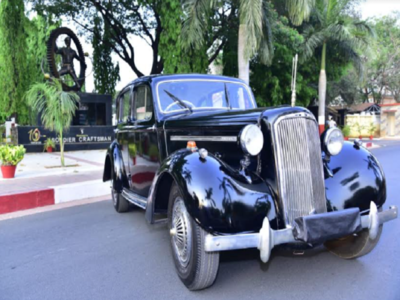
The Super Snipe was introduced in October, 1938, derived by combining the four-litre inline six-cylinder engine from the larger Humber Pullman with the chassis and body of the Humber Snipe which was normally powered by a three-litre engine
Hyderabad :
A 1941 vintage car which was once used by Gen Cariappa has become a thing to be proud of for the Military College of Electronics and Mechanical Engineering (MCEME) in Secunderabad which has completely overhauled it. The ‘Humber super snipe’ now stands out as one of the main attractions at the college.
The Super Snipe was introduced in October, 1938, derived by combining the four-litre inline six-cylinder engine from the larger Humber Pullman with the chassis and body of the Humber Snipe which was normally powered by a three-litre engine. The result was a car of enhanced performance and a top speed of 79 mph, fast for its day.
Within a year of introduction, World War II broke out in Europe but the car continued in production as a British military staff car, 4-seater, 4 x 2 , while the same chassis was used for an armoured reconnaissance vehicle and the Humber Light Reconnaissance Car.
The model with MCEME is of 1941 vintage, which was initially assigned with the number of AB-11, which was later changed to AP-10 F 4566 post its decommissioning from Military service.
The vintage car was packed by the British army and ferried to India in 1943 and ultimately assigned to ‘A’ Pl of Army HQ Transport Company.
After Independence, the car was used by the then serving General K M Cariappa, OBE who later became the Field Marshall. In 1958 the car got its marching order and was declared unserviceable and was sent to the Barracks of Equipment and Vehicle Depot in Avadi after its stock transfer inspection.
On December 29, 1964, the Vintage car was taken by 515 Army base Workshop, Bangalore which carried out extensive repairs. The car provided its services to various commandants of 515 Army Base Workshop, Bangalore and after serving for 12 years, on March 10, 1976, the car was once again declared unfit for employment in service.
But that was not the end of it. Since the car was a Vintage and Elite model, in 1977, it was brought to Secunderabad and kept in the Mechanical Engineering Department of MCEME. It remained as a show piece and young officers used to relish watching the old classic. However, the Mechanical as well as the physical condition of the car started deteriorating. Consequently an initiative was taken in 1994 to carry out its complete overhaul by the Mechanical Engineering Department, MCEME.
“When it comes to the maintenance of a vintage car, it can be difficult since replacement parts are often hard to come by, and can end up spending more time in maintaining it than actual utilisation., MCEME said. “With the diligent work of the skilled technicians of MCEME and soldier craftsman of Corps of Electronics and Mechanical Engineering, the Humber Super Snipe still roars and services the Commandant, MCEME,” it said.
With the great legacy behind and efforts of various officers in maintaining the Vintage car, the car was pitched for Competing in Vintage Car Competition on November 10, 1995 against the likes of Rolls, Royce of 1930, Buick Super of 1949 and Little Baby Austin of 1921 and was one of the winners.
source: http://www.eveningstandard.in / Evening Standard / Home> Hyderabad / April 24th, 2021
She was the first woman referee from India to officiate in 88 international hockey matches
The first Indian woman umpire who started her international career in 2004 and the first woman referee from India to officiate in 88 international hockey matches Mundanda (Puchimanda) Anupama, wife of Mundanda Mithun Mandanna of Nelaji village in Kodagu, passed away in Bengaluru this morning. She was 41.
She was selected by the Federation of International Hockey as one of the youngest umpires among ten men and women in the world. She had a passion for sports when she was nine and since then she never looked back. She was the first woman referee from India to officiate in 88 international hockey matches, junior world cup and three Commonwealth Games.
Born to Puchimanda Shivappa and Shanthi Shivappa (Achhandira) at Bittangala, Anupama was awarded the Best Umpire (Women) India by Sardar Gyan Singh Memorial Hockey Society in 2007. Anupama represented India in the umpires seminar held at Singapore, Hyderabad, Chennai, Chandigarh and New Delhi and represented Karnataka as a player in the sub-junior and senior women’s National Hockey Championships. She officiated as the umpire in the four-nation tournament held at Singapore in 2007 and refereed the finals between Australia Vs Malaysia.
She was the umpire in the three-nation tournament held at Italy and also umpired the Central American and Caribbean games, Santo Domingo, Dominican Republic in 2006. In 2008, Anupama officiated as the umpire for two four-nation tournament at Rotterdam in Holland and also at Bremen in Germany. Anupama umpired the Junior Asia Cup held at Malaysia in and was the umpire in the youth Olympic Games held at Australia in 2009.
She started her sports career at the age of nine as an amateur athlete at Sports School Kudige in Kodagu. At 13, she joined the Sports Authority of India, Madikeri, where she got into hockey. She represented the State in sub-junior and senior national championships several times. She has also officiated in events in Asia, Africa, and America and European continents.
She had a passion for umpiring and she cleared the umpiring exam in 2001 and first officiated as an umpire at Cheppudira Family Hockey Tournament in Kodagu and went onto make international name and fame. Anupama’s goal was to be an Olympics umpire. “I am happy I chose this profession. This motivates me to focus more on the job and I will be happy if one day I get to officiate in the Olympics,” she had stated in one of her interviews.
Recently Anupama was selected as Executive Council Member by Karnataka State Hockey Association.
source: http://www.starofmysore.com / Star of Mysore / Home> Sports / April 18th, 2021
Four sailors from India to compete at this year’s Tokyo Olympics
Mysore/Mysuru:
In a historic first for India, four sailors from the country will compete at this year’s Olympics after the pair of Kelappanda Chengappa Ganapathy – Varun Thakkar and Vishnu Saravanan made the cut for Tokyo at the Asian Qualifiers in Oman on Thursday.
This was after Nethra Kumanan became the first Indian woman sailor to qualify for the Olympics in the laser radial event in the Mussanah Open Championship, which is an Asian Olympic qualifying event, held on Wednesday. It is also the first time that India will compete in three sailing events in the Olympics.
“Yes, history has been scripted. Four Indian sailors have qualified for Olympics to compete in three events. It’s the maximum number of sailors qualified and also in number of events,” Yachting Association of India Joint Secretary General Capt. Jitendra Dixit said.
Chengappa – Thakkar pair finished on top of the points table in the 49er Class. The duo had to finish in the top six in the medal race to make the grade, but the duo finished fourth and first overall to qualify.
“We got the result we wanted. All our hard work has paid off. We are grateful for all the people who supported us. It was a shaky (final) race, but we did it. Now the work starts,” Chengappa and Varun said after their achievement. Vikas Thakkar and Ganapathy had also won the bronze medal in 49er men’s sailing event at the 2018 Asian Games in Indonesia.
“I congratulate Indian athletes Nethra Kumanan, K.C. Ganapathy and Varun Thakkar who have qualified for Tokyo Olympic in sailing. I’m particularly proud of the quota of Nethra, who is India’s first-ever female sailor to qualify for the Olympics!” tweeted Union Sports Minister Kiren Rijiju.
Twenty-six-year-old Ganapathy is the son of Kelappanda late Deepak Chengappa and Reshma Chengappa (from Allaranda family). His mother Reshma runs a furniture business in Chennai and the family is settled there. His grandparents are Kelappanda late Pratap and Padma Prathap. Padma resides at Kolthodu village near Hatur village in South Kodagu.
Speaking to Star of Mysore, Padma said that it was a proud moment for India in general and Kodavas in particular as Ganapathy has achieved the distinction of being the first Kodava Yachtsman to qualify for the Olympics.“He has been sailing all through his life and started sailing at the age of six. He won the Under-12 National Championship and has come a long way. I pray for his success every moment and I am confident that he will make India proud,” she said.
In fact, Ganapathy quit school to pursue full-time sailing and won the Asian Games bronze. Later he enrolled himself at an Open School.
source: http://www.starofmysore.com / Star of Mysore / Home> News> Sports / April 10th, 2021
Lohitash Karumbaiah, assistant professor in UGA’s College of Agricultural and Environmental Sciences, led the team that designed and created Brain Glue.
Hydrogel mimics the composition and mechanics of the brain.
Researchers at the University of Georgia’s Regenerative Bioscience Center have developed Brain Glue, a substance that could one day serve as a treatment for traumatic brain injuries, or TBIs.
The Brain Glue is a hydrogel matrix with a gelatin-like consistency that acts as a scaffolding for transplanted stem cells, which are capable of repairing damaged tissue. With the unique ability to take the shape of the void left in the brain after a severe trauma, the Brain Glue will enable a more natural healing environment for stem cells to colonize and regenerate.
Lohitash Karumbaiah, assistant professor in UGA’s College of Agricultural and Environmental Sciences, led the team that designed and created Brain Glue. The main difference between Brain Glue and other synthetic hydrogels, according to the team, is the variety of possibilities to trap neural stem cells, improve integration and reduce the likelihood of rejection.
“It’s very common with these invasive injuries that surgeons will actually remove the part of the dead brain leaving behind a cavity or hole,” said Karumbaiah. “The question is, then, can you replace that with something like our Brain Glue, loaded up with compounds native to the brain together with a mix of protective agents that can be incorporated for the best therapeutic outcome.
“The cool thing about this chemistry is that you can take our Brain Glue liquid formulation and then very briefly expose it to long-wave UV light and form a hydrogel in any shape you like,” he said.
Every day, 153 people in the U.S. die from injuries that include TBI, according to the Centers for Disease Control and Prevention. Those who survive a TBI may live with impaired thinking, memory, movement or sensation. TBIs can also lead to personality and emotional changes.
The new approach is described in the journal ACS Biomaterials Science and Engineering and a recently awarded abstract from the International Brain Injury Association.
For more than two years now, Karumbaiah has been awarded seed-funding for his collaborative TBI work with Maysam Ghovanloo, associate professor of electrical and computer engineering at the Georgia Institute of Technology. The TBI research was initially funded by the Center for Regenerative Engineering & Medicine, known as REM, a collaborative initiative launched in 2011 between the University of Georgia, Emory University and the Georgia Institute of Technology.
The REM collaboration is an extension of Karumbaiah’s work to further study neuroplasticity: the brain’s ability to self-renew, adapt and compensate for injury and disease. His future studies will focus on how neural networks form and change in response to traumatic insults, and he will investigate the therapeutic use of electrical stimulation to help return loss of function in any given region of the brain.
“Multiple methods are needed in these kinds of studies,” said Karumbaiah. “The Brain Glue is where we make the scaffold, and the neuro-network function is really this other arm — learning how neurons fire and wire together and what this really means in terms of function.”
Steven Stice, director of the Regenerative Bioscience Center, is working with Karumbaiah on a licensed technology for commercialization of the new Brain Glue, which was recently named best abstract at a meeting of the International Brain Injury Association.
Karumbaiah’s work recently attracted a four-year, $1.5 million research grant from the National Institutes of Health.
“Lohitash sets an example for other junior faculty to emulate,” said Stice, GRA Eminent Scholar and D.W. Brooks Professor in CAES. “To be recognized internationally at such an early stage takes great skill and dedication.”
The Regenerative Bioscience Center at the University of Georgia links researchers and resources collaborating in a wide range of disciplines to develop new cures for devastating diseases that affect animals and people. With its potential restorative powers, regenerative medicine could offer new ways of treating diseases for which there are currently no treatments-including heart disease, Parkinson’s, Alzheimer’s and stroke. For more information, see www.rbc.uga.edu.
source: http://www.news.uga.edu / UGA Today / Home> Health & Wellness> Science & Technology / by Charlene Betourney / December 19th, 2017
Niki Poonacha, who had won the National championship in 2019, beat fourth seed Oliver Crawford of the US 6-3, 7-6 (5) at the DLTA Complex in New Delhi on Sunday.
Champion Niki Poonacha in the ITF men’s tennis tournament in Delhi on Sunday.
Where there’s a will there is a way. Former national champion Niki Poonacha had a fairy tale finish to his dream run in the $15,000 ITF men’s tennis tournament as he beat fourth seed Oliver Crawford of the US 6-3, 7-6(5) at the DLTA Complex in New Delhi on Sunday.
“I am very happy with this trophy. I had no expectations coming into the tournament. I had retired in the last tournament in Pune with a wrist injury. My hope was to stay pain free,” said the 25-year-old Niki, after his second victory in the professional tour.
Niki had won his first title as a qualifier in Indonesia in 2018. He won the National championship in 2019. During the pandemic, he had tried to stay fit, training at the Rohan Bopanna Tennis Academy in Bengaluru.
“I haven’t had good results in the last six weeks. Once I started winning here, I kept my focus to one match at a time, playing without any expectations,” said Niki.
He was treated by physio Anand Dubey right through the tournament. Even though the pain had gone away, there was heavy taping on his forearm as a precautionary measure.
Even though Niki served big and stroked with purpose, there was no doubt that Crawford who had won the title last week in Pune, was woefully off colour, quite uncharacteristically, on the important points.
For three weeks in Egypt, followed by the three events in the country in Lucknow, Indore and Pune, Niki had failed to win a match.
Once he settled into his groove with the wins over Nishant Dabas, Filip Bergevi of Sweden and Lorenzo Bocchi of Italy, luck smiled, as his semifinal opponent Dalibor Svrcina of the Czech Republic gave a walkover on medical grounds.
In the final, the twist to the tale came in the ninth game of the second set, when facing three set points at 3-5, 0-40, Niki managed to hold serve with one of his six aces in the match. In the tie-break, Crawford led 4-2 and the only point the American won of the next six, was through a double fault by Niki.
Niki converted all the three break points he forced and saved four of five break points that he faced in the match.
After Zane Khan of the US had won the first two tournaments in the current circuit, and Crawford beat Zane in the final in Indore, it was a welcome sight for the home fans to have an Indian champion in singles.
“I will train for three weeks in the academy and then plan my next series of tournaments’’, said Niki.
source: http://www.sportstar.thehindu.com / SportStar / Home> Tennis / New Delhi – April 04th, 2021
WELCOME. If you like what you see "SUBSCRIBE via EMAIL" to receive FREE regular UPDATES.
Read More »