The Super Snipe was introduced in October, 1938, derived by combining the four-litre inline six-cylinder engine from the larger Humber Pullman with the chassis and body of the Humber Snipe which was normally powered by a three-litre engine
Hyderabad :
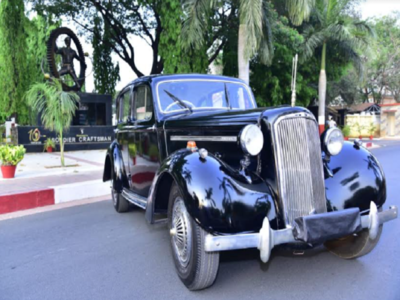
A 1941 vintage car which was once used by Gen Cariappa has become a thing to be proud of for the Military College of Electronics and Mechanical Engineering (MCEME) in Secunderabad which has completely overhauled it. The ‘Humber super snipe’ now stands out as one of the main attractions at the college.
The Super Snipe was introduced in October, 1938, derived by combining the four-litre inline six-cylinder engine from the larger Humber Pullman with the chassis and body of the Humber Snipe which was normally powered by a three-litre engine. The result was a car of enhanced performance and a top speed of 79 mph, fast for its day.
Within a year of introduction, World War II broke out in Europe but the car continued in production as a British military staff car, 4-seater, 4 x 2 , while the same chassis was used for an armoured reconnaissance vehicle and the Humber Light Reconnaissance Car.
The model with MCEME is of 1941 vintage, which was initially assigned with the number of AB-11, which was later changed to AP-10 F 4566 post its decommissioning from Military service.
The vintage car was packed by the British army and ferried to India in 1943 and ultimately assigned to ‘A’ Pl of Army HQ Transport Company.
After Independence, the car was used by the then serving General K M Cariappa, OBE who later became the Field Marshall. In 1958 the car got its marching order and was declared unserviceable and was sent to the Barracks of Equipment and Vehicle Depot in Avadi after its stock transfer inspection.
On December 29, 1964, the Vintage car was taken by 515 Army base Workshop, Bangalore which carried out extensive repairs. The car provided its services to various commandants of 515 Army Base Workshop, Bangalore and after serving for 12 years, on March 10, 1976, the car was once again declared unfit for employment in service.
But that was not the end of it. Since the car was a Vintage and Elite model, in 1977, it was brought to Secunderabad and kept in the Mechanical Engineering Department of MCEME. It remained as a show piece and young officers used to relish watching the old classic. However, the Mechanical as well as the physical condition of the car started deteriorating. Consequently an initiative was taken in 1994 to carry out its complete overhaul by the Mechanical Engineering Department, MCEME.
“When it comes to the maintenance of a vintage car, it can be difficult since replacement parts are often hard to come by, and can end up spending more time in maintaining it than actual utilisation., MCEME said. “With the diligent work of the skilled technicians of MCEME and soldier craftsman of Corps of Electronics and Mechanical Engineering, the Humber Super Snipe still roars and services the Commandant, MCEME,” it said.
With the great legacy behind and efforts of various officers in maintaining the Vintage car, the car was pitched for Competing in Vintage Car Competition on November 10, 1995 against the likes of Rolls, Royce of 1930, Buick Super of 1949 and Little Baby Austin of 1921 and was one of the winners.
source: http://www.eveningstandard.in / Evening Standard / Home> Hyderabad / April 24th, 2021
She was the first woman referee from India to officiate in 88 international hockey matches
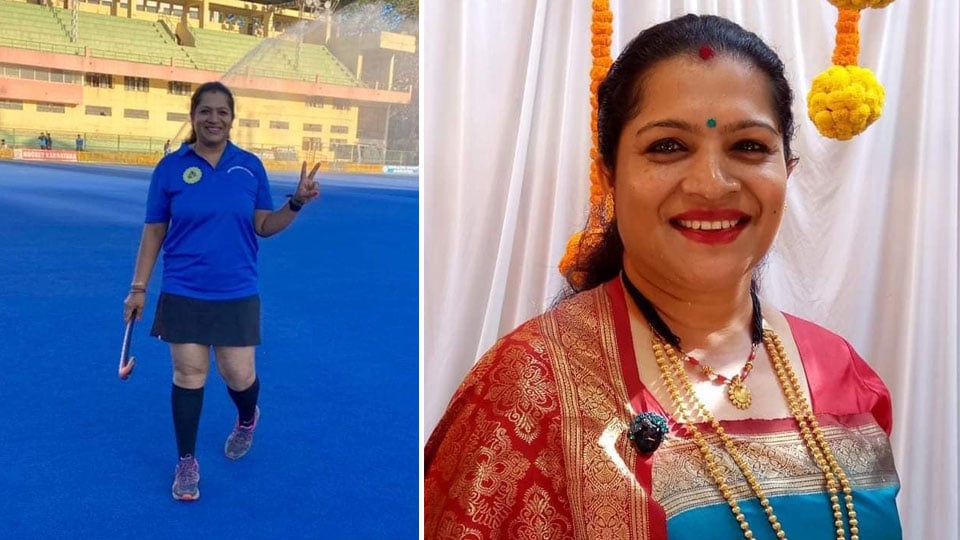
The first Indian woman umpire who started her international career in 2004 and the first woman referee from India to officiate in 88 international hockey matches Mundanda (Puchimanda) Anupama, wife of Mundanda Mithun Mandanna of Nelaji village in Kodagu, passed away in Bengaluru this morning. She was 41.
She was selected by the Federation of International Hockey as one of the youngest umpires among ten men and women in the world. She had a passion for sports when she was nine and since then she never looked back. She was the first woman referee from India to officiate in 88 international hockey matches, junior world cup and three Commonwealth Games.
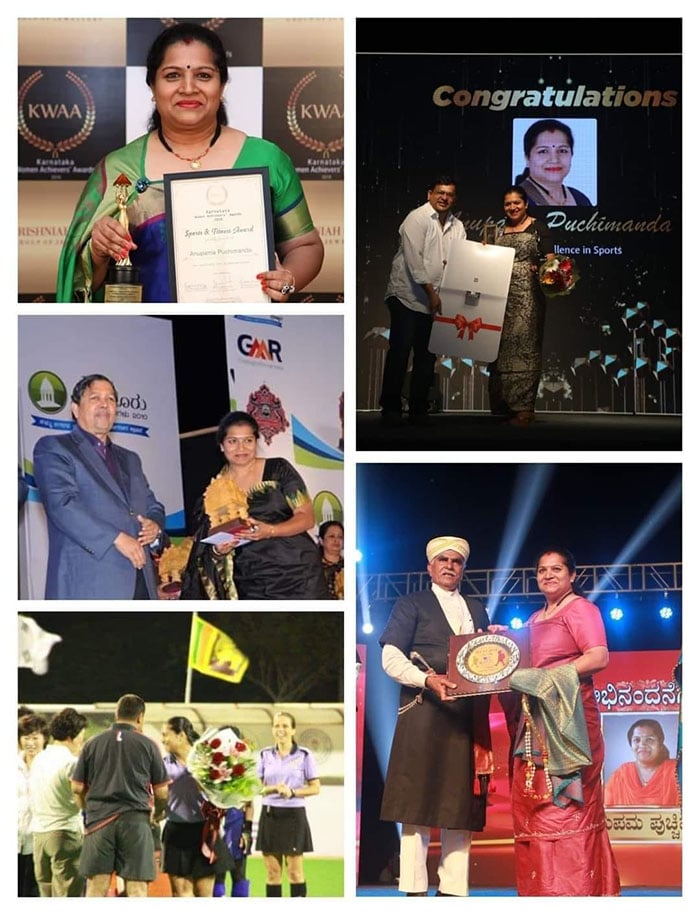
Born to Puchimanda Shivappa and Shanthi Shivappa (Achhandira) at Bittangala, Anupama was awarded the Best Umpire (Women) India by Sardar Gyan Singh Memorial Hockey Society in 2007. Anupama represented India in the umpires seminar held at Singapore, Hyderabad, Chennai, Chandigarh and New Delhi and represented Karnataka as a player in the sub-junior and senior women’s National Hockey Championships. She officiated as the umpire in the four-nation tournament held at Singapore in 2007 and refereed the finals between Australia Vs Malaysia.
She was the umpire in the three-nation tournament held at Italy and also umpired the Central American and Caribbean games, Santo Domingo, Dominican Republic in 2006. In 2008, Anupama officiated as the umpire for two four-nation tournament at Rotterdam in Holland and also at Bremen in Germany. Anupama umpired the Junior Asia Cup held at Malaysia in and was the umpire in the youth Olympic Games held at Australia in 2009.
She started her sports career at the age of nine as an amateur athlete at Sports School Kudige in Kodagu. At 13, she joined the Sports Authority of India, Madikeri, where she got into hockey. She represented the State in sub-junior and senior national championships several times. She has also officiated in events in Asia, Africa, and America and European continents.
She had a passion for umpiring and she cleared the umpiring exam in 2001 and first officiated as an umpire at Cheppudira Family Hockey Tournament in Kodagu and went onto make international name and fame. Anupama’s goal was to be an Olympics umpire. “I am happy I chose this profession. This motivates me to focus more on the job and I will be happy if one day I get to officiate in the Olympics,” she had stated in one of her interviews.
Recently Anupama was selected as Executive Council Member by Karnataka State Hockey Association.
source: http://www.starofmysore.com / Star of Mysore / Home> Sports / April 18th, 2021
Four sailors from India to compete at this year’s Tokyo Olympics
Mysore/Mysuru:
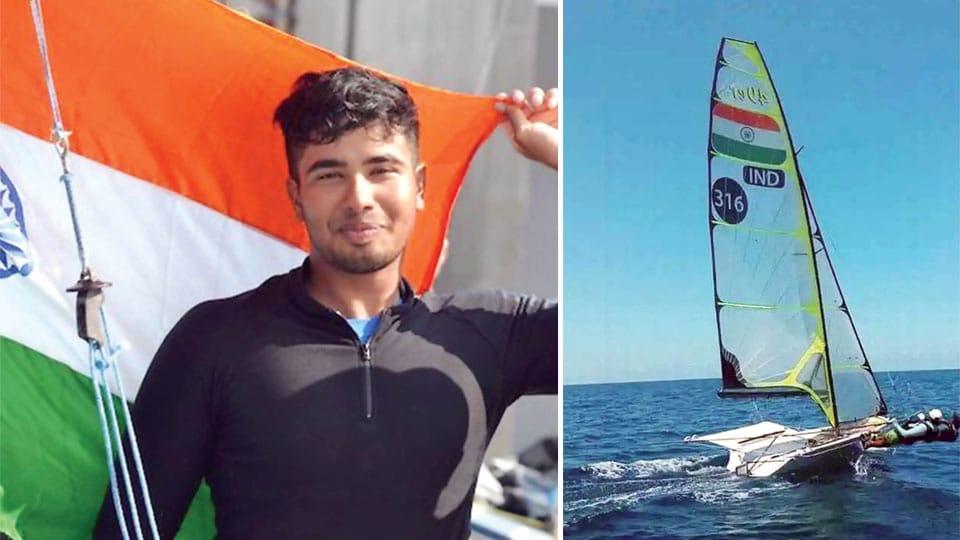
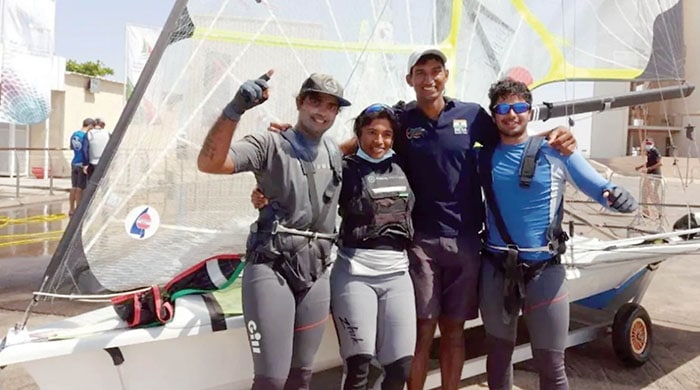
In a historic first for India, four sailors from the country will compete at this year’s Olympics after the pair of Kelappanda Chengappa Ganapathy – Varun Thakkar and Vishnu Saravanan made the cut for Tokyo at the Asian Qualifiers in Oman on Thursday.
This was after Nethra Kumanan became the first Indian woman sailor to qualify for the Olympics in the laser radial event in the Mussanah Open Championship, which is an Asian Olympic qualifying event, held on Wednesday. It is also the first time that India will compete in three sailing events in the Olympics.
“Yes, history has been scripted. Four Indian sailors have qualified for Olympics to compete in three events. It’s the maximum number of sailors qualified and also in number of events,” Yachting Association of India Joint Secretary General Capt. Jitendra Dixit said.
Chengappa – Thakkar pair finished on top of the points table in the 49er Class. The duo had to finish in the top six in the medal race to make the grade, but the duo finished fourth and first overall to qualify.
“We got the result we wanted. All our hard work has paid off. We are grateful for all the people who supported us. It was a shaky (final) race, but we did it. Now the work starts,” Chengappa and Varun said after their achievement. Vikas Thakkar and Ganapathy had also won the bronze medal in 49er men’s sailing event at the 2018 Asian Games in Indonesia.
“I congratulate Indian athletes Nethra Kumanan, K.C. Ganapathy and Varun Thakkar who have qualified for Tokyo Olympic in sailing. I’m particularly proud of the quota of Nethra, who is India’s first-ever female sailor to qualify for the Olympics!” tweeted Union Sports Minister Kiren Rijiju.
Twenty-six-year-old Ganapathy is the son of Kelappanda late Deepak Chengappa and Reshma Chengappa (from Allaranda family). His mother Reshma runs a furniture business in Chennai and the family is settled there. His grandparents are Kelappanda late Pratap and Padma Prathap. Padma resides at Kolthodu village near Hatur village in South Kodagu.
Speaking to Star of Mysore, Padma said that it was a proud moment for India in general and Kodavas in particular as Ganapathy has achieved the distinction of being the first Kodava Yachtsman to qualify for the Olympics.“He has been sailing all through his life and started sailing at the age of six. He won the Under-12 National Championship and has come a long way. I pray for his success every moment and I am confident that he will make India proud,” she said.
In fact, Ganapathy quit school to pursue full-time sailing and won the Asian Games bronze. Later he enrolled himself at an Open School.
source: http://www.starofmysore.com / Star of Mysore / Home> News> Sports / April 10th, 2021
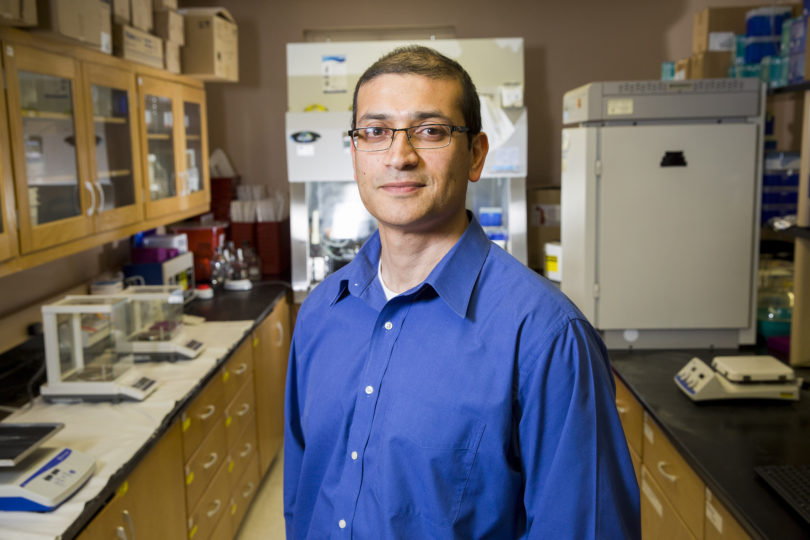
Lohitash Karumbaiah, assistant professor in UGA’s College of Agricultural and Environmental Sciences, led the team that designed and created Brain Glue.
Hydrogel mimics the composition and mechanics of the brain.
Researchers at the University of Georgia’s Regenerative Bioscience Center have developed Brain Glue, a substance that could one day serve as a treatment for traumatic brain injuries, or TBIs.
The Brain Glue is a hydrogel matrix with a gelatin-like consistency that acts as a scaffolding for transplanted stem cells, which are capable of repairing damaged tissue. With the unique ability to take the shape of the void left in the brain after a severe trauma, the Brain Glue will enable a more natural healing environment for stem cells to colonize and regenerate.
Lohitash Karumbaiah, assistant professor in UGA’s College of Agricultural and Environmental Sciences, led the team that designed and created Brain Glue. The main difference between Brain Glue and other synthetic hydrogels, according to the team, is the variety of possibilities to trap neural stem cells, improve integration and reduce the likelihood of rejection.
“It’s very common with these invasive injuries that surgeons will actually remove the part of the dead brain leaving behind a cavity or hole,” said Karumbaiah. “The question is, then, can you replace that with something like our Brain Glue, loaded up with compounds native to the brain together with a mix of protective agents that can be incorporated for the best therapeutic outcome.
“The cool thing about this chemistry is that you can take our Brain Glue liquid formulation and then very briefly expose it to long-wave UV light and form a hydrogel in any shape you like,” he said.
Every day, 153 people in the U.S. die from injuries that include TBI, according to the Centers for Disease Control and Prevention. Those who survive a TBI may live with impaired thinking, memory, movement or sensation. TBIs can also lead to personality and emotional changes.
The new approach is described in the journal ACS Biomaterials Science and Engineering and a recently awarded abstract from the International Brain Injury Association.
For more than two years now, Karumbaiah has been awarded seed-funding for his collaborative TBI work with Maysam Ghovanloo, associate professor of electrical and computer engineering at the Georgia Institute of Technology. The TBI research was initially funded by the Center for Regenerative Engineering & Medicine, known as REM, a collaborative initiative launched in 2011 between the University of Georgia, Emory University and the Georgia Institute of Technology.
The REM collaboration is an extension of Karumbaiah’s work to further study neuroplasticity: the brain’s ability to self-renew, adapt and compensate for injury and disease. His future studies will focus on how neural networks form and change in response to traumatic insults, and he will investigate the therapeutic use of electrical stimulation to help return loss of function in any given region of the brain.
“Multiple methods are needed in these kinds of studies,” said Karumbaiah. “The Brain Glue is where we make the scaffold, and the neuro-network function is really this other arm — learning how neurons fire and wire together and what this really means in terms of function.”
Steven Stice, director of the Regenerative Bioscience Center, is working with Karumbaiah on a licensed technology for commercialization of the new Brain Glue, which was recently named best abstract at a meeting of the International Brain Injury Association.
Karumbaiah’s work recently attracted a four-year, $1.5 million research grant from the National Institutes of Health.
“Lohitash sets an example for other junior faculty to emulate,” said Stice, GRA Eminent Scholar and D.W. Brooks Professor in CAES. “To be recognized internationally at such an early stage takes great skill and dedication.”
The Regenerative Bioscience Center at the University of Georgia links researchers and resources collaborating in a wide range of disciplines to develop new cures for devastating diseases that affect animals and people. With its potential restorative powers, regenerative medicine could offer new ways of treating diseases for which there are currently no treatments-including heart disease, Parkinson’s, Alzheimer’s and stroke. For more information, see www.rbc.uga.edu.
source: http://www.news.uga.edu / UGA Today / Home> Health & Wellness> Science & Technology / by Charlene Betourney / December 19th, 2017
Niki Poonacha, who had won the National championship in 2019, beat fourth seed Oliver Crawford of the US 6-3, 7-6 (5) at the DLTA Complex in New Delhi on Sunday.
Champion Niki Poonacha in the ITF men’s tennis tournament in Delhi on Sunday.
Where there’s a will there is a way. Former national champion Niki Poonacha had a fairy tale finish to his dream run in the $15,000 ITF men’s tennis tournament as he beat fourth seed Oliver Crawford of the US 6-3, 7-6(5) at the DLTA Complex in New Delhi on Sunday.
“I am very happy with this trophy. I had no expectations coming into the tournament. I had retired in the last tournament in Pune with a wrist injury. My hope was to stay pain free,” said the 25-year-old Niki, after his second victory in the professional tour.
Niki had won his first title as a qualifier in Indonesia in 2018. He won the National championship in 2019. During the pandemic, he had tried to stay fit, training at the Rohan Bopanna Tennis Academy in Bengaluru.
“I haven’t had good results in the last six weeks. Once I started winning here, I kept my focus to one match at a time, playing without any expectations,” said Niki.
He was treated by physio Anand Dubey right through the tournament. Even though the pain had gone away, there was heavy taping on his forearm as a precautionary measure.
Even though Niki served big and stroked with purpose, there was no doubt that Crawford who had won the title last week in Pune, was woefully off colour, quite uncharacteristically, on the important points.
For three weeks in Egypt, followed by the three events in the country in Lucknow, Indore and Pune, Niki had failed to win a match.
Once he settled into his groove with the wins over Nishant Dabas, Filip Bergevi of Sweden and Lorenzo Bocchi of Italy, luck smiled, as his semifinal opponent Dalibor Svrcina of the Czech Republic gave a walkover on medical grounds.
In the final, the twist to the tale came in the ninth game of the second set, when facing three set points at 3-5, 0-40, Niki managed to hold serve with one of his six aces in the match. In the tie-break, Crawford led 4-2 and the only point the American won of the next six, was through a double fault by Niki.
Niki converted all the three break points he forced and saved four of five break points that he faced in the match.
After Zane Khan of the US had won the first two tournaments in the current circuit, and Crawford beat Zane in the final in Indore, it was a welcome sight for the home fans to have an Indian champion in singles.
“I will train for three weeks in the academy and then plan my next series of tournaments’’, said Niki.
source: http://www.sportstar.thehindu.com / SportStar / Home> Tennis / New Delhi – April 04th, 2021
During the lockdown situation, when the world took the virtual path, Yashmi was introduced to the UN Ocean Decade Summit and she took part in the virtual programs conducted by the initiative.
Manavattira Yashmi Dechamma
Madikeri :
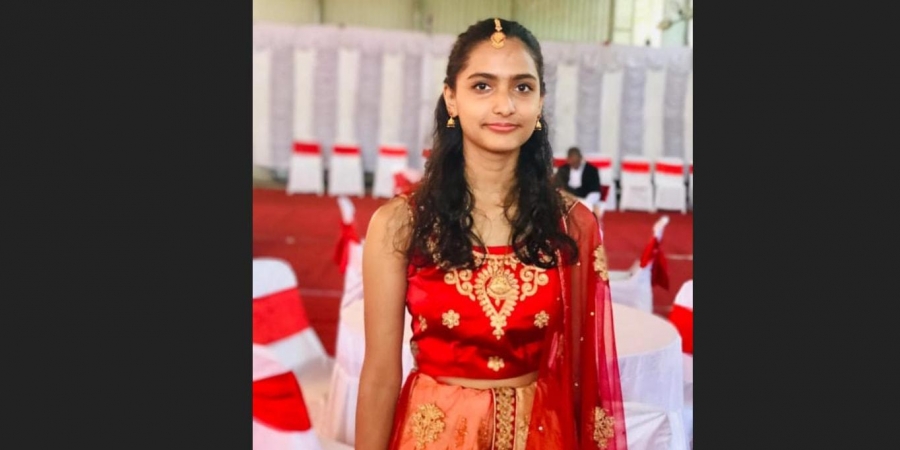
“The earth is already in a bad state and it will be inherited by us tomorrow. We want to breathe the same pristine air that our grandparents breathed,” shared Manavattira Yashmi Dechamma, a ninth-grade student who has been selected for the UN Ocean Decade Summit to be hosted in Hawaii soon.
Yashmi earned this opportunity after her video documentary on the theme ‘Water is sacred’ won the H2021 Water Summit storytelling contest in the 13-17 age group category.
A native of Nelaji village in Kodagu, Yashmi is currently pursuing her studies in Acharya Vidya Kula in Mysuru.
During the lockdown situation, when the world took the virtual path, Yashmi was introduced to the UN Ocean Decade Summit and she took part in the virtual programs conducted by the initiative.
“While I was aware of climate change, I learnt from speakers all across the globe about what climate change did to the earth. I knew that the earth was in danger. But I obtained clarity on the growing problem after attending the virtual summit,” shared Yashmi.
She was then introduced to the H2021 Water Summit where she attended virtual sessions for four consecutive weekends and it is here she learnt about the storytelling competition.
“Each session was based on a particular theme. The theme ‘Water is sacred’ was close to me as I am from the Kodava community and we worship River Cauvery,” she shared. Yashmi visited Kodagu and shot some beautiful captures of River Cauvery.
With a Kodava song playing in the background of the video, she has highlighted the sorry state of the river today – which has become a victim of pollution.
The video then moves to highlighting the efforts from the youngsters in reviving the river and the documentary ends with a strong message ‘Let us heal her (River Cauvery) and not fix her’.
“I have heard my mother explain the beauty of Kodagu that existed during her childhood times. The district witnessed heavy rainfall then too. However, it is only now that the incessant rainfall is causing destruction and damage. The summits I attended helped amplify my voice and I shot the video with the support from my cousin Bhuvana Nanaiah and her father Nanaiah,” explained Yashmi.
Daughter of Manavattira Kushalappa and Nalini, Yashmi looks forward to strengthening the Youth Advisory Council in the country and has written to the concerned about her vision for a better future.
source: http://www.newindianexpress.com / The New Indian Express / Home> Good News / by Prajna GR / Express News Service / March 31st, 2021
Kumar worked with adivasis in Andhra’s Araku Valley for decades, grew coffee of the highest quality and took it to Paris in 2017. On March 19, Araku Coffee opened its first café in India in Bengaluru. Kumar wants to replicate the Araku model for other crops as well, he tells us how
Cafe L’Orange
In the late 1990s, the late Kallam Anji Reddy, founder-chairman of pharmaceutical company Dr Reddy’s Laboratories, appointed developmental economist Manoj Kumar as the head of his NGO, the Naandi Foundation. Kumar’s brief was to foster sustainable livelihoods in rural India.
One of the many projects Kumar embarked on in the early 2000s was to get adivasi farmers in Andhra Pradesh’s Araku Valley to grow specialty coffee, which, simply put, is organic and sustainably grown coffee of the highest quality. To many people, it appeared to a quixotic endeavour. Araku was not a traditional coffee-growing region. Kumar, who grew up in Kerala drinking kattan kaapi, the traditional home-brewed black coffee, had no real knowledge about coffee; and the Araku Valley had been riddled with Naxal insurgency for decades. Kumar worked with, and lived among, the tribals for over a decade and through biodynamic farming and the formation of an adivasi cooperative, one of the world’s largest fair-trade and organic certified cooperatives, he achieved the seemingly impossible.
In 2017, Kumar opened the first Araku Cafe and store in Paris and about a year later, Araku Coffee bagged top honours for the best coffee pod at the prestigious Prix Epicures OR awards in Paris. On March 19, Araku opened its first cafe in India. The 6000 sq ft, two-level flagship cafe in Indira Nagar in Bengaluru features, among others, an in-house roastery, the country’s first Specialty Coffee Association-certified Coffee Academy, a book store, and food that is sustainably procured.
In an interview to Moneycontrol, Kumar talks about the growing interest in specialty coffee in India, its transformative potential, and about replicating the Araku model in other parts of the country. Edited excerpts:
How do you see Araku’s flagship cafe take the specialty coffee story forward in India?
By and large, the production of specialty coffee in India has so far been almost nil, barring a few micro estates. We have been a notable exception. Our success has made coffee growers realise that it is possible to get much higher value and definitely profits if they can elevate their coffee to the level of a specialty coffee. I’m hoping that this desire to excel will be infectious to the community of coffee growers in India. They could learn to look at coffee as being more than just an average-to-poor-quality mass-produced commodity, which is neither financially rewarding nor sustainable. We are blessed to have the climate and topography to grow coffee. Europe and most of the coffee-drinking nations don’t grow coffee. I see our cafe in Bangalore as a place where people can interact and learn more about the power of specialty coffee. And we would want to take it beyond producers to policy makers and to everyone through a consumer movement to inculcate a certain pride in the opportunity we have to make coffee a profitable Indian-origin commodity and revive India’s agriculture to an extent. Araku is not a traditional coffee-growing region, and yet we have grown world-class coffee there. So, you can imagine the potential of places such as Chikmagalur and Coorg…
Tamagoyaki Toastie is on the menu of Araku’s café in Bengaluru.
Have you met people from the coffee-growing community who want to get into specialty coffee?
Absolutely. When we started the Araku journey, we had only between 10 percent to 20 percent of farmers whose coffee could be rated as specialty coffee. Today, I have 80 percent of my farmers all growing specialty coffee. I have requests from many small estate and large estate owners, and even people who are into wine now want to know if we can help them with the same regenerative agricultural practices that made our coffee world-class.
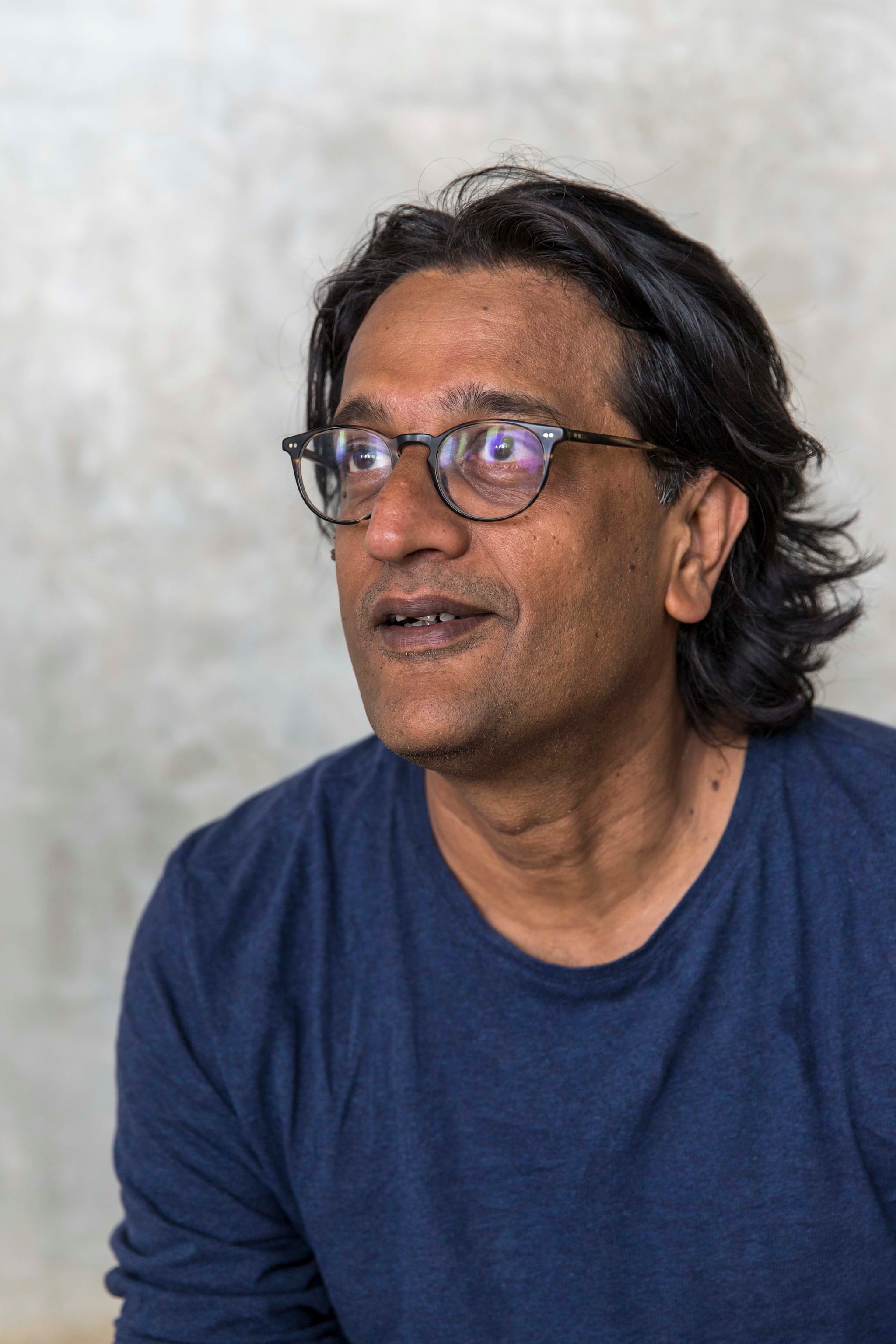
Araku Coffee co-founder Manoj Kumar
You’ve been to specialty coffee hotspots across the world. How have your experiences shaped the flagship store?
Scandinavia inspired me a lot. The quality of service there was based predominantly on knowledge. Every brewer, roaster, and barista I met had a completely different level of knowledge and that knowledge was shared with the customer. A relatable example would be going to an Apple store for the first time and discovering that every staffer has an in-depth knowledge about the products. So, one of the things I took away from there was that our team had to be knowledgeable about what they were selling, even if it meant setting up a coffee school at the cafe. Our team is not just selling a random service, they are selling coffeeology. And our prices are extremely competitive. Somebody even mentioned that a lot of the coffee we serve is, more or less, the same price as the coffee you get at Starbucks.
The Naandi Foundation has been at work replicating or adapting the Araku model in other parts of India. How has that worked out?
The Naandi Foundation is now massively expanding its agricultural footprint. We are now in a large way expanding into Wardha and the Vidarbha region, replicating the Araku model with other crops. We started off with pomegranate and that is very much on track but we are also exploring or expanding into other portfolios. Turmeric in that region is world-class, and it has a Geographical Indication tag. Then, we looked at red gram and other pulses. The idea is to have a bouquet of produce for the farmer to get it to be profitable and to identify one or two which become unique to that region. I think the winners here will be turmeric, pulses, and organic cotton. We are also looking closely at working in Meghalaya and Kerala and the Konkan belt.
You first went to the Araku Valley in 2001. Looking back, which was the turning point of your journey?
I’d think earning the trust and respect of the tribals was the turning point. I had started with just 1,000 farmers, and I would tell them that one day their land would produce a coffee that would be world-class. And they would always tell me that they wouldn’t let me down. That kind of love and trust from their end really made all the difference.
MURALI K MENON works on content strategy at HaymarketSAC.
source: http://www.moneycontrol.com / MoneyControl / Home> News> Trends> Features / by Murali K Menon / March 20th, 2021
The project has been launched for the first time in the country on an experimental basis by the Khadi and Village Industries Commission with support from the management of Ponnampet Forestry College.
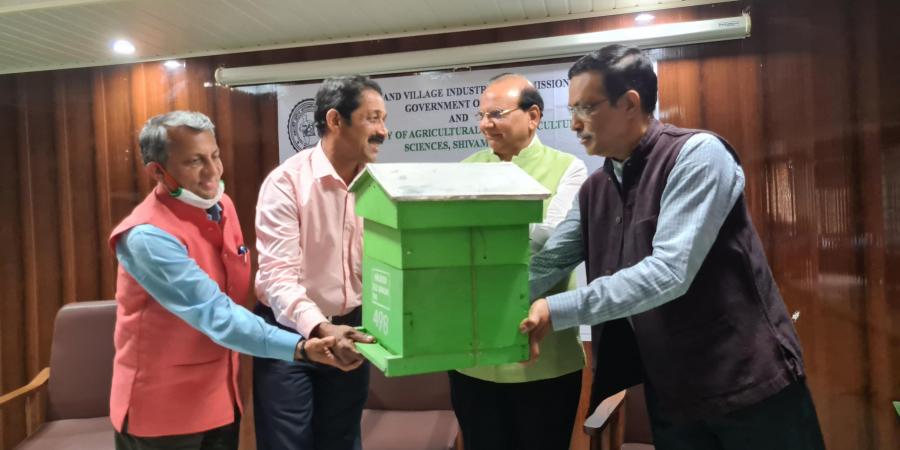
Beekeeping equipment distributed to a farmer during the event (Photo | Special arrangement)
Madikeri :
A research project to reduce human-elephant conflict with the help of honey bees was inaugurated at Ponnampet Forestry College in Kodagu on Monday. The project has been launched for the first time in the country on an experimental basis by the Khadi and Village Industries Commission (KVIC) with support from the college management.
RE-HAB — Reducing Elephant Human Attack by using Bees — aims at controlling wild elephant movement into villages by roping in honey bees. The success of the initiative will be monitored regularly to launch it across the country. A total of three elephant conflict places have been chosen in Kodagu district including two at Nagarahole Sanctuary and one at Thora village in Virajpet where a total of ten beehive boxes have been placed across the forest fringe. The boxes have been placed approximately at eight feet distance and tied using a fence rope. This set-up will act as an elephant conflict mitigation measure.
The project was launched by KVIC Chairman Vinay Kumar Saxena at Ponnampet Forestry College. “In 2017, the Sweet Revolution was launched in the nation to promote apiculture. Beekeeping has many benefits and a farmer can earn from the bee wax, royal jelly and bee venom apart from the honey extraction. Further, beekeeping enables cross pollination and increases the income of a farmer by 30%,” he said.
Saxena explained that states with high elephant populations are spending crores on solving the human-elephant conflict and added, “Many of the mitigation methods to control the conflict are unscientific. The research project of RE-HAB will be monitored regularly and, if successful, will be implemented across the country.”
He said that the RE-HAB project will create a sustainable employment opportunity in beekeeping while also fighting the elephant conflict ecologically. Dr Kushalappa, the dean of the Forestry College, reckoned that the project will enable integrated farming while controlling the elephant menace.
Alongside launching the project, a total of 50 beneficiaries were given bee colonies and beekeeping equipment by KVIC to promote apiculture in the district. Dr Sudarshan of KVIC said, “We are finding a physical solution to an ecological problem. Nature must work with nature and the RE-HAB will work at a low cost.”
source: http://www.newindianexpress.com / The New Indian Express / Home> States> Karnataka / by Prajna GR / Express News Service / March 15th, 2021
During a picnic, some students who went for a swim in the Cauvery were pulled by the water currents. Lenin Bopanna managed to save the lives of four students but drowned in the process.
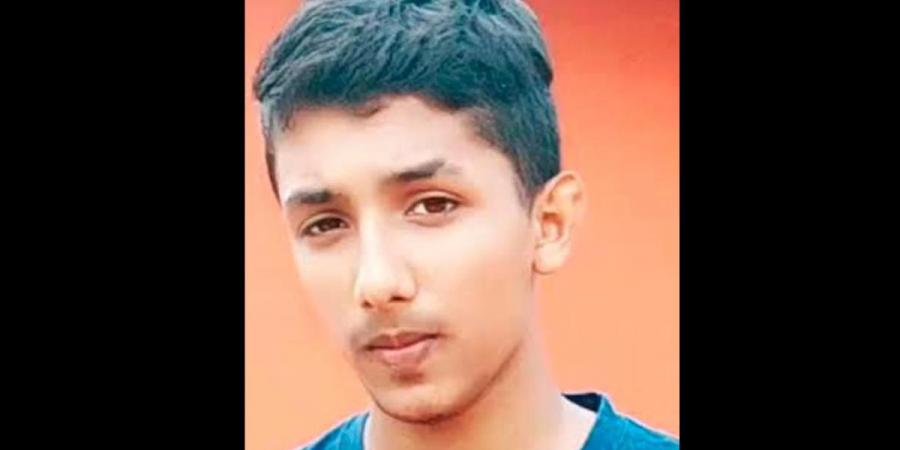
Lenin Bopanna
Madikeri :
A student who drowned saving the lives of his schoolmates was posthumously honoured with the Hoysala Shaurya Award by the Women and Child Welfare department. The award was received by the boy’s parents at a ceremony hosted in Bengaluru.
Lenin Bopanna was a student of Lion’s School in Kalathmadu village near Gonikoppal. In March last year, 39 students of the school from the Scouts and Guides team had visited the popular tourist destination of Dubare Camp for a picnic.
However, a tragic event unfurled as some students who went for a swim in the Cauvery river were pulled by the water currents. Lenin Bopanna managed to save the lives of four students during the incident but drowned in the process.
The son of Madeera Harish and Kavitha of Hysodluru village, Lenin was nominated for the award with the help of state Scouts and Guides Commissioner PGR Sindhya. Lenin’s father Harish said that his son received the award for his bravery following the efforts of Sindhya and the principal of Lion’s School.
source: http://www.newindianexpress.com / The New Indian Express / Home> States> Karnataka / by Express News Service / March 10th, 2021
As Rohit Sharma raised his bat while walking back to the pavilion after his record-breaking 264-run knock, he receieved a standing ovation from the crowd as well as the Indian dressing room. But there was another Indian player alongside him at the crease, who perhaps, had an even bigger role to play in helping the Hitman reach that major milestone. That player was none other than the selfless Robin Uthappa.
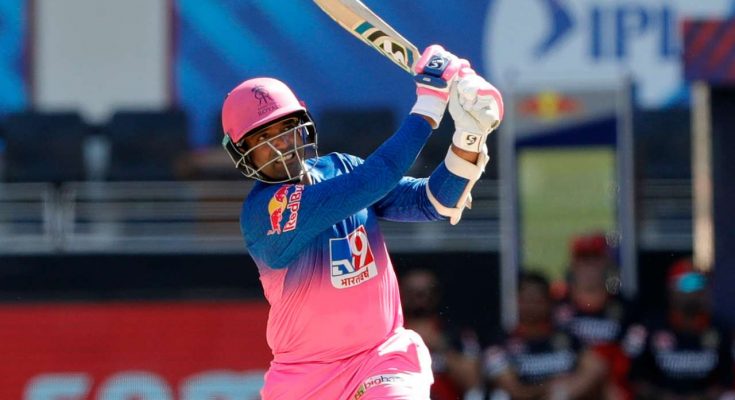
The 35-year-old has been a seasoned campaigner both in domestic cricket as well as in the Indian Premier League (IPL). However, he never really cemented his place in the Indian team despite making multiple comebacks. Nevertheless, whenever he has received an opportunity, Robin Uthappa has always proven himself as a selfless team man.
In fact, he is one of the most experienced players as far as the IPL is considered. Over the years, he has represented franchises like Royal Challengers Bangalore, Pune Warriors India, Kolkata Knight Riders and Rajasthan Royals.
The veteran right-hander will now embark on a new journey once again as he will play for Chennai Super Kings (CSK) in the upcoming IPL 2021 season. In an exclusive interview with CricXtasy, Robin Uthappa speaks about his fantastic run of form in the recently concluded Syed Mushtaq Ali Trophy and Vijay Hazare Trophy, prospect of reuniting with MS Dhoni at CSK, and much more
Excerpts from Robin Uthappa’s exclusive interview with CricXtasy:
Q: About your IPL days, your best time was probably with KKR. You had a sensational season yourself in 2014, winning the title as well as the Orange Cap. That is what gave you an opportunity to make a comeback for India later that year too. So what would you like to say about your time at KKR? Your general camaraderie with Gautam Gambhir and the others in the team?
Robin Uthappa: Obviously that was one of my fonder memories and experiences in the IPL for sure. So for me, that was something I completely enjoyed, especially when Gauti (Gautam Gambhir) was the captain. And yes, that journey has been something that I hold dear to me.
But I’ve had a good time, in other franchises as well. You know, for instance, I had a good time in Mumbai in the first year. And at Pune Warriors as well, even though we didn’t do well as a team. I was able to perform well and make an India comeback.
Even at RR, it was only one year but the kind of friends that I have made and the relationships that I’ve built in that franchise is something that will be for life. So in every franchise, it’s been a great experience. It’s had its ups and downs. But it’s been a wonderful experience in every franchise that I’ve played with so far.
Q: Talking about ups and downs. that one game against Mumbai Indians in 2019, which was also your last game for KKR. Do you think that they were a bit harsh on you to release you on the basis of that one knock?
Robin Uthappa: Well see, the thing is, obviously, they were looking at different things. For a couple of years, they made me play in the middle order, which is not where I’m normally or, you know, naturally suited to bat, because my entire life I have opened the batting. So for me, even though I tried to make that adjustment to bat in the middle order for the sake of the team, I wasn’t able to adjust.
Then they possibly felt that they had other people who could do the job for them at the top of the order. So, you know, they felt at that point that is best for us to part ways. In fact, my release hadn’t happened till the day before the auction. Initially, they told me that I would still be a part of the team when you know, Brendon McCullum was coming. But the day before the auctions, I got a call from them saying that, you know, they will be releasing.
So, clearly, they had plans to move on and navigate to other avenues they believe would work for them. So, that happens in franchise cricket. It’s a part and parcel of franchise cricket. But I’m grateful for my time with KKR, it was a good one. Yeah.
As a leadership group, RR were more reactive than proactive: Robin Uthappa
Q: One of the most talked-about points about the last season was the kind of opening combinations RR tried in almost every game, there was a different combination. So, do you think that, maybe they could have given you another season at the top of the order? Maybe they were just too quick in writing you off?
Robin Uthappa: See, the thing is, you can talk about ifs and buts. But you have to realize that reality is what it is. They had spoken to me last year when I joined them that they would like me to bat in the middle order. I said that I will try my best and because you know, it is not something naturally I’m comfortable with. Because opening the batting is something that I know what I’m doing. It comes very naturally to me and I have done it my entire life.
And when we got off to the kind of stars that we were getting off within the team, I suggested to them that “you know, I could open the batting”. But it took about seven-eight games before that actually happened and in a tournament like IPL, every game is important. I felt that as a leadership group, they were being more reactive than being proactive at that point in time.
Sanju Samson is a match-winner: Robin Uthappa
Q: This season’s Vijay Hazare Trophy, it was absolutely sensational for you as an individual. How would you say the Kerala team has progressed now, from the time that you joined them? Something about the youngsters in the group, like Azharuddeen, Samson?
Robin Uthappa: I don’t think Sanju is a youngster anymore. Yeah, he’s one of the most important players in that team. He’s the one on whom the team is heavily dependent. The success of the team is really dependent on his performances, and he is doing well because he’s a match-winner. So keeping those things in mind, you know, the youngsters have done really well.
In fact, there are a lot of youngsters who have derived a lot of inspiration from guys like Sanju, and the fact that he’s gone up to the highest level. And having said that, they’ve all worked on their own games. Last year in our season, we felt like our batting was struggling a little bit. I think, this year’s performance is a result of the work that everyone has put in over the last few years into their own individual batting and how they can do well for the team. And we’ve done just that and we worked hard and the results are there to see.
But you know, having said that, I think as a team we also believe that we can go much further in the tournament than where we’ve gone. Like for instance, in the Syed Mushtaq Ali Trophy, we definitely felt that we could have gone further. Unfortunately, we did not, and in fact, we missed qualification by three or four runs in the last game. So all those learning experiences I think will serve us well in the seasons to come and serve all the boys, who not just want to you know play for Kerala but also want to win championships.
So you can only hope and believe that everything that you go through and experience in your career serves you. And everyone’s very hardworking not just Azhar or not just Sanju. There is Sachin who is working really hard, then Sreesanth, who is making a comeback after so many years. You know, it’s just the testimony that age is honestly just a number if you put in the work that’s required.
Q: When CSK picked you up in the IPL 2021 trade window, there was a lot of talk on social media that another aged player has joined the ‘Dad’s Army’. But your current form has silenced the critics in style. What would you like to say about that?
Robin Uthappa: These age things are just left to the trolls, for them to get some attention. So I don’t know how that serves society in any way. But it is what they do. I think for people like us, we realize that age is just a number. It depends on how passionate you are.
Like, for instance, you take an example of the guy who started KFC. Colonel Sanders was 65, when he eventually opened his own KFC. So that just goes to show it doesn’t matter what line of work you’re in. Tom Brady, at 43-44, is continuing to win national championships, which is played at a very high level. So, you know, there’s enough proof that these things are just perceptions that are held by people. But if you work hard enough, if you’re focused enough or channelized enough, then all of these things don’t necessarily matter.
I think the more experienced you are, the better you do. Why do you give youngsters the long run? Because you want them to gain experience. So in the same way, when you have an experienced player, you know they’re hardworking enough, they go out there and do well. People don’t seem to see that and don’t seem to understand it. For lack of depth, or maybe something else. I’m not sure. But I’m someone who believes that honesty gets the numbers. Look at Roger Federer today, at 38, pursuing tennis at the highest level coming back from injuries. So it’s just perception.
Robin Uthappa opens up on his future with CSK
Q: So now that you have been approached by CSK, did they kind of let you know already what your role might be? Or did you let them know about your batting preference?
Robin Uthappa: We haven’t discussed the role yet. I think the role will be clarified. And the clarity of that will be defined once I join the team. But yeah, whatever the role is, whenever I get an opportunity, I’m confident that I will go out there and do my best. I am sure this will add value to the team, that much faith I have in myself.
Q: You were one of the first players to have had the experience of playing under MS Dhoni’s captaincy, and you won that T20 World Cup. So any special memories about that tournament, about Dhoni the captain?
Robin Uthappa: We’ve had some great memories from that tournament. I think just his (Dhoni’s) leadership skills and the way he has executed those skills. As a captain, and I think, as a leader, the most important thing he did was giving the players the freedom to express themselves. I think that is one of the most important things that a leader or a captain can do within a group environment and respect that individuality. And that’s something that he does extremely well.
Q: I would just like to pinpoint at one performance in your last group game of the Vijay Hazare Trophy, and where you scored, I guess, 87 off 32. Now do you think you have got a blueprint to bat and now are you clear in your mind that ‘this is how I’m going to play my cricket, whether I play for CSK or for India again’?
Robin Uthappa: Well, yeah, it is something that I’ve actually been working on for a couple of years. There are always requirements within the team, right, and there are roles that are defined or there are roles within that team that we need to perform. My role is always to make sure that I bat for as long as possible for Kerala. So if I can bat for as long as possible it benefits the team and increases the confidence within the group. So that is essentially what I’m looking to do at all points when I am opening the batting for Kerala.
But having said that, in that game, the requirement was to finish the game as quickly as possible. And they mentioned to us at Lunch break that if you can finish the match in 14 overs it will increase our net run-rate and help us qualify. We were already 4.5 overs, 76-1. So I said okay, maybe I’ll just have a look-in for a couple of balls, and then I’ll just go after it and try and score as many runs as possible. And which is essentially what I did. I gave myself a couple of balls. And then I started going after. And we were able to finish the game in I think 8.5 overs or so.
So I think it again depends on the requirements of the match and the requirements of the team. But, I definitely feel like I’ve had a lot more freedom than I had in the past. And I think the technique that I have right now allows me to play with a lot more freedom than I had in the past.
Robin Uthappa relives his best memories playing for the Men in Blue
Q: You have played 59 International games for India so far, but do you think your best memory is still that chase at The Oval in the sixth ODI in 2007?
Robin Uthappa: I’ve had quite a few I think. But that (game at The Oval) definitely is right up there. But there are different ones that serve the team, serve individuals. I enjoyed, for instance, we won a game in Mumbai against Australia in 2007. It was a really low-scoring one-dayer. They scored 187 or something and we scored the runs back in the 45th over. Zak bhai (Zaheer Khan) and Murali Karthik scored the runs back for us. So I think that was something that I actually enjoyed, because I got a 47 or 48 in that match. So for me, I think, when everyone was getting out, me being able to contribute to that victory was big for me. So, yeah, that is a special game to me.
I think I’ve had a lot of comebacks, four or five or six comebacks in the Indian team. So you know, a lot of those comeback matches have been special. I got a 30-ball 70 against West Indies in Chennai. That was very special for me. And then, you know, Rohit Sharma’s 264. I had scored a run-a-ball 14. That was also my comeback match. So, you know, a lot of these comeback games have been special to me in one way or the other.
But yeah, Oval will stand up there as a fantastic experience. Then to get a 50 on my T20 debut against Pakistan in a World Cup. And to have that bowl out is also a great memory. So I’ve been fortunate you know, incredibly lucky to have had wonderful memories playing cricket, there are a lot of memories that are etched in, you know, part of our culture, which is fantastic. And I consider myself very lucky to have all of them.
source: http://www.cricxtasy.com / CricXtasy.com / Home> Interview / by Anuj Nitin Prabhu / March 13th, 2021
WELCOME. If you like what you see "SUBSCRIBE via EMAIL" to receive FREE regular UPDATES.
Read More »