Kodava is a small and beautiful mountain district of Karnataka and is well known in the world for coffee and its ‘brave warriors’, men and women, serving in all services.
File photos of Lt Gen CP Cariappa, Lt Gen CB Ponnappa (R) and Lt Gen PC Thimmaya (L). (Photo | KodaguConnect Twitter handle)
New Delhi :
It was a proud moment for the people of Kodava district when Lt Gen CP Cariappa took command of India’s elite 1 Strike Corps at Mathura on Friday. Lt Gen Cariappa became the Corp Commander and the District boasts of rare distinction of three Lieutenant Generals serving the army simultaneously.
Kodava is a small and beautiful mountain district of Karnataka and is well known in the world for coffee and its “brave warriors”, men and women, serving in all services. Talking only of Indian Army there are 90 posts at the rank of Lieutenant General.
Lt Gen PC Thimmaya and Lt Gen CB Ponnappa are the other two generals. Lt Gen Thimmaya is the Army Commander at the Army Training Command and Lt Gen Ponnappa is the Chief of Staff at the Northern Army Command. All three officers are a product of the National Defence Academy, Khadakwasla and joined the army at different times.
Lt Gen CP Cariappa is the junior-most among the three generals and was commissioned on 09 June 1984 into the 4th Battalion of the Rajputana Rifles. He served in UN Peace Keeping Force at Mozambique (Africa) and Iraq – Kuwait. Prior to taking over command of elite 1 Corps, he was the Military Secretary to the President of India at New Delhi. The officer on taking charge emphasized that his priority is ’fight against COVID-19 threat.’
Number of Kodava Lieutenant Generals in Indian Army at present: 3 File photos of Lt Gen CP Cariappa, Lt Gen CB Ponnappa (R) and Lt Gen PC Thimmaya (L). (Photo | KodaguConnect Twitter handle)
View image on Twitter
262
12:07 PM – Apr 4, 2020
Twitter Ads info and privacy
63 people are talking about this
_____________________________
At present Lt, Gen PC Thimmaya is the seniormost coorgi officer, who became Army Commander on 1 November 2018. He was the best cadet in pre-commission training at Indian Military Academy and was awarded the Sword of Honour. He got commissioned into 5th Battalion of the Mechanised Infantry in June 1981.
He commanded Army’s 10 Corps and was the Commandant, Army War College at Mhow before becoming Army Commander. Like the other two officers he also had UN Stint, was a Military Observer in UN Mission, Angola. He also was Defence Attache in the High Commission of India in Bangladesh. He assumed the command of Army Training Command in Nov 2018.
Lt Gen C Bansi Ponnappa is Chief of Staff of the prestigious Northern Command since Feb 2020. He was commissioned into 2 MAHAR Regiment in Jun 1985 and later commanded the same unit. The officer had two UN Tenures. He was in Somalia under UNOSOM-II and North Kivu Brigade of UN Peace Keeping Force in the Democratic Republic of Congo.
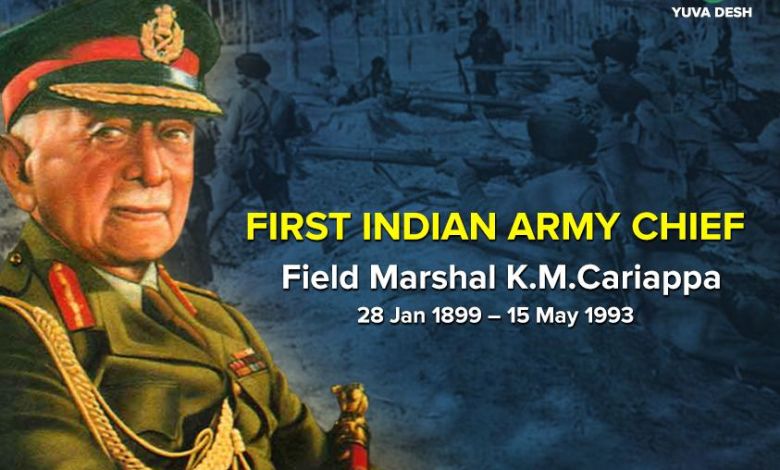
These officers follow in the footsteps of illustrious predecessors like Field Marshal K M Cariappa and General Kodendera Subayya Thimayya. Field Marshal Cariappa was first Indian Commissioned Officer, first Indian General and then first Commander-in-Chief of India.
A total of eleven officers from Kodagu have occupied top posts in the Army so far. This apart, Kodagu also boasts of having 20 Major Generals and four Air Marshals, which undoubtedly makes Kodagu, the Land of Generals.
Although, with time the numbers of people joining forces from the district have fallen, steps are being taken to regain it. The district has its own War Memorial with names of all martyred soldiers of Kodagu. A museum in the name of former Army Chief General Thimmaiah is also being constructed. The Kodava Legacy in the Army will continue.
source: http://www.newindianexpress.com / The New Indian Express / Home> Nation / by Mayank Singh / Express News Service / April 06th, 2020
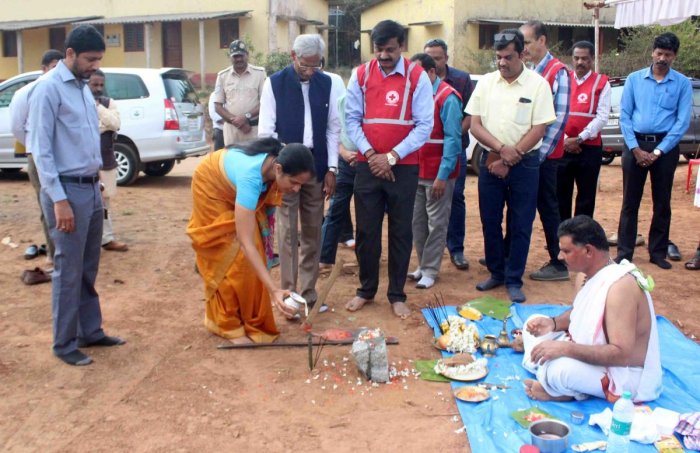
Deputy Commissioner Annies Kanmani Joy, who is also the chairperson of Indian Red Cross Society (IRCS) district committee, performed the ground-breaking for Red Cross Bhavan at Stewart Hill in the town on Thursday.
Speaking during the formal programme, IRCS State Committee Chairman Naganna said that the IRCS had always assisted in the relief measures, including the floods in Kodagu.
“The Red Cross Bhavan will provide timely assistance to the people affected by calamities”.
Naganna said that a grant of Rs 50 lakh was reserved by the IRCS district committee and Rs 25 lakh by the state committee for the Red Cross Bhavan.
Naganna said that a grant of Rs 50 lakh was reserved by the IRCS district committee and Rs 25 lakh by the state committee for the Red Cross Bhavan.
He said another Rs 10 lakh will be provided in the next phase by the IRCS state committee. Making use of the funds provided by elected representatives, a state-of-the-art auditorium, a warehouse and an office will be constructed, he added.
IRCS Kodagu head B K Ravindra Rai stated that the Red Cross Bhavan was planned to be constructed at a cost of Rs 1.30 crore on 12.50 cents of land, and the work would be carried out by Nirmithi Kendra.
IRCS Kodagu General Secretary H R Muralidhar said that the branch of the IRCS was commissioned in Kodagu in 1952, with the efforts of the then Chief Minister of Coorg state, C M Poonacha.
Former IRCS State general Secretary Ashok Kumar Shetty, Kodagu Institute of Medical Sciences Principal Dr Vishal, Nirmithi Kendra Officer Sachin, CMC Commissioner M L Ramesh and IRCS district Vice President H T Anil were present.
source: http://www/deccanherald.com / Deccan Herald / Home> State / Muhammad / by DHNS, Madiker / February 27th, 2020
KM Cariappa is a man known for many firsts, but most importantly, he is known as the man who took charge of the Indian Army from its last British Commander in Chief, General Sir Roy Bucher. Born on January 28, 1899, in Coorg, Cariappa completed his education at Central High School at Madikeri and went on to study at the Presidency College in Madras.
However, Cariappa began his Army stint under the British and was among the few selected for the first batch of KCIOs (King’s Commissioned Indian Officers) at the Daly Cadet College in Indore and was commissioned in the Carnatic Infantry. He was in active service with the 37 (Prince of Wales) Dogra in Mesopotamia (present-day Iraq) and then posted to the 2nd Rajput Light Infantry (Queen Victoria’s Own). Cariappa went on to become the first Indian officer to undergo the course at Staff College, Quetta in 1933. In 1946, he got promoted as the Brigadier of the Frontier Brigade Group.
By Indian independence, Cariappa saw action in Iraq, Syria, Iran and Burma and became the first Indian Officer to be given command of a unit in 1942. He went on to receive many awards and accolades in his career spanning three decades. He received the prestigious Order of the British Empire (OBE) for his role in Burma against the Japanese during the Second World War.
In 1947, Cariappa became the first Indian to be selected to undergo a training course at Imperial Defence College, Camberly, UK. His role during the Partition is rarely mentioned, during which he oversaw the division of the Army. Cariappa also led the Indian forces on the Western Front during the Indo-Pak War of 1947 and successfully recaptured Zojila, Drass and Kargil and established a linkup with Leh.
On January 15, 1949, Cariappa became the first Commander-in-Chief of the Indian Army. He held the five-star rank of field marshal, the highest honour in the Indian Army, which Sam Manekshaw is the only other officer to have held.
source: http://www.defenceaviationpost.com / Defence Aviation Post / Home> Defence> Indian Army / source: Indian Express / January 20th, 2020
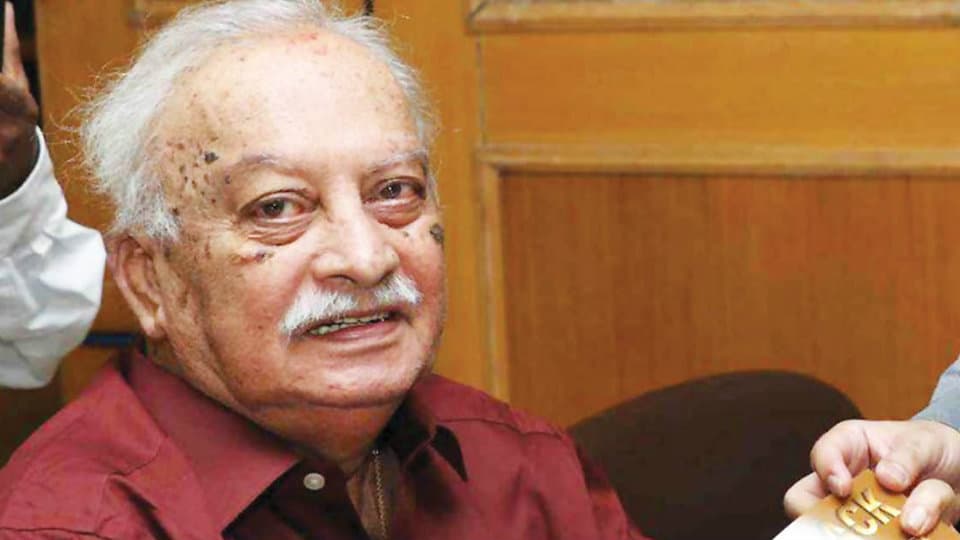
One of India’s leading Sports Administrators, five-time National Decathlon Champion, senior sports achiever in National and International arena and the first person in Kodava community to secure a Doctoral degree in Sports, Dr. C.M. Muthaiah passed away in Bengaluru on Dec. 5. He was 87.
Dr. Codanda Madappa Muthaiah was born in Madikeri on April 30, 1932 and had secured gold medal (first rank) in M.Sc. Biomechanics from Germany. Despite his education in Science, he had deep interest in sports and Muthaiah was involved in Decathlon, Long Jump and High Jump and had achieved National and International-level recognitions.
From 1956 till 1960, Dr. Muthaiah had won National-level and Asian-level championships. He had won the National Championship crown five times and recognising his achievements, he was bestowed the title “Golden Shoe” in 1977. One of his biggest regret was his narrowly missing the Decathlon Medal in the Tokyo Asian Games in 1958. Dr. Muthaiah was instrumental in bringing the Sports Authority of India, South Centre, to Bengaluru.
After dedicating his youth to the cause of sports, Codanda Muthaiah served the field as a Coach and Sports Officer. He went on to become a Senior First Grade Coach at Netaji Subhas National Institute of Sports commonly known as National Institute of Sports (NIS), the Sports Training Centre at Patiala in 1962. He later served as the chief of NIS, an Academic Wing of Sports Authority of India and Asia’s largest Sports Institute in Patiala, Punjab.
Dr. Muthaiah had also served as the Director General of the Sports Department of the Union Government and in 1982, he was conferred the ‘Asiad Vishist Jyothi’ for his contribution to Asian Games and Rajyotsava Award in 2013.
He was appointed as the Technical Advisor when the Asian Games was organised in New Delhi in 1982 and had served as Technical Director to various other National and International Games.
He also served as the Secretary General of Asian Track and Field Research Centre. After retirement, he was residing at Jayamahal Extension in Bengaluru. He is survived by wife Parvathi and a daughter.
source: http://www.starofmysore.com / Star of Mysore / Home> Sports / December 13th, 2019
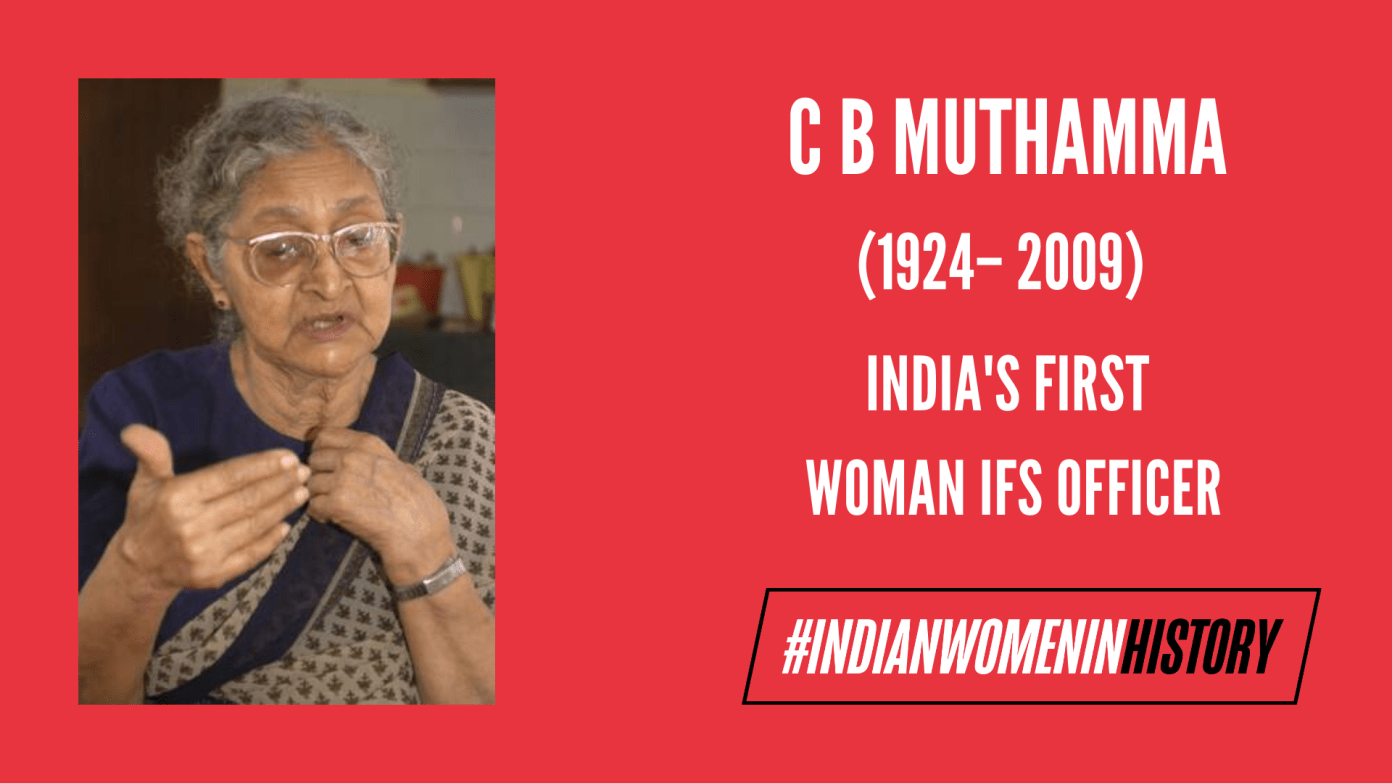
A survey conducted in 2019 revealed women in India are paid 19% less than men. While the participation of women in the workforce is only 26%, with merely 9% being in any kind of leadership position, the practices of sex-based bias and stereotypes at formal and informal workplaces gravitate from structural violence over their bodies to seeking organisation’s permission to be under wedlock as in the case of the first Indian woman Ambassador: C B Muthamma.
Image source : Twitter
Early life
Chonira Belliappa Muthamma, the first woman to clear the Indian Civil Services examinations, the first woman Indian Foreign Service (IFS) officer, the first Indian woman diplomat, later the first Indian woman Ambassador (or High Commissioner), was born in Virajpet in Karnataka’s Kodagu (then Coorg), a coffee-growing district in southern India on January 24, 1924. Muthamma’s father, who was a forest officer, passed away when C B Muthamma was nine years old. Being a single parent raising four children, her mother made it a priority to give them the best possible education. She did her schooling in St Joseph`s Girl School in Madikeri. Later, she moved to Chennai to pursue her undergrad from the Women’s Christian College and her Master of Arts degree in English Literature from Presidency College, Chennai.
IN THE END, SHE WAS GIVEN ABYSMALLY LOW MARKS, IN SPITE OF WHICH SHE TOPPED THE FOREIGN SERVICE LIST AND BECAME THE FIRST WOMAN IFS OFFICER IN 1949. WHEN SHE ENTERED THE SERVICE, MUTHAMMA WAS MADE TO SIGN AN UNDERTAKING THAT SHE MAY BE REQUIRED TO RESIGN FROM HER JOB ONCE SHE GOT MARRIED.
In 1948, a year after independence, C B Muthamma cleared the UPSC examination, becoming the first woman to join the Indian Civil Services. Her struggles started with the UPSC Board interview where the Board members tried to persuade her to change her first option for the IFS. In the end, she was given abysmally low marks, in spite of which she topped the Foreign Service list and became the first woman IFS officer in 1949. When she entered the service, Muthamma was made to sign an undertaking that she may be required to resign from her job once she got married. “This was clearly against the Constitution, but in those early days, it did not occur to me to challenge that rule…there was an attitude of vengefulness on the part of the men—a feeling that should be kept in their places, and that they should be encouraged to leave,” she cited this incident in her collection of essays, aptly entitled, Slain by the System.
Muthamma Vs Union of India
With this bizarre rule intact at the Ministry of External Affairs, Mira Sinha Bhattacharjea and Rama Mehta were among those who had to leave the service, points out Kishen Rana in the Indian Foreign Affairs Journal. In addition to facing everyday prejudices against women in Indian society, which got reflected in the ministry, Muthamma was not accepted by several Ambassadors citing various reasons as to why it was inappropriate to send a woman to the station. Finally, she was first posted to the Indian Embassy in Paris. It was there she understood that it is not only Indian diplomats who had problems with a female colleague, but also her peers in other Embassies who were equally not at ease in dealing with a woman in workplace. She then served in Rangoon, London, and on the Pakistan and America Desks in the Ministry of External Affairs in New Delhi.
SHE WAS FIRST POSTED TO THE INDIAN EMBASSY IN PARIS. IT WAS THERE SHE UNDERSTOOD THAT IT IS NOT ONLY INDIAN DIPLOMATS WHO HAD PROBLEMS WITH A FEMALE COLLEAGUE, BUT ALSO HER PEERS IN OTHER EMBASSIES WHO WERE EQUALLY NOT AT EASE IN DEALING WITH A WOMAN IN WORKPLACE.
The tipping point for her was when she was overlooked for promotion to Grade I, the highest level of Secretary to Government of India, of the IFS. In 1979, she brought the petition against the government, the Appointments Committee of Cabinet (ACC) and Ministry of External Affairs, on the grounds of professional gender bias and discrimination contradicting Article 14 (equality before the law) and Article 16 (equality of opportunity in matters of public employment) of the Constitution.
She further challenged Rule 8(2) of IFS (Conduct & Discipline) Rules, 1961 which stated that, “a woman member of the service shall obtain the permission of the Government in writing before her marriage is solemnised. At any time after the marriage, a woman member of the Service may be required to resign from service, if the government is satisfied that her family and domestic commitments are likely to come in the way of the due and efficient discharge of her duties as a member of the service,” and Rule 18(4) of IFS (RCSP) Rules, 1961 which noted that, “no married woman shall be entitled as of right to be appointed to the service.”
The Supreme Court Bench headed by Justice V.R. Krishna Iyer commented that this, “…bespeaks a story which makes one wonder whether Articles 14 and 16 belong to myth or reality.” Solicitor General, Soli Sorabjee opposed the petition saying that the rule overlooking women for ambassadorship was justified. He argued that the chances of leakage of confidential information of strategic significance were a dangerous risk, and so Muthamma’s case to be made an ambassador was rightly rejected.
Though C B Muthamma was promoted to Grade I and posted as India’s Ambassador to Hungary while the trail was ongoing, the Court struck down the blatant prejudice against women’s rights in India by the iconic judgement of the Bench headed by Justice V.R. Krishna Iyer.
Expert Judgements
“That on numerous occasions the petitioner had to face the consequences of being a woman and thus suffered discrimination though the Constitution specifically under Article 15 prohibits discrimination on grounds of religion, race caste, sex or place of birth and Article 14 of the Constitution provides the principles of equality before law….”
“If a fragment of these assertions were true, unconstitutionality is writ large in the administrative psyche and masculine hubris. If there be such gender injustice in action, it deserves scrupulous attention from the summit…“
“If a woman member shall obtain the permission of the government before she marries, the same risk is run by the government if a male member contracts a marriage. If the family and domestic commitments of a woman member of the Service is likely to come in the way of efficient discharge of duties, a similar situation may well arise in the case of a male member. In these days of nuclear families, inter-continental marriages and unconventional behaviour, one fails to understand the naked bias against the gentler of the species.”
“If a married man has a right, a married woman, other things being equal, stands on no worse footing. This misogynous posture is a hangover of the masculine culture of manacling the weaker sex forgetting how our struggle for national freedom was also a battle against woman’s thraldom.”
“Freedom is indivisible, so is Justice. That our founding faith enshrined in Articles 14 and 16 should have been tragically ignored vis-a-vis half of India’s humanity, viz., our women, is a sad reflection on the distance between Constitution in the book and Law in Action.”
“In the rat race of Indian official life, seniority appears to be acquiring a religious reverence. We have had the advantage of the presence of the learned Solicitor-General, appearing for the Union of India. With characteristic fair-ness he has persuaded his client to agree to what we regard as a just gesture, viz., that the Respondent-Union of India will shortly review the seniority of the petitioner, her merit having been discovered and her seniority to Grade II being recognised.”
The Court dismissed the petition but directed the Government to review the petitioner’s case in light of the only remaining element of her complaint—that relating to the promotion of people junior to her. The Court emphasised the need to overhaul all service rules to remove discrimination.
This ruling served as an aid at many women’s meeting in support of their struggle for equality. She thus became the first woman from within the service to be appointed Ambassador. Later, she served as ambassador in Accra in Ghana, and afterwards, she was made the Indian Ambassador to The Hague in the Netherlands. She retired as one in 1982 after 32 years of service.
A Trailblazer For Working Women
Foreign Secretary Nirupama Rao recalls C. B. Muthamma as someone who’d waive away references to being the ‘first woman diplomat’ by saying, “Someone’s got to be first—I was old enough to have been there first.” Arundhuti Ghosh, the fiery diplomat who fought for India’s concerns on nuclear issues in Geneva, remembers her as a formidable personality and feminist who always showed consideration for people who worked below her. “For example, once she pointed out that Joint Secretaries have two air conditioners in their office rooms while non officer-grade staff had none and she gladly gave up her own A/C to share with other staff. That was Muthu for you,” Gosh said.
After retiring, she continued to be an activist. C B Muthamma was nominated as the Indian member of the independent Palme Commission, a non-governmental Commission on Disarmament and Security Issues, which reported directly to the United Nations. The spinster remained active in social movements, helping riot victims and citizen groups, her philanthropy knew no bounds. In her book the Slain by the System (2003), a collection of essays criticising of the Indian political system and its political class, she writes, “Looking back, I cannot help but conclude that my tenure with the external affairs ministry was one long tussle with the anti-women bias.” She also co-authored The Essential Kodava Cookbook (2000), compiling forgotten recipes from Coorg for the culinary enthusiast inside her. She passed away on October 14, 2009 in Bangalore at the age of 85.
C B Muthamma proved that as long as social justice is an integral part of our constitutional fundamentals, gender justice will remain a non-negotiable article of faith. She not just managed to get the Supreme Court agree that gender discrimination did exist in the foreign office but also broke many visible and invisible barriers to set a level playing field for women in IFS, women in civil service and women in all workforce.
References
1) The Better India
2) Ministry of External Affairs
3) Indian Kanoon
4) The SOP
source: http://www.feminisminindia.com / Feminism in India / Home> History / by Nivedita Jayakumar / December 16th, 2019
This year, the marathon was completely eco-friendly and trash-free, with water being served in coconut shells, food in banana leaves and plates made out of areca leaves.
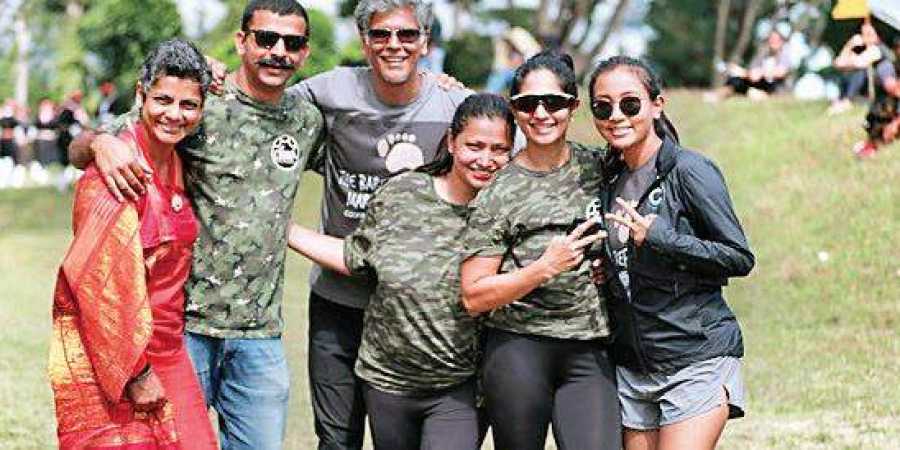
Nikki Ponnappa (left) along with Milind Soman (in grey) and members of The Coorg Wellness Foundation
Bengaluru :
Bengaluru-based golfer Cheppudira Nikki Ponnappa can never decide what she is passionate about more – her love for sports or working towards saving the ecology of her hometown, Kodagu. The international-level golfer recently arranged the fifth edition of Barefoot Marathon, which happened on Sunday in Kodagu. The marathon was an initiative by her organisation, The Coorg Wellness Foundation, in association with avid marathon runner and her friend, Milind Soman.
This year, the marathon was completely eco-friendly and trash-free, with water being served in coconut shells, food in banana leaves and plates made out of areca leaves. The warm-up exercise before most marathons is usually Zumba, but keeping up with local traditions, Valaga music, which is traditional Kodava music, pumped up the participants. The highest prize being `42,000 for 42 km, the marathon had some interesting rules for the prizes that were distributed.
The cash prize went to runners from the neighbourhood area, while the non-local runners got to bring home produce by local farmers, which included rice, coffee, spices etc. All the funds collected from this event will go towards betterment of the families who lost everything in the landslide that hit Coorg in 2018.
More than 400 people participated in this marathon. Ponnappa says the main objective of the run was to bring people closer to nature. “When you run barefoot and feel the soil, it makes you feel closer to Mother Nature. Barefoot is a symbolic way to do something auspicious, plus it has lot of scientific benefits too. We have many nerve points in our feet and these runs work wonders for them.
It was great to see so many people travelling to Coorg, especially from Bengaluru, to participate in this marathon,” says Ponnappa, who was first introduced to golf at the age of 14-15 by her father, who was then serving in the Indian Army. She is also a certified coach and a social activist. Ponnappa’s organisation, the Coorg Wellness Foundation, which was set up in 2014, works towards the development of the people of Kodagu and its eco-system. Along with free education and boarding, they also provide training to join the Army.
source: http://www.newindianexpress.com / The New Indian Express / Home> Cities> Bengaluru / by Monika Monalisa / Express News Service / December 10th, 2019
– Rare ‘Ring of Fire’ visible in South Kodagu
– Over 2,000 hand-picked students to witness celestial event from 8 am to 11 am
– Organisers aim for India Book of Records
Mysuru:
Kaimaani, a remote village in Kutta, South Kodagu, is all set to witness the rare Annular Solar Eclipse on Dec. 26 — the third and final solar eclipse of the year 2019. The Mysore Science Foundation (MSF) is organising a sky-gazing event at Kutta where nearly 2,000 children and general public will witness the spectacular event.
In the Annular Solar Eclipse, Moon does not completely obscure the Sun as the Moon is farther away from us than normal, making it appear smaller. As a result, the Sun is not totally eclipsed, leaving a ‘Ring of Fire’ around the edges.
The Mysore Science Foundation has tied up with Aseemit Edutech Private Limited, a Pune-based organisation (Mitee as its sub-group) for the event. Aseemit Edutech Private Limited is involved in secondary and senior secondary education.
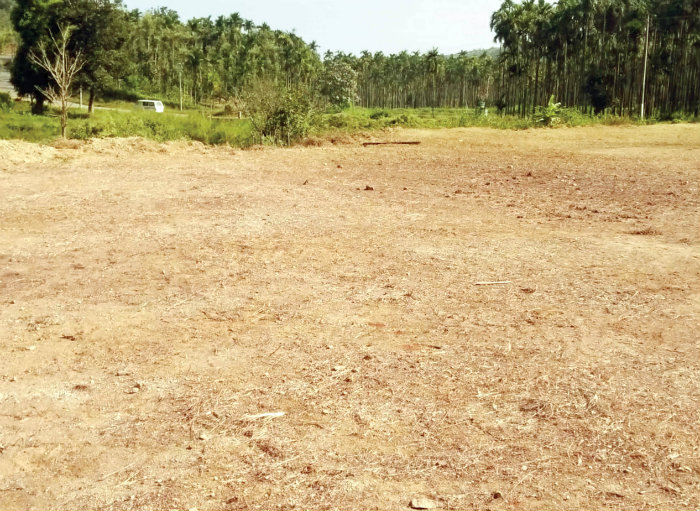
The spot in Kutta where the sky-gazing event will be witnessed on Dec.26.
Kutta falls on Solar Path
Speaking to Star of Mysore, G.B. Santosh Kumar of Mysore Science Foundation, said that Kutta falls on the Solar Path and as such, the visibility is clear. The visibility of Annular Solar Eclipse in Mysuru is only 75 percent.
“Mangala in Gundlupet, Coimbatore in Tamil Nadu, Udupi in Dakshina Kannada and Kutta in South Kodagu fall on the Solar Path where there is a clear visibility.
“We did not get permission from the Forest Department for the event as Mangala falls under the limits of Bandipur Tiger Reserve. And 2,000-strong crowd going to Coimbatore and Udupi was a distant possibility. As such, we have zeroed in on Kutta where the event can be viewed from 8 am to 11 am,” Santhosh said.
Kaimaani coffee yard
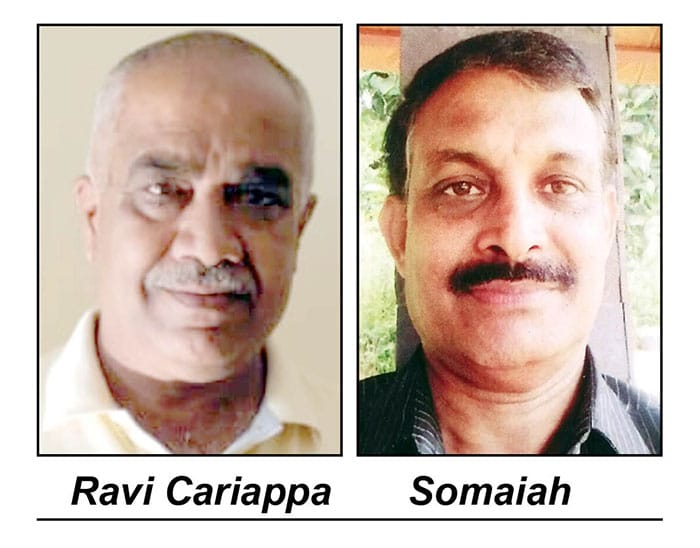
At Kutta, the event will be organised at the newly-developed coffee drying yard of Kolera Ravi Cariappa in Kaimaani village. “The place is by the side of the road and the land is in a higher altitude and there is an arecanut plantation below. This is a perfect location for witnessing the once-in-a-lifetime event,” said Kotrangada Somaiah, a teacher at Manchalli Government School, who played a key role in identifying the location for the organisers.
“People from Mitee Pune contacted me two months back and requested me to find out an ideal place in Kutta to view the event. First we considered the Government Higher Primary School Cinkona in Kutta for the event but had to cancel it as the approach road was not good. The Kaimaani coffee yard is a perfect location as it is by the side of the road. There are facilities including toilets and I have requested the local residents to allow children to use their toilets,” said Somaiah.
India Book of Records
The event organisers have already registered in the India Book of Records for the largest gathering of children in one place to view Annular Solar Eclipse. “On Dec.17, the Mysore Science Foundation will organise another programme called “Video Viewing” where students will be seeing eclipse-related videos to prepare them for the main event. For the actual event on Dec.26, we are expecting students from Maharashtra, Tamil Nadu and Kerala,” Santhosh added.
On that day, occurrence of eclipses, types of eclipse, science behind eclipse, myths and misconceptions, eclipse watching and safety shall be explained in addition to demonstration on pressure variation and temperature variation.
Food & accommodation
For outstation students coming from Maharashtra, Kerala and Tamil Nadu, choultries have been booked in Virajpet for their food and accommodation. “Along with them, students from Mysuru, Bengaluru and Kodagu too are participating in the event,” Santhosh said.
Student selection
On the student selection process, the Mysore Science Foundation had communicated to schools to send 10 children who are interested in astronomy and a teacher. Registrations were on first-come-first-serve basis and we have kept last-minute registrations open as we are aiming for India Book of Records, he added.
source: http://www.starofmysore.com / Star of Mysore / Home> News / December 07th, 2019
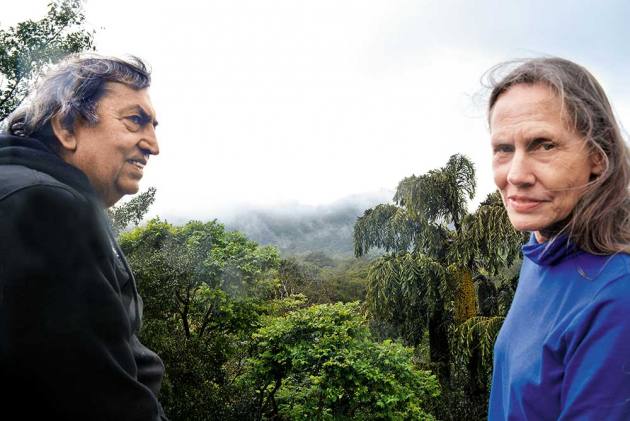
Foresters Anil and Pamela Malhotra have found peace among the coffee plantations of Coorg. Embracing nature has been their passion.
PHOTOGRAPH BY AJAY SUKUMARAN
Around four in the evening, after a late lunch, Pamela Gale Malhotra is standing at a bay window of her living room looking out at a picture-perfect landscape—a gushing stream in a rain-soaked forest with the abutting Brahmagiri hills framing the backdrop. It was about 25 years ago that she first stumbled onto this view. At the time, she was out scouting for a site for their home and had been hurrying up a hill trying to escape the rain and leeches when it struck her speechless.
The place is now more wooded than it was in 1995 when Pamela, 67, and husband Anil Malhotra, 78, built their home in south Coorg—in a coffee estate that had been listed. How they got here is quite a story, told amidst a primordial symphony—the burble of the stream and the call of the crickets.
Their first port of call in India was in the Himalayas in Uttarkashi along the Assi Ganga, where they stayed for nearly a decade before deciding to move south. After scouting through a few states, they finally found what they were looking for at the Brahmagiri foothills in Theralu—a remote plantation where they could raise a forest, as bizarre as it sounded to the folks around back then.
It might still sound like a nutty proposition, until you drive past the gates of the Save Animals Initiative (SAI) Sanctuary. Suddenly, you are in a thicket with a narrow driveway that meanders some distance to a garage and beyond that the dark peach walls of the Malhotra home. Around you is a 300-acre native rainforest through which the elephant and tiger freely saunter.
___________________________________________
“When you are away from Nature you aren’t thinking clearly…This is our passion.”
___________________________________________
Every morning, in more hospitable weather, Pamela and Anil set forth into this grove—their walks take an hour-and-a-half usually unless she’s checking on the dozen or so camera traps dotting the landscape, replacing batteries, swapping memory cards or switching locations. Over the years, Pamela has collected a mountain of data—otter, porcupine, leopard, sambhar, all kinds of species on video. Since it’s a wilderness—whatever remained of the coffee plants became humus for the trees—the couple merely follow the paths the elephants have cleared.
“We’ve set up this private model,” Anil tells Outlook. “We want other Indians who can afford it, we need even those who can’t, to join together to build this.”
The hills get covered up and the rain comes down. It’s been bucketing down all through the south-west monsoon this year, casting a gloomy outlook for coffee growers in Coorg. “When we came here, it was normal to have 350 inches of rain a year. Even if it was buckets of it, we had this,” says Pamela, pointing to the woods. “This is what the forest canopy is for. It’s like using an umbrella with pores in it, it’s going to break it up and slow it down.” But over the decades, Coorg’s forest cover has been dwindling. “The coffee plant is useless when it comes to retaining moisture…they have extremely small, shallow roots. We’ve warned people again and again, “don’t cut down your big native trees.””
The Malhotras put together their 300-acre sanctuary piece by piece, starting 1991, first by purchasing a 55-acre coffee estate. “Patches were cleared for coffee. So what we did was to fill up the patches with native trees,” says Anil. They planted jackfruit, Nandi, Rosewood, Matti and hundreds of fruit trees. “And, of course, the native trees come out way on top in absorbing carbon,” adds Pamela, pointing to sequestration studies which show that SAI Sanctuary acts as a carbon sink, helping the neighbourhood as well as providing a haven for the wildlife moving between the Brahmagiri reserve forests and Nagarahole national park, an hour away by road.
Down by the stream, a snake slithers away as we approach the water. Most days, the couple crosses over onto two rocks on a small island to meditate. “We were sitting on these rocks once and a matriarch elephant came up,” says Anil. It didn’t sound pleased, he recalls. “We kept sitting and mentally saying we have come in peace. They may not speak English but they know vibrations. She started eating the bamboo and then 8-10 members of the family came. They surrounded us for 45 minutes. It was such a beautiful experience.” Frequently, local people and the forest department bring them injured animals—dogs, cats, parakeets—which find a ready home.
Anil says it is possible for others to do what they did—buy land and restore forests—even if it’s difficult. “It can be done. People tell us “we haven’t made the money you made in America”. We bought at the right time. I can’t afford it today.”
Pamela and Anil met in the US in the early 1970s at her hometown, Red Bank, New Jersey, where he ran an Indian restaurant. She worked at an all-night cafe at Asbury Park, where a young Bruce Springsteen (then playing in a band called Steel Mill) would drop in to play sometimes during breaks from the music club upstairs.
“But Anil and I were on complete opposite sides of the political spectrum then,” she laughs. “I’ve always described it as fire and petrol…explosive encounters.” Mostly over the Nixon presidency and the anti-war movement. Soon after, she went back to college to study political science—the breaking-out of her conservative mindset of ‘materialistic Americana’ happened then. He sold up and followed her to Colorado, where they stayed for a few years, she working as a sales rep in a pharma company and he with a mortgage firm. The commissions he got were reinvested in real estate in Colorado and then in a forested patch in Hawaii, which they fell in love with on their honeymoon. The couple moved to India in 1986 to visit Anil’s ailing father and eventually settled in Uttarkashi where they wanted to recreate their wooded Hawaii home. The land ceiling regulations prompted the decision to look at plantation land in the south.
“I could have continued the real estate and all that in America, but what is the point of life then. I can’t take it after me,” says Anil. “I’d rather drink pure water and breathe fresh air than breathe carbon dioxide and be ill half the time and give all my money to doctors and hospitals.” Adds Pamela: “Being in Nature helps us physically. Kids today are being hot-wired by not having time out in Nature to play.”
Pamela, who received the Nari Shakti awards for her efforts in afforestation in 2016, has given numerous presentations across the country—including a recent one at the Apple facility in Cupertino while on her first visit to the US in 20 years—to raise awareness. She’s currently working on an autobiography titled From the Heart of Nature, slated for publication next year. “When you are away from Nature you aren’t thinking clearly,” says Anil. “Grow fruit trees, grow organic food…the demand far outstrips supply. We have planted thousands of native fruit trees now. Last year, we distributed thousands of saplings at schools and colleges telling them this is the future.”
The Malhotras, like successful permaculturalists, are mostly self-sufficient for most of the year. They rely on roof-top solar panels, installed in 1997—a year after the house was built. The patch next to the house is an organic food garden where most of their vegetables and salads come from. Pamela prefers cooking on biogas.
“Everything comes out of our pockets, except approximately two per cent in the form of donations if we are lucky,” says Pamela. Eco-tourism—they have four rooms for guests—helps meet expenses. “This is our passion, our life. So we have to keep things going. But there are things we’d love to do, like Payment for Ecosystem Services. We’d like to sponsor more organic farming,” says Pamela. “I cannot tell you how frustrating it has been trying to raise money for any of these programmes.”
The rain lets up for a bit, but the clouds hang low. Pamela and Anil climb up a wet, metal ladder to the rooftop for a sweeping view of their sanctuary. Pamela recalls a dream she once woke up with, years earlier. “I had seen a house on a small hill, overlooking a pond with the river flowing past in the middle of a wooded valley with white-capped mountains all the way around and a lot of wildlife. This was that view…those mountains are white-capped from the mist.” This was before they bought this place in Coorg. “I thought we’d find that in the Himalayas. But it wasn’t in the Himalayas, it was here. So, you never know.”
By Ajay Sukumaran in Coorg
source: http://www.outlookindia.com / Outlook / Home> Magazine> National> Cover Stories / by Ajay Sukumaran / November 21st, 2019
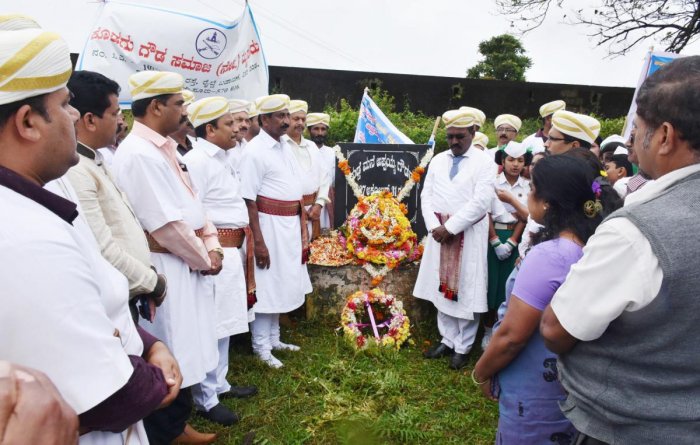
Tributes were paid at Guddemane Appaiah Gowda Memorial in Old Fort, Madikeri, on Friday.
The 182nd commemoration day of freedom fighter and martyr Subedar Guddemane Appaiah Gowda was jointly organised by district administration, Department of Kannada and Culture and Guddemane Appaiah Gowda Memorial Monitoring Committee, in Madikeri on Friday.
Dignitaries paid floral tributes to the statue of Appaiah Gowda at Field Marshal Cariappa Circle. Later, a silent procession was taken out till Old Fort.
Tributes were also paid at Subedar Guddemane Appaiah Gowda memorial, where he was hanged. Women sang ‘Lavani’ songs depicting the life and achievements of Appaiah Gowda.
District Congress Committee President K K Manjunath said that Guddemane Appaiah Gowda bravely fought against the British to save the people of Kodagu.
“Nobody can change history. One should not make efforts to misinterpret history. Instead, one should lead lives with peace and cordiality,” he added.
Advocate Vidyadhar said that more and more people need to know about the greatness of Appaiah Gowda, who laid down his life during the freedom struggle.
Karnataka Arebhashe and Literary Academy President Lakshminarayana Kajegadde said that a lesson on Guddemane Appaiah Gowda should be included in school curriculum. He fought against the British even before the Sepoy Mutiny, he added.
MLA K G Bopaiah, MLC Veena Achaiah, Deputy Commissioner Annies Kanmani Joy, Superintendent of Police Dr Suman D Pennekar and others were present.
source: http://www.deccanherald.com / Deccan Herald / Home> States> Mangaluru / by DH News Service, Madikeri / November 01st, 2019
An ultra sound scan indicated he had a kidney stone
Mysuru:
In a rare surgery, doctors at a government hospital in Virajpet removed a kidney stone weighing 800 grams from a 37- year- old man’s bladder on Tuesday.
Mohammed Rafiq, a daily wage worker from Kadanga village in Virajpet, was treated at the hospital after he complained of difficulty in passing urine and severe pain. “An ultra sound scan indicated he had a kidney stone. And an X- ray revealed it could be 8cm to 10cm in size, but we could not get the exact dimensions of the stone as its posterior length could not be measured. But when we opened up, we found it was much bigger. It was not easy, but after an long hour procedure, we succeeded in removing the stone. When we weighed it, we found it was 800 grams,” said Dr Vishwanth Chimpi, a general surgeon, who operated on Rafiq.
Speaking to the Deccan Chronicle, he added that while Rafiq must have had the stone for the past four to five years for it to have grown so big, it was only since the past one year that he had been getting intermittent pain, which intensified more recently. “As it was a calcium phosphate stone, it did not explode , but could not come out in the urine either as it was so huge,” he explained.
Dr Vishwanath admitted that the stone found in the daily wage worker’s body was the biggest he had come across, although three years ago he had removed a stone weighing 600 grams from a patient. Rafiq is now doing well.
source: http://www.deccanchronicle.com / Deccan Chronicle / Home> Nation> Current Affairs / by Shilpa P / October 24th, 2019
WELCOME. If you like what you see "SUBSCRIBE via EMAIL" to receive FREE regular UPDATES.
Read More »