Category Archives: Amazing Feats

70 Groups Come Together To Preserve Green Cover In Kodagu

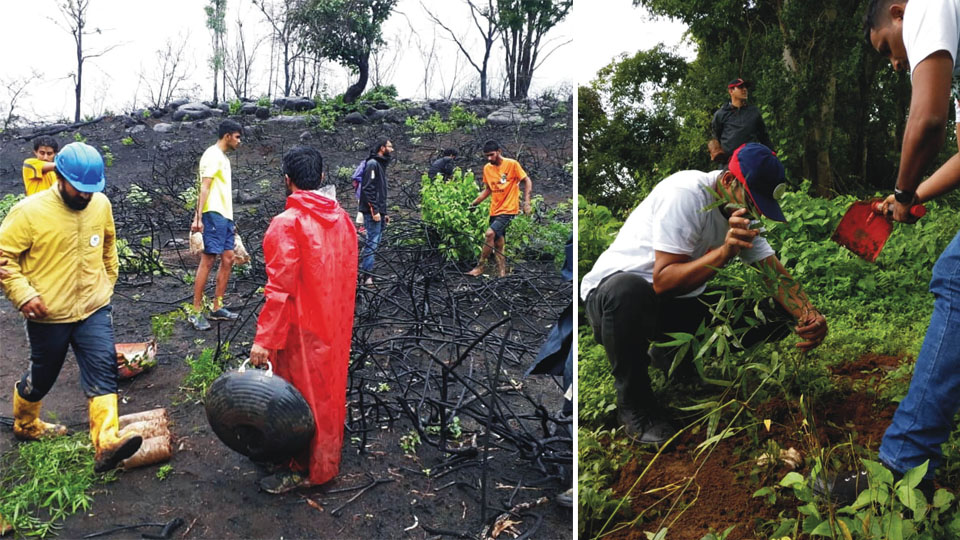
Over 400 volunteers to plant 50,000 seed balls, 10,000 saplings near Anechowkur on July 27

GreenCoverKF31jul2019

Mysuru:

Year-by-year weakening of regular rainfall in Kodagu and depleting green cover along the Cauvery River basin and the resultant shortage of water has made environmentally conscious groups to come together to organise a massive tree-plantation drive in Kodagu, the principal catchment of Cauvery.

An initiative taken up by Kodavaame, Team Roots of Kodagu, Kodagu Jawa Yezdi Motorcycle Club and Forest Department of Karnataka, TATA Coffee, Madikeri Akashavani, Kodava Samaja Bengaluru and over 72 organisations and voluntary groups from Kodagu, Mysuru, Bengaluru and Chennai are coming together for the tree-plantation drive on July 27 from 9 am onwards near Anechowkur Gate, Thithimathi Forest Range in Kodagu under the Nagarahole Tiger Reserve.

This plantation drive is kick-started by individual volunteers to help rejuvenate and rebuild green cover in Kodagu. Volunteers have sourced more than 50,000 seed balls to be planted during the drive and the Forest Department will provide 10,000 saplings of various wild species that are native to Kodagu and the Nagarahole forests.

Kodavaame initiated this annual tree-planting drive three years back and last year, saplings were planted at Aanekaadu forest near Kushalnagar.

Speaking to Star of Mysore yesterday, Shammi Belliappa of Team Roots of Kodagu said that the Forest Department will identify the places where saplings are to be planted and all the necessary permissions and approvals have been taken.

“Different groups and individuals are coming together in Kodagu to work towards the common goal of protecting the flora and fauna. This event can be an ideal start to a great new direction in Kodagu and further can spread to other districts,” he said and added that as it is an annual event, the next plantation initiative is likely to be taken up at Chennangi in Kodagu.

All volunteers have been directed to wear water-proof jackets, rain coats and gum boots or rain shoes. While many volunteers will be grouped to plant saplings and seed balls, the rest will look into the supply of logistics and will ensure smooth traffic flow.

Organisers are expecting over 400 volunteers and as it is a Tiger Reserve, the volunteers will strictly follow the instructions from the Forest Department, he said.

While Lions Club-Gonikoppal and Rotary Club Kushalnagar will provide food and beverages for the volunteers, Kodava Samaja, Bengaluru, will sponsor the free bus ride to and fro for volunteers who are travelling for this greening event.

source: http://www.starofmysore.com / Star Of Mysore / Home> News / July 24th, 2019

Hockey brings families together

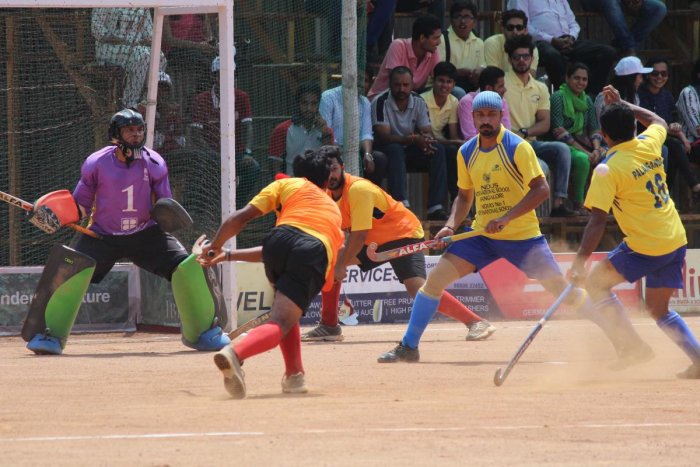
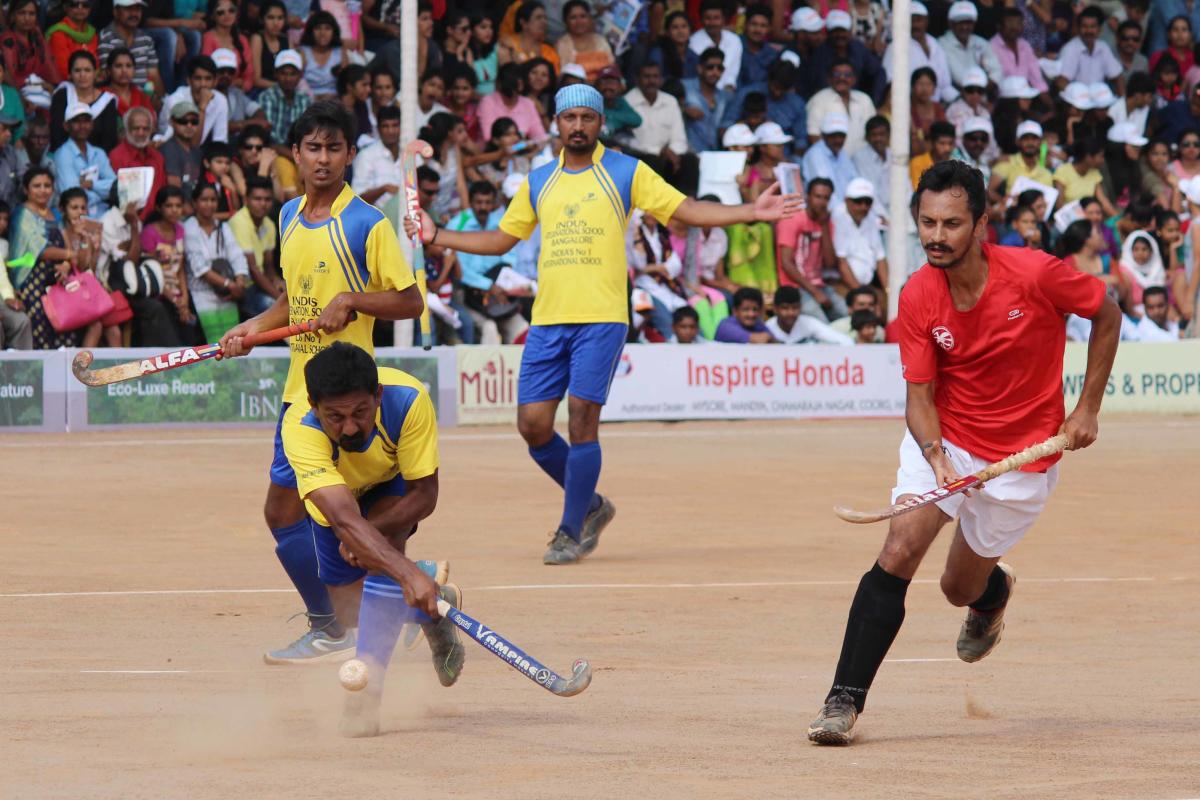
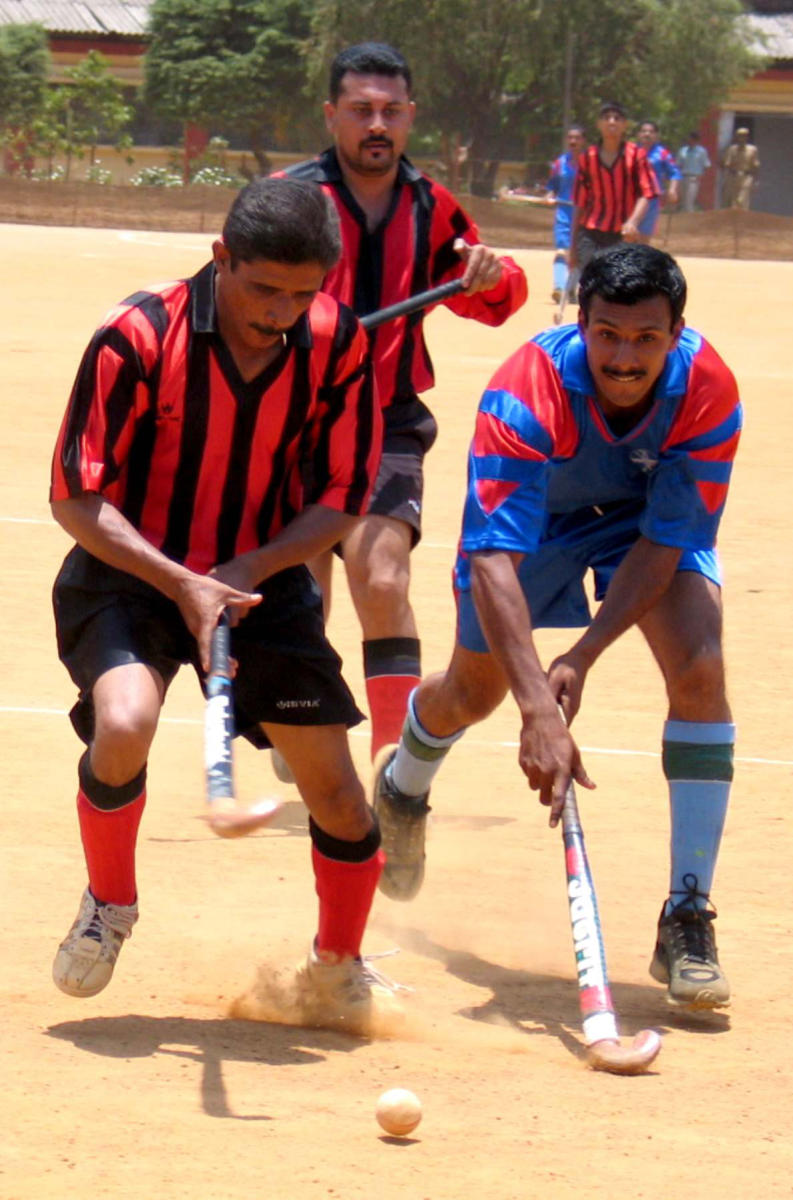
Aiming for a Goal: A match in progress during the Kodava Hockey Festival 2016 in Madikeri, Kodagu. Photos by DH, Niran Shantheyanda

Kodavas loved to pursue two patriotic passions. One was to be part of the nation’s defence forces and the other was to play the national sport. Hence, it was said that a Kodava was born with a hockey stick in one hand and a gun in another.

Hockey was not just a sport in Kodagu, it was a way of living. Kodagu’s children practised and excelled in hockey. There was untapped talent in Kodagu but there was no way to demonstrate it.

Aiming for a Goal: A match in progress during the Kodava Hockey Festival 2016 in Madikeri, Kodagu. / Photos by DH, Niran Shantheyanda

Considering this, Pandanda Kuttappa (Kuttani) and his brother Kashi Ponnappa decided to begin the annual Kodava hockey festival in 1997. “I wanted this festival to be of use to children. I wanted them to get a chance to play for India,” says Kuttappa , former first-division hockey umpire.

That year, Kuttappa’s extended family helped organise the event. Teams from 60 Kodava clans came to participate. The Kaliyanda team won the Pandanda cup. The event is called a festival (namme, in Kodava language), and not a tournament because it helps bring people together to celebrate. Each year one Kodava clan conducts the tournament and the cup is named after the clan. The Kodava Hockey Academy governs the annual festival.

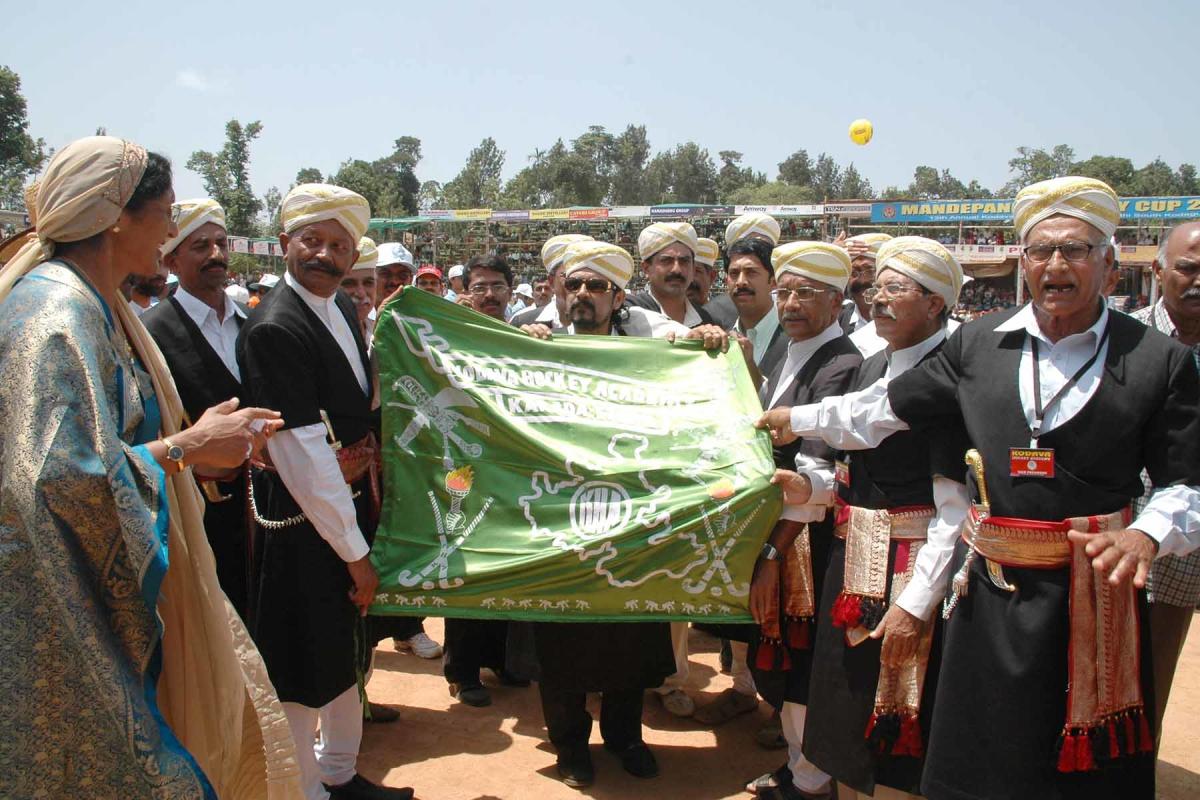
Members releasing the banner of a hockey tournament.

The academy also decides which family can organise the tournament in a particular year. As of now, families have been selected to organise the tournament until 2025.

According to Shantheyanda Ravi Kushalappa, any family that wants to organise the festival should apply to the Kodava Hockey Academy. The application will be checked and considered on a first-come- first-serve basis. The selected family will have a year to prepare for conducting the event. The state government partly funds the event on most years. Lok Sabha MP for Mysore-Kodagu also grants some money. The rest of the money is collected by the family through donations.

Kodava hockey festival.

The family puts together a committee which is responsible for organising the event. They select a convenient ground and arrange all the facilities near the family’s ancestral residence.

According to the Limca Book of Records, the Kodava hockey festival is both the largest and the longest hockey tournament in India. This is probably the world’s largest family tournament as well. In 2018, 329 teams participated in the Kulletira Cup held in Napoklu.

Men, women and children take part in the tournament. There is no bar on age or gender. Among the prominent women players are goalkeeper Shivachaliyanda Nilan (Ekalavya awardee) and Malamada Lilavati.

In 2014, the Thathanda family organised a rink hockey event for 35 families. Later, two formats were supported: league matches for champions who regularly made it to the semifinals and knockouts for others.

In recent times, a number of similar family tournaments such as Kodava cricket, badminton, tug-of-war and golf, Kodagu Gowda cricket, Kodagu Heggade hockey, Amma Kodava cricket, Yerava cricket, Kodagu Muslim football and volleyball events are held in Kodagu.

The champions

There are a few strong family teams who often make it to the top. The Palanganda team has won the festival the highest number of times (five) so far. They entered the finals eight times (between 2006-2016).

Kodagu has produced several Hockey Olympians like Maneyapanda M Somaya, Mullera P Ganesh, B P Govinda, Arjun Halappa, S V Sunil among others. Most of the winning teams have Olympians in their midst. The Koothanda team, led by former Olympian K K Poonacha, comes a close second, having won the festival four times (including the 1999 draw with Kulletira team) between 1998-2008. The Cheppudira team, with another Olympian C S Poonacha, were the runners-up in the 2001 edition.

Olympian goalkeeper Anjaparavanda B Subbaiah’s team has been consistent over the years since 1997. They were winners twice and in the finals five times. Subbaiah attributes the team’s success to the remarkable individual efforts of its players.

The Kaliyanda team won thrice and came second twice. The Nellamakkada team won thrice and hosted the 2001 Cup. Kulletira won all the three times it came to the finals. The Mandepanda team won the tournament once.

In the 2018 finals, the defending champion Chendanda scored two goals and didn’t allow Anjaparavanda to score. Two Olympians were on the field: Nikkin Thimmaiah, a young forward, and Subbaiah, veteran goal-keeper.

“The hockey festival brought the family together. The family members stay in different villages. Earlier, there were no interactions between them, and they didn’t know each other (for many decades),” says Subbaiah. This has been the case with many Kodava families.

The kids of Kodagu are taught to wield the hockey stick at a young age. Their parents make crude hockey sticks and play the game with them after school hours.

Every summer, during the months of April and May, this festival brings together members of joint families. The relatives living in the cities, in the army or elsewhere converge in Kodagu. Uniforms and kits are prepared and at least eleven players are registered. For weeks, the teams practice playing with their hockey sticks on fallow fields and empty grounds.

Personal touch

My family team, the Mookonda team, is quite strong having players like Nikhil, Jnapak who trained in Sports Authority of India.

The first time I watched a Kodava hockey festival game was in our hometown Ammathi. It was the 2001 Cup. Cousins, aunts and uncles came together after a long time. Even my paternal grandmother, who was bed-ridden at the time, requested us to take her to the stadium to watch the hockey game.

The air was filled with slogans being shouted out cheering our home team: “Come on, Mookonda! Steady, Ammathi!”

We also went to watch the Muckatira family match during the 2002 Chekkera Cup in Hudikeri. Even while the sun was beating down upon us and we were all sweating, we cheered the team enthusiastically.

Paused by calamity

Floods and landslides ravaged parts of Kodagu in 2018. In order to show solidarity with the victims, the 2019 hockey festival was initially cancelled. However, the cancellation was not appreciated.

“A year break would make youngsters lose a chance to practice and display their skills,” says Hockey Coorg treasurer Palanganda Lava. Paikera E Kalaiah, who played in the 1975 Hockey World Cup, presides over Hockey Coorg.

Therefore, Hockey Coorg organised a 2019 family tournament with 146 teams in Kakotparamb. Funds were handed over to the calamity victims during the closing ceremony.

In 2020, the Harihara Muckatira family will host the event.

As families bond during this annual festival, hockey players, both young and old, exhibit their talent.

source: http://www.deccanherald.com / Deccan Herald / Home> Spectrum> Spectrum Top Stories / by Mookonda Kushalappa / July 13th, 2019

The President confers Rajiv Gandhi Award on Kakamada Ganga Changappa

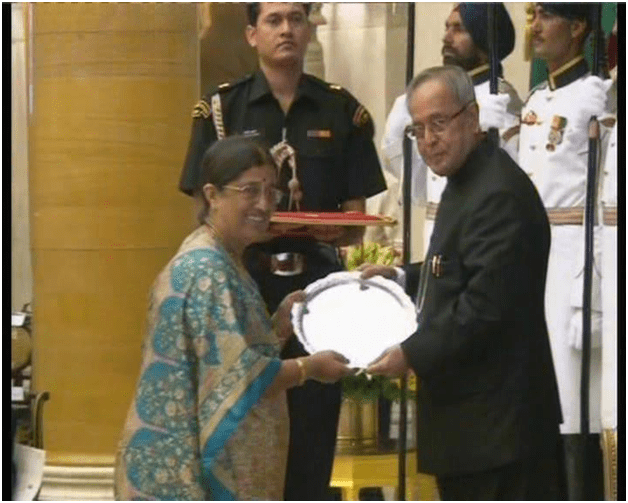
The President of India Pranab Mukherjee has conferred the Rajiv Gandhi Manav Seva Award on Kakamada Ganga Changappa for her outstanding contribution towards child welfare. The Award was presented to her recently in Delhi.

The President confers Rajiv Gandhi Award on Kakamada Ganga Changappa

After her marriage, Ganga Changappa, who holds a Master’s degree in English, settled down in Munnar where her husband worked for Tata Tea. Looking for something worthwhile to do, she found her vocation – welfare of women and children among the Tata Tea estate workers, teaching them skills which they could turn to profit.

With the active support of Tata Tea, she became very involved in setting up a special school and rehabilitation centre in Munnar for children with disabilities – Dare School. She was its Principal for nine years and with her innovative ideas imparted specialised skills to her students in order to make them independent and earn a living.

Her dedicated work was well recognised and in 1999 she received the FICCI award.

When her husband retired as a director of Tata Tea, they settled in Kodagu. Even here, Ganga was determined to work for disabled youngsters. Tata Coffee, as part of their corporate social responsibility, set up a school on the lines of the Dare School, in Kodagu.

The school, Swastha, a special school for the differently-abled was set up in Sunticoppa in 2003. It is partly residential and offers free education. She has worked tirelessly for eleven years taking the school to great heights. Tailoring, screen printing, offset printing, book binding, paper bags and candle-making are a few of the skills being taught there.

Some of the youngsters from the school even got a chance to represent India at the international level in the Para-Olympics.

by P.T. Bopanna

source: http://www.coorgnews.in / CoorgNews.in / Home> Features> NewsMakers / by P.T. Bopanna / December 02nd, 2014

Lest We Forget Their Sacrifice-1 : The Story Of Field Marshal K.M. Cariappa

Cariappa01KF29may2019

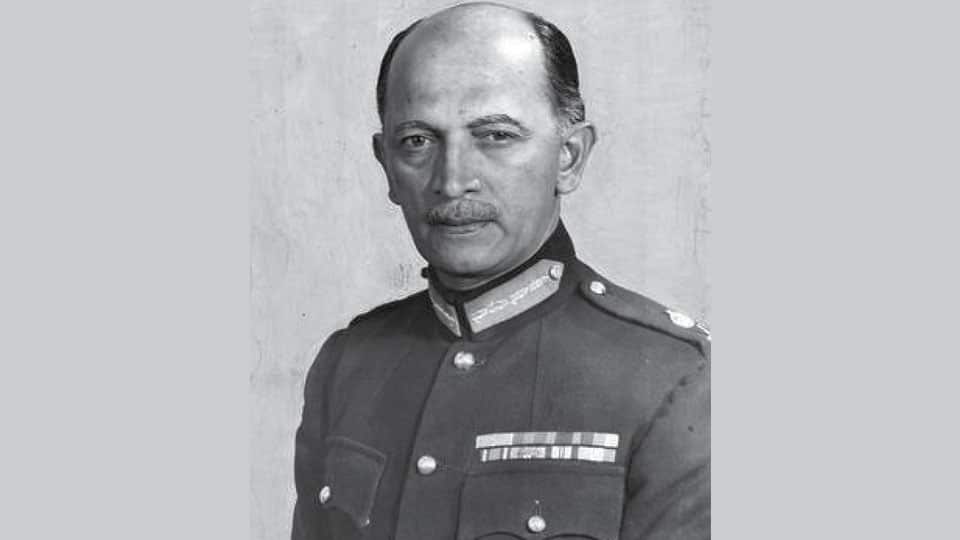
Leader, Commander, Benevolent Father to his children and a guiding beacon that led an entire nation and her armed forces — Field Marshal Kodandera Madappa Cariappa was the first Indian Commander-in-Chief of the Army. He was to his men the epitome of gentlemanly conduct and selflessness. His ideals still hold sway in the Indian Military Establishment. His greatest gift to the Indian People, probably was a fighting force that was no less compared to any other in the world and yet had the commendable restraint that prevented the Army from ever meddling directly in the political machinations of the country. This delineation lent a sense of integrity and unique purpose to the Military Establishment that has held it in good stead all these years. The credit for this must go to K.M. Cariappa. May 15, 2019 was his 26th Death Anniversary and it would indeed be a good time for a look back on his life and events…

By Dr. S.N. Bhagirath

On the 28th of January, 1899 the residents of Shanivarasanthe in Coorg heard a shot fired from the revenue quarters heralding the birth of a baby boy. The boy’s parents were Kodandera Madappa and Ammayya. He was the second among six children and was fondly called ‘Chimma.’ Madappa was a Sub-divisional Magistrate in Shanivarasanthe at that time. Chimma would one day command the Indian Army in Independent India and play definitive roles in WW-II and wars with Pakistan soon after Independence. He nurtured an Army that has stood the test of time. Till the very end of his life, he dedicated to the Army, a spirit of camaraderie and patriotism which remains legendary to this day.

Field Marshal K. M. Cariappa stuck to one particular daily habit — he would get up every morning, finish his ablutions and before his breakfast, walk up to the fire place by his bed side to render his salute to three things lined up there — the two photographs of his mother and father and a small silver statue of the unknown Indian Soldier! Like a true gentleman he sat for breakfast wearing a full suit, often alone.

K.M. Cariappa had his schooling at Madikeri. His English teachers C. Rensford and W.H. Whiteworth made quite an impression on the young Cariappa and imbibed British values in him. He was fond of playing Cricket and Hockey. In 1918, he went to Presidency College at Madras for his graduate studies. On his return to Coorg, there was an ongoing recruitment for the post of “Commissioned Officers” for the Army. Chief Commissioner Cobb was impressed by K.M. Cariappa and selected him over others.

Cariappa joined ‘Daley Cadet College’ on June 1, 1918. His first posting was in the 88th Carnatic Infantry (2nd Battalion) wherefrom he was transferred to 125 Napier Rifles. This regiment was stationed at Mesopotamia (Iraq) for two years. At the end of two years, he was transferred to ‘Prince of Wales’ 37th Dogra Regiment, which was at that time stationed in Afghanistan. During these postings, Cariappa learnt and incorporated into his men the tricks of guerrilla warfare — a move that caught the attention of his British superiors which eventually resulted in his promotion to the post of Quartermaster. He is believed to have got the nick-name ‘Kipper’ around this time. This nickname was later adopted by Nehru and Indira Gandhi as well!

As a representative of the British Indian Army, K.M. Cariappa had the opportunity to visit and observe many other armies. While in Japan, he sadly lost his mother in India. Upon his return, his reputation as an able officer had begun to make rounds in the higher echelons of the British administration. He was entrusted with the onerous task of escorting Viceroy Lord Irwin to Madikeri on an official visit. Cariappa was just 24 years old ! By 1927, Cariappa was a Captain in the Army. Cariappa’s coaching at Royal United Services Institute in 1932 and his time at Small Arms School (SAS) and Royal School of Artillery (RSA) prepared him well enough to clear the Quetta Staff College Entrance Examination. In 1936, he was appointed as Staff Captain and in 1938 he was promoted to the rank of Major.

Cariappa02KF29may2019

Personal Life

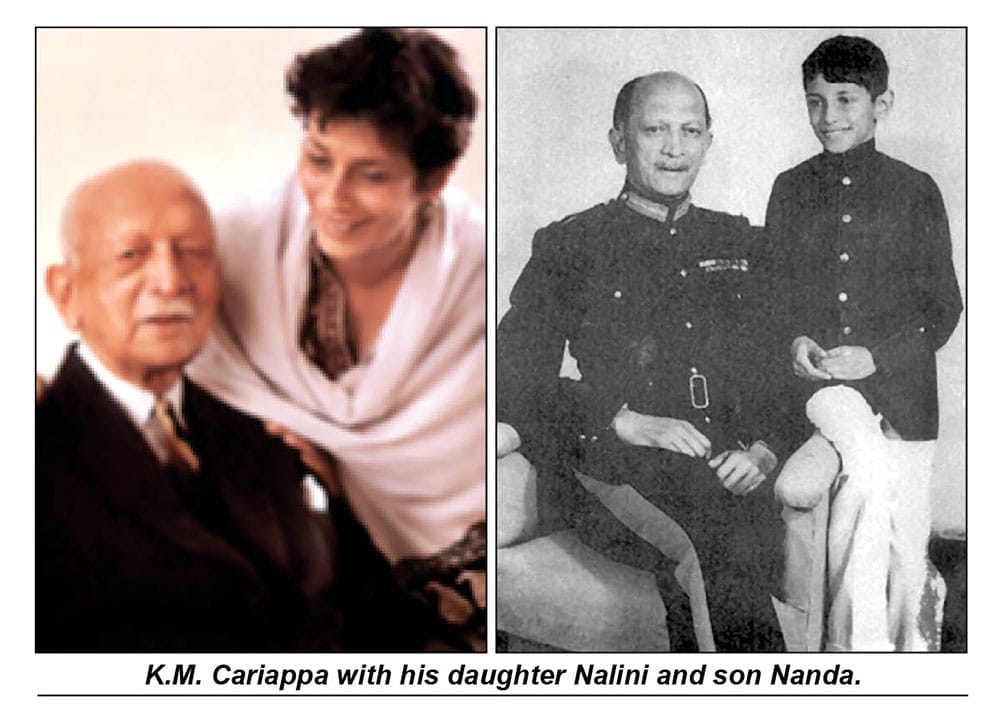
On his 37th birthday, he was sent back to India and was stationed at Hyderabad. In the same year, he got married to Muthu in a traditional Coorgi style wedding. He had his first child, a boy (Nanda Cariappa) in January of 1938. His daughter Nalini Cariappa was born in February of 1943. His tedious and hectic schedule and the constant transfers across the continent eventually took a toll on their marital life. The couple separated in 1946. After the separation, Cariappa took both his children (aged eight and three years) under his wings. He was ably assisted in this effort by his sister. A sudden transfer for Cariappa’s sister’s husband to Andaman & Nicobar Islands meant that he could no longer take care of both children by himself. He decided to send his daughter with his sister and retained his son with himself. In 1954, Cariappa learnt of the sad demise of his former wife Muthu in a car accident.

Professional Life

At the start of Second World War (1939), K.M. Cariappa was stationed in Iraq under General Slim in the Tenth Indian Division. By the end of 1939, Slim recommended Cariappa for the prestigious ‘Mentioned in Dispatches’ distinction. The next year (1940) saw Cariappa taking command of the Indian Divisions in Iran & Syria. In the succeeding decade, Cariappa became the first in Indian history to be offered the post of a ‘Commander.’ He took command of the ‘Rajput Machine Gun Battalion’ as acting Lieutenant Colonel in 1942. In 1943, the Japanese army occupied Burma and Andaman & Nicobar Islands. K.M. Cariappa was transferred to Calcutta (Eastern Command) to take back territories of Burma and Andaman & Nicobar Islands. His valour and able leadership at the height of Second World War earned him the ‘Order of the British Empire’ in 1944. Soon after World War II, he was promoted to the post of Brigadier.

[To be continued tomorrow]

bugs2beatles@gmail.com

source: http://www.starofmysore.com / Star of Mysore / Home> Feature Articles / May 29th, 2019

Madikeri Square: Suggestion By SOM Reader

MadikeriSquare01KF27may2019

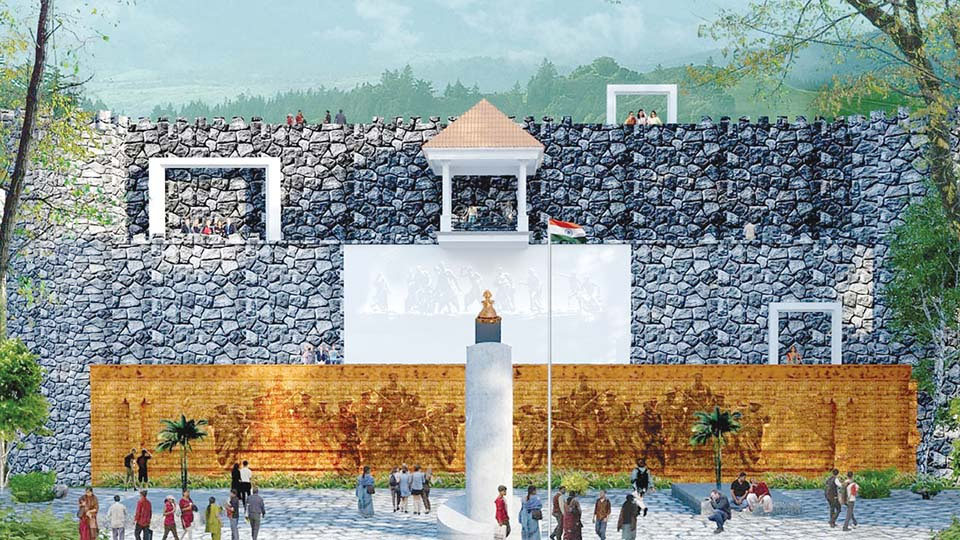
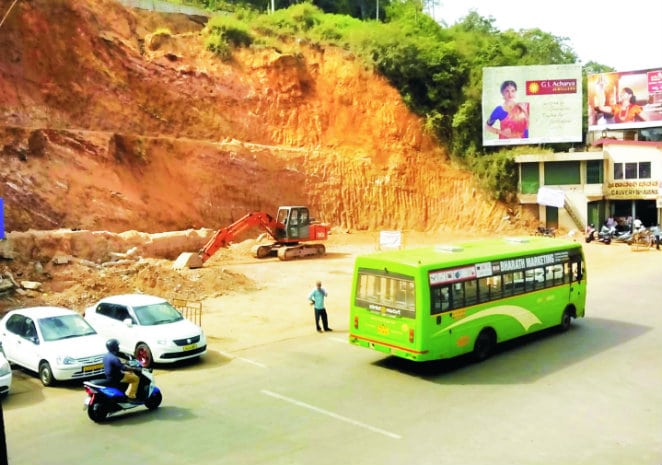
The old private bus stand at Madikeri in Kodagu is in the news of late, thanks to Star of Mysore Editor-in-Chief K.B. Ganapathy (KBG), who mooted construction of a Public Square at the spot, which is situated in the heart of the hilly town and converted the place into a tourist attraction.

The old private bus stand was constructed in 1936 by the British. The landslides and floods that occurred in August 2018 resulted in a portion of the bus stand collapsing and the entire building was demolished later to avert further accidents.

A view of the private bus stand spot in Madikeri

Following this, KBG, who hails from the district, in his column ‘Choomantra,’ published in Mysooru Mithra, a sister concern of Star of Mysore, on Nov.1, 2018, had suggested construction of a Public Square instead of building a commercial complex on the lines of Trafalgar Square at the centre of London City, in honour of India’s first and one and the only Commander-in-Chief Field Marshal K.M. Cariappa, who too hailed from Kodagu.

Taking note of the suggestions, Tourism Minister S.R. Mahesh, who is also the District in-charge Minister of Kodagu, proposed similar ideas. Though meetings were held in this regard a consensus is yet to be arrived at by the stakeholders concerned and the Madikeri City Municipal Council.

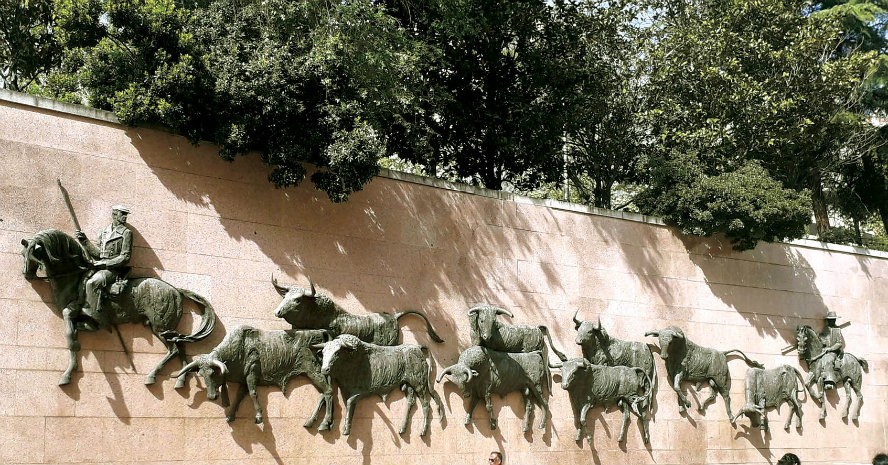
The Bull Fight Arena in Spain which is a major tourist attraction

Meanwhile, an ardent SOM reader R. Chandra Prakash, who was on a 22-day tour of 12 countries across Western Europe, has emailed two photos from Madrid, Spain, Bull Fight Arena and suggested a similar Arena in Madikeri Square depicting the history, heritage and valour of Kodavas on the wall of the old bus stand which will add great value for tourism.

source: http://www.starofmysore.com / Star of Mysore / Home> News / May 27th, 2019

Bike riders take a voyage to Himalayas

Bikers Ranjith Kiggal and Kashyap Mekeri.

Ranjith Kiggal and Kashyap Mekeri from Kodagu have successfully undertaken a bike voyage to the Himalayan region.

The bike ride named ‘The ride of life Part-2’ kick-started in front of General Thimayya statue in Madikeri on April 14. After the completion of the ride, the duo has returned to Madikeri.

Ranjith and Kashyap have visited Nainital, Badrinath in Uttarakhand and the Himayalan regions, on their Royal Enfield bike.

The distance covered by them was approximately 6,200-km and the preparation began three months ago.

Both of them got in touch with bike riders who had already visited these places by bike. They took the Madhurgiri-Anantapuram-Hyderabad-Nagpur-Jhansi-Bareli route to reach Nainital in Uttarakhand on the sixth day of their ride.

In the course of their journey, they visited Jhulaghat on India-Nepal border and also Rishikesh and Haridwar. From Haridwar, they took the route of Mathura-Agra-Shirdi-Satara-Belagavi-Davanagere-Hassan to return to Madikeri.

Rider Ranjith Kiggal said that they had a fresh experience in visiting these places. They encountered a different atmosphere, people and culture on the route.

Appanderanda Yashwant Kalappa guided their tour, he added.

source: http://www.deccanherald.com / Deccan Herald / Home> State> Districts / by Adithya K A / DH News Service,Madikeri / May 20th, 2019

Field Marshal KM Cariappa 26th Death Anniversary: Remembering First Commander-in-Chief of Indian Army

Field Marshal KM Cariappa (Photo Credits: indianarmy.nic.in)

Field Marshal Kodandera Madappa Cariappa breathe his last 26 years ago on May 15, 1993. He was the first Indian Commander in Chief of the Indian Army. Cariappa took command of the Army from its British Commander in Chief, General Sir Roy Bucher. He was also nicknamed “Kipper”. Cariappa was born on January 28, 1899, in Madikeri, Kodagu which is today part of Karnataka.

Field Marshal Criappa had his formal education in Madikeri and pursued his college education from the prestigious Presidency College in Chennai. Cariappa joined the British Indian Army in 1919 and was commissioned in the 88th Carnatic Infantry at Bombay (now Mumbai) as Temporary Second Lieutenant. He was granted permanent commission on September 9, 1922. In 1927, he was promoted to the rank of Captain.

During the World War–II, Field Marshal Cariappa actively served in Iraq, Iran and Syria in 1941–1942 and then in Burma in 1943–1944. Back in India in March 1942, he was posted as second-in-command of the newly raised 7th Rajput Machine Gun Battalion at Fatehgarh. Cariappa was posted as AQMG of the 26th Indian Division stationed at Buthidaung in Burma. The division played an important role in pushing the Japanese back from Arakan. For his services in the operation, Cariappa was awarded the Order of the British Empire (OBE) in June 1945.

In the same year, Cariappa was made the commander of the Bannu Frontier Brigade in Waziristan. During this period, Colonel Ayub Khan – later Field Marshal and President of Pakistan from 1962–1969 – served under him. In 1947, Cariappa was the first of two Indians selected to undergo training at the Imperial Defence College, at Camberly, in the UK, to attend the higher command courses.

After Independence, He was promoted to the rank of Major General and was appointed as deputy chief of the general staff. In November 1947, Cariappa was appointed as the Eastern Army commander after being promoted to a rank of Lieutenant General. As the situation worsened in Kashmir in 1947, Cariappa was moved as General Officer Commanding-in-Chief, Western Command. He directed operations for the recapture of territories seized by Afghan tribals backed by the Pakistani Army.

On January 15, 1949, Cariappa, took over the reins of the Indian Army. The day is now celebrated in India as the Army Day. He served in the Indian Army for over 30 years. After his retirement in 1953, he served as the Indian high commissioner to Australia and New Zealand until 1956. On April 28, 1986, the Government of India conferred the rank of field marshal on Cariappa. He was the second Field Marshal of the Indian Army after Sam Manekshaw. Cariappa’s health began to deteriorate in 1991. He suffered from arthritis and heart problems. He died in his sleep on May 15, 1993, at the Bangalore Command Hospital.

Cariappa was married in March 1937, in Secunderabad, to Muthu Machia. The couple had a son and a daughter. Their son, K.C. Cariappa also known as “Nanda”, joined the Indian Air Force and rose to the rank of air marshal. During the 1965 war, Nanda was shot down over Pakistan. He was captured and held as a prisoner of war (POW). After realising the identity of the captured IAF officer, General Ayub Khan, the then president of Pakistan himself contacted Cariappa to inform about his son. When Ayyub offered to release Nanda, Carriapa asked him to give his son no better treatment than any other POW. Field Marshal Carriappa was a recipient of Indian Independence medal, Burma Star and General Service Medal.

source: http://www.latestly.com / LatestLY / Home> Lifestyle> Festivals Events / by Team LatestLY / May 15th, 2019

‘IRCS known for peace, community service’

Kits were given to the victims of natural calamity by IRCS Kodagu, in Madikeri, on Wednesday

International Red Cross Society (IRCS) has played a vital role in spreading humanitarian values, opined Kodagu Institute of Medical Sciences Principal Dr Vishal Kumar.

He speaking after inaugurating the World Red Cross Day programme, organised by Indian Red Cross Society and Youth Red Cross of Kodagu Institute of Medical Sciences here, on Wednesday.

Kumar said the organisation was known for peace and community service and has been inspiring youth for voluntary service.

He meanwhile opined that every responsible citizen should register with the Red Cross Society.

IRCS Kodagu branch Head B K Ravindra Rai said that the Kodagu unit of Red Cross has planned various programmes in future. The unit has already provided assistance to many villagers during the natural calamity last year.

Youth Red Cross units have been initiated in many colleges in Kodagu. The IRCS is also organising blood donation and health check-up camps.

Kodagu Institute of Medical Sciences Chief Executive Officer Mary Nanaiah said that the Youth Red Cross units in the colleges will create awareness among youth on social service.

Institute’s Community Medicine department Assistant Professor Dr B M Shivaraj, Indian Red Cross Society – Kodagu Honourary secretary H R Muralidhar, Vice President Anil H T and IRCS District Director K D Dayanand were present during the programme.

source: http://www.deccanherald.com / Deccan Herald / Home> State> Mangaluru / by Adithya K A / DH News Service, Madikeri / May 08th, 2019

When General Thimayya’s Grandson Comes Calling At ‘Sunny Side’

ThimmayyaMuseumKF20apr2019

Madikeri:

‘Sunny Side’, General Kodandera Subayya Thimayya’s house in Madikeri that is being converted into a museum and a war memorial, had a special moment last week when the celebrated General’s grandson Kongetira Belliappa visited the museum.

‘Sunny Side’ is located on G.T. Road in Madikeri and it is being renovated at an estimated cost of Rs. 6 crore. Belliappa is the son of Thimayya’s daughter Mireille, who married Maj. Gen. Kongetira M. Chengappa.

Visiting the museum that earlier functioned as RTO Office for the first time, Belliappa went around the museum and saw his grandfather’s photos, memorabilia and other artefacts. Stopping in front of some of the photographs, he turned emotional, recollecting the service of General Thimayya who was known as the “Soldier’s General.”

Some of the photographs portrayed the legendary General’s brilliant strategies and daring that have set the standard for professional soldiering and leadership. Belliappa appreciated the collection of photographs, artefacts and other items related to the Indian Army at the museum.

Field Marshal K.M. Cariappa-General K.S. Thimayya Forum Convenor Major Biddanda A. Nanjappa, who is instrumental in setting up the museum and the war memorial, explained the museum and its various sections.

Providing a detailed account of how General Thimayya inspired his soldiers to carry parts of Army Tanks up to a height of 12,000 feet snow-clad mountains of Zojila Pass — one of the highest Passes in the world — when Pakistan planned to annex Kashmir by force during their offensive of 1947-48, Nanjappa told Belliappa that it was a daring move and the Pakistan army ran away after seeing the Tanks staring at them. The parts of Tanks were carried up the mountains overnight and were assembled by early morning of Nov. 1, 1948.

The very appearance of the Tanks utterly dampened the morale of the bewildered Pakistanis who either fled or were vanquished. Once Zojila was taken, the road to Kargil was reopened and Ladakh was safe. Ultimately, on Nov. 24 Kargil was re-taken. Thus the unofficial 1st Indo-Pak War (and perhaps the longest and toughest of them all) ended in success owing to the bold, shrewd and relentless pursuit led by Gen. Thimayya, explained Nanjappa.

Nanjappa then requested Belliappa to hand over certain items that belonged to General Thimayya that is in possession of the family to be kept in the museum.

Art works featuring the valour of Indian soldiers on the battlefield will occupy the centre stage at ‘Sunny Side.’ Other main attractions of the museum will be the articles used by Gen. Thimayya, military uniforms, books and information on Indian Army, Navy and Air Force.

Apart from an Army Tank, weapons that were used by the soldiers of Indian Army in the past during many operations have been donated to the museum.

source: http://www.starofmysore.com / Star of Mysore / Home> News / April 20th, 2019

Defence Investiture Ceremony II – C.P. Cariappa

New Delhi:

President Ram Nath Kovind presents Ati Vishisht Seva Medal to Major General Codanada Poovaiah Cariappa during Defence Investiture Ceremony – II at Rashtrapati Bhavan in New Delhi, on March 19, 2019.

CariappaKF23mar2019

source: http://www.prokerala.com / ProKerala.com / Home> Latest News / March 19th, 2019