Category Archives: Amazing Feats

Bengaluru pitches in for Kodagu

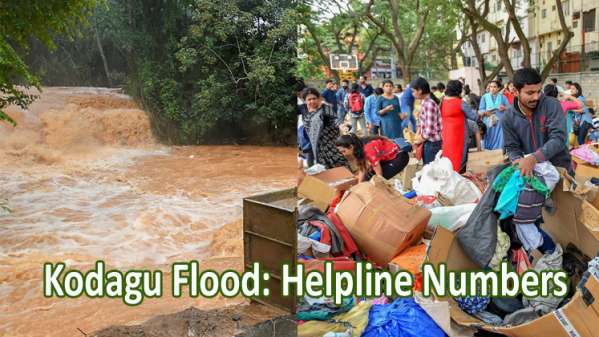
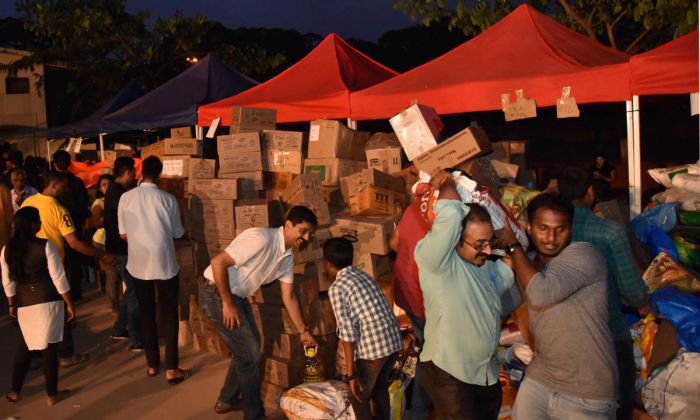
People from across the city contributed generously to the relief operations that stretched well into the night at the Kodava Samaja site. The relief collection centre saw volunteers from all age groups chipping in.

Kodava Samaja, hub of the Kodava community in Bengaluru, is abuzz with activity. Metrolife visited its relief material collection site in Vasanthnagar on Saturday, and found relief supplies pouring in generously for flood-affected areas in Kodagu.

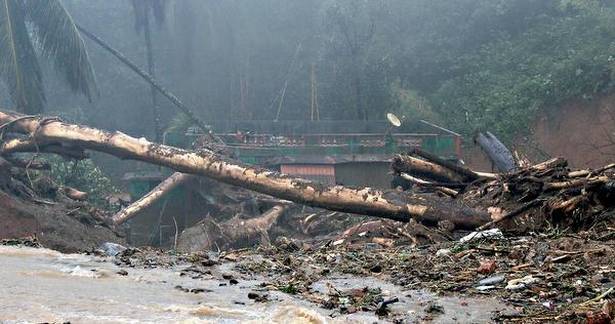
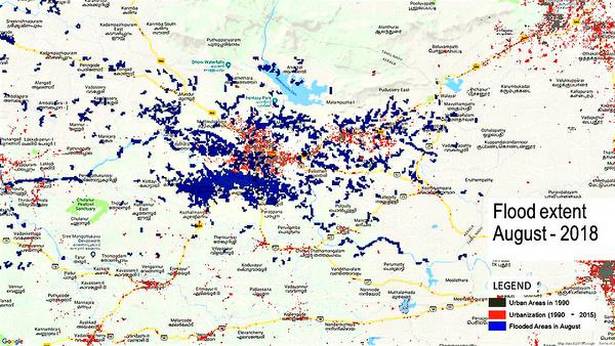
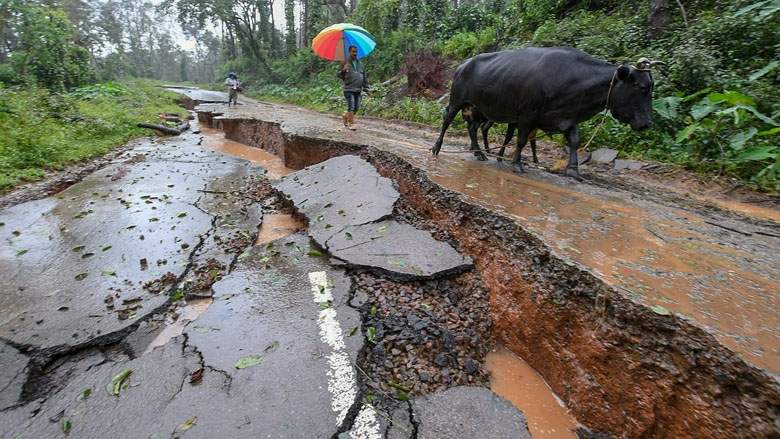
Incessant rains have claimed 10 lives in this lush Karnataka district, where the river Cauvery originates. Houses have collapsed. People are being moved to safer locations with the help of the army. Entire towns and villages are marooned.

C K Subbaiah, secretary, Kodava Samaja, says the relief operations in Bengaluru are stretching well into the night.

“On Friday, our relief activities went on till 2 am and we have enough supplies. It is good to see people from across the city coming in to extend their help and support,” he says.

Karun Kalappa, member of the Samaja, feels inspired by the energy of the volunteers.

“People from across the city, Bannerghatta Road, Vijayanagar, Electronic City and Rajajinagar, brought in lots of material, varying from sanitary napkins to blankets to even dog food. There are also people from Udupi, Sakleshpur and Tirupati, who have contributed money and material,” says Karun.

The relief collection centre saw volunteers from the age of 8 to 80. Satish Mohapatra, a businessman, was worried about friends stuck in Kodagu.

“I am a part of a riding club and some of our friends were there. Our group has come together to contribute, and help with loading, segregating and transporting relief material. I feel good that I used a weekend for something worthwhile,” he says.

Satish, like many others, is helping pass on information to people in distress. “My friends and I are part of WhatsApp groups forwarding information about helplines and numbers gathered from Twitter and Facebook. Many people are marooned and we are trying our best to help them reach safe places,” he says.

Amid the hustle and bustle at the centre, many were trying to get information about relatives at relief camps in Kodagu.

Ruchitha Aiyappa, payment specialist with an MNC, heard about the floods through social media but was alarmed when she got messages that her grandparents had to be moved to a relative’s house.

“When distress strikes one personally, it leaves a deeper impact. Knowing that my small efforts help someone in a dire situation makes me feel at peace now. There were a lot of my friends who sent me money to contribute to the funds being collected here,” she says.

Ruchitha says about 30 per cent of volunteers and people donating in kind are non-Kannadigas. “A lot of youngsters, between the age of 15 to 30, come to the centre,” she says.

Mookonda Deepthi Nitin, environment officer in a manufacturing unit, is among the volunteers. She encourages people to be more sensitive to nature.

“I have been telling people the damage seen is not all. I have also been actively coordinating with volunteers in Kodagu through WhatsApp groups to help locate their relatives. I verify messages before passing them on,” she says.

Some like Koppira Darshan Ayanna, IT professional, spent all of Saturday at the Samaja in Vasanthnagar. “We have enough supplies now and the response is overwhelming. Despite it being a weekend, there were 350 people around on Saturday night. We hope we can overcome this situation together,” he says.

Wish to contribute?
Send your contribution to:
Kodava Samaja Flood Relief Fund Blr.
Account number: 1370101084312 IFSC Code: CNRB0001370 Canara Bank. Vasanthanagar Branch
Call Kodava Kodava Samaja, Bengaluru: 080-22260188

source: http://www.deccanherald.com / Deccan Herald / Home> Metrolife / by Tini Sara Anien , DH News Service,Bengaluru / August 19th, 2018

Donate to Kerala and Kodagu, get photoshoots and portraits in return: Here’s how

Artists around the country are coming together to render their services in exchange for donations made to the flood relief efforts.

ClickforCoorg01KF19aug2018

As Kerala and Kodagu in Karnataka reel under heavy flooding, people across the country are making an effort to volunteer, collect relief material or help in some way or the other.

Photographers and artists in Chennai, Bengaluru and other cities are pitching in too – many have joined social media campaigns asking people to donate money for the flood hit areas in return for availing their services for free.

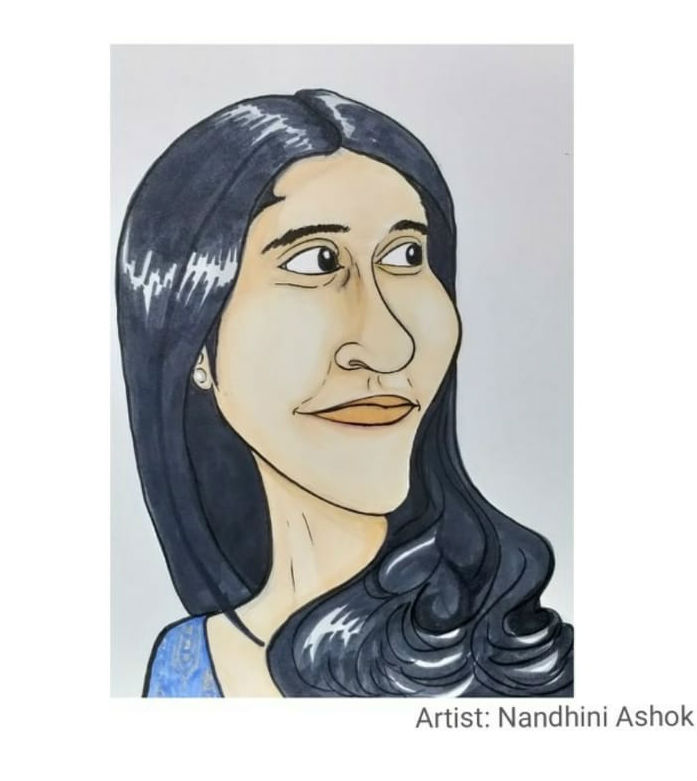
If you look for the ‘Clicks for Kerala’, ‘Click for Coorg’ or ‘Donate for a Portrait’ tags on Instagram, you will come across several artists and profiles, promising everything from caricatures, handmade portraits, family portraits, photoshoots for couples, babies, pets and more.

‘Donate for a Portrait’ campaign

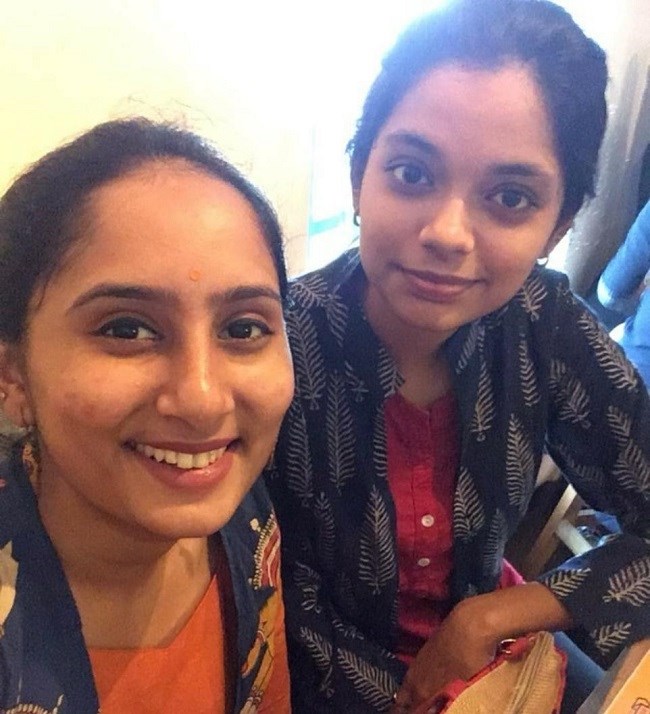
Sharmada Nagarajan, a Chennai-based graphic designer, was as distressed as anyone seeing the devastation caused by the floods in Kerala. Wanting to do something about it, she and her friend Priyadarshini, another graphic designer came up with an idea.

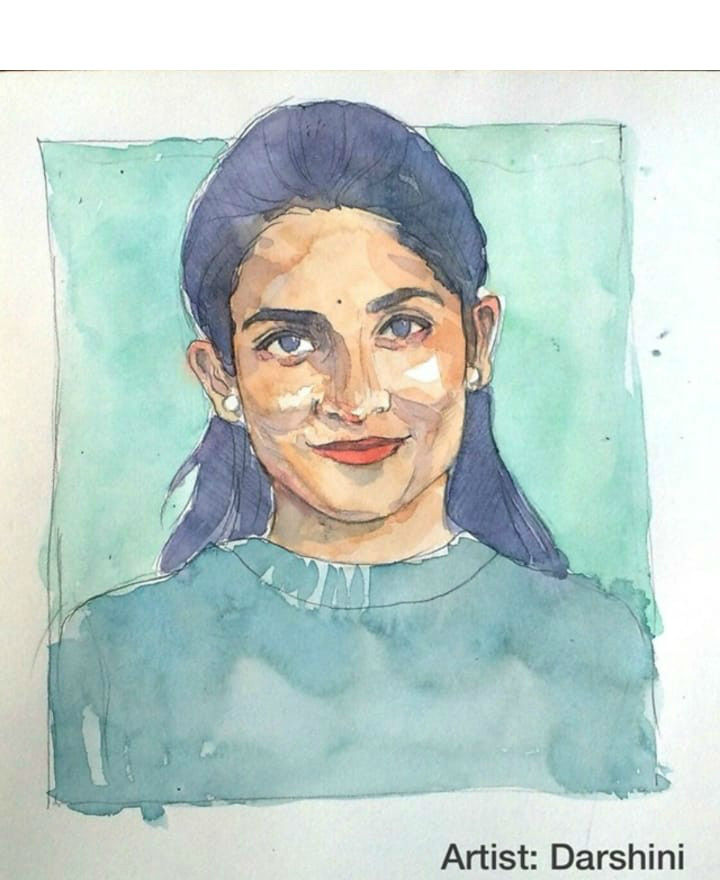
They created the ‘Donate for a Portrait’ where all a person needs to do to earn a caricature, watercolor or digital portrait of themselves, is donate a minimum amount of Rs 750 to Kerala CM’s relief fund. Then they can share the screenshot on social media with the artist in question, and a digital copy of the portrait will be sent to them by the end of the day.

Sharmanda and Priyadarshini

“We only came up with it on Friday afternoon and put it up by evening. Initially it was just 4-5 of us, all batchmates from college who decided to do this. But within no time we got requests from other artists who wanted to join in and be part of the campaign. People from even Delhi, Mumbai and Ahemdabad showed interest,” Sharmada tells TNM.

“We are 22 people now who are making this effort and the numbers are growing as we speak,” the 23-year-old adds. “I think this is working well because when it comes to selling art itself, people are hesitant to buy it. But a portrait or an artwork of themselves is something that catches their fancy more easily.”
ClickforCoorg03KF19aug2018

ClickforCoorg04KF19aug2018

Sharmada and a few others are maintaining an online document where they are keeping track of how many people have contributed and requested portraits, who is making them, and how many of them have been made. “So far, about 60 people have sent us proof of their contributions and we have raised about Rs 70,000 through this,” she shares.

‘Click for Kerala’ and ‘Click for Coorg’ campaigns

Meanwhile in Bengaluru, a similar conversation was happening in a WhatsApp group of professional photographers in the city. Anbu Jawahar and Ankit Singh, two members of the group had done something similar to ‘Clicks for Kerala’ when the Chennai floods happened in 2015.

The idea behind these two campaigns is similar to Donate for a Portrait – except here, donors have to donate a minimum of Rs 5,000 and according to the amount, they can avail services for a photoshoot.

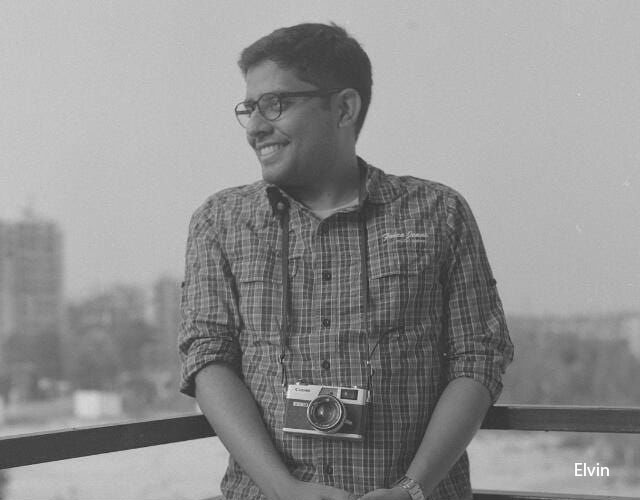
“We came up with this three days ago, and we decided to put up a poster on our Instagram stories. We have received messages from photographers in Delhi, Mumbai, Chennai and even Kerala,” shared Elvin Jacob, a 31-year-old photographer in Bengaluru.

ClickforCoorg05KF19aug2018

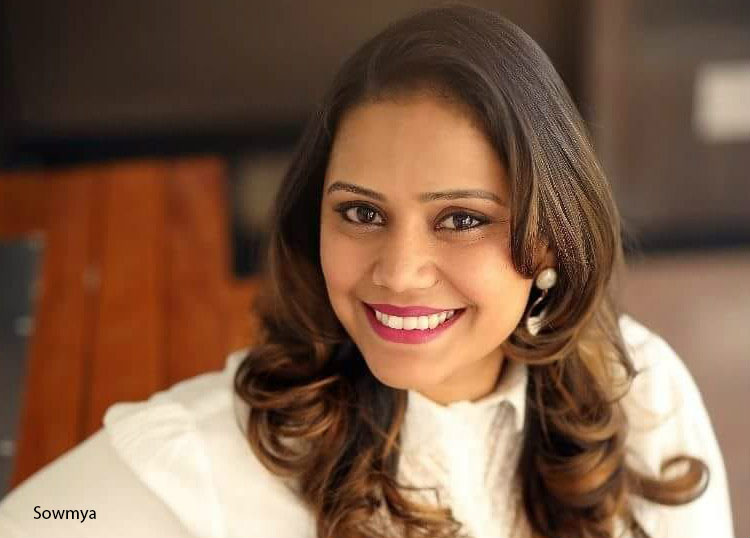
Sowmya Mense, another photographer who is taking part in this campaign, originally hails from Kodagu. “My aunt lost two houses in the flood. I know several other families who have been rendered homeless,” the 36-year-old says.

She put up the ‘Click for Coorg’ post on her Instagram on Friday and has already received 6 to 7 requests. “They have sent me the proof of their donation and out of the Rs 23,000 raised, Rs 10,000 I am giving to Kerala relief fund. The rest, once I collate more responses to the campaign, will be given to Coorg,” Sowmya says.

ClickforCoorg06KF19aug2018

A challenge, both Elvin and Sowmya, say is to work around their bookings for commercial shoots and include the people who have opted for shoots through the campaign. This is why they have a much more decentralized working system – each photographer can accept as many requests as they can manage and there is no centralized tally.

The participating photographers however, are hopeful that more people will come forward so they more funds can reach the affected areas of Kerala and Coorg.

source: http://www.thenewsminute.com / The News Minute / Home> Rains / by Geetika Mantri / August 18th, 2018

K M Cariappa – Father of Indian Army

CariappaKF24jun2018

Chennai:

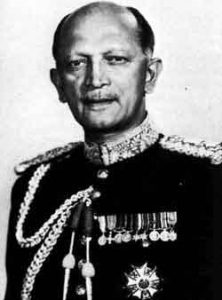
Whoever goes through the military history of India, will never forget Field Marshal K M Cariappa.

Only two officers of the Indian Army have got the rank of a Field Marshal: one of them being Cariappa and the other being Field Marshal Sam Manekshaw.

But that isn’t the only thing that won him recognition – his achievements are no less worthy. While the alumni of Officers Training Academy unveil the statue of the noted Army officer who held five-star rank, News Today journeyed through his life and achievements.

His distinguished military career spanned almost three decades. He was the first Indian military officer to attend the Staff College, Quetta, the first Indian to command a battalion, and was also one of the first two Indians selected to undergo training at the Imperial Defence College, Camberley, UK.

Field Marshal Cariappa made his voice clear when Skeen Committee was set up in 1939 to examine the options of Indianisation of Indian Army’s ranks.

As Cariappa was one of the senior most Indian officers with about 19 years of service, the committee held several discussions with him. He expressed his displeasure at the treatment of Indian officers in the Army.

He decried the discrimination shown towards Indian officers in terms of appointments, promotions, benefits and allowances British officers were entitled to.

He is known for ‘Operation Kipper’, ‘Operation Easy’ and ‘Operation Bision’ done to capture Naushera, Jhangar, Poonch, Zoji la, Dras and Kargil areas in Kashmir during 1947 and 1948.

The operations aimed to drive out Pakistanis from Kashmir, but they were stopped by the intervention of the United States. While Army headquarters asked not to launch any operations, Cariappa protested against it and launched several strikes in the Ladakh region allowing India to assert control over the region.

Cariappa took over the reins of the Indian Army 15 January 1949, that was marked as official Army Day and celebrated annually.

As chief of the Army, Cariappa was instrumental in the formation of the Territorial Army in 1949. He extended support to the National Cadet Corps (NCC) during its formative years. These two complimentary branches of the Army later proved to be very helpful in the wars India fought in later years.

He also adopted the Indian National Army slogan ‘Jai Hind’: it became a phrase for the personnel to greet each other in the Army.

He turned down the proposal to reserve vacancies in the Army for Scheduled Castes and Scheduled Tribes as had been done in other government services. He stated that the proposal would degrade the Army’s standards and increase the risk of it being defeated if right talent was not recognised.

Cariappa took part in the reorganisation of the armed forces in many foreign countries. He was awarded the Legion of Merit in the degree of Chief Commander by American President Harry S. Truman.

As a mark of recognition for the commendable service rendered by him to the nation, the Government of India conferred the rank of Field Marshal on Cariappa 28 April 1986, at a special investiture ceremony at Rashtrapati Bhavan.

source: http://www.newstoday.net / News Today / Home> Chennai / by S. Vishnu Sharmaa / June 23rd, 2018

After 33 years, 2 brothers find their family through newspaper advertisement

A family of six siblings has reunited after 33 years in Madikeri following an advertisement published in a district newspaper.

Anand Nayar and Shekar pose for family reunion picture

Madikeri :

A family of six siblings has reunited after 33 years in Madikeri following an advertisement published in a district newspaper.The two estranged brothers had been living in Mumbai for the past 33 years, assuming that their parents had passed away. They were overjoyed to reunite with their 80-year-old mother who was in tears seeing her two sons after decades.

Anand Nayar, the oldest of six siblings, left Madikeri during the 1980s to find a job in Mumbai. He left behind his parents Kumar and Thangamma, who worked as daily wage labourers in an estate, and five younger siblings. The family had moved to Kodagu from Kerala 50 years ago. Finding a job at a construction company, Anand kept in touch with his parents and siblings via letters.

Shekar, the youngest among the siblings, ran away at the age of 12, following his brother’s footsteps and settled in Mumbai with him. While Anand wrote letters to his family, they became less frequent over time and later stopped altogether. Around the same time, the parents left their old job and moved to a different house.

With no internet or mobile accessibility, the communication between the two brothers and the rest of the family became impossible. Eventually, the two brothers married and settled in Mumbai.Meanwhile, their father Kumar passed away. On his death bed, he had expressed his desire to see his two missing sons. Telegrams were sent to Anand’s old address, only to be returned to the family stating that no such person lived there.

After 33 years of being away from family, Anand wanted to meet his siblings, assuming that his parents might be no more. He, along with Shekar, came to Madikeri two days ago and started looking for his family. “We left Madikeri when it was covered with forests. There were no proper roads, nor electricity. Now, everything has changed and we could not recognise the place we left behind,” said Shekar.

Helpless, they approached a district newspaper to post an advertisement. The advertisement was published following a police search complaint. The next morning, the editor of the newspaper woke up to Anand’s call, who was yelling with joy, “I can’t thank you enough; I have found my mother, brother and sisters because of your newspaper,” said Anand. He had received a call from his sister on a number he had posted on the ad.

Anand and Shekar were reunited with their family in a house near Madikeri Gowda Samaj. Their aged mother, with a joyous smile, said: “I am glad that they came looking for their family before I left this world.” With tearful eyes, she spoke about her two sons and said, “My life cannot get happier than this.” While posing for a family picture, the oldest brother Anand adoringly pulled his sister Prabha beside him and smiled for a family reunion picture.

source: http://www.newindianexpress.com / The New Indian Express / Home> States> Karnataka / by Prajna GR, Express News Service / June 20th, 2018

A ray of hope for special children

Swastha has rehabilitated many such children
There are 101 such children in Swastha
It has been training special children in various vocations since 2004

Madikeri:

Swastha, a centre for rehabilitation of special children on Sunticoppa-Madapur road in Kodagu, is a “home sweet home” for 101 such children.

Swastha has been taking care of such children and training them in various vocations since 2004.

Ganga Changappa, project head of Swastha, told The Hindu that 19 children, who had been trained in bookbinding, folder-making, screen printing, manufacturing table mats, bags, mushroom cultivation and offset printing, had been shifted to Polibetta, where they were working now.

In Swastha, special children undergo training under the watchful eyes of specialists. As many as 18 children have found placements in Kodagu and elsewhere. Some have been self-employed. Tulasi, who joined Swastha in 1986 and trained there till 2003, is now employed in a garment factory in Bangalore. Manohar, who was admitted in Swastha with cerebral palsy, works as a helper at the KSRTC depot in Kushalnagar. Guruappa, who is partially visually challenged, works in the Bengaluru International Airport.

Three are working as instructors at Swastha itself. Mohini, who is physically challenged, is working as a tailoring instructor, according to Aarti, counsellor and psychologist at Swastha. Two mentally challenged girls got married some time ago. Besides, seven children had joined regular schools under inclusive education stream, she said.

Eighteen-year-old Gaurav from Somwarpet made news recently for a different reason. He is less than two feet in height. But he is unperturbed by this and is preparing for the SSLC examination.

Special skills are needed to handle such children, and the faculty at Swastha has them in abundance. The faculty deals with children with cerebral palsy, autism, mental retardation, and epilepsy.

There are six special educators, a rehabilitation teacher and a speech therapist, apart from the counsellor.

Ms. Aarti said Swastha had also brought the parents of the children under one roof. The parents had formed a self-help group. They would meet on the fifth of every month. The group was planning to buy sweaters for the special children this year.

The children get free vocational education, accommodation, uniforms, and medical care. There is free transport for day scholars. Swastha is funded by the JRD Tata Trust and Coorg Foundation, an initiative of Tata Coffee Limited, Polibetta.

Ms. Ganga Changappa said Swastha incurred an expenditure of Rs. 30 lakh every year. Two hundred children had applied for admission in Swastha, she added.

source: http://www.thehindu.com / The Hindu / Home> National> Karnataka / by Jeevan Changappa / August 17th, 2008

India’s maiden honour – Bhandari to chair ICO consultative board for a year

India, for the first time, will chair the board of International Coffee Organization (ICO) for a term of one year with Anil Kumar Bhandari, president of India Coffee Trust (ICT), getting elected as the chairman of Private Sector Consultative Board (PSCB) of ICO.

PSCB is an international coffee organisation body comprising 16 leading industry representatives from producing and consuming countries. The board’s main mission and objective is to increase the world coffee market in value and volume and also support various initiatives in the field of coffee and health.

Bhandari is the first representative from India to occupy the important position and his election is significant in the backdrop of World Coffee Conference (WCC) scheduled in Bengaluru, in April 2020.

Speaking about his election, Bhandari said, “My election as chairman, Private Sector Consultative Board of International Coffee Organization is an honour for India and India Coffee Trust. This is the first time that India has chaired the PSCB. I see this as the confidence reposed in India and ICT, going into the World Coffee Conference in 2020, which would be hosted by India and will be held for the first time in Asia. It also indicates the interest that the global coffee sector has in the Indian coffee industry and the Indian coffee market.”

The 121st Session of International Coffee Council (ICC) under ICO was held in Mexico City from April 9 to 13, 2018. ICO is an intergovernmental body of coffee buying & producing nations, having more than 72 member countries and India is one of the founding member.

It is the main intergovernmental organisation for coffee, bringing together exporting and importing governments to tackle the challenges facing the global sector through international cooperation. Its objective is to strengthen and promote its sustainable expansion in a market-based environment for the betterment of all participants in the coffee sector.

source: http://www.fnbnews.com / FnBnews.com / Home> TopNews / by FnB News Bureau, Bengaluru / April 30th, 2018

CWG 2018 Medals Will Encourage Us To Perform Better: Joshna Chinappa

Chinappa and Pallikal had to settle for a silver in the women’s doubles competition

India squash stars Joshna Chinappa (left) and Dipika Pallikal with their CWG silver medals at Chennai airport on Monday. Pic/PTI

India’s leading squash players, Joshna Chinappa and Dipika Pallikal, returned to a warm welcome here late last night after winning silver medals at the Commonwealth Games in Gold Coast.

Chinappa and Pallikal had to settle for a silver in the women’s doubles competition. Pallikal also won a historic silver in the mixed doubles with Saurav Ghosal. As defending champions, the thought of the past glory did come to the mind, said Chinappa, who had won a gold medal in the Glasgow Games in 2014 alongside Pallikal.

“Four years since, much has happened in squash. We were there on the podium then and the goal was not to miss that moment again. To that extent it was satisfactory finish,” she said. “We are encouraged to work harder for next big challenge, the Asian Games in August,” she added.

This story has been sourced from a third party syndicated feed, agencies. Mid-day accepts no responsibility or liability for its dependability, trustworthiness, reliability and data of the text. Mid-day management/mid-day.com reserves the sole right to alter, delete or remove (without notice) the content in its absolute discretion for any reason whatsoever

source: http://www.mid-day.com / mid-day.com / Home> Sports News> Other Sports News / PTI / April 18th, 2018

Ashwini Ponnappa – unheralded hero of Indian badminton’s dream run at CWG

Ashwini Ponnappa (right) won her third Commonwealth Games medal as she bagged a Bronze in women's doubles with N Sikki Reddy in Gold Coast. (Photo: Reuters)
Ashwini Ponnappa (right) won her third Commonwealth Games medal as she bagged a Bronze in women’s doubles with N Sikki Reddy in Gold Coast. (Photo: Reuters)

India completed their best-ever medal in badminton at the Commonwealth Games (CWG) on Sunday with a total of the six medals, including two Gold, three Silver and a Bronze.

India not only won a Gold and two Silver in the singles events but scooped a gold medal in the Mixed Team event, a Silver in men’s doubles and a Bronze in the women’s doubles.

The reason for India to win double the number of badminton medals this year than the last two CWG is the success of doubles.

On Sunday, after the Games officially got over, Pullela Gopichand said that he felt “this tournament belongs to Ashwini (Ponappa).”

Ashwini Ponnappa is a name well known in India. She has been India’s top doubles players for quite a lot of years now but it is truly now that her name has begun to be highlighted well.

During the Mixed Team event final against Malaysia, Ashwini played the first match of the tie, the mixed doubles, with Satwiksairaj Rankireddy. Satwik, who is only 17 years old, is already one of the best doubles players in the country and world No.21 in men’s doubles along with Chirag Shetty. However, on April 9, 2017, it was Ashwini who led the pair to a stunning win against Rio Olympics silver-medallist Peng Soon Chan and Liu Ying Goh.

Ashwini Ponnappa was constantly chatting with Satwik, guiding him, during their mixed doubles match in the Mixed Team event final. (Photo: Reuters)

In the first game of the mixed doubles, the Indian pair completely dominated the Malaysian pair but Chan and Goh soon found their way through Ashwini and Satwik and took over from the second game.

In the decider, Chan and Goh were leading 12-7 at one point but the Indian pair then won a point to make it 8-12. From there as Ashwini led the way with her serve, India won seven straight points to go up 15-12.

Therafter, Chan and Goh could win only three more points before Ashwini and Satwik took the match away.

Ashwini in that mixed doubles victory was a sight to behold. Such was her brilliance that even the commentators were in awe of her skills and intelligence.

One could see in those final few moments, the determination and belief in her eyes and her strokes, she knew they could win it. Even as the Malaysians played it around, Ashwini knew exactly where the shuttles would come, she would leap up front and go for the kill.

Satwik supported her ably. Ashwini was constantly chatting with Satwik, guiding him, discussing their strategies, leading the team and it showed. Satwik’s control at the back of the court enabled Ashwini to absolutely intimidate the opponents at the net. Ashwini’s sharpness and booming smashes, along with Satwik’s jump smash, eventually took them home.

It was that unexpected mixed doubles victory that pegged the defending champions Malaysia behind. It gave Kidambi Srikanth to come forth and play his game.

Like Gopichand said, “The win in the team championship was very critical to put the team 1-0 up and give the confidence to Srikanth to beat Lee Chong Wei.” And Srikanth dominated the legend Chong Wei in some style.

Satwik and Chirag, thereafter, missed the chance to seal the win in men’s doubles and India’s Golden Girl Saina Nehwal came next and sealed the deal, giving India their first-ever mixed team Gold at CWG. (India Open: Indian doubles stars show spark, five pairs in quarters)

Ashwini, along with N Sikki Reddy, went on to win a bronze medal in women’s doubles and missed a mixed doubles Bronze by a whisker.

Consider this, on April 14, Ashwini played a total of four matches. Four gruelling badminton matches and still managed to scoop a Bronze in women’s doubles.

ASHWINI’S ROLE IN GUIDING THE YOUNGSTERS IN INDIAN DOUBLES

Ashwini03KF17apr2018

Ashwini’s importance in this badminton setup is not limited to the medals she brings home. Her stature has gone beyond that.

She plays in two different categories with two youngsters — a 17-year-old Satwik and a 24-year-old Sikki. She is the one who is making them better players.

Satwik is one of the most successful stories to come out of Premier Badminton League (PBL), where he plays along Olympic medallist Pia Zebadiah for Hyderabad Hunters. He came into prominence playing alongside Zabadiah but the immense growth the youngster has shown in the past year and a half, is down to the experience he is gaining from Ashwini.

Ashwini is a leader on the court. She teaches Satwik the mental aspect of the game and that helps him when he plays with Chirag in men’s doubles. (BWF rankings: Satwiksairaj-Chirag Shetty break into world top 20 for first time)

In fact, Ashwini is almost transmitting her leadership quality into Sikki. Sikki, who also plays mixed doubles with Pranaav Jerry Chopra, shows those leadership qualities alongside Pranaav.

Ashwini has achieved a great deal over the years. A women’s doubles Gold with Jwala Gutta in 2010 CWG started a long success story. Even then, perhaps the success did not get its due recognition. Thereafter, came a Silver in women’s doubles with Jwala at 2014 Glasgow Commonwealth Games, a Bronze in women’s doubles at the 2011 World Championships and many more. Yet, those achievements hardly created a stir in the sporting spectrum.

Doubles badminton needs to be given its due credit. In Australia, while Saina Nehwal, PV Sindhu and Kidambi Srikanth held sway at the individual events, the doubles players quietly took home two medals. Consequently, India was the most dominant nation in badminton during the Gold Coast events.

At the age of 28, Ashwini has a great deal of experience and many more years of play where she can achieve more glory and impart far more knowledge.

Even as the success story of Indian badminton at CWG 2018 was largely attributed to the credentials of the singles, it were truly the doubles players who stamped their name uniquely in Australia.

Among a host of Indian badminton stars in Gold Coast, Ashwini perhaps shone the brightest.

source: http://www.indiatoday.in / India Today / Home> News> Sports / by Abreshmina S. Quadri / New Delhi – April 16th, 2018

Vice Admiral unveils war memorial in Madikeri

Vice Admiral A R Karve offers tribute after unveiling the war memorial at Sunnyside in Madikeri on Saturday.

A war memorial, built in memory of all martyrs from Kodagu who laid down their lives, on Sunnyside premises the abode of late General K S Thimayya was unveiled on Saturday by Vice Admiral A R Karve.

The government has planned to develop Sunnyside as a museum, and the work is in progress. The war memorial has been built next to the museum. A war tank has been placed in the memorial.

Later, the district administration and the Kannada and Culture Department observed the 112th birth anniversary of General K S Thimayya.

‘Pride of the nation’

Speaking on the occasion, Vice Admiral A R Karve said the people of Kodagu are known for their valour. He called upon the youth from the district to join armed forces. “Field Marshal K M Cariappa and General K S Thimayya are pride for the entire nation. Youth should come forward to serve the nation,” he said.

“Gen Thimayya was known for war tactics. He served as General from 1957 to 1961,” he said.

Forum member Major (retd) B A Nanjappa said, “Gen Thimayya was a sports lover. In spite of difficulties, he led the country to victory in the war.”

K C Subbaiah, who is the president of the Cariappa, Thimayya Forum, hoped that Field Marshal Cariappa will be bestowed with the Bharat Ratna at the earliest.

Deputy Commissioner P I Sreevidya, Superintendent of Police P Rajendra Prasad, Zilla Panchayat CEO Prashanth Kumat Mishra, Air Marshal (retd) K C Cariappa and others were present on the occasion.

source: http://www.deccanherald.com / Deccan Herald / Home> District / DH News Service, Madikeri / March 31st, 2018

1837: When the rebel flag fluttered high

In 1837, this anger turned to action for freedom and the British suffered a temporary defeat, says N.S. Deviprasad Sampaje, Writer.

The Jangama Kalyanaswamy's flag used during the Sullia rebellion was hoisted by Guddera (Guddemane) Appaiah against the British in 1837 was later adopted as the Kodagu Gowda coat of arms. They are also called Arebhashe Gowdas
The Jangama Kalyanaswamy’s flag used during the Sullia rebellion was hoisted by Guddera (Guddemane) Appaiah against the British in 1837 was later adopted as the Kodagu Gowda coat of arms. They are also called Arebhashe Gowdas

Mangaluru:

It was the first armed uprising against the British, which took place 20 years before the First War of Indian Independence in 1857. The men who laid down their lives in this uprising of 1837 in Mangaluru are not forgotten.

The Tulunadu Rakshana Vedike and several others organisations marked the 179th anniversary of the uprising on Tuesday at Bavutagudda, where the rebels hoisted the Indian flag to mark their victory over the British on April 5, 1837.

“The people of Kodagu and Canara (coastal Karnataka) were unhappy with the British for various reasons. In 1837 this anger turned to action for freedom and the British suffered a temporary defeat,” recalls writer, N.S. Deviprasad Sampaje.

Mr Sampage , who wrote the book ‘Amara Sulliyada Swatantrya Sangrama,’ detailing this early struggle for freedom, says it was a mass movement and not restricted to some villages or caste.

“It received unprecedented support from the people of Dakshina Kannada. However there were efforts to tone it down by labelling it ‘Kalyanappa na Katakayi, or ‘loot of Kalyanappa’.

But in reality it was a major movement for freedom in the region, which scared the British. The reports of the then Collector of Dakshina Kannada, Leven, reveals this,” he says.

The rebellion was led in Kodagu by leaders such as Aparampara, Kalyanappa and Putta Basappa and continued in Sullia, Puttur before culminating in Mangaluru, the seat of the British Collector.

It is said the rebels held control of the city for 13 days before British reinforcements arrived in Mangaluru and recaptured it.

But it took two months more for the British to arrest the rebels and hang them in public to silence the movement.

“The government must do a proper study of the entire movement so people get to know its importance,” emphasises Mr Sampaje.

source: http://www.deccanchronicle.com / Deccan Chronicle / Home> Nation>Current Affairs / by Gururaj A. Paniyadi, Deccan Chronicle / April 06th, 2016