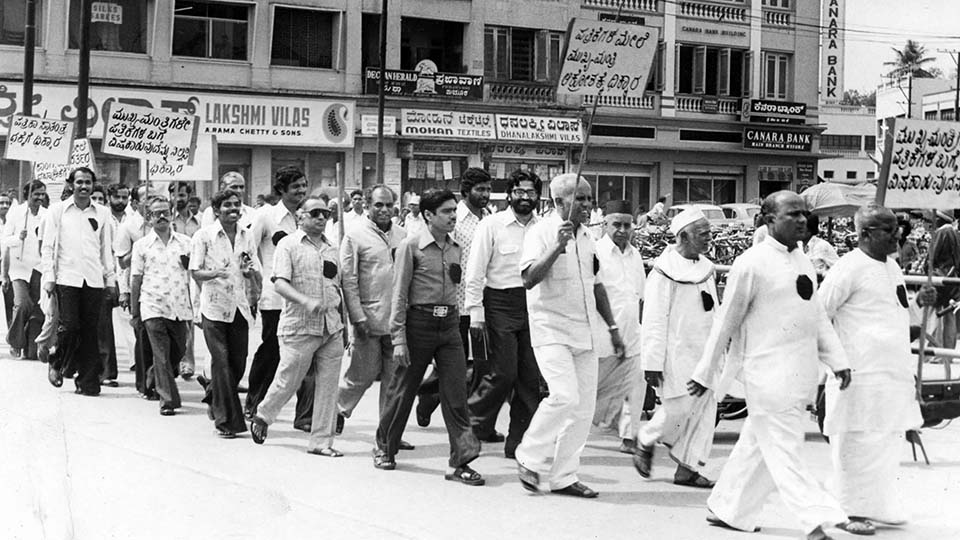
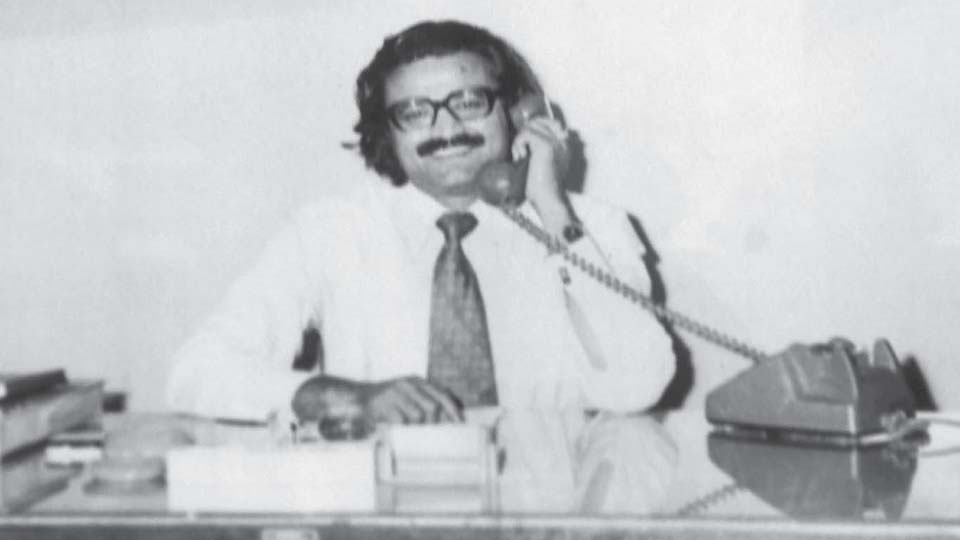
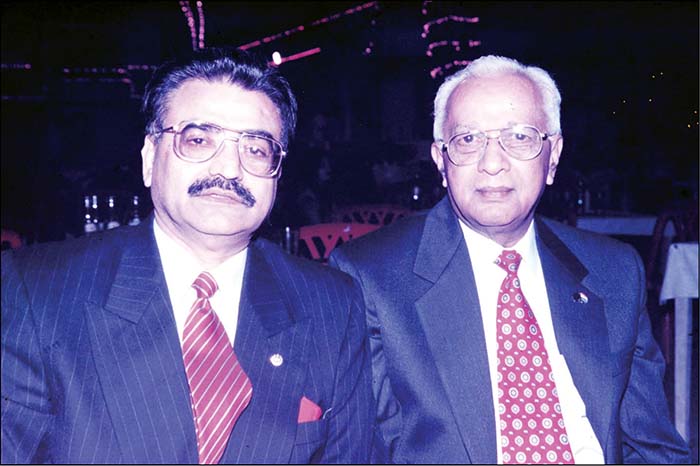
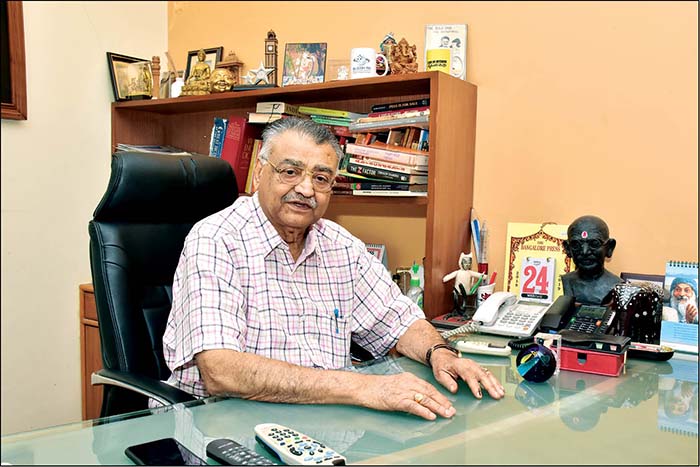
K.B. Ganapathy served as the Chairman of Bharatiya Vidya Bhavan (BVB), Mysuru Kendra. He has also served as its Vice-Chairman; Former Vice-President of Kodava Samaja, Mysuru; Former Vice-President of Mysore District Journalists Association (MDJA) and Member of Karnataka Patrika Akademi 1993-1995.
Fund raising
1. Funds were raised for the victims of the Kargil war in 1999.
2. Funds for the Gujarat earthquake in 2001 were raised by collecting about Rs. 12 lakh with the help of Rotary Mysore.
3. Collected Rs. 3.80 lakh as relief funds in association with Rotary Mysore for the earthquake victims of Latur district in Maharashtra in 2003.
4. Star of Mysore collected Rs. 74 lakh from various organisations and handed it over to the Mysore Citizens Forum (MCF) to be distributed to those who lost their lands and homes in the Tsunami that struck Tamil Nadu in 2004.
5. Star of Mysore has been giving monthly financial help to the nursing home being run by Little Sisters of the Poor and the rehabilitation centre for the mentally challenged being maintained by Mother Teresa Mission Charities in Bannimantap, and also presenting Rs. 10,000 annually to Deena Bandhu Charitable Trust to be distributed among talented children.
6. Star of Mysore also collected Rs. 7.5 lakh for successful surgery for a hearing-impaired child for a Cochlear implant.
7. Among other services, the company instituted the ‘Star of Mysore Silver Jubilee Endowment Medal’ at the University of Mysore. The gold medal is awarded to the candidate who has passed the MA Exam in Journalism by securing the highest marks in the entire course (in all the papers). The candidate, however, must have studied in the English Medium.
DEVELOPMENT OF SCHOOLS
1. Adoption of Government Kannada-Urdu High School in HUDCO Colony in Bannimantap and constructing separate toilets for boys, girls and teachers at the school and compound for the school.
2. As a patron of Kodagu Model School in Vidyashankara Layout, which is a lower-middle-class area, Ganapathy personally raised over Rs. 40 lakh donations and also contributed substantially to its development.
3. Star of Mysore has raised money to build infrastructure for other schools, too.
source: http://www.starofmysore.com / Star of Mysore / Home> News> Top Stories / July 13th, 2025
and Publisher of STAR OF MYSORE & MYSURU MITHRA Newspapers
Dr. Kalyatanda B. Ganapathy, the former Chairman & Managing Director (CMD) and Editor-in-Chief of Star of Mysore English Evening Daily and Mysuru Mithra Kannada Morning Daily of Mysuru, published by Academy Newspapers Pvt. Ltd., Bannimantap, Mysuru, passed away at the age of 85 in Mysuru today (July 13, 2025).
Mysuru city’s largest circulated and popular evening newspaper, Star of Mysore, was founded by K.B. Ganapathy and late C.P. Chinnappa in 1978. The Kannada morning regional newspaper Mysuru Mithra, a sister concern of Star of Mysore, was founded in 1980 and is equally popular, covering five districts — Mysuru, Mandya, Hassan, Chamarajanagar and Kodagu.
K.B. Ganapathy with C.P. Chinnappa, with whom he established Academy Press in 1975 and launched Star of Mysore in 1978.
Born on 27.12.1939 to K.A. Bopaiah and K.B. Muthavva (Baby) in Coorg (Kodagu), K.B. Ganapathy is the second of the four siblings. A native of Kunjila (Kakkabbe) village in North Kodagu, his father was a school teacher belonging to the Kalyatanda family, a Kodava clan.
Ganapathy was a Bachelor of Arts and Law and had a Diploma in Journalism from Bharatiya Vidya Bhavan (BVB), Bombay. He practised as an advocate at the Karnataka High Court and the Civil Courts in Bengaluru from 1961 to 1964.
After being a trainee-junior lawyer for four years at a senior advocate’s office in Bengaluru, he wanted to pursue journalism, which he was inclined towards. So he moved to Bombay to study journalism at Bharatiya Vidya Bhavan.
After he got his diploma, he interviewed with T.J.S. George, the doyen of journalism, who was then the Assistant Editor of Free Press Journal, who gave Ganapathy his first job as a Sub-Editor.
Ganapathy worked as a Journalist (Reporter and Sub-Editor) in Free Press Journal and Indian Express, Bombay, till 1970 and then established his advertising agency, ‘Sunbeam Advertising’, Pune, in 1970.
A star was born
After marriage, in 1976, he shifted to Mysuru because his wife K.K. Devamma (Ralie Ganapathy) was a Government College lecturer, and his family members were living in Mysuru. Soon, he ventured to do what he always loved — Journalism. Thus, in 1978, Star of Mysore was born.
Today, 48 years later, Star of Mysore, an evening English newspaper of Mysuru city, with a population of about a million, is the largest circulated newspaper with over a lakh readership. Two years after establishing Star of Mysore, in 1980, Ganapathy recognised the importance of journalism in the local language and started a local Kannada morning paper called Mysuru Mithra.
K.B. Ganapathy in his chamber at Star of Mysore office.
Today, this Kannada paper has gone from being a local paper to a regional paper covering five districts with a readership of over 2.5 lakh.
Even though in the 1970s Mysuru had many newspapers, Star of Mysore stood out for its factual reports and in-depth coverage. To add, Ganapathy wrote two columns every other day called Abracadabra and Hocus-Pocus, which helped popularise the paper.
These columns were enlightening, informative, risque and soon captured the attention and imagination of Mysureans. Ganapathy, after 48 years, continued to write his column. His last two Abracadabras were on the global conflict — ‘Pondering over wars and warmongers of the world!’ published on June 19 and ‘A miracle in Jerusalem’ on June 21, 2025.
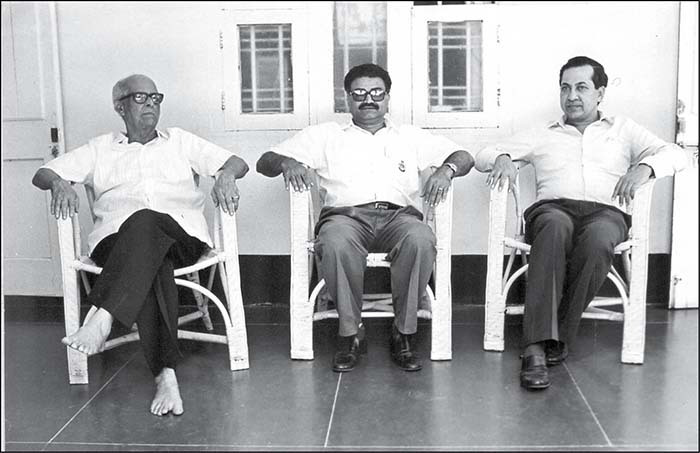
Three Wordsmiths: R.K. Narayan and N. Ram insisted that K.B. Ganapathy sit in the middle flanked by these patron giants of the literary world
Attention to reportage, visual appeal
It is noteworthy that Star of Mysore is probably the country’s only evening subscribed English newspaper. Ganapathy achieved this by building a strong distribution network while paying attention to reportage, an endeavour in which many national newspapers failed.
Ganapathy did three unique things in local journalism. First, he wanted the newspaper to stand out visually. To achieve this, he chose to print Star of Mysore in a unique size — Berliner. Even though this newspaper size costs more money to publish, he felt it was essential for recall. Today, Star of Mysore is the only Berliner- sized newspaper in the country.
The next was his approach to journalism and public participation. Before the term ‘citizen journalist’ was coined, Ganapathy in the 1980s encouraged Mysureans, be it teachers, students or industrialists, to write. Be it a letter to the editor or even articles, everyone was encouraged.
Even today, this tradition continues with columnists like Dr. Javeed Nayeem, Sadhguru, Devdutt Pattanaik, Dr. Balasubramaniam and Gouri Satya.
Many of the young journalists and writers of Star of Mysore from the 1980s-90s did not have a journalism degree, yet they were employed at Star of Mysore and Mysuru Mithra. Ganapathy felt that a ‘nose for news’, a ‘passion for storytelling’ and a ‘sense of journalistic purpose’ were more important than a degree in journalism.
Today, most of these ‘alumni’ of SOM and MM as the two newspapers are fondly abbreviated, are in senior positions in other national media houses.
Some of them are late Girish Nikam (Rajya Sabha TV), late Niranjan Nikam (Deccan Herald), Krishna Prasad (former Editor of Outlook Magazine), Chetan Krishnaswamy (Formerly with The Week Magazine), H.R. Ranganath (former editor of Kannada Prabha and now the Editor-in-Chief, Public TV), Manu Aiyappa (The Times of India), etc.
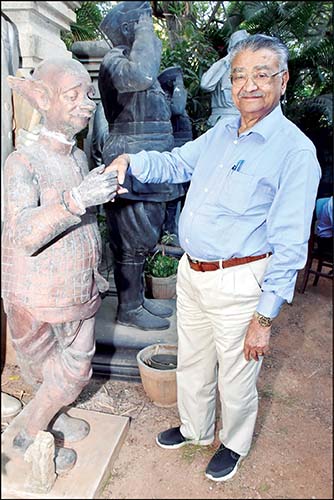
Shaking hands with a replica of noted cartoonist R.K. Laxman’s ‘The Common Man.’
Passion for journalism
In a way, with his passion for journalism, Ganapathy turned his two newspapers into a kind of school for journalism, producing more practising and successful journalists than the journalism schools in Mysuru.
Over the years, both newspapers have also patronised celebrated thinkers and writers such as T.J.S. George, Maneka Gandhi, Devdutt Pattanaik, Sadhguru, to name a few.
With his two newspapers, Ganapathy created awareness among the people of Mysuru city about the usefulness and impact of an influential local evening newspaper on the community.
When a citizen is in trouble due to poor service by various Government or quasi-Government agencies or the local bodies, Star of Mysore and Mysuru Mithra are their voice for justice. More importantly, he showed that local journalism could be influential and have an impact in creating a good city, as it brings awareness among the citizenry, who then hold their leaders accountable for the health of their city.
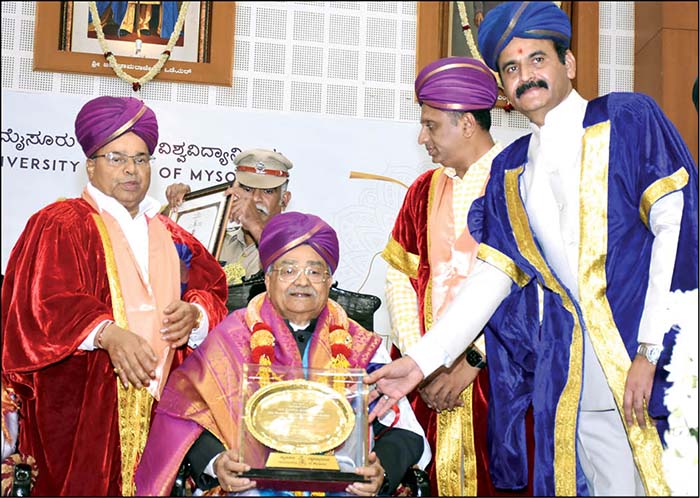
UoM Honorary Doctorate to Dr. K.B. Ganapathy.
Courage and determination
Speaking about Star of Mysore, late Union Minister H.N. Ananth Kumar had said, “If there is a torch-bearer in this part of the country that always stood for liberty and equality, it is Star of Mysore.” He then added, “Ganapathy always wages a silent war with the establishment and in the process, he and his family faced many threats and attacks. This is easier said than done. I salute his courage and determination.”
The combination of an entrepreneur-journalist is scarce, and Ganapathy has achieved a rare feat by being successful as both. Today, his newspapers have become household names, and with their online edition, they have truly become the conduit that connects Mysureans to Mysuru and Mysureans to their leaders.
No wonder late Ananth Kumar stated, “Star of Mysore is now addressed in the same breath as Mysore Pak and Mysooru Mallige. I have seen eveningers like Mid-Day in Mumbai and Bengaluru. But in this part of the country, Star of Mysore has earned its unique and respectful place in the hearts of its readers.”
Mysuru has been better off for having these two newspapers because using the two newspapers, Ganapathy took up numerous causes for the city of Mysuru and Mysureans, such as — Save Kukkarahalli Lake, Campaign against Chamalapura Power Plant, Campaign to Save Heritage buildings, Campaign for Tree Protection, Strived and succeeded in converting noted novelist R.K. Narayan’s house in Yadavagiri into a Museum, supporting Mysore Grahakara Parishat (MGP), an NGO, in its activities, to name a few.
Concern for Mysuru
Star of Mysore’s major article on Rare Materials Plant (RMP), the Uranium Unit of the Bhabha Atomic Research Centre (BARC) in Yelwal, which the local villagers called ‘Bomb Factory’, had brought the top official of Atomic Energy from Bombay to Mysuru to allay fears of the Mysureans.
This article was written by one Saketh Rajan (late), a young, intelligent student. The official held a press meet, assuring that there was no danger of ‘radiation leak’ or of any kind, and all measures for absolute safety and security are taken care of.
Only after this, other NGOs came on the scene demanding closure of this ‘bomb factory’ or revealing the safety measures taken in the event of accidents in the unit.
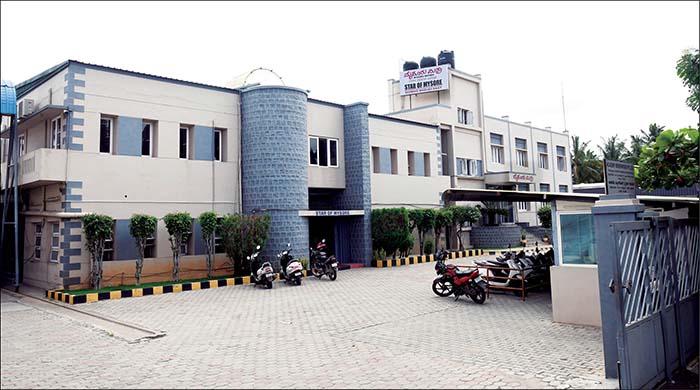
Star of Mysore and Mysuru Mithra head offices in Bannimantap.
Now, the company, Academy Newspapers Pvt. Ltd., under which the two newspapers are published, employs many people apart from providing part-time jobs and serving over 4 lakh Mysureans.
source: http://www.starofmysore.com / Star of Mysore / Home> Feature Articles> Top Stories / July 13th, 2025
Kodagu, often hailed as the ‘Land of Spices’ and the ‘Scotland of India’, is not only known for its lush coffee estates and spice plantations but also for producing some of the country’s finest athletes and brave soldiers. Adding to this legacy is 22-year-old Monnanda Tasmai Cariappa, an emerging talent in the world of motorcycle racing.
Tasmai recently made a stunning international debut by clinching second place in the SP400 (400cc) category at the BRIC Superbike Championship-2025 held in Thailand, a performance that has turned heads in the racing circuit.
Now, with his eyes set firmly on representing India at the highest level of motorsport, Tasmai is revving up for Indian Superbikes League (ISBL) selections scheduled to take place in Bengaluru next week. His passion runs so deep that he made the bold decision to put academics on hold — despite excelling in his II PUC — to pursue a professional career in motorsport.
A resident of Kuvempunagar in Mysuru, Tasmai is the son of Dr. Monnanda Nalini Somaiah, Professor, Department of Studies in Botany, Manasagangothri, University of Mysore.
Star of Mysore caught up with the promising racer as he gears up for the ISBL trials. Excerpts…
Star of Mysore (SOM): Being such a high-risk sport, how did you get into motorcycle racing?
Tasmai Cariappa: I’ve been passionate about racing from a young age. I grew up watching MotoGP and other races on television, which sparked my interest. After I turned 18, I got my first bike — a KTM Duke 390 — and started riding on the curvy roads of Chamundi Hill, which I loved.
During those rides, I met a few fellow enthusiasts who were already participating in races organised by KTM. That motivated me to take things more seriously. I enrolled in track training academies in 2019 and again in 2022, held in Coimbatore and Chennai. After completing the training, I began competing in Indian National Racing events in the 165cc category.
From the album – Tasmai Cariappa with his racing icon Marc Marquez of Spain.
SOM: Who has been your biggest inspiration among professional racers?
Tasmai Cariappa: Spanish racer Marc Márquez has been a huge inspiration for me. It’s not just his aggressive racing style, but also his mental strength and unshakeable determination that I admire. Despite suffering multiple injuries, he’s always managed to make a strong comeback and dominate on the track.
SOM: How did your family react when you told them you wanted to pursue racing?
Tasmai Cariappa: In the beginning, I didn’t inform my parents. I first shared my interest with my grandmother, Monnanda Jooby Somaiah, who supported me financially so I could join a racing academy. Only after completing my training did I inform my mother and my aunt, Rajini Somaiah, who works as a scientist in St. Louis, USA. Since then, they’ve all been very supportive of my racing journey.
SOM: Mysuru doesn’t have dedicated racing tracks. Where do you usually practice?
Tasmai Cariappa: I regularly train in Bengaluru, Coimbatore and Chennai. Bengaluru is my primary practice location because it has three Go-Kart tracks. I frequently ride at the Velocity International Circuit in Kolathur and the Aruani Grid in Dommasandra. Additionally, I visit the Madras International Circuit in Chennai and the Kari Motor Speedway in Coimbatore every month for advanced training.
SOM: Motorcycle racing involves a high risk of accidents. How do you manage that risk?
Tasmai Cariappa: Yes, the risks are there. But as you gain experience and improve your riding skills, the risk starts to reduce. A major part of staying safe also depends on the quality of your racing gear — your race suit, helmet, gloves and boots.
High-quality gear plays a crucial role in protecting you during crashes. Apart from that, maintaining physical fitness is essential — it strengthens your body and helps you recover quickly in case of a fall.
SOM: Injuries take time to heal and can be expensive to treat. Since motorsport doesn’t get much support in India, how do you manage your finances?
Tasmai Cariappa: In professional racing, we have what’s called Circuit Insurance, which covers medical expenses during events. However, beyond that, it’s essential to consult reputable doctors and physiotherapists. They help design recovery plans, recommend the right nutrition, and guide you to bounce back faster and stronger.
SOM: Is the fitness routine for motorsport different from other sports?
Tasmai Cariappa: Absolutely. Racing demands both physical and mental strength. It’s not just about building muscle or endurance — it’s about total body fitness. My routine includes CrossFit, Yoga, mobility drills, reflex training for quicker reactions, and stamina-building exercises. Mental sharpness is just as important as physical readiness when you’re on the track.
SOM: What kind of diet do you follow?
Tasmai Cariappa: Diet varies from person to person based on their age, weight, and the bike category — whether it’s 400cc, 600cc or 1000cc. As the G-force increases with higher-capacity bikes, your body needs to be strong enough to handle it. So, nutrition plays a critical role. Most of us follow a high-protein, low-carb, and fibre-rich diet. You can’t just eat anything — every element in the diet must be planned to support your performance.
SOM: You’ve chosen the Kawasaki Ninja 400 as your race bike. Why that model?
Tasmai Cariappa: In my category, riders can opt for the Yamaha R3 or KTM RC 390 as well. But I’ve chosen the Kawasaki Ninja 400 because it performs better at the top end and has a more reliable engine.
It also has a slight edge in displacement — about 50cc more than the Yamaha R3 and KTM RC 390, which makes a difference in race conditions. For long runs of 8-10 laps, engine reliability becomes crucial, and the Ninja 400 holds up very well.
Proud moment – Tasmai with his mother Dr Nalini Somaiah
OM: Do you see yourself racing in higher categories in the future?
Tasmai Cariappa: Yes. I want to race in higher categories — especially in the 1000cc segment. But I believe in taking it step by step. It’s a physically demanding sport, and it’s important to gradually build your knowledge of the bike and your own skill level before moving up. My dream is to represent India on the global stage at world championship-level events.
SOM: What are your thoughts on the newly launched Indian Superbike League (ISBL)?
Tasmai Cariappa: Indian motorsport is growing and the ISBL is a fantastic opportunity for aspiring racers. It’s especially valuable for those who are passionate about racing but don’t own a superbike. Ducati stepping in to provide the bike and gear for selected riders is a big move for the sport in India. The selection process will be tough, but getting through it would be a game-changing opportunity for any racer.
SOM: Thank you, and all the best !
Tasmai Cariappa: Thank you !
source: http://www.starofmysore.com / Star of Mysore / Home> Feature Articles / by S N Venkatnag Sobers / July 12th, 2025
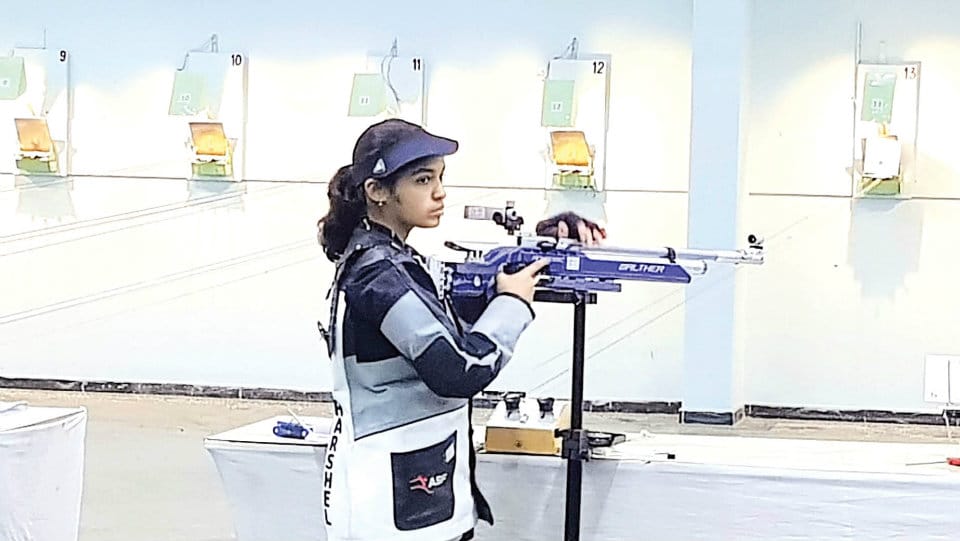
Harshel Kaveri, a member of Ashwini Sports Foundation – Karumbaiah Academy for Learning & Sports (KALS), Kodagu, has qualified for Nationals in Shooting with a score of 377/400 at the 29th All India G.V. Mavalankar Shooting Championship-2019 held at Ahmedabad from Sept.13 to 29.
She took part in the 10m Peep sight Air Rifle (NR) Championship in the Youth, Women Individual category which was the pre-nationals event held at Ahmedabad, Gujarat, last month.
Harshel Kaveri, a Grade 10 student of KALS School, Gonikoppal, is the granddaughter of Chenanda Pandith and Gange, residents of Kuvempunagar, Mysuru.
source: http://www.starofmysore.com / Star of Mysore / Home> Sports / October 17th, 2019
One day, this scientist hopes to mislead a kumbara night frog into thinking he’s one of them
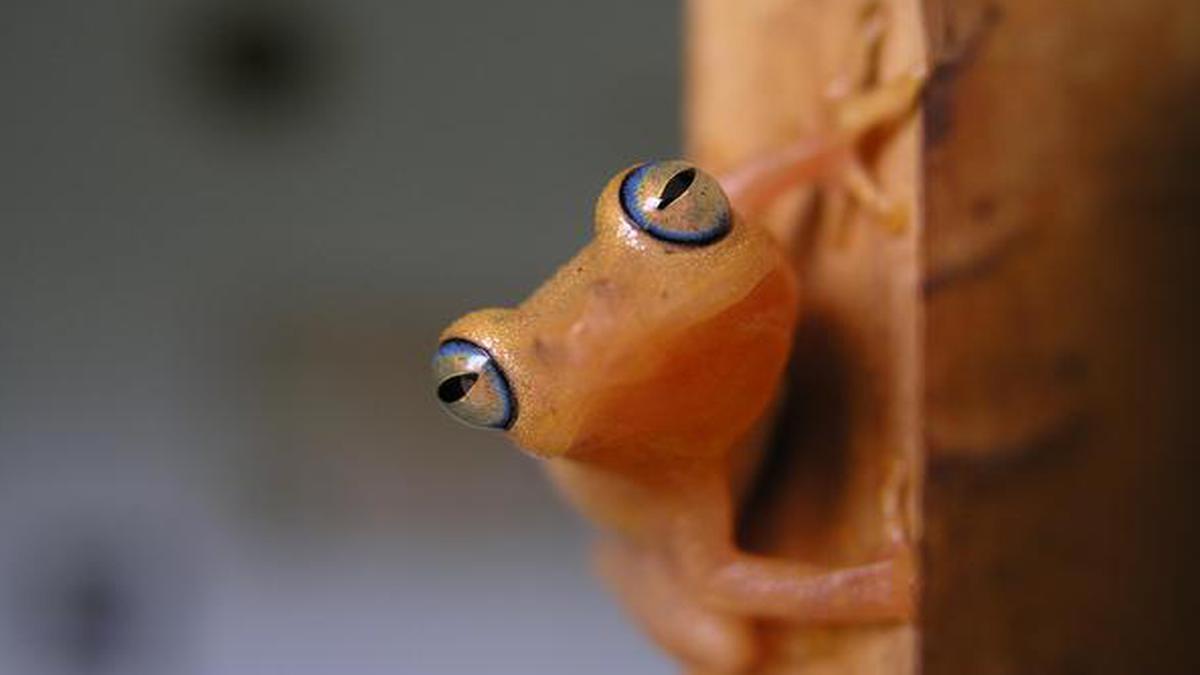
Coorg Yellow Bush Frog
Gururaja K.V. hid behind a tree and called “ treeek…ting…ting…ting. ” Several Coorg yellow bush frogs replied, “ treeek…ting…ting…ting .” When he called again, the amphibians leaped towards him. He snuck behind another tree and sang the frog song. The little leapers reoriented to his new position. For 90 minutes, the researcher played hide-and-seek as his subjects sought the intruder. One of them eventually found him and jumped on his throat. “It literally wanted to choke me,” he recalled, barely able to contain his laughter. Realising its opponent was much larger, the confused amphibian leapt off.
Gururaja’s experiments with mimicry led to another species trying to out-compete him. He imitated the bird-whistle call of the Jog night frog, signalling he was a male who had found a mate. His ‘rivals’ upped their volumes to drown out his chirps so that the female wouldn’t hear him.
To most people, all frogs look similar. Gururaja is one of the few experts who can point to slight differences that set species apart. He even discerns distinct personalities. His research subjects have names such as Hegde, Bhat, and Vishnu. The Hegde frog was talkative like Gururaja’s host in the area, Ashok Hegde. The frog he called Bhat was so quiet, the researcher had to check on it every hour.
Gururaja didn’t discover these amphibians until he was a master’s student at Karnataka’s Kuvempu University. Since he was an amateur birdwatcher, his advisor, S.V. Krishnamurthy, had suggested he list the species frequenting the campus. Gururaja wanted a more challenging project. How about studying the diet of night frogs, his advisor asked. That’s how his career in this field began.
At first, touching the frogs’ loose skin and slippery texture felt icky. After handling hundreds over a month, his disgust dissipated and he was hooked. Since no more than five people studied frogs at that time, making a mark in this under-researched area was easier than in the crowded field of bird research.
Much of the amphibian work in India is taxonomic — examining dead specimens, describing species, and establishing the relationship between different ones. After completing his postgraduate studies, Gururaja switched to studying their natural history. His curiosity and observations led to the discovery of one of the most enigmatic species — the kumbara night frog.
In 2006, Gururaja observed a female perform a headstand, with the male riding piggyback, to lay her eggs on leaves and twigs. The deed done, she hopped away, while the male picked up globules of mud with his tiny hands and plastered the mass of eggs until it was completely covered.
Gururaja spent the following eight years documenting more instances of this unusual behaviour before publishing his discovery. He continues to study the kumbara night frog, seeking answers to questions such as: why does it do what it does? Is it protecting its eggs? From what? Some species carry tadpoles on their backs such as poison dart frogs or in their mouths like gastric-brooding frogs. But no other amphibian stands on its hands or daubs mud on its eggs. He estimates he has enough work with night frogs alone to keep him occupied for another 15 to 20 years.
In northern Kerala, his team discovered another species, the ochlandra reed frog, with a beautiful yellow sunburst pattern in its eyes. He had seen nothing like it before. Nor had he seen any frog do what it subsequently did. It disappeared from view by squeezing into a hole in a length of reed bamboo. It wasn’t merely hiding from predators. To Gururaja’s astonishment, it stuck its eggs to the inner walls of the hollow columns. Researchers knew of no other amphibian that exploited this snug space as a nest site until 2011, when they saw a related species wriggling into a reed bamboo in Tamil Nadu’s Western Ghats.
Publishing natural history observations such as this demands tedious work. It’s not enough to report on one frog that did something exceptional. To be scientifically acceptable, researchers spend several seasons watching different frogs of the same species before they can conclude the behaviour is not an aberration.
Gururaja is mindful that spending long months during the rains in damp clothes and mucking in streams and swamps is not for everyone. He gives recording equipment to new students to record frog calls. In the process, the youngsters forge their own relationship with the forest and the creatures. Only a few turn their backs on this field deterred by leeches. Gururaja safeguards against burnout by taking a break after every five days of fieldwork.
The high humidity has greater success in killing recording equipment. No matter how well Gururaja treats his gear — wrapped in plastic, sheltered under an umbrella, wiping it dry at the end of each session — moisture condenses on the circuit boards, corroding them. He shrugs off the loss as par for the course in doing frog work.
One species resists Gururaja’s attempts to fool it with his mimicry. He can’t match the frequency of the kumbara night frog’s call, but it’s not from lack of trying. Every season, he tries afresh to challenge his favourite amphibians at their game, and one day he hopes to mislead one into thinking he’s of them.
source: http://www.thehindu.com / The Hindu / Home> Sci-Tech> Environment> Beautiful People / by Janaki Lenin / February 23rd, 2025
As per the data, exports stood at $1.28 billion in 2023–24, compared to $1.14 billion in 2022–23. Europe continues to be the top destination for Indian coffee, with key markets including Italy, Germany, Belgium, Middle East nations, South Korea.
India’s coffee exports have surged by 125 per cent over the past 11 years, touching $1.8 billion in 2023–24, up from $800 million in 2014–15, according to central government data. The rise in exports has been attributed to a series of policy measures implemented by the Coffee Board of India, including digitalisation of permits, export incentives, and support for value addition in processing.
As per the data, exports stood at $1.28 billion in 2023–24, compared to $1.14 billion in 2022–23. Europe continues to be the top destination for Indian coffee, with key markets including Italy, Germany, Belgium, Middle East nations, South Korea and Japan.
To bolster exports, the Coffee Board has taken steps such as digital issuance of RCMC, export permits and certificates of origin, regular engagement with exporters to address bottlenecks, and providing global market intelligence. Additionally, the government has introduced transit and freight assistance, offering Rs 3 per kg for value-added exports and Rs 2 per kg for high-value green coffee shipments to far-off markets such as the US, Canada, Japan, and Nordic countries. To further aid domestic processors and entrepreneurs, the Board offers 40% subsidy on machinery costs, capped at Rs 15 lakh, for roasting, grinding and packaging units.
India, the seventh-largest coffee producer globally with a 3.5% share, ranks fifth in exports with a 5% global share. The country produces about 3.6 lakh tonnes of coffee annually, with Karnataka, Kerala and Tamil Nadu being top growers. The sector directly and indirectly supports around 2 million people.
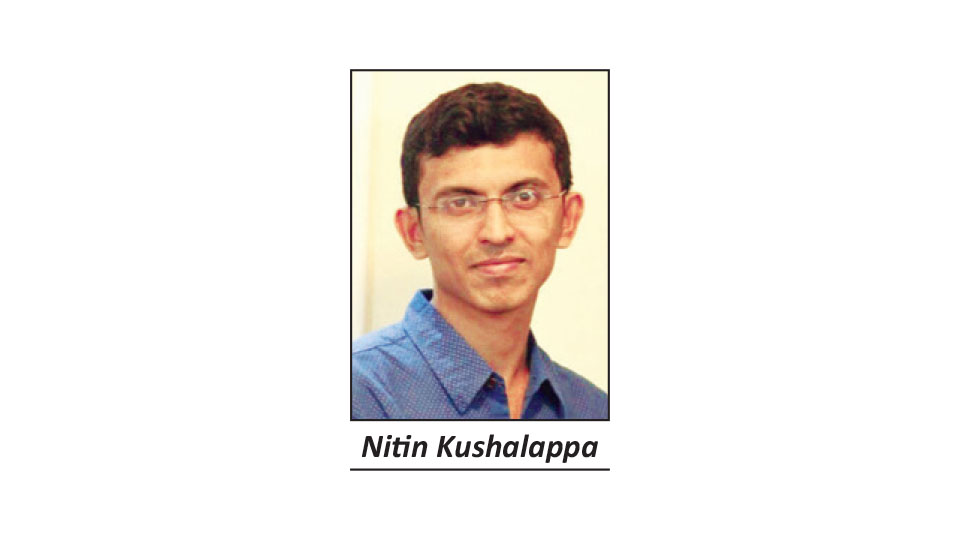
Kodagu-based author and engineer Mookonda P. Nitin Kushalappa has been awarded the prestigious Kendra Sahitya Akademi Bal Sahitya Puraskar for his latest work, Dakshin: South Indian Myths and Fables Retold, published by Puffin Books in 2023.
The awards were announced in New Delhi on Wednesday (June 18), and Nitin is among 24 writers to receive the Bal Puraskar this year.
The Sahitya Akademi, India’s National Academy of Letters, is the country’s central institution for literary dialogue, publication and promotion, and is the only organisation to conduct literary activities in 24 Indian languages, including English.
These distinguished literary honours recognise exceptional contributions to Indian literature across multiple languages, celebrating diversity, creativity, and the country’s rich linguistic heritage.
Presented annually, the awards honour authors whose works exemplify outstanding literary merit and cultural relevance. This year’s selection showcases a rich tapestry of genres — from poetry and novels to short stories and criticism — highlighting both emerging and established voices.
“Although I have authored seven other books so far, this is my first book for children. Winning this award was unexpected, and I am grateful that my current work has found such recognition. I thank the Sahitya Akademi for conferring the Bal Sahitya Puraskar on me. I am also thankful to my publishers, book agents, relatives, friends, and everyone who supported me on this journey,” Nitin Kushalappa told Star of Mysore.
An engineer by profession, Nitin is widely known for his deep interest in Kodagu’s local history, folklore and fiction. His notable publications include ‘The Early Coorgs’, ‘Long Ago in Coorg’, ‘1785 Coorg’, ‘Kodagu Principality vs British Empire’, ‘The Major Who Kept His Cool’, ‘The House of Awadh’ and ‘The Gandhi of Kodagu’.
His latest work, ‘Dakshin: South Indian Myths and Fables Retold’, reflects his signature storytelling style, which blends regional history with creative retelling. Award winners will each receive a casket containing an engraved copper plaque and a cash prize of Rs. 50,000 at a special ceremony on a later date.
A native of Kodagu, Nitin is the son of Mookonda K. Poonacha (Sunny) and M.P. Damayanthi (Pushpa), residents of Ammathi. He is married to Deepthi Belliappa from the Ketolira family.
He completed his education at Clarence High School, St. Joseph’s Pre-University College, CMR Institute of Technology (B.E.), Kuvempu University (M.A.) and Alliance University (Executive Post Graduate Diploma in Management).
2019 award
In 2019, Codanda Devika Cariapa received the Kendra Sahitya Akademi Bal Sahitya Puraskar for her book ‘A Children’s History of India in 100 Objects’, published by Penguin Random House India.
The book is a compilation featuring 100 objects that hold significant relevance in Indian history, from prehistoric times to modern-day India. The emphasis has been to capture India’s diversity through concise and descriptive texts and beautiful illustrations.
Devika is the daughter of Lt. Gen. Biddanda Chengappa Nanda (late) and Leela Nanda, and wife of Indian Air Force Group Captain (Retd.) Codanda Chitrajit Cariapa.
source: http://www.starofmysore.com / Star of Mysore / Home> News / June 21st, 2025
Chief Minister Siddaramaiah has assured that one of the metro stations in Bengaluru will soon be named after Field Marshal K. M. Cariappa, India’s first Commander-in-Chief.
He made this announcement on Sunday during a felicitation ceremony organised by the Kodava Samaja Bengaluru at the Kodava Samudaya Bhavana in Vasanthnagar. The event honoured Siddaramaiah and Deputy CM D.K. Shivakumar for allocating seven acres of land to the community in the State capital.
He said that the proposal to name a metro station after Field Marshal Cariappa will be placed before the Cabinet, and a final decision will be taken shortly.
For years, the Kodava community has been urging the State Government and the Bangalore Metro Rail Corporation Limited (BMRCL) to honour Cariappa’s legacy in this manner.
In July 2024, members of Kodava Samaja formally submitted a request to BMRCL Managing Director Maheshwar Rao, reiterating the demand to name a metro station after the iconic military figure. Praising the Kodava community’s contributions, Siddaramaiah lauded its inclusive spirit, highlighting that Kodavas respect all Indians regardless of caste or religion.
He also expressed confidence in the political future of Kodagu MLAs A.S. Ponnanna (Virajpet) and Dr. Manthar Gowda (Madikeri), describing Ponnanna as an emerging firebrand leader comparable to the late A.K. Subbaiah and M.C. Nanaiah, known for their socially conscious speeches in the legislature.
Deputy CM Shivakumar appealed to the Kodava community to continue supporting Congress government. “Our government has initiated many programmes for you. We have allotted land to families of Armed Forces personnel, appointed Kodavas to Rajya Sabha and ensured representation in the legislature. Recognising this legacy, we request your continued support,” he said.
He pointed out that the Government’s decision to allot seven acres of land in Bengaluru to Kodava Samaja comes with only nominal financial concessions, underscoring that no price tag can match the community’s discipline, sacrifice and patriotism.
“We must safeguard our traditions and culture. Your dedication is beyond monetary value,” he added.
The event was attended by Ministers K. J. George, Krishna Byregowda, Byrathi Suresh, MLA Rizwan Arshad, MLAs A.S. Ponnanna and Dr. Manthar Gowda and Bengaluru Kodava Samaja President Karavattira Pemmaiah, among others.
source: http://www.starofmysore.com / Star of Mysore / Home> News / June 19th, 2025
Actors Akshay Kumar and Veer Pahariya reunite the family of 1965 war hero Squadron Leader AB Devayya with his stolen Mahavir Chakra.
In a heartwarming moment echoing the patriotism of their film Sky Force, actors Akshay Kumar and Veer Pahariya were instrumental in reclaiming the stolen Mahavir Chakra medal, which was given posthumously to Squadron Leader AB Devayya, the only Indian Air Force officer to receive the honour after making the ultimate sacrifice in the 1965 Indo-Pak War. This touching moment echoes the patriotism of their film Sky Force.
For the Devayya family, the Mahavir Chakra, India’s second-highest wartime gallantry honour, was more than simply a medal; it was a priceless memento of courage, love, and heritage. Years ago, the medal was stolen from the family’s home, leaving Devayya’s widow, Sundari Devayya, and daughter, Preetha, devastated. “For Mum, the medal was a symbol of my Dad’s courage and had held a place of pride on her dresser,” Preetha shared in a moving statement.
During the production of Sky Force, a film based on Squadron Leader Devayya’s valorous mission, Veer Pahariya — who makes his acting debut portraying Devayya — met the late officer’s family. Upon hearing about the theft, he and co-star Akshay Kumar took it upon themselves to track down and retrieve the medal.
In a deeply emotional ceremony held by the Indian Air Force at the Training Command in Bengaluru, the Mahavir Chakra was finally returned to Sundari Devayya. Air Marshal Tejinder Singh AVSM VM presented the honour, marking a moment of healing for the family. “She keeps saying she finally feels complete. After all these years, there’s peace in her heart,” said Preetha.
Veer Pahariya, visibly moved by the experience, later reflected, “This is why I chose to be an actor — to spread love, make a difference, and leave a little bit of myself behind in every story.”
Akshay Kumar, who was last seen in Housefull 5, chose to let his actions speak louder than words, with the family extending heartfelt gratitude to him. “Because of both of them, my mother is holding the Mahavir Chakra once again,” Preetha added.
Sky Force is an action drama set against the backdrop of India’s first airstrike on Pakistan’s Sargodha airbase in 1965. Directed by Abhishek Anil Kapur and Sandeep Kewlani, the film also stars Sara Ali Khan and Nimrat Kaur.
source: http://www.filmfare.com / Filmfare / Home> News> Bollywood / by Filmfare / June 13th, 2025
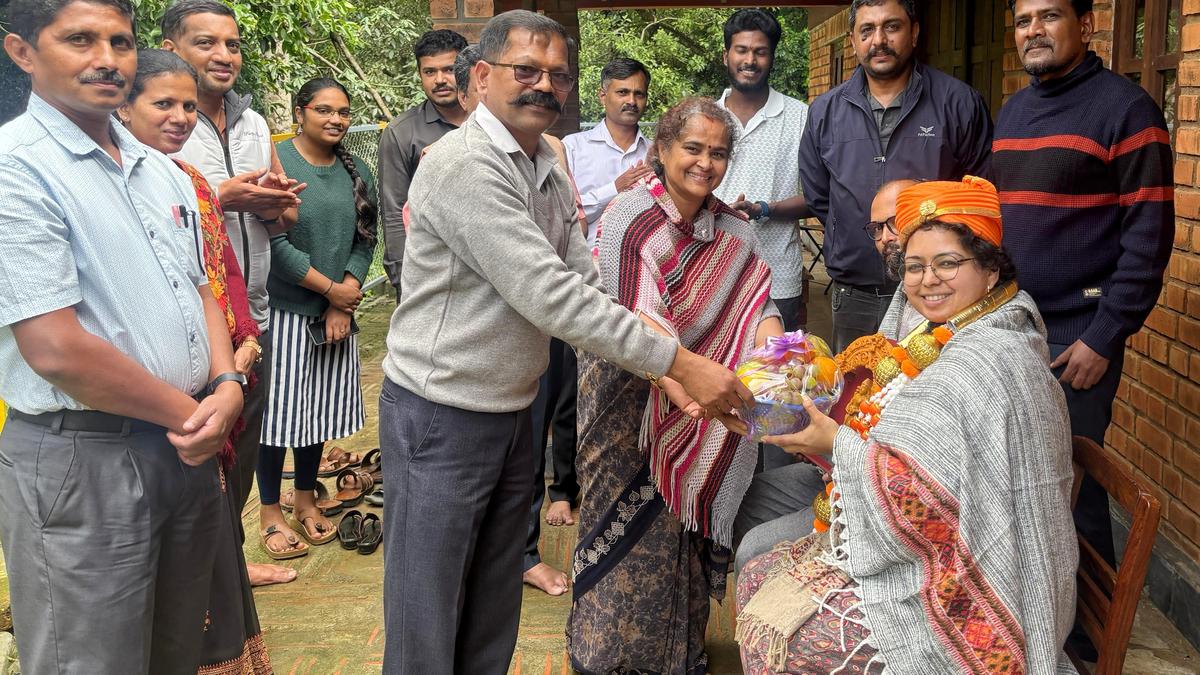
Writer Deepa Bhasthi, whose English translation of Banu Mushtaq’s Kannada work Edeya Hanate (Heart Lamp) won the prestigious International Booker Prize 2025, was felicitated in Madikeri by her alma mater and local leaders on Saturday.
The Old Students’ Association of Field Marshal K.M. Cariappa College, where Ms. Bhasthi pursued her education, college principal, lecturers, and office-bearers of the association visited her residence to honour her remarkable literary achievement.
B. Raghav, principal of the college, extolled Ms. Bhasthi for her literary accomplishment and noted that the international recognition has brought immense pride to the institution.
“The achievement of one of our old students was a matter of pride for the college,” he added.
The association president B.B. Aiyappa highlighted the difficulty of translating regional literature without losing its emotional depth, commending Ms. Bhasthi’s masterful rendering that resonated with a global audience.
MLA for Madikeri Mantar Gowda also felicitated Ms. Bhasthi at her home on Saturday. Commending her contribution to literature, he said her accomplishment had placed Kodagu on the global literary map. He said the government would support her future literary initiatives and described her as an inspiration for students and young writers.
Mr. Gowda also remarked that it was heartening to see literature of such calibre emerge from the serene surroundings of Kodagu. Plans are under way to organise interactions between Ms. Bhasthi and students from local institutions to foster interest in literature and translation, he added.
Ms. Bhasthi said the translation took nearly three years of dedicated work and she is now preparing for literary engagements in London and other cities. Ms. Bhasthi’s husband Chettira Nanaiah, her parents Prakash and Sudha Bhasthi, were among those present.
source: http://www.thehindu.com / The Hindu / Home> News> India> Karnataka / by The Hindu Bureau / May 31st, 2025
WELCOME. If you like what you see "SUBSCRIBE via EMAIL" to receive FREE regular UPDATES.
Read More »