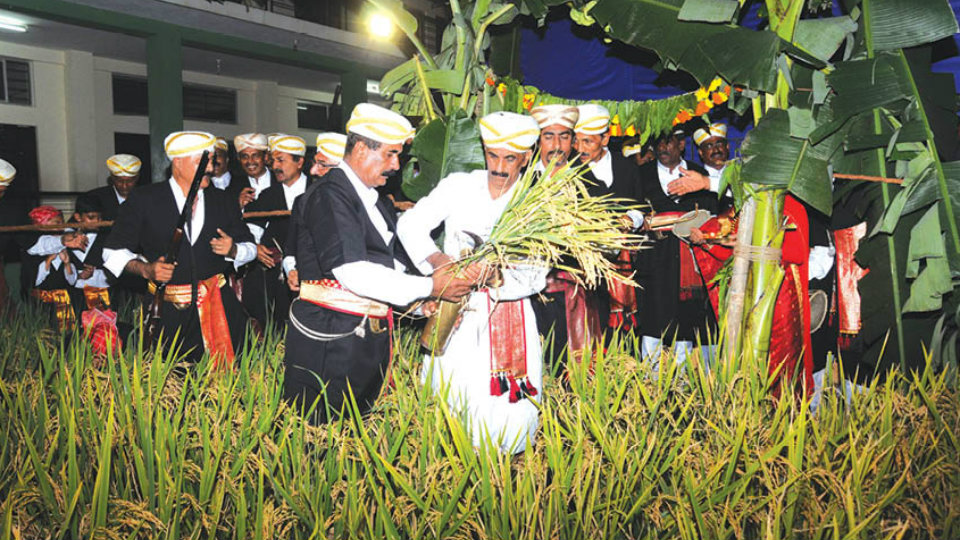
Kodava Samaja, Mysuru, will be celebrating Huthri, the harvest festival of Kodagu, tomorrow (Nov.23) at Sree Cauvery College Grounds in Kuvempunagar from 5.30 pm onwards.
On the occasion, traditional Kodava dances will be presented. ‘Nere kattuva’ ritual will be held at 7.30 pm; reaping new paddy crop (Kadiru) at 8.30 pm; distribution of thambutt prasada at 9.30 pm.
As in the previous years, Puthari Eedu was held from Nov.18 daily at 6 pm at the Samaja premises in Vijayanagar where traditional Kodava dances are practiced. The Eedu programme, sponsored by various Kodava Sanghas, will be held this evening also.
While Ketolira Ravi Belliappa trains the young and old male dancers in Bolkaat, Kolaat, Kathiyaat and Pareyakali, Kullachanda Vinutha Kesari imparts training to girls in Ummathaat.
Thanks to Kodava Samaja, Mysuru, for strengthening the community bonding and preserving the Kodava culture and tradition by holding such events and encouraging the youngsters.
The main event in traditional Kodava attires will be held during Huthri celebrations tomorrow evening at Cauvery Institutions premises.
Gowda Samaja
Huthri festival will also be celebrated under the auspices of Kodagu Gowda Samaja, Mysuru, at its premises in Vijayanagar 2nd Stage here tomorrow from 7 pm onwards. ‘Nere kattuva’ ritual will be held at 7.45 pm; reaping of new paddy crop (Kadiru) at 8.45 pm. There will be distribution of Kadiru also, according to a press release from Samaja Hon. Secretary K.S. Ganapathy.
source: http://www.starofmysore.com / Star of Mysore / Home> News / November 22nd, 2018
Bengaluru ByDesign promises handmade and cutting-edge innovation Karolina Merska Ola O Smit
Writer UR Anathamurthy was instrumental in Bangalore becoming Bengaluru. In November 2006, when the city symbolically made the shift, his intent, he wrote in an essay, was to give the city “the ability to belong to the world at large even as one is rooted in one’s Kannadaness”. Even as Bengaluru ByDesign takes over the city from November 23, the focus of the 10-day festival will be on transformations, from the handmade to technology and sustainable interventions.
From installations and exhibitions, to workshops and conferences, the festival at multiple venues in the city, hopes to bridge the gap between what is design and what people imagine to be design. Some of the highlights:
Choose Flight Kavya Madappa’s Bluecat Paper presents Unchained Symphony – Birds, a site-specific installation. At the grand marble stairs of UB City, abstract forms of paper birds will rise towards the high-vaulted ceiling and soaring arches of the mall, symbolic of freedom and flight. “We make handmade paper from cotton, coffee and corn husks. We have nearly a 1,000 birds for the 80 steps there,” says Madappa.
Closing the Loop
At St. Mark’s Circle, Total Environment will display its strength in sustainable practices through green installations and landscaping. Designed as a twirling ribbon, the green pods will house various stages of construction, from plumbing to electrical wiring. “As a company that provides experiences in sensitively designed structures, we hope these pods will help people see the craft involved in making a home,” says Founder-Chairman, Kamal Sagar.
Everyday Design
A pop-up called “Museum of Everything” at Kafnu, curated by Sarayu Hedge, will have everything — from origami lamps to recycled cork décor, glass jewellery to organic garments.
Total Recall
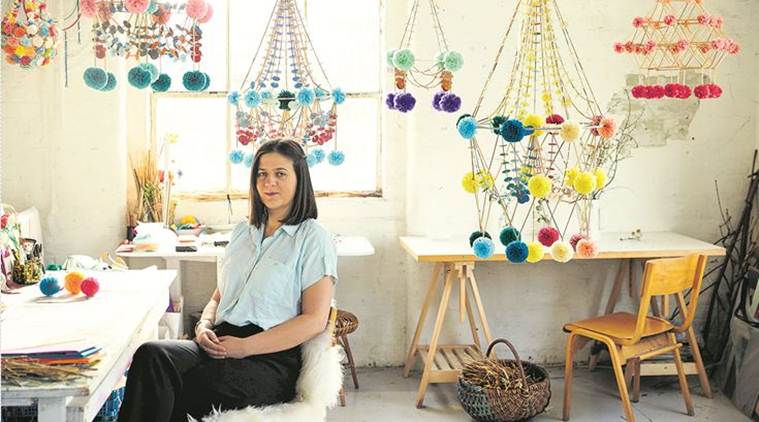
London-based designer Karolina Merska honours the traditional pajaki (pah-yonk-ee) paper chandeliers, famous for drawing inspiration from architecture, costumes and flowers. “I will visit Bengaluru’s flower markets and decorate my installation at UB City with fresh marigolds instead of paper flowers,” she says.
It’s a Wrap
Bengaluru’s Town Hall has become synonymous with protests. Festival Founder Suprita Moorthy wants to change that with a makeover that will drape handmade textiles from Aadhyam around its Tuscan columns. “With pure ikats and Banarasi brocades, we will play with colour and contrast. We hope it will direct people’s gaze to its architecture and purpose,” she says.
Rajshree Pathy,
Director of the festival
What are the changes you have seen in the design industry since the inception of the India Design Forum (IDF) in 2012?
When we started IDF in Delhi, it was something very new for the city. People were aware of art but not design and conversations on design thinking were very new. Now there are several design exhibitions, events and talks, all of which is very good for designers as it allows them to present their works outside their own studios.
How has design made a difference to your life?
Design is really a way of thinking about how to make a product or create an experience. Design is not about decoration, it’s about ease of living, minimising wastage and being sustainable and affordable, otherwise design is meaningless. For me, starting IDF has been the most fulfilling experience, as I am passionate about spreading this message and removing the idea that design is elitist or about luxury.
What are the three things to watch out for at the Bengaluru ByDesign festival?
Bengaluru ByDesign is a city-wide, all-inclusive event that makes people stop and think differently about their city and its spaces. It opens up new dialogues on preservation, conservation and celebrates the city for its architecture, craft and so much more. The Town Hall pillars dressed in fabric, the UB city mall stairway clad in beautifully cut paper collage and the workshops everywhere are amazing.
How do you think design can become mainstream?
With the growth of the automotive industry, the real-estate boom, the lifestyle industry like furniture, household products, jewellery, clothing and IT, design is already mainstream, though people are not aware of it. Designers are wanted for all the above businesses. More schools need to come up across India for our fast-growing requirements.
source: http://www.newindianexpress.com / The New Indian Express / Home> Lifestyle / by Shiny Varghese / November 21st, 2018
In Kannada, we have a proverb that can be loosely translated as “giving one’s hands and cuff too”. It indicates a situation where one unwittingly lands in a predicament due to one’s own mistake. We have several proverbs in Kannada that convey the same meaning, one even suggesting inviting a passing by ghost to come in and have a feast. (Beedeel hogo marina manege karedante)
A letter written by senior author S L Byrappa to the Chief Minister suggesting that Karnataka should seek help from Tamil Nadu to rebuild flood-ravaged Kodagu can best be described thus – inviting trouble. His reasoning is that since Tamil Nadu is the “biggest beneficiary” of Cauvery water and as the river originates at Talakaveri in Kodagu, it should contribute in a big way to rebuild Kodagu.
If all were well with Tamil Nadu, Karnataka could have asked for help, but TN has never tried to hide its exaggerated claims on Cauvery water. Even when Karnataka reels under famine, resulting in a large number of farmers committing suicide, our neighbour is unmoved and holds on to its demand for Cauvery water. Now, if the State seeks help from TN and if it agrees and does give funds, then TN will declare all the more brashly that the river “belongs” to it. A previous example is the Mulle Periyar dam, which is in Kerala but TN ‘owns’ it as a result of an agreement made more than a century ago, during British rule.
If we go ahead, Karnataka will be forced to give up its right over the river and when the Tamils claim ‘Cauvery belongs to us’, Kannadigas will not have grounds to debate the claim.
Interestingly, S L Bhyrappa made this suggestion to ask TN for help recently at a special lecture series on “Current social and environmental affairs of India” at BM Sri Hall, at Manasagangotri, Mysuru. The lecture was jointly organised by H M Nayak Foundation and Kuvempu Institute of Kannada Studies. Now, all the four names associated with the lecture program – B M Srikantaiah, H M Nayak, Kuvempu and Manasagangotri – have strived all their lives for the betterment of Kannada, Karnataka, its culture and natural resources.
B M Srikantaiah’s inspiring speech 100 years ago about the lack of pride in Kannadigas and how it is the need of the hour to kindle pride and honour among Kannadigas is evergreen. Kuvempu would never agree to beg a neighbour to safeguard the State’s interest. He was instrumental in starting Manasagangotri at Mysuru and shifting the post graduate centre from Madras. Though he completed his MA in Kannada from Presidency College, Madras, he insisted that the Mysuru State required its own university. Definitely, he would not have approved of begging TN for help, as wouldn’t any other proud Kannadiga.
The TN government has consistently been in a position of advantage with regard to Cauvery water. To suggest that Karnataka seeks help from TN can only be described as suicidal and nothing short. Let us all chip in and rebuild Kodagu.
Then, there is another suggestion to build a huge statue of Cauvery and develop a Disney Land kind of amusement park at KRS dam. Who gets such ideas or who gives such ideas to the government? What is the need for it? Experts are slamming the idea saying it will be dangerous for the dam. Also, in the river/dam basin only irrigation /water storage activities must be carried out instead of indulging in amusement parks to attract tourism. Hence, the government should abandon the ideas of a statue and ‘Disney Land’ at KRS dam.
The statue culture, which Tamil Nadu defined some decades ago, is diminishing. The Statue of Unity is out of the purview of this debate as is the one of Mayawati. Now, a huge statue of Rama is being planned, which is altogether a totally different debate. A river takes its birth in a small way and then expands. The same is seen with Cauvery. Why should we have a huge statue of Cauvery? The one that is already there at KRS is small, beautiful and is being worshipped regularly. That is enough.
source: http://www.bangaloremirror.indiatimes.com / Bangalore Mirror / Home> Opinion> Others / by Pratibha Nandakumar, Bangalore Mirror Bureau / November 19th, 2018
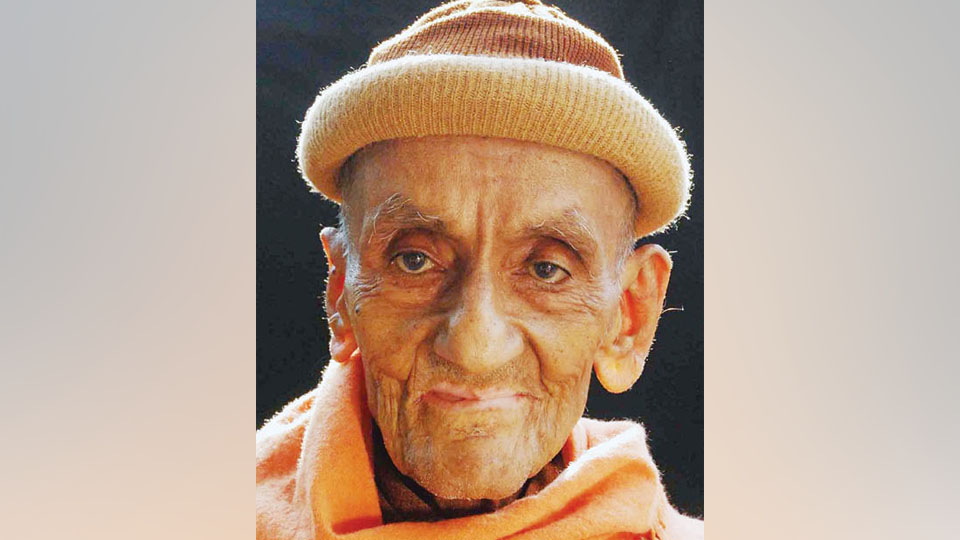
Swami Jagadaathmanandaji (89) of Ramakrishna Ashrama in Ponnampet, South Kodagu, passed away at a private hospital in city yesterday.
The Swamiji, who was suffering from pneumonia since a few days, was admitted to a hospital in Mysuru, where he died at about 7.30 pm.
The body of the Swamiji was brought to Ramakrishna Institute of Moral and Spiritual Education (RIMSE) at Sri Ramakrishna Vidyashala premises in Yadavagiri here last night at about 8 and was kept for the public to pay their last respects.
The mortal remains were taken to Sri Ramakrishna Ashrama on KRS Road at about 10.30 am today and was kept in front of the temple at the Ashrama where old students, senior and junior monks and a host of dignitaries paid their last respects.
The body was shifted to Ponnampet at about 11 am. Last rites will be performed at Sri Ramakrishna Ashrama in Ponnampet later this evening, according to sources at Sri Ramakrishna Ashrama, Mysuru.
Profile: Swami Jagadaath-manandaji was the Senior Monk of Sri Ramakrishna Ashrama and had served as the President of Ramakrishna Sharada Ashrama in Ponnampet, Virajpet taluk, for more than 13 years. After retiring in 2013, the Swamiji was leading a retired life at the Ponnampet Ashrama.
The revered Swamiji had authored the famous inspirational Kannada book ‘Badukalu Kaliyiri’ which was translated into nine languages.
Homage: Swami Dhar-mathmanandaji, Swami Vaneeshwaranandaji, Swami Maheshathmanandaji and Swami Yuktheshanandaji of Ramakrishna Ashrama, Mysuru, President of Sri Ramakrishna Ashrama in Ponnampet Swami Bodhaswaroopanandaji, Mysuru Adichunchanagiri Shaka Mutt Seer Sri Somanatha Swamiji, JSS Mahavidyapeetha Secretary Manjunath, MLA L. Nagendra, Vidyavardhaka Educational Institutions President Gundappa Gowda, Secretary P. Vishwanath, former MLC and a devotee of the Ashrama D. Madegowda, Dr. Bhaskar of Vikram Hospital, Ramakrishna Vidyashala Principal Balaji, IPS Officers Kishore Chandra and Sharath Chandra and Prof. C. Naganna were among a host of dignitaries, who paid their homage to the departed Monk.
V.V. Puram Inspector P.A. Suraj had provided security at RIMSE and at the Ashrama.
source: http://www.starofmysore.com / Star of Mysore / Home> News / September 16th, 2018
Udupi Palimaru Mutt has earmarked a fund of Rs two crore for providing basic amenities to flood victims of Makkandur village, Mutt representative Balaji Raghavendracharya said on Thursday.
He told mediapersons that many people had lost their houses and crops. “The government has identified land in Karnangeri village for the rehabilitation of flood victims. The Mutt will provide financial assistance in setting up basic facilities,” he said.
“The proposal when submitted was accepted by Kodagu Deputy Commissioner P I Sreevidya. The Mutt also has plans to build a community hall, an anganwadi centre, a school and a hospital,” he added.
Village adoption supervisor Muliya Keshava Prasad said that the Paryaya Palimaru Mutt had come to the rescue of the flood victims during floods. After looking into the problems of the villages of Makkanduru village, the Mutt has decided to adopt the entire village, he added.
Mutt representatives P R Prahlad, Ramesh Rao and Ravindra Rai were present.
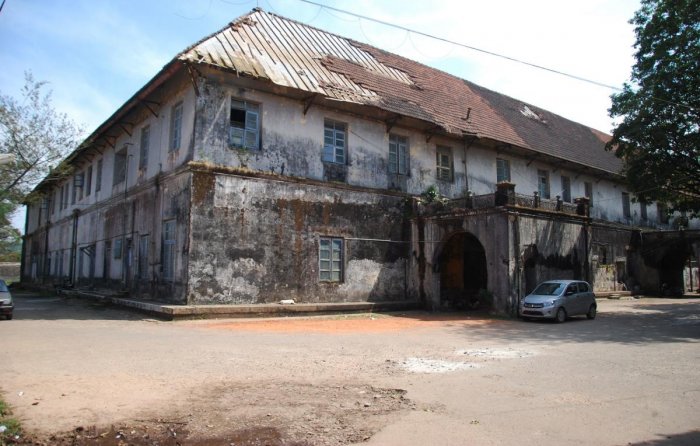
The roof of the Old Fort main building is on the verge of collapse in Madikeri.
The lack of basic amenities is haunting several tourists places in Kodagu district. The Madikeri Fort, referred to as ‘Palace’ situated on the heart of the city, should have attracted a large number of tourists. However, the crumbling structure is disappointing tourists.
The roof of the fort is on the verge of collapse. The walls have not seen whitewash or paint for several years. The rooms, where soldiers were staying during the king’s reign, have collapsed completely. Weeds have covered the fort premises.
With the damage to the roof, rainwater enters the fort. Plastic sheets have been used to protect it from rainwater. With this, the history of Madikeri fort will soon disappear.
Historians have expressed concern over the lack of maintenance by the Archaeological Department. They fear that a few remaining traces of history will soon enter the pages of the history.
Haleri ruler Mudduraja built a mud fort and palace in the 17th century. Later, Tipu Sultan rebuilt it using stones and renamed it as Jaffarabad. In 1790, Dodda Veerarajendra conquered the fort. In 1834, the fort came under the reign of the British.
The palace that was built by Linga Raja Wodeyar II houses government offices. With the increase in the density of people, the palace is in a deplorable condition. The Zilla Panchayat office, MLA’s office, Agriculture Department, district library, court complex and Bala Mandira are functioning from the palace itself.
Chandan, a tourist, said “Hundreds of vehicles visit the fort premises daily. Due to the pressure, the fort is losing its identity. Without any maintenance, the huge doors are losing charm. The visitors have also disfigured a few of the carvings. Even the cannons are not preserved. We are disappointed by watching this fort.”
An officer said, “We fear to work here during monsoon. The Zilla Panchayat and the court complex will be shifted shortly.”
source: http://www.deccanherald.com / Deccan Herald / Home> State> Mangaluru / by Naina J A / DH News Service / November 13th, 2018
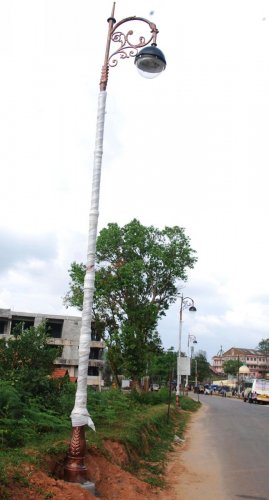
The decorative lamp posts on the road leading to Raja Seat in Madikeri.
The installation of decorative lamp posts has been completed on the road leading to Raja Seat in Madikeri. The heritage-design streetlights will light-up the streets during Deepavali.
The Urban Development Authority had taken up the work of installation of decorative lamp posts from Muthanna Circle to Raja Seat at an estimate cost of Rs 20 lakh.
The move is expected to attract more tourists.
The lamp posts, brought from Indore, are made up of cast iron with corrosion-resistant material to protect it from all kinds of corrosion. As a result, the streetlight poles will not get rusted. The poles will have 250 MHz bulbs,” said Urban Development Authority former chairman Chummi Devaiah.
The CMC had spent lakhs of rupees for installing solar lamps on the road leading to Raja Seat. However, the solar batteries were stolen by the thieves and the streetlights stopped functioning. Even the streetlight poles went missing. Now, keeping in mind the safety, decorative lamp posts are being installed.
The residents said that quality electricity poles and streetlights should be installed in different parts of the CMC jurisdiction. The solar lamps are defunct at Indira Nagar, Chamundeshwari Nagar, Gowli Beedi, Mahadevapete Road, Man’s Compound and Rani Pete Roads.
Chandan Rao, a resident of Gowlibeedi, said, “The CMC should take up the maintenance of streetlights before the onset of monsoon. All the electricity lines were damaged in the rain which lashed in August. As a result, majority of the streetlights are not functioning. The CMC should wake up and take up the restoration works.”
Indira Nagar resident Ranjitha said, “Due to the lack of streetlights on the road leading to Raja Seat and Nehru Mantapa, miscreants were creating problems for visitors during evening hours. Fearing it, many women were not taking the route for walking. The streetlights should also be installed at Nehru Mantapa.”
source: http://www.deccanherald.com / Deccan Herald / Home> State> Districts / by Adithya KA / DH News Service / Madikeri – November 04th, 2018
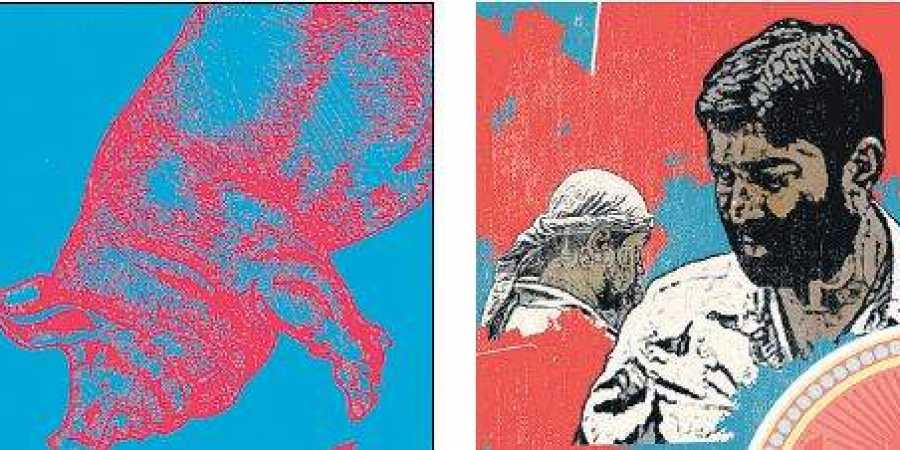
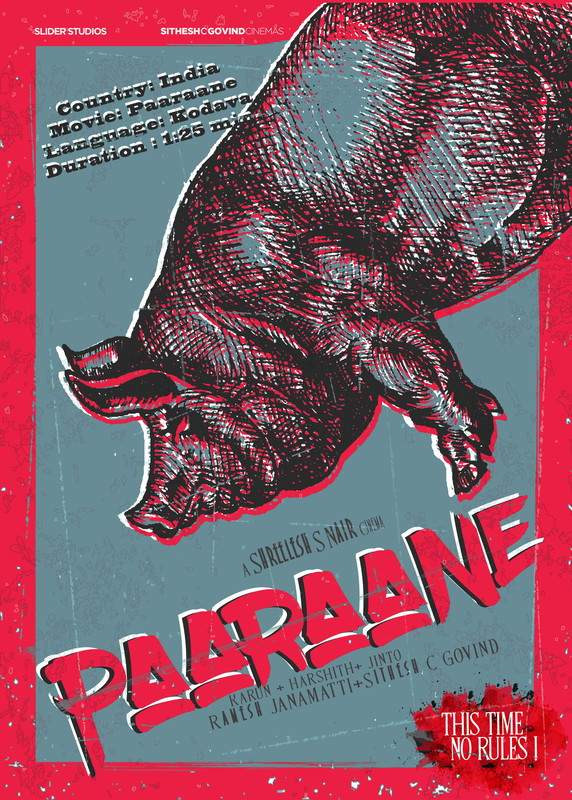
Paarane will be the first ever Kodava language film to compete in international film festivals.
Kodava’s movie Paarane’s first look poster and teaser will be released by the director Sanal Kumar Sasidharan, of Sexy Durga fame, today. This is yet another film that digs into identity crisis in the border area of Karnataka and Kerala. It is an experimental film by Shreelesh S Nair, who is a Keralite currently residing in Bengaluru.
Interestingly the film is made in Kodava, a language which is rarely explored.
The film is titled after a village named Paarane located in Kodagu, and the story is based on the struggles of existence and identity faced by the people,” says the debutant. “Paarane explores the land and culture of the region, and has people revolting against the invaders who try to encroach on their native land to safeguard their motherland. This is the theme of my story,” explains Shreelesh.
Interestingly, this film is made with a shoestring budget of Rs 3.5 lakh and has non actors in its cast. The cinema was shot without a written script. “We considered the actors from the same village Paarane, and filmed around Coorg district, which has sync sound and mise en scene,” says the director.
Director is thrilled to know that Paraane has been nominated for a couple of festivals. “A Kodava langauge film making it to film festivals, which is first time in India, has definitely excited the team. It has been nominated at Indonesia Film Festival and a small festival to be held in Berlin,” he mentions.
source: http://www.newindianexpress.com / The New Indian Express / Home> Entertainment> Kannada / by Express News Service / November 08th, 2018
The Saanvi girl, who became an overnight sensation in Tollywood, has been finalised for Dhruva Sarja-starrer Pogaru. Actress Rashmika Mandanna. (Photo | Facebook)
I am open to working in any language film as long as the script is strong,” Rashmika Mandanna had said in an earlier interview with City Express. And now, looks like a meaty story has come her way, with Rashmika having signed her next Kannada film.
The Saanvi girl, who became an overnight sensation in Tollywood, has been finalised for Dhruva Sarja-starrer Pogaru. Our sources further tell us that she will be paired opposite the Bharjari hero in Nanda Kishore’s directorial, which is being produced by Gangadhar. The school portions were shot with Dhruva in the first schedule, after which the makers took some time off to work on the script. That’s when Dhruva’s uncle Arjun Sarja took up writing the story.
Even as the prep work was in progress, the team was taking time to finalise the right heroine. Going by the script, they were keen to cast Rashmika, who they felt would fit the bill. In fact, Rashmika and Nanda have been in discussions ever since the latter was worked on a project with Dhruva.
The first-time pairing of Dhruva, Rashmika, and Nanda is something to watch out for.While Dhruva is currently concentrating on Pogaru, the teaser of which released on October 6 (the actor’s birthday), the second schedule of the film will start from November 20. Rashmika, who will be completing the pending song shoot for Darshan-starrer Yajamana, is said to joining the Pogaru team. The Chamak heroine will now be juggling between her Telugu film, Dear Comrade, starring Vijay Devarakonda, and this Kannada project.
source: http://www.newindianexpress.com / The New Indian Express / Home> Entertainment> Kannada / by A Sharadhaa / Express News Service / November 05th, 2018
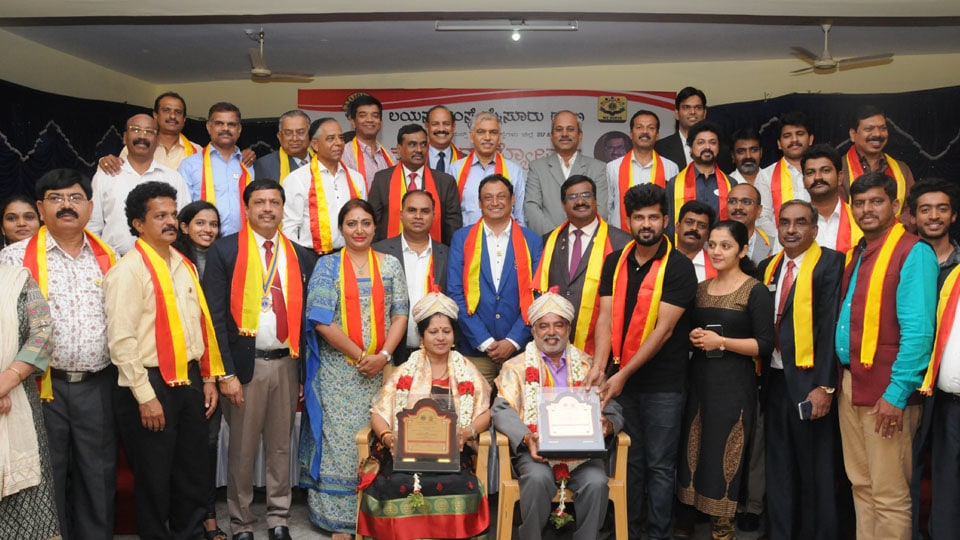
Kendra Kannada Sahitya Salaha Samiti Member and senior theatre personality Addanda C. Cariappa and his wife Anitha Cariappa, a theatre artiste, were conferred ‘Dakshina Kesari’ award by MP Pratap Simha at the Kannada Rajyotsava programme organised by Lions Club of Mysore South at Golf Club in city yesterday.
Speaking on the occasion, Pratap Simha recalled Addanda Cariappa’s role in his (Simha) victory in the 2014 Lok Sabha polls.
Recalling that thousands of Kodavas had thanked him for his article in State-level newspaper opposing veteran writer Ko. Channabasappa’s alleged derogatory articles on the community ahead of the 2014 LS polls.
Pointing out that Kodavas played a key-role in his victory in the 2014 LS polls, he opined that Addanda Cariappa’s strategy helped him a lot in winning the elections. Noting that Addanda Cariappa and his wife Anitha were greatly influenced by Appachha Kavi, the MP said that the couple has been spreading Kodava culture across the country.
Recalling the gallantry of Kodavas, he said that 26 Kodavas had gained top positions in the Indian Army till now and there were many Kodavas serving the Army in lower ranks.
Observing that Kodavas have made a mark in almost every field, the MP recounted how Kodavas starred off Tipu Sultan’s attack on Kodagu.
Highlighting the contributions of Nalwadi Krishnaraja Wadiyar for the development of Mysuru, Simha said that it would not be wrong to say that Kannada has survived because of the erstwhile rulers of Mysuru.
Regretting that Mysuru remained backward because of the vested interests of some politicians, he said that although Mysuru had earned a big name in Tourism, it lacked in terms of development and this was because of the vested interests of a few politicians.
Highlighting his achievements as an MP, Pratap Simha said that expansion of Naganahalli Railway Station, Development of Mysore Airport in Mandakalli, promotion of Industries and many other works were among his contributions to Mysuru-Kodagu LS Constituency.
Addanda Cariappa, in his address, observed that an organised struggle holds key for saving Kannada from the onslaught of other languages.
Pointing out that there is a general feeling that the Kannada Development Authority, which is supposed to promote Kannada across the State, had restricted itself to Vidhana Soudha, he criticised the Government’s move to celebrate certain unnecessary Jayantis.
He also lashed out at the Government for showing disinterest for celebrating the Jayanti of Nalwadi Krishnaraja Wadiyar, who has contributed immensely for the development of the State.
Noting that he was delighted to be conferred ‘Dakshina Kesari’ award, he said that the conferment of the award had added more responsibility on him for taking up the cause of Kannada.
Lions Club of Mysore South President K.K. Mohan, MP Pratap Simha’s wife Arpita Simha, Ln. Nagaraj V. Bairy, Ln. G.S. Santosh, Ln. M. Tataji and others were present.
source: http://www.starofmysore.com / Star of Mysore / Home> News / November 05th, 2018
WELCOME. If you like what you see "SUBSCRIBE via EMAIL" to receive FREE regular UPDATES.
Read More »