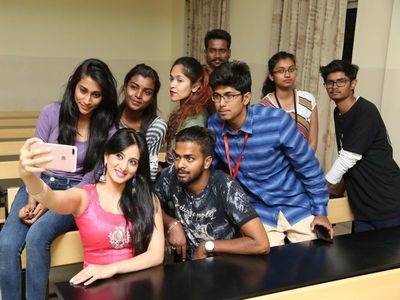
Sandalwood actress Prajwal Poovaiah is making her Telugu debut with the movie Premam Antha Esee Kaadhu.
She will start shooting for the movie from Sunday which will be predominantly shot at Goa, Bangkok, Sri Lanka and Hyderabad.
Prajwal Poovaiah who had acted in movies like Bheema Theeradali, Ashithwa and Pattaragithi has now signed her first Telugu film for the kind of offer she got from the film team.
The actress is excited to be part of the movie which is helmed by Eshwar, who had worked as an assistant for Baahubali famed directed S S Rajamouli. The movie sees Rajesh Kumar in the lead role.
source: http://www.timesofindia.indiatimes.com / The Times of India / News> Entertainment> Kannada> Movies> News / TNN / May 22nd, 2018
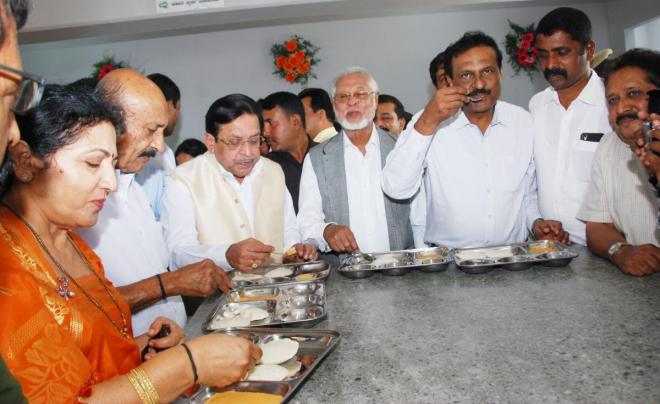
District In-charge Minister M R Seetharam and others have food at the new Indira Canteen on Race Course Road in Madikeri on Thursday.
District In-charge Minister M R Seetharam inaugurated the Indira canteen at Race Course Road in Madikeri on Thursday.
Minister Seetharam, MLC Veena Acchaiah, CMC president Kaveramma Somanna and others tasted the food at the canteen on the first day. The menu consisted of idly, pulao and kesari baath. The canteen evoked a good response on the first day.
Breakfast and meals will be available in the canteen on all seven days of the week. Breakfast is priced at Rs 5.
The breakfast menu will vary from day to day and is as follows: Monday: Idly – puliyogre, Tuesday: Idly – khara baath, Wednesday: Idly – pongal, Thursday: Idly – rava khichdi, Friday: Idly – chitranna, Saturday: Idly – Vaangi baath, Sunday: Idly – kesari baath. (One of the two dishes will be served)
The afternoon and evening meals cost Rs 10 per plate and will comprise of rice, sambhar and curds. Any one item out of tomato baath, chitranna, vaangi baath, bisi bele baath, menthe pulao, puliyogre and pulao will be served.
The minister, meanwhile, inaugurated the market in Mahdevpet and the mobile canteen.
source: http://www.deccanherald.com / Deccan Herald / Home> District / by DH News Service, Madikeri / March 22nd, 2018
There was a lot of things I was sure of doing when I was growing up and that was not to become a chef. My dream was to become a pilot, but due to whatever circumstances, I couldn’t pursue my dream.
But now that I think about it, food has been the love of my life. I used to sit in my mother’s kitchen and watch her prepare something delicious. Being a Bengali, food was something we all took very seriously.
When I graduated high school, and when my palate finally had the ability to understand the different tastes, I joined a culinary school and specialised in food production. After working with multiple hotel chains for a few years, I now work in Cafe Felix as Chef de Cuisine.
Bengaluru is one of those places that has something for everybody. And I believe that the best way to experience a place is through food. There’s so much you can learn about the history and culture of the place just by its food. Having said that, I really need to find some time to get out of my kitchen and explore some local cuisine here.
But I did travel to Coorg and Kerala recently. I preferred to book homestays to experience the lifestyle of the people. I enjoyed peeping into their kitchens and learnt a lot from the elders.
The recipe I have shared today is from Coorg. It’s a classic dish prepared there and I knew that I had to add it in the series of ‘Chef Ritwik’s Travel Diaries’ that’s going on at the restaurant.
The homestay was located in the middle of a coffee and pepper plantation. What drew me to ‘Coorg Pandi’ was the way it was prepared. There are two things you have to remember when making this – the authentic masala for this is hard to come by. You mostly make it at home and is roasted before cooking. The second thing is the kachampuli which is a dark vinegar used to prepare the dish. These two make pandi curry what it is.
I’ve added my own twist to this without damaging the authentic flavours of it. It’s something everyone can make at home and enjoy to their heart’s content.
Dry roast all the masalas separately in a heavy bottom pan.
Keep stirring all the time to avoid the masalas to burn. You should achieve a nice coffee brown colour once you have finished roasting them. Cool and reserve.
In a pressure cooker, take pork curry cut. Add turmeric powder, ginger garlic paste, a little salt, crushed curry leaves (half of the total amount), half of the sliced onion and water. Put on a medium-high heat.
After the first whistle put on a medium-low heat, and wait for about 20 minutes. Let the pressure cooker sit for a while.
Then take the mixture out in a heavy bottom pan. Do not throw anything away, even the fat. We do not add any extra fat because this is what will cook the pork and keep it moist. Continue to cook.
Add slit green chilli, black masala and a teaspoon of black pepper.
About 15 minutes later, add kachampuli vinegar and cook.
The fat and all the liquid will slowly dry up.
Finish it off with another teaspoon of black pepper, rest of the curry leaves, julienne ginger and freshly chopped coriander.
Let the mixture cool and chop it up into small pieces with the masala.
Roast the raw mangos till soft. Cool the mangoes and take out the pulp.
Now, take the pulp in a pan and heat it. Add grated Jaggery, tamarind pulp, honey and cook for a while.
Finish by adding all the spices, chopped coriander and lime zest.
Bring the chutney to room temperature and reserve.
To assemble
Deep fry the sago crisps and smear the raw mango glaze on them.
Finally place a spoonful of the pandi mixture on the crisps and serve.
source: http://www.deccanherald.com / Deccan Herald / Home> Supplements> Metrolife / by Anila Kurien , DH News Service / March 21st, 2018
It seems like season 4 of Pyaate Hudugir Life is going to start with a bang! The first four contestants have now been revealed by the channel and, going by the promos, it seems like these women are all set to battle it out to win the title.
The first contestant is Mebiena Micheal, a 19-year-old from Coorg. A fun loving person who loves watching Korean movies, dancing, modeling, Yoga, and swimming.
The second contestant is a spunky 22 year old from Coorg who loves to ride bikes, work out , dance and model. Shahan Ponamma is all set to give other contestants a tough competition with her biker chic attitude.
Abhijna Bhat is the third contestant. A 19 year old from Udupi. The young lass loves to dance, party and act.
Last but not the least, is the fourth contestant who is a 21 year old from Shimoga. Spoorthi Gowda like any other young girl of today’s day and age loved to model, shop and party.
There are as many as 12 female contestants who have been picked through auditions and who will be eyeing the winners title. In the show, which will be held for over three months, contestants have to live without any luxuries which they enjoy in urban life.
The entire show will be shot at Gorur village near Hassan. On Sunday evening, the show will get off to a glitzy start with Sandalwood stars Rachita Ram, Hariprriya, Shivarajkumar, Dhananjaya and Manvitha Harish performing on stage. Shivarajkumar and Dhananjaya will re-enact a scene from their film Tagaru.
Pyaate Hudgir Halli Life will premiere on Sunday (March 26) at 9pm.
source: http://www.timesofindia.indiatimes.com / The Times of India / News> TV> News> Kannada / by Nivedhana Prabhu / TimesofIndia.com / March 21st, 2018
The actress, who will play one of the female leads in the comedy film directed by Sriram Aditya, is paired opposite Nani.
Rashmika Mandanna
Looks like the dilly-dallying for the female lead of one of Tollywood’s most-awaited film has come to an end! According to reports, we have learnt that actress Rashmika Mandanna has been finalised as one of the female protagonists in the comic caper.
Apparently, the filmmakers scouted for the female lead extensively but had to eventually zero in on the Kannada actress. Rashmika will be paired opposite Nani in the film directed by Sriram Aditya.
A source informs, “It was very tough for the director to finalise the cast for the film since it involves two big heroes. So Sriram had to ensure that he roped in someone who perfectly complemented Nani. In due course, he finalised Rashmika.”
source: http://www.deccanchronicle.com / Deccan Chronicle / Home> Entertainment> Tollywood / by Sashidhar Adivi / March 18th, 2018
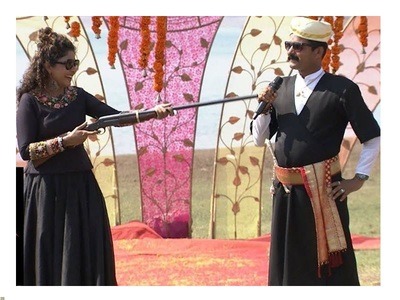
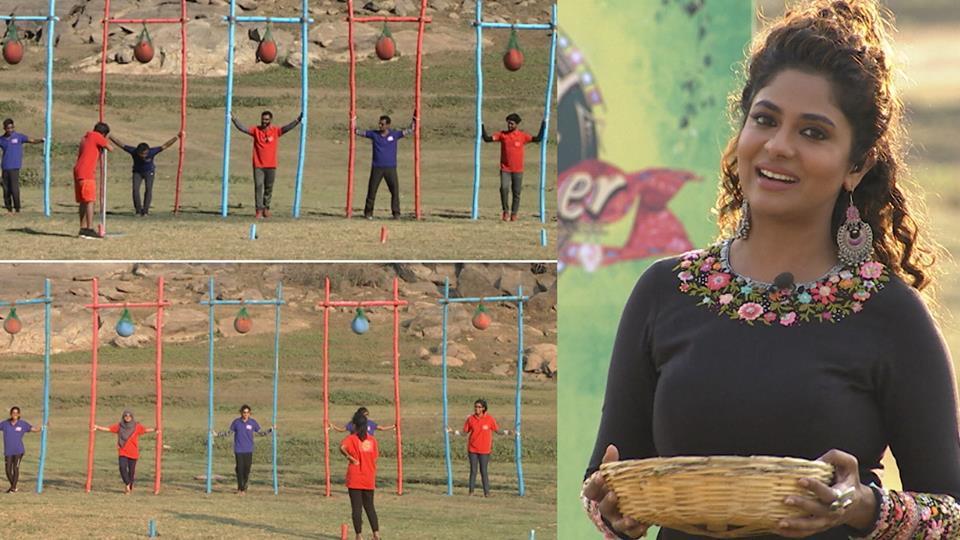
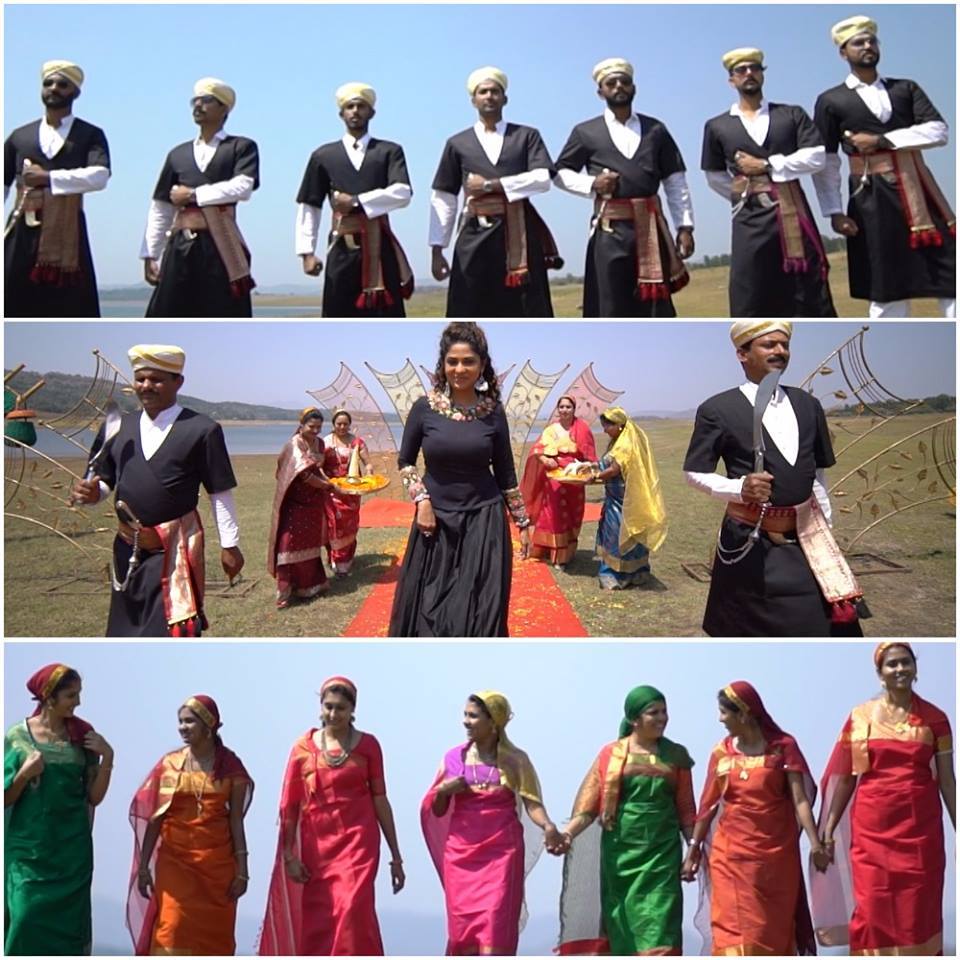
The contestants of the popular reality show ‘Made for each other’ season 2, are headed for their next destination in Karnataka. The seven couples will be performing different tasks specially designed keeping the essence of traditional Kannada culture in mind. The major part of the schedule was shot at Coorg.
Like in the previous locations, the schedule in Karnataka will also be a visual treat for the audience, mixed with greenery and elegance of cultural heritage. Coorg being the hometown of guns and guards, the tasks will be specially designed to test the courage and willpower of each couple.
The tasks will include Shooting, catching the rooster, rope walking etc. In this session, couples will be paired in different teams and will be brought together only during the tasks. Only the winners of each task earns the privilege to be with their partners. The crew claims that this task is to evaluate the individual capabilities of the couples and make them self-dependent.
The previous destinations of the show were Lakshadweep and Rajasthan. After the visual treat of the islands and deserts, it’s now time to enjoy the beauty of South Indian greenery and culture.
source: http://www.timesofindia.indiatimes.com / The Times of India / News> TV News> News> Malayalam / TimesofIndia.com / March 15th, 2018
Actress Harshika Poonacha got to relive her college days on Saturday at Cambridge Institute of Technology, where she was the chief guest for the college’s fest – Chiguru 2018.
Speaking to us, Harshika says, “It was wonderful to be back in college after so many years. It is always a nice feeling to go back to your school or college, especially as a guest. Not only did it bring back fond memories, but I felt so proud, I don’t know how to express my happiness.”
It was a flashback of the good old days for the actress, who felt nostalgic during her visit. “I went around and showed my chairman and principal all those place where we would hide as students. We were the first batch to graduate from the college and first ones to organize Chiguru. The whole aura feels different now because there are so many students, and the fest has grown” says the actress.
Harshika, was accompanied by her parents. “The only time my parents had come to college was when I had joined. Back in those days, we never had any PTA. So, it was indeed a proud moment for me to take them back to my college,” she says.
source: http://www.timesofindia.indiatimes.com / The Times of India / Home> Entertainment> Kannada / by Sandra Marina Fernandes / March 12th, 2018
Varsha Bollamma, who captured Malayali hearts through her Dubsmash, has made her debut in M’wood.
Varsha Bollamma
Varsha Bollamma is no stranger to Malayalis. Even though she has acted in only one movie, the spunky actress has already been celebrated on Facebook and Instagram.
Remember her Dubsmash? Varsha became the talk of the town after she uploaded a Dubsmash video in which she was seen impersonating actress Nazriya’s dialogue from Raja Rani. Interestingly, she is also a dead ringer for Nazriya. After the video viral, many started to think she is her twin. In a fortnight’s time, the video was seen by almost by 1.5 lakhs people.
She says, “I have become so popular that people have started to recognise me wherever I go.” She made her acting debut with the 2015 Tamil film Sathuran. She was also a part of Tamil films like Ivan Yaarendru Therigiradhaa and Yaanum Theeyavan. In Malayalam, she made her debut through the recently released Kalyanam.
“Acting in a Malayalam movie was totally a different experience. Here everything is different, even the acting style. Neither the director nor viewers expect overacting. Everything needs to be real. That is the beauty of Malayalam movies. You won’t see any over-the-top expressions or unwanted dialogues here. So I was very relaxed and could do it without any pressure.”
The movie Kalyanam also saw the debut of another star son. Shravan, son of versatile Malayalam actor Mukesh. “Acting with Shravan was really good.
Though this was his first movie, he never showed any discomfort. We could create a good chemistry and I was very comfortable. The whole crew gelled well together. It was fun and Asha Aravind who acted as my mother really helped me with the Malayalam translation and taught me some words.”
In her upcoming film Mandaram, she acts opposite Asif Ali. “It is a romcom and I play a fashion designer,” she says. The movie tells the story that spans 25-plus years — from the protagonist’s childhood to his life at 32, which will be directed by debutant Vijesh Vijay.
When asked about her taste for Malayalam movies, she said she is a big fan of actress Revathi. One of her favourite movies is Kilukkam. Opportunities are pouring in for her from Tamil and Malayalam movies and she is hopeful of doing more challenging roles in the future.
source: http://www.deccanchronicle.com / Deccan Chronicle / Home> Entertainment> Mollywood / by Gokul M.G, Deccan Chronicle / March 12th, 2018
Setting her first footsteps in Mollywood, popular Kannada actress Harshika Poonacha is excited about her debut. The romantic thriller Charminar will hit the theatres today. Ajith C Logesh, who wrote the script for Money Ratnam, starring Fahadh Faasil, is wearing the director’s cap for the first time with Charminar.
The actress goes candid about her experiences and her role. “I had a wonderful experience working in a Malayalam film. The film had a great team on and off the camera. It was a blessing to be part of this beautiful venture,” Harshika said. She plays the role of Nanditha, a girl next door who goes on to become a supermodel. “The character has multiple shades and is a performance-oriented one,” she said.
According to Harshika, it was Charminar’s commendable storyline that made her sign the movie. Harshika is sharing shared screen space with talented actors like Ashwin Kumar and Hemanth Menon. “When people in front of us perform really well, we will try to match up to them. There was a healthy competition between three of us,” she said.
She also said that the beautiful songs composed by Jecin George and cinematography by Faisal V Khalid made the film look good. The actress, who entered Kannada films at the age of 15, said that there is a lot of difference in both industries.
“In Kannada, actors work in three or four schedules and it takes a longer time to complete the movie.
But in Malayalam, I completed the filming within a month,” she said.
Due to this, she could continue to play the same role until the film got over, without switching to another character in another film. However.
Harshika said that both industries have a space for heroine-centric movies. “I have done many special appearances in various Kannada films because I liked the roles. The number of scenes doesn’t matter to me if the character has something worthwhile to do,” she said.
Harshika is hoping Charminar will be loved by the audience.
source: http://www.newindianexpress.com / The New Indian Express / Home> Entertainment> Malayalam / by Express News Service / March 09t, 2018
Hers is a journey from films to television. Now Anu Poovamma will essay a lead role in the tele-serial Muddu Lakshmi.
Actress Anu Poovamma
Many aspire to take up acting and have dreams of entering the glamourous world of entertainment. Yet, most prefer taking small steps in to television before venturing onto the silver screen. This beautiful Coorg lass who hails from the small town of Virajpet tread a bold path — from working at a reputed IT firm, she quit her job for modelling, and eventually got into movies before she recently signed up for the tele-serial Muddu Lakshmi to learn the art of acting in detail. Actress Anu Poovamma speaks to Bengaluru Chronicle about her unique journey, and her role in her debut TV soap, her silver screen projects including a film in Tamil and Telugu, and more.
“I come from the small town of Virajpet in Coorg. Though a lot of artists from Coorg have so far ventured into films and modelling, my initial love was more for sports. I was never so conscious about glamour, and after I finished my studies from Mangaluru University, I started working as a HR manager with IBM. However, I eventually chose acting,” says Anu Poovamma.
With an already settled professional career, she was often asked on whether she was a model prior to her HR job which pushed her to take up movies and modelling, simultaneously. Anu has acted in Kannada movies like Karva, Katha Vichitra, Life Super, Pani Puri and a bilingual Anjali Papa which is being made in both Kannada and Tamil. She also has a Telugu project in her kitty, apart from her ongoing debut tele-serial venture Muddu Lakshmi on Star Suvarna where she plays one of the main leads as the protagonist.
“Before venturing into entertainment, I was often asked whether I was a model. This is when my interest grew, and I quit my job and started modelling, and working in films simultaneously. Fortunately, most of the films I chose were critically appreciated. However, I did face hiccups initially dealing with different kinds of people and the difference in the work atmosphere away from the corporate world. But now, I feel comfortable and do not regret taking that big decision,” Anu says. Despite making a breakthrough in films and having a successful modelling career, she explains that her decision to take up TV projects was for a greater purpose. “TV these days is as good as movies, and more importantly it is like an institution where one gets to learn the art in detail for a longer period of time. Movies are quite quick in making but TV though slow, is faster in its approach with different dimensions of performances involved. I also wanted to perfect my Kannada as my mother tongue is Coorgi.”
In her debut TV venture Muddu Lakshmi, Anu likes its bold subject which is also the need of the hour — focusing on the existence of racism. She plays one of two girls — the other one being her sister (in the serial) who is darker in appearance while Anu essays the fair maiden. “It is a neatly webbed tale which throws light on how racist attitudes still persist in society. I am glad to be a part of this first of a kind show on TV,” she adds. Before signing off, Anu reveals that she took up acting even without informing her parents, and her family members were later shocked about the decision. “Now, they are happy with my decision and are living with me in Bengaluru, supporting my career,” she smiles.
source: http://www.deccanchronicle.com / Deccan Chronicle / Home> Entertainment> Television / Deccan Chronicle / by Shashi Prasad S.M /
February 22nd, 2018
WELCOME. If you like what you see "SUBSCRIBE via EMAIL" to receive FREE regular UPDATES.
Read More »