Category Archives: Arts, Culture & Entertainment

Kodavas: One of the few tribes in India allowed to possess a gun without a licence

A Kodavn takes aim: a shortage of bullets threatens his way of life

An acute shortage of cartridges is threatening the way of life of the Kodavas, a martial race living in Kodagu (Coorg) district in south-west Karnataka. The Kodavas are one of the few tribes in India allowed to possess a gun without a licence. Cartridges are sold like any other commodity in Janata bazaars, cooperative stores and by private traders throughout the district.

But every time a fresh consignment of cartridges is received by the 36 licenced ammunition dealers, long queues are formed in front of these shops. The cartridges are rationed and usually-one box is allotted per person. At least four private dealers have closed shop because of the shortage.

C.U. Kalappa, president of one of the Janata bazaars, told India today in Mercara: “We had indented for 20,000 cartridges but the Government supplied us only 5,000. Now there is such a big rush for them that quarrels are frequent.” Of course, there are no shoot-outs as bullets have become a scarce commodity. Of the district’s demand of two-and-a-half lakh cartridges, the Government was able to supply only 1.3 lakh last year.

Shortage of bullets had been reported in the past few years after the Government banned manufacture of ammunition by private dealers and made the Government ammunition factory at Kirki the sole supplier. But it is only now that the shortage is being felt acutely and has restricted certain rituals of the Kodavas for whom guns are as common as ploughs.

Exception: The Kodavas have been exempted from the Indian Arms Act right from the time it was introduced by the British in 1834. The British made an exception for this tribe in appreciation of their valiant support to them in their fight against Tipu Sultan. Of the 3.8 lakh people living in Kodagu, almost every family possesses a gun, some even ten. The only regulation is that the Kodavas should obtain an exemption certificate from the Government, which gives them the right to possess any gun without a licence. Borkar, the district superintendent of police said: “In the past five years 12,189 exemption certificates have been issued. We can roughly estimate that about 40,000 weapons are in the district.”

Kodagu is perched on the summit of the Western Ghats and its numerous hills are covered with thick forests. Panthers, tigers, wild boars, bisons and elephants abound in large numbers and the Kodavas are adept hunters. The 1973 Wild Life Preservation Act put an end to one of the important traditions of this tribe. But even now, clandestine hunting goes on.

Legend has it that in the good old days no Kodava was allowed to cultivate a handlebar moustache unless he had shot a tiger. Even as late as 1970 there were nine forests reserved specially for hunting and licences were issued to people who wanted to shoot tigers. Today most of the ancestral houses are decorated with stuffed bisons or boar heads and tiger skins.

The Kodavas are one of the few races in India who worship a god for sports and hunting called Sarthau. Every year a special festival called Kiel Poldu (worship of arms) is held in which Kodavas perform poojas for their guns and swords. Every festival is usually accompanied by a shooting competition in which three coconuts are placed and the men are expected to knock them down. The Kodava festive dress, a black robe with a white turban, is embellished with jewelled guns and swords.

The men usually carry an ornamental dagger and a sharp sword. According to tradition, whenever a male child is born two rounds of ammunition are fired in the air. When a male member dies, two rounds are fired simultaneously and if it is a female, only one round. During the death ceremony, every time a group of mourners pay homage to their dear departed, a round is fired.

Complaint: Because of the acute shortage of cartridges, these customs have to be curtailed drastically. The more affluent families still observe these customs with the full paraphernalia and usually buy the bullets in ‘black’ at double the controlled price. Said B.D. Ganapathy, a noted Kodava writer: “We don’t use the guns as indiscriminately as before because of the cartridge shortage. But it has not drastically affected our culture because we are still willing to buy cartridges from other sources. But I don’t know how long we can continue.”

Said K.N. Ponappa, vice-president of the Mercara Kodava Samaj: “Our major complaint is that our crops are systematically being destroyed by wild animals and we are helpless because of the Government Act banning shooting. The Government must modify these laws.”

The present law stipulates that if a wild animal is troubling a village then the forest officer should be called to shoot it. But one planter said: “Who can afford to wait till a government officer comes to shoot the animal?” Many planters kill the animal themselves and have a feast at dusk.

source: http://www.indiatoday.in / India Today / Home> News> Magazine> Coorg / by Raj Chengappa / November 20th, 2013
Tracing the roots of Kodava tribe

There is opposition to releasing the findings of research

Blood samples of 100 couples to be drawn for DNA tests Kodava tribe is said to be 2,000 years old Research team asked to be cautious while dealing with sensitive issues There is apprehension that research findings may divide the community

Virajpet (Kodagu Dt.) :

Kodagu Natural Sciences Society has launched a unique initiative to trace the origin of Kodavas by ascertaining the ancestry, customs, culture, language and a study of genealogy by the Kodagu Natural Sciences Research Society.

A research professor from Delhi University has drawn 150 blood samples of selected Kodava families for conducting the DNA test. This was revealed at a seminar organised by the Akhila Kodava Samaja here on Friday, attended by representatives of various Kodava Samaj units, prominent Kodavas and office-bearers of society. The significance of the research will be to carry out DNA tests on Kodavas to trace their origin and roots.

Society president Lt. Gen. B.C. Nanda said Kodavas inhabited Kodagu 2,000 years ago. The first recorded instance of Kodavas was found in 1174 AD during Hoysala dynasty in the State. Kodava was the only community that accepted the “gotra” system other than non-Muslim and non-Christian communities, he said.

Speaking in favour of tracing the origins of Kodavas, Gen. Nanda said modern scientific inputs gave ample opportunities to take up research work. Along with the DNA test, socio-cultural aspects, somatometry (physical measurements on various attributes) and demography should go hand-in-hand to corroborate the theory. The final report will be submitted to Akhila Kodava Samaja president Matanda.C. Monnappa.

Gen. Nanda said the pilot project started involving nine couples aged between 20 and 40. As many as 100 DNA samples will be drawn from Kodavas living in all parts of Kodagu. The outcome of the study will be kept confidential.

The former president of the Karnataka Kodava Sahitya Academy B.P. Appanna, who did not approve of the idea, said a report on the scientific study on Kodavas can turn out to be sensitive. The principal investigator of the study team is M.A. Abdul Kalam, Department of Anthropology, University of Madras, Chennai, and the project coordinator is Xavier Raj from the Social and Environmental Research Centre, Chennai. The cost estimated for carrying out the study is Rs. 11.80 lakhs.

source: http://www.thehindu.com / The Hindu / Home> National> Karnataka / by Jeevan Chinnappa / February 18th, 2006

Nidhi Subbaiah bereaved: loses her father to cancer

NidhiSubbaiahKF16jan2018

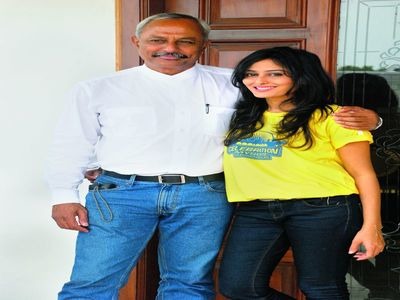
Actress Nidhi Subbaiah lost her father Bollachanda Subhash Subbaiah on late Sunday night.

The actress, who is currently shooting for the film 5G that is being directed by Yogaraj Bhat protege ‘ Guru Raghavendra, has been shuttling between her shoots in the city and her home in Mysuru to be with her father, who she was very attached too.

Her father was battling cancer lately, we hear.

source: http://www.timesofindia.indiatimes.com / The Times of India / News> Entertainment> Kannada> Movies> News / TNN / January 24th, 2017

Angakali: Traditional tribal folk dance inching towards burial

Funeral01KF16jan2018

Madikeri:

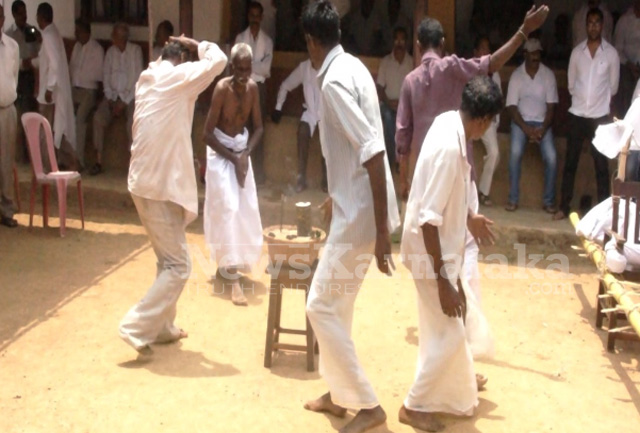
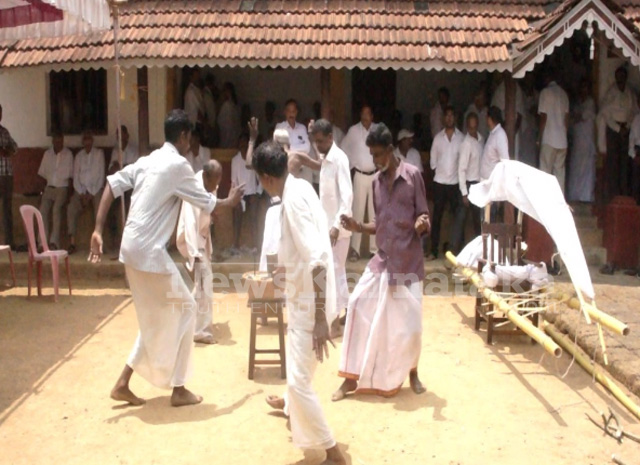
Angakali is the traditional tribal folk dance performed at the Kodava funerals before performing the last rites after the demise of the head of the family or elderly member by a special tribe called “Kembatti.” With changing times and attitudes most Kodavas of the present times are not even aware of this dance form called Angakali.

When Okkada (family head) dies in the Kodava family, Kembatti tribals in the village are summoned to perform Angakali.

A lamp lit using castor oil is placed at the centre of a cane basket filled with rice. Another tubular container and coconut is placed in the middle and a wooden rod is inserted in the rice. A white “Mundu” (Long piece of cloth tied around the waist extending till the ground) is given to the main performer by the family of the deceased.

The performer enacts a scene where he touches the dead body thrice by chanting, “Kattiri adanne bolla, kattiru abbayo” and circles around the lit lamp placed in the centre to the beats of “Malepoyithodeyutha” band.

The main Angakali performer has to strictly adhere to certain norms till the end of the funeral (Mengathe). If the deceased member is elder to him, he will be sent back home with a basket full of rice, coconuts, salt, meat, oil and cloth sufficient enough to stitch a shirt.

If the performer is woman, the cloth given will be of sari length.

The folk dance ritual is rarely seen off late at Kodava funerals with only a handful of artistes remaining, including Biddanda Kutada Sannu and Bollu to perform Angakali.

There is story woven around this folk funeral ritual by the Kembatti tribes. According to them, Lord Shiva had granted a boon to Basmasura using which the latter could turn anyone to ashes by placing his hand on the target. In an attempt to test his powers, Basmasura attempted to place his hand on Lord Shiva himself. Lord Krishna sensing the danger to Shiva, came to his aid in woman’s attire ultimately averting the danger.

Most Kembatti tribes believe this story led to the folk dance ritual at the funerals and continued it for generations.

Angakali is performed when deaths occur in Kodavas, Medaru and Kembatti communities.

The Kembatti tribals have performed the folk rituals at the cultural events/folk shows held in the cities of Bengaluru and Mysuru to keep the tradition alive and to draw the attention of the government for support.

Funeral02KF16jan2018

Bavali residents near Parane, inhabited by Kembatti tribes rue over total neglect by all the concerned.

Angakali (word found in Malayalam language too) means “part dance” with “part” referring to the parts of the body and “kali” means play/dance. It is considered the last attempt by the Kembatti tribes to please the deity to rescue the dead (In this case Okkada-head of the family/eldest member).

source: http://www.newskarnataka.com / News Karnataka / Home> Special / by Coovercolly Indresh / January 03rd, 2017

Getting a memorial: War tank reaches ‘Sunny Side’

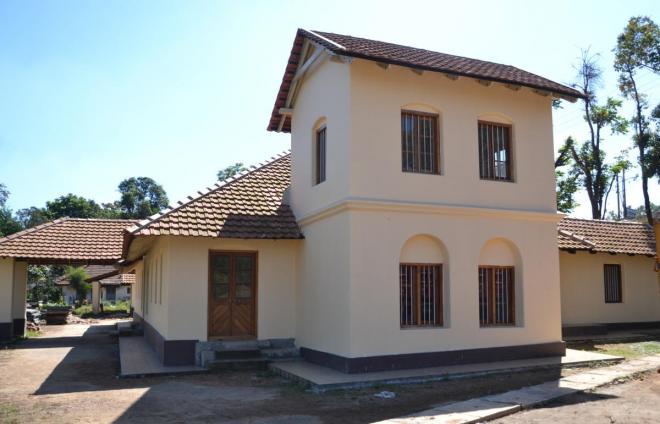
A view of the General Thimayya Memorial Bhavana in Madikeri.

The work on converting Sunny Side, the abode of late General K S Thimayya in Madikeri into a memorial has been re-started.

The state government, through the Department of Kannada and Culture, released Rs 2.30 crore for the purpose last week. The memorial is expected to be ready within a few months.

At the same time, a war tank, a long-pending demand, has finally arrived at the ‘Sunny Side’.

Demand for tank

Owing to shortage of fund, the work on converting ‘Sunny Side’ into a memorial could not be taken up. Ex-servicemen have been demanding that a war tank be kept in the museum of ‘Sunny Side’. When the Indian Army Chief General Bipin Rawat visited Kodagu to unveil the statues of Field Marshal K M Cariappa and General K S Thimayya on Kaveri College premises in Gonikoppa recently, the ex-servicemen’s association had appealed for the same. The war tank has arrived at Madikeri from Army Training Centre in Pune.

The battle tank “Himath” was used during the India-Pakistan war in 1971. After the completion of the memorial, the war tank will be open for public viewing.

The Nirmiti Kendra has taken up the work on the memorial but will retain the old structure of the house. It is proposed to keep a model of a fighter plane too, and items used by Gen Thimayya while serving the Army, along with war tank, in the memorial.

Funds for memorial

The state government had announced the conversion of the house into a memorial in its budget. Accordingly, the district administration had prepared an estimate for Rs 5.5 crore.

In 2013-14, the government had released Rs 45 lakh. When the state government claimed that it cannot release such a huge amount, the district administration had revised the estimate to Rs 3.70 crore. The state government has so far released Rs 1.45 crore. With the recent release of Rs 2.30 crore, the work is likely to be completed at the earliest, said the Nirmiti Kendra officials.

source: http://www.deccanherald.com / Deccan Herald / Home> District / by DH News Service, Madikeri / January 14th, 2018

Book on freedom fighter to be released on Jan 15

A work on freedom fighter and veteran politician Pandyanda Belliappa, titled ‘Kodagina Gandhi, Pandyanda Belliappa’, will be released at the Kodava Samaja in Ammathi on January 15.

The book has been written by Aithichanda Ramesh Uthappa.

Karnataka Sahitya Academy president Aravinda Malagathi will release the book while Ammathi Kodava Samaja president Mookonda Bose Devaiah will preside over the programme.

source: http://www.deccanherald.com / Deccan Herald / Home> District / DH News Service / Madikeri – January 13th, 2018

Virajpet TP chief and member take part in ‘Grama Vastavya’

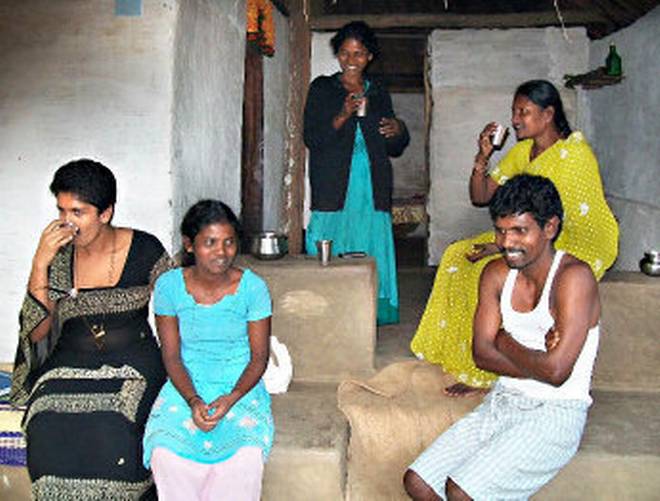
REACHING OUT: The president of the Virajpet taluk panchayat, Sarita Poonacha (left), sipping coffee at Kolli hadi, a tribal settlement in the Nagarahole National Park in Kodagu.

They stay in the house of a tribal couple overnight at Nagarahole

Madikeri:

The president of the Virajpet Taluk Panchayat, Sarita Poonacha, stayed in Kolli hadi, a tribal settlement, in the Nagarahole National Park on Tuesday as part of the “Grama Vastavya” programme to listen to the grievances of the hapless tribal people, according to information reaching here on Thursday.

This was the first step being initiated by the panchayat to redress the problems being faced by the tribal people, Ms. Poonacha said. J.K. Muthamma, a tribal member in the panchayat, also stayed with Ms. Poonacha. They were offered tuberous roots and honey for supper.

The Chief Executive Officer of the zilla panchayat, Mirza Akbarulla, who along with Ms. Poonacha, heard the grievances of the tribal people, said steps would be taken to redress them in a phased manner.

Replying to a man from the tribal community who alleged that officials only gave promises to them and nothing else, Mr. Akbarulla said his efforts were sincere and that he and other officials would not have visited them during the night if it were otherwise.

J.K. Thimma of the tribal community requested Ms. Poonacha to introduce regular buses to help tribal children reach schools in Kutta, Srimangala, Gonicoppa and other places.

Members of the tribal community also demanded more kerosene and ration under the public distribution system as the existing ration was not sufficient.

Tribal people sang revolutionary songs (Kranti Geete) and performed “Kolata” in the night to showcase their culture.

The deputy secretary of the zilla panchayat, Basavarajappa, executive officers of the Virajpet amd Madikeri taluk panchayats, Nagaraj and Motappa, respectively, and Assistant Director of Kannada and Culture Department K. Damodar were present.

The officials left while Ms. Poonacha and Ms. Muthama stayed in the house of J.K. Thimma and Bojamma.

source: http://www.thehindu.com / The Hindu / Home> National> Karnataka / October 30th, 2009

Mumbai: Coorg Association celebrates ‘Puthari’ festival

PuthariKF08jan2018

Mumbai :

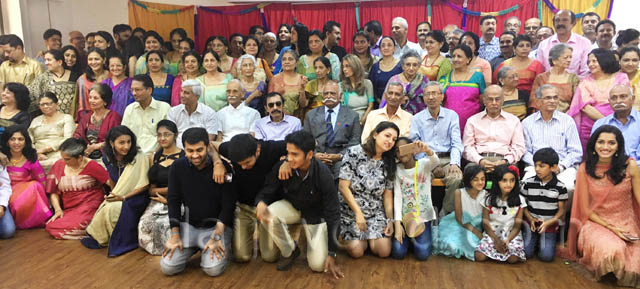
Coorg Association which had remained behind the curtains for some time met again and celebrated its 97th annual ‘Puthari festival 2018’ (Harvest festival) here on January 6.

Senior community leader and president of the association, Boppanda Appaji offered prayers to deity Iggutappa and Kaveri and set the celebrations in motion. Games, music, dances and entertainment programmes were held.

Community men and women wore traditional attire. Trustees Pandanda Ramesh, Biddanda Jagdeep Nanjappa, Kuppanda Muddaiah, Napanda Ramesh, Biddanda Lekha Nanjappa, Kallichanda Aiyanna, Manepanda Somaiah and Managing Committee members Boppanda Appaji- president, Pandanda Pushpa – vice president, Kuppanda Kavita – vice president, Bollachettira Mandanna – secretary, Mukkatira Somaiah – joint secretary and Areda Raja – treasurer were present.

Priya M Poovayyag and Kavya M Poovayyag sang a prayer song. Boppanda Appaji welcomed everyone. Pandanda Ramesh and Napanda Ramesh presented the details of the programme. Jaggi Manjayya, Akshay Chengayya, Mukuthira Somayya, Lekha Nanjappa and Nithin Chengayya introduced the guests. Balya Mediririra sang Kodava songs. Others conducted dances and cultural programmes. Honorary secretary Bollachettira Mandanna proposed the vote of thanks.

source: http://www.daijiworld.com / Daijiworld.com / Home> Mumbai / by Ron Bantwal, Daijiworld Media Network, Mumbai (EP) / January 08th, 2018

The lure of Nishani Motte

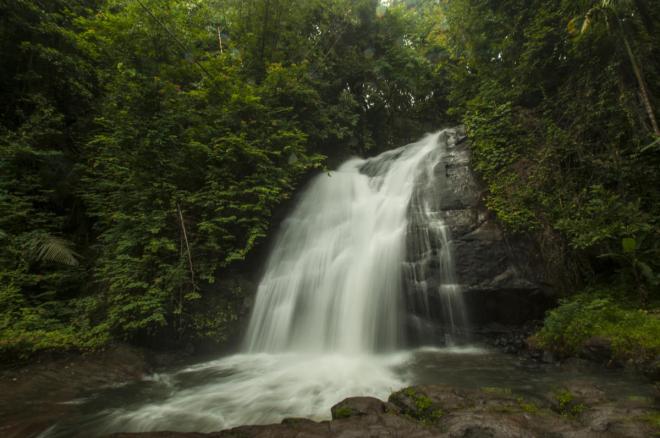
Devaragundi Falls
Devaragundi Falls

Travelling to Nishani Motte and hiking there was on our bucket list for a long time. We had heard that the place is also called the ‘Leech Kingdom’ as it is surrounded by a large number of leeches during the Monsoon.

On a Saturday early morning, I left Bengaluru with four of my friends for this interesting journey. We took the Hassan Road which is good to drive during the Monsoon months.

The first stop we planned was the Devarakolli Falls, which is a few km after Madikeri on Madikeri-Mangalore Road.

The Falls lie parallel to the main road and there are some shops for the travellers to have snacks. You can’t take bath in the Falls but it is a great place to shoot some good pictures.

After the short break, we hit the road for beautiful Devaragundi Falls, which is exactly 13 km from Sampaje, and located in a village called Thodikana. You need to park the vehicle two km before the Falls and do a small trek of two km on a flat jeep track to reach the Falls, which is so majestically placed inside the forest and is easily accessible.

To say the least, it was beautiful and gushing at the peak of Monsoon. Until January end, there is water for taking bath in the Falls but it gets dry during the peak of summer.

However, one should keep an eye on the kids as the water gushing area is steep. We were informed about this by the local villagers.

After a refreshing bath, we reached Mayura Cauvery in Bhagamandala to stay the night over.

The rooms were decent enough. We had our dinner in the small village of Bhagamandala.

Next day morning, we visited the forest office in Bhagamandala and got permission from the department to trek to Nishani Motte after paying a nominal entry fee and guide charges.

There was also another group who joined us in the trek. The Nishani Motte trek is around five km in total. One has to hire a jeep or travel in their own vehicle to the base from the forest office. The base is around five to six km from the forest office. We started our trek around 9 am.

The initial trek was a mild climb through estates and huge trees. In 20 minutes, we could see the grasslands and the leeches too. No wonder this place is called the ‘Leech Kingdom’ as thousands of leeches jumped over us.

Two hours through the trek, we reached the peak which was misty and foggy. We enjoyed every minute of the trek exploring the greenery and escaping from the leeches.

It started to rain during the last leg of our trek but it was an amazing experience to completely get drenched and enjoy the walk with friends.

Finally, we reached the other side of the base. We had our jeep waiting for us to drop us back to the Forest Department office. We reached the forest office around 2.30 pm, had a great lunch and finally visited the Thalacauvery Temple which is just a 15-minute-drive from Bhagamandala.

After visiting the Thalacauvery Temple, which is interestingly the birthplace of river Cauvery, we started our drive back to Bengaluru with lovely memories to cherish forever.

(The author can be contacted at kavinkishore85@gmail.com)

source: http://www.deccanherald.com / Deccan Herald / Home> Supplements> MetroLife / by Kavin Kishore/ January 03rd, 2018

Nikhil Chinapa’s toast to EDM

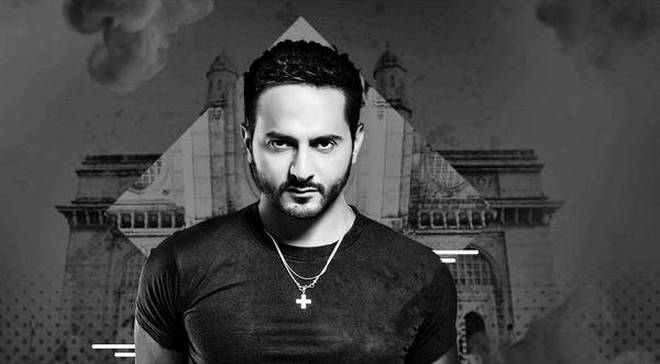
NikhilKF03jan2018

The popular host caters to EDM junkies in his latest digital show on Jukebox

Nikhil Chinapa has been at the forefront of popularising dance music. He now dons a new avatar in the form of a host of a show titled ‘TGTR (Together) with Nikhil’ at Jukebox, BookMyShow’s audio entertainment platform. The hour -long show will have the VJ, DJ, festival curator and television host share interesting trivia on his favourite dance tracks, discuss the progress of EDM across the globe and also interact on the social media. Aditya Kuber, Associate Vice President of BookMyShow, talking about show says, “Nikhil Chinapa has been one of the pioneers of the EDM movement in India. He’s sure to entertain the EDM lovers, party goers and particularly the young crowd and enrich their music experience on show.” Excerpts from Nikhil’s interaction on hosting the show.

Having hosted shows across various formats, what is the challenge in this digital attempt?

TGTR doesn’t really feel like a challenge because it is an enormous playground. I have been involved in electronic music since the time I would go clubbing in the early 90s; this form of music gives me immense joy. I always wanted to share it with people who didn’t have access to it. So, after I joined MTV in 1997, we started throwing our own parties in Mumbai and created a brand called Submerge. BookMyShow and I worked together on the very first music festival I did in Goa in 2007 and have partnered on several music properties over the years. This opportunity is in line with what I always wanted to do from the early 90s — share music with a larger audience.

Will it facilitate promotion of Indian talent?

Music is music; as long as it is good, it will get played on Jukebox. There will also a focus on highlighting homegrown talent and artistes as we have seen production techniques in India improve and better productions coming out in the past two or three years. But the show is very much global, we will be focusing on playing nothing but great music every week.

Won’t your absence on radio serve as a deterrent on TGTR?

It’s exactly the opposite because you’re talking about people calling a radio station; on BookMyShow Jukebox, we are on a digital platform, people are already on their smartphones and will be responding via tweets, messages on Instagram and Facebook which is something they have already started doing. We have also introduced ‘The Instagram Question of the Week’ where we invite people to ask me a question on my Instagram page and I will be answering on Jukebox. The show is going to be far more interactive because it’s on the digital platform.

How tough is it to maintain a show’s exclusivity amid so many other viewing/listening options?

The fact that there are so many options and everything is available on the internet is exactly where the opportunity lies. The internet can be an extremely daunting place for someone who isn’t accustomed to it or is just curious about trying to find new music. That’s why more people are experimenting with music forms, art forms, and fashion which wasn’t really available to earlier . By creating curated playlists from trusted sources (like me), it becomes easier for someone to tap into the first level of dance music and then go on to explore on their own. Also during the show, I will be directing people to several places on the internet and several artists they can follow and hopefully we will be able to build a larger community together.

How do digital streaming/talent portals contribute in encouraging newer talent?

There are several success stories of people who have been discovered on digital platforms across the world. Being a musician in this era is an extremely exciting prospect because it allows a song writer or a music composer or a singer of quality to be discovered without the help of a god father or a large music label. I genuinely believe that if you have talent, you could be recording a song in your bedroom in New Zealand and posting it out and then it becomes a worldwide smash.

source: http://www.thehindu.com / The Hindu / Home> Entertainment> Music / by Srivathsan Nadadhur / January 02nd, 2018