Category Archives: Arts, Culture & Entertainment

Rs 67.18 lakh spent on Dasara Janotsava

The details of expenses of Madikeri Dasara Janotsava for the year 2016-17 were presented at the audit meeting at Kaveri Kalakshetra in the city on Thursday.

Committee general secretary Chummi Devaiah said Dasara Janotsava was organised at a cost of Rs 67.18 lakh.

He gave the following details: Rs 2 lakh was spent on Karaga, Rs 19 lakh on Dashamantapas, Rs 23 lakh for gallery and lighting arrangements, Rs 40,000 for city decoration and poets’ symposium, Rs 8 lakh for cultural programmes, Rs 4 lakh for medals and prizes, Rs 2.50 lakh for Rasasanje programme, Rs 1 lakh for Dasara Sports meet and Rs 1.20 lakh on food, lodging and travel.

The other expenses were: Rs 50,000 for flower arrangements, Rs 1.9 lakh for banking expenses, Rs 24,000 on travel expenses of the delegation to Bengaluru, Rs 25,000 on CCTV cameras, Rs 10,000 for website maintenance, Rs 20,000 on grill construction around pump lake, Rs 1.13 lakh for tender EMD repayments, Rs 35,000 on puja expenses, Rs 25,000 for parking fee repayments and Rs 20,000 for auditing costs.

Member Umesh Subramani said there is a need to introduce corrections to the Dasara Committee’s bylaw. Chummi Devaiah said the committee members had requested the government for more grants. Though it was assured that Rs 75 lakh will be sanctioned, only Rs 60 lakh was released later and Rs 2.31 lakh was collected from public.

Mahesh Jaini and Arun Kumar urged to make preparations three months in advance for Dasara this time. Committee president Kaveramma Somanna presided over the meeting. secretary Nandakumar and honourary secretary Prakash were present.

source: http://www.deccanherald.com / Deccan Herald / Home> District / DH News Service / Madikeri – June 02nd, 2017

Kodagu : Talacauvery sanctuary declared an eco-sensitive zone

No new hotels or resorts can take shape in the Talacauvery sanctuary

The government has declared the Talacauvery Wild Life Sanctuary spread across 105.59 sq km as an eco-sensitive zone. This comes after the Environment Ministry notification on the proposed ecologically sensitive areas (ESAs) in the Western Ghats. The state has about five national parks and 27 sanctuaries, seven conservation reserve and one community reserve. The draft notification was issued on May 25 last year and the final notification was issued on May 15.

Kodagu Chief Conservator of Forest Manoj Kumar told BM this is an eco-sensitive zone under the Environment Protection Act. As per the Act, the area around the protected area could be heritage sites and others and there has been a provision to declare them as sensitive zones. But this was not being done and the National Wildlife Board based on the Supreme Court direction had stated that it is about 10 km, if not declared. Hence, so far it used to be 10 km. “But we started rationalising the area and had sent a proposal. Each proposal is now being approved and the rest of the sanctuaries in the area around will soon be declared as sensitive zones. It is not the Kasturirangan report. It is a statutory requirement and the state government after discussion with the district administration and representatives had sent a proposal,” he said.

As per the notification the region around the sanctuary from 1-16 km has been declared as the eco-sensitive zone. No commercial activity such as mining can be conducted and no new industries can be set up here. It also prohibits extension of industries that cause pollution, major hydel power plants, saw mills as well as rearing of animals. This declaration is also likely to hamper the union government highway project from Bhagamandala to Kerala’s Panathoor.

source: http://www.bangaloremirror.indiatimes.com / Bangalore Mirror / Home> News> State / Bangalore Mirror Bureau / June 06th, 2017

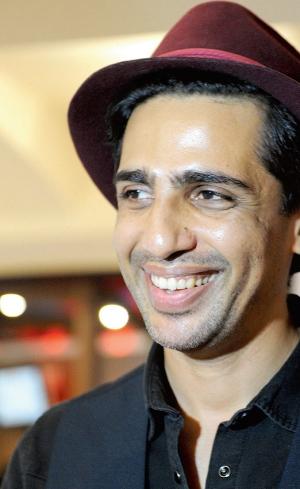
Camera Camaraderie : Gulshan Devaiah recalls working with the Late Om Puri

GulshanKF06jun2017

Fresh off his latest film, Gulshan Devaiah recalls working with the late Om Puri, and how actors respond to a ‘real’ location as opposed to a set

Wearing a knee brace and hobbling along on a crutch, Gulshan Devaiah still looks dapper in his hat and shorts when we meet at a at a screening of A Death in The Gunj, in the city. Politely obliging selfie requests, Devaiah tells us how he likes to challenge himself. In this film, (Konkona Sen Sharma’s directorial debut) that would have meant playing the part of Vikram – played by Ranvir Shorey. The rough and tumble alpha male who gets drunk and rides his bike, makes fun of everyone around him and talks with a cigarette in his mouth is nothing like Devaiah in real life. “That’s why, if I’d had the freedom to choose, I would have loved to play him,” he says, half-chuckling, half-regretfully.

He has no regrets, however, over his final turn in the film, what he calls, “the best movie I’ve been a part of”. A lot of it has to do with the stellar ensemble cast – from actors such as Kalki Koechlin, Vikrant Massey, Tillottama Shome and Shorey, to stalwarts such as Tanuja and the late Om Puri. But Devaiah admits that the biggest draw was the chance to be directed by Konkona. Turns out, she was a “sensitive director and a capable writer”.

Much of that comes from her years of experience in front of the camera, Devaiah believes. He recounts how she added little details – nuances and colour – to sequences that make a world of difference to the film and its characters. Such as when a friend lights two cigarettes at a time and offers one to his friend, who is driving the car they are in. “He doesn’t give him a cigarette and offer to light it for him – he lights it and gives it to him. These are things only actors will think of; they may not make sense in isolation. But visually, it makes such a difference – it gives you an insight into the nature of the friendship between the two,” Devaiah explains. It’s the sort of detail that he believes pervades the film, to the point that while watching it, he even “forgot” he was in it. “I’ve had more important roles; longer roles in films where I’ve been the protagonist. But I’ve never been as happy with a film as I am with this one.”

It’s high praise from someone who has worked with the likes of Sanjay Leela Bhansali in Ram Leela. Bhansali, Devaiah lets on, is “everything people say he is, but a whole lot more”. Fun, passionate, sensitive and supportive, Bhansali taught him a lot, he says. “He gave me the freedom to experiment. He takes a long time to shoot, and that can be testing for some people, but once you get going it’s fine. I always felt like I wanted to work more with him; I didn’t want the break that came after 10 days of shooting. He lives for his movies – unfortunately, he doesn’t always find people who share the same level of dedication and commitment.”

It’s been an interesting experience going from that kind of grandeur and opulence, to the realism and small budget of A Death In The Gunj. SLB’s sets can be overwhelming, he admits, so the more time you spend on them, the better it is for you, as you cease to be intimidated and become more comfortable. Plus, working on a set is very different from working in a real location, in that actors have to “tailor their process”, he explains. “Each experience is different. I had to make adjustments in the way I approached my craft. SLB’s movies – the visuals, the melodrama, the music – is all larger than life. You have to submit

yourself to that, and it can be difficult.” Calling filmmaking an “unnatural process”, he explains that shooting in real locations is a little easier. Everything from the way the wind blows to the “reality around you” influences you and subtlely enhances the way you play your character. “On a set you have to use your imagination. Here, you can use more impulse. That’s the basic difference.”

The film is also special to him because it marked one of the last projects for Om Puri, who tragically passed away before he could see the film, Devaiah rues. Still, he has fond memories of working with the thespian, who despite not feeling very well on the set, would light up the atmosphere like “a 5,000-watt bulb”. His craft, Devaiah says, has the ease of a hot knife through butter. As it is with Tanuja. He uses a football metaphor to explain: “When a striker hits a goal, he has people running around him and the goalie running at him, but he still scores. He can do that because there’s a calmness in his mind.” Watching Tanuja and Om Puri do their thing was just like that. “They approach a scene with such steadiness and composure. When the mind is calm it’s active, and when it’s active, it’s creative.” That, he feels, has been the biggest lesson from working with the stalwarts.

There are other lessons here too – like the film’s take on machismo and masculinity. It’s a conversation Devaiah agrees is important to have, given the charged atmosphere in the country regarding gender. He recounts how people in the film industry too submit to these unspoken prejudices, questioning everything from why a man is sitting cross legged to how he is holding his glass. The period film both establishes and questions these

concepts through the protagonist’s (played by Massey) struggle with machismo. In all, it’s been a fruitful experience for Devaiah, who is confident the film will communicate what it wanted to, beautifully.

source: http://www.bangaloremirror.indiatimes.com / Bangalore Mirror / Home> Columns> Sunday Read / by Sowmya Rajaram, Bangalore Mirror Bureau / June 03rd, 2017
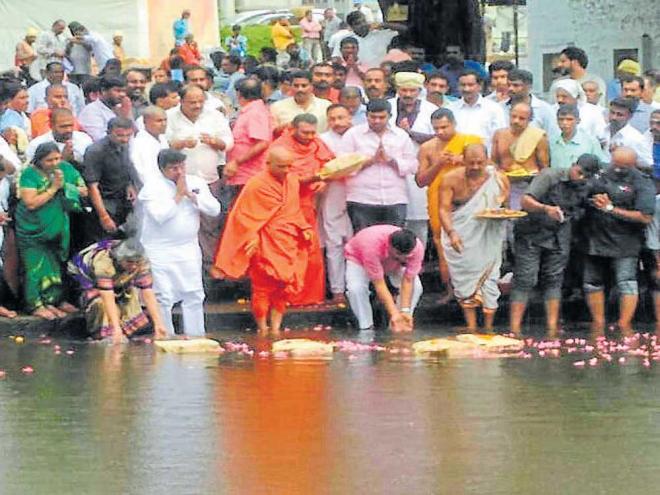
Parjanya japa held at Talacauvery to propitiate rain god

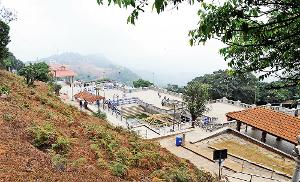
Water Resources Minister M B Patil, Adichunchanagiri mutt seer Nirmalanandanatha swami, MLA P M Narendraswamy offer baagina at Triveni Sangama in Bhagamandala, Madikeri taluk on Sunday.

To propitiate the rain gods, the officials of Cauvery Neeravari Nigama Ltd (CNNL) chanted Parjanya japa at Talacauvery, the birthplace of River Cauvery on Sunday.

As there was stiff opposition for conducting parjanyahoma using government funds, homa was not performed. Only Parjanya japa and special prayers were held. CNNL Executive Engineer Basavaraj and his wife took part in the special prayers held under the guidance of priest Prashanth Achar. Water Resources Minister M B Patil did not take part in the japa.

Patil, who arrived at Bhagamandala at 3 pm along with the Adichunchanagiri Mutt seer Nirmalanandanatha Swami, offered baagina at the Triveni Sangama in Bhagamandala. Later, he offered prayers at the Bhangadeshwara Temple and Talacauvery.

Speaking to reporters, the minister said “if offering prayers to motheris wrong and a superstititious belief, then I am ready to conduct such prayers several times. Some offer prayers to lifeless stones. Why should one oppose offering prayers to the river Cauvery, the lifeline of crores of people,” he asked.

“The Krishna and the Cauvery are the lifeline of the state. I have offered prayers to mother Cauvery for good rainfall. Offering prayers to rivers is part of our tradition,” he said.

“Chief Minister Siddaramaiah does not believe in Parjanya homa and japa and termed it a superstitious belief. Doesn’t his wife offer prayers at temples? Has he not benefited from it?” Patil retorted.

Though the visit was termed as private, the itinerary given to local elected representatives mentioned it as a government programme. MLA P M Narendraswamy, MLC Veena Acchaiah, Patil’s wife Asha Patil, Water Resources department principal secretary Rakesh Singh, officials Gurupadaswamy, Manjunath and Rangaswamy and Kodava Sahitya Academy President B S Thammaiah were present.

source: http://www.deccanherald.com / Deccan Herald / Home> State / DH News Service / Madikeri – June 05th, 2017

Tribe and Prejudice : Every last Thursday of May, Tribals congregate in Karnataka’s Virajpet to celebrate

KundehabbaKF31may2017

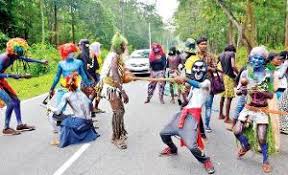
Tribals congregate to celebrate, make music and some harmless ribbing. Body painting, cross-dressing and ‘abusing’ passersby are all part of the one-of-a-kind festivities

Kunde” “Kunde” “Kunde”.. they shout, howl and whistle all day long, walking in the streets of Thithimathi and Devarapura in Virajpet taluk of Kodagu. If you have seen the pictures, you will understand that this is a festival that is as colorful and lively as any other celebration.

Cross-dressed men who adorn any attire irrespective of whether it is fashionable or not, is the idea behind this theme. Personalities that are chosen for aping are deities, young girls, demons and anything under the sun.

The most funny part of the festival is the music. They use drums made of buckets which are used to store water, as well as metals and Dish TV antenna receivers, adding to the noise of the parade.

Kunde Habba or the Bodu Habba has been a century-old tradition in Kodagu celebrated by tribals. A tribal man who was dressed up like a fierce deity said, “This is a festival where we abuse gods and the divine power. Our forefathers have told us that Lord Aiyappa who was living in this region betrayed our tribal clan and from that day, once in a year, and especially on the last Thursday of May, we celebrate this festival.”

All these men are not from one place. They come from various places marching along, shouting Kunde…Kunde..Kunde to meet at the Aiyappa Temple at Devarapura by afternoon. All the sects and clans of tribal men reached the place where the “Bhandara Takka” or the keepers of the temple wealth, the Sannuvanda family members, were present.

The festivities come to a close when all of them dance around the temple and meet and greet each other. There were close to a thousand people who participated in this festival, which was held under police vigil.

source: http://www.bangaloremirror.indiatimes.com / Bangalore Mirror / Home> News> State / by Kaushik JN, Bangalore Mirror Bureau / May 28th, 2017

Now on the web — Kodava, Konkani and Tulu radio

Nammaradio starts services in dialects of Karnataka

Among the unique characteristics of Karnataka are the distinctness of its regions and the tongues spoken within the State. Yet, for long, what people heard on the radio were Kannada, Hindi and English. In contrast, one radio channel — Nammaradio, the state’s first Kannada radio station on the internet launched in February 2016 — has started airing programmes in eight languages and dialects of the State. It’s likely the only web radio in India to air programmes in Kodava, Konkani and Tulu, and some of the lesser known dialects of Karnataka. These include Byari and Nawayathi, spoken by sub-sects of the Muslim community bearing the same names in coastal Karnataka, and Sankethi and Havyaka, spoken by Brahmin subsects.

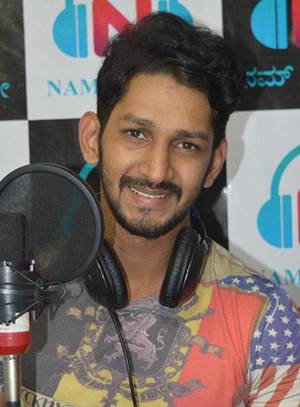
Making waves: Pavan Bhat anchors programmes in Tulu

Avnidhar Hawaldar, CEO, Nammradio.com, said that the target audience are Kannadigas living outside the state, and extensive interaction with them revealed that while there were avenues for Kannada content, there was nothing for people speaking the dialects. “It’s a true embracing of Kannada in all its diversity,” said Mr. Hawaldar.

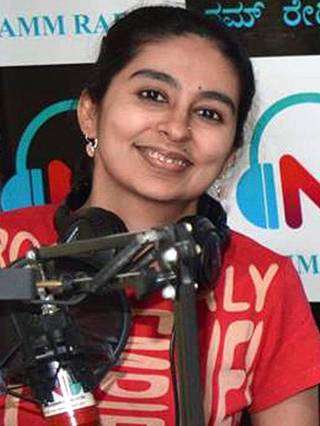
Making waves: Varsha anchors programmes in  Havyaka .
Making waves: Varsha anchors programmes in Havyaka .

In February 2017, at the Nammaradio studios in Bengaluru, in-house radio jockey Varsha started the first such show in Havyaka, a dialect spoken by Havyaka Brahmins. “The response was huge, and our listeners were elated when they heard a show in their mother tongue. That set the tone for the rest,” said Raj Malleswaram, programming head of the channel.

Since there is no history of radio programming in these languages and dialects, trained jockeys are hard to come by. So housewives, students and working professionals fill the need. Ashutosh Dikshit who works as senior innovations manager with a leading firm in the UK has a second career now, hosting a weekly radio show in Sankethi language from his house in London. “Our community may be less than 30,000 across the world and we are very concerned about our language, which is a large part of our heritage. The radio show has been welcomed widely in our community,” Mr. Dikshit said. He added that the channel viewed dialects like Sankethi or Nawayathi as not community linked, but as a linguistic heritage to be preserved.

When it comes to film songs, however, the one-hour radio shows through the weekend play Kannada songs. Except for Tulu, no films have been made in the other tongues. The Tulu show will soon start playing Tulu film songs.

source: http://www.thehindu.com / The Hindu / Home> News> Cities> Bangalore / by K.V.Aditya Bharadwaj / Bengaluru – May 29th, 2017

State plans country’s 1st all-women trekking guides team in Kodagu

Women will be drawn from local villages and tribal hamlets as they know the terrain better. The women are being identified and shortlisted by local forest officials and panchayat members. dh file photo

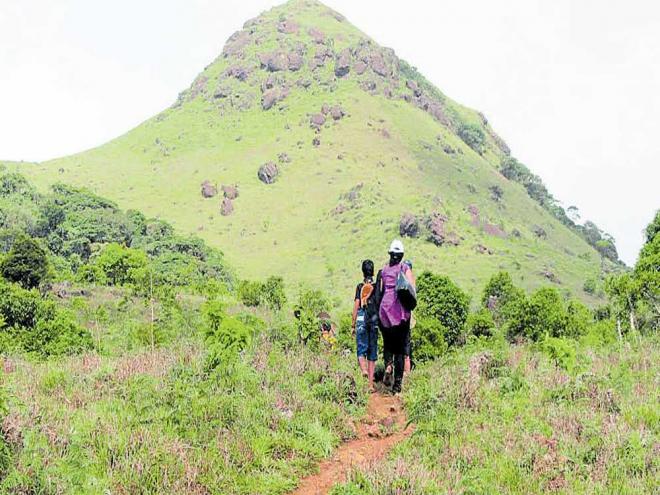
The Forest department is planning to set up an all-women trekking guides group. Said to be the first such initiative in India, these women groups will help trekkers on the dedicated trekking trails identified by the Forest department. To start with, women guides will be introduced on three eco-trails of Kodagu district. Women will be drawn from local villages and tribal hamlets as they know the terrain better. Such women will be trained and recruited by Karnataka Eco-Tourism Development Board (KETDB).

Vinay Lutra, Chairman of KETDB told DH that they had received a special request from Kodagu CEO and Chief Conservator of Forests to have all-women trained trek guides.

“The demand for trekking trails is very high and so is the demand for women guides. Based on the response and success rate, more such teams will be formed in the coming days,” he said.

The idea of involving them is to make the women of this section and region employed and independent. The women are being identified and shortlisted by the local forest officials and panchayat members. The KETDB is only training the women.

Vijay Mohan Raj, Chief Conservator of Forests, Chikkamagalur, and member of KETDB, said that earlier 70 women were trained to be a part of the certified women volunteer programme.

These are women from various civil societies. But, this will be for the first time where 30 women will be trained to be trekking guides.

“The difference is that the volunteers are not paid, but these guides will be given permanent employment and a monthly salary. Guides will be trained professionals,” Raj said.

Though dates of the training and their recruitment is not yet decided, board members hinted that it is most likely to start from June. Guides will undergo a week-long training on the trekking routes, the dos and dont’s in the forest, identification of the birds, plants, insects and animals and health safety.

After this, KETDB is also planning to introduce a mixed group of trained guides in Dakshina Kannada and Hassan districts.

source: http://www.deccanherald.com / Deccan Herald / Home> State / by Bosky Khanna / DH News Service / Bengaluru – May 26th, 2017

Hotbed for Hockey

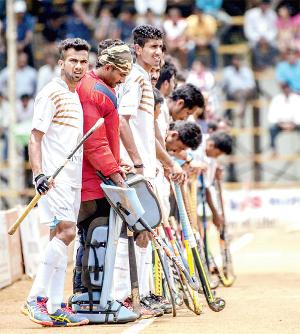
Hotbed for hockey. Nikkin Thimmaiah with his Chendanda team at the Kodava Hockey Festival final.


The Kodava Hockey Festival is testimony that the game is still thriving in Kodagu, feels internationals Nikkin Thimmaiah and SK Uthappa

A crowd of 30,000 people turned out to watch the Kodava Hockey Festival final between Chendanda and Pardanda on May 14, an eye brow-raising statistic to the uninitiated. This wasn’t an international event, not even a national championship. The average spectator turnout for an Indian Premier League game at the M Chinnaswamy Stadium was 25,000 but this hockey contest — played between families in Kodagu district — beat even the IPL. Cricket, they say is religion in the country. In Kodagu district, it’s hockey that gets the adrenaline pumping.

“Every player from Kodagu begins his career in this tournament, including me,” Nikkin Thimmaiah, India forward and a member of the Chendanda winning team, said.

“I watched my father play in this tournament as a six-year-old. That was one of the catalysts that spurred me to take up the sport.”

The tournament is unique in many ways. A team comprises members of a family and there is no distinction between either age or gender. The festival itself has been conducted annually since 1996. The game, though, goes on through the year as youngsters are encouraged to make it a career. “It’s the most talked about sport in Kodagu and even now, kids are still enthusiastic about the game,” Thimmaiah added. “Kids generally place hockey on a priority.”

Over the years though, the number of players from Kodagu making it to the international level has fallen. Currently, there are only three — Thimmaiah, SK Uthappa and SV Sunil — in the Indian squad. There’s no player from Karnataka in the junior team, but Uthappa insists hockey is not dead. The sport is now alive, more than ever, and tournaments like the Kodava Hockey Festival keep it ticking. “I began playing hockey seriously after watching my brother play,” Uthappa said. “I played badminton first, but in Coorg, everything is about hockey. Hockey is in our blood and that’s why we start playing. The next influential factor is your family. It depends on how they support and encourage you to play hockey as a child. Thanks to that tournament, it’s a tradition that everyone participates in it.

“Even now, that culture of developing the sport remains. You often hear that gadgets have taken the fun out of outdoor games. There are kids who use iPads in Coorg but they know how to balance it with the game. I think that love for the sport is influential in getting everyone to play it. Imagine you have to play this sport in every school. You will naturally be inclined to it.”

But it’s not just this tournament which gets Kodavas hooked to the sport. Uthappa says everyone is interested in playing some sport, but what cricket is to the entire country, hockey is to a Kodava. “We Kodavas follow, discuss and dissect hockey just as other people in the country do with cricket,” Uthappa said. “Families here are aware of everything that we do. Over the years, they have become more educated about hockey, thanks to the promotion and media exposure hockey is getting. Now, everyone’s involved in an educated discussion. For example, they tell me I played well in the first quarter, but my dribbling went awry in the third quarter and so on. Earlier, it was only the basic question of whether you won or lost and by what score.”

source: http://www.bangaloremirror.indiatimes.com / Bangalore Mirror / Home> Sports> Others / by Aravind Suchindran / Bangalore Mirror Bureau / May 23rd, 2017

Changing screen colours

RashmikaKF22may2017

Rashmika Mandanna is a Kannada heroine out to conquer the south Indian film industry. This model-turned-actress was roped in for the runaway hit Kirik Party, a college drama, after her photos caught the eye of producer and hero of the movie Rakshit Shetty and director Rishab Shetty. She played the teacher, Anannya.

Following the success of her first film, Rashmika became one of the most sought after actresses in the Kannada movie industry, and started getting offers from other film industries, including Telugu and Tamil. The actress, who is taking her first steps in Tollywood, has been offered movies with some of the top heroes of the Telugu film industry such as Prabhas, Allu Arjun and Nani.

The actress has picked a Naga Shourya-starrer for her Telugu debut, and is shooting for it. This will be followed with another Telugu project with hero Ram under Kishore Tirumala’s direction. Rashmika was also approached for Prabhas’ next film, Saaho, but she refused as it clashed with dates of her other movies. She is now busy shooting for Chamak with Ganesh, and is also working on Anjaniputra, directed by A Harsha, starring Puneeth Rajkumar in the lead.

Rashmika says acting was always on her mind, even when she started her career on the ramp. She learns the language before signing any movie. Her language classes come handy on the sets of her first film, a yet-to-be-titled one, with Naga Shourya.

“I have been offered movies from other industries. Most are from the Telugu industry. I have been going through a few scripts and I thought the best among them was the one with Naga Shourya. It should be great for a debut, and I will follow that up with a project with Ram, for which the shooting will start in September,” she says.

Although the young actress is excited to try other regional languages, she says Kannada movies will remain her priority. “I will never forget the overwhelming response I got for my first film in Sandalwood. Movies don’t have a language barrier, and good ones are remade for other regions. I will try to do good films in all languages,” she gushes.

Rashmika, who always scored a distinction percentage in academics, has to ensure that she completes her graduation and has just written her final year exams for BA in journalism. The Virajpet beauty credits her mother for helping with her career. “She makes sure that I devote all my energy to acting, which helps a lot. I can make a career in another field, besides acting simply by showing my marksheet,” she smiles.

source: http://www.newindianexpress.com / The New Indian Express / Home> Entertainment> Kannada / by A Shardhaa / May 22nd, 2017

Coffee in Coorg

Weekend getaway

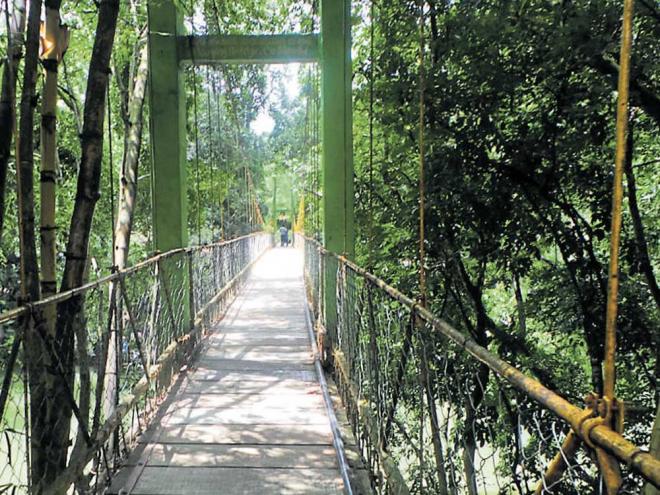
The Hanging Bridge at Nisargadham.

What do you do when you have a long weekend at hand and you wish to escape from the hustle and bustle of the IT capital? Driving to Coorg, the ‘Scotland of India’, is definitely not a bad option. That’s precisely what we did on one such weekend that had a public holiday attached. We decided to make the most of it by driving to that part of the world, where one can be at peace at the Buddhist Monastery, be one with nature at the vast coffee estates sipping a hot cup of filter ‘kaapi’, play Peeping Tom to bathing elephants and relish some delicious local delicacies.

How did we go?
The drive from Bengaluru (Whitefield) can take around six hours with a couple of breaks, so we decided to leave office early post lunch on a Friday with the intention of beating the weekend traffic that piles up on Mysore Road. The drive from Whitefield until the Mysore Road exit can be taxing and no sooner had we entered Bidadi that we started our countdown to the restaurant. We regularly halted on Mysore Road for some nice ‘thatte idli’ and filter coffee. Post our refreshment break, we drove non-stop until we reached Aishwarya Suites (at New Bamboo Bazaar Road, Mysuru City) for our overnight stay. On day two, we got off at around 7 am and headed towards Coorg.

The stay
We stayed at the Leisure Vacation’s Brook Stone Villas at Thalatmane village on the Mysuru-Mangaluru highway. The location is around six km from Gen Thimmaiah Circle as one turns towards Mangaluru. One has to traverse through acres of coffee estates on a ‘kuccha’ road, giving the driver a semi off-roading experience.

What did we do?
Driving through the scenic road flanked by tobacco farms, we visited the Buddhist Golden Temple. After paying homage at the temple, our next port of call was Nisargadhama Island on the Kaveri river. Here one can visit the island via a hanging bridge, suspended over the river. Later in the day, we visited Abbey Falls and called it a day after visiting Raja’s Seat — a picnic spot that offers a West facing beautiful valley and sunset view, a nice flower garden and a musical fountain treat.We covered Talakad on the second day. At Talakad, one can visit the temple and the higher altitude offers some good sights of the valley beneath. On day three, post breakfast, we headed back to Bengaluru albeit with lots of lovely memories.

(The author can be contacted at srikanthmenon@yahoo.com)

source: http://www.deccanherald.com / Deccan Herald / Home> Supplements> MetroLife / by Srikanth Venugopal / May 11th, 2017