The city’s art connoisseurs were in for a treat early this week, when US-based Sri Lankan artist Geramin Sebastian La Brie held a charity exhibition of her work.
The proceeds of the show were in aid of underprivileged children suffering from cleft lip and palate, and art lovers wasted no time in picking up the paintings.
The show was curated by Rubi Chakravarti and supported by Deutsche Cleft’s Regional Director, South Asia, Dushyant Prasad, and Lalit Sanghvi.
source: http://www.timesofindia.indiatimes.com / The Times of India / News> City News> Bangalore News / TNN / January 05th, 2017
Kodagina Gowramma has made significant contributions to the Kannada literary world, said Asha Hegde, secretary of Karnataka Lekhakhiyara Sangha.
Speaking after conferring Gauramma Datti Nidhi award for 2016-17 instituted by the district Kannada Sahitya Parishat on Shanthi K Appanna here on Saturday, she said “Though Gowramma lived only for 27 years, she made her mark with her works, which are relevant even to this day. A feminist and a freedom fighter, she had invited Mahatma Gandhi to her house, during his visit to Coorg.”
She said, “Gowramma inspired women writers with her feminist ideology and strove to create an awareness about the atrocities on women through her works.”
Speaking after accepting the award, Shanthi K Appanna said “Though she has been living away from Kodagu for the last 15 years, her love for the land has not diminished. Gowramma is an inspiration for my works. I started writing poems and stories when I was in Class IV. It was my mother who encouraged me to write,” she said.
Kannada Sahitya Parishat district president B S Lokesh Sagar, Fisheries department assistant director Milan Bharath and others were present.
source: http://www.deccanherald.com / Deccan Herald / Home> District / DHNS – Madikeri, February 05th, 2017
For as long as I can remember, my grandmum has always been old, almost timeless. Time is perhaps the most active change agent. It makes even actors and actresses, with millions to spare for matters, cosmetic, look like second hand imitations of their older selves – but what can it take of those like my Avayya?
In many ways, I always assumed she had conquered time. Even looking at her lying motionless, now, in the midst of a crowd, it only seemed as if she was going to awake from her nap and sip her cup of black coffee, and then some time later, brandy with hot water.
She lived a simple life that belay the many tribulations, women – especially those widowed at an early age – overcame for the prosperity of their family. At 101, she had passed. Quietly.
My Memories of Avayya (and her Imaginary Friends)
As the mournful masses milled around her body to pay their final respects, I couldn’t keep a steady mind. I was sad but also confused.
Here was a woman who in her lifetime had lived through the invention of the modern television set, World Wars I and II, the Indian freedom struggle and independence from the British, the Cold War, the Emergency, the invention of the internet, the Pokhran nuclear tests, the year 2000, her second (or third, I don’t know for sure) favourite grandkid’s playing Bryan Adams’ Summer of 69 on repeat, and much else. You tend to associate a certain degree of immortality to someone of that stature.
At 101, she had passed. Quietly. (Photo Courtesy: Roshan Cariappa)
She was a reservoir of knowledge, the lone connecting thread between five generations of a family that stretched across many geographies far from her native town.
My own personal memories of her were fond.
When we were children, we visited Coorg in the summers a couple of times. Avayya – probably in her 70s then – still managed a home and an estate by herself. I found old houses eerie – a fact manifoldly exacerbated by Avayya’s telling us of our long deceased Granddad’s proclivities for pinching people’s bottoms in the night. I huddled under the blankets in the night, my tiny bottom firmly planted on the ground, waiting to fall asleep. It worried me greatly that the others seemed unperturbed by Granddad’s post life nocturnal harassment. Some even attested, amusingly, that they had been subject to said antics.
Sometimes, while making supper in the kitchen, she’d venture out in the abject darkness to fetch firewood or water. While we sat beside her and ate rotis and bamboo shoot curry, she’d narrate anecdotes of people and events that, for us city rats, seemed from North of Jupiter. Somehow, she seemed to know it all. Mostly, her stories were about our Uncle Jimmy and his drunken misadventures. She had a wry smile; her eyes closed momentarily in a wink. And if you saw her then, with the many wrinkles even, her face betrayed a childlike impish charm.
She also had a wicked sense of humour. Many years later, while living at my uncle’s house in Mysore, she started animated conversations with imaginary friends from across the hall. Now, if you were studying late for your board exams (like my cousin Bopu was at that time), this was no laughing matter. Try doing any of those innocuous activities you do around the house with someone actively conversing with people you can’t see, let alone host. It warranted a visit from my uncle from abroad to set things straight. Having inherited some of her traits, my uncle armed her with a stick and some ash, and is said to have told her to put it to use if ‘them imaginary friends’ showed up. Just in case. And surely enough, her friends and conversations were gone. Maybe it was a ploy to see her son, but I think she did it just for kicks.
She was a reservoir of knowledge, the lone connecting thread between five generations of a family that stretched across many geographies far from her native town. (Photo Courtesy: Roshan Cariappa)
The week after she passed, we had a traditional ceremony. The family gathered to partake in the rituals – that included sharing her virtues, praying to the gods to look upon her kindly, offering her favourite things: food and drink.
While we took turns keeping aside a morsel of rice and meat, each, for her on a plantain leaf, somebody remarked to refill the brandy. Apparently, the level of brandy in the glass from the night before had depressed. While some of us looked at Bopu, who maintained it had evaporated, I couldn’t help but smile.
It just could have been Avayya and her imaginary friends.
(Roshan Cariappa is a Bangalore-based tech entrepreneur, occasional writer, and musician. He finds inspiration in Bharat, dharma, economics, music, and startups. He tweets at @carygottheblues.)
source: http://www.thequint.com / Home> Blogs / by Roshan Cariappa / February 19th, 2017
The Sarang helicopter team talks about the risks in the air,how they were inspired to master the skill of formation flying and the courage it takes to deliver a flawless performance
Bengaluru :
In their saffron uniforms, the men and women who swing their Sarangs into perfect flight formations display skill and dare and splendid teamwork. Not many on the ground know the challenges and risks that go into it.
After enthralling the crowd at the inaugural day of Aero India 2017, the pilots shared their life stories, and how they came to be flying their HAL Dhruv choppers.
Sneha Kulkarni wanted to become an event manager, but ended up as an Indian Air Force pilot in 2006. “When my elder brother joined the Army, I went for a training camp. There, the uniform inspired me to join the air force. I had not believed that I would become a pilot, but here I am,” a relaxed Sneha said on Tuesday afternoon.
Wing commander Sachin Gadre, team leader, says the choice of a new teammate is almost always a collective one, with the final call left to him. “First, we ensure that the person joining our team actually volunteers to be here. Considering how strenuous and challenging it is, we don’t want them to be under any risk. He or she has to fly with us once before we finalize the person to ensure that the entire team bonds. The ability to remain calm, no matter what, is the most important quality,” he said.
“We fly so close to each other that the slightest mistake could be disastrous. And we have to ensure that we maintain our formation. We need to have our emergency protocol in place and follow it,” he added.
Considering the challenges, the Sarang Air Force Helicopter team performs on non-fixed wing aircraft, flying the choppers in perfect sync. The highly skilful pilots are called into action 12-15 times a year for various academy parades, exercise programmes and other formal events. To achieve the perfection that they are famous for, they have to put in nearly 500 hours of practice time, specially on a helicopter. “It is for the safety and beauty of our performance that we train so hard. It requires courage,” says Gadre.
It was precisely this precision that attracted squadron leader Bhushan Rao to the elite team of performers. “I saw them perform at Marine Drive in Mumbai and was so impressed that I immediately wanted to join. It is much more difficult than the apparent ease with which the performance happens,” said Rao, who is serving his second tenure and has been with the team since 2012.
Wing commander P Prithvi Ponappa, 38, says he was watching a Sarang display in 2003 when he first wanted to fly one. And at Aero India 2015, he finally did. For him, performing at the Aero Show is like being on home turf. “It was always my dream to perform at the show. I was on standby last time, so this is a dream come true. The first time I flew, I was so nervous that I was looking to my senior beside me for guidance,” he said. The airman from Kodagu narrated how every display performance is preceded by multiple dry runs on the ground, followed by a mandatory video debriefing.
Wing commander Ashish Moghe says, “Apart from maintaining the basic level of fitness that an average military aviator should have, the team claims that they do nothing out of the ordinary, apart from following a balanced diet.”
The voice of the team cannot be missed. Tinju Thomas, 28, from Ahmedabad, is an economics graduate and now commentator of the Sarang team for four years. Managing a team of 15-16 officers and pilots and 30 technicians isn’t easy, but for her it is as much fun as it is duty. “I always wanted to visit Bengaluru and my work brought me here,” she laughs.
source: http://www.timesofindia.indiatimes.com / The Times of India / News> City News> Bangalore News / Arpita R / TNN / February 17th, 2017
Four elephants from Mathigodu elephant camp in Kodagu district left for Uttarakhand on Monday. The elephants have been sent to Jim Corbett Tiger Reserve as per the MoU signed between the Karnataka and Uttarakhand governments.
The elephants that left for the north Indian state are Thunga (15), her two-year-three-month-old calf Karna (7) and Bheeshma (7). Mahouts Gopal, Rama and Lingappa, are accompanying the pachyderms.
The elephants halted at Kallabettu forest in Hunsur on Monday evening and will resume their journey on Tuesday morning, said Mathigodu RFO Kiran Kumar. He said the elephants will travel by lorry. The mahouts will be with the elephants till they get accustomed to the new environment, said the RFO.
Elephant Thunga is the daughter of Varalakshmi, who is at the elephant camp. Karna is the son of Chamundi who was captured at Dandeli. Bheeshma is an orphaned elephant who was found on the periphery of Veeranahosahalli. He was separated from his mother and was reared by mahouts at the camp.
source: http://www.deccanherald.com / Deccan Herald / Home> State / DHNS- Gonikoppa (Kodagu District) / February 21st, 2017
Senior journalist Raj Chengappa has been re-elected as the President of the Editors Guild of India.
At the Annual General meeting of the Guild on Saturday Raj Chengappa was unanimously re-elected as its President and Prakash Dubey as General Secretary, a statement released here said.
The Guild also elected Kalyani Shankar as Treasurer.
At the meeting, the Guild decided to take a fresh look at the criminal defamation law in India and explore legal options for seeking its abrogation, the statement added. PTI ADS DV
This is unedited, unformatted feed from the Press Trust of India wire.
Are Kodavas (Coorgs) Hindus? The answer is both ‘yes’ and ‘no’. If one defines Hinduism as a way of life, then Kodavas are Hindus. If one looks at Hinduism from a rigid caste-centric angle, then Kodavas are not Hindus.
Sarvepalli Radhakrishnan (1888-1975), former president of India, who was one of the most erudite scholars of all times, had said: “Hinduism is not a religion, but a commonwealth of religions. It is more a way of life than a form of thought. The theist and the atheist, the sceptic and the agnostic may all be Hindus if they accept the Hindu system of culture and life. Hinduism insists not on religious conformity but on a spiritual and ethical outlook of life. Hinduism is not a sect but a fellowship of all who accept the law of right and earnestly seek for the truth.”
The concept of Hinduism as propounded by Radhakrishnan was lofty and incorporated the essence of the ancient Indian civilisation. But in the present era of ‘Mandal’ and ‘Kamandal’ politics, it is caste which determines the Hindu identity.
Kodavas are a unique race of people who live in Kodagu (Coorg, as the British called it), the smallest district in Karnataka. Very little is known about the origin of this community of warriors who have lived on the slopes of the Western Ghats of South India from time immemorial. This land-owning community known for its martial traditions, has a distinct culture that is strikingly different from that of the neighbouring cultures.
If caste is used as the yardstick to ascertain whether Kodavas are Hindus, then this small community, numbering less than two lakh, are certainly not Hindus because they do not belong to any Hindu caste and there is no caste system among the Kodavas.
Another important factor which characterises the Hindu caste system is the belief in the supremacy of Brahmanism. Judged from this yardstick too, Kodavas are not Hindus because there is hardly any role for Brahmins in the various Kodava ceremonies related to birth, marriage and death. It is the elders in the community who conduct all rituals.
Kodavas are basically ancestor and nature worshippers. Every Kodava is a member of a patrilineal okka (clan) that has descended from a common ancestor. The Karanava, the first ancestor of the clan, is revered as a god, and Kodavas worship the ancestral spirit, their Guru Karona.
While their ancestors are their guiding spirits, Kodavas consider their elders as their living guides. The youngsters greet their elders by touching their feet three times and the latter invoke their ancestors when they bless them.
Every ancestral home (ainmane) invariably has a kaimada, a small shrine nearby, where prayers to ancestors are offered. The ancestral homes face the east, and Kodavas start their daily chores by opening the main door of the house and saluting the sun in prayer. And idol worship is non-existent. A lamp (bolcha) or hanging lamp (thook bolcha) is lit, both at dawn and dusk, to invoke the blessings of the ancestors. The lamp is kept in the nellakki nadu bade (central hall in the ancestral home).
The sacred area around the lamp is empty and no idol or photograph adorns the space. The same goes for the space where meedi (offerings to the ancestors) is kept. Most of the important decisions are solemnised in front of the lamp. However, in recent years, in some ainmanes, framed photos of Hindu gods are kept in these sacred spaces.
There are no idols in the kaimada, the central place of ancestor worship, where the annual ritual of Karonang Kodpo is held in memory of the ancestors. A few kaimadas have figurines resembling humans, to represent their ancestors. To sum up, Kodavas believe that there is a direct link between the living and their ancestors.
Major deviation
Kodavas worship river Kaveri as water and not as an image. During Kaveri Sankramana to celebrate the birth of the river, goddess Kaveri is symbolically represented by a decorated coconut or cucumber.
Another major deviation from mainstream Hinduism is the practice of meedi offerings for ancestors which consist of food items, including non-vegetarian dishes like pork, the signature dish of the Kodavas. Along with the food, liquor is also offered to invoke the blessings of ancestors. This practice is inconsistent with the rigid notions of ‘pollution’ practiced by orthodox Hindus.
Though Kodavas had maintained their own religious identity of ancestor and nature worship, things began to change after 1600 AD with the advent of the Lingayat or Haleri kings in Kodagu. The Haleri Rajas built Hindu temples and appointed deva thakkas (temple headmen) to propagate their faith among the Kodavas. Tulu and Kannada-speaking Brahmin priests were brought from outside Kodagu to perform pooja at these temples.
Over the years, temples dedicated to deities such as Bhagavati or Muthappan have come up in Kodagu. These deities mainly belong to the neighbouring Kerala. Igguthappa, the god dedicated to rain and harvest, was also one such belonging to Kerala. Kodavas also worship a few spirit deities like kulika, pashana murthi etc who belong to Tulunad or Kerala.
In today’s circumstances, it is essential that we maintain our Kodava identity instead of trying to embrace mainstream Hinduism where we do not belong. The belief in ancestor and nature worship is much more rational and scientific, compared to belief in myths and rituals which are alien to Kodava religious practices. It is best they tribe remains Kodavas and not Hindus.
(The writer is a senior journalist and author based in Bengaluru)
source: http://www.deccanherald.com / Deccan Herald / Home> Panorama / by P T Bopanna / February 17th, 2017
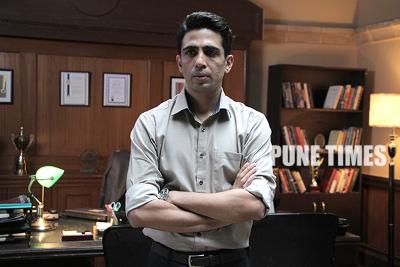
Actress Nidhi Subbaiah married her beau of one and a half years, Lavesh Khairajani — a tech entrepreneur hailing from a business family in Mumbai — in an intimate ceremony in Coorg on Saturday.
Bangalore Times wishes the new couple a happy married life.
source: http://www.timesofindia.indiatimes.com / The Times of India / News> Entertainment> Kannada> Movies> News / TNN / February 13th, 2017
Film director Hemanth Kumar from Haveri belongs to the Banjara community and holds the distinction of having made and released one of the first movies on the community back in 1995. His fourth and latest movie, ‘Sonesarik Beti’ that will be screened at the BIFFES today talks about farmer suicides and tells the tale of a girl who works for the progress of a village where such incidences are aplenty.
“There are around 50 lakh people in the Banjara community spread throughout Karnataka. Most of them live in the fringes of forests.
My movie tries to explore how it is possible to find a solution to the problem of farmers suicides and dissuades people from resorting to such measures, I have a girl as my protagonist who helps people see this point of view” says Kumar. The movie title literally translates as ‘Golden Daughter’.
Unlike mainstream Kannada movies that have a wide audience, Kumar has to struggle with all aspects of film making right upto the distribution and even screening.
“For my first movie theaters were not willing to play the movie. As a result I had to travel with with the movie and screened it wherever I could,” he says. He also make sure that the movie is screened in the right season.
“For around six months in a year most of the Banjara people are out of the state in Goa or other places working. So I make sure that I do not screen my movies then,” he says. Gopi Peenya (left) and D R Sampath
Loss of Kodavaland
Another movie, ‘Talang Neer’ or ‘Fresh Water’ written and directed by Gopi Peenya talks about the slow urbanization and the gradual decline of the natural habitat of the Kodavas in and around Coorg.
The movie uses the story of a soldier who comes back home after his stint in the army, only to find that nothing is the same anymore.
The movie was inspired from regular trekking trips that the director and the movie’s producer, D R Sampath took to Coorg. “We have been visiting the region for the past 3 decades and saw the rate of the changes that were taking place. We therefore decided to make a movie of this,” he says.
source: http://www.newindianexpress.com / The New Indian Express / Home> Cities> Bengaluru / by Kamzauva Chhakchhnak / Express News Service / February 08th, 2017
The Kodagu district police have added two more hi-tech higway patrolling vehicles to ensure speedy service.
The vehicles of Toyota Innova make are fitted with latest gadgets like surveillance cameras and GPS, besides equipped with search lights, stretcher, first aid kit, mega phone among others to ensure timely service at the time of emergency.
SP P Rajendra Prasad, who flagged off the patrolling vehicles, said, “They will be in addition to existing two patrolling vehicles deployed on NH 275 passing through the district.”
The vehicles moving round the clock will monitor the road from Boikeri to Koppa (Kodagu and Mysuru border respectively), while on the other side till Sampaje Gate bordering Dakshina Kannada district.
At the time of mishaps, they will be attending to the cases swiftly within 20 minutes of receiving the information, besides doing their mite to help the victims. It will also come in handy in preventing crimes if any with highway being vulnerable to dacoity and other types of robberies, besides ensuring smooth flow of traffic.
SP said that Kushalnagar accounts for most road mishaps and measures are being taken to check the same. The district will receive equipment worth Rs 70 lakh within a fortnight, to address traffic woes alone, he added.
Giving an account of fatalities, the SP said that on an average 1.4 lakh die in road mishaps every year in the country, with 380 deaths calculated per day. In the state alone, 28 deaths are reported due to accidents in 120 accidents every day.
On migrants flocking the district, the SP said the operation is on to check illegalities if any.
source: http://www.deccanherald.com / Deccan Herald / Home> District / DHNS – Madikeri, February 09th, 2017
WELCOME. If you like what you see "SUBSCRIBE via EMAIL" to receive FREE regular UPDATES.
Read More »