Category Archives: Arts, Culture & Entertainment

Edifices of togetherness

The invigorating aroma of the coffee blossoms carried by chilled breeze, the midnight green ambience along the loopy roads… it is not just the abundant natural beauty that makes Kodagu a distinct place. Its people — the Kodavas — with discrete culture and heritage, boost the glory of this coffee land.

Be it the language (Coorgie), cuisine, attire or rituals, Kodava culture moves away from the humdrum reckoning a distinct ethnic identity. And safeguarding this ethnicity while preserving their way of life is the architectural legacy known as the ain mane or ballya mane.

Ain Manes (ain in Coorgie translates to original) are the ancestral heritage homes of the Kodavas that reflect the eminence of a sanctum sanctorum. With quintessential framework, an archetypal heritage home comprises traditionally-carved wooden pillars, bricked white and red walls, intricately-carved wooden doorways and windows. With a typical style, each of them has an unmatched old-world charm.

Every corner of the house is given a name and holds mythical importance. With two types — the othe pore (single roofed house) and mundh mane (courtyard house) — the traditional features of ain manes include kannikamba (a sacrosanct pillar), kayyale (verandah), aimaras (wooden slabs in the verandah), machi (wooden ceiling), mundh (open courtyard) and kannikombre (worship room). Most of the ain manes have kaimadas – a sacred shrine built to worship the ancestors. Since the existence of nuclear families, there were outhouses built around the premises called ale pore.

While the interiors reflect somber and subdued beauty, its exteriors manifest valour and strength. As Chakku Chengappa, a member of Nadikerianda clan, explains, “Hidden and safeguarded amidst the estate were the fort-like structures of ballya mane (ballya means huge); built in this manner to prevent an ambush from enemies. The entrance to the ain mane has many sections. There is a long curvy oni (alley), bakka pare and ala pare (extensions of the alley), which lead to the verandah.”

Nonagenarian Nadikerianda Muthamma adds, “The Kodava women were known to be beautiful, and this is why ain manes needed to be protected at the time of British rule. However, today the ain manes play an important role in reuniting families.”

“Much more than just a roof over the head, ain manes are an important part of the tangible heritage of the native community of Kodagu,” write Boverianda Chinnappa and Nanjamma in their book Ainmanes of Kodagu. Built in the ancestral or the jamma land, the ain mane is a binding force that is a pillar of strength — both literally and figuratively. Many findings state that the inception of the concept of ain mane dates back to eighth century.

The origins

“The early settlers of Kodagu stayed in forests as a family. Due to feudal fights, it was common for people with the same bloodline to stay together in a small thatched hut. These settlements grew in size and became stronger, which made the ruling king seek their support. In return, the king gifted them land, which is the jamma land. As their living conditions improved, they built a strong fort-like structure on the jamma land, which came to be known as ain mane or ballya mane,” explains Boverianda Nanjamma.

However, the architectural style takes its root from Kerala. She adds, “Kodagu grew paddy abundantly but depended largely on Kerala for other commodities. During the travel for exchange of commodities, the Kodavas were pleased by the Kerala architectural style and there flowed workmanship from Kerala to build the ain mane.”

While there are over 900 clans in existence in Kodagu, not all of them have an ain mane. Nanjamma explains, “During the research work for our book, we found out that many deteriorating ain manes were never rebuilt.” According to their findings, only 40% of the ain manes were renovated keeping the tradition intact and the rest did not see the light of the new era.

Today, there are over 400 ain manes in existence and each of them belongs to a patriarchal clan, which is recognised by unique family names known as mane pedas. They bustle with ritualistic celebrations during festivities including Putthari, Kailpodh and annual kola (spirit dance). “The annual hockey matches conducted between families shed light on the revival of ain manes,” opines Kayapanda Shashi Somaiah, a journalist in Kodagu. Nonetheless, the revival of the ain manes are not just a process of renovation of age-old structures but also a resurgence of Kodava culture.

Unity in diversity

The Kundyolanda clan, which has 35 families, has its ain mane in Kolakeri village that was recently renovated to its pre-eminence. The rituals followed in this ain mane are uncompromising and many. “It is a family temple for us. We strictly adhere to the rituals and it is mandatory for women to wear traditional Coorgie saree and vastra (veil) over the head while entering the house. Apart from this, there are various other restrictions followed religiously in the ain mane,” explains Kundyolanda Dinesh, owner of a hotel.

They have a 400-year-old othe pore ain mane with 14 rooms, but there is no one residing here. However, it is made sure that lamps are lit twice a day and the house is maintained meticulously. “Each nuclear family of the clan takes turn to maintain the house and no one can back out from their duties,” he explains.

The Nadikerianda clan, with over 40 families, has a mundh ain mane in Karada village, which bustles with ritualistic activities during the festivals. A diligently maintained heritage home, it reflects the glory of the past and is keeping alive the culture and traditions. A 350-year-old house, it has a kaimada and a snake shrine in its premises. With 10 rooms, it has a beautifully-carved wooden window frame and a small wooden post box at the entrance. The huge mundh open to the skies is supported by four wooden pillars — all carved differently.

The Arapattu Mukkatira clan has their ain mane in Kadanga village. With 13 rooms, the uniqueness of this ain mane is that it has two mundhs and two kayyales. A 300-year-old structure, it is said that the temple treasure from the village Bhagavathi Temple was locked safely in a wooden treasure box kept in the attic of this ain mane. This wooden treasure box still lies in the attic. “We are a clan of 45 families. The age-old rituals are still in practice here. The renovation of the house is soon to take place with help from all the family members,” explains Katty Uthappa, deputy manager of a bank.

The Biddanda family has the ain mane built in the property gifted by King Veeraraja in 1795. With eight partitions in this mundh mane, there is a kaimada close by and the pictures of ancestors of eight generations can be seen hanging on the wall at the entrance. “One of our ancestors, Sarvakayaka Bopanna, was very close to the king. His (Bopanna’s) tombstone is right next to King Veeraraja’s tombstone,” explains Biddanda S Ganapathi, a retired navy officer.

The ain manes are a matter of pride to the Kodavas and are unique to their ethnicity. This uniqueness in architecture has been adopted by many resorts in Kodagu that woo the tourists. However, ain manes do not just demonstrate pride but bespeak culture. They are the souls of Kodava rituals, and their revival provides a surety to Kodavas’ customs and legacy.

source: http://www.deccanherald.com / Deccan Herald / Home> Supplements> Spectrum / Prajna G R / January 24th, 2017

It’s a family festival

FamilyFestivalKF24jan2017

Madanda Cup-2013, this year’s version of the annual Kodava hockey festival, is being organised by the Madanda family, and is currently underway at Balugodu near Virajpet in Kodagu. The festival has earned the distinction of being the most eagerly looked forward to event by the Kodava families in the district since the last 16 years.

The founder of the festival, Pandanda Kuttappa (Kuttani), hit a silver hockey ball with a silver hockey stick to formally inaugurate the festival at the grounds of the Kodava Sports and Cultural Centre, amidst applause from a large crowd, on April 14. As many as 225 Kodava family teams are participating in the 24-day fest and many teams have already been eliminated.

This is the first time the festival is being organised at the Kodava Sports and Cultural Centre at Balugodu, where the entire complex is coming up at an estimated cost of over Rs. 12 crore. A sum of nearly Rs. 4 crore had already been invested. The matches are being held simultaneously on two grounds located adjacent to each other. All previous 16 editions of the festivals were held in different venues of the district with Ponnampet and Ammathi having the credit of hosting most of the festivals.

Every member in a family irrespective of age or gender could play for their teams. There have been several instances where father-son-daughter combination had played for a particular family team. The festival is already is the Limca Book of Records for it sheer magnitude and volume in terms of number of participants and visitors to the matches.

According to Mr. Kuttappa, the very purpose of organising the festival is to bring the Kodava clans under one roof and help enhance camaraderie. Indeed, it has helped forge many matrimonial alliances and cement the bonds of friendship between the Kodava clans, besides restoring relationships among members of the same families. The festival, which did not have a competitive edge initially, had also thrown up some wonderful talents that have donned the State and national colours successfully.

As usual, on the day of inauguration of the festival, guests and senior members of the organising family would arrive in a procession from the main entrance of the centre to the ground. Madanda family members had the honour of unfurling the family flag this year by virtue of being the organisers while Mr. Kuttappa unfurled the flag of the Kodava Hockey Academy, under whose aegis the festival is being held. Olympian Anjaparavanda B. Subbaiah, who was conferred a doctorate by the Mangalore University recently, was felicitated on the occasion by the Madanda family members.

The president of the Federation of Kodava Samaja, Mallengada N. Belliappa, who was the guest, addressing the gathering, utilised the opportunity to appeal to the members of the Kodava community to come up with contributions to help complete the Kodava Sports and Cultural Centre and make it a model in the entire State.

Government sponsorship

What is significant about the festival is that it has been able to garner support from the State government in the form of sponsorships since 2008. Starting from Rs. 5 lakh, it went up to Rs. 30 lakh in 2012 and could garner more in the coming years. Speaker of the just dissolved Legislative Assembly, K.G. Bopaiah, was instrumental in securing this largesse from the government. Reputable private companies too have been making a beeline to sponsor the festivals these days. The government also promises to come up with more synthetic hockey playing surfaces in the district to encourage local talent, keeping in view the rich hockey tradition in Kodagu.

Many hockey stars such as Maleyanda D. Muthappa, Mollera P. Ganesh, Maneyapanda Somaiah, Anjaparavanda B. Subbaiah, Baleyada Subramani, Paikera Kalaiah, Baleyada Poonacha and Sannuvanda Uthappa among the new crop, and a host of others playing for leading hockey institutions hail from Kodagu. Even non-Kodava players have made the district proud such as V.R. Raghunath, who is currently the vice-caption of the Indian team, S.V. Sunil, V.S. Vinay, and Arjun Halappa carrying forward the rich hockey tradition of the district.

Mr. Bopaiah has said that efforts would be made to get more number of synthetic hockey playing surfaces laid in different parts of the district.

The event has now drawn the attention of Hockey India. Its president, Mariamma Koshy, had attended the Iychettira Cup Kodava Hockey Festival last year held at Ammathi. She had promised help to lay three more synthetic hockey playing surfaces in Kodagu district, if the district administration sent proposals in that regard. Chief Coach of the Indian hockey team, Michael Nobbs, was present on that occasion.

The Vice-Chairman of the Murugappa Group, M.M. Murugappan, who was a guest at the Iychettira Cup last year, had lauded the hockey tradition in Kodagu, saying the game has enhanced the prestige of Kodagu in all forums. His company was closely associated with the game of hockey in the last 50 years by conducting prestigious hockey tournaments, he had stated.

Kootanda, Kullettira, Palanganda and Nellamakkada families have accounted for a large number of wins in the festivals so far.

The ‘Pandanda Cup’ held for the first time in 1997 was won by Kaliyanda family team. Kullettira team won the ‘Kodira Cup’ in 1998, Kootanda and Kulletira were joint winners of the ‘Ballachanda Cup’ in 1999, Kootanda won the ‘Cheppudira Cup’ in 2000, Kootanda won again the ‘Nellamakkada Cup’ in 2001, Kullettira won the ‘Chekkera Cup’ in 2002, and Nellamakkada won the ‘Kaliyanda Cup’ in 2003.

Kootanda won the ‘Maleyanda Cup’ in 2004, Nellamakkada won the ‘Biddanda Cup’ in 2005, Palanganda won the ‘Kallichanda Cup’ in 2006, Mandepanda won the ‘Mandettira Cup’ in 2007, Anjaparavanda won the ‘Alamengada Cup’ in 2008, Nellamakkada won the ‘Mandepanda Cup’ in 2009, Palanganda won the ‘Maneyapanda Cup’ in 2010 and defended it successfully in 2011 by winning the ‘Machamada Cup’. It completed a hat-trick of wins by winning the Iychettira Cup held at Ammathi in 2012.

K. Jeevan Chinnappa

Ongoing ‘Madanda Cup-2013’ is the 17th edition

source: http://www.thehindu.com / The Hind / Home> Features> Features Plus / by K . Jeevan Chinnappa / May 11th, 2013

How SOS organics has successfully created a sustainable village model in Uttarakhand

All SOS organics products are made from crops that are completely rain fed, chemical free and using natural farming and sustainable agricultural techniques.

A quick look at SOS Organics website and you will realize that there is something more than natural and organic in their varied products. Gur Shakkar, Khandsari sugar as alternatives to white sugar and sweeteners, soapnuts as natural cleansers, environmentally sound beeswax candles devoid of soot/smoke, home care products made of native plant oils, herbs and natural essential oils – these catch your immediate attention. All these products are made from crops that are completely rain fed, chemical free and using natural farming and sustainable agricultural techniques.

The Alternative spoke to its founder, Amrita Chengappa about her venture in Uttarakhand.

A little bit of everything to nourish and heal
Pulses, flour, millet, spices, herbs, pickles, jams, marmalades and honey, tea, as well as beeswax candles – there is a little bit of everything needed to lead a healthy life. Amrita says, “Our line of natural cosmetics is based on apricot kernel oil, and includes soaps, hand creams, face creams, body and foot scrubs, lip balms, and body oil. All items are made with beeswax and precious essential oils and are free of chemicals and hormones.”

Himalayan terrace farms are the source of SOS organic products Courtesy: SOS organics Facebook page

In Uttarakhand, farmers have very small land holdings that are completely dependent on rain. So instead of asking the farmers to grow one particular type of crops, say only rice or millet, Amrita has encouraged mixed farming. “We are targeting indigenous low input crops that they have been growing over the last hundred years. We encourage them to grow a little bit of everything so that it all adds up to become a basket full of goodness to nourish and heal the body,” says Amrita.

Their latest products are based on the humble nettle which has an abundance of health benefits. “One day we became aware of just how much nettle was growing all around us in the wild and nobody was using it. After some in-depth research that took us all the way back to Milarepa, who lived on nettle soup for years while meditating in a Himalayan cave, we began experimenting and created nettle tea and nettle flakes,” says Amrita.

SOSorganics02KF24jan2017

The Inspiration
Amrita and her husband who have set up a village unit in Uttarakhand have been closely working with locals there.

“We had the inspiration to move to the Himalayan foothills in 2002, with only an idea to work in a village and bring meaningful employment in the area,” says Amrita. She adds, “We have found that the specific environmental conditions of the Himalaya produces incredible crops. The mineral content in the soil adds to the quality of the crop and it has many medicinal properties as well.”

One of the main issues in the state has been a lack of employment opportunities. So they decided to set up a self-sufficient unit at Kumaon. “My main concern was employment of the local ladies as I believe that all over India it has always been women who run the show and they deserve to be empowered,” adds Amrita.

Happiness that comes with healthy living is the only true happiness! Courtesy: SOS Organics Facebook page
ita at this point also mentions,“We did not want to take something or destroy anything from the environment, rather our emphasis has always been on the preservation of biodiversity and environment, and the providing of holistic technologies to ensure highest quality.”

Every village needs to be self-sufficient

The company strongly believes in Mahatma Gandhi’s saying that every village needs to be self-sufficient. Their entire unit runs on rain water harvesting. And they work with local small scale farmers from over 70 villages in the Himalayan region.

Amrita further adds, “SOS Organics is an ongoing experiment dedicated as a model for holistic sustainable living in the villages of the Himalaya.”

In addition to the farming techniques, natural processing and product development have also been undertaken. The Foundation is presently deeply involved in special holistic milling techniques, sun drying and sun-UV-radiation, ventilation drying, dehydrator development for low temperature drying, vacuum packing and systematic moisture proof storing of raw material. An extensive initial product line of natural farming produce has been developed and tested in the market and is now available online and in select holistic outlets.
SOSorganics05KF24jan2017

Engaging community and being in tune with rural life
“The problem in the hills is that you cannot do anything that has a lot of volume because the lifestyle is different. We have six hour working days for the ladies as on most days they have to go home, collect water, cut wood etc. Plus in the winter it gets darker soon and the area where we live there are leopards and other wild animals,” she says.

So they had to modify their business model, making it in tune with the local life and with less stringent deadlines. They also make sure to celebrate local holidays and to stay connected with the community in all possible ways. “Our aim has always been to make the business model sustainable for everyone from the consumer to the person actually engaged in making these products. We make the people working here comfortable and the orders are worked around this,” says Amrita.

Challenges
Amrita says, “So much of the incredible knowledge of the Himalayan people is in danger of getting lost. The older living generations have often not been able to pass on their wisdom to the younger people as they have set out to live everywhere else than in their own village, embracing modern life and technology.”

She adds,“The scary thing is that we do not have a proper understanding of traditional knowledge system and what we are replacing it with does not seem to make the grade. People here feed millet to animals as they have been told the white rice is aspirational. We are striving to work against this kind of a mindset.”

Future Plans
“We very much live in the here and now, which is full of experiencing, learning, and understanding. New insights and inspirations happen on their own and we are always ready to say yes! – and embrace yet another venture,” concludes Amrita.

source: http://www.thealternative.in / The Alternative.in / Home> Magazine> Lifestyle / by Usha Hariprasad / Juine 18th, 2015

Sandalwood gets its handsome ‘Devil’

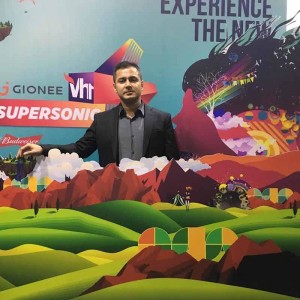
Since time immemorial, a film without an antagonist has remained incomplete. The villain has always drawn applause with his devilish avatar or chilling dialogues, in recent times, the negative character has seen a transformation. More and more filmmakers are now looking for handsome villains and the latest to hit the ‘evil’ stands of Sandalwood is good-looking hunk Thaarak Ponnappa.

Hailing from Coorg, this stylish actor will be making his debut and will be seen facing off Manoranjan in Nanda Kishore’s upcoming directorial, a remake of Tamil-hit Velaiyilla Pattathari (VIP) made under Rockline Productions.

Thaarak Ponnappa
Thaarak Ponnappa

The actor, all of six feet and two inches, has entered the second schedule of shooting today. He says there is a new trend of good-looking villains in Kannada industry. “I feel good to be part of it,” says the model-turned-actor.

According to him, there is a thrill in playing the antagonist and he is confident he can carry the evil side very well. “My role model is Sonu Sood and I aspire to make a mark in a similar way in Kannada industry,” says the 25-year-old who completed his MTech before entering the industry.

On choosing acting as a career, having spent so many years on academics, Thaarak says that it his passion for films that made him take that decision. “I did my education as a backup,” he says.
Having done his research into what goes into playing an antagonist, the budding talent has gone for a personality makeover and has worked out for a six-pack. “Before entering the industry, I was modelling for four years,” he says.

“I was fit even before entering the industry.”

Getting to debut with a Nanda Kishore film, Thaarak is confident that he has caught a dream start.

“If we are good at what we do, then things will come and fall in our lap,” he says.

“I want give my best and hopefully it will work out for me.”

source: http://www.newindianexpress.com / The New Indian Express / Home> Entertainment> Kannada / by A Sharadhaa / Express News Service / January 10th, 2017

Rotary Club Madikeri Hills bags Rotary trophy

Mangaluru:

Rotary Club of Madikeri Hills represented by Dr Prashanth, and Gopalkrishna, clinched the 11th annual Rotary quiz trophy securing 190 points. Rotary Club of Mangaluru Metro team represented by Dr Ranjan and Sumith Rao secured 160 points and were declared runners up.

Rotary Club of Mangaluru Central as a part of Rotary Movement Awareness Campaign conducted their inter club Rotary quiz contest on Friday on Rotary related affairs.

Mysuru city-based eminent businessman and Rotary past district governor Dr G K Balakrishna was the chief guest. He lauded the valuable contributions of Dr Devadas Rai, the quiz master and the organizer to the Rotary Movement and the annual quiz. He later awarded the Rotary trophy, certificates and a cash prize of Rs 2,000 to the winners and Rs 1,000 to the runners up and congratulated the respective teams on their achievements.

Eleven teams from Mangaluru, Bykampady Surathkal, Bajpe, Deralakatte, Madikeri, Kushalnagar, Mysuru took part in this contest.

Dr Rai, the quiz master officiated the closely contested quiz. Vikram Datta, assistant governor zone-3, guest of honour, released the weekly club news bulletin. Anil Gonsalves, club president, presided over the function. Raymond D’Cunha, secretary, presented the monthly report. Prakash Chandra proposed vote of thanks.

source: http://www.timesofindia.indiatimes.com / The Times of India / News> City News> Mangalore News / TNN / January 15th, 2017

Revering nature & culture

Harvest festival

HarvestfestivalKF11jan2017

Puttari Polud (also called Huttari), the rice harvest festival of Kodagu, is perhaps the grandest and most elaborate festival in the Kodava calendar. The word putt-ari means new rice and the festival is celebrated on the full moon day during the Kodava month of birchyaar. One day before the Puttari feast, the Kaladcha festival is observed in the Padi Igguthappa Temple. Igguthappa is the god of the rice crop, harvest and rains.

Preparations for Kaladcha and Puttari are commenced around 15 days in advance. The Pardanda family of Padi village, who are the deva thakka (temple caretakers), the parupatyagara (temple officials) families and other prominent families of Padi, Nelji and Perur villages are summoned in writing. On a particular day, they bring rice, coconut, jaggery, banana and areca nut to the shrine. Astrologers from Ammangeri village determine the date of Puttari feast. They arrive at the temple and convey the exact time for Puttari ceremonies, as determined by the stars.

Traditional fervour
In the afternoon, astrologers, priests, caretaker families, musicians and other devotees go up Malma hill (Igguthappa Betta which is a few kilometres away from the temple), and announce the auspicious time at a shrine in the midst of a sacred grove. Then they will go to the Pardanda Ainmane in Padi and announce it again.

At Malma, the temple caretaker announces the deva kattu (religious restrictions) to be observed by the people of the neighbourhood for the next 14 days. Accordingly eating meat, consuming alcohol, physically or verbally hurting animals or humans, pulling out plants and cutting trees are forbidden in the period. Marriages and funeral ceremonies are not to be conducted during the period. No special puja, except Satyanarayana Puja, is performed in the temple during the period.

Afterwards the astrologers, caretakers and others go to the Makki Sarthavu Temple in Bethu village near Napoklu and announce the date and time again. The astrologers continue conveying the auspicious time to various families of the region. At each house, they are given thambutt powder, rice, jaggery, banana, salt and pepper, sufficient for a meal. Thambutt powder, prepared from boiled rice which is fried until it is golden brown, is used with mashed bananas and finally seasoned with sesame seeds and grated coconut to prepare the thambutt sweet dish. Kodava people gather in their ancestral house, called the ainmane, to celebrate the festival.

On Kaladcha day, the deva thakka goes to Malma again and announces that the deva kattu need not be followed thereafter. This is called kattu muripo, or removing the restrictions. During Kaladcha, the temple deities are embellished with ornaments, and chendas (a percussion instrument) are played. Yetherata is also performed on the occasion. Decorated oxen are made to dance with bags (often rice bags) on their backs.

Puttari Polud is first observed in the Padi Igguthappa Temple and the village of Padi. Hence, the first day is called the Padi polud (Padi celebration) or deva polud (divine celebration). The following day, the festival is celebrated in the rest of Kodagu and it is known as naad polud (public celebration).

While the rituals at the temple are presided over by the archak (priest), the deva thakka performs the rituals. On both days, the first evening near the temple and the second at ancestral houses, the nere kattuvo (tying of certain leaves) and the kad edpo (cutting of paddy sheaves) rituals are performed. At the temple, these two ceremonies are followed by prasada (devotional meal).

After dusk, a designated male family member ties together certain leaves around bits of the inoli creeper with pieces of achchi fibre into bundles. Each of these bundles, called a nere, is placed in a basket. Then an unmarried young lady from the family carries a small lit lamp upon a plate. She leads the family members to go down to the fields.

A designated man ties a nere from the basket to the base of a sheaf of paddy and pours milk from a kutti (bamboo container) onto it. He cuts that sheaf (kad) with a sickle while the other family members cry out ‘Poly, Poly Deva!’ (Let us prosper, let us prosper, O God!). A gun is then fired into the air. Five, seven, nine or 11 sheaves of paddy are cut and given to the assembled family members. They carry these sheaves to the prayer place in the house.

The nere bundles are then tied in various places around the house and the farm. Later, the thambutt sweet dish is consumed by the family. Firecrackers are burst in the night.

On the day after naad puttari, the mane paado (house-singing) ceremony happens. Four folk singers of the village carry small hourglass drums, each called a dudi, and go from residence to residence. While all four strike the drums with cane sticks in rhythm, two of them take turns to sing verses praising the members of the family. A few days later, the villagers gather at the village greens (mand). The village musicians blow their horns and beat their large drums. The men dance in circles beating small rattan cane sticks called kola as they skip around in rhythm with the music. This is called the kolata or the stick-dance.

Festival of arms
There are two other major Kodava festivals — Kail Polud and Kaveri Sankramana. Kail Polud is the festival of arms for the Kodava martial community, now observed on September third every year. Before this festival, naati (rice seedlings) grown in a small area is transplanted across ploughed and puddled fields.

The Kodavas worship traditional farmhouse weapons such as war knives and long guns. They are cleaned and decorated with flowers and vermillion in the puja corner on the Kail Polud day. Sports such as shot-put and shooting at coconuts are arranged that afternoon. In the ancient times, this polud (celebration) marked the commencement of the hunting season, during the Kodava month of Chingyaar, when the Simha Rashi (Leo zodiac sign) is in prominence. While in the past people kept arms to use in wars, now they are kept as cultural symbols, to guard the crops and to ward away wild creatures.
Kaveri Sankramana is a festival dedicated to the river goddess Kaveri, the patron of the Kodavas. It happens on the first day of thulyaar, when the sun seems to enter the Libra zodiac sign. Ritual water is obtained from Talakaveri, the source of the river, and distributed among the natives of Kodagu.

A kalasha is worshipped in the houses and a vegetarian meal comprising dosa and pumpkin curry is prepared on that day. In the following month, pinda (ritual rice balls) is offered to or uttara kriya (last rites) is performed for deceased family members upon the banks of River Kaveri at Bhagamandala.

source: http://www.deccanherald.com / Deccan Herald / Home> Supplements> Spectrum / by Mookanda Kushalappa / December 06th, 2016

Cartoonist Ponnappa is ‘ Coorg Person Of The Year – 2016 ’

Nala Ponnappa
Nala Ponnappa

Mysuru:

Renowned cartoonist Nala Ponnappa, known for his offbeat tongue-in-cheek humour, is the ‘Coorg Person of the Year-2016’.

Nadikerianda Subbayya Ponnappa, whose cartoons appear in The Times of India, Bengaluru edition, was selected ‘Coorg Person of the Year’ in a poll conducted by www.coorgtourisminfo.com, Kodagu’s first news portal, promoted by senior journalist P.T. Bopanna.

Ponnappa’s first cartoons appeared in Chicago in 1972 where he was studying for a Master’s degree in Architecture. He began cartooning as a hobby by contributing his cartoons to college magazines.

The cartoons of the Coorg-born Pune-based cartoonist also appears in The Sunday Mid-Day, The Economic and Political Weekly and The Economic Times. His works have also appeared in the International Business Times.

Born in 1948, his early education was in Mangalore and Pune. He graduated in Architecture from the Madras University with a first class. He had an eleven-year stint from 1970 to 1981 as an architect in Chennai, Delhi and Lagos, before he turned into a cartoonist. He settled down in Bengaluru in 1982 and began his career as a freelance cartoonist.

His works have also been published in the Penguin Book of Indian Cartoonists and The Third World Book of Cartoonists from Germany.

He was awarded the First prize by the epd-Entwicklungspolitik publication, in a competition held at Frankfurt to commemorate the 50th year of India’s Independence.

Ponnappa was a member on the world jury of an international cartoon competition on Humankind and Energy held in Hanover, Germany in September 2000. At a competition held in Germany, one of Ponnappa’s cartoons, which depicted the German language being deeply influenced by the English language, was selected to be put up as a poster by the German Cartoonist Association.

He has also won prizes of excellence at cartooning competitions held in Korea and Romania. He was the only Indian to be invited to attend the Kyoto International Cartoonist Conference in 2002 where he was also presented the jury award for his cartoon on ‘Remembering 9/11’.

Among the many awards he has received is also the State Rajyotsava Award in 2007.

He has also written plays and acted on stage. His hobbies include drawing, music, photography and travelling. Ponnappa splits his time between Pune, where he works and resides, and his hometown Coorg.

Ponnappa is the grandson of Nadikerianda Chinnappa, the compiler of the Pattole Palome, a book on Kodava culture, folksongs and traditions.

Among the others who were nominated for this year’s ‘Coorg Person of the Year’ include 77-year-old Boverianda C. Uthaiah compiler of the Kodava-Kodava-Kannada-English dictionary which is due for release shortly.

Last year, the ‘Coorg Person of the Year’ title was given to athlete M.R. Poovamma.

source: http://www.starofmysore.com / Star of Mysore / Home> General News / December 31st, 2016

Kadamba Rangaavali : Mithuna plays a matrimonial tune for evening of one’s life…

A scene from the play 'Mithuna', the Kannada version of Kodava play 'Baduk,' staged by Rangabhoomi Prathishtana, Kodagu, as part of 'Kadamba Rangaavali' at Kalamandira last evening. Seen are Anitha Cariappa as Thangachi & Addanda Cariappa as Changappajja.
A scene from the play ‘Mithuna’, the Kannada version of Kodava play ‘Baduk,’ staged by Rangabhoomi Prathishtana, Kodagu, as part of ‘Kadamba Rangaavali’ at Kalamandira last evening. Seen are Anitha Cariappa as Thangachi & Addanda Cariappa as Changappajja.

Mysuru :

The jam-packed audience at Kalamandira here last evening was sent down the memory lane of marital bliss during the staging of the play ‘Mithuna’, the Kannada version of Kodava play ‘Baduk’ by Rangabhoomi Prathishtana, Kodagu, as part of ‘Kadamba Rangaavali’ organised by Kadamba Ranga Vedike.

The play was literally a song of matrimony tune for the evening of one’s life and was excellently portrayed by Addanda Cariappa as Changappajja and Anitha Cariappa as Thangachi, both as an octogenarian couple with a long 62 years of married life.

The actors effectively conveyed the bond of matrimony after passing through various ups and downs.

The couple relentlessly waiting for the arrival of their son Major General Ganesh and Kakamada Ajith essaying the role of Chubra who frequently gets scolded by Chengappajja has added a twist to the play.

The elderly couple in every dialogue has asked all married couple to sink their trivial differences and not to recall bad memories so as to lead a pleasant life. The couple’s silly arguments followed by a compromise with each showering love and compassion on the other was well appreciated by the audience.

Once in Kodagu a torrential rain accompanied by gale brings down fully-grown trees and Chengappajja on seeing that gets upset very badly and passes away. Thangachi tries to come out of grief and continues her journey of life, thus bringing the end of the play.

Kadamba Rangaavali will feature staging of the play ‘Berilladavaru’ today at 7 pm at Kalamandira and ‘Seetha Charitha’ tomorrow at 7 pm at Vanaranga.

source: http://www.starofmysore.com / Star of Mysore / Home> General News / January 03rd, 2017

In the hills of Coorg, a martial tribe celebrates an annual festival with worship of guns

Kodava elders hope the festival of Kailpodh will encourage the community’s youth to enter international sporting events

Image credit:  Shawn Sebastian and Tejaswi Dantuluri
Image credit: Shawn Sebastian and Tejaswi Dantuluri

Deep in the sanctum of his 150-year-old ancestral home, Lokesh Achappa is surrounded by weapons. Dressed in a Kupya, the traditional Coorgi outfit of knee-length black overcoat, a gold and maroon sash with an ornate, carved silver dagger tucked in its folds, Achappa prays to an array of weapons: an antique double-barrel, a .22 mm rifle, traditional daggers and swords, all garlanded with flowers and smeared with sandalwood paste.

Once the ritual is complete, he steps out of the house, and a series of thundering gun shots reverberate across the valley.

Coorg, a district in Karnataka famous for its coffee, is home to the Kodavas, a martial hill tribe with a population of less than six lakh. Historically, the community has shared a deep connection with its weapons. Valiant guerrilla fighters and agriculturists, the Kodavas once defended territories with locally made bow-and-arrows. With the advent of firearms, guns became central to Kondava life. Weapons appear frequently in important social customs: births and deaths in the Kodava tribe are announced with gunfire, every newborn touches a bow and arrow, as initiation into the tribe. At the annual harvest festival of Puttari, one of the most important events on the Kodavas festival calendar, everyone in the valley opens fire.

Weapons are also celebrated at Kailpodh, the annual Kodavas (or Coorgi) festival in the first week of September which marks the end of hardships for the agrarian community – once the paddy has been transplanted. During the festival, Kodavas clean and worship weapons to express their gratitude for the protection they have offered.

“The period is a time for jubilation when distant families get together,” local resident Ashik Appanna explained.

Image credit:  Shawn Sebastian and Tejaswi Dantuluri
Image credit: Shawn Sebastian and Tejaswi Dantuluri

With the tightening of gun regulation laws, the ban on hunting, and due to large-scale migration of younger generation Coorgis, many have predicted that the Kodava weapon culture will disappear altogether. Elders of the Kodava community are hoping that festivals like Kailpodh will encourage young Kodavas to return to their traditional shooting skills.

Gun Rights and Regulations
In 1861, the British administrators granted Kodavas an exemption from the Arms Act, for their support to the East India Company in administrative and military affairs.

“Gun ownership is a birthright for us,” said Appanna Bacharinanyanda, an 80-year-old retired lecturer who exhibits antique Kodava weapons and utensils in his front yard every Kailpodh.

Bacharinanyanda says the Kodavas never “misuse” guns. He expresses a deep apprehension over the government’s attempts at over-regulating weapons: “These days authorities have started demanding bribes to grant us the exemption certificate, which is completely unacceptable.”

With the Wildlife Protection Act of 1971, hunting has been prohibited in India. The legislation came as a big blow to the Kodavas, for whom hunting was an integral part of life and survival.

Naveen Bidappa, a young Kodava lawyer, pointed to a photograph in his house of a man named Tiger Thimmaiah. In the picture, Thimmaiah stood next to a tiger he had killed and then tied to a tree.

“He shot 12 tigers, hence the name,” smiled Bidappa.

Since tigers posed the biggest menace for livestock, tiger hunters were once highly venerated figures in the Kodavas society.

“Narimangala (tiger-marriage) was a big tradition in the olden days,” he said. “The tiger hunter was married to the tiger he killed, and villagers would offer them gifts and cash as a mark of respect.”

Changing relevance of gun culture
In early September, scores of Kodava youth assembled at a school ground at the Coorgi village of Chettali. Each carried a gun.

Bidappa, a 70-year-old elder from the community, walked into the ground filled with curious onlookers, and shot a coconut hung several yards away to inaugurate the annual shooting competition that coincides with Kailpodh. He hit the bulls-eye with a single shot.

“Shooting skills are in our blood,” he said, shrugging at the crowd’s deafening cheers.

Over the last few years, shooting competitions that were once limited to households have turned into larger events, with an increasing number of shooting enthusiasts showing up from all over Coorg.

“Our aim is to prepare and pass down shooting skills to the younger generation,” Bidappa said.

Over the next five years, local shooting competition organisers plan to develop a shooting range in the village to groom young shooters, and train them for national shooting competitions.

“Festivals such as Kailpodh have found a new meaning in changing circumstances,” he said.

A Kodava shooting competition. Credit: Shawn Sebastian and Tejasvi Dantuluri

Fifteen-year-old Lakshan Ayyappa is a widely recognised face at Kodavas shooting competitions. He is the great-grandson of Tiger Thimmaiah, but has also established himself as an ace shooter in his own right – he has won more local competition prizes than he can remember.

“My target is to make it for 2020 Tokyo Olympics,” he said. Ayyappa first learnt to shoot at the age of five. He was taught by his mother.

“Whenever I see a new gun, I discuss it with my dad,” he said. “I know everything about its make, calibre, range, the cartridges used. I feel by the time we are born, we are already half trained.”

Like in Punjab, it is usual for Kodava households to send a member of their family to join the military. Many attribute this to early affinity Kodava youngsters develop with weapons.

Credit: Shawn Sebastian and Tejasvi Dantuluri

Shooting is not a male sport in the Kodavas tribe. Kodava women traditionally kept guns to protect their families when the men left for hunting and battle. Everyone from septuagenarian grandmothers to 16-year-old girls participate in local shooting competitions.

Credit: Shawn Sebastian and Tejasvi Dantuluri

Shooting is not a male sport in the Kodavas tribe. Kodava women traditionally kept guns to protect their families when the men left for hunting and battle. Everyone from septuagenarian grandmothers to 16-year-old girls participate in local shooting competitions.

Credit: Shawn Sebastian and Tejasvi Dantuluri

Several modern-day sports like shooting and archery have been born of indigenous communities across the world. In India, the attempts at unearthing such indigenous talents have been poor.

A few notable exceptions are people like Laxmirani Manji, from the Santhal tribe in Jharkhand who represented India in archery at the 2016 Rio Olymipcs, and Limba Ram of Ahari tribe in Rajasthan, an Arjuna awardee archer who represented India at three Olympics. If they are given enough support and attention, many modern-day Tiger Thimmaiahs might emerge from Coorg.

We welcome your comments at letters@scroll.in.

source: http://www.scroll.in / Scroll.in / Home> Magazine> After the News / Point & Shoot

Cartoonist Ponnappa is ‘Coorg Person of the Year’

Renowned cartoonist Nala Ponnappa, known for his off-beat tongue-in-cheek humour, is the Coorg Person of the Year 2016.

Ponnappa was selected for the honour in a poll conducted by www.coorgtourisminfo.com, Kodagu’s first news portal, promoted by senior journalist P T Bopanna.

Ponnappa’s first cartoons appeared in Chicago in 1972 where he was studying for a Master’s degree in Architecture. He began cartooning as a hobby by contributing his cartoons to college magazines.

The cartoons of the Coorg-born Pune-based cartoonist, also appears in The Sunday Mid-Day, The Economic and Political Weekly and the Economic Times. His works have also appeared in the International Business Times.

Born in 1948, his early education was in Mangaluru and Pune. He graduated in architecture from the Madras University with a first class. He had an 11-year stint from 1970 to 1981 as an architect in Chennai, Delhi, and Lagos, before he turned into a cartoonist. He settled down in Bengaluru in 1982 and began his career as a freelance cartoonist.

His works have also been published in the Penguin Book of Indian Cartoonists and The Third World Book of Cartoonists from Germany. He was awarded the first prize by the epd- Entwicklungspolitik publication, in a competition held at Frankfurt to commemorate the 50th year of India’s Independence.

Ponnappa was a member on the world jury of an international cartoon competition on Humankind and Energy held in Hanover, Germany, in September 2000.

At a competition held in Germany, one of Ponnappa’s cartoons, which depicted the German language being deeply influenced by the English language, was selected to be put up as a poster by the German Cartoonist Association.

He has also won prizes of excellence at cartooning competitions held in Korea and Romania. He was the only Indian to be invited to attend the Kyoto International Cartoonist Conference in 2002, where he was also presented the jury award for his cartoon on ‘Remembering 9/11’.

Among the many awards he has received is also the Karnataka State Rajyotsava Award in 2007.

In the past, the winners of the ‘Coorg Person of the Year’ title include, Dr Kaveri Nambisan, novelist (2005), Dr Boverianda Nanjamma Chinnappa, researcher and writer (2006), Moodera Jagadeesh, scientist (2007), Air Marshal K C Cariappa, environmentalist (2008), cricketer Robin Uthappa (2009), tennis player Rohan Bopanna (2010), retired Tamil Nadu IAS officer P M Belliappa (2011), technology innovator Vineet Devaiah (2012), birdman Dr S V Narasimhan (2013), squash champion Joshna Chinappa (2014), and athlete M R Poovamma (2015).

source: http://www.deccanherald.com / Deccan Herald / Home> District / DHNS-Madikeri, December 31st, 2016