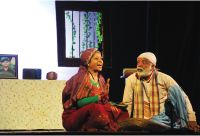
A scene from the play ‘Mithuna’, the Kannada version of Kodava play ‘Baduk,’ staged by Rangabhoomi Prathishtana, Kodagu, as part of ‘Kadamba Rangaavali’ at Kalamandira last evening. Seen are Anitha Cariappa as Thangachi & Addanda Cariappa as Changappajja.
Mysuru :
The jam-packed audience at Kalamandira here last evening was sent down the memory lane of marital bliss during the staging of the play ‘Mithuna’, the Kannada version of Kodava play ‘Baduk’ by Rangabhoomi Prathishtana, Kodagu, as part of ‘Kadamba Rangaavali’ organised by Kadamba Ranga Vedike.
The play was literally a song of matrimony tune for the evening of one’s life and was excellently portrayed by Addanda Cariappa as Changappajja and Anitha Cariappa as Thangachi, both as an octogenarian couple with a long 62 years of married life.
The actors effectively conveyed the bond of matrimony after passing through various ups and downs.
The couple relentlessly waiting for the arrival of their son Major General Ganesh and Kakamada Ajith essaying the role of Chubra who frequently gets scolded by Chengappajja has added a twist to the play.
The elderly couple in every dialogue has asked all married couple to sink their trivial differences and not to recall bad memories so as to lead a pleasant life. The couple’s silly arguments followed by a compromise with each showering love and compassion on the other was well appreciated by the audience.
Once in Kodagu a torrential rain accompanied by gale brings down fully-grown trees and Chengappajja on seeing that gets upset very badly and passes away. Thangachi tries to come out of grief and continues her journey of life, thus bringing the end of the play.
Kadamba Rangaavali will feature staging of the play ‘Berilladavaru’ today at 7 pm at Kalamandira and ‘Seetha Charitha’ tomorrow at 7 pm at Vanaranga.
source: http://www.starofmysore.com / Star of Mysore / Home> General News / January 03rd, 2017
Kodava elders hope the festival of Kailpodh will encourage the community’s youth to enter international sporting events
Image credit: Shawn Sebastian and Tejaswi Dantuluri
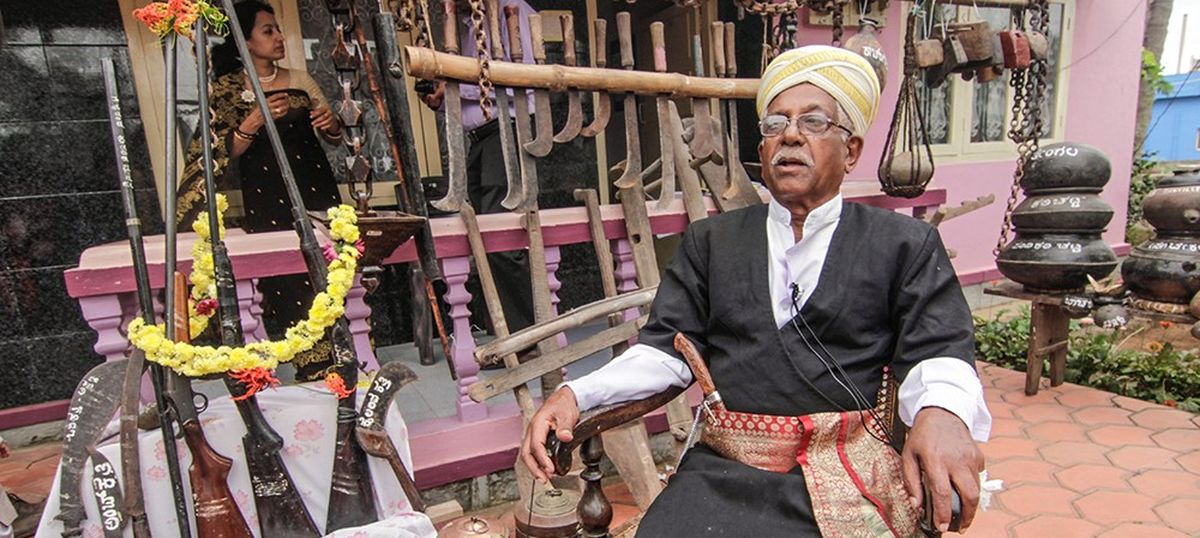
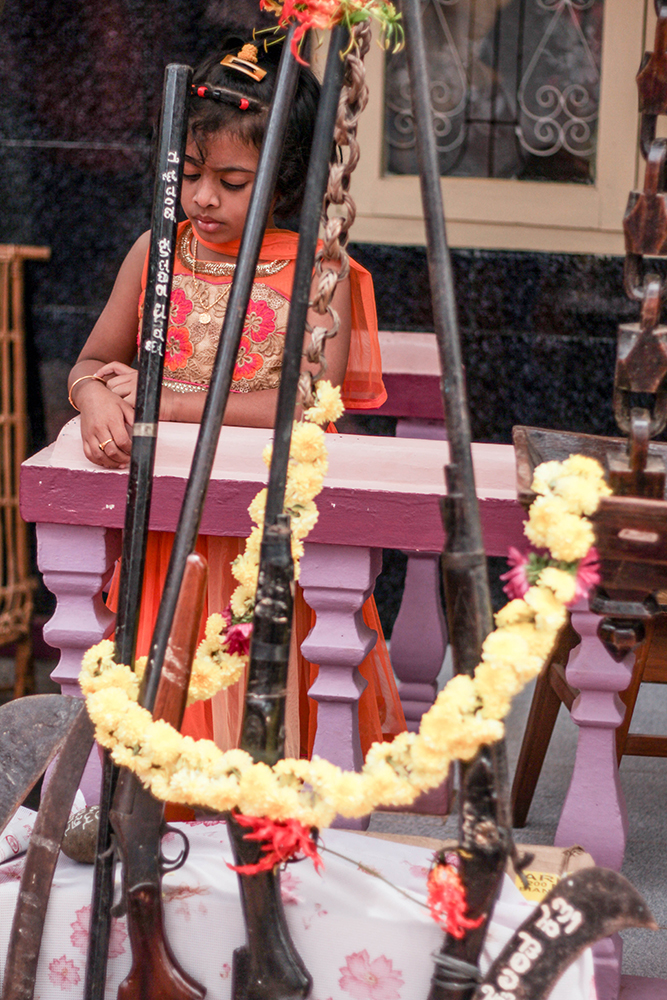
Deep in the sanctum of his 150-year-old ancestral home, Lokesh Achappa is surrounded by weapons. Dressed in a Kupya, the traditional Coorgi outfit of knee-length black overcoat, a gold and maroon sash with an ornate, carved silver dagger tucked in its folds, Achappa prays to an array of weapons: an antique double-barrel, a .22 mm rifle, traditional daggers and swords, all garlanded with flowers and smeared with sandalwood paste.
Once the ritual is complete, he steps out of the house, and a series of thundering gun shots reverberate across the valley.
Coorg, a district in Karnataka famous for its coffee, is home to the Kodavas, a martial hill tribe with a population of less than six lakh. Historically, the community has shared a deep connection with its weapons. Valiant guerrilla fighters and agriculturists, the Kodavas once defended territories with locally made bow-and-arrows. With the advent of firearms, guns became central to Kondava life. Weapons appear frequently in important social customs: births and deaths in the Kodava tribe are announced with gunfire, every newborn touches a bow and arrow, as initiation into the tribe. At the annual harvest festival of Puttari, one of the most important events on the Kodavas festival calendar, everyone in the valley opens fire.
Weapons are also celebrated at Kailpodh, the annual Kodavas (or Coorgi) festival in the first week of September which marks the end of hardships for the agrarian community – once the paddy has been transplanted. During the festival, Kodavas clean and worship weapons to express their gratitude for the protection they have offered.
“The period is a time for jubilation when distant families get together,” local resident Ashik Appanna explained.
Image credit: Shawn Sebastian and Tejaswi Dantuluri
With the tightening of gun regulation laws, the ban on hunting, and due to large-scale migration of younger generation Coorgis, many have predicted that the Kodava weapon culture will disappear altogether. Elders of the Kodava community are hoping that festivals like Kailpodh will encourage young Kodavas to return to their traditional shooting skills.
Gun Rights and Regulations
In 1861, the British administrators granted Kodavas an exemption from the Arms Act, for their support to the East India Company in administrative and military affairs.
“Gun ownership is a birthright for us,” said Appanna Bacharinanyanda, an 80-year-old retired lecturer who exhibits antique Kodava weapons and utensils in his front yard every Kailpodh.
Bacharinanyanda says the Kodavas never “misuse” guns. He expresses a deep apprehension over the government’s attempts at over-regulating weapons: “These days authorities have started demanding bribes to grant us the exemption certificate, which is completely unacceptable.”
With the Wildlife Protection Act of 1971, hunting has been prohibited in India. The legislation came as a big blow to the Kodavas, for whom hunting was an integral part of life and survival.
Naveen Bidappa, a young Kodava lawyer, pointed to a photograph in his house of a man named Tiger Thimmaiah. In the picture, Thimmaiah stood next to a tiger he had killed and then tied to a tree.
“He shot 12 tigers, hence the name,” smiled Bidappa.
Since tigers posed the biggest menace for livestock, tiger hunters were once highly venerated figures in the Kodavas society.
“Narimangala (tiger-marriage) was a big tradition in the olden days,” he said. “The tiger hunter was married to the tiger he killed, and villagers would offer them gifts and cash as a mark of respect.”
Changing relevance of gun culture
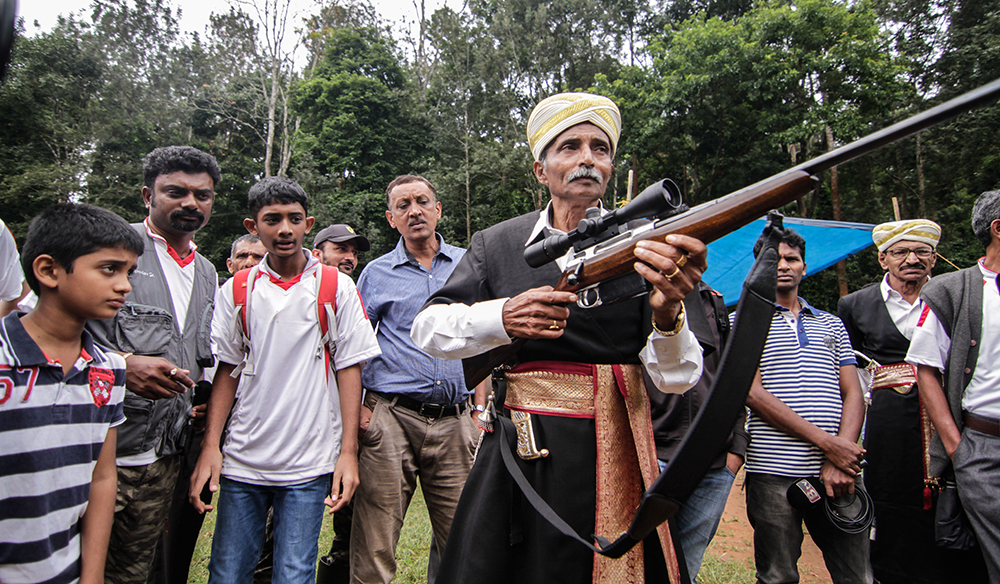
In early September, scores of Kodava youth assembled at a school ground at the Coorgi village of Chettali. Each carried a gun.
Bidappa, a 70-year-old elder from the community, walked into the ground filled with curious onlookers, and shot a coconut hung several yards away to inaugurate the annual shooting competition that coincides with Kailpodh. He hit the bulls-eye with a single shot.
“Shooting skills are in our blood,” he said, shrugging at the crowd’s deafening cheers.
Over the last few years, shooting competitions that were once limited to households have turned into larger events, with an increasing number of shooting enthusiasts showing up from all over Coorg.
“Our aim is to prepare and pass down shooting skills to the younger generation,” Bidappa said.
Over the next five years, local shooting competition organisers plan to develop a shooting range in the village to groom young shooters, and train them for national shooting competitions.
“Festivals such as Kailpodh have found a new meaning in changing circumstances,” he said.
A Kodava shooting competition. Credit: Shawn Sebastian and Tejasvi Dantuluri
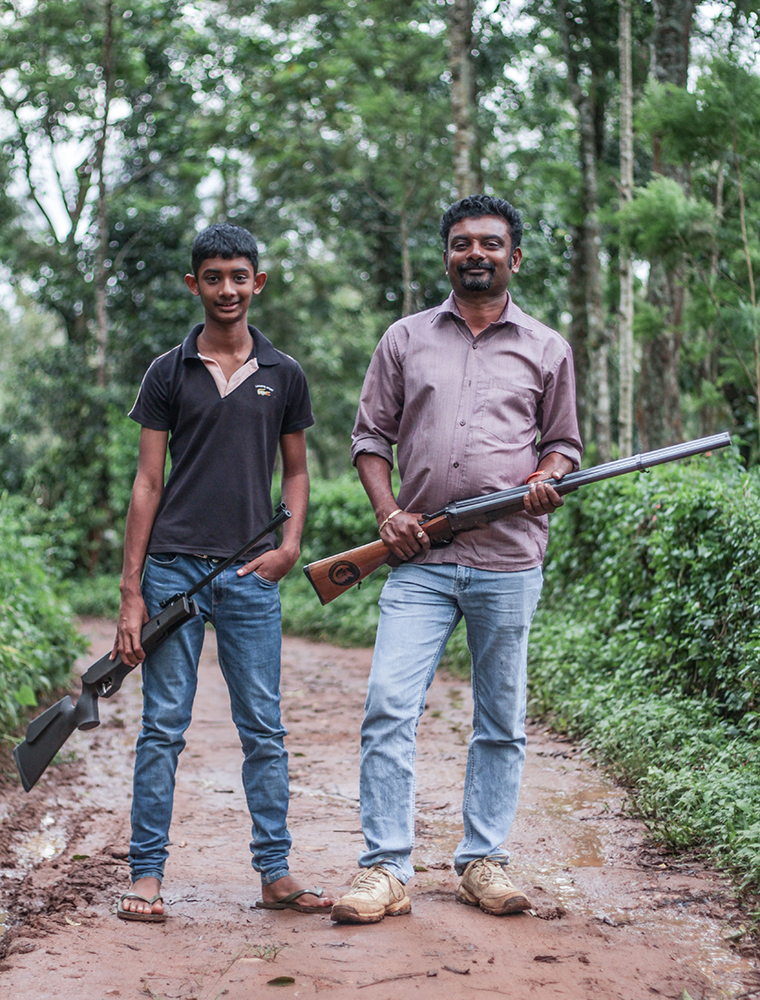
Fifteen-year-old Lakshan Ayyappa is a widely recognised face at Kodavas shooting competitions. He is the great-grandson of Tiger Thimmaiah, but has also established himself as an ace shooter in his own right – he has won more local competition prizes than he can remember.
“My target is to make it for 2020 Tokyo Olympics,” he said. Ayyappa first learnt to shoot at the age of five. He was taught by his mother.
“Whenever I see a new gun, I discuss it with my dad,” he said. “I know everything about its make, calibre, range, the cartridges used. I feel by the time we are born, we are already half trained.”
Like in Punjab, it is usual for Kodava households to send a member of their family to join the military. Many attribute this to early affinity Kodava youngsters develop with weapons.
Credit: Shawn Sebastian and Tejasvi Dantuluri
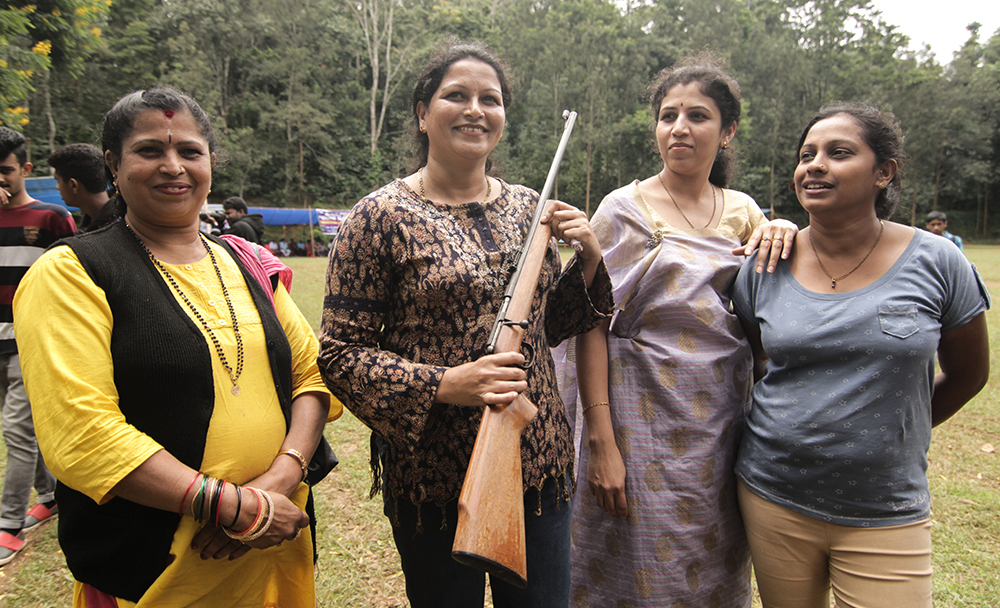
Shooting is not a male sport in the Kodavas tribe. Kodava women traditionally kept guns to protect their families when the men left for hunting and battle. Everyone from septuagenarian grandmothers to 16-year-old girls participate in local shooting competitions.
Credit: Shawn Sebastian and Tejasvi Dantuluri
Shooting is not a male sport in the Kodavas tribe. Kodava women traditionally kept guns to protect their families when the men left for hunting and battle. Everyone from septuagenarian grandmothers to 16-year-old girls participate in local shooting competitions.
Credit: Shawn Sebastian and Tejasvi Dantuluri
Several modern-day sports like shooting and archery have been born of indigenous communities across the world. In India, the attempts at unearthing such indigenous talents have been poor.
A few notable exceptions are people like Laxmirani Manji, from the Santhal tribe in Jharkhand who represented India in archery at the 2016 Rio Olymipcs, and Limba Ram of Ahari tribe in Rajasthan, an Arjuna awardee archer who represented India at three Olympics. If they are given enough support and attention, many modern-day Tiger Thimmaiahs might emerge from Coorg.
We welcome your comments at letters@scroll.in.
source: http://www.scroll.in / Scroll.in / Home> Magazine> After the News / Point & Shoot
Renowned cartoonist Nala Ponnappa, known for his off-beat tongue-in-cheek humour, is the Coorg Person of the Year 2016.
Ponnappa was selected for the honour in a poll conducted by www.coorgtourisminfo.com, Kodagu’s first news portal, promoted by senior journalist P T Bopanna.
Ponnappa’s first cartoons appeared in Chicago in 1972 where he was studying for a Master’s degree in Architecture. He began cartooning as a hobby by contributing his cartoons to college magazines.
The cartoons of the Coorg-born Pune-based cartoonist, also appears in The Sunday Mid-Day, The Economic and Political Weekly and the Economic Times. His works have also appeared in the International Business Times.
Born in 1948, his early education was in Mangaluru and Pune. He graduated in architecture from the Madras University with a first class. He had an 11-year stint from 1970 to 1981 as an architect in Chennai, Delhi, and Lagos, before he turned into a cartoonist. He settled down in Bengaluru in 1982 and began his career as a freelance cartoonist.
His works have also been published in the Penguin Book of Indian Cartoonists and The Third World Book of Cartoonists from Germany. He was awarded the first prize by the epd- Entwicklungspolitik publication, in a competition held at Frankfurt to commemorate the 50th year of India’s Independence.
Ponnappa was a member on the world jury of an international cartoon competition on Humankind and Energy held in Hanover, Germany, in September 2000.
At a competition held in Germany, one of Ponnappa’s cartoons, which depicted the German language being deeply influenced by the English language, was selected to be put up as a poster by the German Cartoonist Association.
He has also won prizes of excellence at cartooning competitions held in Korea and Romania. He was the only Indian to be invited to attend the Kyoto International Cartoonist Conference in 2002, where he was also presented the jury award for his cartoon on ‘Remembering 9/11’.
Among the many awards he has received is also the Karnataka State Rajyotsava Award in 2007.
In the past, the winners of the ‘Coorg Person of the Year’ title include, Dr Kaveri Nambisan, novelist (2005), Dr Boverianda Nanjamma Chinnappa, researcher and writer (2006), Moodera Jagadeesh, scientist (2007), Air Marshal K C Cariappa, environmentalist (2008), cricketer Robin Uthappa (2009), tennis player Rohan Bopanna (2010), retired Tamil Nadu IAS officer P M Belliappa (2011), technology innovator Vineet Devaiah (2012), birdman Dr S V Narasimhan (2013), squash champion Joshna Chinappa (2014), and athlete M R Poovamma (2015).
source: http://www.deccanherald.com / Deccan Herald / Home> District / DHNS-Madikeri, December 31st, 2016
At the announcement of ‘Vaira’ Kannada film Navarasan director and actor of Rakshasi (Pisasi remake) said he is looking for a hero to his Dharmasri Manjunath production. Now that place is occupied by him.The shoot of ‘Vaira’ is taking place in and around Madikeri. The producer ‘Rathavara’ Manjunath has invested on this film with Geetha Entertainment.
Navarasan has penned story, screenplay, dialogue besides acting and directing the film. Priyanka Ballal is female lead. Sharat, Ajay, Tabla Nani, Bharat Singh, Harry, Krishna Sri, Master Sujith are in the cast.
‘Vaira’ is a crime thriller with horror, comedy, crime, thrill, love, revenge, friendship, glamour and action. It has Nithin cinematography, Ravi Basroor music, Ultimate Shivu Stunts, Ravi Poojari art.
source: http://www.indiaglitz.com / IndiaGlitz / Home / December 29th, 2016
The Ponnampet Kodava Samaja organised Kodava Samskrithika Dina and ‘Puthari Kolmand Namme,’ at Ponnampet on Monday.
The members, irrespective of age, participated actively in ‘Bolakat,’ ‘Ummathat,’ ‘Puthari Kolat,’ ‘Pareyakali,’ and ‘Valagathat’ cultural programmes. The event saw shooting coconuts, musical chair competitions for men and women, skit by T Shettigeri Schoolchildren and Puthari dance ballet by the students of Ponnampet Appacchakavi Vidyalaya.
The winners in various competitions are as follows:
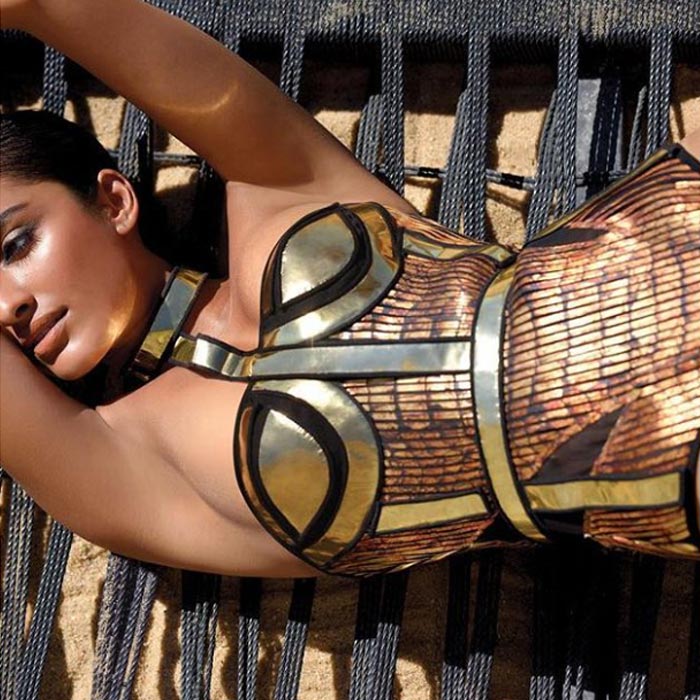
Metallic bikinis are a must-have as you head for your next beach vacation in 2017. Kingfisher Calendar 2017 girl Dayana Erappa shows you just the right way to sizzle in metallic bikins.
As we bid goodbye to 2016, the new year 2017 promises to be an exciting year for fashion and style. The much talked-about Kingfisher Calendar for the coming year has already created a buzz. Just like the preceding editions, the new edition and is a sizzling melange of aesthetically shot jaw-dropping pictures of five bikini-clad models: Alliny Gomes, Dayana Erappa, Kanishtha Dhankar, Nora Fatehi and Vartika Singh. The maverick behind these insanely hot pictures, Atul Kasbekar recently took to Instagram to share yet another ridiculously sexy image of the ethereal Dayana Erappa. Wondering what are we gushing about? Read more to be amazed.
Amidst a black woven hammock lying in the sand, Dayana looks drop-dead gorgeous in a metallic bikini. The bikini is replete with a black and copper coloured detailing. What’s more, you may wonder? Look closely and you will see a zingy choker necked detail completing the bikini and lending it its hot vibe. What’s hotter? Dayana posing sexily in the metallic one-piece and showing exactly why Gold Is the New Bold.
Slaying us with yet another metallic daze, Dayana donned a silver two piece that comprised one-shouldered top and paired it with towering silver stilettos. Quirking it up with a seriously amazing hairdo of silver cornrows and braids. The maverick behind this insanely hot hairstyling is the international makeup and hair stylist Marianna Mukuchyan.
source: http://www.india.com / India.com / Home> Lifestyle / by Nirupama Chaudhary / December 26th, 2016
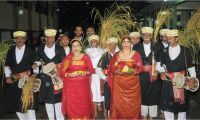
The members of Mysuru Kodava Samaja seen with the newly harvested paddy crop during Huthri festival celebrations in city last evening.
Mysuru :
Hundreds of Kodava community members celebrated “Huthri” festival in city last evening with traditional fervour.
The festival symbolises harvest season and the arrival of grains (wealth) into a Kodava home. The festival was organised by Kodava Samaja – Mysuru at Sree Cauvery Educational Institutions premises in Kuvempunagar.
Kodava men and women were dressed in their traditional best. The celebrations reflected traditional Kodava culture. The ritual of “kadiru” cutting was performed by hockey coach Kotera Muddaiah amidst gun salute and cheering of “poli poli deva”, praying for prosperity, by the members.
Later, the harvested bundles of paddy were brought into a decorated hall, pujas performed to Lord Igguthappa and Goddess Cauvery. “Kadiru” and the traditional dish of “Thambittu” were distributed to the gathering. On stage, a series of cultural programmes were performed including “Balopaat”, Bolakaat”, “Kolaat”, “Kathiyaat” and “Ummathaat”.
Prizes were distributed to the winners of the recently held Kodava cultural competitions organised by the Federation of Kodava Samajas where members of Kodava Samaja Mysuru had won prizes in eight of the nine competitions.
President of Mysuru Kodava Samaja Moovera K. Kuttappa, Vice-President Ballyamanda M. Nanaiah, Honorary Secretary Mandira P. Kalaiah, Joint Secretary Chottekalappanda Prema Uthaiah, Treasurer Mechanda M. Ponnappa and others were present on the occasion.
KODAGU GOWDA SAMAJA
The festival was also organised by Kodagu Gowda Samaja at the Gowda Kalyana Mantap in city. Paddy was traditionally harvested and pujas were performed to Lord Igguthappa and Goddess Cauvery. Later, the traditional “Thambittu” was served to the participants. Community members performed various traditional dances praying for prosperity of the land and its people.
Kodagu Gowda Samaja President Chettimada U. Janardhana, Vice-President Kodakandi G. Bharath Kumar, Secretary Kuntikana S. Ganapathy, Jt. Secretary Neyanni K. Ramesh, Treasurer Kadyada Ravi Bheemaiah and others were present.
source: http://www.starofmysore.com / Star of Mysore / Home> General News / December 14th, 2016
Codava National Council (CNC), led by its president N U Nachappa, celebrated Puttari (Huttari), the harvest festival of Kodagu at a paddy field of Uthappa at Chikkabettageri near Kushalnagar on Tuesday.
The festival symbolises the homecoming of ‘Dhanya Lakshmi’. The Codava National Council members, wearing traditional attire, participated in the celebration.
Before cutting the paddy sheaves, the members offered prayers and offered by tying the leaves of ‘Arali,’ mango, jack, ‘Kumbali’ and cashew- nut.
After the ‘Nere Kattuvo’ ritual, the participants walked in a procession to the paddy fields accompanied by the ‘Dudikottpat’ (dudi is a small drum of Kodavas). Nachappa cut the paddy sheaves and initiated the celebrations. Before harvesting, they shouted slogans ‘Poli Polio Deva’ and fired three times in the air.
The Codava National Council members presented traditional Kolata, ‘Pareya Kali,’ ‘Chowkata’ and other cultural programmes, adding colour to the festivity. ‘Payasam’ (sweet) was prepared from the new rice and was offered to the God.
Mouth-watering dishes like ‘Thambut,’ ‘Adikehittu,’ ‘Kadubu,’ ‘Payasam’ and others were savoured on the occasion.
Later speaking to reporters, N U Nachappa said the Kodavas should be entrusted with the constitutional security. The government should announce autonomous status to Kodava land.
source: http://www.deccanherald.com / Deccan Herald / Home> District / DHNS – Kushalnagar, December 14th, 2016
As the martial Kodava race gets together to celebrate the annual harvest festival, Puthari, on Tuesday in their homeland Kodagu, they have reason to feel optimistic about their future.
The Karnataka government has initiated an ethnographic and socio-economic survey to see whether the community qualifies for the tribal status. It’s the second time the survey has been taken up, a response to the alarming decline in population.
“Our department has been doing the survey for the past two weeks. Apparently, the culture and traditions of the Kodavas are akin to tribals but the government cannot grant them the status unless the survey establishes it,” said P Manivannan, secretary, social welfare department.
The Centre has also considered a long-pending demand to include Kodava thakk, the Kodava language without a script, in the Eighth Schedule of the Constitution and a notification has been issued to initiate the process.
In 2011, the UPA government directed the then BJP government to take up the survey following petitions by the Codava National Council (CNC), which has been spearheading the community’s cause. It was put on the backburner for political reasons.
AICC general secretary Oscar Fernandes, along with Brijesh Kalappa, legal adviser to the Karnataka state government, recently impressed upon chief minister Siddaramaiah to order the survey to protect the race.
“Our community is dwindling in numbers very fast for many economic and sociological reasons. The population of Kodagu district is around 5 lakhs, of which Kodavas are not more than 65,000. There is an urgent need to sustain the Kodava genus constitutionally under Articles 340 and 342 of the Constitution that provide for recognizing ethno-linguistic tribal minority nationality,” CNC president N U Nachappa said.
Kalappa said: “When the last survey was taken up around two decades ago, many Kodava leaders, including prominent political leaders, had opposed it because they felt it was demeaning for the race, renowned for gallantry and sportsmanship. But now there is a sense of awareness among the community because they’ve realized it’s inevitable.”
The survey report will be given to the government by early next year and the Centre will take a final call based on the recommendations.
Earlier Kodavas were seen in large numbers in civil services, police and other government jobs but their numbers have dwindled owing to lack of reservation. Though they have been granted Other Backward Classes (OBC) status in the reservation schedule of the state government for jobs and higher education, Kalappa said his community has not gained much since they have to compete with the politically powerful Vokkaliga community that they share under 3A category.
Will Kodavas qualify?
Some anthropologists said Kodavas, as a race, are progressive and different from other tribes. “They cannot be compared to tribes like Bedar, Hakki-Pikki and Kadu Kuruba, among others,” said A K Ravesh, a researcher studying socio-cultural anthropology in Kodagu. The Kodava marriage and funeral rituals, among other things, portray a distinctive culture. A former minister also felt that Kodavas will not gain much if they are granted tribal status since the combined reservation for all STs is just 3% compared to 4% under OBC offered by the state government.
Scheduled Tribe tag
The Constitution does not provide a definition of a Scheduled Tribe. Artice 366 (25) mentions “such tribes or tribal communities or parts of or groups within such tribes or tribal communities as are deemed under Article 342 to be Scheduled Tribes…” According to the website of the Union ministry of tribal affairs: “The criterion followed for specification of a community as Scheduled Tribes are indications of primitive traits, distinctive culture, geographical isolation, shyness of contact with the community at large, and backwardness”.
source: http://www.timesofindia.indiatimes.com / The Times of India / Home> City News> Bangalore News / TNN / December 13th, 2016
After receiving an overwhelming response from guests last year, The Tamara Coorg is back with the second edition of their musical and performing arts fiesta – The Tamara Carnival. The signature fest which takes guests on a journey of India’s great social and cultural heritage through music and dance will be held from December 23, 2016 to January 1, 2017 at The Tamara Coorg.
As the year comes to an end, the resort which is nestled in the mountains of picturesque Coorg, will joyously ring in the Christmas and New-Year festivities with The Tamara Carnival. This beautifully curated festival is a blend of music, dance and performing arts, showcasing the diverse and rich heritage of India. The festival will usher in the celebratory season with exhilarating performances that reflect the true essence of India’s tradition and culture.
The Tamara Carnival will enliven the atmosphere as guests will witness Indian and Western performances including Kathak recital, Kodava dance, a fusion of Marathi Lavani and Bengal flute, Margham Kali, saxophone performance, Kerala art forms, Vyali Bamboo act, Illusionist and many more fascinating and entertaining acts. Apart from the carnival, guests can also take advantage of the treks, coffee plantation tour, yoga and pottery making sessions among others to refresh themselves.
The 10-day carnival aims to gently ease into guests’ consciousness, rejuvenating and uplifting their spirits and leaving them in a blissful state of harmony with their inner being and the universe, amidst the serenity and beauty of nature.
source: http://www.hospitalitybizindia.com / HospitalityBizIndia.com / Home> News Track / by HBI Staff – Mumbai / December 12th, 2016
WELCOME. If you like what you see "SUBSCRIBE via EMAIL" to receive FREE regular UPDATES.
Read More »