Kushalnagar (Kodagu):
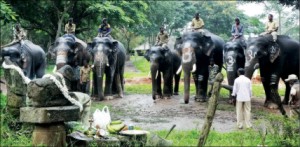
The Forest Department celebrated World Elephants Day at Dubare Elephant Camp near here yesterday in a meaningful manner by creating awareness amongst the public on wildlife.
The day was celebrated by performing puja to the camp elephants at Sri Basaveshwara Temple premises in the presence of hundreds of tourists, who were excited to see 25 elephants including 3 calves together.
Kodagu Conservator of Forests Yelukondala spoke about the significance of World Elephants Day.
CFO B.B. Mallesh, ACF Bhaskar Rao, RFO M.S. Chinnappa, ARFO Ranjan, Senior mahout Dobi and others were present on the occasion.
source: http://www.starofmysore.com / Star of Mysore / Home> General News / Thursday – August 13th, 2015
The 69th Independence Day was observed with patriotic spirit on the Fort premises in Madikeri on Saturday.
The marchpast by police, Scouts and Guides, NCC, NSS, and students and cultural programmes by the schoolchildren added colours to the celebrations.
Speaking on the occasion, District In-charge Minister K J George said the State government is ready to respond to the woes of the farmers. The farmers should not take extreme steps to end lives. Freedom should not be misused. It should be used for the welfare of all, he added.
St Joseph High School student Sreeja and Dechamma were felicitated for securing highest marks in SSLC examination. The highest scorers in second PUC examination — Ahalya Appacchu, B M Neelamma, Amrita Girish, Preethi Riya Pinto and Uthappa — were also felicitated.
The schoolchildren danced to patriotic songs on the occasion. In the cultural programmes, General Thimmaiah Public School team won first place while St Michael High School and Rajarajeshwari School teams stood second and third.
Guides team of St Joseph High School, Sevadala of St Michael School and Scouts of Rajarajeswari School won first, second and third place respectively in the marchpast category. Hoovaiah Gowda, who had entered into the Ginnessh Book of World Records for growing 41-feet tall sugarcane, was also felicitated. Valley Dew team presented traditional Kodava dance. Rajesh and team from Mandya presented Dollu Kunitha on the occasion.
source: http://www.deccanherald.com / Deccan Herald / Home> District / Madikeri / DHNS – August 15th, 2015
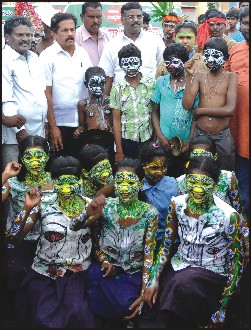
Hundreds of tribals (adivasis) from Mysuru, Kodagu, Chama-rajanagar districts and other parts of the State took part in a colourful procession organised by Karnataka Moola Adivasigala Rakshana Vedike to mark the 21st International Day of World’s Indigenous People (World Tribal Day) in city this morning.
MLA M.K. Somashekar flagged off the procession at Kote Anjaneya Swamy Temple at the North Gate of the Palace.
The procession, accompanied by a number of folk troupes, passed through Hardinge Circle and Nilgiri Road to reach the Dasara exhibition ground where the stage programme was held.
Adivasigala Vedike President J.K. Gopal, Hon. President Dr. C. Madegowda, General Secretary Vijay Kumar, office-bearers Ramanna, Chikkaraju, C. Rajanna and others were present on the occasion.
source: http://www.starofmysore.com / Star of Mysore / Home> General News / August 11th, 2015
Harshika Poonacha has been on a long holiday in the US. The pretty actress has been touring the country and has been visiting all the popular tourist destinations. One of this was the Madame Tussauds museum.
The actress, who has been actively updating her followers on Twitter on her holiday, recently posted a picture of her with US President Barack Obama and First Lady Michelle Obama — albeit their wax figures. Her tweet read, “Saying good bye to US president and Coming back to India Will be flying in a yl #BacktoIndia.”
Harshika also uploaded a picture of her from last year’s SIIMA, which she couldn’t attend this year since she was on holiday.
source: http://www.timesofindia.indiatimes.com / The Times of India / News Home> Entertainment> Kannada> Movies / TNN / August 09th, 2015
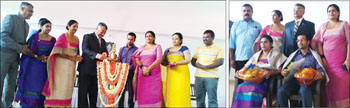
Star of Mysore Editor-in-Chief K.B. Ganapathy is seen lighting the lamp to inaugurate Kakkada Namme at Kutta Kodava Samaja yesterday, as Kutta Kodava Samaja President Kallichanda Vishnu Cariappa, Dr. Rekha Vasanth, Ralie Ganapathy, Dr. Pemmaiah, ZP President Sharin Subbaiah, Smt. Viju Devaiah and Kodagu District Information Officer Chinnaswamy look on. Pic. right shows Dr. Teethira Rekha Vasanth and Dr. Kottangada Pemmaiah, who were feted on the occasion. Standing: Teethira Vasan, husband of Dr. Rekha; Ralie Ganapathy; K.B. Ganapathy and ZP President Sharin Subbaiah.
Kutta (Kodagu) :
The Kutta Kodava Samaja here celebrated the third ‘Kakkada Nemme,’ the festival of monsoon, at a function organised at the Samaja building yesterday.
Star of Mysore Editor-in-Chief K.B. Ganapathy inaugurated the festival by lighting the traditional lamp.
Speaking on the occasion, Ganapathy said the festival had special significance because it celebrates the month of agricultural activities in Kodagu and gives an opportunity for the people to prepare a unique kind of medicinal food item known as Maddu Kulu prepared from the juice derived from a particular kind of wild vegetable leaves.
Ganapathy said it was a good decision on the part of the Kodavas of this area to have constructed a Kodava Samaja building here in Kutta town which is located in the border of Karnataka-Kerala. The Samaja building, therefore, is a symbol of Kodava strength and also their unity in an area where migrant labour and traders from the neighbouring Kerala are found in large numbers.
Complimenting the Kodava Samaja for making efforts to further develop the Samaja, he asked the members to support the management in every way possible for their own good.
Kutta Kodava Samaja President Kallichanda Vishnu Cariappa, who presided, explained the significance of Kakkada Nemme.
Earlier, Geetha Appaiah and Rishi Muthanna offered prayers to Goddess Cauvery by way of invocation. Kodava Samaja Joint Secretary Teethira Mandanna welcomed.
Gonikoppa College Teaching faculty Dr. Teethira Rekha Vasanth, who had obtained a Doctorate degree and Dr. Kottangada Pemmaiah, who secured 247th rank in the UPSC Civil Services Exam this year were felicitated.
Kalyatanda Ralie Ganapathy, Kodagu ZP President Sharin Subbaiah, Smt. Viju Devaiah, Kodagu District Information Officer Chinnaswamy, Samaja Vice-President Hottengada Ramesh, Secretary Konganda Suresh, Treasurer Machamada Subramani, Directors Cheppudira Partha, Kechamada Vasu Uthappa, Teethira Kabir Thimmaya, Bachariyanda Prakash, Kolera Neela Appanna, Kodanda Leela Cariappa and others were present.
An attractive expo-cum-sale of household articles, dress materials, ethnic food items and cars of different models was also arranged in the Samaja premises.
source: http://www.starofmysore.com / Star of Mysore / Home> General News / Monday – August 03rd, 2015
Kodava Samaja, Mysuru, will be celebrating ‘Kakkada 18’ at Kodava Samaja building premises in Vijayanagar in city at 7 pm today, according to K.M. Belliappa, Hon. Secretary of the Samaja.
source: http://www.starofmysore.com / Star of Mysore / Home> In Brief / Monday – August 03rd, 2015
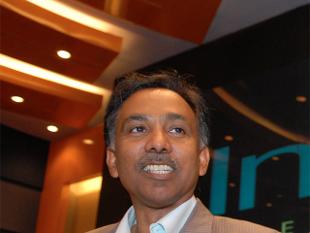
Infosys co-founder and former CEO SD Shibulal is joining the board of The Tamara, the hospitality venture set up by his daughter Shruti, as its chairman at a time when the company is planning at least one fresh acquisition in the German speaking region of Western Europe
Since he retired from Infosys last year, Shibulal has been making investments through his family office Innovations Investment Management.
Since he retired from Infosys last year, Shibulal has been making investments through his family office Innovations Investment Management, most notably in real estate and hospitality sectors.
“He (Shibulal) plans to use his years of experience on a professionally run board to bring the foremost standards of corporate governance to The Tamara,” said Senthil Kumar N, director and chief executive of The Tamara.
The Tamara, which operates under the umbrella of Shibulal’s family office, also helps manage properties owned by the Shibulal family across the world.
Real estate makes up over half the portfolio of Shibulal’s family office, which has several resorts and projects in India.
The company’s flagship property and brand is the Tamara Coorg – a pet project of Shruti Shibulal, who is currently spearheading the venture’s Thiruvananthapuram project as well as the acquisition being pursued in Europe.
Shruti, who holds an MBA degree from Columbia Business School and started her career with Merrill Lynch, has also been actively building the family’s real estate portfolio. She also runs several finedining restaurants, including Caperberry and Fava in Bengaluru’s upmarket UB City mall.
“Each one of our platforms (such as The Tamara) has a professional management and governance structure in place from the beginning. They develop their own medium and long-term plans based on various factors. For example, our decision to consider acquiring a hotel property in the German speaking part of Western Europe is part of our long-term strategy,” said Kumar, an IIM-Bangalore and BITS-Pilani graduate who joined the Shibulal family office in 2005.
The company has started construction for its upcoming projects in Thiruvananthapuram and Kodai projects. It has also begun operating two new properties – Lilac in Bengaluru and Palma Laguna on the Kerala backwaters, Kumar said.
Shibulal’s family office currently manages the entire wealth of the family including any new funds added through dividends and share sales, and also helps build the philanthropic and business platforms which the family is interested in, Kumar said.
Since his retirement, Shibulal has also become an active investor in the startup ecosystem and even set up a venture capital and accelerator program called Axilor under the purview of his family office, roping in fellow Infosys co-founder S Gopalakrishnan as an investor.
ET had reported last year that Shibulal and his family own several hundreds of apartments and properties across the world. Shibulal and his family currently have about 1.97% of shareholding in Infosys, worth nearly $1 billion (about Rs 6,400 crore).
source: http://www.economictimes.indiatimes.com / The Economic Times / ET Home> Tech> ITes / by Anirban Sen, ET Bureau / July 29th, 2015
With rains drenching the hilly, wooded landscape of the Kodavas, it is time to visit the Kodagu district in Karnataka, the birthplace of the mighty Cauvery.
Originating at Talacauvery, the Cauvery gently flows from the Western Ghats and in the process, traces a long journey of 800 kilometers in the South-Eastern direction and empties in the Bay of Bengal. With monsoon gaining vigour once again, the coffee land especially during the months of July and August, is at its best. It is a sublime experience to visit Madikeri and surrounding areas that are home to many a waterfall.
As these are located in dense jungles, one has to trek and walk a few kilometers to take a peek at silver cascades in both the Brahmagiri and Pushpagiri hill ranges. Both these hill ranges are home to many waterfalls but the Mallali Falls near Somwarpete and Irupu near Virajpete, attract many tourists before, during and after the monsoons.
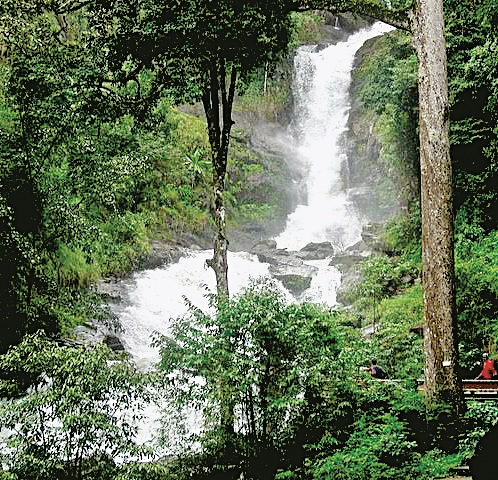
A fresh water cascade, the Irupu comes to life during the heavy downpour that is so common in these hilly ranges. This (also called the Lakshman Tirtha Falls) is situated on the highway to Nagarhole and just 20 kilometers away from the National Park. One has to walk at least half a mile to reach this place which is in the midst of a forest and far away from the cacophony of urban life.
Enjoying the sounds of the serene hill ranges and the gushing foamy waters, one can relax and forget all about urban stress. The roaring sound of the falls can be heard from a distance as one walks on the rocky twisting pathway with the chirping birds and the lush forests for company.
The pristine scenery resonates with the chirping of birds one has never heard before. The falls criss-crossing the hills and the forests tumble down from a height of just 150-200 feet while the spray of the gushing waters during monsoons is so intense that one can get easily wet. However, it is not safe to venture into the waters as the currents are strong. If you planned a visit before the monsoons, you can stand literally below the falls and get a soothing shower.
But do not miss visiting during the monsoons as Irupa falls from a cliff in all its mesmerising glory. If you are interested in visiting the nearby temple, you can take a peek as legends associate it with the visit of Ram and Lakshman when they were searching for Sita.
There are good spots to relax and enjoy, clean, wholesome vegetarian food but make it a point to place your orders in advance if you are visiting this place in a group. If you are carrying food and drinks, do not litter the place with plastic debris as it is a fragile ecology and home to many birds and animals.
Just two to three hours drive from Madikeri, one has to take the Virajpete route to reach this breathtaking place where the waterfall plunges from the Brahmagiri peaks in all its beauty and finally joins the Lakshman Teertha River. Since it is a very popular tourist spot, the place is easily accessible via tarred roads, concrete steps, viewing seats and affordable lodging and boarding facilities in and around the densely wooded ranges.
source: http://www.newindianexpress.com / The New Indian Express / Home> Cities> Bengaluru / by Meera Bharadwaj / July 30th, 2015
Karnataka district has India’s highest concentration of home-stays, according to HolidayIQ study
The picturesque scenery of Coorg
The Kodagu district of Karnataka, also known as Coorg, offers the largest amount home-stay accommodation in India, according a new study.
HolidayIQ, the Indian online travel site, has revealed a series of trends relating to the country’s home-stay sector. And according to its listings, 13% of Indian home-stays are located in Coorg, followed by Kochi with 9%. Located in the Western Ghats, Coorg is famous for its mountainous jungles and its native Kodava residents.
In total, HolidayIQ found a total of 1,663 Indian home-stay options distributed among 207 destinations. And many are concentrated in the same areas; destinations with 10 or more home-stays accounted for 76% of the entire market.
Home-stays in Coorg and Kochi, plus the Kerala destinations of Alleppey, Wayanad and Munnar, were found to offer better value-for-money than other types of accommodation.
“With the growth of the online travel industry, in all its different guises, people now have a lot more information at their fingertips and the research has become a larger, richer part of holiday planning. At the same time, travel industry providers have grown exponentially in India, so travellers now have more options than ever,” HolidayIQ said in its report.
“The diversity of India is legendary presenting travellers with endless opportunities to sell its charms. Home-stays in India are now becoming the popular new concept of tourism. In the recent years Home-stays and the trend of offering budget accommodation is picking up. Homes are the new hotels,” it added.
source: http://www.traveldailymedia.com / Travel Daily India / Home> Hote & Spa / by Mark Elliot / July 24th, 2015
‘Classical languages are embedded with culture, literature and tradition of the people’
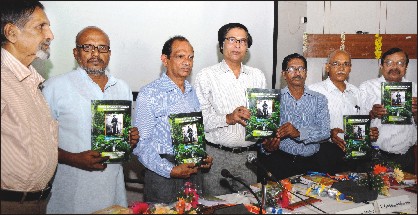
‘Hindi-English-Kodava,’ trilingual dictionary compiled by Dr. C.V. Sivaramakrishna, was released during a symposium on ‘Kannada Classical Language and other Classical Languages of India’ held at Central Institute of Indian Languages (CIIL) in city this morning. Seen in the picture are (from left) CIIL Academic Secretary (retd) Prof. Kikkeri Narayana; Head of Linguistics, Malayalam University, Thiroor, Kerala, Prof. M. Sreenatham; Former Kuvempu Institute of Kannada Studies Director Prof. R. V. S. Sundaram; CIIL Director Prof. Awadesh Kumar Mishra; former CIIL Mysuru Deputy Director Prof. V. Gnanasundaram; Deccan College, Pune, retired Prof. K.S. Nagaraja and KSOU retired Prof. Radha Krishna Bhat.
Mysuru :
The Classical Language Studies Centre will be shifted from the Central Institute of Indian Languages (CIIL) premises in Mysuru to Bengaluru University campus soon, said CIIL Director Awadesh Kumar Mishra, here today.
Inaugurating a symposium on ‘Kannada Classical Language and other Classical Languages of India’ at CIIL premises, he said the Classical Language Studies Centre was being shifted to the State capital as it will have necessary infrastructure such as library and other required facilities.
Mishra pointed out that preservation of classical languages is important as they were embedded with culture, literature and tradition of the people and added that language and script were interlinked. “A language undergoes changes due to change in geographical location.”
Four years ago, the Tamil Classical Language Studies Centre was shifted to Chennai and the Telugu Classical Language Studies Centre may also be shifted in due course of time, once the location is confirmed, said Mishra. Since 2008-09, CIIL is facing staff crunch due to retirement of personnel, he added.
On the occasion, ‘Udaya Adityalanakar,’ translated from Sanskrit to English by Dr. R.V.S. Sundaram and Gill Ben-Heruth; ‘Mahakavya Lakshana,’ of T.V. Venkatachala Shastry translated into English by Dr. H.V. Nagaraja Rao; ‘Moulya Nirdharana Parabashika Padapraveshike,’ edited by Dr. M. Balakumar; ‘Hindi-English-Kodava,’ trilingual dictionary by Dr. C.V. Sivaramakrishna and ‘The Nihali Language,’ by Dr. K.S. Nagaraja were released.
source: http://www.starofmysore.com / Star of Mysore / Home> General News / Friday – July 17th, 2015
WELCOME. If you like what you see "SUBSCRIBE via EMAIL" to receive FREE regular UPDATES.
Read More »