Category Archives: Arts, Culture & Entertainment

Three tourist circuits identified to increase footfall in Cauvery basin

Interesting places in Mysuru, Kodagu, Chamarajanagar and Mandya districts, and parts of Ramanagaram district to be covered
TouristCircuitKF28jun2015

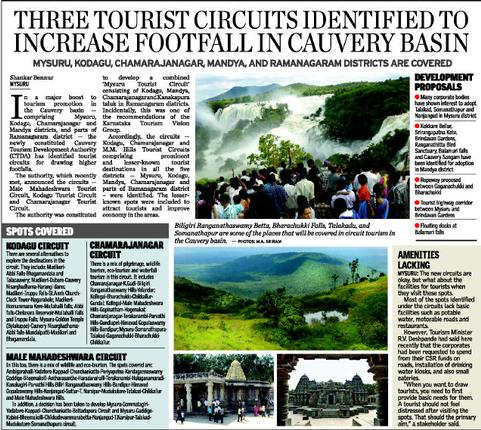
In a major boost to tourism promotion in the Cauvery basin — comprising Mysuru, Kodagu, Chamarajanagar and Mandya districts, and parts of Ramanagaram district — the newly constituted Cauvery Tourism Development Authority (CTDA) has identified tourist circuits for drawing higher footfalls.

The authority, which recently met, announced the circuits — Malai Mahadeshwara Tourist Circuit, Kodagu Tourist Circuit and Chamarajanagar Tourist Circuit.

The authority was constituted to develop a combined ‘Mysuru Tourist Circuit’ consisting of Kodagu, Mandya, Chamarajanagar and Kanakapura taluk in Ramanagaram districts. Incidentally, this was one of the recommendations of the Karnataka Tourism Vision Group.

Accordingly, the circuits — Kodagu, Chamarajanagar and M.M. Hills Tourist Circuits comprising prominent and lesser-known tourist destinations in all the five districts — Mysuru, Kodagu, Mandya, Chamarajanagar and parts of Ramanagaram district – were identified. The lesser-known spots were included to attract tourists and improve economy in the areas.

Kodagu Circuit
There are several alternatives to explore the destinations in the circuit. They include: Madikeri-Abbi Falls-Bhagamandala and Talacauvery; Madikeri-Dubare-Cauvery Nisarghadhama-Harangi dams; Madikeri-Iruppu Falls-St.Ann’s Church-Clock Tower-Nagarahole; Madikeri-Honnammana Kere-Mallahalli falls; Abbi falls-Chelavara Reservoir-Mallahalli falls and Iruppu falls; Mysuru-Golden Temple (Bylakuppe)-Cauvery Nisarghadhama-Abbi falls-Mandalpatti-Madikeri and Bhagamandala.

Chamarajanagar Circuit
There is a mix of pilgrimage, wildlife tourism, eco-tourism and waterfall tourism in this circuit. It includes Chamarajanagar-K.Gudi-Biligiri Ranganathaswamy Hills-Yelandur; Kollegal-Bharachukki-Chikkallur-Gundal; Kollegal-Malai Mahadeshwara Hills-Gopinatham-Hogenakal; Chamarajanagar-Terakanambi-Parvathi Hills-Gundlupet-Himavad Gopalaswamy Hills-Bandipur; Mysuru-Somanathapura-Talakad-Gaganachukki-Bharachukki-Chikkallur.

Malai Mahadeshwara Circuit

In this too, there is a mix of wildlife and eco-tourism. The spots covered are: Ambigarahalli-Yadatore-Kappadi-Chunchankatte-Periyapatna-Kendagannaswamy Gaddige-Bheemakolli-Antharasanthe-Haradanahalli-Terakanambi-Huluganamaradi-Kanakagiri-Parvathi Hills-Biliri Ranganathaswamy Hills-Bandipur-Himavad Gopalaswamy Hills-Nanjangud-Suttur-T. Narsipur-Mudukutore-Talakad-Chikkallur and Mahadeshwara Hills.

In addition, a decision has been taken to develop Mysuru-Gommatagiri-Yadatore-Kappadi-Chunchankatte-Bettadapura Circuit and Mysuru-Gaddige-Kabini-Bheemakolli-Chikkadevammanabetta-Nanjangud-T.Narsipur-Talakad-Mudukutore-Somanathapura circuit.

source: http://www.thehindu.com / The Hindu / Home> News> Cities> Bengaluru / by Shankar Bennur / Mysuru – June 27th, 2015
From here & there

Free and fearless tribal festival

Visit Devarapura, a small village in Virajpet taluk of Kodagu district on the fourth Thursday of May and you can witness a unique festival known for the use of expletives. The festival of abuse brings tribal people living in different parts of the district together. A huge number of tribals belonging to Jenu Kuruba, Betta Kuruba, Yerava and other tribes from Kodagu and surrounding districts participate in the celebrations.

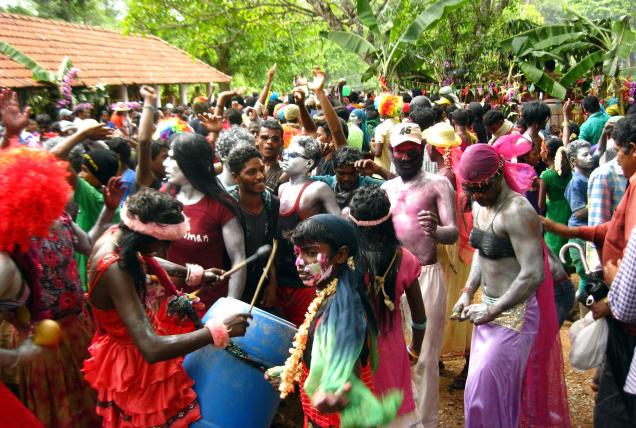
The tribal people dress fancily and wear unusual ornaments like jackfruit skin and empty plastic bottles. A strange mix of paint, powder and mud in different shades of black, white and other colours decorate their body.

The traditional festival known as “kunde habba” or “bodu habba” is celebrated with fervour. Legend has it that Lord Ayyappa fell in love with Bhagavati Devi and followed her in the forest. Tribal people who were waiting for his return felt betrayed. In a rage, they started abusing him to get back his affection. The tradition has passed on through generations and continued as an annual event. Tribals gather in the village a day prior to the festival.

On Thursday they go out on the streets shouting and scolding people and village deities using choicest obscenities. While doing so, they visit houses and shops, begging for alms. In the evening they worship the almighty, apologise for their act and offer the money collected to the deity. The unique festival draws a large number of people from nearby places.

“The outpour of emotions reflects the broad outlook of the community. It provides a platform for them to give voice to the mental dilemmas they undergo, fighting the injustice met to them and claiming an opportunity to uphold their rights. It is also indicative of their struggle against odds, both natural and social. It also appears to be a protest of the underprivileged,” opines litterateur and folk scholar Prof Kalegowda Nagavara.

source: http://www.deccanherald.com / Deccan Herald / Home> Supplements> Spectrum / by Nihar Madikeri / DHNS – June 23rd, 2015

Getting even with god and men

Merry-making: The men dominate the festivities and take great pains to be in drag. Photo: Deepa Bhasthi

At ‘Kunde Habba’, the tribal people of Kodagu get their chance to cuss and rant away the insults heaped on them by others

I see, to my utter delight, that the tree under which thousands of tribal people have congregated to rain abuses is the frangipani. The delicate white flower rimmed with yellow is called ‘deva-kanagile’ (god’s flower) in Kannada, a name as gorgeous as the flower itself. The tree decked with flowers is a heartening sight, especially after being subjected to a spate of the choicest abuses. Some friends and I are at ‘Kunde Habba’ or ‘Bedu Habba,’ the annual abuse festival of the tribal people of Kodagu in Karnataka. Held on the fourth Thursday of May in Devarapura village near Gonikoppal, 200-odd km from Bengaluru, this is one day when the tribal people let out their grudges and vent their anger against god and fellow men in some of the filthiest words in Kannada and other dialects.

Kodagu or, in travel agent parlance, Coorg is home to some two dozen tribes. Some are honey gatherers-turned-mahouts, a few are into hunting. But the majority works in the coffee estates that dot the district’s verdant landscape. Their days are spent in rigorous physical labour and the evenings in dulled stupor induced by cheap country liquor. For them, the ‘Kunde Habba’ is their one chance, once a year, to abuse and rant away the insults heaped on them by others.

Legend has it that Ayyappa, the god of the tribals, took a group of them into the forest for hunting. Deep in the jungle, he came across the beautiful goddess Bhagavathi, fell in love and eloped with her, leaving the hapless tribal people stranded. Angry at this betrayal, the tribal people reserve this day to abuse their god for his old mistake — for not bestowing the boons they prayed for, for dreams unfulfilled and wishes unheeded. Over time, the festival has grown to become an outlet for their anger against employers — often wealthy coffee planters — and others who have bothered them. The participants take great care in the way they dress for the festival. Handbags readily become hats and an onion sack is turned into a dress. The men, who dominate the festival activities, take great pains to be in drag. Their hardened muscles gleam with sweat and silver paint. They sport bras stuffed with rags and miniskirts balanced precariously around belted waists. Make-up, most often, is gaudy. A little boy in an underwear pins a white flower near his crotch. Save for their size, there is little difference in the way boys, young men and old men look on this day.

Music is a vital part of the celebrations. Fertiliser tins, mineral water bottles filled with stones and large blue storage bins become drums for the day. Upcycling and recycling are clearly the norm, even if they may have never heard of these new-age terms.

Out in Gonikoppal town, during a break for tea that is too strong, almost bitter, we are bombarded by men in dresses, skirts and tight tops, rattling bottles and beating their drums. There appears to be no method, yet a catchy rhythm ensues. The going rate to get them to leave you alone is ₹10. The men barge into shops, collect money and, towards afternoon, congregate at the temple at Devarapura, where a village fair comes up. Plastic toys, knick-knacks and eats line the stalls as tattoo artists settle in their seats. Crude images of hearts, tigers, even Ambedkar are cut into chappal soles and PoP. These are dipped in ink and pressed on to the skin, after which the tattooist goes to work using an incredibly crude tool to poke through the design, rubbing colour and antiseptic turmeric in the end. Tattoos are cheap, starting at ₹50, or ₹10 per letter for a name.

Meanwhile, dancing around the tree continues. Devotees who have promised sacrifice to the gods throw several shocked chickens into the crowd, those who catch them get to keep them. My friends are miffed at not catching any. The drums get louder and louder, reaching a crescendo, until all the drums merge into a dull relentless thud. Women get ‘possessed’ and run in circles (only to sit back and check messages on their phones a few minutes later) and the dance gets raunchier as the alcohol kicks in. After prayers, they will go back to their haadis or settlements for a feast and many more rounds of drink.

Heartily abused, we feel like we could use a drink too. But instead, the oddly catchy tune of the abuses sticks in our head. We make up words to go along and drive further into the district, for elsewhere.

(Deepa Bhasthi is a freelance journalist based in Bengaluru)

source: http://www.thehindubusinessline.com / Business Line> BLINK> Watch / by Deepa Bhashti / June 09th, 2015

Nominated as Press Council of India Member

Mysuru :

Mysuru-Kodagu MP Pratap Simha has been nominated as a Member of the Press Council of India (PCI) for a period of three years by the Ministry of Information and Broadcasting, Government of India.

The PCI acts as a watchdog, particularly on print publications and was established in 1966.

PCI Chairman Justice Chandramouli Kumar Prasad, in a letter to Pratap Simha, has congratulated him over his nomination to the PCI.

Pratap Simha has thanked Prime Minister Narendra Modi, Union Minister for Finance, Information and Broadcasting Arun Jaitley and Union Urban Development Minister M. Venkaiah Naidu for having nominated him as PCI member.

source: http://www.starofmysore.com / Star of Mysore / Home> General News / Tuesday – June 16th, 2015

Pomp, gaiety mark Kodava cultural fest

Men with traditional attire of black suit and a turban, with gun on the shoulder, women clad in ethnic paraphernaila, dancing to the tunes of musical notes, adding to the charm of colourful procession, which was taken out during taluk Kodava cultural fest organised by Karnataka Kodava Sahitya Academy and Kodava Samaja in Kushalnagar on Monday.

Prior to the inauguration, Kodava Sahitya Academy President Biddatanda S Thammiah offered prayers to the idol of Goddess Cauvery, near the tollgate in the City.

Later, Somvarpet DySP C W Poovaiah inaugurated the procession with a gunshot. The procession including traditional Kodagu bandset, men and women clad in traditional attire, passed through Field Marshall K M Cariappa circle and Kalabhavan road and concluded at Raitha Sahakara Bhavan.

Kodava Sahitya Academy former president Bacharaniyanda P Appanna hoisted the academy flag at Raitha Sahakara Bhavan ground.

An exhibition of household items and agricultural equipment used in older days in Kodagu, caught the attention of onlookers. Hundreds of people took part in various competitions such as dance, music, play and elocution.

source: http://www.deccanherald.com / Deccan Herald / Home> District / Kushalnagar – DHNS / June 16th, 2015

When the Pitch is Right

National Award-winning filmmaker Sandhya Kumar’s documentary looks at the Kodava hockey festival that takes place in Coorg every year

A still from Hockey in my Blood; filmmaker Sandhya Kumar

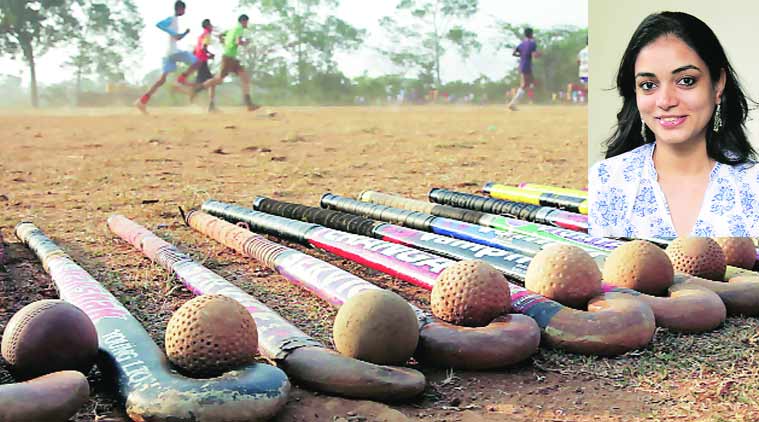
In the summer of 1997, the head of the Kuttappa family, Pandanda Kuttappa, hosted the first Kodava Hockey Festival in his village Karada in Coorg. The first edition of the hockey “tournament” for the Kodavas — a martial-tribal community that belongs to Coorg — had 60 families competing for the title. In the 18 years since, the annual event has grown to become the largest hockey tournament in the world, with over 200 Kodava families taking part in it.

It was in 2012 that National Award-winning documentary filmmaker Sandhya Kumar first heard of this tournament. While the subject intrigued her, it wasn’t until she visited Coorg for a wedding later that year that she decided to explore it through her work. Kumar then got on board Deepti Bopaiah, a Kodava keen to chronicle what had come to be a tradition among her people, and began research for her next project. After close to two years of work, the 52-minute documentary, Hockey in my Blood, is now complete. “India doesn’t offer much scope for releasing non-fiction films. So I hope to tie up with sports and educational organisations to screen it across venues in India apart from taking it to festivals,” says the Bangalore-based filmmaker whose docu short O Friend, This Waiting!, on Devadasis, won the National Award in 2013.

In Hockey in my Blood, Kumar tells the story of the tournament chiefly through the extensive preparations the Kodavas put into organising the festival. One of the key voices, therefore, is a member of the family that has been selected to host the festival in 2013. Considering it a big honour, he has quit his job four months ahead of the festival to oversee the preparations, such as sponsorships, readying the ground and other nitty-gritties. “The month-long event takes place every year between April and May. It’s soon after children’s exams and also when the work on coffee plantations is minimal. So it allows the Kodavas to practise and also attend the matches,” explains the 33-year-old.

The timing is important because the Kodavas living away from their ancestral land travel from wherever they are — even foreign shores — to Coorg in order to participate in the festival. Each year, close to 220 teams (family clans) participate in the tournament for a cash prize of Rs one lakh and the trophy.

Kumar says the national hockey team, over the years, has had over 50 Kodava players, and some have even been Olympians. “But how did hockey emerge to be such an important sport in Coorg is a question no one could answer, it’s as if it’s always been there,” Kumar says.
That there is no age or gender bar to participating is one of the biggest highlights of the tournament.

This is captured in the film through the voices of 16-year-old Prajwal, considered one of the strongest players on the Palanganda team, and Priya Bopanna, who was made the captain of her team the very first year she participated.

Kumar adds that married women, in fact, have the option of playing for their paternal or husband’s team and can choose their side every year.

However, most importantly, the documentary conveys that the festival, although taken seriously by the Kodavas, is mostly a means to have a good time, losing isn’t a big deal. “Many of them return to Coorg for the festival. It’s a way for them to strengthen their bond with their extended family and the ancestral land,” explains Kumar who is open to screening invitations through the titular Facebook page of the film.

source: http://www.indianexpress.com / The Indian Express / Home> Lifestyle / by Dipti Nagpaul D’Souza / June 05th, 2015

ASI to take possession of Madikeri Fort, Palace

The Archaeological Survey of India (ASI) hascome forward to take possession of the Madikeri Fort and Palace.

The move was in the wake of relocation of Government offices functioning to Deputy Commissioner’s office recently.

To begin with encroachments at the Fort premises will be evicted by ASI.

A team of officials of ASI led by Chandrakanth, Zonal Officer of ASI, Mysuru, conducted a survey at the Fort premises.

On observing new buildings coming up at the Fort premises, Chandrakanth decided to discuss the matter with District Administration authorities before taking further steps as the new buildings had violated the norms of ASI.

Additional Deputy Commissioner C Satish Kumar, officials of Revenue Department, Taluk and Municipal Office assisted in the survey process.

Speaking to press persons here today, Mr Satish Kumar said that the District Administration had taken the decision to hand over the Fort and Palace to ASI long back after the relocation of government offices.

He added that all encroachments would be cleared.

The Fort and Palace are the living testimonies of the history of kingdom of Haleri dynasty.

In 1924, the then British-ruled government handed over the Palace to the District Commissioner of the then Central Department of Archaeology.

From then till now the government offices were functioning at the Fort premises

UNI BSP MSP GM 1929
source: http://www.news.webindia123.com / News Home> India / Madikeri – Wednesday, June 10th, 2015

Miscellany – A shrine of bells and anecdotes

PalangalaKF12jun2015

A shrine of bells and anecdotes

Palangala, a remote village in Kodagu retains its pristine environment, despite creeping urbanisation. Palangala holds a special place in my heart since it is where my mother’s family lived. As children, we used to visit our maternal grandparents, and I have pleasant memories of this village.

One of the happy memories I have is that of a shrine atop a hill named Malethirke. My parents were devotees of this shrine and it was an annual tryst to visit the temple during our summer vacation. The only way to get to the temple those days was by walk through thick wooded mountain terrain. It used to be an arduous walk of more than a kilometre along a winding beaten path.

One particularly interesting story connected with this shrine is the attack by Tipu’s troops during the late eighteenth century. The Kodava warriors were outnumbered and were unable to stop the marauders. They hid in the forest and prayed for divine intervention. Their prayers were answered, and according to lore, swarms of rock-bees attacked the troops and chased them down the ghats. There is evidence of this attack in the form of remnant of an old sword which was abandoned by the soldiers.

I recently visited the shrine with my wife. There is now a reasonably motorable road to the top. The location of the shrine is serene and peaceful. It’s a temple to Lord Shiva, Parvathy and Ganesha. Legend has it that the Pandavas spent their ajnathavasa here. Lord Shiva is said to have appeared to the Pandavas at this spot. Three uneven stones represent Shiva, Parvathy, and Ganesha in an open tree-covered platform. This is the sanctum-sanctorum. There is no set structure. The priest puts it succinctly: “The sky is the roof of this temple, the mountains are the walls, trees are the adornments, and the birds provide the music.” There is also a pond nearby which has potable spring water.

Another interesting story is that of St Annes Church in Virajpet, which was first built in 1792 during Dodda Vira Rajendra’s reign, who welcomed the Christians displaced by Tipu. When the church was under construction, the spire kept collapsing every time it was built. The Italian architect could not figure out what was going wrong.

A local person advised the architect to make an offering of a bell to Malethirke temple, in order to overcome the problem. The architect followed this advice and was amazed when the spire stood steady at the first subsequent attempt. Even to this day, devotees take vows and offer bells to this temple. The surroundings of the temple is full of bells festooned around it.

Another form of offering by the devotees who take vows, is by way of earthenware figurines. There are piles of figurines of horses, cows, dogs, and human forms offered over the centuries. I took in the divine beauty of nature as the priest went about the various rituals. Savouring the payasam as prasada brought back happy memories of my earlier visits to this beautiful shrine.

source: http://www.deccanherald.com / Deccan Herald / Home> Supplements> Spectrum / by C P Belliappa / June 09th, 2015

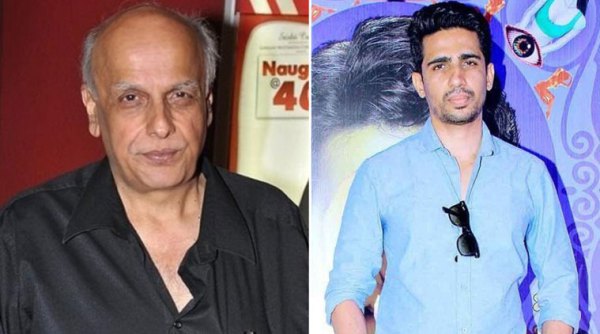
Gulshan Devaiah moves us to tears: Mahesh Bhatt

Mahesh Bhatt says that he was moved “to tears” as Gulshan Devaiah faced the camera.

Filmmaker Mahesh Bhatt was moved by Gulshan Devaiah's performance when the actor was shooting for Pooja Bhatt's upcoming film "Cabaret".
Filmmaker Mahesh Bhatt was moved by Gulshan Devaiah’s performance when the actor was shooting for Pooja Bhatt’s upcoming film “Cabaret”.

Filmmaker Mahesh Bhatt was moved by Gulshan Devaiah‘s performance when the actor was shooting for Pooja Bhatt’s upcoming film “Cabaret”.

Bhatt says that he was moved “to tears” as the actor faced the camera.

The 66-year-old shared a sneak peak of the shoot along with a photograph, in which Pooja is seen staring at the screen while Gulshan was seen enacting his character.

“CABARET: Day 2. Gulshan Devaiah faces the camera and moves us to tears,” Bhatt tweeted on Friday.

source: http://www.indianexpress.com / The Indian Express / Home> Entertainment> Bollywood / by Indo-Asian News Service, Mumbai / June 05th, 2015