Category Archives: Arts, Culture & Entertainment

The Couple Who Bought Barren Land In 1991 And Transformed It Into A 300 Acre Wildlife Sanctuary

Pamela and Anil Malhotra bought 55 acres of land 23 years ago, and today they have converted it into a beautiful forest of over 300 acres. Here’s how SAI Sanctuary, the only private wildlife sanctuary in India, came to host animals like Bengal Tiger, Sambhar and Asian Elephants.

Wouldn’t it be great to wake up to the sound of chirping birds, with fresh air and splendid scenery around? In the busy lives of our cities when even house sparrows are fast disappearing, this seems like a dream. But a couple has converted this dream into a reality by creating a wildlife sanctuary of their own.


The couple, passionate about wildlife and nature conservation, bought 55 acres of land to plant native trees and protect the environment. Today, they are responsible for creating over 300 acres of wild life sanctuary that hosts animals like Bengal Tigers, Asian Elephants, Hyena, Wild Boar, Leopards, Sambhar, etc.

Dr. A.K. Malhotra and Pamela Malhotra, the NRI duo behind this amazing SAI (Save Animals Initiative) Sanctuary Trust first went to the Himalayas, but as the laws in the Northern part of the country have a land ceiling of 12 acres, they came down South to give shape to their dreams of preservation and protection of nature and wildlife.

Anil and Pamela Malhotra are responsible for a beautiful wildlife sanctuary.

“The problem is, we expect the government to do everything. Like-minded people, NGOs and other agencies should purchase land and do their own bit to conserve the wildlife,” says Pamela.

They bought around 55 acres of unused and abandoned land from the farmers who were not using it due to excess of rainfall in Kodagu district of Karnataka. “We chose Kodagu because it is the micro hotspot of bio diversity in the entire planet,” Pamela says.

The passion to expand the green cover grew stronger and they kept buying lands from farmers who weren’t using them. This way the land was used and also farmers got money to repay their debts as the land was anyway lying idle. Gradually the 55 acre forest cover became larger and today covers 300 acres of the land.


There were a lot of native trees that already existed there. The couple decided to retain those and follow three important rules: no chopping down of any tree, no human interference and no poachers.

And with this thought, the efforts to make a wildlife sanctuary started in 1991.

The sanctuary also has a river flowing in the heart which meets the water needs of the animals.

After 23 years, their unmatched passion for wildlife and nature has helped them transform the 55 acres of barren land in 1991 into a one-of-its-kind wildlife sanctuary spread over 300 acres, probably the only private sanctuary in the country!

The sanctuary also has a beautiful river in the middle that is home to several aquatic species like fishes and snakes, including the King Cobra.

The huge trees and thick forest has also helped several birds like hornbill find their homes. There are over 305 species of birds that visit this sanctuary regularly.

The dense forest cover.

“We make sure that we don’t interfere with these animals. Elephants are very important for regeneration of the forests as they swallow the seed completely without breaking it, unlike other species. Around 30 species of trees totally depend upon elephants for regeneration,” says Pamela.

Several cameras are installed across the sanctuary to identify new animals and keep a track on poachers. “People think that animals need the forest. But the truth is, the forest needs the animals equally. While the forest helps animals in providing shelter and food, animals help forests in regeneration – they are both inter-dependent and we should make efforts to preserve both,” says Dr. Anil.

“A few days ago, I saw in the camera recording that a family of wild dogs and seven small puppies from that family were trying to attack a Sambhar just in front of my house gate. They were born a few days back and now had grown up. So, the fact that each puppy survived is commendable. That means the sanctuary is a good host to all these wild animals,” says Pamela.

When the Malhotra couple purchased the land, there were already native species of cardamom and other trees that were planted. They decided not to disturb those and planted more native trees around the existing ones.

As the green cover expanded, the animal and bird species increased too. The flora of this sanctuary includes hundreds of varieties of indigenous trees, many of which are of medicinal value.

“Our aim is to preserve the flora and fauna, especially the rainforests, for the future generation. We believe that when we die we should give back the same (if not better) Earth which we got from our ancestors to the next generation,” says Dr. Anil.

A family of elephants are frequent visitors of this sanctuary.

The duo makes sure that they do not interfere or disturb the existing eco-system. “Even the dead wood provides nutrition to the soil,” says Pamela.

The couple has grown 10-12 acres of coffee and around 15 acres of cardamom on the land. They are also involved in organic farming on the same land. The sanctuary, which offers a unique experience to the visitors, runs completely on solar and alternate energy. For days of heavy rainfall in the monsoon, the three small windmills meet the needs of providing enough electricity to the sanctuary.

“We also make sure that people who visit here are responsible tourists. We only take those people who are actually interested in exploring the beauty of nature. Smoking and drinking is not allowed as it disturbs the animals and the overall air which is so pure,” says Pamela.

When Malhotra couple started this sanctuary, they invested their own money. Now they are a registered not-for-profit trust which runs on donations which get tax exemptions.

Apart from funds, another challenge comes while patrolling the sanctuary. As the area is very large it is hard to keep track of the poachers. To counter this, they spread awareness about preserving wildlife and nature in schools and nearby villages.

The sanctuary also hosts animals like Hyena, Sambhar and Bengal Tigers.

“To avoid any mishap, we don’t allow people to walk alone here. There is always a guide or we accompany the visitors ourselves,” says Pamela.

The sanctuary also won the “Wildlife and Tourism Initiative Of The Year” award by Sanctuary Asia in conjunction with Tour Operators for Tigers in 2014.

In conclusion, Pamela has a thought she’d like to leave us with, “Overcome your fear and respect the animals’ power. The animal might not understand our words but they do understand our feelings.”

Pamela and Anil also advice people to be careful about the lifestyle they follow. Eating organic food, recycling things, using more energy-efficient devices are some of the basic things they advise everyone to follow.

“When I carried buckets of water in the Himalayas, I realized how precious it is. We should not waste it. It is only when we face problems we realize importance of things,” she says.

“For anyone who wants to bring a change, we advise them to set one single goal and believe that they can achieve it,” says the couple.

Watch the official trailer of a documentary on SAI Sanctuary being made by filmmaker Mellissa Lesh here:

This is an appeal that Pamela and Anil Malhotra have made to all wealthy Indians to save our forests, wildlife and fresh water sources. They are even willing to help anyone who is willing to try.

Want to know more about this sanctuary? Contact them at – saisanctuary@gmail.com

source: http://www.thebetterindia.com / The Better India / Home> Changemakers / by Shreya Pareek / February 23rd, 2015

Plantation Trails -Tata Coffee celebrates the ‘joy of womanhood’ this Women’s Day

This Women’s Day, Plantation Trails by Tata Coffee gives you the perfect reason to escape from the hassle of the monotonous life. Plan a much deserved holiday in the heritage bungalows of the Plantation Trails and treat yourself to the exquisite luxury.

Indulge in the delicious Kodava cuisine along with a cook and butler service. Dive into the tranquility of the coffee plantations and spend some quality time with yourself at theReading Zone. Get a glimpse into the Planter’s Lifestyle in the Bun to Cup Tour, Safari Jeep Drive along with the Bird Watching & Photography Tours.

For all the men, this could be that one opportunity to make the women in your life feel special. Gift the lady in your life a relaxing and a rejuvenating holiday with special offers handcrafted by Plantation Trails.

TataCoffeeKF04mar2015

Gautam Prakash, Head- Plantation Trails says “Women, these days, are independent and unbelievably successful in various fields of work while being superlative at guarding their families. This International Women’s day, Plantation Trails by Tata Coffee takes the opportunity to salute the women for who they are and what they do.”

source: http://www.bollywoodhelpline.com / Bollywood Helpline.com / Home> News & Gossip / by Siddharth Dhongle / Tuesday – March 03rd, 2015

When location is character

The lush green countryside of Coorg offered a great backdrop for the story.

Manu Warrier’s debut feature film is set in the plantations of Coorg and the story arc follows nature’s cycle culminating in the coffee blooming season

A love story set in the lush coffee plantations of Coorg, where love blooms when the coffee flowers bloom! And you have a Kodava protagonist in a Hindi movie! Co-written by Mumbaikar from Kerala, Manu Warrier, and Bengaluru man Sharath Parvathavani, Coffee Bloom is an indie that got inspired by the scenic plantation-swamped countryside in Coorg.

Speaking from Mumbai, Manu, who makes his directorial debut with the film said Coffee Bloomhe wanted the location to be an important part of the narrative. “My co-writer Sharath, with whom I have worked on a short film earlier in the U.S., is from Bengaluru and it dawned on us when we were working on the script that Coorg is just a night away from Bengaluru. Our story required a contained setting. We visited Elephant Corridor (a homestay in Siddapura where the film was eventually shot) owned by Viju and Nimmi Chengappa and they gave us a very detailed account of life on coffee plantations and about the phenomenon of the coffee blooms. We realised this could be a key factor in our story and we reworked the script around it, and adapted the story to Coorg, so that it doesn’t feel gimmicky — it’s not like the hero suddenly landed in Switzerland!”

Manu admits that till he visited the Chengappas, his knowledge of Coorg was limited to the photographs he had seen. “The first thing that occurred to me was that it’s splendid; it’s a visual delight for a photographer or cinematographer — it takes you in.”

Manu, a scriptwriter, says he’s averse to showing violence and frustration on screen. “I’m driven to work on plot-oriented subjects.” And so the story traces the life of Dev Anand, a self proclaimed wise man who finds comfort in being a loser, having given up on life as a result of a love gone wrong. A life-changing event takes him on a journey to a coffee plantation in Coorg, where he meets Anika, his long-lost love, and currently his boss. Love blooms in an idyllic setting; and much is at stake as the yearly bloom is round the corner.

Manu admits that he was lucky, when he started out wanting to make this indie, he was introduce to Bollywood producer Harish Amin by filmmaker Leena Yadav, who loved the story and decided to scale it up. He also brought on board Bollywood actor Arjun Mathur who has earlier starred in Luck by Chance, My Name is Khan, and Fireflies and Sugandha Ram who was a part of Jaane Tu Ya Jaana Na and My Name is Khan. The film also stars Mohan Kapoor and Ishavari Bose-Bhattacharya. Manu started writing the film in 2011 and shot it in February 2013. “The climax of the film was dependent on nature. We had to chase the seasons to maintain continuity of the look.” The film cost Rs. 1.5 crore, he admits. In 2014, the film premiered at the MAMI Mumbai Film Festival. At the NFDC Film Bazaar, it was marked for ‘Market Recommendation’.

It was while he was studying for his MBA in the U.S.A. that Manu seriously started getting engrossed in the world of cinema. “All the while I wanted to make films, but your middle-class upbringing doesn’t allow that career. But once I was in the U.S. I had this huge access to film libraries. I started reading, and started DIY filmmaking.” Even when he worked at motels or sold sandwiches, a TV showing films was a constant presence, he laughs. He worked in HR recruitment for a while and then decided to come home. When he moved back to Mumbai, he says he was naïve enough to believe that he would write scripts and films would be made off them. “But reality doesn’t work like that. So I started pitching myself as a scriptwriter, and as someone who would develop people’s content for them.” Things started opening up, but projects were also frustratingly shelved midway.

Manu says he had been going back and forth with Bollywood filmmaker Anurag Kashyap to collaborate on a script when another great opening came his way — “Anurag Kashyap suddenly called me late one night and said there is a writing project. He didn’t tell me any more details or who it involved. I think it was about being in the right place at the right time.” Manu landed a writing job, having being given the task to write the screenplay for four episodes of Yudh, the TV series starring Amitabh Bachchan, that Kashyap had created. “There was no pressure on me as such because I came into the scene where the storyline has already been mapped out, and Amitabh Bachchan’s character graph was also mapped out. But I was excited, and on a high.”

Talking of the kind of opportunities available now, and the possibilities of the indie film in Hindi cinema, Manu says there are people who make films on controversial subjects to get attention, there are others putting up their film online, unbothered by the industry. “But whatever you do, struggle is a part of the picture. I was a rank outsider. And it’s never easy. But after a point, you just want to be part of the picture, whether it’s rosy or not. But the indie scene is surely changing for the better — there are now benchmarks for a good indie and a bad indie,” says the 36-year-old filmmaker.

Coffee Bloom releases in India, U.S. and Toronto simultaneously on March 6. Bengaluru, Mumbai, Delhi, Jaipur and Kochi will be the India releases.

source: http://www.thehindu.com / The Hindu / Home> Features> MetroPlus / by Bhumika K. / March 02nd, 2015

Amend Constitution to protect regional languages: Manu Baligar

The Supreme Court’s verdict that the State can’t impose medium of instruction has had an impact on regional languages.

The only alternative before the State government is to exert pressure on the Centre and bring in an amendment to the Constitution, said writer and Kannada and Culture department retired commissioner Manu Baligar.

Speaking after inaugurating Somwarpet taluk Kannada literary meet here on Sunday, he said that elected representatives and officials should bring in an amendment to the Constitution to protect regional languages.

“We need to empower Kannada language. The Kannada software needs to be further developed. The State government should implement the recommendations of the committee headed by Chidananda Gowda. Kannadigas are not only those who speak Kannada as their mother tongue but also those who have respect for Kannada land, water and language,” he said.

In his presidential address, Bacharaniyanda P Appanna said the State government should initiate measures to provide 50 per cent reservation in government jobs for all those who have studied in Kannada medium up to 10th standard.

“Today, we have Kannada medium schools in villages with all basic facilities. However, the schools have failed to attract students. People are obsessed with English language. This fascination has reached such limits that Kannada medium schools are closing down. Kannada Sahitya Parishat should conduct various competitions to promote Kannada. Kannada books library should be opened in all gram panchayat offices,” he added.

He remembered the contributions of John Michael, William Reev, Herman Mogling, and Rev Kittel to the development of Kannada language.

Kannada schools were opened in Kodagu in 1837. The rich people in Kodagu were fascinated towards English. However, it was teachers and experts from Mangaluru and Mysuru who contributed to the growth of Kannada in Kodagu, he added.
DH News Service

source: http://www.deccanherald.com / Deccan Herald / Home> District / by Nelyahudikeri (Somwarpet Taluk) / DHNS – March 01st, 2015

After a Storm Comes a Coffee

CappucinoKF28feb2015

Chennai :

Complimenting what World Barista Champion Fritz Storm stands for, his hotel room almost seems perfumed with coffee. On the bed, while the rest of the suitcase sits unpacked, a giant packet of coffee powder sits neatly opened. “This coffee powder is from Guatemala, and freshly roasted. I wanted to de-gas it a bit before I can use it,” says the coffee expert and barista trainer, who was in the city for the launch of the new Magnum Ice Cream flavour that blends coffee with chocolate. Fritz, along with pastry chef Janice Wong, demonstrated creative ways of pairing the two ingredients for desserts and drinks, as part of the launch on Tuesday evening.

“I chose the coffee from Guatemala for the demo because it has a lot of chocolate flavour in it during the finish, besides the fruity taste. There is some acidity in the beginning, which leaves an interesting taste in the mouth,” says Fritz, who has travelled around the world, studying the coffee flavours of different countries. According to him, South African coffee tastes fruity and sweet, and in Brazil, which is the largest producer of coffee, the drink though doesn’t taste very special, has a wonderful base.

What about the local filter coffee? “I haven’t had the time to try it in Chennai, but I tried filter coffee from a street side shop in Hyderabad, and I found it nice. But it was extremely sweet, sweeter than ice cream,” he says with a laugh. “However, I don’t think there is anything like the best coffee in the world. It is a combination of the beverage — how it tastes and how it looks — and how the barista is serving it. He or she needs to have the personality, and say the right things while serving the drink,” he adds.

It’s likely those are the exact points that earned him the title of World Barista Champion in 2002. “It was all coincidence. I am an accountant by profession and I didn’t even drink coffee till my 20s. I guess as a young guy I just wanted to do something fun, so I started as a bartender. That’s when I drank Cappuccino for the first time in 1994,” recalls Fritz, who, today, cannot start his morning without a Cappuccino, or carry on with the rest of the day without his share of Expressos. “In a few years, I started hearing about various competitions of making coffee. In the first World Barista Championship held in 2000, my colleague competed, I tried in 2002 and won,” he adds with a smile.

Ever since then, Fritz has been training baristas for the Championship, and experimenting with coffee as an ingredient. He tells us about his invention — Almond Cappuccino, reminiscent of the lazy mornings he spent back home in Denmark dipping almond biscottis in coffee. “I thought, why not make a new flavour with it? So we soaked the biscuits for six to 12 hours and then made a Cappuccino,” says Fritz. Recently, he, along with Janice, made what they named Mocha Margarita. “We added chocolate, cinnamon, expresso, milk and caramel sauce with mocha to create something unique. And since we found only a Margarita glass to pour it, we named it Mocha Margarita!” he shares, with evident enthusiasm.

According to him, though the coffee industry is much older than wine industry, it is only now that we are slowly beginning to understand coffee. “People can differentiate the taste of different wines, and they know the basics, like white wine does not go with fish and so on. But it is only now that people are able to recognise the flavours of different coffees. Soon, they should be able to make a preference, in the sense of what brewing they like to have with a dessert, what would suit an ice cream, chocolate or cake. We haven’t reached there yet, but we are catching up really fast,” he says.

source: http://www.newindianexpress.com / The New Indian Express / Home> Cities> Chennai / by Naveena Vijayan / February 26th, 2015

Noida-based barista brews his way to history

Naman Kohli claiming the National Barista Championship in Bengaluru on Friday.

A lot can happen over coffee and a 22-year-old Noida-based barista proved this as he brewed history on Friday. Cafe Coffee Day, Noida’s barista Naman Kohli became the youngest winner in the two-year history of the National Barista Championship, the finals of which were held here on Friday.

Naman’s signature brew ‘Pixel’, named after his pet dog, proved to be a gustatory delight, not only for the judges, but also veteran barista and World Barista Championship winner Vikram Khurana, who said, “The Pixel brew was nothing short of the magical brews of Rome and Milan, and could very well win the World Championship.”

Naman’s joys were compounded when Anil Kumar, Vice-Chairman, Coffee Board of India, announced that for the first time, the winner would be sent abroad to represent the country in the World Barista Championship. “I finally need to get a passport made,” said an ecstatic Naman.

The national championship commenced with the first round being held in New Delhi and Bengaluru, in which 12 of more than 55 baristas from the north and south regions were shortlisted to go neck-to-neck in the final round in the city. Each barista was given 15 minutes to brew four espressos, four cappuccinos and four signature brews of their choice.

source: http://www.thehindu.com / The Hindu / Home> News> Cities> Bengaluru / by Staff Reporter / Bengaluru – February 28th, 2015

Arjun Mathur mixing coffee with romance

ArjunMathurKF27feb2015

Mumbai:

A cup of coffee holds a lot of promise they say, but for Arjun Mathur, Coorg’s coffee plantations seem to be the key. The actor who was last seen in FIREFLIES AND ANKUR ARORA MURDER CASE, will finally be getting his chance to romance.

The actor who has left an impact with films like MY NAME IS KHAN, LUCK BY CHANCE, I AM AND BARAH AANA will be now venturing into the genre that all hindi heroes are meant to specialize in, romance!

The film is aptly titled COFFEE BLOOM, and will talk about romance blooming around the coffee plantations of Coorg, where the protagonist of the film, Mathur, has his past, present and future coming together in a romantic mesh. It sure looks like a cup of coffee that everyone would like to sip!

source: http://www.bollywooddhamaka.in / Bollywood Dhamaka.in / Home> Bollywood Dhamaka / by Abhi Kapoor / February 26th, 2015

Saxophonist Rudresh Mahanthappa pays homage to Charlie Parker his way

Rudresh Mahanthappa / Jimmy Katz

Like so many of today’s most interesting jazz musicians, the saxophonist Rudresh Mahanthappa regularly creates disparate contexts, hybrids, and concepts to develop new music. The son of Indian immigrants, he’s explored the music of the subcontinent in multiple environments: some have been explicit, such as the remarkable 2008 album Kinsmen (Pi), where he collaborated with the Indian classical-music saxophonist Kadri Gopalnath; others have been more subtle and integrated, such as the 2006 duets collection Raw Materials (Savoy) he made with pianist and fellow Indian-American Vijay Iyer. On other records he’s developed his compositions around cryptology and number theory (Codebook [Pi]), while yet another celebrated one of his mentors and musical heroes—the saxophonist Bunky Green.

His latest album is an homage to another key influence—Charlie Parker—but it’s also a rigorous compositional exercise wherein Mahanthappa isolates specific DNA from some of Bird’s most important compositions and solos to create new tunes that are, in most cases, utterly unrecognizable. Bird Calls (Act) is clever and consistently entertaining—it’s fun to tease out his conceptual acrobatics. His piece “Maybe Later” retains the rhythmic patterns of Parker’s definitive solo on “Now’s the Time” but totally changes the notes, while “Both Hands” rejiggers the melody line of Bird’s “Dexterity” by removing all of its rests, which transforms the tune into a breakneck tangle. Jazz has a long tradition of musicians writing new tunes based on the chord changes of standards, and Mahanthappa indulges in this practice only once: the lovely ballad “Sure Why Not?,” which is derived from both “Confirmation” and “Barbados,” songs that moved at much swifter tempos. The most explicit Parker quote comes on “Talin is Thinking,” which nabs a seven-note phrase from the melody of “Parker’s Mood.”

In his liner notes Mahanthappa explains his desire to pay tribute to Parker with predictable readings of his repertoire. “Imitating Parker is of no consequence to forwarding this form, but developing new perspectives upon tradition is the substance of contemporary expression,” he writes. Instead, the Mahanthappa demonstrates the lessons of the bebop patriarch through a transformation of ideas into something modern.

Ultimately, however, Mahanthappa’s exercises probably benefit him and his excellent bandmates more than the average listener, because Bird Calls stands easily on its own, without any knowledge of its conceptual underpinnings. He’s joined by his longtime bassist François Moutin, the pianist Matt Mitchell (a valuable collaborator of Tim Berne’s and Dave Douglas’s), drummer Rudy Royston (Bill Frisell, Dave Douglas), and the dazzling 20-year-old trumpeter Adam O’Farrill (son of pianist Arturo O’Farrill), and they engage fully with the compositions by matching the leader’s fire at every turn. Both on a series of five short pieces (“Bird Calls”) and the brainy reinventions, the band seizes on the opportunities offered by Mahanthappa’s flinty, jagged, multivalent writing. “Bird Calls #5,” for example, is a beautifully lyric, wandering solo from Mitchell, while “Bird Calls #3” is a fiercely slaloming alto solo by the leader.

Below you can hear the track “Chillin'”—a piece based on “Relaxin’ at Camarillo”—where fragments of the original are woven into the new piece (with a request from the composer to intersperse ideas from the Parker tune into individual improvisations as well).

Saxophonist Rudresh Mahanthappa pays homage to Charlie Parker his way

source:http://www.chicagoreader.com / The Chicago Reader – The Bleeder / Home> – Music – Post No Bills / by Peter Margasak / February 13th, 2015

Sonia congratulates Advani on 50th wedding anniversary

New Delhi :

Sonia Gandhi today congratulated L K Advani on his 50th wedding anniversary, saying it was also a “special day” for her as it was on this day 47 years ago that she got married to Rajiv Gandhi.

“On the auspicious occasion of your 50th wedding anniversary, I send my warm felicitations to you and Mrs Kamala Advani. Over half-a-century you have enjoyed a close companionship, giving strength and support to each other through all life’s ups and downs and that is indeed a great blessing!” Gandhi said in a letter to the BJP veteran.

NEW-LOOK ADVANIS: Senior BJP leader L.K. Advani and wife Kamala Advani in traditional Kodava attire in Kodagu (File Photo) / The Hindu

The Congress President wished the two “many more years together” in good health and happiness.

“February 25 is also a special day for me — the day Rajiv and I got married, and this year would have been our 47th wedding anniversary,” she said.

source: http://www.thehindu.com / The Hindu / Home> News> Politics / PTI / New Delhi – February 25th, 2015

Calendar boys – Here come the pin-up boys!

The last bastion of the all-female club is broken as photographer Sharvee Chaturvedi zooms her lens on Bollywood’s first all-male pin-up calendar! She’s got the girlie eyeballs rolling.

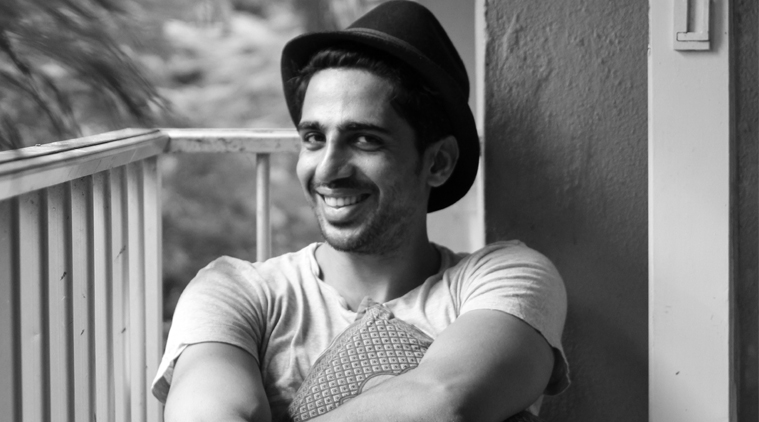
Varun Sharma (L), Gulshan Deviah

Photographer Chaturvedi’s lens has captured actors playing out different in front of a still camera for the sea dot. The lenswoman brings to life actor Varun Sharma’s inner child by keeping alive his playfulness whereas a topless Jitin Gulati tries to spot Arjuna’s eye. Actor Gulshan Deviah practises patience and waits in anticipation lying in a two-piece suit as television host Shiv Pandit balances his inner and outer voice. Twelve men, 12 months and 12 inner challenges that’s part of an actor’s life – that’s what Chaturvedi camera captures.

NAKED EMOTIONS

The visual stories frame a particular human emotion that’s part and parcel of a man’s struggle in La la Land. Says Chaturvedi,”The idea was to create stories involving human emotions and spirituality. Men, too, have their demons to deal with, and the sad part is that they do not talk about issues bothering them or bogging them down. At the end of the day, we all want to be accepted. I wanted to see men beyond the prism of gender and capture their self strength.”

The idea of masculinity may have not changed all that much despite the giant strides in the last few decades, but looking at these actors playing out their inner desires, anxieties, sadness and demons, you get to see a side to them that’s not been exposed to the world before. These men are far more comfortable in their own skin. They may not be naked or in a swimsuit on the beach, but you cannot miss the naked emotions running through their faces and body language. Adds Chaturvedi, “The men I shot with didn’t for once focus or talk about a woman shooting them. The focus was on creating something worthwhile.” The idea was to break a barrier as a photographer, which women directors, writers, cinematographers have been doing over the past few years.

It’s been a while since the glamour industry woke up to the potential of a man’s body. What’s a movie today without the chatter and gossip of a superstar’s abs? The trials and tribulations of the mind in the glittery and ephemeral nature of B-town have for long been ignored, or not talked about enough. Chaturvedi’s calendar has now made them a talking point.

MALE PIN-UPS ACROSS THE WORLD

There’s a rise in male pin-up calendars all over the world.

Celebrity photographer Mike Ruiz shot his 2015 calendar – ‘Hunks and Hounds’, featuring topless men with their dogs. To entice women to buy the calendar, he also disclosed the men in the calendar were all single! Last year, English TV presenter Mark Wright went shirtless to show off his impressive physique as he posed for a calendar in his underwear.

source: http://www.timesofindia.indiatimes.com / The Times of India / Home / by Nona Walia, TNN / February 15th, 2015