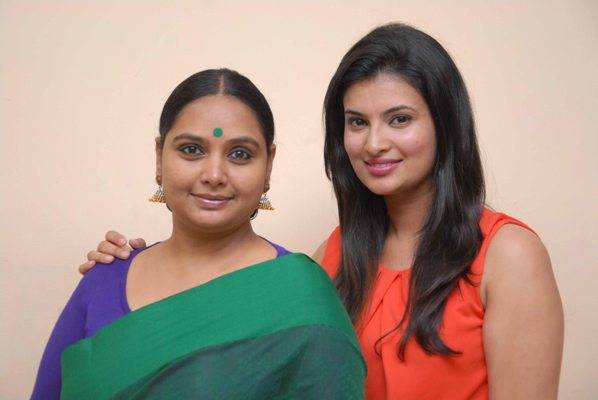
After three Kodava celebrities — Shwetha Chengappa, Deepika Kamaiah and Harshika Poonacha — participated in the just concluded TV Reality Show Bigg Boss Kannada Season-2, here is another Kodavathi from Mysore — Cheeyakapoovanda Ravika Somaiah — taking part in another Reality Show on the television, Pyate Hudigiru Halli Lifeu – Season 3, which got off to a grand start on Oct. 6, after the grand finale of Bigg Boss.
She is one among the 10 contestants participating in Pyate Hudigiru Halli Lifeu, a happening reality show on Suvarna Channel everyday at 8 pm.
Ravika Somaiah has been a top model for Needle Works under Jayanthi Ballal for the last two years.
source: http://www.starofmysore.com / Star of Mysore / Home> General News / October 08th, 2014
In literature that delves into social miseries, there is a common feeling that those who have words don’t have the stories, and those who have stories don’t have the words. If you’re living on the pavement with your family, you probably don’t have the means to record the experience for posterity. On the other hand, if you sit at a desk of your own and compose literature, you don’t have access to the miseries you want to write about.
To reconcile that problem, writers set up a peculiar kind of narrator, the person steeped in the rough life who somehow has the vocabulary and wider perspective to tell the stories. It is the kind of construct we find in old fiction, like Nelly Dean from Wuthering Heights or the flamboyantly criminal Moll Flanders. Nowadays, it seems an unnecessarily elaborate way to get to the stories. Readers are primed to accept them without that explanatory frame.
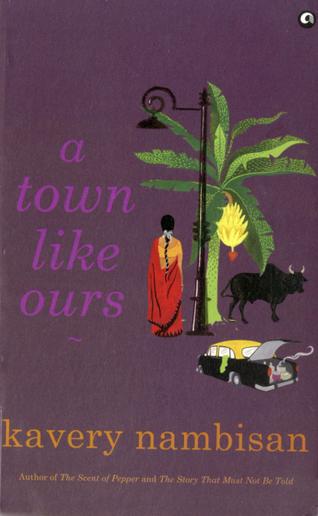
In Kavery Nambisan’s A Town Like Ours, the peculiar narrator is Rajakumari, a retired prostitute who lives in a dark room somewhere in the temple of the village goddess. She knows everyone’s back story and is not ashamed to tell it all. In her early years, she was enterprising enough to trade sex for lessons in maths, language, anatomy and other subjects. With education comes some preachiness, but we are Indians and that’s how we spin a fiction. Rajakumari has plenty to say about the chief industry of the town, the way it has poisoned the wells, contaminated the soil and whitened the children’s hair. She opines on religion and knee joints. But mostly she studies human nature. Old acquaintances come to visit, women come to confide their sorrows, and young boys help her walk to the sanctum of the goddess. Through her tiny window, she reads the faces and gestures she sees on the basis of the many souls she has entertained in her working life, and she puts it all together.
At the centre of her stories is the family that lives out of an Ambassador taxi. Father drives it during the day, mother runs a tea-and-bajji stall out of the trunk after she comes home from her housecleaning jobs, the sister and brother go to school and spend the rest of their time on the streets. But there are in fact no brothers, sisters or fathers in the case. Saroja and Sampathu, each escaping a frightening past, have simply joined forces and are bringing up two children together. In spite of strong affections, the family is a fragile composite that holds together for some time and then fragments again. One child goes missing and then the other, and suddenly Sampathu is not to be seen.
Elsewhere in the town, Manohar and Kripa separate after a fight and come together again. This couple become enmeshed with Saroja and help to look for her family. Nambisan is spot on in drawing Saroja’s situation as the woman left behind. She cannot tell her neighbours she doesn’t know where the other three are. Every day she parries questions about when her husband is “coming back from the village”. She must keep up appearances, or she will be judged and found wanting.
Up to that point Nambisan’s novel is leisurely. We move back and forth through memories and conversations to find out what kind of person each character is. But the suddenly precipitous pace near the end throws us, as each member of the family comes wandering back and misunderstandings flower among them. The whore in the temple says a prayer for herself, and leaves us with unfinished stories.
source: http://www.thehindu.com / The Hindu / Home> Books> Literary Review / by Latha Anantharaman / October 04th, 2014
The High Court has refused to allow public access to the Kadanga, an ancient war trench, which is part of a private property.
A petition was filed by Iynanda K Chinnappa of Yadoor village in Kodagu district claiming exclusive right over the trench, located adjacent to the land he owns.
It is said one Balachanda Thammaiah, a villager, had appealed against Chinnappa and his sons for obstructing free passage through the trench. Thammaiah claimed that the trench belonged to the government due to its ancient origin.
The revenue officials and the Assistant Commissioner dismissed Thammaiah’s application stating that the trench is now private property. The district court, however, ordered for removal of the obstacles. Challenging the said order, Chinnappa moved the High Court.
Hearing the appeal, Justice Anand Byrareddy said the Kadanga is not public property and that over time, it has merged with the land of the petitioners and been in the exclusive possession of the petitioners for more than 50 years.
He also observed that under the Coorg Land Revenue Regulations, the Karnataka Revenue Survey Manual and the Mysore Land Revenue Code, do not define Kadanga in proper terms. Since there is no practical use of these trenches today, the government has not thought it fit to exercise any exclusive right over it, said the judge. The High Court set aside the order of the district court and said the Kadanga was not meant for public use.
source: http://www.newindianexpress.com / The New Indian Express / Home> Cities> Bangalore / by Express News Service / October 05th, 2014
With the arrival of Dashamantapas and Karagas of four temples to Banni Mantapa in the wee hours of Sunday, curtains were down for the vibrant Madikeri Dasara.
Thousands of people viewed Dashamantapa procession which passed through the main streets of Madikeri on Saturday night and culminated on Sunday morning. Ten tableauxs of Pete Sriram Mandira, Kundurumotte Sri Chowtti Mariyamma, Dandina Mariyamma, Kote Mariyamma, Kanchi Kamakshi, Kote Ganapathi, Chowdeshwari, Kodandarama Temple, Dechur Rama Mandir and Karavale Bhagavathi Temple were taken in a majestic procession.
Main temples, government offices, private buildings, main streets of the city were lit with colourful lights. The procession of Dashamantapas started after 11 pm. Each temple tableaux depicted different story based on mythology. Kote Mariyamma temple Mantapa won the first place in the contest, followed by Chowdeshwari temple (II) and Kodanda Ram temple (III).
Valedictory
Madikeri Dasara is organised in an equivalent manner to that of Mysore Dasara. It has been organised with more grandeur by every passing year, said Home Minister and Kodagu District-in-Charge Minister K J George.
source: http://www.deccanherald.com / Deccan Herald / Home> District / DHNS – Madikeri, October 05th, 2014
He was speaking at the valedictory of Dasara cultural programme at Gandhi Maidan on Saturday. “Madikeri Dasara is not just limited to Kodagu district, but also it has been drawing people from neighbouring districts and states. It is a challenging job for the district administration and the police to controlling a large gathering in Madikeri during procession. Yet, all have done a commendable job, he said.
MLA Appachu Ranjan congratulated the State government for granting Rs one crore for the purpose.
source: http://www.deccanherald.com / Deccan Herald / Home> District / DHNS – Madikeri, October 05th, 2014
The procession of Dashamantapas marked the conclusion of Madikeri Dasara celebrations on Saturday.
Thousands, including a large number of tourists from outside the district, lined up on either side of the main roads in Madikeri where the tableaux passed through— to get a glimpse of the Madikeri Dasara procession. The city was decked up with lightings.
As per the tradition, the procession was led by Pete Srirama Mandira mantapa. The tableaux on the theme of Mahishasura Mardhini attracted the spectators. The sound and light special effect was centre of attraction. After offering pooja at the temple, the Mantapa passed through College Road, Chowki, private bus stand, Town Hall to reach Gandhi Maidan.
Kundurumotte Sri Chowtti Mariyamma, Dandina Mariyamma, Kote Mariyamma, Kanchi Kamakshi, Kote Ganapathi, Chowdeshwari, Kodandarama Temple, Dechur Rama Mandir and Karavale Bhagavathi Temple tableaux also passed through streets of Madikeri. The procession that started on Saturday night went on till wee hours of Sunday.
A large number of people from outside the district had arrived Madikeri on Friday itself. All the hotels, home stays and resorts were full in Madikeri. After visiting tourist spots in Madikeri on Saturday morning, they arrived the city in the evening. Gandhi Maidan had turned into a mini bazar with eateries, stalls selling clothes. The stalls made brisk business during the night.
Traffic jam
The police had banned the entry of vehicles inside Madikeri town to check traffic congestion. The movement of vehicles on the streets where Dasha Mantapas passed through were banned. It had caused inconvenience to the vehicle users. The police had arranged parking of vehicles at APMC and Dairy.
Parking of vehicles in a haphazard manner caused inconvenience. To prevent the entry of additional vehicles inside the city, more than 100 buses from Mysore and other districts had to park their vehicles in Kushalnagar. The passengers from Kushalnagar were ferried to Madikeri in special buses. DH News Service
source: http://www.deccanherald.com / Deccan Herald / Home> District / Madikeri – DHNS, October 05th, 2014
The district police have banned the entry of vehicles to Madikeri and Abbi Falls from Saturday 2 pm to regulate traffic in view of the Dasara procession.
“Dashamantapa” procession (a procession of the mantapas made by 10 major temples of Madikeri) is a major attraction of the Dasara festivities in Kodagu.
People who witness Jamboo Savari at Mysore travel to Madikeri to take part in the procession leading to traffic congestion. “The entry of vehicles and visitors to Abbi Falls and Golf course has been prohibited after 2 pm on Saturday.
One-way rule has been imposed on several roads in the town. The restrictions will be in place till 10 am on October 5 (Sunday),” Deputy Superintendent of Police Prasanna V Raju said. Security has been beefed up by setting up a checkpost at the town entrance, he added.
source: http://www.deccanherald.com / Deccan Herald / Home> State / DHNS – Madikeri, October 02nd, 2014
Director Santosh Kondanker’s upcoming trilingual, Home Stay, which stars Shruthi, Ravi Kaale, Sayali Bhagat and Shirin is inspired by the mushrooming of homestays in holiday spots like Coorg. The film will be made in Kannada, Tamil and Hindi and will mark the debut of Shruthi in Bollywood.
Sayali will be playing the female lead in the Kannada and Hindi version, while Shirin will play the lead in the Tamil version of the film. Shruthi, who will feature in all three languages, is reportedly excited as her role has two very different shades — her character is a simple homestay owner who traumatizes the very guests she has been hospitable to earlier in the day.
Shruthi debuted as a supporting actress and acted in the Shivarajkumar-starrer Aasegobba Meesegobba. Her first film as a lead actress was the 1990 film Shruti. The movie was a hit and she hasn’t looked back since.
source: http://www.timesofindia.indiatimes.com / The Times of India / Home> Entertainment> Kannada> Movies / by Dhwani Desai, TNN / February 05th, 2014
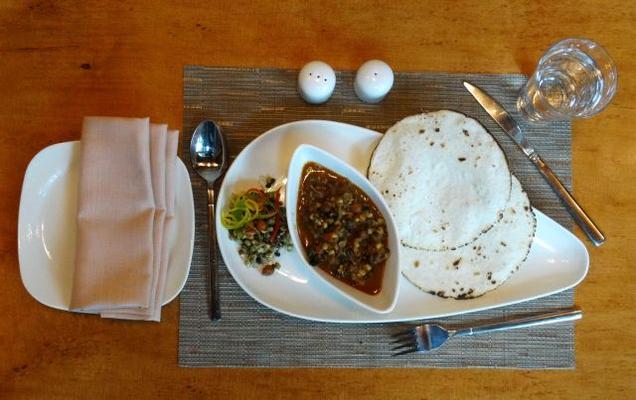
Regional favourites: Akki ooti and molai kuru./ Photo: V. Ganesan / The Hindu
At the Kodava food festival, Susanna Myrtle Lazarus learns that there’s more to the cuisine than pork
“Pandi (pork) curry does not define Coorg cuisine even though it is what we’re most famous for,” says Smitha Kuttayya, a native of Coorg. The statement is a little hard to believe, but the spread at Clubhouse, the all-day diner at Taj Club House, makes it clear that she isn’t far off the mark.
A collection of signature Kodava recipes curated by Chef Naresh from Vivanta by Taj – Madikeri, includes koli chuttadh (chicken marinated with spices and griddled), kummu (mushroom)soup, toppu palaya (traditional curry with fresh double beans) and akki (rice) payasam among other regional favourites. Being from the region, Smitha has partnered with the hotel to consult on the food and interact with diners about Kodava cuisine.
Smitha says that the food is influenced heavily by Kerala cuisine: “We also use a lot of coconut and rice in our food. It’s basically a farmers’ mentality to use everything we grow in the food we eat. And so we have varying degrees of rice – the fine, broken grains that are found after the dehulling process is used to make dumplings called kadumbuttu, the medium-sized grains are used to make paputtu.”
Kodava cuisine is also very seasonal, says Smitha, who has draped her sari in the very elegant Coorgi way. “During Aadi — we call it kakada — the rains are the heaviest. There is a particular plant that is normally considered a weed; it grows all over the place throughout the year. The 18th day of this heavy rain is the only day when that plant has a particular taste and it is gathered and made into dark, almost blackish syrup called madhu thoppu,” she says. This plant is believed to have 18 medicinal properties and is incorporated into payasams or puttus.
As we speak, steaming hot attukal soup (peppered lamb shank) is brought to the table along with kadumbuttu seasoned with spices. Smitha says that the kadumbuttu should be had with ellu kanji, which is a sort of chutney made with roasted sesame seeds. The steamed dumplings are addictive. “No Kodava wedding will take place without this dish being served. The women of the house sit together the day before the wedding and roll out the balls to be steamed. If they’re not of the right consistency, they will become a congealed mass of boiled and steamed rice,” she says, adding that they are served plain at weddings.
Going beyond pork curries, Kodava cuisine uses vegetables and fruits like pumpkin and raw banana. The kari bale cutlets are roasted raw banana patties that are crisp on the outside and soft inside. Mushrooms are plentiful and each distinctive kind is used in different ways; the small ones are usually pickled or made into a curry, and each type is cooked separately. Smitha also talks about a certain type of grapefruit called kaipuli which can’t be found anywhere else. Apparently it is not sour as the name suggests, but can be made into jam, marmalade, juice and it can be burnt to make chutney as well.
For the main course, Tarkari pulao (bright yellow rice with vegetables) and akki ooti (rice roti) are served with koli curry that has a distinct, yet not unpleasant, taste of coconut oil and molai kuru that is mixed sprouts curry.
The picturesque hill district is known for its spice plantations and according to Chef Naresh, it is this that gives the Kodava cuisine its distinct flavour. “I used a special blend of spices — coriander seeds, cinnamon, and cloves — all from Coorg. These are used in all the dishes. Slow roasting for a long period of time gives the dishes like pandi curry their distinct colour — they are dark, but not burnt. The flavours come through more strongly without the spiciness,” he says.
Incorporating cardamom into caramel custard gives the soft dessert a lovely scent and the subtle flavour brings to mind the hills on which the spices were grown. The traditional akki payasam is not overly sweet but is a satisfying end to the meal.
The Kodava food festival is on at Club House in Taj Club House till September 28. A meal for two costs Rs. 2,000 upwards
Kadumbuttu
Ingredients
1 cup raw rice (washed and dried), 2 cups water, 2 tbsp butter, Salt to taste
Method
Lightly pulse the dried rice in a dry grinder or mixer. Put in very small quantities at a time so that the broken rice you get is small and even in size. The grains have to be powdered to “rava” size. In a thick bottomed vessel, boil the water with salt and a tsp of butter. Slowly add the broken rice, stirring all the time so that no lumps form. Close and allow to cook.
When still hot, take small portions and roll into balls. Your dumplings are now ready to go for steaming. Heat water in a double boiler. Line a vessel with a damp, white muslin cloth and put the dumplings in. Cover with the edges of the cloth and put in the double boiler and steam for about 15 minutes.
Serve with Pork curry, chutney or any side dish of your choice.
source: http://www.thehindu.com / The Hindu / Home> Features> MetroPlus> Food / by Susanna Myrtle Lazarus / September 25th, 2014
Domestic tourist arrivals may go up this festive season if the inquiries and bookings for touring Mysore and Kodagu are any indication.
Surprisingly, there have been bulk bookings from non-traditional markets. Travellers hailing from Telangana and Andhra Pradesh have planned their itinerary this Dasara, according to travel and tour operators. Like every Dasara, tourist arrivals from Tamil Nadu and Kerala are expected to be on the higher side.
“Generally, tourists from some parts of south India tour up north. But with the floods recently, tourists were perhaps looking for alternative tourist spots like Mysore. The inquiries and bookings have picked up,” explains B.S. Prashanth, president, Mysore Tour and Travel Operators’ Association. He told The Hindu that tourists were planning combined trips to Mysore and Kodagu. Home-stays in Kodagu were reaching full occupancy, he said. Tourists prefer Mysore and Kodagu packages as they get the best of holiday over there, Mr. Prashanth said. “We have confirmed bookings from foreign tourists, who had booked six months in advance,” he said.
Some tour operators in Mysore were promising to facilitate watching of the Jamboo Savari. “This way, the operators were attracting tourists,” a tour operator told The Hindu. Deputy Director of Tourism Husseni told The Hindu his department had been getting calls from inter-State travellers to know more about the festivities. “Besides explaining the events, we also guide them to visit websites to know more about the events,” he added.
The Karnataka State Tourism Development Corporation and the Karnataka State Road Transport Corporation will launch tour packages.
KSTDC Managing Director Harsha said tourists booking at the KSTDC’s properties in Mysore, KRS, Madikeri and Srirangapatna can avail themselves of packages. KSRTC Divisional Controller (Urban) Mahesh said the corporation was launching special package tours called ‘Darshini’, with packages like Giri Darshini, Jala Darshini, Deva Darshini, and Nagara Darshini. The tickets are available on the corporation’s website or at the reservation counter in the mofussil bus-stand here, he said.
source: http://www.thehindu.com / The Hindu / Home> National> Karnataka / by Shankar Bennur / Mysore – September 24th, 2014
WELCOME. If you like what you see "SUBSCRIBE via EMAIL" to receive FREE regular UPDATES.
Read More »