Category Archives: Arts, Culture & Entertainment

‘Shooting The Madras Song was a fantastic experience’

Yasmin at Kalakshetra / by Special Arrangement / The Hindu

Yasmin Ponnappa of Aaranya Kaandam fame talks about her experiences while filming the latest song of the city that has gone viral

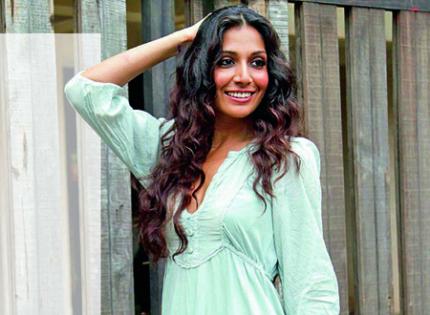
Her performance in the critically acclaimed Tamil film Aaranya Kaandam made people sit up and take notice. And now, model-actress Yasmin Ponnappa is back with The Madras Song, a four-and-a-half-minute video that chronicles the experiences of a young girl visiting Madras for the first time.

Yasmin / by Special Arrangement / The Hindu

The natural abandon with which she prances around the city’s streets have had youngsters gushing about her. Tell her that, and she says, “It was meant to be natural. When we started filming, we were particular that it should not be like an act, but capture spontaneity.”

She might be from Bangalore, but it is namma Madras that Yasmin loves. “I still can’t get myself to call it Chennai,” she smiles. “I prefer Madras. I have a lot of wonderful friends here, and the camaraderie among everyone in the city is just fantastic.”
TheMadrasSongKF02sept2014
That’s exactly what The Madras Song team wanted to portray in its latest video. “Whatever Vijay (director Vijay Prabhakaran) depicted in the storyboard was exactly expressed in the video. His brief to me before we started shoot was simple — enjoy Madras like you would. I did that. I guess it’s the natural celebration of the city that people like,” she says.

It’s not just the city’s sights and sounds that the song, sung by Nenjukule singer Shakthisree Gopalan, celebrates, but also some famous personalities. Celebrities such as Viswanathan Anand, Crazy Mohan and Sudha Ragunathan feature in the video. Ask Yasmin about it, and she says, “The selfie is a rage now and we wanted to capture that. Shooting selfies with Chennai’s celebrities was a fantastic experience. And, playing chess with Anand was something I’ll cherish for the rest of my life.”

Yasmin / by Special Arrangement / The Hindu

The actress loves the serenity and culturally charged atmosphere in Kalakshetra, one of her favourite places. “The place is so beautiful,” she says, “There are three kinds of prayers there, and just hearing them is so uplifting. Madras always celebrates its culture and Kalakshetra is proof of that.”

On the film front, she’s still waiting for an interesting project to come up. “There have been scripts, yes, but none as interesting as Aaranya Kaandam. I don’t believe in doing films just for the heck of it. I’m glad that after a powerful role in Aaranya Kaandam, The Madras Song has come up.”

source: http://www.thehindu.com / The Hindu / Home> Features> MetroPlus / by Srinivasa Ramanujam / August 21st, 2014

Seeking to preserve Kodagu’s ainmanes

AinmanesKODAGU31aug2014

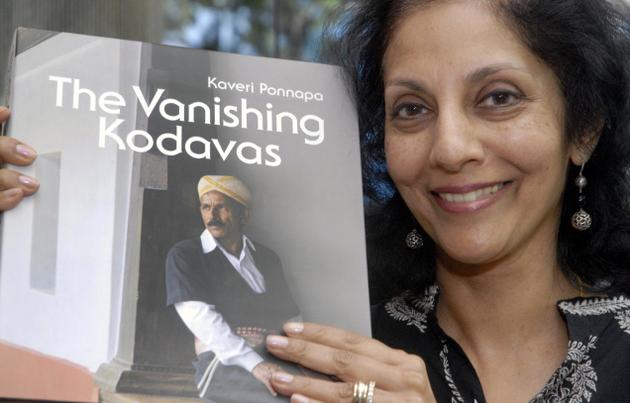
The much-awaited book on ‘Ainmanes of Kodagu’ (ancestral homes), authored by researcher-couple Boverianda Chinnappa and Nanjamma Chinnappa has hit the stands.

The book was written after extensive fieldwork in Kodagu district (Coorg) of Karnataka, to record for posterity the way of life that the culturally-rich ainmanes symbolise.

Speaking to The Hindu, P.T. Bopanna, journalist, who runs Kodagu’s first news portal www.coorgtourisminfo.com, said according to the researcher couple, the book is unique as it traces the origins and antiquity of the ancestral homes of all the native communities of Kodagu.

“It also describes the social and cultural significance of these ancestral homes, which are important elements of the rich heritage of the native communities of this area,” he said.

An ainmane has a verandah, with carved square wooden pillars tapering upwards and wooden seats between the pillars, ornately carved windows and door frames, and specific areas within the ainmane for the performance of rituals.

A ‘functional’ ainmane is where all the members of the okka (patrilineal clan) gather to celebrate important family rituals and ceremonies.

The book describes the ainmanes of the native communities in Kodagu (Coorg) and their socio-cultural significance.

Ainmanes are architectural symbols that bear testimony to the strength and vitality of the okkas of Kodagu.

According to the authors, the ainmanes that are still standing today account for only about 40 per cent of the original number that existed in Kodagu.

Many of them are dilapidated; others have been converted into simple homes. The Chinnappas expressed their apprehension that if this trend continues, these heritage buildings and the unique traditions, customs, festivals and rituals that are associated with them will probably vanish in the not too distant future. If they vanish, so will the heritage of the people, their way of life, they add.

The authors have said their aim is to raise awareness of the cultural significance of the ainmanes of Kodagu and encourage efforts to maintain and preserve these heritage buildings for generations to come.

The cover illustration for the book is by noted cartoonist, Nadikerianda Ponnappa.

The book has been published by Niyogi Books, Delhi. The work on the website www.ainmanes.com is in progress.

source: http://www.thehindu.com / The Hindu / Home> News> National> Karnataka / K. Jeevan Chinnappa / Bangalore – August 23rd, 2014

Kodagu Trees Are Source of Data for Researchers

Bangalore :

Three thousand trees in parts of Kodagu are helping forest ecology studies by providing experimental evidence for various research projects.

The trees are being studied to understand how they adapt to changes in rainfall, temperature and duration of the rainy season.

This data is part of a bigger project in which tree responses to changing climates are being measured to gauge how trees react to changing weather parameters.

The trees are on two 30-hectare sample plots set up by the Forest Department in collaboration with the French Institute of Pondicherry (FIP), in low-lying wet evergreen forests in Kadamakkal reserve forest.

“My colleagues and I have found that the amount of rainfall has decreased in the last 100 years and that is why there has been less growth of tree species,” said Dr B R Ramesh, faculty at French Institute of Pondicherry.

The researchers are measuring the girth of the trees using a stainless steel tape and a Vernier scale to record their growth patterns in different climatic conditions.

Their work also focuses on long-term ecological monitoring of forests, the use of new remote-sensing data and techniques to predict biomass and structure, modelling distribution of species and biodiversity and making databases with the available information.

“New research lines are also being developed that explore the effects of landscape change on ecosystem services and potential climate change impacts on forest vegetation,” Dr Ramesh added.

These experts have also explored the environmental and social impact of restitution of tree rights to coffee planters, the Western Ghats acting as a water sink and the loss of forest cover and the extent of biodiversity in the Ghats.

Dr Ramesh and his colleagues, Dr S Prasad and Dr Anupama K, have also developed an app called Biotik which can be used to identify 600 tree species in the Western Ghats.

source: http://www.newindianexpress.com / The New Indian Express / Home> States> Karnataka / by Papiya Bhattacharya / August 19th, 2014

New Chiefs Appointed to Academies

Bangalore :

The Department of Kannada and Culture has appointed heads and members to various academies.

M S Murthy (Bangalore) has been appointed the Chairman of Karnataka Lalithakala Academy, B A Mohammed Hanif (Dakshina Kannada) is the new chairman of Karnataka Beary Sahitya Academy while Kolkada Girish (Madikeri) has been appointed as the Chairman of Arebhashe Samskruthi Sahitya Academy and Biddatanda S Thammaiah has been appointed the Chairman of Kodava Sahitya Academy.

Members Named

For Karnataka Lalithakala Academy, B L Chauhan, Mahalingappa, Prabhu Urs, B K Badigera, Vishweshwari Tiwari, Devarishi, C Chikkanna, Krishna Devadiga, T H Shanmukappa, Khasim I Kansavi, Sharanappa B H, Wajid Sajid, Vedamurthy, Bargur Markandeya and C Rajashekar have been appointed the members.

source: http://www.newindianexpress.com / The New Indian Express / Home> States> Karnatkaka / by Express News Service / August 14th, 2014

Natural pampering

Coorg

The air smelled green. For someone from the city who is used to the smell of petrol fumes, garbage and fried food, inhaling this crisp, clean air was a real treat.

My drive on the winding roads of Coorg transported me to another world. I put my head out of the car to click away at the Kodava houses lining the roads, quaint churches and local shops. My photo sessions attracted some curious glances from local women. I had officially arrived for my weekend in the coffee district of Karnataka, and my stay at one of the most luxurious resorts in the region was about to begin. As the rains pelted the roof of my cottage at Tamara Coorg, a luxury resort situated in the picturesque confines of lush verdant coffee plantations, I opened my eyes to the breathtaking view, wishing I could wake up to this every day.

The mist kissed the foreheads of the silver oaks and the rosewoods, as I walked to the balcony with a hot mug of bella kapi. I sipped the aromatic yet comforting black coffee laced with cardamom and flavoured with jaggery, while listening to the symphony of cicadas and birdcalls. The fresh taste of coffee resurrected my soul and prepared me for the invigorating plantation walk that my hosts at the resort were kind enough to organise.

After being playfully warned about the leeches by the resort’s guide, I remained skeptical about the trek around the 170-acre Kabbinakad Estate, tucked inside the resort. “Don’t worry, madam, leeches will only suck out the bad blood, and you won’t even feel the pain. You know they are now being used for medical treatments in several parts of the world,” he said. Nevertheless, his scientific explanation failed to comfort me as I tied my shoe laces tight, determined not to have my blood sucked out. ‘Just enjoy the walk, and take in the natural beauty,’ I told myself.

Natural fortress

Built strategically around landscaped waterfalls and glistening streams, the resort is home to some rare species of flora and fauna. As we walked around the plantation, we had the electro-pop background score of gushing falls and cicadas follow us wherever we went. “Hey, but why can’t I smell the coffee?” I asked out of ignorance. “Well, you won’t smell coffee here. But you will see the beans in different stages of growth,” my well-informed guide explained. Arabica and Robusta, the two kinds of coffee plants, are grown at the estate, which is dotted with cardamom plants and pepper vines.

Handing me a bright green pod, the guide said, “Just bite into it and tell me what it is.” As I nibbled on the pod, suspiciously, waiting for some allergic reaction to pop out, a fragrant taste exploded my palate. “It’s cardamom, isn’t it?” I shouted excitedly. Finding my daily food ingredient in its freshest form left me hungry for more. By the end of the walk, I had savoured passion fruit right off a tree, watched in awe at the bitter lime tree pregnant with fresh fruits and beautiful wild mushrooms.

Bird-watchers too have something to look forward to at the resort, as one can find some rare avian species, including Malabar trogons, Nilgiri laughing-thrushes, great black woodpeckers, and Malabar whistling-thrushes (that are a part of the night-time orchestra). Apart from these, yellow-browed bulbuls, Pacific swallows, grasshopper warblers, orphean warblers and yellow-billed babblers can also be spotted.

Coffee kicks

After teasing the touch-me-nots, collecting some rudraksha berries and clicking away at the luscious red ginger flowers and pristine white coffee blossoms, it was time to call it a day. But the coffee lover in me was still to be satiated. And the best was yet to come. The resort definitely knows how to woo coffee addicts, and my experience at The Verandah at Tamara Coorg made me fall in love with the drink that half of the world kick-starts the day with. Right from handpicking the fresh beans, drying them, roasting them, sifting through them and grinding them, coffee-making is nothing short of an art form. And the experience of making my very own brew made me feel like an alchemist. And the secret to pure healthy brew is roasting and grinding your own beans.

A visit to Coorg will be incomplete without sampling the authentic Kodava cuisine that includes the famous pandi curry (pork curry) and koli barthad (chicken fried in spices). But for a vegetarian like me, it was best to tip-toe around the meaty dishes and stick to the green zone — lip-smacking mangye pajji (ripe mango curry), kadambuttus (rice dumplings), kumm curry (mushroom curry), akki rotis, banana fritters and sumptuous payasam.

Coorg is blessed with nature’s bounty. Apart from plantation tours, one can trek to the nearby Manje Motte view point, Pathi Pole Falls and Ballyaatre Ridge. For wildlife and history enthusiasts, this quaint hamlet has a lot to offer in the form of Pushpagiri Wildlife Sanctuary, Nagarhole National Park and Madikeri Fort. As the afternoon sun gave way to the golden light of dusk, dark clouds gradually invaded the sky. The rains pounded the earth with all their might, bringing to life every inch of the green surroundings. The perfect weather to cuddle up and read. Another day had come to an end in the land of the brave Kodava warriors, and I slept fitfully to the lullaby of noisy cicadas.

source: http://www.deccanherald.com / Deccan Herald / Home> Supplements> Sunday Herald travel / by Arundhati Pattabhiraman / August 17th, 2014

Verbattle junior- zonal selection kicks off in Mangalore; 22 teams shortlisted

Mangalore :

Around 60 teams participated in the Verbattle Junior Round at the zonal level selection of the Verbattle Junior as a part of Verbattle Debate Competition 2014 here on Friday out of which 22 teams have been shortlisted to go to the next level ‘Verbattle Junior-Skirmish’ which is to be held in Bangalore in the third week of August.

The participants belonged to the age group of 12-16 years studying in Std VIII to Std X. The 22 teams selected in the Mangalore zone included teams from Chikmagalur, Dakshina Kannada, Kodagu, Uttara Kannada, Udupi and Shimoga. The zonal level selection of Verbattle senior will take place on Saturday.

After a basic introduction to the rules and regulations of the Verbattle Junior round, Verbattle foundation Founder Deepak Thimaya announced the topics that were to be debated upon in the course of the event. Out of a list of 10 topic statements, some of the topics included – The current education system is not equipped to deal with intelligence, Politics has solutions to India’s problems and Schools are breeding grounds of negativity. The participant teams were given their final topics around 30 minutes before the debate session following which the teams underwent intense sessions of about an hour.

“Verbattle is a wonderful platform that improves one’s speaking skills. Initially I had problems in speaking fluently but participating in Verbattle Junior and reaching the semi-finals last year has given in me immense confidence in speaking and voicing out my opinions and hence I came back this year to participate and I am excited that our team got through to the next round and I’m also confident that our team will win,” said Suraj Kumar, one of the participants studying in Madhav Kripa High school.

The next round which is the Verbattle Junior -Skirmish will be held on August 19 in Bangalore. The semi-finals and finals for Verbattle Junior and Senior will be held on August 22, 2014. The final debates will be moderated by Deepak Thimaya and judged by some of the eminent personalities from the state.

source: http://www.timesofindia.indiatimes.com / The Times of India / Home> City> Mangalore / Stanley Pinto, TNN / August 01st, 2014

The glass ceiling in diplomacy

WOMEN OF THE WORLD: THE RISE OF THE FEMALE DIPLOMAT
Helen McCarthy
Bloomsbury, London, 2014
404 plus xii pages; Rs 595

This book’s core message is how the male-dominated world of British diplomacy gradually – and grudgingly – let professional women in. As an academic, the author scores on objectivity, but the reader may miss an intimacy of personal experience that an insider might have provided. The author’s reliance on documentary material, and absence of interviews with working diplomats, produces a disproportionate emphasis on history; the book is weak on the contemporary scene.

This 400-page tome is fluffed up with an extended introduction on the evolution of the world of British diplomats from the late 19th century onwards, in which women were notable for their absence. But useful nuggets are thrown up. Who might imagine that as far back as 1893, most of the candidates recruited into the Foreign Office passed through a “crammer” called Coombes to prepare for entrance tests? It was the shortage of men during World War I that brought women into clerical-level diplomatic work in London, but few rose to executive positions. When in 1933 the Foreign Office asked embassies if women could handle diplomatic and consular work, most ambassadors were aghast. It was the Soviet Union that in 1924 appointed the world’s first female ambassador, Alexandra Kollontai, to Norway. The United States appointed its first female head of mission to Denmark in 1933 (that was a “legation”, headed by a “minister plenipotentiary”; such junior embassies, withered away after World War II, or WWII).

Two chapters (the fifth and the sixth) are devoted to the proceedings of a 1934 committee that examined and recommended against the entry of women in the diplomatic service. It took WWII to bring about real change in British mindsets. At the nine-week conference at San Francisco, five female delegates were among the participants, from Canada, China (KMT), Dominica, Uruguay and the United States; the United Nations Charter bears the signatures of four women.

The main narrative is sketched through the archival material that the historian author has tracked down after rigorous search through official papers, personal diaries, and letters and other sources. This produces fascinating pen portraits of strong characters, such as the Soviet ambassador Kollontai, fluent in 11 languages, who served in Norway, Sweden and Mexico; Dame Edith Lyttelton, the United Kingdom’s delegate to the League of Nations who argued in vain for women’s entry to the diplomatic service; and Freya Stark, a Briton who became an Arab affairs specialist in the 1930s, exploring little-known corners of Syria and the Arab peninsula, and during WWII worked with much verve in Cairo, Baghdad and Tehran. The few women that found diplomatic assignments, such as Nancy Lambton in Tehran, had to appear in academic gowns on formal occasions, since a diplomatic uniform – de rigueur in those days – did not exist for women.

It was as late as 1942 that Mary McGeachy became the first woman to be given diplomatic status, at the United Kingdom Embassy in Washington, D C. While other civil services had become accessible to women 20 years earlier, the ban on women in the service’s executive-level “A Branch” was lifted in 1946. This was preceded by a 1943 white paper that amalgamated the diplomatic and consular services, and a committee appointed in 1945 that recommended removal of the ban. But it came with two caveats: a marriage bar, and a “quota” of 10 per cent. Yet through the 1950s, women did not make up more than two per cent of the executive branch.

Presented through the eyes of female recruits, the final section of the book is fascinating, depicting the recruitment process (including the two-day “house party” where candidates that had passed the written tests were put through problem-solving and goal-achievement skills; how I wish such a process was used for the Indian Foreign Service, or the IFS). The Foreign Office was hugely behind the times in waiting till 1973 to remove the bar on marriage for female diplomats. Indian female diplomats confronted the same prejudice. They were required to resign on marriage; in the 1950s, we lost outstanding persons, such as Rama Mehta and Mira Sinha Bhattacharjea. This irrational rule was lifted in 1962 when Manorama and Hardev Bhalla, both in the IFS, married. In 1973, the United Kingdom appointed its first female high commissioner, but their first married female as ambassador emerged only in 1987. India appointed C B Muthamma (the first woman to join the IFS in 1949) as its professional female ambassador to Hungary in 1970.

The United Kingdom’s glass ceiling remains much worse for professional women than one may imagine. In 1995, the senior-most female diplomat, Pauline Neville-Jones, Foreign and Commonwealth Ofiice (FCO)’s political director, could not win the prize she sought – the Paris ambassadorship; that went to a male colleague six years her junior. She declined substitute assignments and joined a bank. Till date, a woman has not headed any of the United Kingdom’s top six missions, nor served as the FCO permanent under secretary. India has seen three female foreign secretaries since 2002, and ambassadors of both genders at virtually all its top posts.

The book evokes real issues that all foreign services face today: the old formula for wives of diplomats to immerse themselves in “housewifery and hospitality”, treating the embassy as an extended family, with roles assigned by status of their husbands, no longer works. The challenges faced by spouses taking up jobs while accompanying diplomats are all too common in all foreign ministries. One wishes the author had examined this further, looking also at practices in other countries.

The reviewer is a former diplomat, author and teacher
source: http://www.business-standard.com / Business Standard / Home> Beyond Business> Books / by Krishna S. Rana / August 10th, 2014

Shooting ranges in Kodagu, Kanteerava

Bangalore :

Aspiring shooters in Kodagu district may soon have access to state-of-the-art infrastructure. The district deputy commissioner Anurag Tiwari is in discussion with the Department of Youth Empowerment and Sports (DYES) to build a modern range in Madhenadu village, 10 km from Madikeri.

The range has been proposed on a 35-acre land which the authorities recovered from encroachers.

“There are many skilful shooters in the district and if we can provide them the right infrastructure we will soon be able to create an assembly line for the national squad,” said Tiwari.

“The idea of building a shooting range came during my discussions with former DYES director Vikash Kumar Vikash,” said Tiwari. “Most of our shooters winning international medals, belong to the armed forces. So Vikash and I felt building a shooting facility will be a boon for civilian shooters.

Vikash had even requested PN Papanna, father of Glasgow Commonwealth Games silver medalist Prakash Nanjappa and a veteran shooter himself, to design the facility.”

However, the process has slowed down following Vikash’s transfer. “Now that Vikash is no longer in DYES, I have to present the idea to the new director HS Venkatesh to take it forward,” Tiwari added.

When contacted, Venkatesh said: “I am not aware of the proposal as I have just taken charge. If there is any such plan, I will definitely look into it.”

Meanwhile, Papanna is also sharing his expertise in developing an indoor shooting arena at the Sree Kanteerava stadium. The Rs 10-lakh facility is under construction and will be operational in few months.

source: http://www.timesofindia.indiatimes.com / The Times of India / Home> Sports> More Sports> Shooting / Sunil Subbaiah, TNN / August 08th, 2014

FORK IN MY LUGGAGE – Tiffin tales in Coorg

Crisp vadais with spicy sambhar and chutney in Coorg / The Hindu

When my cousins and I, a group of 15 youngsters, started planning a trip to Coorg, the first thing we were told is, “Don’t forget to try the pork.” We didn’t need to be told twice, and the search for Pandi curry began the minute we reached there and it was as delicious as promised.

However, it was a much simpler dish which was the highlight of our trip to the beautiful hill town. On our first day there, we walked down the road to find breakfast and stumbled upon a tiny hotel, barely big enough for all of us to squeeze in. Two other customers sniggered as we debated who should eat first and who could wait. Before we reached a consensus, the owner of the place came charging in and asked us, in broken Tamil, to follow him.

Right next to the entrance was a stairway leading downwards – apprehensively, we followed. Much to our surprise, it led to a spacious seating area where all of us could eat at the same time. It was just off the kitchen and provided some much-needed warmth from the incessant rain.

And so we ordered: pooris, idlis, dosas and pongal. All of us ordered vadais on the side. We were served the vadais first, on steel plates with a spoonful of spicy sambhar ladled on top of it and coconut chutney on the side.

Although we’re from the land famous for vadais, we agreed that it was the best we have ever had. They were straight out of the frying pan, but were not oily. Biting into them, there was an audible crunch; they were that crisp. Flavour-wise, they were delicious, without the pesky bits of garlic and chilli. I can’t recall eating a vadai that good in any of the famous “bhavans”.

We ordered another round of vadais and not surprisingly, we ate there every morning for the rest of the trip.

source: http://www.thehindu.com / The Hindu / Home> Features> MetroPlus / by Susanna Myrtle Lazarus / August 08th, 2014

A person for whom every piece of wood is an inspiration

Intro: Imagine we are driving our car from Coorg to Mysore and on the way we find a bark or a branch of a tree on the road, and what do we do? We just keep moving our car! But that’s not the case with Venkataramana, who works as a technician at BEML, Mysore. He brings such naturally available barks and branches of trees and transforms them into show-pieces or even furniture. Venkataramana, who has stepped into his 50th year recently, is from Kodagu district but settled in Mysore from past 24 years. After completing his Bachelors in Arts and ITI, he joined BEML as an apprentice and later got his permanent job there itself. He has developed a keen interest in his art of creating something productive using the waste wooden pieces found here and there since his early teenage.

“I bring home stems, prop roots, branches or even barks which I come across at any place and dip them inside a tank of water or in a lake nearby my native town for two to three months. Then I remove the outer skin using a screw driver and wash the wooden piece with brush to get rid of dust and unwanted materials to smoothen it. Later, I dry the moisture out and prepare the design completely using a hacksaw blade and even an electric wooden cutter when needed. Once the design is done, I apply varnish to it and it is all set to be displayed majestically.”

VenkatramanaKF14aug2014


by Phalgunn Maharishi

When I was in PUC, I frequently saw my grand-father indulging himself in such works and learnt a lot by merely observing him. It always thrilled me to lay my hands on such naturally available wooden pieces and mould them into future antiques and decorative modern art,” says Venkataramana while talking about his early teenage interest in the art. His first work was a small wooden showpiece which resembled a crane for which he had won the first prize in a local exhibition held 25 years ago in Madikeri.

In his home, one can find a number of modern artistic items like TV stand, centre table, helmet stands, dried vegetables hung on the wall in a decorative manner and a lot more. But never get confused and ask where and for how much were they bought ! Each and every piece of such marvelous work has been created by Venkataramana himself after returning home from his work everyday.

While speaking about how he gets the idea for every particular piece of work, Venkataramana says, “Every piece of wood in itself is an inspiration for me. Once I had found a natural wooden piece at my aunt’s place in South Canara which looked a lot more like an elephant head with one side bigger and the other side smaller like a trunk. The moment I saw it, the first thing that struck my mind was that the wooden piece was perfect for an abstract looking showpiece of Lord Ganesha and hence I carried it with me.”

Venkataramana has sold hundreds of wooden showpieces at various exhibitions including JSS Urban Haat, Swadeshi Mela and Dasara Exhibition. He also has sold his showpieces to many wooden furniture dealers from Kerala who have bought from him with the purpose of reselling them in Kerala. His one such modern work can be seen at the city’s Infant Jesus Church on Hunsur Road. A huge wooden candle stand was made by Venkataramana when a devotee approached him in 2006 with the order. He has also been an active member among a group of BEML employees who have worked on the tableau cars every year during Kannada Rajyotsava procession by BEML.

“I bring home the stems, prop roots, branches or even barks which I come across at any place and dip them inside a tank of water or in a lake nearby my native town for two to three months. Then I remove the outer skin using a screw driver and wash the wooden piece with brush to get rid of dust and unwanted materials to smoothen it. Later, I dry the moisture out and prepare the design completely using a hacksaw blade and even an electric wooden cutter when needed.

Once the design is done, I apply varnish to it and it is all set to be displayed majestically”, says Venkataramana while talking about the procedure he follows.

He says that he always completes a showpiece with minimum possible investment and adds “Varnish and time are the main investments for me,” with a mystical smile!

Venkataramana also has his interest in growing herbal plants like Baje, Hippili, Nimbehullu, Madhunashini and Nerugala to name a few. “We never go to doctor or take any other medicine, but we use the herbal juices from our plants and use them as first aid in our family,” Venkataramana proudly says while speaking about his roof top herbal garden. He adds, “My friend B.A. Suresh inspired me in growing plants many years ago when I had visited his home and seen varieties of Bonsai plants. He gave me a few plants to look after and today the number of Bonsai plants in our home has grown to 150.” He says his wife Devaki too helps him a lot and is a moral support for all his hobbies.

He is also a specialist in cross-breeding flowers and fruits. He takes two different types of flower plants, intersects and cross breeds them. He also has received a few awards from various organisations like Dasara Fower Show, BEML Karmikara Samithi, Sthree Shakthi Mahila Prathishtana and more for his vivid interest in his artistic hobbies. Such unique talents and people are to be supported by the citizens more and more.

[Venkataramana can be reached at: 93418-20306]

source: http://www.starofmysore.com / Star of Mysore / Home> Feature Articles / August 08th, 2014