Category Archives: Arts, Culture & Entertainment

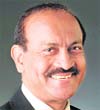
Biddu: Composing Pop music is for young and not young at heart!

Who can forget the sex siren Zeenat Aman dancing and singing to the sensational disco beats of ‘Aap Jaisa Koi…’ in Feroz Khan’s super hit movie QURBANI in the 80’s. Wanna know who composed this all time hit song? Well the music was composed by Biddu Appaiah, popularly recognized as Biddu, the Indian-born, England based music composer who is regarded as a pioneers of Disco, Euro disco and Indi-pop around the globe.

Zeenat-AmanKF20jun2014

Winner of the prestigious Gramm Award and ranked 34 in the 50 Greatest Producers Ever list of New Musical Express (NMI), Biddu after five decades of career in music has moved to writing and has penned a fictional novel ‘The Abundance of Nothing’ published by Times Group Books.

Speaking about his switch from music to writing he confessed, “I have been regarded as the king of Pop music but truly speaking producing pop music is purely for the young, just being young at heart does not qualify to compose pop music. Hence I decided to silently shift gears from music to my other passion writing.”

Few know that QURBANI had music by famous Bollywood music director duo Kalyanji Anandji but Feroz Khan happened to hear the disco beats of Biddu in London and was so impressed that he hired him to compose just one song for his movie.
BidduKF20jun2014

Initially Biddu declined the offer as he was busy in the West but when he found Feroz Khan to be serious and willing to pay an enormous amount he gave in.

In an interview Biddu had said, “I am the first person to introduce disco in India thanks to Feroz Khan. It was his obsession that made me compose the song. Before ‘Aap Jaisa Koi…’ the disco fever was nonexistent in India, however the song became such a craze that after ‘Aap Jaisa Koi…’there was a literal flood of disco songs and no Bollywood movie was released without (at least one) disco song

Like today’s item numbers, disco songs had become a permanent fixture till the late 90’s.”

source: http://www.indiaglitz.com / IndiaGlitz / Home> IndiaGlitz> Bollywood / Tuesday – June 10th, 2014

Students from sister city Cincinatti visit Mysore, Kodagu

Students from Sister City Cincinatti, USA, at a tea estate in Kodagu. Seen are (from left) teacher Sarah Langenderfer, Jack Langenderfer-10th grade, Sam Krimmer-11th grade, Sister City President Dr. Ratee Apana, Kevion Howzie-10th grade and Molly Giglia-11th grade. These students are from two schools in Cincinnati — Walnut Hills and Schroeder.

Mysore :

High School students from Cincinatti — Molly Giglia, Sam Krimmer, John Langenderfer and Kevion Howzie — together with teacher Sarah Langdenderfer are in city to see their Sister City, learn about high school students here, their daily lives and get a feel of the culture of Mysore.

They were given a warm welcome by students and staff of Kautaliya Vidaylaya who will also perform a small cultural piece for these students. They will visit and spend time in the classroom at St. Joseph’s School. They will meet with students from Rotary School in Mysore, who will accompany them on a service learning session at the NGO Odanadi. On this visit, they have seen Shravanabelagola and Brindavan Gardens. They experienced Mysore city through the Royal Mysore walking tour company, visited Chamundi Hill as well as the Palace.

They spent two days in Kodagu at Dubare, Siddapur, Kutta, Nagarhole and the interactive park in Kadamakolli. Students learnt about tea and coffee cultivation and enjoyed many different plants, fruits and wild animals of the area.

Teacher Sarah Langenderfer has created a blog for their visit.

Varsha Vittal and Dr. Ratee Apana, President of the Cincinnati Sister City Association are in Mysore to assist with their arrangements in Mysore together with Vice-President of the Sister City Association Dr. Pat Niskode and MaryAnn Niskode in Cincinnati to make this visit a success.

Many families in Kodagu especially Kolera Tuckoo and Puthli, Karthamada Nirmala and Suju and H. Vittal and Sujatha Vittal welcomed students into their homes. They have a good understanding of the cuisine and day-to-day life of their hosts.

“We would like to encourage Mysoreans to contact us and connect with the students. They would love to visit a typical Mysorean home and learn about students their age in this city. We are waiting for a committee in Mysore to be set up that can help us strengthen and sustain this relationship,” said Ratee Apana, speaking to SOM.

source: http://www.starofmysore.com / Star of Mysore / Home> General News / June 14th, 2014

Coffee Board to offer coffee courses to increase local coffee demand

SUMMARY
Indian Coffee Board is set to launch a program to train people to be coffee makers or baristas.

______________________________________________________________________________________________

Indian Coffee Board is set to launch a program to train people to be coffee makers or baristas. (Thinkstock)

In an effort to make coffee available and more popular across the country, especially in tea dominated northern India, the Indian Coffee Board is set to launch a program to train people around the country to be coffee makers or baristas. The ‘Barista training program’ of the Indian Coffee Board, involving a specially crafted syllabus will guide aspirants interested in coffee on the various aspects of coffee making, and will be launched in July according to the chairman of the Coffee Board Jawaid Akhtar.

Trainees will study the different types of coffee seeds, the right temperatures for roasting them, the best ways of grinding, and the right chemistry for a good coffee, says Akhtar who is also Chairman of the International Coffee Council. Trainees will be taken on a study tour to research centers of the coffee board, its coffee estates and will be given an internship opening at coffee chains. When they graduate from the program the coffee board with certify its trainees as qualified coffee makers, the Coffee Board chief said.

“Youngsters, especially those who have stayed abroad and have imbibed the global work culture are drawn to coffee in a significant way. Many see coffee making as a trendy thing to do. With coffee being affordable we want to create more interest in coffee making at home,” Akhtar said. In offering coffee courses for amateurs the coffee board is following in the footsteps of similar initiatives seen in emerging markets like China, Brazil, Russia and South Korea where coffee drinking has received huge impetus in recent times including home brewing.

The Indian Coffee Board’s Barista training program will allow aspiring coffee makers to train at its headquarters in Bangalore or the coffee board will depute its staff to conduct group classes in any part of the country, the head of quality control at the coffee board K Basavaraj said.
While the fee for the four-week training program has not been fixed the coffee board claims that it will run the program on a not-for-profit basis aimed purely at skill development and employment generation. “A similar program in a private institution will cost nothing less than a lakh,” a member of the coffee board faculty for the program said

“Indian coffee beans like Robusta and Arabica have earned fame the world over but very little is known about it in the Indian market. Consumers in cities like Mumbai, Delhi, Chandigarh and other parts.

source: http://www.financialexpress.com / The Financial Express / Home> Commodities / by Harsha Raj Gatty, Bangalore / June 17th, 2014

How love turned Robin into batsman

Tennis player girlfriend Sheetal Goutham was key to Robin Uthappa’s return to the top.

by Akshay Sawai

One day Robin Uthappa called up his girlfriend, former tennis player Sheetal Goutham, and asked her about her workout. She said she did 3,000 squats. “3,000 squats. Wow.

That sort of stuff inspires athletes,” Uthappa tells ETPanache at the Mumbai Cricket Association Recreation Centre, Bandra Kurla Complex. The 28-year-old had just finished net practice with Ajinkya Rahane, under the supervision of coach Pravin Amre. Uthappa was the top-scorer in the IPL for Kolkata Knight Riders and earned a recall in the Indian ODI side. Among the people he credits for his revival are Amre, his personal coach, and Sheetal, who he has known for almost eight years. ,”If not for her, I wouldn’t be playing cricket,” he says.

Uthappa was one of the stars of India’s stirring victory in the inaugural World T20 in 2007. Fame and riches followed. At the first IPL, Mumbai Indians bought him for $800,000 ( Rs 4.75 crore). At the 2011 IPL, Pune Warriors paid him an eye-popping $2.1 million ( Rs 12.45 crore. But soon he lost his form and desire. And though financially secure, he was not happy.

“I turned into a bitter person who did not enjoy other people’s success,” Uthappa says. “That did not sit too well with me. I thought I’d go abroad and do something different.” He discussed this with Sheetal, who spoke sense into him. “First, she put me onto a nutritionist. I was 95kg, in the worst shape of my life. Once I lost weight, I felt better emotionally and physically.”

Two years later, Uthappa is IPL champion, IPL topscorer and in the Indian team. While material things do not define his relationship with Sheetal, he has been generous with gifts to one of the people who made it all possible. “It was her birthday on June 6. I bought her summer dresses. Then there was a DKNY watch she wanted. Some of us got together and bought her that.

RobinKF19JUN2014

During the IPL, I got her an iPad mini.” Nutrition was key to Uthappa’s return to form. It also inspired his first foray into business. Last October, Uthappa and a few friends started ITiBSE 0.48 % f fin, a healthy meal service for professionals and school children. Uthappa invested `1.5 crore in the operation. A senior employee of a major financial institution is a minority stakeholder.

“I lost 20 kilos in a year-andhalf and know the difference healthy eating made to me,” Uthappa says. “Professionals sit at their desks for long hours doing stressful jobs. In India, there are so many people with diabetes and hypertension. We offer cultural food calculated to meet an individual’s requirement and prepared with fresh and natural ingredients. We are providing meals to 300 professionals on a daily basis, and 500-600 school kids per day.”

ITiffin’s target is 15 lakh customers per day across India. “We want to scale up a bit and are looking for investors,” Uthappa says. As far as scaling up his relationship with Sheetal, meaning marriage, he says, “The world will know when it happens. No fixed plans, but it will be soon.”

source: http://www.economictimes.indiatimes.com / The Economic Times / Home> Panache / by ET Bureau / June 12th, 2014

Biddu: From making music to penning stories

BidduKF19jun2014
Book title: The Abundance of Nothing

Author: Biddu

Publisher: Times Group Books

Pages: 304

Biddu ventured into Bollywood with the sensational composition ‘Aap Jaisa Koi’ for ‘Qurbani’ and popularised Indie-pop in India with another best-selling album, ‘Disco Deewane’. He later produced the 3 million-selling album, ‘Made in India’ that kicked off Alisha Chenoy’s career. From this connoisseur of music and the receiver of a ‘Lifetime Achievement Award’ by Rolling Stone magazine comes a spellbinding tale of a young rag picker.

Set against the backdrop of Mumbai in the 90s, the novel takes you through a journey of a young man who comes to terms with life when he’s suddenly left alone in a big bad world. The rise and fall of the vagabond kid amalgamated with the impeccable use of metaphors captures the heart and makes you realign your perception about materialism.

How did the transition from music to writing come about?
I decided that at my stage, and dare I say age, I should walk away quietly from the music scene. Creating pop music is for the young, not for the young at heart. Anyway, I was sitting in my house in Spain, watching the sunset and the surf washing the shoreline and I thought what next? I did not want to go through life with just one experience, one career. The idea of opening a restaurant was tempting, but everyone said ‘You crazy’, you’ll be tied to the restaurant 20 hours a day. So then I thought about writing a novel. Since I had always written my own lyrics (in English), I thought I’d go down that avenue.

Did you hear from your fans after publishing books? How have they taken to your literary abilities?
Almost everyone has been impressed by the stories and my grasp of the language. But then I was brought up in Bangalore, where Hindi was a foreign tongue and English was the lingua franca of the middle class.

What according to you killed Indie-pop in India? As one of the pioneers of Indie-pop, do you feel saddened by the same?
A lack of talent and a plethora of sub standard music killed the Indie-pop industry. Also for a while Indie-pop ruled the waves, because Hindi film music was stuck in a time warp. But they listened to Indie-pop, got the ideas, and sounds among others , plus they had the Moola. A music video of Shah Rukh Khan fronting a song from a major film with the attendant heavyweight promo and publicity is going to have more impact than some unknown doing the same in a pop video.

What inspired you to pen down a story detailing the journey of a young rag picker on the streets of Mumbai?
I had already written my first novel ‘Curse of the Godman’ which was set in Darjeeling circa 1951, when the British had left India. So, I decided to bring my next novel to the present times and set it in Bombay as it’s the city which gave me my fondest memories as a youth in India.

The novel provides a perfect description of Mumbai’s subculture. How did you manage to delve so well into this part of the city despite moving to England long ago?
Writing is all in one’s mind. That and the Internet. The first novel ‘Curse of the Godman’ was set in Darjeeling. A lot of people emailed and wrote to me saying I had captured Darjeeling perfectly. I had to lie and say I spent time there. Why kill the illusion. You can travel the world sitting in front of your computer. But coming back to Mumbai’s sub culture, I lived there for four years and visit it every year. So, in many ways, I used to think of Mumbai as my home in India.

From where do you draw inspiration for your characters?
Inspiration is usually from perspiration. You let your mind wander, sometimes ideas come when you’re swimming, sometimes when you’re walking along the beach and sometimes when you wake up in the middle of the night and can’t go back to sleep. The mind wanders, ideas spring up, you filter them, the good ones from the bad and in the morning you rush to your lap-top and hit the keys.

What has been the biggest surprise or learning experience while writing the book?
The biggest surprise is when you read back a few chapters of what’s been written and if it’s impressive, you ask yourself ‘Did I really write that?’ and a smile percolates through and you get a warm all over feeling and the confidence and adrenalin pumps through your body. It was the same feeling I got when I used to compose a song and it felt like a winner and you knew it would be a hit.

As a child, what did you want to do when you grew up?
As a child of 12, I want to be a 13! But seriously, from a kid, I either wanted to be a film star or a singer. I couldn’t act out of a paper bag (like a lot of stars today!), so I became a singer. When I went to London, I took up writing, arranging and producing because I couldn’t get any work or gigs. So, I made my own records. Which on reflection was a far more lucrative way of doing things.

A literary figure who has inspired you in your life
Shakespeare for sure. I’m not a guy who has heroes. There are people I admire like Mother Teresa and Mahatma Gandhi. But the truth is, even in the world of music, I had no heroes or people I looked up to. You put people on a pedestal only to be disillusioned or disappointed when you actually meet them. Then you bring them down.

Readers interested can order their own copy of the book here tgb.indiatimes.com.

(Originally published on June 09, 2014)

source: http://www.timesofindia.indiatimes.com / The Times of India / Home> Life & Style> Books / by Pallavi Bansal, TNN / June 28th, 2014

Lush Places: The Scotland of India

Samyak Kaninde/Getty

India has become known for the congested traffic and crowds of the cities. To escape the madness, Indians head to Coorg, a land of lush beauty, traditional food, and—sigh—tranquility.

On a recent family visit to Delhi, with its acrid air and evil traffic, my mother suggested an escape—a long weekend in Coorg, some 1,400 miles away in a tiny corner of the southern Indian state of Karnataka, just north of Kerala. In spite of its unprepossessing size, Coorg, which the British called the Scotland of India, is a region of intense pride and history. Many Indians regard it as a quasi-mythical place, a land of lush hills, temperate climate, martial men, and handsome women. Its ample rain and still-thick forests, not to mention its low population density, make it one of the few remaining Shangri-Las in over-peopled India.

Tyrannical rajahs ruled Coorg until the British, who knew a promising escape from the heat when they saw one, annexed it to the East India Company’s territory in 1834. The British established farms there, recruited the famously valorous Coorg natives for their Imperial mission, and, in 1947, left behind tidy settlements of Victorian-influenced cottages in shades of lavender, rose, and mint, along with graceful plantations of Robusta and Arabica coffee. Coffee flowers smell something like jasmine, and from mid-March to early April, the white blossoms add their perfume to the other scents of the region—orange, pepper, cardamom, vanilla, honey.

While venerable hill stations in other parts of India are overrun with tourists, doughty little Coorg is still putting up a fight to retain its old essence, even as it welcomes visitors with courtly hospitality. Coorg is a fashionable destination for wealthy Indian travelers hungry for places cool and green—not merely in the literal sense, but also in keeping with the eco-alert, Indo-centric new ethos of the country’s intelligentsia. Coorg is not a hippy-strewn, land-locked Goa. Nor is it a more verdant Jaipur, overrun with Bloomingdale’s buyers. It’s a more understated and introspective sort of place that honors its roots. The locals worship their ancestors, and their attachment to family land is almost visceral. Coorg isn’t easy to get to from afar, for which we should be grateful. Bangalore is the nearest international airport, a six-hour drive away. The highway is smooth and hassle-free by Indian standards, until you get close to Coorg, when you hit sinuous roads that wind through hillsides: these can range from bumpy to bone-jarring, and are best tackled at a sedate pace, all the better to take in the landscape.

“India’s cities are so insistently provocative that, for a certain class of Indian, to be under-stimulated has become the ultimate luxury.”

India’s cities are so insistently provocative that, for a certain class of Indian, to be under-stimulated has become the ultimate luxury. For some time now, members of the Indian elite who have no family connection to the place have been quietly buying land in Coorg, building vacation houses in its remote hills and valleys. Once obsessed with gleaming hotel towers and swimming pools in the “foreign” mold, India’s domestic tourists have grown infinitely more sophisticated and, even, jaded. Indians who have “been there, done that” in Sri Lanka, Singapore, and the Swiss Alps want languid escapes from their overscheduled lives. And they are deeply nostalgic for the quiet India—so recently changed—that they remember from childhood vacations.

Enter the Taj Group, with its astute understanding of the needs of the well-heeled and the well-traveled. Their hotel in Coorg, situated near the region’s capital, Madikeri, is called “Vivanta by Taj,” and it is the company’s nimble response to travelers who clamor to get off the beaten track without collapsing from weariness and worry.

With its hotel outside Madikeri, Taj promises “a haven for the curious mind,” dotted with “interpretive nature trails” set in a “model of coexistence.” The Eden theme is coupled with a celebration of modesty that seems to reflect a wider backlash against modern Indian brashness. The property comprises 180 acres of rainforest, and each of the 60-odd cottages and villas offers views of woods, cloud, and vibrant green. The buildings are beautifully unobtrusive, designed to be in hushed harmony with the surroundings. In the evenings, the lighting is subdued, almost apologetic, and this deference to nature is apparent also in the materials used: wood and local stone, the architecture seeking to emulate the Coorg vernacular.

The hotel was built on land carefully surveyed to avoid displacing trees in a rainforest teeming with some 350 species of flora and fauna. Compressed soil from the site was used to make the bricks for the resort. Most of the stone used was sourced from within a 200-mile radius of the hotel’s premises. The interiors of the cottages resemble the sort of understated living room you might find in a gracious Indian home. The roof-tiles are handmade and repurposed from dismantled houses in Tamil

Nadu, Pondicherry, and Andhra Pradesh. “Revived craft” artifacts made by indigenous tribes—like light fixtures fashioned from old-style fish traps—are incorporated into the décor, providing both authentic ambience and employment for local craftsmen. The property’s architect, Pramod Ranjan, aimed for an unobtrusive, minimalist design that allows the organic landscape to outshine the manmade artifacts. That said, the manmade and the natural do converge in a setting of utter glory: the infinity pool in the hotel’s main building, where, immersed in warm water, one can gaze upon a lush green heaven that stretches for miles before the eye.

Traditional food is also “revived with love” at the hotel. Native Coorg cuisine is a delight to savor. It revolves around a few local ingredients, such as Kachampuli (a type of vinegar), pepper, chilies, rice flour, coconut, and Maddu Soppu, a medicinal leaf believed to confer 18 healthful properties, each especially effective if delivered on a particular day of the year. Succulent pork also figures centrally in the local cuisine, along with dishes made from bamboo shoots, wild mushrooms, banana stems, and jackfruit—flavors that have not yet been appropriated by the vacation-industrial complex.

Coorg also offers its share of picturesque anthropology. The Kodavas, the people of Coorg, revere weaponry and maintain a reputation as brave soldiers well represented in India’s wars. They are tall and light-skinned, when compared with other south Indians, and some attribute their appearance to Arab blood. Others contend that Greek mercenaries who came to India with Alexander the Great left their genetic mark in Coorg. At the hotel, however, the staff reflects the variety of modern India: our bartender, whom I tested with the making of a martini, was from Himachal Pradesh, in the far north; the cheerful chatterbox who waited on us at dinner was from Orissa, in the coastal east. But the unmistakable tenor of the place was that of a Coorg bastion, a hotel in the heart of a fabled region, bathed in mist in the morning and alive with the sounds of birds at dusk. A graceful, benign getaway it was, and we wrenched ourselves from it sorrowfully at the end, hating the horror of a return to Delhi.

source: http://www.thedailybeast.com / The Daily Beast / Home> Great Escapes / by Tunku Varadarajan / March 25th, 2014

‘Baambe Mitayi’ Complete

BambeKF14jun2014

This one appears a travelogue as the shooting of this film was held at Mysore, Madikeri, Kushalnagara, Golden temple Bylakuppe, Chikkamagalur, Kuduremukha, Kalasa, Bidadi, Murudeshwara, Karawara, Hubballi, Gadag, Rani Bennur, Chitradurga and others place by debutant Chandramohan.

It is a Touchwood Creations maiden cinema in the debut direction of Chandramohan. Like the title the film is sweet in narration and who gets Disha Pande who comes from Bombay in the film is narrated in humor touch. Anchor and RK Niranjan Deshpande plays the major role. Chandramohan in the field of cinema as assistant for 12 years working with V Ravichandran, Umesh MS, Indrajith Lankesh, R Chandru, Sridhar and others.

Indrajith Lankesh one of the mentors of Chandramohan was present at the first media meet of ‘Baambe Mitayi’ at Kanishka Hotel to unveil the poster of the film starring Niranjan Deshpande, Disha Pande, Vikram, Chikkanna, Kishore Ballal, Sunil, Bullet Prakash, Moogu Suresh, Nallur Narayan, Baby Bindusri. Veera Samartha has scored music and RK SHivakumar is cameraman.

source: http://www.indiaglitz.com / IndiaGlitz / Home> IndiaGlitz Telugu / Saturday – June 07th, 2014

Delectable destinations at Seven Roads

From the junction at Seven Roads, Sujatha Shankar Kumar picks some centrally located eating places in Kodaikanal with unique hill-town flavours.

From bakeries and gourmet cafes to five star resorts, Kodaikanal’s kitchens have a zest for organic, churning out recipes from scratch. Cheeses, herbs and vegetables are procured farm fresh. The laid-back atmosphere of a small town is deceptive. Restaurants and cafes bustle about to cater to the busy crowds of the season.

Cafe Cariappa is a delightful nook with tables on barrels and wood panelled walls./ by Special Arrangement / The Hindu

Cafe Cariappa

A miniature gourmet coffee house for true coffee lovers, Cafe Cariappa is a delightful nook with tables on barrels and wood panelled walls. Alongside, they serve hot Belgian waffles with chocolate syrup and honey, carrot cake and organic muffins. Sandwiches are filled with cheese and mustard from Caroselle, specialty cheese maker from Pethuparai. Kishore Cariappa’s dream was sparked by environmental interests and a yen to grow organic coffee. Purchasing a small farm 35 km from Kodaikanal, Cariappa set out to preserve the natural ecosystem engaging the local Mannadiyars, early agricultural settlers. The single origin coffee at the cafe is pure Arrabica, a premium brand. Cariappa roasts and grinds the coffee beans, all in-house, with his specially procured Italian machines. An elephant drinking coffee from a cup adorns the brown Kraft packaging with Cariappa’s trademark stamp ‘Origin Palani Hills’. He says, “I want this to be a revolutionary centre for ecology where coffee is the meeting point.” As coffee grows in the shade, trees are never cut in his estate. Elephants do visit the Cariappas and my bet is Kishore wishes they drink his coffee!

JS Heritage Complex, PT Road

source: http://www.thehindu.com / The Hindu / Home> Features> MetroPlus> Food / 1 part of 7 outlets / by Sujatha Shankar Kumar / Chennai – June 05th, 2014

Sunny Leone feels like Queen in MTV Splitsvilla

sunnyleoneCF04jun2014

MTV Splitsvilla season 7 is soon going to start. The shooting is already taking place in hot Rajasthan. The hosts of the show will be sizzling Sunny Leone and handsome Nikhil Chinappa. Sunny Leone is happy to be a part of this show and recently she tweeted –

Indeed in this picture, both look like King & Queen. Nikhil also tweeted a picture of the Palace where the shooting is taking place-

PalaceKF04jun2014

According to the sources, Splitsvilla 7 will feature celebrity participants in the show unlike previous seasons. There will be seven male celebrities with 20 female participants. There are few names confirmed on the show which are Mr. Asia Mayank Pawar and Ashwini Kaul from season 6. Popular TV actors like Ayaz Ahmed who has debuted as a contestant in MTV’s show Roadies, later did several shows and got his fame as a gangster Raghu in Life OK’s Do Dil Ek Jaan.

Shravan Reddy who was last seen in Bindass’ Yeh Hai Aashiqui, then it is Abhishek Malik who has won Mr. Delhi title in 2009 did several shows and last seen in the Zee TV’s show Punar Vivaah Ek Nayi Umeed in double role as an antagonist. Rishab Sinha who got his fame in the recent released movie Kaanchi and was loved as Ayaan in Qubool Hai.

Well, this season looks pretty exciting. Let’s see whether this time it will be as Hot as Hell?

source: http://www.pinkvilla.com / PinkVilla / Home> Bollywood / by Varnica / May 30th, 2014

A Friendly Solitude

ElephantsKF03jun2014

Kodaimelanadu or Kodagu or Coorg is an hour-long drive from Mysore along winding roads that take you through a collage of colours which explode into shades of greens, browns and yellows. As you squint through the green fabric, plantations of coffee, cardamom and pepper speed by, merging with larger forestscape. The hiss of the tyres accentuate the haunting solitude of the journey; no wonder Coorg is called the Scotland of the East.

Much of Coorg is about coffee and a fair amount of cardamom and pepper. Siddapur district seemed a tree-shadowed coffee estate, dotted with contradictions—a few market places, seedy bars, pork shops and elegant vegetable displays. As we travelled, we grew wiser about coffee: its history, its clandestine entry into India, and the difference between arabica and robusta. The British brought coffee to Coorg. The first estate was established way back in 1850s by an Englishman, John Frawler.

Coorg seems to be made for introverts, there is an overwhelming feeling of seclusion, where from a distance you can spot a coffee pod, but it is difficult to spot your immediate neighbour. It is an immense aviary, and home to nearly a quarter of the bird population of Karnataka. The tour guide seemed to be Coorgi Salim Ali; he knew the names of each and every bird. At times he even imitated their calls perfectly. Every hilly region has at least one well known waterfall, and in Coorg it is Abbey Falls that plunges down, separating some coffee and spice estates to join the river Kaveri. An army of clouds envelope the hill. The walk is enough to give anyone an appettite for the singular flavours of Kodava food. The central piece of Kodava cuisine is meat and rice. I tried the irresistible Pandi curry, a subtle pork dish, cooked well by adding a local fruit, Kanchampali. Dry spices are roasted before grounding them, giving a toasty flavour to the thick curry.

As night falls, the highlands of Kodagu become a magical place. The moon shines brightly and the trees are laden with millions of fireflies, as if decked up for some fat Indian wedding.

In the morning, the mist-laden verdant hills awaited in silence. The Dubare reserve encompasses 50,000 acres and is home to the elephants of the Western Ghats. Majestic rosewood, teak and other hardwood tree species stand around like sentinels. Giant parasitic vines are swathed around large banyans and other trees in a macabre bond. As Hansel and Gretel would’ve felt, the forest kept getting thicker and more enchanting. Below, the river Kaveri, flowed unmindful of the inter-state disputes. Grabbing a coracle, drifting on the green waters and gauging the moods of the river and the pristine surroundings is one way to experience Coorg.

Local myth says the invincible Coorgis descended from Alexander’s Macedonians. “Neither Tipu Sulatan, nor the British could conquer it,” said the guide. The place has a long history of war; the Madikeri fort is a living testimony to that. Built as a mud fort by Mudduraja in the 17th century, it was later rebuilt in granite by Tipu Sultan who renamed the site Jaffarabad. In the north-east corner at the entrance stand two life-size statues of elephants. A church stands in the south-east corner. The fort also houses a prison.

Among the other architectural treasures of Coorg is the Omkareshwara temple built by King Lingaraja in 1820, in a mosque-like style, with an impressive central dome and four minarets, which are surrounded by Basavas, or sacred bulls. On the top of the dome sits a gilded ball with a weathercock. The Raja’s seat is a small pavilion in a garden, offering a view of the green valley below, where it is said the kings of Coorg spent evenings with their consorts. From there, they would’ve seen the melting sun, parrot-green fields and the mountains sleeping in the mist as if time had dawdled here, mesmerised by the languid beauty of Kodagu.

To Reach: Madikeri is the nearest bus station. There are frequent buses from Mysore, Mangalore and Bangalore to Coorg.

To Stay: For luxury, the Orange Country Inn. For an authentic Coorg experience, try a planation home stay.

source: http://www.newindianexpress.com / The New Indian Express / Home> LifeStyle> Travel / by Aakash Mehrotra / May 29th, 2014