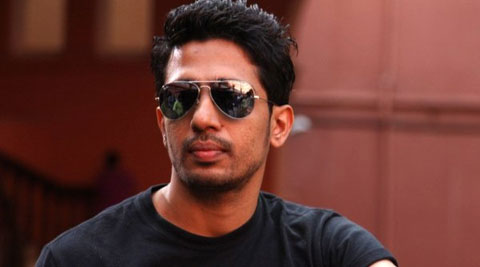
Actress Nidhi Subbaiah, who did her engineering in Mysore’s Sri Jayachamarajendra Engineering College, will be seen in a documentary film which is being made by the students of SJCE to commemorate the golden jubilee celebration of the college.
The actress took to her micro-blogging website page to share the information, “In Mysore, students from my coll SJCE dropped in to interview me for a documentary they’re making! 50 years of Jayciana..Where it all began!” Nidhi, who got nostalgic, further posted, “Such free spirited wonderful people! Miss the time when I used to be organising the college festival!.. Student life in Mysore City.”
Before foraying into Bollywood, the actress had acted in Kannada movies like Pancharangi and Krishnan Marriage Story. There are reports that the actress, who is looking for quality scripts, may soon sign couple of Kannada projects.
source: http://www.timesofindia.indiatimes.com / The Times of India / Home> Entertainment> Kannada> Movies / TNN / April 07th, 2014
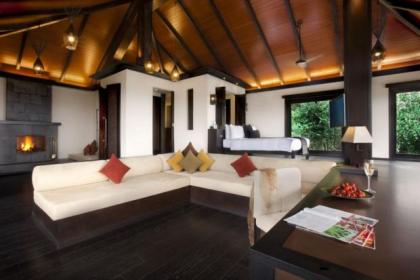
The Tamara Coorg won the ‘Best Luxury Resort in South India’ award at the South India Travel Awards held in Hyderabad on March 27, 2014. DDP Publications gave away the award at Radisson Blu Hotel at Banjara Hills in Hyderabad.
This exclusive event is presented in four regional editions, with South India as the first event. The award recognises the ‘best of the best’ in travel and tourism in the country. The winners from each zone will now participate in Pan-India awards to be held later in the year.
Senthil Kumar N, Director and CEO, The Tamara Coorg said, “We are really pleased to win this prestigious award. This is a wonderful confirmation of our exclusive service in the luxury segment & our offering to discerning travellers seeking elevated experiences.”
source: http://www.hospitalitybizindia.com / HospitalityBizIndia.com / Home> NewsTrack / by HBI Staff – Mumbai / Monday – April 07th, 2014
The Tipu Sultan Nagarika Vedike Kodagu district unit has said that the unit was ready to raise funds from the public to pay Rs 7,80,541 to the Transport department to get the custody of Sunny Side, ancestral house of General K S Thimmaiah.
It was a long pending demand to convert Sunny Side into a memorial.
Addressing a press meet, district unit President K M Kunhi Abdulla said, that the government had announced that Sunny Side would be converted into a memorial eight years ago. However, it has not seen any progress. After the death of General Thimmaiah, his wife had sold the building to the Transport department.
However, owing to lack of maintenance the building was in a deplorable condition. The government should respond to the demands of the people.”
Kannada and Culture department has already written to the government to pay Rs 7,80,541 to take over the building. “If the government fails to initiate measures to convert the building into a memorial, a protest rally will be held in Bangalore. We will extend our support to the Field Marshal K M Cariappa and General Thimmaiah Forum.”
Former chief minister H D Kumaraswamy said that the State government had earmarked Rs 1 crore in the budget in 2006. “The respective BJP and Congress governments failed to convert the building into a memorial,” he said.
source: http://www.deccanherald.com / Deccan Herald / Home> District / DHNS – Madikeri, April 04th, 2014
History has always been a reigning passion for this 27-year-old software engineer who also makes iphone apps, blogs, sketches, writes poetry and edits on Wikipedia. / Photo: V. Sreenivasa Murthy / The Hindu Mookonda Kushalappa’s novel is a fascinating account of a beautiful land
Mookonda Kushalappa takes you back to the year 1834, offering you an account of a beautiful, complex place and its multi-faceted people
“I was brought up in Bangalore but my grandfather lived in Coorg and I used to visit it often. I was fascinated by the place and began reading a lot about it and there was a hunger in me to tell its story.”
So he did. His novel Long Ago in Coorg delves into the history of Kodagu in the modern era beginning from the invasion of the British East India Company in 1834 and going all the way to the present day existence of the Kodagu district. “Some of the interesting aspects of the book include the Coorg War of 1834 fought between the British and the Coorgs, the rebellion of 1837 where a pretender tried to claim the throne of Kodagu and the Gandhian movement in Kodagu,” adds Nitin.
History has always been a reigning passion for this 27-year-old software engineer who also makes iphone apps, blogs, sketches, writes poetry and edits on Wikipedia.
“The past fascinates me,” he says adding that the distinct culture and tradition of Coorg, which makes it an eclectic melting pot of sorts added to his fascination for the place. “The culture is essentially Dravidian with West Asian influences and fantastic theories abound about the place.”
In addition to this book, he has written another, also based on Coorg history, “The book is called The Early Coorgs and is based on Kodagu’s mythology, prehistory and early history before 1600,” he says.
On future plans he shrugs, “Well, honestly I don’t plan anything long term, I take one day at a time. I try to be different and do what I like. But yes, more writing will definitely happen.”
source: http://www.thehindu.com / The Hindu / Home> Features> MetroPlus> Society / by Preeti Zachariah / Bangalore – April 02nd, 2014
Cubbon Park was charged with enthusiasm as more than 150 cyclists participated in the Child Rights and You’s (CRY) Vote for Child Rights Cycle Rally. Flagging off the rally alongside Regional Director of CRY recently, (South) Suma Ravi, were eminent personalities, including ace Badminton player Ashwini Ponnappa, Paralympic high jumper silver medalist Girisha Hosanagara Rajegowda, Kannada actor Srimurali and Guinness Record holder, young actor-director Kishan Srikanth. The 6-km rally which started off at Cubbon Park, and traversed around M G Road, culminated at Cubbon Park.
Suma Ravi said, “The Bangalore Cycle rally concludes our events for CRY’s Vote for Child Rights campaign, and yet again we are thrilled to witness the enthusiasm of all our participants in helping us spread the word.”
Ashwini Ponnappa said, “I’m glad that I am associated with a campaign that calls for everyone to become active advocates for Child Rights. I would like to see all girls getting equal opportunities everywhere in life.”
Mirroring the same sentiments, Girish Hosanagara said, “The Vote for Child Rights campaign stands for the rights for our children and is aimed at the people who will finally be in power. Every child, irrespective of any disability, must have the right to a happy, healthy childhood.”
Srimurali said, “CRY has always worked towards ensuring lasting change for children, and as an actor if I can do anything to help, I will.”
Supported by Unibic Foods India Pvt Ltd (Refreshment partner), Kerberon Automations, Bangalore Cyclists Club, Eden Suites and Target Imprints, the rally is part of CRY’s nationwide Vote for Child Rights campaign that started on November 13, 2013. It included activities ranging from signing pledges from the general public to getting prominent personalities from across India to support the campaign, to the organising events like wall paintings and flash mobs to showcase the current state of Child Rights in India.
The campaign believes that India’s children, who account for one third of the population, deserve the collective demonstration of commitment towards child rights. It also calls for action to express zero tolerance towards violation of child rights so that every child can be assured of a happy, healthy and creative childhood. That can happen only if children are recognised as rights holders and people in power remain committed towards providing care, protection, essential services and opportunities to each and every child.
source: http://www.newindianexpress.com / The New Indian Express / Home> Cities> Bangalore / by Express News Service – Bangalore / March 24th, 2014
Chef Naren Thimmaiah on the rise of regional cuisines on menus and his restaurant Karavalli. Karavalli
Naren Thimmaiah, Executive Chef of The Gateway Hotel in Bangalore, is a very happy man. Not only did he pick up the Time Out Food Award for Favourite Coastal Restaurant — in Delhi last week — for his brainchild Karavalli, but the restaurant was also a new entrant in this year’s list of Asia’s 50 Best Restaurants, published by Restaurant Magazine, considered a definitive guide to restaurants globally. The spate of awards has catapulted Karavalli, an institution in Bangalore, into national prominence.
“It’s a great feeling to be recognised on such a large platform. This award is a reiteration of the fulfillment of the pact we made 23 years ago to our guests, wherein we promised authenticity, and heartwarming and soul-endearing food,” he said.
Thimmaiah and his team have spent more than two decades researching the cuisines of all the sub-regions and communities in the south-western coastal belt, coming up with an eclectic offering of south Indian and coastal fare. There is a combination of dishes both fiery hot and genteel, whether it’s Moplah-style ghee rice and chicken curry, steamed and served in a green banana leaf, a piquant Meen Vevichathu (seer fish in a thin chilli-based gravy) or a gentler Camaro Con Cilantro, a Goan dish of prawns with coriander and saffron. Given its proximity to the ocean, seafood has a starring role on Karavalli’s menu, present in all shapes, sizes and types from crustaceans to shellfish to cephalopods, served grilled, curried, skewered, all of them as fresh as Holly Golightly from Breakfast at Tiffany’s.
The restaurant is designed like a mansion, typical of the region, complete with high wooden ceilings, antique furniture, colonial bric-a-brac and lantern-shaped lights. Several dishes are served in a particular, ritualistic manner, harking to the place of their origin, by liveried servers.
According to the soft-spoken chef, it is partly the trending of regional foods which has spurred Karavalli’s success. “Most of the earlier food menus in Indian restaurants hardly reflected the variety in India’s cuisine. It used to be only food from Punjab or Chettinad that found a place of prominence in restaurants. Now, we have interesting cuisines, such as Mangalorean, Bengali, Gujarati and Malabar weaving their magic. We have also started talking about and serving Coorgi, Bundelkhandi, Malwani, Rampur and similar cuisines, which is very encouraging,” says Thimmaiah. “Earlier, a restaurant mainly catered to the hunger quotient. Now, a meal in a restaurant has become experiential and that calls for variety to begin with,” he adds.
Thimmaiah believes that maintaining the authenticity of food while cooking and serving also helps in preserving the traditional cooking for future generations. “Tradition should not have to be preserved only in museums or archives. As we evolve, we should look at using all avenues to preserve our tradition and culture. That is where the authentic regional restaurants come into picture,” he says, “Like museums, restaurants also preserve traditions.”
source: http://www.indianexpress.com / Indian Express / Home> Cities> Delhi / Shantanu David / March 30th, 2014
A serene Buddhist monastery, lush green forests and the river Cauvery seem to have charmed Chitra Ramaswamy. Join her on this placid journey.
Driving from Bangalore to Madikeri via Mysore, we digress a little at Kushalanagar, 40 km from Madikeri, to visit Bylakuppe, one of India’s oldest and largest Tibetan settlements, also known as Lugsung Samdupling when it was created in 1961.
As we turn off the dusty highway connecting Mysore to the lush hills of Coorg, we travel through narrow winding roads on undulating terrain flanked by paddy fields and come upon a mini Tibet, sans snow and the Himalayas. Burgundy-robed monks are everywhere about, on foot and bikes, laughing and chatting merrily in a little world of their own, far away from the humdrum of urban civilisation to which we city dwellers have become accustomed.
Despite the serene and spiritual atmosphere that prevails here, the residents of Bylakuppe remember the flutter created when tinsel town star Shah Rukh Khan arrived here in August 2001 before the October-release of his film Ashoka, to seek the blessings of the Dalai Lama.
Divine sanctuaryThe foremost attraction of Bylakuppe, a compact world with its own value systems, is the massive Thekchog Namdrol Shedrub Dargye Ling or Namdroling Monastery as it is popularly known. The imposing golden spires of the monastery and the huge rainbow arch-like structure appear well before we actually come upon the edifice.
Namdroling is supposedly the largest teaching centre of the Nyingmapa lineage of Tibetan Buddhism in the world and was established in 1961 by Pema Norbu Rinpoche on land that the Indian Government had granted to Tibetan exiles. The story of the Tibetan settlement at Bylakuppe goes back to 1959 when the Dalai Lama fled to India, seeking political asylum. The monastery, according to the inhabitants of Bylakuppe, was consecrated and given its name by the Dalai Lama. While the village is home to about 50,000 Tibetans, the monastery itself houses nearly 5,000 monks and nuns whose living quarters circumscribe the golden temple. The architecture of Namdroling is a beautiful fusion of traditional Tibetan style built with modern materials.
The path to the monastery is flanked by well manicured lawns. 58 to 60 feet gold-plated idols of Guru Padmasambhava, Buddha Amitayus and Shakyamuni adorn the main sanctum sanctorum which is actually an expansive hall that contains smaller Buddha statues as well. Padmasambhava who was instrumental in spreading Buddhism to Tibet and Bhutan, we learn, is viewed as the Second Buddha while the Amitayus are celestial Buddhas.
Except for the sound from numerous shutterbugs, silence pervades as monks offer prayers and spin the large prayer wheels. The uniquely attractive Tibetan thanka paintings on the inner and outer walls of Namdroling, in bright bold colours narrate the life of the Buddhas.
The paintings, we learn, are based on mathematical calculations, exclusively a Tibetan cultural preserve. Further, the colours used in this art form are intense and the murals themselves represent various elements of Buddhist cosmology. Following several other tourists, we too rotate the several prayer wheels that line one end of the monastery, believing it would usher in good luck and prosperity.
While Namdroling in Camp 4 is the crowd puller, Bylakuppe is dotted with five distinct camps, each of them immaculately clean and housing several monasteries, temples and residential buildings.
The more popular of these include the Sera Mey and the Sera Jey Monastery, the latter having been modelled after the original Sera Monastery in Tibet, now in ruins.
Before we proceed to a couple of tourist spots neighbouring Kushalanagar, we visit Bylakuppe’s other big attraction, the Tibetan shopping complex with its array of colour ridden wares that include souveneirs, garments, handicrafts and artefacts, hand-made by Tibetans.
In addition, there are outlets selling freshly baked thupkas, the Tibetan bread and piping hot momos with a range of homemade Tibetan sauce.
Forest havenHaving deviated from our destination Madikeri, to visit Bylakuppe, we decide to digress a little more and hop over to Kaveri Nisargadhama, 3 km from Kushalanagar and the Harangi Dam, 8 km away.
We walk the rope bridge over the Kaveri River to enter the man-made, ecological island park of Nisargadhama, a picnic spot replete with facilities to entertain weekenders.
Verdant with bamboo, teak and sandalwood forests, and an orchidarium, the 64-acre sprawl is home to tree-top dwellings and guest houses operated by the forest department. We spot several families with children enjoying elephant rides and boating in the waters’ of the Kaveri.The ambience around Harangi is more mellow and calm with few picnickers strolling along designated paths.
The water deluge is refreshing and wonderful to watch as it constantly tumbles from a height of about 45 metres. Incidentally, the 846m long dam is believed to be the first dam built across the Kaveri River.
However, Bylakuppe remains the highlight of our trip and leaves us enchanted – with its pine trees, misty hills and tranquil environs, a distinctively Tibetan ambience and above all, its easy pace of life.
source: http://www.deccanherald.com / Deccan Herald / Home> Supplements> Spectrum / by Chitra Ramaswamy / March 25th, 2014
Rotary Club International (RCI) district 3180 – Right to Information Act Committee district president B Pundalika Marate Shirva offered motion for an awareness campaign on transparency in governance that was held at Madikeri Rotary auditorium, organized by RCI Misty Hills, here on Sunday March 23.
Pundalika also released a Kannada book – Governance by the people, for the people, authored by Harish Poovayya Kodagu, advisor of corruption-free governance for social service organizations functioning in India, Nepal, Sri Lanka, Zambia and Kirgizstan, on the same occasion.
RCI zone 6 assistant governor Ravindra Rai, RCI – Misty Hills president Dr Prashant, RTI activist Harish Poovayya, RCI secretary G R Ravishankar, office bearers of RCI, Lions Club International and heads of social service organizations were also present.
source: http://www.bellevision.com / Bellevision.com / Home / by Pundalika Marate, Bellevision Media Network / Madikeri – March 24th, 2014
Funds will be utilised for renovation and electrification The State government has released Rs 20 lakh for the renovation of Rajara Gadduge, one of the historical tourist spot near Banni Mantapa in Madikeri.
The State government has earmarked the funds for the renovation work in the last budget and has handed it over to archeological department.
The responsibility of the conservation of the Gadduge has been handed over to the archeological department. The department is getting ready to renovate three mausoleums. The funds have been deposited to the account of the department last month.
Tender was invited for the renovation work. However, no bidder had come forward to take up the work. Now, the department is thinking of taking up the work on its own or call for a re-tender. The decision on the same will be taken up after the Lok Sabha polls, said Archeological department Assistant Officer Sathish.
In the released amount, the work on electrification, painting and renovation of mausoleum of Raja Purohith Rudrappa situated on the left hand side of mausoleums of Chikkarajendra and his wife will be taken up, he said.
The Madikeri Urban Development Authority had laid a park at the Gadduge two years ago. However, owing to lack of maintenance, the park is crying for attention.
Visitors said “the park should be maintained well. Information boards should be installed at strategic locations in and around Madikeri city to furnish details on the Gadduge.”
On Gadduge
Rajara Gadduge is the mausoleum of the former kings of Kodagu namely Doddaveerarajendra, Lingarajendra and Rajaguru Rudrappa. Gadduge has two identical square structures, which are the tombs of the king Doddaveerarajendra and his queen.
They are close to each other, built in Indo-Sarcanic style, flaunting domes and pillars. There is tomb of Lingarajendra which was built by his son Chikkaveerarajendra in 1820. There is a tomb of Purohith Rudrappa which was built in 1834.
There are tombs of commander-in-chief Biddanda Bopu and his son Biddanda Somaiah, who were killed in their fight against Mysore Emeperor Tippu Sulthan.
source: http://www.deccanherald.com / Deccan Herald / Home> District / DHNS / Madikeri – March 23rd, 2014
Lt. Col. Kuppanda M. Muthanna (centre), who brought an old copy of a group photograph of 1956-57, is seen sharing it with yours truly and Dr. A.A. Kuttappa, at the venue — kids we were !
Last Sunday, I went to my alma mater Government First Grade College, Mercara, now rechristened as Field Marshal K.M. Cariappa College, Madikeri in Kodagu district, my native place.
That visit was to participate and get myself felicitated by the Alumni Association which was started a few years ago at the initiative of a planter couple Mr. and Mrs. K.S. Devaya of Lakshmijala Estate, who happen to be the alumnae of this College and could take interest and spare time to form the Association. Since then, I am told, the alumnae have been holding the annual get-together without fail. Soon the idea of felicitating those who are considered achievers among them in their given field of activity was introduced. This year, I was their choice for such recognition along with Dr. Kodira A. Kushalappa, IFS, retired Chief Conservator of Forests and Mr. Kolibailu A. Belliappa, retired IAS officer.
Though I had become the member when it was first started, I had not attended any of the annual get-togethers. This time I was cornered by a couple of members from City who said I must accept this honour. It was more in deference to the wishes of these well-meaning members that I condescended and went to Madikeri. And I was very happy and pleased to make that journey — a kind of pilgrimage. The presence of the College Principal Dr. A.A. Parvathy was as it should be and I thought, was in keeping with the protocol for such functions.
Dr. Kanjithanda Sunil Muddaiah, Managing Trustee of the Coorg Institute of Dental Studies, located, for appearance, rather precariously on the slopes of a hill in Virajpet and the only dental college in Kodagu, the land of hills and valleys, was the chief guest. An unassuming gentle person, an youngster, also an achiever in his own right considering the way he has built this college and carried it to the heights of excellence in his own way. He does this not for accumulating more money, which in any case he has inherited, coming from a rich, nay wealthy, family of coffee planters, but for passion, a purpose in life. I guess, at the end, the secret of success of all successful persons in life is their passion for what they do rather than mere hard work, which every money-hungry person does. Let it be.
The office-bearers, specially the President Mr. Nandineravanda A. Appaya, took great care in welcoming the alumni with great warmth and then affording them an opportunity to meet each other, recognise each other and then go nostalgic of the old days… in my case, of the days 58 years ago. Time and labour had taken toll of the health and appearance of many, just as in my case. Yet, once recognised, there was bonhomie and good cheer. It was like suddenly finding a long-lost brother or sister. Many were heard asking, “Mr. So and So I presume?” There were embarrassing moments for me as I failed to remember some who were classmates and also hostel mates.
For sure, with age, memories fade and the physical appearance along with mannerisms too change, compared to what I had seen 58 years ago. Naturally, it is hard to recognise a person immediately. It was gracious on their part that no one mistook each other.
I learn, though the Alumni Association was started in 1998 by Konganda S. Devaya with a small number of members, it was dormant till 2013, last year, when N.A. Appaya took over as President. I hope Appaya’s efforts will continue with a new road map for the Alumni Association with increased membership. [Those interested in becoming members of the Association may contact M.K. Kuttappa (Sachi) on Mob: 98454-73965]
In the mixed group of alumnae I found, among ladies and gentlemen, some in good health and some in poor health; some financially well placed, some not so well placed; some retired as government officers with high positions, some simply as government officers; some big coffee planters, some small coffee planters; some with problems connected to the family and hitha shatrus [beloved enemies as children are sometimes called for the trouble they give to their parents], some with their children settled in the US and feeling proud. I too have such issues and problems but overcame them listening to the wiser counsel of wise people. We need not despair. I would like to share here with my readers three such positive, life-sustaining words of solace:
Life is a game of Bridge. We did not invent the game nor design the cards; we did not frame the rules and we cannot control the dealing. The cards are dealt out to us whether they be good or bad. But, we can play the game well or play it badly. A skilful player may have a poor hand and yet win the game. A bad player may have a good hand and yet make a mess of it.
Our life is a mixture of necessity and freedom, chance and choice. We may not change events, but we can change our approach to events.
— Dr. S. Radhakrishnan
I came and saw under the sun that the race is not to the swift; nor the battle to the strong, neither yet bread to the wise, nor yet riches to men of understanding, not yet favour to men of skill but time and chance happens to them all.
— Old Testament
Begin each day by telling yourself: Today I shall be meeting with interference, ingratitude, insolence, disloyalty, ill-will and selfishness — all of them due to the offenders’ ignorance of what is good or evil.
— ‘Meditations’ by
Marcus Aurelius
Tail-piece: As I strolled around the inner corridors of the college [architecturally a perfect college building which should be a model to those who build colleges] and the galleried classrooms, my thoughts went back to the days I spent there. Boys came with bell-bottom pants while girls came wearing lungis or mundus in coloured checks of Sri Lankan origin. Then there were mini skirts and drain-pipe pants. Lecturers used to come immaculately dressed — suit with tie, closed-collar coats. Nowadays I see them in casuals, wearing bathroom chappals.
No wonder, in many cases, students have no respect for teachers and in turn, teachers have no concern for students.
e-mail kbg@starofmysore.com
source: http://www.starofmysore.com / Star of Mysore / Home> Abracadabra….Abracadabra / by K.B. Ganapathy / March 25th, 2014
WELCOME. If you like what you see "SUBSCRIBE via EMAIL" to receive FREE regular UPDATES.
Read More »