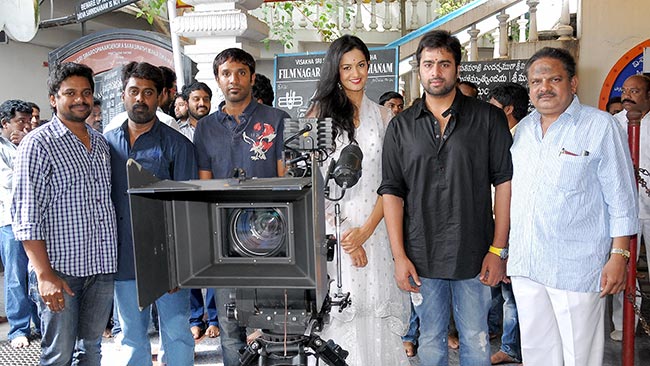
Actor Nishan will romance Keerthi in the upcoming film Geethanjali. The film is directed by Priyadarshan and has Mohanlal doing the role of Dr Sunny, a psychiatrist. Nishan will be the second lead after Mohanlal in the film.
The actor is elated that he has bagged a role in his favourite director Priyadarshan’s film and is looking forward for the shooting to begin.
Sree Kaveri Kodagu Mahila Sangha’s Advisor Parwati Cariappa (extreme left) and Sangha President Sarasu Nanaiah are seen lighting the lamp at the inauguration of the free health camp in city yesterday as chief guest Dr. P.A. Kushalappa, Sangha Organising Secretary Gowri Mandanna and Hon. Secretary Lovely Appaiah look on. Mysore :
A free health check-up camp was held under the aegis of Sree Kaveri Kodagu Mahila Sangha at the Kodagu Sahakara Sangha premises in Jayalakshmipuram yesterday.
The camp was inaugurated by dermatologist Dr. P.A. Kushalappa and Mahila Sangha’s Advisor Parwati Cariappa.
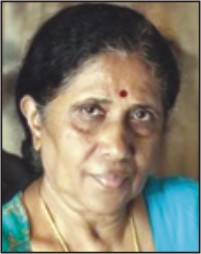
The health camp was held in memory of late Ursula Kariappa, wife of Karthamada Kariappa.
Sangha President B. Sarasu Nanaiah presided. Hon. Secretary P. Lovely Appaiah welcomed.
A large number of people availed of the opportunity at the camp in which Physician Dr. Latha Muthanna, Dr. Padmini Kaveriappa, dentist Dr. Manasa Sendil, Paediatrician Dr. Jyotsna Prasad, Dr. P. P. Aiyanna (Ayurveda), gynaecologist Dr. Kamalamma, orthopaedic surgeon Dr. Ajay Hegde and Dr. Rajesh of Vasan Eye Care participated.
Sangha Vice-President Bollamma Appanna and the guests presented mementos to the doctors who participated in the camp.
Treasurer Jyothi Kashi, Joint Secretaries Bollamma Kuttappa and Kavya Kuttappa, Organising Secretaries Gowri Mandanna and Sumi Gopal and other members were present on the occasion.
source: http://www.starofmysore.com / Star of Mysore / Home> General News / July 29th, 2013
Vice-Chancellor T.C. Shivashankara Murthy, Dharmasthala Dharmadhikari D. Veerendra Heggade, and Higher Education Minister R.V. Deshpande at inauguration of a job fair at SDM Business Management College in Mangalore on Sunday. / Photo: H.S. Manjunath / The Hindu Extend last date for admissions for the courses till August 15, says Minister for Higher Education and Tourism R.V. Deshpande
Minister for Higher Education and Tourism R.V. Deshpande said here on Sunday that the government has permitted Mangalore University to offer five new courses, including post-graduate, diploma and certificate, from the academic year 2013-14.
Addressing presspersons, the Minister said the university has been permitted to offer post-graduate courses in Bharatanatyam (Master of Arts) and Food Science and Nutrition (Master of Science), certificate courses in radioisotopes in biological science and visual arts, and diploma and post-graduate diploma courses in Kodava language and culture.
Field Marshal K.M. Cariappa College, a constituent college of the university at Madikeri, would offer the diploma and post-graduate diploma in Kodava language and culture. Any other colleges affiliated to the university can come forward to offer the two post-graduate courses. The certificate courses would be offered by the university.
Mr. Deshpande said that as the admissions for the current academic year at the university would close on July 31, he had directed the university to extend the last date for admissions for the five courses until August 15 as they were sanctioned recently.
According to P.S. Yadapadithaya, Registrar (administration) at the university, the University Science Instrumentation Centre (USIC) on the university campus would offer three-month certificate course in radioisotopes in biological science. N.G. Pavanje Chair in Fine Arts, an endowment chair, would offer a 16-week certificate course in visual arts. The diploma and post-graduate diploma in Kodava Language and Culture were of one-year duration each. The college would also offer a six month-certificate course in Kodava Language and Culture. The post-graduate courses were of two-year duration, but the university would not offer them in the current academic year.
Another official at the university said the university was yet to receive the formal approval letter to this effect from the government.
LOAN MELA
Mr. Deshpande said that 53 lakh students aged between 18 years and 25 years were out of higher education in the State and only 17 lakh were pursuing further studies. To increase the enrolment ratio of youth to higher education, the government would organise educational loan melas to provide financial support to youth to purse higher education. He did not make it clear when and how many such melas would be organised.
Earlier, he addressed a gathering at a job fair organised by the Department of Collegiate Education to graduates of government degree colleges of Dakshina Kannada, Udupi and Kodagu districts in the city.
source:http://www.thehindu.com / The Hindu / Home> News> Cities> Mangalore / by The Hindu, Special Correspondent / Mangalore – Julu 29th, 2013
A nondescript town in the lap of the majestic Pushpagiri mountain, Kumarahally’s geography makes it the perfect place to look for some solitary adventures, writes B V Prakash
Not all those who wander are lost, said a great man once; it surely must be the love of adventure. During my latest visit to Coorg, I decided to give the usual sights a miss and filled with an urge to explore the unseen, I deviated towards Somwarpet to drive through the primitive villages spread across the mountain ranges of the majestic Pushpagiri.
The destination was the nondescript town of Kumarahally. Also called Kumarally (in short), this town has nothing to boast of as a tourist destination; it is just one of the many small towns with similar names such as Shantalli, Kundalli, Bidalli and Bachalli through which one has to pass. However, it serves as a good base from which you can foray into a couple of interesting and exciting locales.
Leaving Somwarpet by afternoon, I headed north-west, breezing past the lush coffee estates and the green fields shining bright in the afternoon sun. After about five kilometres, a deviation to the left led me to a rustic settlement. Named Abbi Matha, this settlement is a religious place where devotees come for worship. But for others, it is a popular picnic spot thanks to the presence of the Abbi Matha Falls. The two-tier cascade may not steal the show, but it is impressive in its austere simplicity — surely an interesting diversion to break the 20-km journey to Kumarally. A dilapidated mutt premises can be visited here. Getting back on the track, I continued my journey towards Kumarally; the remaining journey was covered in half an hour and before dusk, I had reached my destination. The homestay at Kumarally — there is only one — is the ideal place to spend the night before exploring the locales nearby.
The nearest and most sought after sight here is the enchanting waterfalls of Mallalli. If you take the kuchcha road that goes beside the homestay, within a little less than three kilometres, you reach the famed waterfalls. However, driving on the slippery muddy stretch into the valley is indeed a torture. Mornings are the ideal time to visit the falls which are a sight to behold during sunrise. So at dawn, while still dark, I headed for the falls. After driving two kilometres on the treacherous path, I chose to walk the remaining way which proved to be a pleasant experience thanks to the fresh air and the sweet call of the birds. As I reached the edge of the wide gorge, I was left dumbfounded by the sheer beauty of the white cascades rolling down gently. I had all the time in the world to admire its beauty and also walk down all the way to its base.
From the front, the two distinct falls, each with its own form, appeared even more charming. The river Kumaradhara, which flows from here, tumbles down over short drops at a couple of places before joining the Netravathi at Uppinangadi. Rejuvenated from the astounding beauty in front of me, the tough climb back hardly mattered. On the way, I remembered the suggestion of my host Ponnappa and traced a trail through the coffee estates to see an unknown little falls which he said was called the mini-Mallalli falls.
Back at the homestay, after relishing a typically Coorgi breakfast of Votti (rice chapathi) and a cup of refreshing coffee, I drove up to Heggademane, a sleepy town six kilometres away. These places are familiar to trekkers as the trek to Pushpagiri begins from here. But you don’t have to be one to enjoy the panoramic view of the tall rounded peak rising into the blue sky from a lush forest. The Shantamallikarjuna temple here is worth visiting. In recent times, it has undergone a thorough improvement. The 850-year-old Champaka tree in the backyard is something that must not be missed.
Another interesting spot nearby is a hilly tract called Pattepare, which has some strange heaps of stones. Placed in triangular cairns of pebbles with a small opening, these were used as hideouts by erstwhile soldiers in times of battles, according to Ponnappa. There are also caves with narrow entrances. Though the whole place looked bizarre, it did evoke a feeling of belonging to a bygone era. With the sight of the mountain peak, the charming falls, the temple and clusters of age old cairns, Kumarally had me captivated.
How to get there
Kumarally is 20 kilometres from Somwarpet which is well connected with other cities. Though buses go to Kumarally it is easy to visit the spots with own transport in a day. The only homestay here provides food and accommodation.
source: http://www.deccanherald.com / Deccan Herald / Home> Supplements> Spectrum / by B V Prakash, DHNS / July 30th, 2013
Sree Kaveri Kodagu Mahila Sangha’s Advisor Parwati Cariappa (extreme left) and Sangha President Sarasu Nanaiah are seen lighting the lamp at the inauguration of the free health camp in city yesterday as chief guest Dr. P.A. Kushalappa, Sangha Organising Secretary Gowri Mandanna and Hon. Secretary Lovely Appaiah look on. Mysore :
A free health check-up camp was held under the aegis of Sree Kaveri Kodagu Mahila Sangha at the Kodagu Sahakara Sangha premises in Jayalakshmipuram yesterday.
The camp was inaugurated by dermatologist Dr. P.A. Kushalappa and Mahila Sangha’s Advisor Parwati Cariappa.
The health camp was held in memory of late Ursula Kariappa, wife of Karthamada Kariappa.
Sangha President B. Sarasu Nanaiah presided. Hon. Secretary P. Lovely Appaiah welcomed.
A large number of people availed of the opportunity at the camp in which Physician Dr. Latha Muthanna, Dr. Padmini Kaveriappa, dentist Dr. Manasa Sendil, Paediatrician Dr. Jyotsna Prasad, Dr. P. P. Aiyanna (Ayurveda), gynaecologist Dr. Kamalamma, orthopaedic surgeon Dr. Ajay Hegde and Dr. Rajesh of Vasan Eye Care participated.
Sangha Vice-President Bollamma Appanna and the guests presented mementos to the doctors who participated in the camp.
Treasurer Jyothi Kashi, Joint Secretaries Bollamma Kuttappa and Kavya Kuttappa, Organising Secretaries Gowri Mandanna and Sumi Gopal and other members were present on the occasion.
source: http://www.starofmysore.com / Star of Mysore / Home> General News / July 29th, 2013
Jade Hill cottage
Every home is born first in the imagination, in the longing for the culmination of a dream. Only in some homes, the dream-like quality never really leaves, long after the walls have sprung up and every roof tile, every brick, pillar and window has found its place. The first time you see the Jade Hill cottage in Coorg, it is easy to disbelieve your eyes. So is there a house, really, atop a steep hill, shinning in the evening wilderness like a jewel? Well, yes, there really is.
But before we trek towards the home, it is time for a flashback. As narrated by architect Kavya Thimmaiah Prasanna, “My dad (Rajyutsva award winning architect HC Thimmaiah) was orphaned at an early age. He and his three siblings spent their childhood between various relatives’ houses in Coorg, the one constant being their grandmother. Her death split up the family and dad moved to Delhi, then Mumbai and finally to Chennai for his first job. One of the first architects to come from Coorg, he finally moved to Bangalore where he set up his own practice and started his life. But always, there was a hankering for what he had lost. The childhood home among the coffee plantations that he enjoyed so fleetingly. So 40 years after he left Coorg, when he got the opportunity to build a hill home, it was the culmination of a life-long dream, something he had always yearned for, without even admitting to it.”
So that then is the history of Jade Hill, the house on top of the mountain that HC Thimmaiah built with his daughter. The cottage, when you reach it, spreads out languidly as if it were part of the hill rather than built on it. And that is because the Thimmaiahs used stone and laterite found in the region and kept the structure organic and simple with a wrap around verandah where the design quirk is the twisted brick pillars. The flooring throughout the house is red oxide though it isn’t just red but blue and yellow and green and embedded with decorative tiles.
Part of recreating nostalgia was to literally salvage it, so Thimmaiah sourced doors and windows and a lot of wood and even tiles from old traditional homes that were being demolished all across Coorg. Kavya says, “Yes, my parents decided to use only recycled materials in the construction. Scrap-yards were scoured and doors, windows and pillars bought in a decrepit state and refurbished lovingly. Hundred-year old tiles for the roof and burnt-orange, laterite walls completed the construction.” To keep the house as green as possible, the use of new wood was kept to the minimum and concrete built-ins were created to serve as beds while a few pieces of antique furniture lend a sense of history.
Even in the bathroom, a mosaic was created out of broken tiles that would have been thrown away otherwise. Building the house though was not easy. Recalls Kavya, “When my parents bought a piece of land in this remote, relatively unknown part of Coorg, most people thought that they were plain crazy. Who would want to live in a village so windy that it was called Galibeedu or ‘Windy Village’? A place with rainfall so high, that nothing grew on the slopes? Least of all, that Coorg staple, coffee. To a Kodava, any land that coffee can’t be grown on is pretty much useless. ‘If you must build a house there, don’t build on top of the hill,’’ they said and added, ‘Build it in the valley, where it is sheltered, and to hell with the view!’’ But my dad, the recalcitrant person that he is, said, “Top of the hill and nowhere else.’’ So top of the hill it was. A house built into the hillside, overlooking the valley, with a deck facing a storybook view and sunsets.”
Most visitors couldn’t locate the house at first. Says Kavya, “This house with the old doors and windows couldn’t be it, they thought. One visitor even went around the back, searching for the ‘new’ house till we had to tell him that this was it! Many years and monsoons later (there were dire warnings of monsoons so severe that they would blow the tiles off the roofs), the house stands as proudly as before. Resorts and home stays have sprung up in and around Galibeedu and this once forgotten place now commands one of the highest, real-estate values in Coorg. For us, the house on the hill has become a favourite family getaway. Sitting on the deck, watching the sun set over the green forests below, we can’t imagine the house being anywhere else.”
But more than just making an architectural statement, the house, says Kavya, represents the history of a man, “who left Coorg penniless, and returned proudly to re-claim a part of it. On his terms, beholden to no one.”
(Reema Moudgil is the author of Perfect Eight, editor of unboxedwriters.com and an RJ)
source: http://www.newindianexpress.com / The New Indian Express / Home> Education> Student / by Reema Moudgil – Chennai / July 22nd, 2013
A blend of mythology, history and scenic locales, Madikeri is every traveller’s dream. Nothing like a weekend trip here to rejuvenate your tired soul, writes Swapna Dutta
It is a sluggish, cloudy morning. We are on our way to Madikeri, a place known for its calm, cool, peaceful and pollution free atmosphere. The very word Coorg spells wooded slopes and colourful scenery. Also, coffee and cardamom; black pepper and honey. The landscape is somewhat rugged but the misty mountain ranges that comprise ridge after ridge of lush, green forest reaching out to the bright blue sky is a sight to behold. The road is remarkably smooth and well-maintained and we are hardly aware that we have been climbing up steadily. It is easy to understand why Coorg was one of the places the British chose to settle down and continued to occupy it for over a hundred years; it was their ‘ Scotland of India’.
Madikeri, the charming capital of Coorg district, is located at an elevation of 1,525m above sea level. As we look around, breathing in the refreshing mountain air, we see the red-tiled bungalows that dot the hillside and a bustling market place at the heart of the city. There are acres and acres of tea and coffee plantations, orange groves, and undulating paths — all in all, a breathtaking view. The place also has a distinct old world charm about it.
Madikeri or Mercara, as it was called earlier, was founded in 1681 by Muddu Raja, a prince from the Haleri dynasty. It was originally called Muddurajakeri and was later shortened to Madikeri. Apart from being one of the most picturesque hill stations in South India, it is also the place from where the river Cauvery originates. It is generally believed that Coorg was ruled mainly by chieftains and local princes until the 17th Century. A number of inscriptions and copper plates found in different parts of the state denote that it was under different dynasties at different times; the Gangas, the Haleris, the Kadambas, the Cholas, the Kongalvas, the Changalvas, the Hoysalas and the Nayakatas being the most prominent ones among them.
The main sights of Madikeri town include the charming well-tended park in the heart of the city known as the Raja’s seat. It is said to be the place from where kings watched the setting sun along with their queens. The pavilion offers a gorgeous view of towering hills, green valleys full of paddy fields and forests and the road that looks like a curved ribbon lying way down below.
We next visit the Omkareshwara temple built by Lingarajendra Wodeyar II in 1820. The temple that has a beautiful tank in front is a mixture of Gothic and Islamic architecture. The Madikeri fort, an imposing structure that can be seen from almost the entire town, was originally built as a mud fort by Mudduraja along with a palace in the 17th Century. It was later rebuilt with granite by Tipu Sultan. When the British took over, they added a portico and a clock tower to the building. The fort building now houses a prison, a temple, a chapel, a museum and assorted government offices.
There are a number of tombs and memorials of historical importance in Madikeri. There is the Raja’s tomb which is a beautiful structure. The others comprise the tombs of Lingarajendra built in 1820 by his son, the tomb of a royal priest Rudrappa built in 1834 and the tombs of two brave soldiers who died fighting with Tipu Sultan.
The next day we make our way to the Talacauvery, located 44 km away from Madikeri on the slope of the Brahmagiri hills where the Cauvery originates. It is one of the important sacred places in Karnataka and is always full of pilgrims.
The place is marked by a tirtha kundike or a tank where the river emerges as a perennial spring and flows underground again, emerging a short distance away. From Talacauvery there are steps leading to the peak of the Brahmagiri from where one can get a panoramic view of the whole place.
How to get there
Madikeri does not have an airport; the nearest one is in Mangalore from where one can hire a taxi to get there. KSRTC runs a number of buses to and from Madikeri which are quite comfortable. Depending on where you live, hiring a taxi or going by car is also a good option as it is difficult to find local transport for sightseeing. From Bangalore it takes just under six hours to get there.
Stay is not a problem as there are a number of budget hotels, homestays, medium range and luxury hotels as well as resorts. But it is always advisable to book in advance as the place could well be full of tourists and pilgrims just when you plan to visit it.
source: http://www.deccanherald.com / Deccan Herald / Home> Supplements> Spectrum / by Swapna Dutta / July 16th, 2013
The guests from Nigeria have arrived in Kodagu. Its now their season to enjoy the mother nature, who are found aplenty in plantations, paddy fields and wherever you can see. It does not mean they are newcomers to Kodagu. They arrive here as guests on every monsoon since the past several decades.They will arrive in the future too. Now, you will wonder who these Nigerian guests are. If you want to see them, they are aplenty at Moornadu, Napoklu and Virajpet who fly in flocks between huge trees; they are none other than migratory birds from Nigeria or the locals call them as Bellakki, because they are white like snow.
If you go to see, its customary for the migratory birds to arrive in hilly range of Kodagu at the onset of monsoon, who take refuge from heavy gales and torrential rains. However, there have been a little changes in the recent past. It doesn’t rain like before here owing to which a few bird remain here. Moreover, no sooner monsoon sets in, these Nigerian migratory birds flock here and make nests in huge trees and busy themselves in procreation.
These birds that arrive in Kodagu take shelter in Napoklu, Moornadu and Virajpet. They are merrily made their nest in huge trees in towns and are least concerned of human activities on earth. These birds fly across blue sky, make nest and busy in laying eggs, a scenic sight indeed. If you view these migratory birds high on huge trees, it reminds of falcons of Mandya.
A few migratory birds were cited in the huge trees located at Napoklu.They returned to their bases after hatching and returned with newborn chicks.The number of migratory birds increased since then as the food was found aplenty and none troubled them. The flocks increased over the years and began settling in huge trees not only in Napoklu, but also in Hakattoor, that lies on Moornadu – Madikeri road. These birds shifted to localities of Moornadu, Napoklu and Virajpet as huge trees were felled in Hakattoor.
These migratory birds arrive in flocks during May – June at the onset of monsoon and settle in the huge trees of Napoklu, Moornadu, Virajpet (nearby KSRTC bus stand) in town.
These birds busy themselves in building nest from dry leaves and small bits of wild vegetation that they source from nearby coffee and cardamom estates. The female bird remains in the nest, lays eggs and hatches them, while the male bird brings food for them from fields nearby. The female bird feeds the newborn that shot is a cherished shot for any cameraman.
The birds get aplenty food such as worms, insects etc when the farmer tills the paddy field. The newborn learn to fly and collectively fly all over without bothering to the people and chaos in the city. These birds make their return journey along with the confident chicks to their homelands. They will only return during next monsoon. The city-folks do not bother these migratory birds in procreation that makes them to come back in next season.
source: http://www.newskarnataka.com / Home> Cities / by B M Lavakumar / July 18th, 2013
Sandalwood film Mangana Kaiyalli Manikya, which has Ramesh Aravind and Harshika Poonacha in the lead, is all set to hit the screens on July 26. The film, directed by Rajendra Karanth, has got U/A certificate from the Regional Censor Board.
The film is said to be an out and out comedy, with dialogues written by the director himself. The title trailer of the movie, which was recently released on YouTube, has received a lot of appreciation from audiences. Harshika Poonacha is playing the role of an assistant director in the movie. The movie also has Rangayana Raghu and Ravishankar Gowda in significant roles.
The project is produced by Sandesh Nagaraj and music has been provided by Rajesh Ramanath. Meanwhile, Harshika Poonacha also has Maryade, which is currently under shooting in Mysore and Adwaitha, which has Ajai Rao in the lead role.
source: http://www.articles.timesofindia.indiatimes.com / The Times of India / Home> Entertainment> Regional> Kannada> Assistant Director / by Vinay Lokesh, TNN / July 13th, 2013
Known for making others dance to his fusion beats, DJ Nikhil Chinapa recently visited Chandigarh to promote an art aimed at providing a platform to youngsters fond of dance.
Speaking at the inauguration the ‘Submerge Dance Project’ at Blue Blazers pub in Sector-26, the MTV VJ urged all talented dancers to showcase their talent as the burgeoning industry offered many lucrative employment opportunities.
The gathering then danced to the tunes of DJ Chinappa, who played several different genres during his three-hour long performance.
Youngsters dancing to tunes of Nikhil.. Click next..