Category Archives: Arts, Culture & Entertainment

Security: GPS fitted on two elephants in Kodagu

Tracking pachyderms

In an unique attempt, Global Positioning System (GPS) devices have been installed on the collars of two tamed elephants at Dubare elephant camp in Kushalnagar. It is for the first time that GPS has been installed on elephants.

Two elephants that have got the privilege of GPS are Ranjan (4) and Shivagange (11). With the installation of GPS on Saturday, the path on which the elephants walk could be traced through the internet enabled system.

The elephants at Dubare are left to roam around in the forest after bathing them in Cauvery river and providing them with food. These elephants roam around in the forest in search of food and return to the camp in the evening by 4.30 pm.

The elephants that are left to the forest are tied with iron chains with links. These chain links leave mark on the road on which the elephant walks, thus enabling mahouts to find the route on which the elephant has traveled.

However, mahouts find it challenging to trace elephants during heavy rain as the mark created by chain links are usually washed out. It is at this juncture, that the GPS comes to the rescue of mahouts. The radiation emerging out of the GPS will help to find the exact location of the elephant with the help of internet.

Inspired by Prajna

Animal lover and elephant expert Prajna Chowta is the inspiration behind introducing GPS devices in Dubare. Prajna Chowta, who is looking after four elephants in Dubare camp has installed GPS devices on two of her elephants.

Speaking to Deccan Herald, Dubare range forest officer Appaswamy said that Prajna had brought the matter of installing GPS devices on two of her elephants in the camp, to the notice of the higher officials. Hence, the department decided to install devices on the elephants, he said.

A GPS-enabled device normally records and stores location data at a pre-determined interval or on interruption by an environmental sensor.

source: http://www.DeccanHerald.com / Home> District / by Shrikanth Kallammanavara, Madikeri / September 03rd, 2012

Women & Guns

Mysore, Sept. 8:

The Week magazine dated September 16, 2012, has a surprise for Kodavas particularly as it carries on its cover the gun-toting, trigger-happy Kodava woman who lives in city, Mrs. Tiny Biddapa.

The 66-year-old Kodavathi, Madrira Tiny Biddapa, is also featured on the inside-spread of the magazine with her 12-bore gun resting on her shoulder inside her coconut-garden in the outskirts of the city adjacent to the Police Layout in Mysore East.

The article says that many women see guns as a force equaliser in this unfair world, well, dominated by men of lust and greed.—KBG

source: http://www.StarofMysore.com / General News / September 08th, 2012

Talacauvery temple panel to enforce dress code

Irked by tourists who wear skimpy dress while visiting the Bhagandeshwara temple in Talacauvery, the management committee of the shrine has decided to impose a dress code for visitors.

“We have not finalised the dress but any dress that covers women and men adequately would suffice. This is not an ordinary tourist centre but is a shrine of Cauvery river which feeds lakhs of people in Mysore and Bangalore and in Tamil Nadu and also irrigates several thousand hectares of agricultural land in South Karnataka and Tamil Nadu. So we should show some respect to the shrine by being presentable at the shrine,” said the committee president AK Manu Muthappa.

The committee is also wary of the litterbugs. “They throw all sorts of trash including empty food packets, water bottles, polythene bags in the temple premises. The committee has taken a serious view of this and has decided to start a campaign against littering” Muthappa said.

The committee member TS Narayanachar said: “The dress code will come into force immediately and those who wish to visit the temple should be prepared to wear the prescribed dress.”

The festivities (Sankramana Jathre) at the shrine will begin on October 17 when lakhs of pilgrims are expected to visit the temple.

source: http://www.dnaindia.com / Daily News & Analysis / Home> Bangalore> Report / by DNA Correspondent, Place: Madikeri, Agency: DNA / Tuesday, September 04th, 2012

Pandi curry

The pandi curry at Coorg is one of the top dishes of Bangalore

The pandi curry at this quaint home-turned-restaurant (on weekends) is the highlight of the buffet; invariably, it has patrons lining up for seconds, and even thirds. Coorg’s owner, KC Aiyappa, pointed out that “it’s a compulsory fixture at all Kodava feasts and functions too”. A meal in which this slow-cooked pork preparation is the star dish certainly does take on a celebratory tone, if only to applaud the time, precision and care that goes into achieving this wondrous amalgamation of fatty meat and many, many spices.

Aiyappa leaves the cooking in the able hands of his wife, Priya, who first treats the pork with rock salt, pepper, turmeric and a hint of chilli, then bastes it with masala before setting it on the flame. The meat cooks in its own oil and fat for nearly an hour before she adds another mix of spices, this time fragrant plantation produce from Coorg, such as cardamom, cinnamon, cumin and cloves. Much later, only when the dish has simmered and thickened, does it get flavoured with kochampuli, an ingredient that’s also brought from the coffee-growing regions of the state, which lends the curry its dark colour and sour, woody taste. The Aiyappas insist that for the pulp to be made correctly, it must “be left on firewood and most importantly, watched over.”

Not differing from tradition, the folks at the restaurant don’t refrigerate the rich curry. Instead, it is heated over and over till it is lapped up by customers, most commonly with several akki ottis, or soft, porous rotis made from cooked rice.

Coorg 477, Krishna Temple Road, 1st Stage, Indira Nagar (+91 98454 93688). Fri 8.00pm-11.00pm, Sat, Sun 12.00pm-3.30pm, 8.00pm-11.00pm. No cards. R180.

source: http://www.timeoutbengaluru.net / Home> Restaurants & Cafes> Features / by Ria Basu / Photos by Selvaprakash L / August 31st, 2012

Fishing for compliments

At the Coorg table, you can immerse your tastebuds into a dark, tangy fish curry, with spice tones reminiscent of the famous pandi curry, but thinner and sharper. No coconut here — just ground onions, garlic and a few grains of raw rice as a thickener, a faint, pleasing bitterness from fenugreek seeds, dark roasted spices. Sharp, clear flavours emerge from the earthenware cooking pots. For a land locked, hill people, we eat a lot of fish in Coorg. The streams and rivers offered a generous supply of fresh water crabs and fish, like the sweet-fleshed bare meen.

Fishing trips had a touch of the theatrical — fire-lit or lamp-lit men, balancing along the mud embankments of the fields, or river-banks, to spear or trap fish. Bamboo traps were laid in cold, swift flowing streams. In season, the flooded paddy fields were full of crab and the prized, tiny koile meen.Fresh catch from the sea was just a day -trip away and, centuries of trade with the Malabar coast established a tradition of fresh and dried fish finding their way into Coorg homes, in sawdust-lined tin boxes, carried by Mapilah traders, to be haggled over in backyards. Salted fish was set aside for the monsoon months, or pickled in a thick layer of spices, immersed in baranis (earthenware jars).

To the fish and crustaceans of the sea and their own highland streams, the Coorgs brought their typical spice mixtures that added beguiling flavours. Whole mackerel, sardines, or slices of sweet-tasting river fish were lightly marinated in red chilli powder, turmeric and the indispensible kachampuli (Coorg vinegar), dipped in rice powder, and fried crisp on cast iron tawas. The contrast of the crunch of crisped exteriors, the lingering levels of spice in the firm flesh and a squeeze of lime was always perfect. There were plump morsels of pickled fish, and curries and pickles of prawns. Some days, an estate worker would come by with a catch of slender, flashing fish, a couple inches long, from the paddy fields. Fiddly to clean of the grit and mud, we spent ages rubbing slippery mounds with ash or salt for curry, or my favourite — clusters of koile meen, mixed with spices, for ‘cutlets.’

Fresh crab, caught in streams or fields were quick fried, or curried with finely ground coconut into a sour-spicy curry. Served with hot akki ottis and melted ghee. As we sat around a small, dining table, crunching crab claws and sucking out tender meat, my mother-in-law would explain which phases of the moon brought the crabs heavy with meat and, the knack of catching live crabs without receiving a painful pinch. I would nod enthusiastically, but left that particular task to the experts.

RECIPE
Coorg Fish Curry
Ingredients
* 1kg fish (seer works very well) cut into ½ inch thick steaks
Grind together to a fine paste
* 4 large onions
* 1 inch ginger
* 8 pods of garlic, peeled
* 1 ½ tsp jeera
Dry spices
* Red chilli powder to taste
* 2 tsp coriander powder
* 1 level tsp turmeric

For seasoning
* 1 tsp mustard seeds
* 2 green chillies
* 2 onions, sliced thin
* 8-10 curry leaves

For the roasted masala
* 1 tsp whole cumin (jeera)
* 1 tsp mustard seeds (rye)
* ¼ tsp fenugreek seeds
* ¼ tsp raw rice
* ½ tsp black peppercorns kachampuli, or malt vinegar

Slow roast the above spices separately on a hot tawa until they release their aromas and change colour. Allow them to cool, and crush to a powder, separately, and then mix.
* Salt to taste
* ½ cup oil
* 2 cups hot water

Method
Wash and dry the fish fillets or steaks.
Mix the kachampuli (or malt vinegar), the turmeric, chilli powder, salt into the fish, and set aside.
Heat the oil in a deep pan, or kadai, add the mustard seeds. When they begin to splutter, add the curry leaves, the sliced onions and the green chillies, and fry gently until softened.
Add the coriander powder, chilli powder, and ground paste of onions. Cook slowly, until the raw smell disappears.
Add 2 cups hot water, or more according to gravy required, and when simmering add the fish, and cook uncovered, until almost done.
Add the dry roasted, powdered spices, and simmer until done.
Optional — you can thicken the curry with a small amount of tamarind paste too.

– The writer is an anthropologist and independent author based in the city, who delves in to food, wine, travel and heritage. She is also behind A Gourmet’s Table In Coorg (http://coorg.com), a blog exploring the fascinating traditions of Coorg cuisine, food lore and special meals.

source: http://www.DeccanChronicle.com / Home> Channels> LifeStyle> Dine o Mite / by Kaveri Ponnapa, DC / September 06th, 2012

‘Kail Pold’ festival celebrated in Kodagu

“Kail Pold”, one of the main festivals of Kodagu, was celebrated with traditional gaiety across Kodagu on Monday.

The festival symbolises “Ayudha Puja” for the people of Kodagu, mainly Kodavas. It also marks the culmination of paddy transplantation throughout the district and waning of monsoon. Firearms, weapons of all sorts, including “odikathi’ (curved dagger), are burnished, plough used to till paddy field, yoke and old Kodava artefacts are placed at the “Nellakki” (place where Kodavas offer prayers in their houses) and worshipped. Kodavas of Nalknad area celebrated the festival on August 28.

The eldest person in a family dressed in traditional attire would offer puja to the items placed at the “Nellakki”. Bacharaniyanda P. Appanna, former president of the Karnataka Kodava Sahitya Academy, arranged artefacts of the yore to worship, symbolising the festival at his residence in Kushalnagar on Monday. The objects included “ambkathi”, “pillkathi”, “koykathi”, “balkathi”, “maradudi”, “tarikutt”, “vannali”, “mora”, “morkuthi”, plough, and yoke used in households in Kodagu in the past.

Pall of gloom

However, a pall of gloom descended on the district when two persons, who were returing home after celebrating the festival in the district, died on Monday.

Avin Ponnanna (30), who was crossing the old bridge across the Cauvery at Balamuri near Murnad on his motorcycle, was washed away. He was returning home after taking part in the Kail Pold sports events organised at Hoddur village, reports received here said. Kodagu in-charge Minister M.P. Appachu Ranjan and Capt. Ganesh Karnik, MLC, visited the spot.

H.B. Gopal, who took part in the festivities at Mutharmudi near Murnad, fell into a stream and drowned at Tobattumane area while returning home.

source: http://www.TheHindu.com / Home> National> Karnataka / by Special Correspondent / Mysore, September 05th, 2012

First batch of dasara jumbos reach Mysore

Mysore:

The first batch of six elephants including howdah elephant Balarama on Friday ambled from the woods marking the beginning of the Dasara-2012.

The elephants will be in Mysore for nearly two months and will participate in the Vijayadashami procession on the last day of Dasara festival celebrations, which is scheduled to commence from October 16.

A traditional pooja was performed before they moved out of woods at Nagarpura, a territorial forest area in Hunsur. Earlier, ‘Gajapayana’ (the ritual of brining elephants from forest for the celebrations) was being conducted at Veeranahosahalli, a tiger reserve in Nagarahole National Park but this time authorities changed the venue for ‘Gajapayana’ following supreme court direction to ban activities in tiger reserve area.

On the occasion, the students of a tribal school and Tibetans presented a cultural performance at the venue, some 60 kms away from Mysore.

Wildlife division DCF S N Devaraja told TOI that four elephants from Nagapura – Balarama, Abhimanyu, Arujuna and Vijaya and two from K Gudi – Srirama and Gajendra have reached Mysore safely. They were transported in separate trucks from forest areas. They will traditionally welcomed inside Mysore Palace where they will stay put till Dasara concludes on September 10.

The second batch of six elephants will arrived three weeks before the celebrations.

Siddeshwara Swamiji to inaugurate Dasara

District minister S A Ramdas who inaugurated the traditional ceremony at Nagapura announced that this year Sri Siddeshwara Swamiji of Jnanayogashrama Mutt, Bijapur, will inaugurate the Dasara celebrations atop the Chamundi Hills on October 16. The minister said earlier they had selected litterateur S L Byrappa to open the celebrations but as Byrappa will be busy attending a literary meet in Japan during the time he will be not available for the inauguration.

On the occasion, district minister presented title deeds to five families who were relocated from reserved forest areas under central government rehabilitation scheme. Each family received ownership documents of five acre land outside the protected forest area and soon the district administration will offer possession certificate to other members of tribal community.

Meet the jumbos

Balarama: He was trapped in Kattepura village forest in Kodagu district in 1987. Balarama, aged 54 years, has been participating in Dasara since 16 years and carrying golden howdah since 12 years. He hails from Thithimathi elephant camp and weighs 4950 kilos.

Abhimanyu:He was caught at Hebballa forest in Kodagu district in 1977. Abhimanyu, 46 years, is being used in operations to tame other wild elephants and he has been participating in Dasara since 13 years. He weighs nearly 4320 kilos.

Arjuna:The 52-year-old tusker was caught in Kheda operation at Kakanakote forest in 1968. He has carried golden howdah once. He comes from Balle elephant camp and weighs 4820 kilos.

Gajendra (57):This elephant was caught during an operation at Kattepura in Kodagu in 1987. Gajendra, the ‘Pattada ane’ has been participating in Dasara procession since 15 years. He is around 4560 kilos

Srirama :He was caught from Thithimathi forest in Kodagu in 1969. He is strong and courageous. Srirama, 55 years, is used in pooja at Mysore Palace. This is his 16 thparticipation in dasara. He weighs nearly 4450 kilos

Vijaya:She was caught in Dubare forest in 1963. The 54-year-old is mild in nature and she is taking part in Dasara since 7 years. She weighs nearly 3250 kilos.

source: http://www.timesofindia.indiatimes.com / Home> City> Mysore / by Lawrence Milton, TNN / September 07th, 2012

Jacky loves to romance with Angelina Jolie


Mumbai:
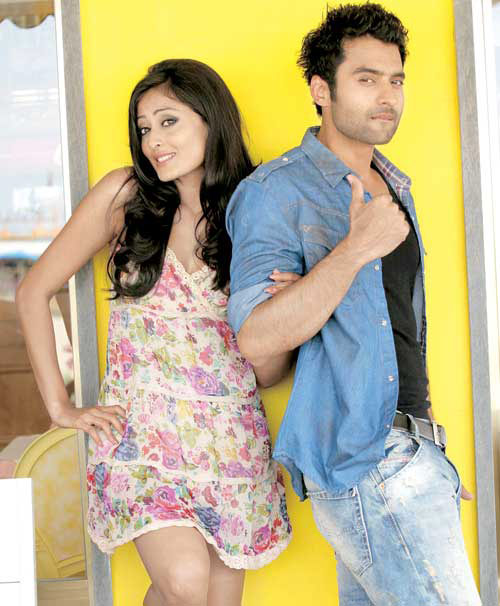
After grabbing a great response from ‘ FALTU’, Jacky Bhagnani is thrilled about his upcoming flick ‘ Ajab Gazabb Love’. The actor admires his co-star Nidhi Subbaiah for her tremendous performance in the movie. The actor who had done three films with every fresh faces stated that he would love to romance Angelina Jolie.

Jacky stated that, “I would want to romance Angelina Jolie also, but I have just done three films till now and I am happy romacing Nidhi in this film.”

He also added that he is also a fresh face of the B-town and doesn’t mind romancing any actress.

The actor said, “Off-screen rapport is very important with an actress to make the movie look realistic. People want to see real friendship even if it’s a filmy film.”

source: http://www.aajkiakhbar.com / Home> Entertainment . by Abhayank Tiwari / Thursday, August 31st, 2012

State Govt. to honour eight veteran journalists

TSR Memorial & Mohare Hanumantharaya awards to be presented

Caption: Shivasharanappa Vali, Ranganatha Rao, M.B. Desai, Nagaraja, Narayana Karantha, K.V. Paramesh, Ramesh Kuttappa, Ravindra Bhat

Bangalore, Aug. 25
The State Government will be honouring journalists by presenting the TSR Memorial and Mohare Hanumantharaya, Development and Environmental Journalism awards for the years 2010 and 2011 at Ravindra Kalakshetra here on Aug. 27 at 11 am.

G.N. Ranganath Rao and Garudanagiri Nagaraj will be honoured with TSR Memorial Award for 2010 and 2011 respectively. Shivasharanappa Vali (2010) and M.B. Desai (2011) will be given the Mohare Hanumantharaya Journalism Award while K.V. Paramesh (2010) and Ravindra Bhat Ainakai (2011) will receive Development Journalism Awards. Narayana Karanth Peraje (2010) and Ajjamada Ramesh Kuttappa (2011) will be given Environmental awards by the government.

Chief Minister Jagadish Shettar will present TSR and Mohare Hanumantharaya awards while Dy.CMs K.S. Eshwarappa and R .Ashok will present Development Journalism and Environmental Journalism awards respectively.

MP Ananthkumar and Justice G.P. Shivaprakash, retired High Court Judge & President of Journalism Award Selection Committee will be the chief guests.

Chikpet MLA Dr.D. Hemachandra Sagar will preside.

Late T.S. Ramachandra Rao (TSR), as the Editor of Prajavani, was famous for his column Choobaana. The government is presenting an award in his name since 1993 which includes Rs. 1 lakh cash prize. Till now, 18 journalists have received this award.

TSR award recipients: G.N. Ranganatha Rao entered journalism field by joining Tayinadu as a Sub-Editor. He also served in Samyukta Karnataka. He worked in Prajavani for 34 years and has authored 30 books.

Garudanagiri Nagaraja joined the movement for a responsible government against Mysore State when he was a student and was imprisoned. He received progressive farmer award also. He first served in Janavani, Praja-matha and later in Kannada Prabha. He has also served as the President of Karnataka Newspaper Academy.

Late Mohare Hanumantharaya was a freedom fighter from Bijapur district. After working as the Sub-Editor and Editor of Karnataka Vaibhava weekly in Bijapur, he joined Samyukta Karnataka as Editor and later became its Managing Editor. He started Kannada’s first digest Kasturi in 1956.

Mohare Hanumantharaya award recipients: Shivasharanappa Vali of Bidar district was involved in freedom movement, journalism, social work, educational, religious and political activities. He worked in Delhi’s Hindustan Samachar for 10 years and later in ‘Uttara Karnataka’ daily.

Mohan Basavaraja Desai: He started a Kannada weekly Darshana and later converted it into a daily Loka Darshana in border district of Belgaum. He has served as an Editor for 50 years in Kannada journalism.

Development journalism: K.V. Paramesh – Entering journalism field through Kodagu’s Shakti daily newspaper, he also served as Mysore Centre Head of E-TV Kannada, Bangalore Senior Reporter & Head of Political Division of Suvarna 24×7 and also in Samyukta Karnataka. His contributions include reports on Nagarahole forest fire, H.D. Kote taluk forest conditions, smuggling and sale of minor girls of Girijana tribes in Mysore district etc.

Ravindra Bhat Ainakai joined Samyukta Karnataka in 1990 and later served in Kannadamma of Belgaum, Aragini, Abhimani and Ee Sanje papers, for three years in Udayavani and later as Mysore Branch Chief of Prajavani. His columns have been published in book form titled Baduku Marada Mele, apart from other books Hejjenu, ‘Moorane Kivi’ etc.

Environmental journalism: Narayana Karantha Peraje – He has been serving in Dakshina Kannada’s monthly Adike since 22 years. He is well-known for his columns in Sudha, Taranga, Udayavani, Hosadigantha, Kannada Prabha etc. He is the author of more than 10 books including ‘Tala Tapasvi.’

Ajjamada Ramesh Kuttappa – Entering journalism through Kodagu’s Veeranadu paper, he later worked in DK’s Kannada Janantaranga and as Senior Reporter in Vijaya Karnataka for 11 years. At present, he is the Kodagu Reporter of Vijayavani. He has penned many articles on Kodagu’s environment, developmental works in forest, Nagarahole forest’s condition etc.

source: http://www.StarofMysore.com / General News / August 25th, 2012

The reluctant Vegetarians


For the better part of my teens, I was vegetarian by choice. Not dramatic, under normal circumstances, but since I am a Coorg, it led to many interesting situations. Most often, when we visited relatives, my announcement was met with loud cries of shock and protest, followed by expressions of sorrow and disbelief. An aunt even questioned my suitability for marriage, vegetarian that I was.

My grandmother would ask me, every day of the holidays, out of deep concern and affection, “What shall I make for you?” and exclaim, triumphantly, “Potatoes!” Somehow, the vast number of vegetarian dishes on her extravagant table remained invisible to her. I soon grew accustomed to the sound of an omelette being hastily and violently beaten up in the kitchen, wherever I went, as compensation for all the meat I was going to miss. I could never figure out what all the fuss was about, because we had such a wonderful vegetarian repertoire of the freshest flavours possible, most of it sourced from the kitchen gardens attached to every home.

As it was, there were golden curries of pumpkins, cubed and cooked with tender skin still on (kumbala curry), faintly sweet and garlicky. From the back garden came deliciously fat, creamy double beans (avare), which were curried with ground coconut. Kuru curry was thinner, and ran to the edges of your plate, carrying a lovely contrast between fresh green shells and terracotta coloured local French beans. There were lively, stir-fried greens, like kake thoppe, or chonde keere thoppe.

The leaves were garden fresh, and all it took was an onion and a few green chilies to make a stir-fry, perfect in its simplicity. Tiger striped Mangalore cucumbers were fried soft and velvety, and given a fillip with a little jaggery. And I would wait for the day when a pale, thin curry of ash gourd in curd appeared on the table. Delicate flavours, tender cubes of ash gourd and a mound of rice — it was all the lunch I needed that day. Comfort food meant thoge, a homely blend of vegetables cooked in a thin base of toovar dal.

In season came a parade of delicacies: wild mushrooms, tender bamboo shoots and enticing little mangoes that were made into a hot and sweet curry with a touch of jaggery. A large glass bowl on my grandmother’s table alternated between plain, solid curd and a selection of pachadis, made with cucumbers, the famous Coorg bitter oranges or sweet mangoes. And there was much more. Of course, things have changed. Going vegetarian is popular now, but we still hesitate, doubting ourselves. Take me for instance — my mother-in-law suddenly turned vegetarian; when she came to stay for several months, I rushed out and bought a huge tome on vegetarian cooking and, abandoning this entire legacy, cooked for her from its pages.

The writer is an anthropologist and independent author based in the city, who delves in to food, wine, travel and heritage. She is also behind A Gourmet’s Table In Coorg (http://coorg.com), her blog that explores the fascinating traditions of Coorg cuisine, food lore and special meals.

source: http://www.DeccanChronicle.com / Home> Channels> Lifestyle> Dine o mite / by Kaveri Ponnapa, DC / August 03rd, 2012