After Ganga, Brahmaputra Galleries, first such Gallery in South India
Gallery timings: 10 am – 6 pm
Entry ticket: Adults – Rs. 20, children – Rs. 10
Mysore/Mysuru:
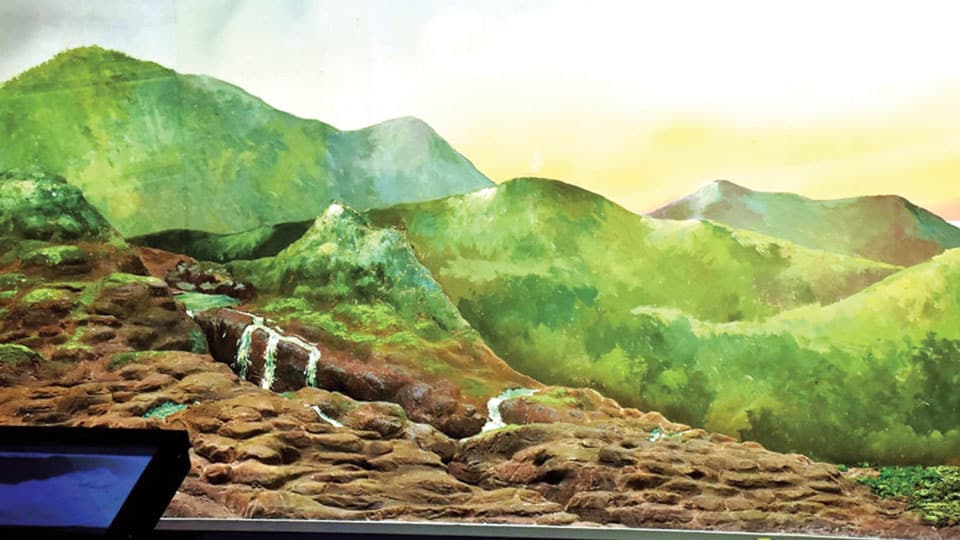
The Cauvery Gallery that has been set up at Karnataka Exhibition Authority (KEA) Grounds showcasing the life, culture and biodiversity of the River from its birth at Talacauvery in Kodagu till it reaches the Bay of Bengal at Poompuhar in Tamil Nadu will be open to the public on July 13.
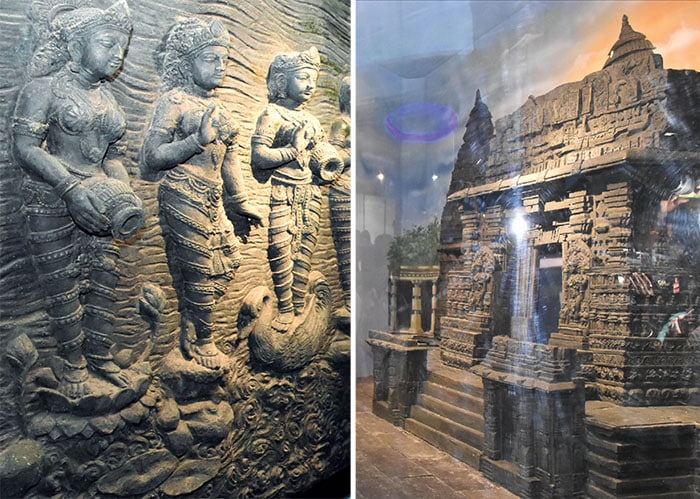
The visually appealing Gallery with many 3-D presentations has been built jointly by Karnataka Knowledge Commission and Tourism Department. It has been modelled as per the design, specifications and imagination of the National Academy of Sciences, India (NASI) and has been built at a cost of Rs. 3.5 crore.
KEA Chairman Hemanth Kumar Gowda told Star of Mysore that Tourism Minister Anand Singh will inaugurate the Gallery on July 13 at 11 am in the presence of Mysuru District Minister S.T. Somashekar. In-Charge Mayor Sunanda Palanetra, MPs V. Sreenivasa Prasad, Pratap Simha and Sumalatha Ambarish, MLAs G.T. Devegowda, Tanveer Sait, S.A. Ramdas and L. Nagendra will be the guests.
NASI-NCSM project conceptualisation
The project is based on research conducted by the National Council of Science Museums (NCSM), an autonomous society under the Ministry of Culture. Officials of the NASI and the State Tourism Department had signed an agreement to establish the gallery in the KEA complex (at Kannada Karanji). It is the first river gallery in South India.
The Gallery highlights the geological and ecological characteristics of the Cauvery River apart from projecting the social and cultural characteristic features of civilisation that have evolved along the river bank.
NASI is the implementing agency and would train the authorities from Mysuru on how to maintain and administer the gallery. The NASI and NCSM have completed the establishment of the Brahmaputra River gallery project in Guwahati, Assam, and the Ganga River gallery project in Allahabad.
15,000 sq.ft. area covered
The Cauvery Gallery has been built on an area of 15,000 sq.ft. and highlights the geological and ecological characteristics of the Cauvery apart from projecting the social and cultural characteristic features of civilisations that have evolved along the banks of the river.
Artefacts and dolls tell the story of the Cauvery River from Talacauvery (birthplace in Kodagu) to Poompuhar. Pictures, live visuals and models of the river flowing from one part to another criss-crossing the hills and plains narrate the story giving an audio-visual and also pictorial presentation to the viewer.
Ticket pricing
The mega project includes multimedia features and an electronic display to provide visitors with an immersive experience of life and culture along the Cauvery. After the viewers see the gallery, there will be a 20-minute short film on Cauvery.
Adults will have to pay Rs. 20 for an entry ticket while children have to pay Rs. 10. The Gallery will be open from 10 am to 6 pm and the timings will be extended based on the tourist response and tourist seasons.
source: http://www.starofmysore.com / Star of Mysore / Home> News / July 09th, 2022
Karnataka Governor Thaawarchand Gehlot yesterday visited the popular tourist spot Dubare elephant camp near Kushalnagar. He inaugurated ‘Vana Mahotsava’ event organised by the Forest Department by planting a sapling.
Governor Gehlot who arrived at the other end of the elephant camp by crossing the Cauvery river by a boat, had a view of the camp elephants and beautiful scenery all around. The Mahouts apprised the Governor on the daily routine of elephants and their activities. Even as Gehlot was watching the elephants, one of them blessed the Governor by touching his head with its trunk. Later, the Governor received inputs on the life and livelihood of the tribal population in Dubare forest. Gehlot also interacted with Mahouts, during which the Mahouts sought a hike in their wages. The Governor rested for sometime at ‘Aane Mahal’, before leaving Dubare.
Gehlot, who was on his first ever visit to Dubare, was honoured by Nanjarayapatna Gram Panchayat President C.L. Vishwa. Kodagu DC Dr. Satish, CCF B.N.N. Murthy, DFO Poovaiah, Kushalnagar Tahsildar Prakash, Kushalnagar RFO Shivaram, Dubare Deputy Forest Officer Ranjan, DRFOs Anil D’Souza, Vilas, Chetan and Manjegowda, Nanjarayapatna GP PDO Kalpana and others were present.
Visits Golden Temple
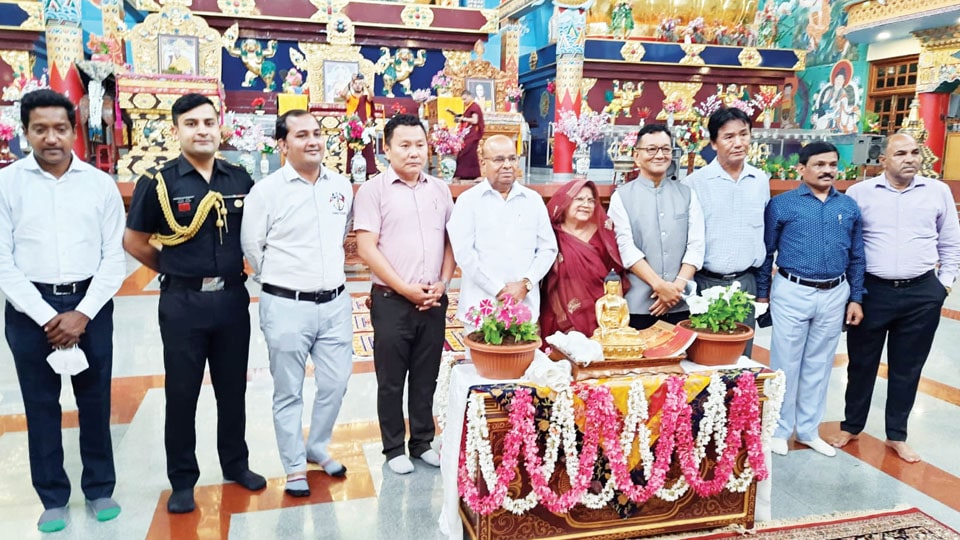
The Governor also visited the Tibetan Golden Temple at Bylakuppe on Mysuru-Madikeri Road in Periyapatna taluk yesterday. He was given a traditional welcome by Buddhist monks and received with Police honours. Gehlot went around the Golden Temple, when he was explained about the significance of three Buddha idols installed there and Monastery’s activities.
The Governor was presented with a Buddha idol by Namdroling Monastery on the occasion.
Mysuru DC Dr. Bagadi Gautham, Tahsildar Chandramouli, SP R. Chethan, Additional SP Shivakumar, Bettadapura CPI Prakash, PSIs Basavaraju, Prakash Yettinamani and Chikkaswamy, RI Pradeep, Village Accountant Naveen, Namdroling Monastery Administrators Tulku Choedhar, Khenpo Ngawang Samten, Khenpo Tenzin Yeshe, Khenpo Pema Tashi, Lopon Gyurme, Lopon Tenzin Yeshe, Khenpo Karma Drubwang, Lopon Pema Namgyal and others were present.
Gehlot arrived at Madikeri for a two-day tour of Kodagu district on Friday when he was received with Government honours at Hotel Mayura Valley View in Madikeri.
He later held an interaction with beneficiaries of various Government schemes, plans, programmes, projects and initiatives. He thereafter visited Bhagamandala and Talacauvery, the birth place of River Cauvery, which is the life-line for crores of people along Cauvery basin.
source: http://www.starofmysore.com / Star of Mysore / Home> News / July 03rd, 2022
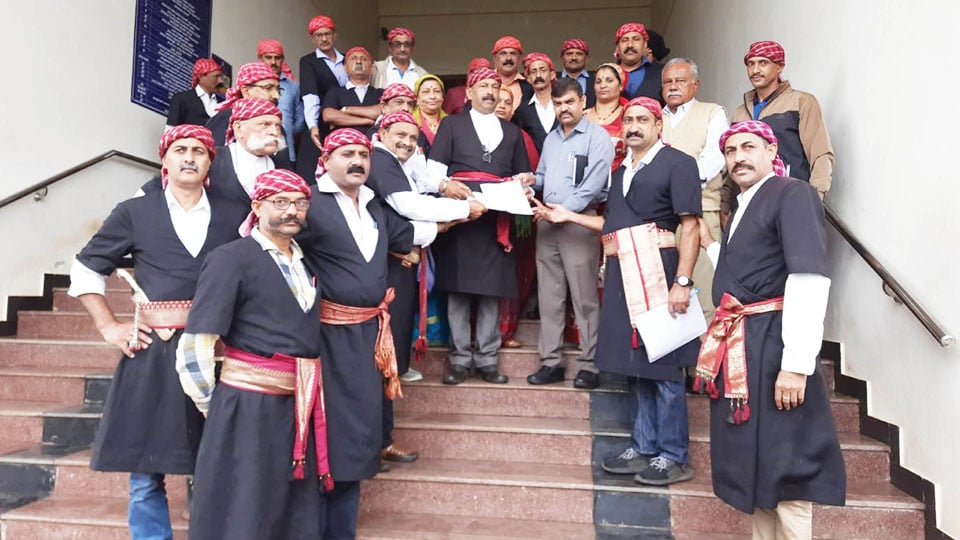
Urging the Government to facilitate the Kodava Land Geo-Political Autonomy under Articles 244, 371 (read with 6th & 8th Schedule of the Constitution) and also Scheduled Tribe (ST) tag to Kodava tribe among various other demands, Codava National Council (CNC) President N.U. Nachappa and the other Council members staged a stir in front of the Deputy Commissioner’s Office in the town yesterday.
The Government must consider Kodavas as a Scheduled Tribe community and must officially provide the ST tag at the earliest. Under the Constitution Act 25 and 26 the Kodava Gun Rights should be continued without any time restriction and also Kodava language should be incorporated in the 8th Schedule of the Constitution.
The Kodava cultural heritage should be included in the Intangible Cultural Heritage list of UNESCO, the members demanded.
“The Kodava community has its origin only in Kodagu and the people are being neglected. If this continues, all the history and culture of the community will disappear without any trace. The CNC from the past few years are fighting for the rights of the whole community,” they said and submitted a memorandum seeking to fulfillment of their demands.
Council members B. Savitha Girish, P. Swathi Kalappa, C. Jyothi Nanaiah, Ltn. Col. B.M. Parvathi, K. Prakash, B. Chippanna, P. Kalappa, A. Lokesh, A. Girish, M. Manoj and others were present.
source: http://www.starofmysore.com / Star of Mysore / Home> News / July 03rd, 2022
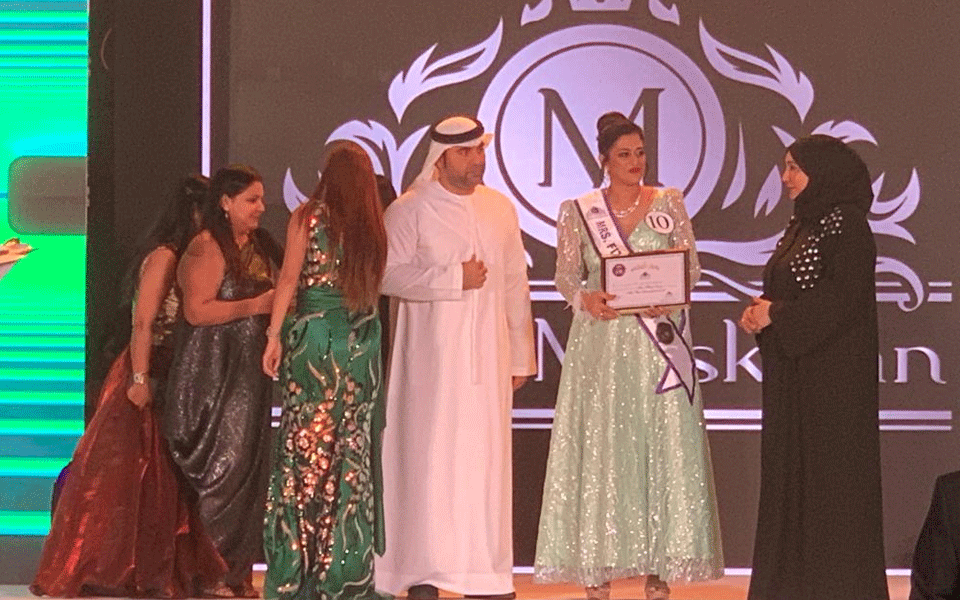
Dechamma Poonacha(Dechamma A.P) has won the Mrs Fitness Queen Title at Mrs UAE International by ‘Being Muskaan’, a leading UAE based brand launched by Meena Asrani, focused towards women empowerment.
The contest was held on June 26th at Radisson Red, Dubai Silicon Oasis and was open to all nationalities residing in UAE.
Mrs. Dechamma is currently a home maker. She is a former student of Rotary English Medium School Moodbidri and also was the student of the first batch.
She further continued her high school an PU education at Jain highschool and PU college Moodbidri.
She pursued her graduation at Sri Bhuvanendra College Karkala where she won Miss. Bhuvanendra in 1997 and Miss. Jaycee Kulyadi queen, Karlala in 1998.
She was born in Coorg but was raised in Moodbidri.
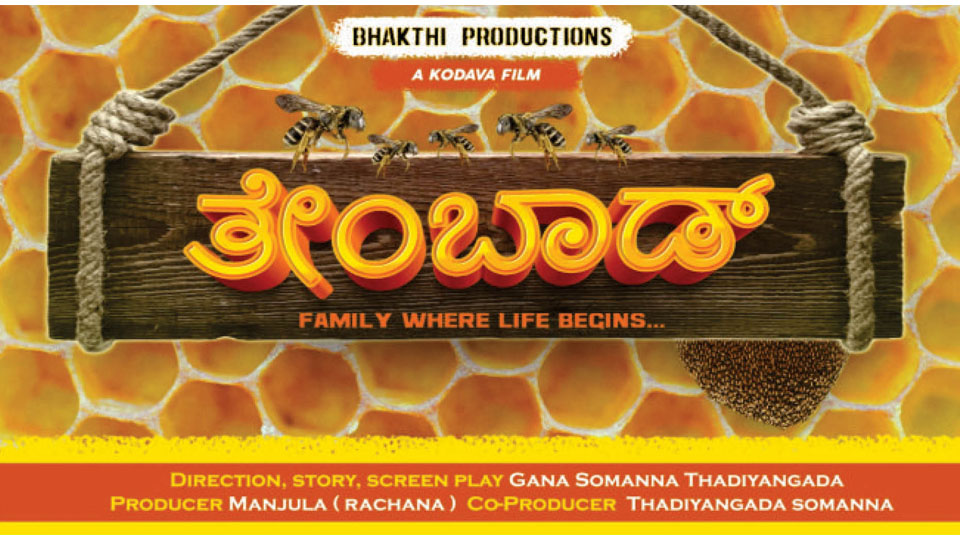
Under Bhakthi Production, a Kodava movie titled‘Thembaad’ (family where life begins) had successful shows in Kodagu and has reached every Kodava with Kodava culture shown and a message to be passed to every individual on how a family should be.
A complete family story with entertainment, comedy, suspense, emotions and culture.
The Screen Play – Story and Direction is by Gana Somanna Thadiyangada;
This movie, which was screened successfully in Gonikoppa, Virajpet, T. Shettigeri and Napoklu, will now be screened in Mysuru at Kodava Samaja in Vijayanagar I Stage on July 2 and 3 (Saturday and Sunday).
Emme Suggi Utsava commenced in Nagaralli in Somwarpet.
‘Emme Suggi Utsava’ dedicated to Goddess Kootinadu Sri Sabbamma Devi in Nagaralli near Somwarpet commenced on a traditional note on Sunday, with the observation of ‘Emmege Honnu’ ritual. Prayers were held on the occasion.
The festival, which is held once in 12 years, is observed by 18 villages of Somwarpet and Sakleshpur taluks.
After offering prayers to Sabbamma Devi, monitory contributions were collected by the villagers to purchase buffalo and ox.
The animals are to be bought in Konanuru village and are brought to Nagaralli by walk. A black coloured woollen blanket (kambali) is contributed by the Bangira family of Kooti village.
As a part of the festival, the families living in 18 villages are to follow certain rules for 30 days between November 26 and December 27.
Eating in hotels and houses of relatives is not allowed. Beverages like coffee, tea and boiled items are not to be consumed outside the house.
Also, after the ‘Devara Billu’ ritual, no auspicious events should be held in the 18 villages.
Sabbamma Devi Suggi Utsava Samiti president K T Joyappa, Prakash, U K Somashekhar, Dinesh, Revenna, Bangira Ganesh and villagers representing 18 villages were present.
source: http://www.deccanherald.com / Deccan Herald / Home> State> Mangaluru / by DHNS, Somwarpet / November 30th, 2020
‘Kaadinolagondu Jeeva,’ a book based on first-hand experiences of the famed Forest Ranger K.M. Chinnappa (now retired) will be released in city on July 2 by Tejaswini Ananth Kumar, President and driving force behind Adamya Chethana Trust, Bengaluru, and the wife of late H.N. Ananth Kumar, Union Minister.
The event will be held at Hotel Roost on Hunsur Road at 10.30 am and it is organised by Wildlife First and Bharathi Prakashana, Mysuru. The book is written by T.S. Gopal, retired Principal of Srimangala Junior College and has been published by Poornachandra Tejaswi Prakashana in the year 2000.
When the book was published it was an instant hit and was published in three volumes. Later in 2010, Navakarnataka Publication published a comprehensive collection of all the three volumes. The 400-page book has 14 pages of colourful photos and has many stories and experiences of Chinnappa.
About K.M. Chinnappa
Born in 1941 at Kumatoor village in South Kodagu to an Armed Forces family, Kotrangada M. Chinnappa is the quintessential wildlife protector. A true son of the soil, his father was a soldier who took to farming after retirement. Chinnappa joined the Karnataka Forest Department as a Forester in 1967 and has been a frontline warrior all his life.
For much of his career he served as a Ranger in Nagarahole where he was best known for his uncompromising ways and his almost fanatical adherence to law.
When Chinnappa joined as the Ranger at Nagarahole, the region was infested with numerous criminal activities such as timber smuggling, marijuana plantation, poaching, cattle grazing, setting up of unauthorised breweries at the sanctuary although the area was set up for protecting wildlife.
However, Chinnappa pledged to bring a dramatic change in the way the forest functioned. He ensured that the number of tigers and deer, which were dangerously low, increased, all the encroachers were chased from the forest and the wild animal natural habitats were restored. When he joined Nagarahole, the forest area was only 250 sqkm and now it has expanded to 653 sqkm.
During his struggle for wildlife conservation, Chinnappa became an enemy of many people. He was always on the threshold of getting killed. In the year 1970, he barely escaped from death when a gang armed with sticks attempted to attack him during his visit to a temple.
Chinnappa was made to surrender his licensed revolver because many people who did not support him addressed him as a criminal and threat. Chinnappa was falsely accused of a murder which forced him to spend 12 days in a prison before he was found guilt-free.
In 1992, an angry mob burned his newly constructed home few days after the work was completed in Kumatoor. He fought the long battle and faced many difficulties and unexpectedly resigned from his post in 1993. He won the CM’s Gold Medal in 1985. Now, Chinnappa is the President of Wildlife First, continuing his crusade against timber mafia and green destructors. He is also into agriculture, his passion.
source: http://www.starofmysore.com / Star of Mysore /Home> News / June 20th, 2019
In an attempt to popularise, protect and preserve the language, as well as to obtain ISO language code, the Karnataka Arebhashe Samskruthi and Sahitya Academy has completed the digitisation of 84 books.
Academy member Bharathesha Alasandemajalu said that books that were published from 1968 to the recent ones, including two PhD theses, have been digitised. The PhD thesis on Arebhashe in English by Prof Kodi Kushalappa Gowda, published in 1970 at the Annamalai University, has been digitised. Earlier, the language was known as Gowda Kannada. The other works include the digitisation of a souvenir that highlights the culture of the Gowda community, he said.
In total, digitisation of the 38 books published by the academy, ‘Hingara’ -the tri-monthly magazine of the academy, and 21 books published by different authors have been digitised, and available on arebashe.sanchaya.net.
The team has digitised 142 editions of ‘Kodava Sangathi’, a fortnightly, whose editor was Pattada Prabhakar, and an important book on the Amara Sullia uprising of 1837, by Deviprasad Sampaje.
The books are available under three categories, books published by the academy, Arebhashe Sahithya and editions of Kodagu Sangathi, and Hingara Bharathesha said.
The digitisation works will be inaugurated on June 25 in Madikeri, in the presence of chief minister’s advisor for e- governance Beluru Sudarshan and Kodagu Kannada Sahitya Academy president M P Keshav Kamath. Academy president Lakshminarayan Kajegadde will preside over the event.
“In case the language has to obtain international recognition, then an ISO language code is important. Digitisation is a step towards obtaining the code. It will also give the public easy access to the existing Arebhashe literature,” he said.
Vishwanath Badikana, assistant professor, Kannada, Aloysius College, and member of the academy, said that books that have been digitised are not available in the market. The works on Arebhashe dictionary, a blend of Lexicon and Kittel dictionary, encyclopedia and Arebhashe glossary-documenting Arebhashe culture, through the items used by people who speak this language, is near completion.
“This is probably first-of-its-kind work undertaken for a sub-dialect, through an academy that has a small base. According to an estimate, about 10 lakh people speak the language,” he said.
source: http://www.timesofindia.indiatimes.com / The Times of India / Home> News> City News> Mangaluru News / by Deepthi Sanjiv / June 22nd, 2022
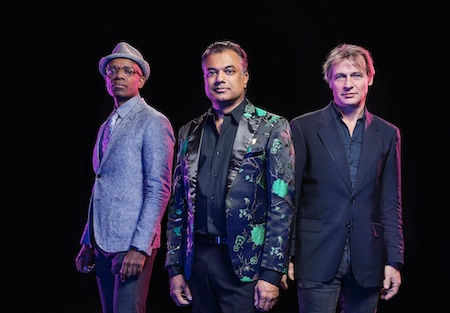
In this rare iteration of the DownBeat Blindfold Test, all three musicians were asked to comment on selections consisting entirely of trio music. (Photo: David Crow)
Seeing a colorful press photo of Rudresh Mahanthappa and his bandmates adorned in masks, tights and capes might lead one to believe that they are the comic book-like heroes from which the trio’s name is derived. But the alto saxophonist has been clear: He is paying homage to his own musical heroes — Charlie Parker, Sonny Rollins and Lee Konitz, for starters. Rollins and Konitz virtually trademarked the chord-less trio format embraced by Mahanthappa and his rhythm section players, both of whom work regularly in other highly regarded trios: bassist François Moutin with pianist Jean-Michel Pilc, and drummer Rudy Royston with guitarist Bill Frisell.
In this rare iteration of the DownBeat Blindfold Test, all three musicians were asked to comment on selections consisting entirely of trio music. It was Mahanthappa’s second Blindfold Test, and the first for Royston and Moutin. The following article originally ran in two installments in DownBeat’s May 2022 and June 2022 issues.
ORNETTE COLEMAN
“Dawn” (At The Golden Circle Stockholm, Blue Note, 1966) Coleman, alto saxophone; David Izenzon, bass; Charles Moffett, drums.
Rudresh Mahanthappa: That’s Ornette Coleman, At The Golden Circle, with David Izenzon and Charles Moffett. This is on Blue Note, not Atlantic, I believe. When I was at Berklee in the ’90s, I wanted to do a recital of all Ornette Coleman music. It had a horrible name — it was called “Ornette, or Not.” We ended up doing a ballad called “Dawn” — this is it? There it is, I hear the melody now. 5 stars.
François Moutin: I don’t know of anything else that David Izenzon did, but he’s a monster bass player.
JERRY BERGONZI TRIO
“Have You Met Miss Jones” (Lost In The Shuffle, Double-Time, 1998) Bergonzi, tenor saxophone; Dan Wall, organ; Adam Nussbaum, drums.
Mahanthappa: It sounds like Steve Grossman when he was in his Sonny Rollins phase. It has a Jerry Bergonzi vibe to it, too. It’s not Dan Wall, is it? Adam Nussbaum? Jerry is great. For better or for worse, Grossman, Brecker, Jerry Bergonzi, even George Garzone, to some extent Dave Liebman — these guys were like the kings of this post-Coltrane [sound]. I think Grossman was the forefather of all those guys, including Michael Brecker. Steve was playing like that when he was only 19 years old with Elvin Jones.
Moutin: There’s one lick in there that could have been you on tenor, Rudresh.
Mahanthappa: It’s the same source material, just up a fifth. I tried playing tenor in high school; I sounded terrible on tenor.
Rudy Royston: Adam Nussbaum is on! I like all the energy, rhythm, big fat sound … not like that “clean” stuff that was going on at that time.
Moutin:I’ve played with him half a dozen times, and every time, it was an incredible experience.
Royston: He’s a cat who believes in the drums leading the band, the drums leading the vibe. He came to UNC when I was there. He said, “You should be able to tell what the tune is from what I’m playing.” You could hear it in his rhythms and how he was defining stuff around the melody. He’s still a bad cat.
Mahanthappa: 5, shall we go 5 stars on that?
Moutin: Yeah.
Royston: Everyone was killing on that.
MELISSA ALDANA & CRASH TRIO
“Turning” (Melissa Aldana & Crash Trio, Concord, 2014) Aldana, tenor saxophone, Pablo Menares, bass; Francisco Mela, drums.
Royston: Is that Melissa Aldana? The thing I love about Melissa is how she uses space. She’s never in a rush. She always waits, and then she does that thing where she starts low, I don’t know what it is [sings the line]. And the way she uses … falsetto?
Mahanthappa: Altissimo. I like Melissa a lot, I don’t know her playing real well. One of the things that’s hard for me to realize is that there’s a whole generation of folks that were influenced by people our age. Melissa told me a story about how into Mark Turner she was, and how he gave her a seven-hour lesson once.
Royston: That’s a great trio. I saw them at Dizzy’s. They were a good trio.
Moutin: Good composition, too.
Mahanthappa: 5 stars.
CHRIS SPEED TRIO
“Arrival High” (Platinum On Tap, Intakt, 2017) Speed, saxophone; Dave King, drums; Chris Tordini, bass.
Moutin: Triplicate?
Mahanthappa: No, it doesn’t sound anything like that. It kind of reminds me of Bill McHenry. Is it George Garzone? It definitely sounds like it could be someone of our generation. It could be Rasmus Lee, or it could be …
Moutin: Donny McCaslin?
Mahanthappa: No, it can’t be, that’s not Donny’s sound. Or guys that I went to Berklee with, like Matt Renzi … all these cats that played all that modern shit, but with harder reeds and a darker sound, as opposed to Donny. It was almost like a reaction to Michael Brecker, “We’re going to go dark!”
Royston: I know this drummer, man.
Mahanthappa: It could be Chris Speed, too. Is this the trio with Dave King? There you go. Chris was a little older than me, but he was still in Boston when I was in school, but he was hanging out, playing his ass off. 5 stars. Chris is a bad motherfucker and more people should know who he is.
Royston: I knew that it was [Dave King on drums], but I just couldn’t put my finger on that sound. Big tom sounds, and you can hear all that facility with the rim shots and the bells. You can hear all that stuff in the Bad Plus.
… To be continued in the June 2022 issue of DownBeat. Same Hero Trio time. Same Blindfold Test space!
Rudresh Mahanthappa’s Hero Trio (Part 2, June 2022)
Previously on The Blindfold Test: Our three heroes, led as always by the indubitable alto saxophonist Rudresh Mahanthappa, and ably assisted by his sideman sidekicks François Moutin and Rudy Royston, added to their legerdemain with a perfect four-for-four on last month’s treacherous playlist, a feat they accomplished even while blindfolded (figuratively speaking). After easily nailing the mysterious Ornette Coleman and killers Jerry Bergonzi and Melissa Aldana, a bit of high drama occurred as their last unknown audio assailant proved elusive until Mahanthappa deduced the culprit to be Chris Speed at the 11th hour. But this month, new and more dangerous challenges lie ahead. Can our heroes pull of a perfect score, or will they succumb to the weight expectations they’ve already set? Read on to find out!
Rudresh Mahanthappa: Sounds like Arnett Cobb. It’s not rough enough to be Turrentine.
Rudy Royston: Sounds like Turrentine right there.
François Moutin: It’s not Turrentine?
Mahanthappa: It’s so of another generation. It reminds me of Houston Person records, or even Lockjaw. But I could also see Seamus Blake totally playing like this, and doing it convincingly, and sounding like an old cat. I could see Josh Redman playing like this too. But I’m stumped.
Moutin: It’s not Ron Carter, is it? There’s something in the sound … I don’t know.
[afterwards]
Mahanthappa: I would have never gotten that.
Moutin: You tricked us.
Mahanthappa: Branford definitely has his own sound, but then he can kind of inhabit all these other things, historically.
Royston: “Tain” came to my mind with that ride cymbal, but I was like, “I don’t think so.” I needed to hear a “Tain”-ism.
Moutin: 5 stars.
Royston: I didn’t know Branford could do that. Branford was getting a lot of lip back then, going to Sting’s band, and all the jazz cats were like, “Oh, man!”
Moutin: Makes me realize how much Ron Carter borrowed [from] Milt Hinton.
Mahanthappa: I’m a little embarrassed; Branford and I just hung out last week.
ANNA WEBBER
“Forgotten Best” (Idiom, Independent Release, 2021) Webber, tenor saxophone; Matt Mitchell, piano; John Hollenbeck, drums.
Mahanthappa: It’s killing, whoever it is.
Moutin: European?
Mahanthappa: Sounds like Anna Webber, kind of? With Matt Mitchell and John Hollenbeck? Anna’s ridiculous, she can do anything. 5 stars, 5½! I had Anna come and speak to my advance improv class last semester. She was amazing. She’s actually kind of codified and demystified “free improvisation.” She had this beautiful list of all these techniques to work on. Imagine Jamey Aebersold’s scale syllabus, but it was techniques and strategies for free improv. It was literally just one sheet of paper, and it was a lifetime of stuff to work on.
Moutin: Matt Mitchell is amazing.
Mahanthappa: Matt was in Bird Calls. He was practicing [his piano etudes] in sound checks for every gig we did.
Royston: He did those every day when we were in Dave Douglas’ band. You just knew it was going to come [mimics atonal piano sounds]. I used to try to play with him to figure out [the time].
JEFF BALLARD TRIO
“Western Wren (A Bird Call)” “Mivakpola” (Times Take, Okeh, 2014) Ballard, drums; Miguel Zenón, alto saxophone; Lionel Loueke, guitar.
Moutin: It’s killing. I don’t know what it is, but it’s great!
Mahanthappa: That’s insane. I can’t even …
Royston: And that wasn’t Jeff on drums? Jeff Ballard?
[afterwards]
Mahanthappa: I never would have guessed that.
Moutin: I should have guessed that.
Royston: I thought that was Jeff, because you can hear that staccato style. When Jeff plays, he plays “off” the drums. Everything is precise and staccato.
Mahanthappa: Oh, god, Matt sounds amazing. That sounds great. I don’t know Josh’s playing well enough to recognize it, to tell you the truth. But he always sounds great.
Royston: Hutch man, wow. We’re friends. He came to Denver when I was in high school. He was playing with Roy [Hargrove’s] band. We had this jam session in Diane Reeves’ basement. I was trying to play all this “Tain” stuff. Roy was there. Then, Hutch comes in, he’s got the flu. He has this big bomber coat on, he sits on my drums and my cymbals and he just [gestures a seriously minimal ride pattern]. I wanted to leave after that. That was a lesson learned right there. I went upstairs and ate some of Diane Reeves’ cooking. DB
The “Blindfold Test” is a listening test that challenges the featured artist to discuss and identify the music and musicians who performed on selected recordings. The artist is then asked to rate each tune using a 5-star system. No information is given to the artist prior to the test.
source: http://www.downbeat.com / Down Beat / Home> News / by Gary Fukushima / June 14th, 2022
WELCOME. If you like what you see "SUBSCRIBE via EMAIL" to receive FREE regular UPDATES.
Read More »