Codanda B. Devaiah, fondly called as Devi Sir, one of the Founder-Members of Kodagu Vidyalaya and a resident of Mattadkad Estate at Suntikoppa, passed away at a private hospital in Gonikoppal yesterday morning. He was 75.
Devaiah leaves behind two daughters and a host of relatives and friends.
Last rites were performed at Codanda Burial Grounds here yesterday evening, according to family sources.
source: http://www.starofmysore.com / Star of Mysore / Home> News / June 14th, 2022
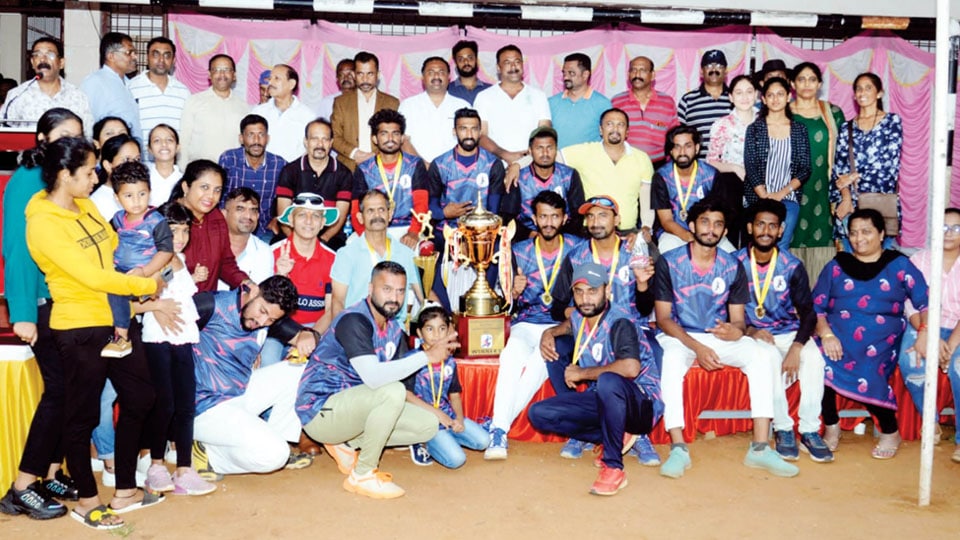
Picture : Mechanda S. Bopanna, Hon. Secretary, KSCSC; Kotrangada Pemmaiah, President, Sri Tala Cauvery Samskrithika Sangha; Alemada Ponnanna, Committee Member, KSCSC; Meederira Prakash, Joint Secretary, KSCSC; Mechanda Sashi Ponnappa, President, Kodava Samaja, Mysuru; Kuttimada D. Muthappa, President, KSCSC; Maletira U. Subbaiah, Corporator (chief guest); Iychanda Ashwath Chengappa, Vice-President, KSCSC; Aramanamada Ponnanna, Treasurer, KSCSC; Mundotira Kavin, Iychettira Dilip Kumar, Ayyalapanda Pattu Pemmaiah, Committee Members, KSCSC, Players and Team Management of Sree Tala Cauvery Samskrithika Sangha.
Kodava Samaja Cultural and Sports Club (KSCSC), Mysuru, had conducted Palengada Raja Poovaiah Memorial Tennis Ball Cricket Tournament and Veterans Cricket match in city recently.
The tournament was sponsored by Palengada Leelavathi Poovaiah and Veterans tournament was sponsored by Maletira U. Subbaiah.
Sree Tala Cauvery Kodava Samskrithika Sangha, Hootagalli and Sree Igguthappa Kodava Kshemabhivrudhi Sangha, Hebbal, were the winners and runners respectively.
Picture shows Mechanda S. Bopanna, Hon. Secretary, KSCSC; Kotrangada Pemmaiah, President, Sri Tala Cauvery Samskrithika Sangha; Alemada Ponnanna, Committee Member, KSCSC; Meederira Prakash, Joint Secretary, KSCSC; Mechanda Sashi Ponnappa, President, Kodava Samaja, Mysuru; Kuttimada D. Muthappa, President, KSCSC; Maletira U. Subbaiah, Corporator (chief guest); Iychanda Ashwath Chengappa, Vice-President, KSCSC; Aramanamada Ponnanna, Treasurer, KSCSC; Mundotira Kavin, Iychettira Dilip Kumar, Ayyalapanda Pattu Pemmaiah, Committee Members, KSCSC, Players and Team Management of Sree Tala Cauvery Samskrithika Sangha.
source: http://www.starofmysore.com / Star of Mysore / Home> News / June 02nd, 2022
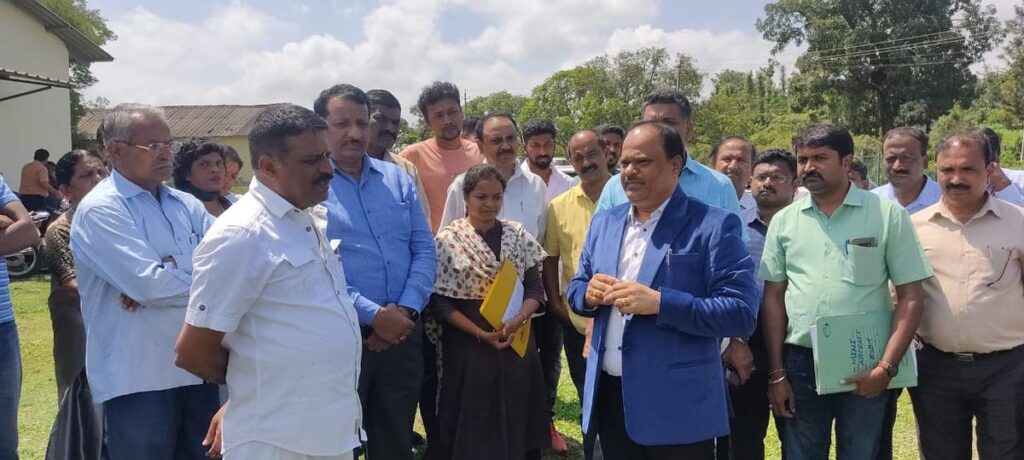
MLA Appachu Ranjan and KSIIDC MD M.R. Ravi during the inspection of land for building a heliport, near Kushalnagar on Monday. | Photo Credit: SPECIAL ARRANGEMENT
Seaplane operations can be launched at Harangi, says official
The State Government has proposed to develop an airstrip and a heliport near Kushalnagar for the benefit of tourists visiting Kodagu, one of the major hill stations in South India.
Chief Minister Basavaraj Bommai had announced in his recent budget to develop heliports at three places, including one in Kodagu. In this connection, a team of officials led by Karnataka State Industrial and Infrastructure Development Corporation (KSIIDC) Managing Director M.R. Ravi, accompanied by Madikeri MLA Appachu Ranjan, inspected the land where the facility has been proposed near the Sainik School at Kudige village.
Speaking to reporters, Mr. Ravi said 49 acres of government land was available near Kushalnagar and it was identified for developing an airstrip. “Since no land was available for developing the heliport at Madikeri, which was the first choice, we thought of developing the airstrip as well as the heliport on the 49-acre plot near Kushalnagar. We need just 5 acres for the heliport and the rest can be developed as an airstrip which can be used for the landing and takeoff of the 20-seater planes,” Mr. Ravi said.
Seaplane operations
Mr. Ravi said plans are afoot for launching the operations of seaplanes in Kodagu in a bid to boost tourism since the infrastructure for their operations was available at Harangi. “If everything goes as planned, seaplanes can land on and take off from Harangi waters. This can help improve connectivity to tourists who can afford such a trip. This can benefit adventure tourism for which Kodagu is considered one of the key destinations.”
Mr. Ranjan said the officials from the Airport Authority of India had visited Kushalnagar in connection with the proposed launch of airstrip operations. However, it did not materialise though the land for the same was identified.
Kodagu needs air connectivity as over 25,000 tourists descend on the hill station during weekends, registering 100 percent occupancy of hotels, resorts and home stays. The air connectivity can further boost tourism and the heliport is one such plan proposed by the government for which all support will be extended, he added.
source: http://www.thehindu.com / The Hindu / Home> News> National> Karnataka / by Special Correspondent / Mysuru – May 30th, 2022
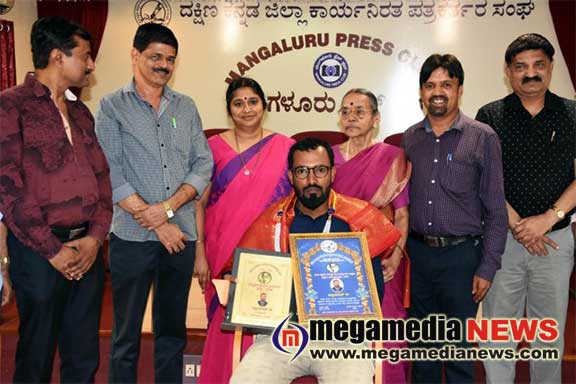
Pa Gopalakrishna Memorial Award 2018 for ‘Best Rural Reporting’ was presented to Journalist Imtiaz Shah Tumbe at Patrika Bhavan.
His article on Kodagu natural calamity, published in Vartha Bharati, was selected for the award.
Shah, a sub-editor in Vartha Bharati, said he had stepped into the field of journalism without any proper background. He said his parent organisation had honed his skills and provided him with an opportunity. “I feel privileged to receive the award.”
Dakshina Kannada District Information and Public Relations Senior Assistant Director K Rohini presented the award to Shah.
Speaking on the occasion, Rohini said the family members of veteran journalist late Pa Gopalakrishna, who had instituted the award, had set an example for others.
DK District Working Journalists’ Association Srinivas Indaje presided over the programme. Secretary Ibrahim Adkasthala, Mangaluru Press Club President Annu Mangaluru, Patrika Bhavan Trust President K Ananda Shetty, Pa Go’s spouse Savitri and senior journalist Manohar Prasad were present.
source: http://www.megamedianews.com / MegaMedia News / Home / March 02nd, 2019
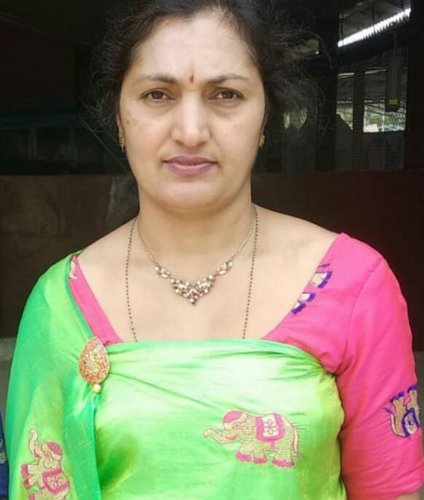
C K Kaveri from Ballamavati village has been contributing to the growth of Kannada literature in her own way, being in a rural area.
Kaveri is a prolific reader, writer, and also agriculturist. She holds an MCom degree from the University of Mysore.
Starting from 1985, hundreds of her writeups and short stories have been published in various newspapers, magazines and also online platforms.
She uses the pen name ‘Vanu Vasantha’. Her first article was published in ‘Vanitha’, a Kannada monthly magazine. She has brought out a new collection of stories titled ‘Darpana’. She also contributes stories for ‘Pratilipi’, an online platform.
Along with her literary works, she has been encouraging women from rural areas to create their own literary works.
As a teacher in a private school, she has also encouraged a number of students towards penning literary works. Along with Kannada, she has been writing in the Kodava language as well.
source: http://www.deccanherald.com /Deccan Herald / Home> State> Mangaluru / by DHNS, Napoklu / October 31st, 2021
The virtual museum will likely stand completed and be accessible globally by February next year and the groundwork for the project is ongoing.
Dudi, a traditional drum of the Kodavas, made of metal base and animal hide. Image meant for representational purpose only.
Madikeri :
The Kodava community has a unique culture juxtaposed with tribal and martial history. While the unique traditions are highly revered in the district, research work on the history or culture of the community is less. However, this loophole is now being addressed by the Indian Foundation for the Arts (IFA), which will soon set up an interactive Virtual Museum of Kodava Heritage and culture called the – Sandooka Museum.
The virtual museum will likely stand completed and be accessible globally by February next year and the groundwork for the project is ongoing. The museum will be an interactive online space that will provide a glimpse into the history, traditions, land, lives, customs and beliefs of the Kodava community.
We are putting together various videos, pictures, audios and text for the project. There are numerous village festivals in Kodagu and each Kodava clan has its own annual rituals. At the ground level, we are visiting the villages, Kodava families, temples and Kodava organizations to avail authentic materials for the museum,” explained M Nitin Kushalappa, an author who is involved in the museum project with the IFA.
“We do not acquire the materials from the people but make copies of the same, which will be uploaded online,” he added.
“This might be the first virtual museum of the sort in India. Our approach is based on community collaboration and we have an open call announced in which we are inviting people to share their own stories and experiences of Kodava culture. Be it a family photograph or heirloom, documentation of a festival or ritual, or even images of public artifacts that they would like to talk about. The open calls will select stories from among those sent in a feature on the website and that it is ‘The Living Museum of Kodava Culture,’ “explained Lina Vincent, the project director.
The advisory committee led by Rathi Vinay Jha, CP Beliappa and Hemanth Sathyanarayan is guiding the project team led by project director Lina Vincent, design team Saurav Roy and Upasana Roy alongside Nitin. The team is currently involved in recording folk songs and other audio and video clips from the people from the community. The team is open to accepting contributions from the community members.
Kodavas are indigenous residents of Kodagu and the population of the community is just 1.25 lakh. The majority of the Kodavas are settled in Kodagu. The community has rich tribal and folk culture that is being passed on from generations. Not many works have taken shape in documenting the rich culture of the community. The establishment of a virtual museum archiving the traditions of the community is welcomed by the residents of the district.
source: http://www.newindianexpress.com / The New Indian Express / Home> States> Karnataka / by Prajna GR, Express News Service / May 29th, 2022
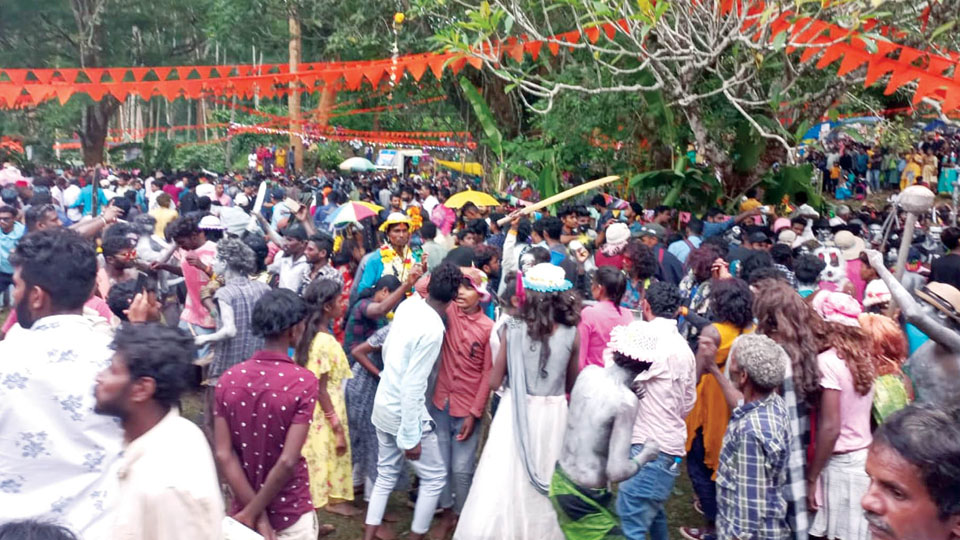
Annual Kunde Habba concludes with bawdy abuses in tribal belts of Kodagu, Hunsur
Gonikoppa:
Yesterday, the fourth Thursday of May saw the culmination of ‘Kunde Habba’ in parts of tribal-dominated South Kodagu, Hunsur and Hanagodu that borders Nagarahole Tiger Reserve.
It is a peculiar festival where choicest abuses are hurled against the Tribal Gods Ayyappa and Bhadrakali and this is a tradition diligently followed by the tribal communities — predominantly, Jenukuruba, Betta Kuruba, Kuruba and Yerava communities — for centuries.
They are the original inhabitants of Kodagu and forests are their homes. Now due to strict forest laws, they are displaced and many work as labourers in estates and fields. The influential among them have got a good education and are settled in cities also. However, most of them depend on Government welfare schemes for survival.
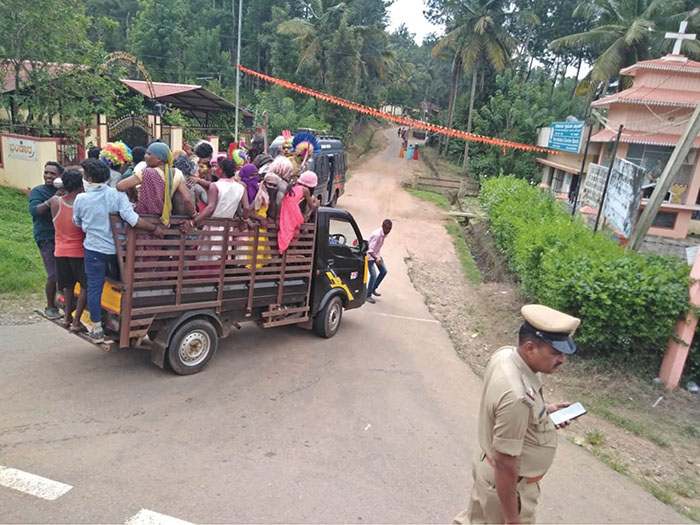
Usually, the festival begins three days before the last Thursday of the May month and it is celebrated with pomp and gaiety. Bawdy abuses rent the air in South Kodagu, especially Gonikoppa, Ponnampet, Pollibetta, Balele, Maldare, Siddapura, Thithimathi, Devarapura, Periyapatna, fringes of Nagarahole Tiger Reserve, tribal settlements and now the festival has extended till Hanagodu and Hunsur, thanks to hundreds of Government-sponsored settlements.
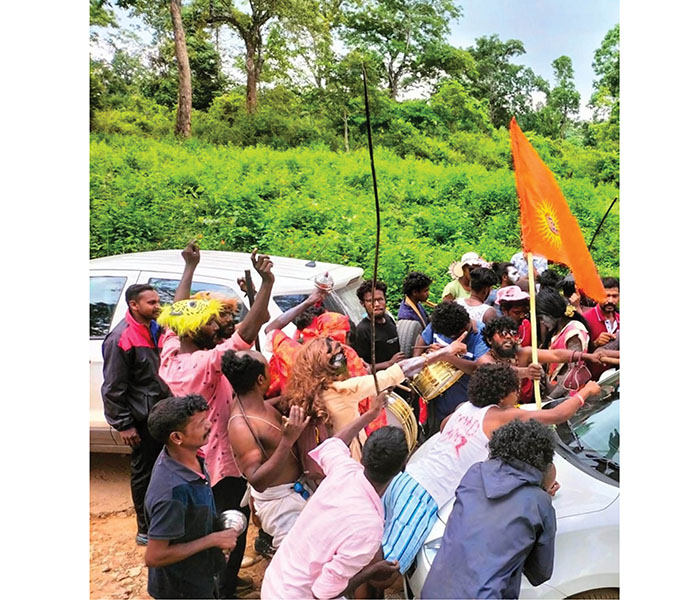
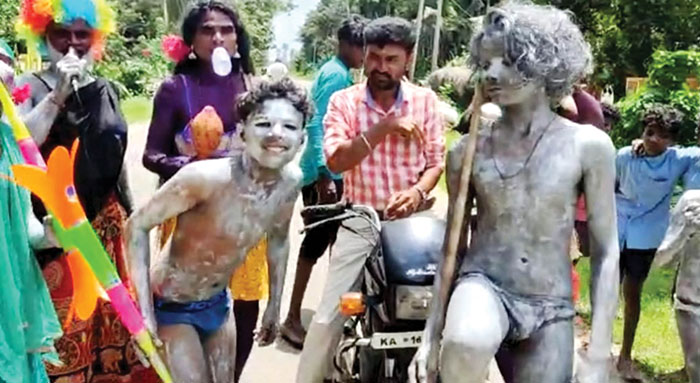
The highlight of this festival is participants hurling vulgar abuses and collecting alms. Weird attires, gaudy outfits with props that signify vulgarity are worn and vulgar abuses are hurled at every passer-by. The tribals hold long bamboo poles in their hands along with beating objects including empty plastic drums, and vessels. The sound of beating objects rends the air as tribals make merry.
Cross-dressing is a common practice for tribals during the fest. Wearing weird and garish make-up and getting dressed up in women’s clothes, men hurling abuse and singing vulgar songs demanding money from people are also part of the festival. Though vulgar abuses are hurled at women, they do not mind as they know that they are not the actual targets.
Smeared in mud and colourful paints, they head out on a procession to openly dismiss the God who once abandoned his tribe. The tribal communities believe that Lord Ayyappa and Goddess Bhadrakali betrayed the tribal people and in revenge, they abuse them to get back their affection on the fourth Thursday of May.
Legend has it that when Lord Ayyappa and some tribals went to the forest to hunt, he met Bhadrakali and fell in love with her. The smitten Lord went with Bhadrakali and forgot the tribals who felt ignored and cheated. They later started observing the day as a festival to commemorate the incident by abusing the Gods.
After marching on the roads and collecting alms even by stopping vehicles and crowding in front of shops, the tribals converge at the Bhadrakali Temple in Devara Kadu (sacred grove) at Thithimathi. They dance around the Temple and even here, they hurl choice obscenities in praise of their deities. But the liberty of abusing the Gods is taken only during Kunde Habba. On other days, the Gods are revered and ardently worshipped.
source: http://www.starofmysore.com / Star of Mysore / Home> News/ May 27th, 2022
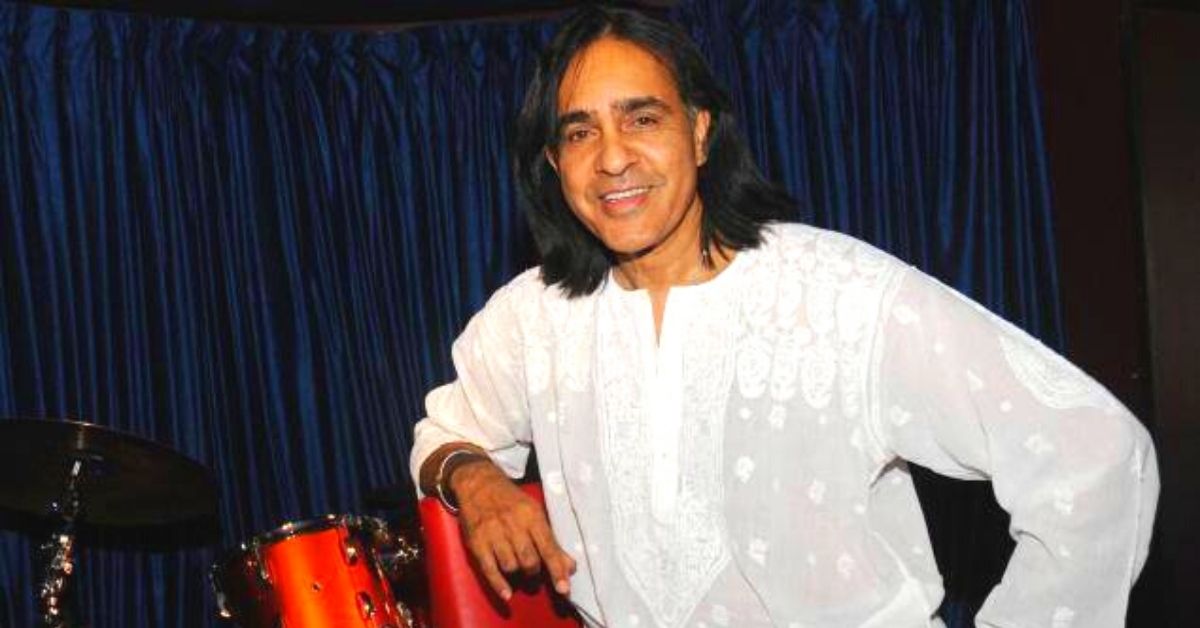
Arriving in London during the late ’60s with just his guitar, Biddu Appaiah went on to become a globally renowned music producer who sold millions of records. Here’s his story.
What do the songs ‘Kung Fu Fighting’, ‘Aap Jaisa Koi’, ‘Disco Deewane’ and ‘Made in India’ have in common? Apart from selling millions of copies worldwide, these records serenaded audiences from Russia to Peru, and stood as pioneers of global disco and pop music from the Indian subcontinent. (Image courtesy Facebook/Biddu)
What also binds them is the fact that they were all produced by a man from Bengaluru who left for London in the Swinging Sixties to pursue his love for popular Western music.
It’s incredible that more people in India don’t know Biddu Appaiah and his remarkable contributions to music. A great deal of the pop music Indians listen to today can trace their roots to the songs he produced. It was his production chops that not only introduced the world to artists like Carl Douglas, Nazia Hassan, Alisha Chinai and Shaan, but also opened commercial avenues for other independent talent in India who didn’t require the backing or endorsement of the Hindi film industry (Bollywood) producers or already established cinestars.
The Hindi film industry fought to wrest control back from the music labels supporting independent artists, but the onset of the internet has revived that spirit of independence. Here’s the brief story of a man, music producer and composer who left India behind to follow his dreams, but found his way back to influence generations of artists.
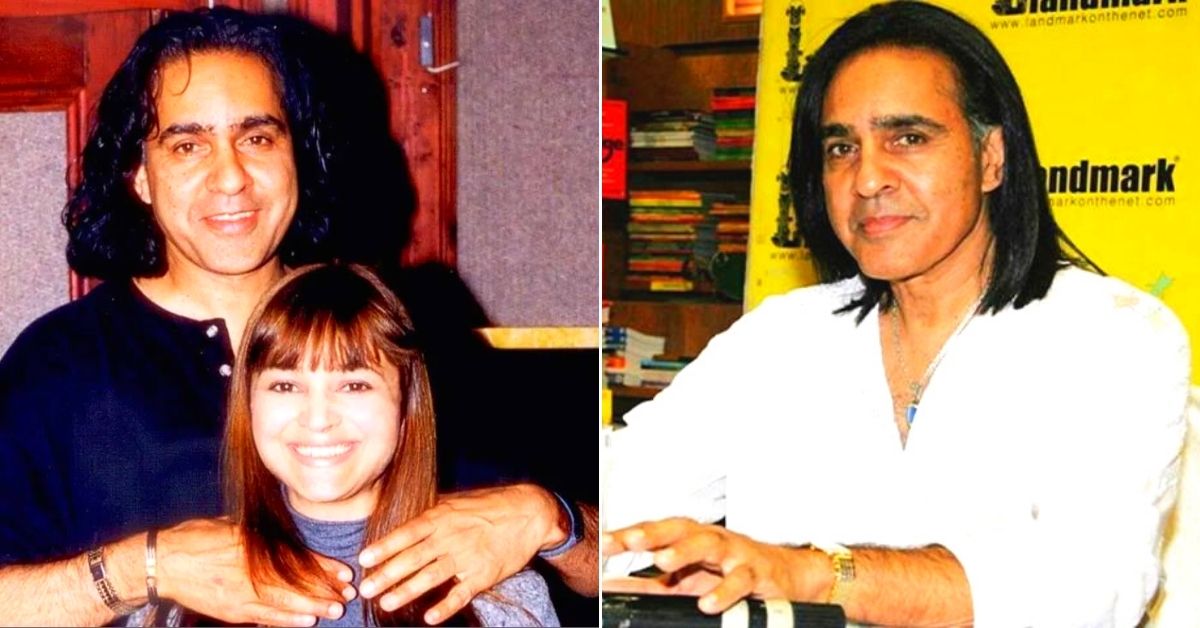
Left: Biddu & Alisha China (Image: Instagram/Alisha Chinai), Right: At a book launch (Image: The Post Script Team/Creative Commons)
‘Everybody Was Kung-Fu Fighting’
Born on 8 February 1944 in Bengaluru, Biddu attended the Bishop Cottons Boys’ School. Growing up listening to pop music from the West on the popular radio station Radio Ceylon (of Sri Lanka), his major musical influences as a teenager were Elvis Presley, The Beatles and The Rolling Stones. Learning how to play the guitar, he eventually formed a band with his friend Ken Gnanakan called the Trojans at 16.
They would play in small clubs, weddings, private parties and bars across Bengaluru before graduating to gigs in other cities like Kolkata and Mumbai. As an English-speaking band, they made their name by largely playing cover versions of songs by The Beatles, The Rolling Stones, Trini Lopez, and other Western music stars of the day. However, once the group split up, Biddu briefly performed as the lone ‘Trojan’ before leaving for England in the late 1960s.
Embarking on a journey to England in 1967, Biddu first made his way to the Middle East by climbing on a Haj ship in 1967 to Mecca before hitchhiking across the Middle East, where he performed multiple gigs.
In a 2020 interview with the Deccan Herald, he recalled, “I wanted to make it in the West. India in the 60s was a poor country; we were dancing with Russia instead of rocking with the West. I needed to get out of India as my interest was Western pop music; I was never into Bollywood. I left India and walked all the way to Beirut, singing there for six months until I saved enough moolah [money] to get to England.”
About his arrival in England, he once said in an interview with the BBC, “I didn’t really know too much about England or anything – I’d just come here on the chance of meeting the Beatles and doing some music. Everything that I did had this danceable flavour.”
To support his dreams of becoming a singer, he worked odd jobs, including one as a chef in London to save up enough money for studio time. He eventually cut a single, which impressed nobody and recalled “as an Indian in those days, they were happier to hire me as an accountant than as a singer”.
Realising that he wasn’t going to make it as a singer signed on a major record label, he instead decided to produce his own records, which, in the early days, didn’t generate much success. His first major success came in 1969, when he produced a song called ‘Smile for Me’ written by Barry and Maurice Gibb of the Bee Gees and performed by a Japanese band called The Tigers.
Since members of the band couldn’t speak English at the time, Biddu taught them how to sing English songs phonetically, given his knowledge of the language and love for pop music. The song topped the charts in Japan, and its success was the breakthrough he needed in England.
Entering the 1970s, he was producing a variety of disco songs that received little airplay on radio, but found underground appreciation from fans in the north of England.
His first real moment of success and mass acclaim came when he began working with Jamaican-born musician Carl Douglas in 1972. As a 2020 Financial Times article recollects, “Douglas was recording ‘I Want to Give You My Everything’ (written by Larry Weiss), which they did in a few hours. There was little time left to record a B-side. Douglas proposed ‘Kung Fu Fighting’, which he had written after seeing youngsters doing mock-kung fu moves in the street. It was recorded in a couple of takes. Biddu added the ‘Hurgh! Hurgh!’ exclamations. The record company people heard it and instantly realised that the B-side was the hit. They were right — ‘Kung Fu Fighting’ became one of the biggest-selling singles of all time.”
From here, there was no looking back. Biddu would soon establish himself as an important producer in the UK soul and disco scenes in the 1970s, working with a variety of artists including Tina Charles and Jimmy James. The songs he produced made their way to the UK Singles Chart and Billboard 100, while he continued making his own critically acclaimed music with ‘The Biddu Orchestra’.
‘Aap Jaisa Koi’
Biddu was never truly interested in doing film soundtracks, according to his autobiography ‘Made in India: Adventures of a Lifetime’. But that changed when Feroz Khan, a renowned Hindi cinema actor and producer, came to London to meet him in 1979.
Feroz had heard his instrumental albums and wanted him to produce a song for a film he was making called ‘Qurbani’. They met at an apartment he was renting near Claridges Hotel in Mayfair, and what ensued would change Indian pop music forever.
The Bollywood actor’s sales pitch was pretty simple, even though Biddu admittedly knew little of Hindi films or music. Feroz said, “Listen, you and I come from Bangalore. We are both Bangalore boys.” Biddu observed that Feroz was using the “old boys from the hood routine”. Feroz would then go on to say, “Come on, do it for a friend. Your mama will be so pleased.”
Although Biddu initially agreed to take on the project, he was still not convinced, even though Feroz had gone out on a limb for him. Local music directors in Mumbai had threatened to organise a boycott of his film if he “used a foreigner” to make music for one of the songs. However, once Feroz agreed to Biddu’s wish to record the song in London and not use playback singers dominating the music charts in India, there was no looking back.
The next thing they had to do was find a singer in London who could sing in Hindi. That’s when Feroz Khan came up with the name of a young 15-year-old Pakistani girl living in London called Nazia Hassan. Feroz knew her parents well and convinced them to let their daughter sing one song for his film. A couple of days later Biddu met the young Nazia, her brother Zoheb and their parents at their apartment in Century Court opposite the famous Lord’s Cricket Ground.
After singing a verse and chorus from one of Biddu’s songs ‘Dance Little Lady’, Nazia got the gig and went on to record the timeless ‘Aap Jaisa Koi Meri Zindagi Mein Aaye’.
“Her voice did not have the piercing sharpness of most Asian singers. The pleasantness in her voice was around C3, from middle C to G4 — warm, expressive and nubile. It wasn’t a great voice. But it was different, and it was this that made the difference between using her and someone from the old school in India,” wrote Biddu in his autobiography.
After recording Nazia’s part, he went into Red Bus Studios and added some of his magic dust alongside his sound engineer Richard Dodd.
“I had a catchy introductory riff played on the sitar; I used the syn drums, which had never been used in a Hindi song before. The syn drum made a sound not unlike my name. It went ‘bidoo’ every time you hit it and I double-tracked Nazia’s voice to give it some oomph. Once again, I used a rhythm box with a Latin beat to give it a hip-swaying groove,” he wrote.
‘Made in India’
Suffice to say, the song became a raging hit in not just India, but around the world. Despite its massive success, Bollywood didn’t come calling immediately. Instead, about a year later, a representative from the London branch of HMV (later called SaReGaMa), one of India’s largest music companies, came to see him. The record executive expressed the company’s desire for Biddu to make an album with Nazia Hassan. This was the first non-film album the company was going to make. After much negotiation, which also included the payment of royalties to the artists involved, he got into the studio with Nazia and Zoheb to produce an Urdu album.
Modelling the siblings on another famous brother-sister duo in the United States called ‘The Carpenters’ they recorded the album ‘Disco Deewane’, which was a smash hit across the world with the record charting across 14 countries, including Brazil, where it went No.1. The record sold almost 100,000 copies on the day of its release, a remarkable feat for South Asian music artists in the West. Following ‘Disco Deewane’, they went onto work on three more albums including ‘Star/Boom Boom’ in 1982, ‘Young Tarang’ in 1984 and ‘Hotline’ in 1987.
Album cover of a pop and disco music classic (Image courtesy Wikimedia Commons)
Together, the brother-sister duo went on to sell 60 million records worldwide. During this period, he also made massive hit records for famous Japanese (Akina Nakamori), Chinese and Filipino pop stars as well, besides making a return to the UK music scene with house music records.
After spending about a decade making records with Nazia and Zoheb, he worked with Hindi vocalist Shwetta Shetty producing her 1993 album ‘Johnny Joker’.
But it was 1995 that Biddu really made his mark in India, composing and producing the legendary ‘Made in India’ album by Hindi pop and playback singer Alisha Chinai. The song and the music video that followed was one of the key avenues MTV chose to launch their channel in India.
Interestingly, some anecdotes even claim that the song was originally meant for Nazia on the vocals, but she apparently refused. Eventually the song fell on Alisha China’s lap and for the backup vocals, Biddu employed another young budding singer, Sophie Chaudhary.
opping the charts in India, the album sold over five million copies. In addition to Alisha Chinai, he kickstarted the pop music careers of artists like Shaan, his sister Sagarika Mukherjee and even famous playback singers Sonu Nigam and KS Chitra. A lot of the Indian pop music scene in the 1990s and early 2000s was marked by the records that Biddu produced.
There’s a lot more to his story. But what’s more important is that generations of people from literally all over the world have swayed their hips to his hit records. And this isn’t even an exaggeration. For a man from Bengaluru, who hitchhiked across the Middle East and landed up in London with his guitar, he sure made his mark on the world of music.
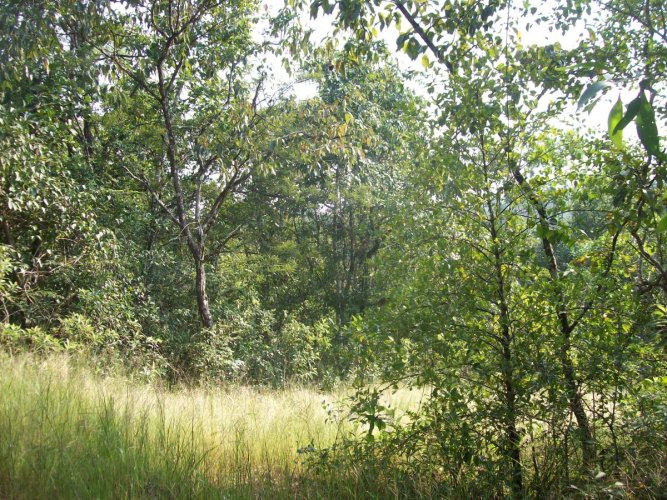
A few thick forests have been left untouched for ages. Though close to human habitation, these forests have withstood the test of time for religious and ecological reasons. Here, the air is cool and sunlight streams in through miniscule gaps in the gaps in the canopy.
Karnataka, Maharashtra and Kerala have thousands of such sacred spaces.
These woods that range from a few acres to a few hundred have many names.
They are called kaan in Malnad (Karnataka’s Western Ghats), devakaad in Kodagu, and devarakaadu in other parts of Karnataka. In Kerala, they are called kaavu where theyyam (ritual dances) is performed.
These groves are rich in biodiversity and are known for the ecological services they offer.
Like these regions, many countries and civilisations across the world have maintained ancient groves. The lore associated with these forests are many. In India, it is said that ancient sages would meditate in forests known as tapovan (woods of penance).
The scrub forests of the Thar desert have been protected by the Bishnois, followers of Guru Jambha. In fact, they are known for putting their lives on the line while protesting the cutting down of trees in these groves.
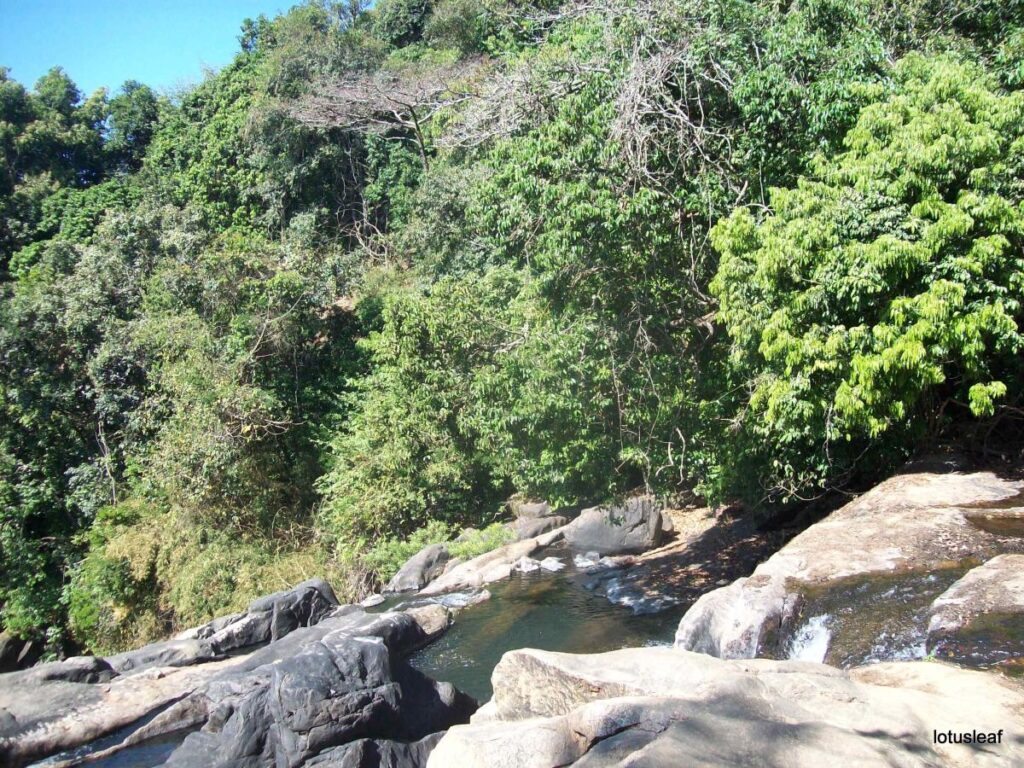
Glimpses from sacred groves in Uttara Kannada / DH photo
Devakaads of Kodagu
In Kodagu, there are dedicated forests beside every village settlement to Aiyappa, the god of forests and hunting. Kodavas held the belief that the spirits of their deceased ancestors would be led on hunts in these sacred forests by Botekara Aiyappa (Aiyappa, the hunter). No living Kodava would venture out to hunt animals or even cut down the trees in these devakaads.
There are also a few devakaads that are dedicated to other gods and goddesses. One of them is the Mahalaxmi devakaad in Ammathi-Vontiangadi in Kodagu. Located behind the bus stop, the site displays a board issued by the Government of Karnataka, declaring the grove as a devara kadu (forest of the gods).
According to Cheppudira G Kushalappa, Dean of the Ponnampet Forestry College and Kodira A Kushalappa, a retired IFS officer, there were 1,214 devakaads of a total size of 2,550 hectares in 1996 in Kodagu.
Apart from their religious and cultural significance, sacred groves help conserve our forest wealth, says Kodira Kushalappa. “Forests cool temperatures and bring rainfall. They help in retaining the topsoil and help sustain streams, which water neighbouring farms. Forests also serve as home to birds which feed on insects that are found in the fields,” he adds.
According to a 2002 study, there were 215 tree, 86 bird, 163 mushroom and an uncounted number of butterfly species found in the sacred groves and coffee plantations of Kodagu. Forty-nine out of 163 species of mushrooms were unique to these groves.
Another paper noted that there were 25 medicinal tree species (rare, endangered and threatened) found in the devakaads. A 2003 research study noted that the larger sacred groves had higher diversity than in natural reserved forests. There was a high level of endemic and globally threatened species present in these forests.
Butterfly species such as the Travancore evening brown (Parantirrhoea marshalli) or the Malabar banded swallowtail (Papilio liomedon Moore) are restricted to low elevation evergreen forests in the southern Western Ghats that are excluded from protected area network. Tree species like the Actinodaphne lawsonii, Hopea ponga, Madhuca neriifolia, and Syzygium zeylanicum, which are on IUCN threat list, are found in the sacred groves.
The swampy areas in kaans have been found to have the large-sized, threatened tree species Syzygium travancoricum, which grow close to water bodies and is classified in the IUCN Red List as “critically endangered”.
These sacred groves help in watershed protection, protect against fire, maintain a favourable microclimate and protect against soil erosion.
Kaans of Malnad
There are many rules for the Malnad kaans. The trees cannot be cut in the groves but adjoining villagers could cultivate wild pepper.
Francis Buchanan, a British officer, who travelled through Malnad in 1801 wrote that permission to cut a tree in a kaan was to be sought from a village headman, who also served as the priest of the village temple. Otherwise, the tree feller would face the wrath of the forest deity.
The main difference between a kaan and a devakaad is that no cultivation was allowed in the devakaads, while the cultivation of wild pepper and sago palm was allowed in the kaans.
The crop grown in the kaans initially came under forest produce. Later cultivation by clearing by fire was permitted. Even industries were allowed to venture into the kaans, leading to widespread destruction in central western Karnataka.
Now, various individuals have been fighting cases in courts to preserve the sacred groves.
Temple committees and villagers aid the forest department in conserving these sacred groves. Mookonda Arun Ganapathy, the secretary of the Bhadra Kaali temple in Bilugunda village, Kodagu explains that researchers and students often come to the nearby Aiyappa devakaad.
Arun states, “There are encroachments happening in these sacred groves despite government efforts. Many of the well-preserved ones are by the road side. The villagers take measures to protect them. Regular rituals in the forest temples help protect these sacred groves. Trees should not be cut inside these holy forests. Sacred groves are essential for preserving the environment and our culture.”
source: http://www.deccanherald.com / Deccan Herald / Home> Spectrum> Spectrum Top Stories / by Mookonda Kushalappa / May 26th, 2022
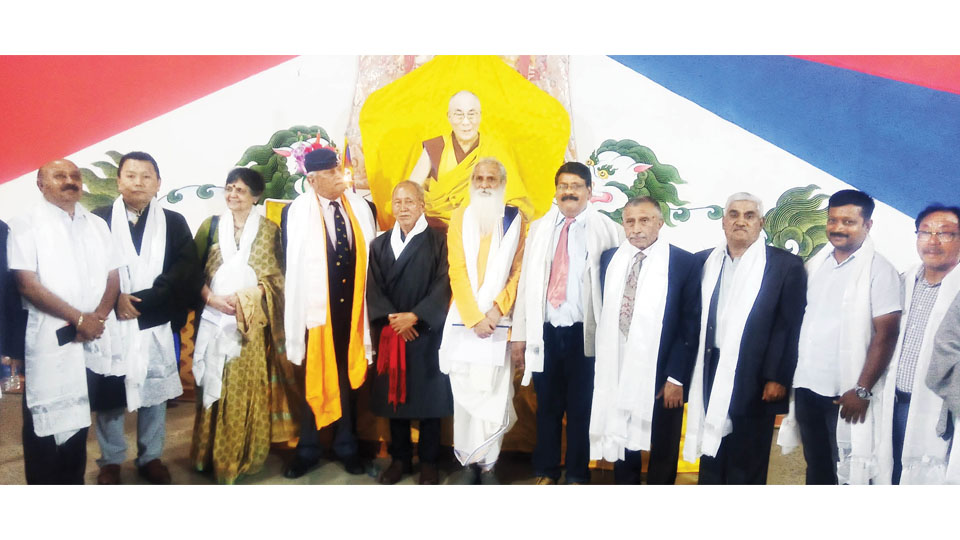
The contribution of Tibetans Soldiers , who have served in the Special Frontier Force (A unit of Indian Armed Forces) in fighting with enemies by joining with the Indian Soldiers, have been hailed by Air Marshal (retd.) Nanda Cariappa, son of First Commander-in-Chief Field Marshal late K.M. Cariappa.
He was speaking as the chief guest at a felicitation programme organised by Indo-Tibetan Friendship Society (ITFS), Bylakuppe, in honour of Tibetan ex-Servicemen of Special Frontier Force and the families of deceased ex-Servicemen recently.
He further said that the security of India depends on the freedom to Tibet. “Tibetan soldiers are protecting our country in an altitude of 18,000ft. without oxygen and they have also participated in India-Pakistan War for liberation of Bangla. According to them, the time will come when Tibetans residing in temporary houses in India will certainly go back to Tibet for permanent houses, he added and appealed Tibetan youths to follow the footsteps of their forefathers.
Meena Nanda, wife of Nanda Cariappa, attended the event.
Earlier, B.V. Javaregowda, President of ITFS, Bylakuppe, explained the purpose of the day. Settlement Officers of Tibetans Government Lobsang Yeshi explained the history of Tibet and another Settlement Officer Chime Dorje introduced Air Marshal (retd.) Nanda Cariappa to the gathering. A.A. Chengappa, Secretary of ITFS briefed the activities of the Society. Members of Parliament (MPs) of the Tibetan Government-in-Exile Lobsang Sithar and Ngodup Dorjee also spoke.
Pema Sithar, President of Tibetan ex-Servicemen Organisation, briefed on the roll of the Tibetan Soldiers in Tibetan Army.
Presidents of Tibetan Youth Congress, Tibetan Women’s Association and Heads of various Monasteries were present. More than 500 ex-Servicemen and their family members participated. J.P. Urs, South Zone Co-ordinator of Tibet Support Group, proposed a vote of thanks.
source: http://www.starofmysore.com / Star of Mysore / Home> News / May 23rd, 2022
WELCOME. If you like what you see "SUBSCRIBE via EMAIL" to receive FREE regular UPDATES.
Read More »