Category Archives: Arts, Culture & Entertainment

Gen Thimayya: A distinguished life

Field Marshal K M Cariappa and General K S Thimayya, both from Kodagu, broke down several barriers for Indians in the army.
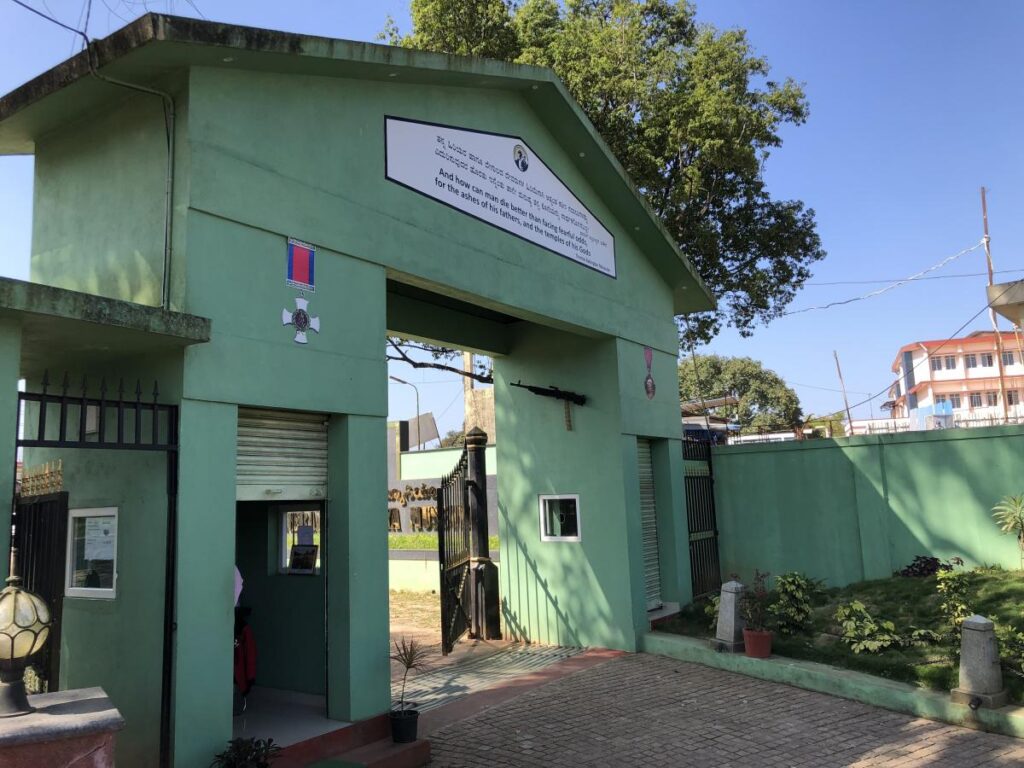
The entrance to the General Thimayya museum. Photos by author  

The General Thimayya Memorial Museum commemorates the life of the Indian General and is meant to inspire the younger generation to join the armed forces.

The museum was originally called Sunnyside and was the family home of Gen Thimayya. But not many people know that it was his mother Cheppudira Cheethavva (aka Seethamma) who inherited the house from her father.

Thimayya’s two brothers went on to serve in the army as well. Thimayya himself had a four-decade-long career in the armed forces from 1921 to 1961. A distinguished combat officer, he saw action in the Second World War, then in the 1948 war against Pakistan and went on to serve as Army Chief from 1957 to 1961.

After his retirement, he was sent on a peacekeeping mission to Cyprus, where he passed away in 1964.

But his illustrious career in the armed forces could have turned out differently. At one point, as a young lieutenant, he wanted to quit the army and join the Indian freedom movement, but was dissuaded from doing so by the Motilal Nehru.

“Nothing will please the British more than your resignation. For 30 years we have fought for Army Indianisation. We are now winning the fight. If you give up, we shall have lost it,” Nehru told him. “We are going to win independence. Perhaps not this year or the next, but sooner than later the British will be driven out. When that happens, India will stand alone. We will have no one to protect us but ourselves. It is then that our survival will depend upon men like you.”

Nehru’s prescient words led Thimayya to stay on in the army. The rest is history, and is on display at Thimayya’s family home. 

For some years, the Sunnyside House served as the RTO office in Madikeri. This was until the Field Marshal K M Cariappa and General Thimayya Forum, whose president Col (retired) Kandrathanda C Subbaiah and convener Major (retired) Biddanda Nanda Nanjappa renovated and converted it into a museum.

This museum is spread over 2.6 acres and located on G T Road in Mahadevpet in Madikeri, and was inaugurated in February 2021 by the President of India Ram Nath Kovind.

An old-style building, many rooms in the house have been dedicated to various members of Thimayya’s family. One room has been dedicated to General Thimayya’s wife Codanda Nina. Another room is dedicated to Thimayya’s brother Freddie, the painter, while a third has been dedicated to General Thimayya’s home regiment, the Kumaon.

One room also displays Kodava culture: there is a Kuppya Chele (traditional male costume) on display accompanied by a hand-wound, Pani-katt, white turban.

The house itself has several pictures from Thimayya’s life, along with a video film. There is a famous photo of the General riding a Lambretta scooter. There are also pictures of Thimayya during his wedding.
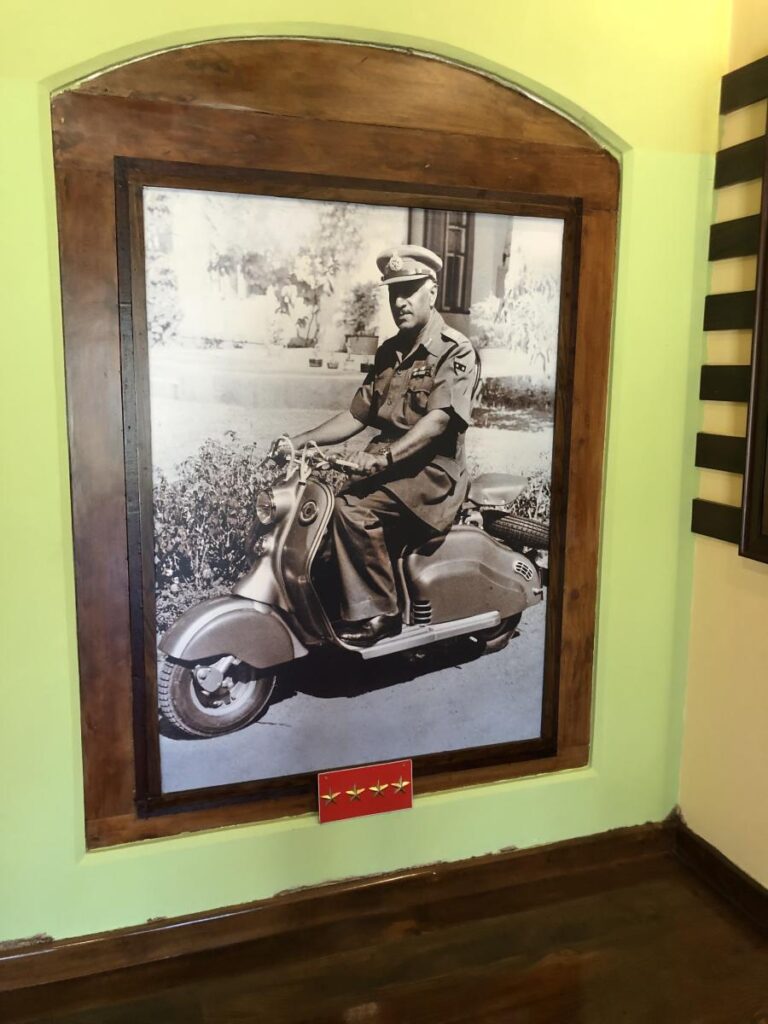
A photo of the General on his scooter at the museum. Photos by author 

Besides this, a replica of his uniform and medals are on display.
The museum also houses 24 weapons donated by General Bipin Rawat.

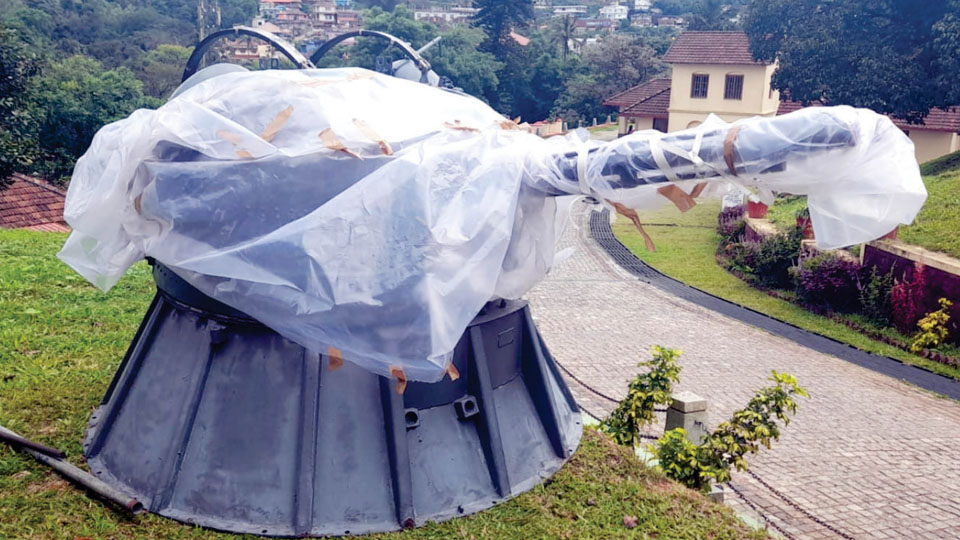
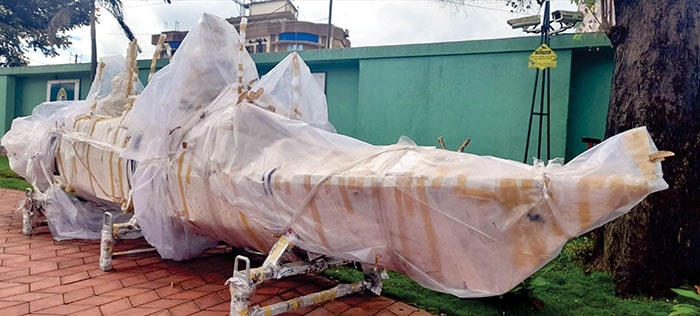
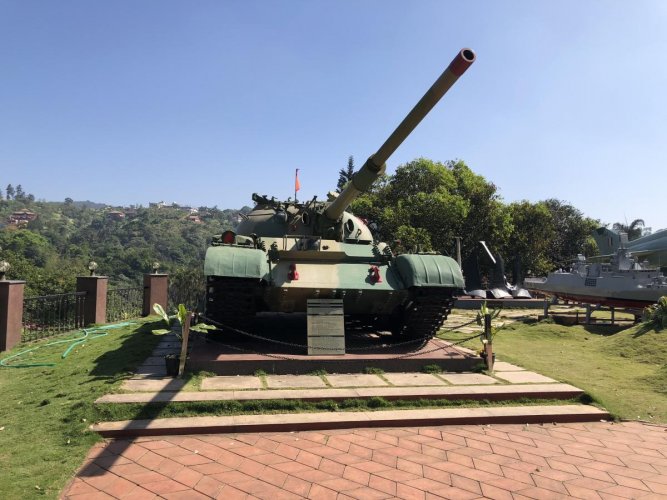
Outside the house, near the entrance, stands a battle tank called Himmath, donated by the Army training centre in Pune, a decommissioned MIG21 supersonic fighter jet and interceptor aircraft, a 24-feet INS Shivalik ship model, a Sindhughosh submarine and a Navy gun mount (anti-aircraft gun).
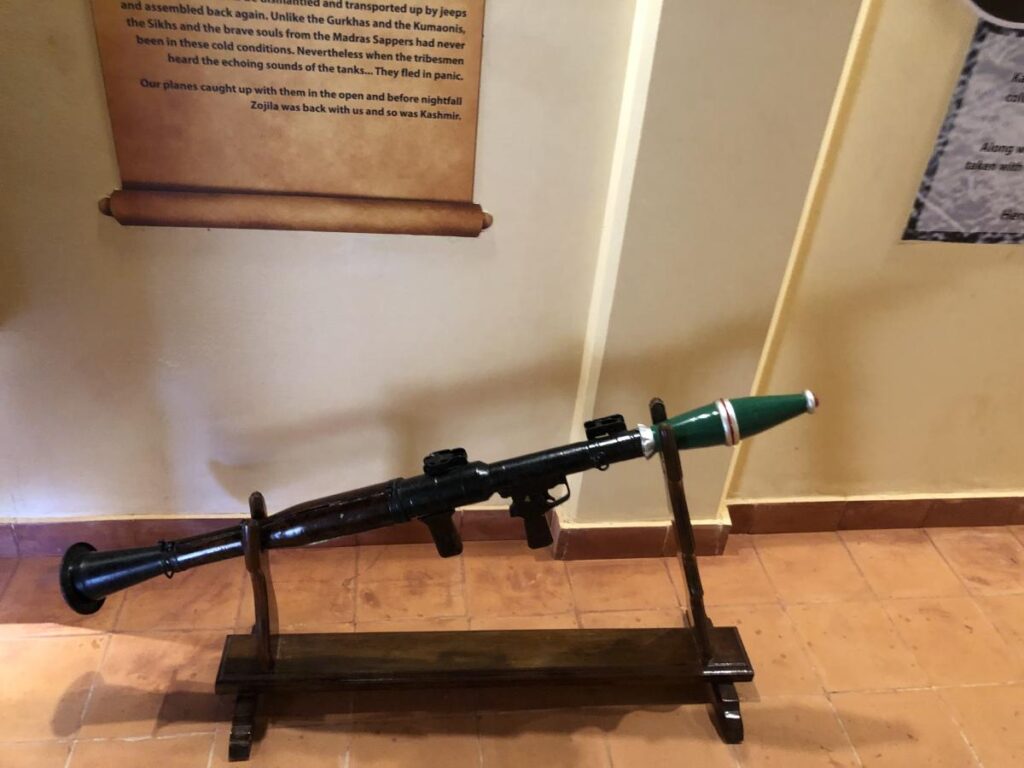
A rocket launcher is just one of the many weapons on display at the museum. Photos by author

Both the tank and the jet were used during the 1971 war.

source: http://www.deccanherald.com / Deccan Herald / Home> Spectrum / by Mookonda Kushapallpa / DHNS / March 19th, 2022


Bird-watching begins in Madikeri on April 8

After being deferred in January, the eighth edition of the Karnataka Bird Festival will be held in Madikeri from April 8-10, 2022.

Image used for representational purpose only. (Photo | Express)

Bengaluru :

After being deferred in January, the eighth edition of the Karnataka Bird Festival will be held in Madikeri from April 8-10, 2022.

The festival, organised by the Karnataka forest department and Karnataka Eco-Tourism Development Board, aims to draw attention of people to bird watching, spark interest among young wildlife enthusiasts, show people the bio-diversity of forests, and shift their focus from tiger-centric wildlife safari and tourism. 

“Every year a different location, region, bio-diversity, and a different bird is focused upon to increase awareness and ensure better conservation measures.

This year, the mascot is Baza bird,” a forest department official said. Baza is a migratory bird from the eastern Himalayas, China and South East Asia. Forest officials of the region have reportedly sighted a couple of the birds now, in the onset of summer. 

Kumar Pushkar, additional Principal Conservator of Forests and CEO of the Board told TNIE that the festival was postponed because of spike in Covid-19 cases. “We always wanted to host one is Kodagu because of its bio-diversity and the many species which can be sighted there. Baza was chosen because it is sighted in winters in this region.

There will be around six to seven different trails, which the deputy conservator of forest is finalising. The event will also cover Madikeri city, and will be inaugurated by forests minister Umesh V Katti,” he said. Experts from across the country will be brought to share their experience, knowledge. 

source: http://www.newindianexpress.com / The New Indian Express / Home> States> Karnataka / by Bosky Khanna, Express News Service / March 14th, 2022


‘Pushpa-The Rise’ actress Rashmika Mandanna just wore a Kodava style sari, here’s what makes it so special

Telugu actress Rashmika Mandanna is making news since the time her last release Pushpa-The Rise became a blockbuster, breaking all records at the box office. The pretty lady is not only a great actress but also a fashionista, who loves wearing statement making clothes. While she has always inspired millennials in experimenting with clothes, her recent sari outing has left one and all impressed, as it revives an old tradition.

Kodava sari
Rashmika picked up a midnight blue georgette sari by designer Nitika Gujral. The beautiful sari featured antique zardozi embroidery. She draped the sari in Coorgi Kodava style. What makes the gesture so special is the fact that Rashmika hails from the Kodava community and wore the drape as a tribute to her ancestors.

The price The dark blue drape is totally made in India and costs INR 77,500.

The accessories
Styled by celebrity stylist Stacey Cardoz, Rashmika finished off her look with chunky oxidised jhumkas and rings.

She looked stunning
We loved Rashmika’s gorgeous blue sari and think it could be your perfect pick for a friend’s wedding or the festive season.

  1. What is a Kodava sari?
    It’s a special sari draping style followed by the Kodava community, which is a ethnolinguistic group from the region of Kodagu (Coorg) in the southern Indian state of Karnataka.
  2. What makes it so special?
    The Kodava or Kodagu style of draping features pleats created in the rear, instead of the front. What makes this draping style rather different is the fact that the loose end of the sari is draped back-to-front over the right shoulder, and is pinned to the rest of the sari.

source: http://www.timesofindia.indiatimes.com / The Times of India / Home> E Times> News> Lifestyle> Fashion> Style Guide / by TimesofIndia.com / March 09th, 2022

Custodians of the Kodagu drum

A handful of artisans in the hill district still produce the Dudi (a small drum) at a time when globalisation is slowly killing the art of making these musical instruments.

Madikeri :

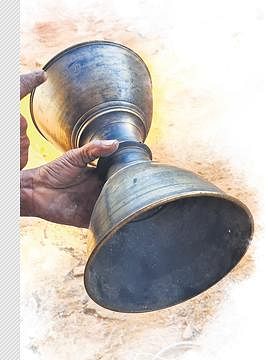
Rustic and rhythmic sounds resonate in the air in the Kodagu district when Kodavas observe special occasions. These rustic sounds are from the traditional drum called the ‘Dudi’. With a metal base and the batter head made of animal hide, Dudi holds a special place in the rituals practised by the Kodavas.

While the traditional Dudis still hold a great significance among the community, the art of making Dudis is slowly dying. Today, only a handful of artisans are creating this unique instrument. Nonagenarian Subbaiah U is one of them. Elaborating on how he makes Dudis, Subbaiah says, “In the past, I used to make Dudis from the skin of muccha (lion-tailed macaques). As hunting of macaques is prohibited by law now, I use goatskin.”

First, artisans buy the hide from meat shops for approximately Rs 350 a piece and then the tedious and intricate process of making the drum begins. “The first tough job is removing hair from the goatskin. One cannot use blades as it can damage the skin. We rub the skin on a hard surface, like stones, to remove the hair and then cut it to the size of the base. We need two skins to make a Dudi,” explains 65-year-old KA Ganapathi, another artisan who has been making Dudi for nearly three decades now.

Going back to the myth and origin of Dudi, historian Bacharaniyanda Appanna says, “In the past, forest dwellers created the instrument for entertainment. It is said that they wanted to imitate the sound of the woodpecker that resonates in the forest.” Dudis were earlier made using hollow tree barks for the base and lion-tailed macaque’s skin for the resonating heads.

Ropes made from natural plant fibres were twisted around the drum and canes were used to imitate the sound of the woodpecker. Gradually, bronze replaced the wood for the base and goatskin for the head. “Now, not many work with bronze and workers who can repair bronze material are also rare. While we fix the resonating heads of old bronze bases, the new ones are created using brass,” he explains.

The cleaned goatskin is first soaked in water and then placed on an hourglass-shaped metal base. It is neatly stitched (using plant fibres) around the vertical openings of the metal base and is dried under the Sun. A ring created using plant fibres is placed on top of the skin and around the metal base. They are then stitched with ropes, which were earlier plant-based but are now made of nylon. The ropes are then carefully tightened around Dudi. “The two sides of the Dudi give a slightly different sound and they are differentiated as male and female sound,” adds Ganapathi.

The artisans of Dudi are sought after for their special work even today, but the art may soon become extinct. Dudis are extensively used during Kodava weddings, festivals and even funerals. However, these traditional instruments are now being sourced from mass production centres.

“Many times these instruments are made from plastic and are sourced from Mysuru,” confirms Appanna. The old-time artisans who put in a lot of effort to make Dudis charge between Rs 500 and Rs 700 for a Dudi and they also receive orders to repair the old ones. Philanthropists said that these artisans should be supported to revive the dying art that contributes greatly in preserving the tribal culture.

source: http://www.newindianexpress.com / The New Indian Express / Home> States> Karnataka / by Prajna GR / Express News Service / March 06th, 2022

Raj Tarun, Varsha Bollamma’s ‘Stand Up Rahul’ trailer out

Hyderabad: 

Starring actors Raj Tarun, Varsha Bollamma, Murali Sharma, Indraja, and Vennela Kishore, the upcoming movie ‘Stand Up Rahul’, has grabbed attention.

The makers of this upcoming Telugu romantic comedy released the trailer, creating much anticipation.

As the trailer divulges the film’s storyline, hero Raj Tarun is established as a young man, who cannot put up with a regular job. The reason given for his inconsistent career path is his sarcasm.

Rahul (Raj Tarun), then decides to take up a job as a stand-up comedian, when his mother (role played by Indraja) is against the idea. Rahul’s father, a role played by Murali Sharma, on the other hand, encourages his son to take up the job, while his role is well-established as a new-age father.

The heroine in ‘Stand Up Rahul’ is established as a dreamer, who meets Rahul, and they start living-in, together. Vennela Kishore’s role seems to have acted in a lengthy role, after quite some time, and his scenes in the trailer amplify the hype.

The stand-up comic scenes imbibed in the trailer cut, seem to be interesting, while it is expected that the family audience will enjoy the movie.

Directed by Santo Mohan Veeranki, is being co-produced by Nandkumar Abbineni and Bharath Maguluri under the banners of Dream Town Productions and HighFive Pictures.
‘Stand Up Rahul’, is slated for its release on March 18.

source: http://www.telanganatoday.com / Telangana Today / Home / by IANS / March 06th, 2022

On a green path

From an abandoned barren land to a green lush private sanctuary, author Pamela Malhotra recounts the transformation.

Bengaluru : 

Pamela Malhotra’s From the Heart of Nature (`599, Penguin Random House) documents the story behind the creation of a private forest sanctuary in India. More than just the struggle, Malhotra also recounts how she connected with animals and trees both at a physical and spiritual level. 

What was the turning point in your life? 

My husband Anil and I shared that love of wildlife and that dream. This realisation initially came while living in the USA in the late 1970s and early 1980s, which is why we established our first small wildlife sanctuary on the Big Island of Hawaii in 1979. When we came to India in January of 1986, we were quite upset by the deforestation we saw, especially in the Himalayas. We had gone to Haridwar and fell in love with the Himalayas. So, we purchased land in the Uttarkashi region to help reforest that area. 

How did you zero-in on Kodagu?

There were land ceiling laws in the state (then Uttar Pradesh – now Uttarakhand) that limited a family to owning just 12 acres of land. There was not enough land for establishing a forest wildlife sanctuary through reforestation. Also, we had visited Nagarhole National Park in Jan 1986, where the then-Wildlife Warden of the Park urged us to establish our forest wildlife sanctuary in his home district of Kodagu. As a result my husband Anil travelled throughout southern India to see what he could find, finally finding suitable land in Kodagu. Purchasing larger pieces of land was possible here if the land was deemed ‘plantation’ and the purchaser was an agriculturalist which my husband was.

What were the initial struggles that you faced?

Accessing the land. It was almost impossible to bring in any kind of building materials for our home in the beginning due to the poor roads. So, my husband put loads of rocks and other road material into these dirt roads to help give us drivable access which was also a big boon for the local people. Another major challenge was the legal maze encountered in the district since lands were divided into several different categories, often with different rules/laws applying to different categories in terms of purchase and ownership. Acceptance by the local people was also initially a challenge, although the older generation did understand the importance of maintaining forests and not killing off all the wildlife. The most distressing challenges have been illegal logging and poaching of wildlife. 

The sanctuary is spread across 300 acres, what are the kinds of species that are found there?

Hundreds of species have made the sanctuary their full-time home and/or come visit frequently. A short list of species found here includes 100s of species of butterflies and birds including Great Indian Hornbills and Malabar Grey Hornbills, Bengal tiger, Asian leopard, Asian elephant, sloth bear, dhole (Indian wild dog), Gaur (Indian bison), species of deer (sambar, cheetal, muntjac/barking deer) etc. So diverse are the species found here that one Oxford scientist dubbed our sanctuary ‘Noah’s Ark’.

You first purchased the land for the sanctuary in 1992, to create a private sanctuary. How did you decide on writing a book?

I hope to sow the seeds of love of nature in the hearts and minds of all who read the book, and to create a sacred perspective when viewing and dealing with nature.

source: http://www.newindianexpress.com / The New Indian Express / Home> Cities> Bengaluru / by Monica Monalisa, Express News Service / March 02nd, 2022

Kodava Samaja Mysuru Gets New Team

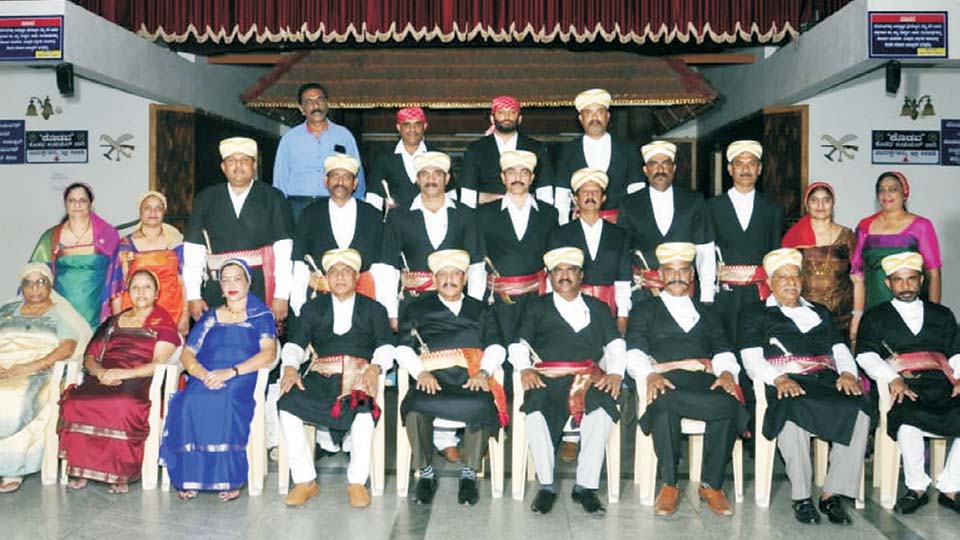
A group photo of Kodava Samaja Mysuru (KSM) Management Committee Members for the year 2021-23

(Sitting from left): Chembanda Nanjamma Pemmaiah, President – Kodagu Sahakara Sangha (KSS), Ponjanda Lovely Appaiah, President – Shri Kaveri Kodagu Mahila Sangha (SKKMS), Appanderanda Tara Somaiah, Joint Secretary – KSM, Mukkatira B. Jeevan, Hon. Secretary – KSM, Mechanda M. Shashi Ponnappa, President – KSM, Malachira M. Ponnappa, Vice – President – KSM, Machimada P. Nanaiah, Hon. Treasurer – KSM, Kekada M. Belliappa, Chairman, Sree Cauvery Educational Institutions (SCEI) and Kuttimada D. Muthappa, President – Kodava Samaja Cultural and Sports Club; Committee Members – middle row from left: Kalyatanda Meena Ponnappa, Thapanda Latha Nanjunda, Ajjinikanda Manish Pemmaiah, Ponnimada K. Biddappa, Balekuttira M. Poonacha, Pattamada T. Charamana, Kanacherira N. Mohankumar, Kunjiyanda Robin, Chovanda B. Harish, Kotera Revathy Kushalappa and Palachanda Saraswathi Suresh; Standing top row from left: Anjaparavanda T. Chinnappa, Kanjithanda B. Kushalappa, Chottemanda U. Alok Appanna and Sadmudira S. Rashan Bopaiah.

source: http://www.starofmysore.com / Star of Mysore / Home> Photo News / March 04th, 2022

Tehey: Badsha’s New Bridal Collection Shop Opens In City

Mysore/Mysuru:

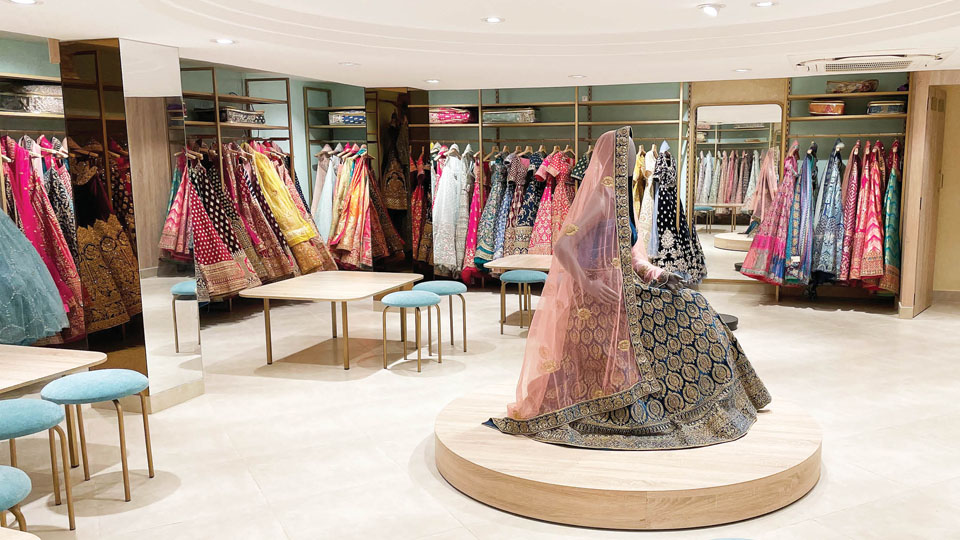
Badsha’s ‘Tehey’ is a one-stop shop for a new bridal experience in city.

‘Tehey’ means layers in Sanskrit and there are layers of ceremonial wear — from exquisite bridal lehengas for the foremost bride to classy ethnic wear for the guests.

‘Tehey’ traces its roots to the early 1900s when a successful silk and cotton textile business was established by their ancestor Abdul Rehman Badsha and his four sons in Virajpet, Kodagu.  The first formal retail outlet was opened in Mercara in 1922.

Now with the launch of ‘Tehey’ people can choose from a range of exclusively designed Indian ethnic occasion wear sarees, lehengas and salwars.

‘Tehey’ also offers Kodava attires for men and women, including the Kupya-Chele & Mande Tuni for men; Bottu Podiya, Kambi Podiya, Muskoli and Checked Vastra for women.

To enjoy the shopping experience, visit ‘Tehey’ which was inaugurated on D. Devaraj Urs Road in city on Feb. 26.

source: http://www.starofmysore.com / Star of Mysore / Home> News / March 03rd, 2022

Rashmika Mandanna: It is surreal how my life has changed in five years

Rashmika Mandanna will be seen next in the Telugu film ‘Aadavallu Meeku Johaarlu’

Beyond the starry aura, Rashmika Mandanna declares she is a happy 20-something making memories of a lifetime.

There was a time when a trip to Bengaluru from her hometown Virajpet in Kodagu district was special for actor Rashmika Mandanna. “It was our Paris,” declared Rashmika Mandanna to this writer a few years ago. Today, she is a pan-Indian star straddling Telugu and Hindi cinema and basking in the spotlight after the stupendous success of Pushpa – the Rise. In Hyderabad for her new Telugu film Aadavallu Meeku Johaarlu, which releases in theatres on March 4, Rashmika Mandanna says with a hearty laugh: “It feels surreal when I think how my life has changed in the last five years. Hyderabad has nearly become home and I am often travelling to Mumbai and other cities for work.”

Her staff reminds her that she hasn’t had her meal yet, but she insists on this quick conversation first: “It is my responsibility to fulfill my commitments.”

Rashmika Mandanna remembers the time she filmed for the Kannada film Kirik Party as a teenager: “I had no idea about films, camera or acting. I went to the film sets from my college hostel. I am still discovering the real me, but I am becoming comfortable with being in the spotlight.”

At 25, Mandanna has captured the attention of filmgoers in different languages. “A lot of what makes a star, I think, are the choices made off-screen, rather than the on-screen performances. Do I want to workout to look a certain way, how much can I push myself as an actor and what sort of a person I am on and off set… all this matters. The 20s is the time one begins to explore the world, and all that confidence shows on screen.” 

Rashmika Mandanna has been a part of big budget films since the beginning, and her career is further on the rise after Pushpa, but she reckons that every film she has done so far has helped her reach where she is: “Had I not done Kirik Party or Chalo (Telugu), I would not have been chosen for Geeta Govindam. I am conscious that the scripts I choose today will shape who I am tomorrow.”

Currently working on two Hindi films — director Shantanu Bagchi’s spy thriller Mission Majnu co-starring Siddharth Malhotra and director Vikas Bahl’s Goodbye co-starring Amitabh Bachchan, she says, “There are times I am overwhelmed when I think of the big people I am getting to meet and work with. The other day I was telling my mom, ‘do you realise I am an actor?’ I have to remind myself that unless I am in the moment, confident and capable, I cannot do justice to my work.”

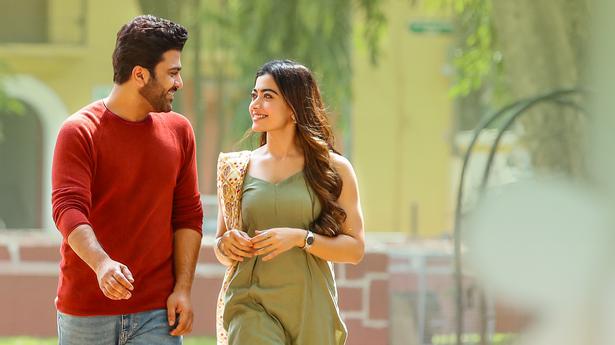
Sharwanand and Rashmika Mandanna in ‘Aadavallu Meeku Johaarlu’

Aadavallu Meeku Johaarlu, written and directed by Kishore Tirumala, is a comedy family drama where Rashmika stars alongside Sharwanand and a line-up of talented female actors including Radhika, Khushboo and Urvashi. “When Kishore sir narrated the story, I was curious about the female actors in these important roles. I couldn’t believe my ears when he reeled off the names. The cast is a huge plus for the film.”

On the sets, Mandanna found herself observing Urvashi, Khushboo and Radhika closely, trying to absorb whatever she could to hone her craft. “Initially I was scared to be in the presence of these talented and beautiful women. Urvashi and Radhika ma’am were together in most scenes and they were incredibly funny. They made everything appear so easy. When Khushbhoo ma’am walked in, I was taken in by her grace and poise. I got to talk to all of them about life, families, pets, how they handled their career… I feel blessed that I have been able to work with them.”

Earlier, Rashmika Mandanna was perceived to be an outsider in Hyderabad, Chennai and Mumbai. She says she has begun to imbibe the best of cultures from different cities and film industries: “Whichever set I enter, for the first few days people think I am pretending to be nice to them. A month later they would tell me that they did not expect me to be so warm. But then, I am a people’s person. If I am going to spend so much time working, I might as well have fun and make memories to cherish.”

source: http://www.thehindu.com / The Hindu / Home> Entertainmen> Movies / by Sangeetha Devi Dundoo / March 01st, 2022

INS Shivalik Model, Submarine, Anti-Aircraft Gun At Madikeri

New war machines brought to Sunny Side, General K.S. Thimayya Museum

The submarine, INS Shivalik model and the anti-aircraft gun were brought to Madikeri from Visakhapatnam Naval Base in giant many-wheeled trucks and have been placed on the museum campus for a formal handing over and opening.

The formal handing over will take place in Madikeri either in December this year or January 2022. The Flag Officer Commanding-in-Chief, Western Naval Command of the Indian Navy, will arrive in Madikeri and officially hand over the new items to the Deputy Commissioner and they would be open for public display.

Till now, only one ship anchor was on display in the museum and not many of the Indian Navy relics were there. But now with the addition of the INS Shivalik and a submarine being added to the existing attractions, it is a befitting tribute to the celebrated General who is Kodagu’s pride. 

About INS Shivalik

INS Shivalik is designed to escape detection by normal radars and surveillance equipment. Special aerodynamics, equipment and material used in designing and building these ships makes it very difficult to monitor their movements. That’s why they are called ‘stealth frigates.’

With INS Shivalik, India made it to the elite club of eight nations that build stealth warships, adding new fire power and muscle to its Navy. Apart from India, only the US, Russia, UK, France, Sweden, Japan, Italy and China have the capability to build stealth warships of this size and class.

The vessel was ordered in 1999 and saw its keel laid down on July 11, 2001 by shipbuilder Mazagon Dock Limited. As a multi-role warship, the INS Shivalik is fielded with a varying group of armament options to contend with aerial, surface and underwater threats.

Rear Admiral’s contribution

Rear Admiral Ichettira Uthappa, who is a relative of Col. (Retd.) Kandrathanda Subbaiah, the President of Field Marshal Cariappa and General Thimayya Forum, had visited Sunny Side four months back and Subbaiah had drawn the attention of the Rear Admiral to the fact that the museum did not have a warship.

Uthappa promised Subbaiah that he will pursue efforts to bring a warship model to the museum and accordingly, the war machines were brought to Madikeri. Rear Admiral Uthappa interacted with Navy authorities and sanctioned INS Shivalik warship model that is 24-ft in length and a submarine which is 8-ft in length.

Even the anti-aircraft gun that was brought to Madikeri from Visakhapatnam had served the Navy for years and the cost of all the latest additions to the museum is estimated to be Rs. 20 lakh.

According to Field Marshal Cariappa and General Thimayya Forum Convener Major (Retd.) Biddanda Nanjappa, Rear Admiral Uthappa bore the transportation costs of shifting the naval items to Madikeri and in the coming days, a suitable place will be made to accommodate these war machines, he added.

source: http://www.starofmysore.com / Star of Mysore / Home> News / December 01st, 2021