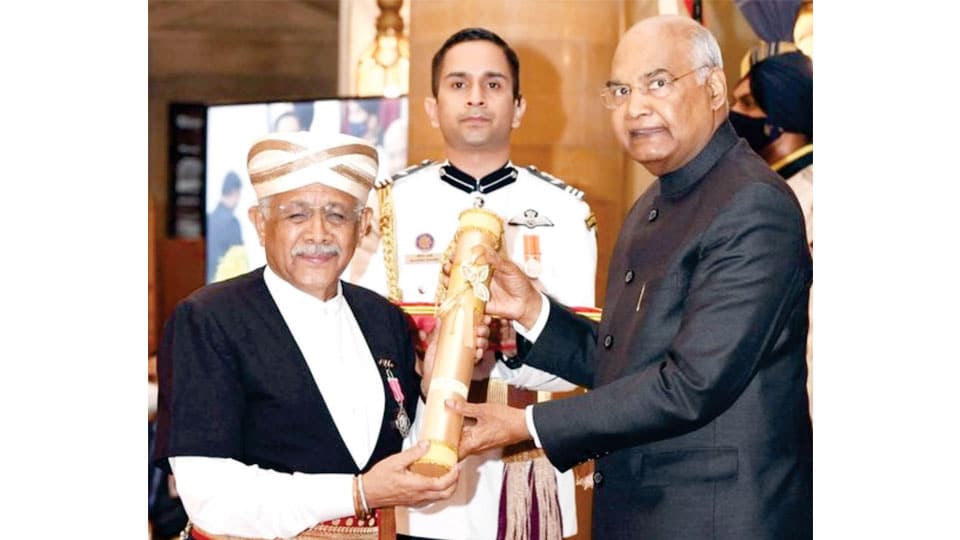
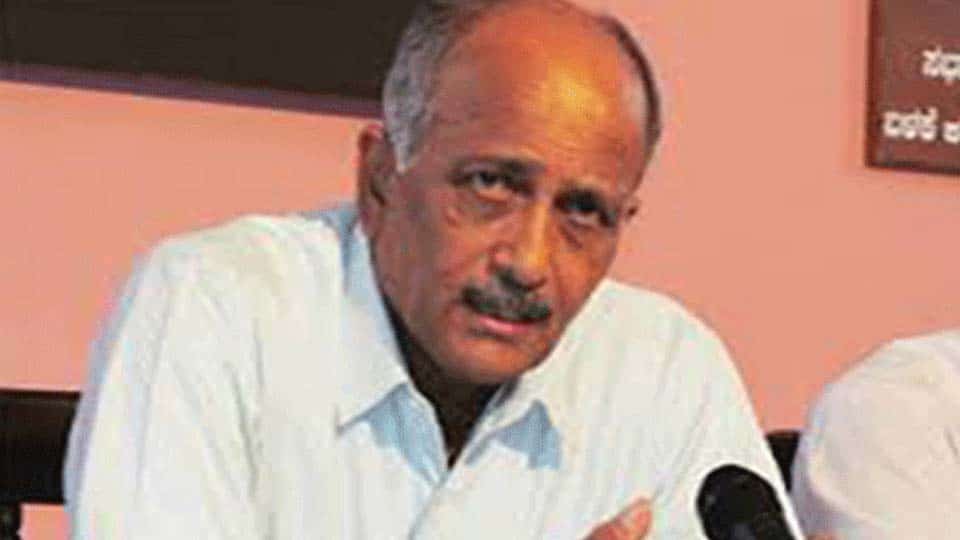
Olympian M.P. Ganesh, who captained the Indian hockey team and was honoured with the Padma Shri by President Ram Nath Kovind, is Coorg Person of the Year-2021.
Mollera Poovaiah Ganesh, hailing from Suntikoppa in Kodagu district, was selected ‘Coorg Person of the Year’ in a poll conducted by www.coorgtourisminfo.com, Kodagu’s first news portal, promoted by journalist and author P.T. Bopanna.
There may not be many such extraordinary instances of a person running away from home to join the Army ending up at the Rashtrapati Bhavan to receive the coveted Padma Shri. Ganesh was also conferred the Arjuna award in 1973.
Ganesh, born on July 8, 1946, was an achiever both on and off the field. Though he ran away from home without informing his parents to join the Army after writing his matriculation examination, Ganesh managed to complete his MA in English, diploma in sports coaching from the National Institute of Sports, Patiala and Ph.D in Physical Education.
Although Ganesh joined the Army to fulfil his childhood dream of becoming a football player, he failed to make it to the football team. Then he went for the hockey selection where he was successful. This goes to prove the adage that “hockey is in the blood of the Kodavas.”
Ganesh represented the Services (Defence Services) in the National Hockey Championships from 1966 to 1973.
After he found a place in the Indian hockey team in 1970, Ganesh played for India at the 1972 Olympic Games in Munich, finishing third. He was one of the coaches of the Indian team that won a gold medal at the 1980 Olympic Games in Moscow.
Ganesh, a right winger, twice represented the country in the Asian Games, first in 1970 in Bangkok and then in 1974 in Tehran. He was in the Indian team that won Bronze at the first World Cup in Barcelona in 1971 and captained the team that won Silver at the next World Cup in Amsterdam in 1973. He also played for World XI in 1972. Ganesh last played for India in 1974, as his career was cut short following a knee injury.
His most disappointing moment probably was during the finals of the World Cup in Amsterdam when India lost to Netherlands in the finals, after missing a penalty stroke.
Ganesh had a long reign as a sports administrator. He served as Director of Sports Authority of India (South) and in 2017 took charge as the High Performance Director and CEO of the National Hockey Academy in Delhi.
He is married to Keethiyanda Prema and their only son Ayyappa passed away when he was 20 years old due to a rare medical condition.
P. Shrividya Somanna, who helped Ganesh to put together his autobiography ‘Living The Dream: My Autobiography’ told this reporter that Ganesh’s wife Prema was instrumental in motivating him to pursue his higher education.
source: http://www.starofmysore.com / Star of Mysore / Home> News / January 01st, 2022
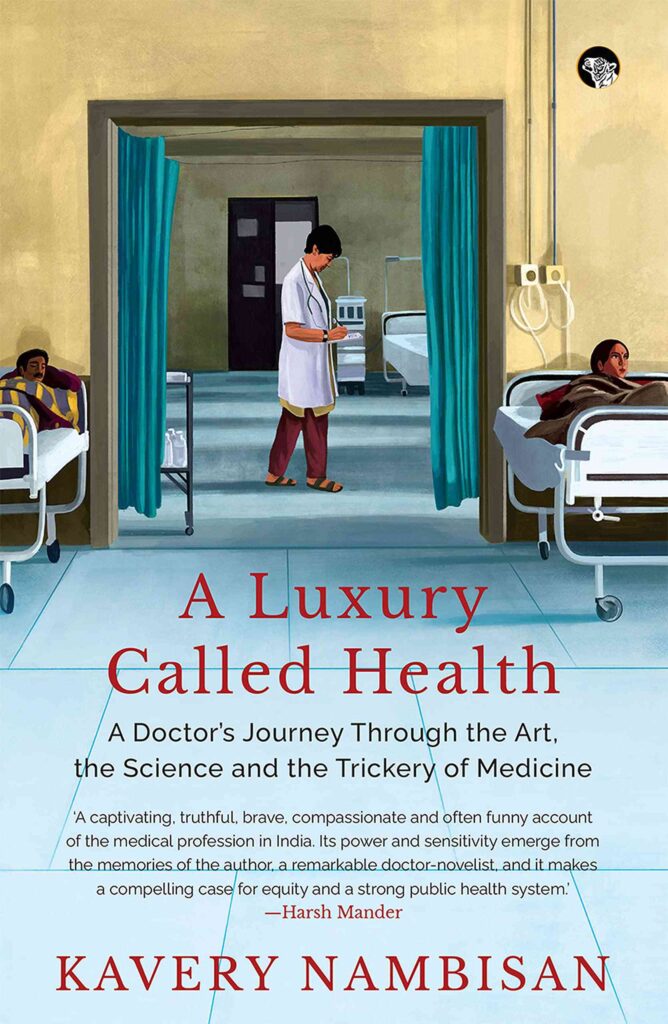
‘A Luxury Called Health’, written by a doctor who is also a novelist, needs to be not only read but also discussed.
Kavery Nambisan. / Modified from screenshot via YouTube / Author TV
What do you get as a reader when a writer of fiction, and also a surgeon who has worked closely in both the public as well as private health sector, picks up her pen to write on the state of the health system in the country?
The answer is easy: you get a book that lays bare the fact that the health of the citizens of a nation is an investment, that the health system is a part of nation building and effective governance and that it is time to learn from mistakes that have been made and continue to be made.
You get a book that comes from years of working amidst the dust and the grime of government health care set-ups, from having observed the profit-oriented approach of the private sector. A book that offers quiet hope that things can, and must, improve.
What’s wrong…
Kavery Nambisan’s first work of non fiction, A Luxury Called Health: A Doctor’s Journey Through the Art, the Science and the Trickery of Medicine, is exactly what its title says, with little drama or exaggeration. It is an honest examination of this thing called healthcare, of the systems that are working and not working, of the people who are its faces and, at times, because of whom, healthcare turns into what it should be: effective, affordable and something that can be trusted by everyone.
A passage from Fyodor Dostoevsky’s The Brothers Karamazov, where a doctor examines a terminally ill patient in a very poor home, that features in the introduction is an apt reminder of what happens when the poor try to access healthcare: the hope and despair felt by the patient’s loved ones and the disdain that the doctor projects. It sets the tone for what follows in the subsequent chapters.
Later, Nambisan conveys how patients and their families often put doctors and healthcare staff on the pedestal of demigods and do not try to find out about the nitty gritty of how illnesses are treated. This makes them resort to threats and abuse when things do not go as they should.
From the early traditional medical practices to the first steps taken in India to institute a medical institution to train and educate health-workers and medical staff, the author puts the focus on how the poor health of individuals affects the overall well-being of a nation. She takes readers into the time the seeds of a new nation were being sown and, along with them, the hopes and aspirations that went to building the health care system. It was a task made more difficult by entrenched caste practices, such as those of not even touching corpses, leave alone dissecting them as medical students.
Nambisan’s note of appreciation for the first wave coming from Kerala when it was still a profession that had few takers soon after Independence is a reminder of how far the health care system has come. But, as she shows with anecdotes and analysis, with this has come disparities between the public and the private sphere when it comes to health.
… And what’s right
What works for this book is that it stays clear of rhetoric or the blame game. Instead, it injects humaneness through personal insights while making a point on how the health system is interconnected to nutrition, poverty, hygiene, water, and sanitation. Nambisan makes the point that urban development ends with more buildings but little attention to, among other things, waste and rainwater management and water resources, which in turn, affects the health system. She emphasises that treating medical situations on a case by case basis, without a holistic strategy for improving health, leads to little progress.
Thankfully, none of these heavy-duty issues weigh down the book and for that we have the quality of her writing to be thankful to. Perhaps only a writer of fiction used to the economy of words would have been able to cover such complex matters in a little over 300 pages. There are no appendices with tables and data, for the author speaks from her own long years of practice, with quiet, unwavering authority.
The use of anecdotes from the history of medical practices across the world and in India, peppered with the author’s own experiences, makes the book come alive in a way that is informative as well as thought-provoking. In one chapter that details the list of medical procedures in a health set-up, Nambisan admits how easy it is to treat patients as mere technicalities, and that it takes a lot to probe further or ask questions of a supervisor or senior colleague.
There is little of handwringing or giving into hopelessness, even when the book details corruption and political apathy, as well as greed. In a chapter titled “Doctoring Reality”, the author highlights rural initiatives started by medical practitioners who have given up lucrative placements to set up affordable and accessible services. It makes you wonder why we don’t see many of these inspiring stories in the mainstream media.
Towards the end the author takes readers into her personal space, as a spouse having to play part- bystander and caregiver when her husband, the acclaimed poet Vijay Nambisan, is diagnosed with cancer.
Kavery Nambisan’s voice is gentle but firm, with words of caution about how critical it is to listen to the voices on the ground, the doctors who work in remote areas with poor resources. For they are the ones whose intervention saves lives, instead of following protocols laid down by international organisations like the WHO, especially in the wake of the Covid-19 pandemic.
A Luxury Called Health is an important book, one that needs to be read and discussed. It exposes the failings of the medical system in the country over the years, but it also shines a light on the people who mend worn-out bodies and organs, bringing hope and succour.
Chitra Ahanthem is former editor of Imphal Free Press, a newspaper published in Manipur. She is also a Manipuri-to-English translator.
A Luxury Called Health: A Doctor’s Journey Through the Art, the Science and the Trickery of Medicine, Kavery Nambisan, Speaking Tiger Books.
source: http://www.scroll.in / Scroll.in / Home> Book Review / by Chitra Ahanthem / December 19th, 2021
Akhila Kodava Samaja appeals not to trivialise tradition to appease politicians
Madikeri:
The Akhila Kodava Samaja has unanimously decided not to use the Kodava traditional dresses to appease any political party and not wear it to any event that is political or have any connection to politics.
Samaja President Mathanda Monnappa had recently issued a press note appealing to the community members to desist from trivialising the ‘Kuppiya Chele’ and other outfits by wearing them to all and sundry events. Now the Akhila Kodava Samaja has formally taken the decision in this regard at its AGM held in Virajpet on Dec. 28.
All the traditional dresses like the ‘Kuppiya Chele’, ‘Mandethuni’, ‘Peeche Kathi’ worn by the male members of the community and the traditional ‘Vasthra’, and traditional ornaments worn by women of the community should be worn only to the events and functions of the community where the dress has more value.
These dresses cannot be worn at political rallies or whenever a political leader comes calling. “It has been observed that Kodava community members wear the traditional dresses whenever a political leader comes to Kodagu. This is insulting to the community as the elders have attached special significance to the dress and there is a decorum to be followed,” the Samaja decided.
Also, the Kodava traditional dresses like ‘Bolakaat’, ‘Kolaat’, ‘Ummathaat’ that have a religious significance and performed only at temples and village sacred places must be restricted to the places where they are meant to instead of performing such dances on every dais and also at any political rally or event. These dances and dresses must not be a thing to exhibit. Rather they must serve the community purpose they are meant to.
Dress code at holy places
The Akhila Kodava Samaja also called for strict implementation of dress code at all the holy places of Kodavas in the district including Talacauvery and Bhagamandala that have now become a place of tourist attraction. The management committees of the respective temples must impose restrictions and effectively implement the same, the Samaja has decided.
Appealing to the community members not to indulge in wasteful expenditure during events like wedding and child naming ceremonies where usually there is unlimited supply of liquor, the Akhila Kodava Samaja has said that the community members must exercise restraint and must not indulge in wasteful expenditure.
Community welfare
Also, the community must serve its own interest in joining hands with Kodava Samajas that initiate plans and programmes for the welfare of the community. Everyone must voluntarily cooperate with each other for the larger interests of the community.
Pointing out that unity is a crucial aspect in keeping the community strong, the Akhila Kodava Samaja has appealed to the community to resolve the issues between families and within families in an amicable way. Family unity, unity with other families and unity of villages will go a long way in protecting the interests of the community, it stated.
Mentioning about the way Kodavas indulge in criticism about each other and each other’s political views on social media platforms, the meeting advised the community members not to discredit a fellow Kodava just to serve political interests. Efforts must be made to strengthen the community instead of criticising each other, the Samaja has stated.
source: http://www.starofmysore.com / Star of Mysore / Home> News / December 30th, 2021
Poovamma has represented India twice in Olympics and four times in the World Championship.
pix: mangaloretoday.com
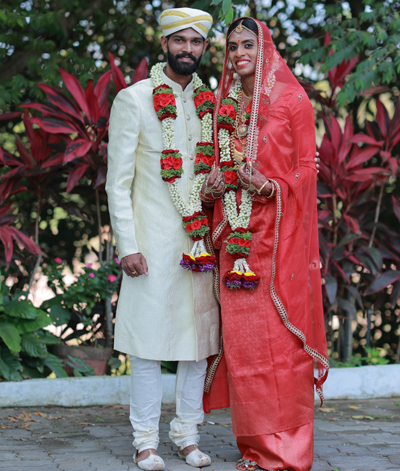
After a brief courtship, sprinter Machettira Raju Poovamma married her boyfriend, Malayali athlete Jithin Paul, at a wedding ceremony organised at Adyar Garden in the city’s outskirts on Wednesday.
The reception is being planned in Chalakudy in Kerala on January 1. Povamma, a native of Mangaluru, specialises in 400m running and is presently serving in ONGC Mangaluru.
In the Asian Championship, Povamma had won two medals in 2013, two medals in 2015, one medal in 2017 and three medals in 2019. In the Asian Games she won two medals in 2014 and two medals in 2018.
She has represented India twice in Olympics and four times in the World Championship. Jitin Paul, a champion in the 400m hurdles, had represented India in the Asian Games and the Commonwealth Games. He had won silver in the 400m hurdles on the SAF Games. He’s at the moment working in the Revenue Tax Division in Pune.
source: http://www.deccanherald.com / Deccan Herald / Home> State> Karnataka Districts / by Harsha , DHNS, Mangaluru / December 29th, 2021
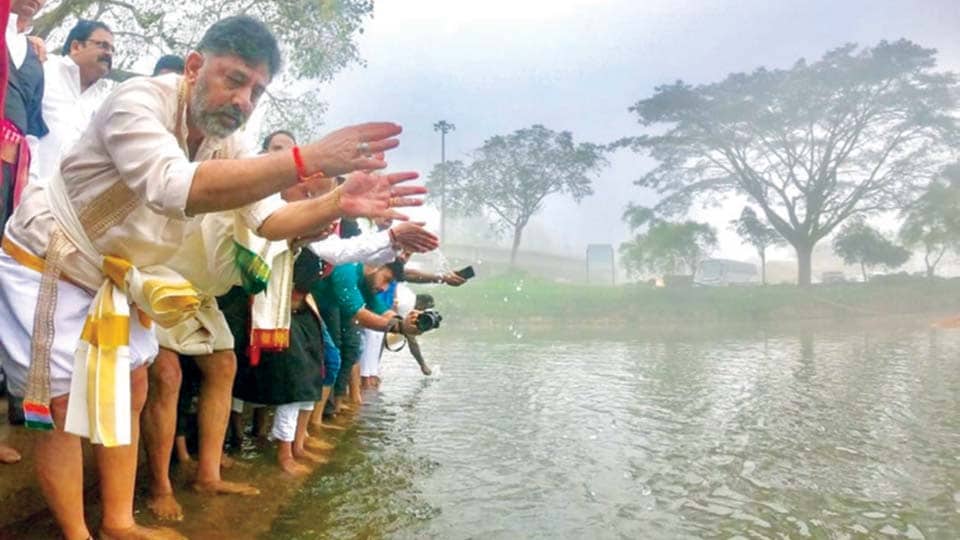
Karnataka Pradesh Congress Committee (KPCC) President D.K. Shivakumar (DKS) visited Talacauvery in Kodagu this morning to offer traditional pujas to the birthplace of River Cauvery.
Before going to Talacauvery, the Congress leader visited the Triveni Sangama in Bhagamandala where he sprinkled the holy water on him as per tradition. He prayed at Sri Bhagandeshwara Temple and then proceeded towards Talacauvery where he was accorded a traditional welcome. Priests performed the rituals at the holy Kundike.
Rousing reception
DKS arrived in Madikeri last night at 10 pm and was given a rousing reception at Koppa Gate that borders Mysuru and Kodagu in Kushalnagar. Seeing the crowd shouting slogans, the Congress leader opened the sunroof of his vehicle and greeted the crowd with folded hands. Flower petals were showered on him by an ecstatic crowd.
The KPCC President was accompanied by party Working President and former MP R. Dhruvanarayan, Legal Cell President A.S. Ponnanna, MLC Veena Achaiah, Dr. Manthar Gowda, President of Karnataka Pradesh Mahila Congress Dr. Pushpa Amarnath, Kodagu Congress President Dharmaja Uthappa and party leaders K.P. Chandrakala and Chandramouli.
Later speaking to reporters, Shivakumar said that the Mekedatu Project will benefit both Tamil Nadu and Karnataka. In the Last 16 years, 104 tmcft of water has flown into the Bay of Bengal and with Mekedatu, Karnataka was planning to utilise the water that is being wasted, he said.
“When there is less rainfall, the entire Cauvery water can be stored in respective dams by Karnataka and Tamil Nadu and the Mekedatu dam will be built to safeguard the interests of Karnataka. Even power can be generated through the project that will also help in providing drinking water to large barren areas,” he said.
The project will be beneficial to both Karnataka and Tamil Nadu and the neighbouring State should realise the benefits. Even the Supreme Court has said many times that drinking water projects should not be stalled. “We have decided to launch a 10-day padayatra on Jan. 9 pressing for the Mekedatu project and it will not be a political movement. As a prelude to Mekedatu padayatra, I have come to Talacauvery today to perform pujas,” Shivakumar said.
source: http://www.starofmysore.com / Star of Mysore / Home> News / December 24th, 2021
The Akhila Kodava Samaja has objected to the community members wearing the traditional Kodava outfits like ‘Kuppiya Chele’ to all and sundry events, political gatherings and other nondescript functions.
In a press release, Samaja President Mathanda Monnappa has said that the Kodava traditional dress has special significance, cultural identity and distinctiveness. The dress has been handed over to the community by forefathers and there are events where this dress has to be mandatorily worn.
“Of late, it has been observed that the Kodava traditional dress is worn by the community members at various events, making a mockery of traditions and the attire itself. This unrestricted use of the traditional dresses has to be curbed by the community members who have to exercise restraint,” he has stated.
The traditional ‘Kuppiya Chele’ worn by Kodavas symbolises warrior culture but unfortunately, the dress is being worn now in all and sundry events, denigrating its significance. “Our forefathers have attached a great significance to the dress and have restricted it to particular community events and celebrations. But now the dress is being worn for political events and those functions that the community has no role to play. This is nothing but servitude,” Monnappa stated.
Even the ‘Dudi Kottu’ (a traditional Kodava band) is being played in non-community events and this practice should stop. Monnappa called upon all Kodava Samajas, associations and the community members to join hands to protect the dignity of the Kodava dress.
source: http://www.starofmysore.com / Star of Mysore / Home> News / December 25th, 2021
Two journalists each from Mysuru and Kodagu districts and one from Chamarajanagar are among the winners of the State Annual Awards given by Bengaluru-based Karnataka Union of Working Journalists (KUWJ).
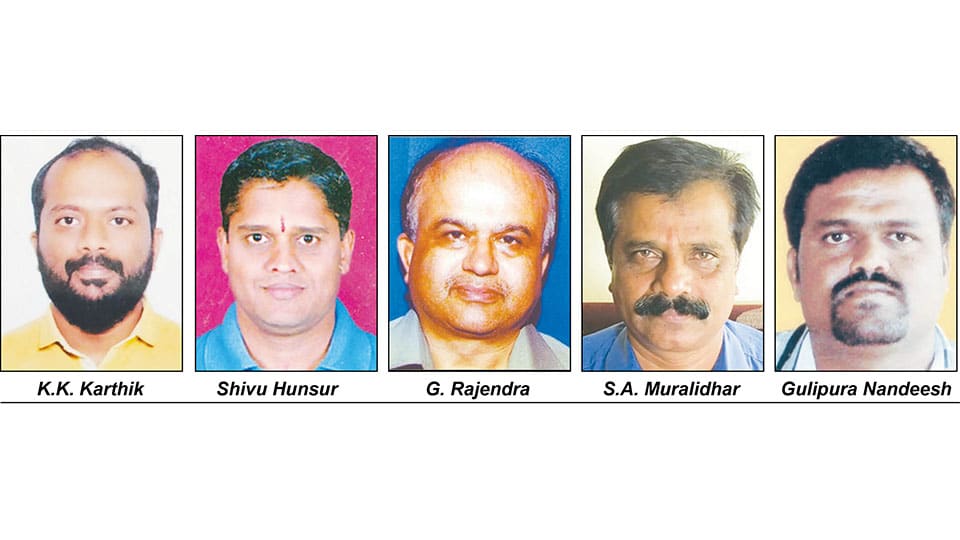
K.K. Karthik, reporter of The New Indian Express English Daily at Mysuru, has bagged ‘K.A. Nettakallappa Award’ for best sports report while Shivu Hunsur, reporter of Vijayavani Kannada Daily at Hunsur, has bagged ‘R.L. Vasudevarao Award’ for best article on wildlife.
Kodagu’s Shakti Newspaper Editor G. Rajendra has bagged ‘Rajashekar Koti Award’ for his over four-decades service to the field of Journalism while Kannada Prabha Somwarpet taluk Reporter S.A. Muralidhar has bagged ‘Mandibele Shyamanna Memorial Award’ for best report on rural issues.
Gulipura Nandeesh, Chamarajanagar district reporter of Doordarshan’s Chandana Kannada Channel, has bagged ‘Girijamma Rudrappa Talikote Award.’ Nandeesh is a resident of Yelandur in Chamarajanagar district and had served in different newspapers before joining Doordarshan.
The awards will be conferred at KUWJ’s Annual Conference slated to take place at Kalaburagi on Jan. 3 and 4.
source: http://www.starofmysore.com / Star of Mysore / Home> News / December 26th, 2021
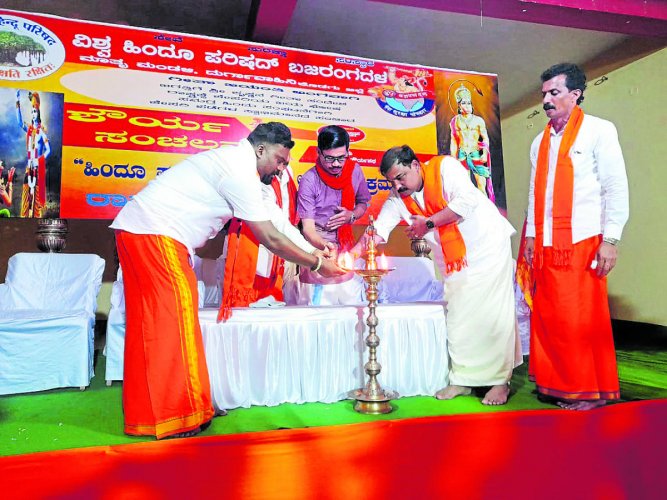
Members of Vishwa Hindu Parishad, Bajrang Dal, Mathrmandali and Durgavahini observed Shaurya Sanchalana as a part of Geetha Jayanti.
The activists who had arrived from different parts of the district had congregated at Chowdeshwari Temple. Later, they took out a procession at Chowki Circle, Ajjamada Devaiah Circle, General Thimayya Circle and a stage programme was held at Omkareshwara Temple hall.
Delivering the address, VHP Dharma Prasarana Pramukh Krishna Upadhyaya said that Hindus are still a majority in India due to the efforts of Hindu organisations. There are no restrictions in Hinduism.
Several people have made sacrifices for the Ram Mandir in Ayodhya, he said.
“India will be saved only with Hindutva. There is a need to save the culture and tradition of the land,” he added.
He called upon people to love the country.
VHP district president Krishnamurthy also spoke on the occasion.
source: http://www.deccanherald.com / Deccan Herald / Home> State> Mangaluru / by DHNS, Madikeri / December 19th, 2021
The 26th annual general body (AGM) meeting of Kodagu Coffee Belegarara Sahakara Sangha will be held at Kodava Samaja Auditorium at 11 am on December 20, said society president Muddanda B Devaiah.
Addressing reporters in Madikeri recently, he said that all transactions in the office are computerised.
A new roof has been constructed on the Coffee Krupa building of the cooperative society, at a cost of Rs 9.50 lakh. The staff shortage in the cooperative society will be addressed by recruiting new staff soon, he added.
Office bearers and members Suvin Ganapathy, Ramesh, Kaverappa, Leela Medappa and Ponnappa were present at the press meet.
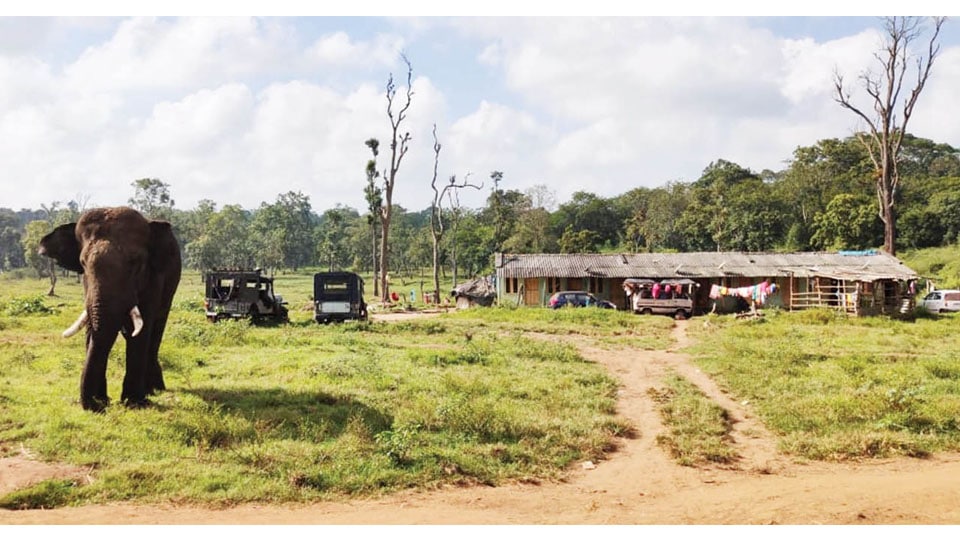
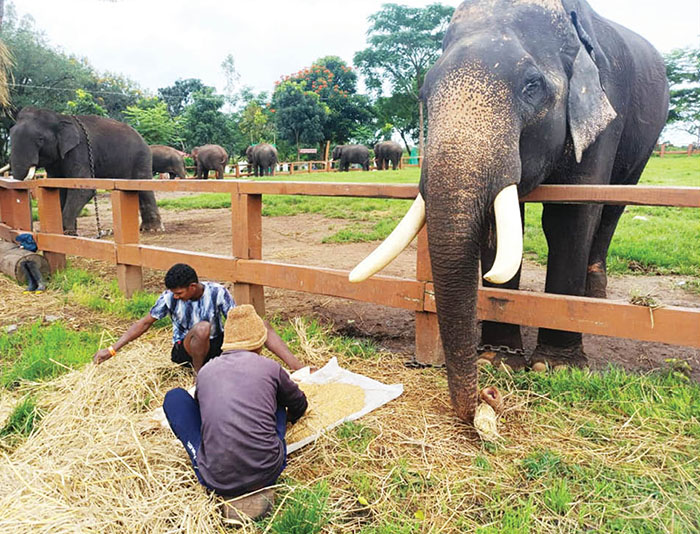
The State Government has released Rs. 50 lakh to set up a new elephant camp at Harangi in Kodagu District. Already, Kodagu has two elephant camps, one at Dubare and another at Mathigodu near Anechowkur Gate that borders Mysuru.
The aim of the new camp is to decongest the existing eight camps across Karnataka where the pachyderm population has increased over the years. The State Government in February this year had ordered the setting up of a new elephant camp at Harangi.
Replying to a question raised by Madikeri MLA M.P. Appachu Ranjan in the on-going Legislature session at Belagavi regarding the Harangi Elephant Camp and a Tree Park, also at Harangi, Forest Minister Umesh Katti said that from 2017 till 2021-22 Rs.1.38 crore has been released by the Government and works are on to create the Tree Park.
This apart, Rs. 50 lakh has been released for Harangi elephant camp under funds from Compensatory Afforestation Fund Management and Planning Authority (CAMPA). Apart from setting up a new elephant camp, there are plans to initiate other related development programmes including developing the camp as a tourist centre and at the same time provide shelter to the elephants, he added.
File photos of Dubare Elephant Camp near Kushalnagar in Kodagu district.
The Forest Department will establish the elephant camp in a 40-acre land at Athur Reserve Forest beside Harangi Reservoir in Kushalnagar Taluk. The place, located near the Harangi Dam backwaters, is ideal to set up the elephant camp.
The Government has also plans to closely develop Cauvery Nisargadhama in Kushalnagar and together with the new elephant camp in the region, the initiatives will boost eco-tourism activities, the Minister told the Assembly.
Currently, Karnataka has eight jumbo camps housing about more than 100 tamed elephants that are used to rescue wild animals and for logging purposes at Government timber depots.
The new elephant camp is expected to reduce the burden on the nearby Dubare Elephant Camp, which currently has over 32 elephants, the highest in the State.
source: http://www.starofmysore.com / Star of Mysore / Home> News> Top Stories / December 20th, 2021
WELCOME. If you like what you see "SUBSCRIBE via EMAIL" to receive FREE regular UPDATES.
Read More »