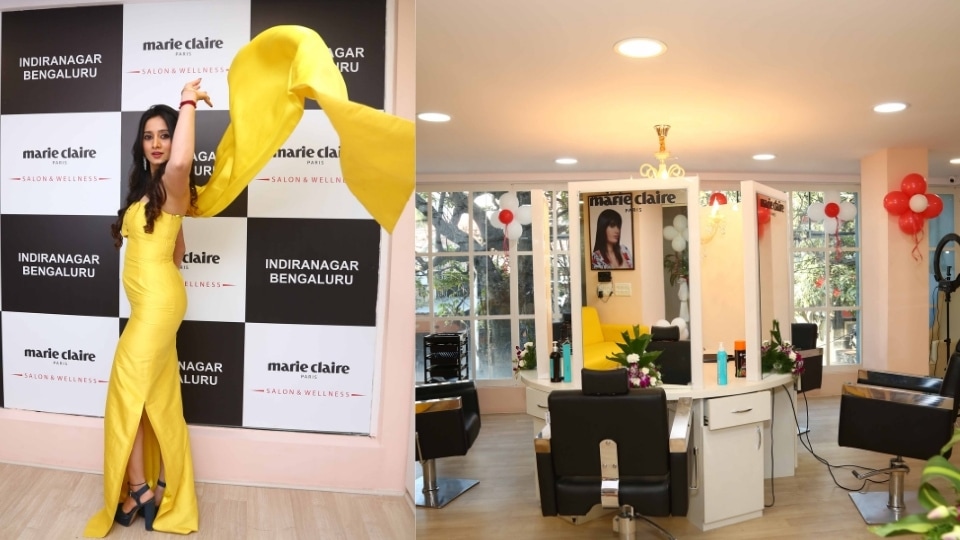
The outlet has been brought to the country by B2C Network LLP.
Marie Claire Paris, the exclusive French lifestyle brand that forayed into the Indian beauty and wellness sector with the launch of its salons and salon & wellness centers in Bangalore, Hyderabad, Pune, Chennai, New Delhi and Vadodara, has now launched its sixth franchise salon & wellness outlet at Indiranagar in Bengaluru.
The salon has been brought to the country by B2C Network LLP, the exclusive licensee for Marie Claire Paris Salon, Salon & Wellness, Just Nails and IIWA (Beauty Aademy).
Celebrating the launch by adding a bit of glitz and glamour, Mr. Mohan Kumar – Indiranagar Franchisee, Mr. P.S.Sriram- Marie Claire’s Bengaluru Master Franchisee, Ms Vandana Bhardwaj – Director & Spokesperson, B2C Network and Ms. Harshika Poonacha (Kannada actress) – the chief guest for the evening, along with the other guests, were offered unique experience at the Salon & Wellness that left them relaxed and pampered.
Speaking on the occasion of the launch, Ms. Vandana Bhardwaj, the Director and Spokesperson of B2C Network LLP, said, “Thank you Bengaluru for such a great response! This is our sixth salon in the city and we are all set to open 2 more outlets within the next 2 months. Marie Claire Paris keeps on upgrading and adding new services in the menu to assure all Global trend styles and new treatments are available in India for our clients. I wish our franchisee – All the best!”
Mr. P. S. Sriram, the Master franchise of Marie Claire Paris Salons in Bengaluru, said, “We are so excited to launch the Marie Claire Paris Salon & Wellness center in Indiranagar, Bengaluru. Marie Claire, the lifestyle and fashion brand, will cater largely to the highly fashionable clientele of Indiranagar with our technically skilled technicians to offer services like Hair, Nails, Skin, Makeup, Bridal packages and Body treatments etc. A high-end locality like Indiranagar has to have a brand like Marie Claire Paris Salon & Wellness.”
Marie Claire, the lifestyle and fashion brand, will cater largely to the highly fashionable clientele of Indiranagar.(Digpu)
Ms. Harshika Poonacha, the Chief Guest for the evening, said: “It’s a beautifully made salon, well maintained hygiene, great location and the staff is well-versed technically with all services. I was extremely happy with my makeover here. All the best to Marie Claire team.”
B2C Network intends to open hundreds of Marie Claire Salon & Wellness centers in India via franchising, as well as over 30 vocational training academies in the next 5 years. Its objective is to provide the best quality services where clients feel homely and to train cum employ skilled manpower through IIWA Academy.
source: http://www.hindustantimes.com / Hindustan Times / Home> Brand Post / by HT Brand Studio / February 10th, 2021
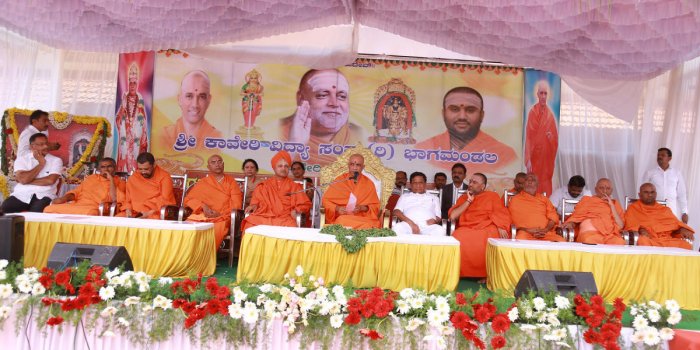
Adichunchanagiri Mutt pontiff Dr Nirmalanandanatha Swami speaks during Guruvandana programme in Bhagamandala
Adichunchanagiri Mutt pontiff Dr Nirmalanandanatha Swami said that the Mutt will contribute towards building the future of the children in Kodagu.
He was speaking during the Guruvandana programme organised by Sri Cauvery PU College in Bhagamandala.
The pontiff said, “Students from foreign countries used to come to Nalanda and Takshashila in India, for education.”
India has produced the greatest scientists, mathematicians and philosophers, he said and also added that Adichunchanagiri Mutt is imparting education to thousands of students.
Virajpet MLA K G Bopaiah said that there is a need to build an educated society in the real sense.
The religious institutions should provide moral education to the children. The people should support the institutions like Mutts in this endeavour, he said.
Cauvery Vidya Sangha president Hosur Satish Kumar Joyappa presided over the programme.
Pattedars of the Chidukaru and Hosagadde families who donated land to the institution were honoured on the occasion.
Adichunchanagiri Mahasamsthala Mutt, Hassan seer Shambhunatha Swami, Arameri Kalancheri Mutt seer Shantamallikarjuna Swami, ZP members Chandralaka, Kavitha Prabhakar and others were present.
source: http://www.deccanherald.com / Deccan Herald / Home> State> Bengaluru / by DHNS, Napoklu / February 10th, 2021
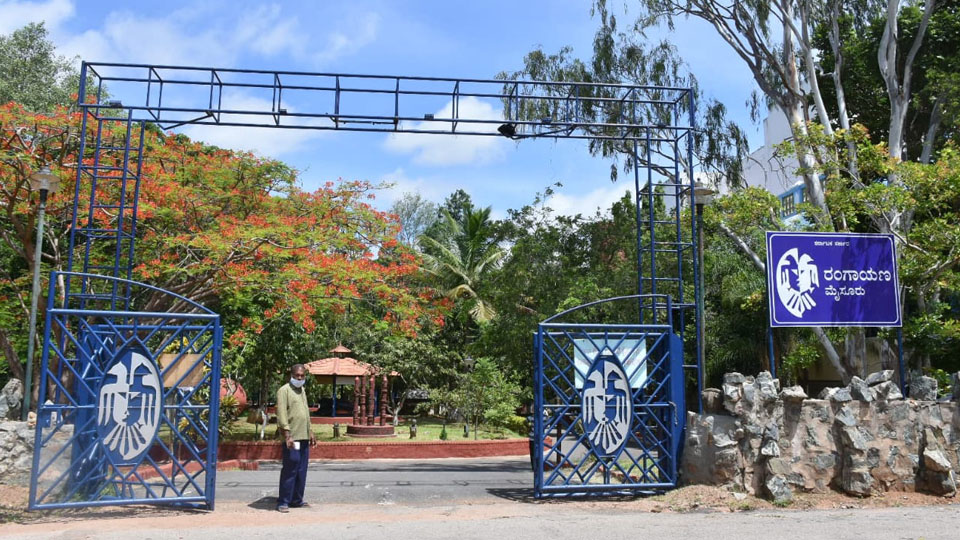
‘Girijanotsava – Namma Jana Namma Samskruti,’ a programme to showcase the folk art of tribal community has been organised by Rangayana, Mysuru, at Karmadu village in Kodagu on Feb. 23 from 10 am to 6 pm.
MLC Shantaram Budna Siddi will be the chief guest. MLA K.G. Bopaiah will be present.
Vanavasi Kalyana Kendra- South Zone President Krishnamurthy will be conducting a seminar on the occasion.
‘Girijanotsava’ is one among the two projects taken up by Rangayana, Mysuru, in association with the Department of Kannada and Culture, under its Tribal Sub-Plan (TSP), to create social awareness among tribal communities.
The other event titled ‘Giri Rangapayana – Arivinedege Adivasi’ featured 10-day theatre training camp to 12 tribal youth from Bommadu tribal village located near Nagarahole forest area in Kodagu district, starting from Jan. 27.
The participants of the training camp will be staging street play at 15 haadis (tribal hamlets) in Kodagu. The inaugural street play was staged at Bommadu on Feb. 3. The play is directed by theatre artist N. Srinivas.
Nataka Academy Member Radha, who also belongs to ST community, is the convenor of this camp.
source: http://www.starofmysore.com / Star of Mysore / Home> News / February 07th, 2021
Last Sunday, 31st January 2021, I went to Madikeri on a bore-breaking trip with my wife and two friends. It was a two-and-a-half-hour journey by car via Kushalnagar. The road being good travelling was comfortable.
Kushalnagar is the Gateway to Kodagu, with River Cauvery flowing quietly as a boundary between Mysuru and Kodagu districts. The two districts were connected with a bridge. It was a surprise for me to find the town growing enormously. It has become a huge tourist hub. There is Harangi Dam and a Garden a few kilometres away and in the city outskirts you have the famous and very popular Nisargadhama — riverside forest safari and boating with huge shopping arcades spread over a very large area on Madikeri road.
Another tourist attraction is the Buddhist Golden Temple on the other side of the river at Bylakuppe, a Tibetan Colony. There is a Sainik School, Engineering College and many more. It is going to be a boom city of Kodagu beforelong.
We reached Madikeri rather late at 3.30 pm keeping our schedule to just three places — Gen. K.S. Thimayya Museum, Medical College and Kodava Heritage Centre. Our President Ram Nath Kovind would inaugurate the Museum tomorrow (6.2.2021) and it was as it should be. Our President, under the Constitution, is the Commander-in-Chief of our Armed Forces.
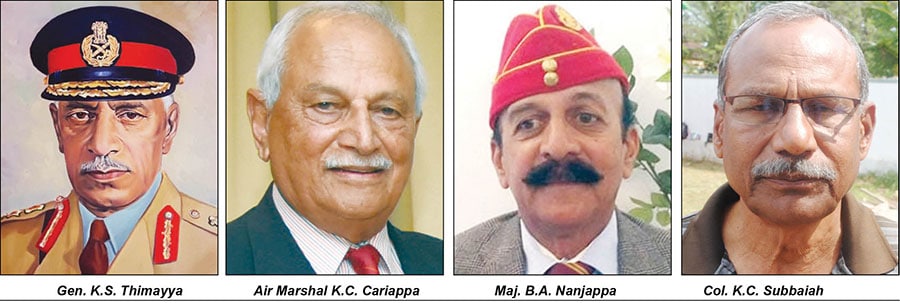
Our first visit was to the Gen. Thimayya Museum and those in charge of arranging the artefacts, photographs, videos, audios etc., have indeed taken much time, trouble and care. Special compliments and commendation should go for this great effort to Air Marshal Kodandera C. Nanda Cariappa (retd.), Maj. Biddanda A. Nanda Nanjappa (retd.) and Col. (retd.) Kandrathanda C. Subbaiah. All residents of Kodagu.
As we were sauntering around the place, with a few Army personnel and local labourers working to get the Museum ready to receive the President, there came the most talkative man I have ever met in my life, Maj. Nanda Nanjappa. Indeed a live-wire man bursting at the seams with a zeal and enthusiasm for the work on his hand — getting the Museum ready in all aspects for the big day. I listened to him about how the Museum happened and the herculean efforts he and his friends-in-arms have made to get the place ready for the VVIP arrival.
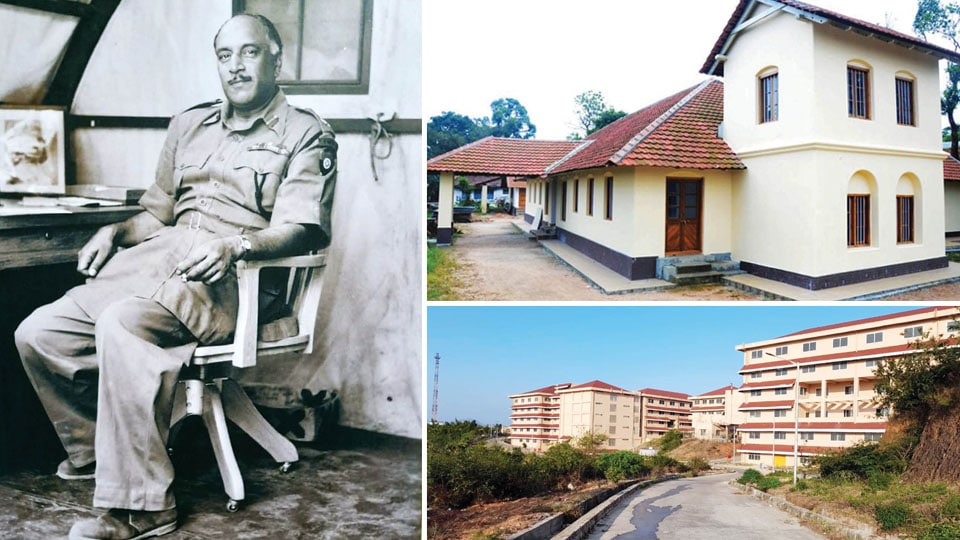
I am familiar with this house called “Sunnyside” where Gen. K.S. Thimayya’s mother lived. She was a very famous lady known for her riches and celebrity status. The house is on the main road, as you enter Mercara from Mysuru, on a slope. I remember, as a student in Madikeri in the 1950s, going for evening walk with fellow students and friends on this road and occasionally talk about the lady of the house with awe. There was a fountain visible from the gate with an angel perched on top. The house being at the bottom of the slope was not visible to the road.
According to my information this house was sold by Gen. Thimayya’s wife to the Government of Karnataka in the year 1972 and the RTO Office took over this house, with about 2.5 acres of land, for its use. Wonder it took over 50 years to reclaim the house for the Museum under the Kannada and Culture Department of the State Government. Thanks to the efforts of Field Marshal Cariappa – General Thimayya Forum comprising about 22 members to get the State Government to vacate the RTO and set up this Museum. However, the theme, concept and the vision of the Museum came mainly from two Army and one Air Force Veterans who are also members of the Forum — Air Marshal K.C. Nanda Cariappa, Col. K.C. Subbaiah and Maj. B.A. Nanjappa — that I mentioned earlier. A good job well done. Sure, the Supreme Commander of Indian Armed Forces, Ram Nath Kovind, will have many good words to say about the Museum and give a big Shabash for the Forum.
I do not want to be presumptuous but I guess there is a need for a small library with books on Gen. K.S. Thimayya and other top brass in the Army, which is also a reading room for reference-seekers and book-worms.
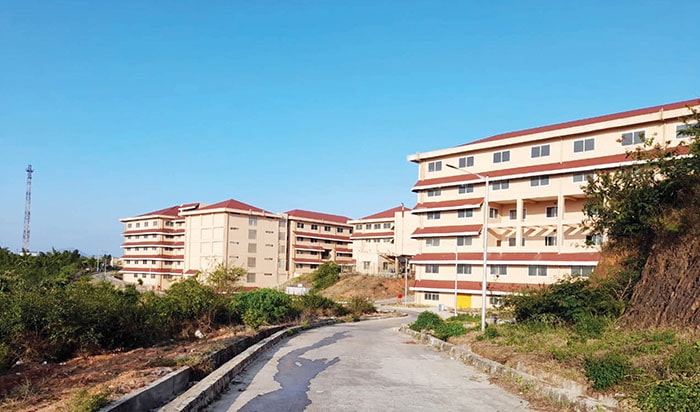
Our next visit was to the Medical College, about five kilometres from downtown or 11 kilometres via Abbey Falls. It is located atop a hill in a village known as Karnageri. A number of high-rise buildings, washed in light pink, are visible from a distance as we manoeuvred the never-ending, serpentine, well-laid out concrete road. The construction of the road itself must have cost a fortune. A clear case of penny wise, pound foolish.
Access to city for students and staff must be a very time-consuming and tiring exercise. Specially during monsoon. In Kodagu, specially Madikeri, climate is of two kinds — monsoon and winter veiled in mist. Summer is, no doubt, severe but short.
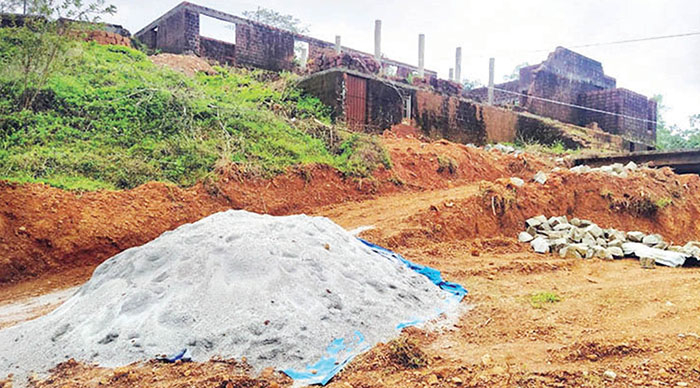
I left the place wondering if the Government officials or the politicians could not find another place, plain land in Virajpet, Gonikoppal or Kushalnagar considering the importance of the logistics and environment for locating such an important institution. Let it be.
My next visit was to my mad obsession, the Kodava Heritage Centre at Vidyanagar in Madikeri. About this Centre I have written enough and more and our reporters of Star of Mysore and Mysooru Mithra too have published many pictorial reports. All in vain.
The idea of a Kodava Heritage Centre may be well-meaning and also much-needed for a Vanishing Tribe, Kodavas. But, the way it was held to ransom in the past 15 years is tragic and an insult to “Kodavame”. As I saw it, I do not think it will be completed at all and seems to be in danger of being abandoned as unviable. Is it jinxed? If it is so, so be it. What cannot be cured must be endured till the end comes. There is no medicine for fate !
That way the fruition of Gen. Thimayya Museum is a miracle. Unless such miracles happen, this Heritage Centre will not come to fruition.
Pictorial journey of Madikeri By K.B. Ganapathy
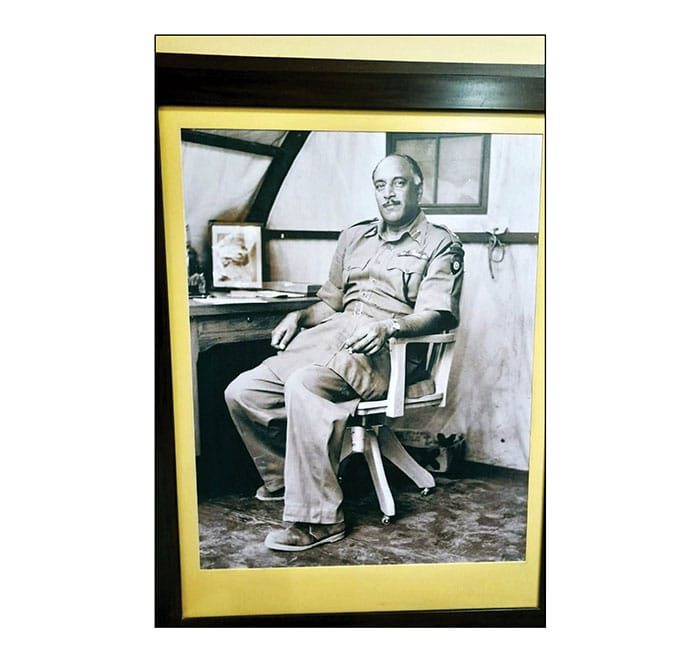
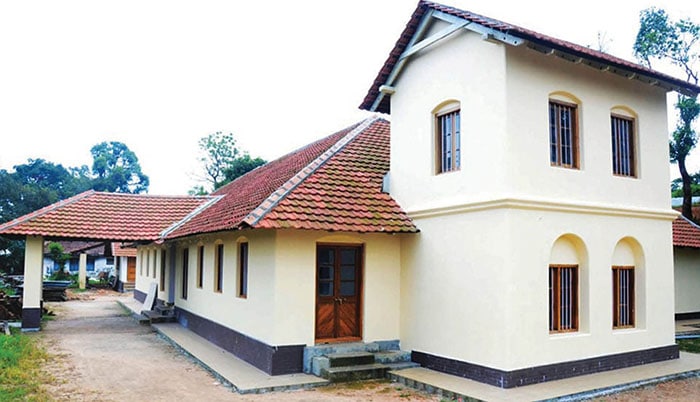
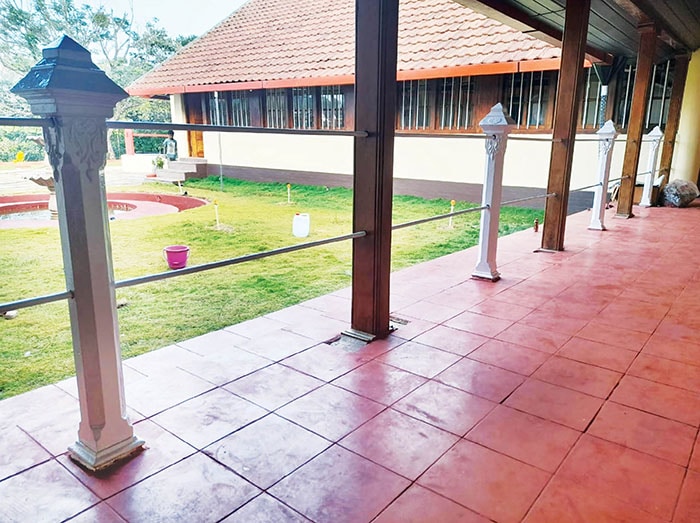
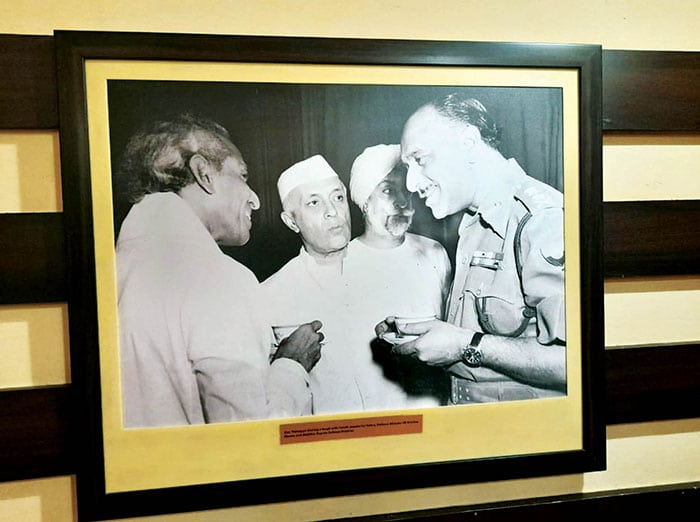
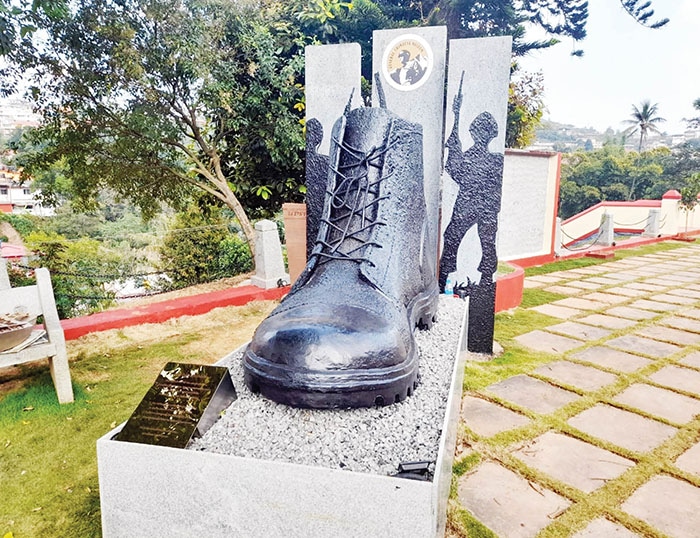
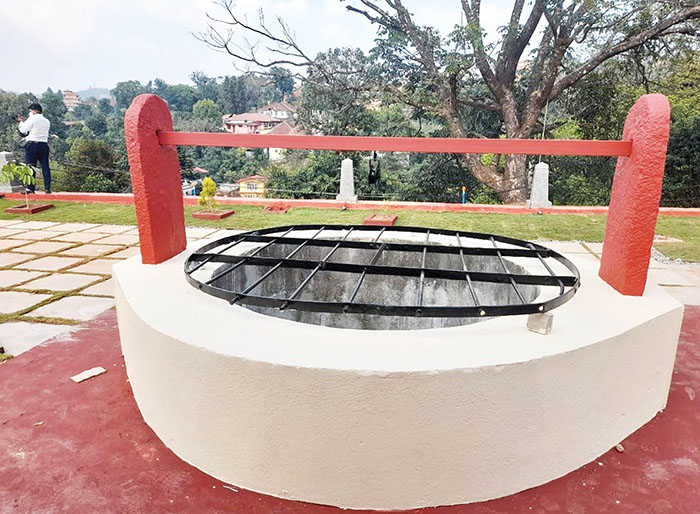
A photo of Gen. K.S. ThimayyaSunnyside: Gen. K.S. Thimayya Museum building with a portico.The RTO had ruined the building without maintenance and it was restored. The picture shows the cast-iron ornate dwarf pillars on an open veranda which were fully buried in a protective wall by the RTO. Only when the wall was demolished, these pillars emerged.Gen. K.S. Thimayya with the VIPs — Jawaharlal Nehru and V.K. Krishna Menon.A cement sculpture in the open yard of the Museum.… and the well as old as the building.Medical College at Karnageri village in Madikeri.A view of Kodava Heritage Centre in Vidyanagar, Madikeri, from the main road.
e-mail: voice@starofmysore.com
source: http://www.starofmysore.com / Star of Mysore / Home> Abracadabra> Columns / by K.B. Ganapathy / February 05th, 2021
The three main Kodava festivals are Kailpodh, Kaveri Sankramana and Puthari. Traditionally, the Kodavas are paddy farmers and soldiers by profession who worship River Kaveri, the lifeline of Kodagu.
During Kaveri Sankramana (when the river goddess is worshipped), people gather at Talakaveri temple to witness, worship and collect the water which springs up from the fountain at an auspicious time that day.
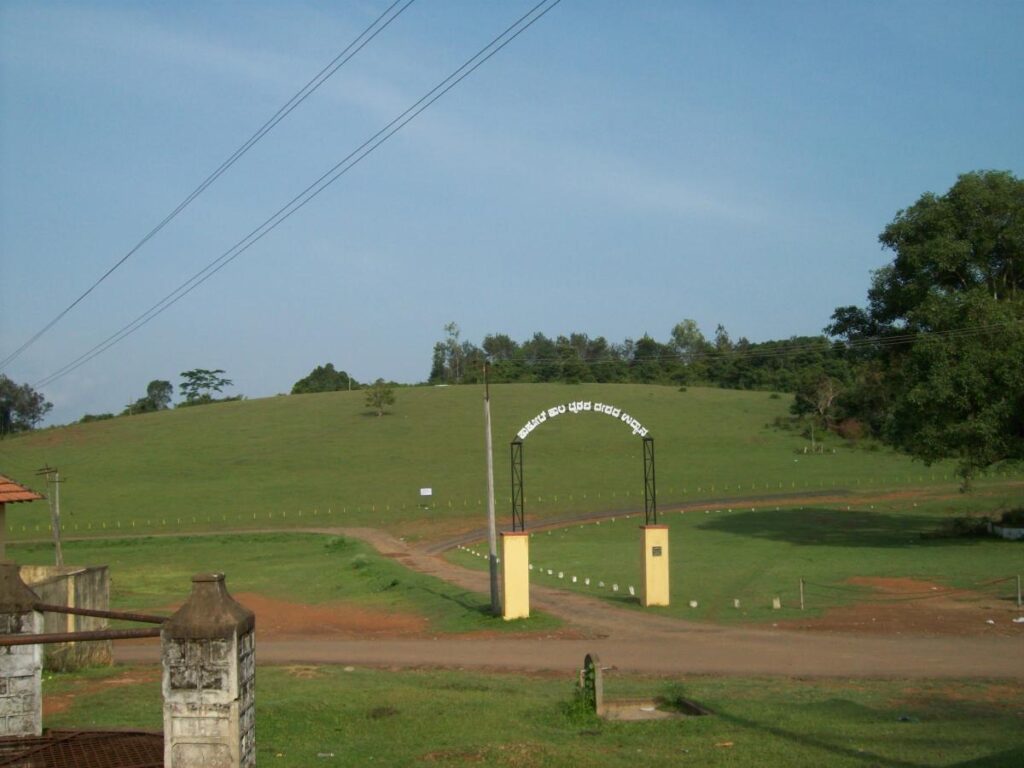
During Kailpodh (when weapons are worshipped) and Puthari (when the gods are thanked for the rice harvest), villagers gather in their local mands. The mand is a religious place, considered an open-air temple, of the Kodavas. This is a village green which usually has a sap-exuding tree, often a pipal tree.
A Village green. Photos by Mookonda Kushalappa
During Puthari, the names of Aiyappa, Mahadeva and Bhagwathy are invoked at the mands. In Kodagu, Aiyappa is the god of the forests.
A group of villages form a cluster called naad in Kodava language. For eight evenings before Puthari, the village men practise the puthari kolaata (dancing in a circle with sticks in hand) in the moonlight in the mands.
A day after Puthari they gather again at the village mand and perform the village kolaata. A couple of days later, men from a number of villages gather at the naad mand and perform the naad kolaata. For a few evenings, the men continue to do the kolaata.
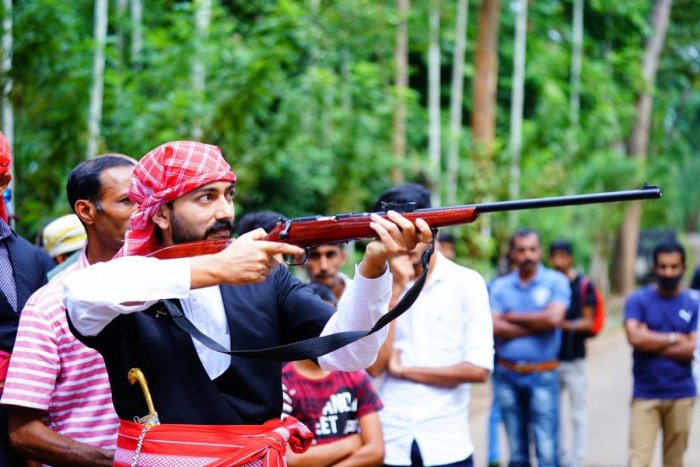
During Puthari, boys and men engage in mock combat duels. They hold a pathure kolu (a stick made of rattan) and a pare (rattan shield) and fence with each other. The village gods Igguthappa and Baithurappa are invoked before a contest. The combatants must strike below the waist. The game is accompanied by drum beats. Then, after a few days, the village gathers at the village green for the oor-orme (village gathering) and the Puthari festival comes to an end. On the day of Kailpodh, people bring their farmhouse guns and odikattis (broad swords) to the village mand in the afternoon. They aim at coconut shells and shoot them. Later, they cut three banana stalks each, in single strokes. They also compete throwing heavy stones.
Annual festival
Every Kodagu temple has an annual festival. Before the festival, for some days, the people of the village or the naad have to follow certain rules. On a particular day, the village thakka or the village elder assembles all the male members of the village, irrespective of caste or community, at the village green.
Then the rules are announced by the temple thakka (elder). Accordingly, no tree or plant can be cut, no animal can be hurt, no egg can be broken, no coconut can be cut, no liquor can be brewed or drunk, nobody should quarrel or argue, and nobody eats non-vegetarian food within the village or the naad for certain days.
Every family is to send men to clean, maintain and renovate the temple, village green, roads and other community properties. A day before the temple festival the villagers gather again. Anybody who violates the rules must step forward and pay a monetary fine at that time. All these activities and rituals make the Kodava culture social in nature.
source: http://www.deccanherald.com / Deccan Herald / Home> Spectrum> Spectrum Statescan / by Mookonda Kushalappa / February 06th, 2021
Rangayana Director Addanda C Cariyappa said that the repertory has launched ‘Adivasigalatta Rangayanada Chitta’, a programme to reach out to the tribal community people, from Wednesday.
Addressing a media conference here, on Wednesday, he said, “There are two initiatives: Giri Rangapayana with a street-play ‘Arivinedge Adivasi’ (tribals towards knowledge) and Giri Janothsava, a convention with tagline ‘Namma Jana, Namma Samskruthi’ (our people, our culture).”
“Under Giri Rangapayana, ‘Arivinedge Adivasi’ will be staged in the evenings in 15 tribal colonies (haadi) of Kodagu district, from Wednesday. The first street-play show was at Bommadu, near Nagarahole. Twelve artistes were chosen and trained in a 10-day camp at the Tribal Residential School at Bommadu for the street-play, based on social issues. While Radha Kodagu from the tribal community is the convener of the streetplay, Na Srinivas is the director,” he said.
Cariyappa said, “Giri Janothsava is held at Karmadu in Kodagu district on February 23 to showcase the art and culture of the tribal people.
Tribal people from various parts of the state will present their folk art. MLC Shantharam Siddi, MLA K G Bopaiah and Krishnamurthy of Vanavasi Kalyana will participate in a seminar.”
source: http://www.deccanherald.com / Deccan Herald / Home> States> Karnataka Districts / by T R Satish Kumar, DHNS Mysuru / February 03rd, 2021
The best thing about the Budget is that it’s citizen-centric and investment-based, a national Budget for Indians, says Bidapa.
Does the Budget address the distress caused by the pandemic?
I hope the new health care package will help control the Covid-19 pandemic better and speed up the vaccination process. Efforts to tackle the crisis and vaccinate people have to be implemented better across the country.
Will this Budget help the economy and create jobs?
I should hope so. The stimulus packages featured in the Budget are good. It’s people-friendly and an overall good Budget that should drive the economic recovery.
What is the best thing about the Budget? And the worst?
The best thing about the Budget is that it’s citizen-centric and investment-based, a national Budget for Indians.
It’s a great relief for taxpayers that rates on the direct tax front have not been increased.
Senior citizens, however, could have been given relief from the age of 65 years instead of 75 given the health challenges in the post-Covid-19 scenario.
The worst thing in the Budget is the agriculture infrastructure cess that will be imposed on petrol and diesel. It is not good and will further jack up inflation.
If you were the Finance Minister, what would you have done with the Budget?
On the specific opening and promotion of textile parks, I would have reserved at least 20 per cent for the handloom and khadi sector, which have enormous export potential, especially in the luxury sector. We need to incentivise the handmade and craft sectors of India, which are unique to us.
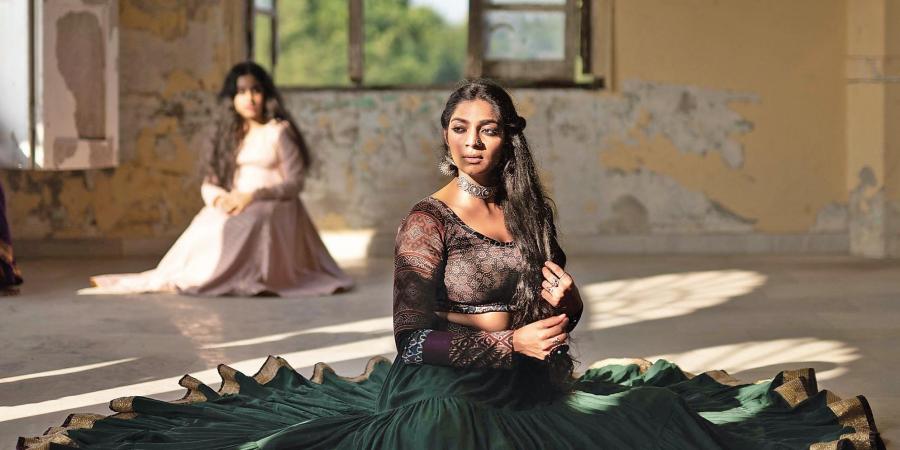
Dancer-actor Nithya Shri talks about her love for dance, and the new music video for Pulkit Samrat, Kriti Kharbanda-starrer Taish that she features in.
Pic: Gorkey Patwal; costume: Gopika Gulwadi/A still from the music video
Bengaluru :
Dance has always been a way of life for Nithya Shri. The dancer-actor, who is often called Sonam Kapoor’s lookalike, has featured in Sona Mohapatra’s latest music video Re Bawaree, released recently. The song is for the movie Taish, directed by Bejoy Nambiar and starring actors like Pulkit Samrat, Kriti Kharbanda and Jim Sarbh.
In the five-minute-long video, Shri portrays the character of a young girl waiting for her beloved. “The song is about a girl who lives in her dreams. So I tried to base it on a 21-year-old who is waiting for the one she loves. She is chirpy and expresses herself through dance,” says Shri, who is currently in Bengaluru but will be leaving for Hyderabad for work soon.
The video has her sharing screen space with actor-model Yasmin Ponnappa and Odissi dancer Daksha Mashruwala. All the characters show different emotions in girls belonging to different age groups. “For example, Yasmin’s character shows sadness and longing. It was also a dream come true to share a platform with Daksha ma’am,” says Nithya, adding that her part had a mix of Kathak and contemporary dance. Besides being trained in these two, Shri is also a Bharatnatyam dancer.
The song was shot in November 2020 and Nithya had just one day to shoot and choreograph her part. “The day was stressful, action packed and funny, all rolled into one,” she recalls. “Whatever I learnt about filmmaking is from Bijoy. He was not supposed to be on the sets that day but he suddenly decided to visit. I was so conscious to dance while he was around,” laughs Nithya, who eventually dropped her inhibitions and went with the flow.
She is currently assisting Nambiar in one of his projects. She was last seen on the silver screen in the 2019 Kannada crime drama Virthara, starring Prakash Belawadi and Sudha Rani. Her last dance project was Mughal E Azam, a Broadway-style musical, directed by Feroz Abbas Khan, which has completed 120 shows.
source: http://www.newindianexpress.com / The New Indian Express / Home> Cities> Bengaluru / by Monika Monalisa / Express News Service / January 16th, 2021
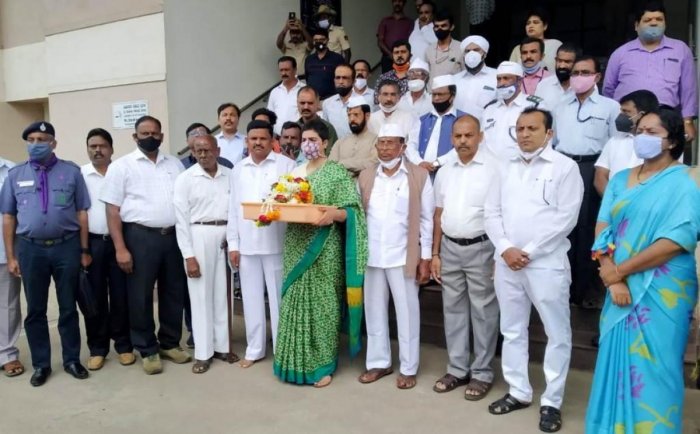
The ashes of Mahatma Gandhi were decked with flowers on account of Martyrs’ Day in Madikeri on Saturday.
The district administration and Sarvodaya Samithi observed Martyrs’ Day in Madikeri on Saturday.
The ashes of Mahatma Gandhi were taken out from the district treasury in district administration complex and floral tributes were paid to them.
The ashes of Mahatma Gandhi were taken out from the district treasury in district administration complex and floral tributes were paid to them.
All-religion prayers were offered and the Scouts and Guides sang Bhajans. Religious leaders recited the Bhagavad Gita, the Bible and the Quran on the occasion.
Speaking on the occasion, former minister M C Nanaiah said that it is an honour that Kodagu district has the ashes of Mahatma Gandhi.
A memorial should be constructed at Gandhi Mantapa on the lines of Raj Ghat to keep the ashes of Gandhi, he said.
“We have been demanding a memorial at Gandhi Mantapa for the last 15 years, which has not been fulfilled so far,” he added.
Deputy Commissioner Charulata Somal, Superintendent of Police Kshama Mishra and others were present.
source: http://www.deccanherald.com / Deccan Herald / Home> State> Mangaluru / by DHNS, Madikeri / January 31st, 2021
Pramod Bopanna, a native of the Scotland of India, Madikeri is all set to make big in the Kannada cinema industry. Pramod, a fan of Crazy-star Ravichandran wanted to become an actor since his childhood and to be precisely said from 3rd grade. And that is because of Ravichandran himself.
Pramod witnessed the shooting of Crazy start Ravichandran’s Chinna in Madikeri and decided to become an actor. Walking towards the goal he started as an anchor in a local channel and then as a news anchor in Udaya News Channel for 9 years.
His itch to become an actor got stronger and he said bye to his job as a news anchor and started working as an actor in television serials. Raghavendra Mahime, Samartha Sadguru Saibaba, Rangoli, Sukanya are some of the serials he has played pivotal roles in.
The talented actor has also started working in movies now. Andukondante, Mareyade Kshamisu, Balepete are the movies he has played lead roles in.
Pramod Bopanna has also appeared in two Tamil movies and has been offered many other movies. he is also working on a movie called Climax.
source: http://www.freepressjournal.in / The Free Press Journal / Home> Entertainment / by FPJ Web Desk / January 30th, 2021
WELCOME. If you like what you see "SUBSCRIBE via EMAIL" to receive FREE regular UPDATES.
Read More »