The Kodagu District Administration and the Department of Horticulture will conduct a Flower Show at Raja’s Seat in Madikeri from Feb. 7 to 10 in order to attract tourists, an official statement said. A special feature of the Flower Show will be the depiction of the lifestyle and traditions of Kodavas through floral replicas of “Kodagu Ainmane” or ancestral home.
According to the statement, this is to promote and create awareness of the lifestyle, culture and traditions of Kodavas to the present generation. Nearly 25 species of flowers and about 10,000 plants will be part of the show with floral decorations depicting the cultural facets of Kodagu.
Horticulture Department officials said the topiaries (practice of training perennial plants by clipping the foliage and twigs of trees, shrubs to develop and maintain clearly defined shapes, whether geometric or fanciful) will be brought for the festival.
In a bid to attract the children, floral statues depicting well-known personalities, will be created and serve as a selfie point for the visitors.
There will be cultural programmes in the evening on all the days of the Flower Show besides floral rangoli competition for women. Stalls will be put up for sale of handicraft items, the statement added.
As part of the Flower Show, thousands of flower pots are being arranged at Raja’s Seat. Flower pots and a large variety of flowers including African marigold, Celosia, Lady Lace, Gladiolus, Gerbera, Anthurium, Bird of Paradise, Carnations, Lilium, Tuberose, Orchids, Stasis, Chrysanthemum, and Limonium will attract visitors. Exclusive selfie spots will be created for tourists to click selfies and share on social media. Works are underway at Raja’s Seat.
source: http://www.starofmysore.com / Star of Mysore / Home> News / January 31st, 2020
Seminar, biopic release to mark the centenary year of scholar Dr. I.M. Muthanna
Bengaluru:
Kodagu’s most acclaimed poet, Appachcha Kavi’s 150th birth anniversary celebrations will be held in New Delhi.
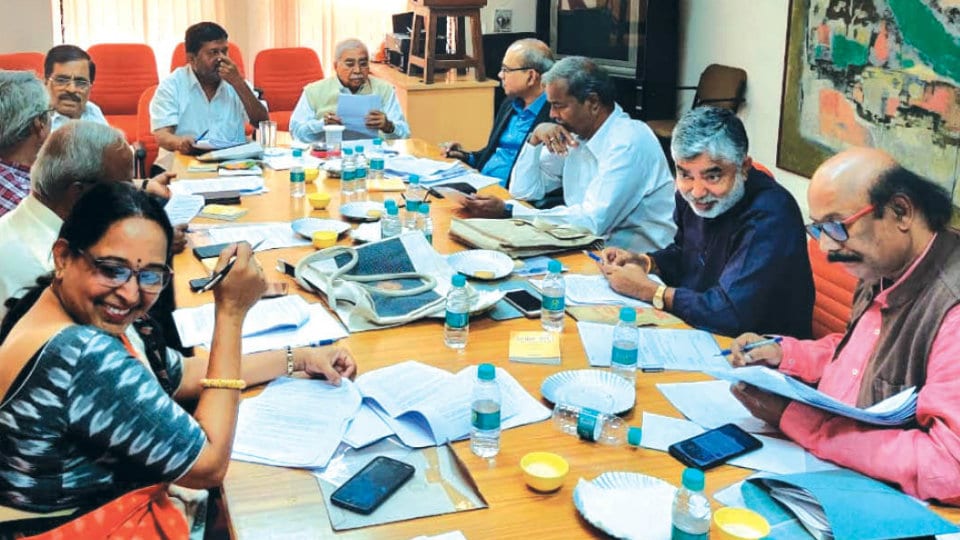
This decision was taken by members of Kendra Sahitya Academy, which had convened a meeting recently at its regional office in Bengaluru under the Chairmanship of Kannada writer Dr. Chandrashekar Kambar.
The Academy, in association with Delhi Karnataka Sangha, Delhi Kodava Samaja and Jawaharlal Nehru University (JNU), will jointly organise the 150th birth anniversary celebration of Appachcha Kavi.
On this occasion, to mark the centenary year of Dr. I.M. Muthanna, noted Indian writer and scholar, a seminar will be held and a biopic on the great writer will also be released.
Dr. I.M. Muthanna was a noted Indian writer, scholar and translator who wrote in English, Kannada and Kodava languages and had translated four plays of Appachcha Kavi to Kannada.
During the meeting, Academy member submitted a proposal to publish the biopic and plays of Dr. Muthanna.
Academy Convenors Dr. Siddalingaiah, Dr. Sarooj Katkar, Prof. H.S. Shivaprakash and others were present at the meeting.
source: http://www.starofmysore.com / Star of Mysore / Home> News / January 29th, 2020
Find out how Orange County transformed to Evolve Back Luxury Resorts
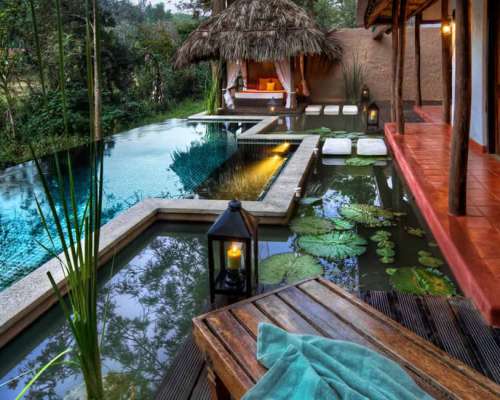
Luxury Lily Pool Villas at Evolve Back Resort in Coorg, Photo Credit: Evolve Back Luxury Resorts
Evolve Back started life as Orange County. How did it all begin?
We are from Kerala, although we’ve been in Karnataka for close to 100 years. Primarily, we are a family of planters, growing coffee, rubber, pepper, cashew and so on. We still have plantations in different parts of south India. It’s a small family of 11 children (laughs): seven boys and four girls. I’m the seventh boy.
Coorg was not a tourist destination when we were growing up. But we used to go there for holidays and found the weather wonderful and the place beautiful. Our estate in Chikkana Halli had a great location by the Kaveri. So we thought we could set up something. Since we used to grow oranges, we decided to call it Orange County. This was in 1994. At that point we had not envisaged multiple resorts.
Why did you rebrand ?
In 1999, we started going for international travel exhibitions. That’s when we realised our brand name had a strong association with California. The first resort did well and in 2000 we started thinking of the second. Work started in 2005 and we opened Orange County Kabini in 2007.
In 2005, we did an internal workshop on branding, where we came up with our ‘spirit of the land’ concept. All our experiences try to capture the localness of the destination. Our guests stay in luxury but experience the local culture. But it was a while before we rebranded.
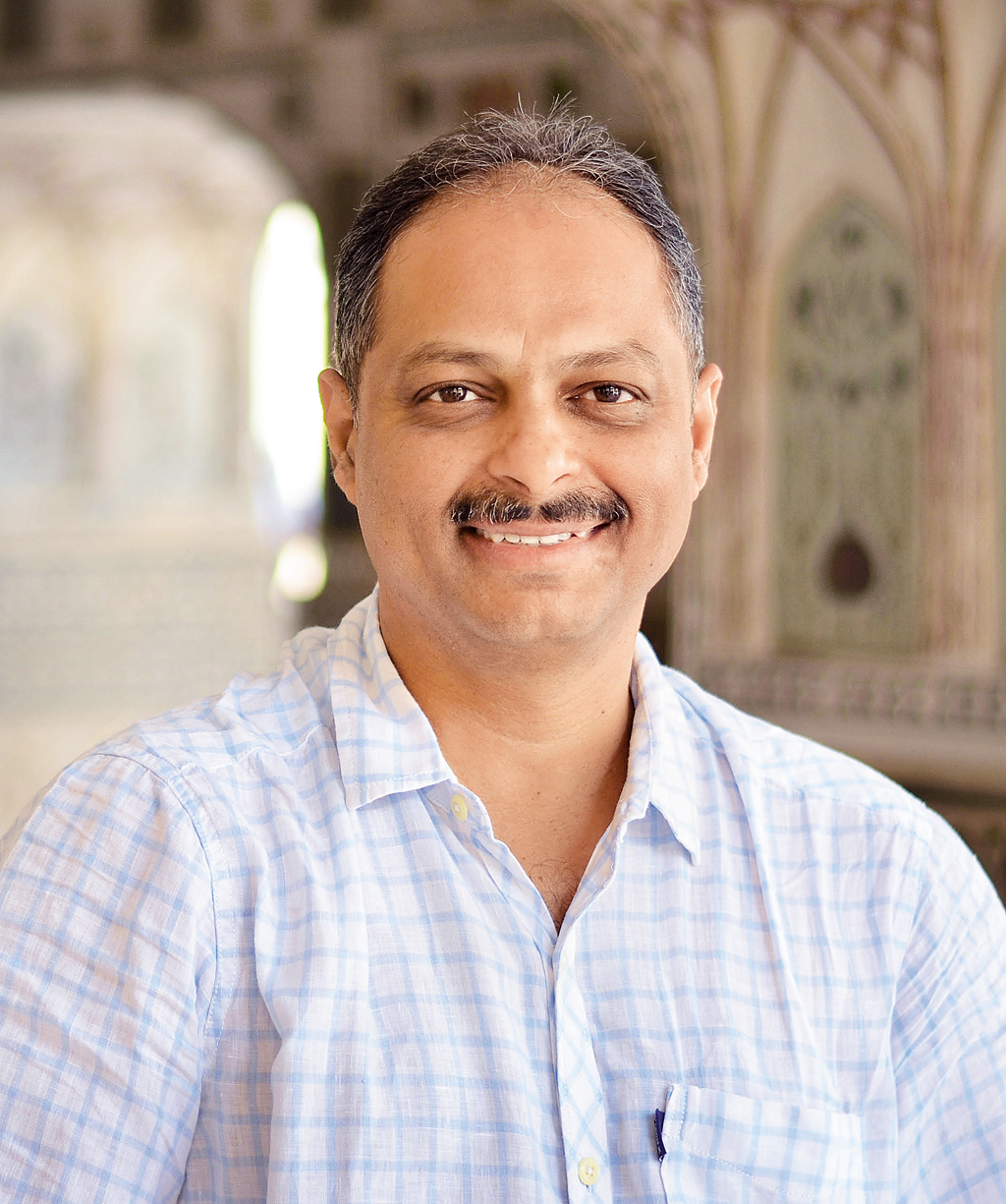
Jose T. Ramapuram
Tell us more about ‘spirit of the land’.
Our managing director is an architect. So when we launch a property he studies the life of the place: people, architecture, food, clothes, etc. All these elements are blended in with luxury to create our experiences.
So the architecture of our Kabini property is inspired by the Kuruba tribes of the region. A name like Orange County wouldn’t really do justice to it. We next went to Hampi, where we built a palace inspired by the architecture of the Vijayanagara empire. We also had plans to expand outside of India. That’s when we took a call to rebrand as ‘Evolve Back’, which is more in sync with our philosophy. As we evolve as human beings, we look back and draw inspiration from the past, when we had cleaner air, cleaner food, cleaner water. The new identity was adopted in 2017.
What are some of your brand values?
Our brand values are well defined. They are eco-sensitivity, straight-from-the-heart, constant innovation, elegance, attention to detail, going the extra mile.
When we enter a destination, we want to be the best there. We don’t go to places where there are too many players. We also like our properties to be small and intimate.
What are some of the responsible tourism practices you’ve adopted?
We have always had a deep connection with the land. I first heard of responsible tourism at WTM in London in 2002. As I studied more, I realised we were already doing this stuff. We just hadn’t formalised it. So in 2006-2007, we did. Environment, community and culture are the three areas we focus on.
When we acquired Kabini it was agricultural land. We reforested it with local species and brought the biodiversity back. We banned all plastic bottles in 2005. The roof in Hampi has solar panels. We’ve invested in wind power.
In Coorg, we have adopted the local government school, besides launching our own state-of-the-art pre-school. After the kids are through with the pre-school, we will sponsor and place them in good schools. We have a policy of 60 per cent local employment and try to improve staff quality through education.
Not one drop of water at any of our hotels is let out. It’s all treated and used for gardening. We have an onsite waste segregation programme and 97 per cent of our waste is either recycled in-house or sent out to a proper recycling centre.
Where are you opening next?
We’ve just acquired a private game reserve in Botswana spread over 110 sq km. It’s in a pristine location, very exclusive. We’ll upgrade it before lending the Evolve Back name to it. Mandu and Bhutan are also on the cards.
You cannot go into any place without having a negative impact. If we’re going into a destination, we always try to contribute more positives. We believe in low-impact, high-end tourism. That’s why we are looking forward to our Bhutan project. The country is so forward thinking it’s trying to bring its annual tourist arrivals of 500,000 down to 400,000.
Jose T. Ramapuram is the executive director at Evolve Back
INFORMATION: Evolve Back, 2nd floor, St. Patrick’s business complex, 21, Museum road, Bengaluru; info@evolveback.com, evolveback.com
source: http://www.outlookindia.com / Outlook Traveller / Home> Travel News> Story / by Amit Dixit / January 29th, 2020
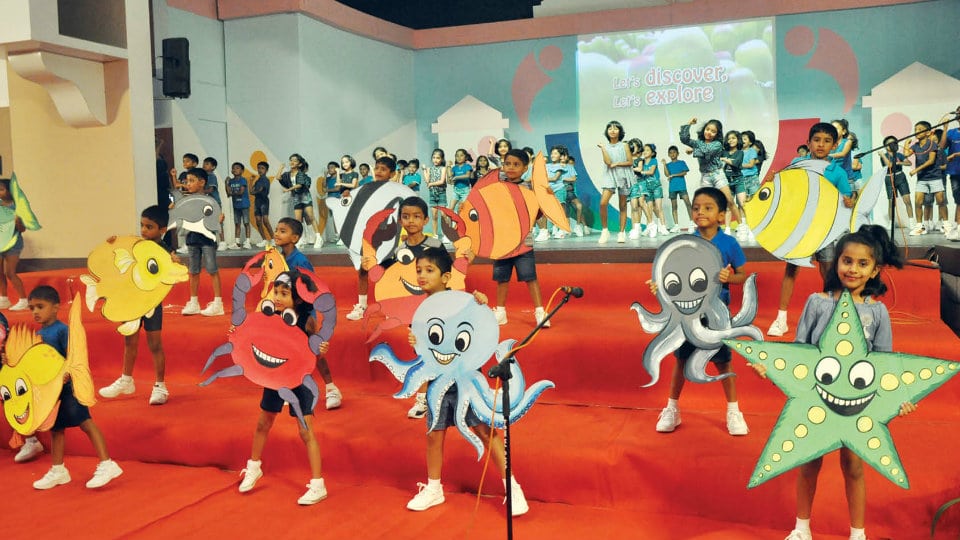
Coorg Public School, Gonikoppal, recently celebrated its ‘Kids Fiesta’ with joie de vivre.
Monnanda Shobha Subbaiah, former Chairperson of Kannada Sahitya Sammelana and District Commissioner for Guides, was the chief guest of the event. School Principal Dr. Benny Kuriakose presided.
Pre-Primary Academic Coordinator Ramya Nanjappa highlighted the spectacular achievement made by the students in myriad fields. A resplendent display of cultural programme ranging from fluid and vibrant dances, melodious choirs, creative costume fair and power-packed action song left the audience spell-bound.
A special musical feast presented by the sitarist enthralled the audience. The school’s band mesmerised the gathering with the scintillating display of trumpets and drums.
Sharth House won the ‘Cock Trophy’ instituted for excellence in various House activities.
source: http://www.starofmysore.com / Star of Mysore / Home> News / January 28th, 2020
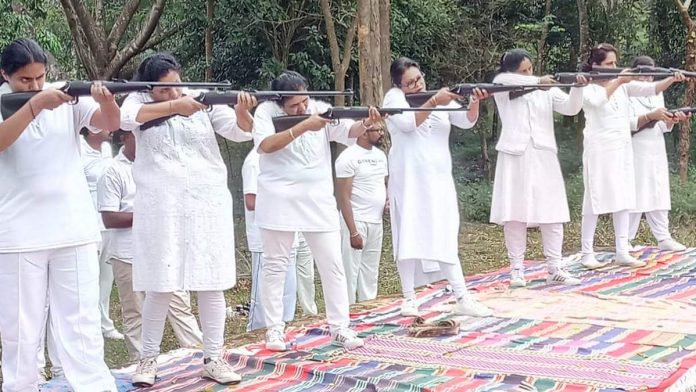
Under a Kodagu police programme, nearly 150 women have been trained in five batches over the last year on 0.22 rifle.
Women undergoing rifle training in Kodagu’s Gonikoppal village. | Photo: By special arrangement
Bengaluru:
Women in Kodagu are up in arms, literally.
On Sunday, a group of women completed a five-day licensed firearm training programme in the southern Karnataka district under police supervision as a means to self-defence — against violent attacks and a tiger menace.
Under a Kodagu police people-interaction programme, nearly 150 women have been trained in five batches over the last year after the district’s superintendent of police, Suman Pennekar, took charge in December 2018.
The move has come as a response to the rising crime rate in the coffee plantation region, claim the women. ThePrint couldn’t independently verify this claim. However, several reports have emerged of murders and tiger attacks in the past few months.
Pennekar told ThePrint the training has been imparted to ensure that those who possess weapons feel accountable and not become “trigger happy”. The region is dominated by Kodavas — as people of Kodagu are called — a martial race that is one of the few tribes in the country allowed to possess guns without license.
These camps have so far been held across different talukas in Kodagu. The latest one took place at a centre in Gonikoppal village, where these women, dressed in white, learnt to aim and fire.
Women are trained on 0.22 rifle under the Civilians Rifle Training programme, as it is officially called.
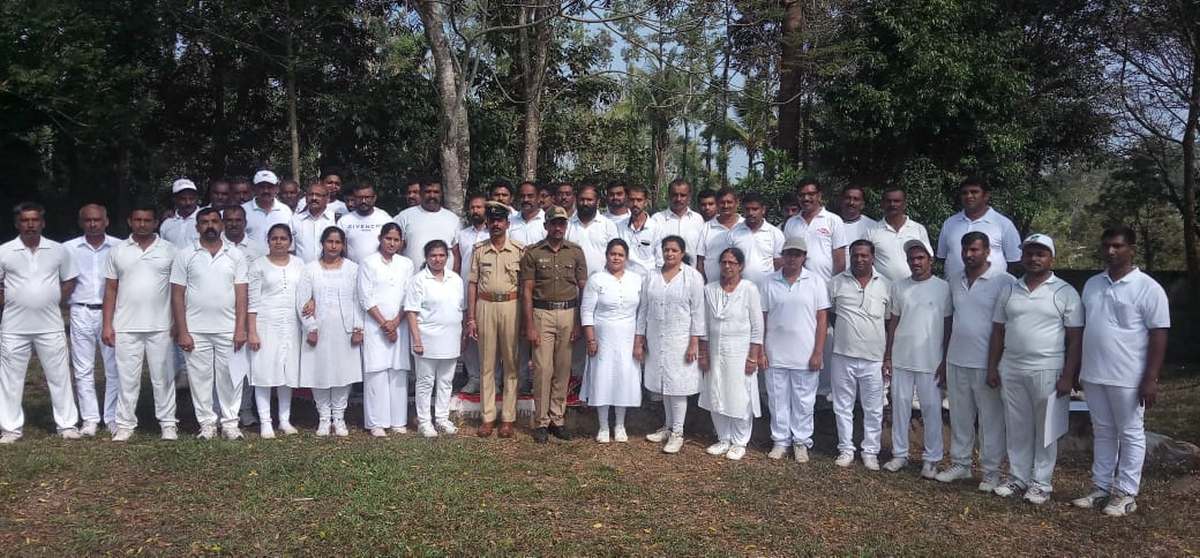
Police personnel with women at a rifle training camp in Kodagu’s Gonikoppal village. | Photo: By special arrangement
For self-defence
Bharathi Bopanna enrolled herself for the programme after she received a text on messaging service WhatsApp about the latest camp. She decided it was important for her to know how to use family-owned arms to not just keep herself safe but also to adhere to the Kodava tradition.
In the district famous for its sprawling coffee plantations, Bopanna said there have been instances of attacks on women while they were alone at home during coffee planting and plucking seasons.
“Crime against women has increased, especially those who are home alone. I decided to learn how to operate a gun so that I can use it to defend myself if need be,” Bharathi said.
“One should be able to defend oneself. When the men in the house are not there, there may be criminals who may try to attack us. We should be prepared. When they hear that we are all trained in using a gun, they will think twice before committing a crime.”
A.B. Aarthi, who underwent the same training along with her 20-year-old daughter, said, “I took it up for my personal protection.
“We would wake up early and travel 25 km from our home to Gonikoppal to train. Many of us in Kodagu live in remote areas and sometimes women have to travel alone through isolated places. If something happens, there may be nobody to rescue us, so if we are armed, we will feel safer,” she said.
Apart from rigorous physical training, the women were also tested for their weapons skills at the end of the session.
“I managed to come third, despite handling a weapon for the first time,” said Bopanna while recommending that all women in the country should undergo the arms training.
‘Great responsibility’
Kodagu SP Pennekar told ThePrint that the civilian training programme was initiated in 1962, but the district hadn’t been conducting it regularly.
After she took over, Pennekar made an effort to get people from Kodagu to train as they all possess weapons. Over the year, enrolment has gone up in the camps.
She said many Kodavas have huge landholdings and these rifles help them keep trespassers at bay.
The training is to use the weapon judiciously — not to shoot but to deter, she said.
However, Pennekar has a word of caution for all.
“They should understand that along with handling a weapon comes a great responsibility. They should realise that this training is being given to ensure they understand why they have been given a special privilege and that they should learn to use it responsibly,” said Pennekar.
source: http://www.theprint.in / The Print / Home> India / by Rohini Swamy / January 01st, 2020
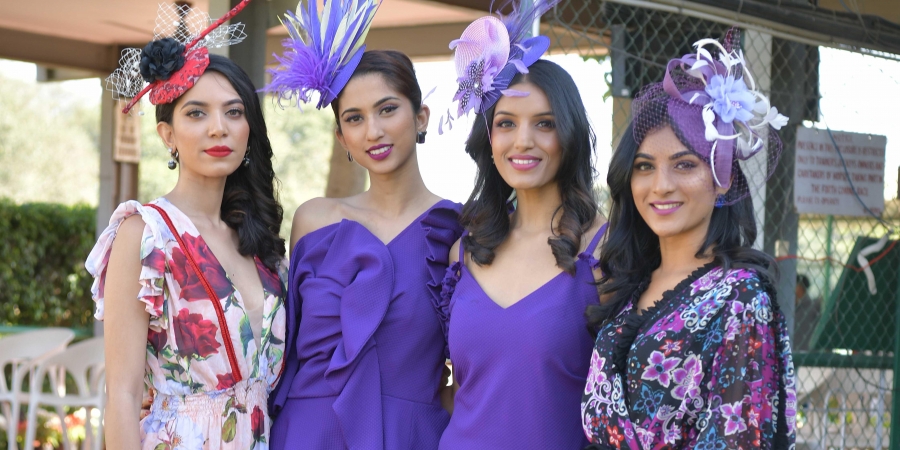
While stylish hats were the traditional favourite among the women, the other fashion statements, which was a refreshing treat for the eyes, were monochrome colours, jumpsuits and pants.
Floral prints, bright colours and summery looks were the highlight at the Bangalore Derby on Sunday. (Photo| Meghana Sastry, EPS)
Bengaluru :
While the city’s temperature soared to 30° C on Sunday, the excitement for Shree Meenakshi Sundereshwara Bangalore Derby 2020, which took place at The Bangalore Turf Club, also amped up. More than 5,000 people attended the event but the showstoppers were the eight handsome horses who participated in the race.
While stylish hats were the traditional favourite among the women, taking inspiration from Royal Ascot, the popular derby in London, the other fashion statements, which was a refreshing treat for the eyes, were monochrome colours, jumpsuits and pants.
Nishita Sivappa, daughter of Vinod Sivappa, chairman of Bangalore Turf Club, says when it comes to attending a derby, she has to go for something comfortable, in which she can enjoy the thrill of the race. “I have always loved breaking tradition. While ladies prefer dresses or skirt, which is lovely, I prefer comfortable pants and shirt, accessorised with a statement belt,” says Sivappa, who went for a co-ordinated pure white set, with a black and gold statement belt along with oversized sunglasses.
While Sivappa chose all-white, actress Shubra Aiyappa decided to got for a body-fitting jumpsuit. “I have been in that jumpsuit phase so went ahead with the instinct,” said Aiyappa, who picked the jumpsuit from a designer boutique in Dubai.
Derby without some harmless betting sounds incomplete. But actress-model Sanjjanaa Galrani says she usually does not gamble and moreover, she is working towards reducing one vice of her in a year. She was wearing a purple velvet dress, which she paired up with classy shoes, a fashionable watch and a trench.
“I added the trench so that people don’t get distracted from the race,” the actress added playfully. Celebrity fashion designer Delna Poonawalla, who comes from a famous family of horse breeders, gave a glimpse of her new collection too.
While women put on the fashion game so high, men didn’t hesitate to play along too. They showed off tapered pants, chequered suits and printed blazers. However, it was the race and good spirit that took all their attention.
source: http://www.newindianexpress.com / The New Indian Express / Home> Lifestyle> Fashion / by Monika Monalisa / Express News Service / January 27th, 2020
Kodava Samaja, Mysuru, is celebrating the 121st birth anniversary of Field Marshal K.M. Cariappa on Jan. 28 at 8.30 am at the Circle named after him in city (previously Metropole Circle).
The members will offer floral tribute to the bust of Field Marshal.
The Kodavas residing in city, Defence personnel and general public are requested to join in large numbers, according to a press release from Samaja President K.M. Belliappa.
source: http://www.starofmysore.com / Star of Mysore / Home> In Briefs / January 25th, 2020
Seven women who collected textiles during the 20th century are the focus of this exhibition, which considers how the collections they formed – ranging from Balkan costumes to South Asian saris – helped to assert the status of these materials as works of art. Find out more from Two Temple Place’s website.
Preview the exhibition below | View Apollo’s Art Diary here
The artist and writer Edith Durham (1863–1944) travelled widely across the Balkans in early 20th century, becoming renowned for her anthropological reports on life in Serbia, Albania and Kosovo. In 1935, her collection of Balkan costume and jewellery – including this giubba, a traditional robe worn by Albanian women – was donated in 1935 to the Bankfield Museum in Halifax, where it remains to this day.
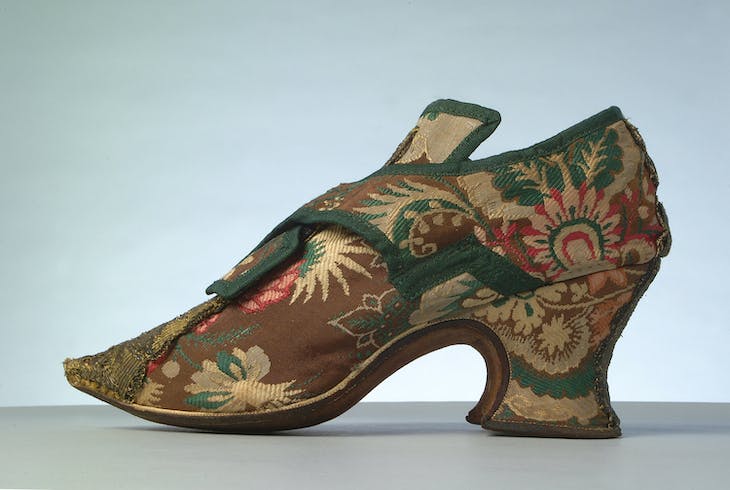
Brocade shoe without clog (1735–45), unknown maker. Photo: John Chase Photography/The Olive Matthews Collection, Chertsey Museum
Drawn to historic fashion from a young age, Olive Matthews built up a significant collection of more than 4,000 objects over the course of her lifetime – being careful always to stick to a budget of no more than £5 per item. She focused particularly on delicate needlework and embroidery – as seen on this shoe of brocaded silk from the 18th century.
Along with her friend Margaret Lambert, Enid Marx amassed a major collection of English folk art after 1932, although by this time she was already a renowned textile artist in her own right, having studied alongside Eric Ravilious and Edward Bawden at the Royal College of Art in the 1920s. In the exhibition, examples of her own work – such as this repeating pattern, reminiscent of animal hide – are on show alongside objects from her collection.
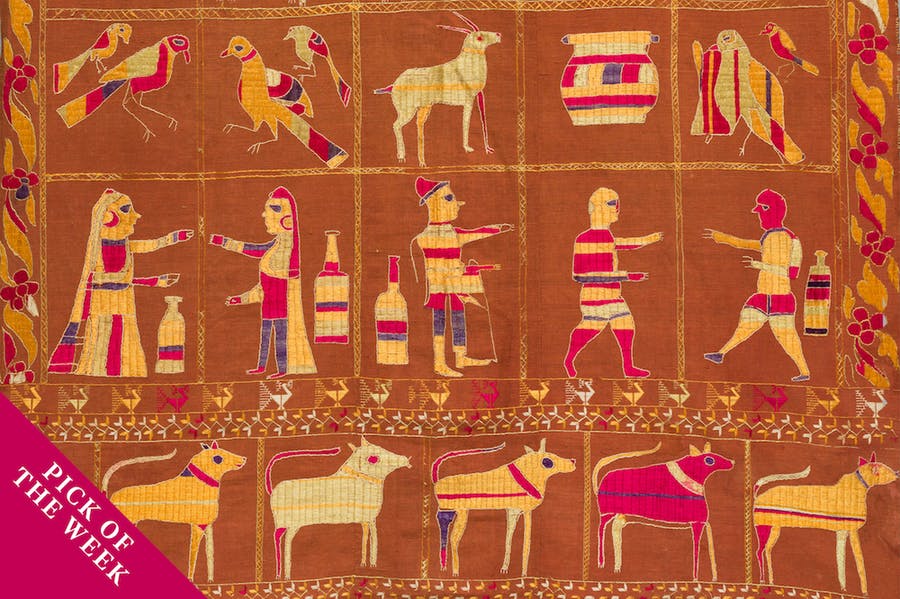
From 1985–98, Nima Poovaya-Smith was senior keeper of international arts at Bradford Art Galleries and Museums, during which time she established the transcultural gallery at Cartwright Hall. She built up a collection at the gallery that reflected Bradford’s history of textile manufacture and explored the influence on it of fabrics from across the world – in particular southern Asia. This colourful cloth is an example of phulkari (‘floral work’ in Punjabi), so-called because of the embroidered patterns that extend over every inch of the fabric.
Event website
source: http://www.apollo-magazine.com / Apollo / Home> Whats On / January 25th – April 19th, 2020
The premiere show of Kodava movie—Makkada Manas—will be held in Bengaluru on January 25.
The movie will be released in theatres shortly, said script writer Dinesh Kalimada.
The movie portrays the relationship between parents and children, he told reporters. Talented persons from Kodagu such as Arjun Devaiah, Ashwini Nachappa, Josna Ponnappa are the inspiration for the movie.
The movie is directed by Suleman Koria and produced by Bollimada Dati Uthaiah.
Story writer Gangadar said the movie was shot in different parts of the district.
The movie will be released is four theatres in the district. The premiere show will be for athletes and artistes from Kodagu. There are two songs in the movie.
source: http://www.deccanherald.com / Deccan Herald / Home> State> Mangaluru / by DHNS, Madikeri / January 19th, 2020
WELCOME. If you like what you see "SUBSCRIBE via EMAIL" to receive FREE regular UPDATES.
Read More »