Tata Coffee is looking to transform itself into a premium specialty coffee company from a commodity player with an aim to tap the growing specialty coffee market. The company has been consistently moving up the value chain in both its plantations business as well as its instant coffee business.
The company has 19 coffee estates spread over 18,224 acres situated in the Western Ghat at different altitudes that have highly conducive micro-climates.
Tata Coffee, a subsidiary of Tata Global Beverages, is a fully integrated coffee company with its own coffee plantations, coffee curing factories, roasted and ground (R&G) coffee facility and instant coffee production plants.
source: http://www.money.livemint.com / Live Mint / Home> Company News / E-paper / Mumbai – August 03rd, 2015
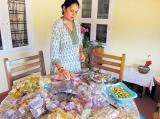
Coorg is synonymous with quaint coffee estates, lush falls and serene greenery. But did you know that it also houses a mini-chocolate factory, handled completely by a woman? Ever since the quiet town of Coorg started seeing the abundance of homestays, many women started to see themselves in a new light – as entrepreneurs. One such woman is Ketolira Fancy Ganapathy from the tiny village of Yavakapadi near Kakkabbe in Kodagu district.
What initially started as a hobby has now become a full-fledged business for this confident woman. Right from her childhood, Fancy had the desire to make delicious chocolates. She first learnt the art of making chocolates in high school. When she sent over pickles to her friends in Chennai, she got lessons in chocolate making as a return gift. Soon, she started making them for small-time functions and social gatherings in and around Kodagu. When the coffee market in the district started to fluctuate, she resigned from her lecturer’s post and turned her hobby into a full-time business.
Her chemical-free chocolates are widely loved for their delicious taste and have found many regular takers over the past three years. She has a farm where she grows pineapple, orange and passion fruit which she utilises as ingredients for chocolate. She sources dry fruits and fruits like mulberry from outside. She sells chocolates at Rs 1200 per kg while her input costs are around Rs 800-900 per kg. She is helped by her family and friends in this arduous task.
Most of the times, her produce is exhausted by consumers within her locality. In fact, a nearby resort buys products worth Rs 5,000 from her every week. Based on the orders received, Fancy also ships her chocolates to Bengaluru and Chennai. “Everyday, we prepare eight kg of chocolates. It’s a lengthy and exhaustive process. We have some assistants for paper cutting, labelling and have got an affiliation from the Central Food Technological Research Institute, Mysuru, thanks to our excellent quality standards,”
explains Fancy.
Through Nalaknadu Flowers and Foliages Association, Fancy is encouraging women in rural areas to produce goods right in the comfort of their homes. She aspires to start an organic co-operative society that markets locally produced chocolates, pickles, and wine.
What more, she is also the only chocolate manufacturer in Karnataka who has tied up with the postal department to market her produce. In order to enjoy her goodies, all you have to do is to place a call to the postal department and you will get her home-made goodies delivered to your doorstep. This service is presently active in Mysuru, Bengaluru and Mangaluru postal departments. What more, you can also enjoy fresh coffee powder supplied from the Coffee Planters Club through this service.
“We prepare a large variety of chocolates and they are in good demand locally. Thanks to this arrangement, we are now supplying our produce to select cities, reaching out to thousands,” says Fancy.
“Fancy Ganapathy makes flavoured chocolates which are very tasty. She enriches the glory of coffee, cardamom, pepper and ginger which grows in coorg,” says planter Suresh Chengappa of Honey Valley Estate. Every week, he buys 5-6 kg of her chocolates for the visitors who stay in his resort.
Fancy is also working on a chocolate exhibition in her estate, which is nearing completion. She is also planning to organise a chocolate tour for the tourists and has converted her vintage bungalow into a chocolate showroom, where her visitors can learn how to make chocolate.
source: http://www.deccanherald.com / Deccan Herald / Home> Supplements> Spectrum / by C S Suresh / August 04th, 2015
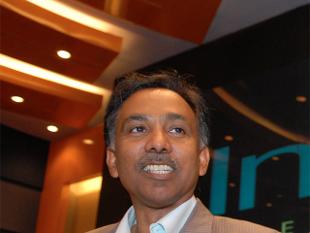
Infosys co-founder and former CEO SD Shibulal is joining the board of The Tamara, the hospitality venture set up by his daughter Shruti, as its chairman at a time when the company is planning at least one fresh acquisition in the German speaking region of Western Europe
Since he retired from Infosys last year, Shibulal has been making investments through his family office Innovations Investment Management.
Since he retired from Infosys last year, Shibulal has been making investments through his family office Innovations Investment Management, most notably in real estate and hospitality sectors.
“He (Shibulal) plans to use his years of experience on a professionally run board to bring the foremost standards of corporate governance to The Tamara,” said Senthil Kumar N, director and chief executive of The Tamara.
The Tamara, which operates under the umbrella of Shibulal’s family office, also helps manage properties owned by the Shibulal family across the world.
Real estate makes up over half the portfolio of Shibulal’s family office, which has several resorts and projects in India.
The company’s flagship property and brand is the Tamara Coorg – a pet project of Shruti Shibulal, who is currently spearheading the venture’s Thiruvananthapuram project as well as the acquisition being pursued in Europe.
Shruti, who holds an MBA degree from Columbia Business School and started her career with Merrill Lynch, has also been actively building the family’s real estate portfolio. She also runs several finedining restaurants, including Caperberry and Fava in Bengaluru’s upmarket UB City mall.
“Each one of our platforms (such as The Tamara) has a professional management and governance structure in place from the beginning. They develop their own medium and long-term plans based on various factors. For example, our decision to consider acquiring a hotel property in the German speaking part of Western Europe is part of our long-term strategy,” said Kumar, an IIM-Bangalore and BITS-Pilani graduate who joined the Shibulal family office in 2005.
The company has started construction for its upcoming projects in Thiruvananthapuram and Kodai projects. It has also begun operating two new properties – Lilac in Bengaluru and Palma Laguna on the Kerala backwaters, Kumar said.
Shibulal’s family office currently manages the entire wealth of the family including any new funds added through dividends and share sales, and also helps build the philanthropic and business platforms which the family is interested in, Kumar said.
Since his retirement, Shibulal has also become an active investor in the startup ecosystem and even set up a venture capital and accelerator program called Axilor under the purview of his family office, roping in fellow Infosys co-founder S Gopalakrishnan as an investor.
ET had reported last year that Shibulal and his family own several hundreds of apartments and properties across the world. Shibulal and his family currently have about 1.97% of shareholding in Infosys, worth nearly $1 billion (about Rs 6,400 crore).
source: http://www.economictimes.indiatimes.com / The Economic Times / ET Home> Tech> ITes / by Anirban Sen, ET Bureau / July 29th, 2015
Coffee shipments from India may increase the most in four years as prospects for a record crop in Asia’s third-largest producer spur farmers to liquidate inventory.
Exports will rise as much as 10 percent in the year through March 2016 from 286,516 metric tons last year, said Ramesh Rajah, president of the Coffee Exporters Association of India. That would be the biggest gain since 2011-2012, when sales jumped 11 percent to 333,181 tons, data from the state-run Coffee Board show.
Rising sales from India to mostly Europe and Russia will add to a global surplus forecast by Societe Generale SA and weigh on robusta prices in London. Supplies from the South Asian nation may help bridge a shortfall in shipments from Vietnam, where farmers are hoarding the most beans in at least five years on speculation prices will rally further. Robusta accounts for about 70 percent of India’s exports.
“With a larger crop expected next season, the small farmers will keep selling” as they can’t bear the storing and logistic costs, Rajah said by phone from Bengaluru on July 14. “The crop was low in 2014-15 and farmers held back and the prices went up.”
Robusta futures last month rose 9.3 percent, the most since February 2014, and traded 1 percent lower at $1,688 a ton on ICE Futures Europe on Friday. Arabica, which advanced 5 percent in June in New York, was down 0.6 percent at $1.2805 a pound. Societe Generale predicts a surplus of 905,000 bags of 60 kilograms each this year.
Monsoon Boost
Production in India will rise 8.7 percent to a record 355,600 tons in 2015-16, the board estimates. Timely monsoon rains have boosted crop prospects, according to Anil Kumar Bhandari, a member of the state-run agency.
“We are heading for a very good crop,” Bhandari said by phone from Bengaluru on July 13. “The coffee-growing belt in Karnataka and Kerala has got adequate rains.”
Exports rose 12 percent to 102,850 tons between April 1 and July 13 from the same period a year earlier, provisional data from the board show. Italy, Germany and Russia were among the top buyers of Indian coffee.
source: http://www.bloomberg.com / Bloomberg Business / Home> Business / by Pratik Parija / July 17th, 2015
This shoe designer’s blog has a huge fan following in India and she has even won an award for her creative efforts
In 2011, Chondamma Cariappa founded the popular blog The Sole Sisters, where women (and men) who love their shoes, and have a penchant for picking up the quirkiest of footwear, could share images of their prized possessions. Today, Chondamma has quit her job at an advertising agency to design her own line of shoes with her venture The Sole Sisters. A year since its launch, she has also won an award at Grazia Young Fashion Awards this year.
A travel buff, Chondamma’s experiences were incomplete without her posting pictures of shoes she recently acquired or stumbled upon from various parts of the world on Facebook. Her album soon got her friends’ attention where they got into lengthy details about her collection. What she didn’t anticipate was the interest from women all over the world. She says, “Since I saw genuine interest among women, who share the same interest as me about shoes, I started this venture. Soon the world spread, and I started receiving emails from women to feature their shoes.” Today, her blog boasts of more than 400 contributors from across the globe with more than 70 percent of the contribution from India. The blog features women shoes ranging from pump, wedges, high heels and knitted ballerinas.
The entrepreneur tells us that the decision to start her eponymous shoe company last year was a clear step ahead. “I was exploring avenues about how to make this blog bigger but I never thought I’d end up becoming a shoe designer. I realised that women were looking up for unconventional, interesting shoes.”
Chondamma doesn’t have a formal education in designing, but she tells us her experience the advertising industry came in handy. “Advertising helped me develop an eye for detailing. The promotion and marketing strategies I learnt during my advertising years now help me with my brand,” she states. Chondamma reveals that Indian women often choose style over comfort and this is where she wants to bridge the gap. “You can’t blame them. If you see a pretty pair of shoes, you do want to buy them even if it means staying uncomfortable for a few hours. This is where I am trying to strike a balance with my venture,” she adds.
With The Sole Sisters, meeting with clients are now replaced by meeting with fabric-sellers, suppliers and karigars. She admits that there are roadblocks, but it is nothing that has overwhelmed her as yet. She says, “The shoemaking business is an unorganised market. There are times when the end-result is not what you expected; but I make sure it doesn’t affect me for long. I start working on the next samples.”
Her self-taught approach has actually helped her look at design in a new light: She mixes fabrics like ikat, khadi and chikkankari with leather. She says, “I don’t try restricting myself to a colour palette. As a creative person, I like more options. I let inspiration come to me when I get down to working.” Today, she delivers her shoes to America and Europe. In fact, her latest khadi collection is currently being retailed in Europe and will make an entry in India only in the next one or two months.
Chondamma quit her job as a creative director this year to focus on her venture.
Currently, she has been doing everything from accounts to couriering to marketing and promoting. As an entrepreneur, she realises that she has taken up a huge responsibility. She says, “Since I do not have any training in business or this industry, I feel the need to learn everything by myself. I want to get a hands-on approach in this business and learn as much as I can. I have loved the process so far.” And how is she enjoying her stint as the boss? “It’s just been six months and I have realised it is so important to remain self-motivated.
Being an employee means a scheduled, monthly salary; but being an entrepreneur is an entirely different ball game. You can’t afford to slack off. But I am not complaining; so far, so good.”
source: http://www.asianage.com / The Asian Age / Home> Life & Style / by Julie Sam / July 24th, 2015
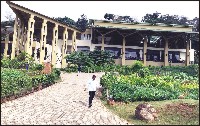
Club Mahindra, Virajpet: A view of the main building.
Making an excuse of my attending a friend’s daughter’s wedding at Virajpet, Kodagu (Coorg), I decided to spend the night at Club Mahindra, about 12 kms from Virajpet proper. Located in a valley, apparently a paddy field earlier, surrounded by coffee plantation in sharp contrast to Taj Vivanta in Madikeri (Mercara), located atop a hill, Club Mahindra is good for young couples with children for a holiday. As for me and my wife Ralie, it was like being in an OCU — Oxygen Care Unit. After all, towns in Kodagu are crowded with people and tourist vehicles spewing toxic fumes and raising dust that do not disappear into atmosphere because of the veil of mist and cold air.
My experience as a guest says that the success of any hospitality industry, specially this kind of holiday resorts, depends on facility and food with courteous, prompt service. How a guest is attended to on arrival and when the guest leaves is also equally important. Actually I was discouraged to choose Club Mahindra by a member of Round Table, who had stayed here last month, for the reason of delay in checking in, goof-ups in allotting rooms and in room service.
It is here the need for efficient human resource arises — from a sweeper to the master chef. Happily, I had no problem — except once when I called for a buggy to take us for the dining hall and it was drizzling. I was told ‘Buggy is only for the old.’ I was flattered that I must have sounded like an youngster to the person at the reception. At the massive dining hall, all was well for us — service, food and personal attention from Executive Chef – Kitchen, Nitten G. Chughh.
Be that as it may, this wedding afforded me an opportunity to meet my old friends and college-mates. One was M.C. Nanaiah, former Law Minister. Many imagine, not without truth, that being a Kodava (Coorg) is to be hard-drinking and pork-eating. Nanaiah as a Kodava and an unemployed politician was a pleasant company for me. Of course, with age we have sobered and are wise to be moderate, both in drinking and eating. However, I confess [and am sure Nanaiah will agree] that the mind is willing to indulge but alas the flesh is weak!
These days it has become a fashion among Kodavas and even among other original inhabitants of Kodagu, to discuss about the onslaught of tourists to Kodagu and the climate change. The damage caused to the district as a result of mushrooming of Home Stays and Holiday Resorts has become a matter of serious concern. I am reminded of the English man’s reaction to the London climate. Everybody complains about the climate, but nobody does anything about it. So it is with Kodagu at present. Nobody seems to be able to do anything to save Kodagu from the impending danger to its land and eco-system as a result of heavy influx of tourists and tourist-related infrastructure — roads, holiday resort buildings, etc. There is another area that poses threat to Kodagu — deforestation, mining of granite and sand.
According to M.C. Nanaiah, Prof. Madhav Gadgil’s Report on Eco Sensitive Zone (ESZ) of Western Ghats is the most acceptable than the second one by Dr. Kasturirangan because the first report would have prevented the proliferation of Holiday Resorts that leads to deforestation and imbalance in ecosystem.
I did not venture to react for I knew that the report, even if accepted, would not have stopped the establishment of Holiday Resorts of all India repute like Club Mahindra, Taj Vivanta or The Tamara Coorg and more, simply because Gadgil Report had merely mentioned 53 villages as out-of-bounds for these activities but what about the remaining 246 villages? Resort hunters could always go in here. If this is under Red category of the two categories created by Gadgil Committee, under its Yellow category you are prevented from using chemical fertilisers for the coffee estate and for other agricultural crops. As agriculture is a gamble, to allow only organic farming will only increase the number of farmer suicides!
The general opinion in Kodagu is that the difference between these two Reports is cosmetic — a difference between tweedledum and tweedledee. Whatever it is, there is an urgent need to bring in special laws relating to land use in Kodagu to save Kodagu from the land sharks and vandals.
And finally, what is a holiday for the fun-loving if there is no booze at an affordable price? Reports say the Excise Department has banned sale of liquors and even home-made wines at the Home Stays. Good Luck bootleggers.
Tailpiece: For the record, according to Excise Department about one crore litres of liquor and 25 lakh litres of beer was sold in Kodagu during the financial year 2014-2015. Hic!
e-mail: kbg@starofmysore.com
source: http://www.starofmysore.com / Star of Mysore / Home> Abracadabra…..Abracadabra / by K.B. Ganapathy / Wednesday – July 08th, 2015
The then Deputy Commissioner of Kodagu, A. Bharath, had convened a meeting to discuss the revision of various privileges granted to the people of Kodagu.
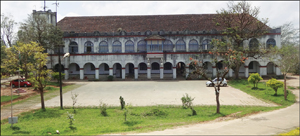
This important meeting was chaired by the then Revenue Minister B. Basavalingappa. The meeting was at the highly ornate meeting hall that was earlier a Palace, inside Madikeri Fort.
The Palace and the Fort were constructed by King Mudduraja in 1681 and renovated by King Lingarajendra Wadiyar II in 1813.
Myself and all the District Officers, political leaders and elite public were present at the meeting. As the subject was highly contested, people had assembled in large numbers and the hall was jam-packed.
The meeting started and DC Bharath introduced the subject and highlighted the objective of the meeting. He explained the need for the revision, as many of the privileges were outdated and were out of context. Afterwards, Revenue Minister Basavalingappa expressed the thinking of the Government and wanted the opinion of the public to facilitate issuing a revised order.
As the public were preparing to put forth their arguments, suddenly the Minister shot a question: “Who is the Divisional Forest Officer, Hunsur?”
I got up and after wishing him good morning Sir, introduced myself, ‘Sir, I am A.C. Lakshmana DFO Hunsur.’
Where is the land for rehabilitation of farmers from Nagarahole Wildlife Sanctuary? Where is the money for compensation? came the thundering questions from Basavalingappa.
I was surprised by the unexpected change in the topic of the meeting. By observing his anger, I could fathom his anger, at our proposal. We had proposed rehabilitation of nearly 1,000 people from Nagarahole, which he had rejected outright and ordered for eviction of farmers.
Most of these farmers were welcomed and settled under the “Grow more food campaign” of 1950s. They were granted suitable marshy wetlands in the forest for cultivation of paddy. At that time, there was an acute shortage of food in the country.
When I tried to support my proposals for rehabilitating the farmers in alternate lands and giving some incentives, he shot back: “Where is the land I say?”
I was stung by his pungent remarks but controlled myself. I explained that my predecessor Yellappa Reddy and Conservator of Forests B. Baliah had already earmarked 400 acres of forest land at a Northern corner of Thithimathi forest.
Not satisfied with my explanation, he put a stinging question: “Where is the money? You have asked for nearly Rs. 10 lakh as compensation.”
As government servants, we were never grilled in the public like this earlier by any Minister, and this was a strange situation I was facing.
He continued, “Do you pluck Rs.10 lakh from leaves of forest trees and distribute?”
I felt I am losing a good cause by being polite and submissive and if I do not defend now, the struggle for rehabilitation that was going on for the last six years will be lost forever.
I mustered all my courage and loudly blurted, “Sir, by rejecting our proposal, you are bringing discredit to Government of Karnataka.”
The packed assembly fell into pin-drop silence at this unexpected development. My heart started pounding hard.
Basavalingappa’s voice came piercing like a bullet, “Are you in your right senses while replying to a Minister?” he shouted in a thundering tone.
Me, a trusted blue-eyed boy of the forest department, felt being humiliated in the presence of public. I was defending the voiceless innocent animals and plants and supporting needy farmers. Suddenly, I felt that I should be vociferous and blurted back: “Sir, Karnataka government that was kind enough to release over 3000 acres to rehabilitate Tibetans nearby, if they say no to the local need for 400 acres, how can the Government get a good name?”
I paused for a moment and could see the Minister in a dilemma. I shot off a remedial answer, “Sir if I sell two rosewood trees from my division I can get Rs. 10 lakh. This investment is sufficient to keep all my animals, plants and the concerned farmers happy and at peace.”
The Minister was quick to order me to sit down. He added that we will discuss this matter in the DC’s chambers after this meeting. I felt he wanted to silence me.
I stood my ground firmly and said that as the matter is introduced here in public, it must be resolved here itself.
The Minister ordered in a raised tone, “Sit down.”
I politely disobeyed him and insisted, “Sir, you should solve the problem here and now.”
After seeing my stubbornness, he asked the DC to advise me. Bharath used his goodwill and friendship and cajoled me to sit. Reluctantly, I sat down and the regular meeting started.
After this meeting, we met at the DC’s chambers. The Minister shot another question, “How much of compensation have you recommended per family?”
I replied, “Rs. 5000, Sir.”
“Why have you asked only Rs. 5,000 per family?” asked the Minister; it was an awkward question to me.
I gave an awkward answer, “Sir, for asking Rs. 5,000 you scolded me that much, if I had asked for Rs.10,000 by mistake, you would have thrashed me in the meeting.”
Suppressing his anger and smile, he asked my name again. I replied, A.C. Lakshmana Sir.
Suddenly my stars and luck appeared to have changed, the Minister became cool and suggested that myself and the DC should meet him at Bangalore with a revised proposal.
The Minister could understand my strong support for wildlife sanctuary and the compulsion for supporting the farmers. It is the labour and sacrifice of such farmers that had made this country self-sufficient in food front during the “Grow more food” campaign of 1950s. [PS: Even now I have continued my relationship with these farmers rehabilitated at Channangi-Gudlur area of Thithimathi. Their suggestion is, we should have given 2.5 acres to each family.]
Now the farmers were sacrificing their three decades of hard work in favour of forest and wildlife conservation. The government was bound to support the farmers. After finishing the discussions, he shook hands with us and left for Bangalore.
Next day myself and the DC revised our recommendations increasing the compensation to Rs. 10,000 per family and took it to the Minster at Vidhana Soudha. We gave the letter to him at 11 am. A government order was issued and handed over to us by the Minister promptly by 4pm along with a cup of coffee. The coffee and the government order were both sweet and remained green with us.
Retrospectively, it is an interesting study. The Minister was close-fisted and conservative and hence might have rejected the recommendations for releasing the land and paying compensation. He was aggressive in expressing his displeasure openly at me, feeling that I am liberal or laxative in dolling out favours.
Once he was convinced that I was judicious, he had the conviction and greatness to revise his judgement. What is outstanding here is his statesmanship. The file went from Revenue to Forest and Finance and then back to Revenue and a government order issued in five hours.
I have the experience of working in the Secretariat as Secretary. I know the difficulties in taking quick decisions in an atmosphere where acts, rules, precedents, court orders, government orders bind the Secretariat staff and slows down the speed of disposal. In this backdrop, the administrative skill of Basavalingappa wins the admiration of every person.
After this memorable Madikeri incident, every time Basavalingappa passed through Hunsur, he used to send words for me and shared a cup of coffee at the PWD guest house. It was an everlasting friendly gesture on the part of Basavalingappa.
Basavalingappa left an indelible mark in whatever capacity he worked. Once when he was allotted a less known Environment and Ecology portfolio, as Minister he brought it to the forefront. He awakened the staff, officers, municipalities and industrialists about the need for a clean and green environment. He was a Minister five times and was always in an urgency to deliver.
Earlier, he was instrumental in bringing a legislation bringing dignity and hygiene to the pourakarmikas in Karnataka. It is a landmark legislation that other States and Government of India are struggling to copy. His vision and efficiency should be a model for everyone, particularly the politicians who are tending to be sloppy and lack vision. Basavalingappa fought aggressively for the upliftment of the deprived, downtrodden and socially backward people. He is called the ‘Ambedkar of Karnataka.’ This is the contribution of that firebrand Basavalingappa.
Good administration heaps plenty of benefits to society. The administration is a complex subject and is the result of good co-ordination and understanding between people involved in administration. Here the law of physics ‘Light travels in a straight line holds good.’ If anyone in the line has a dissent, the light will not pass through. This ends up in more correspondence, suspicion, delays and disappointments.
Here it is worth recalling the observation of a British officer who remarked as follows: The process of taking decisions in the Mysore Representatives during the rule of Rajarishi Nalwadi Krishnaraja Wadiyar, was summed “that the administration in Mysore is very good and can match the best administered States in the world. They discussed one subject yesterday at the Representative Assembly and orders are issued today.”
This efficiency is our heritage, let us revive the old glory and take Karnataka to be a model State not just in India but anywhere in the world. We should remember B. Basavalingappa and his valuable contributions to society.
[aclakshmana@yahoo.com]
Camp: New York
source: http://www.starofmysore.com / Star of Mysore / Home> Feature Articles / Sunday – July 05th, 2015
Mysuru-Kodagu MP Pratap Simha, who is also the member of Spices Board, has demanded setting up of a Spices Park in Kodagu district.
Pratap Simha, who was in Kashmir to attend the Spices Board meeting along with former Chief Minister and MP B.S. Yeddyurappa, urged the Board authorities to set up a Spices Park in Kodagu district, which is also famous for growing spices such as pepper and ginger apart from coffee.
Speaking to Star of Mysore, Pratap Simha said that Spices Board officials had agreed for a feasibility study and added that a team of officials would visit Kodagu in the coming days to conduct a study for setting up the Spices Park.
Setting up Spices Park in Kodagu would help pepper and ginger growers in Kodagu district and Cardamom growers in Sakaleshpur in Hassan to market and get good rates for their products, he added.
Our aim is to provide a sustainable market for the spices grown in this part of the region, he said and added that there is a proposal to start a Spices Park in Haveri which intends to provide a good market for chilli growers in the region.
But, for the growers to transport spices from Kodagu and Hassan districts to Haveri would be a problem and for that reason it was proposed to set up Spices Park in Kodagu, said Pratap Simha.
He said that the State Government has to provide 50 acre land for the Spices Park like it has been done in Haveri district.
Once the land is allotted, the work on Spices Park would commence after the proposal is approved by the Spices Board officials, Simha added.
Pratap Simha further said that issues pertaining to Saffron growers were also discussed during the meeting held yesterday in Srinagar.
He said that the Spices Board has decided to work towards providing assured market for Saffron within the country and also exporting the same throughout the world.
source: http://www.starofmysore.com / Star of Mysore / Home> General News / Thursday – July 02nd, 2015
In the midst of protesting voices against large scale purchase of lands in Kodagu district, a mountainous district with rain forests and known for the cultivation of paddy, coffee, pepper, cardamom etc., there seems to be a ray of hope in addressing this problem.
It is learnt that about 10 young and enterprising planters came together to form a company called ‘Consolidated Coffee Plantation Pvt. Ltd.,’ about two years back and have been purchasing properties from intending sellers instead of allowing outsiders to purchase these properties. And they seem to have succeeded to some extent looking at the properties they have already purchased in places like Birunani, Badaga and Ponnampet in Kodagu, totalling an area of over 100 acres.
However, according to real estate agents, this effort may not succeed in preventing rich money bags, specially from Andhra Pradesh, Kerala and Tamil Nadu, from purchasing lands in Kodagu where they are offering over Rs. 25 lakh per acre.
source: http://www.starofmysore.com / Star of Mysore / Home> General News / Saturday – June 27th, 2015
A Spices Park has been proposed in Kodagu, which is also known for spices besides coffee.
Mysuru MP Pratap Simha, who is A member of Spices Board, suggested to the Board for establishing the park in Kodagu at its 50th meeting at Srinagar in Jammu and Kashmir.
Responding to the MP’s request, board chairman A. Jayatilak asked officials to look into the matter and take appropriate steps, a release from the MP’s office said here.
“Kodagu is not just known for coffee but also for black pepper. Sakleshpur, which neighbors the district, is well-known for cardamom. Mysuru is emerging as one of the major producers of turmeric and ginger. Taking these facts into consideration, it is ideal to establish the Spices Park in Kodagu,” the MP argued.
There is a possibility to develop the park if the State government allots a 50-acre plot for the facility, he pointed out.
A Spices Park is coming up in Haveri district after 50 acres was handed over for establishing the facility. Byadagi is known for chilli, one of the major spice products.
A Spices Park is coming up in Haveri district after 50 acres was handed over for establishing the facility
source: http://www.thehindu.com / The Hindu / Home> National> Karnataka / by Shankar Bennur / Mysuru – July 02nd, 2015
WELCOME. If you like what you see "SUBSCRIBE via EMAIL" to receive FREE regular UPDATES.
Read More »