The Preliminary Engineering-cum-Traffic (PET) survey of the much-awaited Mysuru-Kushalnagar-Madekeri Railway line will be completed during the current fiscal year, following which a revised PET Survey report will be submitted to the Railway Board for clearance, said Divisional Railway Manager and Chairman DRUCC, Rajkumar Lal.
He was replying to a question put forth by one of the committee members regarding the status of the Railway line during the 24th DRUCC meeting held yesterday.
“At present, the authorities are engaged in updating the PET Survey report of the Mysuru-Kushalnagar section, while the physical survey between Kushalnagar and Madikeri is in progress,” said Rajkumar Lal and added that, “The PET for the new 84.5 km broad gauge line between Mysuru and Kushalnagar via Hunsur and Periyapatna projected to cost Rs. 666 crore was submitted to the Railway Board in 2012. As the rate of return was 8 per cent, the project was not pursued.”
He further added that in view of the support extended to the project by the State Government, the PET survey was being updated and the entire report will be submitted to the Railway Board in the current financial year.
The cost estimate for the stretch between Kushalnagar and Madikeri was yet to be prepared as the survey is in progress, he added.
source: http://www.starofmysore.com / Star of Mysore /Home> General News / Wednesday – June 24th, 2015
· International destination Mumbai ensures substantial participation of Indian & International companies
· Global Market for RTD Tea & Coffee growing at a healthy rate annually
· Buying delegations from Iran, Dubai, Nepal, Russia & UK planned
Mumbai, the commercial capital of India, shall host the 3rd World Tea & Coffee Expo 2015, India’s only International trade show dedicated to the Tea & Coffee Sectors. With over 100 exhibitors from 10 countries and dedicated country pavilions, this International Tea Coffee show in India promises an even bigger presence to provide the perfect environment for the hot beverage industry to meet face-to-face and develop real business opportunities. The 2015 edition is to be held at Bombay Exhibition Centre, Mumbai INDIA from 1st Oct to 3rd Oct 2015 and shall cater to a prospective visitor base of over 6000 buyers from across India and abroad – up from the visitor count of 4100 witnessed during the second edition held in Sept 2014.
In addition to a display of innovative and exotic products, machineries, accessories, technologies, vending machines and certifications from the entire gamut of the Hot beverage sector, additional activities planned at the Expo include: B2B match-making, Workshops & Championships, a High Level 2-day Conference by Industry leaders, academicians and policy makers, export/import guidance kiosks, Knowledge zone etc.
Says Priti M Kapadia, Director, Sentinel Exhibitions Asia P Ltd, the organizer of the show, “Mumbai is a city where the best and the most serious converge for doing business. Mumbai attracts the serious players from the length & breadth of India and also from aboard which results in high value deals and alliances. The 2015 edition of this unique trade fair will also see buying delegations from Iran, Nepal, Dubai, and Russia.
The stupendous success of the 2nd World Tea & Coffee Expo 2014 @ Mumbai, INDIA in September 2014, has established this Expo as the official Industry show with just two editions under its belt. This is India’s only International Trade Show dedicated to Tea & Coffee and is supported by Ministry of Commerce through Tea Board of India and leading associations and chambers from across the world have pledged their support to this important industry initiative.
The Expo offers huge potential for appointing Distributors, Bulk orders, joint ventures, franchising, networking, knowledge-sharing, meeting government officials, marketing alliances, and overall branding. WTCE has become the platform for the launch of new and exotic tea & coffee products. For a visitor, Workshops and seminars are the other important part of the event, which will help them to understand the depth of this industry, gain knowledge, understand benefits and also to taste the products on the spot. Skill development shall be the main theme of the workshops which will be conducted by experts in the field. Adds Kapadia, “For the International Tea & Coffee conference, we are in touch with a number of international speakers and some of them have already confirmed.”
The global market for RTD (Ready-to-Drink) Tea and Coffee is expected to reach $125 billion by 2017 with an annual growth rate of 11%. The Asia-Pacific region is the largest market and also showing maximum growth. To capitalize on the growth trend in the RTD Tea & Coffee, companies are investing heavily on modernization of machineries, Quality Up-gradation & Product Diversification as also branding, innovations and market expansion. The Upscale café culture has contributed significantly to the growth of both Coffee & Tea in India with exotic branding and packaging coupled with a dynamic product mix are driving the demand. Drinking habits and lifestyles have changed in the last 8 – 10 years and people are now willing to pay more for quality. India is the 2nd largest producer, 2nd largest consumer and 4th largest exporter of tea with a 23% share in global production, a 12% share in world tea exports and a per capita consumption of about 725 grams (2013-14 figures). The 6th largest producer of the coffee in the world, India exports more than 80% of its coffee presently but a rising domestic demand at 7% annually may change this scenario completely over the next decade or so. The trend towards health consciousness, coupled with increased competitive pressure, will further push new product development in the next five years, which will in turn boost industry demand. Most International companies which have entered India are doing brisk business and expanding their operations. The World Tea & Coffee Expo is the catalyst for International companies to target this huge market.
WTCE will determine trends, create awareness on optimization of product lines, enable networking with peers, industry stalwarts, academia and government officials. The vision of the World Tea & Coffee Expo is to facilitate and expand the Indian Beverage business by providing all sourcing requirements under one roof. Organized by Sentinel Exhibitions Asia P Ltd [SEA], a part of the Mumbai-headquartered Sentinel media group, WTCE is established as the VOICE OF THE INDUSTRY and as the Gateway to Indian markets.
For further information please log onto www.worldteacoffeeexpo.com or call on +91 22 28625133 or email to info@worldteacoffeeexpo.com
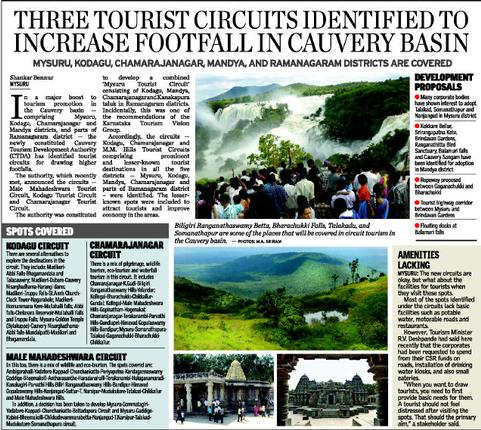
Interesting places in Mysuru, Kodagu, Chamarajanagar and Mandya districts, and parts of Ramanagaram district to be covered
In a major boost to tourism promotion in the Cauvery basin — comprising Mysuru, Kodagu, Chamarajanagar and Mandya districts, and parts of Ramanagaram district — the newly constituted Cauvery Tourism Development Authority (CTDA) has identified tourist circuits for drawing higher footfalls.
The authority, which recently met, announced the circuits — Malai Mahadeshwara Tourist Circuit, Kodagu Tourist Circuit and Chamarajanagar Tourist Circuit.
The authority was constituted to develop a combined ‘Mysuru Tourist Circuit’ consisting of Kodagu, Mandya, Chamarajanagar and Kanakapura taluk in Ramanagaram districts. Incidentally, this was one of the recommendations of the Karnataka Tourism Vision Group.
Accordingly, the circuits — Kodagu, Chamarajanagar and M.M. Hills Tourist Circuits comprising prominent and lesser-known tourist destinations in all the five districts — Mysuru, Kodagu, Mandya, Chamarajanagar and parts of Ramanagaram district – were identified. The lesser-known spots were included to attract tourists and improve economy in the areas.
Kodagu Circuit
There are several alternatives to explore the destinations in the circuit. They include: Madikeri-Abbi Falls-Bhagamandala and Talacauvery; Madikeri-Dubare-Cauvery Nisarghadhama-Harangi dams; Madikeri-Iruppu Falls-St.Ann’s Church-Clock Tower-Nagarahole; Madikeri-Honnammana Kere-Mallahalli falls; Abbi falls-Chelavara Reservoir-Mallahalli falls and Iruppu falls; Mysuru-Golden Temple (Bylakuppe)-Cauvery Nisarghadhama-Abbi falls-Mandalpatti-Madikeri and Bhagamandala.
Chamarajanagar Circuit
There is a mix of pilgrimage, wildlife tourism, eco-tourism and waterfall tourism in this circuit. It includes Chamarajanagar-K.Gudi-Biligiri Ranganathaswamy Hills-Yelandur; Kollegal-Bharachukki-Chikkallur-Gundal; Kollegal-Malai Mahadeshwara Hills-Gopinatham-Hogenakal; Chamarajanagar-Terakanambi-Parvathi Hills-Gundlupet-Himavad Gopalaswamy Hills-Bandipur; Mysuru-Somanathapura-Talakad-Gaganachukki-Bharachukki-Chikkallur.
Malai Mahadeshwara Circuit
In this too, there is a mix of wildlife and eco-tourism. The spots covered are: Ambigarahalli-Yadatore-Kappadi-Chunchankatte-Periyapatna-Kendagannaswamy Gaddige-Bheemakolli-Antharasanthe-Haradanahalli-Terakanambi-Huluganamaradi-Kanakagiri-Parvathi Hills-Biliri Ranganathaswamy Hills-Bandipur-Himavad Gopalaswamy Hills-Nanjangud-Suttur-T. Narsipur-Mudukutore-Talakad-Chikkallur and Mahadeshwara Hills.
In addition, a decision has been taken to develop Mysuru-Gommatagiri-Yadatore-Kappadi-Chunchankatte-Bettadapura Circuit and Mysuru-Gaddige-Kabini-Bheemakolli-Chikkadevammanabetta-Nanjangud-T.Narsipur-Talakad-Mudukutore-Somanathapura circuit.
source: http://www.thehindu.com / The Hindu / Home> News> Cities> Bengaluru / by Shankar Bennur / Mysuru – June 27th, 2015
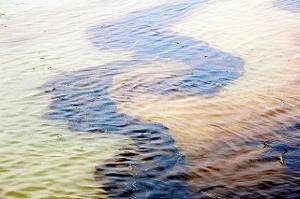
The bacteria extracted grows in a minimal medium supplemented with petroleum crude oil (PCO) in sea water indicating that this is a halophile (organisms that thrive in high salt concentrations) and can be used effectively to clear oil spills in seas.
Mangaluru :
Can bacteria extracted from coffee pulp waste help clear oil spills? It can, says the team from NMAM Institute of Technology, Nitte which has won the Best Project Award for ‘Microbial Bioremediation of Effluents’ at the Joy of Engineering, Design and Innovation (Jed-i) project challenge.
The bacteria extracted grows in a minimal medium supplemented with petroleum crude oil (PCO) in sea water indicating that this is a halophile (organisms that thrive in high salt concentrations) and can be used effectively to clear oil spills in seas.
The team – Aparna K Mohan, Sandhya Kamath, Sanjana Chiplunkar and Shiny Martis B, all BE Biotechnology students of the college- won the challenge beating 19 other finalists which included teams from IITs and NITs. The annual challenge, conducted by Jed-i in partnership with the Indian Institute of Science (IISc), Bengaluru, is designed to identify and showcase the best final year engineering project.
Sanjana, one of the participants, said: “Actually, this was our mini project in the second year. When we got good results we continued with it. The bacteria (Brevibacterium sp. MTCC10313) was previously isolated from coffee pulp ad our seniors had done work and found out that it had caffeine degradation ability. Since it had ability we thought it could tolerate other stressful conditions, then we thought of this.”
Can this be implemented at ground level? “We built a bio-reactor with some waste water and we inoculated the bacteria and got the same results as we got in our lab. This will work in the real world,” she said.
The second place was won by the team of Pradyumna S V, Prateek R, Kunal A Mehta, Mohit Kumar Basu from Reva Institute Of Technology & Management for their project ‘Design, fabrication and Analysis of A Remotely Piloted Vehicle’ while the project ‘Robotic Wrist’ by team of Harish Pawar, Raghuveer Sarma M S, Amit Inamdar, Pooja Ambannavar, Priya Burlabaddi from B V Bhoomaraddi College of Engineering and Technology won a special mention.
source: http://www.timesofindia.indiatimes.com / The Times of India / Home> City> Mangaluru / by Stanley Pinto, TNN / June 25th, 2015
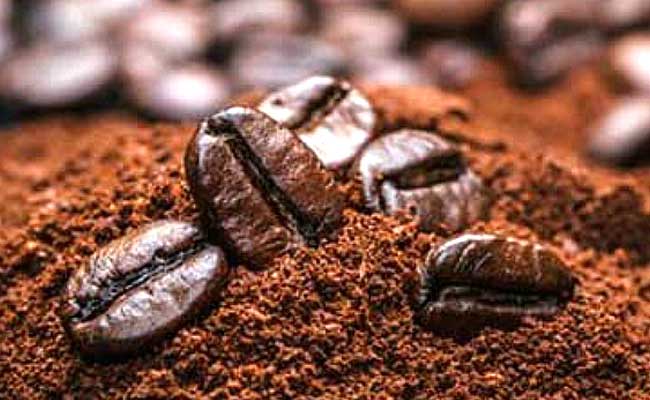
Coffee production in India is expected to touch a new peak of 3,55,600 tonnes this marketing year starting October, as the crop prospects are encouraging due to adequate rains in most growing states, state-run Coffee Board said on Monday.
The country’s total coffee output has reached a record 3,27,000 tonnes in the ongoing 2014-15 coffee year, though slightly lower than the earlier estimate of 3,31,000 tonnes made for the same period, it said in a statement.
The coffee year runs from October to September.
Releasing the initial production estimate for 2015-16, Coffee Board said: “The post blossom crop forecast for the year 2015-16 is placed at 3,55,600 tonnes. This is an increase of 28,600 tonnes over the final crop estimate of 2014-15.”
Of the total, Arabica production is estimated at 1,10,300 tonnes in 2015-16 as against 98,000 tonnes this year, while that of Robusta production is pegged at 2,45,300 tonnes as against 2,29,000 tonnes in the said period, it said.
Arabica and Robusta are the varieties of coffee.
“Overall, the crop prospects of 2015-16 at post-blossom stage are quite encouraging with a promise of highest record crop thanks mainly to the timely and adequate blossom and backing showers in traditional areas and non-traditional areas,” it said in a statement.
According to the Board, much of the production gain is expected to come from Karnataka, where total coffee output is pegged at 2,56,500 tonnes in 2015-16, as against 2,33,230 tonnes in the current year.
“The main reason for increased crop forecast in the state is that all coffee growing areas have received timely and adequate blossom and backing showers during this year.
Additionally, prevalence of good prices encouraged the growers to adopt better husbandry practices which have helped to invigorate production,” it said.
The output in three coffee growing districts Kodagu, Chikmagalur and Hassan is estimated higher at 1,38,075 tonnes, 85,250 tonnes and 33,175 tonnes, respectively, for 2015-16.
Coffee production in Kerala is estimated to increase to 69,800 tonnes in 2015-16 from 67,700 tonnes this year, while the output in Tamil Nadu is likely to improve marginally to 18,800 tonnes from 17,875 tonnes in the said period.
In non-traditional areas, coffee production in Andhra Pradesh is estimated to increase to 9,700 tonnes from 7,425 tonnes, while the output in Odisha is expected to rise to 600 tonnes from 550 tonnes in the said period.
Coffee output in north eastern region is, however, expected to decline marginally to 200 tonnes in 2015-16 from 220 tonnes in 2014-15, the Board added.
Till last week, monsoon rains were 11 per cent more than the average. Monsoon rains are expected to be normal in June but may weaken in the next month, as per the Met department.
India accounts for only 4-5 per cent of the world’s output, but exports 70-80 per cent of its produce. Italy, Russia and Germany are the top three buyers of Indian coffee.
source: http://www.ndtv.com / NDTV / Home> Sections> All India / Press Trust of India / June 23rd, 2015
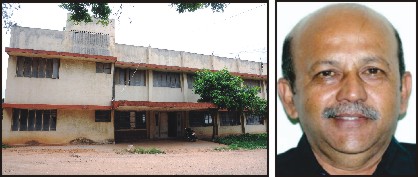
1) The Society’s office building standing on the Society’s land. 2) Bose Devaiah
Mysuru :
The State Government’s decision to auction 5 acres of land belonging to the Mysore Coffee Curing Co-operative Society (MCCCS) on KRS Road, near Gokul Theatre in Gokulam, here, has come as a shock to the coffee growers, who are members of the Society which is under liquidation.
On coming to know about the Government’s decision to auction the land from the press advertisement, the member- coffee growers have decided to launch an agitation soon to save and protect their property, sources said.
In order to discuss the issues, the Kodagu-based Ammathi Vyavasaya Parivartana Sahakara Sangha (MCPCS) President Mookonda Bose Devaiah has convened a meeting on June 19 in Ammathi at 10 am. This meeting will discuss about the land of MCCCS, revival of the defunct MCCCS, election of the President and office-bearers to pursue their objective.
When contacted by SOM, Devaiah said the meeting would pass a resolution and submit the same through Kodagu MLAs to the Government, urging handing over of the MCCCS land to its members. He alleged that some officials and influential representatives of the people have colluded to auction the MCCCS land.
MCCCS established in 1953
Devaiah pointed out that the coffee growers of Kodagu, Hassan and Chikmagalur districts got together in 1953 to establish MCCCS by procuring 10 acres land. MCCCS had been functioning normally for many years and had also constructed several godowns, he added. However, when the sale of coffee was freed from restriction and free-market was allowed, the Society began to incur loss.
The cash-strapped MCCCS which was into coffee marketing, was soon in debts, he said, adding the Society was unable to pay even salary to its employees.
In 1998, the State Government appointed a Liquidator, who sold 3 acres of the 10 acres land belonging to MCCCS and paid the salary dues to the employees, said Devaiah. MCCCS owed money to the Government and hence, 1.13 acre land was earmarked for construction of an Academy by the Government, he added.
Devaiah said, the rental money from the godowns is being deposited in the Liquidator’s account which should belong to the members. It is unfortunate now the Government has unilaterally decided to sell the remaining 5 acres of valuable land.
Several irregularities have been observed in the Government’s decision to auction the MCCCS land, opined Devaiah, saying the Liquidator should have properly ascertained the transactions of the Society before arriving at a decision to auction the land.
Devaiah said the Liquidator has no rights to sell the land of MCCCS and if a situation arises to sell the property, the Liquidator should convene a General Body Meeting of the Society to decide or on the Court’s order. The Society does not owe any money to the Government at present as all dues have been cleared, he said.
Coffee growers have been opposing the unilateral decision of the Government to auction the MCCCS land quite for some time now. But, the Government has not convened a single General Body Meeting of the MCCCS since 1998 and there is no communication about the rental amount collected from godowns. No notice has been issued to the members of the MCCCS to seek their opinion on auctioning the land. The coffee growers have been transporting their coffee products through the rail network available from the Mysuru Railway Station and have plans to construct modern godowns to store coffee products in the MCCCS land, Devaiah told Star of Mysore.
source: http://www.starofmysore.com / Star of Mysore/ Home> General News / Thursday – June 18th, 2015
A proposal of Rs 7.80 crore has been submitted to Cauvery Tourism Development Authority towards the development of tourist spots in the district, Tourism department Assistant Director V Phanish said.
The points in the new proposal are as follows: Rs 10 lakh towards the development of Kalkandur Doddakallu Betta beauty spot in Somvarpet taluk, Rs 50 lakh for the development of Kanive Sri Ramalingeshwara temple near Koodige, Rs 15 for the construction of toilets near Sri Mrithyunjaya temple in Badagakeri village in Virajpet taluk, Rs 25 lakh for the development of Sri Nanjundeshwara Gadduge and Sri Kshetra Kallumutt in Doddakodli in Somvarpet taluk, Rs 25 lakh for the development of Hattihole falls and Rs 50 lakh for the development of tourist facilities, Rs 75 lakh to development the catchment area of Chiklihole reservoir as a tourist spot, Rs 50 lakh to provide parking, toilets and drinking water facilities at Talacauvery,Rs 25 lakh for providing basic facilities near Chelavara falls in Virajpet taluk, Rs 20 lakh to provide flood light and basic facilities at Sri Omkareshwara temple, Rs one crore to provide basic facilities at Tadiyandmol Kote Betta and Pushpagiri Betta and to develop adventure tourism, Rs 20 lakh for the development of Keerthi stream in Thomar in Kedamullur village in Virajpet taluk, Rs 25 lakh for the development of beauty spot at Bhattada Rashi Betta near Somvarpet, Rs 25 lakh for the development of Chiklihole falls, landscaping, children’s park, coffee kiosk, toilet and drinking water facilities and Rs two crore for the development of three km road leading to Mandalpatti, he said.
Tourist taxis
V Phanish said tourist taxis have been provided, along with Rs two lakh, to 38 youth belonging to scheduled caste and 18 youth belonging to scheduled tribes so far, under SCTSP scheme.
He added that efforts are on to provide Wi-fi facility at tourist spots, multilevel parking facility in Madikeri city and installation of information touch screen at tourist spots.
source: http://www.deccanherald.com / Deccan Herald / Home> District / Madikeri – DHNS / June 19th, 2015
More than a decade after homestays became a part of Kodagu’s tourism circuit, the state government is looking at a slice of the pie by introducing a steep fee and regulating them.
This is a direct fallout of the increasing tourist flow to the district, which has led to the brisk growth of homestays. Tourism department officials said the government decided to issue guidelines and regulate them not just for revenue, but also to curtail illegal activities and fleecing of tourists in some illegal holiday homes. Not long ago, a homestay owner too was attacked and robbed near Gonikoppal in Kodagu by a gang posing as tourists.
Welcoming the new guidelines, Shashi Monappa, a homestay owner, said the de partment of tourism should also undertake a survey to identify homestays and bring everyone under its ambit in the interest of tourism in Kodagu.
While the average number of tourists visiting Kodagu hovered around 4-5 lakh a year in 2005, it has now touched around 25 lakh a year. “Of these, at least 70% opt for homestays,” a tourism department official in Kodagu said.
Tourists have little choice because the Karnataka government has been not able to match the unprecedented footfalls in terms of infrastructural facilities and there aren’t many budget hotels available in Madikeri to meet the growing rush. So homestays have come to the rescue of people looking for budget accommodation.
While 249 homestays are registered, another 300 are waiting for registration.”Besides, there are more than 1,500 unregistered homestays doing good business,” officials added. They have been classified as `silver’ and `gold’ depending on the ambience, type of facilities and range of services offered.
Tata Coffee Ltd, the largest coffee plantation company in Asia, has not remained immune to the business opportunity . It has already converted a few mansions under its ownership into holiday homes. The expansion of homestays in Kodagu has been attributed to the progressively declin ing returns from coffee cultivation, which has nudged many marginal coffee estate owners to promote homestays that need minimum investment.
Many traditional coffee growers who own traditional bungalows, especially those built in the colonial style of architecture, have transformed it into an affordable hospitality zone.
Shashi Monappa of Maithili Home Comforts at Madikeri said the concept of homestays gained momentum in 2005.
Asha Sagar, who started Nest 15 years ago at Gonikoppal, said such homes offer tourists an affordable choice. While a oneroom facility in a decent hotel in Madikeri costs Rs 1,500-3,000 for 24 hours, homestays offer a two-room, four-bed family facility , including breakfast, for Rs 1500-5,000 per day.
Interestingly , there is no dull season for the homestay business in Kodagu. “Even during peak monsoon, people love to spend time here and enjoy nature’s bounty . But tourism is more vibrant during weekends, holidays and long vacations,” said Karumbaiah of Ajantha Homestay at Madikeri.
However, those in the business are not amused with the new tourism guidelines.”It’s wrong to say we have year-long business. There are certain seasons and each season doesn’t last more than a few weeks,” said Ajith Devaiah, a home stay owner in Pollibetta.
TIMES VIEW
With homestays turning into the preferred option for lakhs of tourists in Kodagu, it is high time the government stepped in and regulated the business. Rampant commercialization has led to peak-season fleecing and shortchanging of tourists.In such a scenario, rules should rein in such informal setups which offer a perfect solution between a home and a resort. The tourism department should ensure safety measures and records, but not misuse the regulations to exploit this budding sector. Regulation will work to the advantage of all stakeholders: the tourist, the homestay operator and the government.
source: http://www.timesofindia.indiatimes.com / The Times of India / Home> City> Bengaluru> Namma Metro / by Manu Aiyappa, TNN / June 10th, 2015
Mumbai-based designer Chondamma Cariappa
Sole Sisters has launched its latest collection in khadi and kolhapuri at Amethyst Room. The one-year-old brand, founded by Mumbai-based Chondamma Cariappa, is showcasing its latest line that combines earth-friendly khadi and leather, and the contemporary versions of the traditional kolhapuris.
Talking to CE, a self-taught shoe designer, Chondamma says, “The collection comprises khadi in its earth-friendly avatar, combined with leather. The line will also offer a contemporary twist to Kolhapuris that are often seen in a traditional form,” she says.
Sole Sisters, which won the Grazia Young Fashion Awards 2015, was launched more than a year ago by Chondamma, who maintained a blog with pictures about different kinds of footwear. The blog later grew as a community with a large network of women across boundaries sharing their pictures of footwear, with the brand and price details.
The advertising professional eventually began her own footwear line, the first collection in ikat. The debut collection turned out to be a huge hit and sold fast among a range of consumers.
Chondamma says that she doesn’t have customers who belong to a specific age-group. “I have had youngsters picking up the footwear and even women in their 40s going for the same,” she says.
Sole Sisters is showcasing its latest range at The Amethyst Room, New #106, Old #79, Chamiers Road. The collection is priced from Rs 3000.The exhibition will continue till June 2.
source: http://www.newindianexpress.com / The New Indian Express / Home> Cities> Chennai / by Express Features / May 28th, 2015
The Corporation Bank recently opened its Self Employment Training Institute (COBSETI) in Kudige village of Kodagu district.
The institute provides skill-based training and two-year post-training support to unemployed youth.
Bank Chairman and Managing Director S.R. Bansal inaugurated the institute in the presence of MLAs K.G. Bopaiah and Appachu Ranjan.
The institute has come up on 0.85 acres provided by the State government. The bank has invested Rs. 2.22 crore on the building and other infrastructure.
The youth will also be provided free boarding and lodging facilities during the training period.
The trainees are provided with post training “hand-holding” support for a period of two years, so as to provide requisite guidance and facilitation towards enabling them to settle independently. Speaking on the occasion, Mr. Bansal remembered that Corporation Bank was the first scheduled bank to commence commercial banking operations in Kodagu district.
The bank would further expand its presence in the district, which is rich in natural resources, he said.
The institute aims not only to help resolve unemployment, but also pull down the migration of youth to urban areas in search of livelihood, Mr. Bansal said.
The institute will offer soft skills training to the youth to take up self-employment or set up their own business unit.
The two legislators urged the local youth to make the best use of the institute and lauded the bank’s service in the district.
The bank has invested Rs. 2.22 cr. in infrastructure
source: htttp://www.thehindu.com / The Hindu / Home> Cities> Mangaluru / by Special Correspondent / Mangaluru – May 25th, 2015
WELCOME. If you like what you see "SUBSCRIBE via EMAIL" to receive FREE regular UPDATES.
Read More »