Category Archives: Business & Economy

‘Will Protect Plantations in Kodagu’

Revenue Minister V Srinivasa Prasad said he would visit Kodagu district to assess the misuse of sections 79(a) and (b) of the Karnataka Land Reforms Act.

The sale of plantation land to non-agriculturists to set up resorts and cottages would also be looked into, he said.

Replying to a calling attention motion from Janata Dal(S) floor leader M C Nanaiah in the Legislative Council on Thursday, the Minister said the government was committed to the protection of plantation land in Kodagu.

Nanaiah said plantations where coffee, cardamom and rubber are grown had been exempted from the purview of the Act.

“Revenue officials, deeming these plantations to be non-agricultural land, have been allowing its sale. According to the rules, such lands cannot be sold to non-agriculturists. The buyers plant saplings of coffee, banana and cardamom to show that they are using the land for agriculture and construct resorts,” Nanaiah said.

6,000 Acres Sold

The floor leader said the going price of an acre of plantation land was `40 lakh. Already, over 6,000 acres has been sold to non-agriculturists in Kodagu district and 3,000 applications to register properties were pending before the Revenue Department, Nanaiah alleged.

“The Kodavas are becoming aliens in their own homeland. Forest cover is being eroded due to mushrooming of resorts. There is danger in store if plantation land in catchment areas of the Cauvery is sold to non-agriculturists,” Nanaiah warned.Promise of ActionResponding to Nanaiah’s statements, the Minister declared that those revenue officials who were allegedly hand-in-glove with land sharks and fixing land deals would be dealt with an iron hand.

source: http://www.newindianexpress.com / The New Indian Express / Home> States> Karnataka / by Express News Service – Bangalore / February 21st, 2014

Indian coffee prices gain at weekly auction

Feb 21 (Reuters):

Coffee prices in India edged higher at a weekly auction due to strong overseas leads and robust export demand for the beans.

* Arabica Plantation PB grade price was higher by 1,925 rupees per 50 kg, A and AA grade prices were higher by 1,860- 1,990 per 50 kg, B grade price was higher by 1,970 rupees per 50 kg and C grade price rose by 1,500 rupees per 50 kg compared to the last sale date.

* Arabica Coffee price in New York for March was higher 30.70 cents per pound. Robusta coffee price in London for March was higher by $160 per tonne in the week to Jan. 20.

* About 71,000 kg of coffee from the total 186,897 kg on offer was sold.

Arabica accounted for 111,442 kg, while robusta made up 75,455 kg.* Coffee output in India may fall 10.23 percent to 311,500 tonnes in the crop year started October 2013 due to untimely rains in southern Karnataka state, the major producer, the government-run Coffee Board said in its post-monsoon crop forecast.

===============================

Price range per 50 kgs

New Season (2013-14 crop)
================================
Arabica Plantation

PB 12,
200A 12,
500-12,
600AA 12,
600B 12,
150-12,
200C 10,
250-10,
300BBB 7,
500-8,160

source: http://www.in.reuters.com / Home> Mumbai / Reporting by Siddesh Mayenkar , Editing by Prateek Chatterjee / February 21st, 2014

FARMER’S NOTEBOOK : A package of practices for profitable coffee, black pepper cultivation

EMPOWERED: Attending one of the seminars organised by IISR’s Cardamom Research Centre (CRC) at Appangala in Kodagu on spices cultivation was a turning point in Mrs. Prema Ganesh’s life./ Special Arrangement / The Hindu

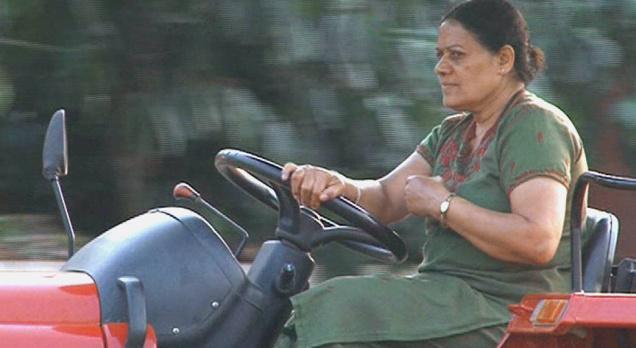
Agriculture is no more a male dominated sector, as many women have shown that they are second to none in this field. “Women can be successful agriculturists, if they are supported with timely technological interventions by scientists and encouragement from family”, says Dr. M. Anandaraj, Director of the Indian Institute of Spices Research (IISR), Kozhikode.
Mrs. Prema Ganesh from Maragodu village, Kodagu District, Karnataka is a role model for other women in this field.

Several problems

When she ventured to take over her coffee and black pepper plantation in 10 hectares a decade ago, several problems started surfacing, especially the low productivity of crops, making agriculture a non profitable enterprise.Keen to overcome them, she happened to attend one of the seminars organised by IISR’s Cardamom Research Centre (CRC) at Appangala in Kodagu on spices cultivation.“It was a turning point in my life,” recollects Ms Ganesh.

The scientists at CRC assured full technological support to her ventures. A team from CRC visited her plantation and identified some major production constraints such as high plant density per unit area, prevalence of diseases and pests, problems like spike shedding in black pepper etc.They provided a complete package of practices to be followed including thinning of excess plant growth to maintain optimum spacing among them, adoption of basin management techniques like application of organic manures, micronutrient application, earthing up and mulching for various crops.“In the case of black pepper, special recommendations like basin irrigation at the rate of 40-50 litres of water at 4-5 times per vine at an interval of 5-7 days during May-June in case of delayed monsoon, regulation of shade by pruning the support trees to provide minimum 50-60 per cent exposure to sunlight were suggested,” says Dr. S J Ankegowda, Head, CRC, AppangalaFor diseases and pests, spraying of two rounds of Bordeaux during June and August/September and one round of drenching with 0.2 per cent Copper Oxy Chloride (COC), and need based application of insecticides were also recommended.Trees like balangi, palawan and silver oak were planted at a spacing of 15×15 feet (random) to provide adequate shade to the crops.In addition she readied several rainwater harvesting pits of 10 feet length, 1.5 feet width and 1.5 feet depth between the coffee plants.These pits also serve as compost pits where all the farm wastes are dumped for two years to decompose after which they are removed and applied as organic manure to coffee and pepper, substantially reducing the cost on purchase of farm yard manure.

Composed husks

Ms. Ganesh makes use of composed coffee cherry husk, a by-product of coffee pulping, after mixing with cow dung as an additional source of organic manure.Annually she spends Rs. 35,000 per acre as operational cost and gets about Rs. 25 lakhs a year as net income from both black pepper and coffee. Reducing manual labour was an important initiative by her.“First thing they did was to lay motorable roads inside the plantation. This has reduced the strain in carrying the harvested produce in bags by labourers.Before the roads were laid, a labourer would take about 30 minutes to carry the bag to the main road for loading it on the lorries.“The physical strain was quite heavy. But now this has considerably reduced since the vehicles can come into the plantation,” says Dr. Ankegowda.

Underground irrigation

Another initiative was the underground pipe-lining for irrigation. Today the entire plantation has well connected irrigation line ready for irrigation all through the year.For more details readers can contact Mrs. Prema Ganesh, Prema Estate, Maragodu Village, Madikeri, Kodagu district- 571 201, Ph: 08272-241555, or Dr. S. J. Ankegowda, Head, IISR Cardamom Research Centre, Appangala, Madikeri-571201, Karnataka, mobile: 09663069241 and phone: 08272-245451.

source: http://www.thehindu.com / The Hindu / Home> News> S & T> Science / Farmers Notebook> Karnataka / by M.J.Prabu / February 26th, 2014

Karnataka government to allocate Rs 20 crore as CDRP to coffee growers

The Karnataka government has earmarked a sum of Rs 20 crore to facilitate the implementation of a debt relief package for coffee growers (CDRP), and will work closely with the Centre and the Coffee Board of India.

At the inaugural session of the India International Coffee Festival’s 2014 essay, the southern state’s chief minister Siddaramaiah said that the Centre implemented CDRP 2010 through the coffee board to help the indebted coffee growers.

“As a part of the coffee debt relief package, the state government extended financial assistance to the coffee growers with regard to the loans that were offered by the cooperative banks,” he stated.

“Further, on the commerce ministry’s request, the state government waived off the interest and penalty dues payable by the coffee board, which amounted to Rs 230.47 crore,” Siddaramaiah added.

“India is an important player in the global coffee market. Presently, it is the sixth-largest producer and the fifth-largest exporter of coffee in the world. Karnataka occupies a prime position in India’s coffee production. The area under coffee cultivation is 55%, and it contributes to 72% of the national production,” he informed.

Siddaramaiah said the state government’s focus was on ensuring the well-being of the coffee growers. “There is a serious impact of the climate change on coffee cultivation and addressing this issue is a daunting task,” he stated.

“Going by the change in the rainfall pattern in the recent years, the issue is going to assume a still greater importance in the coming years. During the current period itself, the state has seen an unpredictable and erratic monsoon,” the chief minister added.

“At the coffee blossom stage, the crop production was exected to be high, but it was low owing to the hot and harsh climate, which lasted two months and was followed by incessant rainfall,” he said.

“In order to mitigate the crisis, the government’s rainfall insurance scheme for coffee growers a few years ago has seen us bear 25% of the premium on behalf of the small growers,” Siddaramaiah added.

“The support from our end has been over and above the Centre’s share of 50%. The growers must realise the risk of climate change and subscribe to the protection against the vagaries of rainfall,” he said.

“There is also the issue of pollution control. Coffee pulping activity has been categorised as red by Karnataka’s norms and orange category by the Central Pollution Control Board. All efforts have made to address these issues,” the chief minister added.

source: http://www.fnbnews.com / FnBnews.com / Home> Wide View> Top News / by Nandita Vijay, Bengaluru / Thursday – January 30th, 2014

K J George promises development of Kodagu

District-in-Charge Minister K J George has said that he will make a honest effort to take up development works in the district. Speaking to mediapersons, he said that with the increase in crimes in Kushalnagar, a circular has been issued to set up Kushalnagar rural police station.
GeorgeKF20feb2014
He said that district administration has sought additional Rs 2 crore to take up 63 works related to drinking water, to mitigate shortage of water in villages. “I have appraised the CM to sanction Rs 100 crore special package to maintain roads in the district. Six kilometre road covering Kedaka-Horoor-Bhoothanakad will be re asphalted at a cost of Rs 50 lakh. Virajpet-Madikeri and Somwarpet-Madikeri road will be concreted,” he added.

“The government has sanctioned Rs eight crore to take up work on Balele-Nittur bridge. Rs 10 crore to construct a bridge across Lakshmanatheertha on Harihara-Balyamandoor. A sum of Rs 10 crore will be provided for the development of Jenukuruba and tribal colonies in the district. As form 9 and 11 while registering a property has been causing inconvenience, the Minister has been asked to drop the proposal,” George said.

He said that Revenue Minister has been asked to appoint a Special Tahsildar to Kushalnagar. Measures will be taken to lay 400 metre synthetic track and synthetic football ground in Madikeri. “The district administration has sought funds for the development of Gaddige park, Mallalli waterfalls and Rajaseat.”

Rules to be relaxed

In a separate meeting with the tribals, the minister said rules would be relaxed for tribal people in recruitment to police force. “Tribals and forest dwellers are leading a pathetic condition even after 67 years of independence. Rules regarding physical standards would be relaxed.”

The Minister said that he will discuss with Forest Minister on wages for mahouts working in Dubare forest. “Traditional dwellers should not be cleared. The department should come forward to provide basic facilities for the tribals residing on the periphery of the forest,” he said. He directed the officials to initiate measures to distribute 270 individual claims under Forest Rights Act.

Kudiyara Muthappa said that tribals who have been residing inside the forest are not ready to come to the mainstream of the society. Those tribals who have passed tenth standard should be provided job opportunity in police department.” Tribal leader J P Raju said “the government should purchase paisari land and distribute it among the poor.”
MLC T John, IGP Ramachandra Rao, Zilla Panchayat Chief Executive Officer P I Srividya, Deputy Commissioner Anurag Tiiwari among others were present.

source: http://www.deccanherald.com / Deccan Herald / Home> District / Madikeri – DHNS, February 11th, 2014

Bayar’s Coffee bags award

Bangalore :

Bayar’s Coffee, a gourmet coffee roaster, has bagged the Best Roasters Gold Award-2014 awarded by Coffee Board of India and India Coffee Trust.

“This award is in recognition of Bayer’s Coffee adopting food safety standards, implementation of new technology and use of high quality coffee beans in its blends,” said R Srikanth Rao, Director, Bayar’s Coffee.

source: http://www.thehindubusinessline.com / Business Line / Home> Companies / The Hindu Bureau / Bangalore – February 05th, 2014

Coffee exports up 38% in Jan on strong global prices

Country ships 26,161 tonnes in Jan 2014, versus 18,979 tonnes a year ago

The country’s coffee exports rose 38 per cent to 26,161 tonnes in January on account of firm global prices, according to the Coffee Board of India.

The country had shipped 18,979 tonnes in the same month of the previous year, the data showed.

In value terms, exports rose to Rs 393.70 crore in January this year from Rs 304.70 crore in the year-ago period, even as unit realisation was down at Rs 1,50,496 per tonne.

“Exports remained high as global prices improved and have remained stable since last one month. International prices have gone up on expectation of lower crop in Brazil,” Board’s Chairman Jawaid Akhtar told PTI.

Currently, harvesting is underway in the country and normally small growers try to sell off their produce. This is also one of the key reasons for higher exports, he said.

Akhtar, who also heads International Coffee Organisation (ICO), said the production forecast for Brazil, the world’s largest coffee producer, has been revised downward for this year to below 48 million bags from earlier 58 million bags.

With this development, arabica prices in the global market rose to around 130 cents per pound now from 110 cents per pound a month back, he added.

According to the latest Board data, shipment of robusta coffee rose over 90 per cent to 10,101 tonnes in January this year, from 5,306 tonnes a year ago.

Export of arabica coffee were up over 46 per cent to 9,200 tonnes from 6,290 tonnes in the review period. But export of instant coffee remained down at 6,838 tonnes as against 7,356 tonnes in the same period.

Maximum coffee was exported to Italy (5,675 tonnes), followed by Germany (2,621 tonnes), Belgium (2,109 tonnes), Jordan (1,674 tonnes), Turkey (1,646 tonnes) and Russian Federation (1,309 tonnes) in January 2014, the data showed.

During the April-January period of this fiscal, the country’s total coffee exports increased to 2,41,956 tonnes as against 2,25,570 tonnes in the year-ago period.

Currently, arabica harvesting is almost over in the country, while robusta picking is continuing.

The Board has pegged total output at 3,11,500 tonnes for 2013-14 crop year (October-September), down by 2.1 per cent from 3,18,200 tonnes produced in 2012-13.

source: http://www.business-standard.com / Business Standard / Home> Economy & Policy> News / by Press Trust of India / New Delhi – February 03rd, 2014

Allanasons is the best exporter of green coffee

Bangalore :
Allanasons Ltd has won the best green coffee exporter award instituted by the Coffee Board. The company bagged the award for exporting the highest volume of coffee in 2012-13.

NKG Jayanti Coffee was second, followed by Amalgamated Bean Coffee Trading Company Ltd. At the IICF, Coffee Board honoured individuals and institutions for setting high standards and benchmarks in the world of coffee.

The following are the other category winners: In the speciality coffee segment – Aspinwall & Company topped the list, followed by Allanasons Ltd and NKG Jayanti Coffee.

Instant coffee category: CCL Products, followed by Tata Coffee and Nestle India. Roasted coffee beans and ground coffee: Jay Keshav Exports, Rams Exim and Fresh and Honest Cafe.

NKG Jayanti Coffee won the award for the best exporter to Europe. The company bagged the award for exporting the maximum amount of coffee to Europe in 2012-13. Amalgamated Bean Coffee Trading Company Ltd and Allanasons Ltd came second and third.

Following are the best exporters of coffee to the different regions: US & Canada: CCL Products, Allanasons Ltd and Mudremane Coffee Curers.

Russia &CIS: CCL Products, Tata Coffee and Nestle India. West Asia and North Africa (Mena): Allanasons Ltd, Nestle India and Bola Surendra Kamath & Sons. Far-East: Sri Narasu’s Coffee Company, Vayhan Coffee and Tata Coffee.

source: http://www.thehindubusinessline.com / Business Line / Home> Companies / by The Hindu Bureau / Bangalore – January 24th, 2014

Coffee fest returns to Bangalore with aroma

As the country’s coffee capital, Bangalore is, after a four-year hiatus, hosting again the India International Coffee Festival (IICF-2014) from Thursday to spread the brew’s aroma.

Held biennially since 2002 by stakeholders, including growers, roasters, traders and exporters with state support, the previous fourth edition of the three-day fest was held in New Delhi in January 2012 to create greater awareness and promote the beverage in non-traditional areas where tea and other soft drinks are consumed more.

“Though about 70 percent of the coffee produced is exported, we are focused on promoting consumption across the country, as the beverage is traditionally sipped more in south India,” Coffee Board chairman Jawaid Akthar told IANS ahead of the trade event.

Growing popularity of cafe chains like Barista, Coasta Coffee, Coffee Day, Dunkin Donuts, Krispy Kreme, Lavazza and Starbucks across metros and cities has made the brew a fashionable drink among the youth, constituting 45 percent of the 1.2-billion people.

“Coffee consumption has been growing five-six percent annually since 2005 after being stagnant for a long time. Bean consumption increased to 115,000 tonnes in 2011 from 50,000 tonnes in 2005 on growth of value-added products and instant coffee,” Akhtar recalled.

Unlike tea, where 80 percent of its production is consumed across the country, per capita consumption of coffee in India is still 90gm as against 12kg in Finland, highest in the world, 6-9kg in Europe, South America and North America, and 4-5kg in rest of the world.

“Though consumption nearly doubled over the last decade, India lags far behind developed countries and even coffee-producing nations in South America due to various factors, including production being limited traditionally to southern states of Karnataka, Kerala and Tamil Nadu,” Akthar pointed out.

Steady economic growth, increasing urbanisation and growing consumer class in the new workforce have, however, redefined drinking habits and made coffee a preferred choice for the refreshing change it brings in a variety of flavours.

“A growing number of youth taking to coffee in metros and cities across the country is an encouraging sign for us. As coffee culture spreads, the trend is turning into a lifestyle, thanks to the advantage of demographic dividend,” Coffee Day president Venu Madhav told IANS here.

Buoyed by the overwhelming response to the flagship fest over the past decade, the Coffee Board of the union commerce ministry and India Coffee Trust of the industry have been able to attract about 60 overseas and domestic firms, over 1,000 delegates and 40 global experts to participate in the event’s fifth edition and showcase products and technologies.

“India is at an inflection point in developing its coffee market. With newer formats, services and new entrants, we see people’s familiarity and affinity with the brew transforming,” Hindustan Unilever executive director Geetu Verma noted on the occasion.

With a view to doubling the per capita consumption to 180gm by this decade, the event will focus on the ‘changing face of coffee’ and experts will deliberate on production and marketing trends, while other stakeholders will hold skill-building workshops on processing, roasting and brewing.

“We have undertaken the mission to develop and propel the Indian coffee sector as a global player and increase its footprint across the country. Towards that end, the fest serves as an ideal platform to train and orient new entrants wanting to be part of the sector,” India Coffee Trust president and leading grower Anil Kumar Bhandari told IANS.

The fest is expected to attract about 10,000 visitors from India and abroad, who will be treated to a variety of flavours ranging from black coffee, cold coffee, iced coffee to spice coffee by global retail chains, brands and instant makers.

“As part of promoting the brew and creating awareness of its health benefits, a coffee quiz I being held first time in the fest. About 106,000 people have participated from across the country in the preliminary rounds to qualify for the quiz final at the fest,” Bhandari said.

Special awards will be given as recognition to best coffees, baristas (the persons who serve coffee in bars), curers, roasters and tasters during the fest.

source: http://www.business-standard.com / Business Standard / Home> News_IANS> Business-Economy / by IANS / Bangalore – January 22nd, 2014

Coffee Festival back after four years

INDIA COFFEEKF04feb2014
Bangalore:

The fifth edition of the India International Coffee Festival (IICF 2014) is back in Bangalore after a hiatus of four years, after making its mark felt in New Delhi, a non-traditional coffee market in 2012.

Organised by the India Coffee Trust with the support of the Coffee Board of India, the theme of this biennial conference “The changing face of coffee” will be held at The Lalit Ashok from January 21-25 is reflective of the increasing popularity of the retail coffee culture spreading across the country.

Visitors to IICF 2014 will be treated to an exposition of the latest technologies and products by 60 leading coffee companies both national and international, including instant coffee makers of India, café chains and leading product/farm equipment companies.

“Per capita (per person, per annum) coffee consumption in India is just 90 gm compared to 4-5 kg in developed markets like the US and Europe, and is the highest, at 12 kg in Finland. While the coffee industry in India is doing very well with exports going up by 33 per cent in the last quarter of 2013 compared to the previous year, we are also focused on promoting coffee consumption within the country, which is currently at 1.2 lakh tonnes per annum. I hope the IICF attracts more investments in the Indian Coffee Industry,” said Jawaid Akhtar, Chairman Coffee Board of India.

Forty-one global experts from the industry, including Roberio Oliveira Silva, former Director, International Coffee Organisation, Deverl Maserang, Ex-Vice President, Starbucks, Prof Jaakko Tuomilehto, University of Helsinki, and some 900 delegates are expected to attend.

The five-day event will host workshops on the first two days on themes like brewing coffee by espresso method, advanced roasting skills, brewing filter coffee etc. Conference sessions on marketing and production trends, a workshop on coffee entrepreneurship, coffee awards to recognise best exporters, roasters, curers, best coffees and best Baristas will also be presented. For the first time, a national Coffee Quiz, which attracted over one lakh participants from across the country, will have the six finalists competing for the award.

source: http://www.deccanchronicle.com / Deccan Chronicle / Home> News> Current Affairs / DC / January 21st, 2014