Indian Hotels Company (IHCL), India’s largest hospitality company, today announced the opening of Gateway Coorg, a serene retreat nestled in the heart of Karnataka’s coffee country.
Enveloped by lush rainforests and scenic trails, Gateway Coorg features 55 spacious rooms and suites that reflect the tranquillity of their natural surroundings. Guests can indulge in regional and global flavours at Ghat’s Café, unwind at Coorg Cellar, or sip artisanal blends at the Coffee Lounge. The resort is a haven for food enthusiasts, with a menu that showcases the bold flavours of traditional Kodava cuisine alongside contemporary favourites. Wellness and recreation are integral to the experience with a spa, outdoor swimming pool, and a fully equipped fitness centre.
Often referred to as the ‘Scotland of India,’ Coorg’s rolling hills and coffee estates offer a beautiful backdrop for exploration.
With the addition of this hotel, IHCL will have 26 hotels in Karnataka including 13 under development.
This summer was bitter for many homes in Kodagu. Their wells almost dried up before the monsoon broke. But 47-year-old Suraj Ajjikuttira in south Kodagu didn’t have to worry.
His recharge well, probably the first one in hilly Kodagu, ensured that his open well had ample water during the dry season.
Buoyed by his success, Ajjikuttira made it his mission to spread his knowledge of harvesting rain through videos, workshops and meetings. People can even phone and ask him. As a result, awareness is spreading and the recharge well is increasing in popularity. Kodagu now has at least 40 to 50 recharge wells.
Ajjikuttira’s interest in rainwater harvesting began two decades ago, when his 50-foot well, dug in 1979, started going dry. By 2002 he thought he had no option but to dig a bore well for drinking water. Then, fortuitously, he participated in a seminar on rainwater harvesting in Mysore. He picked up the nuances of groundwater recharge very quickly.
Ajjikuttira went home determined to apply his newly acquired knowledge by recharging his bore well. He dug a 10-foot-deep mini well around it. After filling up the mini well with aggregate matter, he diverted run-off from the nearby area into his bore well. The next year itself, the water level in his bore well rose considerably.
“That convinced me about the efficacy of groundwater recharge,” reminisces Ajjikuttira. He doubled his efforts and started a serious attempt to catch all the rainwater he could on his estate. He turned his attention to rainwater falling on his roof, on the vast frontage of his home and the adjoining coffee-drying yard or ‘kana’.
Earlier, all this water used to disappear into a drain. Ajjikuttira now ensured that all run-off got collected at one spot and then flowed out. A leaf separator was attached at the exit point to prevent leaves from clogging this stream of water.
The usual custom is to make a rain pit for such run-off to percolate. But, in this case, the water that was flowing was excessive. After racking his brains, Ajjikuttira dug a recharge well, five feet in diameter, to catch this water. He placed concrete rings along the inner walls of the well 12 feet deep, to prevent its walls from collapsing. The diameter was then reduced. Another six to eight feet were dug and filled with stones to firm up the second stage of the recharge well.
Suraj Ajjikuttira near a large tank which now collects rainwater
Consequently, rainwater collected from about 1,500 square feet of space goes straight into Ajjikuttira’s recharge well and is fully absorbed there. “At the most we get one inch of rain per day. I have designed the recharge well in such a way that even this one inch of water is captured,” he explains. The water that is percolating is estimated to be around two lakh litres.
Ajjikuttira’s well was 42 feet deep when his father got it dug in 1979. In 1994, when the well dried up, it was deepened by another eight feet and eight rings were fixed on its walls. After that the well never dried up. Even during the 2016 drought, Ajjikuttira’s well had eight feet of water. Last year, when wells dried up in Kodagu, Ajjikuttira’s well had 11 feet of water.
The recharge well is a new concept invented in Chennai in the 1990s. Later, the idea was embraced by residents of Bengaluru. The city now probably has around 50,000 recharge wells. The sole purpose of the recharge well is to recharge groundwater. The well can be very small in diameter, as low as three feet.
COFFEE AND RAIN
Kodagu district’s main crop is coffee. Coffee plants are rain-fed. The first showers or ‘blossom showers’, received in February and March, are very important for coffee farmers. If it doesn’t rain at this time, farmers have to pump up water from tanks and sprinkle or irrigate the plants.
After the blossom showers are over, coffee plants require a second spell of irrigation within 15 to 20 days. These showers are called ‘back-up’ showers. If the rains fail to arrive then farmers who still have water do a second round of sprinkling.
The water in Ajjikuttira’s tank was hardly sufficient for even one round of irrigation. About 200 metres away from his tank is a huge seven-acre tank called Katibetta Kere. This water body belongs to the revenue department. It has a catchment of around 500 acres. But the tank’s bund had breached in one area and it wasn’t retaining water. Ajjikuttira built a check dam with sand bags in the catchment area so that the tank would retain water and help his own tank absorb some water.
Katibetta Kere is at a higher elevation than Ajjikuttira’s irrigation tank. Subsequently, the department built a concrete check dam for Katibetta Kere. Recalls a happy Ajjikuttira, “Since then, this tank has enhanced water availability in my own tank. Now, even if we do three rounds of irrigation, the tank still has water.”
Rainfall figures differ across Kodagu district. Ajjikuttira’s place receives 54 inches — coffee planters still measure rain in inches — whereas not-so-distant Virajapet gets 70 inches. Wetlands here are dwindling and so is forest cover. Due to various reasons, water availability is worsening in the district. Unfortunately, awareness about rainwater harvesting and groundwater recharge is abysmally low.
Once Ajjikuttira succeeded in augmenting water availability in his estate, he started spreading the idea of water harvesting. In the last 15 years, he has conducted more than 300 awareness sessions on rainwater harvesting in schools, government departments, workshops for citizens and so on.
“In most Kodagu estates, the house is located at a higher level. In the past, the yard for drying coffee beans and paddy used to be built near the paddy fields in a lower area. But due to security reasons the yard is now constructed close to the house. So the typical house would have a large area in front with a drying yard close to it. This entire stretch is either built with concrete or lined with interlocking tiles. So a huge amount of clean water flows on this surface,” says Ajjikuttira.
“We need a structure that can hold this run-off and make it percolate fast. I experimented with the recharge well. Although it is expensive, it does the job efficiently.”
Ajjikuttira is approached by people on the phone or in person for guidance in harvesting rainwater. “If we make arrangements to catch all the run-off from the front area and the drying yard, summer rains alone will ensure the well doesn’t dry up,” he says confidently. A recharge well costs approximately Rs 60,000-70,000.
Ajjikuttira carries out a simple test to check whether the bore well can be artificially recharged. A few barrels of water are kept nearby and poured into the bore well one after another. If the bore well overflows, it indicates that it won’t absorb water and recharge. The idea is then abandoned.
SPREADING AWARENESS
Ajjikuttira has put together a three-part video to spread knowledge on rainwater harvesting in Kodagu. Uploaded on YouTube, it tells people how to use rainwater directly, how to recharge defunct and working bore wells and how to use a recharge well for groundwater recharge.
After taking advice from Ajjikuttira, Tej Thammaiah Ajjikuttira constructed a recharge well 10 feet in diameter and 22 feet deep last year. The well is a big one because Thammaiah’s bungalow, front yard and ‘kana’ spread to about a hectare. The well has cost him Rs 130,000.
Thammaiah’s open well, 60 feet deep, didn’t dry up completely. But by the end of summer it would have only four to five feet of water. Last summer it had 30 feet of water because he followed in Ajjikuttira’s footsteps.
Rakshith of Sulagodu is another estate owner who sought Ajjikuttira’s advice. He has an open well which is 100 feet deep. It used to dry up in summer and he found it difficult even to provide water to his labourers. He built a recharge well which cost him Rs 70,000. Two years later his water woes are over.
“Now I have water up to 25 feet,” he says. “By the end of summer, water levels recede by seven to eight feet. I don’t have to worry about drinking water for many decades to come.”
Soil in Kodagu collapses very easily. Ajjikuttira has noticed that many people dig a recharge pit quite close to the well. “This is highly risky. Many wells have collapsed because pits were dug very close to them. It’s always better to locate the pits about 15 or 20 feet away,” he warns.
He points out that each estate is endowed with expansive areas from where water can be easily harvested. “The shifting of the drying yard from lower areas near paddy fields to the area adjoining the house in an elevated area has also caused water scarcity in open wells. This is because we cement all these areas and never permit water to percolate.” Planters who have realised this are taking corrective measures to allow for percolation.
Coffee estates require huge quantities of water for irrigation to induce flower blossoming. “There are several earthen tanks or keres in Kodagu. You can see these tanks on Google earth. But, unlike the old days, tanks are dug unscientifically. The selection of the site should be such that we can divert streams of water into it. Many new tanks don’t have this.”
Another important groundwater recharge structure in these estates is a legacy of British planters called ‘thottilu gundi’ or cradle pits, so called because of the shape. Thottilu gundis were systematically and periodically dug and cleaned amidst rows of coffee. They would convert surface run-off from the hills into sub-soil seepage that would reach the tank after many months. “Due to the high cost of labour and poor labour availability, many of us have bid goodbye to digging of this very useful system,” laments Ajjikuttira.
Contact Suraj Ajjikuttira at 9901012970
source: http://www.civilsocietyonline.com / Civil Society / Home> Environment / by Shree Padre, Kodagu / August 29th, 2019 (updated December 03rd, 2020)
The Sidapur Museum of coffee where you can brew your own cup
SNUGGLED in the midst of 300 acres of verdant coffee and spice plantations in a picturesque pastoral setting, Evolve Back Resort in Kodagu has catapulted Kodagu onto the national tourism map. The luxury brand has ventured into the holiday hospitality business in this region. Owned by the Ramapuram Group, which has been in the plantation business since 1921, the resort is renowned for its beauty, facilities and hospitality.
In keeping with its avowed philosophy of offering exquisite, true-to-the-land experiences, the resort allows guests to sample plantation life at its graceful best. This is made possible by the traditional-style accommodation, and the host of facilities that the resort offers. The wide choice of accommodation includes Kodava-style Ayenmanes with private pools and plantation cottages. An Ayurveda spa, a gym, a conference hall, an infinity pool and three restaurants —Peppercorn, Plantation Leaf and Granary — are also on offer.
Boating in a four-acre private lake, guided plantation tours, coracle rides, birdwatching, cycling, and visiting the resort’s own school are some of the activities arranged for guests. We returned with memories of straight-from-the-heart service, pampering, privacy, tranquility and a multitude of enjoyable experiences firmly rooted in the natural environs and culture of the land.
At the Sidapur Museum of Coffee and Culture we experienced the thrill of making our own brew right from pulping, grading, roasting, grinding and cupping in. With the invigorating aroma of coffee in the air, we strolled around the museum and got a taste of how life was lived in the old days in Coorg. We found Coffeeology, a daily live session on the art and science of gourmet coffee, most interesting.
The museum offers different sections that showcase the story of the Ramapuram family, the history of coffee in Coorg, how coffee is cultivated globally and the art of brewing the perfect cup. It recreates a space evoking the rustic feel of a coffee plantation, with materials and objects used in the past and the present, reminiscent of eras gone by and ways of life that have been replaced with the onset of modernity.
Large, dented copper and brass vessels of unique shapes and sizes line the walls, each harbouring their unique stories. A few of the objects are from the Ramapuram family collection — a hand-operated coffee roaster and a typewriter that were very much in use on the Chikkana Halli Estate. The coffee grinder in the museum has had quite a journey. It belonged to a Kodava gentleman who ran a coffee house in Lahore before the Partition, after which it was transported to Bangalore and housed in Chinny’s Café on Brigade Road for many years.
restaurant which overlooks an infinity pool
Steeped in local lore and legend, the resort prides itself on locally inspired activities and initiatives which include school adoption, cultural shows by local artistes, providing them with a supplementary means of income, and schoolteachers’ training which demonstrate that responsible tourism is not a one-way street. Right from the native and eco-friendly architecture to the locally inspired activities and interaction with ethnic communities, the entire experience is life-enriching.
In keeping with its eco-friendly ethos, concerted efforts are made to conserve water. The cornerstone of the resort’s water conservation programme is the hotel’s own sewage treatment plant (STP). The treated water is used for irrigation in the gardens at the resort’s premises. The STP not only preserves the quality of fresh water resources, but reduces the amount of water used by the hotel. An extensive drip irrigation system allows the resort to use less water. A reverse osmosis plant installed in each cottage provides 100 percent safe drinking water while reducing the negative impact of over 50,000 plastic bottles every year. Other commendable water conservation programmes of the resort include rainwater harvesting and the ozonisation plant for the main swimming pool.
The resort’s solid waste management efforts are noteworthy too. Apart from the segregation of degradable and biodegradable waste, plastic, glass, metal and paper are sent for recycling. STP sludge is used as fertilizer. The use of CFL lamps, electronic key tags, and installation of governors on diesel generator sets have helped in conservation of energy. A company-owned wind power generator offsets power consumption and supplies surplus power to the government.
No tree has been cut down during the construction and the enormous ficus tree next to the pool has been there since before its inception. The landscape is beautifully laid out with indigenous flowering shrubs and plants. It is difficult to find exotic flora in the resort. All the trees and plants are named and this makes for an enjoyable and informative walk. Steps have also been taken to minimize formal landscaping.
With green consciousness catching on, travellers are heading to resorts with excellent responsible tourism bona fides.
Currently, local employment at the resort has been stepped up. The resort shows its concern for the community by organizing structured community development programmes. Cultural shows are carried out by the locals, providing them supplementary income.
The indigenous guides and staff are the faces of the resort’s claim to fame. These signature holidays which preserve the purity of nature and culture of the land have received due global recognition and prestigious awards. At the end of the stay, even a casual visitor will be converted into a sustainable tourism practitioner.
Fact File
Getting there: Distance from Bengaluru — 230 km / Distance from Mysuru — 100 km / Email: coorg@evolveback.com
source: http://www.civilsocietyonline.com / Civil Society / Home> Travel / by Susheela Nair / November 23rd, 2023 (updated February 29th, 2024)
Arshiya Bose, the founder of this Bengaluru-based “activist company”, traces its genesis, journey and what this award could mean for the smallholder coffee farmers in the country.
Coffee being dried in a remote hamlet | Photo Credit: Special Arrangement
Arshiya Bose feels that a conversation she had in Coorg, back in 2011, when she was pursuing her PhD at Cambridge, was a “pivotal moment” in her journey towards creating Black Baza Coffee. During her fieldwork to understand the impact of global sustainability certifications on farmers, she met the mother of a local grower from India’s coffee cup. “She asked me if I was going to do anything useful after my PhD,” recalls Arshiya, who soon recognised that while it was wonderful to be so deeply immersed in an academic project, “it can be selfish if that was where it stayed.”
This comment made her realise that much could be done to make coffee cultivation more sustainable — something that is increasingly becoming an important aspect of the industry’s long-term viability, considering both the environmental impact of conventional coffee farming and the fact that the bean is particularly vulnerable to climate change. In 2014, after completing her PhD, she returned to India, going on to start Black Baza two years later, naming the brand after a small, migratory raptor with “its own kind of cult following amongst birders, because it displays such interesting behaviours”.
The beginnings were small: 100 kilograms of coffee bought from four different farms. “Now, of course, that number has grown multifold, and we now work with around 650 farms (mainly in Palani, Wayanad and BR Hills),” says Arshiya of the Bengaluru-headquartered “activist company,” which has just won the Speciality Coffee Association (SCA) 2025 Sustainability Awards in the ‘For Profit’ category. This annual award, by the world’s largest global coffee trade association, recognises “excellence in product innovation, design, and sustainability across the industry” with the winners (Fairtrade International won the ‘Nonprofit’ category) being formally recognised for their achievement at Speciality Coffee Expo in Houston in April.
A selection of Black Baza’s coffees | Photo Credit: Special Arrangement
Standards for sustainability
Admittedly, the word ’sustainable’ is a multifaceted, somewhat indefinable concept, with every organisation, brand, company, Government or country understanding the much-used term differently. “Therefore, we had to almost set our own standards for how we wanted to do things,” says Arshiya.
Black Baza only works with smallholder farmers who have already been growing organic coffee and are committed to maintaining and improving the native forest cover on their farms. “The average landholding on where we work is half-to-one-acre parcels of land in very remote parts of the country, with many belonging to tribal communities… people who’ve been historically marginalised and are vulnerable,” says Arshiya, who has a background in community-led conservation. She adds that Black Baza also helps farmers with the post-harvest process, working very closely on building capacity to produce better quality, speciality coffee, both arabica and robusta.
A coffee training programme being conducted | Photo Credit: Special Arrangement
According to her, considerable care was taken to bring in a system of fair, transparent pricing, placing a premium on the coffee’s quality and the farming practices followed, including the attention paid to preserving the local biodiversity. Making coffee farms friendly to local flora and fauna, she says, is an especially crucial mandate of Black Baza since most coffee-growing areas are in places that are also rich in biodiversity. “That is true across South and Central America, parts of Kenya, Uganda, Indonesia, Malaysia, Thailand, Laos, Vietnam, and the Indian Western Ghats too,” she says.
Keeping with this focus on biodiversity, the names of all of Black Baza’s coffees, which are sold in compostable and degradable packaging, are inspired by various indicator species: organisms whose presence or absence offer insights into overall ecosystem health. Think potter wasps, lion-tailed macaques, otters, Indian moon moths, or the Malabar whistling thrush, “species symbolic of the kind of farming practices we like,” she says.
One of Black Baza’s partners with her produce | Photo Credit: Special Arrangement
The coffee conundrum
The popular belief is that coffee came to India in the 17th Century surreptitiously, smuggled from Yemen by the Sufi saint Baba Budan. “It is a sweet story, but that is not really how coffee became a full-fledged plantation industry. It was a colonial project,” says Arshiya, who, as part of her PhD work, spent a lot of her time in the British Library looking at archives to understand how coffee spread in India. “We know that it was the British East India Company that set up an experimental plot in Thalassery, Kerala, and expanded coffee across India from there.”
This expansion, however, came at a considerable ecological cost, with the British clearing vast hills to grow this coffee, later replanting the land with exotic species like silver oak, once they realised that coffee grew better in shade. “And when they left, they handed over their plantations to their favourite people. And that is where this land inequality came about,” she says. While coffee continues to be grown in large plantations, many coffee farmers cultivate coffee on very small tracts of land, making them especially vulnerable to the vagaries of Nature, including climate change, since coffee is especially susceptible to rising temperatures and rainfall pattern fluctuations. “Smallholder farmers are always more vulnerable in the face of any kind of natural disaster, and that is true of coffee as well,” she says.
Arshiya Bose | Photo Credit: Special Arrangement
Working with more farmers, therefore, is high on the list of Black Baza’s priorities, and Arshiya hopes that the recent SCA recognition can help them achieve this goal. “One of the ways we think of doing this is to develop a green coffee programme, and I think something like SCA enables us to now try to look for partners overseas,” she says, adding that getting into coffee exports would allow them to work with even more farmers. “We have also started expanding beyond coffee into other products that our farmers grow, including cardamom and pepper, and hope to open a couple of cafés soon, as well.”
For many of us, coffee is the fuel behind our mornings, meetings, or late-night study sessions. But behind every cup is a harsh reality: coffee farming is often unsustainable. It’s estimated that, for every cup we sip, about one square inch of rainforest is destroyed .
So, what’s a coffee lover to do?
The good news is there are coffee brands out there that are pioneering sustainability — Canadian brands like Forest Bean .
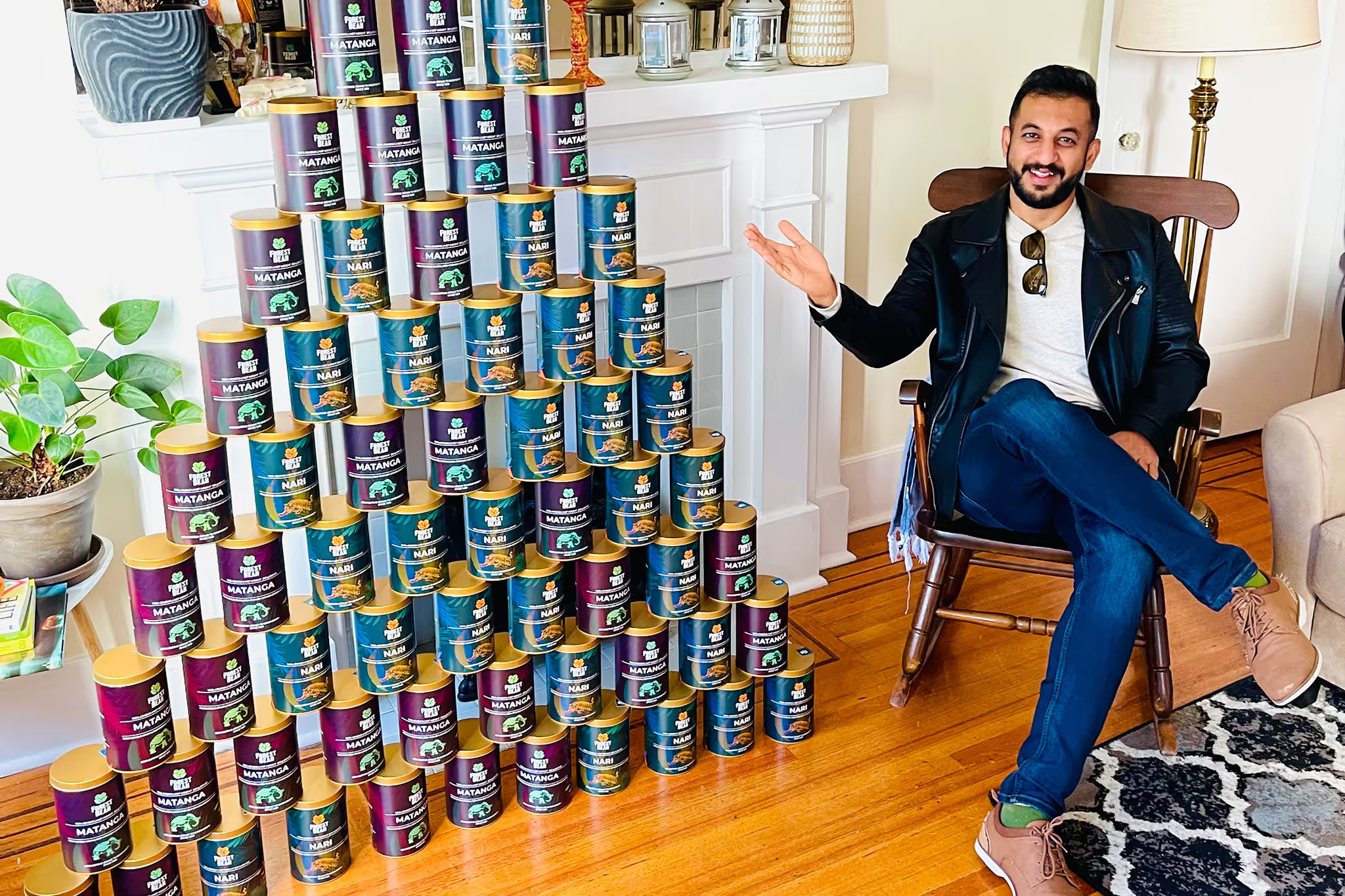
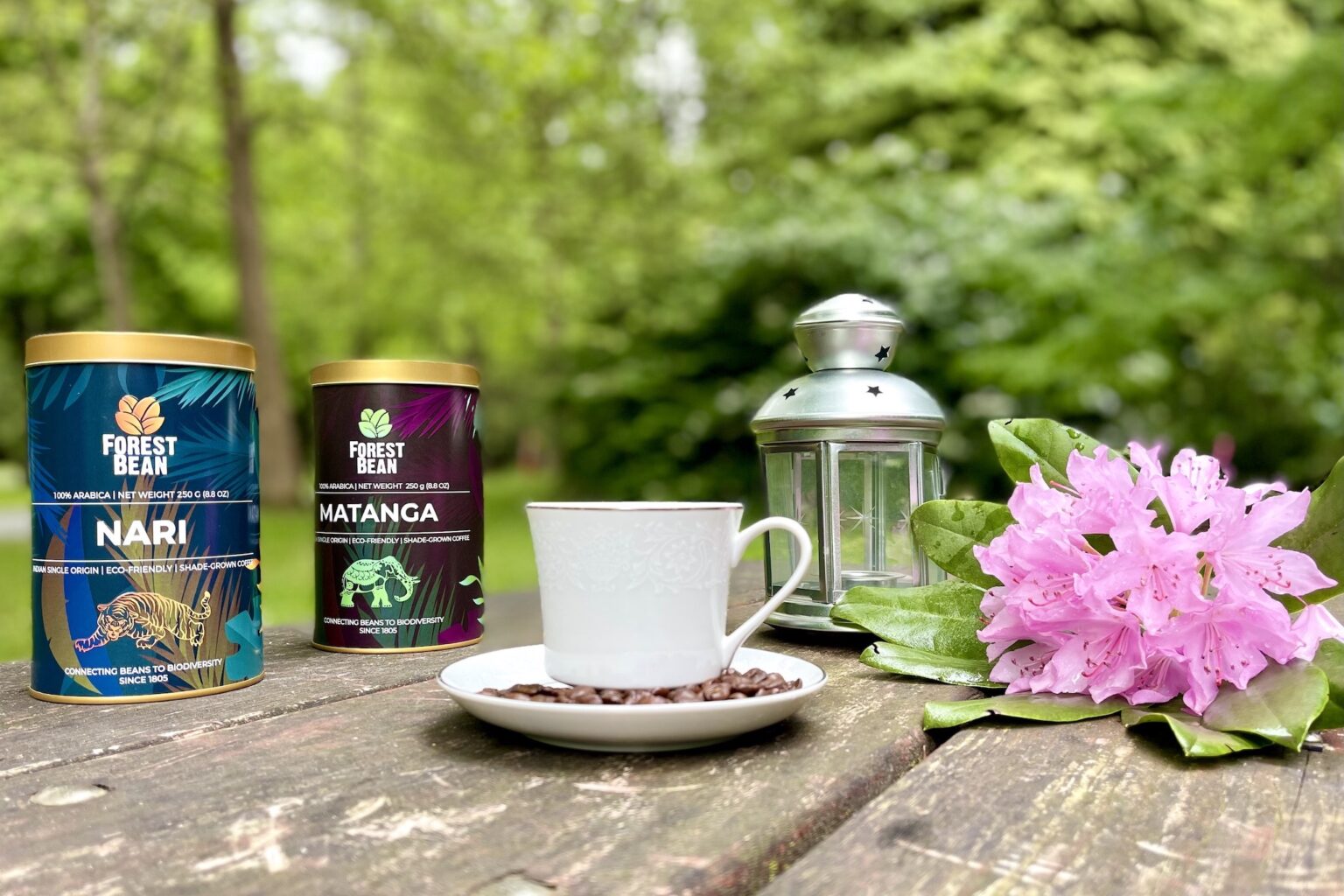
Forest Bean offers true forest-grown coffee, cultivated at high elevations and nurtured by biodiversity. Crafted purposefully, it’s perfect for coffee fans, roasters, and cafes seeking naturally grown, premium-quality beans. Ethically sourced from micro-lot farms in India, locally roasted Forest Bean inspires a deeper connection to nature and craft.
We spoke to Dr. Pete Poovanna , founder and executive director of Forest Bean Coffee, to find out what makes their beans stand out from the crowd.
Rooted in India, Roasted in Canada
Forest Bean
Forest Bean’s farms are located on the hilly forested heartland of the Indian Western Ghats, a UNESCO World Heritage site.
The company was founded by Dr. Poovanna after he moved to Vancouver in 2013 for PhD in sustainable energy engineering, and was struck by Canada’s coffee culture and how our love for it was affecting the environment.
Born and raised in Coorg located in the heart of the Western Ghats himself, he was influenced by his parents’ land management as sixth-generation coffee farmers, and his community’s spiritually-rooted practices called “sacred grove farming.”
source: youtube.com
Determined to make a difference, he launched Forest Bean Inc. to bring sustainably grown Indian coffee to coffee connoisseurs around the world.
The farm
Forest Bean
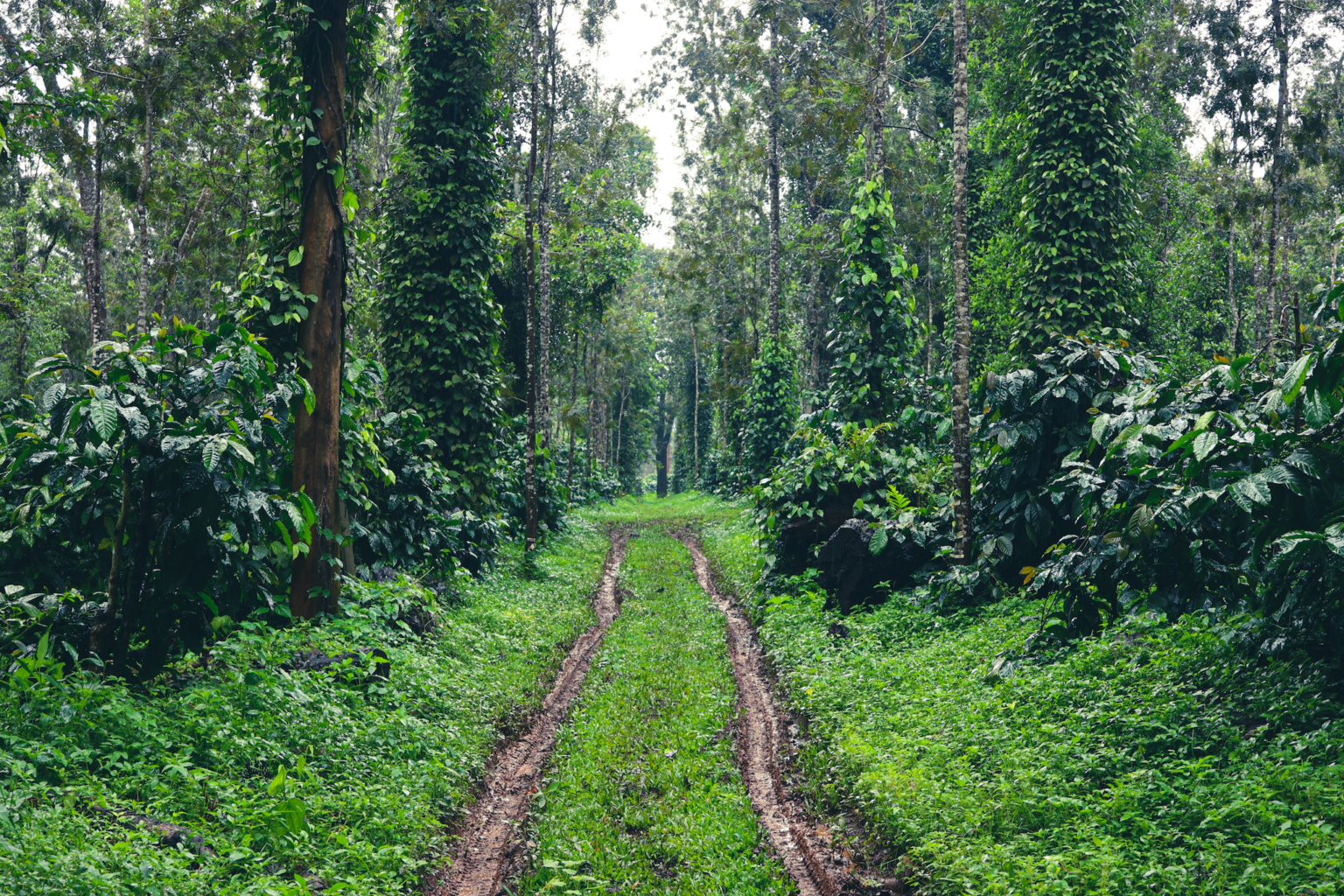
At Forest Bean’s farms, coffee beans are grown naturally under two-tiered shade on micro-lots with the utmost emphasis on sustainability.
“Sacred grove farming utilizes traditional agroforestry methods, meaning our coffee plants thrive under natural forest shade alongside native flora and fauna,” Dr. Poovanna explains.
We believe protecting the farm by not felling trees or harming wildlife, the reigning deity will protect us in return, and the farmers will prosper. This approach enriches soil naturally, conserves water, and protects the rainforest ecosystem.”
Forest Bean
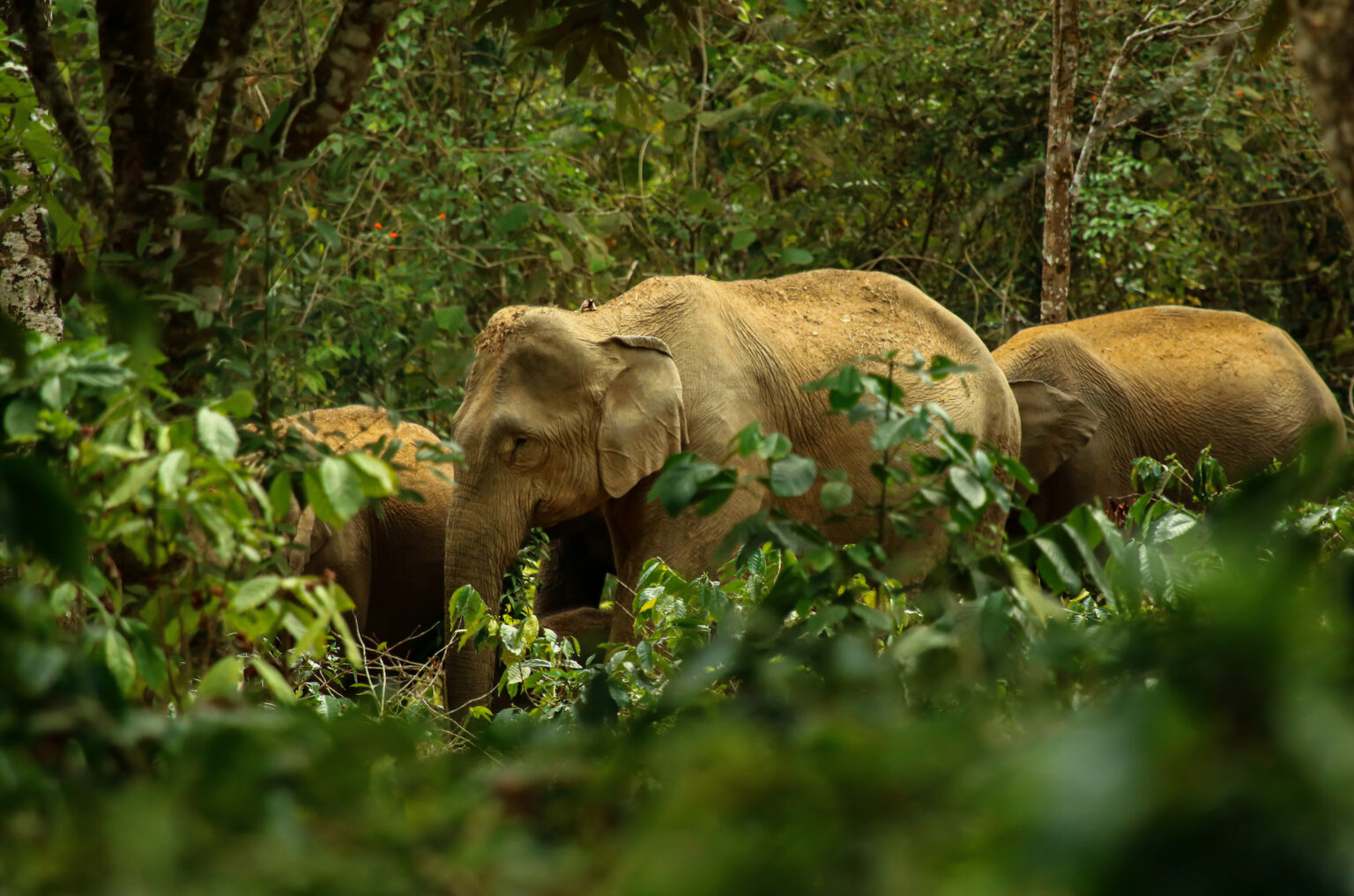
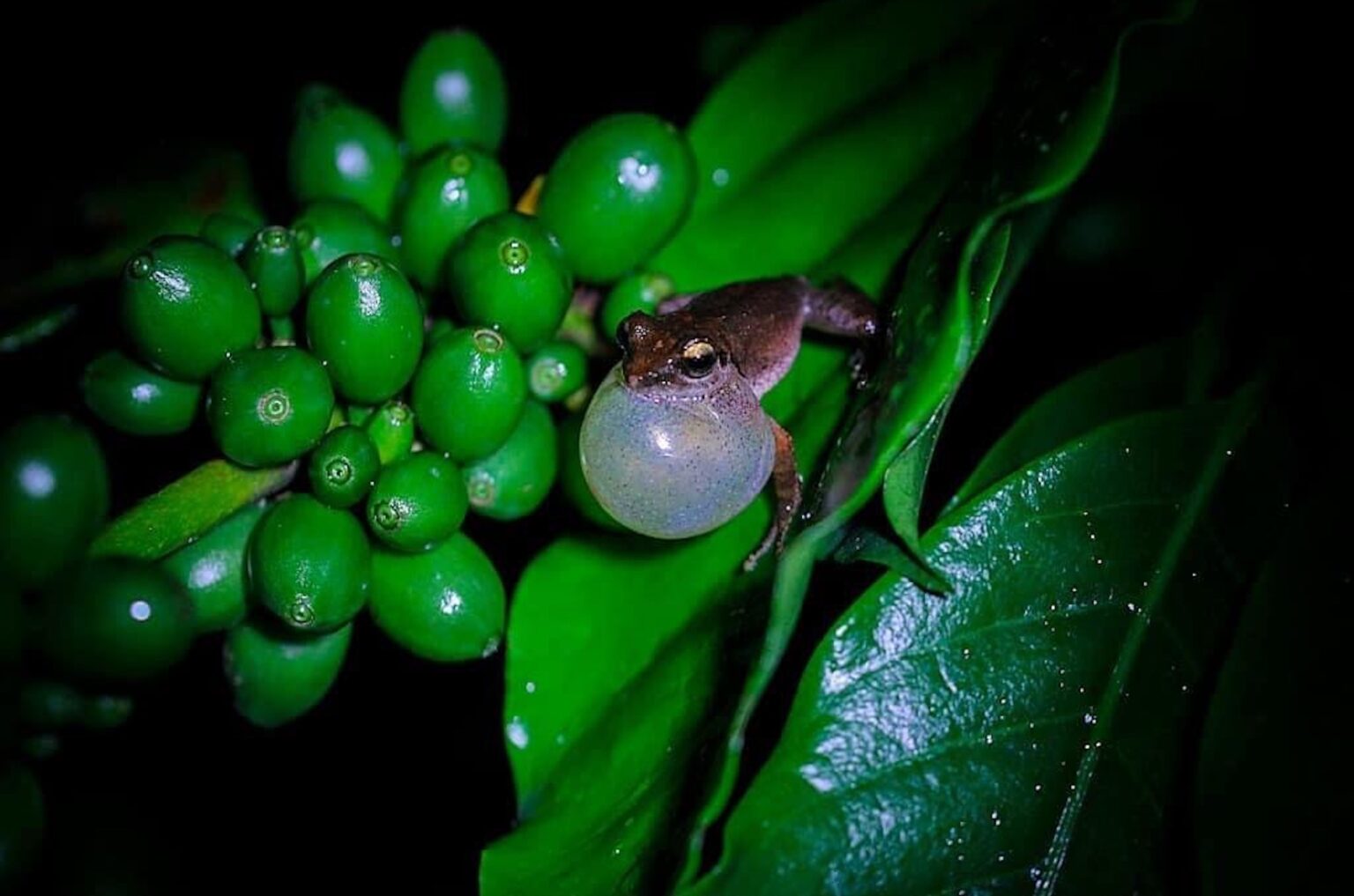
The farms produce some of the highest quality coffee while providing a natural habitat for a multitude of animals — birds, bugs, wild cats, apes, elephants, and more thrive alongside coffee plants.
Amid widespread greenwashing, Dr. Poovanna emphasizes that true sustainability in coffee production needs to address the entire lifecycle, farming practices included. He explains that only focusing on clean packaging or green transportation ignores the industry’s larger environmental impacts like deforestation and carbon loss during cultivation — something he says actually undermines genuine sustainability efforts.
Time-honoured traditions
Forest Bean
The Forest Bean coffee farmers, who belong to the ancient Kodava and Adivasi communities, employ traditional farming practices. Each bean is handpicked.
“Indian farming traditions are rooted in generations of Indigenous knowledge that prioritize sustainable coexistence with nature. By supporting and collaborating with Indigenous farmers, Forest Bean preserves these time-tested agricultural practices, ensuring cultural sustainability and economic empowerment.”
Forest Bean
The presence of Totem Figurines on our farms shows the deep cultural significance of the coffee forest and surrounding wilderness. Totem Figurines have been scattered throughout the farm for centuries.
Roasted locally in Vancouver
Forest Bean
Forest Bean coffee beans are roasted right here in Vancouver. Due to its unique growing methods, it offers distinct, vibrant flavours. Expect balanced acidity, smooth sweetness, nuanced notes of chocolate, nuts, berries, spices, and a uniquely rich, aromatic complexity.
“Our Bababudangiri single-origin Arabica, washed-process micro-lot, is very popular for its exceptional smoothness and balanced acidity; it’s called Medium Roast NARI , which means Tiger. Our Coorg micro-lot, Italian Espresso roast is also a favourite, known for its bright notes and rich complexity. It’s called MATANGA , meaning Elephant.”
Forest Bean
With every sip, you’re not just enjoying world-class coffee — you’re supporting a movement that values forests, farmers, and the future.
Head over to theforestbean.com to purchase it for yourself or make wholesale enquiries.
The festival celebrated India’s growing coffee culture and featured a vibrant mix of food stalls, lifestyle brands, and live music, creating a lively atmosphere for attendees.
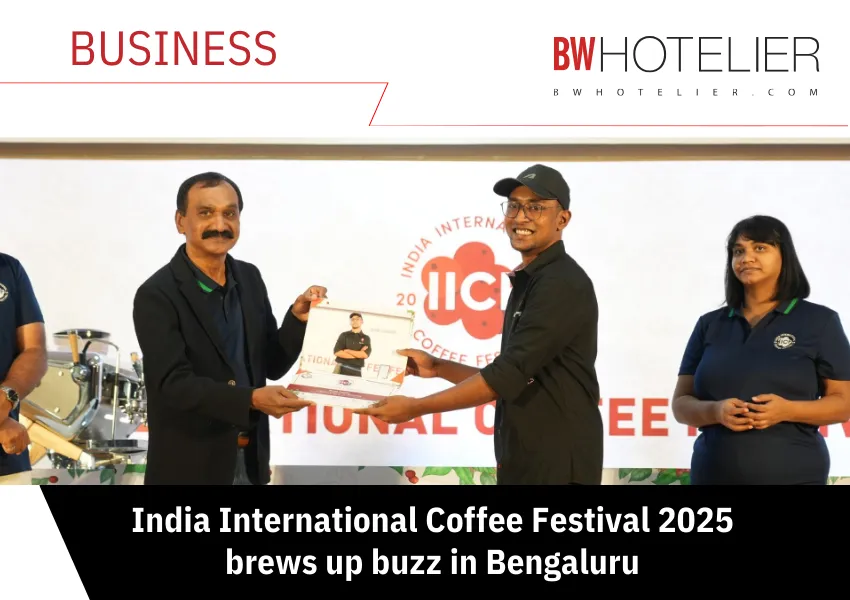
The India International Coffee Festival (IICF) 2025 was held from April 25- 27 at Marakata, Chamara Vajra, on Jayamahal Main Road, Bengaluru. Organised by the Specialty Coffee Association of India (SCAI) with support from the Coffee Board of India, the event brought together some of the country’s finest brewers, baristas, and coffee enthusiasts.
Following its successful 2024 editions in Delhi, Mumbai, and Bengaluru, the festival offered three days of competitions, discussions, entertainment, and interactive experiences. Highlights included the semi-finals and finals of the National Barista Championship (NBC), National Latte Art Championship, National Brewers Cup (NBrC), and the grand finale of the National Filter Coffee Championship.
DM Purnesh, President, Specialty Coffee Association of India (SCAI) said, “IICF has always been an inspiration for coffee lovers, industry experts, and brands. As we return with the much-anticipated semi-finals and finals, we’re proud to once again spotlight and celebrate the country’s finest coffee talent. With seasoned baristas, industry pioneers, and even discerning coffee critics in attendance, IICF 2025 promises to be an unmissable event for anyone passionate about the art of coffee.”
The festival celebrated India’s growing coffee culture and featured a vibrant mix of food stalls, lifestyle brands, and live music, creating a lively atmosphere for attendees. Experts, top growers, roasters, and equipment makers participated, sharing insights into brewing trends and innovations.
Sreeram G, Director, Marketing, Specialty Coffee Association of India (SCAI) said, “The India International Coffee Festival is not just about competition; it’s about connection. This festival serves as a dynamic platform for networking, innovation, and celebrating coffee as a lifestyle. It brings together coffee professionals, aficionados, and industry leaders to exchange ideas, explore emerging trends, and experience the rich intersection of coffee, cuisine, and craftsmanship.”
source: http://www.bwhotelier.com / BW Hotelier / Home> F&B / by BW Online Bureau / April 08th, 2025
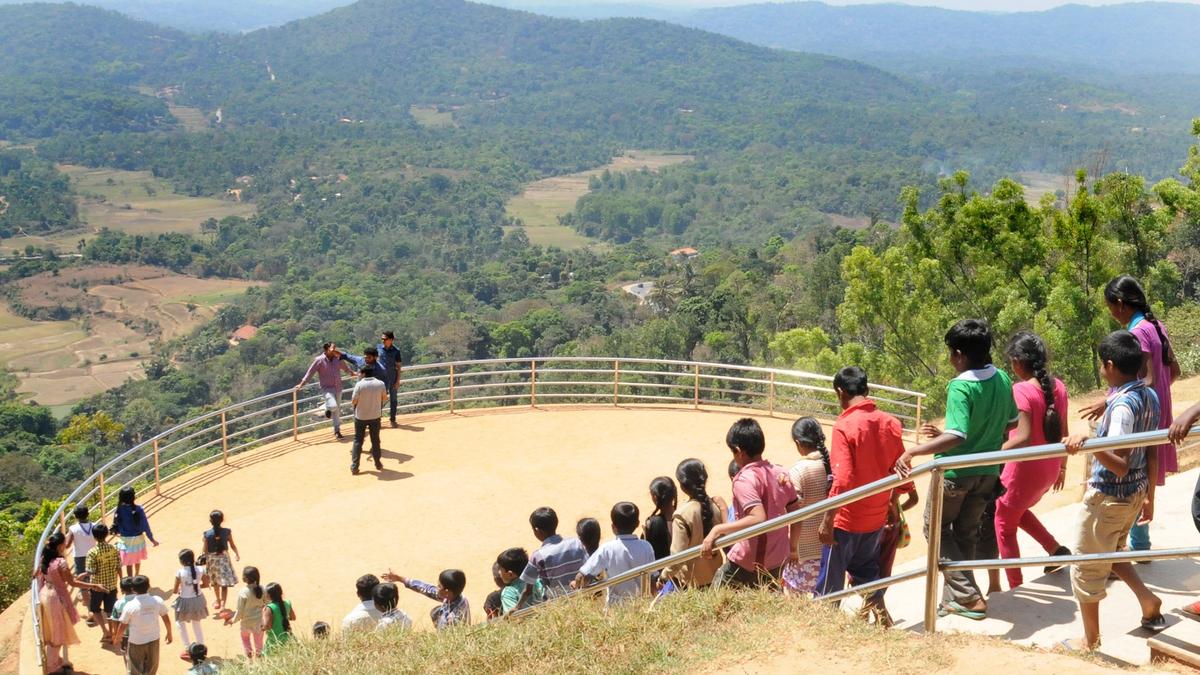
Raja Seat is one of the prime attractions for tourists in Madikeri. | Photo Credit: FILE PHOTO
Kodagu continues to be one of the top tourist destinations in the State, drawing 45.72 lakh visitors in 2024, surpassing its record in 2023, which drew 43.99 lakh tourists.
The increase of two lakh visitors highlights the district’s growing appeal, particularly as a hub for coffee tourism.
Deputy Director of Tourism Anita Bhaskarremarked, “It appears to be a golden era for tourism, with a surge in visitors seeking to experience Kodagu’s landscapes. The district remains a preferred getaway, as seen in the footfall in the last two years.”
During an interaction with reporters on Thursday, Ms. Bhaskar said that steps are being taken to successfully implement the Tourism Police 2029, keeping the focus on increasing footfall and understanding the tourism potential of Kodagu.
The post of the Deputy Director for Tourism in Madikeri was vacant for many years, and it was filled about a year ago, with the district being an important tourist destination.
She said 23 tourist sites in Kodagu have been identified for development under various schemes. Steps have been taken to appoint nine guides in various tourist sites. Ten more “Pravasi Mitras” will be appointed for other sites in the coming days, she added.
One district,one destination
Ms. Bhaskar said Mandalapatti hill station has been identified under the “One District, One Destination” programme, and facilities will be provided to tourists at the popular site, which attracts a large number of adventure enthusiasts.
For the first time, Kodagu is being included under a tourist circuit, the details of which will be announced soon.
Steps have also been taken for developing “Coorg Village” near Raja Seat in Madikeri. The department has joined hands with the orange growers cooperative society in Gonikoppal for popularising Kodagu oranges among tourists.
Thanks to the efforts of Deputy Commissioner Venkataraja for promoting Kodagu tourism, a lot of tourists are visiting Kodagu to explore the coffee land’s beauty, and one of the reasons for the rise in footfall is the social media promotion of “Coorg tourism”, she said.
Ms. Bhaskar said a sum of ₹1 crore has been sanctioned for the development of Abbey Falls, Iruppu Falls, and Malatirike Hills in Virajpet due to the efforts of MLA A.S. Ponnanna.
Ms. Bhaskar urged the owners of homestays, hotels, and lodges to put up signages on their premises, stating the ban on single-use plastics in the hill station, where several steps had been taken to make the place “trash-free”. The effort will impact tourists, and they shall be discouraged from littering to establish eco-friendly tourism.
She suggested transportation facilities to some key destinations, including sites of adventure tourism.
During the interaction, suggestions came for reintroducing toy trains at Raja Seat and also organising Pravasi Utsava in Kodagu to boost footfall, besides restricting traffic at Raja Seat to ensure that it will not cause inconvenience to locals.
B.G. Ananthashayana said steps must be taken to crack down on low-quality wines, chocolates, and spices that are being sold to tourists. This will affect the brand Kodagu. Kodagu journalists’ association president H.T. Anil presided over the interaction. The deputy director was felicitated on the occasion.
source: http://www.thehindu.com / The Hindu / Home> News> India> Karnataka / by The Hindu Bureau / April 04th, 2025
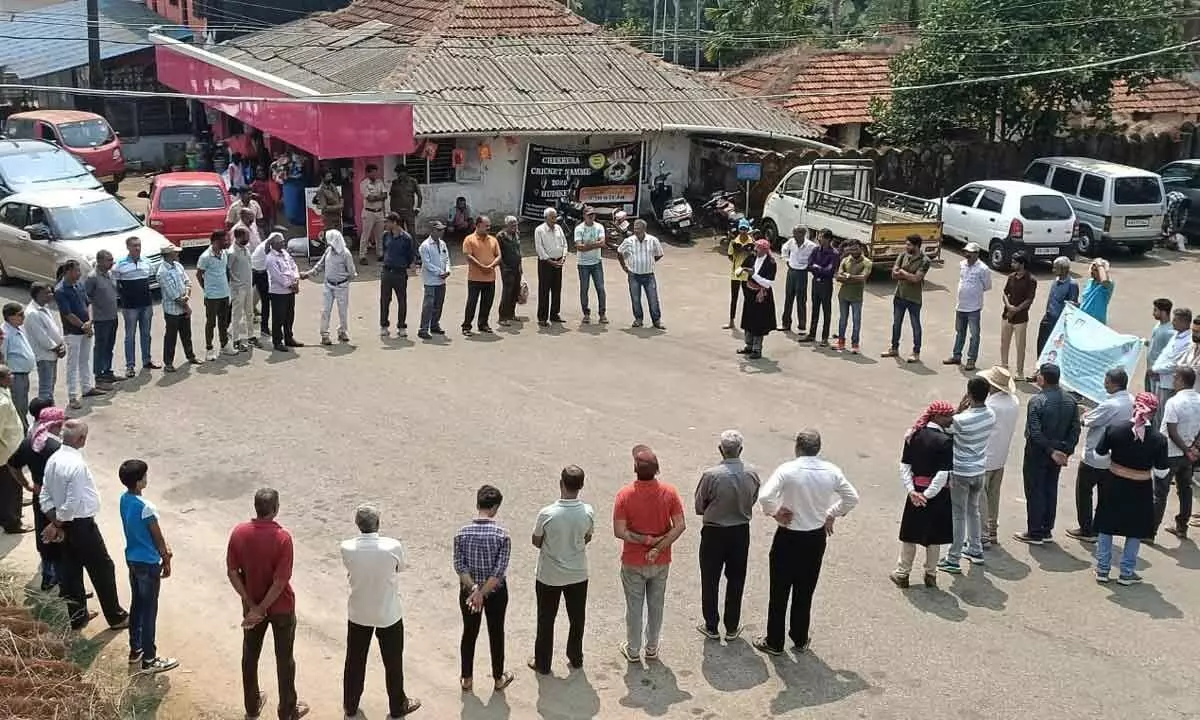
The Codava National Council (CNC) organised a human chain demonstration in Birunani on Monday, urging the Union Government to address their long-standing demands.
Madikeri :
The Codava National Council (CNC) organised a human chain demonstration in Birunani on Monday, urging the Union Government to address their long-standing demands. The primary demand is the creation of exclusive Codava constituencies for the Assembly and Parliament to ensure adequate representation of the community within their traditional homeland.
The CNC expressed concerns that the ongoing delimitation process may overlook the interests of the Codava community. Leaders fear that political influences could result in the merging of Codavaland with neighbouring areas, undermining the representation of the indigenous Codavas.
The CNC has put forward two proposals: carving out dedicated Assembly and Parliamentary constituencies in Codavaland and creating exclusive representative bodies for the Codava community, similar to the Sangha Constituency for the Buddhist monastic community in Sikkim.
The CNC also reiterated its demand for Scheduled Tribe (ST) status under the Indian Constitution, highlighting the community’s distinct identity, culture, and history. The demand is anchored in Articles 244 and 371, along with provisions in the Sixth and Eighth Schedules, which recognise and protect tribal communities and languages.
The CNC argues that this misrepresentation has led to a gradual erosion of the community’s identity, describing it as a violation of international conventions on indigenous rights.
A writ petition filed by former Member of Parliament Dr. Subramanian Swamy in the Karnataka High Court seeks adjudication of the Codavas’ demands. The CNC is also advocating for recognition of Codavas under international frameworks such as the United Nations Declaration on the Rights of Indigenous Peoples.
The CNC has called for the restitution of ancestral lands that were taken over by various rulers, including the Keladi dynasty, British authorities, and subsequent governments.
The CNC remains firm in its demand for recognition as a distinct indigenous community and continues to engage with constitutional and legal avenues to secure their rights. The human chain event at Birunani marked the latest step in the community’s long-standing struggle for recognition and justice.
Is Sullia being pitched to be an assembly segment of Mysuru-Kodagu LS constituency?
In another development, DV Sadananda Gowda (former MP) and Shobha Karandlaje, representing Bengaluru North LS constituency, have been alleged to have brought pressure on the central government to annexe Sullia Assembly constituency, which is currently one of the eight assembly segments in Dakshina Kannada Lok Sabha constituency, to be a part of the Mysuru-Kodagu Lok Sabha constituency. The Codavas point out that this move will further strengthen the Vokkaliga dominance in the Kodagu district and will worsen the Codava community’s representation in the Karnataka assembly. “This is in a preliminary stage, and in the coming days we will further investigate the effects of the inclusion of the Sullia Assembly constituency into the Mysuru-Kodagu Lok Sabha constituency.”
source: http://www/thehansindia.com / The Hans India / Home> News> State> Karnataka / by The Hans India, Hans News Service / March 31t, 2025
We are planning to sell coffee online to popularise and promote GI-tagged coffee and make them accessible to consumers across the country, says Coffee Board Secretary and CEO K.G. Jagadeesha.
The GI-tagged coffee drip bags are designed for simplicity and effortless brewing, says the Coffee Board. | Photo Credit: special arrangement
The Coffee Board on Friday (March 29, 2025) introduced premium GI-tagged single-serve coffee drip bags to strengthen the domestic consumption of pure coffee in the country.
These GI-tagged coffee drip bags are designed for simplicity and effortless brewing and require just hot water and no equipment, said Coffee Board Secretary and CEO K.G. Jagadeesha at a media conference. “Only boiled water and a mug are required to brew a quality cup of pure black coffee,” he said.
Each drip coffee pouch contains five GI-tagged Arabica coffee varieties: Coorg Arabica, Chikmagalur Arabica, Bababudangiri Arabica, Araku Valley Arabica and the Monsooned Malabar Arabica coffee.
According to Mr. Jagadeesha, the drip bags being marketed under the India Coffee brand will be made available across all e-commerce platforms. “We are planning to sell coffee online to popularise and promote GI-tagged coffee and make them accessible to consumers across the country,’‘ he added.
Coffee Board also simultaneously launched Indian speciality coffee like GI-tagged Monsooned Malabar Arabica Coffee and Mysore Nuggets Extra Bold Arabica Coffee. Monsoon Malabar, he said, is the only monsoon coffee (where harvested coffee seeds are exposed to the monsoon rain and winds) in the world, Mr. Jagasheesha added.
Coffee culture
Coffee Board chairman M.J. Dinesh said the Board has been taking initiatives such as Kaapi Shastra, Barista Skills training, and participation in domestic exhibitions to promote coffee culture and thereby drive pure coffee consumption.
“Coffee farmers and entrepreneurs are getting training from the conception stage to the product stage. Even private coffee players can benefit from this training and start focusing on promoting GI-tagged pure coffees of India,’‘ said Coffee Board officials.
Under Atal Innovation Vision, the Coffee Board has been offering training to various coffee farmers and coffee entrepreneurs. Some 68 coffee startups, including over 20 start-ups in Karnataka, have come up under this scheme.
As per CRISIL estimates, India’s current coffee consumption is estimated at 95,000 tonnes.
source: http://www.thehindu.com / The Hindu / Home> News> Cities > Bengaluru / by The Hindu Bureau / March 29th, 2025
Bengaluru’s coffee production outlook, global prices, and the importance of value addition in the industry discussed by Coffee Board officials.
Coffee Board Secretary and CEO KG Jagadeesha said nature played a critical role in coffee farming and if plantations get 6-7 months without a dry spell, next year’s yield would be substantially higher than the last two years. | Photo Credit: Special Arrangement
Bengaluru India’s coffee production for the crop year ending in March 2025 is likely to be 3.52 lakh metric tonnes, while the yield for next year is expected to be much higher than last two years’ yield as most plantations have already received adequate blossom showers helping a healthy berry setting, said Coffee Board CEO and Secretary, K.G Jagadeesha.
However, he said, nature played a critical role in coffee farming and if plantations get 6-7 months without a dry spell, next year’s yield would be substantially higher than the last two years.
He further said the board was currently in the process of wrapping up harvest (which just concluded) volumes data for the current year and preparing a production outlook for next year based on post blossom-shower assessment conducted on plantations across the country.
Global coffee prices to remain high for a year: ICO
Quoting International Coffee Organisation (ICO), Mr. Jagadeesha said, global coffee prices were likely to remain high for one more year as most major producing countries were facing drastic climatic changes.
“The current coffee prices may hold for one more year with marginal growth, however may not double or treble as they did a couple of years ago for arabica and robusta, respectively. I just attended the ICO meeting and this is the sense I am getting regarding prices,” he said.
Globally, coffee prices remained too low for 10 years, before they started climbing last two years ago.
India should focus on premiumisation in coffee
Highlighting the importance of value addition in coffee, Mr. Jagadeesha said, some 70% of Indian coffee were exported as green beans which meant the country has been losing out on premiums.
“We are producing the best quality coffee in the world and selling it as green beans in the global markets and someone else is blending, value adding and forking out premiums. This situation has to change by increasing our focus on value addition to fetch premium prices in the global markets. Some of our growers have already started focusing on value add and premiumisation, but the trend has to become industry-wide,’‘ he insisted.
According to Mr. Jagdeesha, post covid, there is a spurt in coffee consumption globally and this trend has been quite evident in India as well.
Coffee Board Chairman M.J. Dinesh said additional strengthening of the domestic market was required to protect coffee growers in the wake of any international price fluctuations.
“A robust domestic market will provide a shield to the coffee growers against the volatile international coffee prices. It will also encourage entrepreneurship and boost employment opportunities and bring in overall improvement in the coffee value chain. Such a scenario will act as a buffer for Indian coffee,” he added.
source: http://www.thehindu.com / The Hindu / Home> Business / by MIni Tejaswi / March 29th, 2025
WELCOME. If you like what you see "SUBSCRIBE via EMAIL" to receive FREE regular UPDATES.
Read More »