Category Archives: Business & Economy

Coffee Board kicks off branding initiative

Seeks Andhra govt’s help to market coffee grown in Araku Valley

CoffeeKF21oct2013

In a bid to fetch higher prices in international markets, the Coffee Board of India has kicked off a branding initiative for Indian coffee. The Board intends to create a common brand to market Indian coffee, especially those grown in the Western Ghats and Araku Valley in Andhra Pradesh.

“Almost 98 per cent of coffee produced in India is grown in the Western Ghats region and some new areas in Araku Valley. Indian coffee, grown under tree shade, is very popular in the international markets. It contributes to intrinsic quality and internationally it is known as eco-friendly coffee. So, we are trying to make use of the Western Ghats tag to market our coffees in the overseas markets,” Jawaid Akhtar, chairman of Coffee Board, told Business Standard.

The Board will sell Indian coffee as “good coffee” and “organic coffee” to fetch higher prices in the overseas markets.

Akhtar said Indian exporters are able to command 40-50 per cent higher margins on the benchmark International Coffee Organization (ICO) prices for washed Robusta and 25 per cent for Robusta Cherry. “We are contemplating to come out with a common brand for Indian coffee. We are also planning to promote our coffee through international trade fairs, exhibitions and release advertisements,” Akhtar added.

For the first time, coffee grown in Araku Valley in parts of the eastern Ghats of Andhra Pradesh is coming to market this year, Akhtar said, adding the Board plans to market this coffee as “organic coffee”. In Araku Valley, the coffee is largely grown by tribals.

Popularly known as non-traditional areas in the coffee circles, this region includes the states of Andhra Pradesh, Odisha and to a small extent Madhya Pradesh. The region is predominantly inhabited by a wide variety of tribal groups, who are known for their traditional agriculture practices and ‘podu’ (shifting cultivation) over centuries.

The trees are planted at an elevation of 3,200 ft above the sea level.

“We have requested the government of Andhra Pradesh to help tribals market their coffee, so that we can reduce the role of middlemen. There are some non-government organisations like Naandi Foundation that are assisting tribals in cultivating coffee,” said Akhtar.

Araku Valley is expected to produce about 6,500 tonnes of coffee this year. Over 100,000 tribals have brought 55,000 hectares area under coffee plantations in the Valley and the average holding is one acre per person. The tribals have used mainly organic practices to grow the coffee.

Arabica coffee is the main variety and the arabica station breed selections such as S.934, Sln.4 (agaro) and Sln.5 occupy major areas in Andhra Pradesh. In Odisha, Cauvery is the main variety under cultivation. Pepper is the main inter crop adding substantially to the net returns of coffee farms. The coffees of this region are classified as medium body, medium to sharp acidity and intense aroma with a spicy tinge.

source: http://www.business-standard.com / Business Standard / Home> Markets> Commodities> Food & Edible Oils / by Mahesh Kulkarni / Bangalore – October 14th, 2013

Storming into entertainment

Love and pride for their native district led them to create a successful music festival in Coorg

Lavin Uthappa & Sachin Bopanna, Storm Festival

Having flourished in the events industry for 19 years, Lavin Uthappa’s stint as director of Storm Festival has beenglorious. His passion and love for his homeland propelled him to forsake a flourishing career in the corporate sector and pursue event management. Along with his brother Sachin Bopanna, Lavin created Liquidspace Entertainment four-and-a-half years ago, with the aim of promoting organic fusion sounds. “We wanted to bring the best of mainstream entertainment to Coorg and make it one of the foremost camping and destination festivals of the country. What’s better than starting from home?” quips Lavin

He has worked extensively on brand promotions, visualising, strategising and executing international concerts- all of which helped him create the Storm Festival. “Years of experience in this industry have helped me achieve near perfection in all that I do.” Added to that, he is fondly referred as ‘Annaiah’ by the people he works with, because of his affable nature. Organising an outdoor festival in a small town can be a daunting task, “It takes a lot of time, passion, hard work and monetary implications to build a festival. Since non-metros are quiet for most of the year, it is a challenge to convince authorities and locals. Added to this, the tough terrain and lack of availability of raw materials makes it harder. We have to procure them from bigger cities, which is an expensive proposition too. Finally, procuring licences and requisite permissions to run these festivals as stipulated by the law of the land will ensure smooth running of these events.”

No mountain is high enough for these spirited brothers, “Branching out to create Storm was the best decision I ever made. It would not have been possible without the support of well-wishers, family and musicians. In the end, hard work always pays.”

source: http://www.bangaloremirror.com / Bangalore Mirror / Home> Columns> Work / by Sindhuja Balaji / September 13th, 2013

Coffee consumption to touch 125,000 tonnes

Domestic consumption growing at rate of 5-6% annually since 2010
CoffeeKF17oct2013
The Coffee Board of India has estimated consumption in India to be around 125,000 tonnes for 2013. Domestic consumption is growing at a rate of 5-6 per cent annually since 2010.

This is almost double the figure when compared with that of United States Department of Agriculture, which recently pegged the Indian consumption at 66,000 tonnes, while the International Coffee Organisation (ICO) has estimated it at over 100,000 tonnes. “We have commissioned a study to assess the exact consumption of coffee in India and the results of the study will be available by the end of December this year,” Coffee Board of India Chairman Jawaid Akhtar said. He said the domestic consumption was 58,000 tonnes in 1987 when the country’s population was 820 million. In 2011, the consumption crossed the 1,00,000 tonnes mark, while the population touched 1.21 billion. “About 7-8 years ago, the domestic consumption was growing very slowly and now, it is growing faster. South India is the largest consumer of coffee at almost 75 per cent of the total consumption. The Coffee Board is making efforts to push the consumption in western, northern and eastern parts of the country,” Akhtar said.

“The Board is organising events like India International Coffee Festival (IICF) to project Indian coffee as ‘good coffee’ and specialty coffee. In this direction, we organised our IICF at New Delhi in 2012,” he said.

Recently, the ICO stated that the consumption of coffee is growing rapidly in exporting countries like Brazil, Indonesia and India. It has pegged the Indian consumption at 114,000 tonnes, showing a growth of 4.8 per cent annually.

“Assuming that the consumption has grown only at 5-6 per cent year on year since 2010, the consumption in 2013 could be in the range of 125,000 tonnes,” Akhtar told Business Standard.

The Coffee Board has pegged the production of coffee for the year 2013-14 at 347,000 tonnes in its post blossom estimates. However, the chairman stated that it could come down by at least 10 per cent due to heavy rains between June and August this year, which resulted into ‘wet foot’ and ‘black rot’ diseases.

In an effort to increase awareness about drinking coffee and its health benefits, the Coffee Board in association with India Coffee Trust is organizing the fifth edition of IICF 2014 at Bangalore from January 21 to 25, 2014.

“The event provides avenues for enterprise development through value addition while simultaneously contributing to the creation of skill based jobs, particularly in non-conventional coffee drinking areas at the consumer end. To facilitate entrepreneurial development, the Coffee Board has been providing training sessions on coffee roasting, brewing among others,” Akhtar said.

IICF 2014 is expected to see participation of 1,000 delegates for the conference and workshops and over 10,000 visitors at the exhibition. National and international experts in the coffee industry including policy makers, exporters, manufacturers and planters are likely to attend this flagship event of the Coffee Board.

source: http://www.business-standard.com / Business Standard / Home> Markets> Commodities> Food & Edible Oils / by Mahesh R Kulkarni / Bangalore – October 14th, 2013
State prepares for biggest elephant capture operation since 1971 ‘khedda’

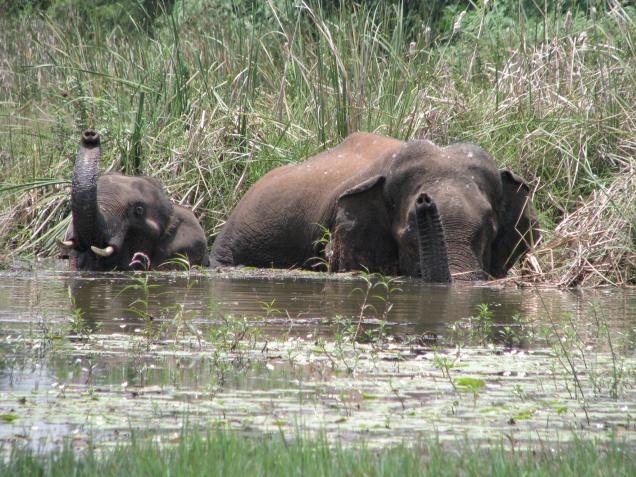
OUT OF PLACE?: In Alur taluk, a herd of 25–30 elephants inhabit a tiny 5-sq. km forest patch circumscribed by agricultural fields that they routinely raid, according to M.D. Madhusudan, a member of the Karnataka Elephant Task Force./  File photo / The Hindu
OUT OF PLACE?: In Alur taluk, a herd of 25–30 elephants inhabit a tiny 5-sq. km forest patch circumscribed by agricultural fields that they routinely raid, according to M.D. Madhusudan, a member of the Karnataka Elephant Task Force./ File photo / The Hindu

At least 25 wild elephants are set to be caught in Alur taluk of Hassan district

With a green signal from the Karnataka High Court on Tuesday, the Department of Forests now sets about planning its biggest ever operation to capture wild elephants since the State’s last ‘khedda’ in 1971, when 47 animals were captured.

At the very least, this would mean the capture and taming of around 25 elephants in Hassan’s Alur taluk, the epicentre of human-elephant conflict in the State. The Karnataka Elephant Task Force in its report to the High Court in September 2012, identified two regions — Alur and Tumkur district’s Savandurga — as “elephant removal zones” for the “unacceptable levels” of conflict they encountered.

The department, however, places “the outer limit” for the number of elephants to be captured at 150 and hope to extend the ‘removal zone’ to parts of Kodagu where human-elephant conflict is intense. “The actual number we capture will be much less, but we’ll have to take a call on areas such as Kodagu based on an assessment of conflict levels and perceptions of people here,” said Principal Chief Conservator of Forests (Wildlife) G.S. Prabhu.

‘Extreme measure’

Members of the task force don’t quite agree. Removing wild elephants from a natural landscape is “an extreme measure” and one that should be done with the “greatest judiciousness”, said M.D. Madhusudan, scientist with the Nature Conservation Foundation and task force member. Only two areas have been identified by the task force as potential “removal zones” and Kodagu is not one of them, he said.

Alur was an anomaly of sorts and justifies the approach, he explained. The conflict in Alur was intense, and the elephant population was ecologically unviable. “Here, a herd of 25–30 elephants inhabit a tiny 5-sq. km forest patch circumscribed by agricultural fields that they routinely raid.” Between 1986 and 2011, elephants killed 46 people and injured over 240, according to the task force report, creating a “fear psychosis among people that hampers their ability to work and live normal lives.”

The situation in Kodagu was not adequately studied yet, said Raman Sukumar, chairman of the Centre for Ecological Sciences, Indian Institute of Science. “We first need to assess the conflict situation in Kodagu, understand the dynamic of elephants here (are they transitory, for instance) before we decide on a course of action.”

Meanwhile, the Department of Forests has set aside Rs. 4 crore to create kraals to restrain elephants captured, which typically take a year to tame, and new elephant camps. “The project can only begin in January, after the rain,” Mr. Prabhu said, and added that the department would be using a combination of methods that incorporate elements from traditional ‘khedda’ (stockade traps) and also modern-day chemical tranquilising.

BACK TO THE WILD

Even as it prepares for a large-scale capture of elephants, the department, ironically, admits that its 10 camps, which together have 91 elephants, are too crowded.

“We are looking at the possibility of returning around 30 of these back to the wild,” Mr. Prabhu said.

source: http://www.thehindu.com / The Hindu / Home> News> National> Karnataka / by Divya Gandhi / Bangalore – October 13th, 2013

Problem elephants might be captured, tamed

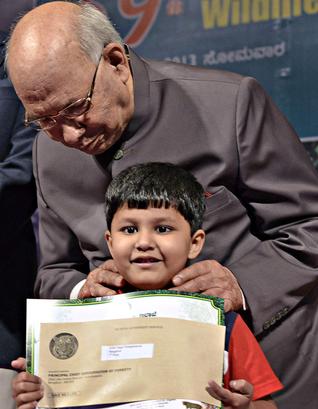
Governor H.R. Bhardwaj with Ashit Sagar Puttannanavar, one of the prize winners, at the valedictory function of the 59th Wildlife Week in Bangalore on Monday. / Photo: Bhagya Prakash K. / The Hindu

Wild elephants that have for years posed a major problem to the lives and livelihoods of residents in Hassan’s Alur taluk and in Kodagu’s Virajpet could soon be captured and tamed, Principal Chief Conservator of Forests (Wildlife) G.S. Prabhu said on Monday.

The Department of Forests had, earlier this year, proposed the capture of several problem elephants that routinely raided crops and came in conflict with people.

Mr. Prabhu was speaking at the valedictory function of the 59th Wildlife Week organised by the department, where schoolchildren were given prizes for essay and painting competitions on the theme ‘The importance of environmental protection’.

A sum of Rs. 21 crore had been earmarked to mitigate the human-animal conflict in the State, Minister for Forests, Environment and Ecology, B. Ramanath Rai, said.

Governor H.R. Bhardwaj said several species across the world were endangered because of human greed. He added that the budget allocation for wildlife conservation should be increased.

source: http://www.thehindu.com / The Hindu / Home> News> National> Karnataka / by Special Correspondent / Bangalore – October 08th, 2013

Bangalore to host International Coffee Festival from January 21

CoffeeKF11oct2013
The conference will be held from Jan 21-25, 2014. The previous edition of IICF was held in Delhi in 2012

Bangalore is set to host the fifth edition of India International Coffee Festival (IICF 2014), the flagship event of the coffee sector, from January 21-25, 2014. The Coffee Board of India is organising the event, which will showcase India as an emerging global coffee destination.

The previous edition of IICF was held in Delhi in 2012.

“The IICF 2014 will be all about in depth discussion on the latest in coffee market and retailing in India, on the cutting edge developments in coffee technology relevant to the Indian scenario with papers and demonstrations by world renowned experts,” Coffee Board said.

The event comprises conference and exhibition on the coffee sector. The conference aims to capture the changes taking place in the coffee sector and will discuss current trends related to production as well as take a close look at the prevailing market scenario. It will focus on issues such as changing role of Arabica and Robusta, health aspects of coffee, innovative and alternate channels of coffee delivery to consumer among others.

It will also lay stress on the changing patterns of coffee production including farm mechanisation, discuss parameters of good coffee and take a close look at sustainable production methods including prudent water management, the Board said.

The Expo of IICF will showcase latest technologies, new products and services and new coffees and blends.

There will be workshops on processing, brewing, roasting, espresso making, cooking with coffee, art on silk and coffee entrepreneurship.

source: http://www.business-standard.com / Business Standard / Home> Companies> News / by BS Reporter / Bangalore – October 11th, 2013

ICRISAT launches new portal to share agricultural information

Hyderabad :

City-based International Crops Research Institute for the Semi-Arid Tropics (ICRISAT) has launched today EXPLOREit@ICRISAT (exploreit.icrisat.org), which makes large volumes of agricultural scientific knowledge and information easily accessible to the public.

“We are doubly excited — not only have we given easier access to all of ICRISAT’s 40 years of scientific research through EXPLOREit, but we have achieved this through the MultiProfiler concept, a revolutionary way of making information accessible,” ICRISAT Director General William D Dar said.

We found that typical websites are too restrictive in giving access to information, and do not present the information in ways that are easy for people to view the detail of the content.

ICRISAT’s new MultiProfiler concept provides information through multiple navigations and creates easy to view profiles on the subject areas,” explained Joanna Kane-Potaka, ICRISAT Director of Strategic Marketing and Communication.

“Sharing publicly-funded agricultural information in the most accessible way is critically important to achieve our agricultural development goals of reducing rural poverty, increasing food security, improving human health and nutrition, and ensuring more sustainable management of natural resources,” Dar said.

EXPLOREit is now to become the main source of ICRISAT’s scientific information with profiles of all topics, systems, crops, locations and resources where it works.

“It sets a new standard for sharing of information, and therefore promotes collaboration. To achieve this, ICRISAT has made a momentous leap in its use of technology with EXPLOREit-a dynamic site that feeds information from databases using tags and harvests information from other websites,” an ICRISAT release said.

source: http://www.thehindubusinessline.com / Business Line / Home> Industry> Agri-Biz / by PTI / September 26th, 2013

Package tours planned in five circuits during Dasara

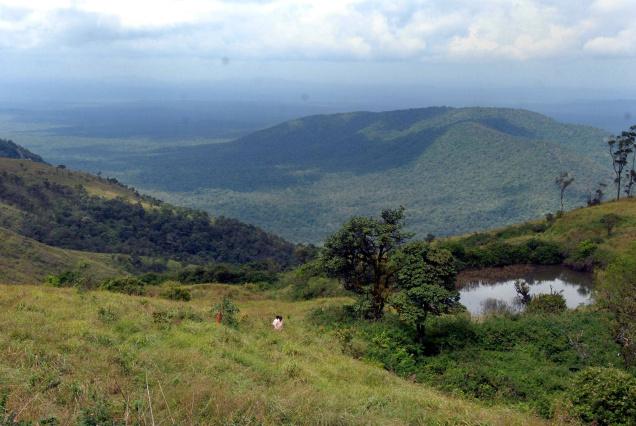
A breathtaking view of Himavad Gopalaswamy Betta./  Photo: M.A. Sriram / The Hindu
A breathtaking view of Himavad Gopalaswamy Betta./ Photo: M.A. Sriram / The Hindu

The tours will be conducted by KSTDC from Mysore

Karnataka State Tourism Development Corporation (KSTDC) has identified five circuits to operate special tour packages for domestic and international tourists visiting Mysore during Dasara this October.

Bookings for the package tours, to be conducted in air-conditioned buses, were expected to be announced shortly.

Tourism spots in Mysore, Chamarajanagar, Mandya and Kodagu districts will be covered in the one-day tour packages, which also includes lunch at a KSTDC-operated restaurant.

If the response to this venture is good, the KSTDC will add more buses from its fleet of 52 luxury buses to operate the tours, officials said.

The five package tours start and end in Mysore. They are: Mysore–Biligiriranga Hills–K. Gudi–Mysore at Rs. 395 per person; Mysore–Nanjangud–Himavad Gopalaswamy Hills–Bandipur National Park–Mysore at Rs. 390 per person; Mysore–Ranganathittu–Srirangapatna–Kokkare Bellur–Mysore at Rs. 380 per person; Mysore–Somanathapura–Talakad–Shimsha–Mysore at Rs. 390 per person and Mysore–Madikeri–Mysore (including local sightseeing) at Rs. 450 per person.

KSTDC managing director C.D. Dyavaiah told The Hindu that the tour package includes the guide service and a vegetarian meal.

“These packages are being launched only for Dasara. In case of good response, we will extend the services for a couple of weeks,” he said.

ADDITIONAL FACILITIES

Mr. Dyavaiah said the KSTDC’s properties in Mysore and Madikeri were renovated recently. The Mysore property, Hoysala, on JLB Road, will be inaugurated next week. In addition to the 20 luxury rooms, 13 A/C rooms had been added, he said.

source: http://www.thehindu.com / The Hindu / Home> News> National> Karnataka / by Shankar Bennur / Mysore – September 21st, 2013

Udupi, Kodagu, U-K best districts in Sakaala

Udupi, Kodagu and Uttara Kannada (U-K) districts have secured top three positions in disposing of applications under Sakaala, a scheme for the timely delivery of services to the people of the State.

The districts of Bijapur, Raichur and Bidar are at the bottom of the ranking list. As much as 97.39 per cent of the applications were disposed of in the month of January. Altogether, 12.84 lakh applications were received under the scheme, according to the progress report on Sakaala released for January on Monday.

The report said the number of complaints had gone up. About 115 complaints have been received in January, 2013, against 89 in December, 2012.

For the month of February, the Sakaala portal will also have taluk-wise ranking. It will help the district administrations to evaluate the performances within the districts, the report said.

source: http://www.deccanherald.com / Deccan Herald / Home> State / DHNS / Bangalore – February 25th, 2013

Rs 75 lakh grant for Madikeri Dasara

Madikeri :

Karnataka government has sanctioned Rs 75 lakh for the historical Madikeri Dasara festival and Rs 25 lakh for Gonikoppal Dasara. Virajpet MLA and ex-speaker KG Bopaiah told TOI that district incharge minister HC Mahadevappa had confirmed this to him over phone.

Recently a delegation from the Madikeri Dasara committee met chief minister Siddaramaiah and Mahadevappa and submitted a memorandum seeking release of funds for the Dasara festival immediately as the buzz is that the election commission may shortly declare elections for the Madikeri city municipal council. The committee had convinced the CM that if the election was declared, the code of conduct will come in the way of release of grant.

Dasara committee working president KM Ganesh has welcomed the immediate response of the chief minister. Dasara tableaux committee president Vinod said people want the tableaux procession to start early.

source: http://www.articles.timesofindia.indiatimes.com / The Times of India / Home> City> Mysore / TNN / September 09th, 2013