Category Archives: Business & Economy

Right blend: Bombay Burmah may develop coffee estates as holiday resorts

Nusli Wadia-owned Bombay Burmah Trading Company (BBTC) is considering developing a few coffee estates as holiday destinations.

The move comes after Tata Coffee’s success in operating ‘Plantation Trails’ utilising its estate bungalows in Kodagu, Hassan and Chikamaglur in Karnataka.

Kodagu district in the recent past has become a holiday destination.

Tata Group company Indian Hotels Company Ltd, has set up a Vivanta by Taj property at Madikeri in that district. Mahindra Holidays has set up Club Mahindra Kodagu Valley in the region.

The area has turned into a major wellness and nature tourism destination, with all the major groups eying coffee growing districts.

Shruti Shibulal, daughter of Infosys co-founder and CEO S.D. Shibulal, has also launched a 30-room boutique resort, The Tamara Coorg, in Kodagu.

“Keeping all these developments in the neighbourhood, the company is looking to tap additional revenues by developing a few coffee estates,” a senior BBTC official said.

“Currently, we are examining various options for developing a small part of the coffee estate at Coorg (officially known as Kodagu) as a holiday destination.” BBTC is also examining various options to develop the real estate at its properties at Kanjur Marg in Mumbai and in Coimbatore.

OUTSOURCED COFFEE

Outsourced coffee, wherein the company buys beans from small and marginal growers in the region and sells them along with its own produce, is boosting BBTC’s bottom-line. The company’s sales volume rose 46.28 per cent to 2,399 tonnes in 2012-13.

source: http://www.thehindubusinessline.com / Business Line / Home> Companies / by Anil Urs anil.u@thehindu.co.in / Bangalore – September 06th, 2013

Growers find novel ways to keep away wild elephants

Wild elephant menace in the coffee plantations in various parts of Kodagu has been increasing every passing day. The reason for the increase in the elephants entry into coffee plantations is the jackfruits and bananas grown in the coffee plantations, which draw attention of the elephants in search of food. In order to save their coffee plantations from elephants, coffee growers have begun to destroy banana and jackfruit yields in their plantations
ElephantKF07sept2013
Wild elephant menace is rampant in Aiguru, Kandanakolli, Kodlipet in Somwarpet taluk and Srimangala, Ammathi, Ponnampet in Virajpet taluk. Forests in these areas mostly comprise of teak wood which is why elephants are falling short of food. In addition, the water pits dug to supply water to coffee plants too are inviting elephants to enter coffee plantations to drink water. Repeated requests of the villagers to the forest department to chase elephants back to the forest have gone futile. It can be recalled that a two wheeler rider was killed by a wild elephant near Aiguru a fortnight ago.

Disappointed over the lukewarm response from the forest department and the failure of solar fencing, now the coffee growers have found their own ways to keep away the elephants by destroying fruit bearing plants like banana and jackfruit in their estates. One can view jackfruits piled up on the roadside near Aiguru on the way from Madikeri to Somwarpet. Growers hope the elephants to hog these jackfruits instead of entering into their plantations.

In fact, some of the growers have also made attempts to cut jackfruit trees, but could not as they do not posses the trees rights. In many estates, the coffee growers have cut the banana plants.

Speaking to Deccan Herald, coffee plantation labour Murugesh said that with the broken solar fences, the coffee growers have no other option but to cut jackfruit and banana plantations.

source: http://www.deccanherald.com / Deccan Herald / Home> District / by Srikanth Kallammanavar / Madikeri, DHNS / June 20th, 2013

Coffee planters moot first private research body

R&D outfit to focus on developing high yielding clonal strains, resistant to White Stem borer, Leaf Rust

CoffeeKF06sept2013
In an effort to increase productivity of Indian coffee, major plantation associations in India have mooted a proposal to set up a privately-funded research organisation. The main objective of the research outfit is to develop new clonal strains for both Arabica and Robusta coffee.

Plantation associations such as the United Planters’ Association of South India (Upasi), the Karnataka Planters’ Association (KPA), the Karnataka Growers’ Federation, the Hassan District Planters’ Association and the Waynad Coffee Growers’ Association have decided to form the first-of-its-kind private sector initiative, Coffee Growers for Research, to to develop new high yielding and pest-resistant varieties, a KPA official said. These associations together have formed a joint action committee, which is in the process of finalising the structure of the research outfit.

“Over the last many years, coffee production in India has stagnated around 300,000 tonnes, while many other countries like Brazil, Ethiopia, Honduras and Vietnam have achieved manifold rise in coffee yields. We (India) need to catch up with world leaders in coffee production in the coming years, or else, we will be left at the level we are presently,” D Govindappa Jayaram, vice-chairman, KPA, told Business Standard on the eve of 120th annual conference of Upasi, here on Monday.

For example, the yield of coffee has increased 94 per cent in Brazil to 1,257 kg per hectare (ha) in 2011 from 649 kg per ha in 1971. Similarly, Vietnam has achieved a 540 per cent jump in yield to 2,188 kg per ha in 2011 from 342 kg per ha in 1971. While India’s yield has declined three per cent to 838 kg per ha in 2011 from 861 kg per ha in 1971. The need to form a private sector research body for coffee was felt by the planters as the government-funded research wing, under the aegis of the Coffee Board of India, has not done enough research in developing high yielding coffee varieties, which are resistant to white stem borer, leaf rust, tolerant to berry borer in Arabica variety, Jayaram said.

The last new variety released by the Coffee Board was the Chandragiri variety about five years ago, which was released by Brazil’s IAPAR in 1959. The joint action committee, in its proposed submission to the government, has highlighted several challenges faced by the coffee sector such as over-production in major coffee producing countries, escalating cost of inputs, especially the very high cost of labour, and the inability to introduce large scale mechanisation. The need of the hour is to improve productivity and production of coffee, he added. The new research outfit will be completely self-funded will start with a corpus of Rs 2-3 crore, Jayaram said, adding the new research body would focus on selection of good mother plants from various plantations across the country.

The committee is also focusing on introducing a special scheme with incentives for production of Arabica coffee as Arabica coffee area was drastically declining, he said.

The committee is of the view that the only way is to provide positive research and development that can directly contribute to achieving higher yield. The development of good seed material and clones with high yield, which are resistant to pests and diseases, drought resistant and have positive attributes in the cup is a matter of great urgency and importance, the Upasi said in its latest report on plantation sector.

For the Robusta variety, the committee said there was a need to develop clonal strains which were high yielding, good in the cup, drought tolerant to cope with climate change, resistant to shot hole borer and suitable for drip irrigation and mechanisation.

Development of indigenous machinery which help in efficient management of various cultural operations; R&D at the Coffee Research Station and substations to world standards and restoration of the Coffee Evaluation Committee and Mechanisation Committee are some other initiatives mooted by various plantation associations.

source: http://www.business-standard.com / Business Standard / Home> Markets> Commodities> Food & Edible Oil / by Mahesh Kulkarni / Coonoor (TamilNadu) – September 02nd, 2013
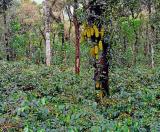
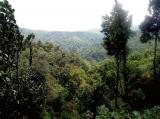
Birds, frogs and civet coffee in Madikeri

What comes to mind when you think of Kodagu or Madikeri? Coffee, homestays, waterfalls, elephant camps, Tibetan settlements, meaty-pork stews? How many of us know that Kodagu, unlike the other districts of Karnataka, is home to a range of wildlife species? And in particular, birds and reptiles?
KodaguKF06sept2013
I found the answers in a plantation located in Galibeedu village, Madikeri. I visited a 25-acre plantation, in which coffee, pepper, cardamom and vanilla are cultivated for a two-day stay. It is run by a North Indian couple who quit their jobs 20 years ago to develop this piece of land into an eco initiative that can be enjoyed by all.

The plantation is dense with coffee and other spices grown under the inter-cropping method. Guests are accommodated in tents and a handful of cottages. Locally grown organic food is served to them. The entire plantation is run on solar power, bringing it as close to the nature as possible.

The plantation also serves Civet Coffee, which is made out of beans that are defecated by the civet, a wild cat, that feasts on ripe coffee berries. The beans are washed, sundried and roasted to yield maximum aroma. Due to the enzymatic activity and the touch of amino acids in the Civet’s gut, these beans acquire unique flavours—making it less bitter, more aromatic and hence one of the most expensive and exclusive kinds of coffee in the world.

The night called for a few pleasant surprises—the deafening sounds of the crickets followed by a soothing array of fireflies. Though their charm might be ephemeral, they have a magical effect on you. I tried so hard not to blink, fearing the loss of a few glints. The minimally-lit tents with below 10-watt bulbs paved a perfect setting for this magical moment.

The plantation is an ornithologist’s delight. I spotted the Malabar Whistling Thrush, Woodpeckers, Racket Tailed Drongos, Fly Catchers and Kingfishers among several tiny birds. The plantation is also home to stick insects, hibernating butterflies, tree frogs and leaf frogs. Some belonged to the Lateralus family and are endemic to the Western Ghats region. The frogs were a sight to behold; they changed colours, had shiny-green skin, big, bulgy eyes and had perched themselves on twigs as if waiting for us to visit them.

My two-day stay passed away in a blur and I decided to walk down to the much talked-about stream surrounded by birds about five kilometres away before departing. As I trekked down, the clouds got thicker and darker. I spotted a flock of birds, all different in colour and kind, perched on a tree. It suddenly began to drizzle and the birds in search of shelter, flew from one tree to the other at once. The swarming birds flew low, making it one of my most colourful memories—tints of hidden orange and blue, reds and greys exposed—a flying rainbow indeed.

Ignoring the rain and time, I soaked and hiked at my own pace. When I got back, I was the only one for breakfast and I had missed out on my last dig at the sumptuous avocados too! Oh well!! What more can one ask for when you had the experience of a flying rainbow?

source: http://www.deccanherald.com / Deccan Herald / Home> Supplements> Spectrum / by Aishwarya Madineni, DHNS / September 03rd, 2013

Coffee plantations in Brazil, Colombia daze Indian planters

Brazil’s annual coffee production has surged from 30-35 million bags (of 60 kg) a decade ago to 50-55 million bags at present. / The Hindu

Coonoor :

After visiting the plantations in Brazil and Colombia, coffee planters in India admit that the industry here would have to change the way of planting and look for better varieties and clones to compete and sustain in the market.

Karnataka Planters’ Association had organised a tour of Brazil and Colombia in July. A 35-member team from India (comprising coffee farmers and industry people) visited Brazil and 17 of them went to Colombia as well.

‘We can adopt simple things such as hedge-row planting. Our terrain may not be suitable for harvester, but drip irrigation should be possible here,’ said the Chairman of Karnataka Planters’ Association Nishant R Gurjer.

Sharing his experience, he said ‘coffee plantations in Brazil are highly mechanized. This has resulted in their over dependence on scarce and expensive labour. They have also put in place drip/ fertigation systems and water management technology, contributing to high productivity.’

Brazil’s annual coffee production has surged from 30-35 million bags (of 60 kg) a decade ago to 50-55 million bags at present. There has not been a corresponding increase in area, but they have improved in cultural practice and come up with better coffee varieties.

There is no such thing as ‘off-year’ and on-year’ any more. This year, despite being an ‘off-year’ Brazil’s coffee production has been estimated at 55 million bags.

Brazil planters have moved away from frost areas to newer areas. They grow sugar cane, soya, corn etc in these areas.

The varieties and clones that they have come up with are amazing.

Colombia is the hub of coffee, but there is no Robusta here. Here, there is massive replanting taking place, he said.

Are Indian coffee planters threatened? ‘Yes,’ he says, before admitting to the need for changing planting practices, opting for newer varieties and improving productivity per acre.

source: http://www.thehindubusinessline.com / Business Line / Home> Industry> Agri-Biz / by L N Revathy / Coonoor – September 02nd, 2013

Narayani Holidays promotes Coorg as emerging Domestic Tourism destination

Will promote homestays in the district along with Karnataka Tourism Board

Bengaluru-based Narayani Holidays is extensively promoting Coorg as an emerging Domestic Tourism destination this year. Along with promoting the district’s offerings, the travel company, in association with Karnataka Tourism Board, is focusing on encouraging homestays in Coorg and has tied up with 150 medium-sized homestays, providing them a ready platform to showcase and promote this concept.

Speaking about the USP of Coorg as a tourist destination, A V Moorthy, Director, Narayani Holidays, said, “Coorg has many tourist attractions such as Talakaveri, the Abbey Falls, Dubare Elephant Camp and the famous Nisargadhama Wildlife Sanctuary that are a favourite with families and adventure groups. Homestays are also very popular here and we have tied up with Karnataka Tourism as well as a number of homestays to promote this trend.

source: http://www.travelbizmonitor.com / TravelBiz monitor.com / Home / by TBM Staff, Mumbai / Sunday, August 25th, 2013

Two long weekends bring cheer to tourism sector

Abbi Falls, near Madikeri town is attracting a large number of tourists. / Photo: K. Murali Kumar / The Hindu

Monsoon tourism destinations in State in high demand
Copious rain across the State has brought cheer to the tourism industry. The travel and hospitality sector is expecting big business during the two consecutive long weekends this month.

With popular destinations in Kerala such as Munnar and Thekkady taking a beating following the recent heavy rain, monsoon tourism destinations in Karnataka such as Kodagu, Chikmagalur and Shimoga are among those that are in high demand.

The first long weekend begins on Friday with holiday declared for Id-ul-Fitr while the next one coincides with the Independence Day holiday.

“It is now nearly impossible to get a good accommodation in Kodagu or Chikmagalur. They were booked even before the recent heavy rainfall in Kerala,” an official in a leading travel agency said.

As a number of people were travelling in taxis, getting a car had also become difficult, he added.

However, an hotelier in Madikeri said the season would have been better if the condition of roads was good. “Roads connecting Madikeri to Mangalore and Mysore have been damaged following the recent downpour,” he said.

source: http://www.thehindu.com / The Hindu / Home> News> National> Karnataka / by Staff Reporter / Bangalore – August 09th, 2013

CEAT and MTV collaborate to present ‘CEAT MTV Chase The Monsoon’

The show will premier on the web on 24 July

CEAT has tied up with music and youth entertainment channel MTV to launch ‘CEAT MTV Chase The Monsoon’ – a social reality show featuring a 21 day biking roadtrip where 8 riders, in teams of 2, set out with a limited budget to explore the sights, scenes & life during Indian monsoons.

The show will premier on the web on 24 July and will show the participants sharing their experiences live online through updates, pictures and videos on the website chase.mtvindia.com and on social media platforms like Facebook, Twitter and YouTube. The teleivision premier is slated for the last week of August and will be hosted by MTV VJ, Nikhil Chinapa & VJ Bani.

Participants for biking road trip can register as a couple or team of two and submit a video, photographs or blog entry about their adventurous biking experiences. CEAT and MTV will shortlist a total of 12 entries for the final event. Once shortlisted, the teams need to gather votes from friends and families till the 15 of July to get selected for the road trip. The teams finally selected will embark on a journey from Pondicherry to Mumbai over 21 days performing tasks and earning credits/money on the way in the stipulated task checkpoints. The journey will cover cities of Madhurai, Kanyakumari, Kochi, Munnar, Ooty, Mangalore, Hampi, Hubli, Goa and Pune.

Arnab Banerjee, Executive Director, CEAT said, “We at CEAT are constantly seeking to engage with the youth. The show perfectly represents the passions and adventures of riding in the monsoon in India, but also keeping it safe all the while. We hope that the show will capture the attention and imagination of audiences across the country.”

Aditya Swamy, EVP and Business Head, MTV India said, “At MTV we are constantly creating content and engagement around the smaller screens. We have a large digital footprint which reaches over 20 MM people. Its this reach combined with our understanding of young people that gives us the advantage in creating successful web content. In CEAT we have a partner who values the power of content in engaging with consumers, and we hope that this is the beginning of a long partnership.”

source: http://www.business-standard.com / Business Standard / Home> Companies> News / by BS Reporter / Mumbai – July 19th, 2013

Coorg plantation wins award for most romantic resort

Mumbai :

The Tamara resort in Coorg recently won the award for most romantic resort at a travel awards show hosted by a Hindi business channel. It is listed in the top 20 honeymoon destinations by Conde Nast Traveller India.

This is a luxury 56-key resort located in the hills of Coorg near Madikeri. It has been set up within an estate of 170 acres that produces coffee, cardamom, pepper and honey, and claims to be one of the few places in the world that is built inside a functional coffee plantation.

Its promoters say that it is set on a slight slope, and offers a breathtaking view of the Western Ghats and lush green forests along with two waterfalls flowing within the premises. Tourists either head out on guided treks and nature trails, or opt for a plantation tour with the coffee experience.

A bridge overlooking one of the waterfalls serves as a multi-cuisine restaurant. The resort is in the second phase of development that will have new luxury cottages and premium suites apart from sit-out decks at a height of 3,600 sq ft overlooking the hillside. An indoor private jacuzzi and spa is also on the anvil.

source: http://www.timesofindia.indiatimes.com / The Times of India / Home> Business> India Business / by Bella Jaisinghani, TNN / July 06th, 2013

Tatas to focus on beverages ‘power brands’

TataKF03aug2013
The brands that will be given a global push are Tetley, Tata Tea, Himalayan and Eight O’ Clock Coffee

The beverage arm of the $100-billion (Rs 6 lakh crore) Tata Group has prepared a blueprint that will see it devote its attention to four “power brands” in its quest to achieve a turnover of $5 billion (Rs 30,000 crore) in the next three years.

The list will include products such as Tetley, Tata Tea, Himalayan and Eight O’ Clock Coffee, which will be given a global push. At the same time, the Rs 7,271-crore Tata Global Beverages (TGB) will not take its eyes off regional products either, pushing these aggressively in their home markets. On this list are brands such as Kanan Devan, Chakra Gold and Gemini in South India, Vitax in Poland and Joekels in South Africa.

The blueprint, explains TGB Managing Director Harish Bhat, is in keeping with company Chairman Cyrus Mistry’s vision to invest significantly behind the firm’s brands. At the company’s recently-concluded annual general meeting in Kolkata, 44-year-old Mistry, who became chairman last year, said that the foundation for investment behind the firm’s products had been laid. “It is crucially important to grow our brands in India and overseas. There is also a need for innovations which need funds,” he said.

TGB derives 65-70 per cent of its revenues from international markets and the balance from India.

Tetley, one of the products on the global power list, already sells in a number of markets outside its home turf of the UK. This includes India, where it competes with Twinings and Brooke Bond Taj Mahal from Hindustan Unilever. Tata Tea, an Indian product, meanwhile, has been taken to markets such as Canada and West Asia, while plans are afoot to take Himalayan packaged water, also an Indian product, which was acquired in 2007 by the company, to Southeast Asia in the near term.

Bhat declines to indicate whether new products would be added to the global or regional list through new acquisitions. Outgoing Vice-Chairman R K Krishna Kumar, at the TGB AGM, had hinted that the company was looking at a new acquisition. He had said, “TGB will make a major acquisition and be a truly worldclass company, not in the tea or coffee space but in new beverages.”

As things stand, TGB derives nearly 70 per cent of its revenues from tea, 20 per cent from coffee and five per cent from water. The plan is to take the contribution of water and coffee to 10 per cent and 25 per cent, respectively, in the next three years, Bhat said. Tea’s contribution, on the other hand, would come down to about 60 per cent, he added.

TGB proposes to achieve this by pushing its joint ventures with PepsiCo and Starbucks aggressively in the next few years. “A total of 18 stores have been opened so far by Tata Starbucks in Mumbai and Delhi. This count will go up as we move forward,” he said.

On the joint venture with PepsiCo (called NourishCo), Bhat indicated that in-house brands Tata Water Plus and Tata Gluco Plus were doing well.

“Tata Water Plus has seen higher growth than Himalayan packaged water (in the June quarter). But this is in the markets of Tamil Nadu and Andhra Pradesh, where the brand is currently present. The plan will be to take it to other markets in the country,” he added.

source: http://www.business-standard.com / Business Standard / Home> Companies> News / by Viveat Susan Pinto / Mumbai – August 03rd, 2013