Category Archives: Business & Economy

Is promoting Indian coffee online

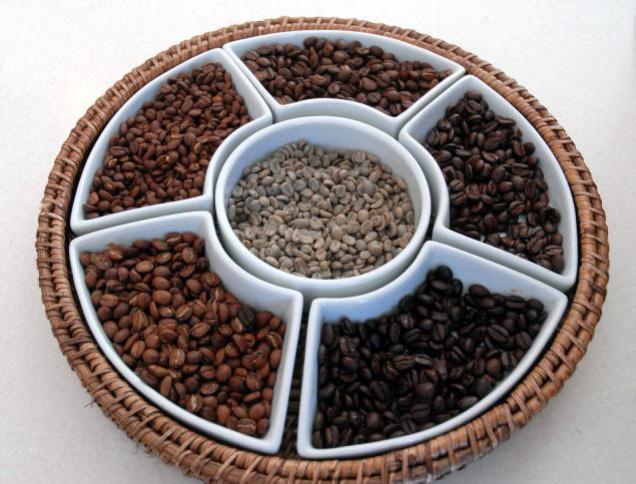
Want to savour a cup of home-brewed coffee, admired across the world, that has been delivered to your doorstep? Kunal Ross’s Theindianbean.com, a portal for selling coffee online, offers just that. Ross believes that India has a treasure trove of coffee plantations, yet people hardly get to enjoy the produce.

“Most of the good quality beans are exported — currently the figure stands at 60-80 per cent. The lack of 100 per cent pure Arabica coffee makes it harder to find the coffee we all crave,” he says. Which is why Ross travelled to the coffee estates of Kodaikanal and Coorg and tied up with farmers to supply him with single plantation beans. In August last year, he began spreading the word across social media. In November, he sent out his first shipment of coffee.

“We now have [coffee chains like] Starbucks and a Coffee Bean and Tea Leaf [in India]. But it is not financially feasible to go there everyday. The import prices of the beans make their coffee expensive,” adds Ross. “There is a huge gap in supply for Indians who wanted good quality Indian coffee. That’s where we come in.”

Single estate coffee is much like single malt whiskey — made in one estate to ensure quality, aroma and taste. The Indian Bean currently sells two varieties — Frowner’s coffee from Kodaikanal and Appa’s from Coorg. Frowner’s is a non-certified, organic coffee grown in the Pulney region on a single estate interspersed with fruit trees — avocado, jackfruit, orange, banana and berries. Appa’s, known as the “baap of all coffees”, is a certified non-organic variety. Soon, the website will also sell Watapi, a non-certified, organic coffee from Mysore. Each variety, says Ross, is distinct from the coffee beans grown in South Africa or southeast Asia.

A 250 gm pack of Appa’s costs Rs 270 while Frowner’s sells for Rs 350. Both are available in 500 gm packs too. The Indian Bean is one of the few ‘e-sellers’ of coffee; Delhi-based www.bluetokaicoffee.com was launched last year. The Indian Bean distributes coffee in Mumbai for free and accepts cash on delivery; Ross plans to deliver pan-India by the end of the month and accept netbanking, credit card and debit card payments as well.

Once acquired, the beans undergo quality control by Ross and his team and then a chemical analysis at the labs of the Coffee Board of India, where they are periodically sent for testing. On receiving an order, Ross ensures that the coffee is roasted according to the customer’s choice. This depends on how the coffee will be used — in an espresso machine, in a French press or in a percolator. The packs are delivered in two to three days. Since roasting is done only after the order is received, the fixed costs are minimum. Even then, the company needs daily orders of at least 20 kg on an average to break even by the end of this year. Currently, the order size is usually around Rs 300-Rs 400 from the eight or nine buyers who shop from the site daily.

With an investment of Rs 3-Rs 4 lakh, Ross has tie-ups with five farmers. He hopes to add at least 10 more this year, stick to his revenue target of Rs 36 lakh this year and around Rs 1 crore in the next. “With steep rents in Mumbai, fixed costs go up. But luckily, the farmers and I have a good rapport. They save the good stock for me,” he adds. The website encourages socially-conscious farming; Ross has been updating social media pages to promote home-brewing methods.

Currently, most of the website’s visitors are 30-40 years of age. Using social media and digital marketing, Ross is targeting a younger crowd. He also plans to make his presence felt in farmer’s markets, coffee expos and food festivals. Currently, Appa’s and Frowner’s are available only in Mumbai’s Leaping Windows (a comic-book library and cafe). It remains to be seen whether The Indian Bean can make a space for itself in a sector already teeming with options for a cuppa.

source: http://www.Business-Standard.com / Home> Beyond Business> People> People / by Sohini Sen, Mumbai / January 19th, 2013

Honey park in Kodagu ?

Kodagu, which was once famous for honey, now produces just a few tonnes from about 40 tonnes it used to produce annually nearly two decades ago. This drastic decline in the production of honey is due to sacbrood disease affecting the honeybees. Besides, the use of pesticides in plantations for coffee and pepper also sometimes renders it not export worthy.

To revive honey production in Kodagu, there is a proposal to set up a honey park, sources said.

source: http://www.TheHindu.com / Home> National> Karnataka / by Staff Reporter / Bangalore, February 15th, 2013

State gets honey from far off places to meet demand

Bangalore:

Changing food habits has transformed the market for honey over the last few years. The industry has grown over five times in this period, challenging honey packers to strengthen their backward linkage to ensure product availability in the market.

So much so that honey packers in Karnataka have been sourcing honey from far off States such as Punjab, Rajasthan, Madhya Pradesh, Bihar and Jharkhand since production in Kodagu and Shimoga districts, the traditional honey producing regions, is insufficient to meet the growing demand. From about 500 tonnes of honey sold in 2005 in Karnataka, the market in 2012-2013 has reached about 3,000 tonnes, regional honey packers’ estimate.

“Honey, which was earlier used in very small quantities for medicinal purposes or in rituals, has now become a part of the monthly grocery list of many homes,” J.D. Shivashankar, Chief Executive Officer of Prakruthi, told The Hindu . “The steep rise is due to the realisation of health benefits by a large number of consumers and also due availability in stores that has increased volume sales,” he added. This increase has put pressure on the packers sourcing for good quality honey.

Packers here source sunflower honey from Bijapur, and Latur in Maharashtra, Dhaniya and Ajwain honey from Madhya Pradesh, Jamun honey from Rajasthan, Mustard and Eucalyptus from Punjab, Mustard honey from Haryana, Karanj and Lichi from Bihar and Jharkhand and also forest honey from Sunderbans in West Bengal, all depending on seasons.

While most of the packers offer multi-floral honey, a combination of honey; a few provide uni-floral honey depending on the season.

“The demand increased substantially since honey was being promoted as a health product. Today, it is not about sourcing honey, but how well it is processed and packaged to maintain quality,” said Chaya Nanjappa of Nectar Fresh, a Karnataka Village and Industries Board backed unit. One of the biggest processers and packagers of honey, Mysore-based Nectar Fresh is an ISO 22,000 certified company that offers both multi-floral and uni-floral honey.

“We collect different kinds of honey from our mobile units, depending on the season in the north and ensure quality product is received,” she said. There is a huge growth in the bulk supplies to hospitality, pharma and Ayurveda industries, she added.

source: http://www.TheHindu.com / Home> National> Karnataka / by Sharath S. Srivatsa / February 15th, 2013

Bidappa to celebrate ‘Karnataka Day’ at Surajkund Mela

Karnataka has been selected as the theme state for the ongoing International Crafts Mela, Surajkund and ace designer Prasad Bidappa will choreograph a fashion show Saturday to celebrate ‘Karnataka Day’.

From colours, ethnicity, traditions to hospitality, the best of Karnataka is showcased at the 27th edition of the crafts mela started Feb 1.

Karnataka’s main event will take place Saturday with a fashion show and a bouquet of cultural programmes. The day will be observed as ‘Karnataka Day’, reads a statement.

“Our main intention this year is to portray the grandeur of the many worlds of Karnataka that many people don’t know about,” Arvind Jadhav, IAS, Additional Chief Secretary (Tourism), Government of Karnataka, said in a statement.

“We now want to bring to centre stage little known but highly intriguing facts about our silks and sarees, the Dharwad gharana and its contribution to hindustani music, the colourful patterns of Navalgund and Kasuti, the national flag manufacturing that is unique to our khadi units in Dharwad and many such lesser known stories,” he added.

As many as 400 artistes and artisans from across the state of Karnataka are participating at the mela and are presenting various forms of art, folk, music, dance and theatre shows.

Also the venue has been transformed into some of the popular monuments of the state including Tulabara from Hampi, Bara Kaman from Bijapur, Belur Chennakeshava Temple, Mysore Palace, Dasara Dolls, Jain Basadi, Pattadakal Temple Complex, Vijayanagara Empire and Hoysala Pillars.

There are a total of 75 stalls from Karnataka presenting their wares at the 15-day craft mela.

source: http://www.DeccanHerald.com / Home / by IANS / New Delhi – February 08th, 2013

Starbucks, Tata Coffee open roasting plant in Karnataka

US-based Starbucks Coffee Company and its Indian partner Tata Coffee today inaugurated a roasting and packaging plant in Karnataka that will cater to the domestic as well as select overseas markets in future.

“In a key partnership milestone between Starbucks Coffee Company and Tata Coffee Ltd, the two companies today inaugurated a roasting and packaging plant in Kushalnagar in Coorg, Karnataka,” the two firms said in a joint statement.

This facility will enable roasting and packaging of green coffee beans for Starbucks stores in India and select markets around the globe in future, it added.

Commenting on the development, Starbucks Coffee President (China and Asia Pacific) John Culver said: “This deepens our sourcing relationship with India’s coffee farmers and further demonstrates our long-term commitment to sourcing high quality arabica coffee.”

The facility is spread across 8,258 sq ft and has an installed production capacity of 375 MT. The plant has three major sections – green coffee storage and handling, roasting, and packing and dispatch.

“The plant leverages our combined strengths and passion for sharing the finest quality coffees with customers. This momentous occasion signifies a milestone development in our relationship with Starbucks as we roast and package our locally sourced espresso roast and prepare to export roasted and packaged coffees to select markets,” Tata Coffee Managing Director Hameed Huq said.

Earlier this week, Starbucks had said India will become one of its top five global markets in the long-term and will continue to expand aggressively here. It did not share any timeframe to achieve this target.

The company, which missed its target of opening 50 outlets in the country by 2012 at an investment of Rs 400 crore, however, remained non-committal on by when it would be able reach the milestone.

Tata Starbucks, the global coffee giant’s equal joint venture with Tata Global Beverages for the Indian market, has opened its 7th outlet in the country at Connaught Place here.

The JV had opened its first outlet in India in October 2012 in Mumbai, where it currently has four cafes. Last month, Tata Starbucks opened two more outlets at the Indira Gandhi International Airport here.

source: http://www.business-standard.com / Home> Companies> News / by Press Trust of India / New Delhi, February 08th, 2013

Operate only on permitted routes, Kodagu RTO tells KSRTC

Private bus owners accuse KSRTC of running buses without permits

Mohammad Habibulla Khan, Kodagu Regional Transport Officer, on Monday asked the Karnataka State Road Transport Corporation (KSRTC) officials in Madikeri not to ply the KSRTC buses in the district without valid permits.

He was presiding over the ‘Sarige Adalat’ (Transport Adalat) meeting. His appeal came in the wake of complaints lodged by the private bus owners in Kodagu that many KSRTC buses plied without valid permits. The private bus owners had alleged that KSRTC buses were running without permits for a long time, Mr. Khan said.

Lachme Gowda, depot manager, KSRTC, said the KSRTC buses were being run in certain locations in the district following demands by the commuters. At no point, the KSRTC was out to compete with the private bus owners. The issue would be brought to the notice of the Deputy Commissioner and sorted out, he said. Mr. Khan said KSRTC buses could not be operated without licence and the authorities ought to follow the court orders.

Mr. Khan said he had slapped 40 cases on KSRTC buses that were plying without licence in the last three years in Kodagu. It meant that the corporation should follow the transport rules. The motto of both KSRTC and private buses should be to provide service to commuters rather than competing with one another.

Hosur Ramesh Joyappa, president of the Kodagu Private Bus Owners’ Association, said the association had been complaining about KSRTC buses being operated in the district without permits in the last three years. Let the RTO take up a survey of the routes in the district, he demanded. Sarvajanika Hitarakshana Samiti president Katti Mandaiah said the KSRTC must stop trying to dominate the private routes.

Buses cannot be operated without licence: RTO

‘40 cases slapped for plying buses without licence in the last three years’.

source: http://www.TheHindu.com / Home> News> National> Karnataka / by Special Correspondent / Mysore, February 05th, 2013

Local bean helps Starbucks serve cheaper cuppa


Mumbai , JAN. 29:
Next time you have Starbucks coffee in any of the neighbouring countries in South-East Asia, know that you are paying more than at home. Coffee prices at Starbucks in India are lower, thanks to its local sourcing arrangement with Tata Coffee.

“Starbucks prices in India are definitely lower than in Singapore and Malaysia. In fact, India is the only country where Starbucks is sourcing beans for its coffee chain. At the same time, the Starbucks experience in India can be compared to any of its outlets across the world,” said Meera Harish, Vice-President, Sales and Marketing, Tata Coffee.

Starbucks in India is at an advantage than in other countries where it has to import its coffees.

“There are cost advantages, as Starbucks can avoid freight charges involved in getting coffee from Europe or the US. The operating costs too are lower for Starbucks when it sources locally,” said Harish.

SOURCING DECISION

Sourcing coffee from India was not just based on Starbucks’ decision to forge a joint venture with Tata Global Beverages (the parent company of Tata Coffee).

“Starbucks was impressed by the quality of our coffee and Tata Coffee having Asia’s largest plantation. That is why Starbucks decided to source its coffee from us and also export it out of India,” claims Harish.

After its sourcing pact with Starbucks last year, Tata Coffee has also set up a new roastery at Kushalnagar in Madikeri district of Karnataka. The roastery can be scaled up depending on the demand from Starbucks. Tata Coffee is the country’s third largest exporter of instant coffee. But unlike Tata Global Beverages, which is a B2C player catering to the retail trade, Tata Coffee continues to remain a B2B company supplying to private labels across the world.

“Tata Coffee is basically a commodity player in the B2B segment and supplies to private labels. Today, our biggest global market is Russia followed by Japan. There are new challenges for the company as it would like to expand to new geographies,” said Meera Harish, who recently moved from Titan Industries within the Tata Group.

Purvita@thehindu.co.in

source: http://www.TheHinduBusinessLine.com / Home> Industry> Marketing / by Purvita Chatterjee / Mumbai, January 29th, 2013

What a way to end, indeed!

Day 3 at the Prasad Bidapa Fashion Week Bangalore 2013 was reassuring. While some of the best and most talked about designers were left for the final day — the collections were at two ends of the spectrum, either being wonderfully interesting or being terribly drab. Here’s our roundup of what worked and what didn’t at the finalé day of PBFW…

Smallshop by Jason & Anshu was the perfect way to begin and while we couldn’t get enough of the sneaky flirtatiousness in most of their pieces, we really wished the colour palette was a bit more summery. That said, the natural silk hues worked wonders as did the fabrics and the the hints of florals and pastels. We loved their silhouettes and we’re now officially Jason and Anshu fans for life.

It seemed like a day of duos and Anu & Susan’s latest collection took to the ramp next. We’ve never seen lace and crochet thread work look so wearable and we love how they took the fabric out of grandma’s closet and made it sexy, risqué even. From gorgeous detailing to great cuts, this was one of the fashion highs of the evening.

Yashaswini Naik, whose collection raised the temperature quite a bit, proved that simplicity and clear design can win anyone over and we were mighty proud of the designers brazen collection. First of all, a huge round of applause to a female designer who attempted a male collection and secondly, applause for the amazing wearability of the clothes. We loved the colour palette and we think the printed beach shirts in whites and light blues — was something we’ve all been looking forward to for ages.

Nimirta Lalwani, as much as we assumed would be impressive, failed to create a stir and while a lot of people might call her clean lines and sombre coloured silhouettes fashionable and even trendy, we choose not to. The dresses looked lovely on the models, but assuming that these clothes would add or even complement someone’s personality, left us wondering whether playing it safe was the right way to go?

Indian fashion with a distinct European flavour is something that’s sure to catch some attention and Ritu Pande’s collection was inspirational. With motifs from European art mixed beautifully with Indian-inspired silhouettes — this is what fusion should be like. We loved the great lines, the sombre colours and the general feel of the collection. This was a winner.

Lokesh Ahuja’s collection of wonderfully structured suits that came up next, worked on many levels, because they were being showcased by a bunch of drop dead gorgeous models. What we were left wondering, however, was if this collection would look equally ‘fine’ on a common Bangalorean man. We’re still thinking…

A celebration of male fashion done, we were then offered Pop Patola, a collection we’ve been excited about all year through. Deepika Govind proved her mettle and retained the title of one of the city’s best designers with this collection. We couldn’t get enough of these clothes — funky, laden with character and colourful enough to eat. With a wonderful mix of traditional silhouettes and modern pop culture motifs and the exact opposite — modern silhouettes with traditional motifs: Pop Patola had us the moment the first model sashayed onto the ramp.

The grand finalé was grand indeed. Seema and Jamila Malhotra’s collection was loud, shimmery (true to its name) and colourful enough to leave the audience entranced. The pieces showcased were also faultless and the workmanship on them, incomparable. What didn’t work for us as a Bangalore audience was the lack of a Bangalorean connect. Unlike Shobha Nickham and some of the other designers who also presented bridal-themed collections laden with city references, this collection was very alien to us. That said, it was a visual pleasure and was the perfect way to end three days of high Bangalorean fashion.

A huge hurrah goes out to Prasad Bidapa and team for the great show, the even better planning and the whole wonderfully executed event.

source: http://www.dnaindia.com / Daily News & Analysis / Home> LifeStyle> Report / by L Romal M Singh, Agency: DNA / Wednesday, January 23rd, 2013

Kodagu homemade wine a hit among tourists

Shops get wine for Rs. 100 to Rs. 110 a bottle

Kodagu is not only known for its natural beauty and salubrious climate, but also for oranges, coffee, spices and honey. Latest addition to the famed list is homemade wine. It is good tidings as the sale of homemade wine has been increasing in the district, thanks to the increase in the number of visitors, particularly to Madikeri.

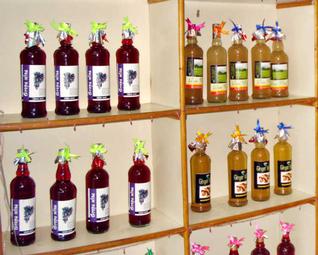
Tourists have found homemade wine a good addition to their kitty when they go back from Kodagu. Wine is made from not just grapes or gooseberries. It is also made from betel leaves, ginger, pineapple, passion fruit, rice, and banana.

Sale of homemade wine is good during weekends when there are many visitors to Madikeri. Shops in Madikeri get supply from winemakers for Rs. 100 to Rs. 110 a bottle (750 ml). In turn, they sell it for Rs. 180 a bottle, even exceeding Rs. 200 on occasions and depending on the variety.

Initially, winemaking and consumption was limited to households in Kodagu. Thanks to home-stay visitors, who flock the district these days, wine has gained extremely in popularity, both in terms of consumption and sale, says Anil of Madikeri. There are specialists who make sugar-free wine.

Though, according to a rough estimate, more than 500 bottles of wines are sold in Madikeri during weekends, the quantum of business it churned out is yet to be arrived at.

It is estimated that wine is made in more than 1,000 homes in Kodagu.

There are reports that Stree Shakti groups too make wine. Wine is sold in a good number of shops across the district.

Wine sale will be high during winter. It has become part of the culture of Kodagu, according to K.T. Baby Mathew of Madikeri.

The Karnataka Wine Board, which promoted making of grape wine, can do a lot in this regard, he adds.

However, presence of liquor was found when samples collected from Virajpet were tested in a laboratory in Bangalore last year. Wine makers are expected to obtain licence from the Karnataka Wine Board.

The Excise Department had contended that certain winemakers mixed liquor with wine to boost its efficacy. Mixing brandy or whisky or rum will reduce the fermentation period.

Sunil, a winemaker, denies this and says there is no need for mixing liquor with wine. In some cases, the department had asked winemakers to stop making wine.

However, certain organisations had taken exception to the conditions imposed by the department stating that winemaking was part of local culture and it could not be stopped.

source: http://www.TheHindu.com / Home> National> Karnataka / by K.Jeevan Chinnappa / Mysore, January 19th, 2013

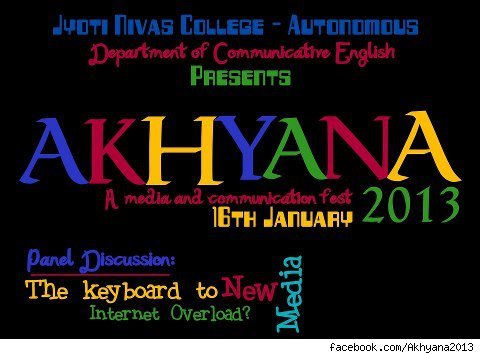
Akhyana 2013: The Keyboard to New Media – Internet Overload?

The Department of Communicative English conducted their annual Media Fest on January 16, 2013. This year the theme for the Fest was, “The Keyboard to New Media – Internet Overload?”. The event was preceded over by the College’s Principal, Dr. C.S. Elizabeth, Karan Medappa, Public Relations Professional and Freelance Model, Islahuddin, Manager of Qyuki and Rakesh Kumar, Radio Jockey at Radio One.

New media refers to on-demand access to content anytime, anywhere, on any digital device, as well as interactive user feedback, creative participation and community formation around the media content. In 1984, Rice defined new media as communication technologies that enable or facilitate user-to-user interactivity and interactivity between user and information.

The Panel Discussion that was held in the first session of the program was the highlight of the day.The Panel Discussion focused on the theme, “The Keyboard to New Media – Internet Overload?”. The Panelists included Karan Medappa, Islahuddin, and Rakesh Kumar. They briefly discussed the pros and cons of the Internet and the safety that one needs on the internet. “How much is too much?” was a common question that was echoed by each one of the panelists. Mr. Islahuddin spoke about how the times have flown – from the times of the ‘kabutaar’ letters to online communication. He also stated that the Online medium can swing both ways – good and bad – and it really depends on how we use it. Echoing this was Mr. Rakesh Kumar, Radio Jockey, who states, “How much of the internet or information is actually on your hands?”. Karan Medappa, on the other hand, stated the importance of content and the importance of Public Relations in a fast changing world.

To break the serious tone of the first session, the Rock Gospel Band, Apocalypse performed. Their performance was spread over a period of half an hour. Their performance garnered much appreciation from the audience. The Guest Singer, Kekri – a runner up of Naga Idol, also held the audience’s captivity and had gotten a lot of support from the audience. Their performance can be seen on YouTube, at this link.

There were various events spread through out the day and included Ad Presentation, Internet Spoof and Photography. The participants participated in all the events with great enthusiasm an showed great interest. The Paper Presentation saw participants talking about various topics, ranging from getting noticed on YouTube to the power of new media in social media. The event, Ad Presentation, saw a lot of participants enacting out a advertisement to promote the chosen topic and saw an variety of talent come out. Topics varied from Women safety to promoting a new motorbike.

The fest ended on a successful note, with an ever eager audience and participants from various other colleges. One of the participants of the Fest stated, “I have learned a lot at the fest today, especially about the New Media. Along with the learning that I had today, I had a lot of fun and an great experience.

source: http://www.coolage.in / Home / by Pooja Svathi Mahesh, Jyotivas College – Bangalore / January 19th, 2013