The fest will likely be organized using nearly Rs 1.50 crore funds and the family has sent a proposal to the state requesting sanctioning of Rs One crore funds.
For representational purposes (Photo | PTI)
The iconic Kodava Hockey Namme will take place next year following a break of four years. The same was confirmed in a press conference by the Appachettolanda Family on Tuesday.
“After 2018, the hockey fest did not see the light of the day due to natural disasters and pandemic situations. However, the 23rd annual fest will be hosted in 2023 in a grandeur manner. The fest will be held at Napoklu General Thimayya Ground. Over 350 Kodava families are likely to take part in the tournament,” confirmed Appachettolanda Manu Muthappa, the president of the hockey fest.
The hockey tournament will begin on February 20 and will go on till March 6. The website and the logo will be released on 2nd October at Napoklu Kodava Samaj. The fest will likely be organized using nearly Rs 1.50 crore funds and the family has sent a proposal to the state requesting sanctioning of Rs One crore funds. The press conference was headed by the Appachettolanda family patted Mittu Erappa and other family members.
‘Kodava Hockey Namme’ has been organized in the district for 22 years. However, the event was cancelled in 2018 due to floods and a pandemic situation. The 2023 event will be the 23rd year of the hockey fest. The hockey tournament played among the Kodava community has gained international fame as the tournament has broken the ‘Limca Book of Records’ and ‘Guinness World Record’ for the highest number of team participation.
The 2018 Kulletria Cup Hockey saw participation from 333 Kodava families. It was in 1997 that the first Kodava family hockey tournament was played and was organized by the Pandanda family. The game started off with international rules and standards and it continues to provide a stage for youngsters and seniors alike to unravel their passion for hockey.
source: http://www.newindianexpress.com / The New Indian Express / Home> States> Karnataka / by Express News Service / September 06th, 2022
Even as the renovation works of the famed Igguthappa Temple is underway, the temple’s Devatakka family has alleged that the temple practices and traditions have been threatened in the name of renovation.
Addressing a press meet here yesterday, Devatakka Paradanda Subramani said that the renovation of temple steps on the eastern side has been completed.
Maintaining that use of these steps has been banned since ages, he said that the steps will be allowed for use only when someone vows to make a pledge of truth under special circumstances. But some persons are now attempting to allow devotees to use the steps by advocating that these steps are indeed the main entrance to the Temple, which is not at all correct, he said.
Appealing the devotees to enter the Temple through the steps on the north-western side of the Temple, Subramani argued that using the eastern side steps is a deviation from customs and practices that were prevalent all these days.
Clarifying that they were not against Temple works that have been taken up along with the renovation, Subramani said that it is important to safeguard the customs and practices that are being followed for ages.
Devatakka and Bhakta Janasangha Vice-President Paradanda Dolly accused politicians of violating the age-old Temple customs and practices. He urged the authorities to maintain the sanctity of the Temple by following old customs and practices.
Devatakka Paradanda Vittal Bhimaiah said that the issue was discussed at a Bhakta Janasangha meeting, during which it was resolved to ban use of steps on the eastern side for entering the temple. Pointing out that the Paradanda family has been entrusted with the responsibility of listing pujas, rituals, festivals, fairs, astrological predictions etc., Bhimaiah alleged that a group was making organised attempts to sideline Paradanda family.
Paradanda family Pattedar and Takka Chief B.Appanna, Devatakka’s Paradanda Muddu Subramani and Paradanda Sada Nanaiah were present.
source: http://www.starofmysore.com / Star of Mysore / Home> News / September 03rd, 2022
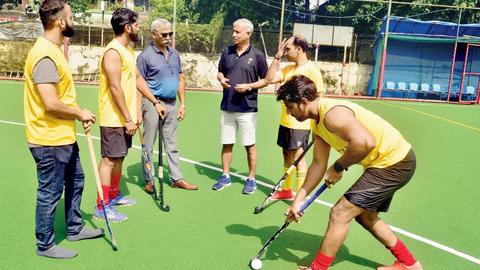
Team members Rohan Nanjappa, BK Muthana, Nitin Chengappa and BK Appachu with manager Jagdeep Nanjappa and Coorg Association Mumbai president and former India captain MM Somaya at St Stanislaus Sports Complex in Bandra where they have played tournaments in the past. Pics/Shadab Khan
An organisation founded by the people of Karnataka’s Kodagu district has persevered for 100 years in the city by supporting the Coorgi community and celebrating its culture, while forging deep ties with Mumbai.
Last week, Mumbai*s Coorgi community celebrated Kailpodh, a festival to signal the end of transplantation of the paddy crop. Agricultural implements and weapons were worshipped. “Our festivals,” says MM Somaya, president of the Coorg Association Mumbai (CAM) and former India hockey captain, “help us get back to our roots.”
Coming up next, say CAM members, is Kaveri Sankramana in mid-October that celebrates the birth of the river in Coorg. November will bring with it the harvest festival, Puttari. On these occasions, the Association*s catering committee meets in the office building in Airoli to prepare traditional delicacies such as pandhi curry (pork curry), kadambuttu (rice dumplings), akki oti (rice roti) and thambuttu (a sweet dish made with bananas). “This has been the tradition since the establishment of the Association,” says Lekha Nanjapa, head of the catering team, “Initially, people carried food from their homes, but gradually, we started gathering a day before to cook in the community kitchen, spending a fun afternoon over stories and gossip. The kitchen has old brass cauldrons with kalai coating, large enough to cook 20-25 kilos of food at one time.”
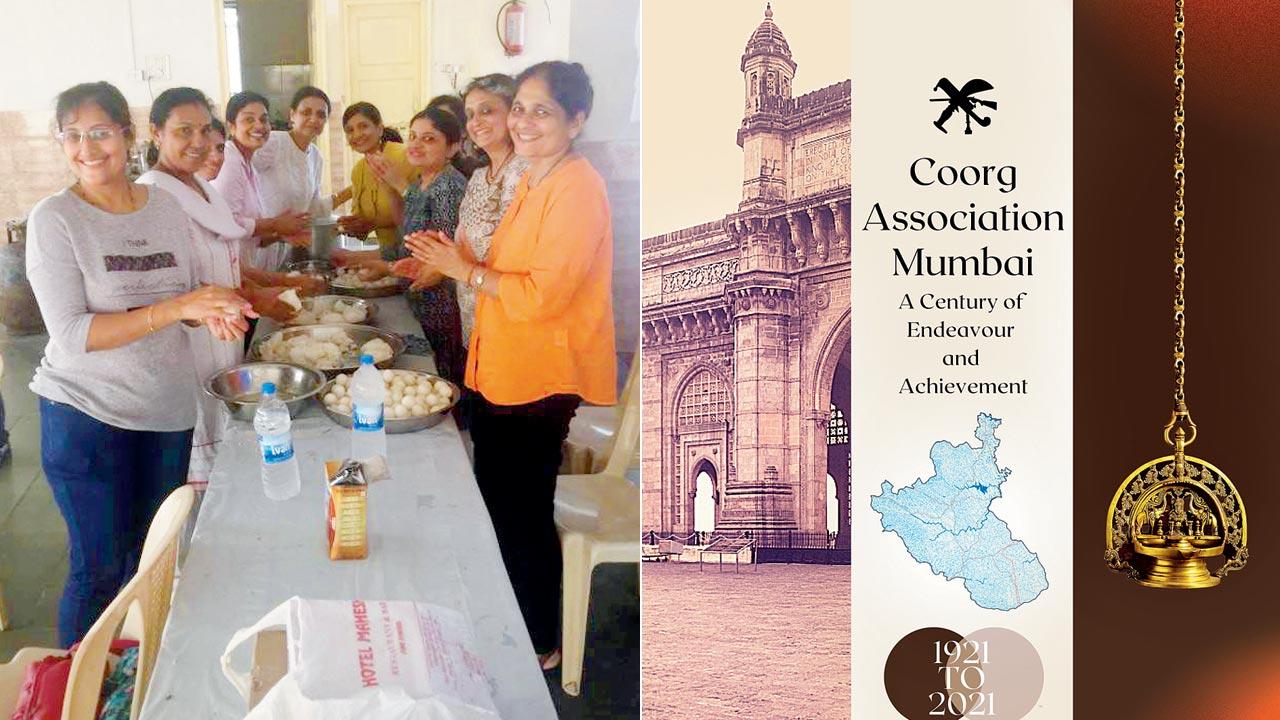
Members of the Association*s catering committee meet at the office in Airoli on the eve of festivals such as Kailpodh to prepare pandhi curry and kadambuttu; (right) CAM celebrated its centenary last year, and the members have just released a book carrying a compilation of stories, anecdotes and accounts to mark the occasion
Members of the Association*s catering committee meet at the office in Airoli on the eve of festivals such as Kailpodh to prepare pandhi curry and kadambuttu; (right) CAM celebrated its centenary last year, and the members have just released a book carrying a compilation of stories, anecdotes and accounts to mark the occasion
CAM celebrated its centenary last year, and the members have just released a book to mark the occasion. Carrying a compilation of stories, anecdotes and accounts written by members, Coorg Association Mumbai: A Century of Endeavour and Achievement, hopes to find its way to Coorgi associations in other parts of the country too.
CAM, says Somaya, was launched as a way for the community to gather and observe customs unique to their culture. Among the efforts that have kept the members close is the setting up of the Association building in Airoli in 1996. Apart from serving as a venue for events and a way to raise money for charity, it also has residential rooms available at nominal rates to youth coming in to Mumbai from Coorg for education and work. “The objective,” Somaya explains, “is to guide the younger generation and give them a chance to get a foothold in the city.
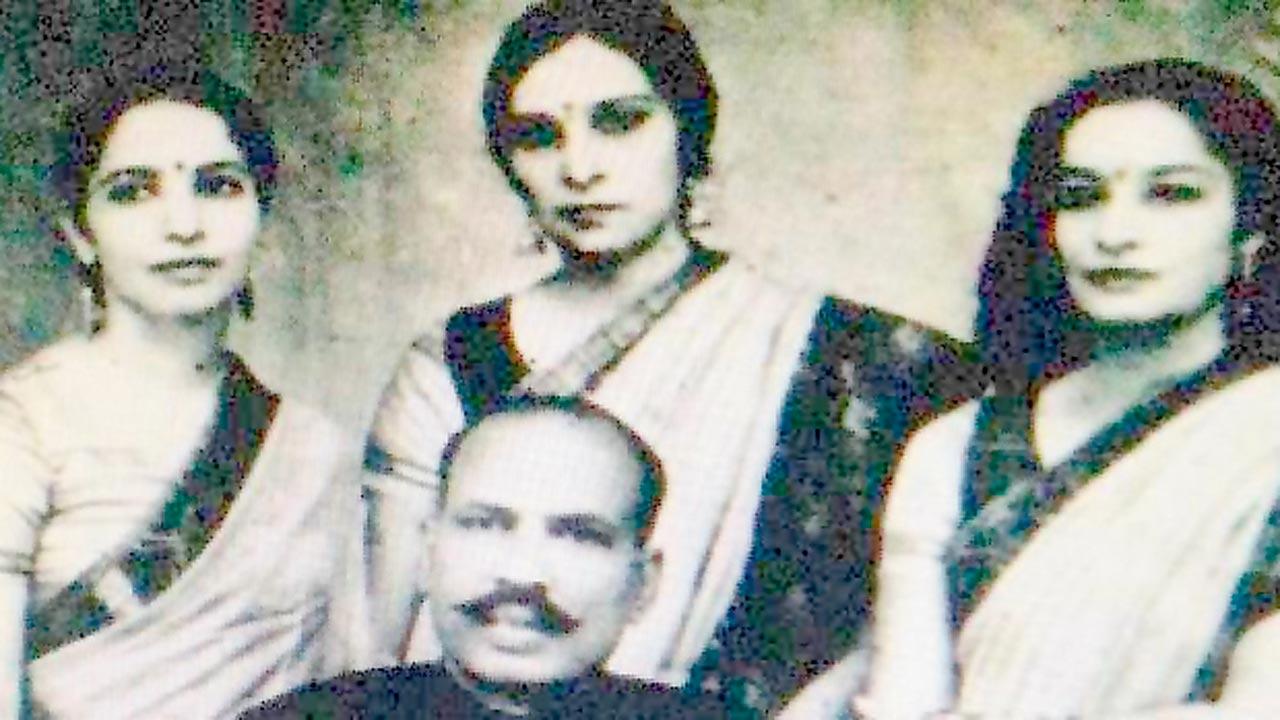
Among members of the Kodava community who flourished in Bombay were the Codanda Poovaiah sisters, prominent in Indian dance. Their bungalow at Chowpatty was regularly visited by practitioners
Among members of the Kodava community who flourished in Bombay were the Codanda Poovaiah sisters, prominent in Indian dance. Their bungalow at Chowpatty was regularly visited by practitioners
CAM*s social service initiatives include extending support to the home district at the time of natural disasters, and helping deserving candidates study further. Somaya speaks of two young girls, daughters of displaced families, who are presently studying engineering at the Coorg Institute of Technology, Ponnampet, and whose college fees, boarding and lodging expenses are being borne by CAM.
Nitin Chengappa, a senior bank executive who lived in Chennai, Kolkata, and Delhi before moving to Mumbai 18 years ago, says that the bond between its members sets the Mumbai Association apart. “I have been part of the Coorg Association in every city I have lived in, but the ties here are very strong,” he notes. “It comes from the fact that generations have lived in Mumbai, so there is a sense of ownership. The core team are family members of those who have been involved since the foundation of the Association.”
Community members have also, MM Somaya points out, merged well with the city pursuing careers in administration, the armed forces, business and sport, which has only served to further strengthen the ties. “Our people have contributed to the society here,” he states, listing individuals like Kodandera C Madappa, who held the post of Director General (Shipping) in Mumbai; Bollera C Cariappa, who used to be CIDCO Chairman and later served as head of Bombay Municipal Corporation; Kuppanda M Chinappa, the Managing Director of TATA Electric, and the Codanda Poovaiah sisters who were prominent names in Indian dance.
But the activity that has glued this small community and CAM*s members together is undoubtedly their love for sport, especially hockey. The Coorg XI Hockey team, founded by Kandarthanda Kuttappa, was registered with the Bombay Provincial Hockey Association in the 1930s and still plays in the Mumbai Hockey League. “We have endeavoured to use sport as a unifier,” admits Somaya, the Association encouraging its growth by picking up budding players from Coorg and bringing them to Mumbai to get exposure, while also supporting other games such as cricket and bridge. After a 25-year gap, when no team was playing in the league, Biddanda Jagdeep Nanjapa took over its running in 2001. Since then the team has played at prestigious national-level tournaments such as the Bombay Gold Cup.
For Nanjapa, who was born and brought up in Mumbai, the attachment to CAM has been generational. It started with his father, who migrated to the city in the 1940s and continues with his sons, who are now active members. This separates him from the floating Coorgi population that comes to Mumbai to work. The generational association has also meant that the family has borne witness to the institution*s evolution. “Things were tough initially – recession in the 1930s brought in Kodavas who found living in Coorg difficult and ventured to different parts of the country. We used to book outside halls, take small donations and were just about meeting expenses. Today, our people are doing better. The Association is also able to generate income by renting out the hall at the office building [for functions]. We are faring well as a community and as an Association.”
source: http://www.mid-day.com / mid-day.com / Home> Sunday Mid-day / by Sucheta Chakraborty / September 04th, 2022
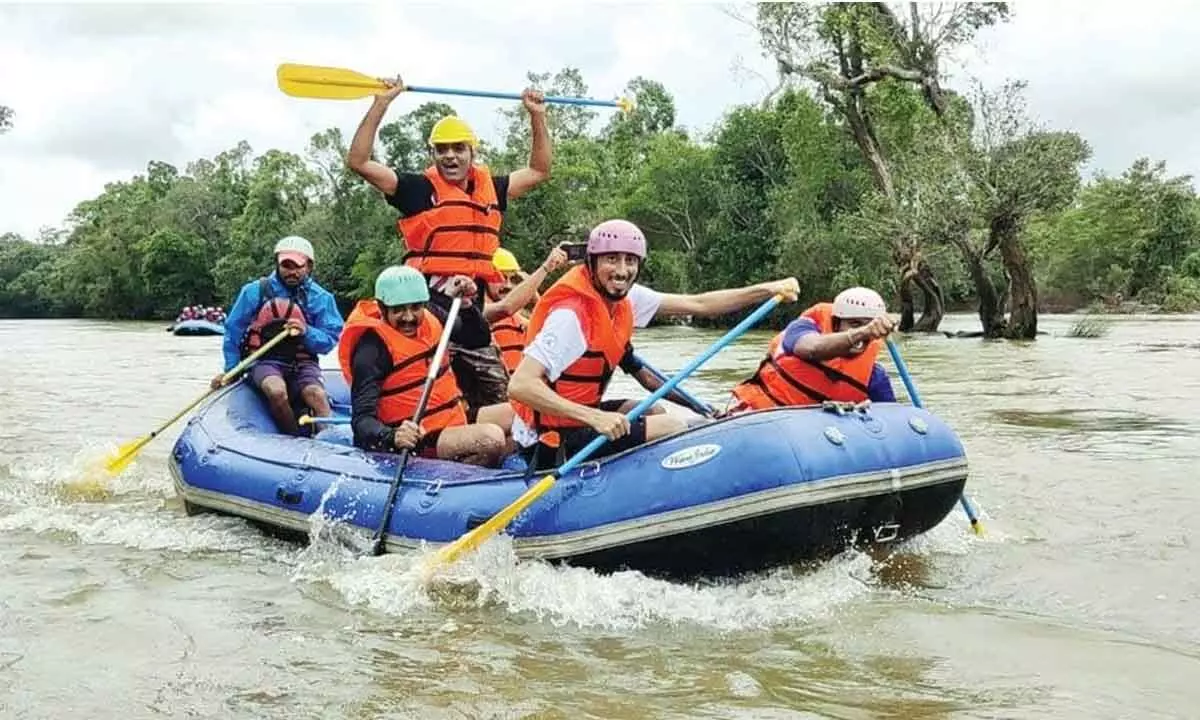
River rafting in the Cauvery at Dubare in Kodagu. | Photo Credit: file photo
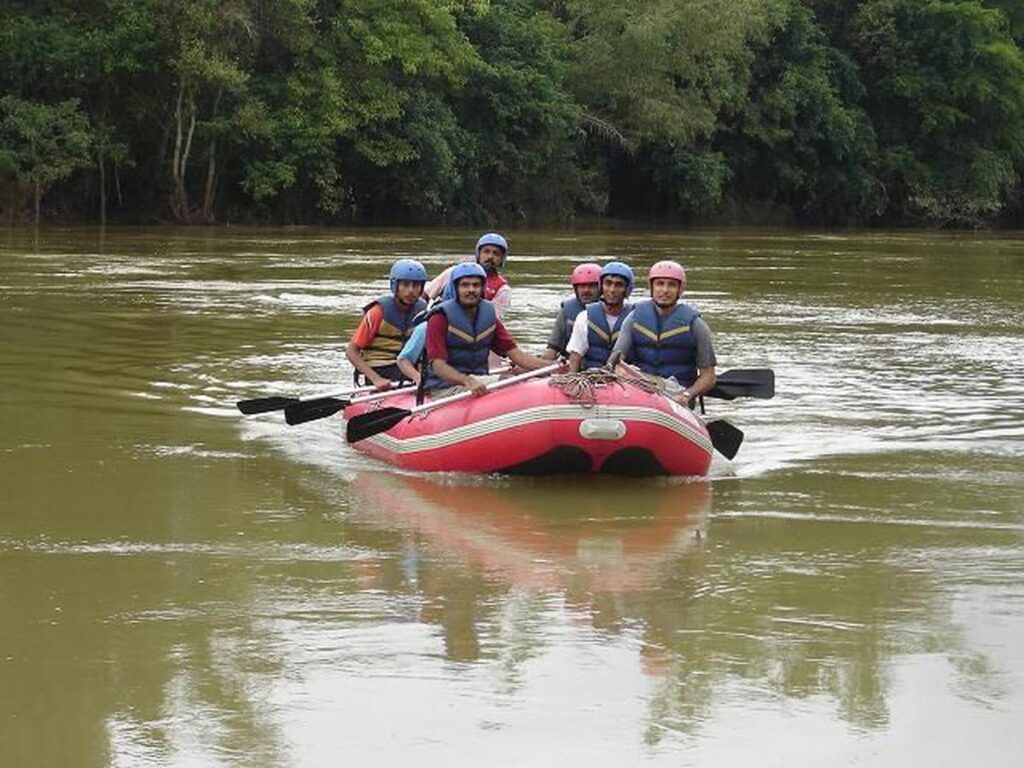
Water sports enthusiasts have to spend more to get the thrill in the fast-flowing waters as the rafting fee in Kodagu’s popular adventurous sports’ venue has been hiked.
Also, more boats will now be available for rafting with permission granted for operating additional boats at Dubare, Barapole, and Kumaradhara.
The Kodagu district administration has given its approval for operating a total of 75 boats for river rafting at Dubare near Kushalnagar.
As many as 65 boats were regularly operated and an additional eight boats were added for increasing the number of boats to meet the demand from the adventure freaks for river rafting.
At a meeting in Madikeri chaired by Deputy Commissioner B.C. Satish on Thursday, permission was granted for operating one more additional boat for rafting operations.
At Barapole rafting venue, permission was granted for operating three more boats, taking the number of boats to six.
Two agencies have come forward to operate river rafting at Kumaradhaara. In total, permission has been granted for operating four boats.
The meeting gave its nod for hiking the rafting fee at Dubare from Rs 600 to Rs 800. It was resolved to collect a fee of ₹1,200 at Barapole and ₹200 at Kumaradhara.
The Deputy Commissioner told the river rafting operators to ensure that the boats are in good condition and no inconvenience was caused to the adventure enthusiasts. He suggested that a portion of revenue earned in Dubare camp can be used for improving the infrastructure.
source: http://www.thehindu.com / The Hindu / Home> News> India> Karnataka / by Special Correspondent / Mysuru – September 01st, 2022
Cothas and Levista have built a legacy of coffee marketing in the southern region of India.
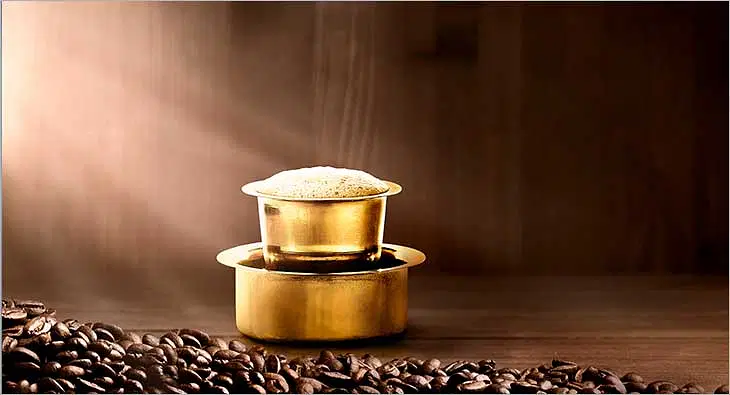
Coffee brands work slightly differently in the Southern states of India than the North. The target audience is large and covers most demographics. Coffee in the south is not seasonal but a daily part of the consumer’s lives. If there is any part of India that knows its coffee well, it’s the southern region – not only is it the place where most of the coffee is produced, but it also the biggest consumer.
The Asia-Pacific Ready to Drink (RTD) Coffee Market is projected to grow at a CAGR of 3.5% during the forecast period (2022 – 2027), according to ResearchandMarkets.com
So, who are the big names here?
Cothas and Levista have been ruling the coffee market in the South for some time now.
A brand established in the late 40s, Cothas quickly turned into a go-to name for filter coffee with its first outlet in Bangalore. By late 60-70’s the popularity of Cothas coffee grew immensely. The brand opened 45+ Cothas experience stores in India. The coffee was produced and sourced from one the most popular coffee bean manufacturing regions of the country, Chikmagalur and Kodagu.
Cothas has their final product finishing at their state of art factory. The have mastered in providing different varieties of coffee powder based on the preferences of consumers and expanded globally across the years as their business continues to grow. They are expanding their products and have introduced decoction, cold beverage, snacks & coffee brewing apparatus. They are found in most of the South region in different vending machine and coffee brewers for corporates, institutions and hotels, along with super markets and original stores.
On the other hand, Levista is part of a larger coffee legacy called SLN, one of the pioneers of coffee companies in the country. Its roots are deep seated in Coorg, where coffee plantations are found in abundance. In Coorg, Levista will probably be the first of the brands that you will see in the hill station of Karnataka.
Rolled out in the year 2017, this brand ended up expanded rapidly with products ranging from filter to instant coffee. In 2021, the company said it plans to more than double the number of outlets in Tamil Nadu and Karnataka from 42,000 to one lakh units, besides increasing the number of modern trade outlets across the country from 1,000 to 5,000.
source: http://www.exchange4media.com / e4M / Home> Internet Marketing News> Latest Internet Marketing News > Marketing / by Nilanjana Basu / August 26th, 2022
Kodagu, a tiny district of state with unique culture is yet to get railway connectivity. Thanks to elected representatives and government.
Madikeri:
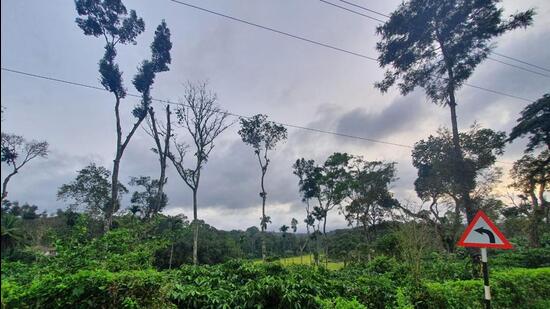
Kodagu, a tiny district of state with unique culture is yet to get railway connectivity. Thanks to elected representatives and government. Kodagu situated amid western ghats is only district in south India deprived of railway connectivity. The cry for railway connectivity have decades of history.
It was K H Muniyappa, the then state minister for railways in the year 2011 budget announced railway connectivity to Kodagu. In the year 2012 the railway department launched the first stage of the preliminary survey works on the route at Mysuru -Kushalnagar line of 87.5 kilometres. The department completed preliminary engineering-cum-traffic survey between Mysore-Kushalnagar in four months and the project cost was estimated at Rs 651.4 crores. But even after a decade the work was not taken up. After the survey higher railway officers opined that it is economically not viable owing to less passenger traffic in the route. Amid this environmentalists objected to the project saying forest would be destroyed , thousands of trees would cut to install railway track
It was in the year 2014 Lok Sabha elections the Mysore Kodagu MP Pratap Simha in a TV debate announced that he would bring train to district before 2019 and would not contest 2019 polls if work is not done. But Pratap Simha failed to keep up his promise and even got elected in 2019 election again by promising that union government sanctioned the project. Till today the project is lying on paper and no progress was seen. The construction wing of South Western Railway (SWR) awarded tender for final location survey (FLS) in the year 2020 to Hyderabad-based company called Mata Constructions and Builders Limited to conduct the survey but the company abandoned the work and left. Again the work was awarded to Hyderabad-based Aerial Construction (P) limited but this bidder also left without conducting survey.
In July last, the SWR construction division awarded the tender for FLS to Bangalore-based Sipra infrastructure development Private limited for Rs 1.65 crores. The period for completion of work is six months , but the company is yet to begin work through drone cameras.
Speaking to this reporter on Friday SWR Mysore division senior engineer said that the company officials would start the work within a week as rains hindered the work. After completion of FLS we could know the exact amount of the project , number of bridges and number of railway stations to be constructed and other infrastructure works.
He said now as per railway estimation the project cost went up to 1852.5 crores and exact amount could be known only after FLS. He said in this final survey we could identify the exact land to be required for project with survey numbers.
He said though it is called railway link to Kushalnagar it does not enter Kushalnagar, a border town of Kodagu. The railway line comes up to Koppa village in Periyapatna taluk , just two km from Kushalnagar.
According to proposal the railway project would come up with union and state government investments at 50 per cent each. The state government should provide land for the project at its cost. After the FLS the railway authorities would submit the Railway board. After approval of the board the union government would allocate funds in budget for implementation of project. In the year 2018 itself the vernacular dailies published Mysuru-Kushalnagara new railway line under the caption what Karnataka gets in railway budget , but the project is still on cards. The industrialists, people opines that this is much needed project for overall development of district. The tiny district Kodagu accounts more than 30 per cent share in annual coffee production of the country with production of 1.2 lakh tones of the total 3.6 lakh tones. Nearly 70 per cent coffee is being exported . The railway connectivity would save lakhs of rupees expensive road transport to ports. The railway line would reduce traffic drastically in Madikeri –Bangalore national highway as more than 300 buses were plying in this route at present.
When contacted Kushalnagar based SLN coffee curing and exporters (P) Limited managing partner S L Sathappan said that most of the coffee produced in Kodagu is being exported through Cochin, Mangalore and Chennai ports in trucks. If railway comes to Kushalnagar we could ship directly through containers as majority of coffee curing works are situated here. He said more than 50 per cent of transport cost can be saved which finally beneficial to growers.
Speaking to this paper Kodagu tourism department officer H B Raghavendra said that day by day the number of tourists visiting Kodagu is swelling. Approximately 20 lakh tourists visiting the district which is also called as Kashmir of South. Of this at least 10-25 per cent coming from other states . The railway connectivity helpful to attract tourists from faraway places.
An ex- serviceman B P Kuttappa from Somwarpet told this paper that the district has at least 10 thousand personnel working in defence forces in various locations of the country. Railway connectivity would help them much and even shifted aged patients to Mysore , Bangalore hospitals for treatment and save taxi fares.
When contacted MP Pratap Simha said that the project was delayed after railway officers submitted a report that it is economically not viable and for obtaining environment clearances. Again two companies abandoned work of FLS caused delay. But now everything is cleared and work of FLS would resume soon. He said the union government even included the project in pink book and allocated Rs 1,000 crores in 2022-23 union budget itself. He said he is getting in touch with railway officers and closely watching the development and reiterated that district would get railway connectivity. But people of district feels that lack of will power of elected representatives and politicians have caused delay of the project.
source: http://www.thehansindia.com / The Hans India / Home> News> State> Karnataka / by Coovercolly Indresh / Hans News Service / August 27th, 2022
Heavy and unseasonal rains since July have led to most of the coffee dropping off the plants, which planters estimate has led to a 30-35% decline in production in the state.
Since 2018, problems for Karnataka coffee growers have only compounded, making it harder to survive on a product whose prices have seen violent fluctuations as it is connected to global markets while internally few factors have changed to help their cause.
Heavy and unseasonal rains since July have led to most of the coffee dropping off the plants, which planters estimate has led to a 30-35% decline in production in the state.
Ground reality
Coffee growers have multiple challenges such as increasing labour costs due to dire shortage, crop damage, landslides, human-animal conflict, unseasonal rainfall, price fluctuations and the recent proposal on eco-sensitive zones in the western ghats among others.
“The rains have been very heavy and prolonged downpour this time and especially high in the Western Ghats region has led to wet-foot conditions and dropping of coffee. The coffee, which is supposed to be harvested by December, is largely damaged and we estimate a 30% loss in crop,” said Bose Mandanna, a coffee planter and former member of the coffee board.
Hassan, Chikmagalur and Kodagu are the biggest growing coffee regions in the country, accounting for 241,650 tonne production out of total 342,000 tonne produced in India.
With at least 70-80% of the total produce exported globally, coffee was among the biggest foreign exchange earning sectors. However, the importance of this sector has declined over the years, especially the booming information technology and related industries which overshadow plantation revenues now.
“Coffee is a commodity where prices are determined at a global level. But having a strong domestic market is an insulation whenever there is a price variation. So, we don’t want to increase domestic consumption because our coffee is regarded as very high quality and has good demand in the international market. But if there is a bumper production in Brazil and Vietnam, the prices will collapse. At that time, the farmers should not feel that they have suffered a huge loss. That time having a strong domestic market is very important and the coffee board is balancing both,” said KG Jagadeesha, CEO & secretary of the Coffee Board of India.
Nature’s fury
In 2018, 39 villages near Madikeri and Somwarpet experienced several landslides as the downpour wreaked havoc in several parts of Karnataka, especially Kodagu, that resulted in permanent plantation land loss to over 8,000 people, according to Nanda Belliappa, a coffee planter in Huttihole Post, Madapur village near Madikeri.
Several planters have since gone to court seeking relief for permanent land loss due to landslides which they claim was “not an act of god but certainly was a manmade disaster”.
“The incessant heavy rainfall and the huge amount of water released from the reservoirs causing fluctuations resulted in hydrostatic pressure due to which landslides occurred at various places, more particularly in the 39 villages. The river water had entered the plantation zones that were quite far away from the river bed,” according to a petition filed in (Karnataka High court) in 2020.
Located near Harangi Dam, this belt saw the most amount of devastation, in which over 100 people in the state lost their lives.
Belliappa lost nine acres permanently and received ₹35,000 per acre compensation, which was capped at a maximum of 2 ha (1 ha=2.47 acres) or around ₹1.75 lakh as per the National Disaster Relief Fund (NDRF) norms.
“Around 8,000 planters have been displaced. Totally if you see around 900 ha are lost. We are demanding that we be given the same compensation when the government acquires land for roads or other developmental works. On that basis, if we have lost land, the government has to compensate on that level which is normally three or four times the guidance value,” Belliappa said.
Jagadeesha said: “NDRF norms are the same for all farmers as it does not differentiate between coffee or arecanut or anyone else. The compensation is paid at ₹36,000 per hectare for crop loss. For land loss it is a bit more. But the compensation which is paid to a paddy or agricultural farmer or ragi or jowar or coffee is the same. The demand by coffee growers is that plantation crops are different. Even in the (coffee) act, a small coffee grower is classified as 10 hectares whereas it is only 2 hectares. So, they are asking if compensation can be done up to 10 ha.”
He said post the 2018 landslides, a committee under the Karnataka chief secretary did send recommendations to the union government at least three times but are yet to hear back from the Centre.
“The committee unanimously recommended that the compensation be increased from ₹36,000 to ₹72,000 and the 2ha limit be increased to 10 ha. That recommendation has gone, but we have not heard anything. We have written three to four times from the coffee board. We are in favour of giving more compensation to coffee growers because the investment is more,” he said.
Proposed new coffee act
The union government has proposed to replace the 80-year-old Coffee Act with the Coffee (Promotion and Development Bill) 2022 that is expected to come up in the next session of Parliament. “These are very old laws and the idea is only to simplify them, make it easier to do business, ensure that the small people in the different areas like coffee growing, tea growing do not have to suffer from high levels of compliance burden,” Piyush Goyal, the minister for commerce and industry, had said, PTI reported in July.
Among the changes proposed in the new act is the shifting of coffee from the commerce and industries department to agriculture, which, it believes, would give the planters all the benefits from significantly large agricultural schemes.
But, how does this impact coffee growers?
Planters, who spoke to HT, said there was definitely more money and funds in the agriculture department, but fear that coffee would not be treated as a priority when compared to other crops such as paddy, wheat and others. They also said coffee requires officials with expertise in the subject.
“The situation today is that even after cultivating coffee under shade for about 170 years, we are still not globally recognised as shade-grown coffee. These are the things that the coffee board needs to do. The moment the shade is more, our yield productivity will come down to the tune of one-third of what Brazilians do. They have open field cultivation. Coffee boards need to promote, they should certify and see to it that sustainable activity which is practised in the coffee industry gets recognised globally,” said Vishwanath KK, an executive member of the Codagu Planters Association.
Vishwanath said the Indian council of agricultural research must do the research and the commerce ministry should focus on trading, promotion and other commercial activities. “The coffee board served its purpose. The last 20 years there is a clear disconnect between the farmers and the board and the research. Now, there has to be an opportunity for the commodity to take it to the next level,” he said.
Jagadeesha said the proposed coffee act is scheduled to come up in the next session of Parliament, but added that the proposal to change from commerce and industry department to agriculture will make no difference on the ground.
“One of the reasons is since the agricultural department has a bigger budget, the farmers may benefit from this. That too is only an expectation,” he said. However, he said this proposal has not moved on paper and since coffee was export heavy, it will remain with the commerce and industries ministry.
source: http://www.hindustantimes.com / Hindustan Times / Home> Cities> Bengaluru News / by Sharan Poovanna, Bengaluru / August 22nd, 2022
It is said that we can achieve anything if we have determination and nothing can hinder our growth. You don’t have to go somewhere, you don’t have to study a degree to achieve such an achievement. No need for money. Even so, the women of Makkandur village of Kodagu district have shown that success story can be done! Not only that. The CEO of Kodagu Zilla Panchayat has also made a fuss. This is the story of rural women who never dreamed of promotion (Kodagu Success Story) who suddenly became famous!
Holy Women Shakti Sangh
Yes, the women who were home, doing their house work, garden work had formed the Holy Women Shakti Sangh a few years ago. Leelavati, who was a member of the same association, was selected as the agricultural sakhi of Makkandur Sanjeevini Union.
In-workshop training
Under the Mahatma Gandhi National Employment Guarantee Scheme, a training workshop was given to the selected G.P. Sanjeevini Unions in Watekadu Ilakha Planta Kshetra Social Forest Zone of Hoddur G.P. in collaboration with Horticulture and Forestry Department. Makkandur Sanjeevini Union’s Krishi Sakhi Leelavati also participated in the workshop. Practically got information about making nursery.
Nursery Planning
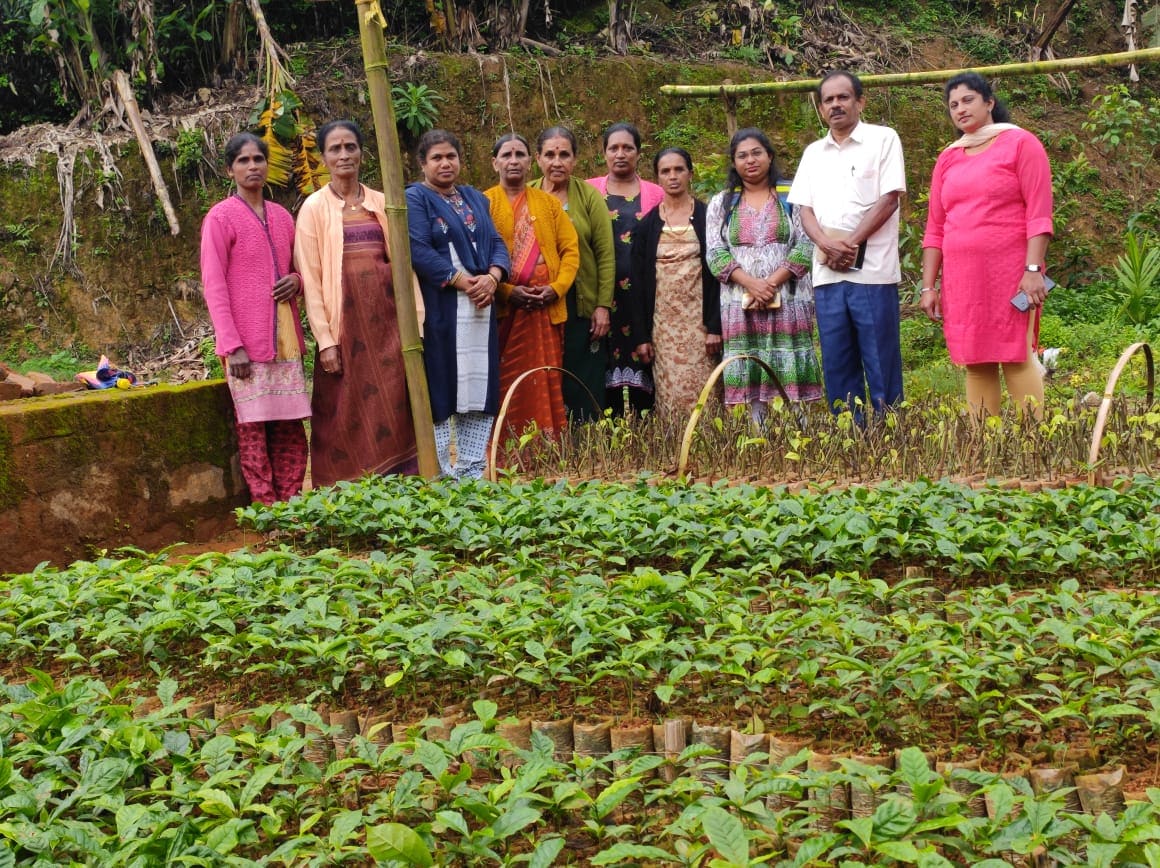
Later, a group of nature producers was formed by Makkandur Gram Panchayat. A total of 12 members, including 8 members from Pavitra Stri Shakti Sangha and 4 members from other Sangha, proceeded to the nursery work.
Appreciation for women’s achievements
Thus the central government’s NRML scheme to promote women’s empowerment and economic empowerment is progressing successfully in Kodagu. G.P.M.CEO Bhamwar Singh Meena, who personally visited the place, expressed his appreciation for the women’s achievements. He promised to provide all kinds of cooperation and stood in support of the development of the first nursery in the district.
Lilavati of Pavitra Streeshakti Sangh contact number: 9483242533
Variety Plant Nursery Nut, 3 types of coffee, kachampuli, lemon, butter fruit and black pepper plants have been planted in the nursery. There are already about 15 thousand plants and in the near future there is a plan to make a nursery for cardamom and various fruit plants.
A good plant
In addition, Leelavati’s half acre land was taken on lease through a group of producers and a nursery was made in that place. Plant nutrition is done by mixing good quality soil, sand, organic manure, sowing seeds of good variety, planting vines, providing water, spraying medicine.
70 thousand spent so far
In the beginning, the women paid for the facilities of the nursery at their own expense, and recently an installment of money has come. 70 thousand has been spent so far including salary.
Everyone has cooperated in this work of women and they are eager to develop the nursery further. Soon Makkandur Gram Panchayat is ready to sell plants at a discount price. The women in the group will also be paid by the government.
The road to self-reliance
All the members are actively involved in the work activities and contribute to the achievement of the association. The Sanjeevini Union was started in order to show the path of self-reliance to the women of the village, and the women of Makkandur village have benefited from it.
Necessary loan facility is also available from the association. Rural women have shown that if you put your mind to it, you can achieve anything. This is the first nursery in Kodagu district and recognized at the state level as well. Apart from benefiting from the central government scheme, she is also a role model for other women.
Report: Stanley. D. give
source: http://www.irishivideo.com / I V News / Home> Latest News & Updates>Technology / by Stanley D / August 25th, 2022
Stylist Prasad Bidapa and model Irene Augustin talk about what Independence Day means to them and how they plan to celebrate it.
From the chance to indulge in a long weekend to celebrating national pride – each of us has a different meaning for Independence Day. Taking a cue from this, we talked to two celebrities in Bengaluru about what Independence Day means to them and how they plan to celebrate it.
For city-based Fashion choreographer and stylist Prasad Bidapa, Independence Day is an occasion to honour our freedom fighters. He said, “What is Independence Day without remembering all the great men and women who have fought for our independence?” He extended his gratitude towards freedom fighters, from Mahatma Gandhi and Rani Laxmibai to Subhash Chandra Bose and many other unsung heroes, whose contributions have guaranteed the liberty with which we walk as free citizens of this nation.
In a similar spirit, Bengaluru-based model Irene Augustin expressed her gratitude towards the freedom fighters who had sacrificed their lives to safeguard our liberty. When asked about her plans for the day, she said, “I’m gonna be celebrating Independence Day by hoisting the flag in the morning and going to work and following my passion because I can do that. Thanks for the freedom fighters and thanks to being independent.”
source: http://www.indulgexpress.com / The Indulge Express – The New Indian Express / Home> Culture / by Prattusa Mallick / August 15th, 2022
Chief Minister Basavaraj Bommai has released a grant of Rs. 1 crore towards the celebration of Madikeri Dasara.
MLA M.P. Appachu Ranjan had requested the Chief Minister to announce funds for Madikeri Dasara and the CM subsequently recommended the Finance Department to release the grants. The CM also released Rs. 50 lakh for Gonikoppa Dasara.
The Dasara Committee, which was facing a fund crunch as there was no significant contribution from people or corporates, is elated by the grants and is planning to celebrate the festival in a grand manner.
A delegation led by Virajpet MLA K.G. Bopaiah met the CM yesterday in Bengaluru and requested him to sanction funds which were agreed upon.
Gonikoppa Sri Cauvery Dasara Committee Honorary President and former ZP Member C.K. Bopanna, B.N. Prakash, Gonikoppa Sri Cauvery Dasara Committee President Ramakrishna and General Secretary Jimma Subbaiah were present.
source: http://www.starofmysore.com / Star of Mysore / Home> News / August 18th, 2022
WELCOME. If you like what you see "SUBSCRIBE via EMAIL" to receive FREE regular UPDATES.
Read More »