Category Archives: Business & Economy

Celebrating Goodness

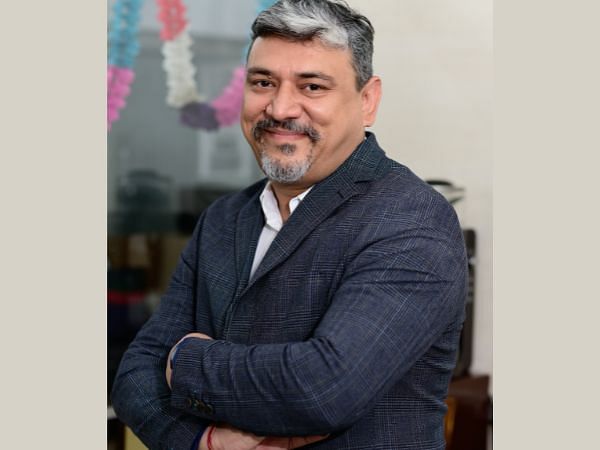
Chacko Thomas, the managing director and chief executive officer at Tata Coffee, has nearly three decades of rich experience in the Plantation industry
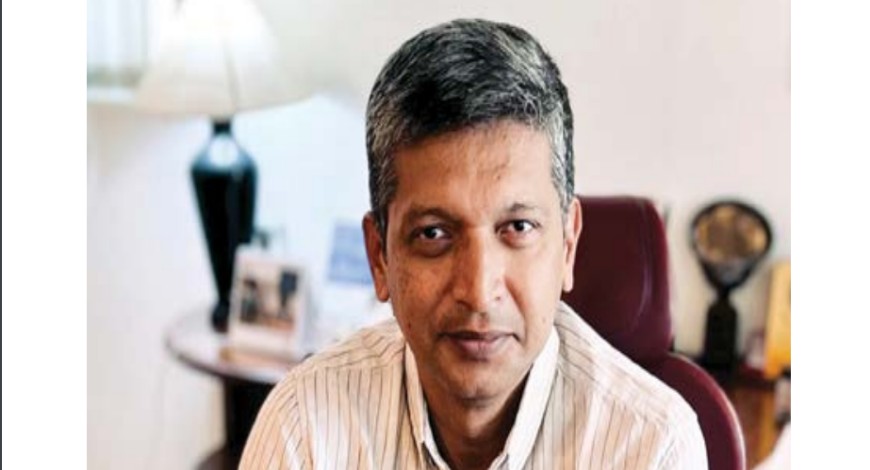
Chacko Thomas is a Bachelor of Science with a specialisation in Computer Science from University of Jodhpur. He has rich experience in Plantations, Business Strategy, Sales and Marketing. Thomas has been associated with Tata Coffee since August 2015. Before joining Tata Coffee, he was the MD of Kannan Devan Hills Plantations Company at Munnar. Thomas is an alumnus of INSEAD Fontainebleau having done his advanced management programme there. 

Thomas has a strong track record in business transformation, delivering sustainable results and building and leading high-performing teams in India and Vietnam, according to his online profile. He also has an extensive experience in general management, setting up distribution channels and running own businesses. He has held board positions in companies in US, Sri Lanka and India. Currently, as its MD and CEO, Tata Coffee is today one of the largest integrated coffee companies serving over 40 countries.  

The company states that its suit of major products like Green Bean, Instant Coffee, Tea and Pepper are all about giving consumers a taste of the Tata Coffee goodness. The company has around 8,000 MT annual capacity of shade-grown Arabica and Robusta. Around 90 per cent of its washed Arabica is exported as premium green bean to roasters. The company has 13 Arabica estates that are Starbucks C.A.F.E. Practices certified.  

The company’s instant coffee comes in various customised blends that appeal to the palate of its customers, brands, private labels, distributors and large global roasters. Being eco-conscious, all three of its plants – in Theni (Tamil Nadu), Toopran (Telangana) and Vietnam – are fuelled by renewable energy sources.

The company’s distinctive variants of instant coffee are packaged in a fully automated packing unit and delivered across countries like Russia, Africa, Europe and emerging markets like Southeast Asia and the Middle East. 

Business Growth 

On a yearly basis, consolidated net profit of Tata Coffee surged 10.32 per cent to Rs 233.40 crore on a 4.81 per cent rise in revenue from operations to Rs 2,363.50 crore in FY22 over FY21. Tata Coffee’s revenues from instant coffee business consisting of India and Vietnam grew by nearly 9 per cent during the fourth quarter, driven by improved realisations despite lower exports from India consequent to delay in despatches. There has also been an improved margin driven by higher proportion of specialty/differentiated products as well as lower costs. The sales to all key markets have been robust. For the financial year, the revenues from instant coffee business grew by 20 per cent with improved margins. The order book continues to be healthy both, at India and Vietnam, the company said.  

Commenting on the performance, Thomas, said, the performance of instant coffee business continued to be robust. “Our Plantation performance on Green Bean Coffee and Pepper during the year had also been strong, aided by improved realisations. Our subsidiary, Eight O’Clock Coffee [EOC] recorded improved performance during the quarter owing to better realisations and favourable channel mix,” he said.  

In March, Tata Consumer Products (TCPL) had announced the merger of all businesses of Tata Coffee with itself as part of a reorganisation plan in line with its strategic priority of unlocking synergies and efficiencies.

The plantation business of Tata Coffee (TCL) demerged into TCPL’s wholly-owned arm TCPL Beverages & Foods (TBFL). The remaining business of TCL, consisting of its extraction and branded coffee business, merged with TCPL.  

source: http://www.businessworld.in / Business World / Home / August 17th, 2022 / Magazine August 23rd, 2022

India’s coffee exports set for a boost as supply issues haunt Brazil, Vietnam

Some growers, however, are sceptical because heavy rains in July and August have dampened prospects for the next crop.

Tight supply concerns are likely to affect the cost of coffee

Tight supply concerns are likely to affect the cost of coffee

India’s coffee sector is poised for a good spell with forecasts of a good crop in the next harvest and strong export potential amid projections of a lower crop in Brazil, the biggest producer. The outlook for Vietnam, the second-largest producer, is also not rosy.

India appears to be better placed than other major coffee-producing countries for a good crop. The Coffee Board, a government entity that oversees the sector, projected a 15 percent increase in its post-blossom estimate to 393,400 tonnes for the 2022-23 crop, comprising 277,000 tonnes of robusta and 116,400 tonnes of arabica.

The India estimates came amid possibly lower output estimates for Brazil and Vietnam, the top two coffee producers.

Brazil’s national supply company (Conab), in its second survey, cut an earlier coffee crop forecast for 2022-23 by 2.3 million bags to 53.43 million bags. That’s still 12 percent higher than last year, although it is 15.3 percent lower than the record crop of 63.1 million bags in 2020. It cited last year’s drought and frost for the reduction, mainly in the arabica crop.

The company revised arabica production downwards by 3.1 million bags, while robusta output was raised by 760,000 bags because of better productivity and expanded acreage.

Robusta and arabica are the two main types of coffee beans. Arabica is considered the more popular coffee bean.

The United States Department of Agriculture pegged coffee production in Vietnam, comprising mostly robusta, at 30.9 million bags, down 700,000 bags from last year. It attributed the lower output to an escalation in fertiliser prices that led to their reduced use.

Higher prices

Global coffee futures have fallen to $2.12 per pound after hitting a 10-year high of $2.60 per pound early this year on supply concerns from Brazil and robust demand. The industry reckons global prices may stay at a higher level as supply issues continue to dog Brazil and Vietnam. A year ago, prices hovered at about $1.75 per pound.

However, some growers are sceptical about India’s coffee exports this time.

“Heavy rains in July and August have dampened the prospects, particularly in the south Coorg area. We can get a clear picture only in September,” said N Ramanathan, chairman of the Karnataka Planters’ Association.

Karnataka accounts for the largest share of coffee produced in the country.

Coffee exports from India increased by 16 percent to 264,191 tonnes in the period from January 1 to August 9 from a year earlier, according to data from the Coffee Board. The rise came mainly from robusta cherry, whose shipments have gone up by 30,000 tonnes. Export growth was as high as 25 percent in the earlier months as pending orders were executed.

India had record coffee exports of 394,343 tonnes in 2021, bettering the 378,909 tonnes achieved in 2017. The country exports 70 percent of its coffee output.

Europe has traditionally been the strongest market for Indian coffee, especially Italy, Germany, and Belgium.

“This year, purchases from the Middle East and North African countries also increased,” said MP Devaiah, general manager of Allanasons, an agri-based commodity and product company in Mumbai.

India had the advantage of lower freight rates to Europe than the South East Asian coffee-producing countries Vietnam and Indonesia.

Instant coffee

India’s instant coffee exports also picked up after initial hiccups following the onset of the Russia-Ukraine war. Exports to Russia, a big buyer of instant coffee from India, rebounded in the past few months. India also benefitted from lower instant coffee exports to Russia from Brazil.

“Brazil’s instant coffee exports to Russia stopped following sanctions by the US,” said N Sathappan, director of SLN Coffee.

Brazil is predominantly an arabica coffee exporter. A large share of robusta produced in the country is consumed internally and of the remainder, a major portion goes into making instant coffee for exports.

According to the latest report of Cecafé, the Brazilian Coffee Exporters Council, outbound shipments from the South American country fell 5.9 percent to 22. 4 million bags (60 kg each) during the first seven months of 2022 from a year earlier. However, export earnings rose to a record $5.23 billion, up 62.4 percent, on higher prices.

Exports of green coffee – coffee that hasn’t been roasted – reached 20.2 million bags. Shipments of arabica were little changed (+0.1 percent)  at 19.3 million bags, while robusta exports plummeted to 939,334 bags, the lowest level since 2019 and down 60 percent, it said.

Over 70 percent of instant coffee exports from India are through value addition of cheaper produce imported from South East Asian and African countries while the rest is produced from local beans. This year, growth in re-exported instant coffee was marginal while shipments of instant coffee from local beans increased sharply.

“Imports from other origins became costly because of freight rate hikes and logistics problems. Hence there was a rise in the use of local beans,” Devaiah pointed out.

The Coffee Board data showed that while re-export of instant coffee after value addition rose by 4 percent, instant coffee made from domestic beans surged by 45 percent in the period from the beginning of the year to August 9.

Sathappan said exporters are now going in for more imports as Indian coffee has become costly with robusta prices going up by 40 to 50 percent. Robusta beans are selling in the range of Rs 4,500 to Rs 4,700 per 50 kg.

The International Coffee Organisation’s latest provincial outlook for global production in the coffee year 2021-22 (October to September) remains unchanged at 167.2 million bags, a 2.1 percent decline from the previous year.It projects world coffee consumption to grow by 3.3 percent to 170.3 million bags, exceeding production by 3.1 million bags.

source: http://www.moneycontrol.com / Money Control / Home> News> Business / by P K KrishnaKumar / August 12th, 2022

Rudresh Mahanthappa’s Hero Trio Will Make NYC Debut In August

Saxophonist Rudresh Mahanthappa’s Hero Trio will make their NYC Debut this August to celebrate Charlie Parker’s Birthday at Smoke Jazz.

Located at the junction of 106th and Broadway (aka Duke Ellington Boulevard), Smoke Jazz Club is one of New York City’s premier live music venues. Renowned for offering top-notch programming of accessible, timeless jazz featuring legendary performers, modern masters, and rising stars, Smoke stands apart with its candlelit dining room, stellar acoustics, and classic American cuisine.

Rudresh Mahanthappa’s Hero Trio also includes bassist Harish Raghavan and drummer Rudy Royston. Their performance will set on Thursday and Sunday at 7 and 9 p.m., and on Friday and Saturday at 7, 9 and 10:30 p.m.

Hero Trio earned high praise for its eclectic 2020 self-titled debut and the 2022 follow-up Animal Crossing.  Animal Crossing is a digital-only EP featuring four new songs, each an unlikely addition to the canon of jazz standards which is also the titular theme from the wildly popular video game.

At Smoke, Mahanthappa will explore Parker’s compositions, classic standards, and modern covers with the Raghavan and Royston. “The idea behind Hero Trio was to turn the idea of playing a set of standards on its ear and freshen up the idea,” the saxophonist explains.

Rudresh Mahanthappa is widely known as one of the premier voices in jazz of the 21st century as well known for his exellent alto saxphone performances. He has been recognized by multiple jazz magazines including DownBeat Magazine, Jazz Journalists’ Association,and  JazzTimes Magazine. He has also received the Guggenheim Fellowship and the Doris Duke Performing Artist Award, and is currently the Anthony H. P. Lee ’79 Director of Jazz at Princeton University.

For information visit https://www.smokejazz.com/calendar/.

source: http://www.nysmusic.com / NYS Music / Home> Blues-Jazz> NYC Metro> Upcoming Shows / by Savanna Tong / August 07th, 2022

The Unique Vacuum Syphon Coffee Is A Must-Try In Coorg And Here’s Why

Coffee is the most consumed beverage in the world. Cold, hot, or roasted there are plenty of variations. It has become an essential part of many people’s lives. There are many cultures around the world that serve coffee using different ingredients and techniques. From Dalgona coffee to quirky vacuum Syphon coffee. If you want to try this unique Syphon coffee then head to this Big Cup Café in Coorg.

Read this article to learn about the intricate art of making vacuum Syphon coffee.


What makes Vacuum Syphon Coffee Different Than The Rest

If you are a coffee lover you should definitely try this vacuum syphon coffee. The technique used behind this coffee is quite difficult as it is based on the concepts of physics. Siphon coffee has the advantage of altering the flavour of coffee to the point where flavours are more apparent than pour-over techniques. Siphon allows the coffee’s flavours to develop more fully and it brings out some notes that you wouldn’t be able to detect in other methods. The first thing you’ll taste in a freshly made cup of Syphon brewed coffee is the flavour profile.

https://www.instagram.com/accounts/login/?next=/aishwarya_karkera/

https://www.instagram.com/accounts/login/?next=/reel/CeDuj97jfNf/

Coorg’s Big Cup Café

Big Cup Café offers this unique vacuum Syphon coffee, which is as amusing as it is delicious. This café is located in Coorg, Karnataka the coffee bowl of India. The café is run by planter families based in the town. They have owned and managed coffee plantations for generations and Big Cup is the fusion of expertise in farming and hospitality. The café’s mission is to provide quality coffee, harvested right from its estates and provide a world-class coffee experience to its guests in a relaxed and calming atmosphere.

Big Cup Café is located in 3 different spots in the country. The Flagship café is in Coorg, followed by Sharjah and a recent addition in Bhubaneshwar, Odisha. They are planning to open their café in Chennai and Bangalore.

Head to this café in Coorg and devour this unique vacuum Syphon coffee.

https://www.instagram.com/accounts/login/?next=/bigcupcafecoorg/

source: http://www.curlytales.com / Curly Tales / Home> CT Discovery> Food / by Khushi Rastogi / August 03rd, 2022

Sandooka: Virtual Museum Of Kodava Heritage & Culture

Call to help preserve memories of a vanishing people

While modernisation has opened many opportunities for the well-qualified, it has also distanced the young from their heritage and culture.  This is even more accentuated amongst Kodavas living outside Kodagu. There is a need to establish a platform where young Kodavas could learn and keep in touch with the community’s heritage, cultural practices, folklore, music, dance, festivals and history, says Mrs. Codanda Rathi Vinay Jha, IAS (Retd.) and Chair, India Foundation for the Arts (IFA), who has initiated establishing a Virtual Museum of Kodava Heritage & Culture named ‘Sandooka,’ a treasure trove of information. —Ed

Kodavas are a micro-minority community in India, who live in Kodagu (Coorg) in Karnataka State. It is estimated that there are about 1,50,000 ethnic Kodavas within and outside Kodagu. 

Kodavas, by virtue of living quite isolated in a densely wooded hilly terrain on the Western Ghats of India since time immemorial, have developed their own unique culture, physical attributes, cuisine, language, attire, religious rituals and practices. 

Over the centuries, Kodavas adapted themselves to the harsh weather conditions, dangers from wild animals and the inhospitable terrain of Kodagu and transformed the land to an idyllic haven it is today.  With the passage of time, they toiled literally with bare hands to cultivate paddy in the valleys.

With the forests providing bountiful supply of wild game, they became expert hunters initially with bows and arrows, and later with firearms which enabled them to emerge as a warrior race.  They transformed the fertile land and were able to grow enough paddy that they could export to neighbouring areas. 

The interactions with immediate neighbours in present day Kerala, Mysuru and Mangaluru, influenced the Kodava language, places of worship, construction of their dwellings and some of the religious practices as well.  However, Kodavas still retain their fundamental philosophy of ancestor and nature worship.  They come under the broad umbrella of Hinduism.

Kodagu was ruled by Kodava Nayakas or Palegars who were basically warlords.  The Haleri dynasty established their rule in Kodagu after cleverly replacing the hopelessly divided Nayakas during the early part of the 17th century.  The Haleri Rajas ruled for over two centuries until the British takeover of the administration in 1834 after deposing the last Raja.  During the rule of the Haleri Rajas and later the British, Kodavas remained the prominent community very much involved in the administration.

During the British rule, education was introduced and this brought about quantum changes in the lifestyle of the Kodavas.  Kodavas found several employment opportunities.  Introduction and scientific cultivation of coffee and spices vastly improved the economy of the region.  Kodava culture and ethos found expression in the writings by the British, European and Kodava authors. 

By the time India got her independence, many Kodavas held important and high-level offices in sectors such as the Defence Forces, Administration, Revenue Department, Forest Department, Police, in the field of Education, Engineering and Medicine. 

Kodavas have several distinctive elements in their social, cultural and religious practices.  One of them is the deferential status given to women. There is no dowry system in the community.  Centuries ago, widow remarriage was permitted. This enlightened attitude is now reflected in well-educated Kodava women shining in a variety of fields.

After India’s independence many Kodavas ventured out of Kodagu seeking better opportunities in education, employment, business and sports.  Kodavas are now spread all over the globe.  The last three decades has seen a large number of Kodavas migrating outside the country. There is now a sizable number of Kodava diaspora in the US, Canada, UK and Australia.  In many cases, there are a couple of generation of Kodavas born and brought up outside Kodagu and outside India as well. 

While modernisation has opened many opportunities for the well-qualified, it has also distanced the young from their heritage and culture.  This is even more accentuated amongst Kodavas living outside Kodagu.  There is a need to establish a platform where young Kodavas could learn and keep in touch with the community’s heritage, cultural practices, folklore, music, dance, festivals and history. 

It is with this aim in mind that Mrs. Codanda Rathi Vinay Jha, IAS (Retd.), as Chair, India Foundation for the Arts (IFA), initiated establishing a Virtual Museum of Kodava Heritage & Culture (VMKHC).  This project is evocatively named — Sandooka — a treasure trove of information.  IFA has successfully supported several path-breaking projects in the field of  art and culture. 

Sandooka will be a living museum that will be interactive and open to receiving relevant new materials from the public.  People, especially the future generations of Kodavas, will have an easily accessible platform to gather details of their heritage.  Weblinks will also be given to some of the websites dealing with Kodava culture.  It is hoped that this treasure trove of information will be of immense help to those who wish to carry out further research on Kodavas. VMKHC will cover the following aspects of Kodagu and Kodavas:

1. Customs and Rituals  

2. Cuisine

3. Architecture                 

4. Clothes and Jewellery

5. Art & Craft                    

6. Landscape

7. Literature and Folklore

8. Community Histories

9. Festivals

The project is generously funded with a Corporate Social Responsibility (CSR) grant from Recaero India Pvt. Ltd., which is a pioneer in the field of aerospace engineering and is headed by Vinay Jha, IAS (Retd).  A highly professional team has been forged to deal with every aspect of the project.   The team comprises:

Lina Vincent – Project Head; Upasana Nattoji Roy – Designer (Switch Studio); Saurav Roy – Designer (Switch Studio) and Mookanda Nitin Kushalappa – Researcher.

IFA office-bearers are: Arundhati Ghosh (Executive Director) and Darshana Davé (Project Co-ordinator); Advisory Group: Rathi Vinay Jha, C.P. Belliappa and Hemanth Sathyanarayana.

Sandooka invites submission of Kodava artefacts, rare photographs, antiques including jewellery (photos) and anecdotes of yore.  All accepted materials will be given due recognition and credits. Sharing your valuable knowledge and collections will enrich the contents of Sandooka.

For details of submission of materials, please visit: www.sandookamuseum.org

source: http://www.starofmysore.com / Star of Mysore / Home> Feature Articles / by C.P. Belliappa / August 01st, 2022

‘Appacha Kavi’s residence should be developed as memorial’

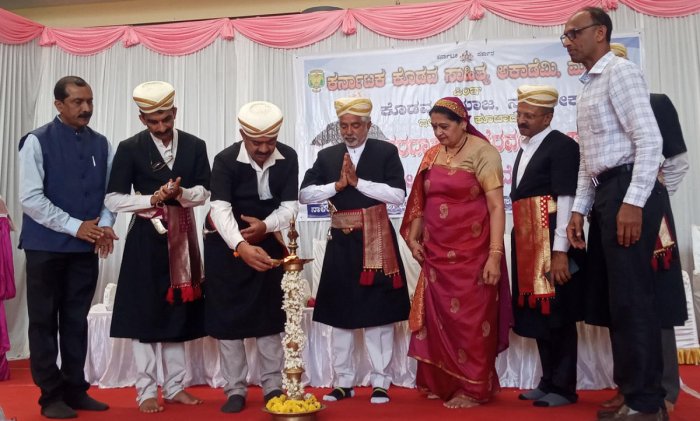
Kodava Samaja, Napoklu, president Appachettolanda Manu Muttappa inaugurates the 153rd birth anniversary celebrations of Appacha Kavi, organised at Appacha Kavi auditorium in Kodava Samaja, Napoklu.

The Ainmane, traditional house of Haradasa Appacha Kavi, the first poet of Kodagu, should be developed into a memorial, said Appachettolanda Manu Muttappa, president of Napoklu Kodava Samaja.

He was speaking during the 153rd birth anniversary celebrations of Appacha Kavi, organised by Karnataka Kodava Sahitya Academy and Napoklu Kodava Samaja, at Appacha Kavi auditorium, on Tuesday.

Manu Muttappa said that along with the residences of great poets and writers, their native places should also be developed.

“There is a need to introduce Appacha Kavi’s works to the present generation. Appacha Kavi had great knowledge of Kannada and Sanskrit. An education officer called Raghunatha Raya inspired Appacha Kavi to create literary works in the Kodava language, he said.

Speaking on Appacha Kavi, Rangayana, Mysuru, director Addanda Cariappa said that Appacha Kavi should be awarded the ‘Karnataka Ratna’ award.

Karnataka Kodava Sahitya Academy chairperson Dr Ammatanda Parvathi Appaiah, Academy registrar Ajjikuttira Girish, Appaneravanda Ainmane Development Committee president Appaneravanda Chummi Devaiah, Appaneravanda Ramu and Dr Manoj were present.

‘Ummattat’ and other cultural programmes were held on the occasion.

Folklore scholar Bottolanda Kashi Achaiah sang songs composed by Appacha Kavi.

source: http://www.deccanherald.com / Deccan Herald / Home> State> Mangaluru / by DHNS, Napoklu / September 21st, 2022

KAAPI Solutions associates with the Coffee Board, UCAI and SCAI, Sponsors National Barista Championship 2022

KAAPI Solutions associates with the Coffee Board, UCAI and SCAI, Sponsors National Barista Championship 2022
KAAPI Solutions shakes hands with the Coffee Board of India, United Coffee Association of India and Speciality Coffee Association of India to organise National Barista Championship 2022

Mumbai :

KAAPI Solutions, spearheaded by the former NBC winner and jury member, Vikram Khurana, has announced its platinum sponsorship for the celebrated National Barista Championship 2022. The event is organised annually by the Coffee Board of India in association with the Specialty Coffee Association India and the United Coffee Association of India to honour the best baristas within the country. Renowned as a coffee fanatic’s paradise, the competition will take place in Bangalore and see India’s most beloved baristas competing for the title of the best Barista of 2022.

Considered to be one of the most paramount members of the coffee fraternity in India, Vikram Khurana was the first and only Indian to receive a silver medal in the famed World Barista Championship 2002. Since then, Khurana has gained recognition to be a coffee extraordinaire and has immensely contributed to the growth of speciality coffee in India. In his 21 years of extensive learning experience, Khurana has consulted several Indian and international brands in coffee that have successfully launched. Currently serving as the Chief Executive Officer at his company – KAAPI Solutions, Khurana is also the President of the United Coffee Association of India. Having won the global rendition of NBC, Khurana has had a long-standing association with the decade-old championship. He has been an esteemed jury member at the championship for over 10 long years.

Commenting on this association, Vikram Khurana, Founder and CEO of KAAPI Solutions, added, “Coffee is a language itself. We at KAAPI Solutions are so excited to give voice to this language at the latest National Barista Championship 2022. It will be exhilarating to see the best of the best unite to celebrate our common love for the beverage. We are also thankful to the Coffee Board of India and the Specialty Coffee Association of India for organising an event that honours and celebrates the best coffee talent within our country. I wish good luck and success to all the participating candidates. May you brew the perfect blend and awaken the inner maestro with yourself.”

Celebrating the association with KAAPI Solutions, DM Purnesh, the President of Specialty Coffee Association of India, said, “We have been successfully conducting NBC due to constant support we receive from Kaapi Solutions team run by Vikram Khurana. They have been providing financial support as well as providing coffee machines and helping in installing and giving technical support for the last many years. We wholeheartedly welcome Kaapi Solutions once again for the 20th edition of the National Barista Championship.

We wish all the best for all the participants of NBC 2022″.

KAAPI Solutions is one of India’s leading suppliers of imported coffee machines. The company has grown to become a market leader within the industry. Beyond having the best network of coffee machines across the globe, KAAPI Solutions is also the exclusive partner for Astoria, a brand for premium coffee machines in India. Tempesta by Storm Barista Attitude, part of Astoria, is also known to sponsor the World Barista Championship between 2022-2025.

Dedicated to the pure science of making the perfect blend of speciality coffee, these coffee machines have revolutionised the coffee culture in India. The term ‘Specialty coffee’ or ‘Speciality coffee’ is used to refer to coffee that is graded 80 points or above on a 100-point scale by a certified coffee taster (SCAA). Speciality coffees are coffees at their peak and are different to other coffee because speciality coffee has been grown at the perfect altitude, at the correct time of the year, in the best soil, and then picked at just the right time. All this translates into some of the most exciting and tasty coffee in the world.

A pioneer in coffee technologies, KAAPI Solutions serves as one of the world’s leading suppliers of imported coffee machines. The firm recognises and effectively bridges the gap between efficient and aesthetic coffee equipment within India and enhances the skills needed to relish an authentic cup of coffee.

Their services go beyond supplying the finest coffee machines across the globe. Apart from this, they also provide state-of-the-art espresso equipment and conduct award-winning barista training.

KAAPI Solutions has a 360-degree approach to Consultation, Service, Training and Education. They believe in providing comprehensive assistance to help one’s business thrive.

This story is provided by PNN. ANI will not be responsible in any way for the content of this article. (ANI/PNN)

source: http://www.theprint.in / The Print / Home> ANI Press Releases / ANI PR / July 26th, 2022

Coffee land expects new law to usher in holistic changes

Coffee (Promotion and Development) Bill is expected to be tabled in the ongoing session of Parliament

Planters’ unions in Karnataka are hopeful that the new legislation on coffee, expected to be tabled in the ongoing session of the Parliament, will usher in much-needed changes in the 80-year-old Coffee Act guiding the industry now. Karnataka is the biggest producer of coffee in India.

The Coffee (Promotion and Development) Bill, 2022, is aimed at promoting holistic development of the country’s coffee industry. It is expected to do away with the existing 80-year-old set of regulations on the commodity, focus on coffee research, domestic marketing of the commodity, creation of drought-tolerant, disease-resistant and better yielding varieties of coffee, among other things.

Special varieties

Planters’ unions told The Hindu that the new law should help focus on development of special and specialty coffee brands and blends and pay attention to a premium variety of coffee, Arabica.

Bose Mandanna, former Vice-Chairman, Coffee Board, and also the owner of Subramanya Estate at Sunticoppa, said that the old set of regulations have been around for too long while the industry has transformed.

All leading coffee associations, including Karnataka Planters’ Association, Coorg Coffee Association, Karnataka Growers’ Federation, United Planters’ Association of Southern India (Upasi), the apex body for plantations and other industry stakeholders, have already submitted their recommendations to the Coffee Board and Ministry of Commerce.

Value chain

“A revised regulation with its holistic provisions aimed at promotion and development of the entire value chain of coffee and enabling ease of doing business is beneficial to all stakeholders and to the general public,’‘ said Shirish Vijayendra, former chairman, Karnataka Planters’ Association.

According to H.T. Pramod, former chairman KPA and Managing Director of Malnad Planters’ Coffee Curing Works, and also a planter from Chikkamagaluru, said, “We want to see more new varieties coming into plantations and expect better interaction and working together with planters and researchers.”

On the backburner

Another planter who does not want to be identified said, “Coffee Board, way back in the 1990s, under the leadership of the then chairman Lakshmi Venkatachalam, had prepared the draft of a replacement of the existing Coffee Act. It was a comprehensive draft done in three years. We submitted it to the Ministry of Commerce, but sadly, several governments sat over it in the last several decades.’‘

source: http://www.thehindu.com / The Hindu / Home> News> India> Karnataka / by Mini Tejaswi / Bengaluru – July 26th, 2022

Rafting Thrill Draws Tourists To Rapids At Dubare, Barapole

Kushalnagar:

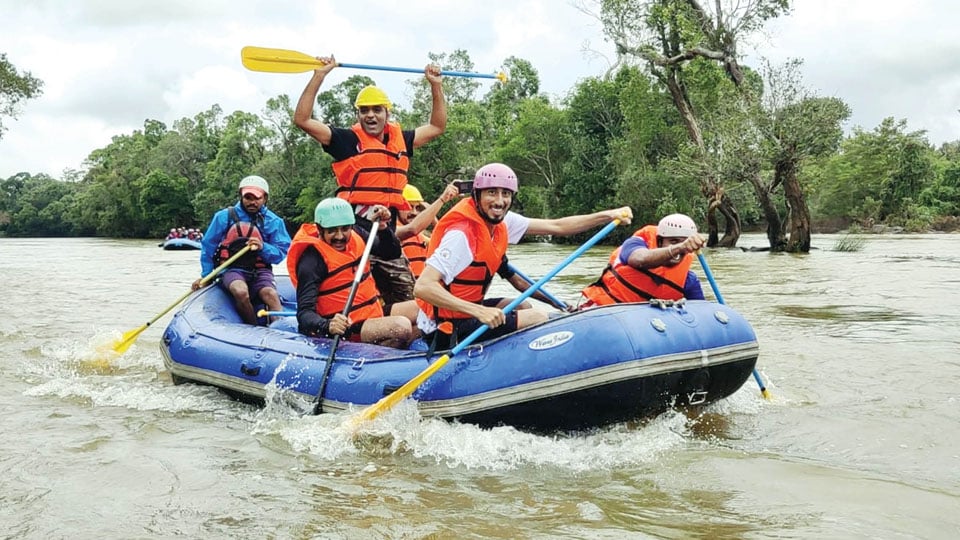
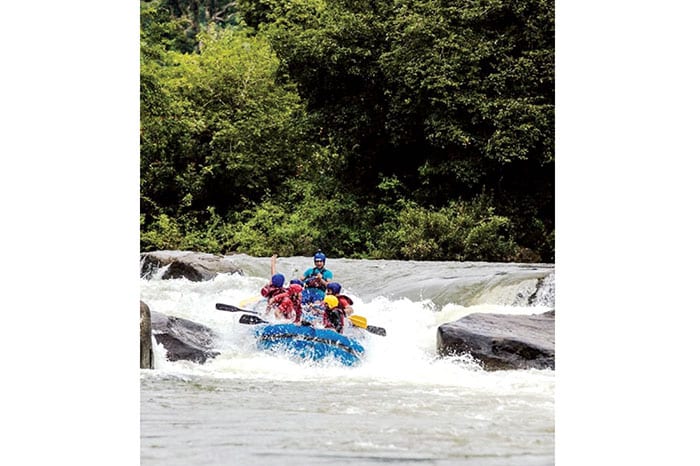
Adventure lovers who have been pining to get some adrenaline rush are heading towards Dubare and Barapole in Kodagu district for whitewater river rafting and rappelling in the rapids. Rafting in the Cauvery and at Barapole is an exhilarating experience. Rafting usually starts once the inflow into the Cauvery and Barapole increases and the level rises. A raft is a rubberised, inflatable boat with different carrying capacities.

A 7-kilometre journey at Dubare will take about one-and-a-half hours while it is shorter but adventurous at Barapole’s 4.5-km rafting. The tranquil water may be a deceitful thing along the course of the Cauvery and Barapole as one hits the rapids (a section of the river where the water moves very fast particularly over or bisecting the rocks).

If one is tired of their mundane schedule and wants to try something adventurous with friends then river rafting is one of the perfect and thrilling options that one can opt for. The thrill, however, is not without a certain amount of risk. However, the risks are what enhance the river rafting experience for many adrenaline junkies.

Rapid adventure

At Dubare, rafters will get to experience two rapids and swimming is allowed at two places. Barapole has more than nine Class 2 Class 4 rapids and is set on the banks of the Kithu Kakathu River (KKR). The river is a turbulent one all along its route as it flows through the Brahmagiri hills to the Arabian Sea via Kerala.

While June to the end of September is the ‘whitewater’ season, October to December or January is a ‘stillwater’ season. After which, the water level depletes. Whitewater is formed in a rapid when a river’s gradient changes enough to generate so much turbulence that air is trapped within the water. This forms an unstable current that froths, making the water appear opaque and white. Stillwater is part of a stream where no water current is visible.

The response for rafting is pretty good with over 2,000 rafters during weekends and over 250 rafters daily. At Dubare, there are 70 rafts and 70 guides while Barapole has 9 rafts and 9 guides. Soon, 10 more rafts will be added to the existing fleet at Dubare as there is a huge demand.

Safety is of paramount importance here and all the guides are well trained. Life jackets are worn by all the rafters and the guide and at Dubare, each life jacket can withstand a weight of 180 kgs and there is little chance of drowning. Rafting at Dubare costs Rs. 600 per person and Rs. 1,200 at Barapole. Each raft can carry six rafters and one guide.

Speaking to Star of Mysore, Pavan of Coorg Water Rafting Sports and Adventures, Barapole, said that the response is good. “Only those who are passionate about rafting and adventure come here and we have many regulars. It is quite challenging and tests the adventure spirit,” he said.

Barapole

Need changing room for ladies

C.L. Vishwa, raft owner and former President of Dubare Rafters Association, said that they desperately need a changing room at Dubare for ladies and girls and also there is a need to establish a drinking water facility.

“If the District Administration wants to attract more tourists to Dubare, then a hanging bridge is a must for tourists to reach the Elephant Camp from one side of the Cauvery river. Unfortunately, the tourist-friendly project has been shelved by officers without a vision,” he added.

Rules and regulations

The Kodagu District Administration has came out with a 23-point formula to ensure safety. The operators must secure permission from the Departments of Police, Forests, Fire Force and Tourism, and employ trained guards to accompany the rafters. Every one of them should have ID cards issued by Tourism Department and should be trained in first-aid methods. Smoking and drinking is prohibited during rafting. Rafters should also obtain permission from the Karnataka Inland Water Transport Department.

source: http://www.starofmysore.com / Star of Mysore / Home> News> Top Stories / July 24th, 2022

Kodagu’s slush sports festival evokes warm response

Many take part in programme despite intermittent drizzle

Providing a reprieve from the stress and strain of a vigorous monsoon which tends to wreak havoc in Kodagu, was the slush field sports conducted by the district administration, on Saturday.

The monsoon in Kodagu tends to conjure up images of flood and landslips. But with the rains abating, the people put their worries behind to take time off and participate in the 30 th State-level slush field sports organised at Kaggodlu village in Madikeri taluk.

It was conducted by the Kodagu district administration, Zilla Panchayat and Department of Youth Empowerment and Sports and inaugurated by Appachu Ranjan, MLA. He recalled that in earlier days, every farmer or landlord in Kodagu used to take part in slush sports after sowing and it helped bring the community together and strengthened bond.

The competition drew people from different parts of the district who braved the intermittent drizzle and encouraged the participants who were drenched in muddy water and slush and gave a display of their prowess in different games. The festival was open to boys and girls as also men and women and included 50 metrerace, 200 metre race, 400 metre race , throwball, volleyball, tug-of-war etc.

source: http://www.thehindu.com / The Hindu / Home> News> India> Karnataka / by Special Correspondent / July 23rd, 2022