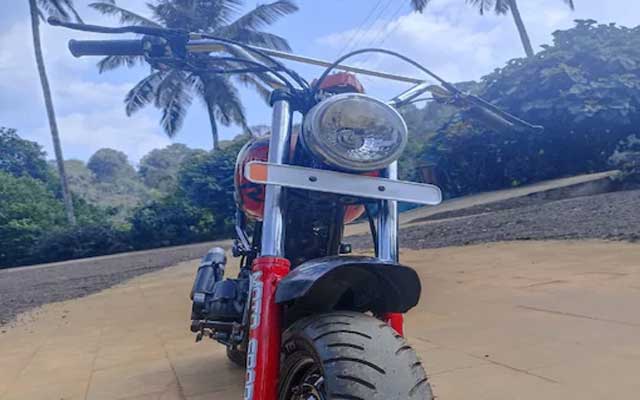
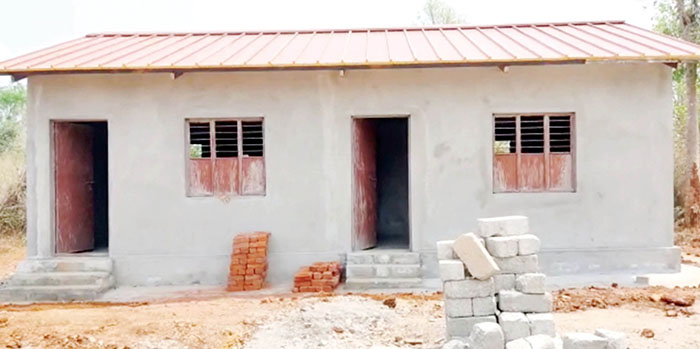
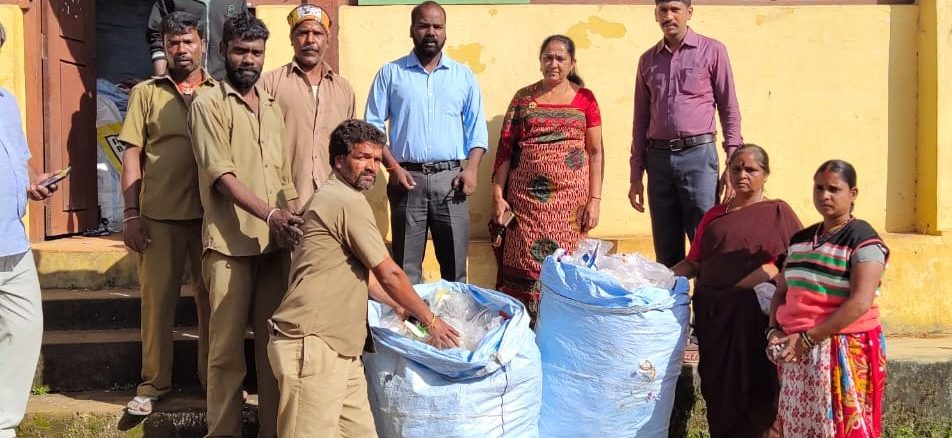
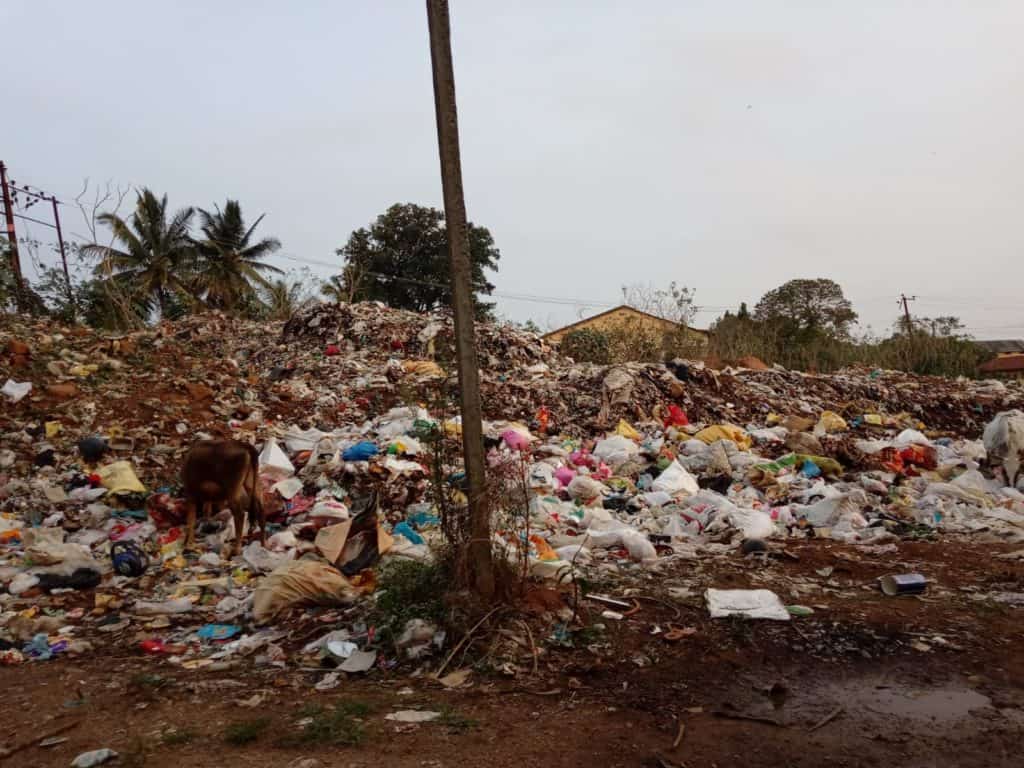
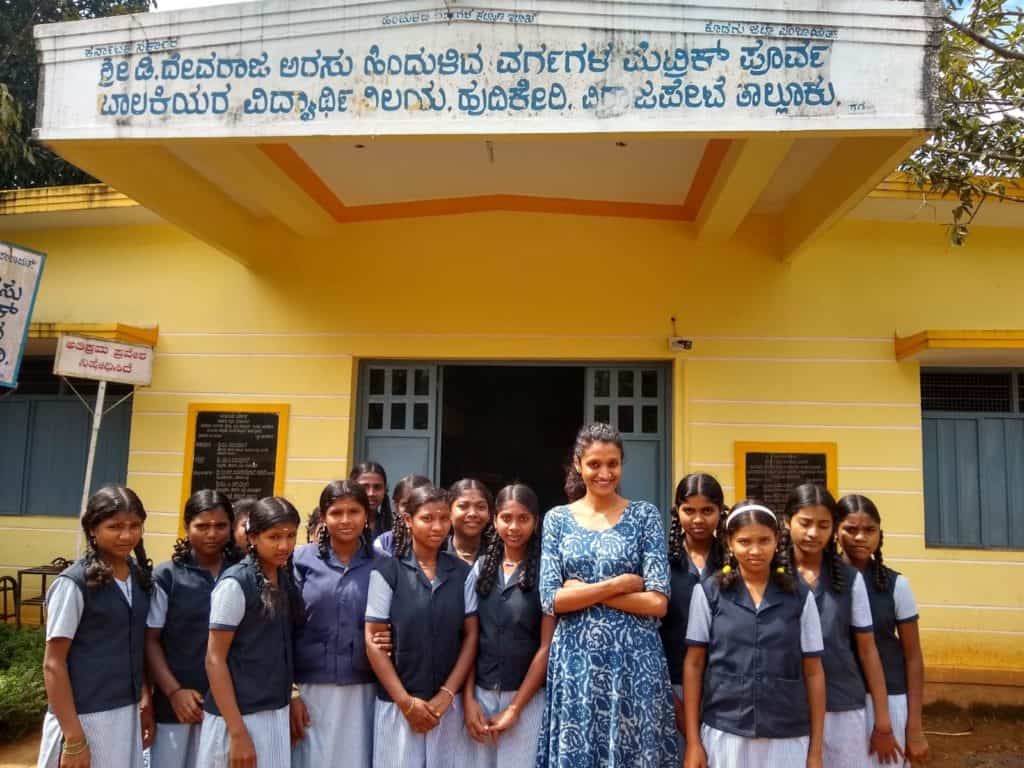
It is quite natural for small children to develop an affinity towards their toys or toy vehicles. Unlike other children of his age, this boy never thought of buying toy vehicles from shops. He created his own toy vehicles and had fun. At that young age itself, he would wish if he could manufacture his own vehicles.
By the time he finished school and entered college, his desire to manufacture vehicles grew by leaps and bounds.His ITI education supported his aspirations. He has made several vehicles and sold them. His vehicles have a uniqueness or fingerprint of his own.
The prodigious boy is Akash, a resident of Biligeri village near Madikeri. After completing MMV in the ITI, he started to work for some vehicle manufacturers. As the urge to manufacture his own vehicles catapulted into a passion, he left his job and returned home.
Initially he began with bikes and also cars which could be pedaled. He then fixed engines to them and succeeded in making indigenuous vehicles. In the past few years, he has forayed into manufacture of bikes, agricultural machinery, various equipment and also other vehicles.
Another unique skill he has is custom making the vehicles as per the client’s desire by procuring spare parts of different makes and assembling them at home. He has also sold bikes without gears and scooters with gear. So he could rightfully be called the Frankenstien of automobiles.
Akash has now made a unique bike that also grabs eyeballs. .So far he was making fuel driven vehicles. Now he has manufactured vehicles which run on a battery. The bikes and small cars made by him ideally suit the requirements of resorts and homestays in Kodagu district. Therefore, owners of some resorts have purchased their custom made vehicles from him.
He has immense interest in making agricultural machinery. Machines which dry cardamoms and pepper, those which separate chilli from their stalks etc. He has also made four trolleys that can carry different weights, and sold them. Some organizations which have noticed his achievements, have come forward to help him. They are thinking of providing him with a showroom so that this rural talent gets recognition in the outside world.
source: http://www.daijiworld.com / Daijiworld.com / Home> Karnataka / by Daijiworld Media Network – Madikeri (SP) / February 23rd, 2022
NGO Swastha Centre is training people with disabilities in beekeeping, giving them a source of income & sense of independence.
The establishment of the beekeeping society will ensure sustainable and inclusive living, says Arathy Somaiah, director, Swastha Institution | EXPRESS
Madikeri :
In the misty hill country of Kodagu, the bee offers hope. Apiculture has been one of the main economic activities of the region, known for its coffee, pepper and tourism, while Coorg honey is said to be rich in medicinal properties.
Tapping into the ancient activity of bee-rearing, the Swastha Centre for Special Education and Rehabilitation in Kodagu is striving to establish a sustainable society for persons with disabilities, especially in the rural areas of the district. Started in the year 2003, Swastha Institution is managed by The Coorg Foundation Trust.
While educating students with special abilities has been the focus of the institution, it is also involved in providing vocational training to enable the rehabilitation of children. In a country where a day is observed each year to promote the wellness and rights of persons with disabilities, it can be challenging to create an inclusive environment for them, and keep it going too.
The community-based rehabilitation initiative of the institution is empowering many persons with disabilities (PwD) in the rural parts of Kodagu. What is unique is that the institution has introduced beekeeping and is training them in the vocation, said to be the first-of-its-kind initiative in the country.
“Receiving support from the Horticulture department, the institution first trained 25 students in beekeeping in 2017,” explained Arathy Somaiah, director of the institution. Though the students were trained in the vocation, opportunities to earn from it were bleak. Hence, the institution looked to establish an agrarian system to create opportunities for self-employment, which also promotes economic growth.
“The institution sought help from NABARD, and the 25 students were further trained for three years. Beehive boxes were handed over to them, and the first bee harvest was sold last year. The students earned incentives and have now set up beehive boxes in their homes,” said Arathy. To ensure that the students don’t face any challenges in beekeeping at home, the institution extended training to their parents too. Persons with disabilities were identified across Karike, Bhagamandala, Sampaje and Madenadu villages, trained in beekeeping and given beehive boxes.
“There is a government scheme where beehive boxes are provided at subsidised rates if residents provide RTC documents of the land. Through this scheme, beehive boxes were given to them, and they were trained by the horticulture department,” explained Arathy. The harvest from the community rearing in the district was collected by the institution; it was processed, purified and bottled at the Research and Development sector of Tata Coffee.
“The honey extracted and processed is free of adulteration, and marketed under the Swastha label. The profits are paid to the bee rearers. A trained staffer from the institution visits the rural areas once a month to help them handle the work of beekeeping, and helps them in the cleaning process. Once the harvest is ready, they help them extract and collect the honey. They have the option to market the harvest through Swastha or any other means,” she shared.
While the beekeeping initiative is running successfully, the institution is looking at providing them with holistic training. It aims to identify persons with disabilities in all the taluks, and establish a ‘Beekeeping Society of Persons with Disabilities’ soon in the district. The institution also plans to train them to plant bee-friendly trees and shrubs in rural areas. Kodagu has a large number of massive bee-nesting trees.
“The establishment of the beekeeping society will ensure sustainable and inclusive living. It will help generate self-employment, rural employment and economic growth,” concluded Arathy.
source: http://www.newindianexpress.com / The New Indian Express / Home> Good News / by Pragna GR, Express News Service / April 10th, 2022
The Allana Group, one of India’s largest exporters of Coffee today announced its foray into the Indian domestic market to meet the burgeoning demand in the brewed beverage business. The Group has been a pioneer in the green bean exports since the year 1987 and aims to introduce international grade coffees to the Indian consumers.
Curating the finest beans with its in-house quality control, the group will remain focused on a B2B supply to domestic players as well as startups. The group will set up a state-of-the-art roast and ground coffee unit in Karnataka and distribute in all major cities of India. Further, the group will also invest in roaster and instant coffee machines and cater to industrial customers and cafes.
The Allana group exports on an average 25000 tons of green coffee beans per annum with an advanced facility having the capacity to cure 30000 tons. India’s coffee market has witnessed an exponential growth with a CAGR of 10% over the last five years. Allana Group’s foray into the domestic coffee market will address the rising demand, catering to the capsule market in addition to special coffees and also cater to the medium to high end commercial sector.
Commenting on the foray Mr. M. P. Devaiah, Business Head – Coffee, Allana Group said, “Allana has been at the forefront of the green bean coffee business in India. Our strong network in sourcing the finest beans as well as our inhouse quality control differentiate and bring out the uniqueness in our coffee. Our introduction into the domestic market will aim to cater to true coffee aficionados and deliver a premium experience.”
Asim Allana, a sixth-generation member of the Allana Group promoter family said, “Coffee over the years has become a mainstream consumer drink especially amongst the vibrant young generation in India. Our foray into the domestic coffee market is our commitment to provide one of the highest grades of coffee to our consumers. Being a veteran player in the industry, our extensive experience and expertise in the food business along with our world class infrastructure, we aim to create a superior and healthy domestic coffee market in India.”
With its over three decades of expertise in the coffee business, Allana Group has been acknowledged and conferred with awards as the largest over all exporters of green coffee beans by the Coffee Board of India. The group exports all grades of washed and un-washed Arabicas and Robustas as well as Monsooned Coffees.
Further the Company continues to be one of India’s largest exporters of Specialty Coffee, thus catering to the needs of all types of buyers, be it specialty coffee, single estate coffee or commercial coffee particularly in Europe.
source: http://www.apnnews.com / APN News / Home / April 07th, 2022
Minimal designs, foldable furniture, technology to control locks and lights… the home decor trend in 2021 was simplistic and practical.
Interior designers find 2021 to be a year of contemporary, trendy and eco-friendly home decor styles.
Bengaluru :
The years 2020 and 2021 have seen many turning homebodies out of little option. Thanks to the raging pandemic and subsequent lockdowns, people have been forced to stay indoors. It’s no surprise then that the trend of doing up homes to suit working from home continued into 2021.
According to interior designers, this was the year when people cleared clutter. Tasneem, studio manager at Design Café Bangalore, says, “The use of multi-functional furniture was a huge factor this year. Clients wanted something that is practical and something that takes up minimal space in the house.
It was more about utility than looks this year.” She goes on to add, “For instance, most homes required two study/ work tables. But many clients just wanted a table that could be attached to the wall or something that is foldable. This also led to customers opting for ‘zoning’, where there’s a visual divide of the different spaces in home – be it the study space, drawing or bedroom and kitchen. Different corners to unplug was also an important factor.”
With Bengalureans spending extended periods at home, many were particular about open spaces and well-lit spaces. Anagha Bhaskar, principal architect of Pradyotha Associates, says, “Whether it was people building brand new homes or renovating their current ones, they wanted fewer walls, more windows – long ones to be precise – and plenty of natural light coming in throughout the day. This also led to dedicated spaces for indoor gardens as people had the time to care for them while working from home.”
The buzzword has been sustainability which spilt into the home decor space too. Various other redecorations with the use of bottles, eco-friendly products and old materials were added to homes, giving them a story of their own. “On the other hand, digitally-focused homes were also a trend we saw in 2021. They used technology to control the settings of the home – from locks to lights within the house,” explains Bhaskar.
Nain Belliappa, founder and creative director of Houseof9design, adds that marble and stone finishes were preferred over laminate products. “As for the design style, people wanted something contemporary. For example, plantation-style homes like fireplaces or pillar designs were opted for even in apartment spaces. This is something we only saw in independent homes previously,” she explains.
Long study and work desks for both children and parents were an additional factor. With many welcoming pets during the pandemic, pet parents wanted their home to not have any sharp edges or wallpaper. There was also the use of rugs or carpets for pets. “The colour schemes that were popular through the year were monotones and muted colours. Homeowners wanted minimalistic designs in classic and contemporary styles. Home with a spirit is the vibe of 2021,” says Belliappa.
source: http://www.newindianexpress.com / The New Indian Express / Home> Cities> Bengaluru / by Anila Kurian, Express News Service / December 27th, 2021
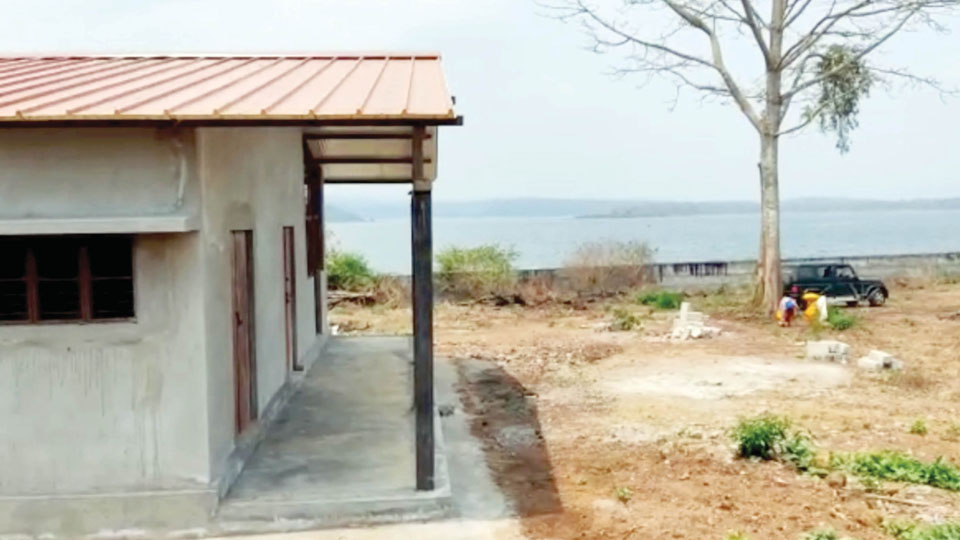
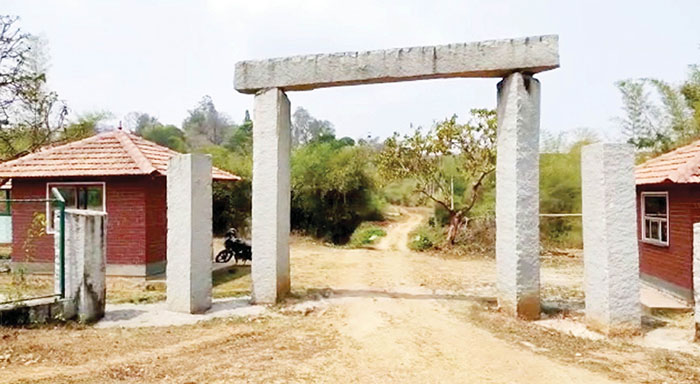
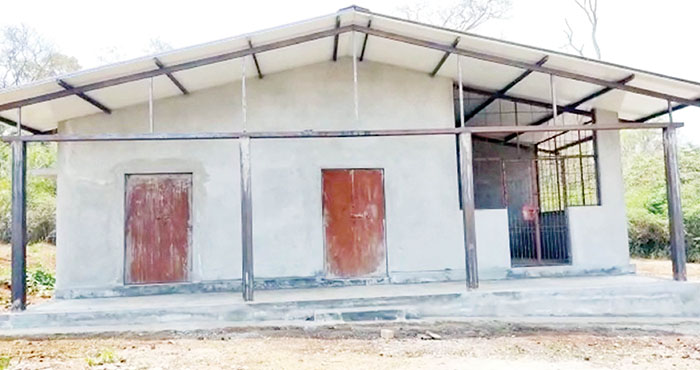
Works are in full swing to set up the third Elephant Camp in Kodagu at Harangi. The State Government has released Rs. 50 lakh for the project that is expected to ease the burden of the existing elephant camps.
Already, Kodagu has two elephant camps, one at Dubare and another at Mathigodu near Anechowkur Gate that borders Mysuru. There are eight elephant camps in Karnataka including the two in Kodagu and the Harangi Camp will be the ninth in the State.
The eight jumbo camps house more than 100 tamed elephants that are used to rescue wild animals and for logging purposes at Government timber depots. The new elephant camp is expected to reduce the burden on the nearby Dubare Elephant Camp, which currently has over 31 elephants, the highest in the State.
90 percent works complete
Over 90 percent of the works have been completed at the Harangi Elephant Camp and interestingly, the Camp houses a Tree Park, also in the same vicinity. From 2017 till 2021-22 Rs.1.38 crore has been released by the Government and works are on to create the Tree Park.
The Forest Department is establishing the elephant camp in a 40-acre land at Athur Reserve Forest beside Harangi Reservoir in Kushalnagar Taluk. The place, located near the Harangi Dam backwaters, is ideal to set up the elephant camp. The camp per se is eight to 20 acres. The Athur Range Forest extends up to 2,000 acres and it is an ideal elephant habitat with plenty of water and green swathes.
Four houses have been constructed for the mahouts and their families to stay, a vast kitchen has been constructed to prepare food for the elephants and store rooms has also been constructed. Basic facilities including toilets have been constructed for tourists who come there.
Abundant water source
Borewells have been sunk to provide a steady stream of water and as the land comes near the Harangi Dam backwaters, there is no shortage of groundwater. Electricity works are on now at the camp and enough care is being taken to ensure that the forest area is not damaged while erecting the power poles and when the power lines are drawn.
The funds for the camp have been released from Compensatory Afforestation Fund Management and Planning Authority (CAMPA). Apart from setting up a new elephant camp, there are plans to initiate other related development programmes including developing the camp as a tourist centre and at the same time provide shelter to the elephants.
Other tourism projects
The Government has also plans to closely develop Cauvery Nisargadhama in Kushalnagar and together with the new elephant camp in the region, the initiatives are set to boost eco-tourism activities.
Kushalnagar Range Forest Officer J. Ananya Kumar told Star of Mysore that once the Harangi Elephant Camp works are completed, five elephants will be shifted from Dubare Elephant Camp to immediately ease the burden. Later, 15 more jumbos will be shifted in phases. Appointment of staff and doctors will be decided by the State Government.
Among the State Government plans to improve tourism in Harangi are water sports on behalf of Jungle Lodges and Resorts, Jet Ski and para-sailing. The Kodagu District Administration is weighing various options for tourism promotion once the Harangi Elephant Camp is fully established.
source: http://www.starofmysore.com / Star of Mysore / Home> News / March 21st, 2022
The Kodagu coffee growers have been demanding free electricity supply to up to 10 HP pump sets installed in coffee estates across the district.
Karnataka CM Basavaraj Bommai (Photo | Special arrangement)
Madikeri :
The state government has announced a subsidized power supply to up to 10 HP pump sets installed in coffee estates in Kodagu. The decision was announced by chief minister Basavaraj Bommai during the Zero Hour of the state Legislative Assembly. The request for the same was raised by Kodagu MLA Appachu Ranjan.
The Kodagu coffee growers have been demanding free electricity supply to up to 10 HP pump sets installed in coffee estates across the district. While assurances had been extended by the state, the same had not been sanctioned. On Tuesday, MLA Appachu Ranjan raised the issue during the Zero Hour of the legislative session and he was supported by MLA KG Bopaiah, MLA CT Ravi and MLA Kumarswamy.
The legislators argued that the district supplied Cauvery water to the state, but it has been neglected. They argued that while tobacco and areca nut estates are eligible for power subsidy, coffee has been neglected and ignored.
Following these discussions, CM Basavaraj Bomai said, “Power subsidies extended by the state are increasing every year and it adds up to Rs 12,000 to Rs 14,000 crore. However, we understand the problems of the coffee growers, and following the discussion with the power minister and other ministers, the state will grant a subsidy to the power supply to up to 10 HP pump sets installed in coffee estates. However, terms and conditions will be released to control misuse of the same.”
source: http://www.newindianexpress.com / The New Indian Express / Home> States> Karnataka / by Express News Service / March 22nd, 2022
Vishwa Cariappa is a native of Kodagu and currently resides in Bengaluru. He is the Chairman and Managing Director of Vasan Infrastructure Private Limited.
Madikeri:
A native of Kodagu has written to Prime Minister Narendra Modi urging for the establishment of a multi-speciality hospital in the district. The uniqueness of Kodagu has been highlighted in the letter alongside the immediate need for a multi-speciality hospital.
Vishwa Cariappa is a native of Kodagu and currently resides in Bengaluru. He is the Chairman and Managing Director of Vasan Infrastructure Private Limited. He has written to the Prime Minister urging for the establishment of a multi-speciality hospital in Kodagu.
In his letter, Vishwa highlights the uniqueness of the district and the people’s increased contribution to the Indian Military. The contributions of Field Marshal KM Cariappa, General Thimmayya and other noted personalities have been highlighted in the letter. Further, the dire situation of the people of the district post the 2018 natural disaster has been brought to the fore and the absence of good road connectivity and the absence of improved medical facilities especially in hilly regions have been highlighted.
The plight of the patients who are forced to travel out of the district to get medical treatment has also been highlighted. He has then requested the Prime Minister to establish a multi-speciality hospital in the district and Vishwa has assured to donate Rs One Crore to the government for the establishment of the same. He also assured to help the government find land in the district for the establishment of the hospital. The letter has been posted to the PM and other cabinet ministers of the central government.
source: http://www.newindianexpress.com / The New Indian Express / Home> States> Karnataka / by Bosky Khanna / Express News Service / March 20th, 2022
Maverick & Farmer Coffee opens its doors to all the coffee lovers in Bengaluru, offering a farm to cup café experience. The café serves a collection of coffee from the brand along with international cafe food. With the distinction of being the world’s first café painted with coffee, the place is a haven for coffee enthusiasts.
The centrally located café, with a serene open-air seating area, spans over 5000 sq. ft. overlooking the green expanse of the Rbanm’s Grounds. As you enter, along with the waft of freshly ground coffee, you come upon a wall that dons an interactive art experience.
Created by muralist and mixed media artist Jessica George who captures the essence of the café in a larger than life format. The coffee flower, cherry, beans and the espresso extraction are brought to life with splashes of vibrant colour with a coffee swing perched at one end that makes for a great photo opportunity.
Homegrown coffee brand is one of India’s few bean to cup companies. With decades of experience and a legacy in coffee farming, the brand conducts experiments in its estate in Pollibetta, Coorg that serves as a laboratory where some of the most inventive brews are conceptualised by the best minds in the business.
Novel flavour profiles and tasting notes are thus brought to the café with brews and blends like the – Cinnamon Almond Coffee, The Parama Cappuccino, Vietnamese Coffee, The Coffee Cherry Soda, made from the fruity part of the coffee cherry, this drink is refreshing, fruity and contains antioxidant, The Clarified Cappuccino, an 8 oz cappuccino made with the perfect milk-espresso ratio is ‘clarified’ using a technique borrowed from a different stream of food science.
What the drinker experiences is a near-clear ‘cappuccino’ infused with some fruit flavours and rosemary and last but not the least, The cold smoked coffee, served in a carafe filled with fruit-wood smoke (wood from their estate in Coorg), made using a unique and indigenously developed process to infuse cold smoke into harvested coffee cherries.
Ashish D’abreo, founder-partner at Maverick & Farmer Coffee, said, “The idea is to create something maverick, while sticking to the traditional Indian technique of coffee making. We grow and roast our own coffee to create artisanal blends using unique methods and techniques. Our in-house experiments like cold smoking and fermenting break the mold to give you a burst of fresh flavour profiles.”
Along with exceptional coffee, the cafe serves international cuisine – from The Square Burgers, Pastrami Sandwich, Pulled Pork Sandwich to Chocolate Banana Cake and Apple Pie; it’s the perfect space to hang out and unwind with a cup of coffee and terrific food.
Sreeram G, founder-partner, who has a background in advertising and branding, talking about the experience at Maverick & Farmer Coffee, said, “We aim to serve perfection in brewing to a third-wave of coffee drinkers in the city. The café tells you the story of how our coffee travels from the heart of Coorg to swanky Bangalore. It showcases our myriad coffee creations using some pretty cool single-serve brewing equipment. The food menu is light and complements our coffees while the open space of the café ensconced in greenery charms you with old Bangalore vibes.”
source: http://www.fnbnews.com / FnbNews.com (Food and Beverage News / Home> Top News / by Fnb News Bureau, Bengaluru / March 16th, 2022
The Dry waste Collection Centre at Ponnampet Grama Panchayat, with collection from all the wards, became operational in January 2019. Pic courtesy: Clean Coorg Initiative
There is something about a hill vacation, travelling across narrow winding roads upwards, landscape dotted with lush green terrain, tantalising water streams, foggy foothills, chirping birds, the buzzing sounds of insects and clean air. But now, contrast this with unsightly scenes of rubbish by the roadside — styrofoam, plastic wrappers, bags and bottles, and more. The garbage keeps growing, competing with the hills, and becomes a monstrous man-made mountain in the midst of a landfill, laden with grotesque man-made objects that speak volumes about our use-and-throw culture and our complete lack of consideration for the environment.
Coorg, nestled in the Western Ghats, also known as the Scotland of India, and a popular tourist destination has, however, managed to make significant progress in fighting the waste menace. The town has demonstrated their commitment towards zero waste, with the closure of two landfills.
“Zero waste” is a concept that entails minimum or zero pollution to land, water and air due to solid waste management (SWM) practices and zero waste going to landfills. This initiative was a collaborative initiative by the volunteers of Clean Coorg Initiative, Hasiru Dala, the Gram Panchayat and the local government.
The 30-year old Ponnampet landfill as it stood in 2019. It would burn most of the time, the dump going down to nearly 40 feet./ Pic courtesy: Clean Coorg Initiative
How it all started
Alarmed that Coorg could soon degenerate into a dumping ground, in 2016, Prashanth Chinnappa, a local resident of Coorg brought several like-minded people together, to form ‘The Clean Coorg Initiative (CCI),’ a voluntary platform to promote a clean and healthy Coorg, with a core focus on promoting segregation of waste at source.
According to Pooja Uthappa, Volunteer at the Clean Coorg Initiative, “Waste is a relatively new phenomenon in this landscape. With rapid urbanisation, the quantum of garbage is also rapidly increasing. The other concern is around waste disposal practices. Dumping in one area or on the sides of the road and open air burning are common practices. Unfortunately some of the dumping areas are in the fringes of the forest areas, and the wild animals unknowingly consume them (the garbage dumped).”
Pooja also points out that Coorg residents depend primarily on groundwater; so when waste is dumped in open lands/ dumping grounds or landfills, it eventually contaminates water sources. But that’s not all. “Talakeveri, in Kodagu district, is considered the source of the river Cauvery and is an important lifeline for inhabitants in Karnataka and Tamil Nadu; incidents of indiscriminate garbage dumping adds to the problem downstream,” she says.
Pavan Aiyappa, Volunteer, CCI says, “We have a simple mission, which is to preserve the fragile ecology of Coorg for future generations, adopt sustainable initiatives, manage waste, promote responsible tourism, and preserve our natural resources”.
The group soon realised that clean up drives were a temporary solution, with no place for disposal of the litter collected, and that systemic changes were needed, along with on ground awareness. They started by undertaking a survey, observing practices, existing infrastructure and dumping spots. Savita Chengappa*, a volunteer from CCI, says, “We surveyed the entire stretch, till the Kerala border and we realised that we need somebody on the ground, who could go to the gram panchayat, create awareness and build capacities of the local team, using the Solid Waste Management (SWM) Rules 2016 framework. We also had to envision and plan the concept of stream-based processing of waste.”
The team also wanted to build on the success of Dry Waste Collection Centres (DWCCs) in Bengaluru, and wanted to understand the workings of the same in a rural set-up. Aparna, another active volunteer with CCI, says, “For us, all these were still theoretical and we needed to put these concepts into practice.”
Partnerships and initiatives
The group then decided to collaborate with the government and other organisations and approached Hasiru Dala, a social impact organisation working with waste pickers to assist with onground implementation and solutions.
Nalini Shekar, Co-founder Hasiru Dala, says, “Initially we were happy to support the group with necessary IEC and training, but soon realised that Coorg has a unique challenge, given its terrain. It has a large tourist footfall and considering the floating population, it is challenging to ensure that information and education programmes reach all of them. Secondly, while collection happens, there is no recycling industry in the area. Thirdly, there are limited workers in the solid waste management space, as most workers are employed in the coffee estates, agriculture and the tourism industry.” But given their expertise in dry waste management, it appeared that a system could indeed be put in place.
Pooja says, “Our first priority was capacity building for the municipal workers, the ASHA workers, the Self Help Groups (SHGs) and the officers, towards implementation of decentralised waste management. The training included the concepts of segregation of waste at source, the management of DWCCs, roles and responsibilities of officers, management of reject waste. For the general public, the sessions focussed on responsible disposal of waste through segregation at source.”
She shares that the group also conducted several outreach programmes like clean up drives, cycling awareness, sustainable menstruation and reached out to schools. CCI volunteers, in partnership with Wasteless Auroville, introduced a subject titled ‘Garbology’ as part of the school curriculum in Deviah memorial Preparatory School, Bittangala. Their outreach programme touched more than 800 government school children and teachers.**
CCI also hosted a Parivarthana Mela, to showcase sustainable lifestyle practices. This included composting workshops.
Awareness programmes were held in several schools in the region. Pic courtesy: Clean Coorg Initiative
Besides working on door-to-door awareness programmes, the team reached out to shopkeepers and explained the system of fines for non compliance. Pooja acknowledges the contribution of Kodava Koota from the United States of America, for supporting the outreach programmes.
Closing the landfills
The group then went on to streamline and simplify the waste collection process and a Dry Waste Collection Centre was set up. Puttaraju, Panchayat Development Officer ( PDO), Ponnampet who worked towards the closure of Ponnampet landfill shares, “After CCI and Hasiru Dala’s intervention, we felt the need for a decentralised set up and a DWCC. We zeroed in on the location and approached the Zilla Panchayat for permissions. They were very supportive and passed a resolution for the construction of the DWCC.”
Hasiru Dala team also came up with a simple manual bailing system, which was then given to different GPs and this ensured that low value and multilayer waste could be sent for co-processing. Aparna, Volunteer CCI adds, “This process, then led to the natural question, do we really need dumping grounds or landfills?”
Aiyappa adds, “The rationale was much more than aesthetic beauty. We were also concerned about groundwater contamination and leachate from landfills, but also, given that the landfill was 30 years old and the waste was going about 30 feet down, we were also worried about landfill fires.”
The team then approached the GP, who in turn took to the implementation of the Karnataka Plastic Ban. The Panchayat passed a resolution on the plastic ban and introduced the “bring your own bag” concept, drawing in from the 2Bin1Bag concept and imposition of fines for littering, Aiyappa shares that thereafter, they went about methodically working with the GP to close the landfill in two areas, Ponnampet Taluk and Karmadu, Virajpete Taluk.
Hasiru Dala introduced Manual Baler to some of the Gram Panchayats in South Coorg, to pack the non-valuable materials through this and save money in transportation. Pic courtesy: Clean Coorg Initiative
Stiff penalties for violation
Niren Nannaiah, President, Karmadu Gram Panchayat, adds,“We had various meetings on the need for closure of the landfill. We have cordoned off the area with a metal sheet, installed CCTV cameras and put up a board notifying the penalty for dumping garbage in and around the place. We decided that it was futile to impose nominal fines of a hundred or couple of hundred rupees, so we fixed it at Rs 5000. We have penalised a few people. But that’s not all, we have also issued notifications on the need to use reusables or fibre cutlery at all events, especially marriages and functions.”
Nithin B S, PDO Karmadu, says the closure of the Karmadu landfill involved several stages: first sensitising people, then streamlining collection, seeking support of the elected representatives, passing resolutions and issuing the necessary notifications. But the most important was the imposition of fines.
The cordoned-off Karmadu landfill area. Pic courtesy: Clean Coorg Initiative.
We also made an announcement in the neighbouring gram panchayat that no dumping will be entertained, but they are free to drop segregated waste at our processing or dry waste centre. We spent about three lakh rupees in setting up the entire system, apart from separate investments in the installation of the CCTV camera,” said Nithin B S.
Finally an order was passed to close the landfill. The next question was, what do we do with the landfill site? The team then worked with the GP and proposed a design for a public park.
Mr. Suraj Ajiikutiria, SBM, Virajpet and Ponnampet Taluk, says, “ In order to actualise the vision of Swacch Bharat Abhiyan, we will need to close dumping sites in all 104 villages, plan for decentralised infrastructure and streamline collection just like we did in these Taluks.”
The most important takeaway from these experiences in Coorg is the need for a coming together of all stakeholders and a model that is both socially and environmentally inclusive, and which enables us to proudly proclaim, ‘landfills have no business.’
[The author wishes to acknowledge the contribution of Nirmala Shekar, Beula Anthony, Ramya K and Rohini Malur, for this article. ]
source: http://www.citizenmatters.in / Citizen Matters / Home> Waste Management / by Pinky Chandran / March 16th, 2022
The BJP government in Karnataka launched the Revenue Documents at Your Doorstep programme. Karnataka’s Chief Minister, Basavaraj Bommai while speaking at an event in Chikkaballapur said that it was a pity that people were made to run from pillar to post to get basic documents like the caste certificate and RTC. Revenue Minister, R Ashok formulated this novel programme to end the plight of the poor, he also said.
Bommai also said that the most significant work done by Prime Minister, Narendra Modi is that he created awareness among the people about their rights.
This dream programme of Bommai and Ashok was also launched in Kodagu district, where it has always been a nightmare to get property documents done. The programme attended by Kodagu MLA, K G Bopaiah and MLC, Suja Kushalappa was launched at Kavadi Village, Karmad Panchayat, Ammathi Hobli, Virajpet Taluk.
While launching the programme the BJP government assured that the revenue documents will be handed over at doorstep of the respective owners. The event was attended by the Tahsildar, Revenue Inspector and Revenue Department officials also.
Bopaiah, while speaking at the event said that this programme has been launched keeping the plight of the citizens in mind. They no longer have to run from office to office and waste time at revenue department offices. We have taken interest in delivering documents at your doorstep, he also said.
Documents such as the RTC, Income and Birth Certificates and Caste Certificates, survey maps will be delivered at your doorstep, Bopaiah also said. He explained that an application with 22 point checklist will be provided and the owners of the land will have to fill it up, following which the revenue department official will collect it at your doorstep. The MLA also assured that the corrections in the documents will be done at the earliest. There is no longer a need to stand in queues and run from pillar to post and office to office, he also added.
He said that the main issue that people were facing is the deletion of the pattedara’s (family head) name from the RTC (pauthi khatha). This new programme will ease out that process also, he assured.
Bopaiah however added that this programme is not an election gimmick, but has been introduced only with the view of easing the pain of and helping the people of the state.
MLC, Suja Kushalappa speaking at the event said that this is one of the best measures taken by any government in recent times. He said that the Revenue Documents at Your Doorstep programme is like a balm for the people who have been facing pain all these years.
Kushalappa assured that this programme would be a complete success and generations to come will thank the BJP government for this novel gesture. He said that he would ensure that the programme is a complete success and would personally oversee it in case anyone faces any difficulty.
source: http://www.oneindia.com / OneIndia / Home> News> Bengaluru / by OneIndia Correspondent / March 14th, 2022
WELCOME. If you like what you see "SUBSCRIBE via EMAIL" to receive FREE regular UPDATES.
Read More »