Category Archives: Business & Economy

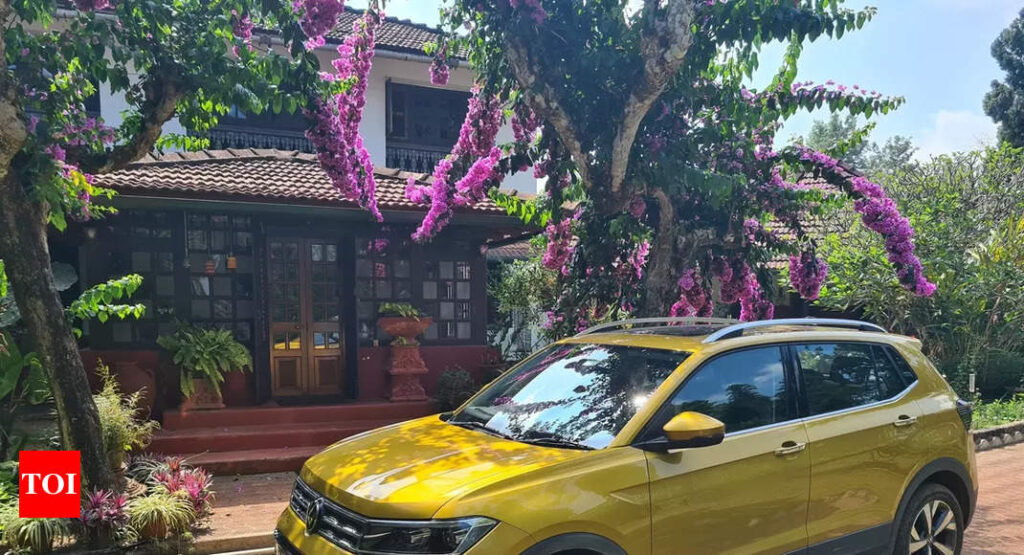
Back to ‘school’ in Coorg to learn about the German connect – An unforgettable drive in Volkswagen Taigun

The board that greeted us at the end of our 200km-odd journey from the heart of Bengaluru said School Estate. But that wasn’t our final destination, is what we realised soon. That would be School Thota, a division of School Estate, and a few hundred metres into the estate, we saw a smaller board directing us to it.

Thota roughly translates to garden in the local Kannada language. Of course, like many other places around India, there is a local language (not dialect) just for Coorg too. There are many further distinctions and groups within locals here, such as Kodavas, to which the family that owns School Thota belongs. Surely, there are many equally beautiful plantations and homestays in Coorg. But what caught our fancy on this particular drive of Volkswagen’s impressive new Taigun is the story of a German reverend who is associated with the early history of this place, including the reason why it ended up being called School Estate.

Georg Richter was the principal of a local Mercara High School. He was instrumental in mobilising local leaders in the field of education. Under his guidance, they came together and collected money to purchase around 350 acres of land for Rs 3000 back – a princely sum back in the 1860s. The aim was to fund the school with yield from the coffee and other plantations, hence the name School Estate. Since Richter was in charge, the house on the property also was built to his liking. While earlier it was only a makeshift place for the occasional visitors, the subsequent owners kept the core structure intact and built a seemingly European-style Indian home first for themselves and now extended to guests interested in soaking in nature and School Thota’s heritage.

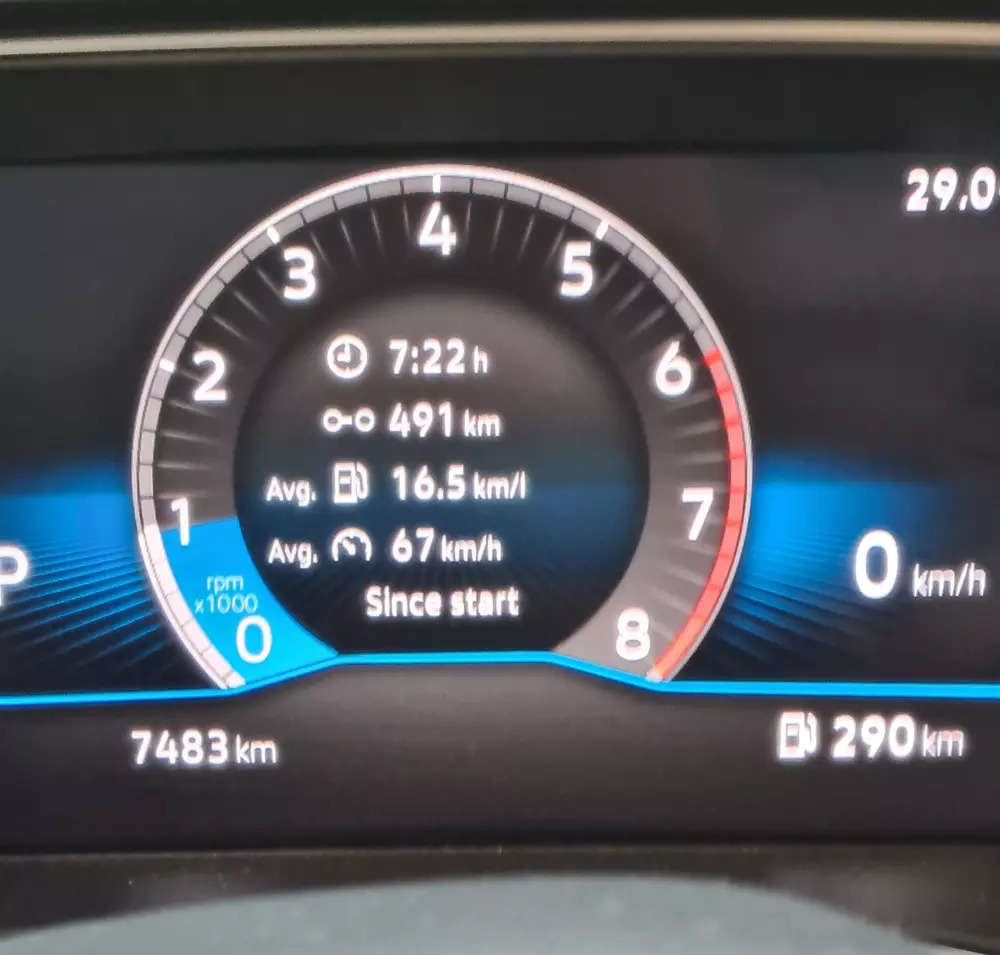
Coorg is one of the places that still rely on roads for its connections. The drive from Bengaluru to its centre, Madikeri, is a mix of choc-o-bloc metropolitan roads followed by a busy but reasonably fast Mysore highway that you leave after Srirangapatna for a more picturesque country road interspersed with short stretches of busy towns. It was a mix that helped the versatility of the Taigun shine through. Volkswagen offers this made-for-India SUV in two engine and three gearbox options. While we took what was on paper, the smaller 1.0-litre TSI (114bhp/178Nm) coupled with a six-speed torque converter gearbox revealed the variety of traffic and road conditions. One of the biggest clichés busted was it doesn’t tire under relentless highway driving. A frugal fuel consumption figure meant we could do the entire stretch without a fuel stop en route.
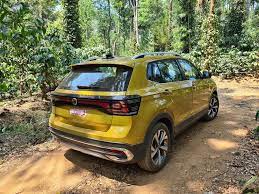
Coorg roads are typically narrow and twisty, and the agile Taigun seemed up for some confident driving. Patches of bad roads were dealt with ease, as the Taigun feels planted on the move, just like its bigger stablemates. The solid German connection is there to see.

Inside School Thota, we had many glimpses of the European connection too. Its current owners – the Aiyappa family, is led by 81-year-old Saraswathi, who runs the show along with her son Kushalappa. Together not only do they manage half of the School Estate (the other half bought by another local family a few generations ago) but also keep the homestay’s heritage intact.

“The doors of this homestay are the original ones,” said Saraswathi Amma. She also pointed out that they were much larger than the entrance door, which was an extension added to the School Thota structure after the Indian family took over. “Typically, Germans are taller, which explains the bigger doors. Moreover, for us, we bend or hunch a bit and enter the house. This is also about showing respect to the house, which is a temple of sorts for us,” she pointed out. Keeping tradition alive is one of the motives of such homestays around Coorg so that you can see many old artefacts and even furniture tastefully retained here. At School Thota, even a European-style fireplace reminds you of the kind of the early occupants of this structure.

Coorg is an extremely ecologically sensitive area, and its locals try hard to maintain the balance between earning from the soil and keeping it sustainable. Plantations are not only home to various kinds of flora and fauna but also the livelihood for many locals. Agriculture in today’s times can be challenging, but families running the show have tried to improvise and keep the fire going in their Indianised versions of the colonial way of life. A few have even managed to hold on to the original way of life, just like a Taigun does by keeping a Volkswagen badge’s core values intact in an SUV that’s completely at home in India. Its Volkswagen genes are unmistakably apparent despite being born and brought up in India.
It took a visit to this place to reiterate and experience this first hand. Lesson learnt by going back to school… auf wiedersehen.

Contributed by Girish Karkera,
Consulting Editor – Times Auto · Bennett Coleman and Co. Ltd.

Disclaimer: The article has been produced on behalf of Volkswagen by the Times Internet’s Spotlight team.

source: http://www.timesofindia.indiatimes.com / The Times of India / Home> Spotlight / by Girish Karkera / March 10th, 2022

Custodians of the Kodagu drum

A handful of artisans in the hill district still produce the Dudi (a small drum) at a time when globalisation is slowly killing the art of making these musical instruments.

Madikeri :

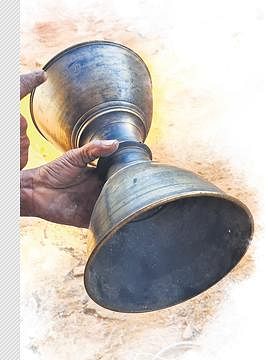
Rustic and rhythmic sounds resonate in the air in the Kodagu district when Kodavas observe special occasions. These rustic sounds are from the traditional drum called the ‘Dudi’. With a metal base and the batter head made of animal hide, Dudi holds a special place in the rituals practised by the Kodavas.

While the traditional Dudis still hold a great significance among the community, the art of making Dudis is slowly dying. Today, only a handful of artisans are creating this unique instrument. Nonagenarian Subbaiah U is one of them. Elaborating on how he makes Dudis, Subbaiah says, “In the past, I used to make Dudis from the skin of muccha (lion-tailed macaques). As hunting of macaques is prohibited by law now, I use goatskin.”

First, artisans buy the hide from meat shops for approximately Rs 350 a piece and then the tedious and intricate process of making the drum begins. “The first tough job is removing hair from the goatskin. One cannot use blades as it can damage the skin. We rub the skin on a hard surface, like stones, to remove the hair and then cut it to the size of the base. We need two skins to make a Dudi,” explains 65-year-old KA Ganapathi, another artisan who has been making Dudi for nearly three decades now.

Going back to the myth and origin of Dudi, historian Bacharaniyanda Appanna says, “In the past, forest dwellers created the instrument for entertainment. It is said that they wanted to imitate the sound of the woodpecker that resonates in the forest.” Dudis were earlier made using hollow tree barks for the base and lion-tailed macaque’s skin for the resonating heads.

Ropes made from natural plant fibres were twisted around the drum and canes were used to imitate the sound of the woodpecker. Gradually, bronze replaced the wood for the base and goatskin for the head. “Now, not many work with bronze and workers who can repair bronze material are also rare. While we fix the resonating heads of old bronze bases, the new ones are created using brass,” he explains.

The cleaned goatskin is first soaked in water and then placed on an hourglass-shaped metal base. It is neatly stitched (using plant fibres) around the vertical openings of the metal base and is dried under the Sun. A ring created using plant fibres is placed on top of the skin and around the metal base. They are then stitched with ropes, which were earlier plant-based but are now made of nylon. The ropes are then carefully tightened around Dudi. “The two sides of the Dudi give a slightly different sound and they are differentiated as male and female sound,” adds Ganapathi.

The artisans of Dudi are sought after for their special work even today, but the art may soon become extinct. Dudis are extensively used during Kodava weddings, festivals and even funerals. However, these traditional instruments are now being sourced from mass production centres.

“Many times these instruments are made from plastic and are sourced from Mysuru,” confirms Appanna. The old-time artisans who put in a lot of effort to make Dudis charge between Rs 500 and Rs 700 for a Dudi and they also receive orders to repair the old ones. Philanthropists said that these artisans should be supported to revive the dying art that contributes greatly in preserving the tribal culture.

source: http://www.newindianexpress.com / The New Indian Express / Home> States> Karnataka / by Prajna GR / Express News Service / March 06th, 2022

Tehey: Badsha’s New Bridal Collection Shop Opens In City

Mysore/Mysuru:

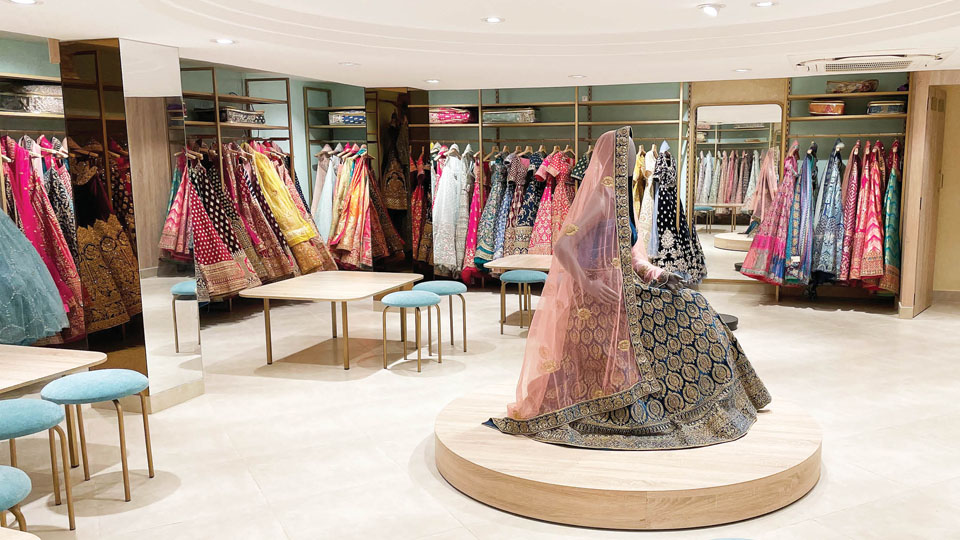
Badsha’s ‘Tehey’ is a one-stop shop for a new bridal experience in city.

‘Tehey’ means layers in Sanskrit and there are layers of ceremonial wear — from exquisite bridal lehengas for the foremost bride to classy ethnic wear for the guests.

‘Tehey’ traces its roots to the early 1900s when a successful silk and cotton textile business was established by their ancestor Abdul Rehman Badsha and his four sons in Virajpet, Kodagu.  The first formal retail outlet was opened in Mercara in 1922.

Now with the launch of ‘Tehey’ people can choose from a range of exclusively designed Indian ethnic occasion wear sarees, lehengas and salwars.

‘Tehey’ also offers Kodava attires for men and women, including the Kupya-Chele & Mande Tuni for men; Bottu Podiya, Kambi Podiya, Muskoli and Checked Vastra for women.

To enjoy the shopping experience, visit ‘Tehey’ which was inaugurated on D. Devaraj Urs Road in city on Feb. 26.

source: http://www.starofmysore.com / Star of Mysore / Home> News / March 03rd, 2022

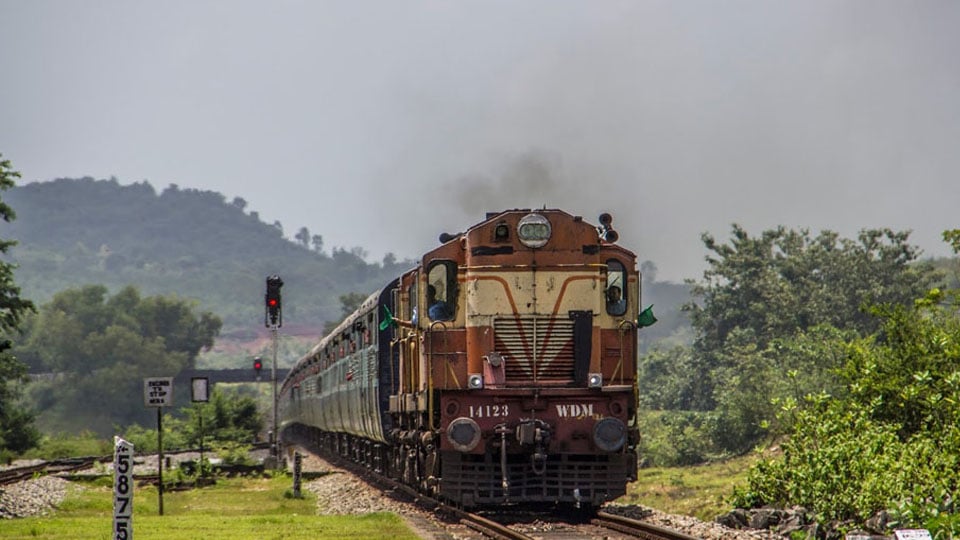
Mysuru-Kushalnagar Railway Line: Project Revived As Centre Grants Rs. 1,000 Crore

Madikeri:

The Centre has granted Rs. 1,000 crore for the 87.2-km Mysuru-Belagola-Kushalnagar Railway line that is expected to cost Rs. 1,854.62 crore. The allocation has been made in the Union Budget 2022-2023. The cost factor has been estimated in a survey that was conducted in 2019.

If implemented, Kodagu will be placed in India’s Railway map and will facilitate the movement of people from Mysuru, Hunsur, Periyapatna and Bylakuppe. The land acquisition process is expected to begin soon for this project that was green-lighted and funds were allocated in the Railways’ Pink Book in 2019.

The Railway line will actually begin from Belagola in Srirangapatna taluk of Mandya district and end at Koppa near Kushalnagar in Kodagu district. It will pass through Yelwal, Bilikere, Uddur, Hunsur, Sathegala, Periyapatna, Doddahonnur to reach Koppa village.

It may be mentioned here that in August 2021, the South Western Railways had awarded the tender for final location survey to a Bengaluru-based company at a cost of Rs. 1.26 crore.

The project was originally mooted till Madikeri over 100 years ago and in recent times found mention in 2011 (UPA era). It was shelved after a survey commissioned by the Railways deemed the route to be unprofitable. The project, however, is being rejuvenated now, much to the chagrin of environmentalists who have opposed the project saying that the line will obstruct the natural flow of River Cauvery.

High Court ruling: Under pressure from Green activists and realising that the project will cause a disaster, the Forest Department did not give permission for a survey from Kushalnagar to Madikeri though the Railway authorities have completed the survey till Kushalnagar.

Environment activists argue that once the line comes to Kushalnagar, it is easy for the Railways to extend the same to Madikeri and then to Mangaluru and Kerala cutting through forests that are known for its eco-sensitivity and biodiversity.

Activists had even approached the Karnataka High Court and filed a Public Interest Litigation, hearing which the Court directed the Indian Railways to obtain environmental clearances before commissioning the Railway line.

The Court noted that the Railways cannot go ahead with the project in the absence of forest and wildlife clearances. Further, the Court directed the Railways to notify the petitioners while applying for clearances.

source: http://www.starofmysore.com / Star of Mysore / Home> News> Top Stories / February 18th, 2022

Karnataka’s Madikeri, Gadag top India in good air quality

Apart from Gadag, four districts of North Karnataka were also in the ‘Good’ AQI category — Hubballi (35), Bagalkot (23), Yadgir (30) and Bidar (41).  

For representational purposes

Gadag :

With an Air Quality Index (AQI) value of 22 on Tuesday, Gadag in Karnataka stood at the second position among major cities in the country with good air quality, according to the daily bulletin of the Central Pollution Control Board (CPCB). Madikeri came first in the country with an AQI value 19. 

Apart from Gadag, four districts of North Karnataka were also in the ‘Good’ AQI category — Hubballi (35), Bagalkot (23), Yadgir (30) and Bidar (41).  Gadag was in first place across the nation on June 5 and July 6 this year. Since then, it has been in the ‘Good’ and ‘Average’ category. 

Other districts of Karnataka which are in the ‘Good’ air quality category are Chamrajnagar (44), Chikkamagaluru (33), Davangere (23), Hassan (25), Koppal (46), Kolar (50), Mysuru (29), Ramanagara (40), Shivamogga (37) and Vijayapura (45).          

India follows the 500-point scale of measuring the AQI value depending on the concentration of the major pollutants. The value 0-50 is considered as Good, followed by Satisfactory (51-100), Moderate (101-200), Poor (201-300), Very Poor (301-400) and Severe (401-500). 

Gadag earning the ‘Good’ air quality tag can be attributed to the nearby hill range, Kappatagudda, and low number of industries around. Since a large percentage of villagers are into agriculture, it causes less air pollution. 

Gadag and Dharwad district’s Environmental Officer Shobha Pol said, “We have been observing the AQI value and this time many districts in Karnataka are in the Good category. Hubballi is in the list which was not there earlier. Reasons cannot be predicted as it needs a detailed study and survey.” 

source: http://www.newindianexpress.com / The New Indian Express / Home> Good News / by Raghottam Koppar, Express News Service / November 18th, 2021
 

Vinank Kuttappa elected as vice president of Virajpet TP

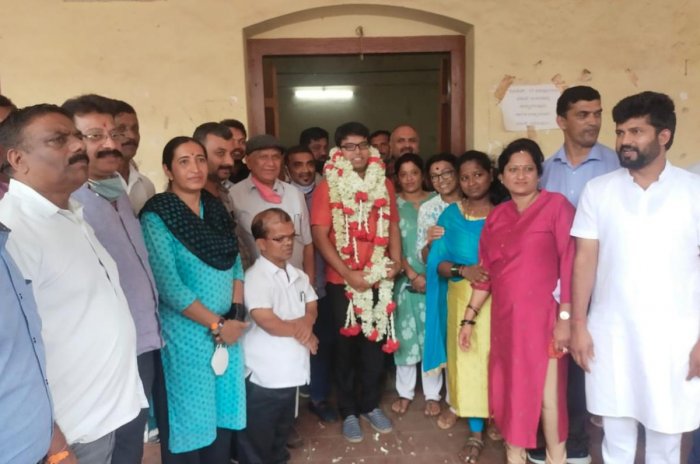
Vinank Kuttappa who was elected as the vice president of Virajpet Town Panchayat was greeted by MP Pratap Simha, MLA K G Bopaiah and other BJP members of the panchayat

Vinank Kuttappa from the BJP has been elected as the vice president of Virajpet Town Panchayat.

In the elections held on Friday, Vinank secured 10 votes, while his close contender from the Congress, Muhammed Rafi, got eight votes.

There are 18 elected members in the Town Panchayat. All eight members from the BJP, MP Pratap Simha and MLA K G Bopaiah voted for Vinank.

Six Congress members, one JD(S) member and an independent member voted for Rafi. Two independent candidates stayed neutral.

Tahsildar R Yoganand was the returning officer.

The seat occupied by former vice president of the Town Panchayat, Harshavardhan, was vacant, owing to his demise. 

source: http://www.deccanherald.com / Deccan Herald / Home> State> Mangaluru / by DHNS, Virajpet / October 29th, 2021

War puts coffee exports to Ukraine in jeopardy: Coffee Board

The war could also have an indirect and long-term impact on the overall coffee exports from India to Ukraine and neighbouring coffee markets, say exporters. | Photo Credit: K. PICHUMANI

‘Ukraine has imported 6,604 metric tonnes of our coffee so far this fiscal’

Bengaluru :

The current crisis has put Indian coffee exports to Ukraine and neighbouring countries in jeopardy, the Coffee Board said on Friday.

So far, (April-Jan.) this fiscal, India had exported 6,604 metric tonnes of green bean, instant and roast and ground coffee to Ukraine and 23,519 metric tonnes to Russia. Coffee exports to Ukraine, in fact, peaked at 7,327 metric tonnes during fiscal 2018-19, and in 2019-20 it was 6,947 metric tonnes.

CIS countries were traditionally the major soluble/instant coffee importers from India. Russia currently accounts for 75% of this, while Ukraine alone has more than 20% share, according to data shared by Coffee Board.

“The Russia-Ukraine war will certainly impact Indian coffee exports to Ukraine and its neighbouring countries,” said Dr. K.G. Jagadeesha, CEO and Secretary, Coffee Board.

According to coffee exporters, in addition to the immediate impact on exports, the war could also have an indirect and long-term impact on the overall coffee exports from India to Ukraine and neighbouring coffee markets

“The Russia-Ukraine war is likely to push up prices of fuel, metal/aluminium (instant coffee is mostly exported in metal cans and containers) and packaging materials. It could also spiral logistics costs,” said Ramesh Rajah, president of the Coffee Exporters Association. “This means, the overall cost of exports will certainly go up and buyers and sellers are already worried about it,” he said. “Also, all these are happening when the prices of packaging raw material had already gone up by 30% recently,” Mr. Rajah added.

Ukraine is one of the largest importers of coffee in that region, while Russia is one of the top 5 buyers of Indian coffee. “Although Ukraine is largely a tea-consuming country, it has a very mature coffee culture, thanks to Turkish and Ottoman influence,” he said. “The current uncertainty is certainly worrying, both for exporters and as well as importers of all varieties of Indian coffees,” he added.

source: http://www.thehindu.com / The Hindu / Home> Business / by Mini Tejaswi / February 25th, 2022

Nature at its best in Coorg’s coffee plantations

A typical plantation walk in one of Coorg’s large coffee estates, in fact, is nothing short of a treat to all five senses.

New Delhi: 

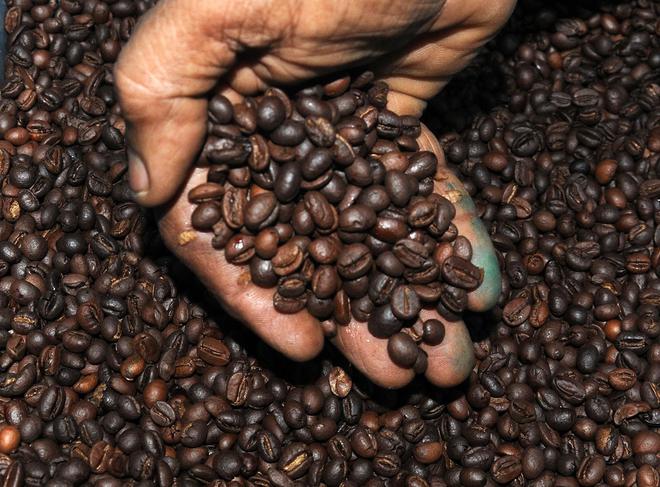
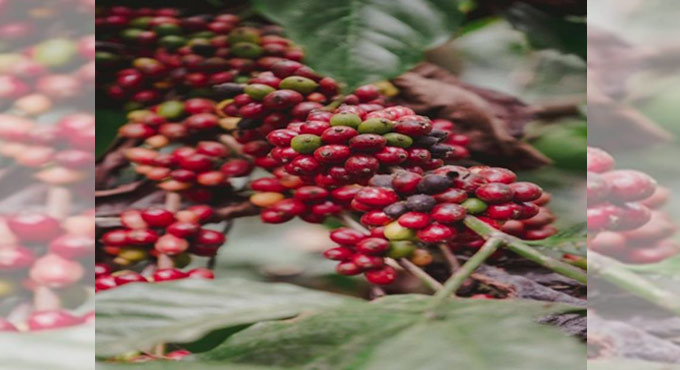
In India’s coffee heartland Coorg, which is at a driving distance from the city of Bengaluru and nestled in the densely forested Western Ghats, February is the season to find abundant coffee trees laden with small crimson and green berries that hold inside them two green beans each. It is in these Karnataka-based coffee plantations, that many of the flavourful and aromatic coffee beans originate, before they are dried, roasted and ground into the perfect cup of coffee in your hands.

Coorg, locally known as Kodagu, can often be found on the bucket lists of seasoned travellers for its tranquil setting, biodiversity, delicious Kodava cuisine and large-scale cultivation of Indian coffee. A forthcoming luxury destination, the southern hill station has unmatched experiences that go beyond tourism-as-usual.

For those interested in experiencing first-hand, the crop-to-cup process of coffee in India, the local hospitality options do offer plantation walks and trails that have you immersed in the native experience.

In an ecologically diverse and sensitive region like Coorg, threats to the forest ecosystem are aplenty, and are prone to multiplication with additional construction to support the consumerist traveller’s lifestyle.

The homestay experience, then, comes as the perfect fit for the region and is growing by the year. Allowing one to lodge up in close proximity to the natural environment and coffee crops within the estates themselves, while observing all Covid-19 precautions, options on Airbnb in Coorg are something new-age travellers must check before heading to the beautiful southern coffee county.

A typical plantation walk in one of Coorg’s large coffee estates, in fact, is nothing short of a treat to all five senses.

As one walks along a narrow network of tracks lined by trees of Robusta and Arabica coffee species, along with cultivations of arecanut, pepper and cardamom, the calls of Coorg’s diverse bird species are unmistakable in the background. According to Ganesh H R, a local bird expert popularly termed the Bird Man of Coorg, over half of India’s overall bird species can be found in the region, along with birds like White-cheeked barbet, Malabar barbet and Malabar grey hornbill that are endemic to the region. The place is also a great spot for serious bird-watching.

Surrounded by a tall canopy and clear blue skies difficult to find in urban jungles, walkers are greeted with the smell of flowering coffee shrub and ripened coffee berries along the way. In some trail experiences, enthusiasts may be invited to participate in coffee berry harvest — picking bunches of red and green berries off the branches onto a wide-based container below.

In experiences bookable on Airbnb, such as the farm-to-cup experience on FiveFarms Coffee, one can step into the shoes of a coffee grower and help with jobs like transplanting young plants from the nursery, checking for fragrant coffee blossoms or picking ripe red berries. The beans are then dried in the sun before processing it mechanically into the final product. Visitors can also experience roasting and take back roasted batches of beans.

source: http://www.telanganatoday.com / Telangana Today / Home / by IANS / February 27th, 2022

Kushalnagar Mini Airport: Kodagu DC Inspects Land

Kushalnagar:

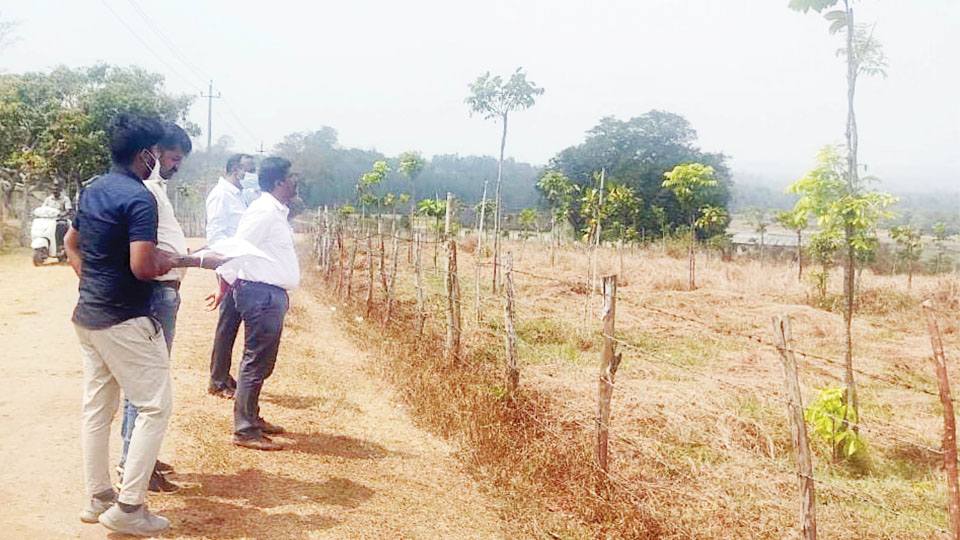
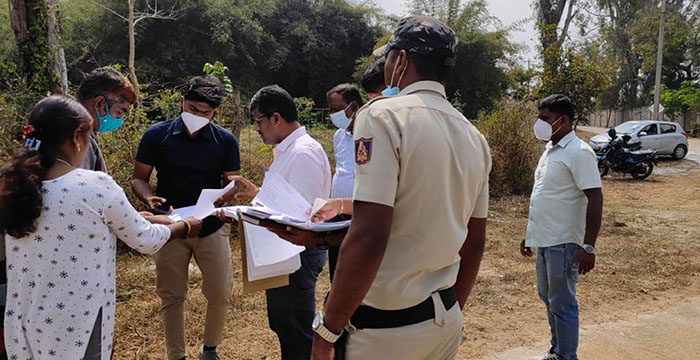
Things are falling in place for the establishment of a mini airport (or airstrip) in Kushalnagar and yesterday, Kodagu Deputy Commissioner Dr. B.C. Satish inspected the land that has been allotted to the project.

The DC was accompanied by some technical officers of Airports Authority of India (AAI) and the officers of Agriculture Department whose land in Koodige has been earmarked for the project.

Discussing the land issue with the Revenue Department officials, the DC asked them to submit a report on the 56-acre land in the premises of Koodige Agriculture Department so that he can report the land status to the Government.

The land for the mini airport is behind the Kodagu Sainik School and is owned by the Agricultural Department at Doddathoor Village till the border of Basavanathoor village that has been mentioned in the surveys conducted by the Public Works Department. In June 2019, a team of officials from the AAI had visited the site and had accepted the land proposal.

In December 2019, the Union Civil Aviation Ministry had selected Kushalnagar airstrip under the fourth round of Regional Connectivity Scheme (RCS) or the Ude Desh ka Aam Nagarik (UDAN) Scheme. The airstrip was listed under the unserved airport category — any airport at which there have been no scheduled commercial flights.

The Government Order to develop Kushalnagar airstrip along with other airstrips at Chikkamagalur, Karwar, Raichur, Gadag, Bagalkot, Davanagere and Udupi was issued in 2018.

source: http://www.starofmysore.com / Star of Mysore / Home> News / February 18th, 2022

Approval Sought To Develop Kodagu Roads In PPP Model

Mysore/Mysuru:

During his meeting with CM Bommai in New Delhi yesterday, MP Pratap Simha has urged for approval to develop certain roads in his constituency (Mysuru-Kodagu) under Public-Private-Partnership (PPP) model with Karnataka Road Development Corporation Limited (KRDCL).

The roads identified to be developed in the PPP model are: Mysuru-Madikeri Road from Yasodharapura near Hunsur on National Highway 275 Junction (Kallbeta), State Highway 90 from Hunsur, Virajpet to Talacauvery, State Highway 91 from Thithimathi, Gonikoppal, Bittangala to Perumbadi, Kandimakki-Makutta road till the Kerala border up to 76 kms and State Highway 89 from Madikeri to Kutta via Siddapura, Pollibetta, Gonikoppal, Ponnampet, Hudikeri, Shettigeri and Srimangala with a total distance of 85 kms.

Reports have been submitted to the State Government by KRDCL Managing Director Rekha after studying the modalities, present situation of the roads and also how the PPP model can be implemented.

The KRDCL has estimated the cost of repairs at Rs. 6.43 crore. The MP drew the CM’s attention to a memorandum submitted by him to PWD Minister C.C. Patil following which the estimate was made. He urged Bommai to allocate funds in the forthcoming Budget.

source: http://www.starofmysore.com / Star of Mysore / Home> News / February 08th, 2022