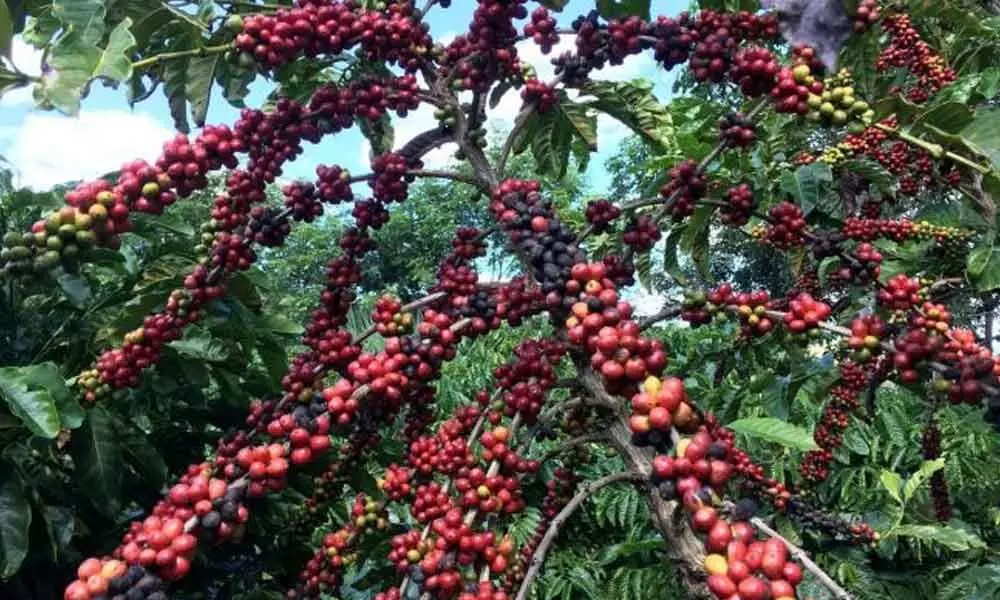
The Arabica Parchment coffee price has soared to an all-time high of Rs 16,200 per 50-kg bag on Thursday, in Somwarpet and Chikamagalur markets.
Madikeri:
The Arabica Parchment coffee price has soared to an all-time high of Rs 16,200 per 50-kg bag on Thursday, in Somwarpet and Chikamagalur markets. A large-scale destruction caused by snowfall to the similar coffee variety in Brazil, the largest producer of the crop, has come as a blessing in disguise for the growers here.
According to traders, normally, this coffee variety commands a price of Rs 10,500 to 11,500. Similarly, the cost of Robusta Parchment has touched Rs 7,600 per bag. The last time when Arabica coffee reached the highest price was in 2014 when it sold at Rs 9,600-Rs 9,800 per bag. The price saw a downward trend and touched Rs 6,000.
The prices of Arabica Cherry and Robusta Cherry have seen a marginal rise in price. They command a price of Rs 7,500-7,600 and Rs 3,800-Rs 4,100 per bag respectively. Growers in Kodagu, Chikkamagaluru and Hassan are elated over rise in the prices of coffee, despite problems of shortage.
Coffee was bought and exported by the government through the Coffee Board before growers were allowed to sell their produce directly in the open market since 1992, following protests by them.
December to April is the time for coffee harvesting and 90 percent of growers sell the produce before the beginning of the rainy season due to the price fluctuations and lack of warehousing facilities. The total annual coffee production in the country is approximately 3.6 lakh tonnes. Most of the Arabica growers have already sold their produce.
Speaking to The Hans India, a coffee exporter and promoter of AWIT Innovations (P) Ltd in Kushalnagar, Rajiv Kushalappa said that the price fluctuations are likely to increase in the near future due to prevailing international market conditions. According to him, the rise in the price was fallout of crop loss in Brazil following heavy snowfall. Ratan Machaiah, a coffee grower in Gonicoppa, said that the cost of production of coffee has increased significantly in recent years and growers are in a distress.
The wages of labourers, cost of fertilisers, pesticides, etc., have doubled over the past decade, but the price remains the same. The growers are gambling on unpredictable climatic conditions year after year. He has urged the government to support the growers by announcing a special package.
source: http://www.thehansindia.com / The Hans India / Home> News> State> Karnataka / byCoovercolly Indresh / Hans News Service / February 10th, 2022
It’s a fine balance between high quality espresso, hot milk and silky milk foam, explains coffee sensei Sherri Johns
A perfect cup of cappuccino. (Photo: Unsplash)
Sensei is a Japanese word which translates to a teacher or master. Coffee expert Sherri Johns was regarded as a sensei when she was in Japan doing what she does best—training people to brew the perfect cup. Johns’ helped set up India’s first Specialty Coffee Association Premier Training Campus and Araku’s flagship store in Bengaluru. Now, she is visiting the city for the certificate programmes at ARAKU World Specialty Coffee Academy (AWSCA) which run from January 25 to February 16.
In a career spanning more than 40 years, the Portland-based Johns worked with Starbucks, launched the World Barista Championship and was on the board of Specialty Coffee Association (SCA)—a nonprofit, membership-only organization that represents coffee professionals across the globe. In 1980, during the early days of her career in San Francisco, she entered an annual Barista competition, won it for three years straight, and earned the title ‘cappuccino queen of San Francisco’.
source: http://www.lifestyle.livemint.com / Mint Lounge / Home> Food> Drinks / by Jahnabee Borah / February 02nd, 2022
Start planning a romantic trip to Coorg with your sweetheart
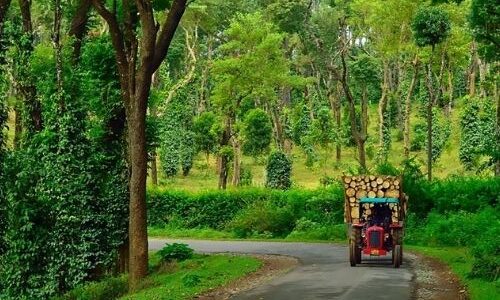
Coorg is a beautiful destination to spend time with your special someone. This lovely hill station is surrounded by coffee and spice plantations, pepper vines, waterfalls, streams, and rice paddies, making it a top destination for nature enthusiasts and couples. You can take a romantic stroll through the verdant plantations with your lover, inhaling the enticing aromas of cardamom and coffee.
Also, the landscape, geography, and climate of Coorg have earned it the title ‘India’s Own Scotland.’ If reading all of this has sparked your interest, there is much more that the place has to offer, which you can only witness by visiting there.
Let’s know more and start planning with your sweetheart for a romantic trip in Coorg.
The weather
Plan a trip to this hill station between November to March not just for the pleasant weather but also to celebrate Puttari, the harvest festival and to indulge in some mouth-watering local delicacies.
How to reach Coorg
By Air: Coorg does not have its airport and the nearest airport to Coorg lies at Mangalore, about 135 km away. It is well-connected to major cities in India including New Delhi, Chennai, Mumbai, Bangalore, and Hyderabad. The second nearest airport is in Bangalore, which is located about 250 km from Coorg. From the airports, you can either board a bus or hire a cab to reach Coorg.
By Train: The nearest railway station from Coorg is at Mysore. Mysore railway station is connected to almost all notable cities in the country. It has a regular train schedule by which thousands of tourists visit Coorg daily. From the station, you can hire a cab or take a bus to Coorg. Apart from this, the railway stations in Mangalore and Hassan can also be conveniently used for reaching Coorg.
By Road: You can opt for your car and enjoy a long drive experience with your someone special. Coorg is well connected by road with all major cities in Karnataka. Cities like Mangalore (159 km), Mysore (120 km), Bangalore (267 km), and Hassan (103 km) are connected by a network of roads with Coorg. KSRTC also has an impressive line of deluxe buses that you can use to reach Coorg from nearby cities. You can also plan a road trip to Coorg and witness abundant natural beauty en route.
Explore beautiful places in Coorg
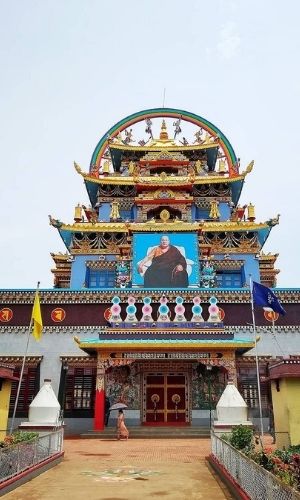
Golden Temple: Experience Tibetan Culture
Credit: Trip Advisor
There are several temples in Coorg but this one is simply stands out for its outstanding beauty. Coorg is the only place in Southern India with a Tibetan settlement. The Namdroling Monastery, better known locally as the Golden Temple is a beautiful Tibetan monastery. It’s a great way to know different cultures. The surrounding stalls also have Tibetan food like momos and thukpas! Visiting Bylakuppe is truly one of the best things to do in Coorg. It is also one of the best places to visit in Bangalore.
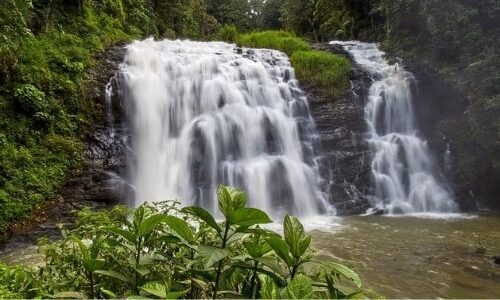
Abbey Falls
Credit: Thrillophilia
Coorg is blessed with nature’s bounty and photographing it is one of the best things to do in Coorg. The milky waterfall located in a scenic coffee and spice plantation offers a great view for that perfect Instagram photo. So don’t fret while wondering what to do in Coorg, just head to Abbey falls! This is one of the most popular waterfalls in Coorg. You can click loads of pictures there with your partner.
Barapole- River Rafting
Credit: Treebo
One of the most underrated activities to do in Coorg is river rafting. Coorg is a great place for whitewater rafting, especially during the monsoons. The Barapole River has grades ranging from I to V offering the ultimate adventure experience to travellers. River rafting in Coorg is one activity that you must add to your list of things to do in Coorg in August.
Amazing food in Coorg
pix05
Coorg cuisine is unique and different from the rest of Karnataka. It’s predominantly non-vegetarian and uses local ingredients like forest produce, meat, rice and rice-based products. Eating their famous pork or pandi curry is a must. For vegetarians, there is akki rotti, nool puttu, and koovaleputtu. If you are looking for things to do in Coorg at night, then enjoy one of these dishes for dinner on your trip there with your partner.
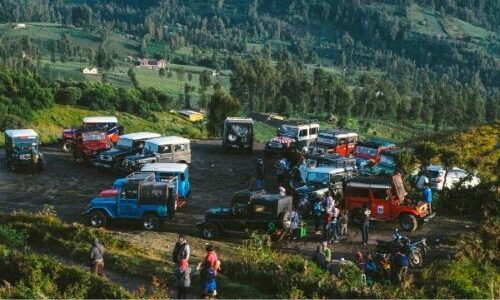
Jeep Safari- Sightseeing
Credit: Travel blogs
If you love exploring, then one of the top things to do in Coorg is to enjoy the Jeep Safari. There are various jeep safari tours available and one can choose the best one suited to their preferences. Some of the best places to explore on a jeep safari in Coorg are Kabbe Hills which offers breathtaking views of the landscape, Nishani Hills which is an off-road jeep drive, and Mallalli waterfalls which takes one to the cascading falls in Coorg.
Chettali
Credit: Etravelfly
If you are into exploring culture, an interesting thing to do in Coorg would be to visit a local village. Chettalli is a small village on the Madikeri, Siddapur Road is just the place. With the misty hills being perfectly complemented by the unending greenery it provides a great place to enjoy the serenity and relax.
When shortlisting places for Coorg sightseeing, make sure you don’t miss out on this one. The popular Cherala Bhagwati Temple in Chettalli also attracts a lot of tourists and visitors.
Microlight flying in Coorg
Credit: indiabizclub
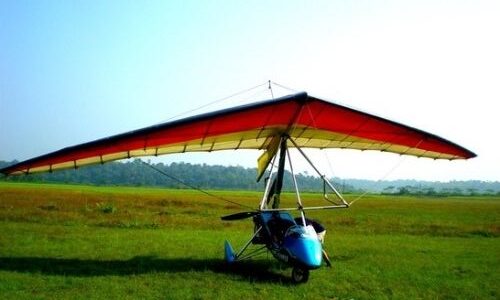
The dramatic landscape of Coorg is perfect for a microlight flying experience. Fly about 5000 feet above the ground to feel the adrenaline rush. Soar above the verdant mountains and gushing rivers to enjoy the spellbinding views. The flight starts from Ponnampet and goes to the South of Coorg. The duration is usually between 10 to 30 minutes.
Ayurjeevan
Credit: Trip Advisor
The Ayurjeevan Ayurvedic Therapy Centre is another great Place to Visit in Coorgfor couples that will certainly leave a lasting mark on your mind and heart but interestingly, not for its beauty or nature but for its wondrous services. It is where you should visit if you like to pamper yourself at exclusive spa treatments. This place in Coorg offers a wide range of authentic Ayurvedic massages and spa packages that will invigorate thoroughly. For a refreshing and rejuvenating vacation, this is a must in the places to visit in Coorg with your partner.
Romantic Places To Stay In Coorg
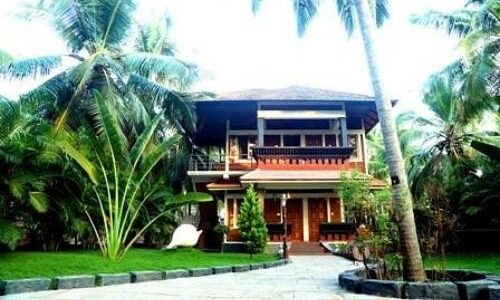
In Coorg, you will find lavish destinations to reconnect yourself to nature, or marvelling at the unique interiors of the place. Like: Taj Madikeri Resort And Spa, Woodstock Resort, Heritage Resort and more.
This was an elaborate guide to having the most of what Coorg has to offer when it comes to romantic trips. Have a splendid time enjoying the lush green pastures, nature walks, and clicking memorable pictures in coffee and tea plantations as you explore the above-mentioned romantic places to visit in Coorg. A vacation in Karnataka would be all the more amazing if the itinerary includes a visit to the romantic Coorg.
source: http://www.cityspidey.com / CitySpidey / Home> News / by Lifestyle Desk / February 08th, 2022
The newly-constructed bridge connects Kodagu and Kerala; facilitates travel to Kannur Airport
Virajpet:
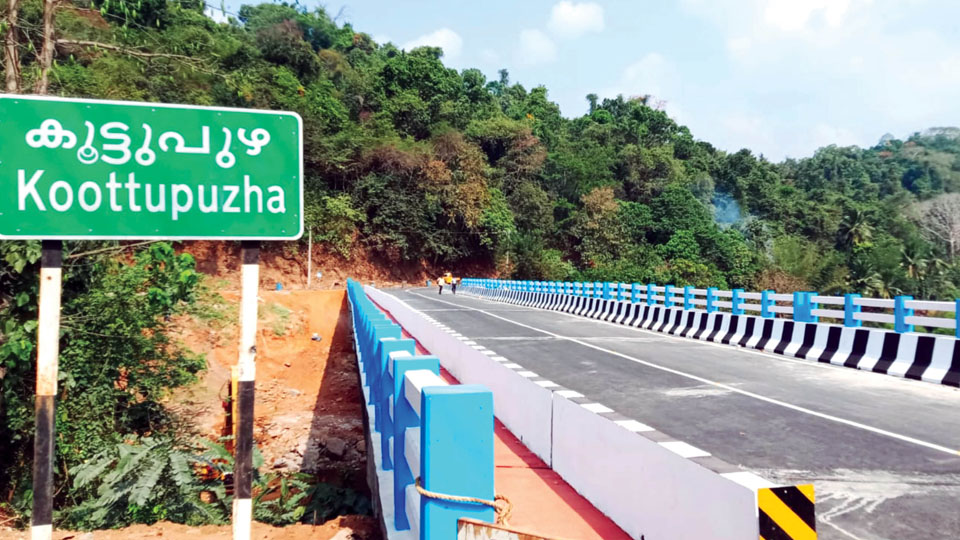
The newly constructed Kootupole bridge that links Kodagu district with neighbouring Kerala was formally thrown open for public travel last Monday.
Kerala PWD Minister P.A. Mohammad Riaz, Peravoor MLA Sanni Joseph, Kodagu’s Virajpet MLA K.G. Bopaiah, MLC M.P. SujaKushalappa and other dignitaries travelled in an open jeep on the bridge from Kerala border side to Karnataka side of the border, thus throwing open the newly constructed bridge.
The bridge is at the Karnataka-Kerala border and is part of the Kerala State Transport Project (KSTP) road between Thalassery and Valavupara. The bridge work was completed as Karnataka Wildlife Board gave permission to construct the same.
The old bridge, built during the British era across Kootupole, was providing inter-state connectivity at Makutta and it was narrow and in dilapidated condition. With the construction of Kannur International Airport, the density of vehicles on the old bridge had increased. To provide connectivity to the Airport, the Kerala Government had developed a 55-km road and bridges at an estimated cost of Rs. 360 crore till Kootupole.
However, the Karnataka Forest Department had stalled the work in 2017 considering that the land belonged to Bramhagiri Wildlife Division. Though the claim of Kerala was that the river is in its territory, the Karnataka authorities claimed that a portion of the bridge is in Bramhagiri Wildlife Sanctuary in Karnataka and also they claimed that half the river belongs to them, following which the work had to be stopped.
Speaking during the inaugural function of the bridge, MLA K.G. Bopaiah said that the bridge will provide a new link between Kerala and Karnataka and also largely help vehicles travelling towards Kannur Airport. Pointing out that the small bridge was severely hampering vehicular movement on this important border road, he said that the new bridge will cater to the needs of the travelling public, especially those wanting to reach Kannur Airport from different parts of Karnataka.
MLC SujaKushalappa said that the British had built a small bridge at Kootupole, which had become problematic for vehicular movement due to its small width. Now, with the construction of the new bridge it is hoped that trade and commerce between the two States would become faster and cheaper, he added. He further said that the new bridge will also help devotees who are on the Sabarimala pilgrimage.
Peravoor MLA Sanni Joseph in his address said that the bridge faced many legal hurdles, which were successfully addressed subsequently. KSTP has built 7 bridges from Thalassery to Valavupara including the Kootupole Bridge and many roads to reach the Kannur Airport at a total cost of Rs. 360 crore, he said and added that five of these bridges have been inaugurated, while two others are set for inauguration. He thanked the Karnataka Government and MLA Bopaiah for their co-operation in the construction of the bridge.
Kodagu Hindu AikyaVedike Working President ValsanTilankeri, BJP leaders V.V. Chandran, M.R. Suresh and Binoy Kurian, Congress leader Thomas Varghese, Virajpet TP member C.K. Prithvinath, leaders B.M. Ganesh, Achhapanda Mahesh Ganapathi, Patrappanda Raghu Nanaiah, Chuppa Nagaraj, MadhuDevaiah and others were present.
source: http://www.starofmysore.com / Star of Mysore / Home> News / February 03rd, 2022
The Mysuru-Madikeri railway line which was supposed to be taken up till Kushalnagar in the first phase, has been allotted ₹1000 in the budget for 2022-23!
The project has remained a non-starter and is bogged down by cost escalation besides negative rate of returns. Like most new railway lines, its progress also hinges on land acquisition and there is no progress and hence the allocation is nominal so that the project is not put in the backburner or frozen, said the officials.
Mooted to put the district on the railway map of India, the project has evoked strong opposition from the local community in Kodagu besides environmentalists as it could aggravate human-animal conflict.
An earlier survey conducted by the railways indicated that the Mysuru-Kushalnagar stretch would be 87.2 km and the cost was pegged at ₹1,854.62 crore in February 2019. The cost per km is expected to be ₹21.27 crore and it required acquisition of 247.65 hectares of dry land and 275.15 hectares of wetland.
source: http://www.thehindu.com / The Hindu / Home> News> States> Karnataka / by Special Correspondent / Mysuru – February 03rd, 2022
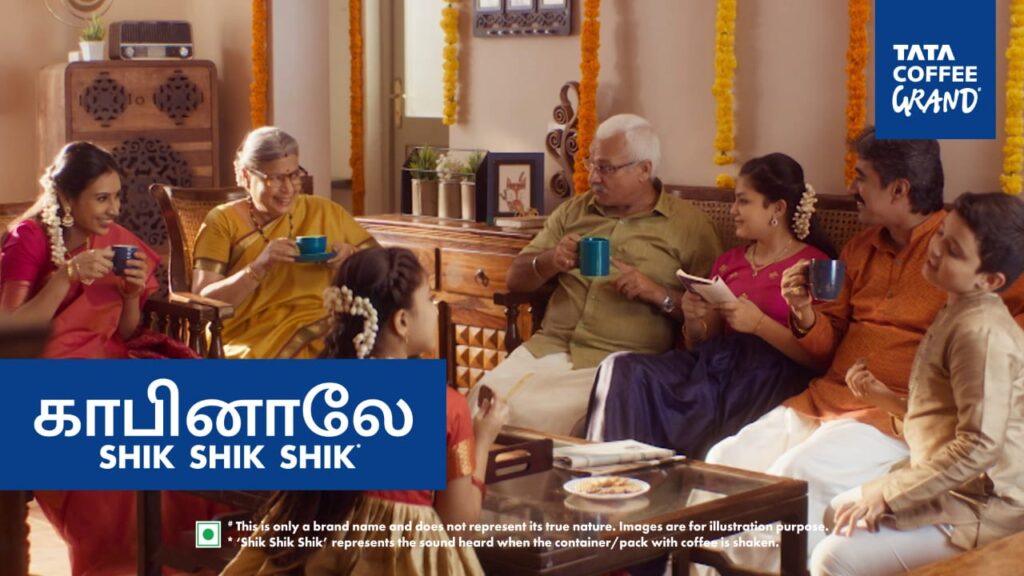
TATA Coffee Grand celebrates the unique sounds of the harvest festivity this Pongal along with its ‘Shik Shik Shik’ campaign
Coimbatore :
TATA Coffee Grand, the coffee brand from the house of Tata Consumer Products continues its celebration of bringing out the emotions and excitement associated with coffee in Tamil Nadu. In line with this, the brand has released a festive film celebrating the various sounds that reflect the unique spirit of Pongal with the ‘Sounds of Tamil Nadu’ campaign of Tata Coffee Grand.
The vibrant film is a montage of various visuals and sounds that are associated with the Pongal festival; the crunch of sugarcane, the clink of children’s anklets, and the musical echoes of the ‘kulavai’ among others. Replete with sumptuous Pongal delicacies, family gatherings, and a splash of rich hues that the Tamil culture is well-known for, the film concludes with the thought, ‘How can any festive meal be complete without coffee and the emotions associated with it?’
Talking about the film, Puneet Das, President – Packaged Beverages (India and South Asia), Tata Consumer Products said, “Our campaign of Tata Coffee Grand launched last year, synonymizes the word ‘Coffee’ with the sound i.e. Shik-Shik-Shik – which represents the sound heard when the Tata Coffee Grand jar or pack is shaken! We have gone a step ahead this year and have extended the ‘shik shik shik’ proposition to the sound of the Pongal festivities, to capture the excitement of the festival along with the emotions of drinking coffee. These festivities are not just reflected in the visuals but also in the unique sounds that reverberate throughout the harvest season. In highlighting this, we are happy to launch our new film which doubles up as a feast to the senses and has a distinct sound design that celebrates the festive taste of Tamil Nadu”.
Commenting on the campaign idea, Sonali Khanna, Executive Director and Branch Head, Lowe Lintas South said, “Pongal is a festival that the people of Tamil Nadu hold very close to their hearts, resulting in a joyous tapestry of celebratory sights and sounds. What’s striking is that many of the authentic sounds of Pongal are expressed as triplets. This is exactly the same aural mnemonic we have used to bring our product USP to life: the ‘Shik Shik Shik’ of the packet representing the Tata Coffee Grand crystals. The wonderful interplay of musical triplets, the rich festive hues, and the catchy sound of the pack, all come together seamlessly. To create a film that is as aurally arresting as it is visually resplendent.”
source: http://www.covaipost.com / The Covai Post / Home / by Covai Post Network / January 14th, 2022
Officials directed to secure clearances to expedite the project
Pratap Simha, MP, G.T.Deve Gowda, MLA, and officials from various departments reviewing the issues related to Mysuru-Madikeri highway project, on Saturday. | Photo Credit: M.A. SRIRAM
A review meeting to identify major hurdles in expediting the greenfield highway to Madikeri branching off from Paschimavahini near Srirangapatna, was held here on Saturday
The greenfield project – which is parallel to the existing highway from Mysuru to Kushalnagar – is being implemented by the National Highways Authority of India (NHAI) at a cost of nearly ₹3,823 crore and has a new alignment bypassing major towns.
The review meeting was attended by Mysuru MP Pratap Simha, Chamundeshwari MLA G.T. Deve Gowda and others and Mr. Simha said that the lessons learnt in the ongoing works of Bengaluru-Mysuru Expressway have come inhandy to avoid certain pitfalls.
He said even if the tenders for the project are awarded, the works cannot commence until 80 per cent of the land acquisition process is complete. Though the acquisition process was underway and compensation was also being disbursed, there were certain permits and clearances required from different agencies besides shifting of civic amenities that lie in the alignment of the proposed highway. The issue of paying compensation to land awarded as grants to Scheduled Tribes, also needs to be settled.
The meeting was attended by Deputy Commissioner of Mysuru Bagadi Goutham and revenue officials from Mysuru, Hunsur and Periyapatana taluks, Deputy Directors of Land Records etc. Mr. Goutham instructed the officials to obtain the clearance from CESC, Irrigation Department, Forest Department, KPTCL etc., and comply with the requirements for the highway construction within a month.
The telephone and power poles have to be shifted while suitable compensation has to be fixed for land acquired from farmers. High tension wire which criss-cross the highway alignment have to be shifted for which both CESC and KPTCL has to be brought into the loop, said Mr. Simha.
‘’The clearances from various departments have to be obtained within a month and such review meetings will take place periodically to assess the progress’’, he added.
The project has been divided into three packages and under the first package, the road starts at Madikeri from General Thimmaiah Circle and ends at the beginning of the Kushalnagar bypass after Anekadu forest. The total length of this package is 22.70 km.
The second package commences from Guddeshosur after Anekadu forest and ends at the junction of State Highway 86 Ramanathapura-Terkanambhi Road. The total length of the second package is 45.4 km.
The third package starts at Ramanathapura-Terakanambi Road Junction and ends near Paschimavahini and the total length of the package is 46.935 km. It bypasses Hunsur, Bilikere, Elavala and Mysuru before ending at Paschimavahini.
The project envisages the new highway to be linked with the ongoing Bengaluru-Mysuru Expressway near Srirangapatna and will provide a four-lane connectivity to Madikeri. Cities and towns including Mysuru, Hunsur, Periyapatna, Kushalnagar and Suntikoppa will be bypassed and will reduce the traveling time from Bengaluru to Madikeri besides providing for greater safety as the tolled road will be four-laned with paved shoulder and divider, according to NHAI.
source: http://www.thehindu.com / The Hindu / Home> News> States> Karnataka / by Special Correspondent / Mysuru – January 29th, 2022
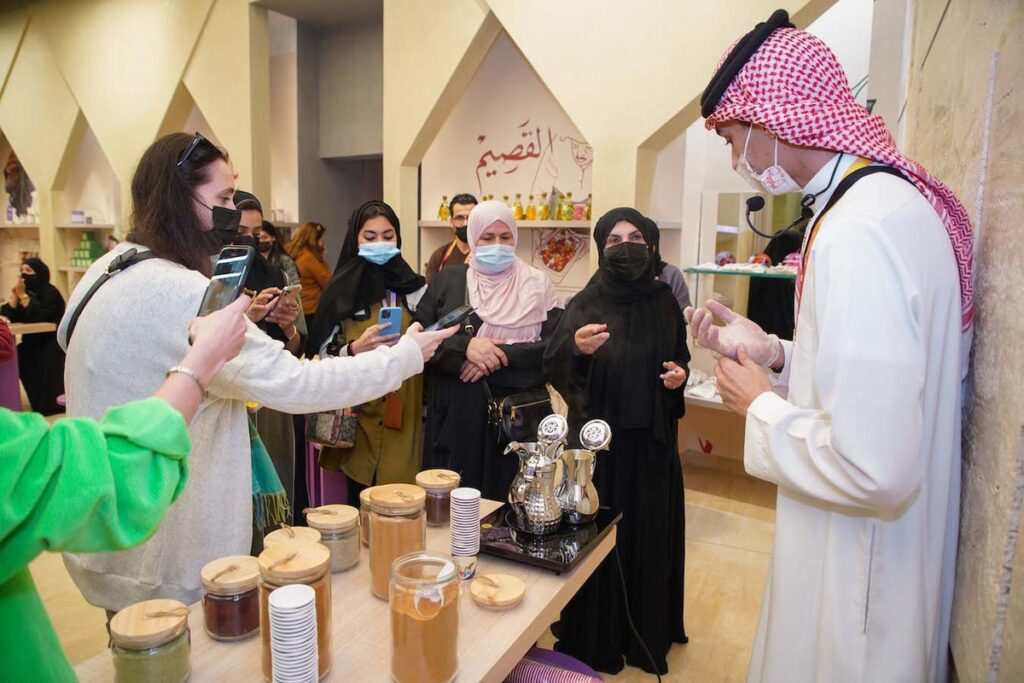
The Saudi pavilion at Dubai’s Expo 2020 Dubai on Tuesday launched Saudi Coffee Week, a five-day event to celebrate the country’s coffee culture.
Running until Jan. 29 from 3:00 to 9:00 p.m., the series features daily activities to inspire and educate visitors on the Kingdom’s coffee traditions that form an essential part of its culture.
The event will also host two workshops at Sard Café to help guests learn the art of making Saudi coffee. (Supplied)
This includes showing casing a variety of coffee-making and brewing techniques, as well as tasting experiences.
The event will also host two workshops at Sard Café to help guests learn the art of making Saudi coffee.
The pavilion also features booths from Ethiopia, Colombia, Honduras, Panama, and Australia at the Open Square to familiarize visitors with traditions of other countries.
source: http://www.arabnews.com / Arab News / Home> Lifestyle / January 26th, 2022
The petition was filed by PS Mohan and others from Kodagu district on the ground that permission was not obtained from the central government under the provisions of the Forest Conservation Act.
Bengaluru :
The Karnataka High Court on Tuesday slapped a cost of Rs 50,000 on a group of petitioners for wasting the precious time of the court by filing a public interest litigation challenging the construction of the Jungle Lodges and Resorts (JL&R) by the Karnataka State Tourism Development Corporation (KSTDC) at Dubare forest in Kodagu district.
“We are of the view that the writ petition is filed without any material to support the contention raised in the petition and it appears that it has been filed with ulterior motives in order to pressurise the respondents — the state authorities. The conduct of the petitioners as such is deprecated for the purpose of wasting the precious time of the court by imposing cost of Rs 50,000 which has to be paid to the Karnataka State Legal Services Authority,” said a division bench of Chief Justice Ritu Raj Awasthi and Justice Suraj Govindaraj.
The petition was filed by PS Mohan and others from Kodagu district on the ground that permission was not obtained from the central government under the provisions of the Forest Conservation Act for construction of JL&R.
In counter, the government advocate contended that no permission of the central government is required for construction of the jungle lodge by the KSTDC in the reserve forest area coming under the state government.
The counsel of JL&R raised preliminary objections regarding the maintainability of the petition. It was alleged this petition was filed on some personal interest and that JL&R has installed river rafting activities in Dubare area which adversely affected the petitioners. But no public interest is involved in the petition and it has been filed with ulterior motives, the counsel of JL&R argued.
After hearing the parties, the court noted that the JL&R which was constructed in Dubare is a body created by the KSTDC which itself is totally controlled by the state government and no private interest is involved in the activities of the JL&R.
source: http://www.newindianexpess.com / The New Indian Express / Home> States> Karnataka / by Yathiraju, Express News Service / January 04th, 2022
Though H D Kumaraswamy as a chief minister had announced the formation of Kushalnagar and Ponnampet taluks, the same were inaugurated during the BJP-rule in the state.
However, even though the new taluks have been inaugurated, problems persist in the taluks.
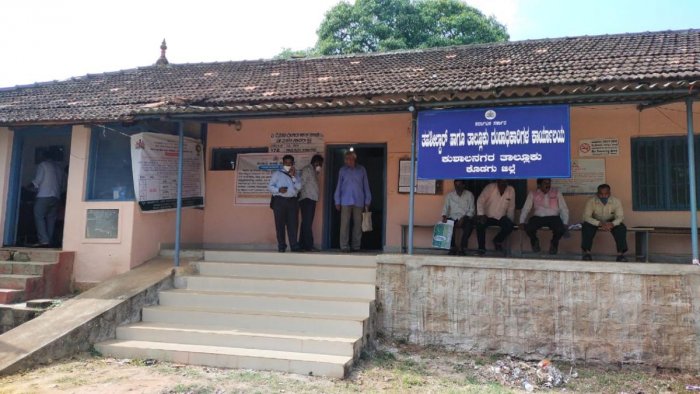
Kushalnagar taluk lacks basic facilities. The tahsildar was appointed 10 months ago. Nadakacheri office was renovated and converted into a tahsildar office.
Shirastedar, the revenue inspector and a few other staff have been deployed. However, the taluk office is yet to function fully.
About 22 departments including the taluk hospital, court, PWD, hostels, BEO office, department of social welfare and backward classes, women and child development department are yet to start functioning in Kushalnagar taluk.
Some of the government offices instead of being at the taluk headquarters are situated in Koodige, Guddehosur and Aluvara.
The Mini Vidhana Soudha to bring all the departments under one roof is still a mirage.
Without full-fledged offices in the taluk, residents have to still depend on Somwarpet taluk for caste, income certificates, RTC, death certificates and others.
As a result, students and farmers have to run from pillar to post to get the certificates.
The dream of Kaveri taluk with Kushalnagar as headquarter was sown when R Gundurao was the chief minister way back in 1993. As a result, Gundurao ensured that the DySP office, circle inspector’s office, sub treasurer office, first-grade college, polytechnic and APMC industrial layout was set up in Kushalnagar.
Later, demanding the taluk status, Kushalnagar Taluk Kaveri Horata Samithi, under V P Shashidhar came into existence in 2001.
A series of protests were held to draw the attention of the government to announce a separate taluk.
Similar is the story of Ponnampet taluk that was inaugurated two years ago. The taluk office does not even have its own building. Even tahsildar is also not appointed to the taluk. Virajpet tahsildar is in charge of Ponnampet taluk.
There are no proper computers or a backup battery. The taluk office has two Shirastedar, two clerks and an attender. People are forced to stand in a queue to get the RTC, income certificate and others.
On noticing the poor condition of affairs, Ponnampet Nagarika Vedike had donated chairs, tables, computers and a battery as well.
No grants were released for the newly formed Kushalnagar taluk.
Kushalnagar Taluk Horata Samithi president V P Shashidhar said, “The taluk was formed due to the efforts of the people. The elected representatives are not showing interest in the development of the taluk.”
However, Kushalnagar tahsildar Prakash said, “Steps have been taken to start a Bhoomi centre in the taluk. The taluk office will function in a full-fledged manner in the days to come.”
Nagarika Vedike president P B Poonaccha said, “The government is showing step-motherly attitude towards newly formed taluks. To help the farmers and the public, the Vedike had donated computers to the taluk. The shortage of staff should be overcome in the taluk office.”
source: http://www.deccanherald.com / Deccan Herald / Home> State> Mangaluru / by DHNS, Kushalnagar/Gonikoppa / December 19th, 2021
WELCOME. If you like what you see "SUBSCRIBE via EMAIL" to receive FREE regular UPDATES.
Read More »