Community members meet Bommai at Belagavi; funds to be sanctioned in coming budget
Belagavi:
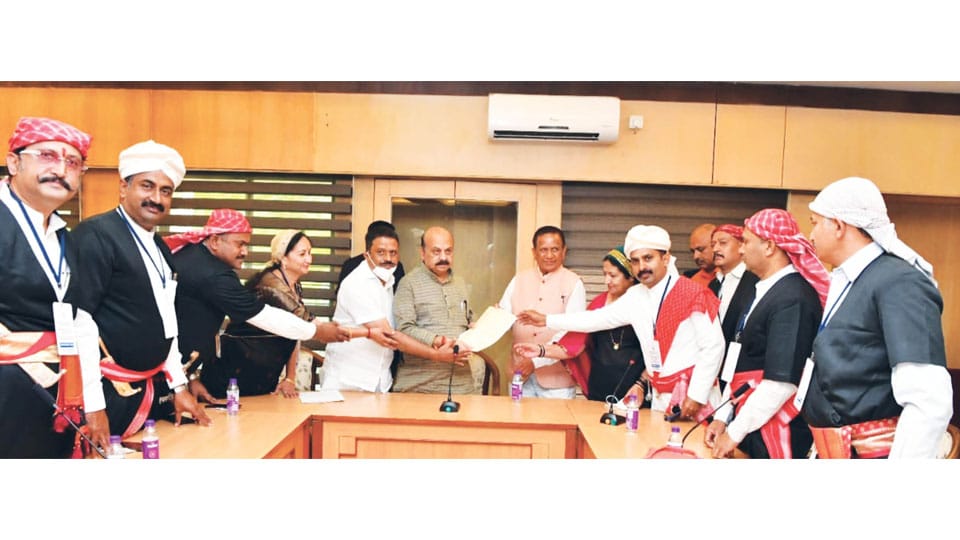
Chief Minister Basavaraj Bommai has assured that he would make an announcement in the coming budget regarding establishment of Kodava Development Corporation on the lines of Development Corporations announced for the welfare of other communities in Karnataka.
Meeting a delegation of Kodava community members at Suvarna Soudha in Belagavi this morning amidst the ongoing Legislature Session, the Chief Minister told the community members that the establishment of the Corporation will go a long way in ensuring the welfare of the Kodava community which is a miniscule population. He assured the delegation that he would also announce grants for the Development Corporation.
The delegation was led by Madikeri MLA M.P. Appachu Ranjan, Virajpet MLA K.G. Bopaiah, MLC Veena Achaiah, Manju Chinnappa of United Kodava Organisation (UKO) and other leaders of the community.
Meeting the Chief Minister, Manju Chinnappa said that the Corporation would help the comprehensive growth of Kodava community.
Leaders told the CM that the Kodava community has unique tradition, customs, heritage and culture and reiterated that Kodavas have made enormous contributions for the growth of the State and the country after Kodagu was merged with the then Mysore State in 1956.
Giving a patient hearing to the community representatives, the CM assured that he would announce the Kodava Development Corporation in the coming budget and sanction funds.
source: http://www.starofmysore.com / Star of Mysore / Home> News / December 22nd, 2021
The land will soon be reclaimed in accordance with the state orders and will be handed over to the forest department to be developed as a reserve forest area.
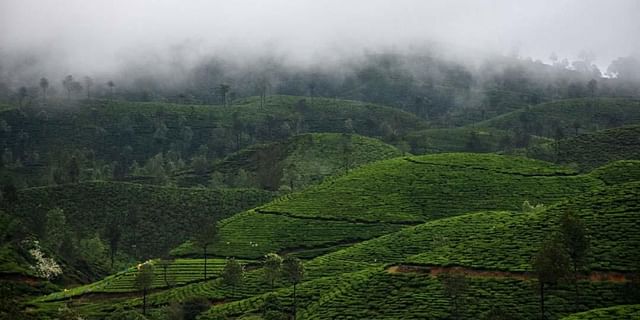
Image for representational purpose only. ( File | EPS)
Kodagu :
The Ponnampet Tahashildar has sent an official reminder letter to the forest department for taking possession of the 1203 acre land developed by Tata Company as a tea estate in Kodagu.
The land will soon be reclaimed in accordance with the state orders and will be handed over to the forest department to be developed as a reserve forest area.
In the letter dated December 20, Tahashildar Yogananda has mentioned the handing over of 1203 acre land across survey numbers in Hysodluru, Poradu, West Nammale, and T Shettigeri villages of Ponnampet taluk to the forest department.
The 1203 acre land was leased to Tata Coffee Limited Company and since the period of lease of 99 years has been completed, the same needs to be handed back to the department as a reserve forest area.
In 1914-1915, Mac Dogal Glenlora Limited leased nearly 1300 acre paisari land from the then British Government for a period of 999 years. This leased land was handed over to Tata Coffee Limited (then known as Consolidated Tea Company).
The timber in the paisari land was cleared to make way for a coffee and tea estate and the land was changed from ‘paisari’ to ‘Reedemed Sagu’.
However, the state argued that the land tenure was changed without the notice of the government and the tenure was a reserve forest area.
Further, while the land was leased by the then British government for 999 years, the same agreement was changed in 1940 by the then Coorg Commissioner to 99 years. Following this, notices are said to have been served to the Tata Company for handing over of the land even as the company approached the Court stating that the change in revenue documents from Redeemed Sagu to Reserve Forest land was done illegally by the government. However, the state argued that the Tata Company had illegally changed the tenure to Redeem Sagu.
The case was heard recently at the Virajpet Court and the Senior Civil Judge, MG Lokesh had disposed of the case on December 3 stating that the plaintiffs have to approach the revenue authorities and this cannot be decided in civil court. It stated that the revenue authorities or the Government can decide regarding this issue. However, the government had sent an order for acquiring the lands in 2012, which was then questioned by the company in the court.
After the court hearing, the Kodagu revenue authorities have followed the earlier government order defending the change of tenure from ‘Reedem Sagu’ to reserve forest and the Ponnampet Tahsildar Yogananda has now passed an order for reacquiring of the 1203 acre reserve forest land from the company.
“We have received the official letter from the tahsildar and steps will be taken to begin the acquiring process,” confirmed Chakrapani, Virajpet DCF.
source: http://www.newindianexpress.com / The New Indian Express / Home> States> Karnataka / by Pragna GR, Express News Service / December 21st, 2021
Why Ajai Thandi quit a Wall Street job to start a homegrown coffee brand in India with his best buddies – more on the journey of Sleepy Owl Coffee, its Forbes 30 Under 30 founders and ‘brew-ginnings’ from a small kitchen to raising a whopping $6.5million in funding.
After schooling at YPS Mohali, Sanawar and Woodstock Mussoorie, Ajay Thandi went on to pursue Economics at the University of California.
The cool climes, mountain breeze carrying a refreshing hint of fresh pinecones, sun bathed slopes and a frothy glass of cold coffee. Sundays at The Lawrence School, Sanawar were special.
“The taste of that cold coffee still lingers on as a cherished memory,” says Ajai Thandi. Today, this co-founder of the very quirkily named homegrown coffee brand, Sleepy Owl, is in the business, er, correction please – mission of creating memories, conversations and more over a freshly brewed, ready to drink gourmet cup of coffee.
Best pals, Armaan Sood, Ashwajeet Singh and Thandi love a good coffee – “but could never find a great cup when needed.” So they decided to brew their own and box it in a to-go. Founded in 2016, Sleepy Owl is active across the country, and boasts of a 75 product portfolio including cold brew packs, hot brew bags, ready-to-drink cold brew bottles, ground coffee, brew boxes and merchandise.
“We don’t consider ourselves in the business of making and selling coffee, but on a mission to make consumers blissfully happy, and transform India into a country of coffee drinkers,” says Thandi. Now, that’s a serious dare to the champions of chai, but going by this start up’s increasing popularity, national traction and the latest $ 6.5 million raised in funding, the Sleepy Owl boys are perched on the top of their game.
Something’s Brewin’
Days jam-packed with meetings, interviews, innovation and strategies round the clock – it was really not an easy task to catch 28-year-old Thandi. But when one’s a tea drinker (steaming cups of kadakadrak chai), it became all the more imperative to check out the first movers of a very niche segment – the coffee drinkers, and the space it occupies in the Indian teacup, growing beyond good ol’ Nescafe.
After schooling at YPS Mohali, Sanawar and Woodstock Mussoorie, Thandi went on to pursue Economics at the University of California. An investment banker at JP Morgan, New York, he was living the dream, except that deep inside, he always had this urge to do something on his own. Talent and brilliant ideas, he feels, were never the problem, it was the lack of opportunities and monopolistic hold of giants corporations in India with their muscle and money that limited the possibility of a middle class person to start a business on their own.
“There was hardly anything beyond IIT or IIM for a non-business family person,” says Thandi. It was in the USA that he experienced a disruption of new age companies, online platforms like Shopify (first started out of Canada), that cut down barriers, and provided an all-in-one democratised commerce platform to start, run, and grow a business independently.
Post 2010, Amazon and Flipkart proved to be the game-changers in India. Inspired and motivated, Thandi moved back home in 2014, touched base with his best pals, lawyers Sood and Singh, and brainstormed. Always in search of good coffee, Singh was into brewing his own, while Thandi came home with stories of a stimulating New York coffee culture. Their shared passion for coffee and the experiences it offers literally became the conversation starter of their business idea.
They also saw a potential in the country’s untapped market for freshly brewed coffee. “Indian kitchens, for years, have only known one or two coffee brands. We wanted to change that, give people a product that is easy to use, of great quality and value, and educate them on what a freshly brewed cup of coffee can offer.”
With Rs 15 lakh pooled in from their savings, the brewing began from a small kitchen in Dwarka, New Delhi with Singh as the in-house brewmaster, experimenting relentlessly in search of the perfect brew. Research and recce were undertaken. The best Arabica coffee beans were sourced from Chikmagalur, Karnataka. A category creating product, consumer awareness and feedback was paramount, so to suit the Indian palette, their coffee was fine-tuned to be less bitter, less acidic, and taste better. Their cold brew (freshly pressed coffee that can be brewed at home) had been perfected, and in 2016, Sleepy Owl took the first flight.
“The name is a fun play of words really. One doesn’t mind a caffeinated boost to shake off the sluggishness, and owls, well, they are nocturnals, aren’t they?”
The Coffee Tales
People don’t just drink coffee. Although Sleepy Owl are the first movers in this now rapidly-growing category, their ground rule has always been to create a great product, package it well, accentuate ease of use and educate the consumer, aggressively using social and digital media to reach their target audience.
“We curated events, tastings, visited offices, delivered door-to-door, entertained anyone who invited us with a captive audience, all three of us would be there with Sleepy Owl,” says Thandi, who manages the financial aspect of the start up.
Expansion, sustainability, awareness, innovation are the key areas of focus. “We three are innovators by nature, driven by our curiosity.” Their risk paid off when the trio, after two years of testing and trying, introduced coffee bags in the market. “There are tea bags, so why not some good coffee bags too?” he says.
When they arrived, it was just “Nescafe, Bru and us.” Today, the market is brewing with new players, and Thandi is bracing for a competitive 2023. “Challenges are part of life. As entrepreneurs we navigate it on a daily basis.”
It’s this attitude, planned and disciplined use of their funds that helped Sleepy Owl raise USD 6.5 million (about Rs 48.3 crore) in funding, led by existing investor Rukam Capital, recently. The company has raised $8.5 million in total.
The Highs & the Lows
By all means, the biggest high is ‘when employees are happy, when customers love our product, and when you walk into someone’s home and find Sleepy Owl on their shelf, or on in some shop in a random market place’. Being featured in the coveted ‘Forbes 30 under 30 India’ for the year 2020 was a bravo moment.
The biggest low was the pandemic and the early days of national lockdown. A dip in sales, transportation stalled, markets shut – the co-founders were facing crisis, and an inventory with limited shelf life. It was time to think fast and act faster – “we got special passes made, loaded our inventory and went door to door to sell our cold brew direct to consumer”.
Post ready-to-drink bottles and cold brew, Sleepy Owl needed another shot of caffeine and it came in the form of hot brew bags—coffee in a tea bag—which the startup rolled out during the winter of 2019.
In this uncertainty, the team went into survival mode by opting for zero budgeting – growth, slow and steady, but not at all cost. This rigorous fiscal discipline and their coffee bags bagged them their funding. “It was great validation for our mission. Our vision is being backed,” says Thandi.
The Secret Brew
Thandi gets his entrepreneurial spirit from his father. Retired from the Army, his father’s only regret in life is risk not taken. “The craziest thing I’ve ever done is to quit my job on Wall Street to start a company in India. Once an entrepreneur, always an entrepreneur,” he says, conditioned to take risks, be independent and walk the path less taken thanks to the Army life and boarding school. Curiosity, innovative spirit and resilience – “true grit in the face of massive uncertainty and defeat,” is what keeps Thandi driven.
The Tricity traction
Thandi is passionate about helping people, especially youngsters, make their life easier by mentoring and guiding them. “I love the city, but would definitely like a better start up ecosystem, more opportunity and infrastructure for new businesses and ideas to germinate here – see Chandigarh turn into a model base city for start ups and innovation.”
source: http://www.indianexpress.com / The Indian Express / Home> Cities> Chandigarh / by Jaskiran Kapoor, Chandigarh / December 17th, 2021
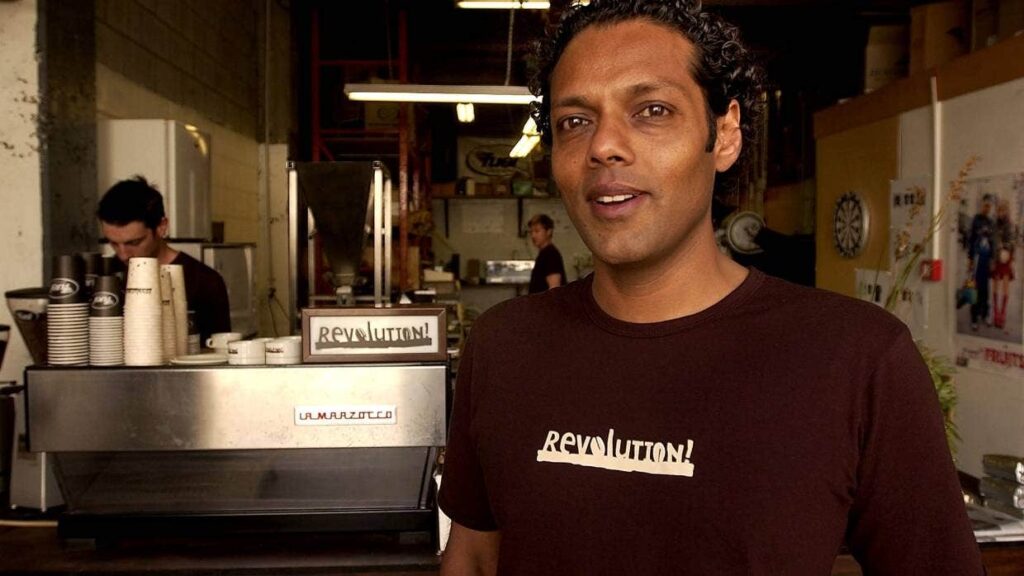
Sanjay Ponnapa at the opening of the first Fuel Espresso takeaway cart, on The Terrace, Wellington, in 1996.
Sanjay Ponnapa: businessman; b January 10, 1964; d November 26, 2021
Sanjay Ponnapa, who has died aged 56 in Hong Kong, was one of the founders of Wellington’s coffee industry, going on to build a highly successful coffee empire in Wellington and Asia.
He was born in Tamil Nadu, near to his family’s homeland of Kodagu. The Kodagu (formerly known as Coorg) is a small, sparsely populated region nestled in the rich coffee-growing hills of the Western Ghats, about halfway down India’s western side.
His family were coffee farmers and soldiers; his uncles included Field Marshal Kodendera Madappa Cariappa, the first Indian commander-in-chief of the Indian Army, and General Kodendera Subayya Thimayya.
Sanjay Ponnapa in 2004, at the launch of Fuel Espresso’s Revolution brand. He roasted and created his own coffee blends, including specialty arabica beans from his family’s plantations in Coorg, western India.
Coming from India to the gastronomically bleak New Zealand of the 1960s must have been a shock, but Ponu’s brother sent over bags of Coorg coffee, which Leela would roast in the family kitchen.
Sanjay went to school at Viard College in Porirua and then St Patrick’s College (Silverstream). He grew up into a tall, strongly built, strikingly good-looking man, with a love of fine clothes, whiskey and late 50s jazz. He attended Victoria University and the University of Canterbury, but left without a degree.
He worked in the fashion industry, then travelled to New York, supporting himself by cocktail bartending. Those playboy years were not wasted, as seeds were being planted that were to bear fruit later; attention to detail, a love of quality and customer service. One seed in particular was to grow into a plant that would build an empire.
Around 1995 he returned to Wellington and took a job with a young business called Coffee Supreme. It was the first years of what was to become the city’s cafe boom. Supreme founder Chris Dillon remembers Ponnapa as “very entrepreneurial”.
“He was always picking your brains. We had a lot of conversations about what he wanted to do next, and the potential he could see for takeaway carts, like he had seen in the US.”
Yeonhee and Sanjay Ponnapa with daughter Leela in 2015. Fuel now has seven sites in Hong Kong and two in Shanghai, in addition to three in Wellington.
Ponnapa wanted to do something different. He still wasn’t sure how. Then, in 1996, things came together. He designed and built his first coffee cart.
Anyone who was in Wellington then will remember it: based on the 1950s design icon, the Airstream Caravan, in silver, black and red, with the sounds of Miles Davis and Sonny Rollins wafting through aromas of the finest arabica coffee served in branded cups. It was an instant hit with Wellingtonians. Fuel Espresso Ltd was born.
“He wanted to elevate takeaway,” says Dillon. “Many thought it was second-best. He wanted to show it could be beautiful. He paid a lot of attention to branding, to how staff deported themselves, to make sure it would be a very coherent presentation. I’m pretty sure staff didn’t get to play fast and loose with the music playlist.”
That year Ponnapa also met his first wife, Alexandra Tylee. They were married the same year. For the first five years, they worked side by side developing Fuel.
The first cart, on The Terrace, showed them that the concept worked; the next challenge was getting more sites. Ponnapa persuaded sceptical bureaucrats to allow coffee carts at the hospital and airport.
“It hadn’t been done. We had to convince them it was a good thing to do,” Tylee says. “Back then lots of people hadn’t had proper espresso coffee. He was really charming, determined and tenacious, and didn’t give up.”
Fuel soon expanded to seven carts and sites around Wellington. Unhappy with the wholesale imported beans most cafes used, they travelled to Trieste, Italy, and created their own blend with coffee maestro Vincenzo Sandalji. They then set up their own roastery in Holland St.
“We practised the roasting for about a year before he was happy with it. He wanted to get it right. He was a perfectionist,” says Tylee.
Ponnapa was very proud of his blend, a closely guarded mix of Italian and specialty arabica beans from his family plantations in Coorg. He believed passionately that good coffee, like good wine, needed close attention to blending and even ageing. He decided to age his coffee, contrary to what he called the “global industry’s obsession with the ‘fresh is best’ dogma”.
Tylee says his talent as a leader helped the business grow. “Everyone at Fuel was really like a family. He loved being able to integrate his passion for his music, and his family. He had a vision and saw it through.”
Unfortunately, family life was not so smooth. The couple’s son Zeus was born in late 1999. He died only a few months later, from Sudden Infant Death Syndrome, and his parents eventually parted ways.
By 2005, Fuel Espresso was well-established in the Wellington coffee scene, and Ponnapa was looking for the next step. He saw it in Hong Kong. He had a vision for a chain of high-end cafes nestled amongst the Guccis, the Versaces and other luxury shops of Hong Kong’s plazas.
Over the next decade he built it. Fuel now has seven sites in Hong Kong and two in Shanghai, in addition to three in Wellington. It has been stunningly successful; a tribute to the boy from Porirua who exported the taste and aroma of his secret blend to Asia.
Hong Kong became his home; he met his second wife, Yeonhee Kim, who worked in the financial sector. They married in 2012. Their daughter, Leela, was born the next year.
On Friday, November 26, Ponnapa mentioned to his wife that he was feeling unwell. He attended a staff dinner that evening, but left early. While entering an escalator, he is believed to have suffered a medical event that caused him to fall. He died at the scene.
Dillon says Ponnapa made a significant contribution to the development of Wellington’s cafe culture. “Fuel was the first high-end New Zealand takeaway coffee chain. He would say the only one. No-one had made good-quality takeaway coffee with that level of attention to detail and quality and presentation.”
Tylee says it’s hard to believe he’s gone. “He was so full of life, he had so many interests and so much he wanted to do.
“He was really warm, and a caring person.”
Chris Brown, of Sputnik PR, worked closely with Ponnapa to build his brand, but says his business achievements were ultimately not what gave him most satisfaction.
“He was very excited about celebrating their [his and Yeonhee’s] 10th anniversary. After all he’d been through, he thought his little family was his greatest success.”
Sources: Mythi Ponnapa, Chris Brown, Chris Dillon, Alexandra Tylee
source: http://www.stuff.co.nz / Stuff / Home> Life & Style> Food & Drink / by Patrick Piercy / December 11th, 2021
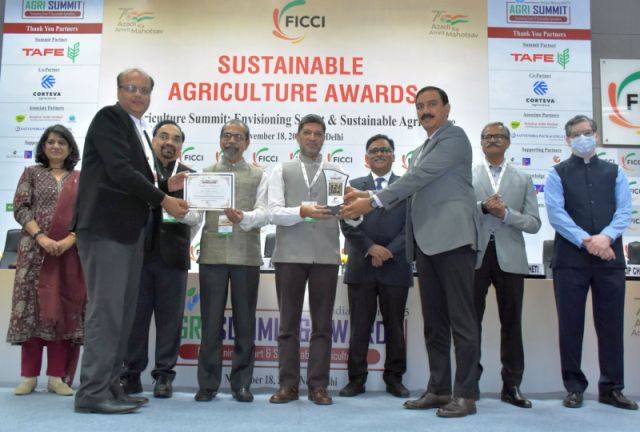
Kiran Ganapathy, Head of Plantations – Operations & Samir Palsule, Head – Business Excellence, Tata Coffee Limited receiving the FICCI award
Tata Coffee Limited (TCL) recently won the ‘Sustainable Agriculture Award’ at the Federation of Indian Chamber of Commerce and Industry (FICCI) Agriculture Summit and Awards 2021. The company was recognized for its Soil and Water Conservation initiatives undertaken at its plantations and instant coffee plants.
Kiran Ganapathy (Head of Plantations – Operations) and Samir Palsule (Head – Business Excellence) received the award on behalf of the company from members of the FICCI Agriculture Committee. The award was granted under the ‘Large Corporate’ category and TCL was conferred the award for significant on-ground interventions in sustainable agriculture development.
The entries were shortlisted and evaluated based on the agricultural challenges faced, the CSR initiatives to mitigate such challenges, the outcome and impact of the practices, its scalability and ways to extend the program to benefit small farmers.
The Agri summit brought key stakeholders and policymakers on a common platform to ideate an implementable strategy for smart and sustainable agriculture. It was attended by CEOs and business heads of the agri and food industry, policymakers, multilateral and bilateral institutions, NGOs, academicians, researchers, embassies, financial institutions, development organisations etc. who discussed and recommended practical pathways for the promotion and adoption of best sustainable agriculture practises on a large scale.
Chacko Thomas, Managing Director & CEO, Tata Coffee speaking on receiving the award said, “Tata Coffee is honoured to be recognized for its commitment to sustainable agricultural practices, and soil and water conservation are a key part of our sustainability strategy. We have adopted scientific ways to conserve water to store excess run-off from the rainwater, in healthy catchment areas. As a result, we now have 274 tanks with a storage capacity of 3.4 Mn cubic meters. This model has ensured that our irrigation is 95% self-reliant and no groundwater is ever exploited. Over the last few years, we have also successfully enhanced the soil fertility in the estates, through regular application of organic compost into the soil. Few other initiatives undertaken towards soil conservation include – contour planting, intercropping, planting of new trees and cover crops. We have also carried out several interventions in terms of training programmes and CSR awareness campaigns towards adopting improved technologies in all operations.”
source: http://www.thecsrjournal.in / The CSR Journal / Home> Categories> Agricultural & Rural Development / by The CSR Journal / December 09th, 2021
The Kodagu district administration on Friday conducted a meeting to develop Raja Seat, which is a popular tourist attraction in Madikeri.
Deputy Commissioner B.C.Satish instructed the officials to prepare a blueprint to develop the existing place into a ‘Greater’ Raja Seat.
He directed the Horticulture Department to take up the repair of the musical fountain which is defunct, on a priority basis. Similar instructions were issued to restore the functioning of the toy train.
The Coorg Village which has already been inaugurted, should start functioning immediately, said the Deputy Commissioner while the offiicals suggested the installation of a high mast lamp in the vicinity.
It was also decided to organise a Coffee Mela to coincide with Christmas when the town and the district is visited by hordes of tourists, apart from conducting cultural programmes during holidays.
Incidentally, the previous round of development works carried out by the authorities had come under flak from conservationists on the grounds that the place was being concretised and its beauty being eroded.
source: http://www.thehindu.com / The Hindu / Home> News> States / by Special Correspondent / Mysuru – November 26th, 2021
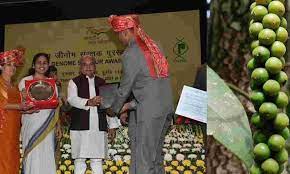
Left, N Poonacha receiving the award at the ceremony in New Delhi. Right, Snapshot of the indigenous ‘Adi Pepper’ spikes.
HIGHLIGHTS
Napanda Poonacha of Kodagu district, a progressive farmer, who hopes to be recognized as a pro-nature farmer
He was recently granted the Plant Genome Saviour Farmer Reward (2019-20) for his efforts to save indigenous ‘Adi Pepper’ crop
Napanda Poonacha of Kodagu district, a progressive farmer, who hopes to be recognized as a pro-nature farmer and has set examples for the other farmers to come forward to encourage them. He is working hard to establish commercial crops that have minimal or no negative impact on biodiversity, and he was recently granted the Plant Genome Saviour Farmer Reward (2019-20) for his efforts to save indigenous ‘Adi Pepper’ crops.
The Union Agriculture Ministry’s Protection of Plant Varieties and Farmers’ Rights Authority bestowed the honour on Poonacha, who received it from union agriculture minister Narendra Singh Tomar at an event in New Delhi on November 11.
He is the owner of Adi Pepper Demo Farm and Research Center in Garvale, where he is actively engaged in discovering natural crops in the district that have the capacity to become commercial crops while inflicting minimal environmental impact.
Napanda Poonacha expressed his happines for recieving the award. He said that farmers who recognise, conserve, and cultivate crops that are beneficial to biodiversity have been given this honour. Furthermore, He received the prize for his research, conservation, and promotion of the ‘Adi Pepper,’ an indigenous kind of pepper mainly grown across the natural habitat of Garvale village borders in Kodagu, India.
He further explained that Adi Pepper crops can be discovered all around the Garvale region in their natural habitat. They undertook the responsibility at the research centre to obtain this species of pepper registered under PPFRI, and in 2015, this high-quality pepper was recognised as a farmer’s variety pepper. This is the only pepper species that has passed biochemical testing, and it is regarded the best of the seven pepper species growing in Kodagu.
Since that particular form of pepper was once known as forest pepper and was mainly used for domestic reasons by the people, it has recently reached a brand value of Rs 3500 per kilo, generating more than six times the earnings of the other black pepper species sold in the district.
source: http://www.thehansindia.com / The Hans India / Home> News> State> Karnataka / by Susmita Modak / by Hans News Service / November 19th, 2021
With rainfall still continuing to lash parts of Kodagu, the growers are faced with a herculean task of picking the beans in the rain.
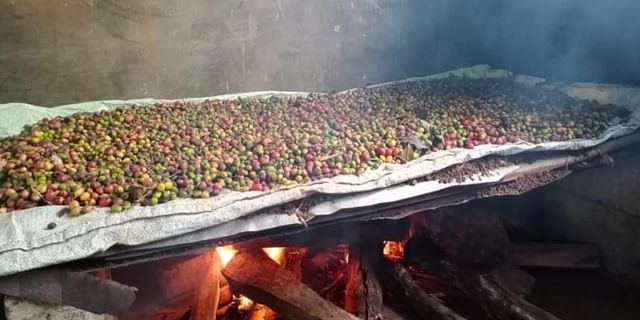
The wood fire installed by coffee grower Vikas to dry beans.
Madikeri :
The change in the weather pattern has increasingly affected the coffee growing sector in Kodagu. As rainfall continues to lash the district in November, the coffee growers are struggling to save what is left of the coffee yield.
The coffee picking season for Arabica variety begins in November and the picked ripened beans are to be dried under the sun. However, with rainfall still continuing to lash parts of Kodagu, the growers are faced with a herculean task of picking the beans in the rain. Further, the collected beans cannot be dried in the rainfall and many growers are building make-shift stoves to save the ripened beans.
K Vikas, a coffee grower in Makkanduru village has raised a make-shift stove to dry the ripened coffee beans. Coffee beans, which are usually dried under the sun, are now being dried on a wood fire stove. “The bad weather condition has forced us to take this non-traditional method of drying coffee beans,” Vikas explained.
Meanwhile, the ripened beans without drying do not possess any demand in the market and are not bought by the traders due to the existing risks concerning the weather. “The coffee curing centres will not accept yield that has a mixture of ripened and unripened beans; the cost of separating these two beans cannot be managed by the growers in the current scenario. The curing centres are also sceptical about purchasing un-dried coffee following the present weather condition,” explained BN Ramesh, a coffee trader in the district.
The unseasonal rain had already inflicted heavy loss to many growers as the coffee plants witnessed increased droppings and rotting. The continuation of rainfall in the month of November is now threatening to wipe out what is left of the crop damage.
source: http://www.newindianexpress.com / The New Indian Express / Home> States> Karnataka / by Pragna GR, Express News Service / November 14th, 2021
Here is a chance for coffee growers to get additional cash from their plants throughout the year apart from income from the sale of beans. Mysuru-based Central Food Technological Research Institute (CFTRI) has developed a technology to prepare a value-added product from coffee leaves that packs in health benefits too.
Coffee is only harvested for a few months every year, depending on the country’s harvest season. This can leave a number of producers and workers without work (and income) for a significant portion of the year.
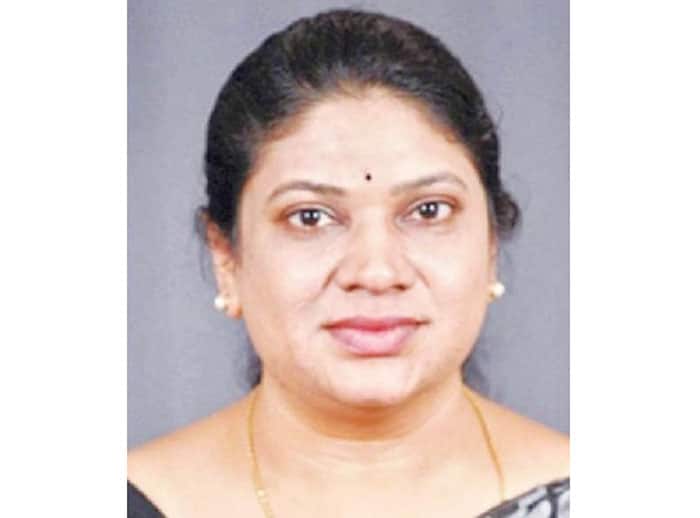
Pushpa S. Murthy
However, some producers have decided to diversify the crops that they grow and sell. As coffee leaves are constantly being produced, growers can harvest them in the off-season if there is demand, according to Pushpa S. Murthy, Principal Scientist (Spice and Flavour Science Department) of CFTRI.
This technology follows a CFTRI project on the development of value-added products from coffee leaves taken up in 2019. The project was funded by the Union Ministry of Food Processing Industries.
If farmers can use the leaves which can be harvested during the off-season or during pruning, without interfering with coffee bean growth, it will have a great impact on the social elevation of coffee farmers, she said.
Around 70 percent of the coffee industry is unemployed or underemployed during nine months of the year due to the nature of the growth cycle of the coffee beans. The project aimed to provide a year-round sustainable process for the coffee farmers.
With CFTRI technology, the brew can be prepared with water, allowed for a few minutes to steep, filtered and consumed. The institute has initiated the transfer of this technology to the coffee industry, and a few industry participants have already extended their consent, she said.
The leaf brew does not really taste like coffee, according to Murthy. “The brew is subtle with less caffeine compared to coffee or tea,” she said. On the nutritional value of the beverage, she said coffee leaves are rich in phenolic acids with potential health benefits. A coffee leaf contains around 17 percent more antioxidants than green tea. The beverage should be consumed plain.
The beverage accords health-promoting polyphenols like chlorogenic acid and mangiferin which help in reducing blood glucose levels, inflammation and blood pressure, she said.
Leaf drink ‘kuti’ and ‘kahwa daun’ popular in Sumatra, Ethiopia
Coffee leaf tea has been consumed in Sumatra, Ethiopia, Jamaica, Java and Sudan for centuries. From the 16th century to the 19th century, Ethiopian farmers set aside their harvested coffee for trade or consumption in special ceremonies. As a day-to-day drink, the Harari people in Ethiopia instead enjoyed ‘kuti’.
‘Kuti’ tea was made by boiling coffee leaves in hot water, sometimes with a pinch of salt or some sugar. It was generally boiled for at least 30 minutes, as it was believed that the longer the leaves were boiled for, the sweeter the resulting brew would be.
Coffee leaf tea bears some similarities to green tea, but it is more earthy and sweeter. It is lower in caffeine than green tea, and thanks to its high levels of antioxidants, it has historically been believed that it cures or relieves cold symptoms.
In the 19th century, Dutch colonists transported coffee plants to designated farming regions in Indonesia. Workers on the coffee plantations were forbidden from consuming the coffee they harvested, so they drank something called “kahwa daun” instead.
‘Kahwa daun’ was made by drying coffee leaves in the sun to reduce their bitterness. The leaves were then smoked and roasted for a few hours. Finally, they would be steeped in boiling water, and then served in a coconut shell.
source: http://www.starofmysore.com / Star of Mysore / Home> Top Stories / November 14th, 2021
Minister in charge of Kodagu district Kota Srinivas Poojary and others at the Kannada Rajyothsava celebrations in Madikeri on Monday. | Photo Credit: Special Arrangement
Labs, libraries for 15 govt. schools: Minister
Minister in charge of Kodagu district Kota Srinivas Poojary on Monday said each household in the limits of 12 gram panchayats in Kodagu will be getting drinking water, 100 per cent segregation and collection of solid wastes, scientific handling of sewage generated daily besides the installation of solar projects and setting up of digital libraries in the respective villages.
All these works will be done as part of ‘Amrith’ Grama Panchayat programme which has been announced in the State identifying 750 GPs as part of platinum jubilee celebrations of Independence. The 12 GPs in Kodagu are Peraje, Kunchila-Kakkabbe, Maragodu, Kedamullur, Karmad, Nalkeri, Thithimathi, Koodumangaluru, Shirangala, Igooru, Haradooru and Dundalli, the Minister said in his speech during the Kannada Rajyotsava celebrations in Madikeri.
As part of the 75th independence daycelebrations, the State government has announced 13 special programmes and they include Amrith gram panchayat, Amrith rural housing scheme, Amrith farmer producer organisations, Amrith Nirmala Nagara, Amrith anganwadi centres, Amrith self-help micro enterprises, Amrith community development programme, Amrith health infrastructure upgrade programme, Amrith skill training programme, Amrith startup programme, and Amrith sports adoption programme.
As part of Amrith Rural Housing scheme which is being implemented in the district, housing will be provided to the homeless persons who will be identified in the 12 GPs in the coming days.
The Minister said farmers, fishermen and weavers will get financial support as the government has launched Amrith farmer producer organisations. Each organisation will get a sum of ₹30 lakh in a span of three years. Amrith Nirmala Nagar scheme has also been launched in the district where programmes will be taken up for maintaining hygiene in the limits of local bodies.
Amrith school scheme entails funding of ₹10 lakh to each identified school for developing buildings, labs, libraries, toilets and other facilities. The 15 schools identified in Kodagu are at Hodawada, Sampaje, Kadanga, Madapura, Kodlipet, Walnoor, Thagattur, Hebbale, Suntikoppa, Heggala, Pollibetta, B. Shettigeri, Thithimathi, Gonikoppa and Kutta.
In Kodagu, 25 anganwadi centres will be upgraded with each one of them getting a sum of ₹1 lakh under Amrith Anganawadi scheme.
The Minister said the government is committed to protecting Kannada and the culture of the land and expressed happiness that the use of Kannada language in digital mediums has been on the rise. Karnataka is rich in culture and tradition, he said, calling upon the youth to be part of the overall development of Karnataka.
He also called upon the people to adopt Kannada in their lives, showing interest in the language, literature, culture and art of the land, and become successors of the rich tradition of the land.
source: http://www.thehindu.com / The Hindu / Home> News> States> Karnataka / by Special Correpondent / Mysuru – November 01st, 2021
WELCOME. If you like what you see "SUBSCRIBE via EMAIL" to receive FREE regular UPDATES.
Read More »