Category Archives: Business & Economy

TN exports $55 mn worth of coffee in 2020; instant version scores high, finds survey

The popularity of the Malabar coffee has increased and its volume of export grew at 7 per cent

Tamil Nadu has exported $ 55 million worth of coffee in year 2020, says a survey by Drip Capital, a global trade finance firm. Most of the exports consist of instant coffee, the company said in a press release on Wednesday.

To retain the growth of their global market share, exporters should continue developing trends in the instant coffee market, the release said. Research indicates that many other States in the country could benefit by following Andhra Pradesh in setting up several coffee processing plants, it said.

While COVID-19 did stir things up in the sector, the survey shows the popularity of the Malabar coffee has increased and its volume of export grew at 7 per cent compound annual growth rate (CAGR) in the last decade ending 2020 with the value of exports rising at 11 per cent CAGR for the same period.

“The global appreciation for this variety of coffee in the market will help it command a higher price. Already taking advantage of the trend, certain micro coffee estates and roasters are currently trying to tap into this new opportunity on a small, experimental scale. With further aid from the Coffee Board of India and the government, coffee producers in the country could take this highly popular specialty coffee to greater heights, co-founder and CEO of Drip Capital, Pushkar Mukewar, said in the release.

source: http://www.freepressjournal.in / The Free Press Journal / Home> Business / by PTI / July 28th, 2021
Elite KSISF Takes Over Harangi Dam Security

No more unrestricted entry; move to curb illegal activities 

Mysore/Mysuru:

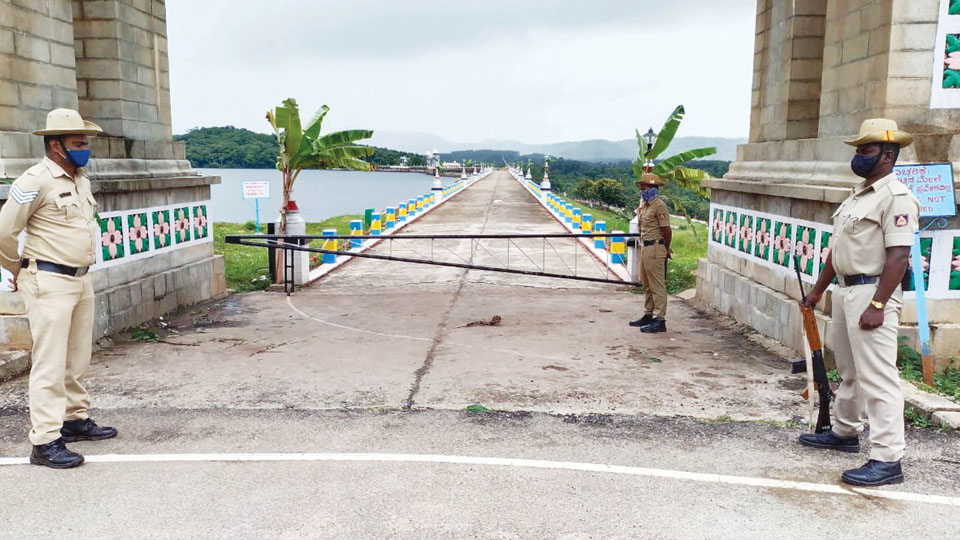
Amidst thick of a controversy over the safety and security of the KRS Dam in Mandya in the wake of rampant illegal mining, the State Government has upgraded the security of Harangi Dam in Kodagu district that is the only upstream reservoir that supplies water to KRS.

Till now, the Harangi Reservoir security was manned by lathi-wielding Kodagu District Reserve Police and Civil Police. 

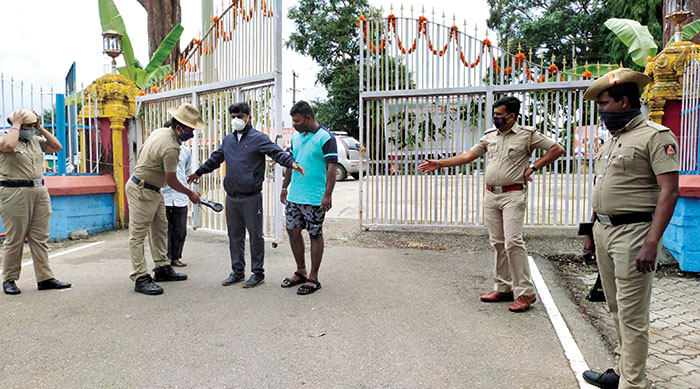
Now the security apparatus has been handed over to gun-toting professionals from the elite Karnataka State Industrial Security Force (KSISF). Over 23 men are guarding the Dam 24×7 and unrestricted entry has been banned. All visitors will be frisked henceforth and only those who have valid permission from the KSISF will be allowed inside. 

The KSISF also manages the security of the KRS Dam. The Harangi Dam is in the upper Cauvery sub-basin reservoir near Hudgur village in Somwarpet taluk. Water from the reservoir irrigates 1.65 lakh hectares of farmland in Kodagu, Hassan and Mysuru districts. The maximum height of the reservoir is 2,859 feet and it has the capacity to store 8.5 tmcft of water.

The KSISF personnel are guarding the Dam main gate, four sluice gates and power house. Vigil will be kept till the end of the right canal. As per the new security protocol, vehicle parking has been arranged at the entrance of the Dam and visitors have to obtain permission from the Irrigation Department to enter the reservoir premises. Also, permission from the KSISF is required for private vehicles.

Earlier, private vehicles could enter into the Dam premises easily and entry was unrestricted if the visitors had the backing of politicians and elected representatives. The place was also a haven for illegal activities where liquor parties were held at the Dam guest house and also at a few places in the vicinity and backwaters.

Now all those who enter inside the Dam are screened and the registration number of the vehicles and information of tourists are documented. 

Speaking to Star of Mysore, Inspector K.S. Chandrashekar said that as Harangi is a sensitive zone, the KSISF has been entrusted with the security.

He said that the Dam security and the safety of visitors were paramount and security will also be provided to the sound-and-light show in the evenings. 

The KSISF was set up in 2012 and it started its service by providing security cover to Vidhana Soudha, Vikasa Soudha and KRS Dam when Siddharamaiah was the CM. The KSISF personnel are trained in access control, gadgets management, communications, people management, fitness and have an eagle eye for disaster management.

source: http://www.starofmysore.com / Star of Mysore / Home> News / July 18th, 2021

Andhra Pradesh coffee exports touch $ 142million

Andhra Pradesh coffee exports touch $ 142million

HIGHLIGHTS

Andhra Pradesh, the country’s second-largest exporter of coffee, exported coffee worth $142 million in the financial year 2020-21.

Vijayawada:

Andhra Pradesh, the country’s second-largest exporter of coffee, exported coffee worth $142 million in the financial year 2020-21.

The State government is encouraging the coffee production in Araku valley and other places during the past few years. The share of Andhra Pradesh accounts for more than 50 percent of India’s instant coffee exports.

The State possesses many manufacturing plants that process green coffee beans to instant coffee, which commands a 31 percent share in India’s coffee exports basket.

Drip Capital Inc, a global trade finance company, recently released a report examining the coffee trade across different regions of India. From analysing proprietary and publicly available data, getting insights from coffee exporters in the country, to understanding several emerging market trends brewing in the industry, the report speaks in-depth about the dynamics of the coffee sector.

The coffee exports from this region have been growing at a 3 percent over the past five years. The largest and the most famous coffee-growing region in Andhra Pradesh is Araku valley plantations.

According to the Coffee Board of India, on average, 3100 MT of (mainly) Arabica coffee is harvested from this region. Exports of instant coffee are rising from Andhra Pradesh due to increased export value realisation for the commodity.

Pushkar Mukewar, Co-Founder and CEO, Drip Capital, said, “as a commodity, instant coffee enjoys the product feature of convenience- a quality in high demand and vital to today’s global, fast-paced life. Hence, Indian exporters must stay abreast of developing trends in the instant coffee exports market. Also, to boost India’s overall coffee exports, many other States could benefit from mimicking Andhra Pradesh by setting up several coffee processing plants.”

source: http://www.thehansindia.com / The Hans India / Home> News> States> Andhra Pradesh / by Hans News Service / July 26th, 2021

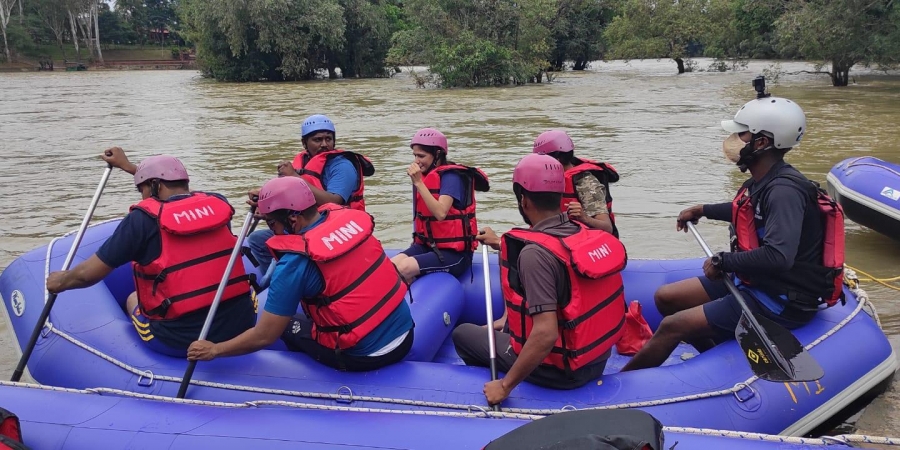
Rafting activities resume in Cauvery river at Kodagu’s Dubare

Over 60 rafts have availed permission to provide their services to the tourists and the activity has re-started with stringent COVID-19 norms in place.

The district administration has released stringent COVID-19 norms that need to be in place while resuming the activity. (Photo | Express)

Madikeri :

After a break of over two years, the much-sought-after rafting activity in river Cauvery at Dubare in Kodagu has resumed.

“The current water level of River Cauvery in Dubare is ideal for the adventure sport and we are happy to kick-start the rafting activity – which is our main livelihood,” shared DS Krishnappa, the president of the Dubare Rafting Association.

He confirmed that the association availed permission from DC Charulata Somal and the activity resumed from July 17.

He also analysed that tourist inflow is gradually picking up and said, “We are not seeing as much tourist flow. Nearly 40 to 50 tourists opted for rafting on Saturday. We are hopeful that the numbers will increase gradually.”

The district administration has released stringent COVID-19 norms that need to be in place while resuming the activity.

“We have bought sanitizer sprays and each raft is sanitized after every ride. We will not allow tourists to board the rafts without face masks. Also, the number in each raft has been reduced to six people (plus a guide) from the earlier eight people to ensure social distancing,” he explained.

The district administration has fixed Rs 600 per head for a seven-kilometre raft ride and the same is being strictly followed by the rafting staff.

While the rafting activity has resumed, Dubare Elephant Camp is still closed for tourists as the camp elephants are undergoing annual health check-ups.

Kushalnagar RFO Ananya Kumar confirmed that the Elephant Camp will be open only after the water level in River Cauvery decreases.

The Cauvery Nisargadhama tourist spot in Kushalnagar will, however, open from Monday.

source: http://www.newindianexpress.com / The New Indian Express / Home> States> Karnataka / by Express News Service / July 18th, 2021

Scaling Hills, Climbing Trees Daily Workout For Network

Virajpet:

The online platform may be the only way to reach students during lockdown, but the digital medium comes with its own challenges. Students living in remote areas in Kodagu are facing trouble due to slow internet and connectivity issues. Lessons cannot be downloaded and they cannot attend online classes as videos and audios do not play. 

Kodagu is one of the high-altitude districts in Karnataka and most of the areas have green cover and undulating terrain. However, this very feature poses a great challenge to the students in attending online classes due to poor internet connectivity.

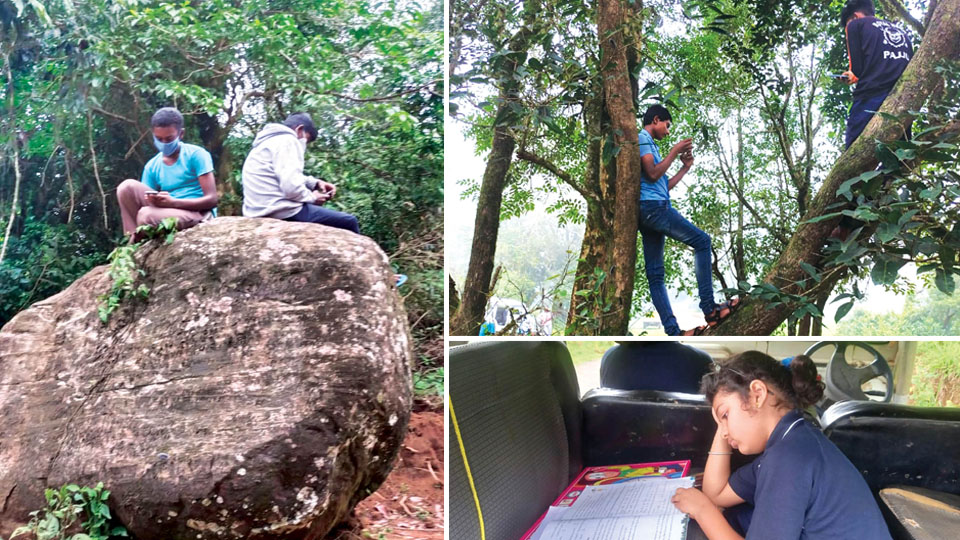
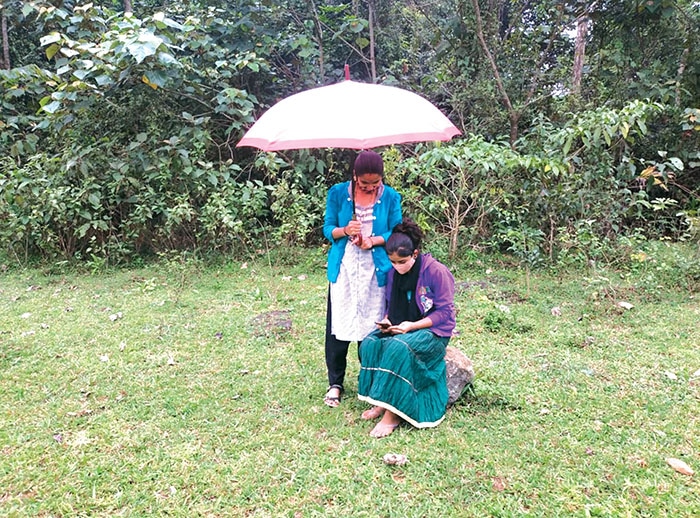
Students are commonly seen sitting on the roadside on top of bridges and on the rocks where they attend online classes. Some of them climb trees risking their lives and limbs. While the internet may not be available inside some houses, faint signals are somewhat available at a distance. So parents have the task of taking the children to the area where connectivity is available and bringing them back home after classes. 

Rain trouble too

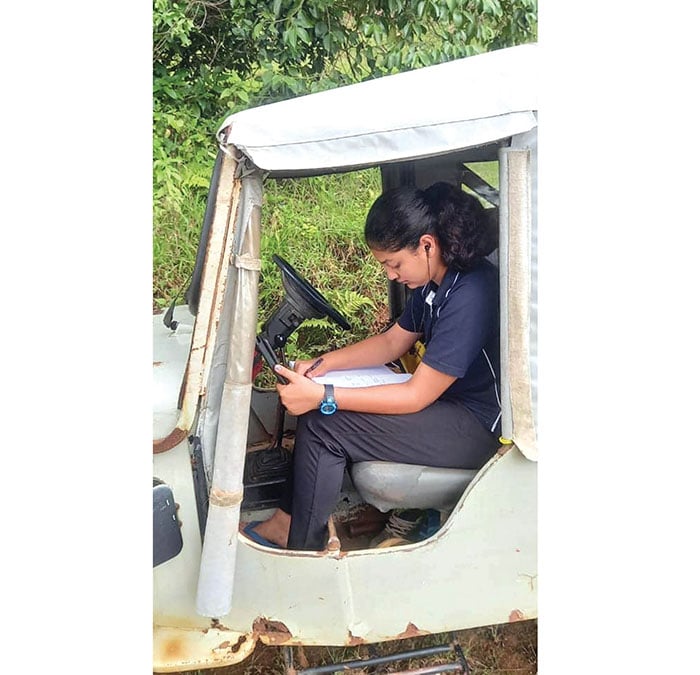
Now it is raining across the district and students can’t even sit in the open outside. They sit inside jeeps and other vehicles to protect themselves from rain. There is hardly any mobile network in remote villages in Virajpet Taluk like Kedamullur, Birunani, Badagarakeri, Hysodlur, Nittoor, Karmad, Kunda and also Hathur. 

To attend the online classes, these students have no option but to find a spot where they get proper connectivity. And there are very few places where they get an internet connection on the phone. Added to the connectivity issues, many areas are in the dark due to frequent tree falls. Villages like Kedamullur, Badaga, Thermemotte, Baarikaadu, Kottooli, Thomara and Koorthikaadu do not get power restored for weeks together in case wires snap. 

“Due to the lack of a mobile network in my village, I have to walk into the forests where I can get faint signals. Our village is one of the places where basic communication facilities are missing and villagers have to walk towards the forests at the time where they get signal on their phones. Sometimes it rains when we are outside and we are not able to study,” said M.C. Nireeksha, a  10th Standard student at Heggala Ramanagara School. 

Students are the ones who are suffering the most as they have to travel 3-4 km at times during the lockdown to attend online classes, she added. At remote villages where there is undulating terrain, mobile network is not balanced across the village and they get signal only in the upper reaches. A majority of students in the Kedamullur region have been studying in the schools and colleges in Virajpeṭ and 70 percent are the children of labourers.

“My house is in the lower part of Kedamullur village while good signal can be reached only in the upper reaches of the village, so my children are forced to trek till a particular point to study. This is a wooded area and there is a threat of wild animals. Along with my daughter I too walk 4 km to get connectivity and we only return in the evening,” said Vishwanath, a parent. 

Authorities nonchalant

While this is the predicament faced by the students, those in positions of power sit tight saying that they have written many letters to higher-ups and there is no response. “BSNL provides connectivity to many areas in Kodagu and the offices of engineers, technicians and other staff are empty as there are hardly any employees. I have even written many letters to higher-ups for a mobile tower but there is no response,” said Kedamullur Gram Panchayat President N. Sheela. 

“There is a 2G BSNL tower in Virajpet-Kedamullur and it is a genuine problem. Letters have been written a month back to upgrade the tower to 4G network. The problem will be solved if a new tower is installed,” said BSNL Virajpet Sub-Division Engineer Narayana. The officer was, however, silent on when the new tower will be installed or the existing tower would be upgraded to 4G.

source: http://www.starofmysore.com / Star of Mysore / Home> News / July 14th, 2021

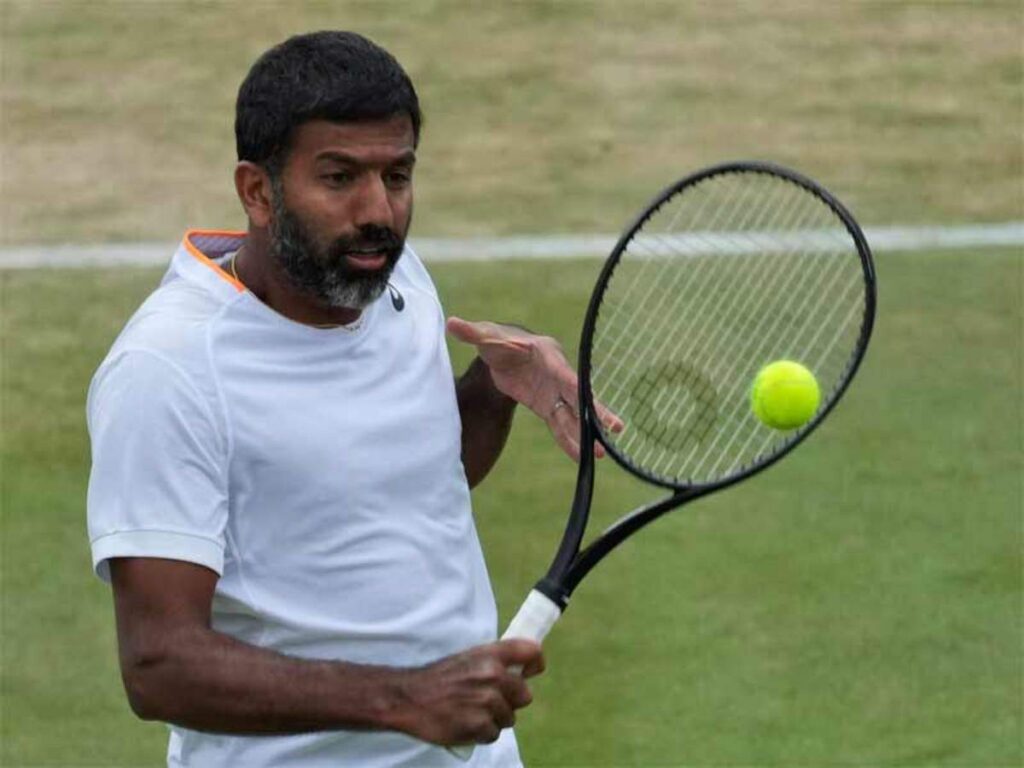
Rohan Bopanna Tennis Academy comes to Coimbatore

Rohan Bopanna. (AP Photo)

Coimbatore :

The Rohan Bopanna Tennis  Academy, run by the Indian doubles ace, on Monday opened at a school.


“I am very happy to be able to see young talent, giving them the positive encouragement of sport,” he said at the virtual inauguration of Coimbatore’s first development tennis centre in association with the Rohan Bopanna Tennis Academy (RBTA).


The academy is being set up at RAK’s school.


It is also special because it is the first development academy for RBTA outside Karnataka , he added.


Bopanna, India’s top doubles player currently, said Coimbatore has had a lot of talent for many years, adding “one of the main reasons to start a centre here is that there are a lot of students with tremendous talent but lack opportunity.


“We have a structured programme in place.”


Further, Bopanna said when children come to the school, they would get to watch young talent training there, get inspired and start playing tennis.


Speakers at the event, including the RAK’s School founders, emphasised that sports and academics should go hand in hand to ensure holistic development of a child.

source: http://www.timesofindia.indiatimes.com / The Times of India / Home> News> Sports News> Tennis News / by PTI / July 12th, 2021

Kushalnagar Formally Gets Taluk Status Amid Fracas

Madikeri:

Six months after issuing a final notification for the formation of Kushalnagar taluk, the taluk was officially dedicated on Tuesday by Revenue Minister R. Ashoka. The State Government had notified the taluk on Jan. 1 this year and a new taluk was formed adding to the list of existing four taluks — Madikeri, Virajpet, Ponnampet and Somwarpet.

The taluk was created bowing to public pressure and years of struggle as residents were forced to travel 27-km to Somwarpet to get their work done. Cauvery Taluk Horata Kendriya Samiti spearheaded the agitations.

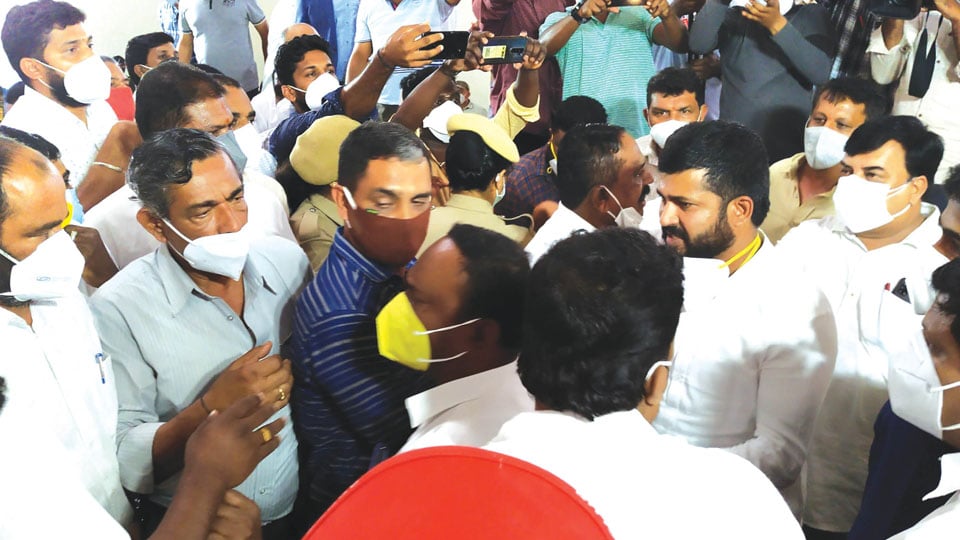
However, Tuesday’s inauguration became chaotic as office-bearers and members of the Samiti alleged that though Kushalnagar taluk was their baby, they had been ignored during the inauguration ceremony, making it an all-BJP affair. They shouted slogans as soon as Minister Ashoka rose to speak. However, they were evicted out forcefully. 

Mysuru-Kodagu MP Pratap Simha, Somwarpet MLA M.P. Appachu Ranjan and MLC Veena Achaiah were present on the dais. Minister Ashoka praised Appachu Ranjan for his efforts to form the taluk. “He visited my office 20-30 times urging me to accord the taluk status,” he said. 

Ashoka noted that Tahsildar and 12 posts have been created and Rs. 50 lakh had been released for necessary works and assured that all necessary support would be provided to the newly-developed taluk in a phased manner. 

In his address, thanking Chief Minister B.S. Yediyurappa and Ashoka, MLA Appachu Ranjan said that a Mini Vidhana Soudha was necessary to house all Government offices. 

Samiti alleges side-lining

Before Ashoka spoke, members of Cauvery Taluk Horata Kendriya Samiti alleged that the BJP had hijacked their efforts to form the taluk for 20 years. Horata Samiti leader and Zilla Panchayat former member K.P. Chandrakala said that Samiti Chairman V.P. Shashidhar’s name was deliberately dropped from the list of guests in the invitation.

“The event has been converted into a BJP event,” she said, as the Samiti members including Shashidhar shouted slogans against the BJP Government. This irked BJP followers and they too shouted pro-BJP slogans. This led to a fracas where both sides accused each other. Some were even pushed around.

Though Pratap Simha tried to calm down the agitated crowd, the fight did not stop and the Police tried to send Shashidhar and other activists outside the hall. Then a fight broke out with Inspector Mahesh. Later, the Police evicted the Samiti members out of the hall. 

Meanwhile, Appachu Ranjan said that he had supported the efforts of all organisations in the formation of Kushalnagar taluk. “When Siddharamaiah was the CM, I led a delegation to Belagavi and Bengaluru. When V.P. Shashidhar had launched a hunger strike, it was I who stood behind him when the then Kodagu District Minister M.R. Seetharam did not care. All this must be remembered by the Samiti,” he added.

source: http://www.starofmysore.com / Star of Mysore / Home> News / July 08th, 2021

Bees Scare Away Wild Jumbos In Kodagu!

KVIC’s RE-HAB project yields success 

Gonikoppa:

Project RE-HAB (Reducing Elephant – Human Attacks using Bees) aimed at thwarting elephant attacks in human habitations using honey bees, seems to have yielded success with jumbos taking alternative routes to avoid coming into contact with bees.

With a view to reduce human-elephant conflicts in the country, Khadi and Village Industries Commission (KVIC) has launched a unique project of creating “bee-fences” to address this burning issue in several States including Karnataka. 

The pilot project has been launched at few locations in Kodagu. These spots on the periphery of Nagarahole National Park are known to be human-elephant conflict zones. Total cost of project is Rs. 15 lakh.

Reality check has revealed that the wild pachyderms were maintaining a safe distance from bee boxes. Locals say this has reduced the elephant menace by 70 percent. Bee boxes have been placed at Kutta including Choorikaad and Tithimathi ranges. Jumbos were not seen in these places in the last 25 days. Villagers opined that elephants may have found alternative route. 

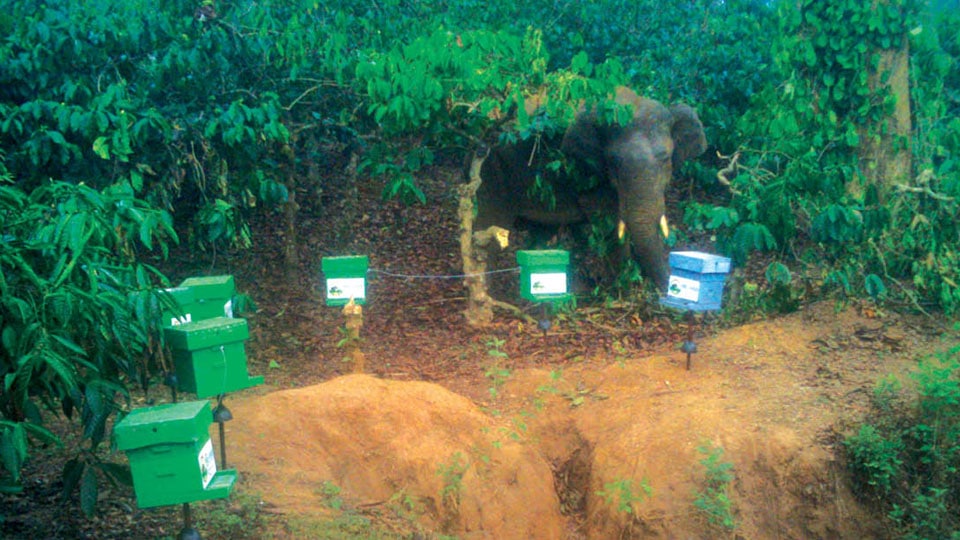
In fact, the jumbos had damaged bee boxes near Kodange Haadi near Nagarhole recently. Since then, they have not come back. There are instances of young elephants straying into these fences. The cameras have captured the hesitancy of jumbos crossing the fence fixed with bee boxes and also taking de-tour within 27 seconds. 

KVIC has set up 15-20 interspersed bee boxes at selected locations. The bee boxes are set up in the passage ways of elephant-human conflict zones to block the entrance of elephants to human habitations. The boxes are connected with a string so that when elephants attempt to pass through, a tug or pull causes the bees to swarm the elephant herds and dissuade them from progressing further. Bee boxes have been placed on the ground as well as hung from the trees to block the passage way of elephants. High resolution, night vision cameras have been installed at strategic points to record the impact of bees on elephants and their behaviour in these zones. The collective buzz of the bees is annoying to elephants that force them to return. Elephants, which are the most intelligent animal and carry their memories for long, avoid returning to the place where they have encountered honey bees.

Nearly 500 people die every year due to elephant attacks in India. This is nearly 10 times more than the fatalities caused by big cats across the country. From 2015 to 2020, nearly 2,500 people have lost their lives in elephant attacks. Out of this, nearly 170 human fatalities have been reported in Karnataka alone. On the contrary, nearly one-fifth of this number, that is nearly 500 elephants have also died in retaliation by humans in the last 5 years.

In the past, Governments have spent crores of rupees on digging up trenches and erecting fences to dissuade elephants. Also, hundreds of crores of rupees have been spent on compensation for loss of human lives. These trenches and barbed wire fences have often caused the deaths of elephant calves and thus rendering these ideas largely impractical.

source: http://www.starofmysore.com / Star of Mysore / Home> News / July 05th, 2021

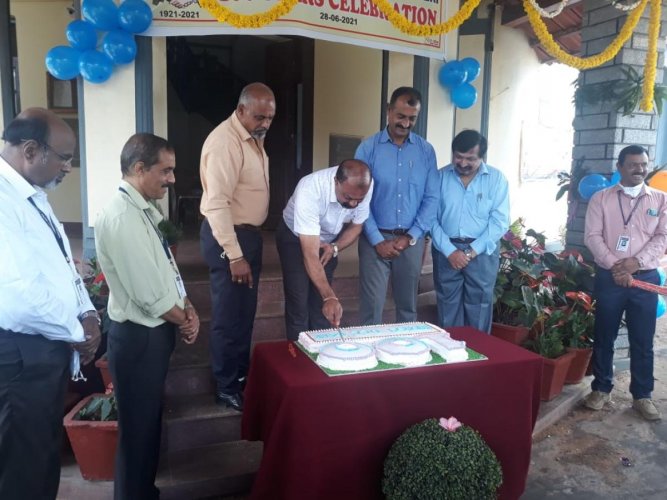
Kodagu DCC Bank celebrates its centenary

District Central Cooperative Bank president Kodandera P Ganapathy cuts a cake to mark the bank’s centenary on Monday.

Simple celebrations were observed to mark the centenary of Kodagu District Central Cooperative Bank on Monday.

The bank was established on June 28, 1921, owing to the efforts of the then pioneers of the cooperative movement, Dandera Kuttaiah, Puliyanda Thimamaiah, Kuppanda Bellyappa and Udiyanda Machaiah.

The bank began operations with 45 cooperative societies, 16 members, share capital of Rs 4,400 and deposits worth Rs 10,000.

Rao Bahaddur Kodandera Kuttaiah was the founder president of the bank and served in the post from 1921 to 1927.

The centenary programme was celebrated at the bank’s head office in Madikeri, in the presence of the president, vice president, directors, chief executive officer and other officials and staff.

A cake was cut in all 21 branches of the DCC bank, to mark the occasion. Sweets were distributed to the customers. 

Bank president Kodandera P Ganapathy said that the bank could complete its 100 fruitful years due to the cooperation of the staff and the customers.

A public function of the centenary celebrations is planned for August 20, 2021. The groundbreaking ceremony for the centenary building will be done on the day, by the state cooperative minister, said Ganapathy.

The district in-charge minister, elected representatives from the district, representatives of cooperative societies, department officials and the former presidents and staff of the bank will be present, he added.

source: http://www.deccanherald.com / Deccan Herald / Home> State> Mangaluru / by DHNS, Madikeri / June 28th, 2021

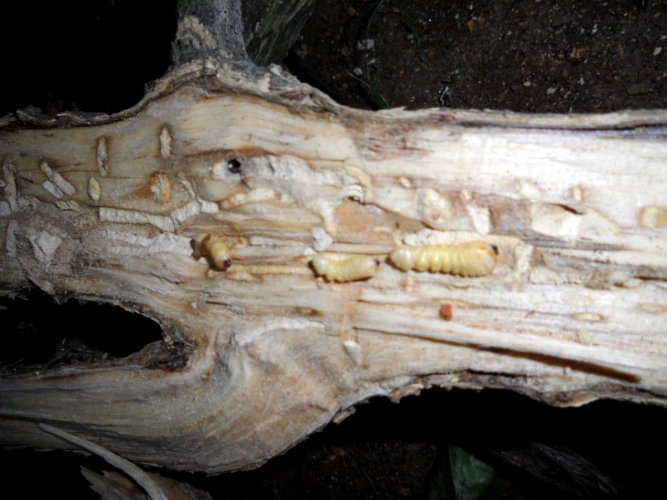
White stem borer menace a nightmare for coffee growers

White stem borers destroying a coffee plant. Credit: DH Photo

Arabica and Robusta coffee varieties grown in Kodagu are known for their quality.

Robusta variety is grown mostly in Madikeri and Virajpet taluks, while Somwarpet is known for arabica coffee.

The weather of Somwarpet is the best suited for the arabica variety, say the growers.

However, there are a lot of challenges before arabica coffee growers, the major one being the infestation of white stem borer (Xylotrechus quadripes).

The adult borers feed on the stem of the coffee plant and lay eggs inside the stem. Their season of reproduction is the months of March and April. During this period, the stem borers lay eggs on all plants in the coffee plantation.

In Somwarpet taluk, coffee is grown on 28,540 hectares of land. Arabica coffee is grown on 22,940 hectares and robusta is grown on 5,600 hectares.

Many growers have been switching to robusta as arabica is infested by the white stem borer.

Fed up by the borer menace, the plantation owners themselves have been asking the workers to uproot the arabica coffee plants that were nurtured for many years.

A lack of proper control measures is also one of the main reason for the growers to destroy the plants.

The arabica variety of coffee requires more care as compared to robusta. Meanwhile, the labour cost and the production costs are increasing, among other expenses towards manure and fertilisers.

Adding to the problem, the market rate is also disappointing the farmers.

Control measures

Experts have come up with a technique to trap female borer, by using the artificial pheromones of male borer insects, say authorities of the coffee board.

B R Jayendra, a coffee planter from Bettadalli, said that the control measure of white borer is consuming a lot of time, in the existing methods available.

By the time the borers are controlled, almost all plants are destroyed. Effective control measures are needed to save arabica coffee.

Taluk Coffee Growers’ Association president Mohan Bopanna said that the coffee planters are going through difficult times.

Like the Kerala model, the Karnataka government too should announce support price for coffee growers. The loans of coffee growers who are facing difficulties should be waived, he added.

Another coffee planter S M D’Silva from Abburukatte said it is almost impossible to destroy the affected plants at a time.

The small grower will be hit hard if they destroy all coffee saplings in the plantation, he said.

source: http:///www.deccanherald.com / Deccan Herald / Home> State> Mangaluru / by DHNS, Somwarpet / June 28th, 2021