Category Archives: Business & Economy

Free COVID Healthcare Centre Opens At Gonikoppal

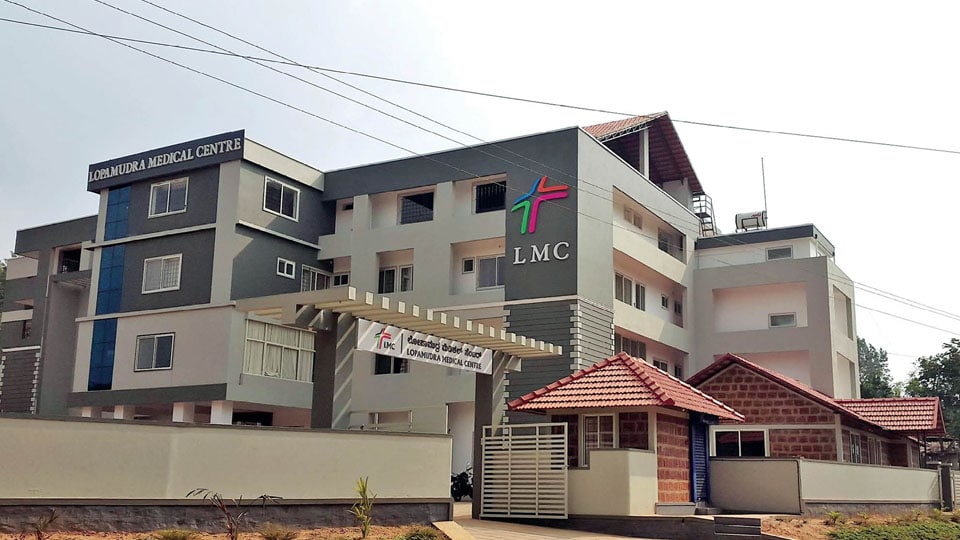
Lopamudra Medical Centre, Karuna Trust, donors and volunteers make the much-needed facility a reality

Mysore/Mysuru:

A 30-bed dedicated COVID Healthcare Centre has begun functioning at Lopamudra Medical Centre (LMC) at Gonikoppal in South Kodagu. COVID patients will be treated here free of cost. This Hospital will prove a boon to patients in South Kodagu who were earlier forced to travel either to Mysuru or Bengaluru that are already under pressure due to mounting infections. 

The facility was inaugurated last evening by Kodagu District Minister V. Somanna who holds the Housing portfolio. He assured the Hospital authorities that he would take measures to give 30 oxygen cylinders to 30 beds and an additional stock of 60 cylinders as a back-up. 

The COVID Healthcare Centre has been established by Karuna Trust, a Charitable Trust that has enabled integrated rural development and empowered the masses, Kodava Koota in the US, Kodava Deenabandhu Charitable Trust, Kodava Samajas and a dedicated team of volunteers, donors and various organisations, who have spared no efforts in making the COVID Centre a reality. 

Businessman Jammada Aiyanna, Dr. Kalyatanda Gautham Subbaiah from University of Florida, Brigadier (Retd.) Maletira Devaiah, Kokkanda Pavan Aiyappa, Cheppudira Geetha Chengappa, Karuna Trust Joint Secretary Venkat Chekuri, Ponnampet Kodava Samaja President Chottekmada Rajeev Bopaiah and several others have made invaluable contribution to the facility. 

They have raised funds alongside the Karuna Trust for infrastructure and also equipment and even many residents of Kodagu have contributed to the noble cause. The centre officially began functioning on May 15 under the leadership of Mukkatira Amrit Nanaiah, Consultant Physician and Diabetologist, and is located on the third floor of the LMC at Athur village, two kilometres from Gonikoppal. 
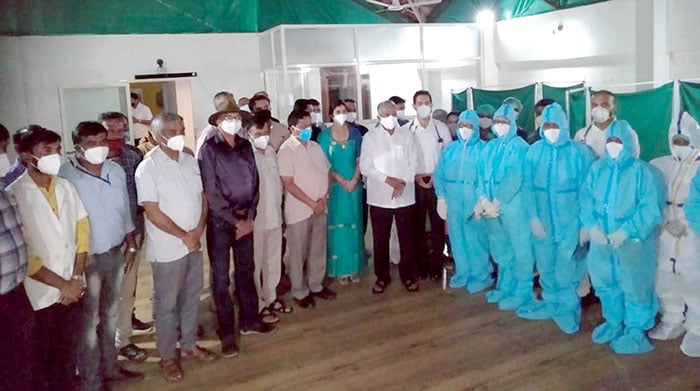
Minister Somanna, MLA K.G. Bopaiah, Dr. Amrit Nanaiah, Dr. Sudarshan and hospital staff during the inauguration last evening.

Apart from Madikeri District Hospital and the Kodagu Institute of Medical Sciences there is no hospital in Kodagu to treat COVID patients. Thanks to the negligence of the Government and elected representatives who did not bother all these years to set up an advanced hospital. In this direction, the COVID Healthcare Centre at LMC will help save lives at the time of crisis. 

The COVID Healthcare Centre will have 15 beds with piped oxygen, five beds with oxygen concentrators and 10 beds with BiPAP machines, a sort of a ventilator that is used to treat chronic conditions that affect breathing. The centre will have a pharmacy and lab facility and will be a high dependency unit. Separate entrances have been made to facilitate the entry of COVID patients so that other patients who come to the LMC are not affected in any way. 

The LMC administration and the Karuna Trust will take care of providing doctors and nurses including consultations from doctors who are working in foreign shores. Donors are contributing to purchase oxygen, medicines including life-saving ones and also free food to the patients. On an average, a COVID patient has to spend lakhs of rupees for treatment and this healthcare centre provides free treatment and quality care. 

The centre will treat moderate COVID patients, who will be referred by the Kodagu District Administration and Deputy Commissioner Charulata Somal has assured full support. The authorities are providing ambulance facility to the centre and the administration has assured to provide hassle-free oxygen supply from Mysuru. 

A 200 Kilo Litre oxygen unit will be installed at the LMC facility by Karuna Trust. Well-known social worker and tribal activist recognised for his work with the Soligas in B.R. Hills Dr. H. Sudarshan is a guiding force behind the COVID Healthcare Centre and he is also the founder and Honorary Secretary of the Karuna Trust.
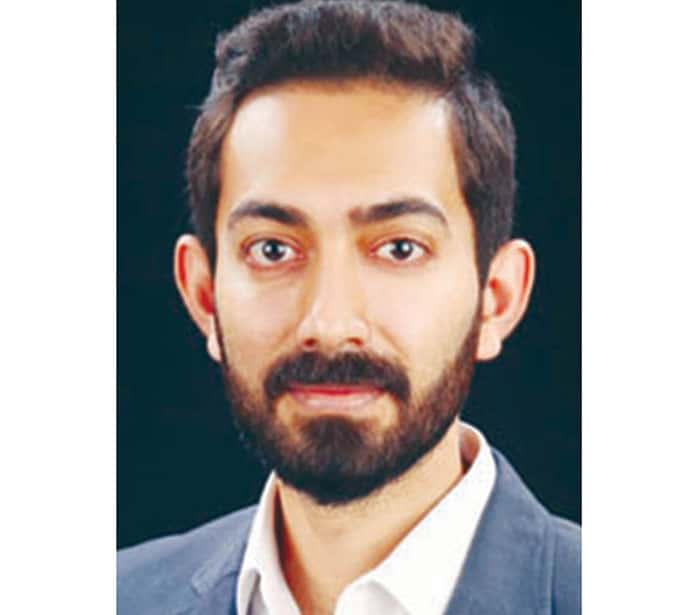
Dr. Mukkatira Amrit Nanaiah

‘Committed to treat patients’

The hospital has become a reality, thanks to the efforts of Karuna Trust. We have an aim to provide the finest care and are committed to treat patients in complete transparency and the centre is a zero-billing facility. Our intention is to come to the rescue of patients who are in need of medical care. The COVID Healthcare Centre has been created in such a way that it is bifurcated from the other treatment units of the hospital. 

Dr. Kalyatanda Gautham Subbaiah, Clinical Assistant Professor, Department of Medicine, Division of Infectious Diseases and Global Medicine, College of Medicine, University of Florida, who has treated over 1,000 COVID patients in the US, will guide doctors at the facility.  Dr. Mukkatira Amrit Nanaiah, head of Lopamudra Medical Centre

source: http://www.starofmysore.com / Star of Mysore / Home> News / May 16th, 2021
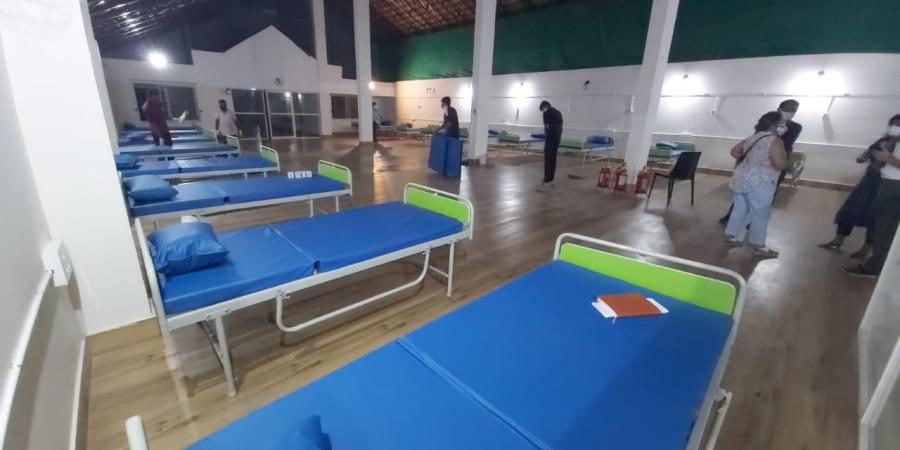
Now, a 30-bed centre in Kodagu to treat COVID-19 patients free of cost

“The facility will have 15 beds with pipelined oxygen, five beds with oxygen concentrators and 10 beds with Bipap machines (a type of ventilator),” said Venkat Chekuri, joint secretary of Karuna Trust.

The COVID care centre in Kodagu (Photo | Special arrangement)

Madikeri :

A 30-bed Dedicated Covid Healthcare Centre (DCHC) will be inaugurated at a private hospital in Gonikoppal to provide improved treatment to COVID patients free of cost. The DCHC has been established following efforts by the Karuna Trust – a charitable trust that has enabled integrated rural development.

The facility will start functioning from May 15 at Lopamudra Private Hospital in Gonikoppal. “The facility will have 15 beds with pipelined oxygen, five beds with oxygen concentrators and 10 beds with Bipap machines (a type of ventilator),” explained Venkat Chekuri, joint secretary of Karuna Trust.

He explained that the facility has seen the light of day following efforts from Kodava Koota members in the US, Concerned Citizens of Coorg organization members and members of Kodava Samaj who have raised funds alongside Karuna Turst to establish the DCHC. The centre will have a pharmacy and lab facility and will be a high dependency unit.

“The centre will treat moderate COVID patients who will be referred by the district administration. The centre will provide free treatment to the patients alongside three meals a day and snacks. The administration of Kodagu alongside DC Charulata Somal has offered complete support and the ambulance facility to the centre is being provided by the district administration. The administration has also assured to provide hassle-free oxygen supply to the centre from Mysuru,” explained Venkat. He further added that a 200-litre oxygen unit will shortly be installed at the centre by the trust.  

The trust will bear the rent charges for the place provided at the private hospital and will have doctors and nurses appointed by the trust itself. “Dr Sudarshan, the founding member of the trust, is guiding the entire project. Also, Dr Gautham Subbaiah, assistant professor at the University of Florida – who has treated over 1000 COVID patients in the US – will guide local doctors in treating the patients. Experts from the University of Florida will review the ground work at the centre,” added Venkat.

source: http://www.newindianexpress.com / The New Indian Express / Home> States> Karnataka / by Prajna GR, Express News Service / May 14th, 2021

Obituary – Palecanda Yogesh

Palecanda Yogesh (49), owner of Bhagavathi Bus Service, passed away on Thursday night at Virajpet, Kodagu. He was also running a cold storage and a medical shop in the town.

He leaves behind his mother, wife, two children and a host of relatives and friends.

Cremation took place at Kodava Samaja crematorium in Virajpet yesterday, according to family sources.

source: http://www.starofmysore.com / Star of Mysore / Home> Obituary / May 08th, 2021

This Coorg coffee cultivator wants to grab a slice of India’s packaged coffee market

Launched 3 years ago, Levista is eyeing expansion in south India, Mumbai and Delhi

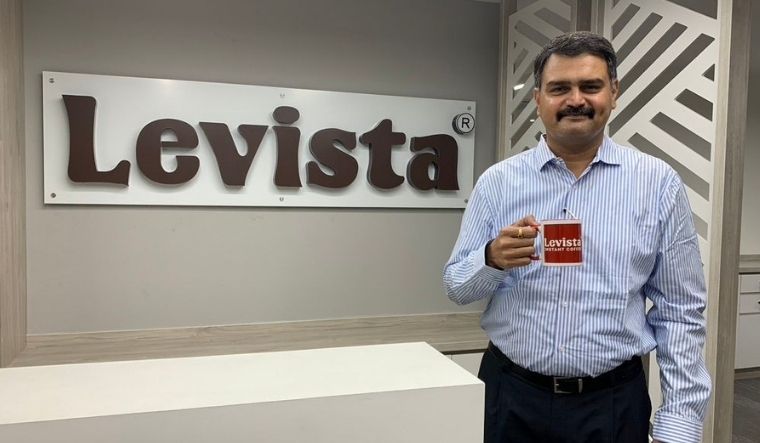
S. Shriram, vice-president-sales and marketing at Levista

Coorg in Karnataka, is among the foremost coffee growing regions in India. SLN, a three-decade old coffee plantation company in the region is now aiming to grab a slice of the Rs 2,200-crore annual packaged coffee market, which is dominated by big players like Nestle (Nescafe), Hindustan Unilever (Bru) and Tata Coffee.

SLN launched its own brand of coffee called Levista three years ago and has ever since expanded to 40,000 retail outlets, predominantly in Tamil Nadu and Karnataka. It has now set its sights on expanding across other markets, starting with the rest of south India.

“Of the Rs 2,200 crore market annually, over 80 per cent of the coffee consumption happens in the five southern states and Union territories. Therefore, we aim to reach a significant market share here rather than being sparsely spread all over the place,”  S. Shriram, vice-president sales and marketing at Levista, told THE WEEK.

“At the moment, we have a deep presence in Tamil Nadu and Karnataka. We launched our coffee in Goa in February and business is growing steadily. We will be entering the Andhra Pradesh and Telangana market by Sankranti and will penetrate deeper in there. Kerala will follow next.”

The company has the markets of Mumbai and Delhi-National Capital Region on the radar, too, however, it has not finalised a launch date yet, added Shriram.

Levista is also available on online platforms, including Amazon and it is also scaling up on other e-commerce platforms to reach a wider audience.

“Players like Big Basket have also aided our brand coverage, as has Flipkart. We have been recently on boarded through Udaan that reaches small retailers as well as hyperlocal players MilkBasket,” said Shriram.

While south India has a strong tradition of filter coffee, the rest of the country has largely been a tea drinking market. However, things have started changing with penetration of cafes like Cafe Coffee Day and Starbucks in the last decade. International coffee brands like Lavazza are also expanding in the country, buoyed by rising coffee consumption here.

“There is a huge scope for us to grow. The coffee market has been growing steadily. Out of home coffee consumption through cafes has already hit a pan-India presence and thanks to this familiarity, more new consumers are sipping coffee at home, through packaged coffee,” noted Shriram.

Levista’s parent SLN currently has a capacity upwards of 50,000 metric tonne per annum, and Shriram says the company will be able to produce enough coffee for the domestic market as well as for exports.

Talking of exports, the brand is already present in Singapore, Malaysia, Middle East, Maldives and Sri Lanka, reaching out to the south Indian consumers in these markets. The company intends to have a larger international presence next year, added Shriram.

source: http://www.theweek.in / The Week / Home> News> Business / by Nachiket Kelkar / November 20th, 2020

SP Launches Emergency Response Vehicles

Madikeri: 

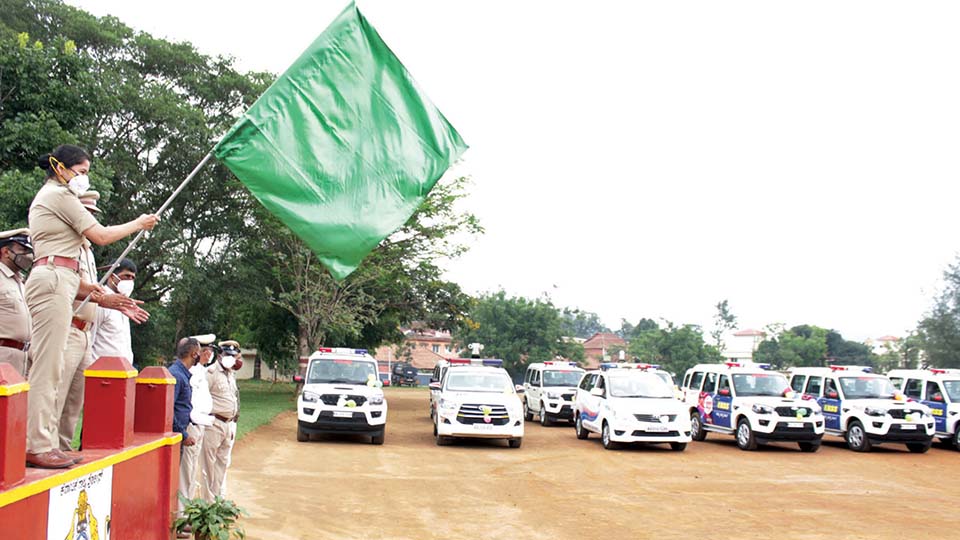
Kodagu SP Khsama Mishra launched 7 ‘Emergency Rapid Response’ vehicles at the District Parade Grounds here yesterday.

Speaking after flagging off the vehicles, Kshama Mishra said that Emergency Rapid Response vehicles are meant for the benefit of public. Pointing out that the public can call the National Helpline No.112  in case of emergencies or any crisis or criticality, she said that ERSS (Emergency Response Support System) Helpline -112 service is an ambitious initiative of the Government of India.

Noting that the earlier Police Helpline No.100 and Fire Emergency Helpline No.101, have been merged with 112 Helpline number, she said that the people of Kodagu can call 112 in case of accidents, crimes, rescue, natural disasters, illegal and unlawful activities etc., 

Explaining the working of the helpline, the SP said that this service will respond quickly to emergency and frantic calls made by the public from anywhere in the district.

Dy.SP Dinesh Kumar, DSB Inspector Medappa, City Police Inspector Anup Madappa, Rural Police Inspector Ravikiran, Reserve Police Inspector Rachaiah and others were present.

source: http://www.starofmysore.com / Star of Mysore / Home> News / May 05th, 2021

Madikeri municipal council urges volunteers to join battle against COVID-19 as cases surge

The CMC has requested volunteers with medical and non-medical background to register and the council will soon assign responsibilities to them within the city limits.

Madikeri :

Following the increase in the number of active COVID-19 cases across Madikeri, the City Municipal Council has urged residents to join in voluntary work to help handle the pandemic. The CMC has requested volunteers with medical and non-medical background to register and the council will soon assign responsibilities to them within the city limits.

The call for volunteers was made by the CMC on Saturday evening and 25 people have already registered for the work. “Two people even called from Bengaluru to join the team. However, they required an accommodation facility and this is not feasible,” explained Soumya, AEE. She added that the state has released guidelines to the district to form ward committees of volunteers in city limits to help the administration in handling the pandemic situation.

The volunteers will first involve themselves in conducting surveys across their ward to identify inter-district, inter-state and international travellers. “The volunteers have to find out if these travellers are following the quarantine norms and also urge them to take RTPCR test if they have symptoms,” Soumya explained.

Further, the volunteers have to create awareness on the vaccination drive and provide correct information on government orders. Supplying essentials to people in home quarantine and home isolation and supplying rations to the needy will also be taken up by the volunteers.  

Currently, the CMC is readying the database of volunteers and the ward committees will shortly be formed to entrust COVID related work. Volunteers in Madikeri city limits can register after dropping a message with their names and ward details on WhatsApp to 9620383963.

source: http://www.newindianexpress.com / The New Indian Express / Home> States> Karnataka / by Prajna GR / Express News Service / May 02nd, 2021

The couple showcasing coffee’s dark side

Raghunath Rajaram and Namisha Parthasarathy are trying to simplify coffee with a radical approach that involves reinventing the flavour wheel and learning about coffee’s colonial hangover.

Ārāmse Coffee started out as a small in-person gathering organised by the duo in Mysuru in August 2019. (Cottonbro, Pexels)

We enjoy coffee from around the world, but fail to see beyond labels and brand names into the world of cultural identity and the farms and roasteries that work behind the scenes to bring us our daily cup of joy. It’s a topic that Raghunath Rajaram and Namisha Parthasarathy, a couple that co-founded coffee subscription company Ārāmse Coffee, spoke eloquently on coffee’s best brand ambassador James Hoffmann’s YouTube channel a month ago when the latter opened his channel to content creators.

The Beginning

Ārāmse Coffee started out as a small in-person gathering organised by the duo with coffee lovers in Mysuru to understand the growing speciality coffee scene in August 2019. These were more informative for Rajaram who confesses that he used to drink filter coffee “with milk along with three spoons of sugar” before his wife introduced him to good coffee while they were staying in Shoreditch in East London. “That, along with an introductory class to the Specialty Coffee Association (SCA) gifted by Namisha sent me down the coffee rabbit hole,” he says laughing.

When the couple came on a visit to India in 2019, the idea was to take up yoga but they landed up creating coffee workshops in Mysuru. “We started six-person workshops featuring two roasters and two different types of brewing. It was a tech-free way to spend half a Sunday and learn more about coffee,” Rajaram says about the beginning of Ārāmse Coffee.

Soon, the pandemic hit and the team had to quickly pivot from in-person meetings to something else. They went about it in two ways. First was to recreate the south Indian filter that Rajaram has grown up drinking since childhood and a prototype of which they are expecting to showcase at The London Coffee Festival later this year or in early 2022. The second was to create a community of coffee lovers online by starting coffee videos and later branching out to coffee products and a coffee subscription package to generate revenue. They are currently focussed on scaling up their subscription service and adding more content whilst in India.

Rajaram is especially happy with the direction of the coffee subscription model. “It’s a recommendation-based subscription that we offer through various roasters. We match the MRP so you are not overpaying for each subscription,” he explains. With a coffee experience tailored to individual palates and that can be further customised with ‘My Coffee Journey’ by the user, Rajaram says the system has been custom coded to scale, with the recommendation-based technology getting better with each order as it learns more about the user’s palate.

Raghunath Rajaram and Namisha Parthasarathy of Ārāmse Coffee.

The Conundrums

Whilst creating content and working on their own filter, the couple were also keen on exploring the impact of colonialism on coffee in a producing nation like India.

The couple is flummoxed by the fact that despite being the seventh-largest producer of coffee in the world, we still bulk produce and send some of our best beans to Europe and other countries. “Historically, Indian coffee has largely been bulk processed, white labelled and exported to countries like Italy, Germany and Belgium,” they say.

Parthasarathy is, in fact, working on a project for her certification in the SCA Sustainability Program that explores the localisation of coffee flavour wheels as one small way of making coffee more inclusive, especially for producers in the Global South. It’s a topic that leads to the SCA Flavour Wheel.

The Flavour Wheel

Globally, the SCA has a flavour wheel that roasters, baristas and everyone in the business refers to while describing any coffee. Rajaram says, “The problem is that the flavour wheel was largely developed in the US and UK and this could lead to some implicit biases as to what flavours are desirable and which aren’t. Tasting notes like Earthy, which are very sought after in the subcontinent, would make coffee folks in the Global North cringe as this is considered a flaw amongst those circles.”

According to the couple, having a localised flavour wheel for each place would make coffee a lot more inclusive and accessible. “We have our own unique fruits and spices that could easily make their way into these wheels.”

It’s a topic that sounds familiar to Debabrat Mishra, founder of Koraput Coffee, that’s working with tribals in Odisha to make coffee beans. According to Mishra, the wheel needs new flavours that have not been considered until now. “Our coffees have notes of green chilli, white pepper and even gooseberry because of cross microbe activity between the trees and coffee plants in Koraput. The SCA flavour wheel and way of scoring coffees that prioritises automation over traditional methods needs to change,” he says.

The SCA needs to acknowledge the shortcomings in its flavour wheel and adopt a country-specific approach, which is unlikely; or, every country could create a flavour wheel that best represents the coffee flavours found in its beans, which is too ambitious. So technically nothing can be done at the moment, except more education amongst coffee lovers.

source: http://www.lifestyle.livemint.com / The Mint / Home> Mint Lounge> Food> Drink / by Priyanko Sarkar / May 03rd, 2021

Coffee, critters and climate change

With temperatures rising and pests proliferating, Indian coffee growers are fighting challenges beyond their control.

Unpredictable rise in temperatures followed by an uncertain monsoon cycle has gradually started taking a toll on coffee yields. (Chevanon Photography, Pexels)

Coffee is the first thing I see, smell and taste in the day. But as caffeine-junkies like you or me ride the wave of premium specialty brews, we need to pay attention to growers across major regions in India, such as Karnataka, Kerala and Tamil Nadu, who are battling a host of challenges due to a changing climate.

As spring transitions to summer, the pattern of unpredictable rise in temperatures followed by an uncertain monsoon cycle has gradually started taking a toll on yields and impacting the livelihood of coffee farmers.

Bengaluru based Tej Thammaiah, a co-founder of Maverick & Farmer Coffee Roasters and third-generation coffee farmer, says his team of growers on the 150-acre estate have meticulously documented the cultivation process to pinpoint the impact of increasing temperatures over the last decade. The mild, aromatic Arabica plant with its nuanced flavours, second only to Robusta in production volume in India, is highly susceptible to even the slightest change in climate. As temperatures increase, it hastens fruit ripening, leading to a loss in the overall quality of beans.

To fight this temperature change at estates such as Pollibetta in Coorg, his growers strive to find plots at higher, cooler elevations. But in this new environment, the finicky coffee fruit typically takes longer to mature. Moreover, changing plot locations is not a sustainable solution since coffee fruits in India are grown primarily in “shady” conditions, under a canopy of trees. And deforestation and logging is taking a toll everywhere.

It gets worse: When plants aren’t grown in ideal conditions, it leaves them more vulnerable to pests and diseases. Sunalini Menon, president of a coffee grading and training institute called Coffeelab in Bengaluru, mentions that a beetle known as white stem borer has been particularly harmful, spreading through India and Sri Lanka. It prefers plants exposed to sunlight and after burrowing in hard wood and roots as a larva, it hatches and feeds off the plant, destroying the woody tissue, leading to stems wilting and leaves yellowing. The beetle seems to have a particular liking for Arabica.

Not all hope is lost, though. Menon says India was one of the first countries to battle another infamous dweller, a fungus known as leaf rust, at the Mysore Coffee Experimental Station established by the British in 1925 at Chikmagalur, Karnataka. Known as the Central Coffee Research Institute, this research centre now run by the Coffee Board of India is researching and guiding growers on pest control, as well as initiatives such as diversifying shade patterns with local balsa and cedar trees and introducing new varietals of Arabica and Robust suited for tropical growth.

But she does believe it’s important to let go of the hesitancy to uproot plants. Farmers, perhaps for cultural reasons, have typically been hesitant to replant their land though research suggests that shorter plant life-cycles increase quantity, improve bean quality and even give growers some reprieve from emerging pests and diseases.

Ultimately, however, no practice can replace the tedious, time-consuming process of screening crops regularly. A task which falls squarely on growers.

Some shift to growing other crops. Those who stick it out, especially in smaller estates, need more support–in the form of agritourism, research on new techniques, investment in weather stations or, simply, from consumers.

If that doesn’t happen, we may in time find it increasingly difficult to get that morning fix.

For those new to coffee: Thammaiah suggests Selection 795 or Cauvery to taste domestic Arabicas (while we still can).

Nightcap is a column on beverages by Varud Gupta, author of Bhagwaan Ke Pakwaan and Chhotu. @varudgupta

source: http://www.lifestyle.livemint.com / Live Mint / Home> Mint Lounge> Food / by Varun Gupta / April 26th, 2021

Peaceful Madikeri City Municipal Council elections held amid Covid-19 pandemic

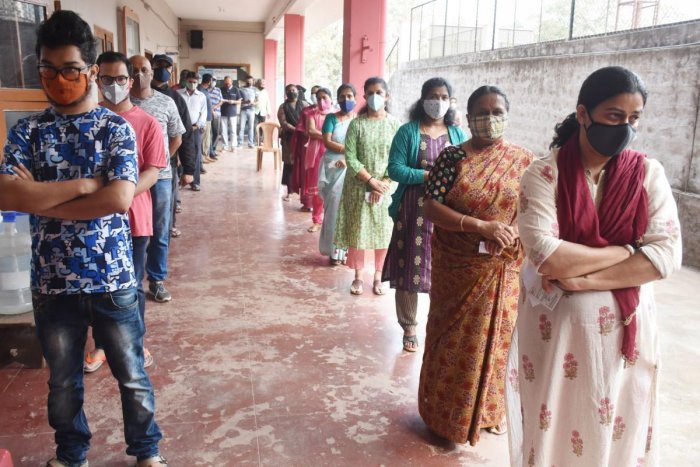
Voters wait in queues following social distancing in Madikeri, to cast their vote.

The Madikeri City Municipal Council elections were held peacefully on Tuesday. The elections were held for 23 wards.

The voters took part enthusiastically during the voting process, despite the fear of the Covid-19 pandemic. The future of the candidates will be known on April 30.

People waited in a queue as early as 7 am at the polling booth near the KSRTC bus stand.

A similar scene was found in several other polling booths as well. Even though the number of senior citizen voters was less, women and youth took part in large numbers.

People who were tested positive for Covid-19 were allowed to cast their franchise between 5 pm and 6 pm. The patients wore PPE kits and exercised their franchise.

The candidates expressed their happiness over the good turnout of voters. Many candidates had speculated about a poor turnout due to the pandemic.

However, the spirited show of the voters is a good sign, said the candidates.

The seniors opined that there were no elected representatives at the City Municipal Council from the last two and a half years and the public was fed up with the administration of the officials.

The officials were not listening to the woes of the people in the CMC wards. Hence, the overwhelming attendance by the voters at the polling booths clearly indicated the fact that the people wanted elected representatives in the CMC administration, they added.

Maintenance of rules was given emphasis at the polling booths. The people wore masks and maintained social distancing.

Police vigil was tightened at every polling booth. Deputy Commissioner Charulata Somal paid a visit to the various polling booths to review the situation.

Candidates in fray

A total of 108 candidates contested from 23 wards of the CMC.

Both the BJP and Congress had fielded candidates in all the wards while JD(S) had fielded candidates in 22 wards.

SDPI fielded nine candidates, Aam Aadmi Party fielded four candidates and one candidate contested from Karnataka Rastra Sangha.

Virajpet MLA K G Bopaiah arrived at the polling booth at Junior College, Madikeri, along with his family to cast the vote.

MLC Veena Achaiah exercised her franchise at the polling booth in ward number 3.

K G Bopaiah later predicted that BJP will win 15 out of 23 seats and will come to power in the CMC.

He also said that tough rules in the state were inevitable to contain the spread of Covid-19. He suggested conducting Covid-19 tests of people entering Kodagu. Those who test positive should be home quarantined.

Congress leader Mittu Changappa cast his vote at the booth set up in St Micheal School in Madikeri at 7 am, as the first voter. He boasts of holding the record of being the first voter during the past 28 elections.

Workers violate rules

Workers of various political parties and also the supporters of independent candidates were seen flouting the Covid-19 guidelines, near the polling booths.

Voting percentage

At 11 am, there was a voting percentage of 31% and the percentage rose to 63% at 2 pm.

source: http://www.deccanherald.com / Deccan Herald / Home> State> Mangaluru / by Adithya K A, DHNS, Madikeri / April 27th, 2021

Climate change puts morning cup of coffee under threat

Who on earth would like to miss a morning cup of hot steaming coffee?

Climate change could make about 50-88% of coffee-producing areas unsuitable and lead to an increase in pests and diseases, affecting its production and quality. There is an urgent need for research to save the bean from extinction.

Who on earth would like to miss a morning cup of hot steaming coffee?  Coffee is becoming more popular, especially among the young around the world. Around 2.5 billion cups of coffee are consumed every day. The demand for coffee is projected to by 2050. But the question is: Can coffee supply be sustained?

Coffee is produced in around 70 countries but the dominant among them are Brazil, Vietnam, Columbia, Indonesia, Ethiopia, Honduras and India. Coffee is also the second-most traded commodity after petroleum oil, employing over 125 million people around the world. Most of the coffee grown is made up of two types: Coffea arabica and Coffea robusta, with the former making up 70% of all coffee grown globally.

In India, robusta dominates in terms of production. Karnataka is the dominant state producing coffee in India, accounting for nearly 70% of the total production, followed by Kerala. Together, they account for about 90% of the production. In India, the area under coffee cultivation is 4,16,741 hectares (ha). There are 3,79,697 coffee holdings, out of which most are smallholdings of less than 10 ha in size.

Weather and long-term climate patterns are very critical for growing coffee. Temperature and rainfall conditions are the main drivers determining the yield, production and quality. Altitude is another key factor. Robusta is slightly hardier, as it evolved in lowland equatorial Africa, but grows well in areas with abundant rainfall, which should be well distributed. The optimum temperature range for robusta is 24 to 30°C, but it is less tolerant to very high or very low temperatures. Currently, the annual and seasonal temperature and rainfall variability lead to fluctuations in yield in almost all coffee-growing countries, affecting supply and price.

Climate change is projected to impact all crops, including plantation crops. Changing climate and associated pest and diseases could adversely impact coffee-growing areas. Higher temperatures will not only favour the proliferation of certain pests and diseases but also kill large swaths of insects that pollinate coffee plants. As temperature rises, coffee ripens more quickly, leading to a fall in quality. Rising temperature is expected to make some areas less suitable or completely unsuitable for coffee cultivation.

A recent review of studies in 2020 concluded that all studies based on modelling predict that areas suitable for coffee cultivation could decline by about 50% under moderate climate change projection scenarios by 2050 for both arabica and robusta. Another study published in the journal Proceedings of the National Academy of Sciences concludes that the area unsuitable for coffee cultivation could be as high as 88% in Latin America, the dominant producer, by 2050. About half of the land around the world currently used to produce high-quality coffee could be unproductive by 2050, according to a recent study in the journal Climatic Change.

Thus, multiple studies show that climate change will have an extremely negative effect on future coffee production worldwide in terms of suitable cultivation areas, pest and diseases. Howard Schultz, who was the chairman of Starbucks — the largest global coffee chain — till 2017, is quoted to have said, “Climate change is going to play a bigger role in affecting the quality and integrity of the coffee.”

Coffee is a globally traded product and any impact on it in one part of the world will impact the rest, including India. International prices will determine the investment, income and survival of Indian coffee growers. If there is surplus production in Brazil and Columbia, prices in the international market will collapse. This will lead to a decline in market prices for Indian coffee, due to which farmers will experience heavy losses.

Research in India

There is limited research on the impact of climate change on coffee production in India. There are two ways the impact can be assessed: first, by long-term monitoring of changing climate and response of coffee production, which may take decades.

Modelling is another option to project the impact of climate change. There is limited modelling efforts globally and in India, in particular. With the current knowledge, one can conclude that climate change will have serious implications for coffee production and quality. We may have to brace for the disrupted supply of coffee and loss of aroma. According to climate change models, an increase of 20% to 25% in monsoon rainfall is projected for the Western Ghats districts of Karnataka and Kerala, along with the increased occurrence of high-intensity rainfall events. Further, increased warming of around 2 degrees Celsius is projected by the mid-2030s for these districts.

India has a Central Coffee Research Institute under the Coffee Board. Research on developing climate-resilient coffee varieties and cultivation practices would require several years or decades. Further, there is a need for extension service to train farmers in new practices, especially since a majority are smallholdings. In the meantime, coffee growers may need increased protection, price and insurance support from the Government of India and Karnataka.

In response to the risk of climate change on coffee, a global alliance of companies has been formed (‘Coffee and Climate’) with an objective to develop and implement coping strategies and to support smallholders to adapt to climate change, and ultimately to increase the resilience of entire coffee landscapes. Even Starbucks is conducting dedicated research and training of coffee growers in adaptation to climate change. Hope the Coffee Board also takes serious note of the threat of climate change and implement strategies to develop resilient varieties and practices, not only to help coffee growers sustain production, but also to ensure that hundreds of millions of coffee lovers continue to enjoy their morning cup.

(The writer is a retired professor, Indian Institute of Science, Bengaluru) 

source: http://www.deccanherald.com / Deccan Herald / Home> Opinion> Perspective / by N H Ravindranath / April 22nd, 2021