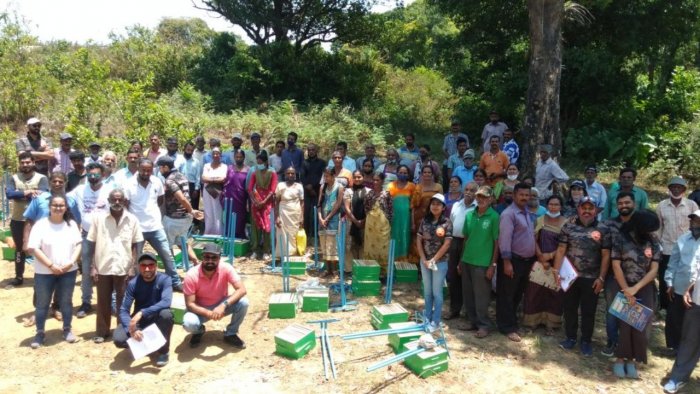
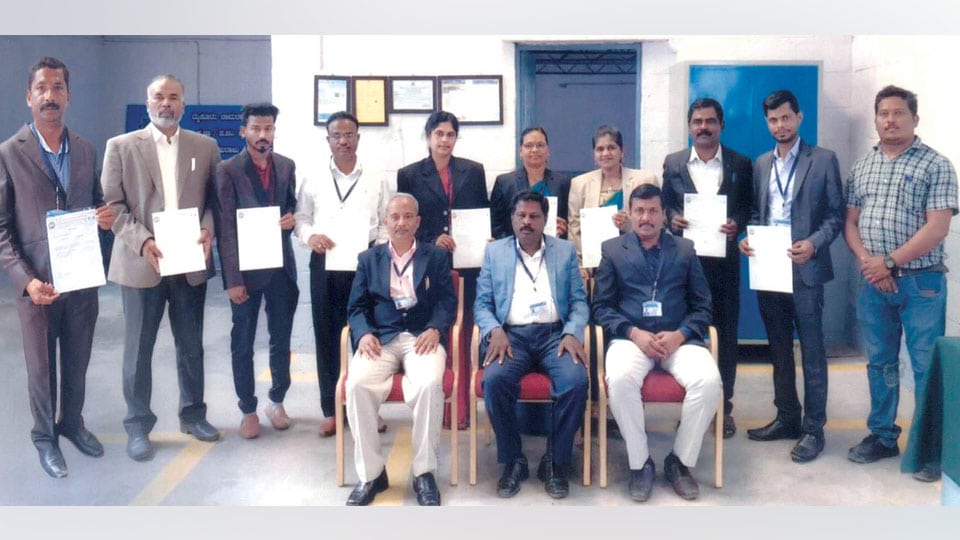
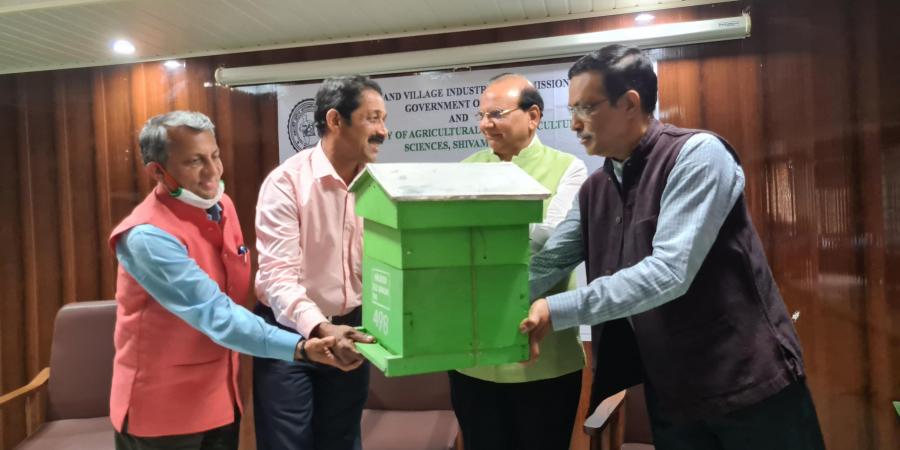
Beehive boxes were distributed to beneficiaries in Kodagu district. Credit: special arrangement
Kodagu Seva Kendra and Kodagu for Tomorrow organisation handed over beehive boxes to 130 families in Soorlabbi, Kumbaragadige, Mankya, Kikkaralli and Muttlu. Each family was given two boxes.
All the beehive boxes along with the families of bees have been procured from Everyday Honey Farm in Tumakuru.
Seva Kendra’s Pramod Sommaiah said that whoever engages in apiculture using the beehive boxes will get additional four boxes next year.
Kodagu for Tomorrow convener Ponnolatanda Kaverappa said that the organisation will impart training in beekeeping.
source: http://www.deccanherald.com / Deccan Herald / Home> State> Karnataka Districts / by DHNS, Madikeri / April 17th, 2021
Madikeri MLA Appachu Ranjan expressed his dissatisfaction over work on the newly constructed Government Ayurveda and Homeopathy Integrated Hospital, built at a cost of Rs 60 lakh, at B G S Circle in the new taluk centre, Kushalnagar.
He inaugurated the building during a programme organised by Kodagu Zilla Panchayat and the department of Ayush on Monday.
Inspecting the work on the building, Appachu Ranjan vented his ire against the contractor and said that the hospital was not constructed as per the proposed plan.
“The wheelchair ramp meant for specially-abled people and for patients, at the entrance of the hospital, is built unscientifically. The staircase, toilet and bathroom fittings are of poor quality,” the MLA noted and took ZP assistant engineer Fayaz and contractors Mahesh, Prakash and Manjunath to task.
The ramp and the staircases should be set right immediately, he added.
“There is no use of having old fashioned structures. The hospital should have modern facilities,” the MLA said and directed the engineer and contractors to incorporate the necessary changes in the building.
Zilla Panchayat member K P Chandrakala said that the building work was done in a hurry and is not according to the plan. She too pointed out that the ramp and the staircase are unscientific and urged those concerned to demolish the existing ramp and the staircase and build new ones.
The ZP member also demanded action against the engineer and the contractors.
Speaking to the reporters, Appachu Ranjan said that the new hospital building is constructed at a cost of Rs 60 lakh. But, the work is not carried out properly.
The official and the contractors have been taken to task. Directions have been issued in this regard. The hospital is built to cater to the needs of the people in the surrounding villages, he said.
Stating that the second wave of Covid-19 has crept in, he asked the people to be more cautious. Everyone should follow the norms such as wearing masks and following social distancing.
Somwarpet Taluk Panchayat president Pushpa Rajesh, vice president Abhimanyu Kumar, ZP member K R Manjula, Town Panchayat president B Jayavardhan and vice president Surayya Banu were present, among others.
source: http://www.deccanherald.com / Deccan Herald / Home> State> Mangaluru / by DHNS, Kushalnagar / April 05th, 2021
Kodagu Deputy Commissioner Charulatha Somal on Monday clarified that no blanket ban on tourism has been imposed in Kodagu and only tourist destinations had been closed till April 20 in view of many holidays in the ensuing days which could result in larger turnout of travellers.
Resorts, hotels and homestays can function as usual taking all necessary precautions. The hospitality sector has been permitted to operate, complying with the COVID-19 appropriate practices of wearing face masks, sanitisation and social distancing. “There is no blanket ban on tourism,” she clarified.
Ms .Somal said the decision on closing down tourist sites had been taken in the interest of public health safety. “The district administration is thankful to everyone for their support and cooperation,” she added.
source: http://www.thehindu.com / The Hindu / Home> News> States> Karnataka / by Special Correspondent / Mysuru – April 05th, 2021
Higher prices of the spice help offset lower returns from the bean
For coffee growers battling a drop in bean prices following weak global demand, the pepper that they grow as an inter-crop is coming to their rescue.
Of late, pepper prices have gained by at least 10 per cent on firm demand even as the harvest is in progress in the key producing regions of the Western Ghats.
According to the Spices Board, garbled pepper was quoted at ₹388 a kg on Tuesday against ₹380 on March 20 and ₹345.17 a month before that.
Globally, Indian pepper is quoted at a premium of $5,275 a tonne compared with the spice from other origins such as Brazil, Vietnam and Indonesia. Prices of other origins are ruling at $4,000 and below a tonne.
KK Vishwanath, Co-ordinator of the Consortium of Pepper Growers Organisation in Kodagu, said the Centre’s move to strictly implement the import norms is aiding the rise in domestic prices.
The Centre has taken several measures such as fixing a minimum import price of ₹500 a kg, including cost, insurance and freight.
While the pepper prices are higher by 10-12 per cent, coffee prices are trending lower to the same extent. The higher prices is helping those coffee growers, who also grow the spices crop meet their cash flow requirement, Vishwanath said.
Pepper is largely cultivated as an inter-crop with coffee and arecanut in parts of Karnataka, Kerala and Tamil Nadu, the main producers of the spices crop.
Demand for pepper continues to be firm in the short term, as end users such as masala manufacturers and ready-to-eat food producing firms have started procurement, said Kishor Shamji, general convenor, Indian Pepper Spice Traders Growers and Planters Consortium, Kerala chapter.
The commencement of wedding season in North India has also led to a demand revival. However, the local demand in Maharashtra has slowed down in the last fortnight following the re-imposition of Covid restrictions, Shamji said.
In Karnataka, the harvest is still going on though some regions in Kodagu and Chikkamagalur have faced the impact of erratic weather.
“The crop still being picked, will need to wait a bit before we get clearer assessment on the crop size. Lot of vines damaged last 3-4 years due to wilt and weather conditions,” said Jeffrey Rebello, Chairman of UPASI Coffee Committee. Pepper growers are also facing a major challenge in harvesting the crop due to acute shortage of skilled labour, said S Appadurai, Chairman, Karnataka Planters’ Association. Pepper crop is reported to be good in parts on North Kodagu, Hassan and Sakleshpur, he said.
Lower crop size
The plantation sector depends on migrant labour for the harvest. With States such as Tamil Nadu and Assam going for elections, the labourers have gone back to their native places to cast their votes, planters said.
On the crop size, Shamji said the Idukki farmers’ reports of a lower 2021 crop size has turned out to be prophetic as the sector is estimating a crop of 50,000-55,000 tonnes compared to 60,000-65,000 tonnes last year. Delayed rains in December coupled with strong winds in the growing regions in 2020 resulted in washing off and scattering of berries from pepper wines.
The delayed harvest — which started in December-January in Kerala’s Idukki, Kottayam, Pathanamthitta districts — was over. Normally, the harvest in these regions is carried out in November-December. The crop in Wayanad is also reported smaller, but the harvest is still on. In Karnataka, it started from mid-March.
But the Kerala pepper market missed the Sabarimala pilgrim season last year due to Covid restrictions. Normally, pepper sale during the season is between 3,000 and 5,000 tonnes, he said
source: http://www.thehindubusinessline.com / Business Line / Home> AgriBusiness / by V Sajeev Kumar / Bengaluru-Kochi / March 30th, 2021
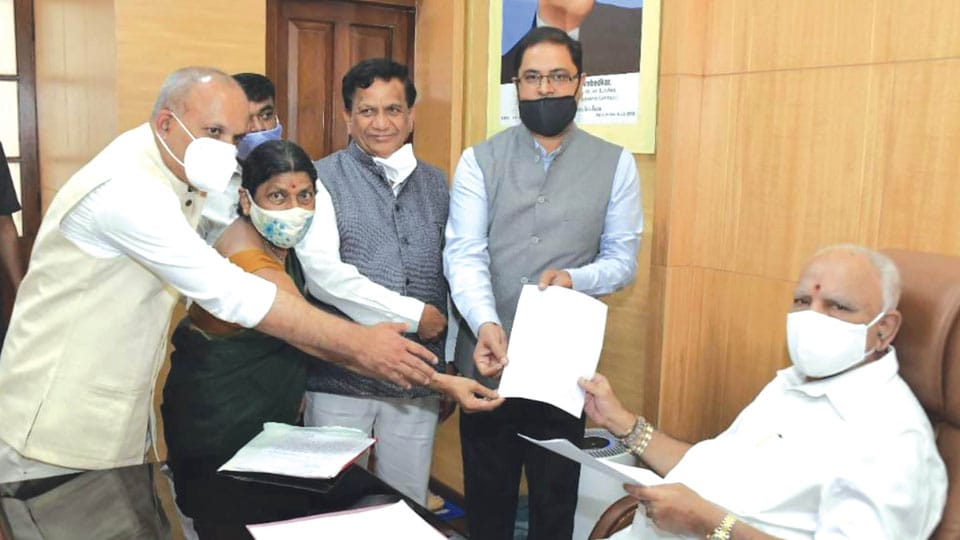
A delegation of Kodagu Institute of Medical Sciences Board Members recently met Chief Minister B.S. Yediyurappa and demanded the setting up of a super-speciality hospital in Madikeri.
Residents have been forced to travel more than a hundred kilometres, either to Mangaluru, Mysuru or Bengaluru, to avail benefits of advanced medicine, even in case of an emergency and most of the patients die before they reach their destination hospitals.
The delegation told the CM that a super-speciality hospital would help provide emergency treatment with the latest facility for the accident victims. The delegation was led by Virajpet MLA K.G. Bopaiah and comprised Board Members of Kodagu Institute of Medical Sciences M.A. Niranjan, Dr. B.C. Naveen and Dr. Jayalakshmi Patkar.
The delegation told the CM that whenever a major accident takes place in Kodagu, there are no facilities to provide emergency treatment and also accidents have increased over the years due to narrow roads. If a Trauma Centre is set up, it will help treat critically injured patients, the delegation told Yediyurappa.
There are no cardiac treatment facilities and heart patients have to depend on visiting doctors from other districts like Mysuru and Mangaluru for treatment.
Giving a patient ear, the CM told the delegation that he would discuss with officials and take measures to provide basic required facilities to Kodagu Institute of Medical Sciences.
source: http://www.starofmysore.com / Star of Mysore / Home> News / March 28th, 2021
The Centre has identified six districts in Karnataka including Kodagu for Heliport project under Ude Desh ka Aam Naagrik (Regional Connectivity Scheme), claimed Minister for Tourism C.P. Yogeeshwar.
He was speaking at an event at a private resort in Madikeri yesterday that was organised by Kodagu District Hotel, Resorts and Restaurants Association, Home Stay Association, Tours and Travel Association. The Associations had invited the Minister to discuss about tourism prospects of Kodagu and this was Yogeeshwar’s first visit to Kodagu after assuming the charge of Tourism Department.
Yogeeshwar told the gathering that establishment of Heliports as part of the Heli Tourism Circuit would be a reality soon as districts including Bengaluru, Mysuru, Hubballi, Mangaluru and Kodagu have been identified for the project and Kodagu will not be neglected at a time when grand plans are afoot to develop Karnataka Tourism in a big way.
He stressed that while promoting tourism, it will be kept in mind that even environment has to be taken care of. “Our intention is sustainable tourism. The Tourism Department is formulating plans to introduce caravans at an estimated cost of Rs. 30 lakh and the project will come to Kodagu too and local hotels and resort can make the best use of the same,” he said.
In all, 10 heliports would come up across Karnataka and more and more tourists would come to Kodagu after the 10-lane work of the Mysuru-Bengaluru Economic Corridor is completed. “We intend to build tourist rest houses on Hunsur-Sampaje route with all the amenities for tourists,” he assured. Hotel and Resort Association President Nagendra Prasad, Home Stay Association President B.G. Ananthashayana, Tours and Travel Association President Cheeyanda Sathya and others were present.
source: http://www.starofmysore.com/ Star of Mysore / Home> News / March 29th, 2021
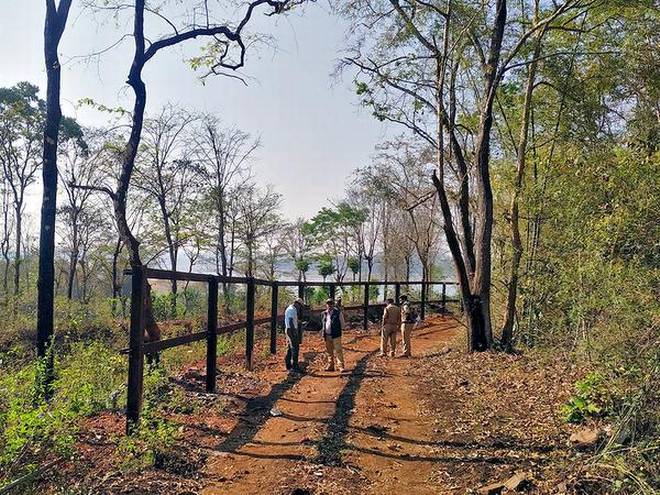
The Forest Department has installed railway barricades to stop entry of elephants in Alur range.
Across 4.5 km in Alur range, these will restrict elephant movement
The Forest Department has put up railway barricades for about 4.5 km in Alur range of Hassan district to avoid the movement of elephants. The 2.1 m tall barricades, made of used railway tracks, have been installed between Nagavara Elephant Camp and Bharatur in Alur taluk. This is the area wherein elephants from Kattepura forest in Kodagu district move towards Alur range crossing the backwater of Hemavati Reservoir located at Gorur.
People of Hassan have been dealing with the elephant menace for decades. As many as 70 lost their lives in the conflict in the district since 1991. Similarly, 63 elephants have died so far. Besides solar fencing and elephant-proof trenches (EPT), the department has taken up the installation of railway barricades as a solution to avoid conflicts.
K.N. Basavaraj, Deputy Conservator of Forests, on Friday, took a team of journalists to Nagavara Elephant Camp to show them the barricades. “We keep learning how to avoid conflicts. Now, the installation of railway barricades is considered to be the effective system to minimise the conflicts,” he said. Chandrashekhar, a contractor from Mysuru, has bagged the contract to put up barricades for 4.5 kms at a cost of ₹4.65 crore. He procured 750 tonnes of the used tracks from the Ministry of Railways at an open auction. “The barricades are 2.1 m above ground level. They have been erected with the support of concrete 1.5 m below the ground. Two horizontal barricades are such that neither a cub nor adult elephant could cross them. We have learnt from the past experiences where elephants died while attempting to cross the barricades,” the officer said.
The purpose is to avoid the entry of elephants from Kodagu to Hassan. In 2014, the department captured 24 elephants and relocated them, resulting in a decrease in man-animal conflict for a brief period. “However, the number of elephants increased gradually, as many crossed the Hemavati backwaters. Now, we are plugging the hole so that elephants’ entry from Kodagu is restricted,” the officer said.
The department plans to extend the barricade for 40 km covering the boundary points. In Kodagu, the elephants that raid coffee estates could be driven back to forest areas easily, while in Hassan it was not possible. The herds keep moving from one estate to another damaging the crop, the officer said.
Opposition from farmers
Farmers of Nagavara and surrounding villages in Alur taluk have opposed the railway barricades alleging that these would force the elephants to camp in their estates for a long period.
Rangaswamy, a resident of Nagavara, said, “No doubt the barricades restrict elephants coming from Kodagu. What about those elephants already in the boundaries? Now, they cannot go back to Kodagu because of the barricades and continue to remain in the estates located close to the barricades.”
Mr. Basavaraj, DCF, reacting to the allegations, said the barricades had been put up just now. The officers would analyse the elephants’ movement and take appropriate action whenever necessary. “We have plans to extend the barricades for 40 km. As of now, we have a system to open the barricades at key points to let the elephants go back to their places,” he said.
He further clarified, “The path that we are blocking is not considered to be the natural path of the elephants. Only in the recent years, they have begun to tread this path.”
source: http://www.thehindu.com / The Hindu / Home> News> States> Karnataka / by Sathish G.T. / Hassan – March 27th, 2021
The following newly elected Directors of the Mysuru, Chamarajanagar and Kodagu District SC/ST Industrialists and Goods/ Equipment Supplies and Marketing Co-operative Society Ltd., Mysuru, have been appointed as the Convenors and Co-Convenors of the respective districts, according to a press release from the Society President Vijayashankar:
Chamarajanagar: Convenor – D. Eshwar; Co-Convenors – C.S. Akshay and M.S. Chandrashekar; Kodagu: Convenor – Y.T. Paramesh; Co-Convenors – M. Honnaiah and M. Chandra; Mysuru City: Convenor – P. Nanjundaswamy; Co-Convenors – M. Chandrashekar and Theinmozhi; Mysuru Rural: Convenor – Shivanna; Co-Convenors – Dr. P. Shobharani and B. Kalavathi.
source: http://www.starofmysore.com / Star of Mysore / Home> News / March 21st, 2021
The project has been launched for the first time in the country on an experimental basis by the Khadi and Village Industries Commission with support from the management of Ponnampet Forestry College.
Beekeeping equipment distributed to a farmer during the event (Photo | Special arrangement)
Madikeri :
A research project to reduce human-elephant conflict with the help of honey bees was inaugurated at Ponnampet Forestry College in Kodagu on Monday. The project has been launched for the first time in the country on an experimental basis by the Khadi and Village Industries Commission (KVIC) with support from the college management.
RE-HAB — Reducing Elephant Human Attack by using Bees — aims at controlling wild elephant movement into villages by roping in honey bees. The success of the initiative will be monitored regularly to launch it across the country. A total of three elephant conflict places have been chosen in Kodagu district including two at Nagarahole Sanctuary and one at Thora village in Virajpet where a total of ten beehive boxes have been placed across the forest fringe. The boxes have been placed approximately at eight feet distance and tied using a fence rope. This set-up will act as an elephant conflict mitigation measure.
The project was launched by KVIC Chairman Vinay Kumar Saxena at Ponnampet Forestry College. “In 2017, the Sweet Revolution was launched in the nation to promote apiculture. Beekeeping has many benefits and a farmer can earn from the bee wax, royal jelly and bee venom apart from the honey extraction. Further, beekeeping enables cross pollination and increases the income of a farmer by 30%,” he said.
Saxena explained that states with high elephant populations are spending crores on solving the human-elephant conflict and added, “Many of the mitigation methods to control the conflict are unscientific. The research project of RE-HAB will be monitored regularly and, if successful, will be implemented across the country.”
He said that the RE-HAB project will create a sustainable employment opportunity in beekeeping while also fighting the elephant conflict ecologically. Dr Kushalappa, the dean of the Forestry College, reckoned that the project will enable integrated farming while controlling the elephant menace.
Alongside launching the project, a total of 50 beneficiaries were given bee colonies and beekeeping equipment by KVIC to promote apiculture in the district. Dr Sudarshan of KVIC said, “We are finding a physical solution to an ecological problem. Nature must work with nature and the RE-HAB will work at a low cost.”
source: http://www.newindianexpress.com / The New Indian Express / Home> States> Karnataka / by Prajna GR / Express News Service / March 15th, 2021
Neethi Mahesh has dedicated a lot of years to researching the riparian habitats of the Kodagu district. She is currently working with a tribe of honey collectors and students for better results .
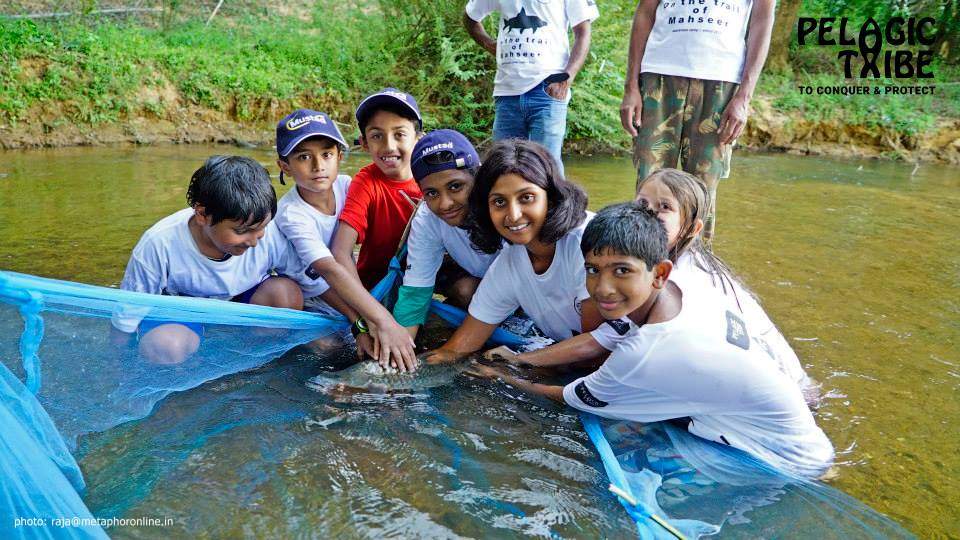
Just like we hardly think of women when it comes to research in niche fields, one rarely thinks of fish when it comes to conservation. Neethi Mahesh is changing both mindsets. “Yes, the Government of India does have a Department of Fisheries, but its concern is with commercial fishing, rearing, catching and so on. When it comes to freshwater fish, quite a bit of work has been done in the past, but we have barely scratched the surface when it comes to taxonomy,” says Neethi. And the fish that has caught her academic interests is the migratory fish mahseer that dwells in riparian habitats, the area of interface between river and land, of Kodagu.
Environmental Studies and Ecology are subjects to which she was introduced early on and growing up in a space surrounded by greenery drove her to choose this field of research
The 37-year-old’s journey started at Agumbe Rainforest Research Station where she was volunteering for the King Cobra Telemetry Project (a project to understand the ecology of cobra) in 2013. It was then that she heard about mahseer, their dependence on freshwater and how they migrate in the monsoons. While the river Seethanadi in Agumbe was not an ideal option to carry out research, she shifted to Kodagu and currently works at Dubare Reserved Forest. “Why mahseer is important is because it is a strong indicator of the river ecology itself. And it is in the riparian habitat that they spend most of their time,” asserts the researcher who was assisted in funding for her research by the WWF India and The Rufford Foundation in 2015 and The Conservation Hero Grant by The Habitats Trust in 2019.
River outreach with students | (Pic: Neethi Mahesh)
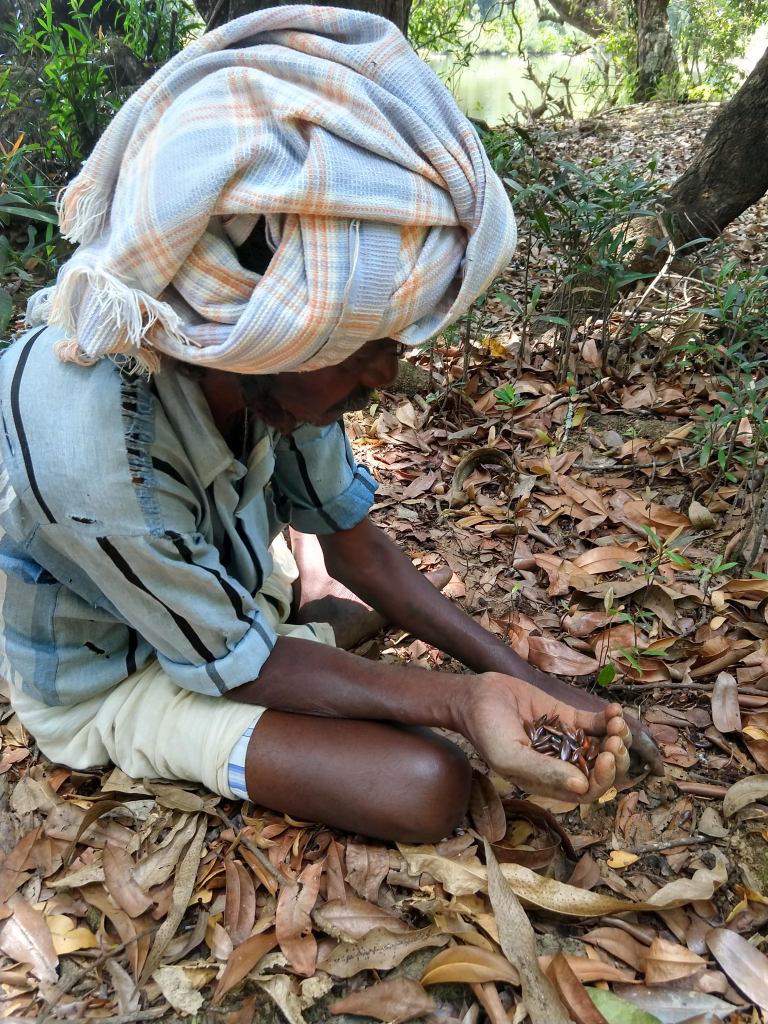
River bank modification, land-use change, dam proposal and more — there is a lot that threatens riparian habitats, which are majorly responsible for diverting flood water downstream. Invariably, the native species are threatened too. Hence, she has also been working with the native Jenu Kuruba tribe, who are traditional honey collectors, to preserve the local species. To this end, they started a seed bank and a nursery along with executing plantations of local species, all with the support of the Karnataka Forest Department. “The tribals were shifting to planting commercial species because it gets them the money, but a lot of time was spent on making them understand that their indigenous knowledge and skills are valuable. And unless it’s not documented, we will never know about it,” says the independent researcher who hails from Bengaluru. They have identified 12 species, as of now, that are important and have so far collected six to seven species. “One of the species that we are working for is a kind of river jamun (plum) that grows during the monsoon and drops into the river where, via observation, we can confirm that mahseer and other omnivore and herbivore fishes feed on it,” she explains.
It was in the year 2015 during which she mapped out the river stretch of Kaveri and did her basic groundwork for her research
What we love best about what Neethi is trying to do involves government school children as well. “There has been environmental generational amnesia and the new landscape is normal to them. We are trying to get them out in the open, teach them how to test the water in the river, how fertilisers affect it and so on,” she explains. But what she is most excited about currently is her soon-to-be-launched portal Our River, Our Life. “It’s a river-monitoring page. One can upload their quality report of their location online. It could also serve as a flood-watch. And then there is also her Voices from the River blog, where people can share their river stories,” she informs. It surely sounds resourceful.
Collecting seeds | (Pic: Neethi Mahesh)
Her area of research Spatial ecology is the study of the spatial area occupied by a species. The species’ relationship with the habitat, other species and so on are studied in detail. It is also the study of the species’ own microhabitat and what affects it. Some of the courses that can help you understand more about this are: – Graduate Certificate in Spatial Ecology from Michigan State University, US – Computational Methods in Ecology and Evolution (MRes) from Imperial College, London
source: http://www.edexlive.com / EdEx-TNIE / Home> Happennings> Fish / by Seema Rajpal, Edex Live / March 06th, 2021
WELCOME. If you like what you see "SUBSCRIBE via EMAIL" to receive FREE regular UPDATES.
Read More »