Karnataka Growers’ Federation has appealed to the State government to provide minimum support price for coffee, considering the loss coffee growers suffered in the last one year.
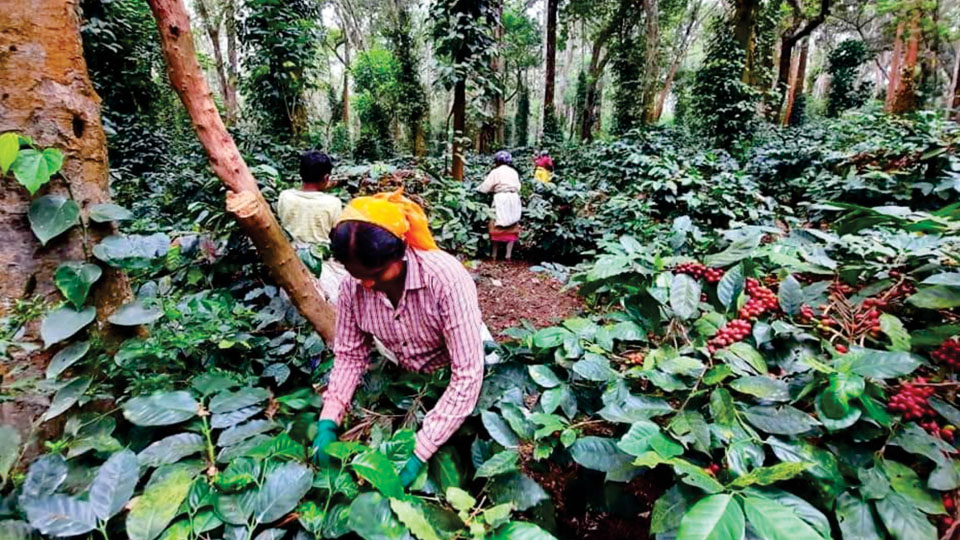
KGF president H.T. Mohan Kumar and secretary K.B. Krishnappa, in a press release issued here on Thursday, said that coffee growers had been in financial distress as nearly 50 pc of the yield from coffee and pepper farms was lost due to untimely rains in January. The growers were not in a position to harvest the remaining yield due to non-availability of workers. The officers of Agriculture, Horticulture and Revenue Departments had been doing survey to assess the loss suffered.
“Considering the plight of the growers, neighbouring Kerala government has initiated measures to provide minimum support price for coffee. Similarly, Karnataka government should come forward to the rescue of the growers in Chikkamagaluru, Hassan and Kodagu districts”, the Federation said.
Referring to Dr.M.S.Swaminathan’s report, it demanded MSP at the rate of 1.5 times of the production cost. The State government should take a decision on this in the coming budget, it said.
source: http://www.thehindu.com / The Hindu / Home> News> States> Karnataka / by Special Correspondent / Hassan – January 28th, 2021
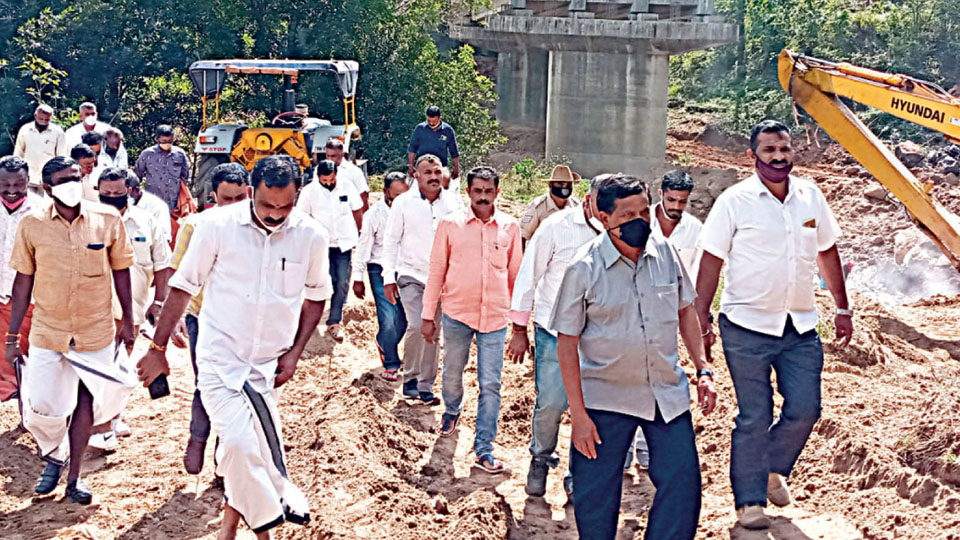
Virajpet MLA K.G. Bopaiah recently inspected the work on a bridge across Kootupole near Makutta which provides connectivity between Karnataka and Kerala.
The bridge is at the Karnataka-Kerala border and is part of the Kerala State Transport Project (KSTP) road between Thalassery and Valavupara. The bridge work has resumed as Karnataka Wildlife Board has decided to give permission for the construction of the bridge.
The old bridge, built during the British era across Kootupole, has been providing interState connectivity at Makutta and it was narrow and in dilapidated condition. With the construction of Kannur International Airport, the density of vehicles on the old bridge had increased. To provide connectivity to the Airport, the Kerala Government had developed a 55-km road at an estimated cost of Rs. 360 crore till Kootupole.
However, the Karnataka Forest Department had stalled the work in 2017 considering that the land belonged to Brahmagiri Wildlife Division. Now, the work has resumed once again.Though the claim of Kerala was that the river is in its territory, the Karnataka authorities claimed that a portion of the bridge is in Brahmagiri Wildlife Sanctuary in Karnataka and also they claimed that half the river belongs to them, following which the work had to be stopped.
The project has already missed many deadlines. Though Kerala had given the documents to assert its right over the river and the officials held meetings at various levels, there were many objections on the part of Karnataka authorities. This road is a major link between Kerala and Karnataka and it would be beneficial for the residents in many parts of Karnataka, including Kodagu to come to Kannur Airport.
Realising the importance of the bridge, Bopaiah had brought the issue of the stalling of work to the notice of Chief Minister B.S. Yediyurappa, who in turn had brought it to the notice of the Central Government.
The Central Government cleared the hurdles for the bridge and the work has commenced. The MLA said that the Central and State Governments have given conditional approval for the work on the bridge. The completion of the bridge will benefit passengers travelling to Mysuru and Hassan from Kodagu.
source: http://www.starofmysore.com / Star of Mysore / Home> News / January 20th, 2021
A variety of D2C coffee brands have entered the market
According to industry estimates, 80% of India’s coffee consumption comes from south India.
There is a coffee revolution brewing in India. Be it the instant kind or ones that need specific brewing techniques, new-age direct-to-consumer coffee brands are tempting consumers to turn into baristas at home. Sleepy Owl, Third Wave Roasters, VS Mani & Co., Black Baza Coffee and Araku Coffee are some of the brands vying for a slice of the Rs 2,200 crore packaged coffee market, which is dominated by coffee labels from big FMCG players, namely Nestle’s Nescafe, HUL’s Bru and Tata Coffee Grand.
Blending in
According to industry estimates, 80% of India’s coffee consumption comes from south India. Coffee chains such as Café Coffee Day, Barista and, most recently, Starbucks, have been instrumental in giving the coffee culture a facelift in India, a predominantly tea drinking nation.
“Coffee is moving from being exclusively south India’s habit to having an urban appeal. Coffee shops are now spread across tier I and II cities, and are places for youth and young professionals to meet and work,” says Alagu Balaraman, MD – CGN & Associates India.
Sleepy Owl’s co-founder Ajai Thandi says that the primary intention for the company is to replicate the experience and flavour of barista-made coffee at home, sans equipment. This direct-to-consumer coffee brand has introduced coffee bags that can be used just like tea bags to prepare a hot cup of black coffee. It also has a range of cold brew sachets that can be dunked in a jug of water and brewed overnight.
While new-age roasters offer a range of blends and variations meant for specific kinds of coffee, it is the instant variety that offers scale. According to Mintel India, in 2020, 54% of the total coffee launches in India were in the instant/soluble segment. Mastering the instant coffee variant lets brands reach a wider audience. This is why GD Prasad, co-founder, VS Mani & Co., and VP, Dentsu Webchutney, started off by selling the instant coffee-chicory blend.
“There is an exceedingly small segment of consumers that likes to brew its own coffee. These could be enthusiasts who have a French press or a moka pot, and are experimenting. Instant varieties make more business sense,” he says. VS Mani & Co.’s 100 gm instant coffee powder has a repeat cycle of two-to-three weeks. Prasad expects the filter coffee purchase cycle to be longer.
Coffee-nomics
Black Baza Coffee lays emphasis on sourcing coffee responsibly and ethically, and targets coffee enthusiasts who share similar values. Until March 2020, it earned revenue from both B2B and B2C verticals. When the HoReCa segment came to a standstill, its B2B revenue stream dried up. “We had a 60-40 ratio between B2B and B2C revenue; however, B2C is now the predominant business for us, contributing 90% of the revenue,” informs Arshiya Urveeja Bose, founder, Black Baza Coffee.
Sleepy Owl was earning about 20-30% of its revenue from B2B sales to airlines, movie theatres, offices, hotels and restaurants. Thandi says B2B sales aided in sampling and brand building. When normalcy resumes, he expects the proportion to remain the same.
A few coffee roasters follow a café-plus-roastery model. For instance, Third Wave Coffee Roasters, which sells several products directly to consumers, including equipment, has 10 cafés in Bengaluru and two each in Pune and Hyderabad. Blue Tokai has several cafés across the country. “Cafés offer high margin on a single cup of coffee,” says Balaraman. For instance, a single cup of a Pour Over at Blue Tokai costs Rs 170, while the company’s Easy Pour coffee sachet costs Rs 40 per sachet.
Each of these brands have subscription options. “These are mainly for loyalists who want to have a steady flow of coffee. A monthly subscription of five sachets of our cold brew costs Rs 450. We are working on setting up our subscription back end to make it more customisable,” says Thandi.
source: http://www.financialexpress.com / Financial Express / Home> Brand Wagon / by Venkata Susmita Biswas / January 25th, 2021
There is an increasing demand from coffee growers for a relief package in the budget to be presented by the State Government this year.
The demands have grown after the Kerala Government increased the Minimum Support Price (MSP) for raw Robusta Coffee at Rs. 90 per kg in Wayanad district. For a 50 kg bag, the MSP offered by Kerala is Rs. 4,500. The MSP announcement that comes at a time when coffee growers are reeling under severe crisis owing to the low price of the produce, higher input cost and vagaries of weather.
Even the coffee grower community from Kodagu have been demanding relief package as they feel that the amount paid through the calamity relief fund under the National Disaster Management Plan will not be sufficient to recoup the losses suffered by them due to unprecedented rains.
Former Vice-President of Coffee Board Dr. Sannuvanda Kaverappa said that since 2015, the coffee growers in Karnataka were suffering due to lack of good prices, high input and labour costs and adverse weather, but successive governments have ignored the plight of the growers.
A waiver of coffee loans, re-scheduling of outstanding loans and reduction in the interest rate for loans are justified considering the difficult times faced by the growers, he said. “Coffee planters in the district are reeling because of various reasons, including the vagaries of monsoon and COVID-19. I appeal to the Government to declare a special relief package and announce a waiver of short-term loans and developmental loans taken by coffee growers,” he said.
He also sought immediate payment of pending subsidies towards replanting and other schemes of the Coffee Board. “Kodagu has been tormented by weather and either it is lack of rains or excessive rains that have led to landslides and destruction of plantations.
Karnataka must follow the Kerala model where an MSP of Rs, 90 per kg has been declared to Wayanad coffee growers,” he demanded.
source: http://www.starofmysore.com / Star of Mysore / Home> News / January 25th, 2021
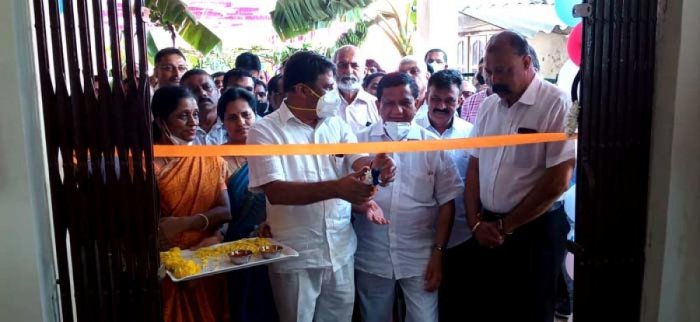
MLA M P Appachu Ranjan inaugurates the 21st branch of Kodagu District Cooperative Bank at Kodlipete.
The people of the district are responsible for the progress of District Cooperative Bank. The bank should lend loans to only those from the district and not to those hailing from outside, said MLA M P Appachu Ranjan.
He was speaking after inaugurating the 21st branch of Kodagu District Cooperative Bank at Kodlipete.
The bank officials should interact with customers with the utmost patience to compete with the nationalised commercial banks, he added.
Cooperative Bank president Kodangera P Ganapathi said that the bank was started in 1921. To commemorate the 100th year, the 21st branch has been started at Kodlipete. The centenary Bhavana foundation will be laid in the month of June.
MLA K G Bopaiah and MLC M P Sunil Subramani also spoke on the occasion.
source: http://www.deccanherald.com / Deccan Herald / Home> State> Mangaluru / by DHNS, Shanivarasanthe / January 24th, 2021
Coffee growers from Kodagu, who are seeking minimum support price (MSP) for coffee, will join the farmers’ protest scheduled to be held in Bengaluru on January 26 against the Centre’s farm bills.
The coffee growers are seeking to draw attention to their predicament over coffee prices remaining stagnant for more than 20 years while the costs they incurred on labour and other agricultural inputs including fertilizers have increased manifold.
“One 50 kg bag of robusta coffee used to fetch ₹3,000 in the mid- and late nineties. The price has remained unchanged more than two decades later also” said Karnataka Rajya Raitha Sangha (KRRS) leader from Kodagu Manu Somaiah.
Coffee growers are putting up with the stagnant prices of coffee while shouldering the burden of rising costs of labour and other agricultural inputs, he said and sought to know why the State is refusing to extend MSP to coffee when neighbouring Kerala was extending the same to its growers.
“About a week ago, we held a meeting and decided to press for our demand for MSP for coffee”, said Mr. Somaiah. “When Kerala, which produces barely 20 per cent of the country’s coffee production, can extend MSP, why can’t Karnataka, which accounts for more than two-thirds of India’s coffee production do the same?”, he questioned.
He said their appeals for MSP are met with the standard reply that coffee was a commercial crop that is not entitled for support price. “But, when Kerala government can do it, what logical explanation can Karnataka government give?”, he asked.
The coffee growers of Kodagu have been at the receiving end of nature’s fury during the last three years when the region was struck by landslides and floods, causing widespread damage to the crop.
Mr. Somaiah recalled that the coffee growers were receiving remunerative prices when it was regulated by Coffee Board till the early nineties. But, it shifted to open market policy soon thereafter on the same promise that the present farm bills are assuring – that the farmers will earn more. But, it was not to be, he regretted adding that the prices are now determined by the trading in New York and London Stock Exchanges.
Mr. Somaiah said the coffee growers in Kodagu are also upset with the State government and Centre over the falling price of black pepper, which is grown as inter-crop. The price of black pepper had reached ₹900 per kg till the Centre started allowing imported pepper from Vietnam and other countries to flood the domestic market and bring down the prices to the level of ₹300 per kg, he lamented.
The coffee growers of Kodagu are joining forces with the farmers from the rest of the State, who are planning to gather in Bengaluru on January 26. The coffee growers from Kodagu will gather at Kutta on January 25 before leaving in about 150 vehicles towards Bengaluru. The coffee growers will hold demonstrations in Ponnampet and Gonikoppa before spending the night in Mandya and proceeding to Freedom Park in Bengaluru on January 26.
source: http://www.thehindu.com / The Hindu / Home> News> States> Karnataka / Mysuru – January 23rd, 2021
Motorbikes have become part of life in India where roads of different types and make pass through different terrains. A mechanic here, who loves motorbikes, has utilised the time he got due to coronavirus break, to invent a self-start for motorbikes without requiring any motor. Venkatesh from Kushalnagar here is the inventor of this device.
People now-a-days are not willing to kick-start their vehicles. Many bikes marketed in the recent past have self-start facilities. But those made a few years back do not have this facility, and repeated kicking is unavoidable. There are people who are attached to their old bikes and hence do not want to sell them. Venkatesh’s invention will help them.
Venkatesh’s alternate generating system kit (AGS) works by using winding copper wires. For this self-start, no machine or motor is needed. This is made by just using copper wire and magnet. It can be fitted to bikes without damaging any part. The price of the kit may be between Rs 12,000 to Rs 15,000. Venkatesh has uploaded video of its working in YouTube and several have already booked for the kits.
His other invention, fixing of double engines, has also become a hit.
source: http://www.daijiworld.com / Daijiworld.com / Home> Top Stories / by Daijiworld Media Network – Madikeri (SP) / January 21st, 2021
Women in Kodagu are increasingly learning cultivation and becoming self-reliant
Madikeri :
Don’t underestimate the mushrooms. They are having their moment. This is a story about homemakers in Kodagu district. And it is also a story about mushrooms. “I grew up wanting to do something unique,” says Ambika Achaiah, 35, a budding entrepreneur from Cheyyandane village. While Ambika dreamt of starting a unique venture, she was married off after completion of her degree and nearly 10 years passed in managing home and hearth.
Nevertheless, her ambition to achieve something different was reignited when she stumbled upon a radio broadcast about free training for mushroom cultivation in 2019. “I was excited when I learnt of it. I travelled nearly 60 km to Krishi Vignyana Kendra in Gonikoppal to avail the training under the National Skill Development Corporation programme,” recalls Ambika. While she thought that it would last a day, she was shocked to learn that it was a 25-day course. Encouraged by KVK scientist Dr Somashekar, Ambika completed it and received a certification in oyster mushroom cultivation.
Ambika is currently working at the mushroom cultivation lab in KVK and experimenting on different varieties of mushroom cultivation. “I started off with spawn cultivation. But now I am versatile in mushroom tissue culture and the entire process of mushroom cultivation. I have applied for a loan and I will soon set up my own unit at my house,” she says.
While she is involved in developing the popular oyster mushroom variety, she is also experimenting on cultivating the seasonal milky mushroom. Apart from the cultivation process, she trains other like-minded homemakers. “Various women cooperative societies and other self-help groups invite me for motivational talk. I encourage women to take up the profitable mushroom business and I have also provided training for a few women in mushroom cultivation,” Ambika says.
Rashmi Bharadwaj, 40, is also a homemaker. She indulged in gardening – especially in orchid cultivation – as a hobby and sometimes even earned some pocket money. However, it has been nearly two years since Rashmi stepped into the field of mushroom cultivation and today she runs her own unit. “I run a mushroom cultivation unit on contract basis with KVK in Gonikoppal. It would take nearly Rs 15 lakh to establish a unit. However, it was easier for me to work on contract as I did not have to worry about initial investment. And all the equipment is readily available,” says Rashmi.
After being a homemaker for several years, she started working for a minimum remuneration at a mushroom spawn cultivation unit. But after eight months into this job, she started cultivating oyster mushrooms from scratch and she now sells 100 to 120 harvested oyster mushroom bags per day. “I work from 9 am to 5 pm every day. Apart from the ready-to-cook oyster mushroom bags, I also manufacture Ready To Fruit Bags, which sell like hot cakes among mushroom farmers,” she explains. Ready to Fruit bags (RTF) are mushroom seeded and grown straw bags of oyster mushrooms.
The clients who buy them have to cut out a few holes in these RTF bags and keep them in a well-lit area (not under direct sunlight) and sprinkle water regularly. Oyster mushrooms bloom from these packets, without the risk of any contamination and effortlessly within five to seven days. Another shining example is Lakshmi, 55, who worked as a domestic help and switched many jobs in between even as she worked as a hospital help at daily wages for 25 years until recently. “I worked at a hospital as a cleaning staffer for many years. But I wanted to become self-reliant,” she recalls.
Lakshmi stumbled upon the mushroom cultivation training programme and she found her path to independence. She is cultivating mushrooms on a small scale and has set up her own unit in a single bedroom. “Contamination-free is the key to mushroom cultivation and the business gets profitable only when the set-up is unpolluted. I collect paddy straws from a known people, bake and dry the straw, purchase mushroom growing bags and start spawn cultivation by keeping the bags under the cot – where the temperature is less and visibility is low,” says Lakshmi.
Though she is self-reliant, she says, “I am unable to manufacture mushrooms on a large scale as I lack the required funds to purchase improved facilities. However, I am happy with my small scale set-up, which is better than working for someone.”
Oyster Mushrooms After White Button, oyster mushrooms are mostly cultivated and consumed across India. These have many health benefits as they are rich in proteins, vitamins, minerals and fibres, and low in calories. They are believed to help increase immunity.
Women Turn Entrepreneurs The mushrooms, bought by customers across Kodagu, are not just making for a tasty treat but are enabling entrepreneurship skills among many women. The cultivated mushrooms are sold throughout the year at local markets, and even home delivery is available on request.
source: http://www.newindianexpress.com / The New Indian Express / Home> States>Karnataka / by Prajna G R / Express News Service / January 17th, 2021
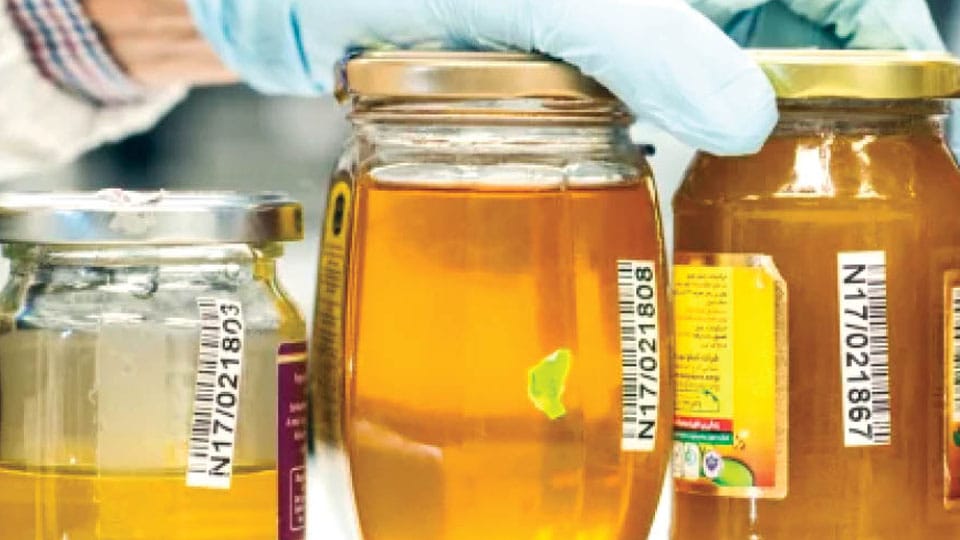
Last week, we got some bitter news about something sweet. The Centre for Science and Environment (CSE) reported that when they subjected 13 prominent brands selling honey to a sophisticated test in Germany for adulteration, except three, all other brands failed.
The only three brands that passed were Saffola, Markfed Sohna and Nature’s Nectar.
As fear of refined sugar has increased, so also adulteration of other sources of sweetness. Best example is jaggery.
As jaggery gained popularity as an alternate to sugar, its adulteration started. Mandya jaggery was very popular until jaggery makers from Uttar Pradesh came calling and started adding chemicals to rapidly increase production capacity and visual appeal.
In a report submitted to the Government by the Co-operation Department, it found chemicals like “calcium hydroxide, sodium hydrosulphite (hydrose), sodium formaldehyde sulfoxylate (safolite), ortho-phosphoric acid, seashells, baking soda, oil (castor/coconut) and orange-red powder (artificial food colouring) in jaggery blocks”! We educated urbanites find it hard to even pronounce the names of these chemicals which makes us wonder if farmers are making jaggery or chemical engineers?
This is a serious issue because India accounts for over 70% of world’s jaggery production and such practices will ruin our reputation and income. Already Mandya jaggery brand has taken a hit as the use of chemicals has significantly reduced its shelf-life which has forced many wholesalers to sell their product in distress.
We in India don’t seem to take food adulteration seriously. Be it the Government, the producer or the consumer. It is common knowledge that fruit-sellers use calcium carbide because it reacts with the moisture emanated by the respiration of the fruit. And when it does, a gas called acetylene emanates which helps in ripening the fruit. This gas is carcinogenic! Yet, rarely do you see the Government personnel raiding these “ripening sheds.”
Vegetables are not spared either. Bittergourd and lady’s finger are dipped in copper sulphate water to make them look greener. Brinjals are coated with old oil to give them a shine; carrots are dipped in red dye-water and watermelons injected with gulal to make them red from inside. Rarely do you see officials confronting, let alone arresting these colouring artists.
Most of us turn a blind eye to this saying that we cook hot meals and all “these things die”… not really.
But the fallout of this food adulteration should be the rebirth of kitchen gardens and organic farms. It’s time to move on from show gardens to kitchen gardens.
Every year during Dasara the Government has a competition for the “Most beautiful home garden.” May be the same publicity must be given to “Best kitchen garden.”
P.S.: Speaking of organic food, once a husband went to a store to shop for his wife who was very health-conscious and wanted organic, pesticide-free vegetables. The husband walked upto the section where he saw vegetables stacked and asked the sales man if the vegetables were organic. The sales boy didn’t understand. The irritated husband picked up some vegetables and said, “Listen, my wife is health-crazy. So I need to know have these vegetables been sprayed with any harmful pesticides?”
The petrified sales man replied, “No, Sir. You’ll have to do that yourself!”
Ramakrishna Ashram Swamijiand Coorg Honey
Speaking of bees and honey, once upon a time Coorg was the top producer of honey.
In the early 1940s, there used to be a Government-appointed “Bee Man” whose job was to go from house to house, from estate to estate, teaching planters about the importance of bees to the environment and also teach them how to maintain a Bee Box and extract honey.
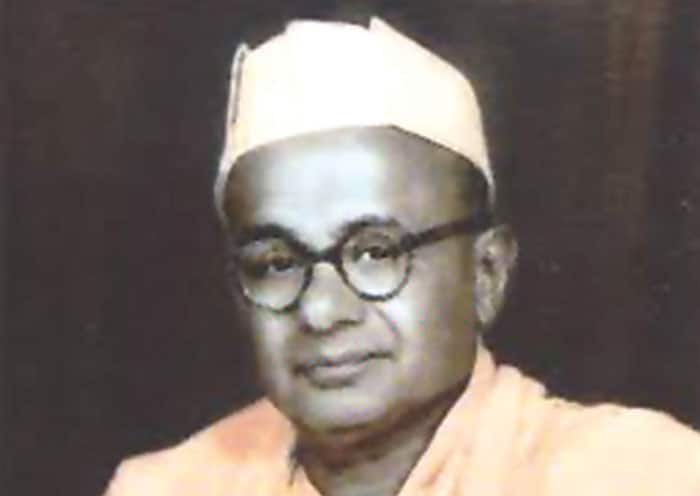
In fact, Scientific Bee farming in Kodagu was initiated by Sri Shambhavananda Swamiji, the man who founded the Sri Ramakrishna Vidyashala in Mysuru. In 1928, when Swami Shambhavananda became the first President of Sri Ramakrishna Saradashrama in Ponnampet, Kodagu, he initiated a project for Bee-keeping. Since he was born in Kodagu as Chengappa into the Thelapanda family, he knew that Kodagu was very suitable for bee-keeping and could contribute to the local economy.
Sri Shambhavananda Swamiji
Soon he prepared the first apiary and in 1936 set up the ‘Coorg Honey and Wax Producers Co-operative Society Ltd.’ This became the first honey producers co-operative in India.
Shambhavananda Swamiji even developed a new method of bee-keeping now known as ‘Coorg Standard Hive.’ No wonder Coorg came to produce almost 50% of all honey produced in Karnataka.
Now, if any one has space around their homes or in their farms there are many workshops that teach bee-keeping. In fact, there is an Apiculture Training Centre at Bhagamandala, Kodagu, where one can take a few weeks training in bee-keeping.
It may be recalled that the Government in 2014, to increase production and marketing of Coorg Honey, ordered the setting up of a “Honey Park” at Bhagamandala, Kodagu. The park was to be managed by the Food Processing Division of the Agriculture
Department. Later, Rs. 60 lakh was also released for the project. An old building was refurbished and not much else has been heard. Now, six years on neither is there a Park nor is there any Honey. Guess, like most Government projects it was all about the “Money Honey”?
e-mail: vikram@starofmysore.com
source: http://www.starofmysore.com / Star of Mysore / Home> Columns in Black & White / by Vikram Muthanna / December 19th, 2020
There is no restriction on the movement of tourists from outside the district and state during new year celebrations. No one will be prevented from entering at the border areas, said Homestay Association president B G Ananthashayana and secretary Meena Cariappa.
The deputy commissioner has clarified on the same. The government has not issued any order on stopping tourism activities. However, only guidelines have been issued to check large gatherings during Christmas and New Year celebrations, he said.
The tourist spots are open to tourists. However, the gathering of a large number of people, dancing and music are strictly prohibited. The homestay owners should take utmost care and ensure that guidelines are not violated, he added.
In the meeting, Monthi Ganesh and Ambekallu Naveen urged authorities to initiate action against unauthorised homestays in the district.
source: http://www.deccanherald.com / Deccan Herald / Home> State> Mangaluru / by DHNS, Madikeri / December 20th, 2020
WELCOME. If you like what you see "SUBSCRIBE via EMAIL" to receive FREE regular UPDATES.
Read More »