Launched 3 years ago, Levista is eyeing expansion in south India, Mumbai and Delhi
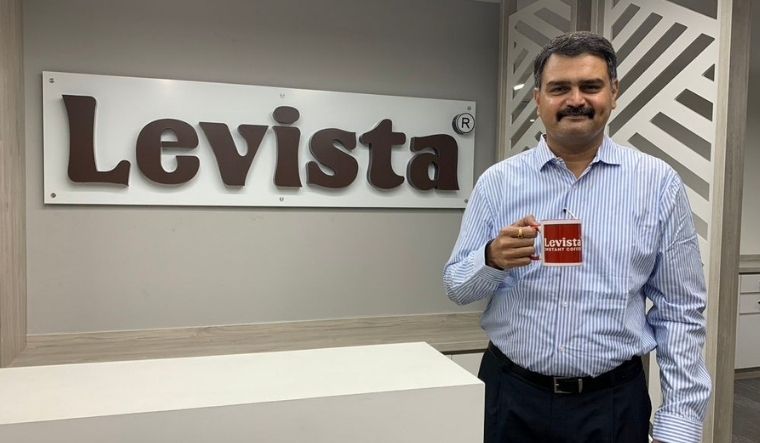
S. Shriram, vice-president-sales and marketing at Levista
Coorg in Karnataka, is among the foremost coffee growing regions in India. SLN, a three-decade old coffee plantation company in the region is now aiming to grab a slice of the Rs 2,200-crore annual packaged coffee market, which is dominated by big players like Nestle (Nescafe), Hindustan Unilever (Bru) and Tata Coffee.
SLN launched its own brand of coffee called Levista three years ago and has ever since expanded to 40,000 retail outlets, predominantly in Tamil Nadu and Karnataka. It has now set its sights on expanding across other markets, starting with the rest of south India.
“Of the Rs 2,200 crore market annually, over 80 per cent of the coffee consumption happens in the five southern states and Union territories. Therefore, we aim to reach a significant market share here rather than being sparsely spread all over the place,” S. Shriram, vice-president sales and marketing at Levista, told THE WEEK.
“At the moment, we have a deep presence in Tamil Nadu and Karnataka. We launched our coffee in Goa in February and business is growing steadily. We will be entering the Andhra Pradesh and Telangana market by Sankranti and will penetrate deeper in there. Kerala will follow next.”
The company has the markets of Mumbai and Delhi-National Capital Region on the radar, too, however, it has not finalised a launch date yet, added Shriram.
Levista is also available on online platforms, including Amazon and it is also scaling up on other e-commerce platforms to reach a wider audience.
“Players like Big Basket have also aided our brand coverage, as has Flipkart. We have been recently on boarded through Udaan that reaches small retailers as well as hyperlocal players MilkBasket,” said Shriram.
While south India has a strong tradition of filter coffee, the rest of the country has largely been a tea drinking market. However, things have started changing with penetration of cafes like Cafe Coffee Day and Starbucks in the last decade. International coffee brands like Lavazza are also expanding in the country, buoyed by rising coffee consumption here.
“There is a huge scope for us to grow. The coffee market has been growing steadily. Out of home coffee consumption through cafes has already hit a pan-India presence and thanks to this familiarity, more new consumers are sipping coffee at home, through packaged coffee,” noted Shriram.
Levista’s parent SLN currently has a capacity upwards of 50,000 metric tonne per annum, and Shriram says the company will be able to produce enough coffee for the domestic market as well as for exports.
Talking of exports, the brand is already present in Singapore, Malaysia, Middle East, Maldives and Sri Lanka, reaching out to the south Indian consumers in these markets. The company intends to have a larger international presence next year, added Shriram.
source: http://www.theweek.in / The Week / Home> News> Business / by Nachiket Kelkar / November 20th, 2020
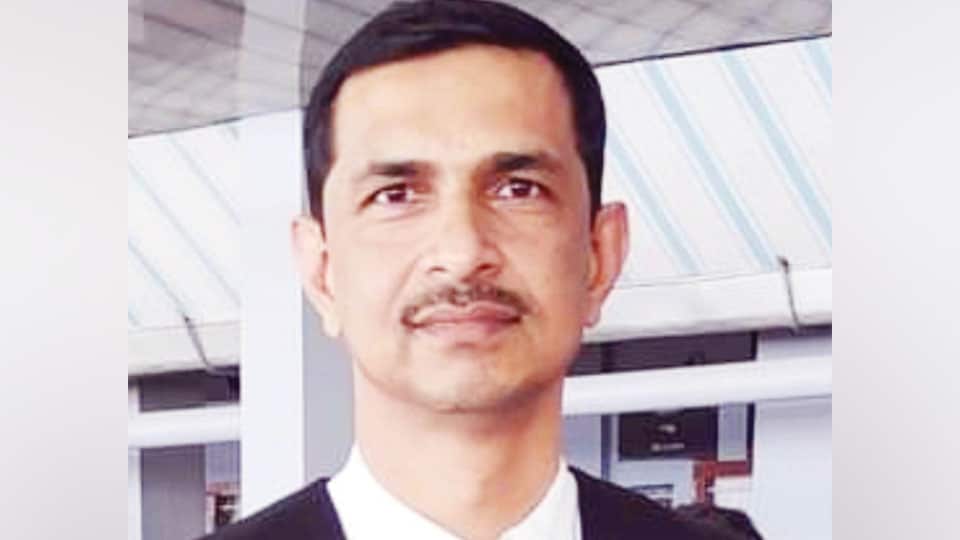
Karthamada Ganapathy Nanjappa has been appointed as the Additional Director of Factories and Boilers, Department of Factories, Boilers, Industrial Safety and Health, Government of Karnataka.
Profile: After studying in Government Primary School, Napoklu, St. Michael’s Higher Primary School, Madikeri, Government Junior College, Madikeri, Nanjappa completed his PU at MGM College, Udupi. He took up B.E. in Mechanical Engineering at PES College of Engineering, Mandya under Mysore University.
On completion of under-graduate studies in Engineering, Nanjappa worked for sometime as a Quality Engineer at Krishna Fabrications, Peenya, Bengaluru and Design Engineer at Promac Engineering, Bengaluru. He joined the Government of Karnataka State Civil Service as Gazetted Probationer during the year 1995 as Inspector of Factories and served at Bengaluru.
He was promoted as Senior Inspector of Factories in 2001. He was later posted as Deputy Special Officer in the Child Labour Cell of the Government of Karnataka and then served as Senior Inspector of Factories at Mysuru and Bengaluru.
Nanjappa was promoted to the cadre of Deputy Director of Factories in the year 2012 and posted at Mangaluru and Bengaluru. In the year 2019, he was promoted to the post of the Joint Director of Factories. Now he has been posted as Additional Director of Factories and Boilers in the year 2020 on promotion and is working at Bengaluru.
Nanjappa has had special training in the field of Industrial Safety and Health at: Director-General Factory Advice Service and Labour Institute, Mumbai; Regional Labour Institute, Chennai; Regional Labour Institute, Kolkata; Incident Response System (IRS) in the management of disasters from the National Institute of Disaster Management (NIDM), Bhopal.
He is the son of Karthamada Nanjappa Ganapathy and Ponnamma (Kanathanda), both of whom were teachers at Napoklu and Madikeri and presently residents of Birunani in South Kodagu. He is married to Kalengada Bojamma and blessed with a son Adith studying in 10th std
source: http://www.starofmysore.com / Star of Mysore / Home> News / by November 23rd, 2020
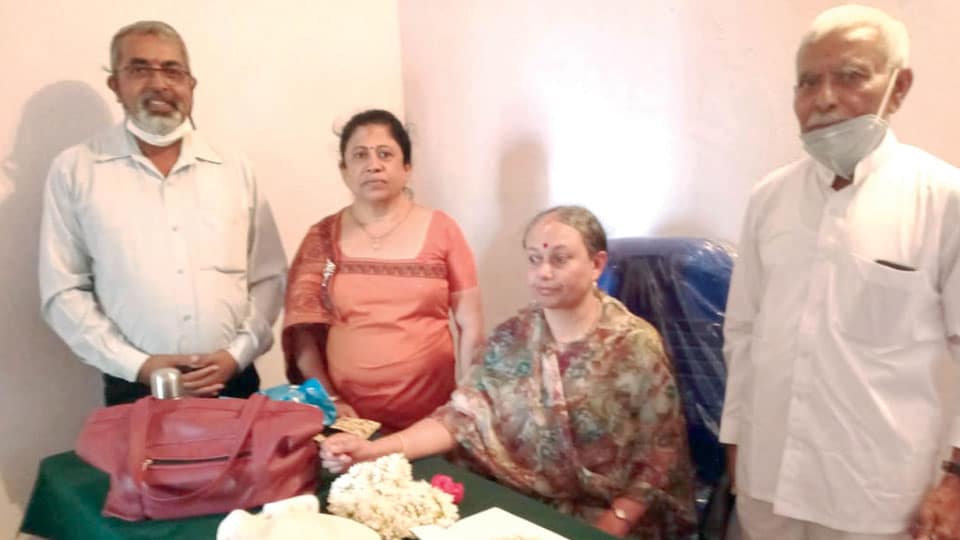
The new Ponnampet Taluk that has been carved out of Virajpet Taluk officially began functioning from yesterday with the new Tahsildar Kusuma taking charge. A puja was performed at the Tahsildar’s office at Ponnampet that was attended by many senior citizens and stakeholders.
They honoured the new Tahsildar and wished her the best. The State Government, in a notification issued on July 3 this year, had officially notified Ponnampet as a new taluk under the Karnataka Land Revenue Act.
The new Ponnampet taluk comprises four hoblis with the inclusion of 49 villages bifurcated from Virajpet taluk. The four hoblis are Ponnampet, Balele, Srimangala and Hudikeri. Boundary details — East: Hunsur taluk of Mysuru district; West: Virajpet taluk; North: Periyapatna taluk of Mysuru district; South: Kerala State.
Virajpet Taluk from which the Ponnampet Taluk has been carved out has an area of 160 kms and the new Ponnampet taluk promises the Southern region of Kodagu more Government facilities along with better access to healthcare, transport and other facilities.
Ponnampet already has Judicial Magistrate First Class (JMFC) Court (Senior Division).
source: http://www.starofmysore.com / Star of Mysore / Home> News / November 20th, 2020
For Poonam Thimmaiah, jewellery designing began as a means to cope with personal tragedy and turned into a passion project and finally a full-time career.
Following the devastating tragedy of losing her baby, Kodagu’s Poonam Thimmaiah, now a New Yorker, embarked on a personal journey of change, which led her to pursue her keen interest in jewellery designing and sustainable art. Poonam, who started her own brand of jewellery – Maalicious – had her work featured in the New York and Paris fashion weeks this year, just a year after she established the company. Her journey of overcoming tragedy to embracing art and making it big is an inspirational one.
In 2017, Poonam, who was working at JP Morgan in New York, had a miscarriage. Her journey into jewellery designing started as an escape from the tragedy. She returned to India to be with her family in Mysuru during this difficult time and it was here that she decided to pursue her passion.
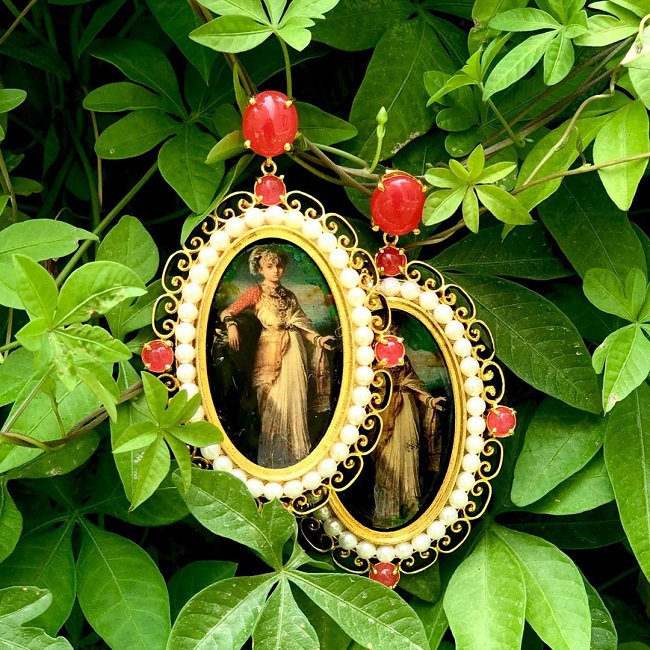
NY Fashion week. Maalicious earrings in collaboration with Lola Elan clothing and Ochini Milinery headpiece.
When Poonam visited her Alma Mater, JC Engineering College in Mysuru, she learned of a jewelry designing course for the children with physical disabilities. Poonam, who has always made her own jewelry in the past, worked with these kids on her first collection. Together, they made earrings using sustainable materials like clay, wood and thread. “That’s when I discovered that this is what I should be doing. Along with these students, I learned a lot about the art of jewelry designing,” Poonam says.
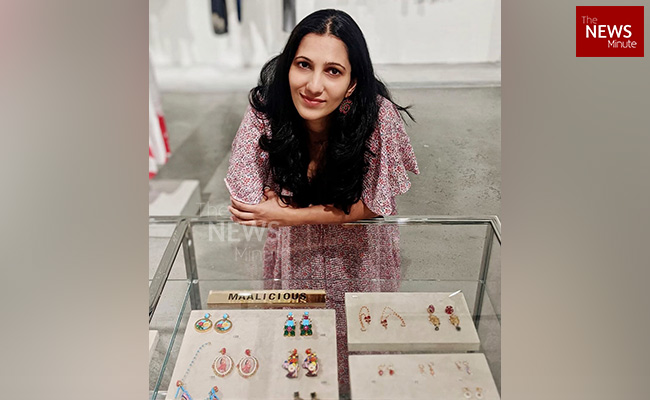
Poonam Thimmaiah at her outlet in New York
She taught the group of 10 children in the programme how to sculpt, draw and paint. In the process, she says, she rediscovered the talent she had for designing jewellery. A few months later, Poonam went back to New York and quit her job. She decided to start designing jewellery and felt sure that she wanted to bring back the touch of handicraft to her work.
It was later in 2017 that Poonam contacted an acquaintance, Sruthi Mascarenas, a sculptor working with clay in Goa, and commissioned her to make the earrings that she had designed. Poonam says that she wanted every piece of jewellery she designed to tell a story – one of historical relevance to India. In her first piece, she envisioned a clay plate with a painting of Queen Victoria meeting her namesake – a young woman from Kodagu.
“The piece is called Victoria Repeated. It’s a picture of Victoria from Kodagu meeting Queen Victoria and both of them are wearing a lot of jewellery. These earrings were made of clay and hand-painted. It was featured in Flying Solo’s (a fashion retail space in New York) collection in the Paris Fashion Week,” Poonam adds.
In 2019, Poonam established Maalicious officially and in the year running up to it, she decided to commission her work to women in the business of making handicrafts in India. She contracts her metal and stone work to a group of 25 women in Jaipur. Anything to do with tassels, she commissions it to an artist in Mumbai, and jewellery made of polymer clay is commissioned to an artist in Chennai.
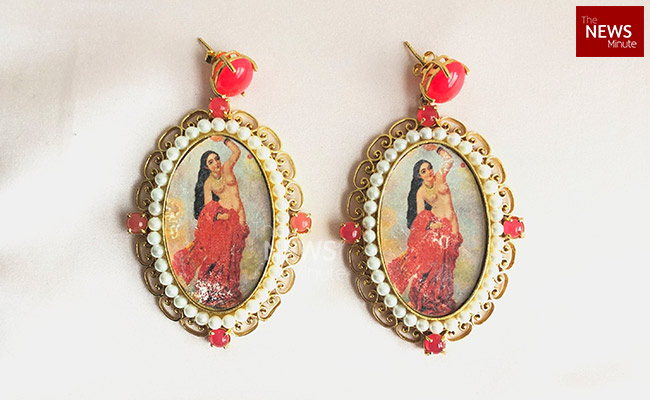
Amrita Shergill earrings. Amrita Sher-Gil, the most famous Indian painter. Today, she is known as India’s Frida Kahlo. The earrings are made by Shruti Mascarehnas.
“With Maalicious, I want to rejuvenate traditional art and workmanship with Indian charm and a touch of urban flair. I have earrings that have Amrita Sher-Gil on it. A lot of people know about Frida Kahlo and not many in other countries are aware that we have someone of our own – Amrita Sher-Gil. I also wanted to use sustainable materials like clay, wood, silk and thread. We’ve started customising our earrings so anyone can get any picture they want painted on their earrings,” Poonam says.
Celebrity endorsement: Divya khosla Kumar in Drokpa earrings, made by artisan Soniya.
Malicious began retailing with Flying Solo’s retail unit in New York and became an instant hit. With celebrity stylists visiting the store, her pieces began selling out. In 2020, Poonam carried out various social media campaigns. “We did a lot of virtual pop-ups and this summer was really good. We had a lot of celebrity endorsements on social media. Actor Divya Khosla Kumar wore our jewellery, Raadi Shetty, American influencer who is big here, endorsed our jewellery. We had a lot of Instagram influencers endorse us,” she says.
This year, Flying Solo selected Poonam’s jewellery designs to be featured for their show in the New York and Paris fashion weeks. Fourteen of her pieces were featured in the New York Fashion Week and eight in the Paris Fashion Week. Flying Solo had curated its show by collaborating with 63 designers from 14 countries. Poonam says her work was chosen as each of her designed pieces are made by hand and use sustainable materials.
“I felt like I’ve created something, where I was spoken of as a designer. People at the fashion week asked me what my inspiration was. It went from a passion project when I was pregnant and became something big during the fashion week. It’s really nice to have the appreciation. It gives me confidence,” Poonam says.
source: http://www.thenewsminute.com / The News Minute / Home> Features> Fashion / by Theja Ram / November 12th, 2020
Liberation burger patties | Photo Credit: Special Arrangement
Bengaluru-based Curly Sue sets up a cold chain to deliver chilli pork and pandi curry in Coimbatore
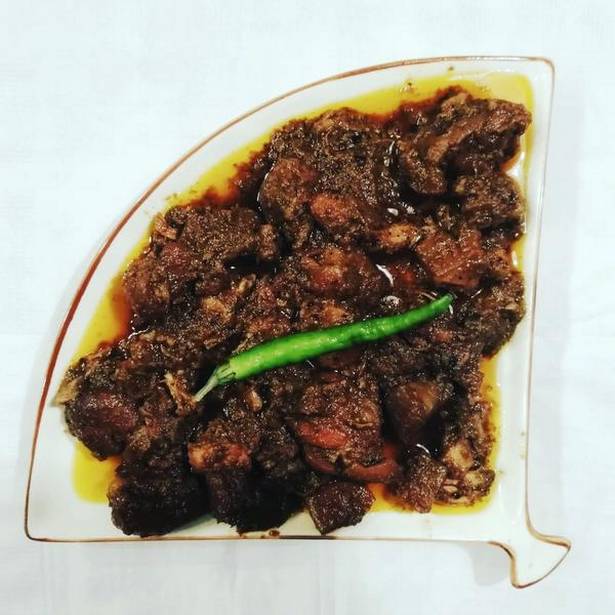
“The Coimbatore palate likes it spicy,” says Radhica Muthappa of Bengaluru-based Curly Sue Pork, which specialises in slow-cooked pork, prepared Coorg style. “It’s been over a month since we started cold chain transport of frozen pork delicacies from Bengaluru to the city. People here loved our Coorg style pandi curry and chilli pork. They posted photos and feedback on our Instagram page. A generous amount of Coorg’s parangi malu, a local chilli also called ‘bird’s eye chilli’ goes into the preparations,” she says.
Curly Sue Pork started off as a hobby kitchen two years ago by husband and wife Uttam Muthappa and Radhica, both of whom are from Coorg.
A fragrant gravy
“My husband loves to cook and I have a chef’s background.” Formerly kitchen executive at The Park and Burgundy restaurants in Chennai, Radhica combined her technical know-how of nutrition and professional cooking and his passion for food and they jointly perfected slow-cooking.
________________
On the menu
Pandi curry
Chilli pork
BBQ pulled pork
Goan pork vindaloo
Liberation burger patties
________________
“The meat is cooked between four and eight hours. It locks in the flavours, retains moisture — the result is succulent meat and a fragrant gravy. The pork cooks in its own fat that lends it a nice flavour,” explains Radhica.They cook through the week at their centralised kitchen in Bengaluru. “Our preparations travel well. They carry reheating instructions — we recommend heating them gently on a stove and can be stored for three to four days in the refrigerator.” Uttam and Radhica share ideas on how best to use their dishes. For example, Radhica says chilli pork is versatile and can be had with burgers or hot rice.
BBQ pulled pork | Photo Credit: Special Arrangement
And, pulled pork, which is cooked for eight hours, can be used in a tortilla wrap or tossed with pasta to make a complete meal.“We have ready-to-cook burger patties that can be prepared in under 10 minutes; apart from bread, these also go well with rice, rotis and idlis,” she adds. While they get most ingredients from Coorg, the couple grows herbs like rosemary and thyme are grown in their home garden. And the pork comes from the same place their family has been buying from for the last 50 years. Most importantly, she says, no preservatives or additives are used in the dishes.
Pandi curry | Photo Credit: Special Arrangement
“We use kachampuli vinegar traditionally brewed at our estate as a preservative for Coorg dishes. For pork vindaloo, we use coconut vinegar from Goa and pulled pork has apple cider vinegar. We grow our pepper and use hand-pounded masalas. We do the hard work — slow cook the meat, taste it and then pack it to make it convenient for you.”
For details, call 99000-26681, 82966-97096.
source: http://www.thehindu.com / The Hindu / Home> Life & Style> Food / by K Jeshi / Coimbatore – November 14th, 2020
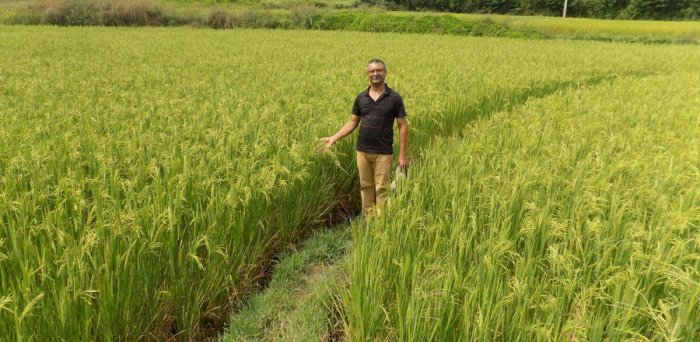
If carried out with hard work and passion, farming will not only bring satisfaction but will also support the livelihood, opined Podamada Mohan, a progressive agriculturist from Balele Devanuru village.
Mohan has been cultivating paddy on only two hectares of land. However, he has been able to harvest an average of 62 quintals of paddy per hectare, annually. This is made possible owing to the innovative methods of irrigation, pest control and so on.
For his commitment towards agriculture, he has been awarded the taluk-level progressive farmer award in Virajpet, for the year 2015-16.
Mohan has been cultivating Atira and Tunga varieties of paddy. Now, both the varieties are almost ready for harvest. He has maintained cleanliness in the paddy farm by removing the shrubs.
Manure
He said that a mixture of DAP, Urea and Potash are provided to the crops in the quantity of 20 kg per acre, at the time of transplantation. This will help in the faster growth of paddy sheaths.
The process of providing fertiliser is repeated twice, with a gap of one month. The high-lying area of the paddy farm, which is known as ‘Nippuni’ is provided with 100% manure while the low lying ‘Kippani’ area is provided with 20% of manure.
The paddy farm has not been affected by any disease. Mohan has made sure to spray insecticide 15 days before the transplantation.
This will control the disease at the initial level, he said.
No takers
Mohan lamented that 45 quintals of unsold rice from last year, is remaining at his house. Even though the rate is Rs 1,125 per quintal, there are no takers.
No suitable market price is available at the APMC as well. The low price is discouraging for many farmers, said Mohan.
source: http://www.deccanherald.com / Deccan Herald / Home> State> Mangaluru / by DHNS, Gonikoppa / November 10th, 2020
MP Pratap Simha speaks during a District Development Coordination and Monitoring Committee meeting in Madikeri.
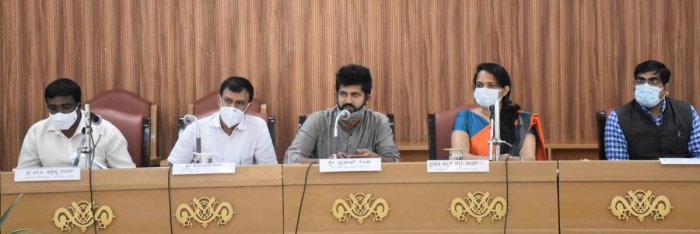
MP Pratap Simha directed officials to ensure that each household is supplied with piped water connection under the Jal Jeevan Mission in rural areas.
Chairing a District Development Coordination and Monitoring Committee meeting at ZP Hall on Wednesday, he said Prime Minister Narendra Modi has envisaged piped water connection to every household in the country.
He sought information on how many families were supplied with water under the scheme. Replying to this, officials from ZP drinking water and sanitation department said that there are plans to supply water to 46,276 households.
The MP said that he has appealed to Jayadeva Hospital Director Dr Manjunath on the necessary facilities for the designated Covid hospital and medical college in the district.
He further directed officials to construct solid waste management units in Gram Panchayat jurisdiction and segregate wet and dry waste. The wet waste should be converted to manure.
All those who have registered under Mahatma Gandhi National Rural Employment Guarantee Scheme should be guaranteed with employment. The scheme should be used for the construction of toilets, sheep shed, concrete road and others, he said.
Stating that there is no shortage of funds under MGNREGS, he said that the scheme should benefit the rural people.
Measures should be initiated to improve the pass percentage in SSLC. When Dakshina Kannada district is in the second position in SSLC result, why is Kodagu in the 18th position? he asked.
DDPI Machado said that last year, the district was in 22nd position and this year it has reached 18th position.
The MP said that concrete roads should be laid under Pradhan Mantri Gram Sadak Yojana. A few works will be initiated by MLA K G Bopaiah in Virajpet on November 12.
Member Kolleera Gopi Chinnappa and Somwarpet Taluk Panchayat President Pushpa highlighted the issue of the pathetic condition of roads in Virajpet and Somwarpet taluk.
CESC engineer Somashekar said that electricity connections have been provided to 3,700 families under Saubhagya scheme in the district. The work on providing connections to 400 families is pending.
Member Kolleera Chinnappa alleged that Saubhagya scheme has not seen much progress in the district. The frequent disruption in power supply at Balele is inconveniencing the people.
Deputy Commissioner Annies Kanmani Joy, Zilla Panchayat President B A Harish and others were present.
source: http://www.deccanherald.com / Deccan Herald / Home> State> Mangaluru / by DHNS, Madikeri / November 04th, 2020
As COVID-19 raged across the globe, leading to lockdowns in key markets such as the European Union, coffee exports from the subcontinent were stymied. A smaller crop made it a double whammy.
TREND
Expectations of a larger crop in 2020-21 (Oct-Sep) and rising at-home consumption have, however, led to hope of a resurgence.
“Coffee exports are slowly returning to normal… exports were affected because during the lockdown, due to logistic constraints, we were unable to move coffee beans from estates to curing works as only cured coffee is exported,” said Karnataka Planters’ Association Secretary Anil Savor.
According to Cogencis data, India’s coffee exports since the beginning of this year are down 11% on year at 257,107 tn. But with favourable weather conditions ahead of the beginning of harvesting next month, exporters and planters expect a bigger crop and, in turn, higher overseas sales.
“It (exports) will improve from January… Pent-up demand is not visible yet, but there should be a 5-10% improvement during Jan-Mar… given the low prices that farmers are getting, there will be rush to sell since they need cash flow requirement,” said Coffee Exporters Association President Ramesh Rajah.
India’s coffee year begins in October and growers start harvesting during Nov-Dec. According to India Meteorological Department data, the country received 9% above-normal rainfall during Jun-Sep, a positive for coffee plantations.
“In coffee production, one year you have less output, then the next year you have a bigger one, as coffee is basically cyclic. So, going by that, we think this year we have a good output,” Bengaluru-based exporter Prashanth Nagaraj said.
The market estimates coffee output in the 2020-21 season at 300,000-320,000 tn, sharply higher than an estimated 270,000-280,000 tn in 2019-20. The Coffee Board of India’s final production estimate of 298,000 tn for 2019-20 is well above market estimates.
The pandemic has completely changed the trend of coffee consumption across the globe, with a shift away from consumption in cafes.
“The overall market is dull… but it will improve because during the pandemic, there was a sharp drop in offtake but now, we are seeing at-home-consumption is increasing, so a large part of out-of-home consumption is being taken over by at-home consumption,” Rajah said.
“…Italians (demand from Italy) will come back to us. Jan-Mar, we don’t see a very big increase but in Apr-Jun, we see much more improvement… Also, West Asia, Germany, and other traditional markets will also buy from India.”
India may, however, face some competition as it sells the standard arabica variety at a premium of 30 cents per pound in international markets because of its superior quality compared to coffee from other parts of the globe.
Brazilians sell their produce at a discount of 20 cents per pound, former Coffee Board of India member Jaya Prasad H.B. said.
Brazil is the world’s top producer and exporter of coffee, while India is the seventh-largest grower.
With several positives on the horizon, Indian coffee exporters are hoping for sunny days ahead. End
US$1 = 73.36 rupees
Edited by Subham Mitra
source: http://www.cogencis.com / Cogencis / by S. Anirudh Iyer and Preeti Bhagat / October 13th, 2020
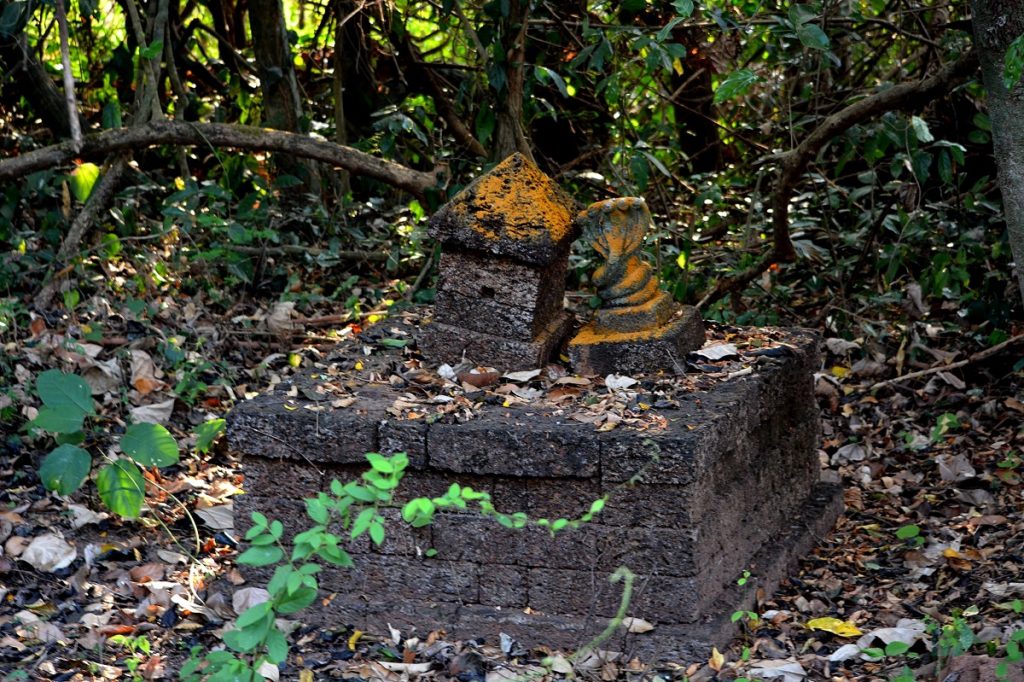
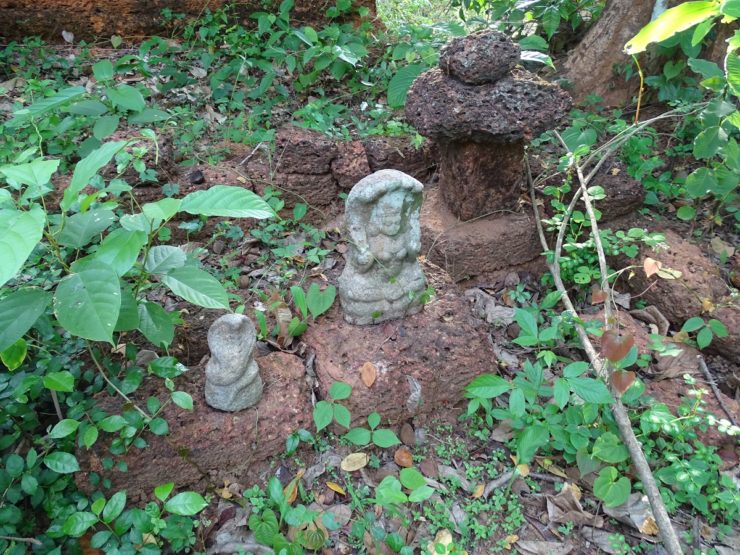
A sarpakaavu, or traditional sacred space for snakes, in Kerala. Photo: Manoj Karingamadathil/Wikimedia Commons CC BY SA 3.0
Underlying cultural and religious beliefs in serpent deities has played a role in protecting iconic animals such as snakes and other species dwelling inside the Western Ghats’ sacred groves. But these beliefs are eroding among youth and economic pressures are eating into the groves, threatening their very existence. Experts call for greater state government protection to preserve the groves’ legacy for the benefit of posterity.
For millennia, local communities in India have maintained sacred groves where they managed natural resources and many of these are tied to their cultural and religious beliefs. In the Western Ghats, such groves are relatively undisturbed patches of evergreen forests that sometimes have a pond, stream, or well that ensures perennial water supply. Often located outside of protected areas, sacred groves are rich in biodiversity, housing many threatened and endemic species of plants and animals. In many cases, these fragments are the only relict forests that remain outside the protected area system.
The mountain chain of the Western Ghats along the western coast of India is older than the Himalayan mountains; in 2012, 39 sites in the region were inscribed on the World Heritage Sites list by the United Nations Educational, Scientific and Cultural Organisation (UNESCO). While India boasts the highest number of sacred forests globally, with estimates suggesting at least 100,000, the Western Ghats is endowed with a large concentration. Although many are undocumented, Kodagu district in the southern state of Karnataka alone was estimated to have 1,200 sacred groves.
Many of these verdant groves are associated with gods and are named after deities. The worshipping of serpent gods known as nāga plays a central role in many groves in Kerala known as sarpakaavu in Malayalam (snake garden or grove), and often house idols of serpent deities.
Worshipping involves unique rituals that are performed in sarpakaavu and temples with serpent deities. One common ritual involves pouring a preparation of water, milk, rice powder, and turmeric on the deities and devotees call this offering as ‘Noorum palum’, said Dileepkumar R., director of Indriyam Biologics Pvt. Ltd., Jayakumari Kunjamma, senior research fellow at the University of Kerala who has also authored a book on snake worship in Kerala, and Divya S. chief scientific officer of Indriyam Biologics Pvt. Ltd.
Sacred groves: a refuge for snakes
In a study published last year, researchers surveyed visitors of 30 sacred groves in Kannur and Kasaragod districts in the state of Kerala and Kodagu (Coorg) in Karnataka. They found that visitors were less likely to harm snakes inside the groves than outside. And, a large proportion of visitors who did not harm snakes even outside of the groves worshipped snake deities.
Felix Yuan, the lead author of the study and doctoral student at the University of Hong Kong had expected a “fair number of people would not harm snakes inside the groves” given the role of snake deities in the region, but he was surprised by the results. An overwhelming 96% of the visitors surveyed showed pacifist attitudes towards snakes encountered inside the groves, whereas only 60% had the same reaction outside of the groves. The reverence towards snake deities and pacifism towards snakes pervaded all the sacred groves regardless of whether they had idols of snake deities present or not.
“The broader implications of this study lie in the intricacies of the relationships between sacred natural sites and local communities,” explained Yuan, “where the reverence for a specific plant or animal can potentially result in its protection despite the ongoing degradation of other ‘natural’ qualities of these sites.”
Visitors tend to live in harmony with snakes inside the groves (sarpakaavu). Dileepkumar, who frequently visited sarpakaavu in Kerala since childhood, said that if people spotted snakes, they would not touch the creatures, leaving them to slither around the groves freely.
V.C. Balakrishnan, who has also grown up in Kerala, had on some occasions, encountered snakes in the sarpakaavu. “I will just wait for them to pass by,” he said.
Serpent god worship and the role of taboos
At the heart of the conservation of snakes in the groves lie taboos, which are essentially an interplay of devotion and fear, according to U. Prashanth Ballullaya, co-author of the study and a doctoral student at the Central University of Kerala. Local communities believe that their ancestors created the sarpakaavus to provide shelter to snakes, he said, adding that snakes, especially cobras, were considered divine.
Fear also plays a prominent role. Harming snakes is a sin, Ballulaya gleaned from the surveys. If anyone harms snakes inside the groves, they will be cursed and more snakes will emerge, said some visitors. One of the repercussions of killing snakes according to traditional beliefs is that the family could be deprived of progeny and hence there is a cultural practice of worshipping the habitats of snakes among communities in the Western Ghats, explained T.V. Ramachandra, professor at the Indian Institute of Science (IISc), Bengaluru. “Later, gradual transitions to worshiping idols with snake inscriptions happened and eventually, temples with concrete structures replaced these,” he said.
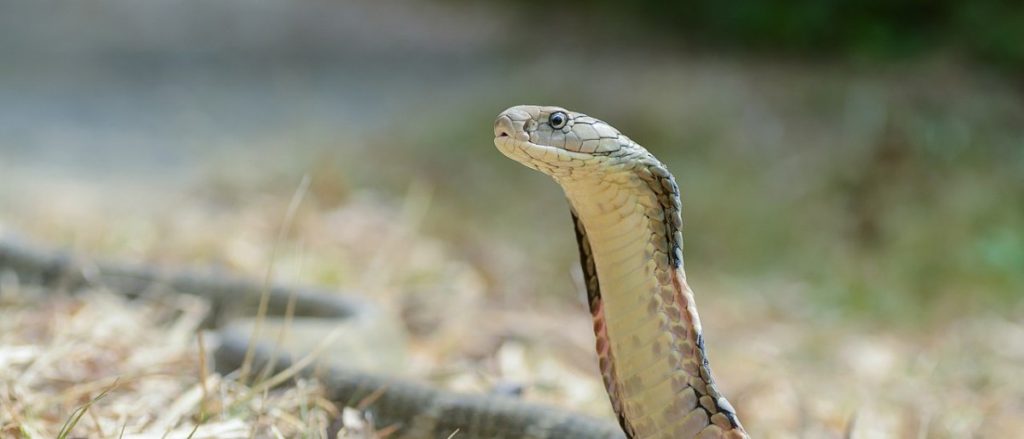
A king cobra. Credit: Rushenb/Wikimedia Commons, CC BY-SA 4.0
Shonil Bhagwat, professor at the Open University, United Kingdom, said “a ‘healthy’ fear of wild animals is good because that discourages people from going to parts of sacred groves, naturally creating ‘no go’ areas.” He believes that “these so-called ‘fences of fear’ can help protect biodiversity within sacred groves by simply keeping people out of the groves, or at least some parts of the groves.”
Communities in the rural highlands of the Western Ghats in Kodagu and adjoining urban lowlands in Kasaragod were surveyed and the results were published in 2019. Researchers found that both urban and rural communities did not abuse the groves by cutting trees, dumping waste, hunting small animals, taking soil and foliage, and damaging termite mounds. And those with nāga deities, who are not only highly revered but also feared, were rarely abused.
The protection of snakes was extended to other taxa as well. Palatty Allesh Sinu, assistant professor at the Central University of Kerala and co-author of the community perception study was surprised to learn that “even taking a leaf from the sacred groves is considered a taboo or abuse of the land.” Believers told him that “the organic matter is food for insects, which is food for frogs and snakes!” Because of this snake-centric food chain, Sinu and his team were forbidden from collecting insects from the groves.
Rural communities had stronger cultural and religious beliefs than their urban counterparts, who valued groves also for their environmental benefits. Although the reasons for this are difficult to answer, said Sinu, one farmer told him “our agriculture, economy and lives are bound to these forests around us … When there was no access to a temple, these forests and local deities living inside the forest were the resort for us. When the upper castes have direct access to Gods, the backward caste people did not have.”
Erosion of beliefs
Community-preserved sacred groves in the Western Ghats are facing mounting pressures over the past decades. Many are shrinking in size or have disappeared altogether. At the time of its formation in 1956, Kerala boasted more than 10,000 sacred groves, but in 2015, only around 1200 remained, according to a report prepared by the Kerala State Assembly Committee on Forest, Environment, and Tourism. A global Nature study published in May reported that reptilian phylogenetic diversity in the Western Ghats is under very high levels of human disturbance.
“Earlier thesarpakaavu was a symbol of divinity and sanctity and it was with only utmost reverence that one was allowed to enter its premises,” said Dileepkumar, Kunjamma and Divya. “People were afraid to touch the trees let alone cut them. But the scenario has almost completely changed with the term ‘sarpakaavu’ being reduced to a mere social terminology. The infuriating demand for more land to accommodate the growing population coupled with the placid attitude of today’s generation has diminished the values of biodiversity and conservation,” they rued, adding that most people view the groves as wastelands, which could be used for construction.
Researchers have observed that youths are losing interest in sacred grove traditions. The loss of oral traditions that narrated stories behind the groves has been cited as one factor. Bhagwat believes that awareness of sacred groves and nature conservation should start early. “If children are introduced to the creepy crawlies that live in sacred groves and maintain a healthy forest ecosystem, they will learn to like this real, everyday nature that is found in landscapes where people farm, live and work,” he said.
V.C. Balakrishnan, who is the secretary of the NGO Society for Environmental Education in Kerala (SEEK), also stresses the role of educating youth to ensure the protection of the groves. SEEK, he explains, holds many camps on the importance of the sacred groves and biodiversity.
On 25 September, Dileepkumar R. joined forces with a group of snake experts and developers and launched a mobile app called SnakeHub, which is dedicated to education and conservation. Currently, the app is a social responsibility initiative of Indriyam Biologics Pvt. Ltd., a Department of Scientific and Industrial Research recognised medical startup working on snakebite management and mitigation, but the group plan to register a society and keep it as an independently functioning body under the organisation. With 114 snake species, Kerala is the top three states in India in terms of species number (after Tamil Nadu, which has the highest, followed by West Bengal) and more than half of these are endemic to the Western Ghats, said Vivek Sharma, head of SnakeHub App.
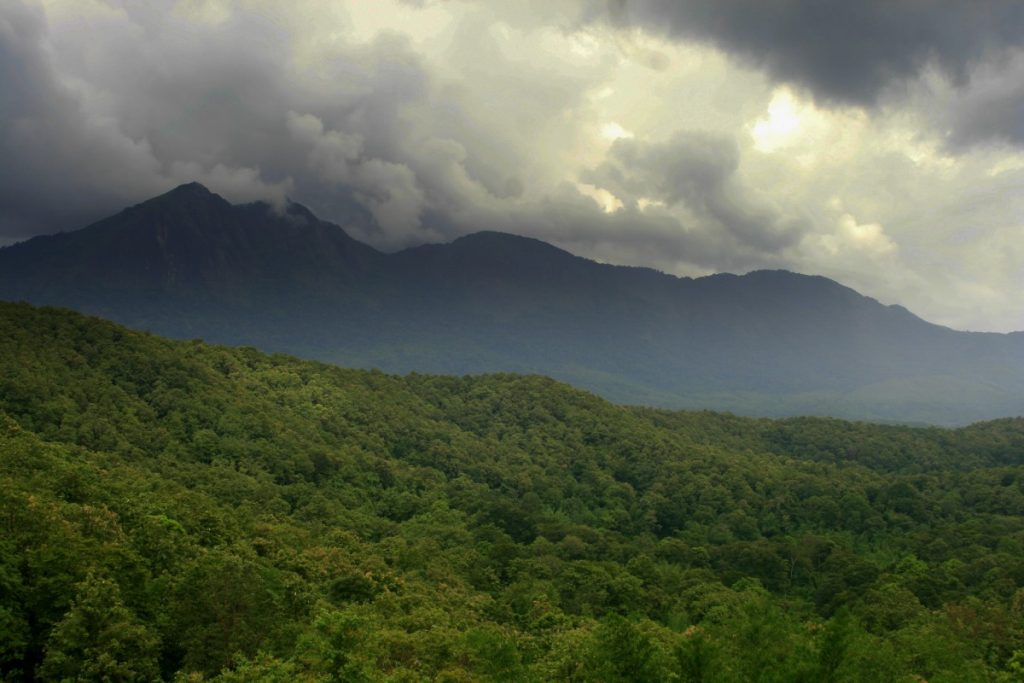
A part of the Western Ghats. dotcompals/Flickr, CC BY 2.0
In both English and Malayalam, the app is the first on snakes in the state of Kerala. Apart from providing biological and ecological information on all of the species, the app also covers snakebites including a list of hospitals equipped to treat bites. “Snakebite is an important objective in our work and based on requirements, we will add facilities to provide snakebite-related solutions and education materials,” said Sharma.
Their goal is to expand the scope of the app to the rest of India in other regional languages to cater to rural communities. India accounts for almost half of the total number of annual deaths from snake bites worldwide. Earlier this year, a study estimated that over the last 20 years, 1.2 million people died from snake bites nationwide. Most of the deaths occurred in rural areas and farmers were most at risk especially during the monsoon season.
“Sanskritisation” and commercialisation
Over the years, there has been a trend towards “Sankritisation” of the groves, which involves the conversion of animistic deities in the sacred groves to mainstream Hindu gods and goddesses, explained Bhagwat. This phenomenon, he said, paves the way for cement structures such as temples and other buildings to be constructed in the groves, which compromises the conservation value of the groves because natural features such as trees disappear. “The only way to solve this problem is to make the custodians of sacred groves aware that trees are important to protect biodiversity within the groves,” Bhagwat said.
“The sacred groves are losing their sanctity and some of the groves are becoming temples for commercial purposes,” said Balakrishnan, explaining that the owner can earn an income through money offered to the deities.
es are taking over in urban areas and even creeping into the hinterlands. According to Sinu, some sacred groves are under the direct control of the state while others are privately owned. “Sadly, both want to generate money out of it,” he lamented. “Selling the land is a way,” he said. “So, they first relocate the deities including snake god through a ceremonial ritual and free the land.” Many owners are in the process of relocating deities, noted Sinu, adding that the ceremony is a costly affair amounting to about Rs 4 lakh (Rs 400,000).
Ramachandra of IISc echoes these concerns. Cemented buildings have become commercial spots, he said, revealing that many sacred groves that are under the revenue department have undergone large-scale conversion to other land uses such as villas and resorts in Kodagu. He attributes these conversions to a lack of knowledge among the bureaucracy of the ecological and hydrological significance of the groves, which has sustained the livelihood of communities in the region for centuries.
Dileepkumar, Kunjamma and Divya believe that people fail to realise that their exploitation of the groves could pave the way for their own doom. “With the sacred groves being deconstructed, the snakes that were taking refuge in the grove vegetation enter into human colonies leading to a conflict between snakes and humans thereby posing a threat to both snakes and humans alike,” they warned.
A sarpakaavu in Kerala. Photo: Manoj K/Wikimedia Commons CC BY SA 3.0
How to protect the sacred groves?
Apart from cultural beliefs, the coexistence of snakes and humans hinges on the preservation of the ancient sacred groves of the Western Ghats.
Experts believe that state governments must play a greater role in protecting the sacred groves of the Western Ghats. Earlier this year, the Kerala state government launched a program “Pachathuruthu” to cultivate ‘green islands’ in degraded land in a bid to preserve biodiversity. For the initiative, “they are planting trees that can give shade, shelter, and food for birds and other animals,” Sinu said. “We have over 1500 sacred groves in Kerala along the west coast. Why not declare them as natural sanctuaries?”
Ramachandra proposes that the Karnataka and Kerala Forest Department should assign heritage status to all the sacred groves of the Western Ghats under section 37(1) of the Biological Diversity Act 2002. Such a move, he argues, will ensure the conservation of these ecologically fragile regions.
Conservation of the groves should be initiated at both the community and government level, according to Dileepkumar, Kunjamma and Divya. “Snake groves are an inherent part of Kerala culture and conserving them must be our obligation. For implementing the conservation strategies initiated by the government, a special task force must be employed to ensure the protection and maintaining the status quo of the snake groves.”
Balakrishnan said that the forest department had funded building fences around the sacred groves a few years ago. “These sacred groves are to be protected surely because they are rich in biodiversity and they are the wealth of our future generations.”
This article was first published on Mongabay India .
source: http://www.science.thewire.in / The Wire, Science / Home> Science> Environment / October 29th, 2020
In Kodagu, a COVID-19 vaccine task force has come into force in connection with the preparations to be made in the district in anticipation of vaccine availability next year.
The first meeting of the task force was held to discuss about the arrangements to be made and the steps to be taken as per the State government’s directives in view of various reports and the claims on the possibilities of vaccine coming to the market early next year.
Deputy Commissioner Annies Kanmani Joy, who chaired the meeting in Madikeri on Wednesday, asked the officials to prepare the list of those who are likely to be vaccinated on a priority as announced by the government. They include COVID-19 warriors and all the frontline workers.
Gopinath, District Officer in charge of immunisation, gave a PowerPoint presentation on the status of COVID-19 vaccine research, citing the recent reports and also those who are likely to get the vaccine in the first phase. They include doctors and all healthcare workers and staff from the Departments of Health and Medical Education, doctors and staff of all the private hospitals, and ASHA and anganwadi workers.
Mr. Joy told the officials to prepare the list of all staff and sought coordination among all the key departments as the data being prepared now would be used to distribute the vaccine.
source: http://www.thehindu.com / The Hindu / Home> News> States> Karnataka / by Special Correspondent / Mysuru – October 29th, 2020
WELCOME. If you like what you see "SUBSCRIBE via EMAIL" to receive FREE regular UPDATES.
Read More »